
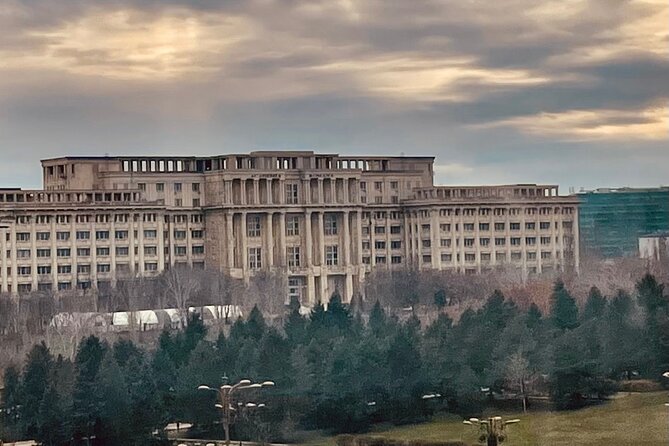
Under communist rule in Romania, citizens faced a bleak daily existence. The regime seized all private property, fostered government dependency, and curtailed personal freedoms. Iconic buildings like the colossal Palace of the Parliament projected power, while the extensive Securitate secret police network instilled an atmosphere of fear and mistrust. Neighborhoods were demolished for monotonous apartment blocks, displacing thousands. Grocery shortages, rationing, and cramped homes were the norm. This tour offers an immersive exploration of the architecture and societal impacts that defined life under communism, providing a unique window into Romania’s turbulent past.
Key Points
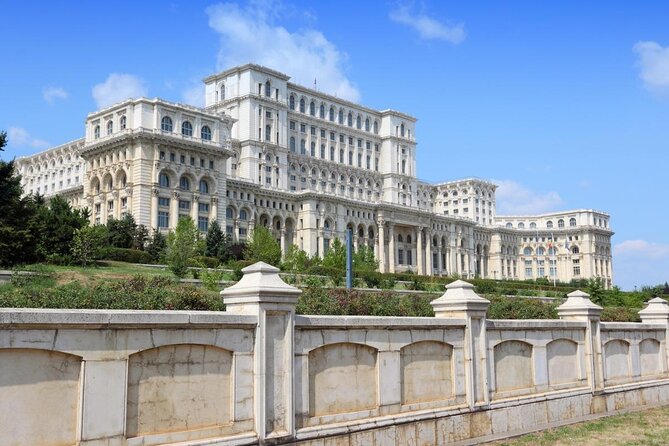
- Bucharest’s architecture under communism reflected the regime’s ideology, with colossal concrete structures and monotonous apartment blocks built to project power and control.
- Nationalization policies seized private property, eliminated private enterprise, and fostered government dependency, while personal freedoms were curtailed under pervasive surveillance by the Securitate secret police.
- Urban demolitions in Bucharest transformed the city’s landscape, prioritizing the regime’s vision over people’s needs, resulting in the displacement of thousands of residents.
- Daily life under communism was characterized by shortages of goods, long queues for necessities, and limited opportunities for self-expression, contrasting with the regime’s vision of a "socialist metropolis."
- The "Life in Communism" walking tour in Bucharest offers an immersive cultural experience, exploring significant communist-era landmarks and sharing personal anecdotes to enhance the understanding of the regime’s impact.
Bucharest’s Communist Architecture
Bucharest’s Communist Architecture
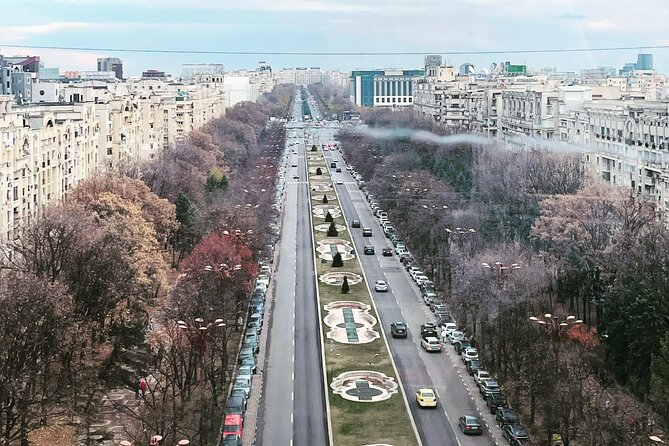
Bucharest’s urban landscape bears the imprint of Romania’s communist regime. Iconic landmarks like the Palace of the Parliament, one of the world’s largest administrative buildings, showcase the grandiose architectural style favored by the regime.
Colossal concrete structures with imposing facades were erected to project power and control. Neighborhoods were razed to make way for vast, monotonous apartment blocks designed to house the masses efficiently.
This architectural legacy reflects the communist ideology’s emphasis on collective identity over individual expression. While some view these buildings as symbols of oppression, others appreciate their historical significance and unique aesthetic.
Bucharest’s communist architecture endures as a tangible reminder of Romania’s turbulent past.
You can also read our reviews of more tours and experiences in Bucharest.
Nationalization and Societal Changes

Under communist rule, the Romanian government enacted sweeping nationalization policies that transformed the country’s social and economic fabric.
All private property, businesses, and assets were seized and placed under state control. This centralized economy eliminated private enterprise and competition, fostering an environment of government dependency.
Societal changes were equally dramatic, as the regime sought to mold a new "socialist man" loyal to the party. Personal freedoms were curtailed, with the secret police monitoring and suppressing dissent.
Romanians faced shortages of consumer goods, long queues for basic necessities, and limited opportunities for individuality and self-expression under this authoritarian system.
Surveillance and the Secret Police

The communist regime in Romania maintained an extensive network of secret police, known as the Securitate, that infiltrated every aspect of daily life. The Securitate was notorious for its pervasive surveillance, informant network, and brutal interrogation tactics.
| Securitate Key Facts | |
|---|---|
| Estimated Personnel | 30,000 – 40,000 |
| Informants | Over 400,000 |
| Surveillance Tactics | Wiretapping, mail interception, secret recordings |
| Powers | Arbitrary detention, torture, extrajudicial killings |
The Securitate’s intrusive presence fostered an atmosphere of fear and mistrust, as Romanians never knew who might be watching or reporting their activities to the authorities. This climate of constant surveillance profoundly shaped the daily lives and behaviors of the Romanian people under communist rule.
Urban Demolitions and Redevelopment
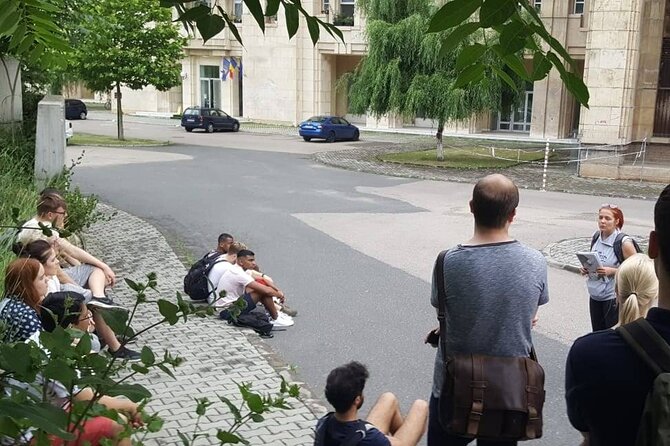
During the communist regime, vast urban demolitions and redevelopment projects transformed the landscape of Bucharest.
Neighborhoods and historic buildings were razed to make way for grand boulevards, large public squares, and imposing communist-style architecture.
The destruction disrupted communities and displaced thousands of residents.
Ceaușescu’s vision for a "socialist metropolis" prioritized control and ideology over the needs of the people.
Entire city blocks were leveled, and the city’s unique character was often sacrificed.
These redevelopment efforts were a hallmark of the regime’s efforts to reshape Romania’s urban centers according to communist ideals, with little regard for the human cost.
Daily Life Under Communism
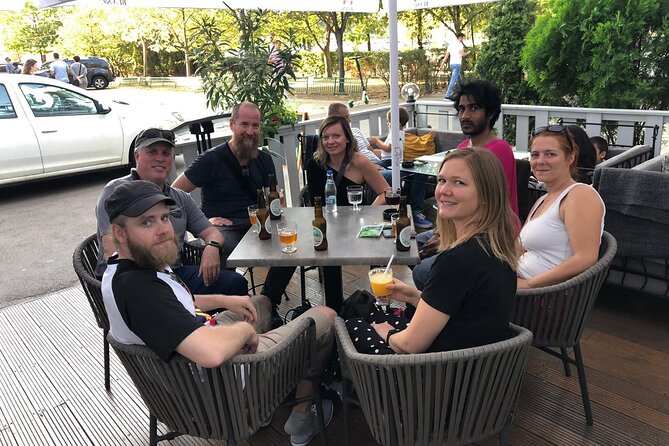
Life for the average Romanian under communist rule was a stark contrast to the visions of a "socialist metropolis" that the regime sought to impose.
Shortages of basic goods, restricted freedoms, and pervasive surveillance were the harsh realities of daily life:
-
Bare grocery store shelves and long queues for scarce food items were commonplace.
-
Strict rationing limited access to consumer goods, with even items like soap and toilet paper in short supply.
-
The omnipresent secret police, the Securitate, monitored citizens’ activities and stifled free expression.
-
Homes were often cramped and lacked modern amenities as the regime prioritized industrial development over citizens’ quality of life.
- Bucharest to Dracula Castle, Peles Castle and Brasov Guided Tour
- Draculas Castle, Peles Castle and Brasov Day Trip From Bucharest
- Transylvania and Dracula Castle Full Day Tour From Bucharest
- Small-Group Day Trip to Draculas Castle, Brasov and Peles Castle From Bucharest
- Bohemian Bucharest Markets and Mahallas Traditional Food Tour
- Draculas Castle, Brasov and Peles Full-Day Tour From Bucharest
Highlights of the Walking Tour
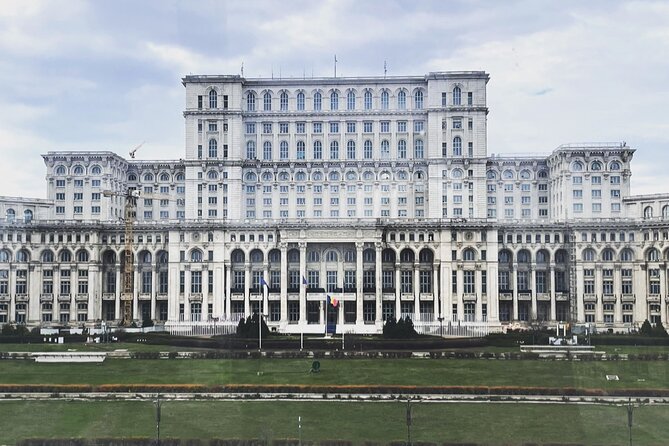
The walking tour offers an immersive exploration of Bucharest’s communist-era landmarks, providing visitors a firsthand glimpse into daily life under the oppressive regime.
Guests will visit approximately 15 significant sites, experiencing how communism influenced architecture, society, and the mundane aspects of everyday living. Key topics include the nationalization of private properties, the feared Secret Police, and the mass demolition of urban neighborhoods.
Throughout the 3-hour tour, the knowledgeable guides share personal anecdotes, enhancing the authenticity and interest.
Visitors will also enjoy communist-style snacks and self-supported alcoholic beverages during a break, further seeing the era’s culture.
Meeting Point and Logistics
The tour meets at the Patriarchal Cathedral, located at Aleea Dealul Mitropoliei 25 in Bucharest, Romania.
After exploring the significant landmarks related to Romania’s communist history, the tour returns to the original meeting point.
During the 3-hour experience, participants can enjoy:
- Communist-style snacks
- Self-supported alcoholic beverages
- Small-group format
- Accessibility near public transportation (though not suitable for wheelchairs)
The tour is priced starting at $29.22 per person, with a free cancellation policy up to 24 hours before the event.
Confirmation is provided at the time of booking, and a "reserve now, pay later" option is available.
Tour Pricing and Booking
Pricing for the "Life in Communism" tour starts at $29.22 per person, with the exact cost varying based on group size.
Customers can reserve their spots now and pay later. The tour has a free cancellation policy up to 24 hours before the event. Confirmation details are provided at the time of booking.
With a 100% recommendation rate from 25 total reviews and an average rating of 5.0 stars, this tour offers an immersive and authentic experience exploring Romania’s communist history.
Guests can expect to visit approximately 15 significant landmarks and learn about the profound impact of communism on Bucharest’s architecture, society, and daily life.
Frequently Asked Questions
What Was the Role of the Communist Party in Everyday Life?
The communist party heavily controlled and monitored daily life under communism. It dictated citizens’ jobs, housing, and social activities, while the secret police surveilled and suppressed any dissent or opposition to the regime’s policies.
Did People Have Any Opportunities for Political Dissent or Resistance?
Political dissent and resistance were highly restricted under communism. Citizens faced severe consequences like imprisonment, torture, or execution for any form of open criticism or opposition to the regime.
How Did the Economic System Affect Access to Consumer Goods?
Under communism, consumer goods were scarce and rationed. The centralized economic system prioritized heavy industry over consumer production, leaving citizens with limited access to many everyday items like clothing, food, and household appliances.
What Were the Primary Challenges Faced by Minorities Under Communism?
Minorities often faced discrimination and limited opportunities under communist regimes. They experienced restrictions on cultural expression, education, and employment, as the state sought to enforce a homogeneous national identity.
Were There Any Forms of Artistic or Cultural Expression Permitted?
Under communism, some forms of artistic and cultural expression were permitted, such as state-sanctioned music, dance, and literature. However, these were heavily censored and controlled by the government to serve its ideological objectives.
Sum Up
The "Life in Communism" walking tour in Bucharest offers a unique opportunity to explore Romania’s communist past. Led by knowledgeable guides, the tour explores the architecture, societal changes, and daily life under the influential ideologies and policies that defined the era. Whether a history enthusiast or simply curious, this captivating experience provides an authentic and thought-provoking exploration of a transformative period in Romania’s history.
More Tour Reviews in Bucharest
- Bucharest: Tour of Christmas traditions & decorations
- Private tour to Transfgran – Top Gear Road
- Private One-way Transfer Bucharest Airport to Hotel or vice versa
- Bears and Dracula Private Full-Day Tour from Bucharest
- Full-Day Private Tour of Bucharest and Mogosoaia Palace
- Salt Mine, Lunch at Wine Cellar and Dracula’ s Tomb – Small group
Not for you? Here's more nearby things to do in Bucharest we have reviewed
- Bucharest: Tour of Christmas traditions & decorations
- Private tour to Transfgran – Top Gear Road
- Private One-way Transfer Bucharest Airport to Hotel or vice versa
- Bears and Dracula Private Full-Day Tour from Bucharest
- Full-Day Private Tour of Bucharest and Mogosoaia Palace
- Salt Mine, Lunch at Wine Cellar and Dracula’ s Tomb – Small group
- Tuk Tuk Best of Bucharest Tour – SpecTukular!
- Private Movie Castles at Peles, Cantacuzino and Bran Castle Tour
- Bulgaria – Ivanovo Rock-Hewn, Hiking at Hotnitsa & Veliko Tarnovo
- Bear Watching in Transylvania 2-Day Tour
- Wine Tasting in Bucharest long version
- Bucharest Otopeni Airport private departure transfer (Hotel to Airport)