
Exploring Rome’s Hidden Corners: A Deep Dive into the Jewish Ghetto and Trastevere
Planning a trip to Rome? If you’re drawn to authentic neighborhoods steeped in history and local charm, then the Rome: History and Flavors of the Jewish Ghetto, Semi-Private Tour might be just what you need. This three-hour walking experience offers a chance to see two of Rome’s best-preserved districts with the guidance of knowledgeable locals—away from the hustle of big bus tours and crowded sites.
What we love about this tour is how it combines rich storytelling with stunning architecture, providing a fuller picture of Rome’s diverse neighborhoods. Plus, the inclusion of the synagogue visit adds a meaningful cultural touch. On the downside, some travelers have noted that the guide’s commentary on Trastevere could be more in-depth, but overall, the experience remains a valuable way to see parts of Rome that often fly under the tourist radar.
This tour suits visitors who enjoy walking, want a more personalized experience, and are eager to explore historic neighborhoods with local flavor. If you’re interested in discovering how Rome’s past influences its present, this is a solid choice.
Key Points

- Authentic Neighborhoods: Explore Trastevere and the Jewish Ghetto with a guide who shares stories you won’t find in guidebooks.
- Cultural Insight: Visit historic churches, a famous synagogue, and iconic landmarks that reveal Rome’s diverse religious and cultural history.
- Balanced Pace: The 3-hour duration fits comfortably into a morning, leaving your afternoon free for other adventures.
- Knowledgeable Guides: Guides like Lucilla and Mohammed receive praise for their passion and expertise.
- Inclusion of Entrance Fees: The synagogue visit is included, adding value without extra cost.
- Limited Group Size: With a maximum of 24 travelers, expect a more intimate, engaging experience.
Exploring the Itinerary: How the Day Unfolds

You can also read our reviews of more private tours in Rome
Starting Point: Piazza Trilussa in Trastevere
Your morning begins at Piazza Trilussa, a lively square that’s beloved by locals and visitors alike. It’s a perfect spot to gather, thanks to its friendly atmosphere and picturesque setting in front of Ponte Sisto. Here, you’ll see the Acqua Paola fountain, a Baroque masterpiece designed in the early 17th century, which adds a touch of grandeur to the humble piazza.
Travelers often appreciate this start; one describes it as “a welcoming place to meet locals and soak in the lively vibe of Trastevere.” The location itself hints at the neighborhood’s charm—quaint, bustling, and full of life.
The Basilica di Santa Maria in Trastevere
Next, the tour heads to Santa Maria in Trastevere, believed to be one of Rome’s earliest Christian churches. Built in the 3rd century, it’s a site of historical and spiritual significance. The church’s mosaics—created by Pietro Cavallini—are considered masterpieces, depicting the “Life of the Virgin”, and you’ll see impressive mosaics on both the facade and inside the apse.
Many reviews emphasize how this stop offers a glimpse into Rome’s religious architecture that has survived centuries of change. The church’s interiors, with their detailed mosaics and serene atmosphere, leave a memorable impression.
Isola Tiberina: Rome’s River-Linked Landmark
A quick walk takes you to Isola Tiberina, the city’s only river island. Connecting Trastevere and the Ghetto, it’s a spot layered in legend—born from the deposit of grain after Rome’s last king was overthrown. The bridges to the island, Cestio and Fabricio, date back to 46 BC and 62 BC respectively, emphasizing Rome’s ancient engineering prowess.
Though brief—just 15 minutes—this stop offers stunning views of the Tiber River and a sense of the city’s layered past. Travelers often comment on how the island’s history adds a tangible connection to Rome’s legendary origins.
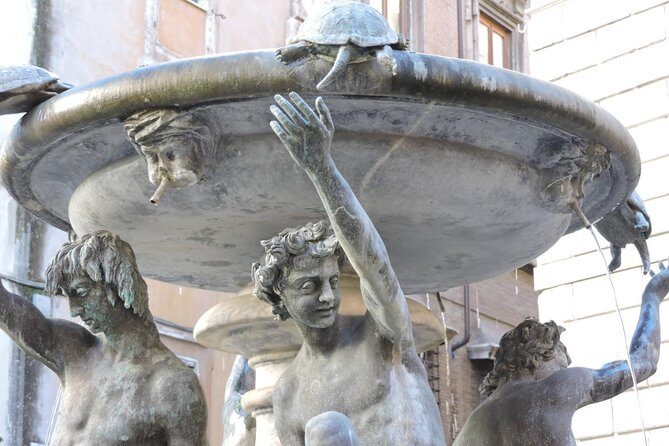
Fontana Delle Tartarughe: The Turtle Fountain
One of Rome’s charming fountains, the Fontana delle Tartarughe was built between 1581 and 1588. It’s famed not just for its beautiful design by Giacomo della Porta but also for a romantic legend—Duke Mattei supposedly built it in a single night to impress his future bride, then jokingly walling up the window from which they admired it.
It’s easy to see why visitors find this fountain delightful—its playful statues and fairy-tale story add a touch of whimsy amid historic ruins. It’s a perfect spot to pause and snap a few photos.
You can also read our reviews of more historical tours in Rome
Basilica di Sant’Andrea della Valle
Continuing the tour, you’ll visit Sant’Andrea della Valle, a lesser-known yet impressive basilica. Designed by prominent architects like Giacomo della Porta and Carlo Maderno, its dome is the second tallest in Rome after St. Peter’s. Inside, the church features beautiful Baroque decor and a peaceful atmosphere.
Reviewers highlight the architectural grandeur of this church, and many appreciate the chance to see a sacred space less crowded than the Vatican. It’s a quiet, inspiring stop—perfect for those interested in art and architecture.
The Portico of Octavia
Walking over to the Portico d’Ottavia, you’ll explore what remains of an ancient complex built under Emperor Augustus. The quadriportico, which once enclosed a forum area, includes ruins of temples dedicated to Juno Regina and Jupiter Stator. Restorations in the 3rd century mean what you see today is mostly from that time.
This site offers a direct link to Rome’s public and religious life in antiquity. Travelers are often struck by the grandeur of the ruins, imagining what the ancient city was like when these structures were in their prime.
The Jewish Ghetto and Synagogue
Finally, you arrive at the Jewish Ghetto, established in 1555 and one of the oldest in the world. It’s an area with a long history of resilience and community spirit. The highlight is the Tempio Maggiore, Rome’s large synagogue, which you’ll visit with included entry.
The area is also famous for its traditional Jewish cuisine, which has influenced Roman food culture. One reviewer notes, “The Jewish Ghetto was a fascinating mix of history, culture, and architecture, with lively streets and great food options.”
Practical Details: What Does This Mean for You?
This tour offers a balanced mix of history, architecture, and local flavor spread across roughly 3 hours. The walking pace is moderate, and the group size ensures you won’t feel lost or overwhelmed. The inclusion of the synagogue visit means you get a meaningful cultural experience without extra costs.
While the tour starts at 9:00 am, some reviewers mention occasional delays—such as late arrivals—so it’s worth planning ahead. The tour ends in Campo de’ Fiori, leaving your afternoon free to explore further or relax.
The price of around $171 per person is reasonable given the inclusion of entrance to the synagogue and the personalized guidance you’ll receive. For travelers eager to see Rome beyond the usual tourist spots, this experience offers real value—an intimate glimpse into neighborhoods that reflect Rome’s layered past.
Who Will Love This Tour?
History buffs and architecture enthusiasts will appreciate the detailed stories and impressive ruins. Food lovers might find the Jewish Ghetto’s culinary scene intriguing. If you prefer small-group experiences and insightful guides, this tour’s limited size is a plus.
However, if you’re looking for a fast-paced overview or want to cover a lot of ground in a short time, this might feel a bit slow. Also, the guide’s commentary on Trastevere was noted as somewhat lacking by some, so those seeking in-depth discussion of that district might want to consider other options.
Final Thoughts: Is This the Right Tour for You?

This walking tour provides a thoughtful, engaging way to experience two of Rome’s most authentic neighborhoods. It’s perfect for travelers who want to dive into local history without the crowds or the rush of larger tours. The inclusion of the synagogue visit offers an important cultural perspective that adds depth to your understanding of Rome’s diverse heritage.
The stories from passionate guides and the chance to see well-preserved ruins make this a meaningful addition to your Roman itinerary. It’s an excellent choice if you value authentic experiences, beautiful architecture, and lively local atmospheres.
In essence, this tour is a smart way to connect with Rome’s past and present, especially if you’re keen on discovering places that feel more like a neighborhood than a tourist trap.
FAQ

Is this tour suitable for people with limited mobility?
It requires walking, so travelers should have a moderate level of physical fitness. If mobility is a concern, check with the provider for specific accessibility details.
What is included in the price?
The tour includes 3 hours with a professional guide and entrance to the synagogue. Tips and transportation are not included.
What time does the tour start?
The tour begins at 9:00 am from Piazza Trilussa. It’s best to arrive a few minutes early.
Can I cancel or reschedule?
Yes, there’s free cancellation up to 24 hours in advance. Rescheduling is not explicitly mentioned, so confirm with the provider.
How many people are in each group?
The maximum group size is 24 travelers, ensuring a more personal experience.
Is a dress code required?
Yes, there’s a dress code for entering places of worship and certain museums—generally modest attire is recommended.
Where does the tour end?
The walk concludes at Campo de’ Fiori, giving you plenty of options to explore further or head back easily via public transport.
This tour offers a well-rounded peek into Rome’s layered neighborhoods, perfect for travelers who enjoy learning from passionate guides in a small group, all while exploring areas full of character and history.
More Private Tours in Rome
- Private Amalfi coast, Positano & Pompeii day tour from Rome
- Rome Evening Tour: Fountains and Squares, Semi-Private Tour
- Explore Ancient Rome Off the Beaten Path Tour (Private)
- Private Luxury Transfer from Rome to Sorrento or Amalfi Coast
- Skip the Line Vatican and Sistine Chapel Private Night Tour
- Vatican Museums, Sistine Chapel & Basilica private tour (3hrs)
More Tours in Rome
- Private Amalfi coast, Positano & Pompeii day tour from Rome
- Rome Evening Tour: Fountains and Squares, Semi-Private Tour
- Guided Tour of the Catacombs from the Colosseum
- Explore Ancient Rome Off the Beaten Path Tour (Private)
- Best of Rome Vespa Tour with Francesco (Official Licensed Guide)
- Skip the Line Vatican and Sistine Chapel Private Night Tour
More Tour Reviews in Rome
Not for you? Here's more nearby things to do in Rome we have reviewed
- Private Amalfi coast, Positano & Pompeii day tour from Rome
- Rome Evening Tour: Fountains and Squares, Semi-Private Tour
- Truffle Hunting, Lunch & Cooking Class in Rome’s Countryside
- Rome: Express Ancient Rome in GolfCart
- Guided Tour of the Catacombs from the Colosseum
- Mini Photoshoot at Colosseum
- Wine and Canvas Club of Rome
- Explore Ancient Rome Off the Beaten Path Tour (Private)
- Best of Rome Vespa Tour with Francesco (Official Licensed Guide)
- Private Luxury Transfer from Rome to Sorrento or Amalfi Coast
- Skip the Line Vatican and Sistine Chapel Private Night Tour
- Rome Lunch Food Tasting with Wine Pairing Experience Trastevere