
Sparta, the ancient Greek city-state, has long been revered for its unparalleled martial prowess. Renowned for its rigorous warrior training and unwavering loyalty to the state, Sparta’s legacy continues to captivate historians and enthusiasts alike. From the disciplined youths of the agoge to the stoic women who upheld the warrior ethos, Sparta’s relentless commitment to military excellence forged it into an indomitable force in the ancient world. Delve deeper into the fascinating and often-romanticized chapter of Spartan history to uncover the secrets that shaped this legendary civilization.
Key Points
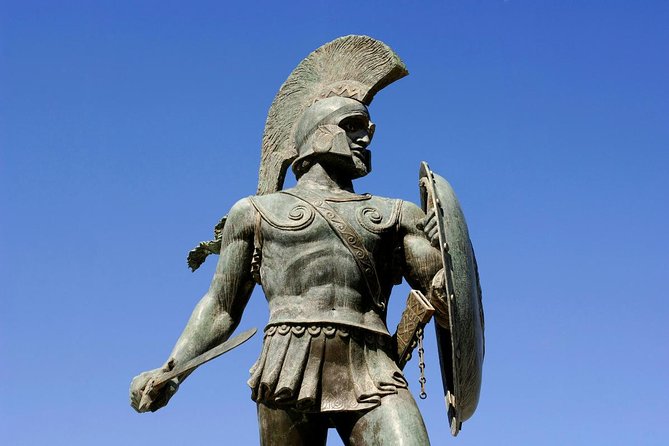
- Spartan society was defined by an intense focus on military prowess, with rigorous training for boys from a young age.
- Spartan values emphasized obedience, endurance, and unwavering loyalty to the state, creating a formidable military force.
- The Acropolis of Sparta served as the political and religious center, reflecting the Spartans’ ambition and military strength.
- The Temple of Artemis Orthia provided insights into Spartan religious practices, including the ritualistic floggings that emphasized discipline.
- Sparta’s legendary status as a military power during its height is a testament to its unique cultural and societal emphasis on warfare.
The Spartan Way of Life

The Spartan way of life was defined by a relentless focus on military prowess and discipline. From a young age, Spartan boys underwent rigorous training, learning to endure hardship, pain, and deprivation. They were taught to obey without question, to fight ferociously, and to prioritize the state over personal interests.
Spartan women, though not directly involved in combat, played a crucial role in shaping this warrior culture, instilling values of bravery and stoicism in their sons. The Spartans’ commitment to their martial identity was total, permeating every aspect of their society.
This unwavering dedication to the warrior ethos made Sparta a formidable military power, feared and respected throughout the ancient Greek world.
You can also read our reviews of more tours and experiences in Athens.
The Acropolis of Sparta
At the heart of ancient Sparta stood the Acropolis, a fortified citadel that served as the city’s political and religious center.
This dramatic hilltop site was home to the Temple of Athena Chalkioikos, dedicated to the goddess Athena. Visitors can explore the ruins of this sacred sanctuary, as well as the remains of administrative buildings and theaters that once bustled with Spartan life.
The Acropolis provided a commanding view of the surrounding landscape, allowing the Spartans to monitor their territory and defend their city against potential threats.
Today, this historic site offers a glimpse into the towering ambition and military prowess that defined the legendary Spartan civilization.
Temple of Artemis Orthia
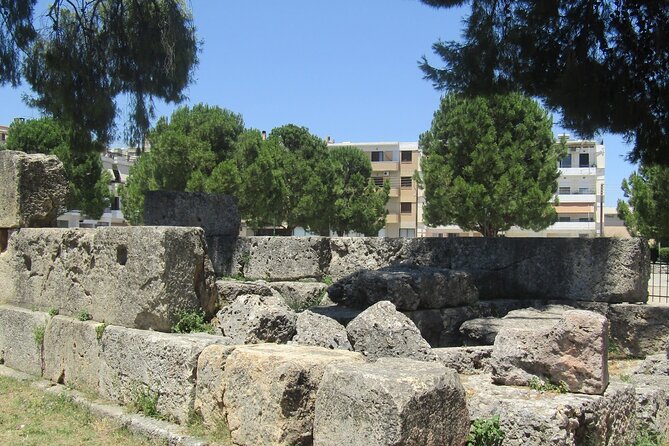
One of the most significant archaeological sites in Sparta is the Temple of Artemis Orthia. This ancient sanctuary was dedicated to the goddess Artemis, who was worshipped here under the epithet "Orthia" meaning "upright".
The temple’s excavation has revealed fascinating insights into Spartan religious practices and cultural traditions. Visitors can explore the remains of the temple itself, as well as the adjacent altar and theater, where ritualistic floggings known as the "Diamastigosis" took place.
These unique ceremonies highlight the Spartans’ emphasis on discipline, endurance, and military prowess. The site offers a glimpse into the austere and militaristic nature of Spartan society, providing an important window into their cultural and religious beliefs.
The Corinth Canal
A slender ribbon of turquoise water, the Corinth Canal is an engineering marvel that slices through the rugged Isthmus of Corinth, connecting the Gulf of Corinth in the west to the Saronic Gulf in the east.
Completed in 1893 after decades of planning and construction, the canal spans just 6 kilometers but saves ships a journey of nearly 400 kilometers around the Peloponnese Peninsula.
Today, the Corinth Canal remains an important commercial waterway, though its steep limestone walls and narrow width make it a treacherous passage for larger vessels.
Visitors can admire the canal’s impressive engineering feats from various viewpoints along the Isthmus and even bungee jump across its azure waters.
Mystras – The Byzantine Gem
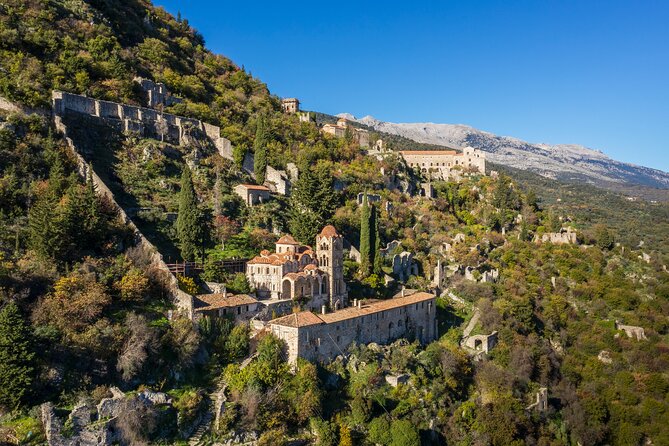
Nestled within the Taygetus mountain range, Mystras stands as a testament to the Byzantine Empire’s glory.
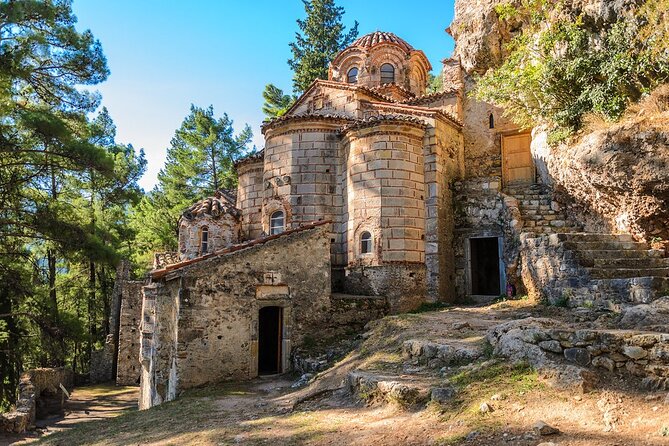
Once the seat of the Despotate of the Morea, this fortified medieval town is a captivating architectural masterpiece. The partially-ruined Byzantine churches, monasteries, and palaces offer a glimpse into the region’s storied past.
Visitors can explore the expansive site, marveling at the intricate frescoes and ornate details that adorn the structures. From the imposing Hexamilion wall to the medieval citadel, Mystras embodies the grandeur and power of the Byzantine era.
This UNESCO World Heritage Site is a must-visit for those seeking to enjoy Greece’s rich cultural heritage.
- Acropolis and Parthenon Guided Walking Tour
- Acropolis Monuments & Parthenon Walking Tour With Optional Acropolis Museum
- Small-Group Greek Traditional Food Tour Around Athens With Tastings
- Delphi One Day Trip From Athens With Pickup and Optional Lunch
- Luxury Catamaran Cruise From Athens With Traditional Greek Meal and BBQ
- Athens All Included: Acropolis and Museum Guided Tour With Ticket
Exploring the Historical Sites
After marveling at the Byzantine splendor of Mystras, the tour continues to the ancient city of Sparta.
Visitors explore the Acropolis of Sparta, a hilltop citadel that was the epicenter of Spartan power. They also visit the Temple of Artemis Orthia, a sacred site where ancient Spartans performed rituals.
The tour then moves to the Corinth Canal, an impressive engineering feat that connects the Gulf of Corinth with the Saronic Gulf.
Highlights include:
- Acropolis of Sparta
- Temple of Artemis Orthia
- Corinth Canal
- Archaeological Museum of Sparta
- Statue of King Leonidas
Practical Tips for the Tour

To make the most of the Sparta – Bred for Battle tour, travelers would do well to keep a few practical considerations in mind. The tour offers a convenient pickup from hotels or the Port of Piraeus, with efficient round-trip transportation in an air-conditioned vehicle. While exploring the historical sites independently, visitors should dress formally and be prepared for a moderate level of physical activity, as the tour is not wheelchair accessible. Travelers can also opt for a licensed tour guide at an additional cost, subject to availability. The tour’s highlights include the Acropolis of Sparta, Temple of Artemis Orthia, and more, providing an immersive journey into Sparta’s legendary past.
| Pickup Location | Recommended Attire | Physical Fitness Level |
|---|---|---|
| Athens Hotel | Formal | Moderate |
| Port of Piraeus | Formal | Moderate |
Since You Asked
Is There an Option to Customize the Tour Itinerary?
The tour overview doesn’t explicitly mention customizable itinerary options, but customers can likely discuss their preferences with the tour provider. They may be able to tailor the experience to focus on specific sites or interests.
What Is the Cancellation and Refund Policy for the Tour?
The tour provider offers a flexible cancellation policy – customers can cancel or modify their booking up to 24 hours prior to the tour start with a full refund. There are no refunds for last-minute cancellations.
Can the Tour Be Combined With Other Nearby Destinations?
The tour can be combined with other nearby destinations, such as Mycenae or Epidaurus, to create a more comprehensive day trip. However, this would need to be arranged in advance with the tour provider and may incur additional costs.
Do Guides Provide Translation Services in Other Languages?
The tour includes an English-speaking driver, but licensed tour guides with translation services in other languages are available at an additional cost, subject to availability. It’s best to inquire about specific language needs when booking the tour.
Are There Any Additional Costs or Hidden Fees for the Tour?
The tour price covers the entrance fees to archaeological sites and museums, but there are no other additional costs or hidden fees. Food, drinks, and gratuities are not included in the tour price.
The Sum Up
Sparta’s unwavering devotion to military excellence forged a legendary warrior culture that has captivated the world. From the rigorous agoge training to the stoicism of its women, Sparta’s legacy continues to inspire awe and respect. Exploring its historical sites offers a glimpse into a civilization that left an indelible mark on ancient Greece and the annals of history.
More Tour Reviews in Athens
Not for you? Here's more nearby things to do in Athens we have reviewed
- “Private transportation”
- Athens Highlights Private Tour for Seniors with Expert Guide
- Athens Highlights Private Half-Day Tour
- Private Acropolis Tour
- Athens: Acropolis, Parthenon Guided Walking Tour
- Piraeus Port Arrival Private Transfer to City of Athens
- Acropolis, Athens highlights and Temple of Poseidon Private Tour
- Athens and Acropolis Parthenon Half Day Tour with Tickets
- Philosophy Experiential Workshop at Plato’s Academy Park -Athens
- Athens by night Private tour
- Athens Riviera Catamaran tour with fresh Meal Drinks and Swimming
- Unique food tour with a food journalist in Athens