
The Royal Salt Works Arc-et-Senans is a captivating 18th-century industrial site that’s well worth a visit. Designed by renowned architect Claude-Nicolas Ledoux, this UNESCO World Heritage Site showcases innovative architectural features and offers visitors a rich exploration of history. With its symmetrical layout, impressive structures, and expansive gardens, the salt works provide a unique glimpse into France’s industrial past. Whether you’re interested in architecture, history, or simply seeking a fascinating day trip, the Royal Salt Works has much to discover.
Key Points


-
The Royal Salt Works of Arc-et-Senans is a UNESCO World Heritage Site commissioned by King Louis XV and designed by architect Claude-Nicolas Ledoux in the 18th century.
-
This former saltworks is a prime example of innovative industrial architecture, featuring a distinctive half-circle "crescent" structure for salt production.
-
Visitors can explore the site, which includes the Director’s House, a 13-hectare park with 30 gardens, and museums highlighting the history of salt production.
-
The Royal Salt Works offers guided tours in 10 languages and audio guides in 11 languages, catering to diverse visitors and enhancing their understanding of the site.
-
Located on the border of the Jura and Doubs rivers, the Royal Salt Works is accessible from major cities like Paris, Lyon, and Geneva, making it an ideal day trip destination.
Overview
The Royal Salt Works Arc-et-Senans is a UNESCO World Heritage Site commissioned by King Louis XV between 1775 and 1779.
Designed by architect Claude-Nicolas Ledoux, the site is one of Europe’s largest saltworks and a key example of industrial architecture.
Situated on the border of the Jura and Doubs rivers, less than 2h30 from Paris, Lyon, or Geneva, the complex functioned as an integrated factory until 1895.
After suffering abandonment and damage in 1918, it was acquired by the Département du Doubs in 1927 and restored through three campaigns, completed in 1996.
Ticket Information
Tickets to the Royal Salt Works Arc-et-Senans cost from $14.14 per person. Reservations can be made online, with no upfront payment required.
Visitors can take advantage of the free cancellation policy up to 24 hours in advance for a full refund. The site can be explored in about 2-3 hours, making it an ideal day trip.
Audio guides are available in 11 languages, and multilingual hosts provide information in 10 different languages, ensuring an accessible and informative experience for all visitors.
Accessibility and Language
Wheelchair-accessible, the Royal Salt Works Arc-et-Senans offers audio guides in 11 languages, including Chinese, Dutch, French, German, Italian, Japanese, Korean, Portuguese, Russian, and Spanish, allowing visitors to explore the site in their preferred tongue.
The host languages for guided tours are French, English, German, Dutch, Spanish, Portuguese, Italian, Chinese, Japanese, Korean, and Russian, ensuring a rich cultural experience for all.
Whether you prefer self-guided or guided tours, the site’s multilingual resources cater to the diverse needs of international visitors, enhancing their understanding and appreciation of this UNESCO World Heritage treasure.
Architectural Highlights
Architectural models by Claude-Nicolas Ledoux, the influential Enlightenment architect, grace the Royal Salt Works Arc-et-Senans.
Visitors can admire:
-
The imposing half-circle "crescent" structure, which was designed to house the entire salt production process.
-
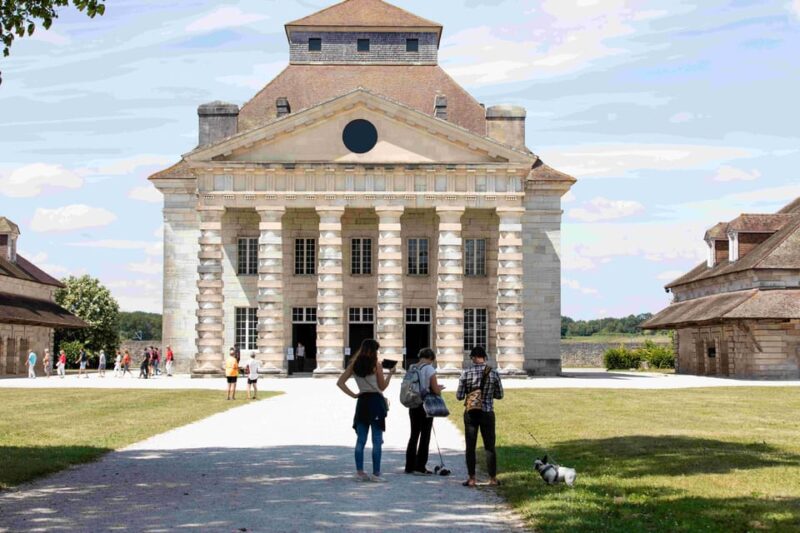
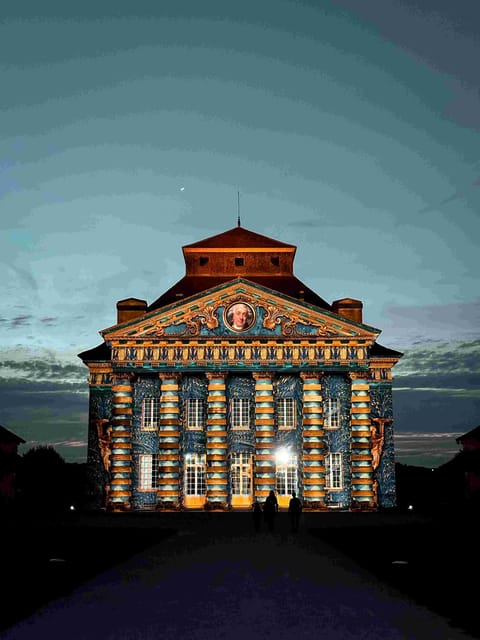
The iconic "Director’s House," a striking circular building that served as the administrative center.
-
The perfectly symmetrical layout and geometric patterns throughout the site, reflecting Ledoux’s visionary neoclassical style.
These architectural elements showcase Ledoux’s innovative approach to industrial design, making the Royal Salt Works a pioneering example of 18th-century enlightened factory design.
More Great Tours NearbyGardens and Exhibitions
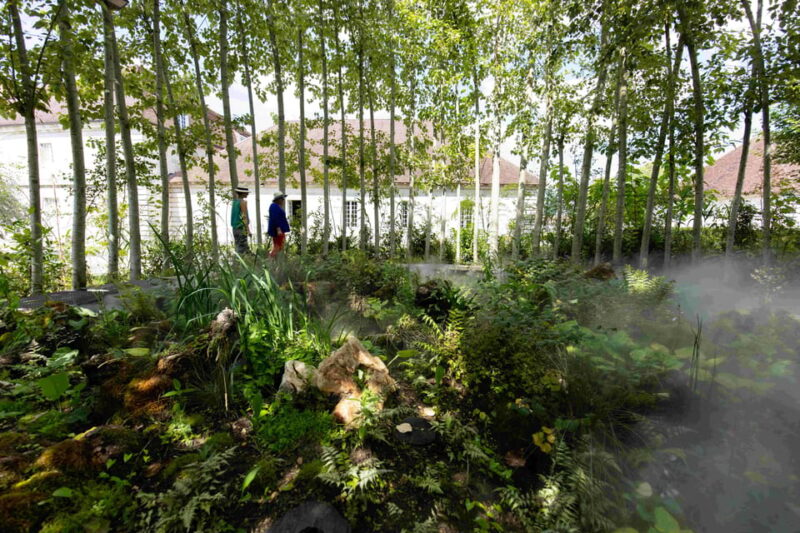
Within the expansive 13-hectare park surrounding the Royal Salt Works, visitors can explore a remarkable array of 30 distinct gardens.
These carefully curated green spaces showcase a diverse range of flora, including ornamental plants and herbs.
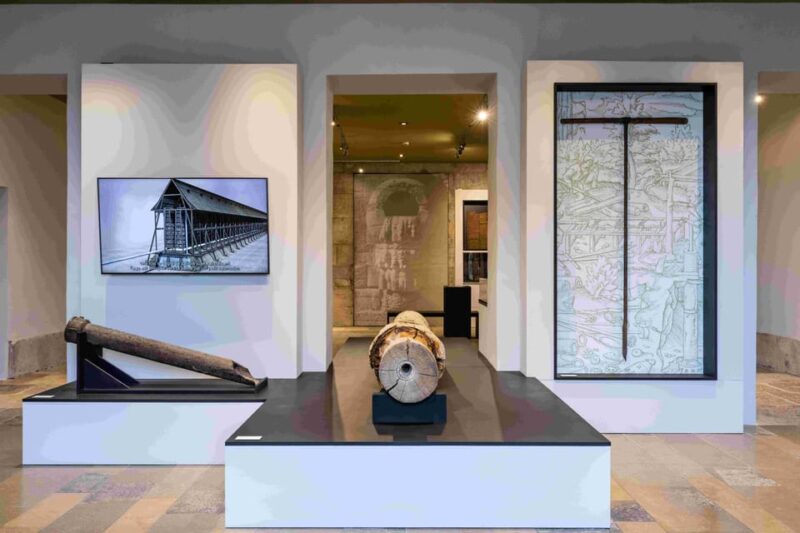
Beyond the gardens, the site offers access to museums and exhibitions that explore the history and significance of the salt works.
The Claude Nicolas Ledoux Museum provides insights into the architect’s innovative designs, while the Histoires de sel exhibition explores the cultural and industrial legacy of salt production.
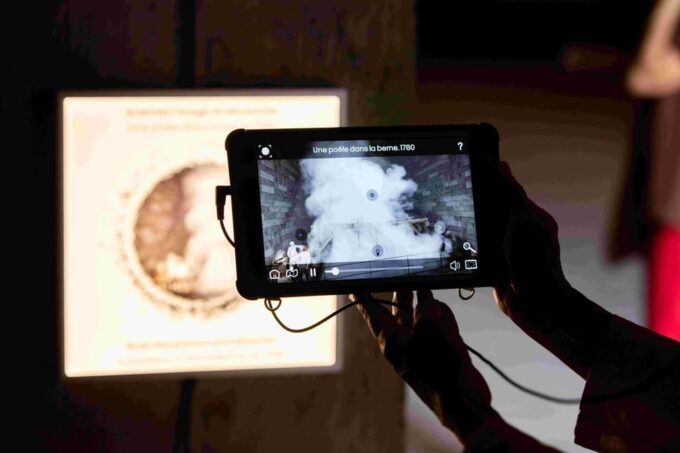
Visitors can also use the HistoPad tablet to embark on self-guided augmented reality tours.
Technological Enhancements
To enhance the visitor experience, the Royal Salt Works offers a cutting-edge HistoPad tablet that allows for immersive self-guided tours in augmented reality.
The HistoPad features:
3D digital reconstructions that bring the historic site to life, enabling visitors to visualize the original architecture and operations.
-
3D digital reconstructions that bring the historic site to life, enabling visitors to visualize the original architecture and operations.
-
Interactive maps and timelines that provide context and enrich the exploration of the saltworks.
-
Detailed information on the site’s history, architecture, and technological innovations, accessible at the tap of a finger.
These digital tools elevate the visit, transforming it into an engaging, educational, and immersive experience.
Historical Context and Restoration
The Royal Salt Works at Arc-et-Senans has a rich history, having served as an integrated factory until its closure in 1895.
After decades of abandonment, the site suffered damage in 1918. In 1927, the Département du Doubs acquired the property and began its restoration through three campaigns, completed in 1996.
This extensive restoration process has preserved the architectural masterpieces designed by Claude-Nicolas Ledoux, transforming the former industrial complex into a UNESCO World Heritage Site.
Today, visitors can explore the restored buildings and 30 gardens within the 13-hectare park, seeing the site’s remarkable history.
Location and Accessibility
The Royal Salt Works at Arc-et-Senans is situated less than 2 hours and 30 minutes from major cities like Paris, Lyon, and Geneva.
This strategic location on the border of the Jura and Doubs rivers makes it easily accessible for visitors. The site is also wheelchair accessible, ensuring inclusivity.
The Royal Salt Works is strategically located near rivers, making it easily accessible, and is also wheelchair-friendly for inclusive visitor experiences.
Plus, the Royal Salt Works offers a range of language options, with audio guides available in 11 languages and guided tours conducted in 8 different languages.
This multilingual approach caters to the diverse needs of international travelers, enhancing their overall experience at this UNESCO World Heritage Site.
Ask Away
How Many Workers Were Employed at the Salt Works?
The salt works employed hundreds of workers to operate the production facilities and support the local community. At its peak, the complex housed around 800 individuals within the extensive grounds.
What Was the Average Daily Salt Production Capacity?
The average daily salt production capacity was around 40 tons during the salt works’ peak operations. The large scale of the facility allowed for highly efficient salt harvesting to meet the high demand for the valuable resource.
What Was the Original Purpose of the Salt Works?
The original purpose of the salt works was to produce salt for the French crown. It was commissioned by King Louis XV in 1775 and designed by architect Claude-Nicolas Ledoux as one of Europe’s largest integrated saltworks.
Were There Any Notable Historical Events That Occurred at the Site?
The Royal Salt Works was integrated factory that functioned until 1895, but it suffered abandonment and damage in 1918. The site was acquired in 1927 and restored through three major campaigns, with the final restoration completed in 1996.
Can Visitors Purchase Salt Products On-Site?
Yes, visitors can purchase a variety of salt products on-site, including seasoning salts, bath salts, and specialty salts. The shop offers an assortment of locally-sourced salts and salt-based items for visitors to take home as souvenirs.
Royal Salt Works Arc-et-Senans
Final Words
The Royal Salt Works Arc-et-Senans is a unique 18th-century industrial site that offers visitors a captivating glimpse into history and architecture. With its impressive crescent-shaped structures, expansive gardens, and engaging exhibits, it’s a must-visit destination for anyone interested in exploring the innovative design and technological advancements of the past. The site’s UNESCO World Heritage status and multilingual resources ensure a rich and accessible experience for all.