
The door closes behind you with a thick rubber thunk, the warm air of the lounge cuts off, and your breath fogs in front of your face within about three seconds. The walls are ice. The bar counter is one solid block of ice. The glass in your gloved hand is ice too, and it will start to melt while you drink from it. The thermometer says minus ten Celsius. You have thirty minutes.
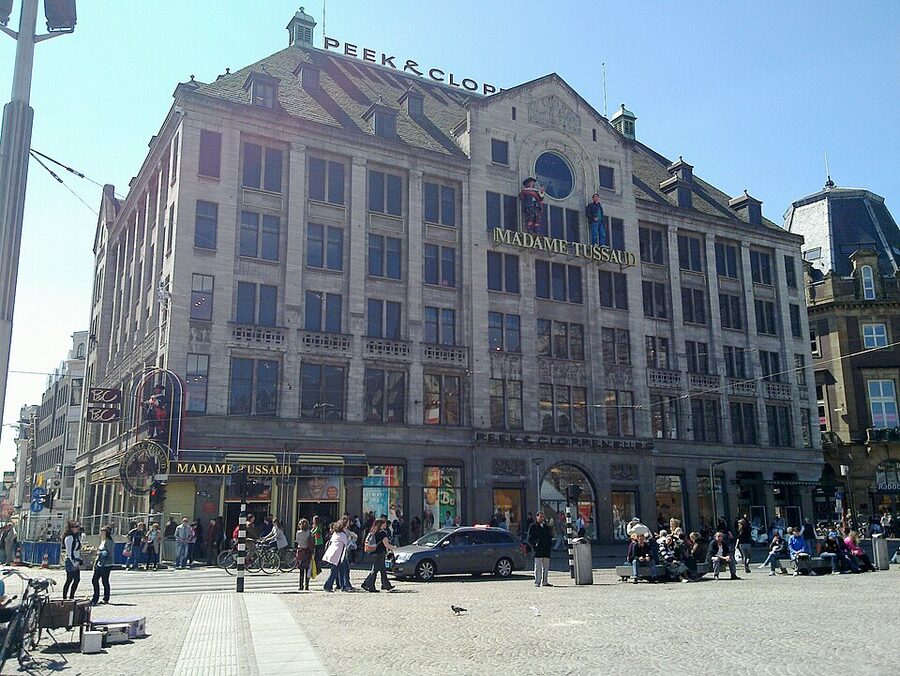
That’s the Amsterdam Icebar at Amstel 194 to 196, a small block south of Madame Tussauds on Dam Square, in the Rembrandtplein nightlife strip. It opened in 2007. It is a chain attraction, owned by Belushi’s, with sister venues in London, Paris, and Stockholm. It is also kind of fun for thirty minutes, in a way the brochures don’t quite explain. Whether it deserves a spot on your Amsterdam evening depends on what else you’re trying to do that night.
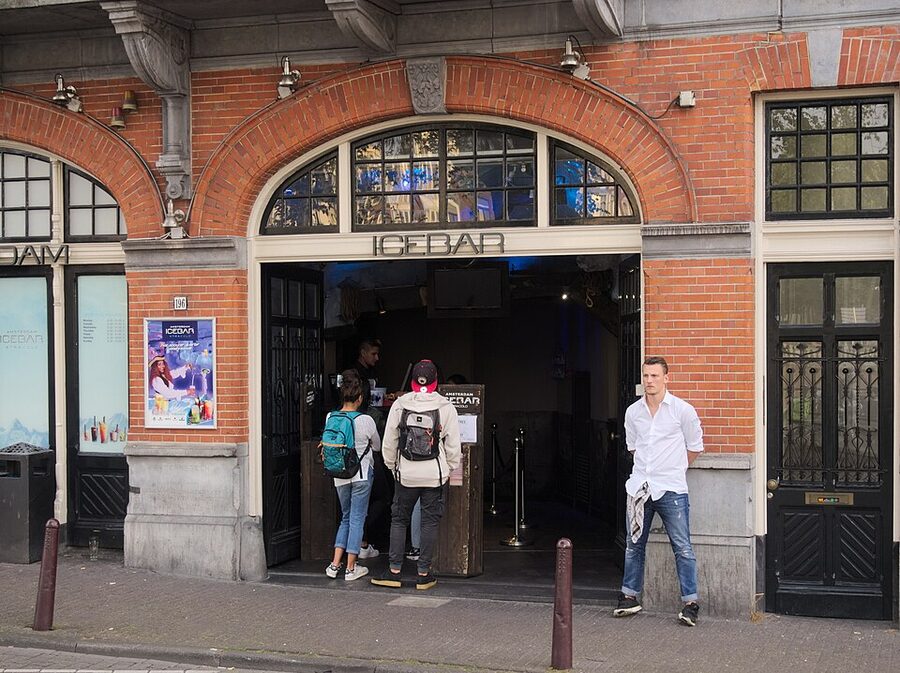
I’ll say up front what the brochures don’t. This is not the Icehotel in Jukkasjärvi, the original up in Swedish Lapland that gets sculpted from scratch every December by international ice artists. That place is a destination. Amsterdam’s version is the urban edition: one room, kept frozen year-round, refurbished a few times a year, sitting above ground in a building rented year-round to a hospitality chain. If you go in expecting an ice palace, you’ll be slightly let down. If you go in expecting “a novelty drink in a freezer,” you’ll have a better time than you thought.
In a hurry? Three quick picks
- Icebar Entry Ticket With 3 Drinks ($26): the standard Belushi’s-run product, three drinks included, 45 minutes total with the warm lounge before and after. Book here.
- Xtracold Icebar Amsterdam, 3 Drinks Included ($24): the Viator-listed version of the same Amstel-street experience, fast-track admission. Book here.
- Canal Cruise + Icebar combo ($41): the one to book if you’re trying to fold the Icebar into a wider Amsterdam evening rather than make a special trip for it. Book here.
What you actually walk into
Most travellers picture an ice cave. What you actually walk into is a small entrance lobby on Amstel street, in a building that looks like every other gable-fronted Amsterdam terrace. You hand over your ticket. A staff member asks your name, ticks you off a list, and points you upstairs to the warm bar. This part is just a regular pub. Beer taps, wooden tables, a window onto the canal-end of the street. You wait here while they batch the next group.
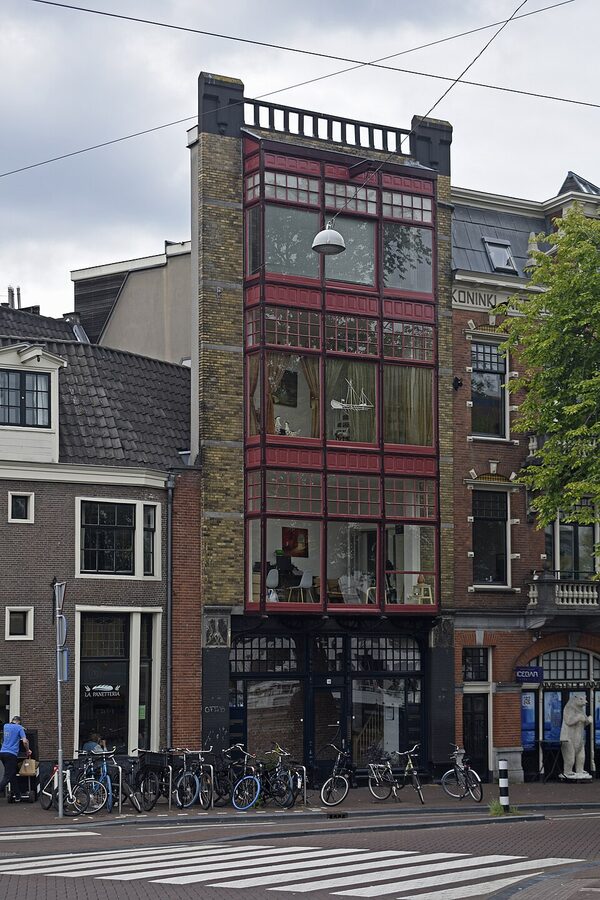
Groups go in at staggered intervals. Mine was about fifteen people. You queue at a coat-rack room. Staff hand you a thermal poncho, the kind you’d wear over a ski jacket, and a pair of fingerless gloves. You leave your real coat behind. The poncho is bulky and unflattering and you wear it for half an hour and you feel a little silly, which is part of the joke. Then they open the heavy insulated door and the cold rolls out at you like a wave.
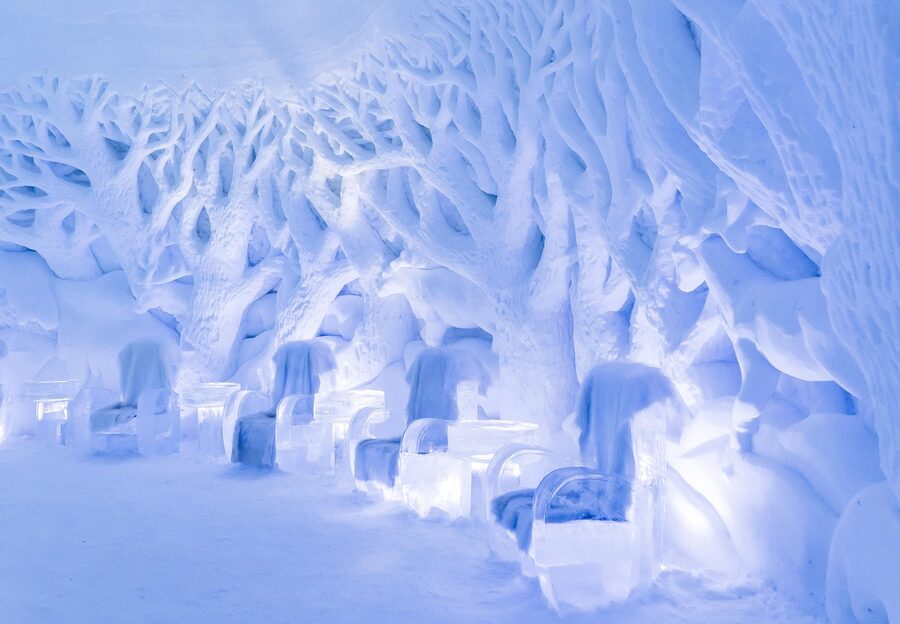
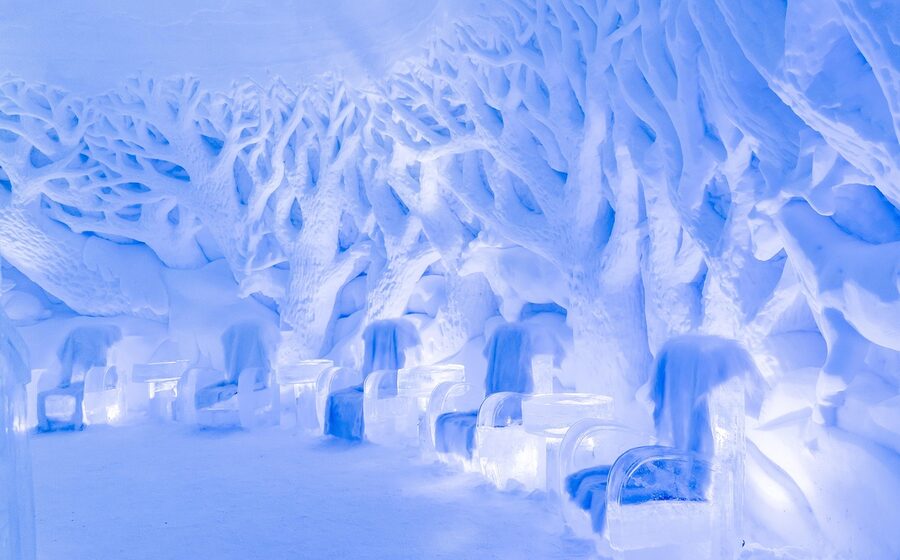
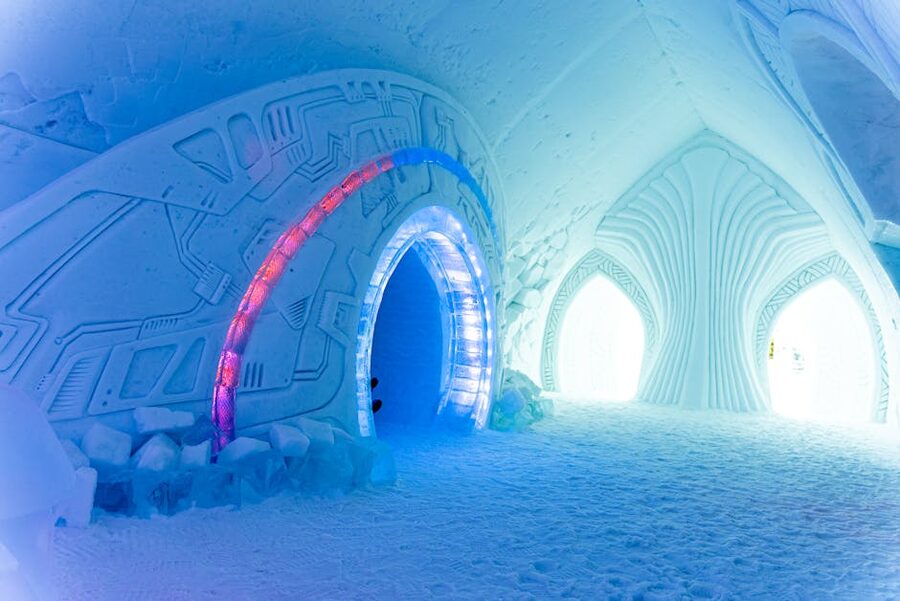
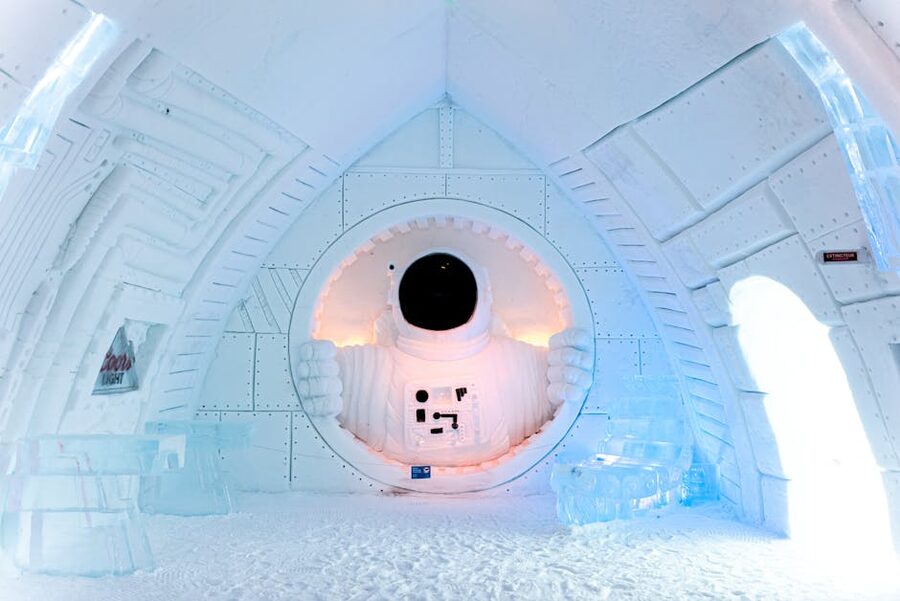
And then you’re in. Twenty steps from a normal Amstel street pub, you’re standing in a 200-square-metre room where the air is minus ten Celsius and everything you can see is carved from ice. A bartender behind a solid ice counter pours your first drink into a glass that’s cold enough to sting your fingers through the glove. The walls glow blue and pink under LED lights. You look up. There are ice chandeliers. Someone in your group is already taking a selfie.

The cold (it’s a real thirty minutes)
Minus ten Celsius is fourteen Fahrenheit. That’s colder than a domestic freezer. Your first reaction is exhilaration. The air feels sharp in a clean way. You pull the gloves on tighter, your breath fogs visibly, and you grin because the whole thing is so absurd. This phase lasts about eight minutes. You drink the first cocktail in big sips because the ice glass is melting in your hand and you can feel the cold soaking into your palm right through the glove.
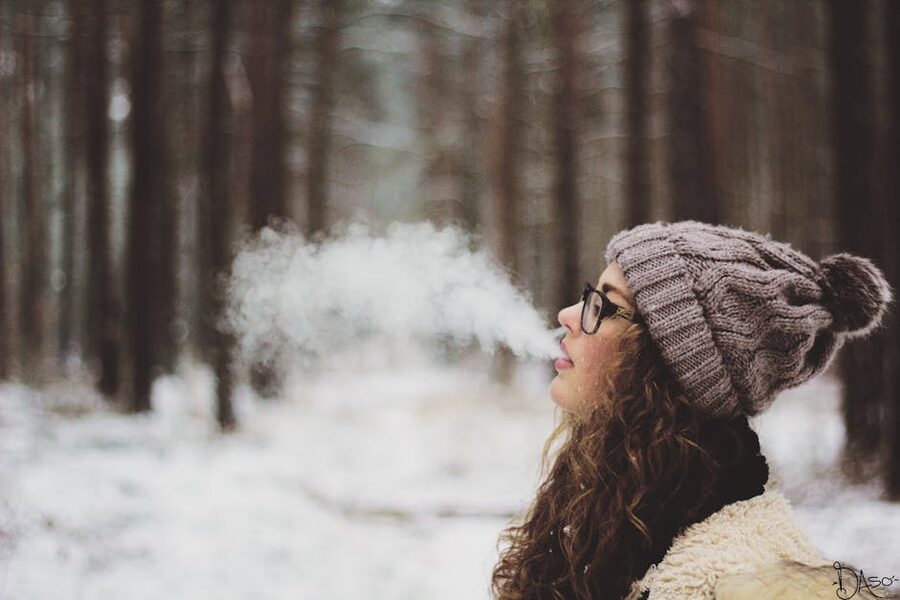
Around the fifteen-minute mark the cold stops being fun and starts being noticed. Your fingers, even in the gloves, are stiff. Your nose is running. You start shifting your weight from foot to foot. This is when most of the crowd has finished drink two and is hunting for the bartender to claim drink three. The poncho is doing what it can. It’s not doing enough if you came in just a t-shirt.
By minute twenty-five most people are done. They’ve taken every photo they wanted, they’ve Instagrammed the chandelier, they’ve posed by the ice statue of Anne Frank or Vermeer’s Milkmaid. The body wants out. At minute thirty the bartender announces it’s time, the heavy door opens, and you spill back into the warm bar where someone hands you a hot mug if you ask for one.
This is by design. Thirty minutes is what a normally-dressed person can comfortably do at minus ten without proper insulation. Push it longer and you’d start losing fingers. Stockholm’s outdoor original goes up to 40 minutes for parka-wearing visitors; the urban editions all cap at thirty. It’s the right call.
What the included drinks actually are
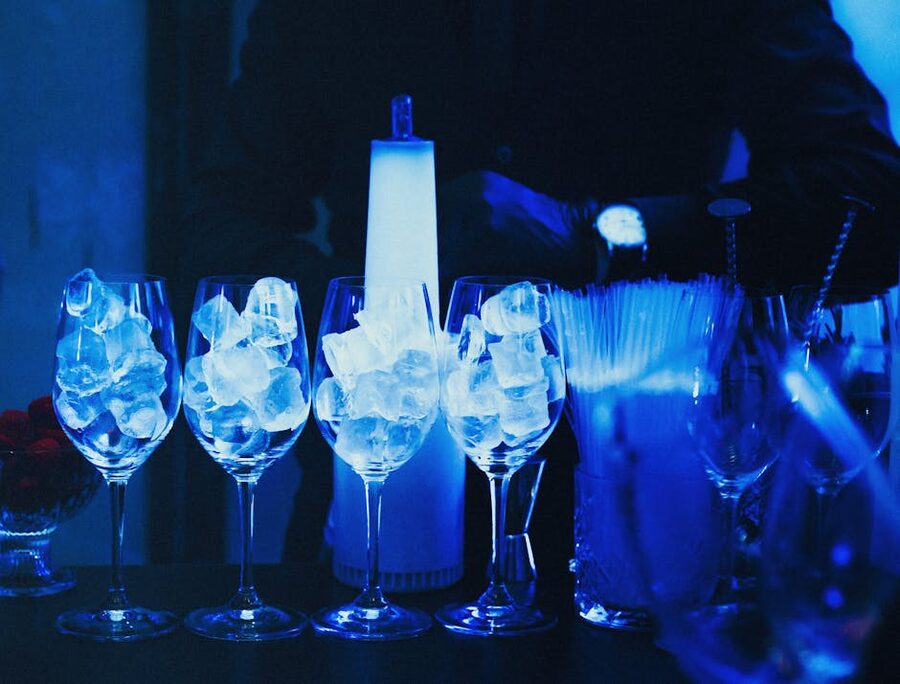
The standard ticket comes with three drinks. They are mostly vodka-based. There’s a reason for that, and the reason is physics. Most spirits below 40 percent alcohol freeze at the kinds of temperatures the bar is kept at. Vodka, which sits around 40 percent, doesn’t, because the alcohol-water mix has a freezing point well below minus ten. Beer freezes. Wine freezes. Most cocktails freeze if you put them in an ice glass and keep them there for more than a few minutes.
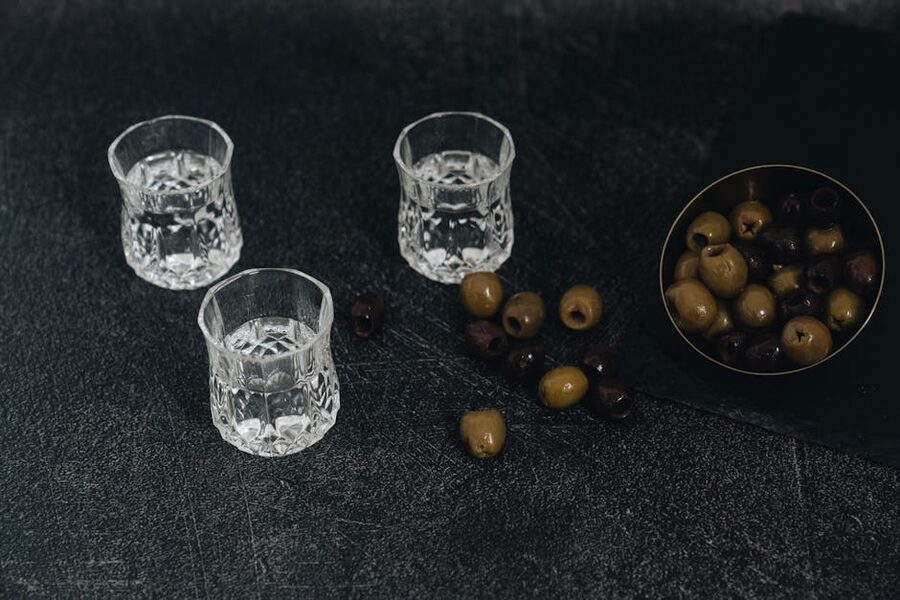
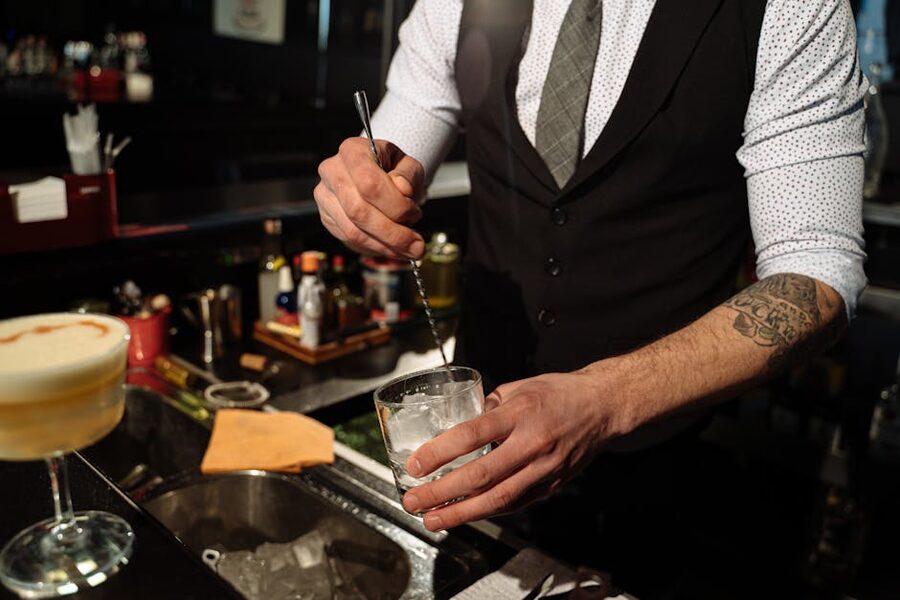
So the menu is shorter and more uniform than at a normal cocktail bar. You get a welcome drink, usually a vodka cocktail with a fruit syrup and a flavoured shot, plus two more along similar lines. There are sometimes shots of flavoured liqueur. Beer drinkers can get a bottle on request, and the bottle gets handed to you cold but not frozen, which is fine. The drinks are not bad. They are also not the reason you’re there. If your priority is great cocktails, go to the warm half of the same bar afterwards, or walk three minutes to one of the actual cocktail bars on Reguliersdwarsstraat.
One small note worth flagging. The 3-drink count is real. They keep track. If you sip slowly, you’ll get all three. If you’re trying to stretch them, do it backwards: shoot the welcome drink, sip drink two slowly, sip drink three for the photo round. The bartenders are not pushy.
The sculptures, and why some are good
The ice furniture and the wall sculptures are the part most travellers underestimate. These are not amateur freezer-shed shapes. The Amsterdam Icebar contracts Swedish ice artists, the same scene that supplies the original Icehotel up in Lapland, to come down twice a year and re-sculpt the room. The bar countertop is one continuous block, refrigerated from below by an industrial cooling rig that runs the temperature 24 hours a day. The walls are ice blocks, cut from refrigerated water tanks rather than a frozen lake, but the carving is real.
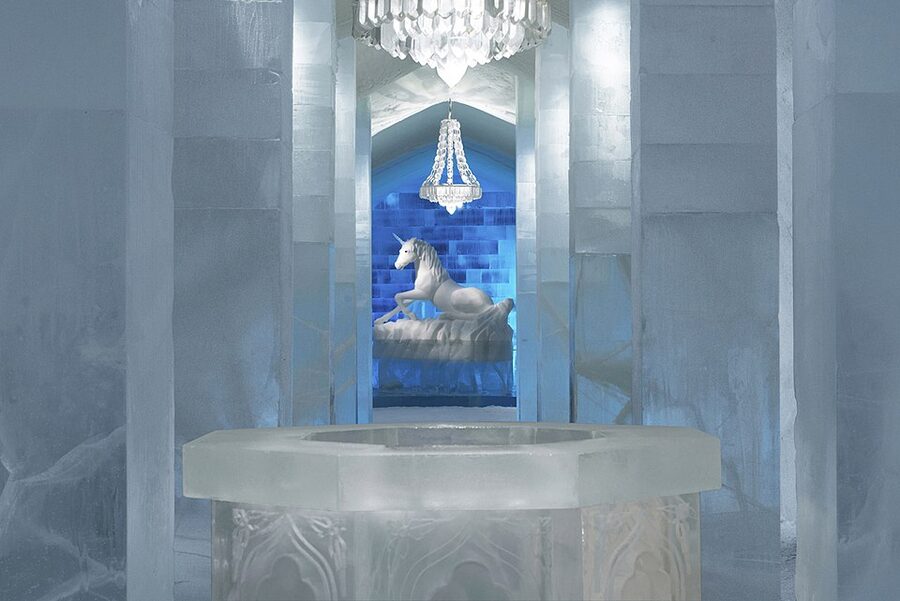
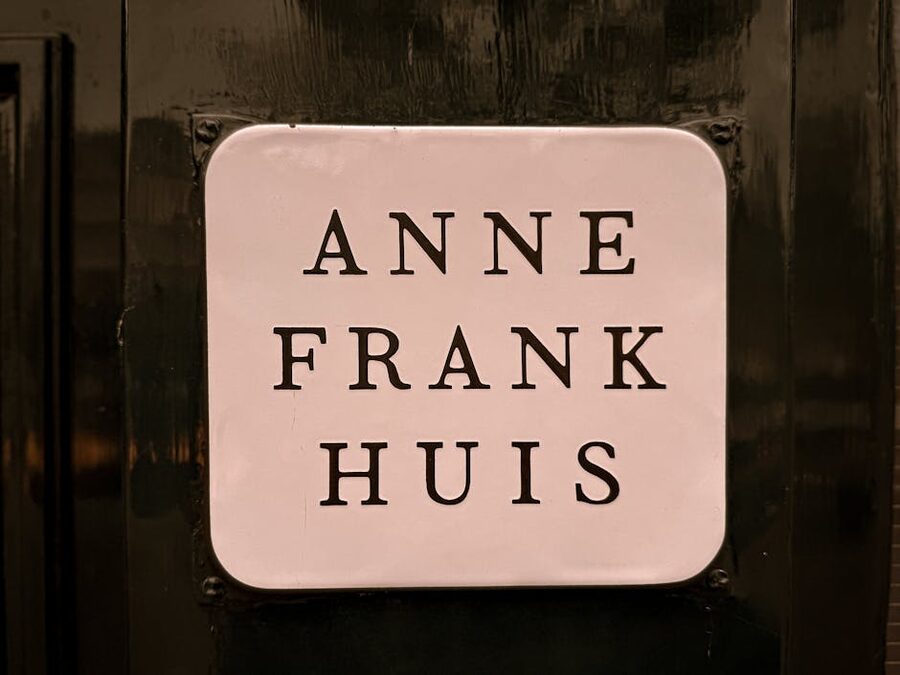
The Amsterdam-specific sculptures are the bit that distinguishes this venue from the London or Paris one. Anne Frank gets a portrait carved into one wall (yes, a little weird at first, but the room is meant to nod at the city it sits in). Vermeer’s Milkmaid is carved standing at her ice jug, recognisable in profile if you’ve seen the painting in the Rijksmuseum collection. There’s a Dutch windmill at the back of the room, blades and all, and a Rembrandt likeness near the door, which is appropriate given the bar is around the corner from Anne Frank House and a few minutes from the painter’s old neighbourhood.
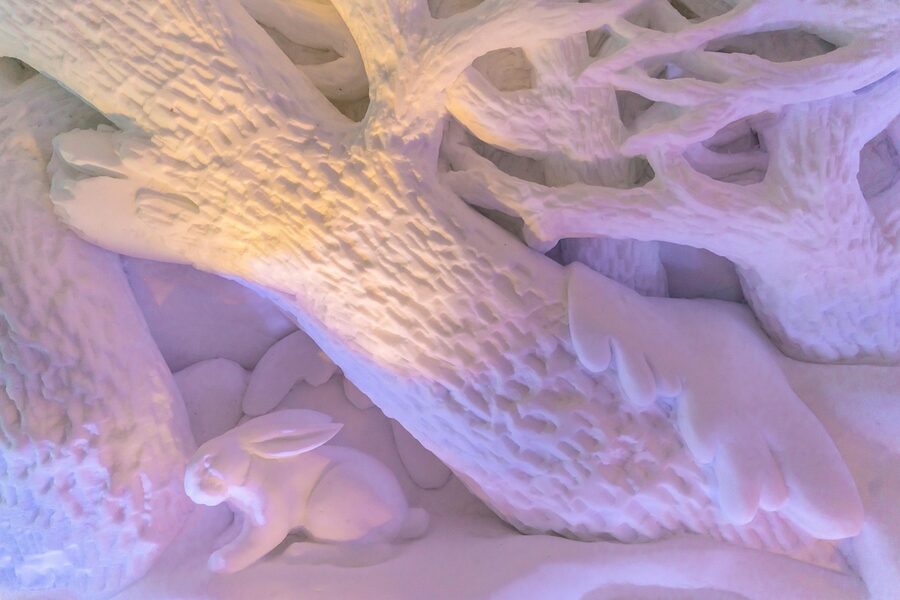
The sculptures don’t last forever. They’re being slowly worn down by warm tourist breath, by the LED heat (LEDs run cool but not cold), by hands touching them despite the signs. So the room gets a refresh on a schedule, and the sculptures change. If you ask the staff what’s new this season, they’ll tell you. Don’t expect the same Anne Frank face as the photos online.
Photography in there
Allowed and encouraged. Phone, camera, anything. Flash is fine and most people use it because the room is dark and blue-lit. The thing nobody tells you is that your phone hates the cold. iPhones in particular start refusing to charge below zero, and the battery percentage drops fast. My phone went from 73 percent to 41 percent in 28 minutes inside, and a couple of people had their phones cut out entirely.
So: take photos in the first ten minutes. Don’t lock your phone for the entire session, because waking it back up takes longer than usual. If you came for a specific photo (the ice glass shot, the bar countertop close-up, the breath-fog selfie), get it first. Save the casual shots for once you’ve banked the keepers.
For couples, the standard shot is the two of you holding ice glasses at the bar with the wall sculpture in the background. For solo travellers, the wide shot from the doorway gets the most of the room. For a group, the bar countertop is the natural spot to line up because the lighting is best there.
Who this works for, who it doesn’t
This is the question I think most reviews dodge, so let’s take it head on.
Good fit: a Friday or Saturday night when you’re already in Rembrandtplein for dinner or going out, you have an extra hour, and you want a novelty 30-minute stop before or after your main plan. Couples who want a quirky pre-dinner activity. A group of friends in their twenties or thirties who are looking for something to break up the standard pub crawl. Anyone who’s never been to an ice bar anywhere and is curious to try one without booking a flight to Lapland.
Bad fit: as your main evening activity. As a romantic date (the room is loud, the lighting is dramatic but unflattering for portraits, and you can’t really hear each other talk through the cold). As a kids’ destination unless your kids genuinely enjoy cold; the official minimum is 18 because of the included alcohol, and even kids’ tickets without booze (which exist by request) are best for over-tens who can handle the temperature. As a “we have one evening in Amsterdam, what should we do” answer. If you have one evening, do a canal cruise at golden hour and a real dinner.
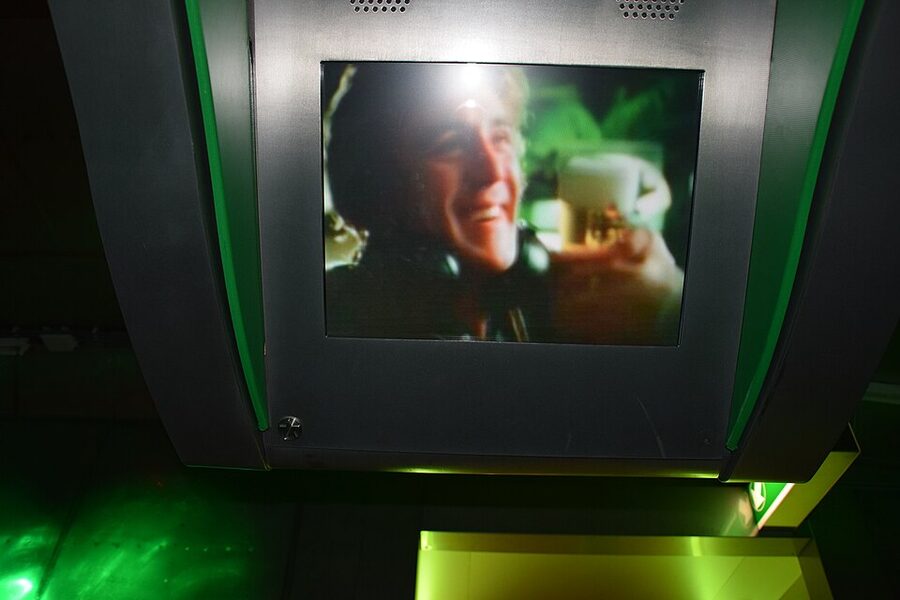
Direct comparison. If you’re choosing between the Icebar and the Heineken Experience as a single evening drink-themed activity, the Heineken Experience wins on substance (90 minutes of brewery-history walkthrough plus drinks) and the Icebar wins on novelty (30 minutes you’ll actually remember). They are different products and you can do both in a long weekend.
Three Icebar bookings worth your time
The Icebar isn’t a “shop around 14 vendors” attraction. It’s a single venue with a couple of branded entry options on the major resellers, plus a canal-cruise combo for travellers who want to pair it with another evening activity. Here are the three that make sense.
1. Icebar Entry Ticket With 3 Drinks: $26
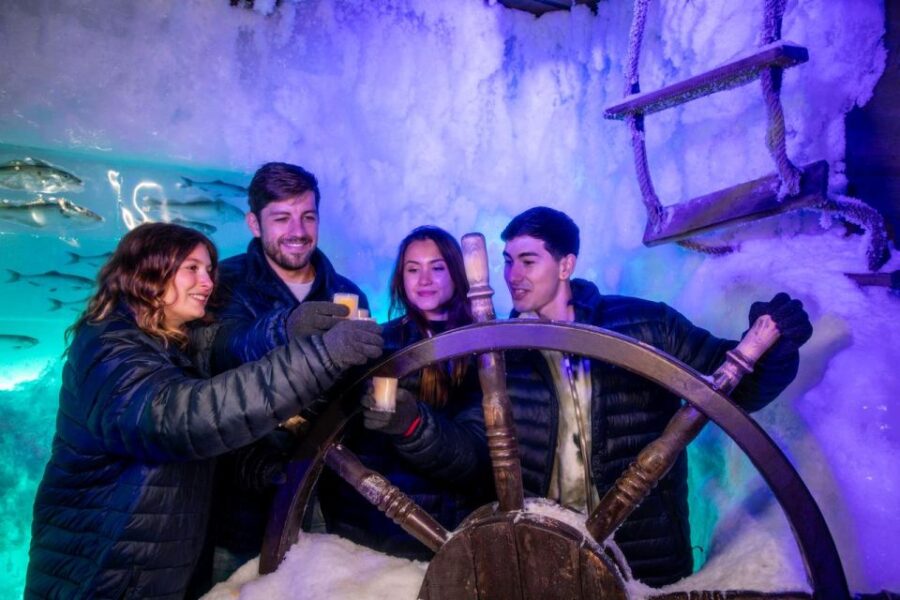
This is the flagship product, the one with the largest review base, and the one I’d recommend booking unless you have a specific reason to do otherwise. Our full review covers the welcome-drink mechanics and what the staff actually let you do with the included shots. Show up 15 minutes before your slot.
2. Xtracold Icebar Amsterdam, 3 Drinks Included: $24
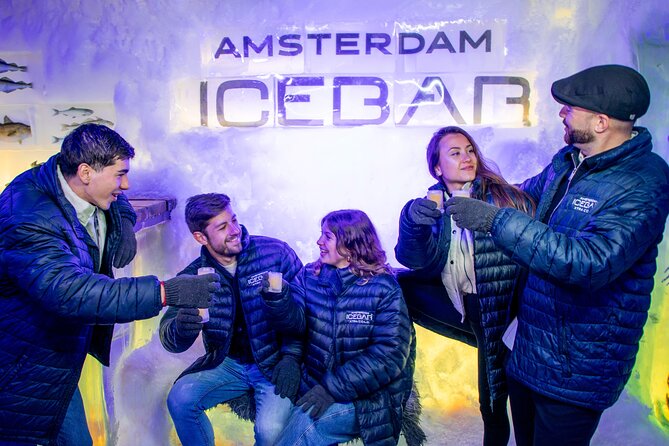
This is the Viator-listed equivalent of the same Amstel-street experience, two dollars cheaper than the GetYourGuide flagship. The fast-track piece is what’s worth the booking on busy weekends. Our review explains when the line actually justifies the upgrade.
3. Canal Cruise + Icebar Combo: $41
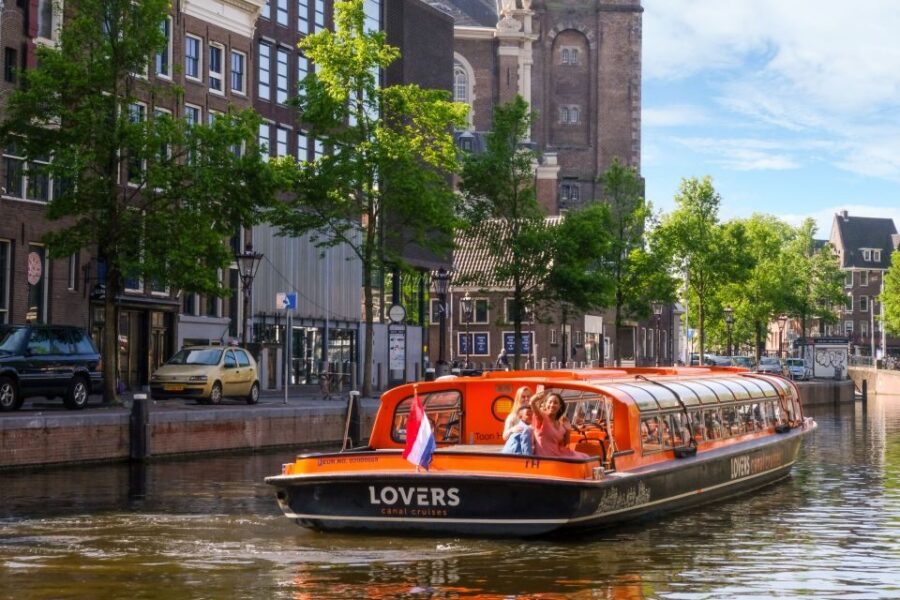
This is the booking I’d suggest for a couple who’s only got one Amsterdam night and wants to make it count. The cruise hits the canal-house facades at dusk, then you walk to the Icebar for the novelty round. Our canal-cruise breakdown covers which boats are worth boarding for golden hour.
Practical bits before you go
The bar opens at 16:00 most days, later on weekends, and runs until about 23:00 weekdays and roughly 01:00 Friday and Saturday. Last entry is usually an hour before closing because every group needs the full thirty minutes inside. Slots run every 30 to 45 minutes depending on the night. Friday and Saturday at 21:00 sells out a few days ahead in summer; weeknights you can usually walk in.
Wear long pants. Wear closed shoes. Wear at least a long-sleeved t-shirt under whatever else you’ve got, because the poncho fills in for a coat but not for a tank top. They’ll let you in regardless, but you’ll regret the choice by minute fifteen. The gloves are real fingerless gloves with proper insulation. Photographers can swap them for fully-fingered ones at the desk if asked.
Lockers are free for coats and bags. There’s nothing valuable inside, so don’t bring a daypack. Phones, wallets, and one camera are the right load.

Cancellation policy is generous on both GetYourGuide and Viator. Free cancellation up to 24 hours before your slot. If the weather turns and you’d rather skip the cold-on-cold, just rebook.
Children. The included alcohol means the official adult ticket is 18 plus, but they offer non-alcohol versions for younger visitors on request. The cold limit is the real one, though. I wouldn’t bring under-eights regardless of policy. The room is loud, dark, the temperature is genuinely intense for small bodies, and there’s nothing in the experience that’s specifically designed for kids the way the Upside Down Museum or Madame Tussauds Amsterdam are.
Where the Icebar sits in the wider Amsterdam evening
The Icebar is on Amstel between the Munttoren bridge and the Rembrandtplein nightlife block. That puts it five minutes from Madame Tussauds at Dam Square, seven minutes from the Royal Palace, twelve minutes’ walk to the Anne Frank House, and fourteen to the Heineken Experience. You’re in the dense centre. There’s nothing more than fifteen minutes’ walk away that an evening visitor would care about.
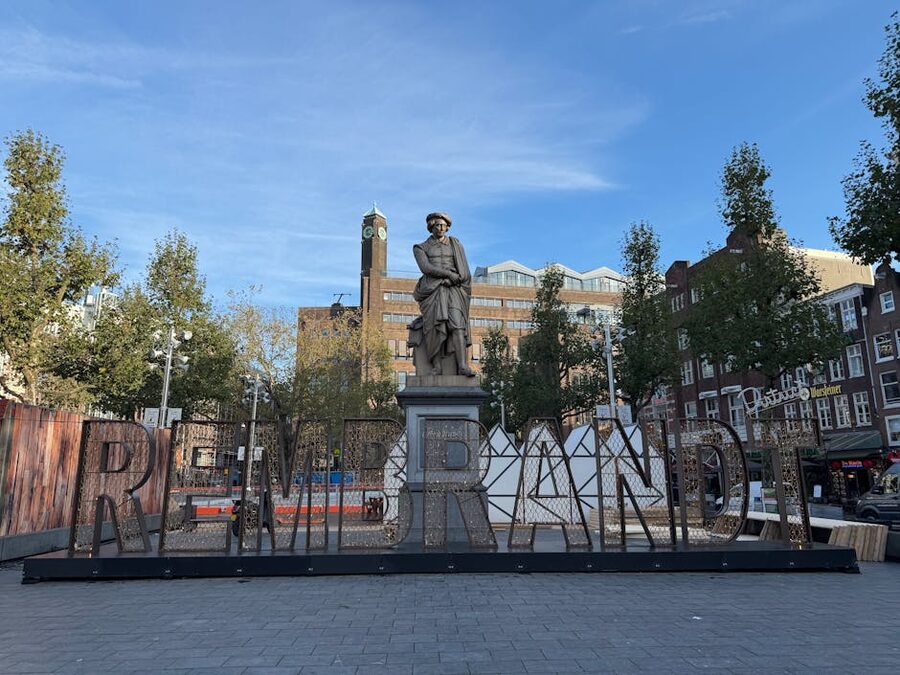
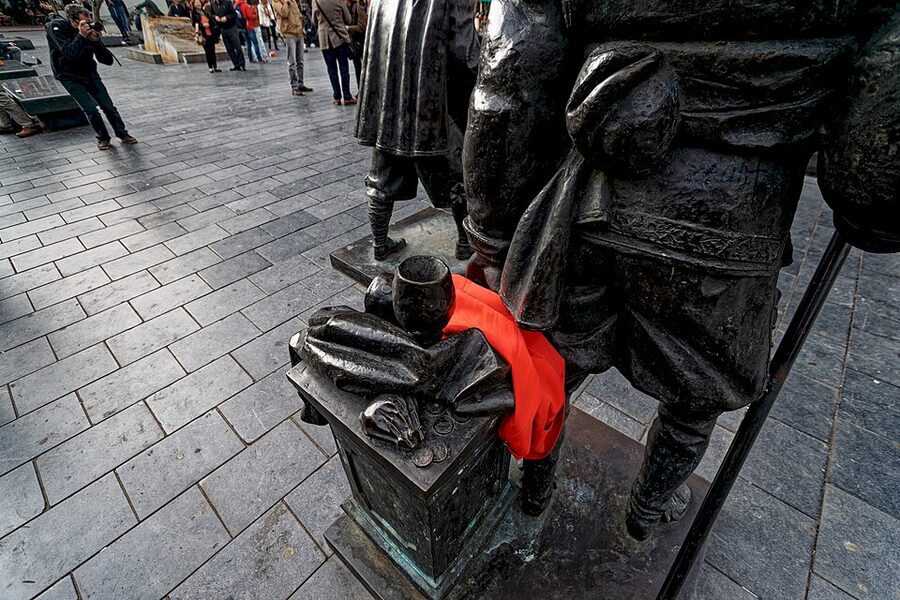
Rembrandtplein itself is a square that’s lined with cafes, brown bars, and a few clubs. The bronze “Nightwatch 3D” statues stand in the centre, a cluster of life-size figures from Rembrandt’s painting that you can walk among. They make a good before-or-after-photo. Most travellers eat in this square or one of the side streets feeding off it, then drift over to the Icebar for the novelty hour.
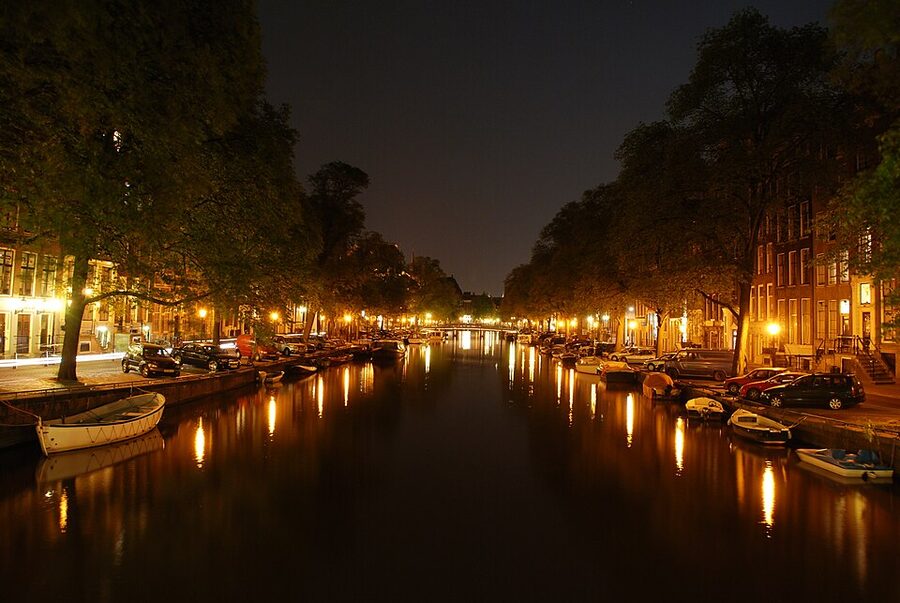
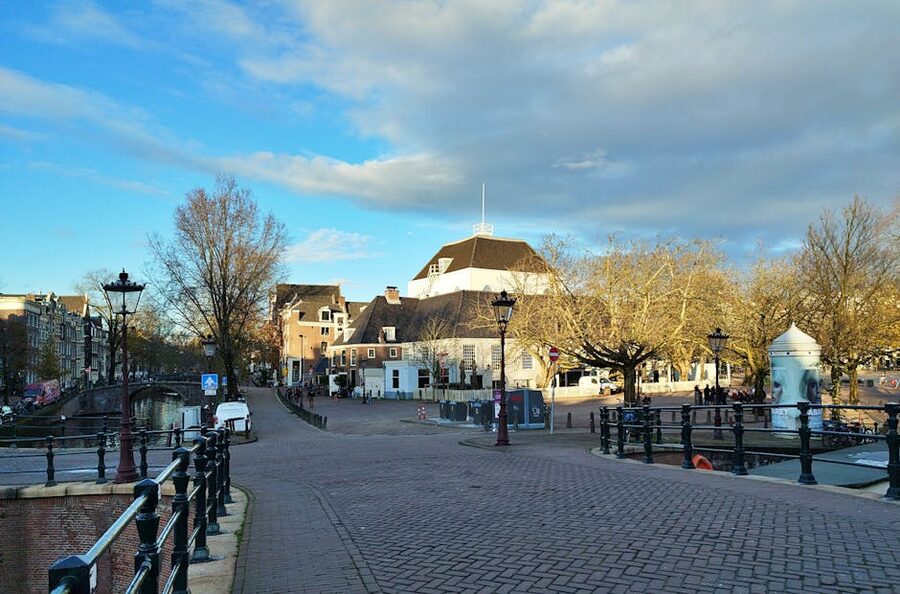
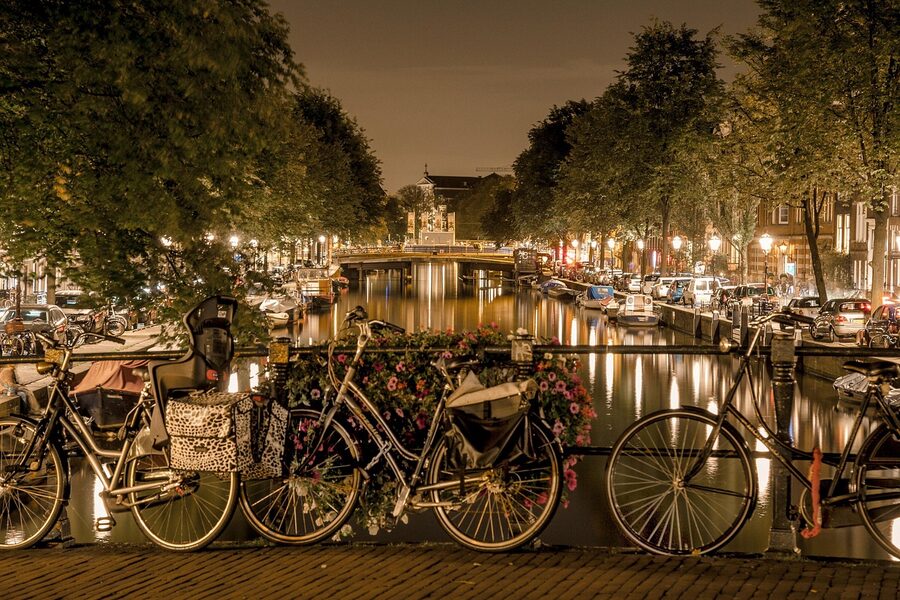
The canals immediately around here look their best after dark, when the low lights along the bridges catch the water and the gable houses lean in over the reflections. If you’re combining the Icebar with a canal cruise, time the cruise for golden hour and the Icebar for after dark. The order matters. The Icebar’s warm bar is fine for a sit-down recovery drink, but it’s not a destination itself. The canals are the destination.
The brand-experience-as-tourism question
I want to address something most reviews skirt around: the Amsterdam Icebar is not a uniquely Amsterdam thing. It’s a chain. Belushi’s, the operator, runs ice bars in London, Paris, Stockholm, Berlin (their version closed and reopened a couple of times) and a handful of other capitals. The Stockholm one is genuinely affiliated with the Lapland Icehotel and is the closest to “real.” The London and Paris and Amsterdam ones are urban editions, all roughly the same product: a single ice room in the centre of a major capital, decorated with a few city-specific sculptures so you know which one you’re in.
This is what I mean by brand-experience-as-tourism. The product is the brand: a 30-minute novelty in a room that exists because tourists like a photo opportunity. It’s the same category as Madame Tussauds (chain wax museums where the experience is identical city to city) or the Upside Down Museum (chain photo-prop museum), or globally, Disneyland Paris. None of these things are bad. They are designed for what they are, and they deliver on what they promise. They are just not “real Amsterdam,” any more than a Disneyland in any city is “real” of that city.
So the value question is: do you want the brand experience for thirty minutes, or do you want something genuinely Amsterdam-specific? Both are legitimate evening choices. The Icebar is the right pick if you want the novelty and the photo and the friend-group anecdote. The Van Gogh Museum evening hours, or a quiet old brown bar in the Jordaan, are the right picks if you want something that could only happen in this city.
The 200-square-metre detail
Let me say a word about the size, because it’s the single biggest expectation gap. People who’ve seen photos of the Lapland Icehotel imagine a vast labyrinth of carved corridors. The Amsterdam version is one room, about 200 square metres, which is the size of a generous one-bedroom apartment. There’s a bar along one wall, a few sculpted seating nooks, sculpted statues along the back, and one or two photo points. That’s it.
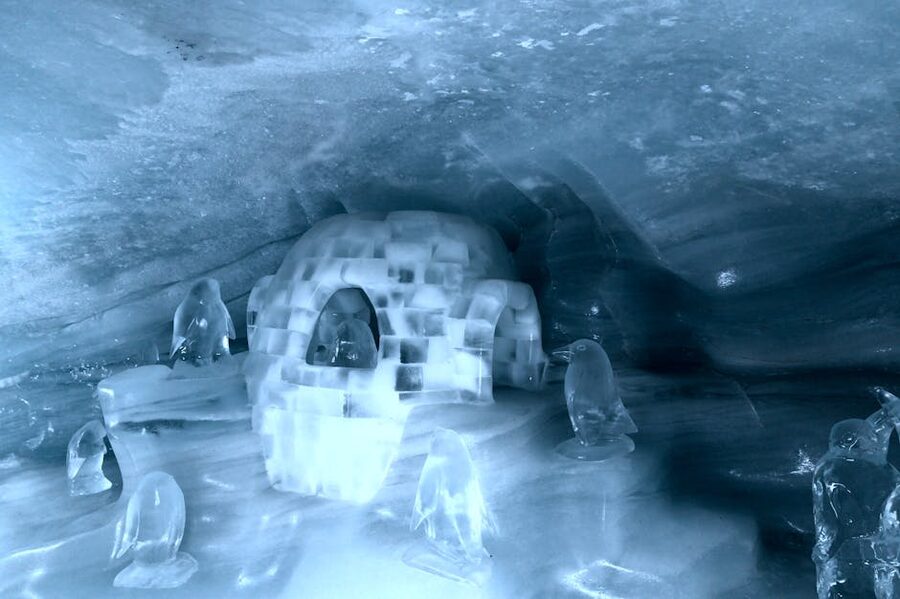
This sounds like a knock and it isn’t, exactly. The point is that the room is sized correctly for the visit. Thirty minutes in a 200-square-metre space is plenty. You walk around it twice in the first ten minutes, take photos in the next ten, and start looking for the door in the last ten. A bigger room would just mean more cold and less time per square metre. The format knows what it is.
If you want the giant carved ice corridors and the multi-room architecture, fly to Kiruna in Swedish Lapland in February and book the original. If you want a 30-minute version of the same idea on Amstel street on a Saturday night, book here.
The drinks, in slightly more detail
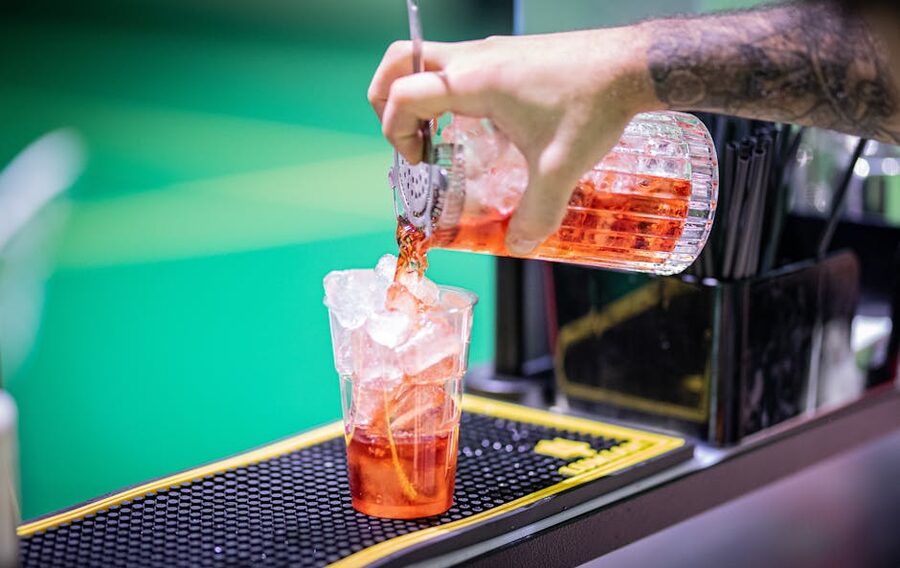
Some of you are going to want the menu specifics, so here’s what I saw on my visit. The welcome drink was a vodka-based cocktail with cranberry and a citrus syrup, served in an ice glass. The next round option was a vodka with a flavoured liqueur (I had a Sambuca shot, which is a Carol-the-reviewer favourite for a reason; the warmth on the throat is real after fifteen minutes in there). The third round I went for a beer, which they handed me in a regular bottle since glass bottles don’t freeze the way ice glasses do.
Soft drinks are available for non-drinkers and come at no discount. Hot chocolate is sold in the warm bar afterwards, and is a small but genuinely nice touch when you’ve just spent half an hour in a freezer. The ice glasses themselves: they’re real, they leak slightly, and they’re meant to be drunk fast. Don’t try to take one home. They will melt before you reach the coat-rack.
What it costs per hour
Let’s do the math out loud. The standard ticket is $24 to $26 depending on the platform. You get 30 minutes inside the ice room. That works out to about $48 to $52 per hour of attraction time, which is on the high side for Amsterdam evening activities. A canal cruise runs about $20 for an hour, the Heineken Experience is $26 for 90 minutes (roughly $17 per hour), and a guided Anne Frank walking tour is around $25 for two hours (about $12 per hour).
The three drinks are real, though, and at the bar prices around Rembrandtplein those would cost you $25 to $30 alone. So the actual “novelty surcharge” you’re paying is closer to nothing-to-five-dollars on top of the drinks, which is fairer than the gross sticker number. The right way to think about it: if you’d already planned to spend $20 to $25 on three cocktails in the area, the Icebar costs you a few extra euros to drink them in a freezer.
Worth it or not
Worth it, with caveats.
Worth it if: you’re in your twenties or thirties, travelling with friends or a partner, in Amsterdam for at least three nights, and you’re looking for a novelty 30-minute stop on a Friday or Saturday evening. Worth it if you’ve never been to an ice bar anywhere and are curious. Worth it if the photos and the anecdote matter to you more than the drinks themselves.
Not worth it if: you’re trying to make the most of a one-night Amsterdam visit. Not worth it if you don’t drink at all (the included drinks are most of the value, even at the non-alcoholic substitution rate). Not worth it if you’re travelling with kids under ten. Not worth it if you’d choose 90 minutes at the Heineken Experience or two hours at the Rijksmuseum over a 30-minute novelty given the same evening slot.
For a couple on a long weekend, the canal-cruise combo at $41 is the best ratio. That gets you the Amsterdam evening you came for plus the Icebar punctuation. For solo travellers, just walk in on a quiet weeknight and pay the $24 entry; you’ll get out without queueing.
What to do straight after
You walk out of the warm bar onto Amstel street with a slight numb glow and an empty hour or two. Here’s what to do with it.
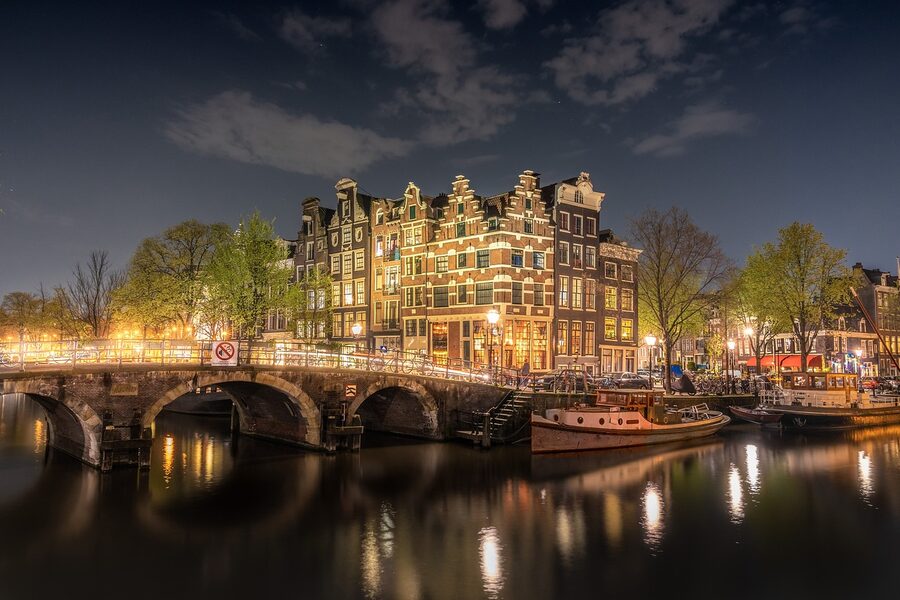
Walk three minutes north to the Munttoren bridge and turn left along Reguliersgracht. This is one of the prettier stretches of canal in the centre and it’s lit beautifully at night. Then loop back into Rembrandtplein for dinner. Stay away from the four large chain restaurants on the square itself; the food on the small streets feeding off the square (Reguliersdwarsstraat, Bakkersstraat, Halvemaansteeg) is consistently better.
If you want a second drink in a non-novelty setting, the brown bars on Reguliersdwarsstraat are good. If you want one more photo opportunity, walk seven minutes to Dam Square and shoot the Royal Palace at night, when the floodlights are on and the square is mostly empty.
The most-missed prep advice
Three things travellers regret not knowing.
One: arrive 15 minutes early. The poncho-and-glove handout takes time, and they board groups in waves; if you walk in at your slot exactly, you may end up in the next wave instead, losing 15 minutes from your night. Two: bring cash for the warm-bar tip. The bartenders work the freezer in shifts and tips are rare because tourists assume they’re salaried (they are, but a euro or two per drink at the warm bar lands well). Three: charge your phone before you go. Phone batteries fall fast in the cold; arriving at 70 percent gets you home; arriving at 30 percent gets you stranded with a dead phone in a strange city.
If you’re choosing between this and a different chain attraction
Amsterdam has an unusual density of brand-experience attractions. Beyond the Icebar, you’ve got Madame Tussauds, the Upside Down Museum, the Fabrique des Lumières immersive art space, and the Moco Museum. They’re all in the chain-experience family, with varying levels of substance.
If you have one chain-experience evening slot, here’s how I’d rank them:
- Fabrique des Lumières: 60 to 90 minutes, real artistic content, immersive projection in an old industrial space. The most rewarding of the chain options.
- Moco Museum: 90 minutes, Banksy and modern art. Worth it if you like the artists. A real museum experience despite being a chain.
- Icebar Amsterdam: 30 minutes, pure novelty. Best as the second activity of an evening rather than the first.
- Upside Down Museum: 60 minutes, Instagram-only. Skip unless you specifically want the photos.
- Madame Tussauds Amsterdam: 90 minutes, kids-friendly. Skip if you’ve done a Tussauds anywhere else.
The right framing: don’t do all of these in a single trip. One chain experience plus the canals plus a real museum (the Van Gogh or the Rijksmuseum) is the right balance for a long weekend. The Icebar fits in that single chain slot if you want novelty over substance.
For travellers comparing other “themed” attractions in Europe
I get the question a lot from readers who’ve done one chain-experience attraction and want to know which other ones are worth it. The Icebar’s closest sibling in Europe is probably Disneyland Paris, which is a different scale (a destination resort instead of a 30-minute room) but the same category: a brand experience that’s identical wherever you find it, and that you go to for the brand. If you’ve enjoyed Disneyland Paris specifically for the engineered-experience-of-it, you’ll probably like the Icebar for the same reason.
The other comparison readers make is to Siam Park in Tenerife or the larger Spanish theme parks. Different category. Siam Park is a real all-day water park; the Icebar is a 30-minute set piece. The category overlap is “engineered tourist attraction in a tourist city,” but the time-and-money commitment is different by an order of magnitude. If you’re choosing between flying somewhere for a theme attraction or stopping in at the Icebar on an evening you’re already in Amsterdam, those are not the same decision.
The bottom line
The Amsterdam Icebar is what it says on the tin: a bar made of ice, a 30-minute novelty, three drinks, and a few photos. It’s not a destination, it’s not the real Lapland ice-architecture experience, and it’s not the headline of a weekend in Amsterdam. It is genuinely fun for the half-hour it lasts, the sculptures are better than the genre usually delivers, and the included drinks are real. Book it as the second activity of a Friday or Saturday night, dressed for it, with your phone charged, and you’ll walk out smiling.

While you’re planning the rest of the evening
The Icebar fits into a wider Amsterdam itinerary in pretty specific ways. If you’re piecing together a couple of days here, the activities you’ll want to combine with it are the canal cruises (the natural pairing for a same-evening combo), the Heineken Experience for a substantial drinks-themed afternoon before the Icebar’s lighter evening slot, and one of the proper museums (the Rijksmuseum or the Van Gogh Museum) for daytime weight. For a day trip out of the city, the Keukenhof tulip gardens are the spring pick and the Zaanse Schans windmill village is the all-season one. Save the Anne Frank walking tour for a morning when you’re rested. The Icebar is the last thing on the day, not the first.