
Amsterdam scores a 3.9 on the hop-on hop-off bus rating scales, and that number is doing real work. The HOHOs that score five stars are in cities that sprawl across hills, ridges, and ring roads. Amsterdam is none of those things.
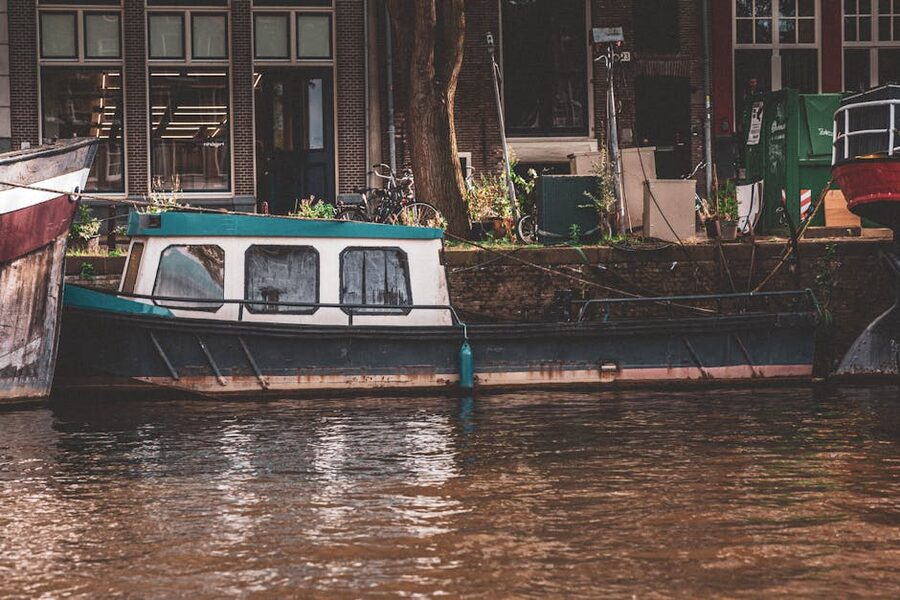
It’s a small, dense city built around water. The thing the bus is supposed to do for you is already being done, better, by the boats. So for most travellers, the answer to the question in the title is no: skip the bus, take the canal cruise instead.
In a hurry: the picks
- City Sightseeing Bus + Boat ($35): the flagship combo, both transport modes for one price. Book on GetYourGuide.
- Hop On Hop Off Bus ($36): the same red bus product on Viator if you keep your bookings there. Book on Viator.
- Canal Cruise with Audio Guide ($17): the actual recommendation. Cheaper, more atmospheric, covers the same ground. Book on Viator.
Why the bus is the wrong tool for Amsterdam
The HOHO bus is a tool that was designed for cities like Rome, where the historic centre is enormous, the metro doesn’t reach the headline sights, and you genuinely need wheels and a roof to cover ground. Rome’s HOHO earns its keep. So does Barcelona’s, where a 3km walk uphill to Park Güell is the alternative. So does Seville’s, where the river divides the city in two. The tool was built for those problems.
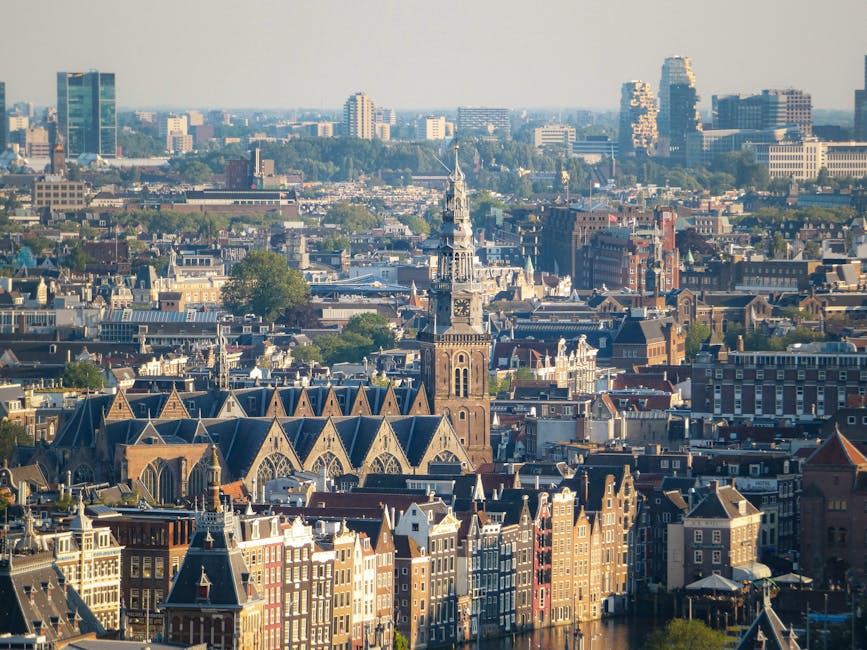
Amsterdam’s problem is the opposite. The headline sights are stacked on top of each other inside a 17th-century canal ring you could walk across in 25 minutes. The Rijksmuseum, the Van Gogh, and the Stedelijk are all on the same square. The Anne Frank Huis is a 12-minute walk from there. The Heineken Experience is a 15-minute walk south. Putting yourself on a bus that has to obey traffic lights, share lanes with delivery trucks, and reroute around bicycle gridlock to do the same trip you could walk in 20 minutes is a tax on your day, not a service.
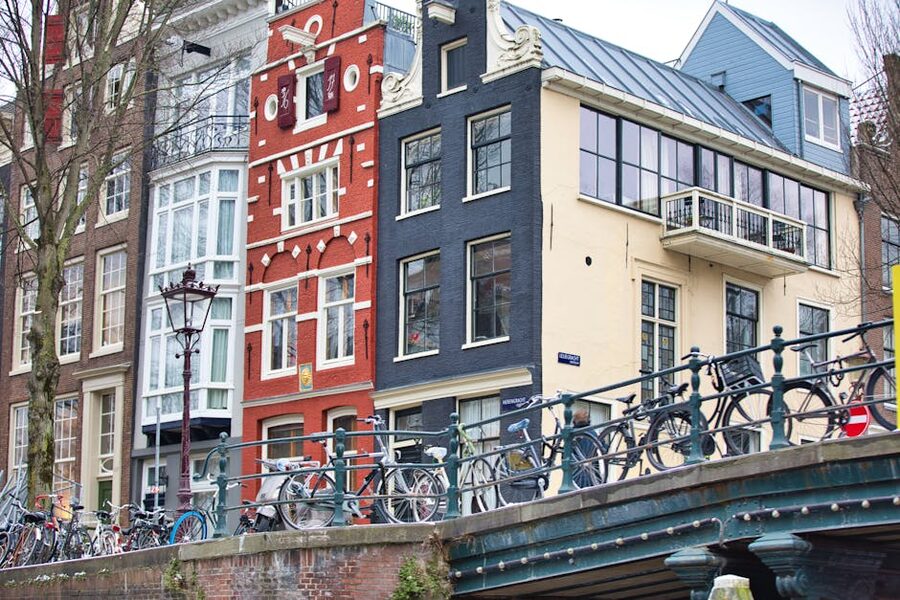
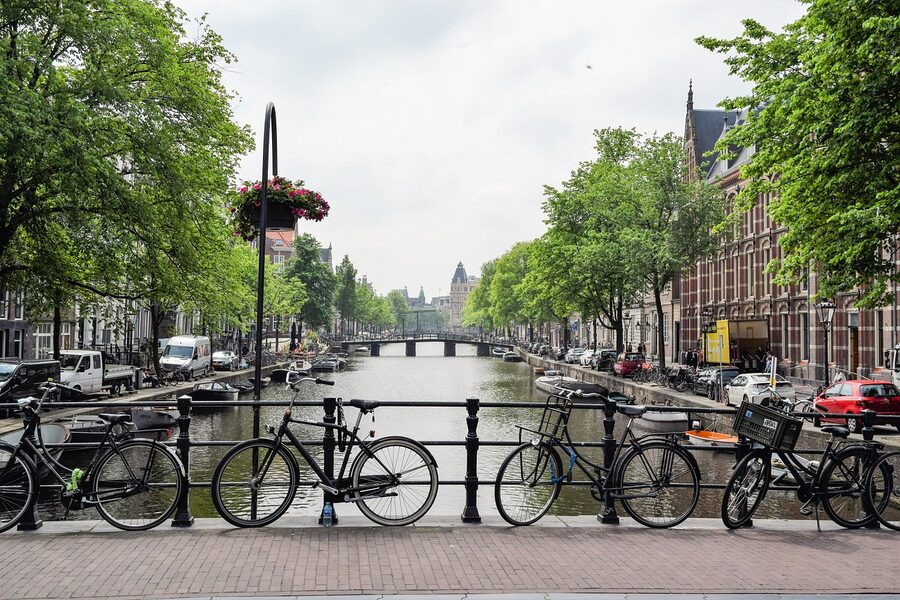
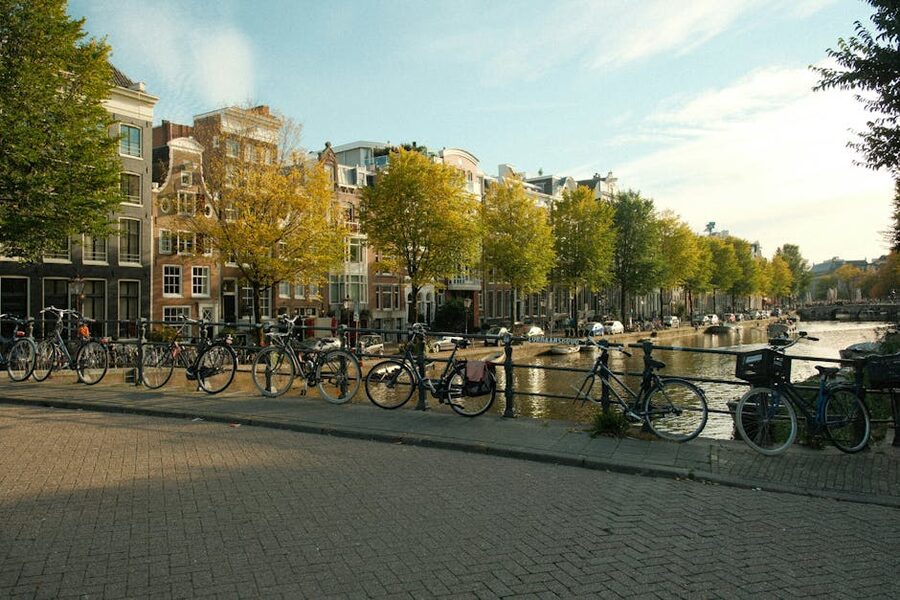
And there’s the cycling problem. Amsterdam has more bicycles than residents. The bus lanes get blocked, the loading zones get blocked, and on tour-heavy weekends I’ve watched an open-top sightseeing bus sit at the same canal-bridge approach for nine minutes because a cargo bike with a flat tire was wedged in front of it. The view from a stationary upper deck is not what you’re paying $35 for.
The canal cruise IS the hop-on hop-off
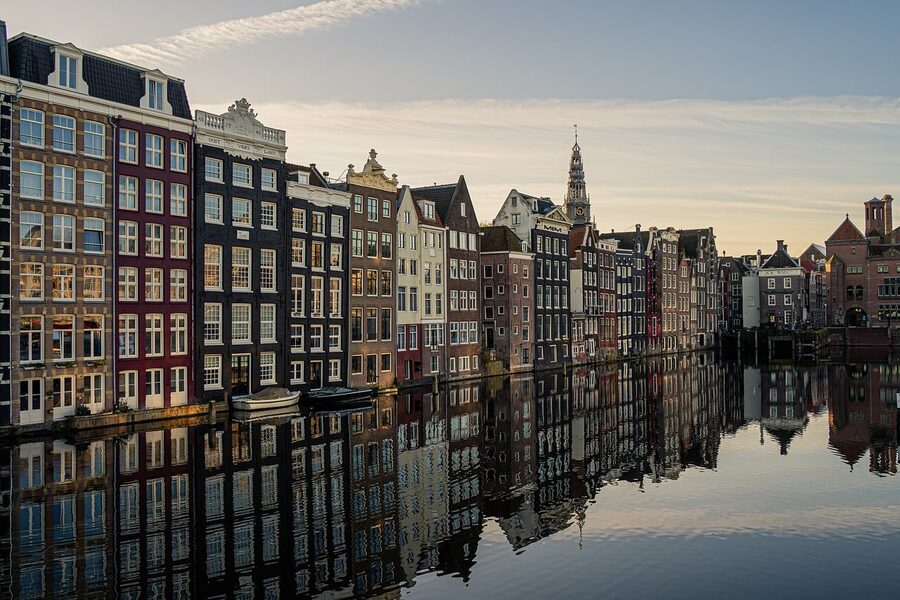
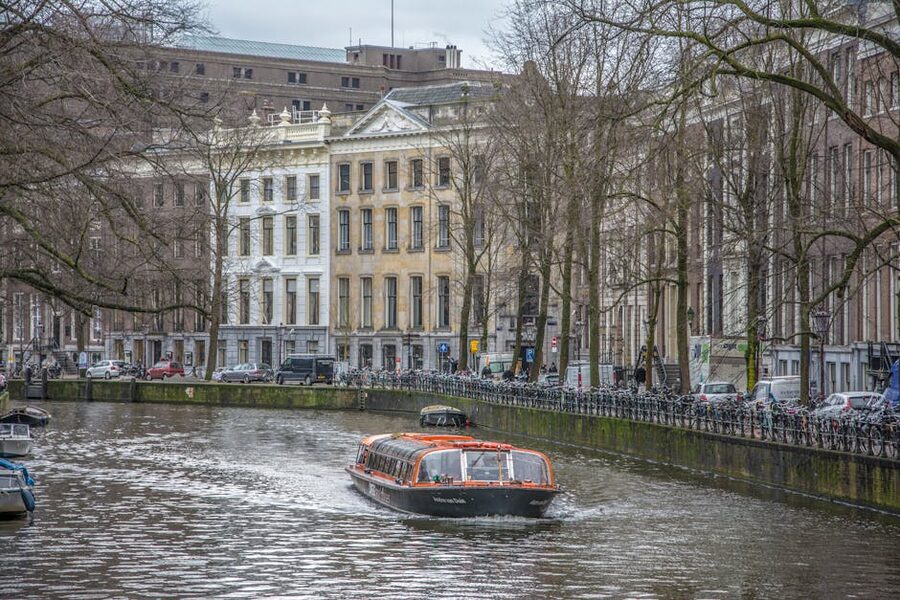
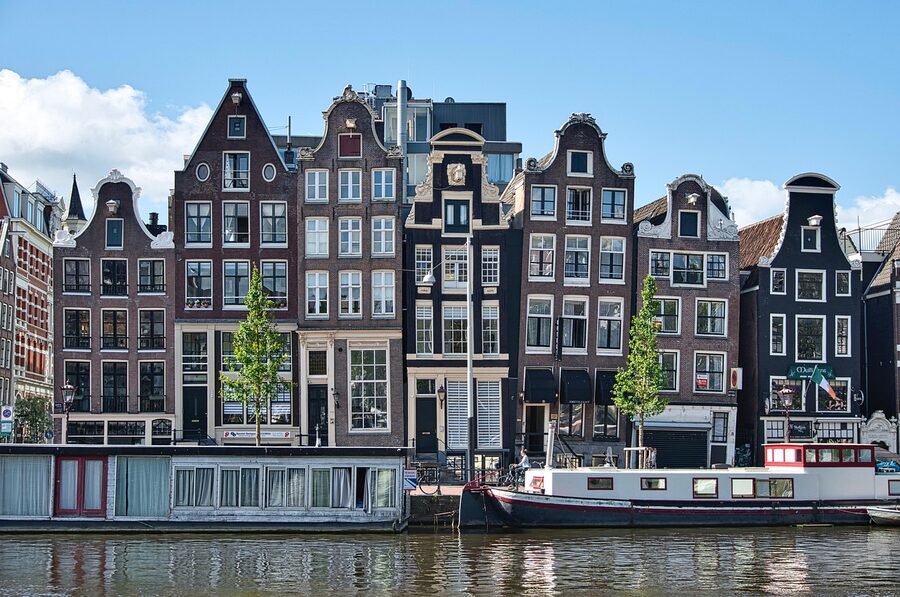
This is the structural truth nobody quite says out loud. In Amsterdam, the canal cruise is the hop-on hop-off. The official one-hour boat loop covers the same headline list the bus does, costs about half as much, and gets you the city from the angle the city was actually designed for. The houses lean into the water. The bridges arc over your head. The 80-deep parade of historic facades along the Herengracht and the Prinsengracht is what people came to see. From the bus, you see the back of a tour group’s heads and a parked tram.
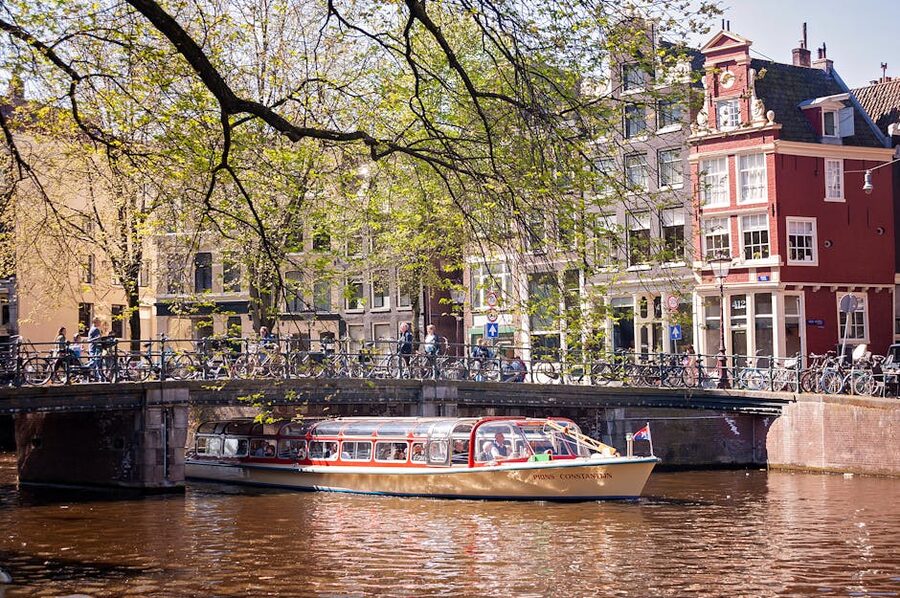
The full breakdown of which boat product to pick (the basic one-hour loop, the open-deck cruise, the dinner cruise, the small-boat option that gets into the narrow side canals the big tour boats can’t reach) is in our Amsterdam canal cruise guide. The one-line version: the cheap one-hour loop with audio guide is the right pick for most travellers, the small-boat option is the right pick if you’ve already done the basic version on a previous trip and want the postcard-quiet side canals. Either of them beats the bus.
This is also why the City Sightseeing flagship product, the most-booked Amsterdam HOHO with 5,667 reviews, is the bus + boat combo. Even the bus operator knows the boat is the part you actually want. They sell the combo and quietly hope you take both. Most travellers I’ve watched take the boat once and never get back on the bus.
The actual public transport works fine
Amsterdam runs on trams. The GVB network has 14 tram lines, most of which originate at Centraal Station and fan out across the city. A 24-hour public transport ticket is around €9. A 48-hour is €15. A single tram ride is €3.40 contactless. That last number matters because it means you can buy a tram ride for the price of a coffee, and a single ride from Centraal to the Heineken Experience covers nearly the same route the HOHO bus does, in 12 minutes, for less than 4 euros.
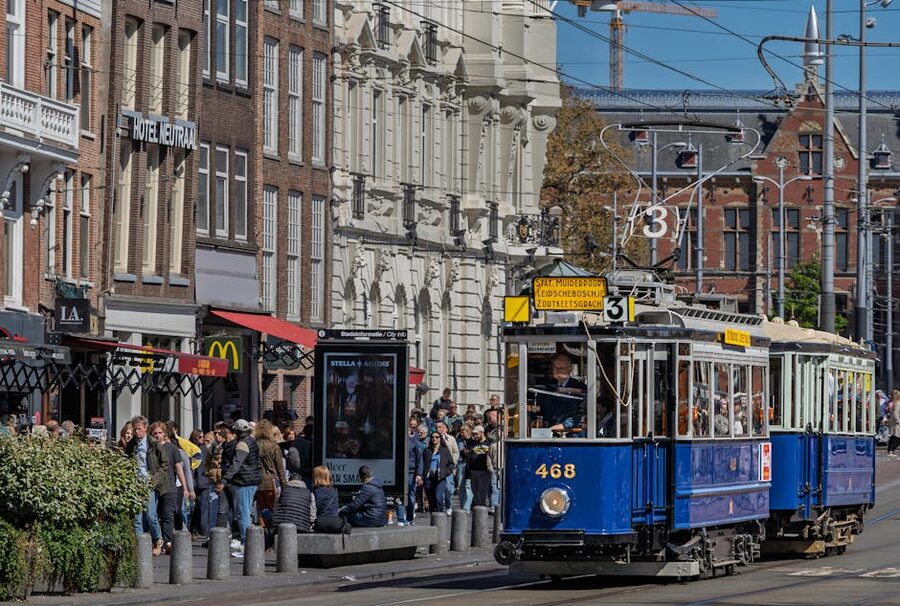
The contactless tap is the part most visitors don’t know about. You don’t need to buy a ticket. You don’t need a pass. You tap your bank card or phone on the way in, tap it on the way out, and the system charges you the right fare. It works on the trams, the buses, the metro, and the GVB ferries to Noord. There is no faster, easier piece of public transport infrastructure in any major European capital. Compared to scrambling for a Rome HOHO refund desk in 38°C heat, it’s a different planet.
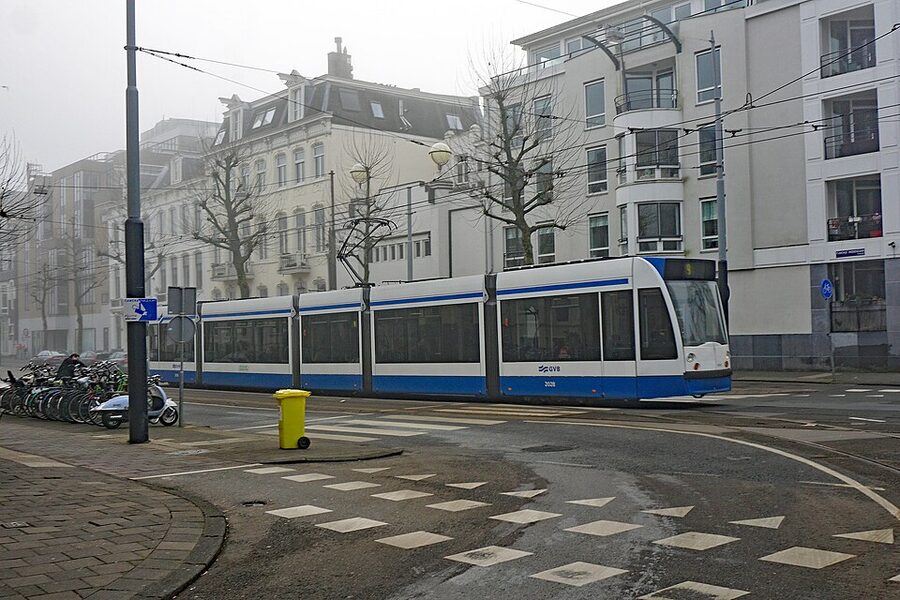
The HOHO route, stop by stop, and what to do instead
The standard Amsterdam HOHO loop runs about 90 minutes if traffic is normal. The 14 stops are designed to hit the obvious tourist clusters. Here’s the route, plus the cheaper or better alternative for each segment.
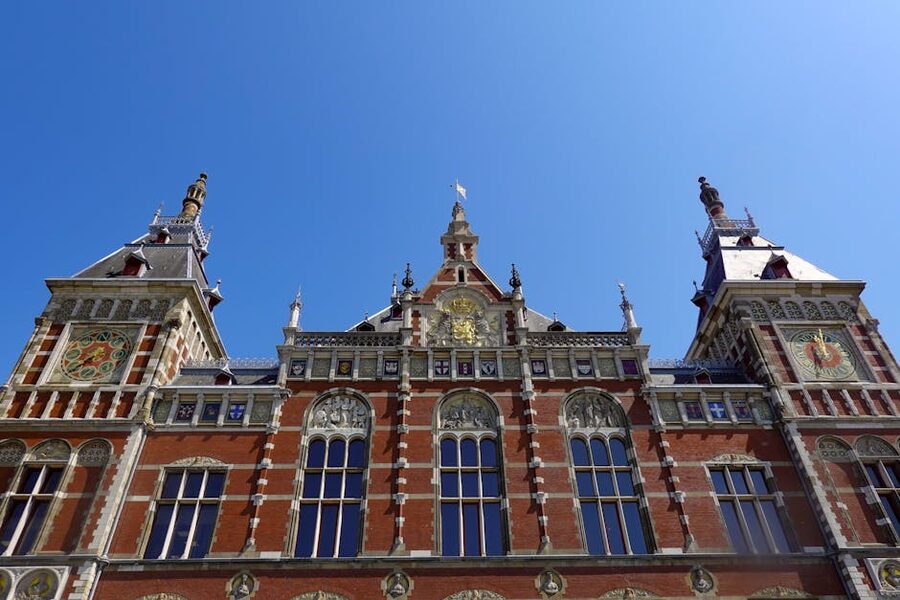
Centraal Station to Dam Square
The bus starts at Centraal, drives 800 metres south, and stops at Dam Square. That’s a 9-minute walk down Damrak. Walking it is faster than the bus on every Saturday I’ve ever been here, and you pass the Beurs van Berlage, the De Bijenkorf department store, and the actual urban texture of central Amsterdam at street level. From the bus, you sit in a queue of taxis and trams and look at the back of someone’s coat.
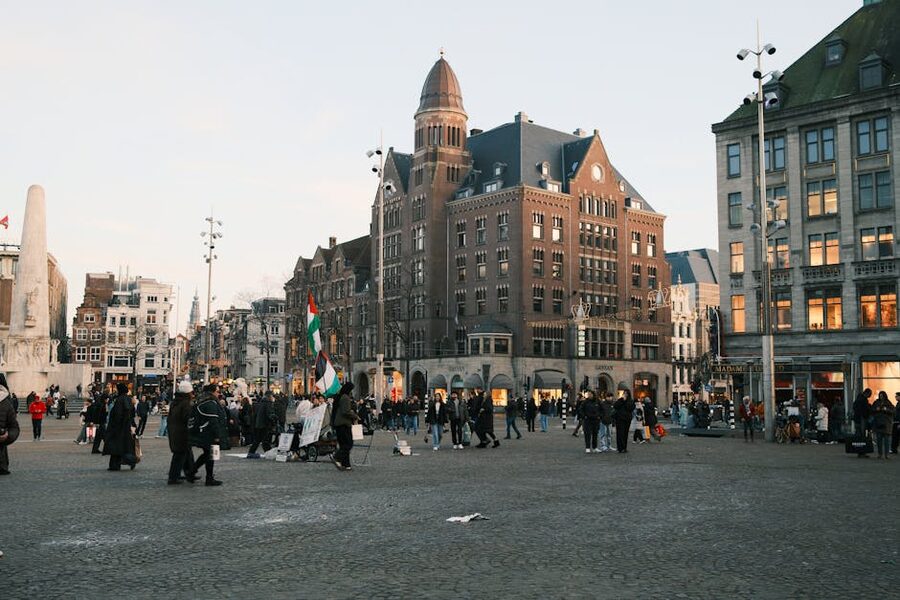
Dam Square itself is the dead-centre tourist square, with the Royal Palace on the west side and Madame Tussauds on the south. Worth a 20-minute stop. Not worth a $35 bus ticket to get to.
Dam Square to Anne Frank Huis
The bus loops west toward Westerkerk and the Anne Frank stop. The walk is 11 minutes through the Negen Straatjes, the most photogenic shopping district in the city, where every block is a separate canal crossing. Taking the bus past Negen Straatjes instead of through it is the kind of small loss that adds up over a 24-hour ticket.
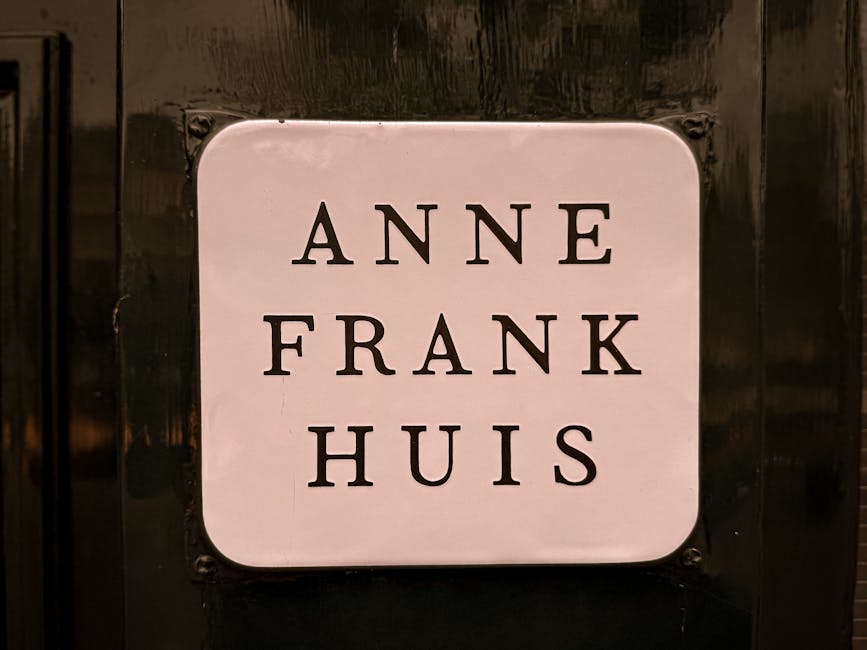
The Anne Frank Huis itself is famously, brutally hard to book. The interior tickets release exactly six weeks ahead and sell out in minutes. If you missed the window, the Anne Frank walking tour is the alternative most visitors actually book. The walking tour covers the Jordaan, the Westerkerk, and the wider Anne Frank context without entering the house. The HOHO bus drops you outside the museum and offers no context at all.
Westermarkt to the Museumplein cluster
This is the segment where the bus loses the most ground. The Westermarkt, the Leidseplein, and the Museumplein are all walkable from each other, all linked by Tram 2 and Tram 12, and all sit inside the canal ring. The bus takes 25 to 30 minutes for what the tram does in 10 and what the boat covers as part of the standard loop.
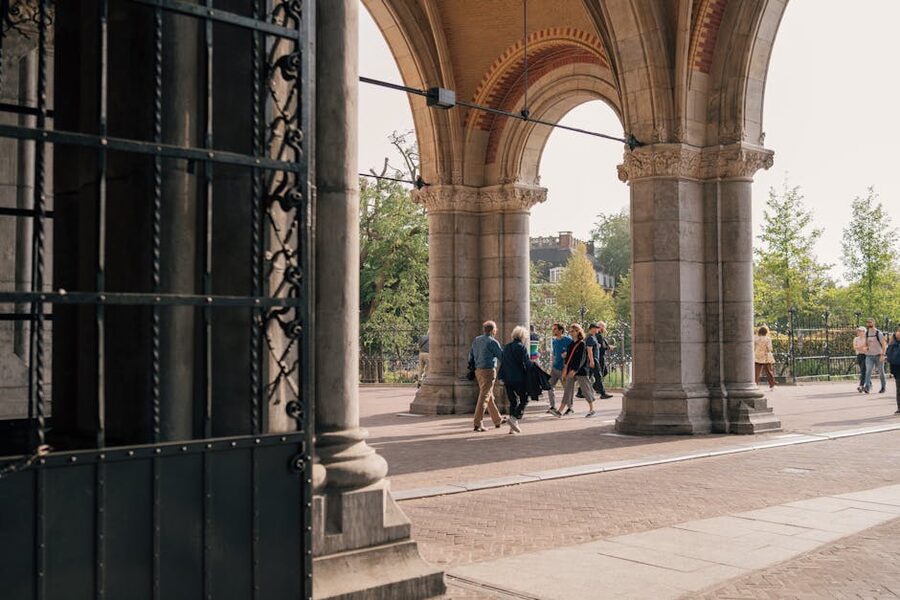
The museum quarter itself is dense with attractions. The Rijksmuseum, the Van Gogh Museum, the Stedelijk, and the I amsterdam letters are all on the same square. The Rijksmuseum guide covers the booking logic for the headline museum, and the Van Gogh deserves its own pre-booked timed entry. Neither is cheaper or easier because you arrived by HOHO bus. They’re cheaper and easier because you booked the timed entry online.
Heineken Experience and the southern loop
The Heineken stop is on the southern arc of the route. From the museum quarter, the bus does a small dogleg south to the old Heineken brewery on Stadhouderskade. It’s a 15-minute walk from the Rijksmuseum, or four stops on Tram 24. The Heineken Experience is a 90-minute booked-slot tour that needs a reservation regardless of how you got there.
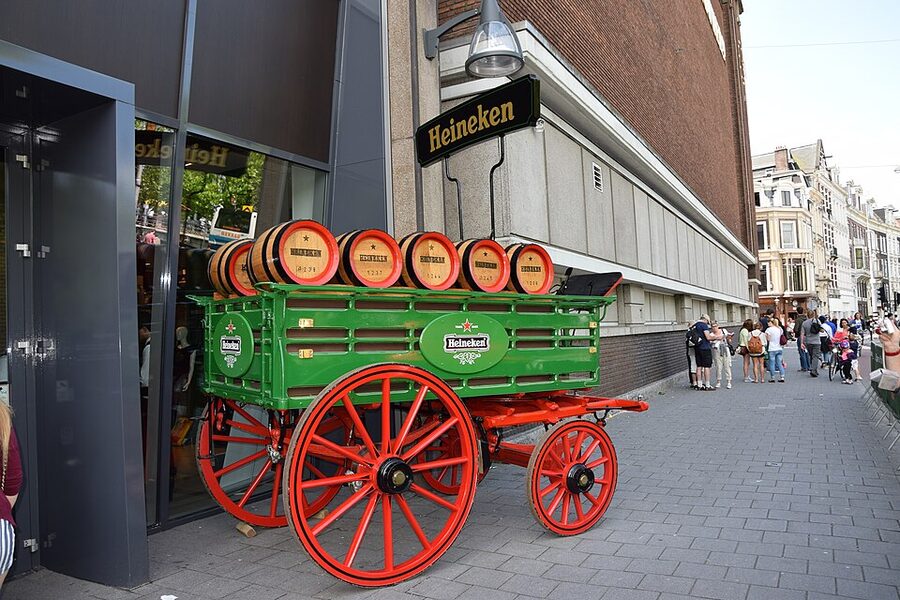
The HOHO bus is the slowest reasonable way to reach this stop, and the brewery’s own pre-booked timed-slot system means turning up early on a bus is no advantage. If anything it’s a problem, because Heineken won’t let you in more than 15 minutes ahead of your slot.
The places I’d pay €35 to reach by bus
Now we get to the narrow exceptions. There are two trips inside Amsterdam where the HOHO bus genuinely is the right tool, and both are outside the canal ring. If your itinerary includes either of them in a single day, the bus stops being a tax and starts being a saving.
The Johan Cruijff ArenA trip
The Johan Cruijff ArenA is in Amsterdam Zuidoost, about 6km southeast of the centre. Ajax plays here, big concerts play here, and it’s the only headline sight in the city that genuinely is too far to walk. The metro reaches it (Bijlmer ArenA station, M50 or M54), but for a visitor doing a stadium tour as part of a day that also includes the museum quarter and Heineken, the HOHO bus’s afternoon route is sometimes a saner shape than four separate metro hops.
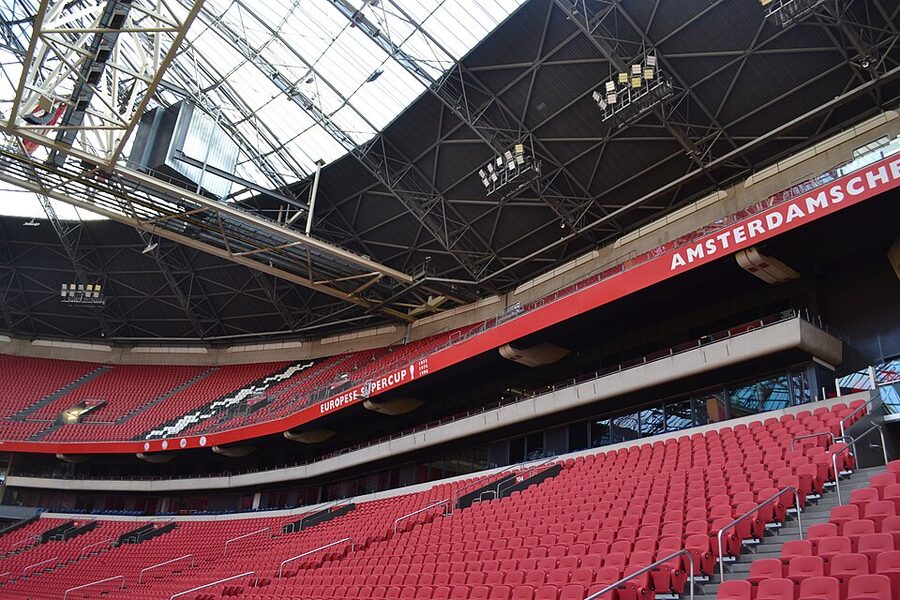
Caveat: not every HOHO operator’s route hits the ArenA stop. The City Sightseeing standard loop doesn’t. Big Bus does, and so does the Rijksmuseum-combo product on a particular extended-route ticket. Read the route map before you buy. If your HOHO doesn’t include the ArenA stop, the metro is faster and cheaper anyway.
The NDSM-werf detour
The other one is NDSM-werf in Amsterdam-Noord. NDSM is a former shipyard turned creative-arts district, the city’s biggest concentration of street art outside the Red Light District, and the home of an enormous monthly flea market called IJ-Hallen. It’s across the IJ from Centraal, and the standard way to reach it is the free GVB ferry from behind Centraal Station.
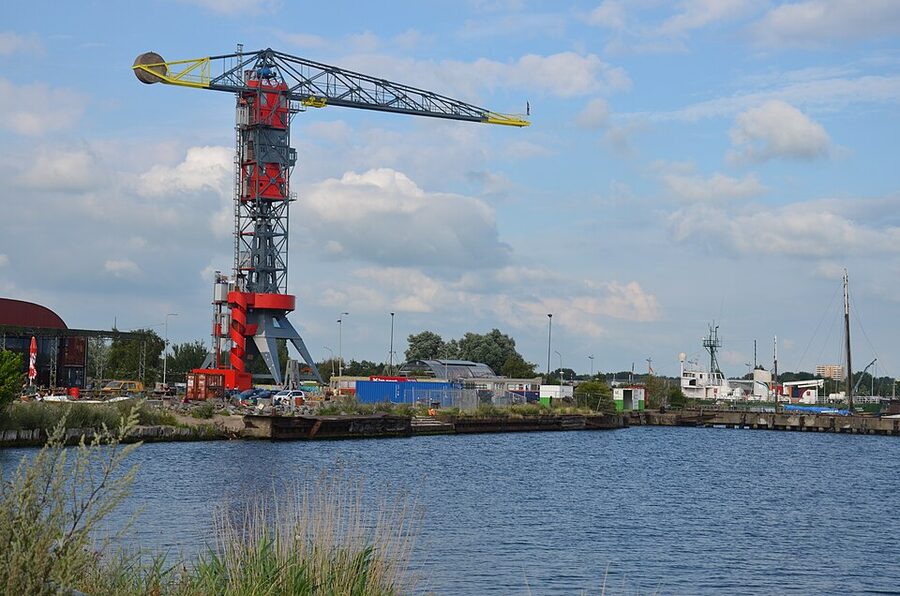
The ferry is free, runs every 15 minutes, and is itself one of the better experiences in Amsterdam. It’s the route I’d take. But for travellers carrying a heavy day bag, traveling with someone who finds boat boarding awkward, or running short on time and wanting to stay on a single bus ticket, a HOHO with the Noord extension can do the trip in one seat.
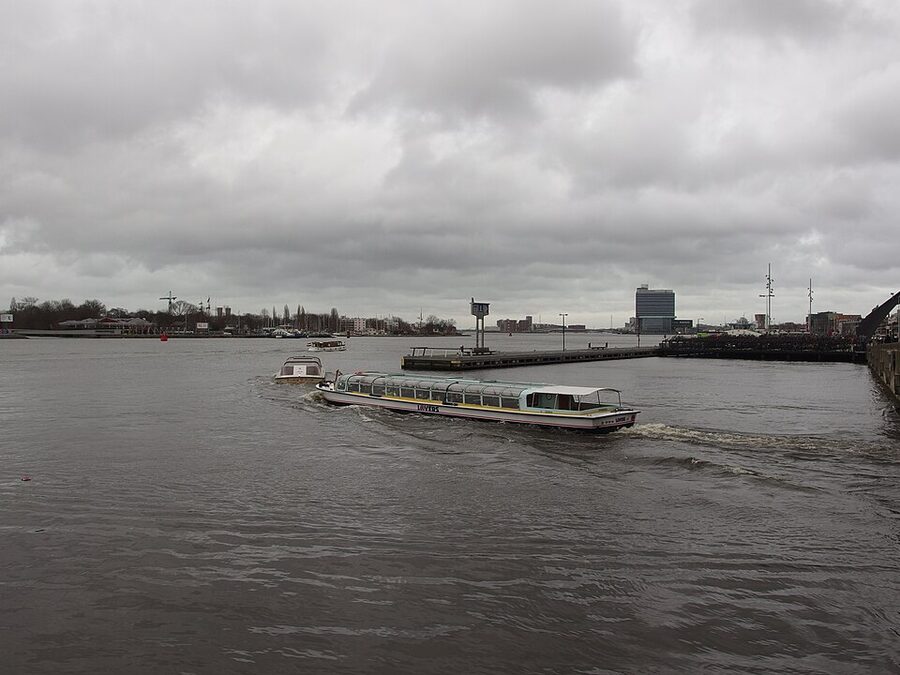
Everywhere else in Amsterdam, the bus is a worse version of something cheaper.
What the rating actually tells you
The 3.9 rating on the flagship product is not a defect of the operator. The buses are clean, the audio guide is fine, the open top deck is pleasant in May. The 3.9 is a structural verdict: the product is doing a job the city doesn’t need done. The same operator’s HOHO in Florence rates lower for similar reasons (Florence’s centro storico is pedestrian-only and the bus can’t enter it), and the Naples HOHO rates similarly because Naples is also a city where the atmospheric alternatives (the ferries, the funicular) outclass the bus.
The HOHOs that score 4.5 and up are in cities like Rome, Paris, Lisbon, and Barcelona, where the geography is on their side. Rome’s centro storico is huge and the metro skirts it. Paris has actual hills (Montmartre) and a 6km-long axis from the Eiffel Tower to the Bastille that walking doesn’t really cover. Paris’s HOHO earns its rating because the city is too big to walk in a single day. Amsterdam isn’t. Amsterdam is small enough to walk, dense enough to tram, and watery enough that the alternative to the bus is the boat.
The 3 tour cards: the operators that exist, ranked
If you’ve read this far and still want to book a HOHO, here are the three products worth considering, in the order I’d actually pick them.
1. Amsterdam: Hop-On Hop-Off Bus and Boat Options: $35

This is the right pick if you want the bus and the boat in one ticket and you’d rather buy than think about it. Our canal cruise guide goes into why the boat half is the part you’ll actually use, but the combined ticket is the same price as the bus-only at most operators and gets you the cruise effectively for free. The City Sightseeing flagship.
2. Hop On Hop Off Amsterdam (Viator): $36

The Viator listing for the same City Sightseeing red bus, with the canal cruise as an optional add-on rather than included. Worth knowing about if you’re already managing a stack of Viator vouchers, but I’d default to the combo above. Our Viator review notes the seasonal canal-cruise gap: between December and February the boat half is sometimes cancelled without notice, which makes the GYG bundle the safer winter pick.
3. Combo: Rijksmuseum + Hop-On Hop-Off Bus: $50
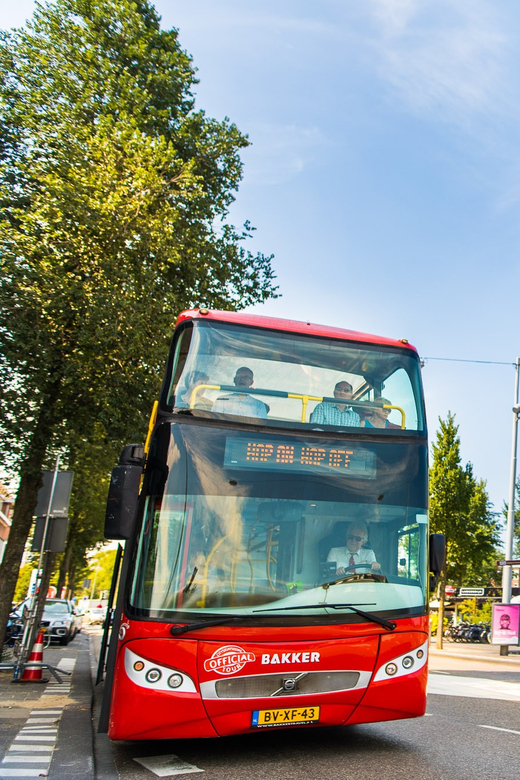
Skip-the-line Rijksmuseum entry plus 24 hours of HOHO bus, bundled. The right pick if you’ve already decided you want both products and you want to save the booking-fee math. The bus deck on this combo runs an extended route that hits some Zuid stops the standard City Sightseeing loop misses, including a closer drop for the museum quarter.
The boat alternative, in numbers
Compared side by side, here’s the math that explains why most Amsterdam visitors take the boat once, walk the rest, and never get on the HOHO bus.
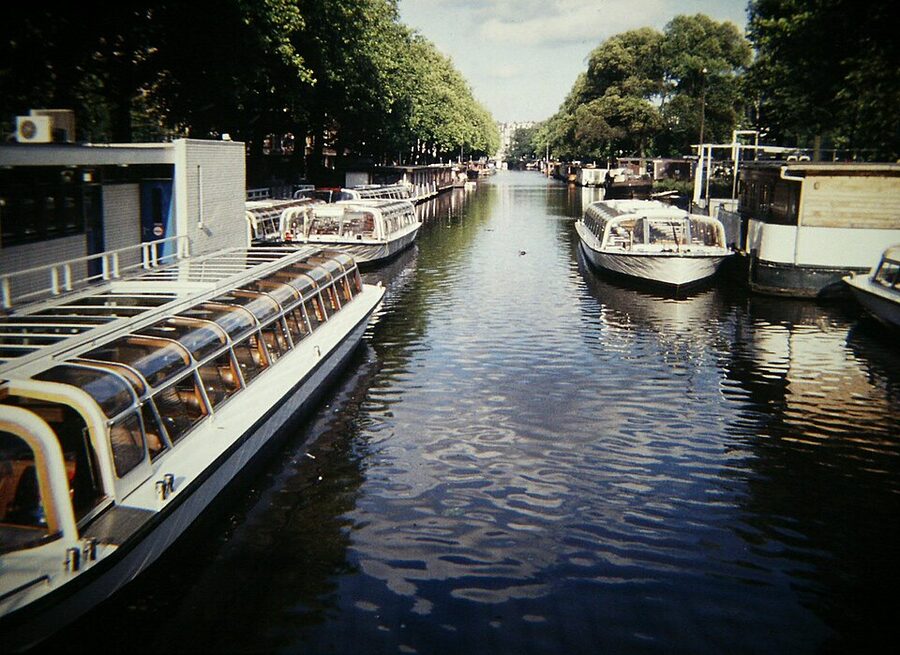
- Standard one-hour canal cruise with audio guide: $17 (Viator).
- City Sightseeing HOHO bus, 24 hours: $35 (GetYourGuide).
- Combo bus + boat: $35 (same price as bus-only, the cruise is effectively free).
- Single GVB tram fare, contactless: €3.40.
- 24-hour GVB transit pass (all trams + buses + metro): €9.
- 48-hour GVB pass: €15.
- Free GVB ferry to Noord: €0.
The combo bus + boat at $35 is the only HOHO product where the math is genuinely fine, because you’re effectively getting the boat for the price of the bus. The bus-only product at $30 to $35 is the worst-value option in the list.
The walking case, on a one-day visit
If you have a single day in Amsterdam and you’re trying to decide between a HOHO ticket and walking, walk. Here’s the route I give to first-time visitors with a 10am to 6pm window.
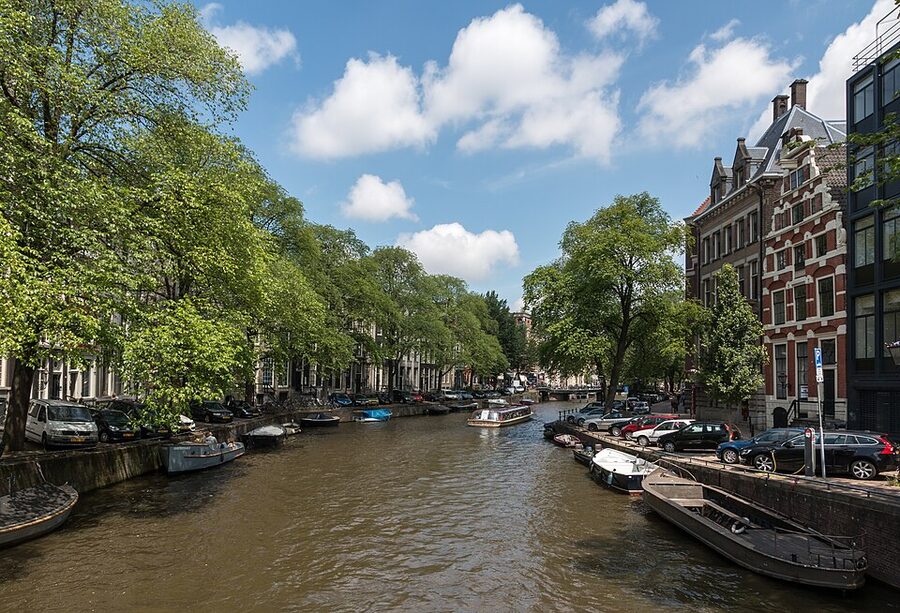
Start at Centraal Station. Walk south down Damrak to Dam Square, then west into the Negen Straatjes for the canal-bridge crossings and a coffee stop. Continue south to the Anne Frank Huis (book ahead or walk past it; the walking tour is the consolation prize and it’s a good one). From there, drop south to the Leidseplein, cross into the Museumplein for the Rijksmuseum and the Van Gogh, and finish at the Heineken Experience 15 minutes east. Total walking: about 4.5km. Total time: 90 minutes if you don’t stop.
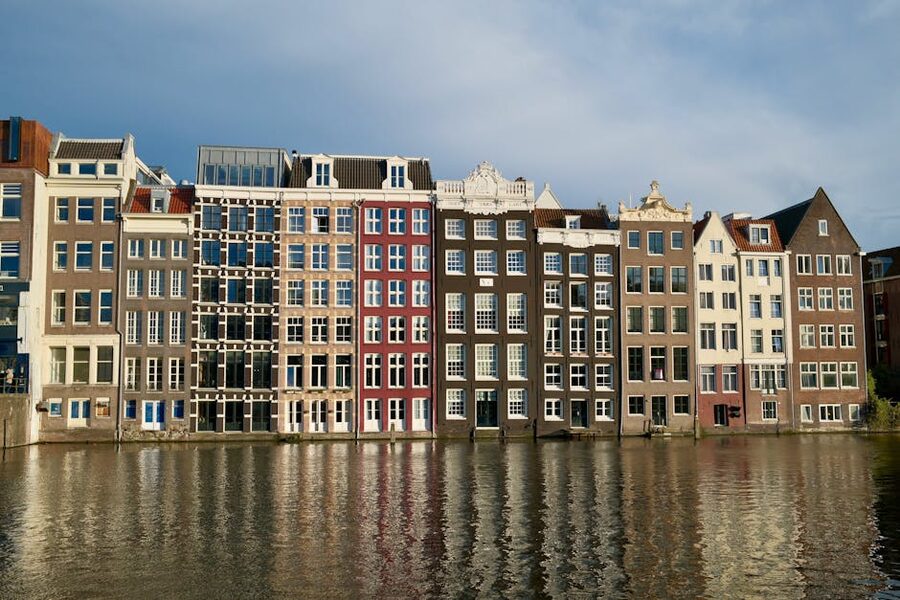
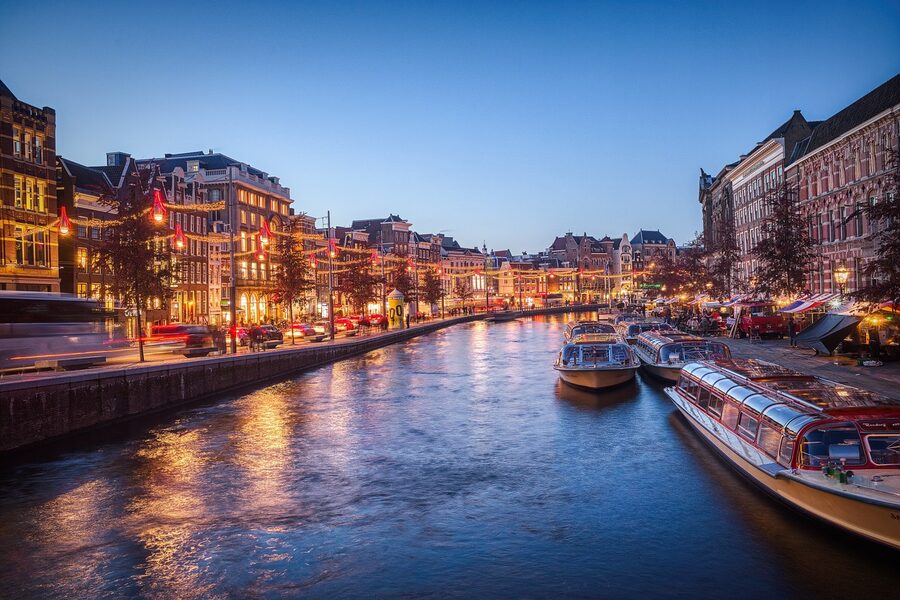
End the day with the canal cruise, ideally at golden hour. The boat at sunset, with the bridges lighting up and the houses glowing, is the postcard you came for. The HOHO bus at sunset is sitting in evening commuter traffic on Stadhouderskade. There is no comparison.
The cycling alternative
If walking 4.5km doesn’t appeal, rent a bicycle. Amsterdam is the only major European capital where renting a bike for a day genuinely is faster than the public transport. The flat terrain, the dedicated cycle lanes, and the cycle-priority intersections mean an average rider covers the entire canal ring in 25 minutes. Bike rental is €15 for 24 hours from any of the dozens of shops around Centraal.
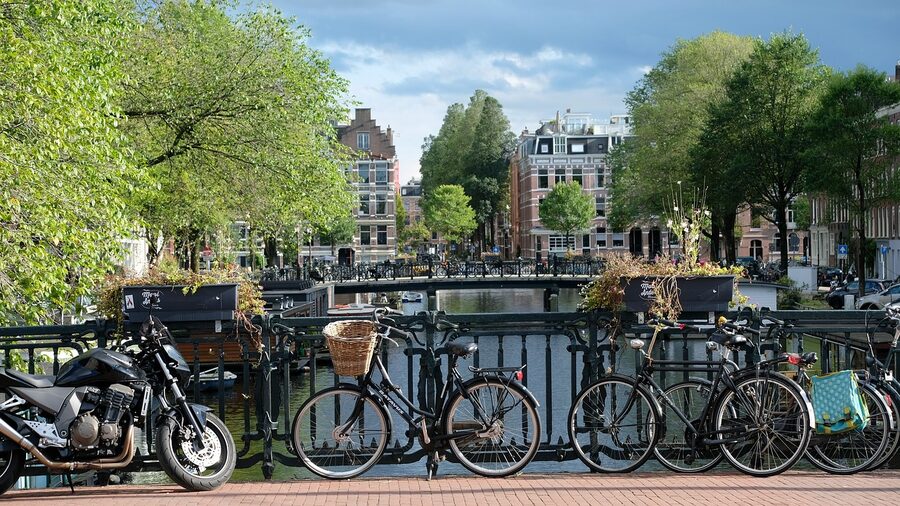
The bike-rental case has caveats. Don’t rent if you haven’t ridden in city traffic recently. The cycle lanes look orderly until you misread a hand signal and end up wedged in a four-way intersection with three trams and a delivery van. Locals are patient with tourists right up until the moment a tourist puts everyone behind schedule, and the patience evaporates fast. If you’re confident on a bike in a busy city, the bicycle is the answer. If not, the trams are.
The rare scenario where the HOHO does earn it
One narrow case I haven’t covered yet: travellers with a single 24-hour visit who land mid-morning at Centraal, want to see the headline cluster, hate walking in cities, are travelling with someone with limited mobility, and have rain forecast. In that combination, the HOHO bus + boat combo at $35 is genuinely the best tool. The boat half gets the canal experience, the bus half puts a roof over the museum-stop transfers, and the combo means you’re not buying two separate tickets in the rain.
Outside that combination of constraints, the bus is overpriced for what it does. And in summer, when the open-deck mode is what you want, the boat does open-deck too, and the canal-side angle beats the bus-window angle every time.
The wider context: how Amsterdam compares to other water cities
Amsterdam isn’t unique in this. Other European cities where the canal or the harbour does the HOHO’s job include Venice (the vaporetto network is the bus, the gondola is the headline experience, the dedicated tour bus barely exists for a reason), Stockholm (the Djurgården ferry replaces a HOHO leg), and Copenhagen (the harbour bus is the same price as a HOHO and feels twice as nice). The pattern is consistent. When a city’s identity is a waterfront, the boat wins.
The water-city HOHOs that do work are the exceptions where the city is also too big to walk. Lisbon’s HOHO is fine because Lisbon is on hills. Marseille’s HOHO earns it because Marseille’s headline sights (Notre-Dame de la Garde, the Calanques) are uphill or out of town. Palma’s works because Palma’s coastal sweep is too far for walking. Amsterdam’s HOHO doesn’t have those problems to solve, and that’s why the rating is what it is.
The neighbourhoods the HOHO doesn’t reach
The HOHO route is built around the museum quarter, the Centraal arc, and the Heineken loop. Three of Amsterdam’s most interesting neighbourhoods aren’t really on it.
De Pijp is south of the canal ring, full of independent restaurants and the Albert Cuyp Market, and the closest tram is the 4. The HOHO ignores most of it. Walk or tram.
The Jordaan is the city’s most-photographed residential district, west of the canal ring. The bus passes near it but doesn’t really enter it. The Jordaan is a walking neighbourhood, full stop.
Vondelpark is the city’s biggest park, the southwest end of the museum quarter. The HOHO has a stop near the eastern edge, but the park is best entered on foot or by bike. The bus loop doesn’t put you anywhere near the lakes, the bandstand, or the actual reason people go there.

The Red Light District sits east of Damrak and Dam Square, fully inside the medieval centre. The bus can’t enter it (the streets are too narrow), and the only real way to navigate the area is on foot, ideally with a guide who knows what they’re looking at. The Red Light District walking tour covers the history and the practicalities the bus can’t.
Day trips and where the HOHO doesn’t help at all
The Amsterdam HOHO bus is a city loop. It doesn’t reach the day-trip destinations most visitors actually pair with a 3-day Amsterdam itinerary. None of these places are reachable on a HOHO ticket, and all of them take their own train or bus.
Zaanse Schans is the windmill village 17km north. The train from Centraal is 17 minutes for €4 each way. The HOHO doesn’t go there. Keukenhof is the tulip gardens 35km southwest, accessible only by tour shuttle or the dedicated combo train + bus. Rotterdam is 70km south on a 40-minute Intercity. None of these is on the HOHO map.
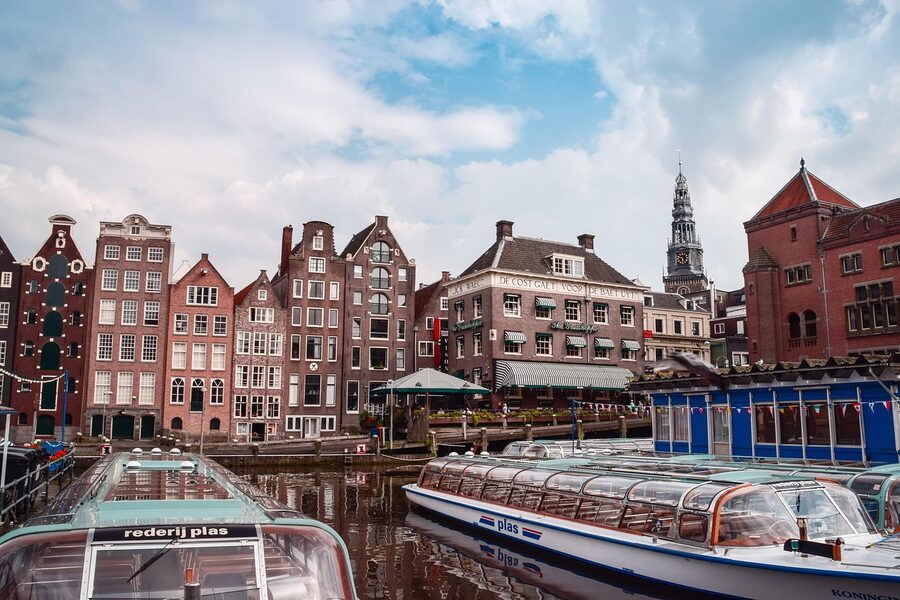
If your trip splits into city days and day-trip days, the HOHO is at best a ticket for one day, not a five-day pass. And on the city days, the canal cruise plus a 24-hour transit pass costs less than the HOHO and covers more ground.
Edge cases worth knowing
A few things that come up often enough to mention.
Cruise port arrivals. If you’re arriving on a cruise that docks at the Amsterdam Passenger Terminal, the HOHO is sometimes pitched as the easy way out of the port. It is. The City Sightseeing terminus at Centraal is a 7-minute walk from the cruise terminal, and the bus does loop you through the city. But the metro is also right there, and so is the canal cruise, and the same money goes further on either of them. The HOHO is convenient for cruise day-trippers; it’s not the only convenient option.
Mobility. If walking 4.5km isn’t realistic, the HOHO bus is more comfortable than the trams and the boats, and that’s a legitimate reason to pick it. Tram boarding involves a step. Boat boarding involves a small jump or a ramp depending on the operator. The HOHO bus is a flat-floor low-step boarding, more accessible than either alternative. For travellers with limited mobility, this can be the deciding factor.
Children. Kids tend to like the open-top bus more than they like trams, and small kids like boats more than buses. If you’re choosing between the three modes for a day with a 6-year-old, the bus + boat combo is genuinely a reasonable family ticket. Just don’t expect the bus to feel like a tour; expect it to feel like a slow novelty.
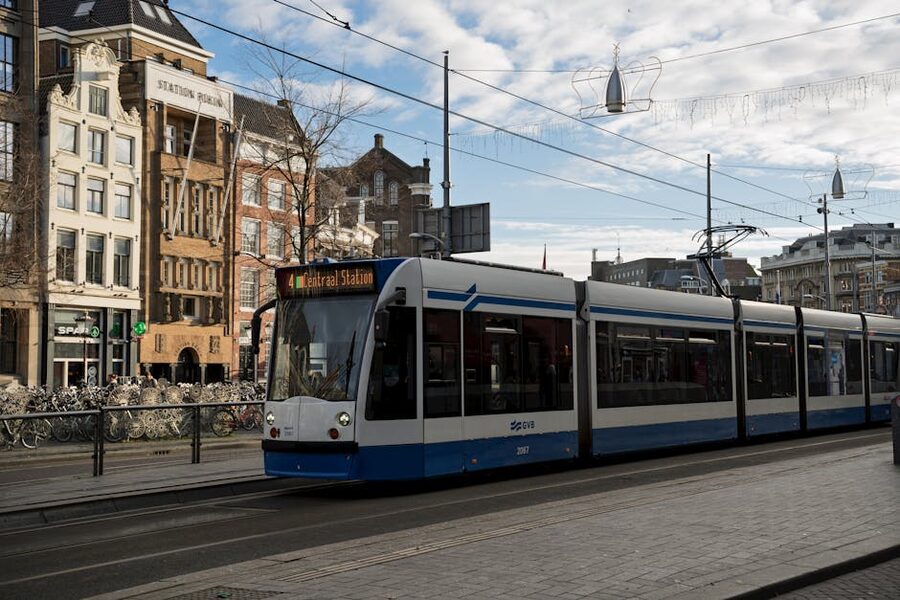
Rain weeks. Amsterdam gets weeks of horizontal rain in November, March, and February. The HOHO’s covered lower deck does take rain off, but trams and the metro do too, and the canal cruise’s enclosed boats are warmer than either. In genuine sideways-rain weather, the canal cruise wins again.
City Card alternative. The I amsterdam City Card bundles museum entries plus public transport plus a canal cruise into a single 24/48/72/96-hour pass starting at €60. It’s a separate calculation, but for visitors planning to hit four or more museums, it usually undercuts the HOHO + tickets stack by a wide margin. The HOHO bus isn’t included; the boat usually is.
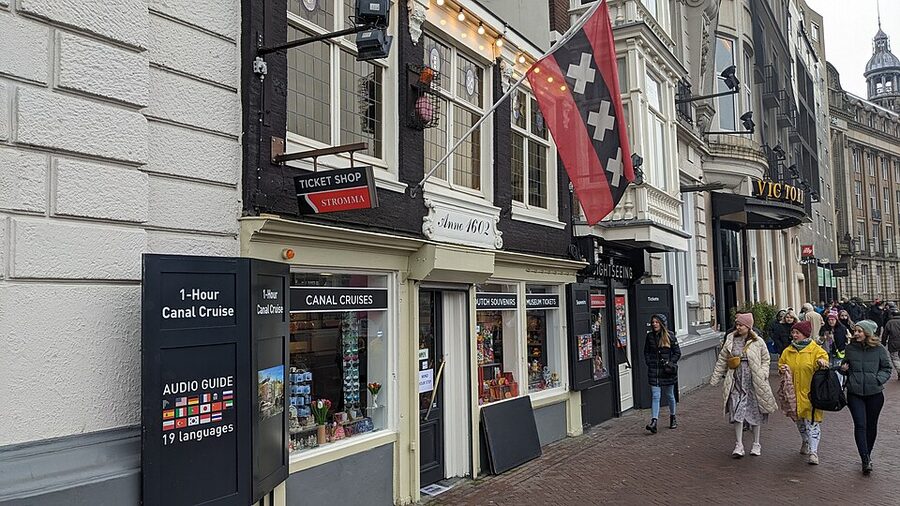
What to book instead
The real answer to “what’s the best HOHO ticket for Amsterdam” is: a canal cruise plus a 24-hour transit pass. Total cost around €25. Coverage: the same headline list the bus pretends to deliver, plus the actual atmospheric experience of the city, plus the trams the bus is competing with.
If you’ve never done Amsterdam by water, the basic one-hour audio-guide cruise is enough on a first trip. If you’ve done that one already and want the postcard-quiet version, the small-boat operators run six-passenger trips into the narrow side canals where the big tour boats can’t go. If you want the dinner-cruise version, those run nightly from May to September, and they’re a separate calculation but a real one.
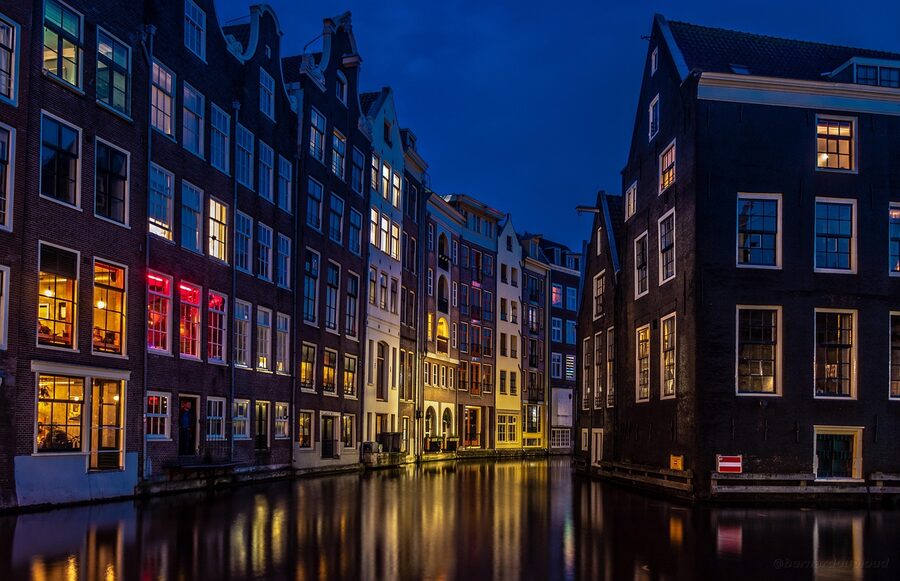
And if you’re spending three or four days here, build the trip around the museums you’ve pre-booked, the canal cruise you’ll do once, and the trams you’ll use freely with a 48-hour pass. The HOHO bus, on that itinerary, never enters the conversation.
If you do book the bus, here’s how to get the most out of it
Some readers will book the HOHO anyway, because they’ve already decided, or because the rest of their itinerary makes the combo ticket the path of least resistance. Fair. Here’s how to extract maximum value if you’ve already paid.
Start the bus early. The 9am loop has the smallest crowds and the best chance of an empty open-deck. By 11am every product on every loop is full, and by noon the deck is standing-room only. The early loop is the only one where the photo angles you came for are actually possible.
Use the boat half twice if your ticket allows it. The combo tickets often have unlimited canal cruise within the 24 or 48 hours; the bus half you’ll do once. The boat at 10am and again at sunset are different products entirely. If you’ve paid for it, take both.
Use the bus half for the segment that’s hardest to walk. That’s almost always the Heineken-to-museum-quarter southern arc, or (if your operator includes them) the Noord and Zuidoost extensions. Use the bus where the city’s geography genuinely costs you time, and walk the parts where it doesn’t.
Skip the upper-deck audio if it’s raining or windy. The upper-deck audio guides cut out at speed, and on a windy day the headphones rattle around your neck while the audio whips past. The lower-deck audio is steadier and the windows are still big enough to see what you came for.
The verdict
For most travellers, on most itineraries, in most weather, in Amsterdam, the HOHO bus is the wrong tool. The canal cruise does its job better. The trams cover the same ground for a tenth of the price. The bicycle handles everything inside the canal ring faster than the bus could on its best day. The Anne Frank, the Van Gogh, the Rijksmuseum, the Heineken, all need pre-booked timed slots regardless of how you got there.
The two exceptions: the Johan Cruijff ArenA trip in Zuidoost, and the NDSM-werf trip in Noord. If your day genuinely includes either of those plus the museum quarter plus Heineken, the HOHO might save you 40 minutes of metro hops. If it doesn’t, skip the bus.
The 3.9 rating is telling you something real. Listen to it.
What to read next
The companion piece to this one is the Amsterdam canal cruise guide, which goes into the boat-product breakdown in detail. If you’re sketching out a wider Amsterdam plan, the Rijksmuseum, Van Gogh, and Heineken guides cover the headline museums you’ll pair with the cruise. The Anne Frank walking tour is the consolation prize when the museum tickets are sold out, and it’s a real one. For day trips, the Zaanse Schans windmill trip and the Keukenhof tulips are both worth a half-day each in season. And if you’ve got time for a hop down to Rotterdam’s harbour cruise, the contrast between Amsterdam’s old-canal scale and Rotterdam’s industrial port is one of the most underrated travel switchbacks in the Netherlands.
Sister “is the HOHO worth it” articles for other European water and pedestrian cities, in case you’re planning the wider trip: Milan (mostly no, similar verdict), Naples (mostly no but the Posillipo loop earns it), and Florence (the pedestrian-only old town problem).