
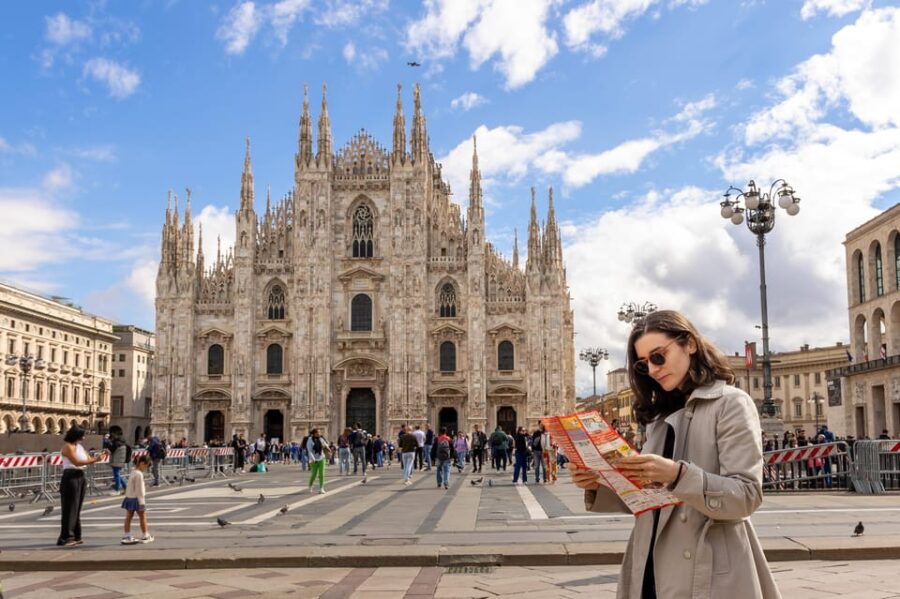
You’re standing in Piazza del Duomo with a 24-hour hop-on hop-off ticket in your hand. The Cathedral is right there. The Galleria is two minutes away. La Scala is five. Castello Sforzesco is twenty on foot, or thirty if you stop for a coffee. So what exactly is this bus for?
That’s the question I had the first time I bought one. The answer is below, and it’s not the one the marketing copy gives you.
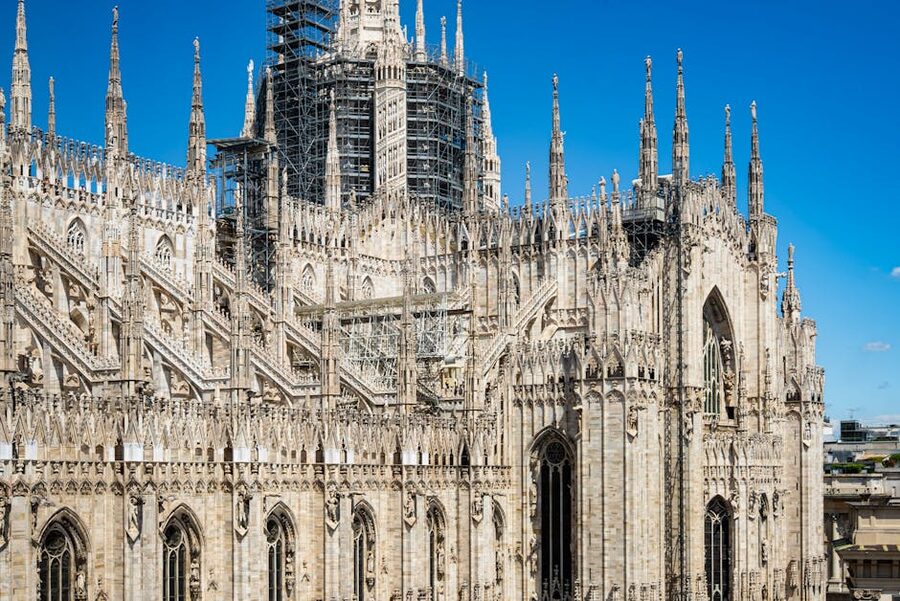
In a hurry? My picks:
- The default 24-72 hour pass ($26): four colour-coded routes, audio guide, the only one most people need. Book on GetYourGuide.
- The duration-flexible variant ($29): same operator network, choose 24, 48 or 72 hours upfront, sometimes cheaper depending on the day. Book on GetYourGuide.
- The Viator alternative ($27): same City Sightseeing buses, booked through Viator if that’s your loyalty platform. Book on Viator.
The short answer first
Mostly no. For most travellers spending two or three days in Milan, the hop-on hop-off bus is the wrong call. Here’s why. The same skeptical-take applies on the Barcelona hop-on bus, where the central core is also more rewarding on foot than on a top deck.
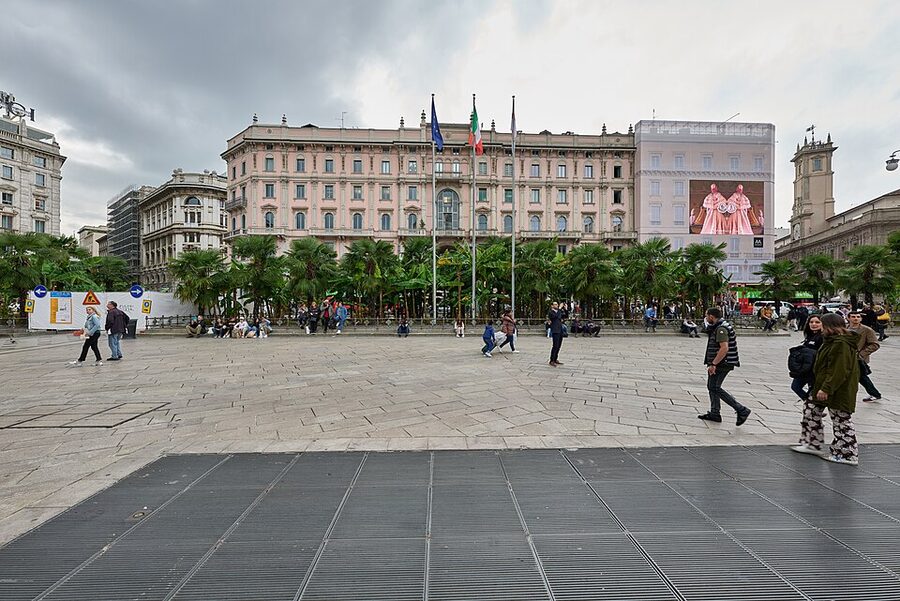
Milan’s tourist core is small and dense. From Piazza del Duomo, almost everything is a short walk:
- Galleria Vittorio Emanuele II: 2 minutes
- La Scala: 5 minutes
- Pinacoteca Ambrosiana: 10 minutes
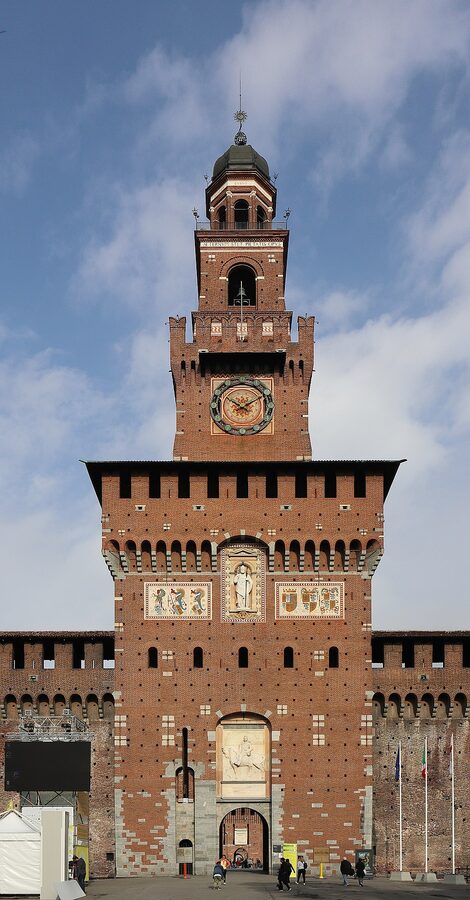
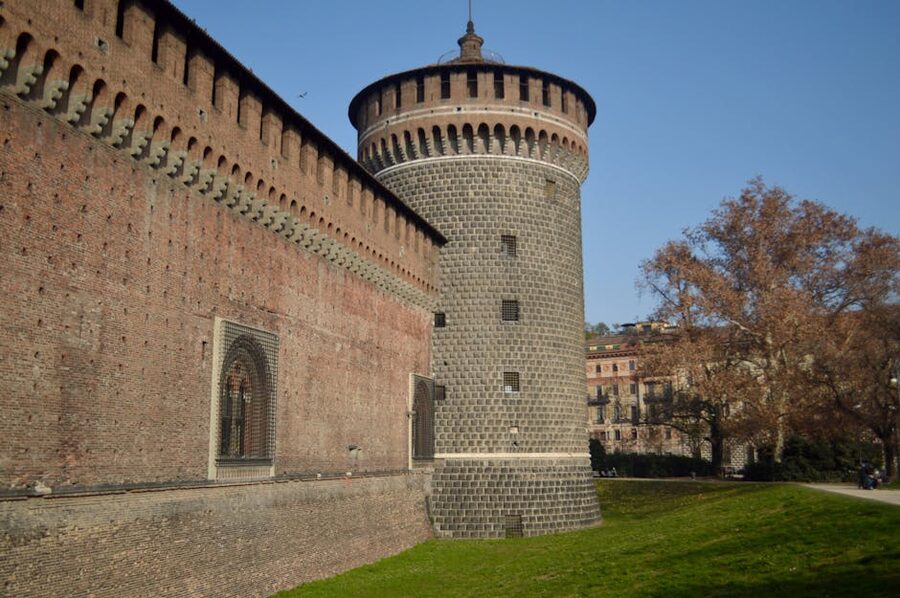
- Castello Sforzesco: 15 minutes
- Brera: 20 minutes
The streets between are pedestrian or near-pedestrian, lined with shops, gelato stands, and the occasional courtyard you’d never see from a bus seat. Walking is the experience, not a chore.
And what the bus offers in exchange for €25 is a slow loop through Milan’s worst traffic. The Red Line runs roughly 12:05pm to 4:10pm with one bus every 50 minutes, which means if you miss one you’re killing nearly an hour. The same loop on foot, hitting the same headline stops, takes about two and a half hours and you’ll have stood inside three or four of them by the time the bus has done one circuit.
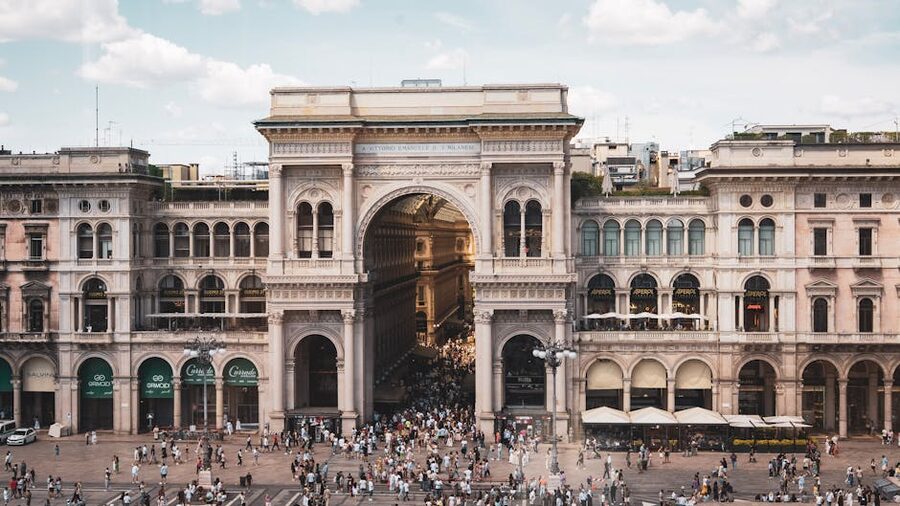
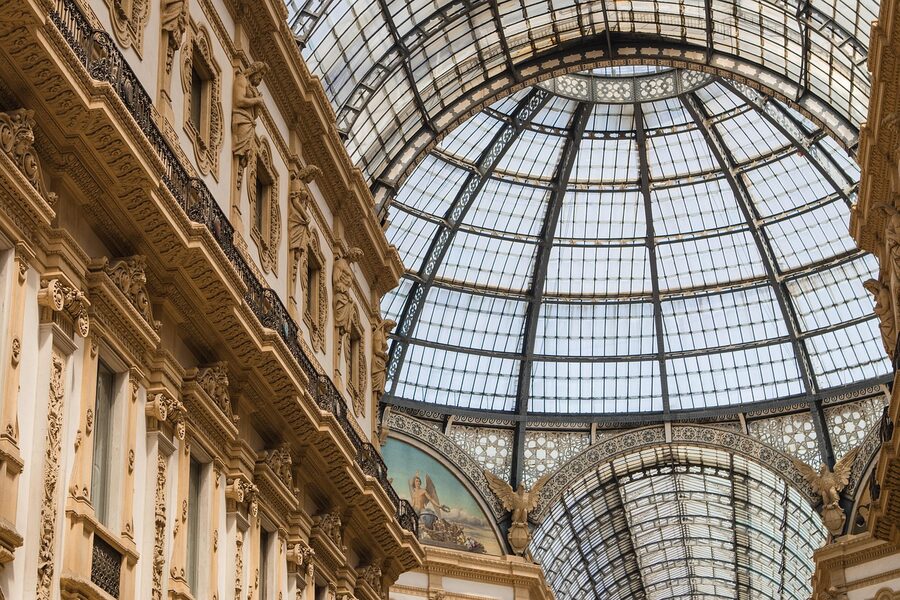
So that’s the headline. If your Milan plan is Duomo, Galleria, La Scala, Castello, you don’t need the bus. Walk.
The narrow case where it earns its keep
That said, I bought one last spring and didn’t regret it. Here’s what changed my mind.
Milan has a few things that are genuinely a hassle to reach without a car or a transit-savvy plan. They’re not in the tourist core. The same far-from-the-centre logic is what makes the Paris hop-on bus useful: it works for Trocadero, Montmartre, and the further reaches the metro hits but doesn’t make easy. They’re 20 to 40 minutes out by metro plus walk, with transfers and turnstiles and the usual urban friction. The hop-on bus, if your route covers them, drops you at the door.
Cimitero Monumentale
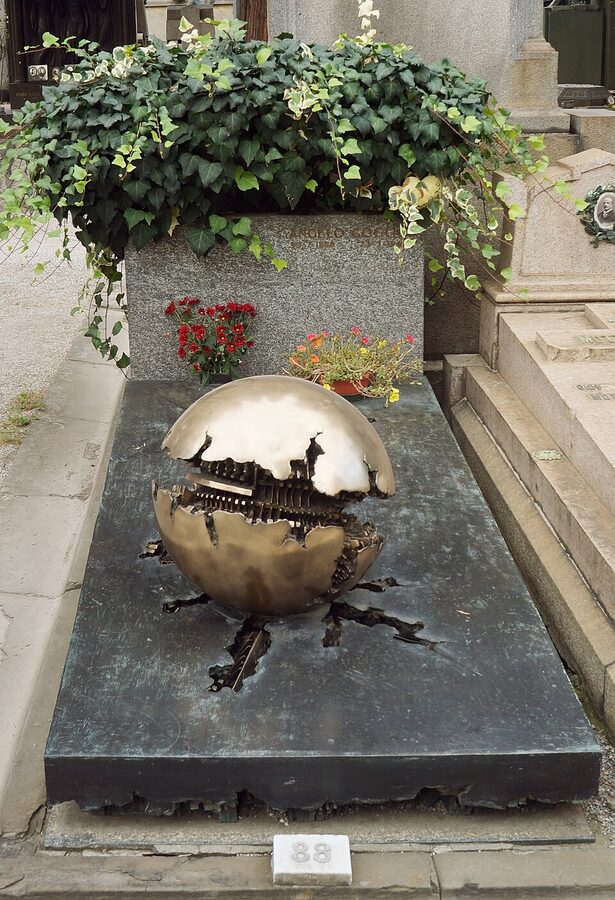
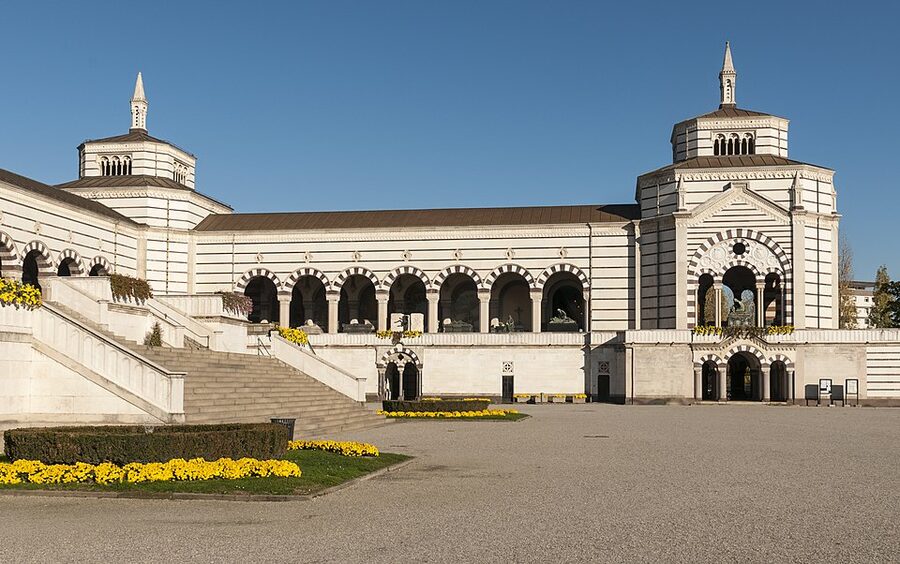
The Monumentale is Milan’s grandest cemetery and probably the city’s most underrated attraction. Family tombs commissioned from serious sculptors. A cast bronze of the Last Supper that’s worth the walk on its own. Toscanini, Manzoni, Verdi’s relatives, generations of Milanese industrialists buried under marble that ranges from austere to almost theatrical. You can spend three hours here and not run out of things to look at.
It’s about 25 minutes from the Duomo by metro plus walk. The hop-on bus drops you outside the gate. If you were going to skip the cemetery because it sounded like a hassle, the bus is the reason you don’t.
San Siro stadium
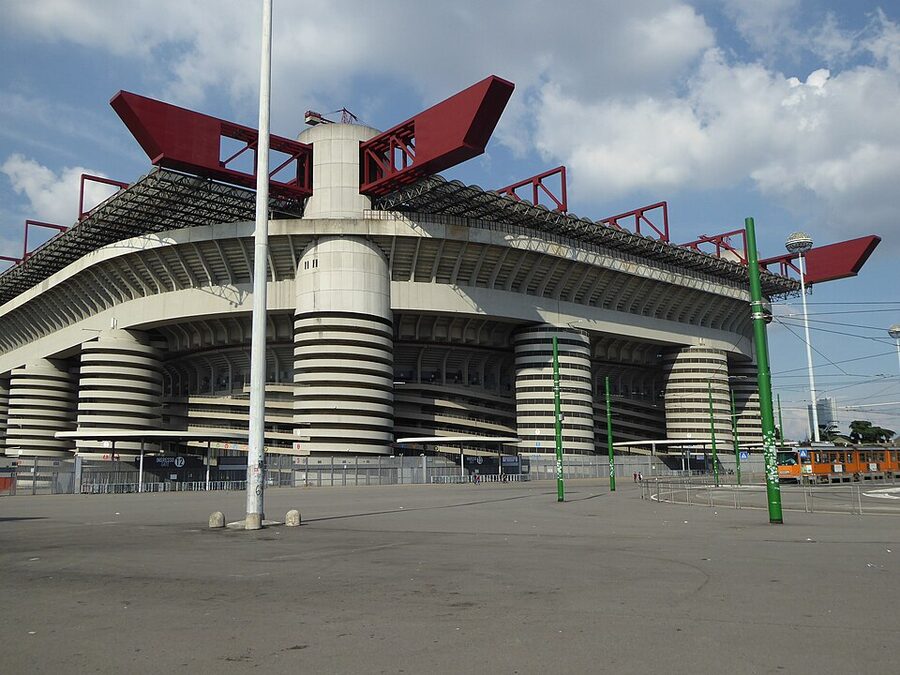
San Siro is genuinely far. Almost 8 km from the Duomo, west of the city, in a district most tourists have no other reason to visit. The metro gets you there but it’s a haul plus a walk at the other end. If you’re a football fan booking a stadium tour or matching a fixture, the hop-on bus turns the trip into something passive instead of a logistical errand.
If you’re not a football fan, skip San Siro entirely. The stadium tour is good and the architecture is striking from the outside, but neither rewards the trip if you don’t already care about the clubs that play there.
Castello Sforzesco and Parco Sempione (only if you don’t want to walk)
This one’s borderline. Castello Sforzesco is a 15-20 minute walk from the Duomo via the pedestrian Via Dante. It’s a pleasant walk: cafes, buskers, the occasional accordion. Compare with the Marseille hop-on bus, where the steep climb up to Notre-Dame de la Garde is the part that genuinely justifies the fare. The Castello is also worth visiting properly (Michelangelo’s last unfinished Pieta is inside, and most tourists don’t know).
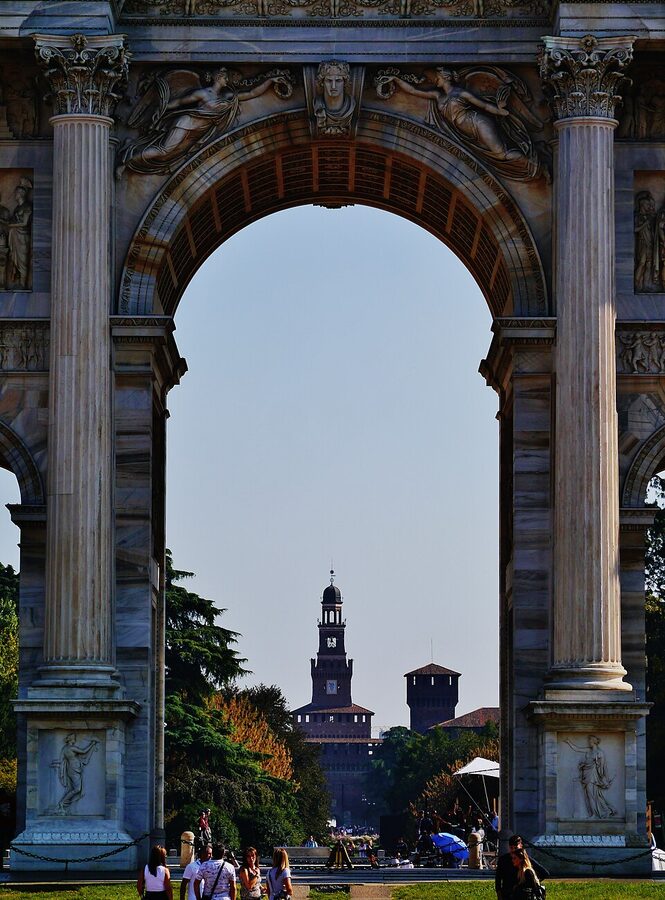
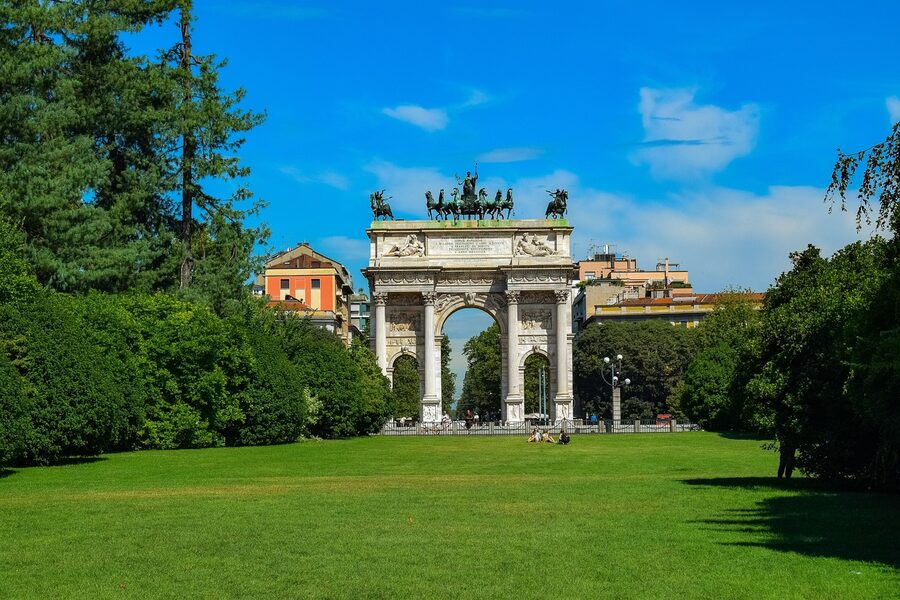
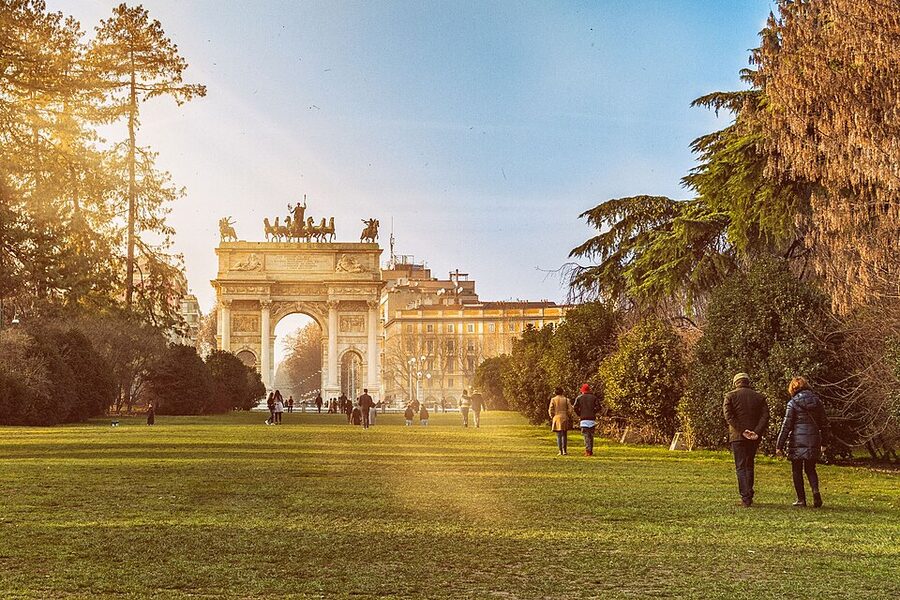
But if you’re tired, in heat, or travelling with kids who have walked enough for one day, the bus does this leg comfortably. Same heat-and-kid-fatigue argument runs the Seville hop-on bus through to first place on most family itineraries. It also continues to the far side of Parco Sempione and the Arco della Pace, which is a boring 25-minute walk if you do it on foot end to end. Sit on the top deck and let the park drift past.
Where the bus is genuinely worse than walking
Two zones where you’d be silly to use the bus, no matter how much credit you’ve got left on your ticket.
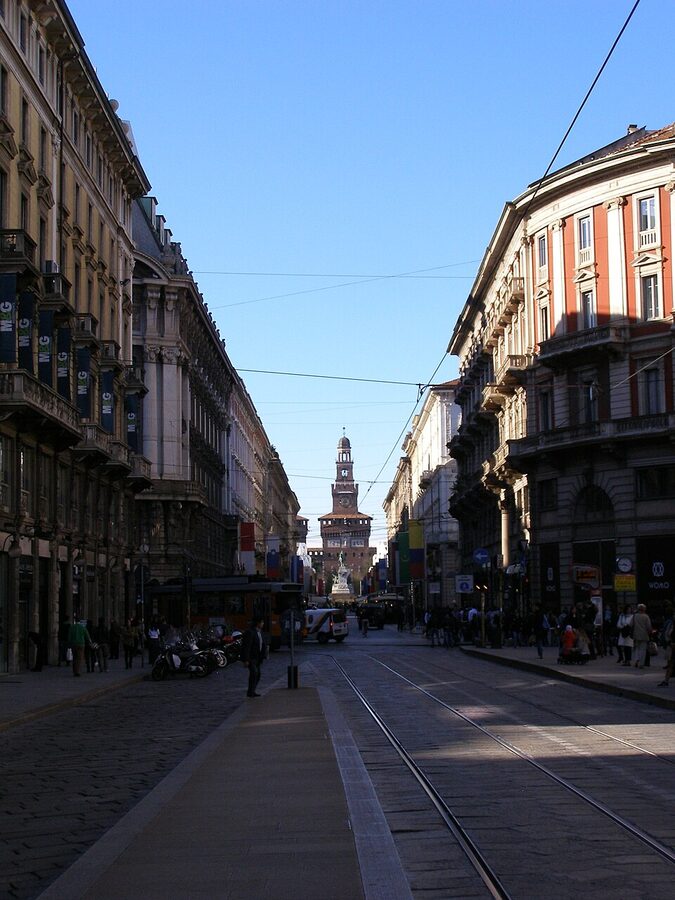
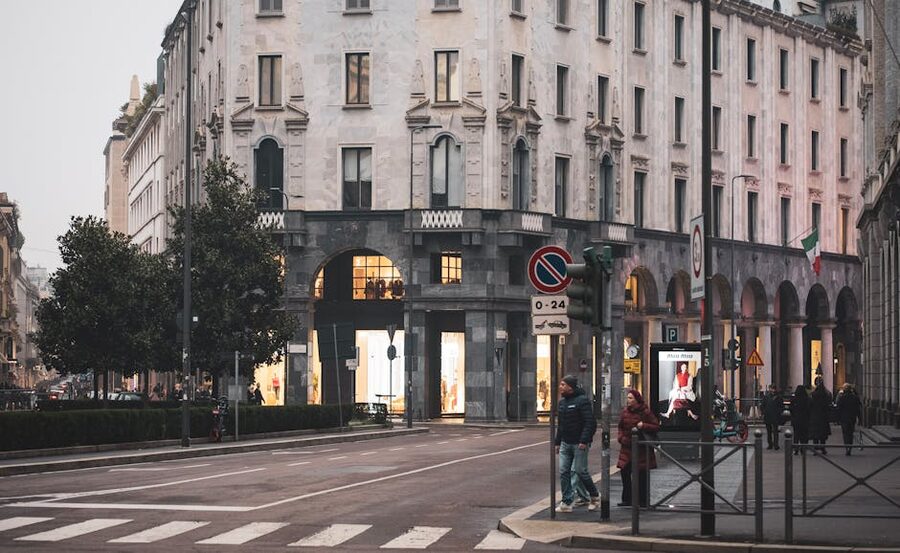
Duomo to Galleria to La Scala to Castello. This is the central pedestrian-ish core. Some of these streets have bus access, others don’t, and the bus stops are inconveniently placed for a chain that’s already short. Walking it gives you Via Mercanti, the medieval lanes off Via Manzoni, the Brera district if you bend a few minutes north. The bus version skips all that and feeds you the same buildings through a window.
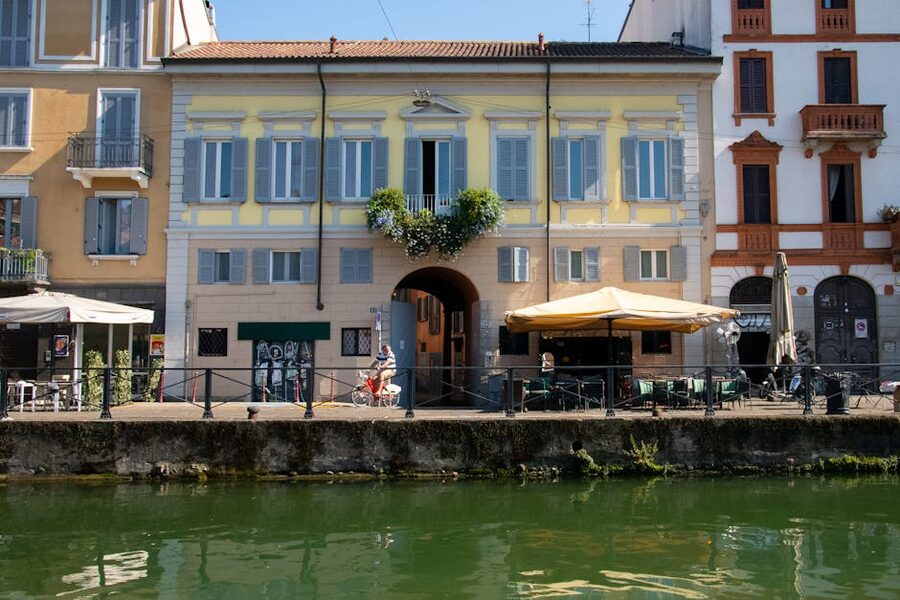
Navigli. The canal district south of the centre is a walking zone. Two parallel canals, towpaths, restaurants spilling out onto the cobbles, antiques markets on the last Sunday of every month. The hop-on bus passes the entry but the experience is on foot, ideally in the early evening. Don’t get on a bus to look at Navigli through a window.

The actual product, briefly
City Sightseeing operates the dominant Milan hop-on bus. Four routes, colour-coded. The same operator runs the Amsterdam hop-on bus, which is also worth comparing to the city’s canal-boat circuit.
- Red Line: the headline loop. Duomo, Castello Sforzesco, Cenacolo (Last Supper area), and back. About every 50 minutes.
- Blue Line: the longer reach. San Siro stadium, Cimitero Monumentale, Centrale station. Every 30 minutes, the most useful line for the things you actually need a bus for.
- Green Line: a short afternoon-only loop. Easy to miss; only runs roughly 14:10 to 16:50, every 80 minutes.
- Yellow Line: a third loop running in split sessions. Frequencies are decent but the schedule has gaps mid-day.
Tickets are valid from first use, with three duration tiers:
- 24 hours: €25 adult, €10 child (5–15). The pricing tracks closely to the Palma hop-on bus, where the 24-hour adult fare lands within a euro of this.
- 48 hours: €30 adult, €10 child
- 72 hours: €35 adult, €10 child
All four lines connect at Piazza del Duomo and Castello, so you can switch lines without buying new tickets.
Top picks: the three Milan hop-on buses worth booking
There’s really only one operator network that matters in Milan, but it’s resold under three different listings. Pick whichever platform you’re already using.
1. Milan: City Sightseeing Hop-On Hop-Off Bus With Audio Guide: $26
This is the one to book if you’re booking one: four routes, audio guide in 8+ languages, the only Milan HOHO that consistently runs all day. Our full review covers the route map in detail and the comments from people who’ve used it for Centrale connections. Skip if you only need the central loop; take it if you want San Siro and the cemetery.
2. Milan: Hop-On Hop-Off Bus Ticket for 24, 48, 72 Hours: $29

This is the one to book if you know exactly how long you’ll use it. The 48-hour and 72-hour tiers can work out cheaper than the daily standard depending on date, and the review notes that the same physical buses serve both listings. Worth comparing before you book.
3. City Sightseeing Milan Hop-On Hop-Off Bus Tour: $27

Same fleet, sold via Viator. Free Wi-Fi, mobile app, hotel pickup-drop-off on some pass tiers, free cancellation. Our review notes that on rainy days the rooftop is closed and the bus loses much of its appeal, which applies to all three listings here.
The “should I book?” decision tree
Three real scenarios, each one short.
You’re in Milan for one day. Don’t book. Walk Duomo to Castello via Galleria and La Scala, ride the metro to the Last Supper if you’ve got the slot, and head to Navigli for dinner. The bus is friction you don’t need.
You’re in Milan for two-three days and want San Siro or the Monumentale. Book the 24-hour pass. Use it for the long journeys (cemetery in the morning, stadium in the afternoon) and walk everything central. €25, used twice for trips that would otherwise be a metro plus walk on each end, justifies itself.
You’re with kids, mobility issues, or have done a lot of walking already. Book the 48-hour pass. The kids get the upper-deck novelty, you get the option to skip the harder transit legs without negotiating the metro. The bus stops are stroller-friendly and most buses are wheelchair accessible at the standard entrance.
Things to know before you board
A handful of practical bits that the listings bury.
The audio guide is patchy. Wi-Fi headphones, mobile app, multiple languages, but the script is generic and the audio sometimes lags the actual buildings you’re passing. Treat it as background, not a real tour.
Last bus times are early. Most routes run their last loop between 4 and 5pm. If you bought a 24-hour ticket and want to use it for an evening trip back from the Monumentale, check the timetable; you’ll often need the metro instead.
Rain kills the rooftop. Milan winters are damp and the open-top deck is closed in rain. The covered lower deck is fine but the photo angle the bus is sold on disappears. November to March, expect the upper deck to be in and out of use.
Stops are not always at the front door. Cimitero Monumentale stop is a short walk from the gate. La Scala stop is on the Galleria side, not the Scala side. Check the route map before you assume the bus is dropping you exactly where you want.
What the bus does NOT replace
A common mistake: thinking the hop-on pass means you don’t need any other transit. You do.
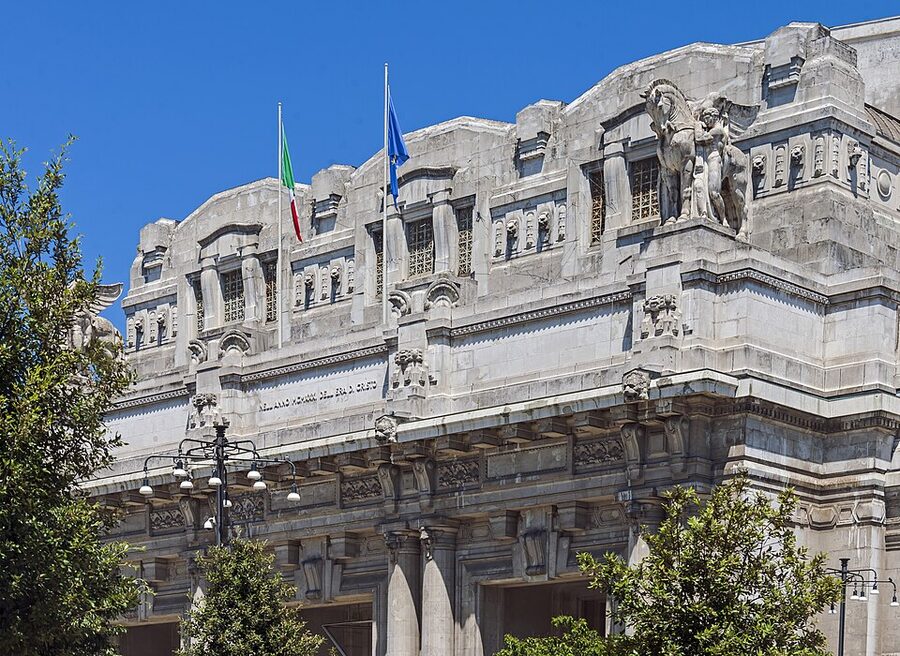
The Milan metro is fast, cheap (€2.20 per ride or €7 per day), and reaches places the bus doesn’t, including the Last Supper area on the M1/M2 transfer at Cadorna. Buy a daily metro pass on top of your hop-on ticket and you’ve covered the city.
For day trips outside Milan, the bus is irrelevant. Lake Como is an hour by train from Milano Centrale; you don’t ride the hop-on out to a lake. Same for Bergamo, Verona, the wine regions. The hop-on is a city loop; treat it as one.
Comparison with other Italian hop-on buses
I’ve used the hop-on in Rome, Florence, and Milan, in that order, and Milan has been the least useful of the three. Why?
Rome is huge, traffic is brutal, and the headline sights are spread across a 5km radius. The Rome HOHO genuinely takes you places walking would punish. Florence is the opposite extreme: the centre is so pedestrian that the bus literally cannot enter it, which makes the Florence bus mostly useful for Piazzale Michelangelo and Fiesole. Milan sits in between, with a walkable centre but a few outlier sights, and the bus is good for those outliers and almost nothing else.
If you’re doing all three cities, your hop-on math is: book in Rome, skip in Florence, book in Milan only if you’re going to the cemetery or the stadium.
Comparing the four routes
If you do book, here’s what each line gives you that the metro doesn’t:
Blue Line is the one that earns the ticket. San Siro to Cimitero Monumentale to Centrale to centre, in one ride, no transfers. The metro can do this but it’s three separate trips.
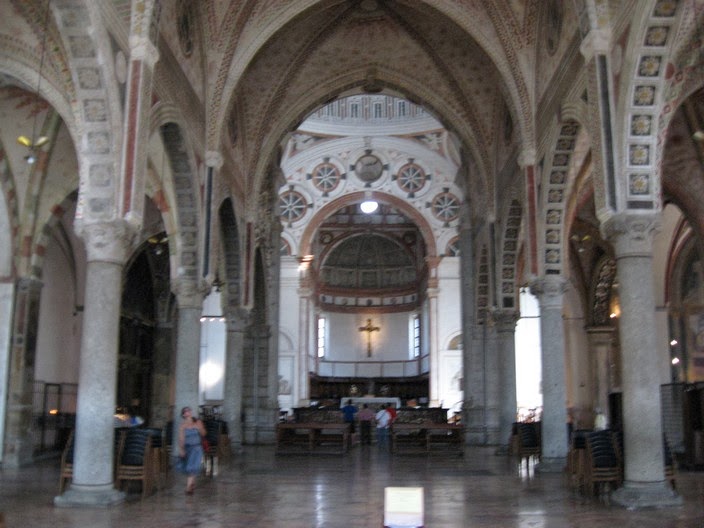
Red Line covers the Last Supper area (Santa Maria delle Grazie) which the M1/M2 also reaches via Cadorna. It’s a wash; pick whichever is closer to your hotel. The bus also covers Sempione and the Castello, both walkable from the centre.
Green Line and Yellow Line are skippable. Their schedules are awkward and their routes overlap heavily with Red and Blue.
What a good Milan day looks like, with and without the bus
Two sample days for the same Milan visitor.
Without the bus. A walking-and-metro day:
- 9am: Duomo (book skip-the-line; our terraces guide has the right ticket)
- 11am: Galleria and La Scala
- 1pm: lunch at a local place near Brera
- 2pm: walk to Castello via Via Dante
- 4pm: Parco Sempione
- 6pm: metro to Navigli for aperitivo
Cost runs to about €30 in attraction tickets and almost nothing in transit. Your legs will be tired but you’ll have seen everything central worth seeing.
With the bus, on a 24-hour pass. A bus-and-metro day:
- 9am: Duomo
- 10:30am: Blue Line from Duomo to Cimitero Monumentale, spend 90 minutes
- 1pm: Blue Line on to San Siro, do the stadium tour
- 4pm: bus back, walk Galleria and La Scala
- 6pm: Navigli
Total cost runs to about €30 in attraction tickets, €25 for the bus, €15 for the stadium tour. A bigger day with three more sights for not much more money.
The second day is where the bus pays for itself, but only because you’re using it for the long legs. Use it the way the first day uses your legs and you’ve wasted €25.
If you’re still on the fence
Three quick gut-checks.
Are you going to San Siro or Cimitero Monumentale? If yes, book. If no, probably skip.
Is anyone in your group not up for 12,000 steps a day? If yes, the bus is forgiving. The metro has stairs; the bus has stops at street level.
Are you in Milan November to March? The open-top deck is closed in rain and Milan rains. The bus is half its appeal in good weather. Time of year matters here more than most cities.
One more thing the marketing won’t tell you
The City Sightseeing buses are mostly empty mid-week, mid-afternoon. If you’re nervous about getting a seat, don’t be. If you want the upper deck for the photos, easy. The crowds are mostly at the Duomo stop on weekend mornings; everywhere else the bus is half full.
This means the bus is a fine quiet 30 minutes when your feet are screaming and you want to sit down with a view. €25 for a 24-hour pass works out to a reasonable hourly rate if you treat it partly as an air-conditioned bench with a moving panorama.
How does Milan’s bus stack up against other transport?
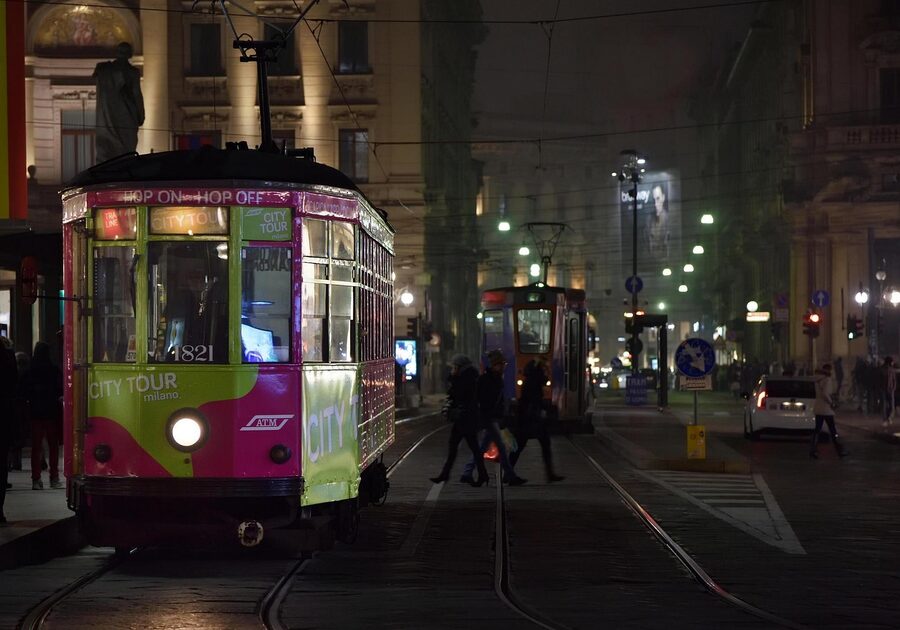
Compared to a 1-day metro pass (€7), the hop-on bus is over three times the price for less coverage. Compared to the vintage tram (€2.20 per ride), the hop-on bus is more comfortable but skips the actual atmospheric ride. Compared to walking, the bus is slower for short trips and faster for long ones.
The plain answer to “what’s the best Milan transport for tourists” is: walk for short trips, metro for long ones, and the hop-on bus only for the specific long trips that the metro makes annoying (Monumentale, San Siro, Centrale-to-Castello with luggage).
Where to spend the money instead
If you decide to skip the hop-on, the €25 is better spent on something else.
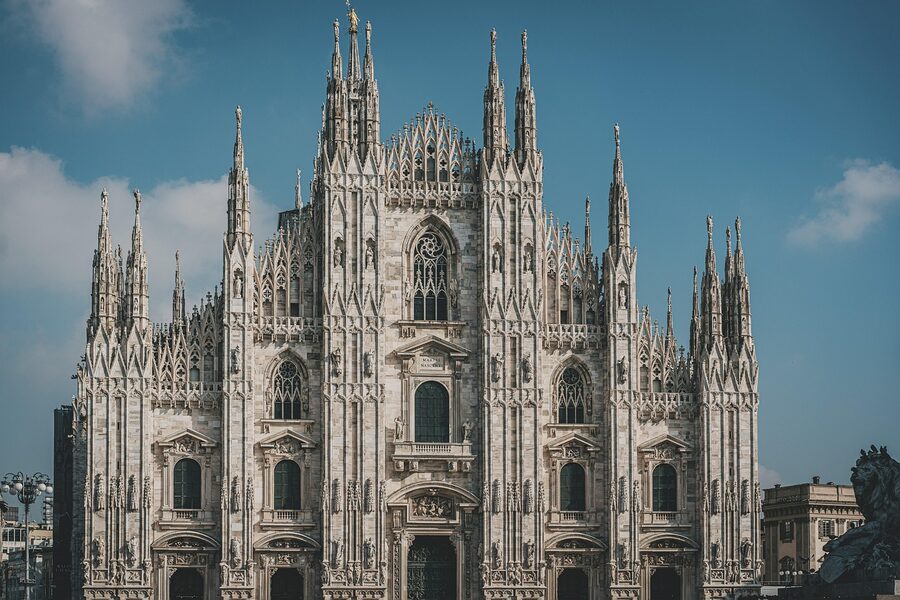
The Duomo terraces ticket with rooftop access is €22 and the closest thing Milan has to a single must-do experience. Seeing the Last Supper requires a slot you book months ahead but is €15 well spent if you can get one. A good aperitivo at Navigli is €15 for a cocktail and a plate that effectively replaces dinner. Three of those add up to your hop-on budget and produce a much better day, in my opinion.
Or if Milan is your launching pad for a regional trip, put the €25 toward the train fare to Lake Como. A day trip out of the city is more memorable than another loop of the same buildings.
A final word, from someone who’s used both
I’ve been the tourist who skipped the hop-on bus in Milan and the tourist who bought one. Both are valid. The second one is valid only when your itinerary has a clear use case (cemetery, stadium, fatigue) and not because the bus seemed like a sensible default.
For your own decision, ignore the marketing copy and look at your own list. If “Cimitero Monumentale” or “San Siro” or “I really don’t want to walk that much” appears on it, book the cheapest 24-hour pass and use it for those specific legs. If your list is all central Milan, save the money. The walk is the city.
Where to go next
If you’re putting Milan together as a multi-stop trip, the rest of our Italy guides go deeper on the bigger questions. The Duomo terraces is the must-do experience here and worth more attention than the bus, including the timing tricks for skipping the worst queues. The Last Supper is the booking-difficulty headache that needs solving months out, not days. For a day trip, Lake Como is an hour away and a complete change of scene. And if you’re heading further south, the Florence hop-on is even more skippable than Milan’s, while Rome’s is the one Italian HOHO that genuinely earns its keep.