
On 5 October 2018, a framed Banksy print sold at Sotheby’s for £1.04 million. Then, the moment the gavel dropped, a hidden shredder built into the bottom of the frame buzzed to life and slid the painting through itself, slicing it into ribbons in front of the auction room. The piece was Girl With Balloon, and the only place you can stand in front of the unshredded screenprint version, plus the documentary footage of the room when it happened, is the Moco Museum on Museumplein.
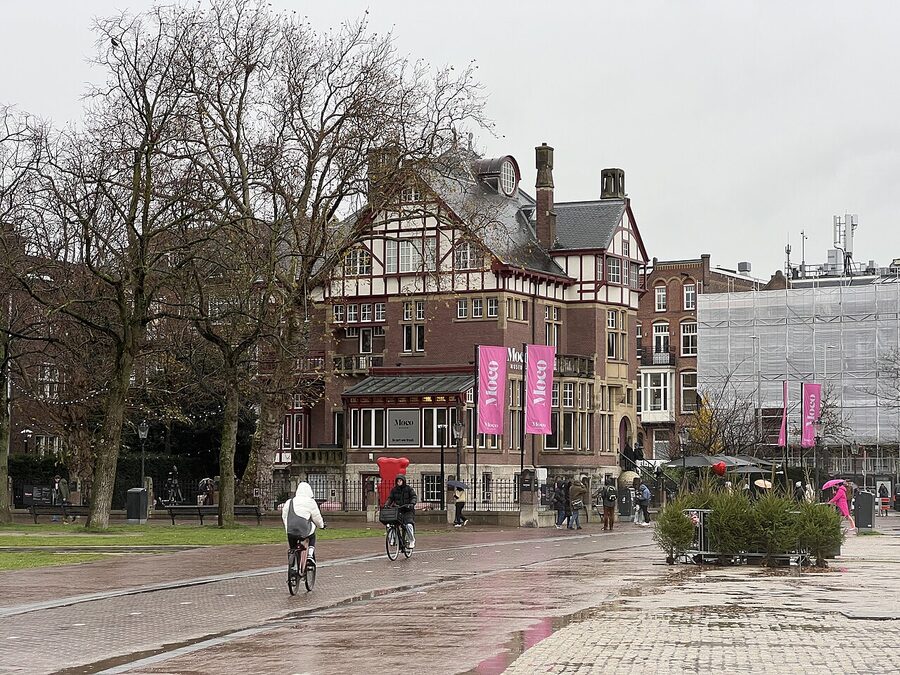
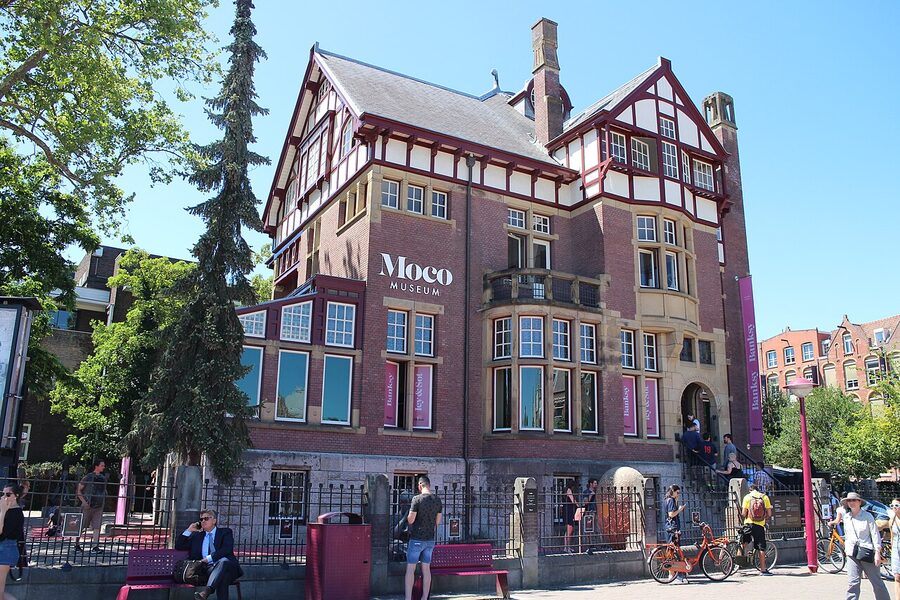
That’s the story you tell people when they ask why you went to a museum next door to the Van Gogh. Moco isn’t a state collection or a serious art-history institution. It’s a private contemporary museum that opened in April 2016 in a 1903 townhouse, focused on the Banksy / Warhol / Basquiat / Haring / Kusama / KAWS axis of street-and-pop-into-gallery. The serious heavyweights are 200 metres away at the Rijksmuseum and the Van Gogh Museum. Moco is the dessert. If you accept that going in, you’ll have a great time.
In a Hurry
- Cheapest standard ticket: Moco Museum Entrance with Banksy & More. €19.95 walk-in, around $23 on GetYourGuide with the booking fee. The flagship listing.
- Viator alternative: Moco Museum Admission with Banksy and More. Same product, about $27 on Viator. Pick whichever app you already use.
- Combo with a canal boat: Moco Entry + 1-Hour Canal Cruise. About $32 for the museum plus a one-hour boat that pairs naturally with the Amsterdam canal cruise route.
What Moco Actually Is, And What It Isn’t
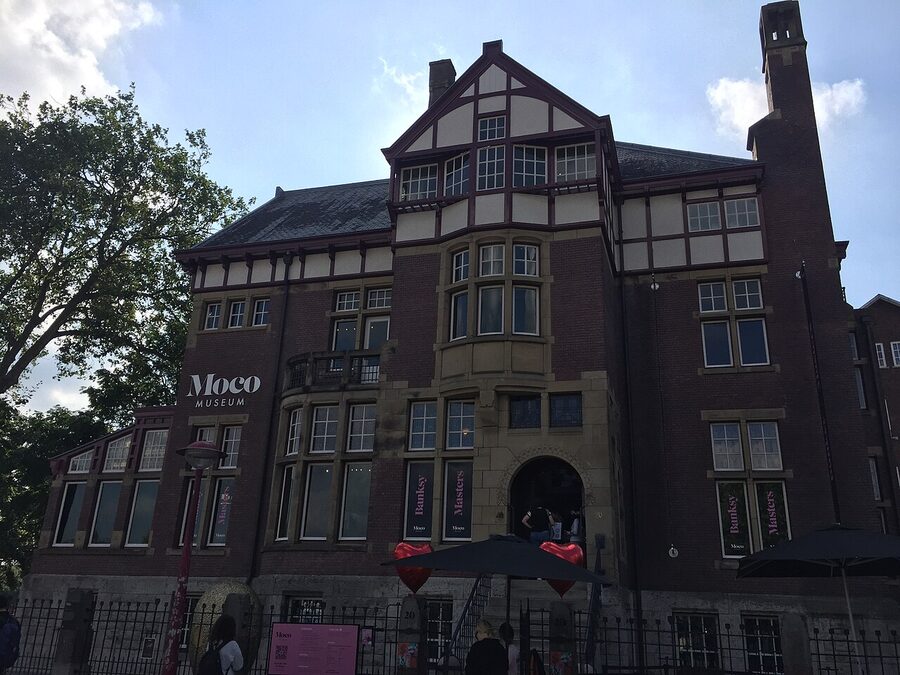
Moco is short for Modern Contemporary. It’s a private museum, founded by Lionel and Kim Logchies-Prins, with a permanent core (the Banksy room, the Warhol Marilyns, a rotating Yayoi Kusama installation, KAWS sculptures, Basquiat, Hirst, Murakami, Haring) and a frequently-rotating temporary exhibition layer on top. About 600,000 people pass through every year. The museum bills itself as the largest single-museum collection of Banksy on the planet, with 50-plus works on display, including the Girl With Balloon screenprint, Beanfield, and a rotation that has lately included a piece called Diamonds For Breakfast.
Here is what Moco is not. It’s not a Banksy-authorised exhibition. The Banksy collection is genuine and verified, but it is not endorsed by the artist. None of the major street-art figures show their work here in partnership with Moco; the museum buys or borrows pieces and arranges them. That’s the model, and the official position from Banksy’s office (Pest Control) is that they don’t authenticate or sanction these shows. If you came here to “support the artist”, you didn’t. You supported a private gallery. That’s a separate question from whether the experience itself is good.
Tickets, Hours, And What You’ll Actually Pay
The walk-in price the museum prints on the door is €19.95 standard adult. Youth tickets (7 to 17) are €17.95. Students get the same youth rate. Children under 7 are free. The website sells time-slot tickets only. There’s no walk-up window in the conventional sense; even if you turn up unbooked, you’ll be redirected to a QR code on the door to buy the next available slot.
On the resale platforms (GetYourGuide, Viator, Tiqets) you’ll see the same ticket priced from about $23 to $28 depending on the operator. That’s the booking fee. It’s worth it if you want one app to handle every Amsterdam attraction (sister BB articles on the Heineken Experience and the Anne Frank walking tour sit on the same platforms), but if you only need one ticket and you already know the date, the official Moco site is cheaper.
Hours are 9am to 10pm daily. That’s not a typo. The late closing is unusual for a Museumplein institution and it’s the editorial pick. From 7pm onwards the daytime tour groups are gone, the lighting feels more like a bar than a gallery, and the digital rooms downstairs hit harder. If you can move your visit to a weekday evening, do it. The 9am opening also works (especially in summer), but late evening is the better atmosphere.
Discounts to know about. The Museumkaart gets you 30 percent off (not free entry, which trips up first-time Museumkaart holders). The I amsterdam City Card and the Go City Amsterdam pass include Moco at no extra cost. Even with these, you have to book a time slot online before you go, the same as everyone else.
The Three-Floor Walk Through
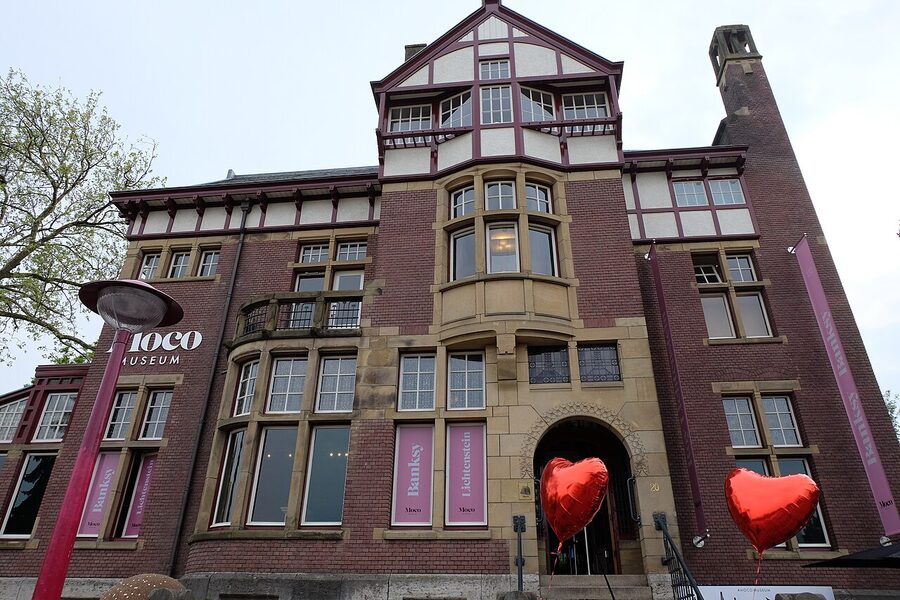
You enter on the ground floor and the Banksy gallery is the first room. Plan to spend more time here than the museum suggests. The headline pieces are Girl With Balloon (the screenprint, plus a small video showing the Sotheby’s shred), Beanfield, Laugh Now, and a Pulp Fiction Mickey-with-banana piece. There’s signage on each work explaining the year, the medium, and the political backdrop. The signage reads better than I expected; whoever wrote these labels treats Banksy as a conceptual artist rather than a graffiti curiosity, which is the right call.
Take the stairs up. There is no elevator. This is the single biggest practical issue with the museum and you should plan around it if you have knee or mobility issues. The stairwell is narrow and original-1903, and on busy afternoons there’s foot traffic in both directions on a single set of treads. A reader who used a cane wrote in last year saying she made it through but it took twice as long as the museum estimates. Take her seriously.
The first and second floors house what Moco calls the Moco Masters. This is where the Warhol Marilyns hang, which is the second flagship after the Banksy room. The Marilyns are silkscreens from 1967, the year after the death-mask photoshoot, and they read better in person than in any reproduction because the screen layers don’t align quite the same way on each pull. Past the Warhol wall you’ll see Haring (the radiant baby and barking dog motifs), Basquiat works on canvas, KAWS sculpture in the corner, a Murakami flower, and an Icy & Sot stencil that doesn’t get the attention it deserves.
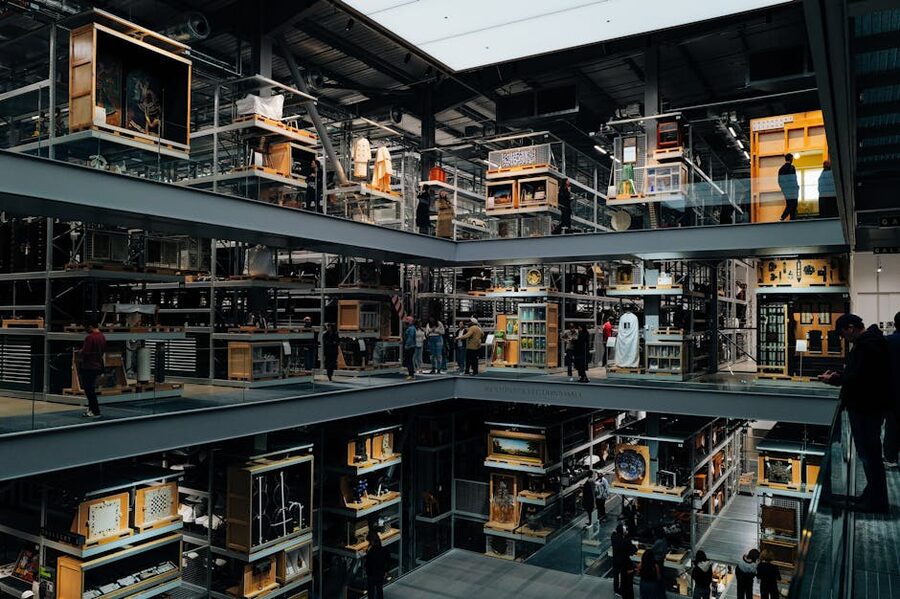
The Yayoi Kusama room is the social-media payoff and also the part most people get wrong. There’s one Kusama room, called Dots Obsession in the standard rotation, and it’s smaller than the Instagram pictures suggest. You go in for about 30 seconds. It’s not the proper Infinity Mirror room from the Tate or the Hirshhorn; it’s the Moco-licensed installation, which is genuinely a Kusama work but is a single piece, not a corridor of mirrors. If you came here for Kusama specifically, you’ll leave a little disappointed. If you came here for Banksy and got the Kusama room as a bonus, you’ll leave happy.
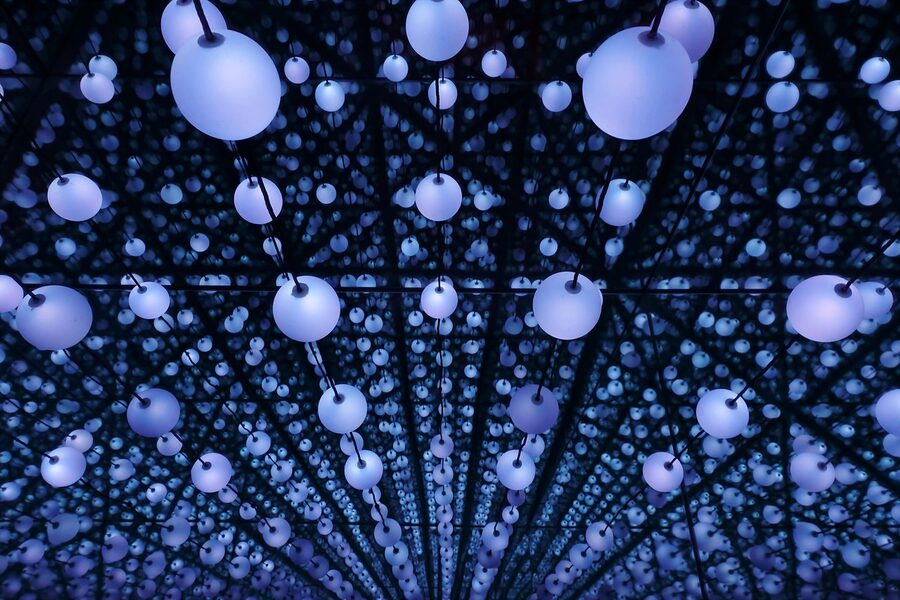
Downstairs in the lower-ground floor you’ll find the digital immersive section. This is where the Studio Irma Diamond Matrix piece lives, alongside a rotating projection-based exhibit. It’s the closest thing Moco has to a Fabrique des Lumières-style room (which is a much bigger sister venue across town and a cleaner pure-projection experience), but on the Moco scale, the lower-ground room works.
Banksy’s Girl With Balloon: The Specific Piece To Stand In Front Of
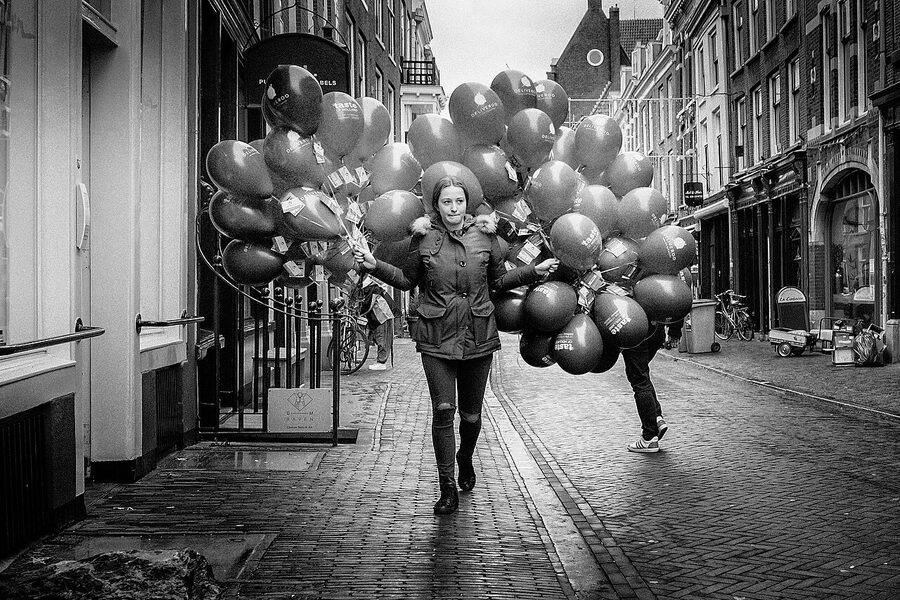
Worth a paragraph on its own because the story is what makes the visit. Banksy first stencilled Girl With Balloon on a wall in Shoreditch, London, in 2002. A heart-shaped balloon, drifting away from a girl reaching after it, ambiguous about whether the balloon is escaping or being released. He made screenprints. They sold at art fairs through the 2000s for the price of a dinner.
On 5 October 2018 a framed print sold at Sotheby’s for £1.04 million. The buyer’s paddle went down. The crowd applauded. And then the painting started to feed itself through a shredder concealed inside the bottom edge of the frame, which Banksy had built years earlier in case the work ever went to auction. Half the print made it through before the mechanism jammed. The piece was renamed Love Is In The Bin and resold in 2021 for £18.6 million, ten times its pre-shred price.
Moco has the unshredded screenprint on the wall and a small monitor playing the auction-room moment. You can stand a metre from a piece of art that destroyed itself in front of millionaires and watch the millionaires’ faces in real time. That is the editorial pick of the museum. Skip the Kusama queue if you must. Don’t skip this.
The Building Itself: Villa Alsberg, 1903
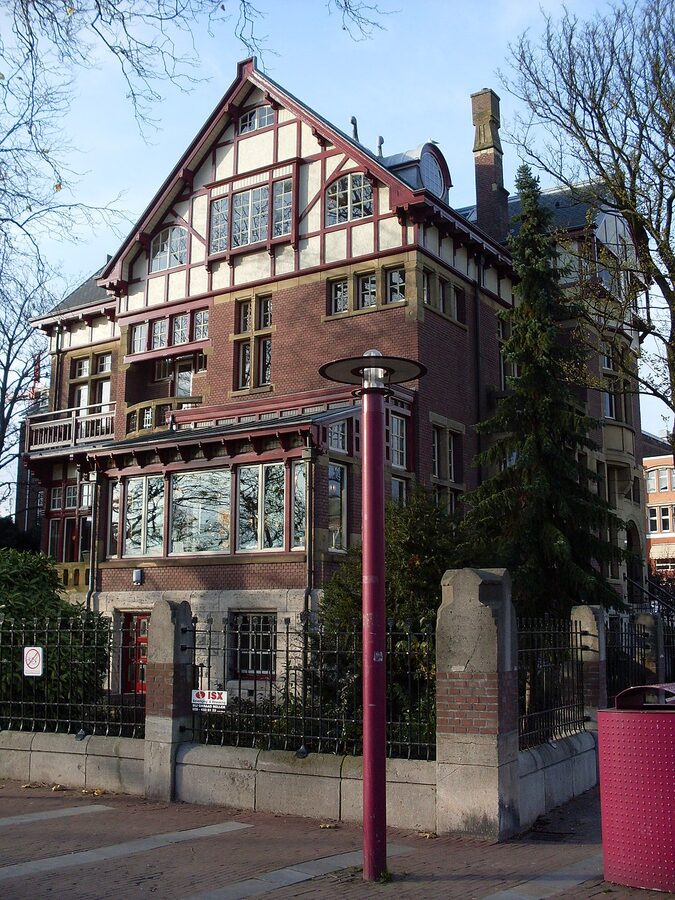
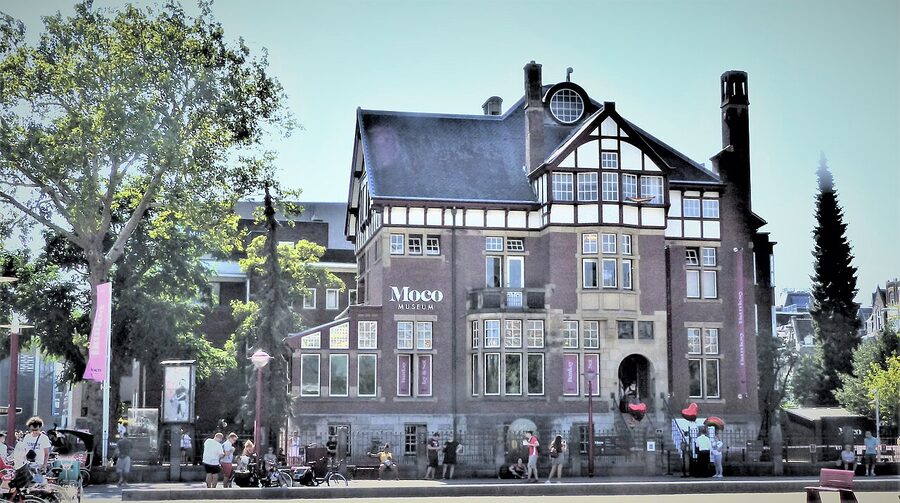
The house has a name. It’s Villa Alsberg, and it was completed in 1903 for a textile family. Jan Cornelis van der Voort designed it, plus the near-identical Villa at Honthorststraat 22 next door, in a late-Eclectic style that’s mostly red brick with cream sandstone trim. The street itself, Honthorststraat, is named after Gerard van Honthorst, a 17th-century Dutch Caravaggio-school painter whose work hangs over at the Rijksmuseum (the irony of the street name versus the contemporary collection inside is not lost on the Moco curators, who will tell you about it if you ask).
The building was a private home, then a commercial property, and then it sat largely empty for a stretch. Lionel and Kim Logchies-Prins took a lease in 2015 and opened the museum in April 2016 with a Banksy and Warhol opening show. The interior has been adapted with care: walls are painted, but the original mouldings and the staircase wood are intact, which is why some rooms feel cramped (small Edwardian-era domestic spaces hosting major artworks) and why the route through the museum is non-linear.
This is also why the experience is different from the Madame Tussauds kind of attraction down on Dam Square. Moco is in a real Amsterdam house. Tussauds is in a purpose-built attraction box. They are not the same product, even though both put famous faces in a small space.
How To Get There: Tram, Walk, Or A Hop-On Bus
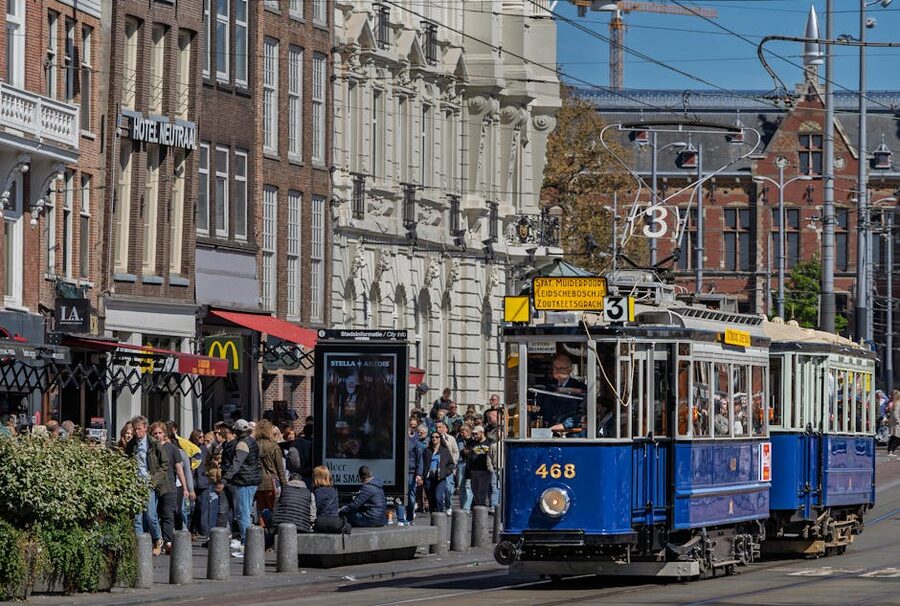
The museum sits at Honthorststraat 20, a tiny side street that opens onto Museumplein, the wide green-and-paved square that anchors the museum quarter. The closest tram stop is Museumplein, served by lines 2 and 12, and it’s a one-minute walk from there. From Amsterdam Centraal you’ll take tram 2 or tram 12 in the southbound direction. Total trip is about 12 minutes.
If you’re staying in the city centre and you don’t mind walking, it’s a 35 to 40 minute walk along the Singel and the Spiegelgracht. That’s a perfectly nice route, especially in the morning when the antique shops on Spiegelgracht are opening up. Don’t bother with a bicycle for this trip; parking near Museumplein is full by 10am most days, and the bike-only Vondelpark route is more pleasant on foot.
The Amsterdam hop-on hop-off bus stops at Museumplein on every loop, but I’d skip it for this specific museum if you’re already on Museumplein. The HOHO is good if you’re chaining Moco with the Heineken Experience in the same morning, since those two stops aren’t on the same tram line.
Combining With Other Museumplein Stops
This is the part most travellers get wrong. They book Moco as a standalone visit and end up with a 90-minute museum stuck on a wide-open afternoon with nothing on either side of it. Moco only takes about an hour. You should pair it with one or two other Museumplein stops on the same day.
The four reasonable combinations:
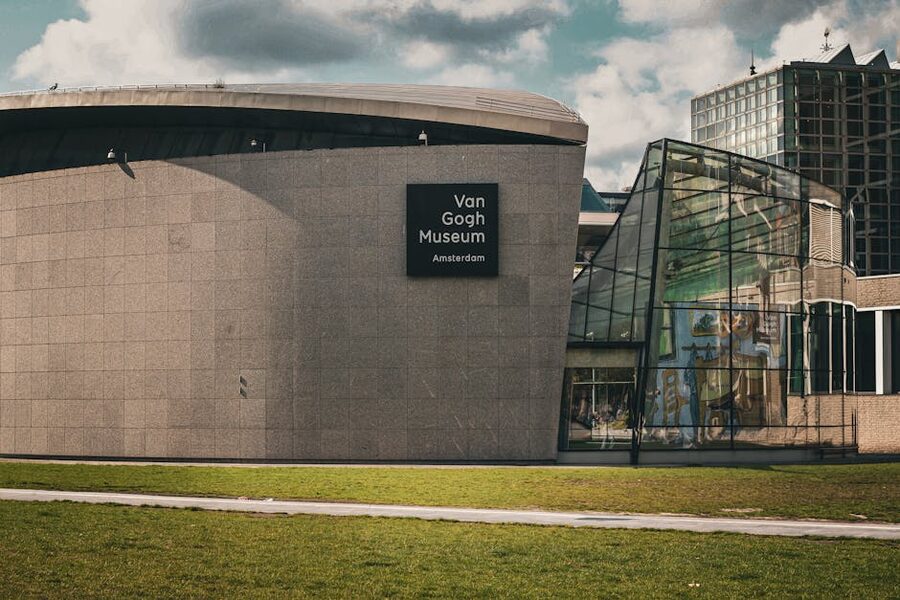
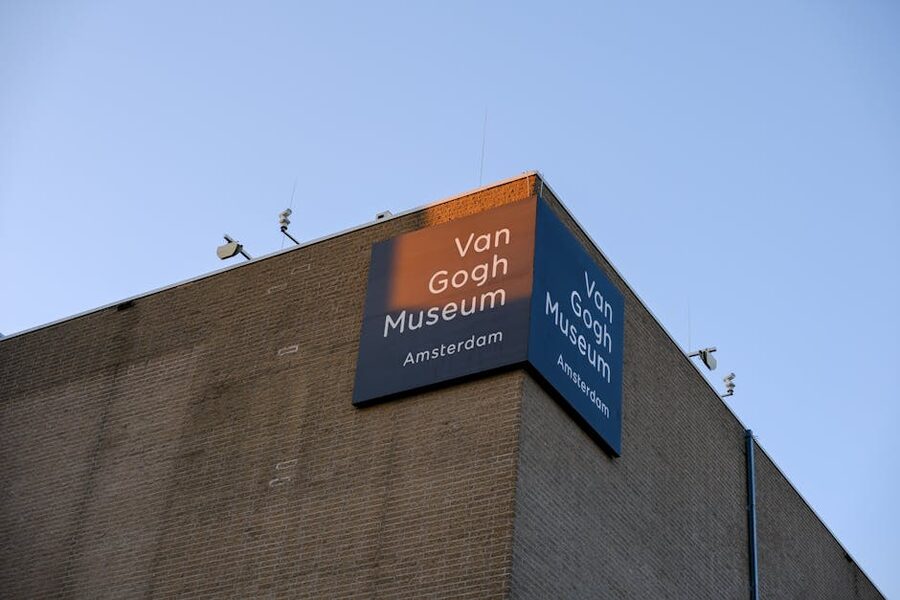
- Moco + Van Gogh: 100 metres apart. Book Van Gogh first (it has tighter time slots), then walk to Moco for an early-evening visit. About four hours total.
- Moco + Rijksmuseum: 250 metres apart. Pick a single Rijksmuseum room (the Gallery of Honour) rather than the full collection, then Moco. The Rijksmuseum guide covers which rooms to skip if you’re short on time.
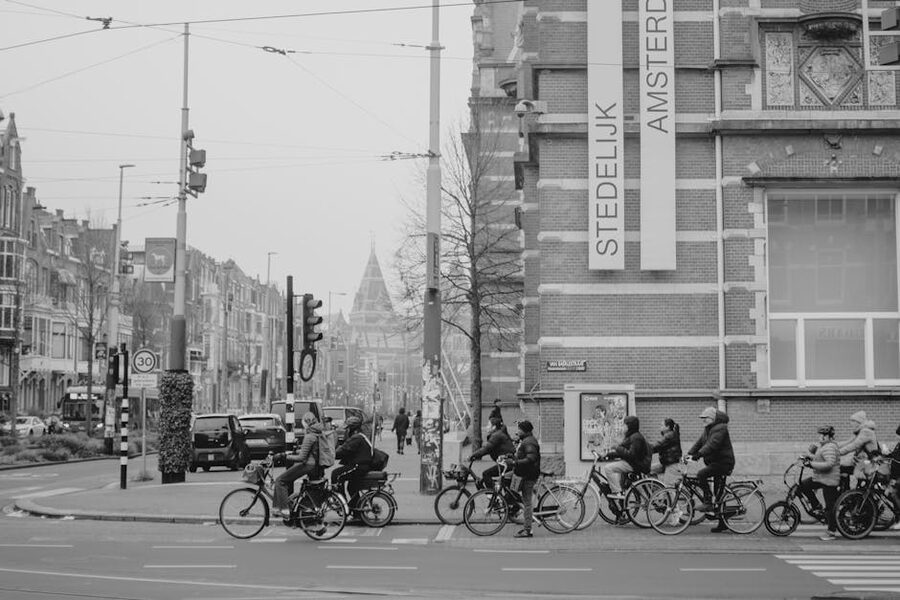
- Moco + Stedelijk: 200 metres apart. The Stedelijk is the official modern-and-contemporary state museum, with a much deeper collection (Mondrian, Malevich, Pollock, Bacon). If you only have time for one, the Stedelijk is the more substantial visit. If you have time for both, do Stedelijk first, then Moco as the dessert.
- Moco + Heineken Experience: 1.5km apart, a 20-minute walk south. This pairing works because Heineken is the brewery experience rather than a museum, so the energy is different. End at Heineken if you want a beer at sunset.
What I would not do: pair Moco with the Anne Frank walking tour in the same half-day. The emotional registers are too different; you don’t want to walk out of Anne Frank’s neighbourhood and immediately into a Banksy gallery. Spread those over different days.
The Three Best Tickets To Book
Below are the three booking options I’d point a friend at. The first is the standard ticket through GetYourGuide. The second is the Viator listing for the same product. The third bundles a canal cruise, which is the natural pairing if you haven’t already done one.
1. Moco Museum Entrance with Banksy & More: $23
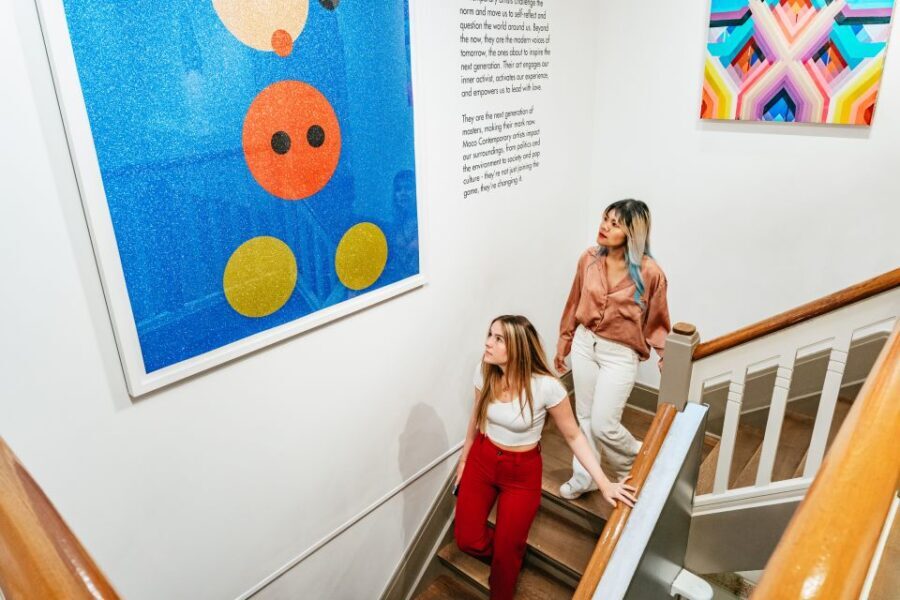
This is the right ticket if you already use GetYourGuide for the rest of your Amsterdam itinerary. You pick a date and a one-hour entry slot, scan the mobile pass at the door, walk through the Banksy room first, and head upstairs from there. I’d book the latest evening slot you can find.
2. Moco Museum Admission with Banksy and More (Viator): $27
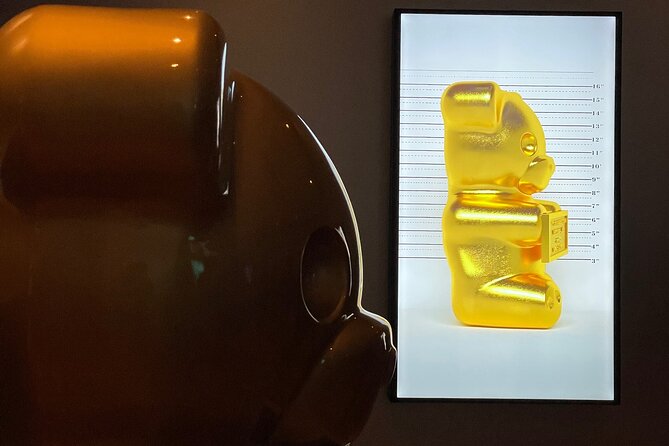
Pick this version if Viator is your default app and you’d rather keep all your Amsterdam bookings on one platform. The product itself is the same skip-the-line entry; our Viator listing review goes into the small print on rebooking and cancellation.
3. Moco Entry + 1-Hour Canal Cruise Combo: $32
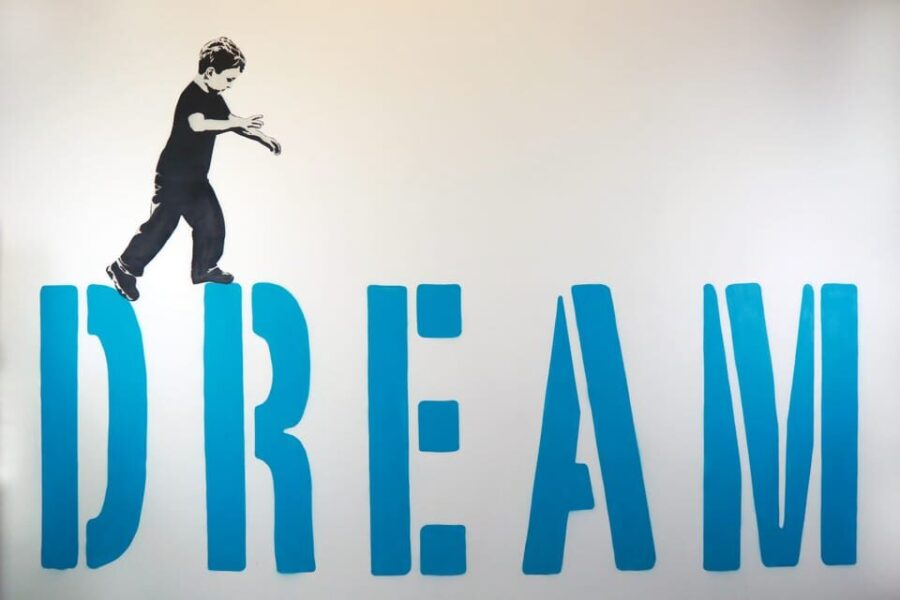
This is the combo I’d pick on a first trip to Amsterdam. The canal cruise covers the Singel and Herengracht in about an hour, and our combo ticket review notes that the boat departure point is a 10-minute walk from Moco, which means you can do the museum first and the boat at golden hour.
Photography Inside: What To Know
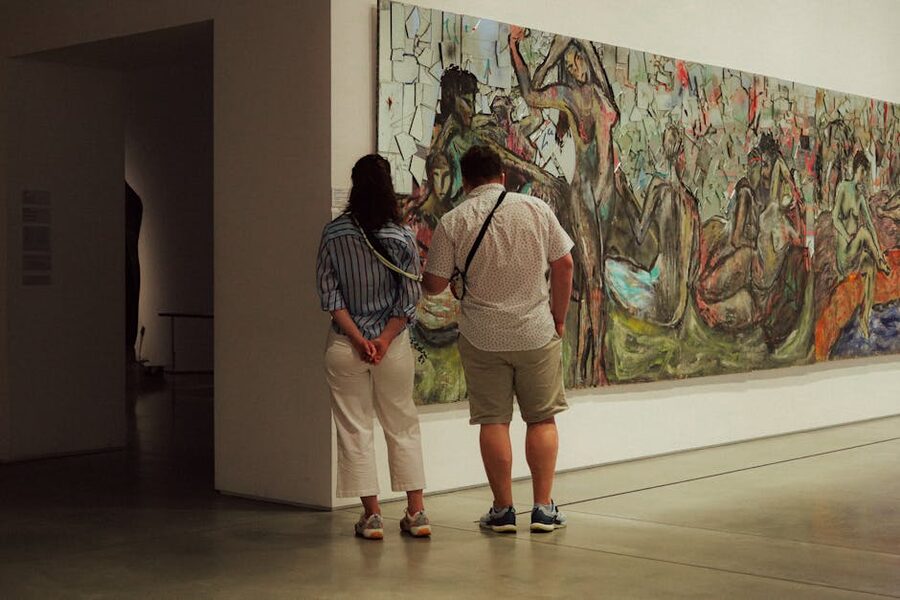
You can take photos in every room. Flash isn’t allowed (consistent with most galleries), and tripods will get you stopped at the door. Phones are fine. Selfie sticks are technically banned but rarely enforced.
The most-photographed pieces, in order: Girl With Balloon on the ground floor, the Warhol Marilyns on the first floor, the Kusama Dots Obsession room (which is a 30-second timed entry, so the queue here can be the longest part of the visit), and the digital immersive room downstairs. If you’re trying to get a clean shot of any of these without other visitors in frame, the after-7pm slot is the only realistic option. At midday, plan for waiting your turn for each piece.
One small detail people get wrong: Moco doesn’t have an Infinity Mirror room in the proper Yayoi Kusama Tate sense. What it has is the Dots Obsession installation, which is one room of polka-dotted soft sculptures with mirrored elements but is not the long-corridor infinity-pool experience. If that’s specifically why you’re going, manage expectations accordingly.
The Sculpture Garden And The Shop

The sculpture garden is small but worth a slow walk. There’s a giant red gummy bear that is the most-photographed sculpture in the garden (it’s a piece by the German artist WhatsHisName, properly titled Wonderful World), a balloon-style sculpture, and a few rotating pieces. Garden access is included with your ticket; you don’t have to pay extra. Most people race past it on the way out, which is wrong. Sit on the bench for ten minutes.
The gift shop is at the exit. It’s good. Better than most museum shops in Amsterdam. Banksy postcards are the best-selling item; there are also Warhol-branded coffee mugs, KAWS keychains, and a small but well-edited photography book selection. Prices are average for a museum gift shop (think €5 for a postcard, €25 for a poster, €60 for a coffee-table book).
Who Should Skip Moco
I’m pro-Moco overall but the museum is not for everyone. Three groups should genuinely consider skipping it:
If you have mobility issues, this museum is hard. Three floors, no elevator, narrow staircases, small rooms with low ceilings on the upper floors. The 1903 building is listed and can’t be modified. If you can’t comfortably do two flights of stairs, you’ll spend most of the visit on the ground floor (which is the Banksy gallery, fortunately the strongest single room) and miss the rest.
If you’re a serious art-history visitor who came to Amsterdam to see Vermeer and Rembrandt, Moco isn’t your priority. The deeper modern-and-contemporary state collection is at the Stedelijk Museum 200 metres away. A first-time art traveller would get more out of the Stedelijk than out of Moco. Visit Moco only if you’ve already done the Rijksmuseum and Van Gogh and have time for a second-tier stop.
If you’re specifically a Yayoi Kusama fan who came hoping for the Infinity Mirror experience, you’re in the wrong city. Kusama’s major Infinity Mirror rooms are at the Tate Modern (London), the Hirshhorn (Washington), the Broad (Los Angeles), and Naoshima (Japan). Moco has one Kusama installation. It’s good. It’s not the headline experience.
What Pairs Well: The Wider Amsterdam Art Scene
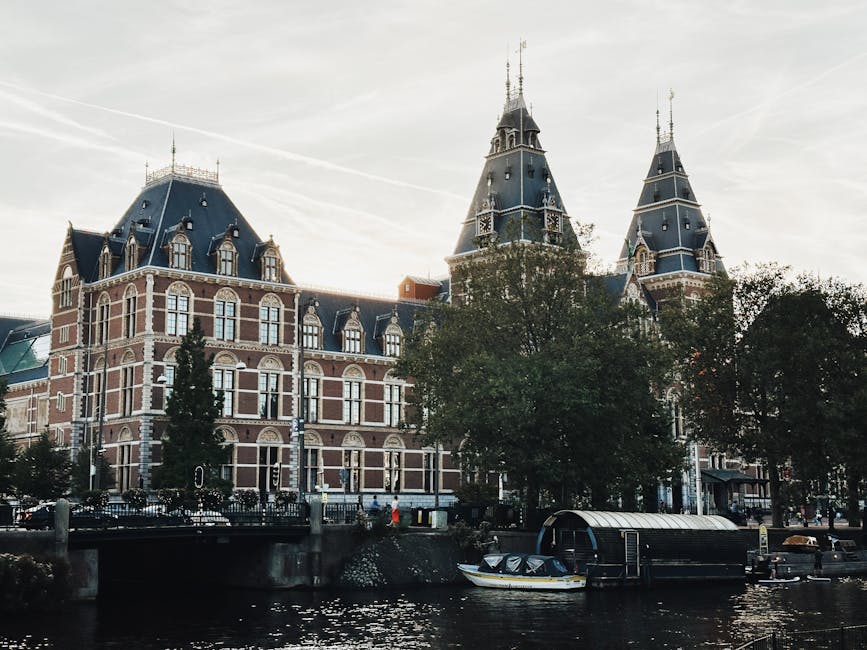
Amsterdam’s art map is denser than visitors expect. Within ten minutes of Moco you have the heavyweight state museums; within thirty minutes by tram, you have a string of contemporary venues that make sensible pairings.
For full immersive-projection art at scale, the closest sister venue to Moco’s downstairs digital room is the Fabrique des Lumières in Westergasfabriek. Different scale, different programme, same core idea (project a famous artist’s work onto every wall and floor of a big room and let visitors walk through). Moco’s version is one room; Fabrique’s is several. Pair them across two days.
For more straightforward fun, the Upside Down Museum on the south side of the centre is the closest sibling to Moco’s social-media-friendly side. It’s not art in the same sense, but it scratches the same Instagram itch.
Comparing Moco To Sister European Modern Galleries
If you’ve done other modern-art rooms in Europe, here’s how Moco compares.
The closest direct cousin in tone is the Orangerie in Paris (single-artist focus, small footprint, big payoff), although the Orangerie is Monet rather than Banksy and has the gravitas Moco lacks. The Musée d’Orsay is an order of magnitude bigger and serves a different purpose (the canonical Impressionist collection). Madrid’s Reina Sofía is the closest big-museum analogue for the modern-and-contemporary gravitas Moco doesn’t claim, with Picasso’s Guernica as the anchor piece. Paris’s Fondation Louis Vuitton sits roughly in Moco’s price tier and curatorial ambition but is in a Frank Gehry building rather than a 1903 townhouse.
For the closest single-iconic-art pilgrimage feel, the comparison is Milan’s Last Supper 15-minute timed-slot, where the entire experience hinges on standing in front of one piece. Moco’s Girl With Balloon isn’t a Last Supper; nothing is. But the structural similarity (one piece carries the visit, everything else is supporting cast) maps surprisingly well, and Moco lets you stay for 30 minutes rather than 15.
For Spanish modernist architecture as art, the closest spiritual sibling is the Setas de Sevilla structure, which functions as a monumental piece of contemporary public design rather than a gallery, but it operates on the same “modern art is for the public, not the academy” register that Moco champions. Málaga’s Picasso Museum shares the small-museum footprint and one-artist focus, although its gravitas is, again, an order higher.
Practical Things You’ll Wish You Knew
A short list of small things that will make the visit smoother.
Bring earphones. The audio guide is delivered through a QR code that you scan and play through your own device. The museum doesn’t lend headsets. If you don’t bring earphones, you’ll either skip the audio guide or play it through your phone speaker, which is rude in a small room.
Cloakroom is €1. Cash or card. There are no lockers. Don’t try to walk through the upper floors with a backpack; the rooms are too tight and you’ll knock things.
The bathrooms are small. One stall on the ground floor. Use them on the way in, before you start the route. There’s a wait at midday.
Strollers don’t fit. Carry younger kids or use a baby-wear setup. Reception will hold a stroller at the entrance for you.
The museum doesn’t sell food or drinks. Holland Here I Come (the blog) recommends Bakers & Roasters for a pre-visit brunch, and that holds up. The cafés on Museumplein itself are convenient and overpriced; walk five minutes south to the Pijp neighbourhood for better lunch options before or after.
Photography permits include an unwritten rule. Don’t shoot the staff. The museum lets you photograph any artwork without limit, but the docents and guards prefer not to be in your shots. They’ll ask you politely, and they’re right.
If The Banksy Story Is Why You Came: A Deeper Cut

If you’re a Banksy completist, here’s what to look for that the average visitor walks past. Beanfield, the riot-police-with-a-ribbon piece, is the most political of the works on display and carries a 2009 date that places it inside the British anti-globalisation moment. The Pulp Fiction screenprint with Mickey Mouse and a Chiquita banana is from 2004 and is one of Banksy’s first pieces to be sold through Pictures on Walls (his now-defunct print arm). Laugh Now, the chimp with the placard, exists in multiple stencil sizes and the Moco copy is the small print rather than the wall-stencil version.
Banksy’s office (Pest Control) does not authenticate prints sold or shown without their certificate. The Moco prints are real, in the sense that they were printed off Banksy plates and signed by Banksy, but they are not “authenticated” by Pest Control because the artist has explicitly refused to authenticate works for any private commercial purpose. This is a distinction that matters in the secondary market and not at all to your enjoyment of the museum. The works are real Banksy works.
The 2018 Sotheby’s shred is the museum’s defining moment because Moco picked up the unshredded version of the same image in time to display it alongside the documentary footage of the auction-room shred. That’s a curatorial coup. Most museums show you art that is already canonised. Moco shows you art at the moment it became canonised, in real time.
Where The Real Critique Lands
The Dutch art establishment doesn’t love Moco. The argument from the Stedelijk side is that Moco trades on Museumplein’s prestige (literally next to the state museums) without doing the curatorial work that earned Museumplein its reputation. The argument from the Moco side is that the state museums weren’t doing enough to bring contemporary, accessible street-and-pop art to a wider audience, and Moco filled the gap. Both are right, partially.
What I’d say to a sceptic: Moco is good at one specific thing. It puts famous, viral, recognisable contemporary art in a small space and charges €19.95 to walk through it. That’s a real thing to be good at. It’s not pretending to be the Stedelijk. It’s a private gallery with a clear product, and the product is the Banksy shrine on the ground floor.
What I’d say to a fan: don’t pretend Moco is a state museum. It isn’t. The curation choices are commercial, the Banksy works aren’t authorised, and the academic depth isn’t there. You’re paying for fun, atmosphere, and the chance to stand a metre from Girl With Balloon. That’s enough. Don’t oversell it.
Should You Go: The Short Answer
Yes, with two caveats. Caveat one: book an evening slot. The 7pm-onwards window is so much better than the midday window that they’re functionally different museums. Caveat two: don’t make Moco your only Amsterdam art stop. It’s a 60-minute museum. Pair it with the Van Gogh in the same morning, the Rijksmuseum in the same afternoon, or the Zaanse Schans day trip on the day before to balance the modern-art focus with something landscape-and-history.
If your trip is a one-day Amsterdam stop and you can only fit two museums, do the Van Gogh and the Anne Frank House (the actual house, if you can get a slot, which is harder than Moco by a wide margin). If you have two days, add Moco as the third stop. If you have three days, add Moco plus the Rijksmuseum’s Gallery of Honour. If you have four days, you can add the Stedelijk and the Keukenhof Gardens in spring.
Moco isn’t the most important museum in Amsterdam. It’s one of the most fun, in a building from 1903, with a Banksy ground floor that’s worth your €19.95 even if you stay for nothing else. Walk in expecting that, and you’ll walk out happy.