
Most travellers book “an Amsterdam canal cruise” the way they’d order a coffee. One thing, simple, done. Then they realise on the day there are five different products with the same name on the same canals at the same prices, and they’ve accidentally signed up for a 90-minute booze cruise when what they wanted was the quiet 75-minute classic with the audio guide.
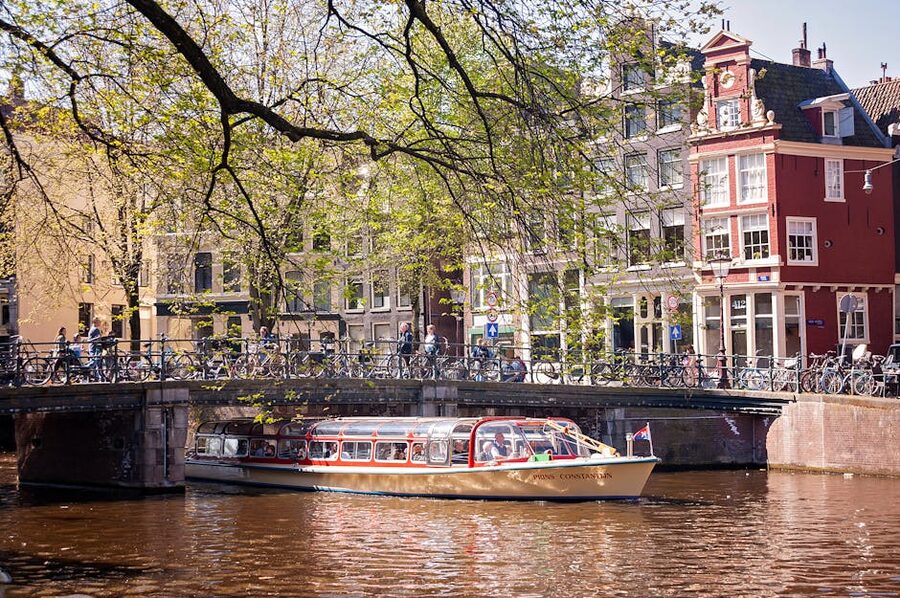
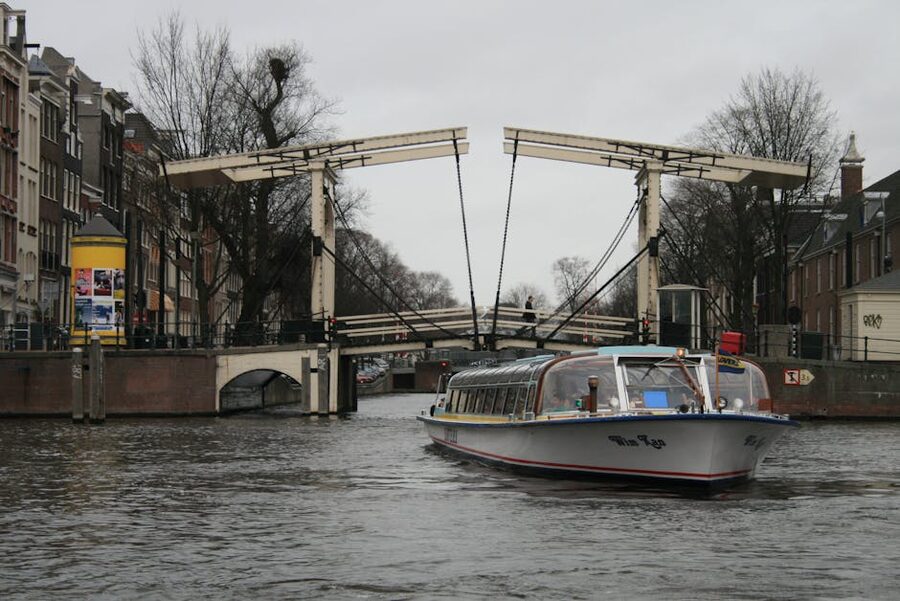
I’ve taken four of the five over the years. The classic 60 to 75 minute daytime loop is what almost every first-timer actually wants. The moment you’ll remember is passing under the Magere Brug, the white wooden drawbridge across the Amstel that’s been rebuilt a half-dozen times since 1691 and is the most-photographed bridge in the city. That single moment is the reason this product exists.
In a hurry? Three picks to start with
- Classic Boat Cruise with optional cheese & wine ($18): the flagship 75-minute daytime loop. Glass-roofed boat, multilingual live commentary, the cheese add-on is fine but not the reason to book. Check availability on GetYourGuide
- 75-minute Canal Cruise with Audio Guide ($18): same loop, slightly different operator, audio guide in 19 languages instead of a live host. Better if you want to listen at your own pace. Check availability on GetYourGuide
- Open Boat Cruise with optional unlimited drinks ($22): small open boat, 12 to 15 people, casual, the only one of these three you’d consider for an actual party. Check availability on GetYourGuide
If you want the longer version of the canal-product breakdown, the rest of this article walks through which of the five cruise styles fits which kind of trip, what you’ll actually see on the standard route, where the piers are, and when on the calendar to book. Compared to the way Seine river cruises in Paris work, Amsterdam is fragmented across many small operators rather than dominated by Bateaux-Mouches and a couple of competitors. That fragmentation is what makes the booking confusing.
The five products with the same name
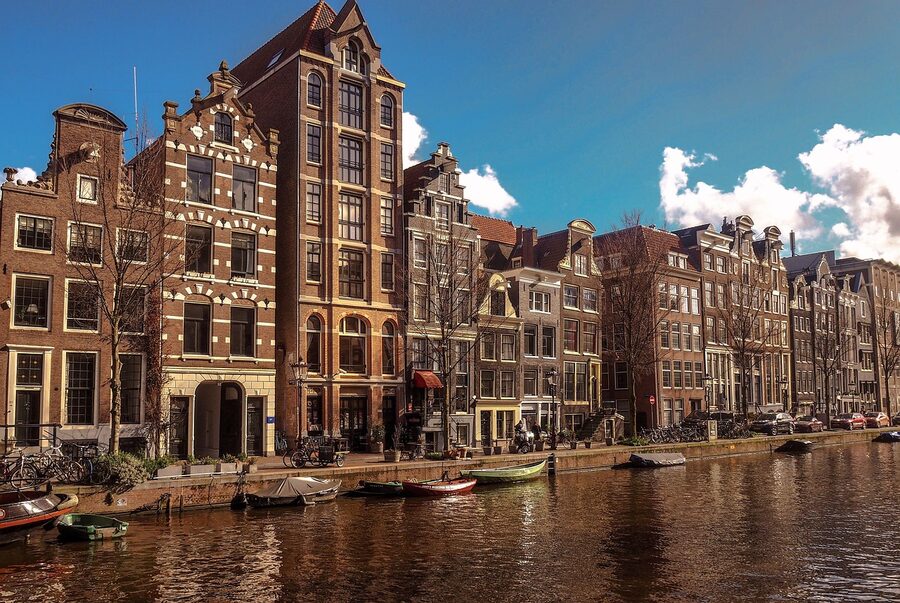
Every Amsterdam canal cruise booking page sounds basically the same: “see Amsterdam from the water, learn the history, pass under historic bridges”. The boats are physically different, the pace is different, the price is sometimes the same and sometimes wildly different. Here’s the actual map.
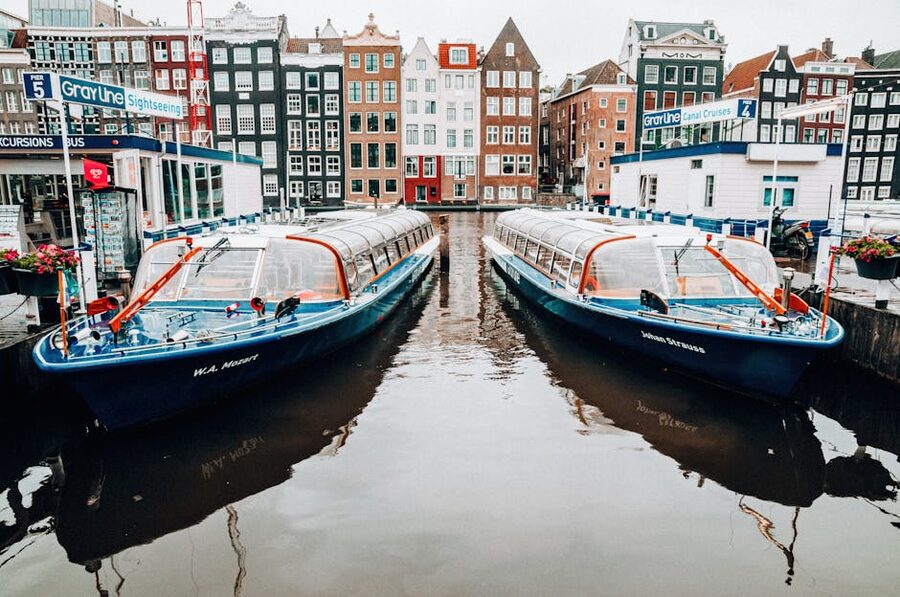
1. The classic daytime loop (60 to 75 minutes, $17 to $18)
This is the flagship. Large glass-roofed boat, multilingual commentary either live or on a headset, set route through the canal ring and Amstel river, leaves every 15 to 30 minutes from piers near Centraal Station and the Anne Frank House. If you’ve never done a canal cruise in Amsterdam, this is what you want. Daylight is the only condition under which the gabled merchant houses and the engineering of the canal ring read properly from the water.
What you actually see: Centraal Station, the Singel canal, the Herengracht and its Golden Bend (more on that below), the Amstel river, the Magere Brug, the Reguliersgracht “seven bridges” view, then back through Prinsengracht past the Anne Frank House. Same approximate route on most operators with small variations. If you’re planning the day right, bookend it with the Anne Frank walking tour on the same morning, since both products run from the same neighbourhood. The hop-on bus is an alternative for getting between sights but if you only have time for one piece of “transit-as-tourism”, the canal cruise is the more atmospheric pick. See our take on whether the Amsterdam hop-on bus is worth it for the comparison if you’ve already done a cruise.
2. Evening cruise (~$22)
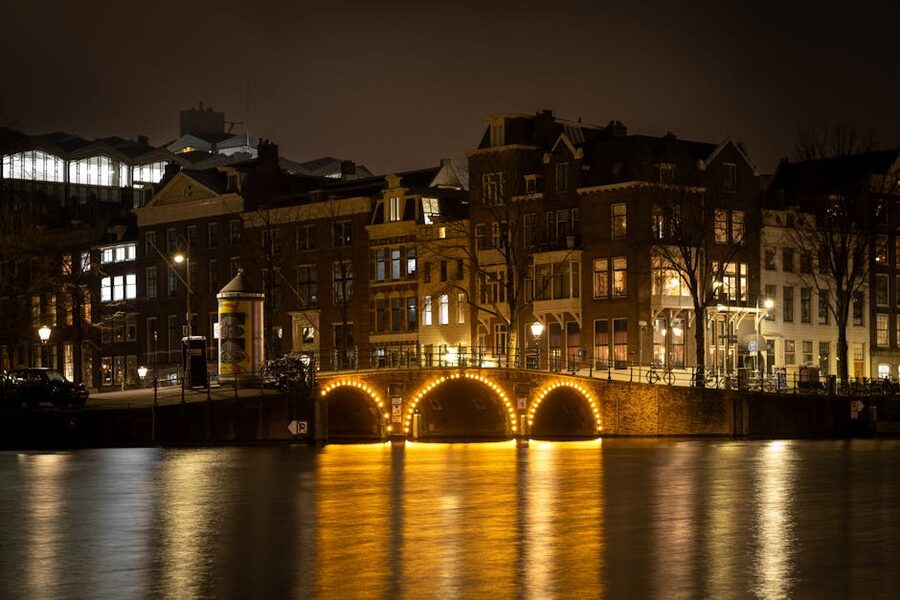
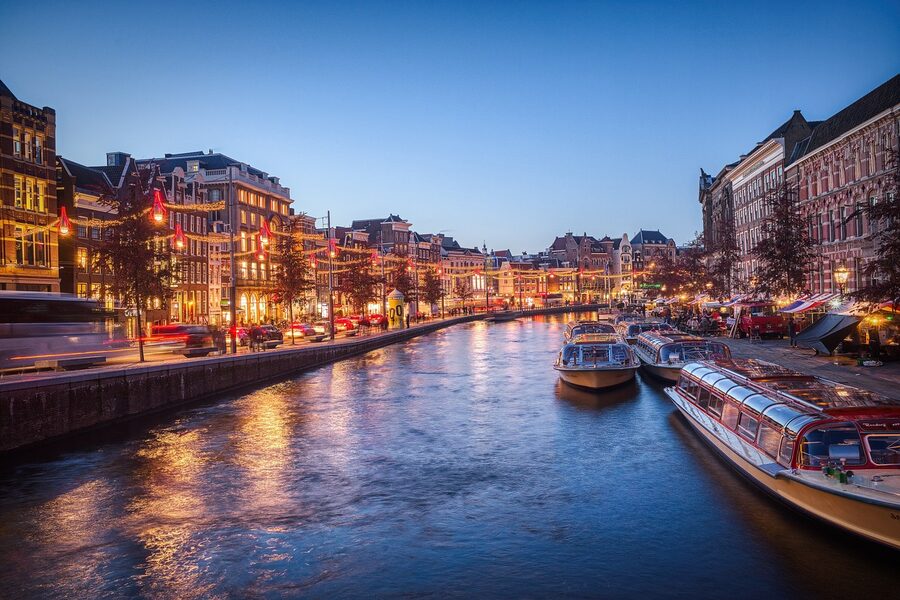
Same physical boats, same approximate route, after dark. The selling point is the bridges: between dusk and 23:00 most of the canal-ring bridges are lit with strings of warm white bulbs, and the Reguliersgracht seven-bridges view becomes one of the easier nice-camera-phone-photo opportunities in the city. Better for couples and for anyone who’s already done a daytime visit and wants the second variant. Skip if it’s your only canal cruise; you’ll miss the daytime architecture you came to see.
3. Open-boat with unlimited drinks (~$22)
Small wooden open boat, 12 to 25 passengers, no glass roof, casual host who’s half-skipper half-bartender. Drinks are usually beer, wine, soft drinks, sometimes a small bite. This is the right pick for groups of friends who want the canals and a casual party-light atmosphere without committing to a full booze cruise. The boat itself is the experience as much as the canals are. You’ll have your own seat to lean back in, conversation across a small group, the hum of the city rather than a tour-guide microphone.
Worth knowing: open-deck means weather matters. May to October is the comfortable window. April and October-into-November are coin-flips on whether you’ll be cold. Winter open-boat cruises do exist but the boats run with side curtains and a small heater, and at that point you might as well be on the heated classic. Compared to the open-deck format on a catamaran from Barcelona or the half-day boats around Mallorca, the Amsterdam open-boat is a tighter, slower, city-focused version of the same idea: different boat, same casual energy.
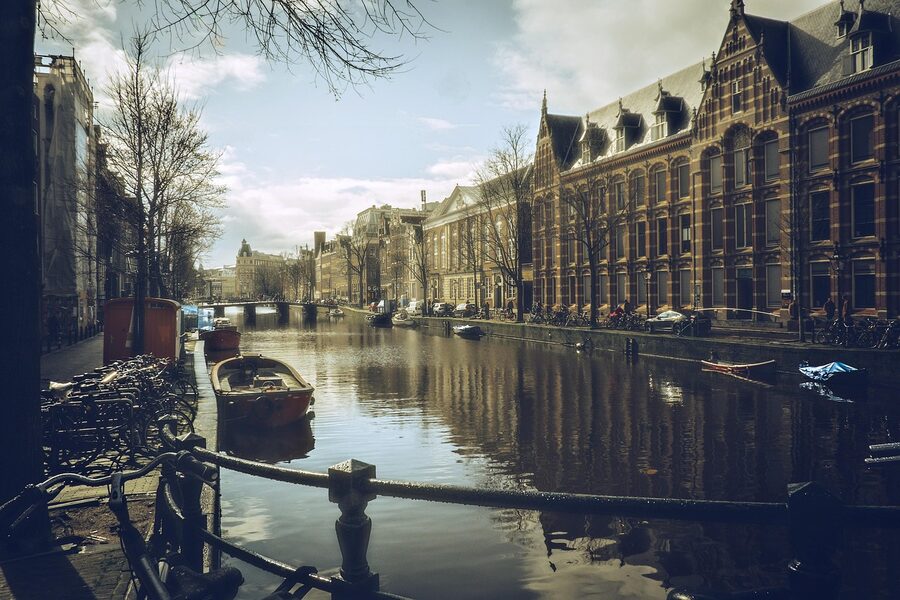
4. Cheese and wine cruise ($18)
This is the classic loop with an onboard cheese tasting and a small wine pour. Same route, same boat shape, same time. The cheese is real Dutch cheese, often three or four samples (gouda, edam, sometimes a herb or mustard variety, a cumin), the wine is a basic glass. It’s fine. It is not the reason to take a canal cruise. If you’re already planning a separate Dutch-cheese tasting on land, skip this one and book the standard. If the cheese tasting is going to be your only Dutch food experience on the trip, the upcharge over the basic cruise is small enough to be worth it. The same logic applies to the brewery-tour-as-meal trap that catches a lot of travellers at the Heineken Experience: if it’s the only beer-experience you book in the trip, the upgrade tier is fine; if you’re already going to do a serious beer-tasting elsewhere, skip the upcharge.
5. Booze cruise ($18 to $25)
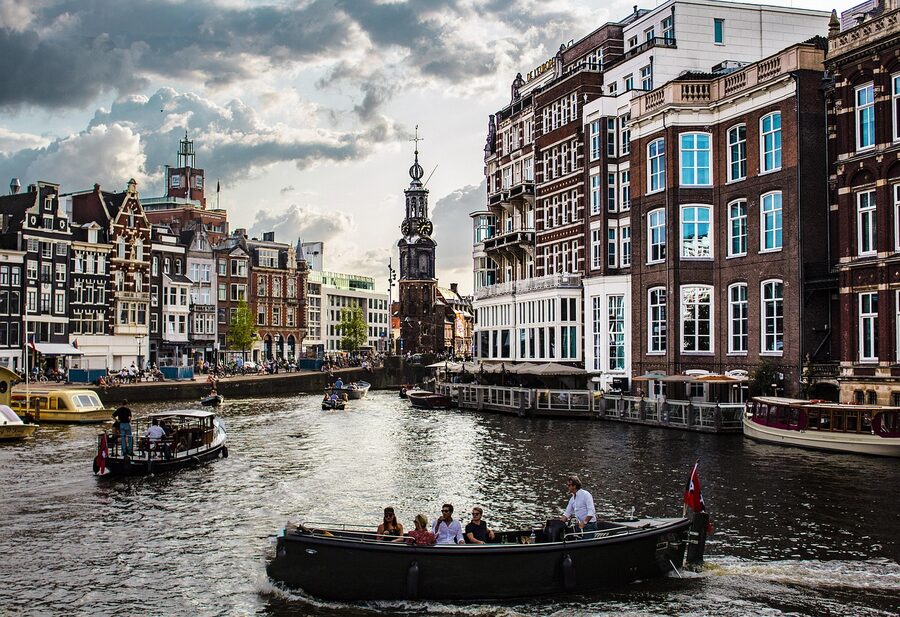
Party boat. Music, unlimited drinks, the route becomes a backdrop. Some are tame and most are not. Only book this if you’re specifically planning to drink, in a group, and you don’t mind that the canals are a soundtrack rather than the show. Reading the listing carefully matters: some products labelled “unlimited drinks cruise” are actually the open-boat type from category three (mellower, smaller). Some “booze cruise” listings are 60-passenger party boats. Read what kind of boat is in the photo.
Which one to book if
Quick mental sort, in order of how often I’d pick each:
- Your first time in Amsterdam, daytime, solo or as a couple: classic 75-minute loop with audio guide. The Golden Age commentary is genuinely good on most operators and the audio version lets you actually hear the front speaker rather than the German-then-Dutch-then-English live cycle.
- Couples in town for two or three nights, you’ve already done a daytime visit: evening cruise. Bridge lights, no kids, slightly fancier glass of wine on board on some operators.
- Group of friends or stag/hen day, casual: open boat with unlimited drinks. Mellow but boozy. Don’t book the booze cruise unless you specifically want loud music.
- Family with kids: classic daytime, glass-roofed. Kids stay calm under a roof, the audio works at any age, and the route covers Anne Frank, the floating flower market and the Maritime Museum exteriors.
- You’ve done canal cruises in three other cities and want something different: skip the standard loop. Take the open-boat or pair it with a private dinner-cruise add-on. The standard product is a comfortable repeat.
If you’ve already cruised the Seine in Paris or the Guadalquivir in Seville, the Amsterdam version is a different animal. Those are wide rivers with one or two big-boat operators dominating; Amsterdam is a network of canals 4 to 25 metres wide, dozens of competing small boats, no possibility of dinner-on-three-decks. The closest physical comparison anywhere in Europe is the Venice islands by boat setup, where the canals are also tight and the boats also small. Or the Venice gondola, if you want the no-engine version of the same idea, although that’s a different commitment entirely.
What you actually see on the standard route
The classic 75-minute loop covers the same set of landmarks regardless of operator, with small variations. Knowing what’s coming makes the difference between “nice ride” and “I now understand how this city was planned”.
The canal ring is a 17th-century city plan
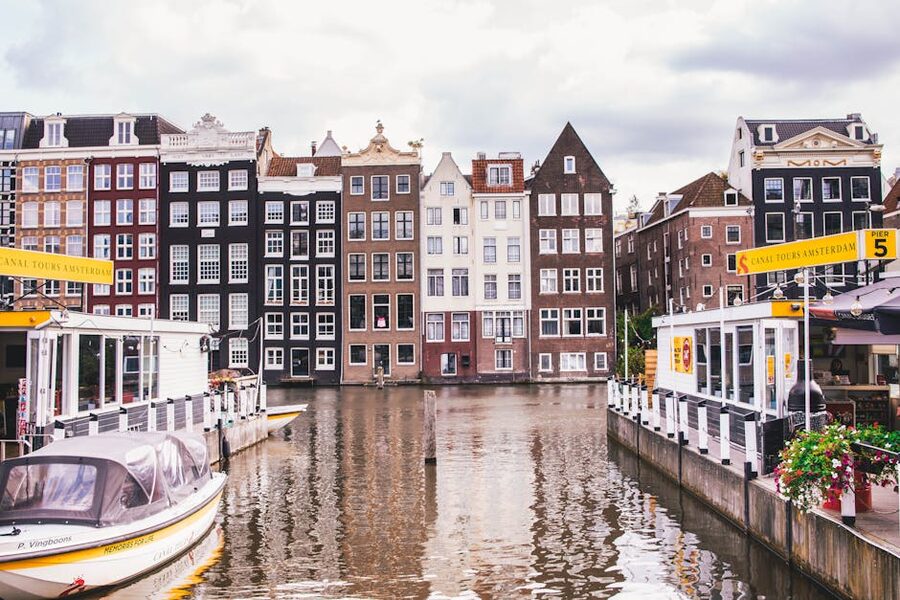
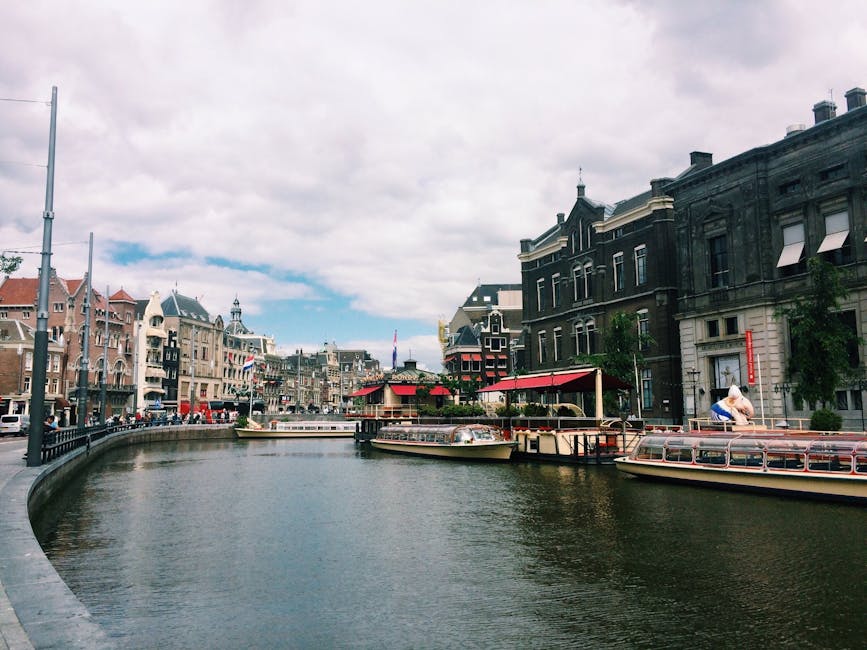
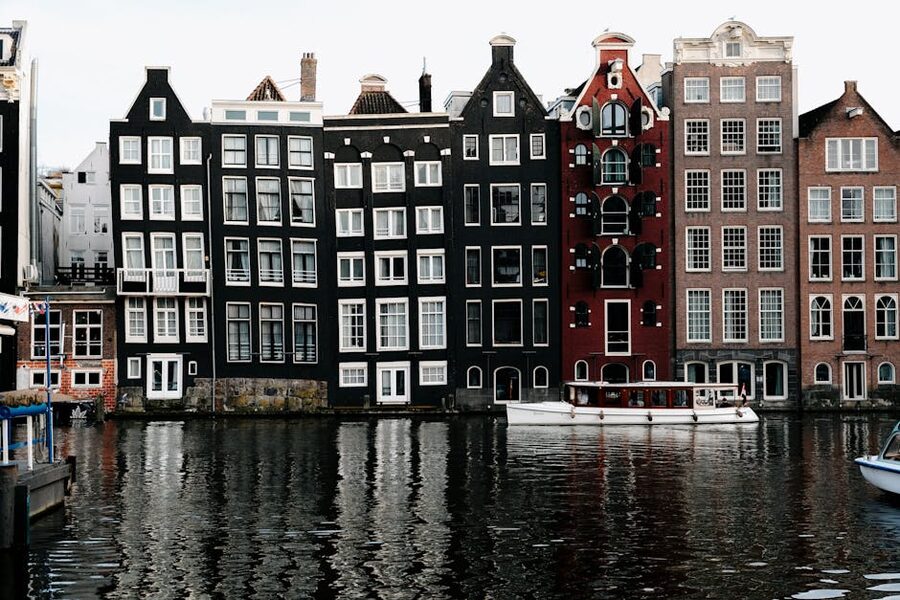
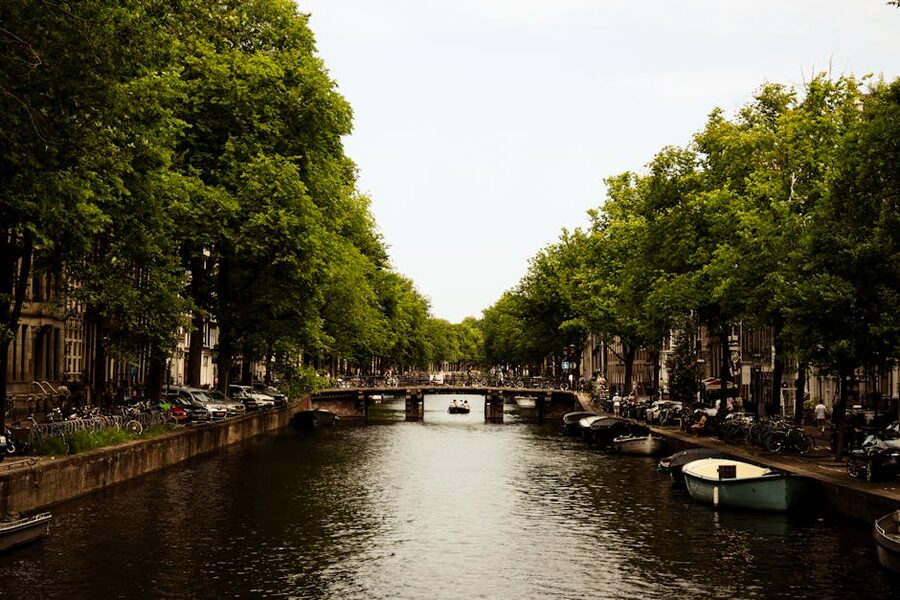
Amsterdam’s grachtengordel (the canal ring) was built between 1613 and 1665, three concentric crescents of canal radiating out from the medieval centre. Singel was the original moat. Then Herengracht (Gentlemen’s Canal), Keizersgracht (Emperor’s Canal), and Prinsengracht (Prince’s Canal) were dug as the city expanded west and south during the Dutch Golden Age. UNESCO listed the entire canal ring in 2010. There are about 100 kilometres of canals across the city and roughly 1,281 bridges, of which 165 are inside the canal ring. Most of what you see from a tour boat is a deliberate piece of urban planning that’s now four hundred years old.
Why this matters on the boat: the rings are concentric, so a 75-minute loop has to use the cross-canals to switch between rings. You’ll move from Singel out to Herengracht, occasionally onto the Amstel, and back. The pattern feels random from inside the boat; on a map it’s a tight figure-eight.
The Magere Brug
The Skinny Bridge across the Amstel is a white wooden double drawbridge. The original was built in 1691; the current structure is a 1934 reconstruction faithful to the original design. Local legend says it’s named after two sisters called Mager who lived on opposite banks and wanted a private way to visit each other. Almost certainly not true; the more boring etymology is that the original bridge was very narrow (“mager” meaning thin or skinny in Dutch).
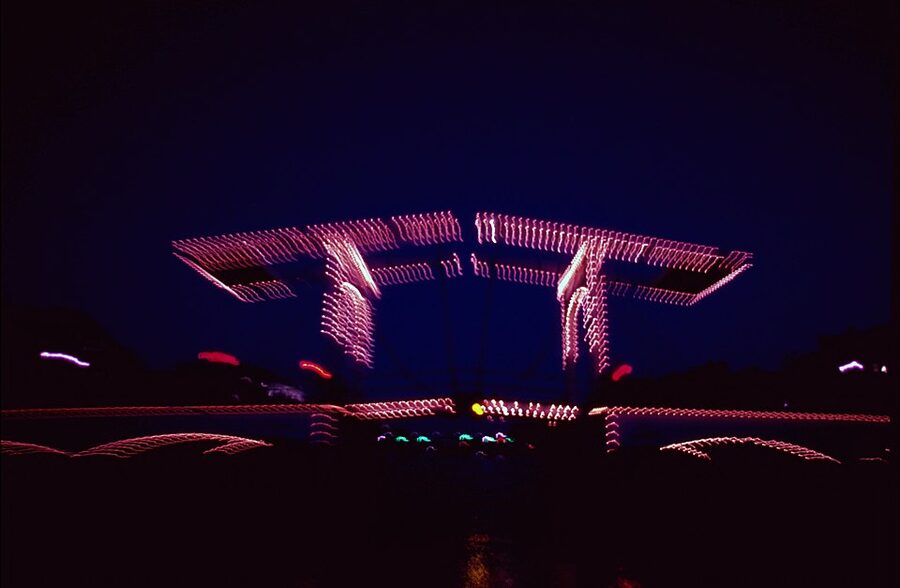
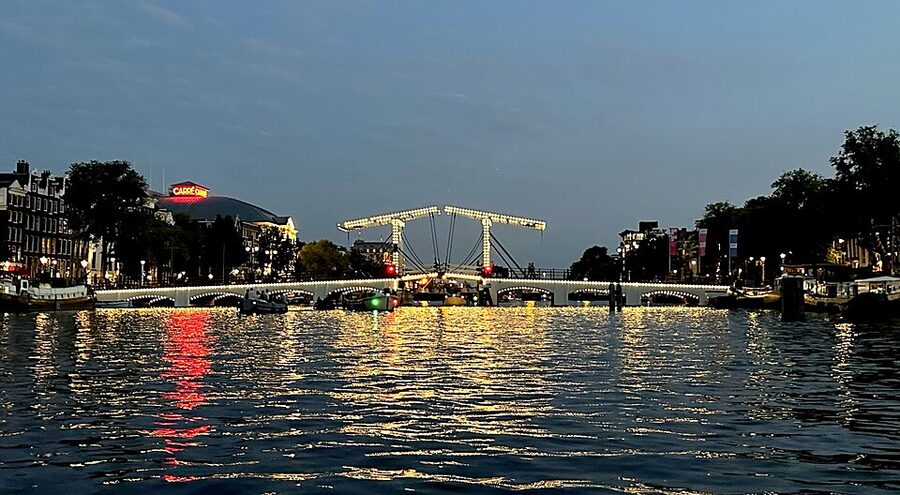
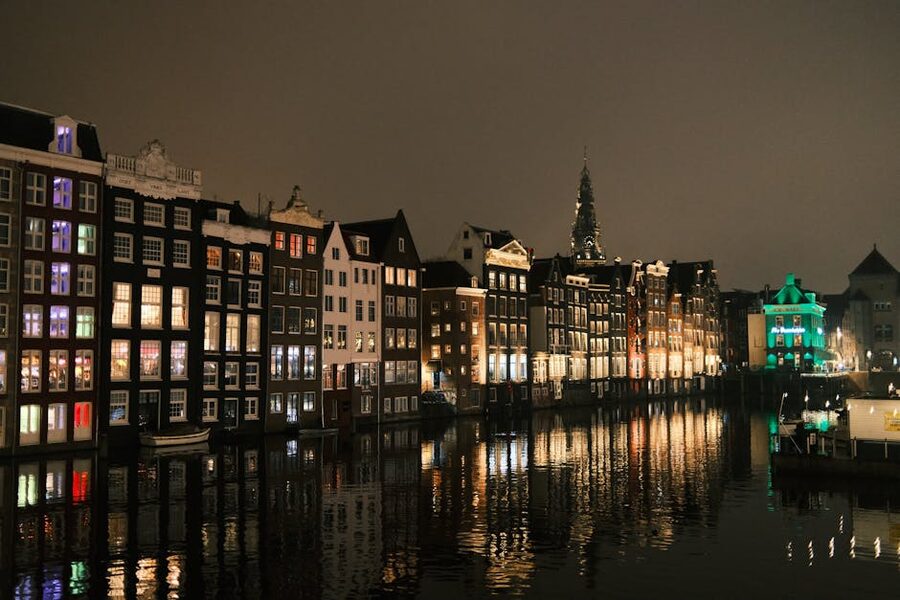
At night, the bridge is strung with hundreds of warm white bulbs and is essentially the postcard image of Amsterdam after dark. If you take the evening cruise rather than the daytime, this is the reason.
The Reguliersgracht “seven bridges” view
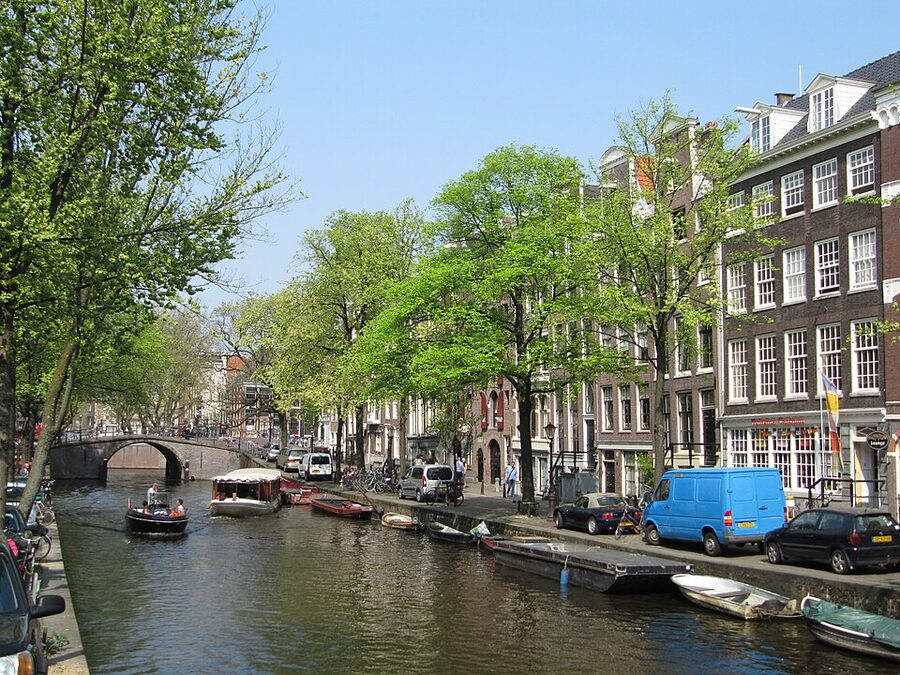
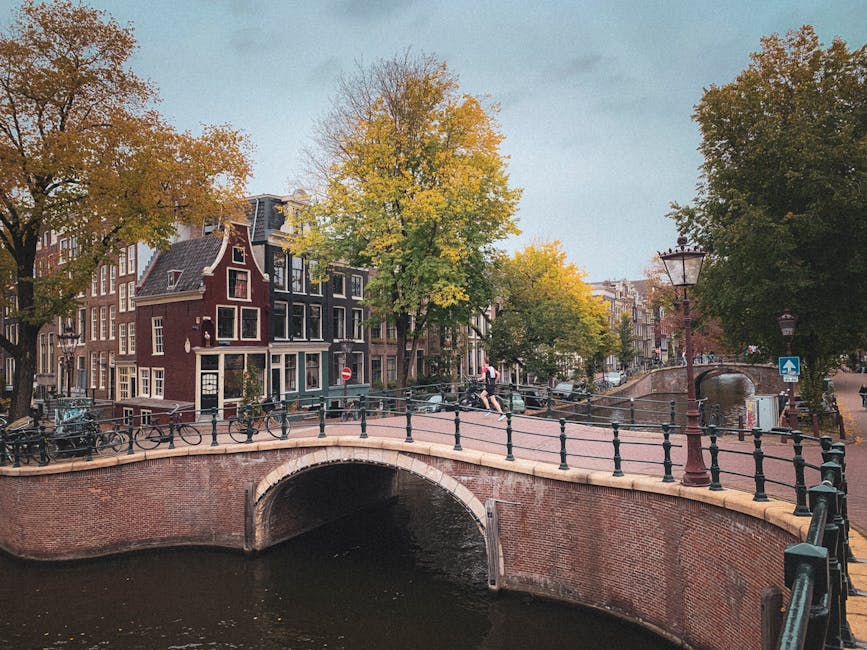
Reguliersgracht is one of the smaller canals running south from the canal ring out to the Amstel, and unusually, it’s one of the few that genuinely connects to the Amstel river rather than just looping back to another canal. From the corner of Herengracht looking down Reguliersgracht, you can line up seven consecutive bridge arches in one frame. The boat slows down here on most operators specifically so you can take the photo.
The Herengracht Golden Bend
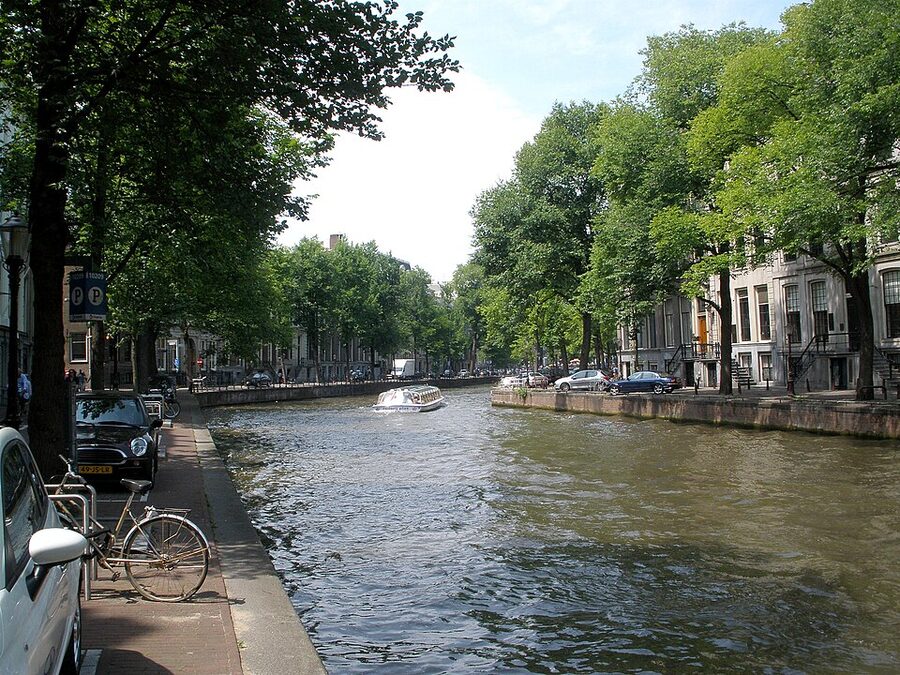
Herengracht numbers 412 down through the low 460s is the stretch the Dutch call the Gouden Bocht (the Golden Bend). This is where the wealthiest 17th-century Amsterdam merchants built their double-wide houses. Property tax in Golden Age Amsterdam was levied per metre of canal frontage, so most of the city has narrow houses with pretty gables and steep stairs inside. The merchants on the Golden Bend simply paid the tax and built wide. The result is a stretch where the houses are visibly different from anywhere else in the canal ring: wider, taller, more classical, with ornamented entrances and bigger windows.
Tip: if your boat has commentary in multiple languages, the Golden Bend section is where it gets the most useful and the most boring depending on which language you’re listening to. Some operators rush this section, some linger. The audio-guide version (most consistent operator: GetYourGuide’s $18 audio cruise) gives you the same Golden Bend story regardless of when in the loop your boat reaches it.
Other things you’ll pass
- The Anne Frank House: visible from Prinsengracht. The house itself is hard to book on the day; the canal pass is the closest most travellers will get. The full Anne Frank walking tour covers the neighbourhood on land.
- The houseboats: roughly 2,500 official houseboats are registered in Amsterdam canals. Many operators point out the famous green one near Westerkerk.
- The Westerkerk and Oude Kerk: the church towers Rembrandt is buried under (Westerkerk) and the city’s oldest building (Oude Kerk in the Red Light District).
- The floating flower market (Bloemenmarkt): on the Singel, the only floating flower market in the world. Most boats slow down for the photo.
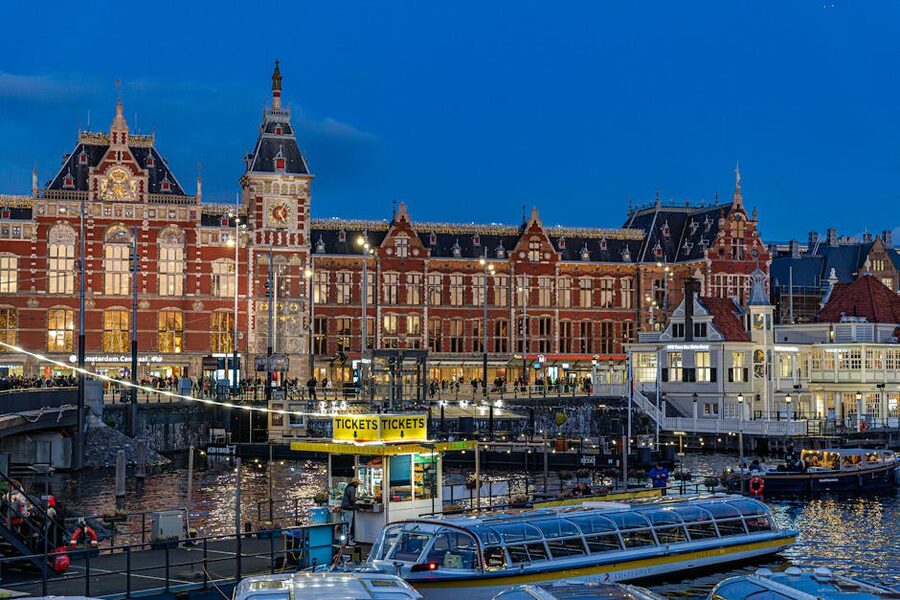
- Centraal Station: the giant red-brick station that anchors the north end of the canal ring, designed by Pierre Cuypers, the same architect as the Rijksmuseum. The two buildings deliberately look like siblings.
The piers: pick one near where you’re staying
One of the easier mistakes is to walk 30 minutes across the city to a specific pier when there’s a near-identical operator three minutes from your hotel. Operators all run the same approximate route, just starting from different points. Pick the closest pier to where you’re staying and you’ll save 45 minutes of walking and the same amount of pre-cruise grumpiness.
The four pier clusters worth knowing about:
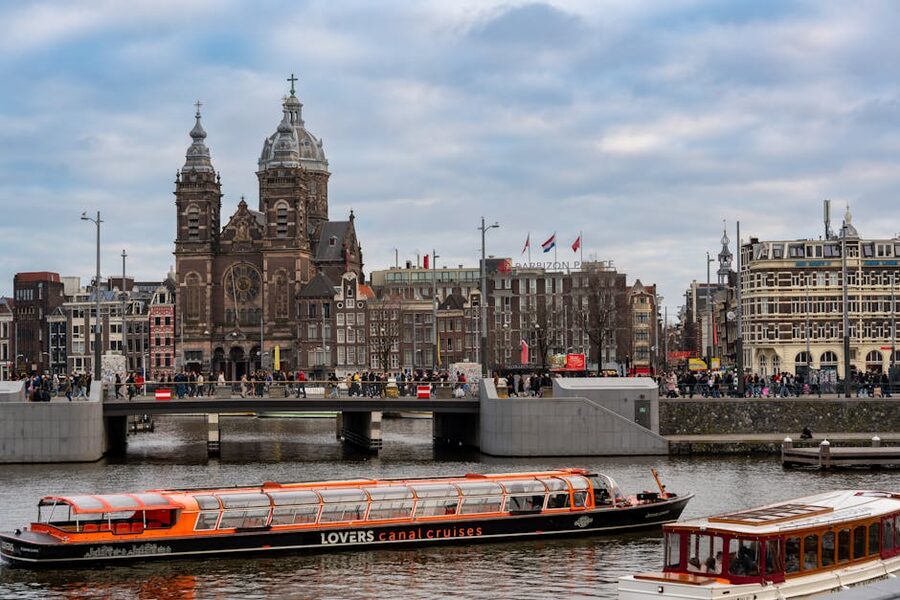
- Centraal Station (north end of the canal ring): the largest cluster of piers. Lovers, Stromma, Blue Boat, Flagship and several others all run from the harbour in front of Centraal. If you arrived in the city by train, this is the obvious starting point. If you’re staying anywhere in the centre or De Pijp, this is a 5 to 15 minute tram ride.
- Anne Frank House (Prinsengracht): piers right by the Anne Frank House on Prinsengracht. Convenient if you’re already doing the Anne Frank visit on the same morning, and the start point is in the heart of the canal ring rather than at the harbour.
- Heineken Experience (Stadhouderskade): a few operators run from near the Heineken Experience on the south side of the canal ring. If you’re doing the Heineken in the morning, the Heineken-and-cruise combo ticket is the right pick.
- Rijksmuseum (Museumplein): piers on the Singelgracht just north of the Rijksmuseum. Convenient if you’re doing the museum quarter (Rijksmuseum, Van Gogh Museum, Stedelijk) on the same day. Both the Rijks and the Stedelijk sit on the Singelgracht canal so the Museumplein loop covers them naturally.
When to go
Amsterdam’s tourist calendar is one of the most predictable in Europe. The cruise calendar follows it.
May to early October: the comfortable window. Open-boat cruises run with no concerns about weather, the bridges look their best (the trees lining most canals are in leaf), the trip back at 9pm is still in twilight in mid-summer. King’s Day (April 27) and Canal Pride (early August) make those specific weekends madness; the canals are full of small private party boats and most operators don’t run on King’s Day. Book around them, not on them.
November to March: heated indoor cabins on the classic loops, fewer crowds, lower prices on some operators, sunset by 5pm. The evening cruise becomes basically the only sensible option after 4pm in mid-winter because the daytime cruise is also a dark cruise. Open-boat cruises mostly don’t run November through February.
April and October: coin flips. Layer up.
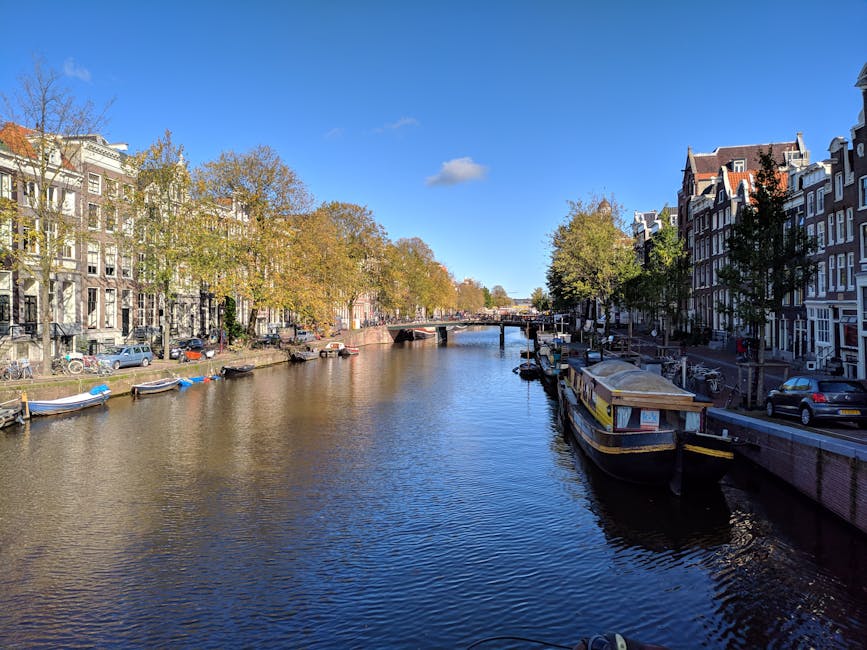
Time of day: the 11am to 2pm window is the busiest on the classic loops. If you want it quiet, book the first cruise of the day (most operators run from about 9:30am) or the late afternoon one (around 4pm in summer, earlier in winter). Light is best in the late afternoon between 4 and 6pm in summer for photographs.
If you’re cross-shopping the cruise against day-trip alternatives, the Zaanse Schans day trip for windmills and the Keukenhof gardens trip in tulip season are both half-day-plus commitments. You can’t do both on the same day as a serious cruise. Most travellers do the cruise on arrival day to orient themselves, then a day trip on day two, then museums and an evening cruise on day three. If you’re tight on time and have to choose, the canal cruise is the more efficient pick because the city is the canal.
Three picks worth your time
Three Amsterdam canal cruises that consistently deliver, picked across price tiers and product styles. The classic flagship at $18, an audio-guide alternative at the same price, and the casual open-boat at $22.
1. Classic Boat Cruise with Optional Cheese & Wine: $18
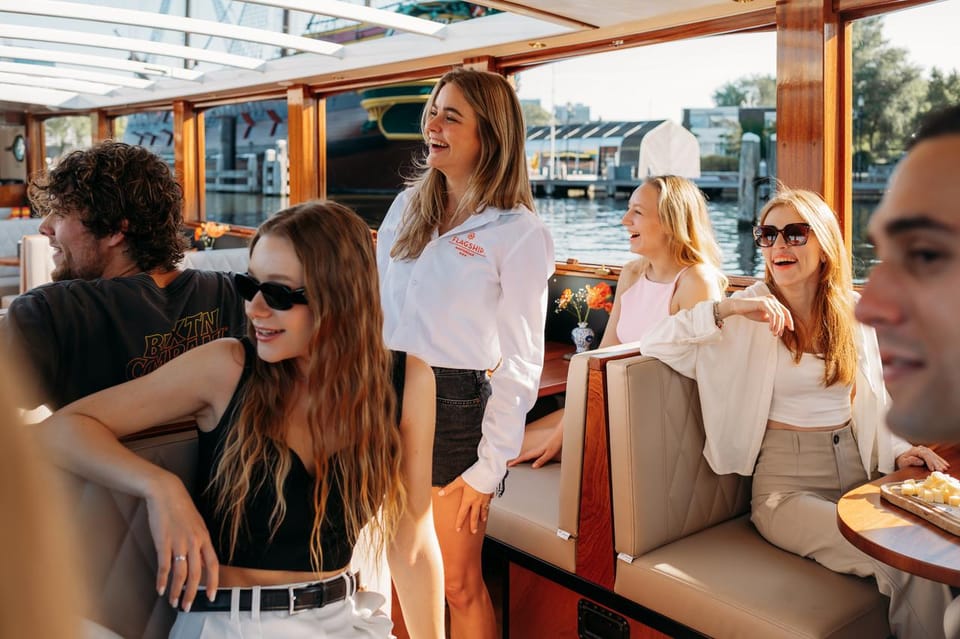
This is the right pick for first-time visitors who want the standard product done well. The 75-minute route covers everything described above without rushing; our full review walks through what the cheese and wine add-on actually includes (it’s fine, not transformative). Skip the upgrade if you’ve already booked any other Dutch food experience.
2. 75-Minute City Canal Cruise with Audio Guide: $18
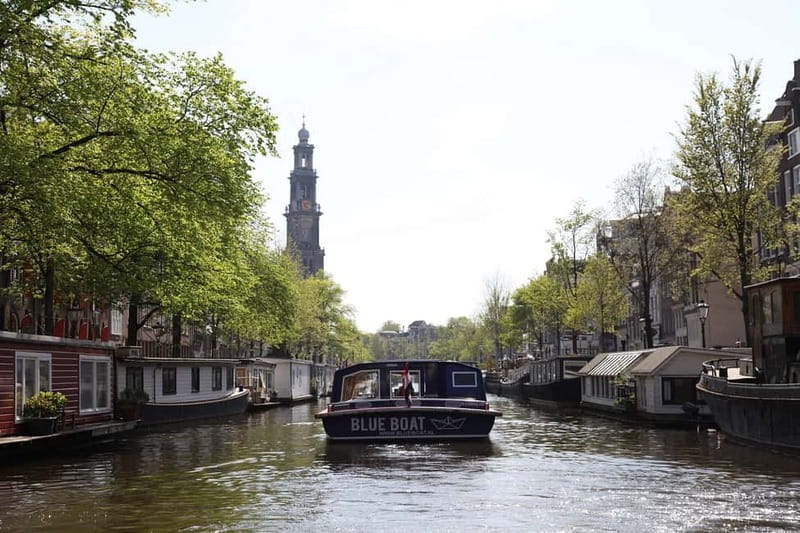
Pick this one if you want to listen to the Golden Age commentary at your own pace and skip the live host’s German-then-Dutch-then-English cycle that classic loops often run. The audio-guide review covers which languages are best produced (English and Spanish are the strongest, German is uneven). Same $18 price as the live-host version.
3. Open Boat Cruise with Optional Unlimited Drinks: $22
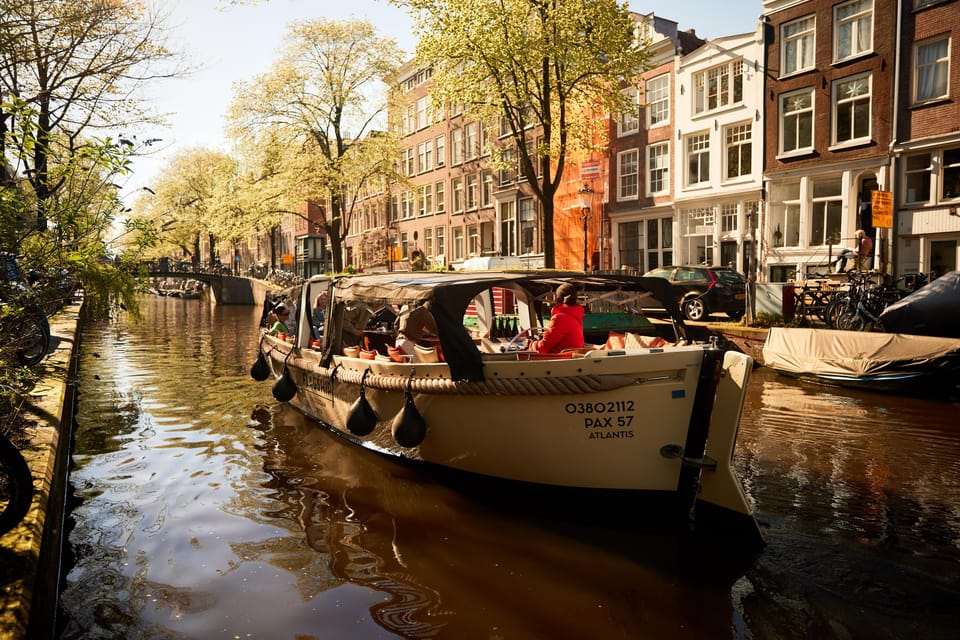
This is the pick for groups of friends who want a relaxed afternoon on the water with drinks rather than a cultural tour. Our review notes the open-deck weather caveat: May to early October is the comfortable window, and there’s a small bite included on most departures.
Booking, prices, what’s included
Practical details for the three categories most travellers actually book.
Should you book ahead?
For the classic daytime loop in May to September, yes. Book at least the day before. Walk-up tickets exist but can sell out at peak hour, especially around 11am to 1pm departures from Centraal. November to March, walk-up is fine on most days.
For the evening cruise, book ahead any time of year. Capacity is lower on most evening departures and the slot you want (8 or 9pm) goes first.
For the open-boat, book ahead always. Capacity is 12 to 25, not 100, so even one walk-up group can fill the boat.
What’s included
- Classic loop: 75-minute cruise, audio commentary or live host, that’s it. Free wifi on most operators. Drinks generally not included unless you book the cheese-and-wine variant.
- Evening cruise: 75-minute cruise plus usually one drink (small wine or beer). Some upgrade tiers include a small charcuterie board or stroopwafel.
- Open-boat unlimited drinks: 60 to 75 minutes, beer/wine/soft drinks unlimited within the cruise time, often a small Dutch-style snack (bitterballen, cheese cubes, stroopwafel).
- Cheese and wine cruise: classic 75-minute cruise plus three or four cheese samples and a glass of wine.
What’s not included anywhere
Pier-side public toilets exist but most boats don’t have on-board toilets on the under-90-minute cruises. Plan accordingly. Also: tip jars are not standard on canal cruises in Amsterdam (this isn’t Italy or France); tipping is appreciated but not expected. Five euros to a live host who’s been good is generous.
The combination tickets question
Combo tickets that bundle a canal cruise with the Heineken Experience, Rijksmuseum or Van Gogh Museum are roughly 10 to 15% cheaper than booking the two products separately. The cruise component is the standard 75-minute classic loop, no special version. Worth it if you were going to do both products anyway and don’t mind the time-locked structure (most combos require the cruise within a 24-hour window of the museum entry).
Common mistakes I see people make
Booking the booze cruise when you wanted the open-boat. The two products look similar in marketing photos. The booze cruise has loud music and a different vibe; the open-boat is mellow. Read what kind of boat is in the listing.
Booking the dinner cruise expecting fine dining. Amsterdam canal dinner cruises exist but the kitchen on a canal boat is small and the food is generally three-courses-fine, not Michelin. If you want a serious meal on the water, you’re closer to the spirit of the Seine dinner cruise in Paris with the dedicated dinner boats. Amsterdam dinner cruises are more “nice-enough food while the city goes by” than restaurant-with-a-view.
Walking 25 minutes to a specific operator. All operators run almost the same route. Pick the pier near where you’re staying.
Booking the daytime cruise on a January afternoon expecting daylight. Sunset is at 4:30pm in winter; the 4pm cruise is dusk-to-dark. The 11am cruise is the only “daytime” cruise mid-winter.
Skipping the open-boat because you’re not “a drinker”. The open-boat is good even if you stick to soft drinks. The size of the boat and the conversation with the host is the actual attraction.
Buying tickets at the pier on King’s Day expecting it to run. King’s Day (27 April) most operators don’t run because the canals are jammed with private party boats. Plan around it.
Comparing Amsterdam canals to the European boat-trip menu
If you’ve taken canal or river boats elsewhere in Europe, the Amsterdam version sits in a particular slot. Here’s how it compares.
The Paris equivalent is the Seine river cruise, but the Seine is a 200-metre-wide river that splits the city; Amsterdam’s canals are 4 to 25 metres wide and you’re often close enough to a building to read the doorbell. Paris is wide-open scale and grand axes; Amsterdam is intimate and human-scale. The Seine version with a dinner is the Seine dinner cruise, which is a different product entirely (180-passenger dinner ships, three courses, two hours).
The Seville equivalent is the Guadalquivir river cruise. Like Paris, it’s a river not a canal network, and the loop runs 60 minutes past the Torre del Oro and the Triana neighbourhood. Worth doing once but you don’t get the maze-effect Amsterdam has.
Barcelona’s catamaran from Barcelona and the Mallorca catamaran cruises are sea boats, a different product entirely. You’re out on the Mediterranean for half a day, with snorkel stops and sometimes lunch. Closer in spirit to a beach holiday than a city tour.
The closest physical match anywhere is Venice. Venice gondola rides are tighter, slower, no engine, smaller boats, much more expensive per minute. Venice islands by boat is closer to the Amsterdam classic-loop product in scale and pricing: small operators, modest boats, a mix of city-canal and inter-island travel.
The cultural cousin in northern Europe is the Hamburg Alster and Bruges canal boat (different cities, similar small-canal logic). If you’ve done either of those, Amsterdam will feel familiar in scale but with significantly more boat traffic.
What to do in Amsterdam either side of the cruise
The cruise is 75 minutes. You’re going to want a half-day either side of it. Quick takes on what bookends well.
Mornings: the Anne Frank walking tour (does not enter the house, but covers the neighbourhood and the Jewish history of the city) and the Red Light District tour are both within walking distance of the Anne Frank House pier. The Anne Frank House itself is famously hard to book; the walking tour is the realistic alternative for most travellers.
Afternoons: the museum quarter. Rijksmuseum, Van Gogh Museum and the Stedelijk are all within five minutes’ walk of each other on Museumplein. Two of the three sit on the Singelgracht canal, so the canal cruise often crosses what you’ve just visited. The Rijksmuseum and the cruise pair perfectly: the canal-ring paintings (especially Berckheyde’s Golden Bend) take on a different weight after you’ve actually seen the place.
Day trips: the Zaanse Schans day trip is the windmill village half a day north of Amsterdam. The Keukenhof gardens is the spring tulip park, only open March to mid-May. Both are best as morning trips so you have time for the canal cruise on the same evening.
Brewery and beer: the Heineken Experience is in the original Heineken brewery building south of the canal ring; pair the morning Heineken with an afternoon cruise from the Heineken pier (some operators run a combined ticket).
The bus alternative: the Amsterdam hop-on bus is the other “transit-as-tourism” product. It covers more ground (you can get to Vondelpark and the Maritime Museum without walking 30 minutes) but the canal cruise is the more atmospheric of the two. If you have one half-day for tourist transport, the cruise is the better pick. If you have a full day, the cruise plus the hop-on bus pass works as a complete light-tourism day.
One small piece of practical advice
If your trip is short and you can only book one canal product, book the daytime classic loop with audio guide ($18). It’s the most consistent quality across operators, the timing is forgiving (every 15 to 30 minutes), the route is the route everyone wants, and the audio handset means you actually catch the Golden Bend explanation rather than missing it because the boat-host’s microphone faded.
If you’ve got two slots in the calendar, do the classic in daylight on day one and the open-boat in late afternoon on day two. You’ll have done the city’s signature tourist activity and the more interesting smaller-scale version, and you’ll have skipped both the booze cruise (book separately if you actually want a party) and the cheese-and-wine variant (skip and book a separate land-based tasting).
If your trip is a full week and you’re working through Amsterdam’s full menu, sequence it: classic cruise on arrival day to orient yourself, museum quarter and Heineken on the middle days with the Singelgracht segments visible from the cruise giving the museums context, and an evening cruise on your last night for the bridge-lights goodbye. Do all of that and you’ll leave knowing how the city actually fits together rather than as a sequence of disconnected tourist hits.