
Most travellers book “the Seine cruise” without realising they’re actually choosing between four very different products, all called the same thing. There’s the cheap 1-hour daytime panorama for $20 that’s the most-reviewed boat tour in Paris. There’s the formal dinner cruise at $64 to $100 with three courses and a dress code. There’s the lighter lunch cruise around $93. And there’s the hop-on-hop-off Seine pass with 9 stops that you use as transport, not as a single sit-down trip. Most people pick the cheapest by accident, then later wonder why their friend’s “Seine cruise” sounded nothing like theirs.
The 1-hour panorama is the right answer for most first-time visitors, and the best moment of it is one specific bend. You pass under Pont Neuf at dusk with the Île de la Cité lit up on your left, the boat slows almost to a stop, and the lamp-lit stone buildings reflect off black water that’s been brown all day. Then you keep going west, the boat times its loop, and the Eiffel Tower starts its hourly five-minute sparkle. That’s what people are paying $20 for. The other 55 minutes are perfectly fine, but those two minutes are why this is the most-booked tour on the river.
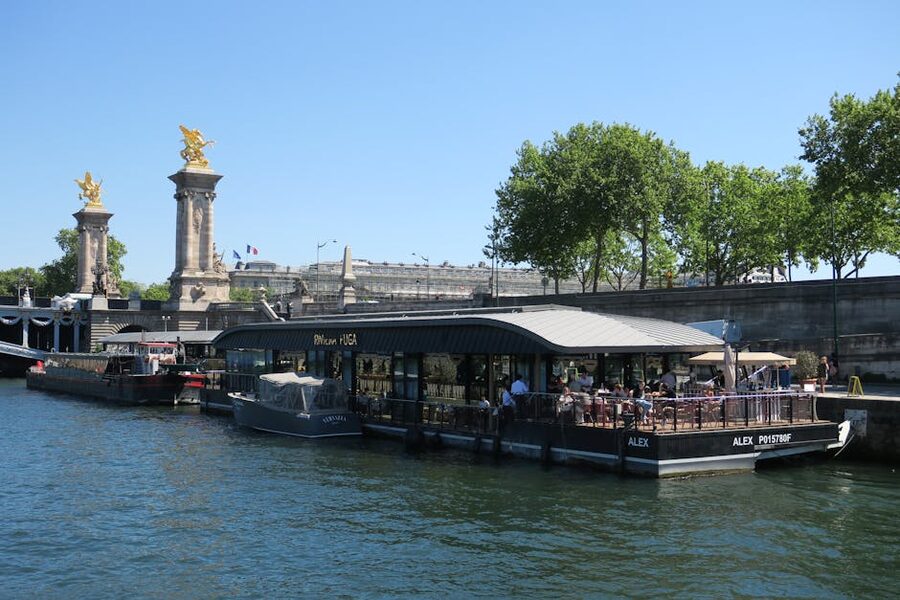
In a Hurry? The 3 Picks
- Paris: 1-Hour Seine Cruise from the Eiffel Tower ($20). The most-booked boat tour in Paris, departures every 30 minutes from Pont d’Iéna right under the Tower. The default first-time pick.
- Paris: Seine Cruise & Crepe Tasting ($23). Same one-hour route plus a small crepe and a glass of wine on board. Three dollars more for a snack you’d otherwise buy on the quay.
- Paris: Hop-On Hop-Off Seine Pass ($27). Nine stops between Eiffel and Notre-Dame, valid 24 or 48 hours. Buy this only if you’re staying at least 3 days and want to use the river as transport.
The Four Products, and How to Tell Them Apart
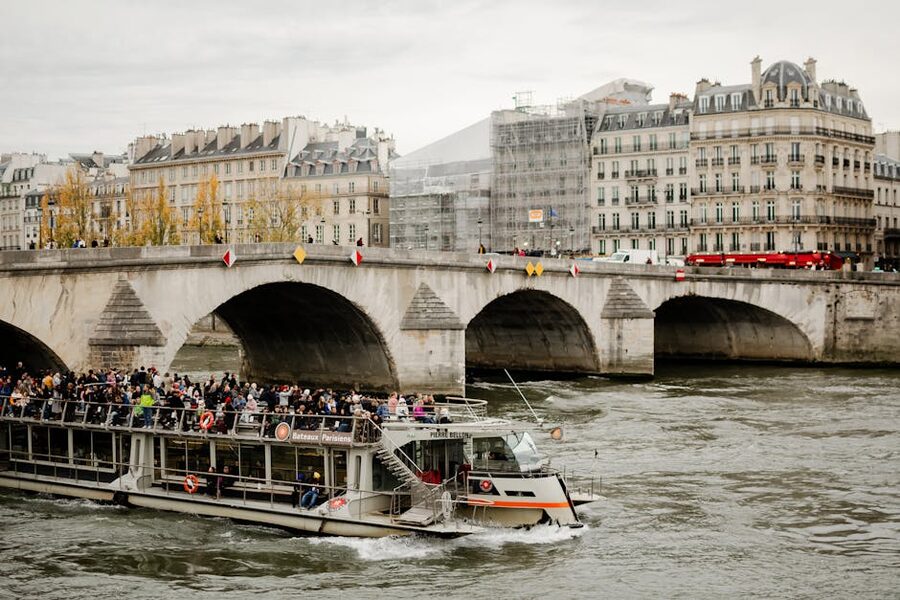
This is the bit competitor guides skip. They list “Seine cruises” as one category and rank them by review count, which puts the cheapest panorama at the top by default and never explains why your friend’s “Seine cruise” was a three-hour candlelit dinner with a bow tie at the next table. Four genuinely different things share the name.
The 1-hour panorama. $20 to $25, departures every 30 minutes from late morning to ~10pm, no food, multilingual audio guide, ~7km loop from Pont d’Iéna out east to Notre-Dame and the Île Saint-Louis and back. Three operators run it: Bateaux Parisiens, Vedettes du Pont Neuf, and Bateaux Mouches. The differences between the three are smaller than the marketing suggests. Same loop, same handful of bridges, same approximate price.
The dinner cruise. $64 at the bottom end, easily $130 to $200 if you take the wine pairing and the window seat. Two to three hours. Three or four courses served at table. Smart-casual dress for the cheap end, jacket-and-tie for the splurge versions. We have a separate piece on picking a Seine dinner cruise because the price spread alone needs its own article. If you’re booking it as a special-occasion thing, do it on a clear evening between May and September. The whole sell is what’s outside the window, and a rainy night on the Seine is a long meal.
The lunch cruise. Roughly $93, two hours, two or three courses, lighter than dinner and much cheaper than the candlelit dinner version. The catch: midday on the Seine isn’t visually special the way dusk is. The same loop in flat noon light is what you’d photograph for free from any of the bridges. Lunch cruises make sense for a specific demographic, which is people who want a long sit-down French meal that’s also their sightseeing for the day. Otherwise the value isn’t there.
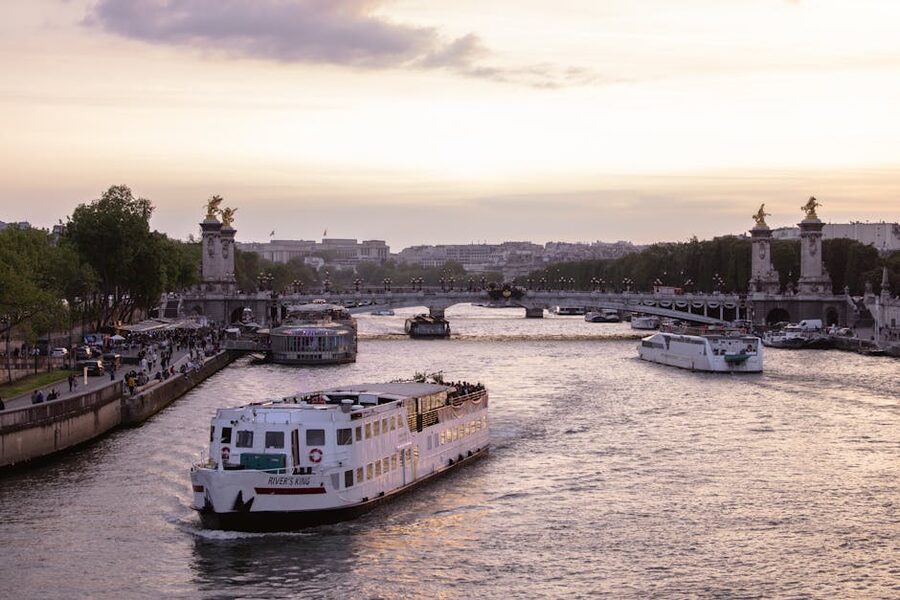
The hop-on-hop-off pass. $27 for 24 hours, more for 48. Nine stops between the Eiffel area and the Jardin des Plantes east of Notre-Dame. Boats run every 20 to 30 minutes during operating hours. Functionally this is a slow alternative to the metro, not a cruise. We weighed it against the equivalent Paris hop-on-hop-off bus on its own page, and the Seine pass is the better buy if your itinerary already lines up with the river. If your hotel is in the 11th and your sightseeing is the Marais and Montmartre, the boat pass is dead weight. If you’re staying near Saint-Germain or the 7th and your priority is Eiffel, Louvre, Notre-Dame, Orsay and Saint-Louis, it earns its money.
The 1-Hour Panorama Is the Right Default
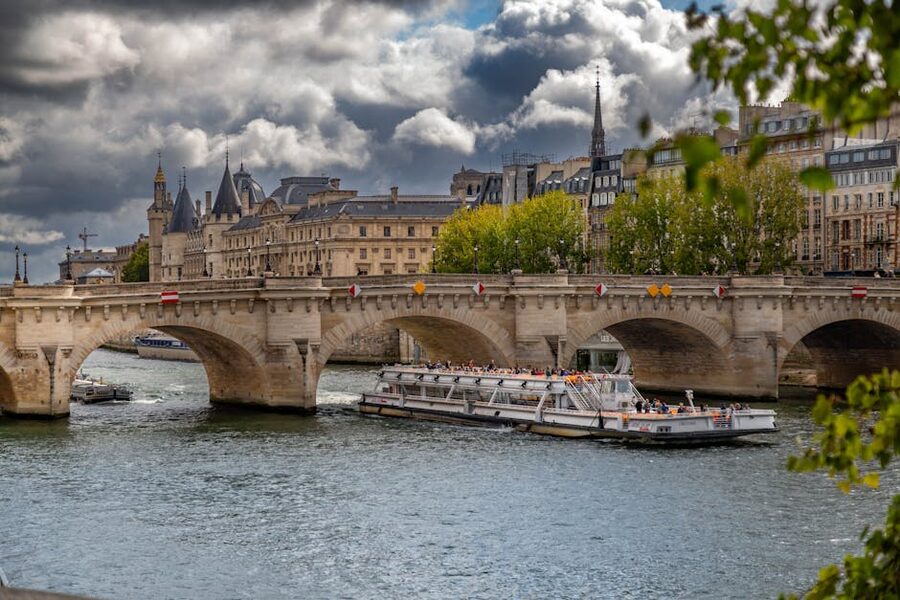
If you’re in Paris for three or four days, see the river once, want it to take an hour and not eat into a full evening, the panorama is the pick. The flagship product is Bateaux Parisiens’ 1-hour cruise from the Eiffel Tower at $20. It’s the most-reviewed boat tour in Paris by a comfortable margin and the rating sits at 4.4. We have a closer look at the flagship Bateaux Parisiens panorama in the picks below.
Why this product specifically: the departure dock is the easiest one to find. You walk to the Eiffel Tower, cross under it, and Pont d’Iéna is right there. Boats leave every 30 minutes. There’s no queue management drama, no separate ticket booth. You scan your phone and walk on. The competitors require slightly more navigation. The Bateaux Mouches dock is at Pont de l’Alma, which is a short metro hop or a walk along the quay; the Vedettes du Pont Neuf dock is on the Île de la Cité right at the western tip of the island. Both are fine, but the Eiffel-departure version saves you a leg of decision-making on a trip where every other day already has 40 small decisions in it.
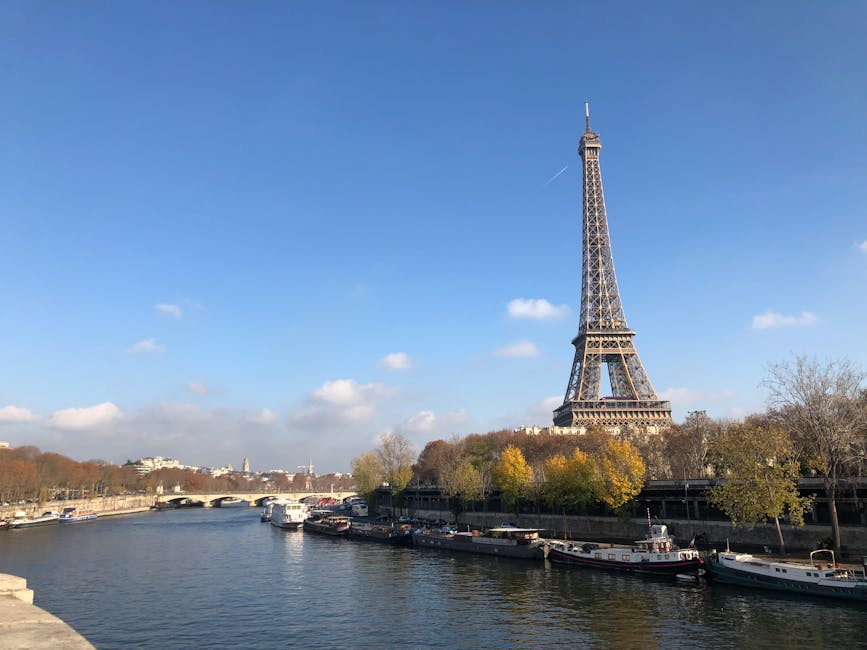
Sit on the right-hand (starboard) side leaving Eiffel if you want the Tower out the window for the first ten minutes. You’ll get the Eiffel approach and then the Orsay riverfront with the old clock face on the same side. Switch sides at Notre-Dame for the eastern leg if the boat lets you, which on the open-deck summer boats it does, and on the heated winter cabins it mostly doesn’t. The route turns around just past the Île Saint-Louis, so any single bench gets one of the two banks each direction.
What you actually see on the loop
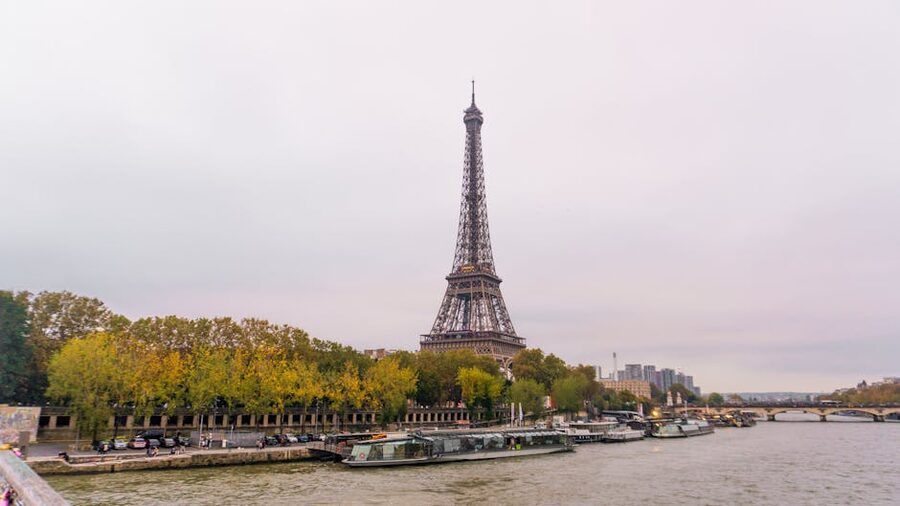
The 7km loop is the same on every operator. Going east from Pont d’Iéna you pass the Bir-Hakeim and the Pont des Invalides, then the gilded Pont Alexandre III with the Grand Palais on the right bank, then the Pont de la Concorde with Place de la Concorde set back behind it. Then it’s the Musée d’Orsay’s old railway facade on the left, the Pont Royal, and the back of the Louvre on the right. Anyone interested in the museum should look at the Louvre’s planning structure separately, because the river view is its own thing. The Pavillon de Flore facade has nothing to do with the museum’s interior layout.
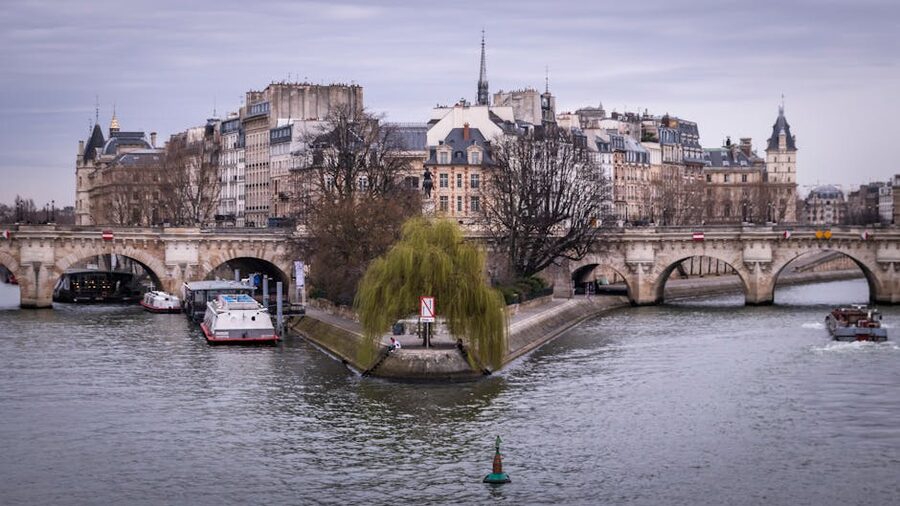
You pass under the Pont du Carrousel and then the iconic Pont des Arts (the pedestrian bridge that briefly had a love-padlock crisis). Then the Île de la Cité starts on your left. The boat slows here. The Conciergerie’s four conical towers are on the right side of the island; the spire of Sainte-Chapelle is just visible behind them. The boat noses around the western tip of the island, passes the small triangular park called Square du Vert-Galant at the base of Pont Neuf, and the route bends north and east around the cathedral.
Notre-Dame and the Eastern Leg
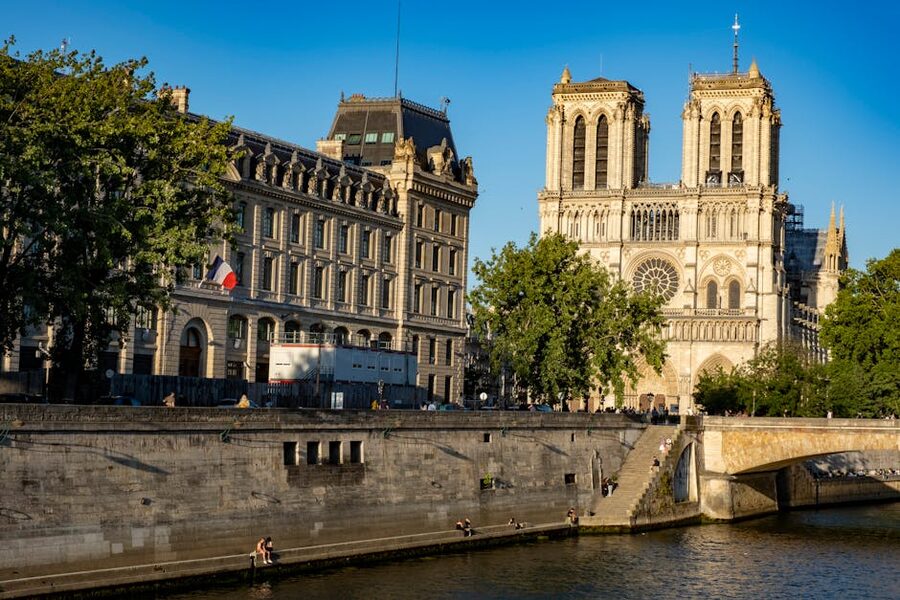
This is the bit nobody warns first-time visitors about: from the boat you don’t see Notre-Dame’s famous twin-tower west facade. You see the apse, the back. The flying buttresses, the rebuilt spire, the chevet curving around the eastern end. It’s a good view, just not the postcard one. For the postcard you stand on Place du Parvis Notre-Dame, which the boat doesn’t reach.
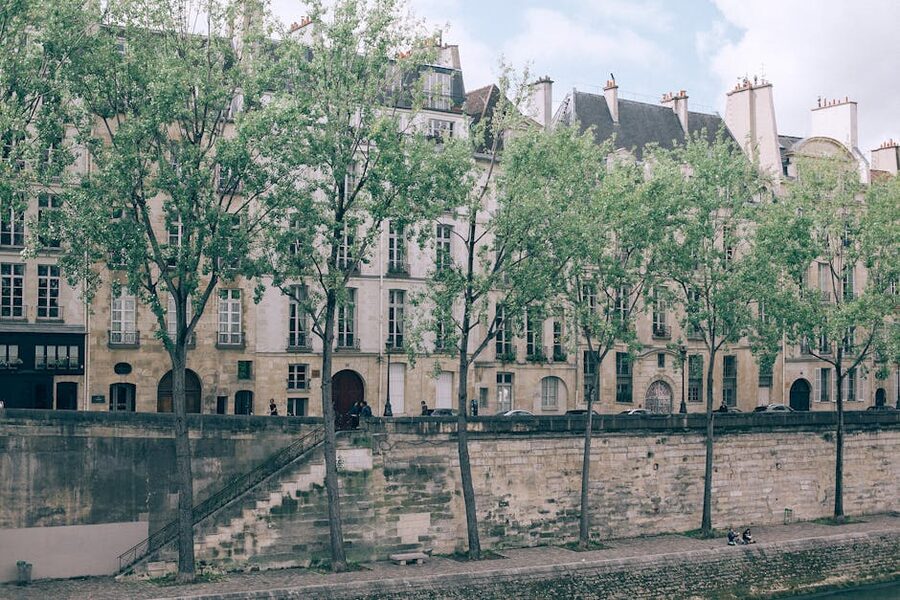
The boat slides past the south side of the cathedral with the Seine pinched narrow between the two islands. The Île Saint-Louis on your right is the residential one: 17th-century townhouses, narrow streets, the famous Berthillon ice-cream shop facing the water. You’ll see locals leaning over the balconies. This is the prettiest 90 seconds of the whole loop and most cruise audio guides talk over it.
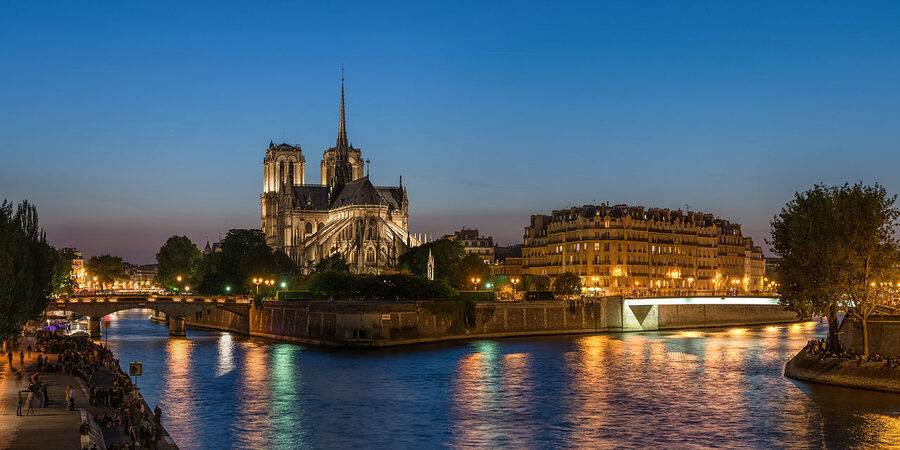
The boat turns around at the Pont de Sully or just past it (different operators turn at slightly different points; nothing meaningful changes), and you head back the same way. Going west the views are just as good but the order flips. You see Notre-Dame’s apse fading behind you, the Conciergerie comes back, and then the Île de la Cité tip approaches with Pont Neuf framing it.
The Pont Neuf and Île de la Cité Moment
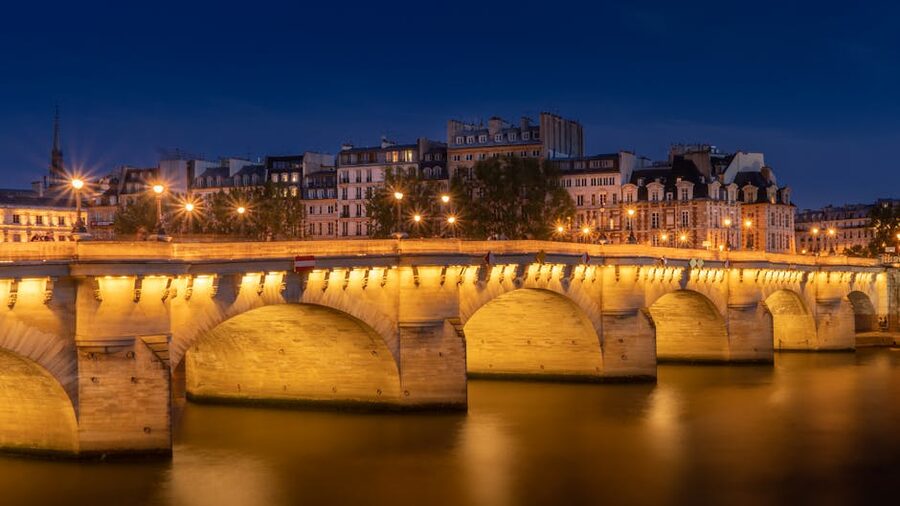
This is the moment to book the cruise for. Pont Neuf is the oldest bridge in Paris despite the name (which translates to “New Bridge” because it was new in 1607). It’s the one with the carved stone faces (called mascarons, 381 of them along both sides) and the half-moon viewing balconies that step out into the river. From the boat at dusk, with the bridge lights on and the water gone from brown to glass-black, you can see the carved faces in profile. From the bridge itself you can’t.
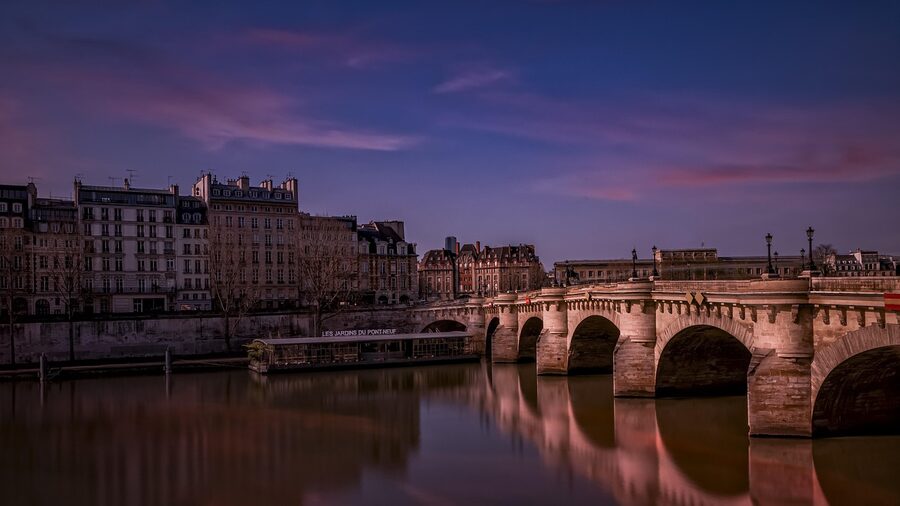
The Île de la Cité tip is the small triangular park called Square du Vert-Galant. It’s named for Henri IV (the “green gallant”, whose statue stands on the bridge above), and from the boat at sunset it’s where Parisians have actually shown up to drink wine and watch the day end. You see them leaning against the willow tree at the western point as you slide past. This is the bit that’s in every Paris film montage, and the boat angle is genuinely the best one.
When to Go: The Time-of-Day Question
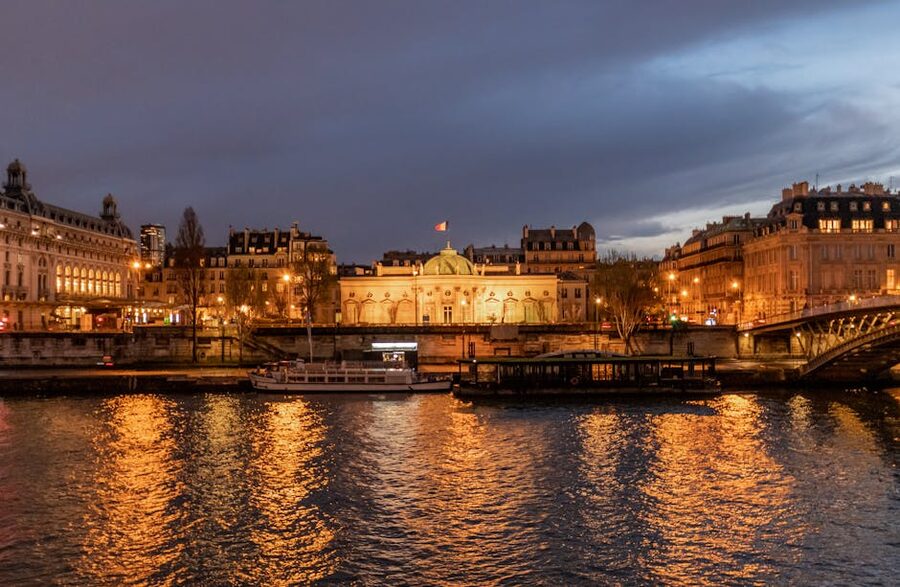
Three viable departure windows. Each has a use case.
Sunset cruise (90 minutes before to 30 minutes after sunset). The pick if you can manage it. In June that’s roughly 9pm to 10.30pm; in October roughly 6pm to 7.30pm; in December roughly 4.30pm to 6pm. You get the daytime Eiffel approach in golden light, the bridges lighting up one by one as you go east, the Pont Neuf moment at full dusk, and you might catch the Eiffel sparkle on the return leg. Book one of the last departures before sunset, not the first one after. The boats go out earlier-than-needed sometimes and you end up at Notre-Dame in flat afternoon light and back at Eiffel before the lights turn on.
Mid-morning cruise (10am or 10.30am). The “I want a sit-down hour to start the day” pick. Quieter boat, full visibility, no glare on the eastern leg, and you’re back on the quay by noon ready for lunch in the Marais. This works well for travellers with kids or with anyone who needs the morning slot to do anything else.
Late evening (9.30pm or later in summer, 7.30pm in winter). The “we already had dinner and now we want to see Paris lit up” pick. Quieter still, prices the same, and you catch the Eiffel sparkle at full dark. The downside: shorter operating windows in winter. By December the last departure is often 9pm or earlier.
What to skip: the noon-to-3pm slots. The light is flat, the river is busy with the lunch and tourist traffic, the boats are fullest. There’s nothing wrong with this window, but it’s the most expensive form of the cheapest experience.
The Eiffel Tower Sparkle
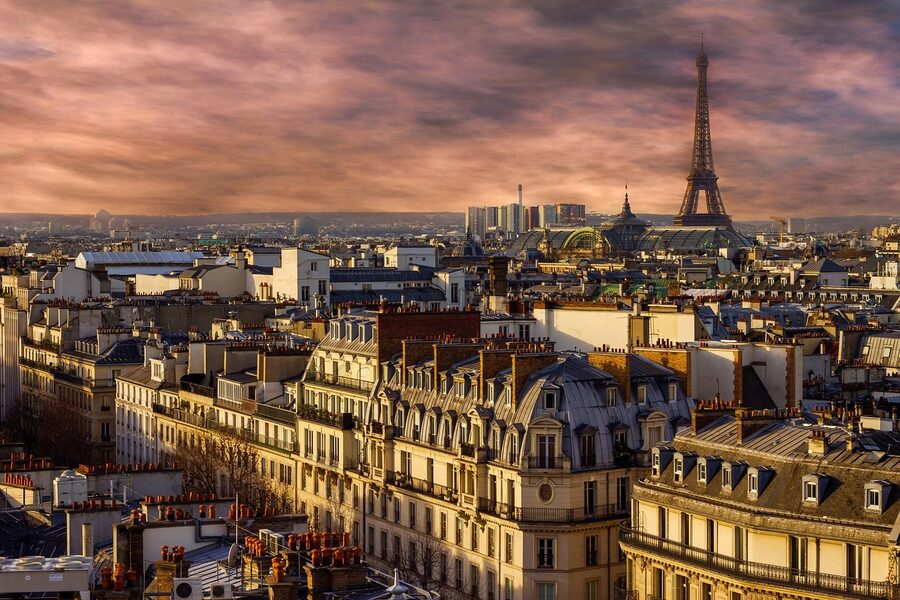
The Eiffel does its hourly light show every hour on the hour for five minutes, from sunset to 1am. (20,000 small bulbs were added in 2000 for the millennium and were supposed to come down after a few months. They never did.) Sunset varies by 4.5 hours across the year, so this is one of those weirdly variable Paris facts:
- Late June first sparkle around 10pm, last around 1am
- Late September first around 7.30pm
- December first around 5.30pm, last at 1am
The cruise loop is timed loosely so a 1-hour boat departing 9pm in summer or 5.45pm in winter has a decent chance of being broadside to the Tower for one of the sparkles. It’s not guaranteed. It’s also not the only reason to book a sunset cruise. The Pont Neuf moment is more reliable. But if you want to try, ask the dock attendant which departure has the best Eiffel-broadside timing for the day. They know.
If you climb the Eiffel Tower itself later on the same trip, you’ll notice the sparkle looks different from the inside (you don’t really see it; you see the bulbs flash on the ironwork right above your head). The view from the boat is the better one. The view from the Montparnasse Tower rooftop several blocks south is the best one of all, but that’s another article.
What the Boat Is Actually Like Inside
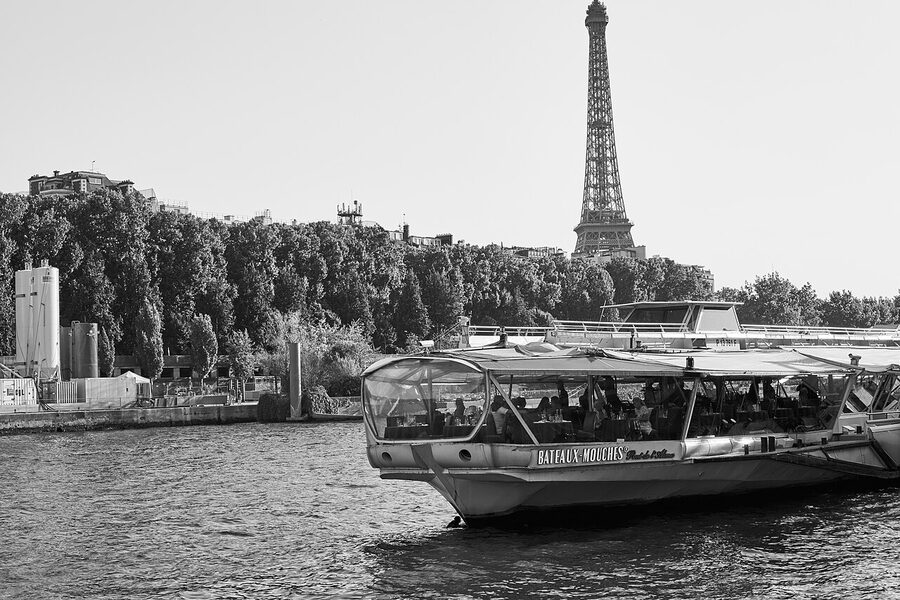
Capacity is 200 to 400 passengers depending on the boat. They feel full. The seats are wood or vinyl benches, two abreast, central aisle. There’s nothing soft about them, which is fine for an hour. The audio guide is pre-recorded, multilingual, and runs through a handset at each seat. Pick your language at boarding.
The open top deck is the whole point in summer. Take it if it’s offered. The closed cabin below has bigger windows but the air gets warm fast in July and the windows fog from condensation against the cooler river air. In winter (November to March) every operator switches to indoor-only heated boats, and the windows steam up unless you sit by the door. This is a real downside that the photos don’t show. Consider winter cruises a different product. They’re still worth doing for the bridge lights, but you’re paying mostly for the warmth.
There’s a small bar selling wine, beer, and pre-mixed cocktails at €8 to €12 each. It’s not the value pour. If you want a glass of something on the boat, the alternative tour with the crepe and wine included costs $3 more total than the basic ticket and gets you both. We touch on it as the second pick below.
Departure Docks: A Practical Note
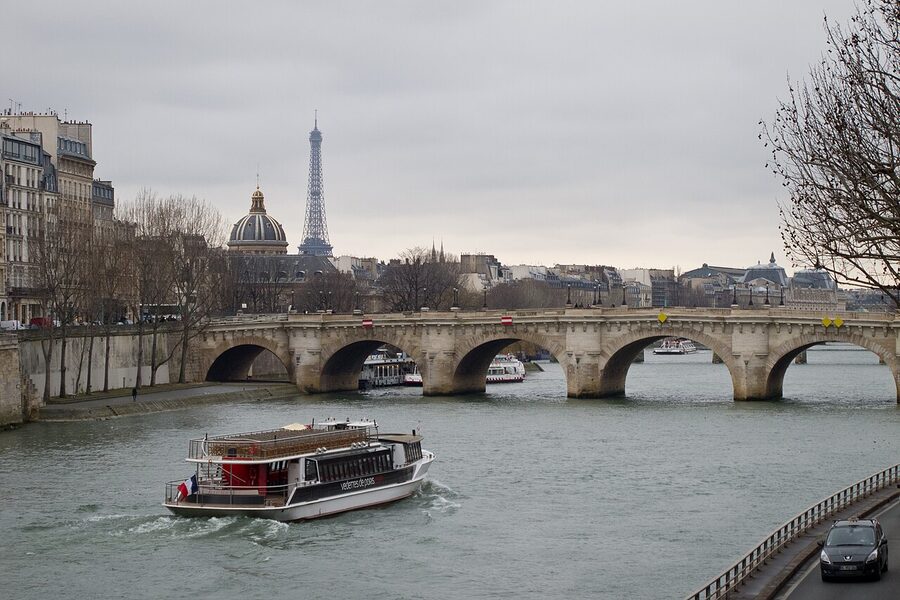
The four practical departure points, west to east:
- Pont d’Iéna (Eiffel Tower). Bateaux Parisiens 1-hour cruise. The default for the flagship product. Walk to the Eiffel, cross under, the dock is on the Right Bank side at the foot of the bridge.
- Pont de l’Alma. Bateaux Mouches departures, including most of the dinner cruises. RER C station Pont de l’Alma is the easiest metro approach.
- Quai de la Mégisserie. Some Vedettes de Paris and HOHO Seine pass departures. Right Bank, between Pont au Change and Pont Neuf, walking distance from Châtelet metro.
- Square du Vert-Galant (under Pont Neuf). Vedettes du Pont Neuf 1-hour cruises. On the western tip of the Île de la Cité, accessed by stairs from the bridge or from the bookseller-lined upper quay.
The dock you choose is more about which operator you booked than which view you want. The 1-hour loop is the same circle from any of them, just started at a different point on the circle. Pont d’Iéna means you start with the Eiffel Tower and end with it; Pont de l’Alma means you start with Pont Alexandre III; Pont Neuf means you start with the Île de la Cité moment as your first reveal and the Eiffel near the end. There’s a case for the Pont Neuf-departure version: you save the headline view for the second half. But the dock is harder to find for first-time visitors and you’ll lose 15 minutes locating it. Eiffel-departure for first-timers, every time.
Compared to Other Urban River Cruises
Most cities have a “cruise the river” tour and most are a bit underwhelming. The Guadalquivir cruise in Seville is fine but the river is wider than what the city was built around, so the buildings look distant. The Venice gondola is a different product entirely (45 minutes, two passengers, €90, no scale-up version). The Venice islands by boat day is worth it for Murano and Burano but it’s a half-day commitment, not a one-hour evening one.
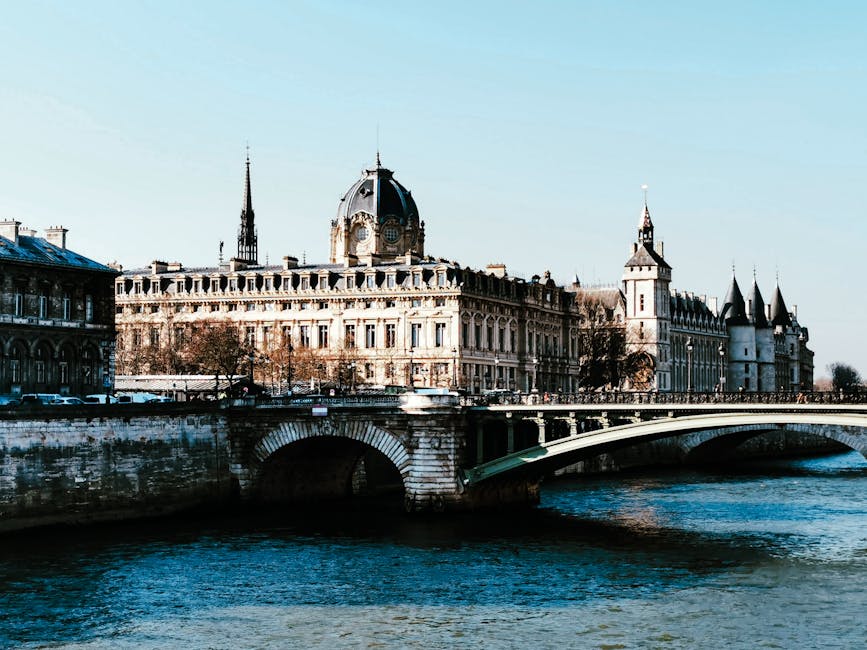
The Seine is the shortest, cheapest, most-concentrated urban river cruise in Europe. The whole 7km loop takes an hour because the river bends past 11 of the city’s signature monuments in that distance. You don’t get that density anywhere else. Compare to the Mediterranean day-cruise context, where a Capri boat tour from Naples or the Polignano a Mare sea-grotto cruise represents a different category. The Seine is the urban-spectacle version, where they’re the natural-spectacle version. Both are worth doing. They’re not substitutes.
Day-boat trips on Spanish coasts work the same way. The Barcelona catamaran and Mallorca catamaran day are different in scale (4 to 6 hours, swimming, food, sea), and they deliver a different category of experience. If your trip mixes a Paris stretch with a Mediterranean stretch, plan a Seine sunset cruise as your “monument tour where you sit down” and a catamaran day as your “we don’t do anything but be on the water” day. Don’t try to make one of them do the other.
A Note on the Dinner Cruise Decision
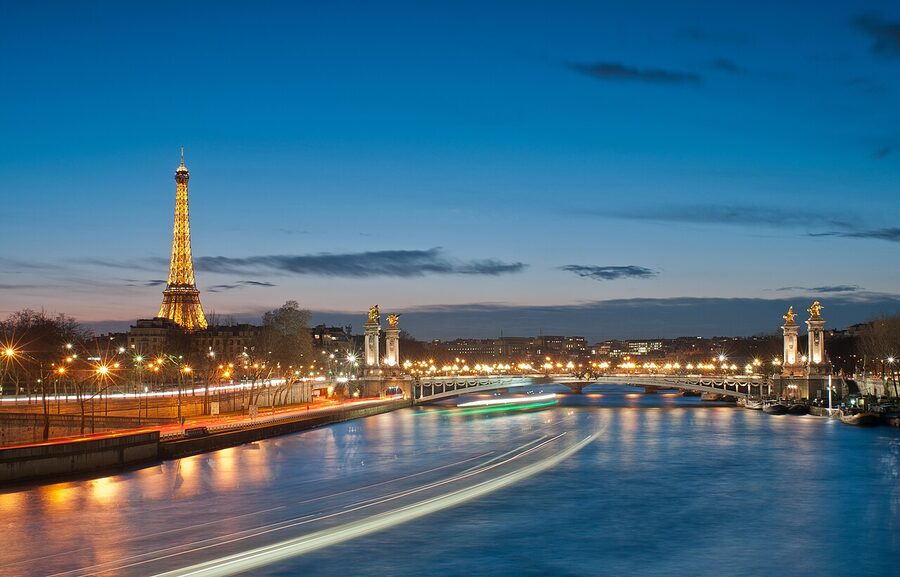
If you’re considering the dinner cruise specifically, we have a separate piece on choosing a Seine dinner cruise with the operator differences (Bateaux Parisiens, Bateaux Mouches, Maxim’s), the menu tiers, and the window-seat-vs-aisle-seat economics. The short version: at the cheap end ($64) you get a pre-set three-course menu, no choices, no window guarantee, and a glass of house wine. At the splurge end ($130 to $200) you get menu choices, a confirmed window, and the wine pairing. The middle band ($85 to $110) is where most travellers should land if they want the experience to feel like a special meal rather than a tourist meal.
The dinner version is the right product for an anniversary, a marriage proposal, a 60th birthday: occasions where you want the whole thing photographed and remembered as one set piece. It’s not the right product for a family of four trying to see Paris on a budget, where the panorama gives you 90% of the visual content for 20% of the spend.
The HOHO Pass: When It Earns Its Money
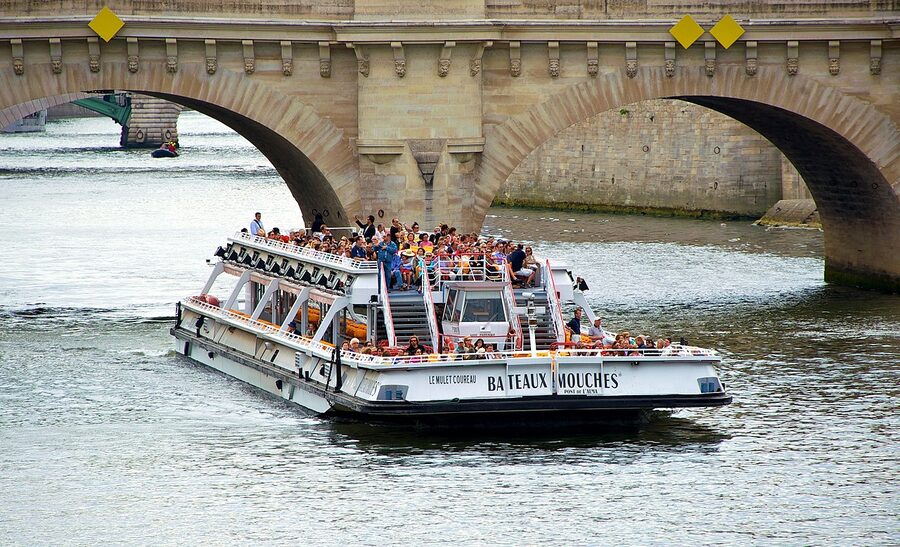
The 9 stops on the HOHO Seine pass:
- Tour Eiffel
- Musée d’Orsay
- Saint-Germain-des-Prés
- Notre-Dame
- Jardin des Plantes
- Hôtel de Ville
- Louvre
- Champs-Élysées
- Beaugrenelle
The pass is $27 for 24 hours, more for 48. Boats run roughly every 20 to 30 minutes during operating hours, less often outside summer. Compared to the metro it’s slow. A single boat-hop from Eiffel to Notre-Dame takes about 45 minutes; the metro does it in 12. Compared to the Paris hop-on-hop-off bus the boat is the better-value option if your sightseeing is on the river. The bus covers more, the boat covers nicer.
The pass earns out at three uses. Most travellers manage four or five if they plan around it: arrive at Eiffel, hop to Orsay, walk to the Louvre, hop back to Notre-Dame, hop again to Saint-Germain for dinner. That’s an entire day spent treating the river as your tram, and it’s a genuinely pleasant version of Paris. The catch is that this only works if your hotel is also somewhere along the loop. If you’re staying in the 18th near Sacré-Cœur, half your day is spent metro-ing back and forth from the river stops.
Skip the HOHO pass if: you’re in Paris for two days, you want to maximise time inside attractions rather than between them, or your trip is timed for one specific weekend with packed dinner reservations. Buy the HOHO pass if: you’re staying near the river for at least three days, you want to take the visit slow, you have kids, or you specifically want the “boat as transport” experience.
Top 3 Seine Cruise Picks
The three products below cover most travellers. They’re the most-reviewed Seine cruise tours we have on file, and each has a clearly defined use case.
1. Paris: 1-Hour Seine Cruise from the Eiffel Tower: $20
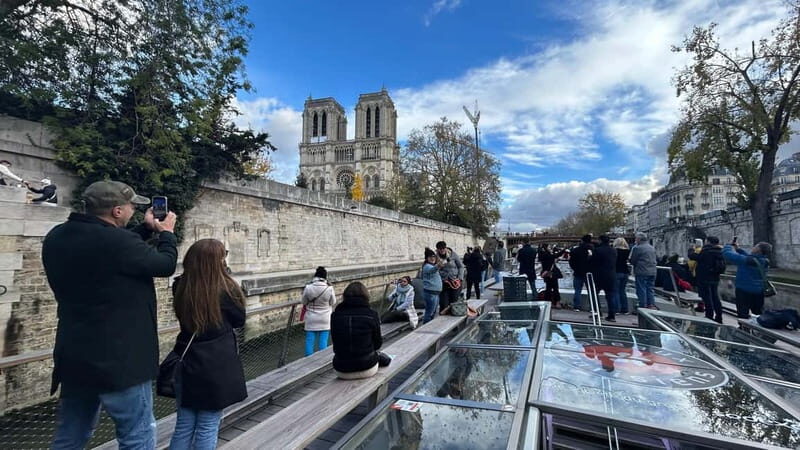
This is the right pick for anyone in Paris for the first time who wants to see the river once and move on. It’s the most-booked boat tour in the city by a comfortable margin, and our full review covers the open-top-deck timing and the Bateaux Parisiens vs Bateaux Mouches difference. Take a sunset slot if you can, sit on the right-hand side leaving Eiffel, and book the last departure before sunset rather than the first after.
2. Paris: Seine Cruise & Crepe Tasting: $23
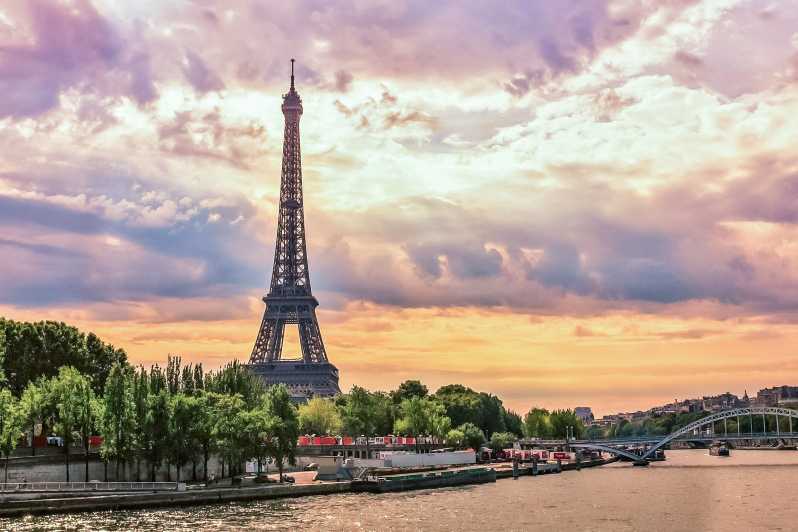
Pick this if you’d otherwise have bought a glass of wine from the boat’s bar at €8 and a crepe afterwards at €5 to €7. The cruise is identical to the flagship (same boat, same loop, same route), so our review mainly covers the wine pour size and the crepe options. Same departure-timing rule applies: aim for sunset.
3. Paris: Hop-On Hop-Off Seine Cruise Pass: $27
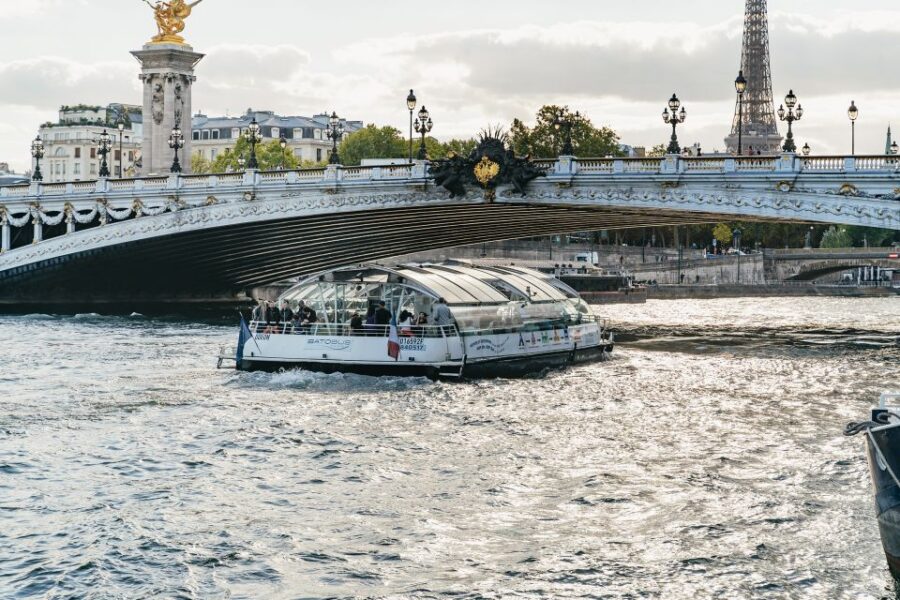
Buy this only if you’re staying in Paris at least three days, your hotel is within metro distance of the Seine, and your sightseeing list (Eiffel, Louvre, Orsay, Notre-Dame, Saint-Germain) lines up with the river loop. The pass earns out at three uses and most travellers who plan around it manage four or five. As our full review covers, this is not a substitute for the panorama if you only want to ride the river once: for that, book the flagship.
What to Do Right Before or After the Cruise
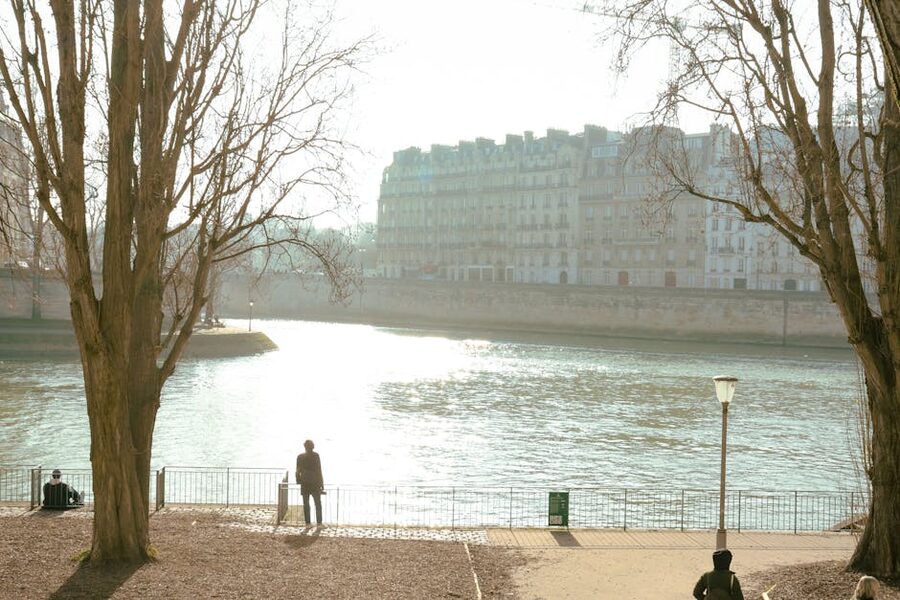
The cruise is one hour. Most travellers waste the surrounding two hours by sitting in a chain café near the dock. Better options:
Before a Pont d’Iéna departure. Walk the Champ de Mars from the Eiffel Tower south to the École Militaire. 15 minutes one way, full Tower view both directions. Or sit on the Trocadéro side across the river and watch the boats coming and going for half an hour.
After a Pont d’Iéna departure. The Trocadéro Gardens close at sunset in summer (around 9pm) and stay lit afterwards. Crossing back over Pont d’Iéna with the Tower behind you is the postcard walk. If you have more time, head to the Eiffel Tower itself for the second-floor view and queue mechanics. Or take the métro to the Arc de Triomphe for the rooftop view of the Tower at full sparkle.
Before a Pont de l’Alma departure. Walk the Pont Alexandre III itself. The bridge is the photo subject the cruise sells you, and you should also stand on it. Five minutes from the dock.
After any departure. The bouquinistes (the green book stalls that line both banks between Pont Marie and Quai du Louvre) are open most days until ~7pm. They’re the only UNESCO-listed second-hand booksellers in the world and they’re cheaper than they look. Browse for half an hour even if you don’t buy anything.
How the Seine Cruise Fits a 3-Day Paris Trip
The cruise itself doesn’t anchor a day. It anchors an evening, between dinner and bed, or a morning slot before the museum. Slot it like this:
Day 1, evening. Sunset cruise on the 1-hour panorama. You arrive in Paris, get to your hotel, head to the river for a 90-minute window that delivers the city’s headline visual content, and you’re free to dinner by 9pm or 10.30pm depending on the season. This is the standard slot and it works.
Day 2, anytime. Use the morning for the Louvre or the Eiffel Tower. The cruise can fill the late afternoon if you skipped it on Day 1, but a Day 1 arrival cruise is a stronger play because it gives you a structural overview of the city before you start exploring.
Day 3. Day-trip out to Versailles if you’ve planned for it. No cruise on Versailles day. The 4 to 5 hours at the Palace already saturates the historic-monument quota. Save the cruise for a city-day.
Some Real Downsides
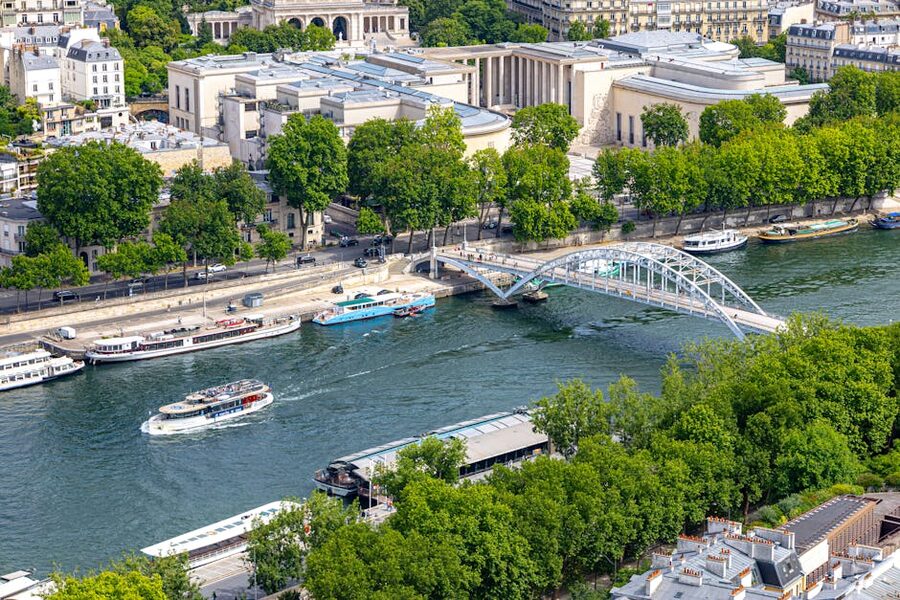
The Seine is brown most of the year. Anyone expecting blue water is going to be quietly disappointed in midday light. At dusk it goes black, which is fine and actually better.
The boats are crowded in peak season. June through August, the open top deck of a Bateaux Parisiens 6.30pm sailing fills up. If you want a window seat or a top-deck spot, board 15 minutes before departure or shift your slot to a less popular time (mid-morning, late evening, or early November).
The audio guide is competent but uninspired. It’s a multilingual track triggered at each landmark, and it leans toward general historical facts rather than the specific quirks that make individual buildings interesting. We’d rather they cut the guide entirely and let you hear the river. Bring earphones and queue up your own audio if you find this irritating.
You don’t get off in mid-cruise. The 1-hour loop is one continuous trip. If you want to stop and take photos at Pont Neuf or get off near Notre-Dame, you need the HOHO Seine pass (third pick above), not the panorama.
Finally: the cheap dinner cruise at $64 is not the same product as the expensive dinner cruise at $200. The cheap one is a tourist set menu in a glass-roofed boat with a confirmed seat that may or may not be by a window. If your reason for booking dinner-on-the-Seine is the dinner experience, lean toward the splurge end. If it’s the river experience, book the panorama at $20 and eat at a restaurant.
Where the Seine Sits in the History
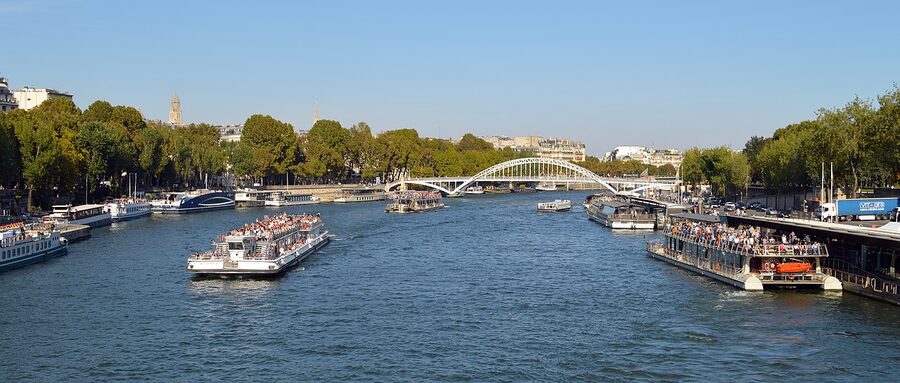
The Seine is 777km long and pre-dates everything Roman in Paris. The city was founded on the Île de la Cité by the Parisii tribe around the 3rd century BC. The original Lutetia was a fishing village on what’s now the part of the river the boat slows around. Notre-Dame is built on the site of a Gallo-Roman temple. The bouquinistes’ stalls evolved from medieval river-traders. The whole city’s logic is the river.
The cruise industry on the Seine started in the 1860s with steam-powered “bateaux-mouches” running short loops for sightseers. The name comes from the Mouche district of Lyon, where the original boats were built (it’s not actually French for “fly boats”, though it sounds like it should be). Bateaux Mouches itself, the company, was founded in 1949 by Jean Bruel and is still family-owned. Bateaux Parisiens dates to 1956. Vedettes du Pont Neuf to 1979. The three operators have spent 75 years not actually competing on much, because there’s enough demand for all of them.
What changed: the boats got bigger, the audio guides got more languages, and the prices in real terms have come down. A 1960s Bateaux Mouches ticket cost roughly the equivalent of $25 today; you’re now paying $20 for the same loop with a nicer boat and a better audio guide. The economics of the panorama work because volume is enormous (the flagship product alone has 77,000+ user reviews on a single platform; the actual passenger count is multiples of that).
Practical Booking Notes
Buy online, not at the dock. Same price most of the time, but the queue at the dock during peak hours can be 30 minutes when the next boat fills. Booked online you scan and walk on.
Don’t believe “skip the line” upgrades. The 1-hour panorama doesn’t have a skip-the-line tier in any meaningful sense. There’s only the boarding queue, and it moves in 15-minute increments as boats depart. Spending extra for “priority” gets you a ticket that’s no different from the standard one once you’re on board.
Cancellation is usually flexible. Both GetYourGuide and Viator typically allow free cancellation up to 24 hours before. Check the specific listing. The cheaper Bateaux Parisiens ticket sometimes has a 1-hour cancellation window, which is generous.
Weather backup. The boats run in light rain. Heavy rain or wind triggers cancellations and refunds, but light drizzle just means everyone moves to the covered cabin. If the forecast is iffy, book a daytime departure rather than dusk so you have flexibility to reschedule.
Combo passes. The Paris Museum Pass doesn’t include any Seine cruise. The Paris Pass does, but the math rarely works unless you’re hitting a lot of paid attractions. If you’re considering a city pass, do the per-attraction calculation against the actual prices, and remember that the Seine cruise is $20, small enough that bundling rarely saves anything.
One More Thing About the Pont Neuf Moment
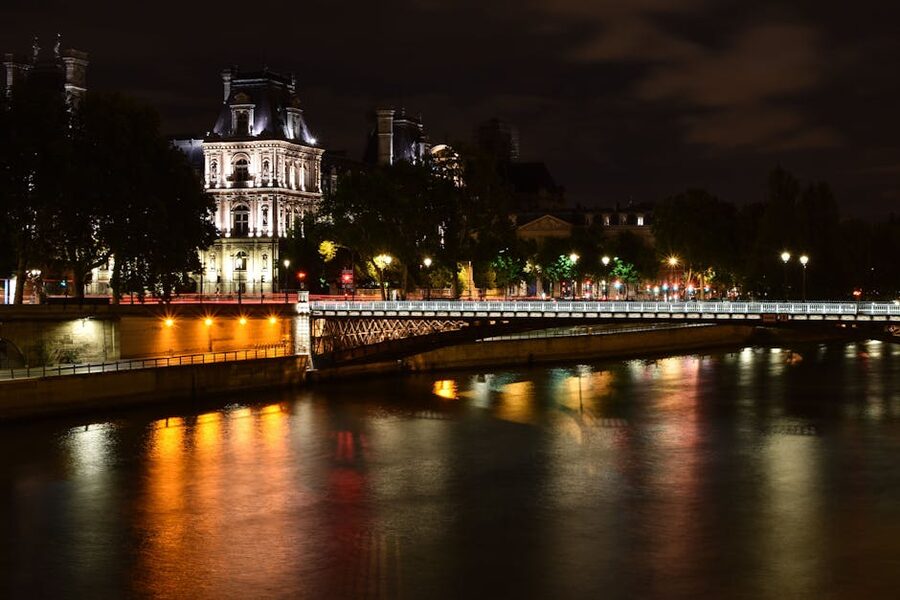
If you take only one hour-long cruise on this trip, time it so the boat is broadside to Pont Neuf at full dusk, not at full dark. The bridge lights come on about 20 minutes before complete dark. That window, when the sky is still navy blue but not black, and the bridge is lit but the buildings on the Île de la Cité are also still picking up sky light, is the one. Twenty minutes earlier and the bridge isn’t lit. Twenty minutes later and the sky is too dark to read against the bridge.
You can’t really plan for this. You can plan to increase your odds by booking the cruise that finishes its loop around 30 minutes after sunset. In June book the 9.30pm departure. In September the 8pm. In December the 6pm. Ask the dock attendant if unsure. They’ll tell you which boat hits Pont Neuf at the magic light. They don’t always volunteer this information, but they answer when asked.
Connecting River-from-Water Days Across Europe
If you’re putting together a Europe trip with the Seine cruise as one set piece, here’s how the river-and-canal experiences across the rest of the continent compare. The Venice gondola is the most expensive and the shortest (45 minutes, two passengers, €90 in the day, €110 after 7pm) and the most romanticised, with all that implies. The Venice islands by boat day is its functional cousin. You take a vaporetto or organised boat to Murano, Burano, and Torcello, and that’s a half-day. Both are worth doing on a Venice trip; neither competes with the Seine.
The Guadalquivir cruise in Seville at €17 to €19 is the cheapest in our coverage and gets you the Torre del Oro and the Triana neighbourhood from the water. It’s quieter than the Seine and the boats are less crowded, but the river is wider and the buildings further away, so the visual density is lower. Worth doing if you’re already in Seville for two or three days.
The Mediterranean catamaran days, Barcelona and Mallorca, are the volume-and-time opposite of the Seine. Four to six hours, swimming, lunch, sea horizon. They’re a different category and you should do them on a separate trip or at minimum a separate part of the same trip.
The Italian sea-grotto cruises, Capri from Naples and Polignano a Mare, are natural-spectacle versions of the same urge to be on water. Limestone cliffs, blue grottos, no monuments. The Seine is the city version. You wouldn’t choose between them; you’d do one in Paris and the other elsewhere.
The closest structural cousin to the Seine cruise is Amsterdam’s canal cruise: a 75-minute loop through 17th-century gabled-house corridors with the boats threading bridges narrow enough that the audio guide tells you when to duck. It’s the densest urban-water experience in our coverage. Rotterdam’s harbour cruise is the modernist counter-version: a glass tour boat through the largest port in Europe, past container cranes and the Erasmusbrug, more skyline than landmark. The two together teach you what the Seine is and isn’t.
The Short Answer
If you’re in Paris for the first time and have an hour to spare in the evening, book the $20 Bateaux Parisiens 1-hour panorama for a sunset slot. Sit on the right-hand side leaving Eiffel. Watch for Pont Neuf at full dusk. Hope for an Eiffel sparkle on the return.
If it’s a special occasion, book a mid-tier dinner cruise ($85 to $130) on a clear evening between May and September. Get a window seat. Wear something nice.
If you’re in Paris for at least three days and your hotel is near the river, get the $27 HOHO Seine pass and use the river as transport between Eiffel, the Louvre, Notre-Dame, and Saint-Germain. Plan four or five hops to make the math work.
Skip the lunch cruise unless a long French sit-down meal is your goal. Skip the noon panorama unless you have no other slot. The cruise is the simplest one-hour case for “yes Paris really is that beautiful” and you should book it; just book the right version, in the right slot, for the right reason. The four products aren’t interchangeable, even if the marketing makes them look that way.