
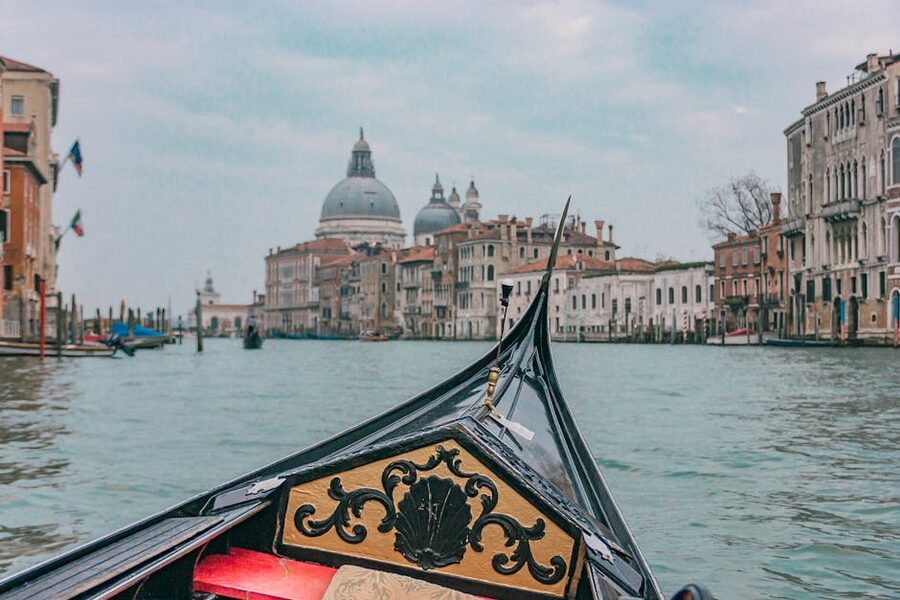
The classic mistake isn’t getting “scammed.” It’s stepping onto a gondola at the busy stand opposite San Marco, paying the regulated €90, and then spending most of your thirty minutes shoulder-to-shoulder with vaporetti on choppy water near the basin. You walked five minutes past the same price at a quieter stand in Castello and got the wide Grand Canal view instead of the side-canal one you actually came for.
That’s the booking decision that breaks gondola rides for a lot of visitors. The price is fixed by the city. Where you board, when you board, and what you ask for before stepping in are the three knobs you can actually turn. This guide walks you through all three. The same where-you-board logic applies to Seine river cruises in Paris, where the same fleet leaves from very different docks for very different views.
The official rate during the day is €90 for 30 minutes. After 7pm it’s €110. Both are per gondola, not per person, and a gondola seats up to five. So a couple paying €90 alone is one experience. Five friends paying €18 each is another. Decide which one you’re booking before you start comparing. The per-boat-versus-per-seat split is the same fork you weigh on the Amsterdam canal cruises, where the public hop-on boat is per person and the private skipper-driven hire is per hull.
Quick picks if you’re booking right now
In a hurry? Three pre-booked gondola rides that work
- App-narrated, $39 per person. Grand Canal gondola with app commentary. Cheapest reliable booking, multilingual audio runs in your earbuds while the gondolier rows.
- Live commentary guide, $44. 35-minute gondola ride with live commentary. A walking-tour guide meets you, then you board with running narration in English instead of an app.
- Shared seat, $46. Shared gondola across the Grand Canal. You’re sharing the boat with strangers up to five, which is why the per-person price is so low compared with hiring privately.
If you want to book the gondola privately, walk up to a quieter mooring and pay the official rate (more on which moorings to look for further down). The pre-booked options above are the alternative if you don’t want to handle that on the day, want commentary that you can actually understand, or want to lock the price before you fly.
The three booking mistakes that cost you the experience
Most of the bad gondola stories online trace back to one of these three errors. None of them is about getting scammed by a corrupt gondolier. Most gondoliers are running a legitimate, regulated profession with fixed rates. The problems are decisions made before you step on the boat.
Mistake one: boarding at the busiest possible spot
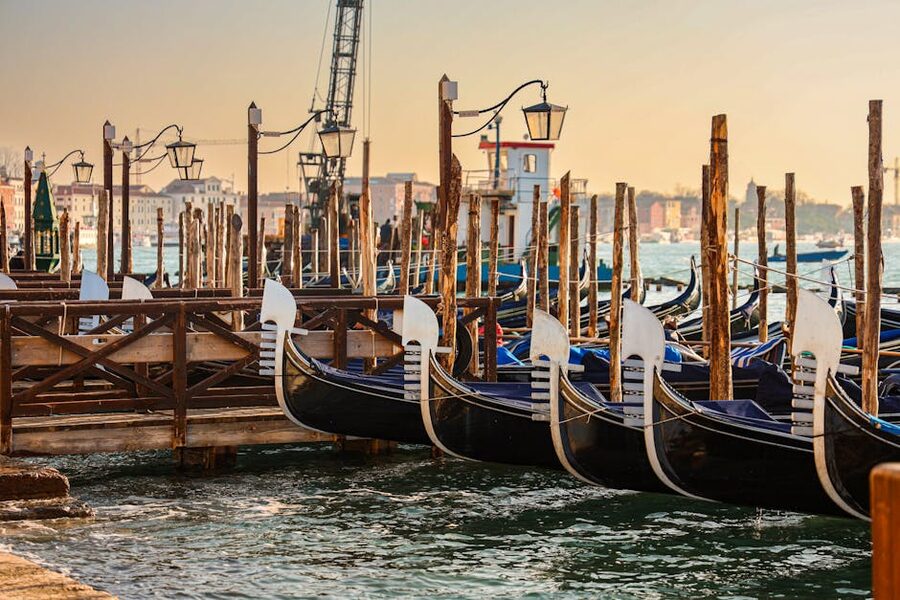
The big stands at Bacino Orseolo (right behind St Mark’s) and the San Marco waterfront move the highest volume in the city. They’re also where the experience suffers most. The gondolas leave straight into the basin, which is the choppy, busy edge of the lagoon, full of vaporetti, water taxis, and other gondolas all working the same stretch. You pay €90 for thirty minutes of traffic and a quick loop into a side canal at the end.
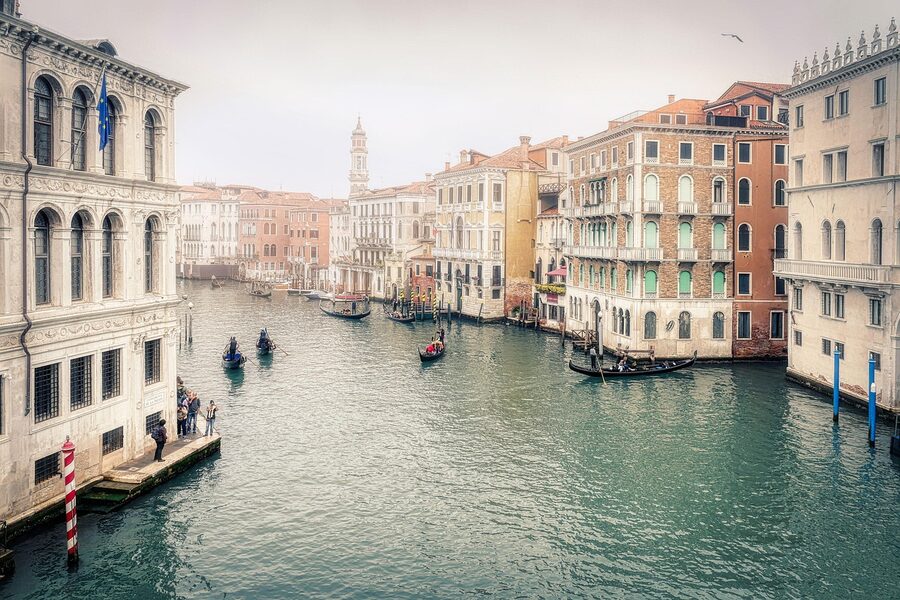
The price doesn’t drop at quieter stations. It’s fixed by the city. But the route does change. A mooring in Castello, San Polo, or Cannaregio will start you in narrow water and only touch the Grand Canal for a moment, which is the better trade. Walk five minutes from the obvious queue and you’ll usually find one.
Mistake two: confusing per gondola with per person
The €90 daytime rate covers the whole gondola, up to five passengers. So when a tout near the queue says “€90 each, sir,” that isn’t the rate. The same goes for evening rides at €110. Don’t accept a per-person quote on a private gondola. If the gondolier or their tout floats one, walk on.
The exception is the shared booking, which is sold per person specifically because you’re sharing the gondola with strangers. That’s the one product where a per-person price makes sense, and it’s the reason it’s cheaper than splitting a private boat between two people.
Mistake three: not agreeing the route or the duration before stepping on
The standard ride is 30 minutes. Anything shorter at the same price is a problem. The simple way to set expectations is to state both numbers when you walk up. The same setting-the-clock-up-front discipline keeps the Seine dinner cruise from running long or short on you in Paris. Try “Are you free? €90 for 30 minutes?” instead of asking “how much?” If a different number comes back, thank them and keep walking. There will always be another gondola.
You’re also allowed to ask whether the route stays on side canals or pushes onto the Grand Canal. A gondolier who’s already had a long shift may be happy to keep things short and central. The route-choice question is louder still on a Barcelona catamaran, where the captain picks between the working port and the open coast based on the wind. A fresh one early in the morning will usually take you somewhere quieter if you ask. It’s not rude. It’s just a clearer transaction.
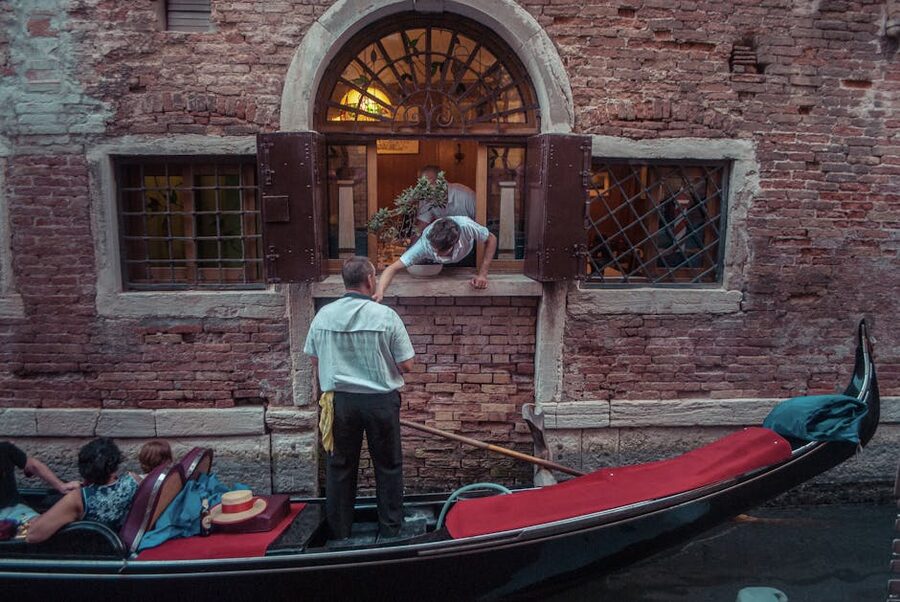
What it actually costs
City-regulated rates, in effect during 2026 (a contrast to most working ports, where prices float; the Rotterdam harbour cruise is the cleanest example, fares move with the season and the operator):
- Daytime (8am to 7pm): €90 for 30 minutes per gondola
- Evening (after 7pm): €110 for 30 minutes per gondola
- 45-minute ride: roughly €135 day, €165 evening (the rate scales)
- Maximum capacity: 5 passengers per gondola
- Live music surcharge: separate, agreed before boarding. Usually quoted per gondola, not per person, but always confirm.
That last line is the second most common point of confusion. If a singer-and-accordionist boat pulls up alongside, you’re being offered an add-on, and the price needs to be stated cleanly. Most reliable add-ons are €30 to €40 per gondola for a few songs. If the figure sounds like it could be either per-gondola or per-person, ask which.
Cash is still the safe assumption. Some gondoliers take cards, but enough don’t that you don’t want to find out at the end of the ride. The €90 fits comfortably in two €50 notes. The same goes for the live-music surcharge if you’re saying yes to it.
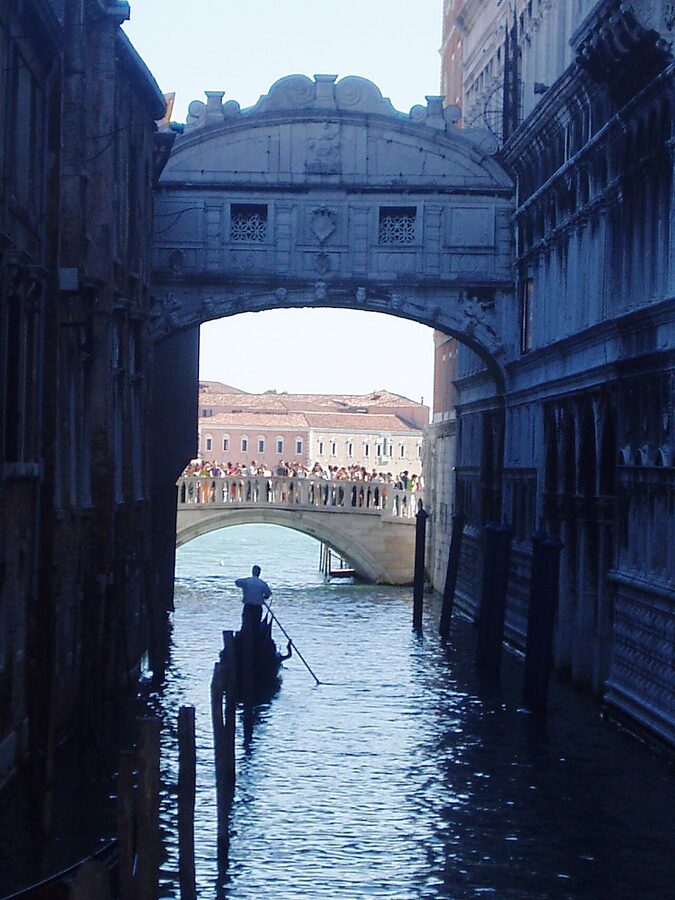
Where to board: the calm-stand strategy
You don’t need to hunt down a “best” stand. You need to avoid the worst ones, which means the obvious ones. The gondola stations clustered around Piazza San Marco (Bacino Orseolo, the Riva degli Schiavoni stretch right at the basin, the row of moorings opposite the Doge’s Palace) are the ones to walk past on a busy day.
The stands worth looking for are the smaller, often unmarked ones tucked into Castello, San Polo, Dorsoduro, and Cannaregio. They’re typically marked by the candy-striped poles in the water and a couple of gondolas waiting between rides. Some specific examples that work in 2026:
- Castello (near Ponte de l’Osmarin): close enough to walk from the Doge’s Palace, but a different micro-neighbourhood. If you’ve already been through the Doge’s Palace tour, you can finish there and stroll five minutes to a calmer mooring.
- Campo Santa Maria Formosa: a short walk inland from St Mark’s, with access to a network of narrower canals away from the basin.
- San Polo (near the Frari basilica): good if you’re already in the Frari/San Polo cluster. Routes from here often stay residential.
- Cannaregio (Palazzo Miracoli area): the most consistently quiet of the lot. This is where I’d send a couple looking for the calmest possible morning ride.
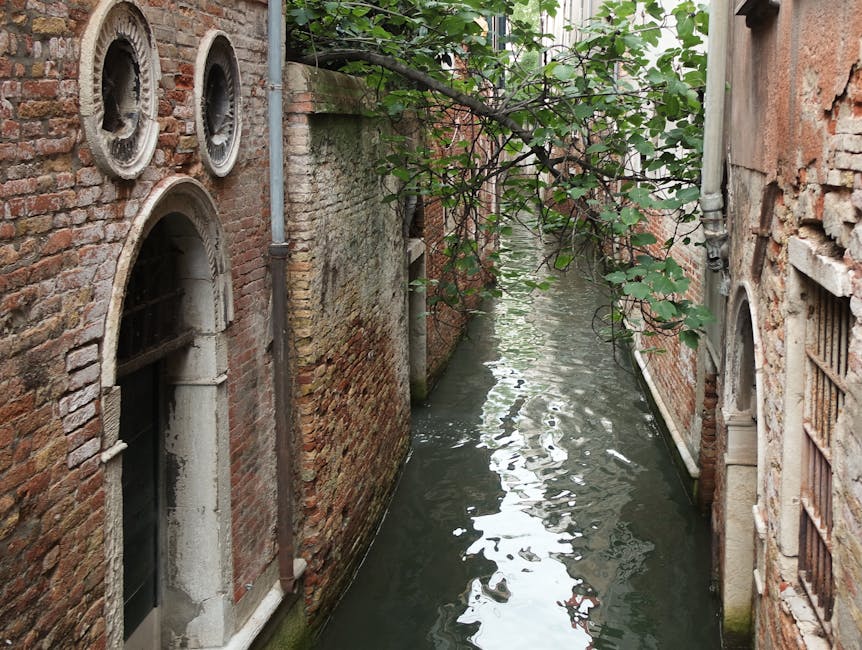
The principle is simple. Walk a neighbourhood you already enjoy on foot, then look for a mooring there, rather than picking a mooring first and ending up in someone else’s neighbourhood. You’ll know which canals you’ve enjoyed walking past. Those are the ones to see from the water.
When to go: morning is the only good answer
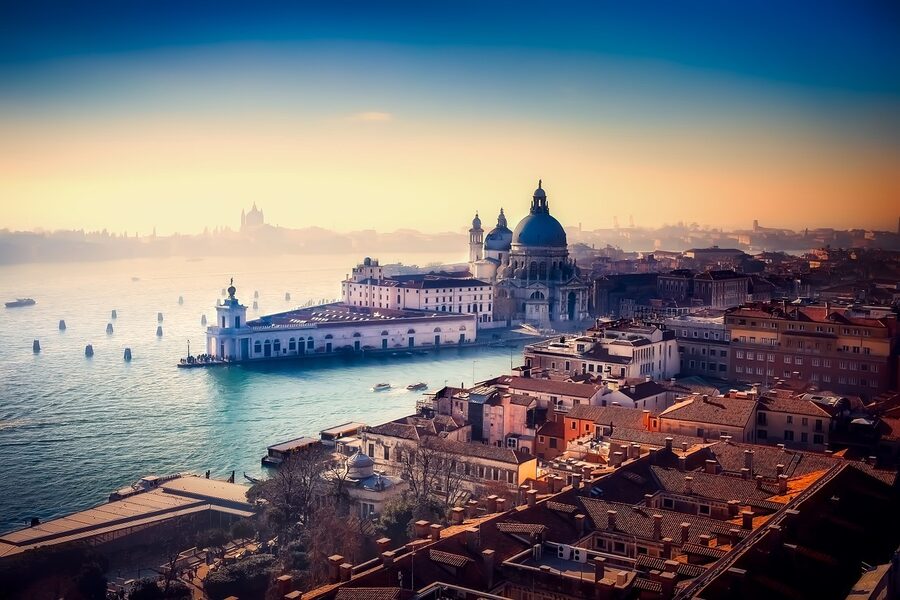
If your itinerary lets you do the gondola in one specific window, do it between roughly 9 and 9.30am. The water is calm because the city’s not yet running. The gondoliers have just started their day so they’re rowing rather than enduring. The day-trip crowds typically arrive around 10 and saturate the centre by 10.30. You want to be back on dry land before that pivot.
Early evening is the second-best window. After about 5pm in summer, the heat backs off, the light softens, and the day-trippers start filtering back to their trains. The catch is that after 7pm the rate jumps to €110, and the gondoliers have been working for ten hours. The energy isn’t the same as the morning version. It’s still atmospheric. Just not as fresh.
Midday in peak season is the worst time. The canals are at maximum boat traffic, every popular stand has a queue, and your gondolier is stuck behind two other gondolas for half the ride. If midday is your only window and it’s high summer, I’d seriously consider whether to go at all. The version of Venice you came to see isn’t out at noon in July.
Night rides are a separate question. They’re quieter than midday and slightly less busy than early evening, but most of the smaller canals aren’t lit, so the architecture you’d be paying to see at water level disappears into shadow. Romantic if that’s the mood you’re after. Underwhelming if you wanted to see the city.
Pre-booking vs walking up
You can do this either way. Pre-booking a slot through GetYourGuide locks the price in your home currency, gives you a guide who’ll meet you and walk you through the introduction in English, and removes the question of “what if every gondolier we ask says €120?” Walking up costs the same regulated rate, gives you flexibility on time and mooring, and lets you pick the gondolier whose face suggests they want to row you somewhere quiet.
Pre-booking makes most sense if you’re on a tight schedule, you don’t speak Italian or much English-via-gondolier, you want the commentary to be useful instead of just gestural, or you’re trying to keep the budget visible up front. If you’re staying long enough to wander Castello or Cannaregio for an afternoon, walking up gets you the version of the experience that feels least packaged.
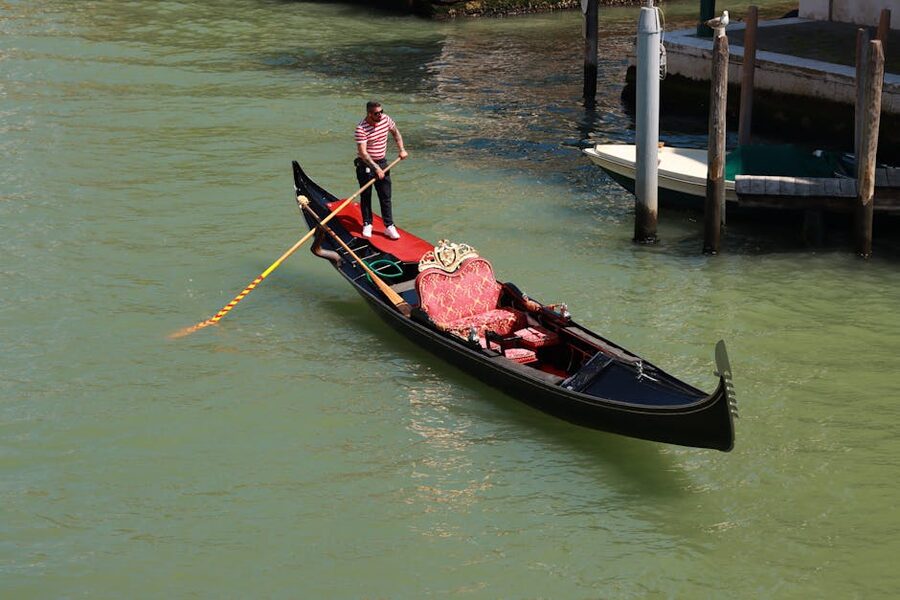
The three pre-booked rides worth shortlisting
These are the gondola rides our database tracks as the most-booked across the major affiliate platforms. They’re all 30-minute Grand Canal experiences, all priced within €5 of one another, and the difference between them is what you get with the gondola itself: a guide, an app, or a stranger on the seat next to you.
1. Grand Canal Gondola Ride With App Commentary, $39
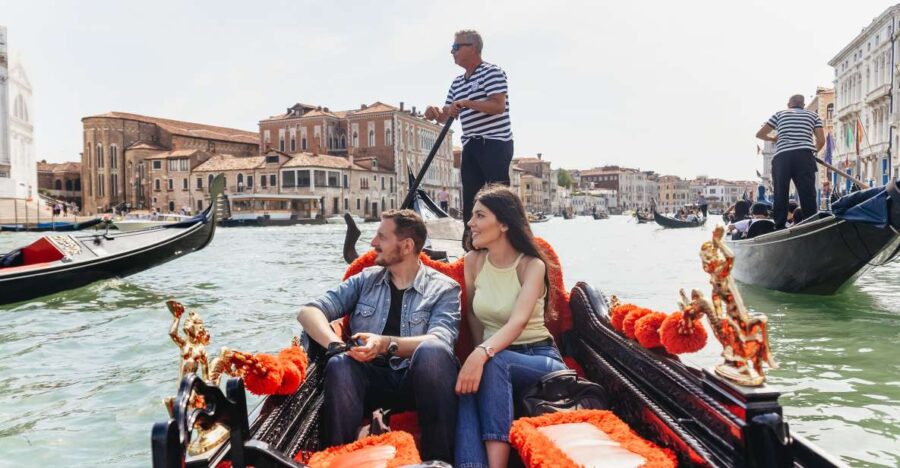
This is the most-booked gondola product on Venice’s GetYourGuide page and the one I’d start with if budget mattered. The app handles narration in your language while the gondolier focuses on the route, which is the trade most people actually want, and our full review covers what’s on the audio and where the route picks you up. It’s a Grand Canal route, which is the only real weakness, but at $39 it’s the right place to start the comparison.
2. Grand Canal by Gondola With Live Commentary, $44
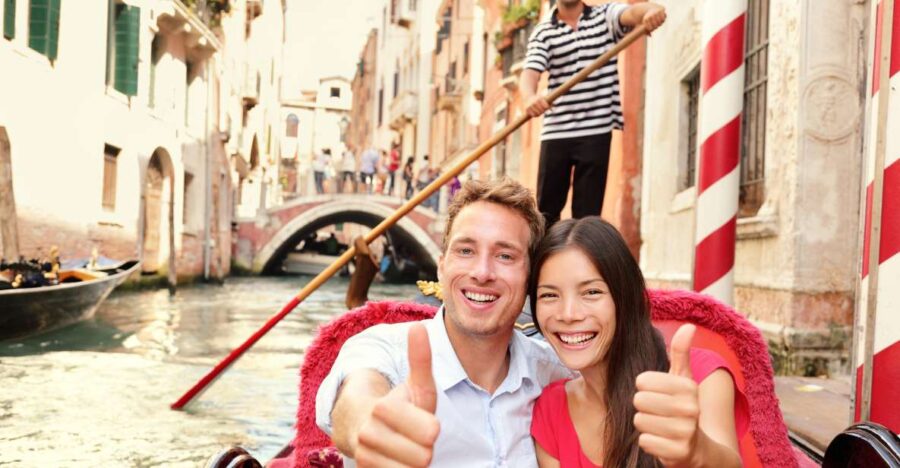
Pay $5 more and you get a walking-tour guide who meets you, gives you the orientation on land, then narrates the ride live as you pass the Peggy Guggenheim, the Salute, and the lower Grand Canal palazzi. It’s the right pick if commentary actually matters to you, and our review goes into what the guide actually covers. If you’re going to pay for this experience at all, this is where the upgrade dollars work hardest.
3. Shared Gondola Ride Across the Grand Canal, $46
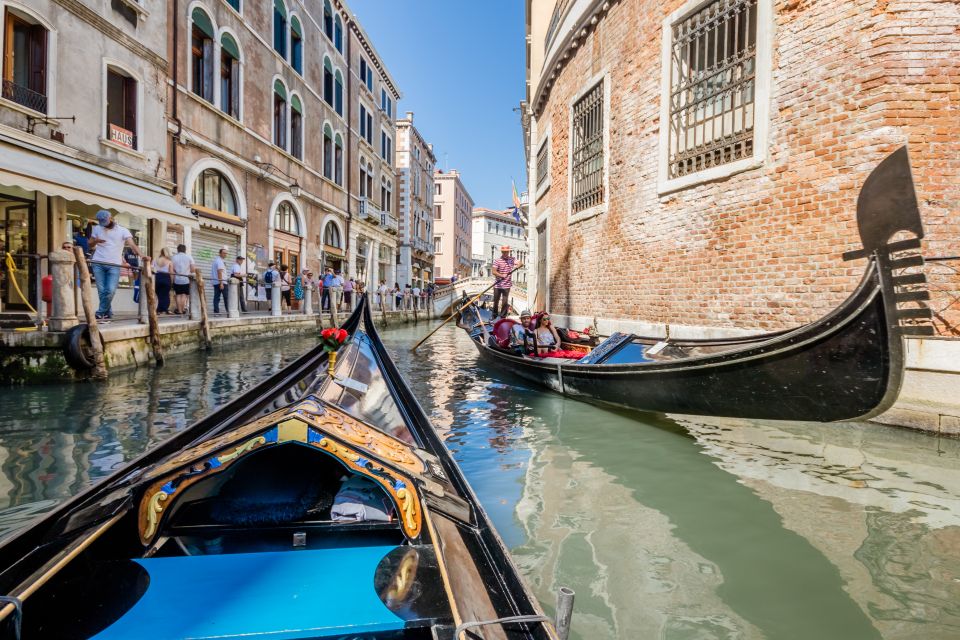
This one prices per person rather than per gondola because you’re sharing with up to four strangers. It works as a sampler: half an hour on the water, a quick taste of the Grand Canal, and at $46 a head it’s a real fraction of the €90 you’d pay alone for a private boat. Our review notes the rating runs lower than the other two precisely because you don’t get the romantic-private-boat fantasy, so book it knowing that.
Why a gondola costs €90 in the first place
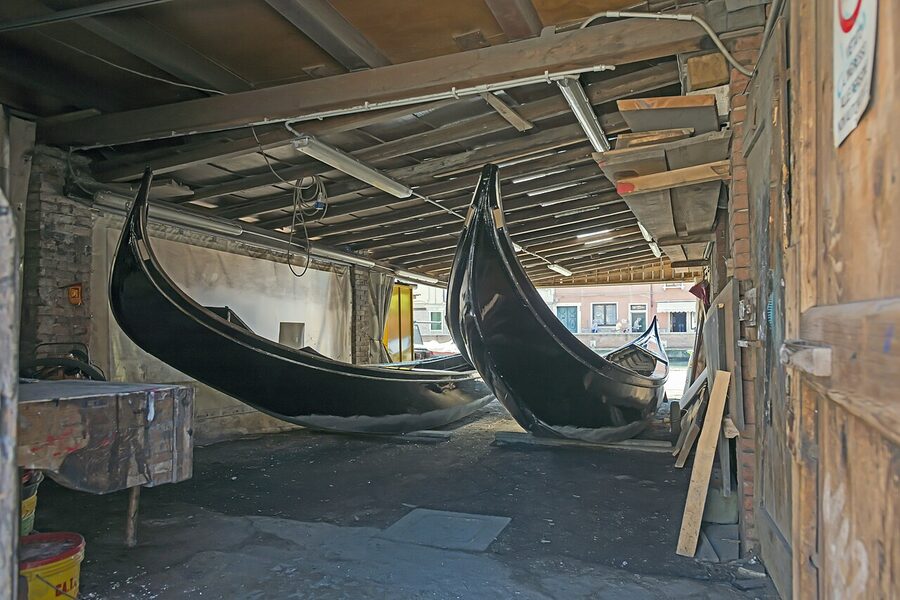
If the price feels steep, it helps to know where it goes. A new gondola is built by hand from eight different woods (oak, fir, cherry, walnut, larch, lime, mahogany, and elm), using somewhere around 280 individual parts. The boats are deliberately asymmetric, with the left side built about 24cm wider than the right so the hull compensates for being rowed by a single oar. A new one runs roughly €45,000, and they’re maintained constantly because they’re working in saltwater every day.
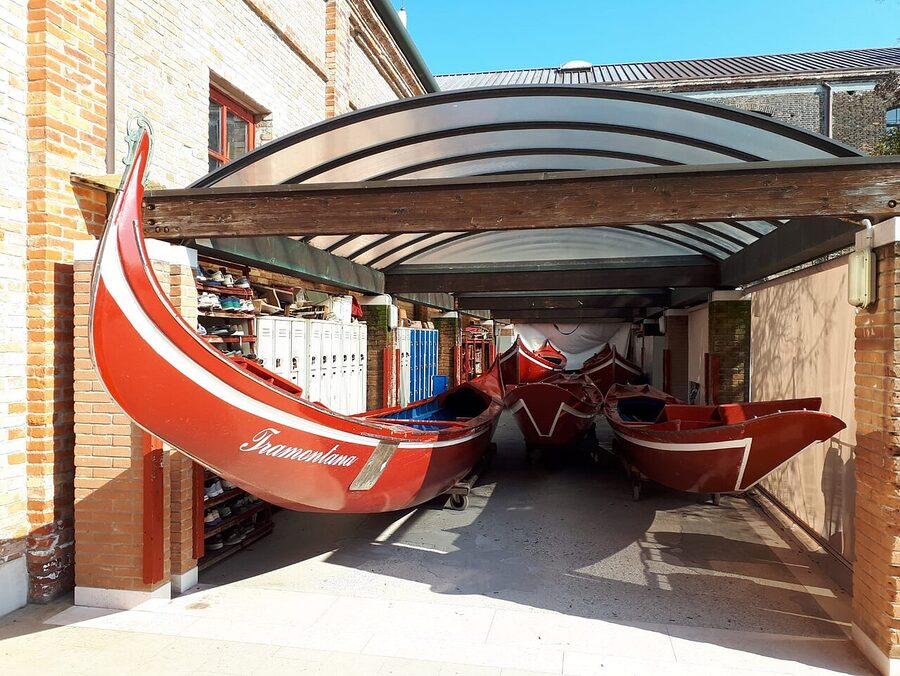
The black colour, by the way, isn’t a stylistic choice. There’s a long-standing local story that in the 16th century, when wealthy Venetian families started competing through ever more elaborate paint jobs and gold trim, the city stepped in and mandated black for everyone. Whether that order is documented or just folklore, the standard stuck. Every working gondola you’ll see today is black, with the only decoration being the silver ferro at the prow and the brass details at the stern.
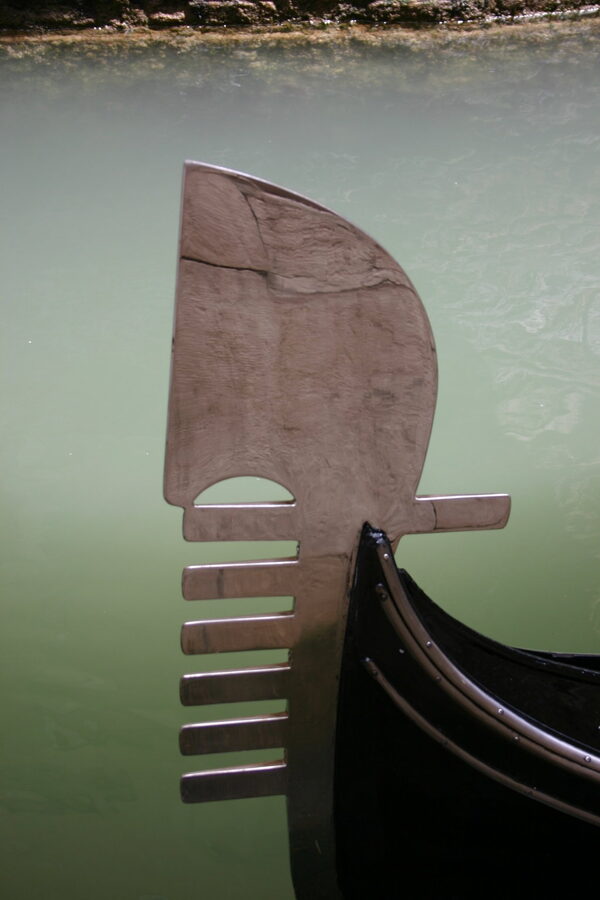
Then there’s the gondolier. Becoming one is harder than people think. There’s a fixed number of licences, currently around 425, that’s been roughly the same for decades. To earn one you have to pass rowing tests, study Venetian history and architecture, learn the city’s waterways the way a London cabbie learns the streets, and now also pass a foreign-language requirement. The first woman gondolier was licensed in 2009. By 2024, there were 14. The whole craft sits at this awkward intersection of rigid tradition and slow modernisation.
A short history that explains the boat
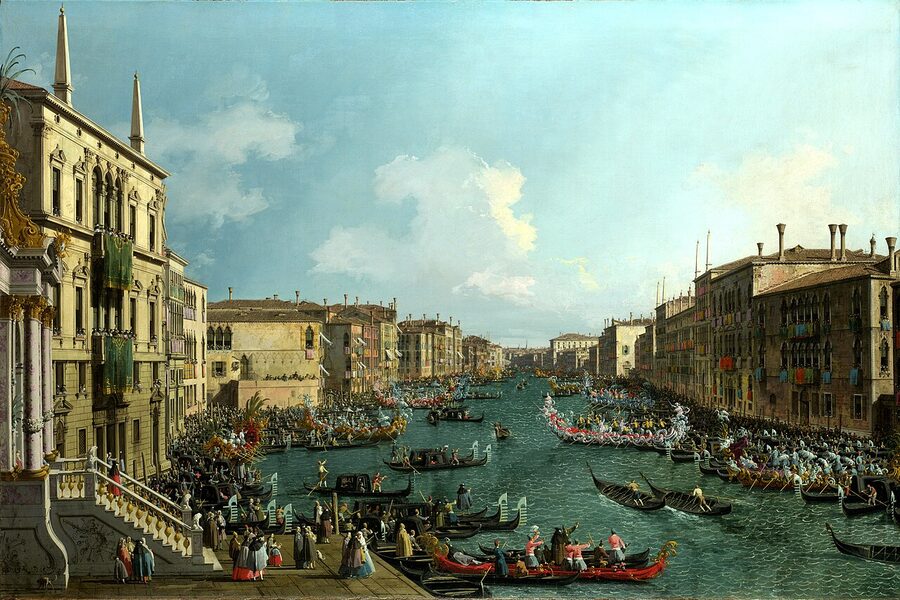
The first written reference to a Venetian gondola dates to 1094. By the 16th century, peak gondola era, there were roughly 10,000 of them on the canals. They weren’t a tourist novelty. They were the equivalent of taxis, used by every social class to get across a city that has almost no level streets and no internal river bridges where the canals are wide. The wealthy commissioned elaborate ones with cabins (the felze) where they could conduct business or affairs out of public view. The rest were utilitarian.
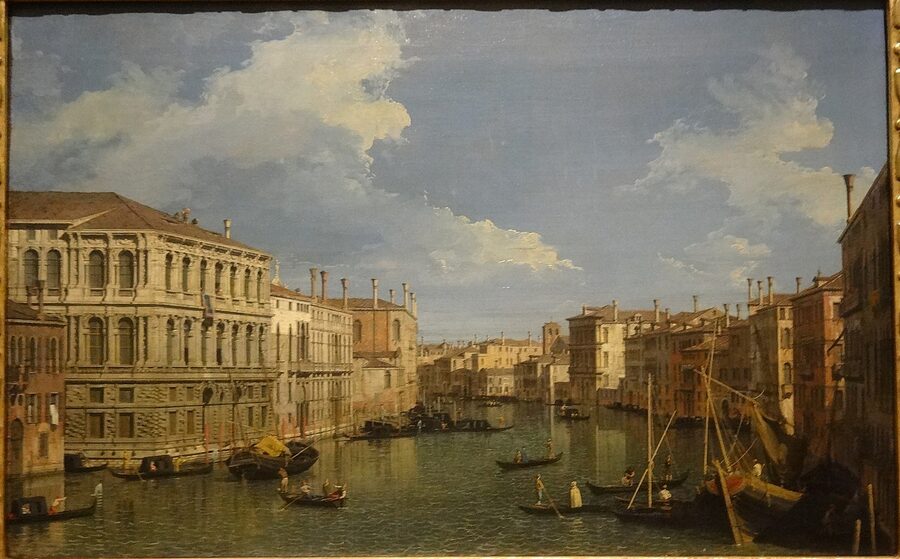
Today there are around 440 working gondolas. The collapse from 10,000 to 440 isn’t really a collapse. It’s the city motorising. Vaporetti, motoscafi, and water taxis took over the day-to-day transport function. What’s left of the gondola is, frankly, the tourist trade. Without paid rides, there’s no professional reason to maintain the craft, the boatyards, or the licensing system. So the €90 is partly a ride and partly subsidising a piece of working heritage that wouldn’t otherwise survive in its current form.
Alternatives if a gondola isn’t your thing
Skipping the gondola is a perfectly good choice. It’s slow, observational, and not for everyone. Three alternatives, in rough order of how much they replace the actual gondola experience.
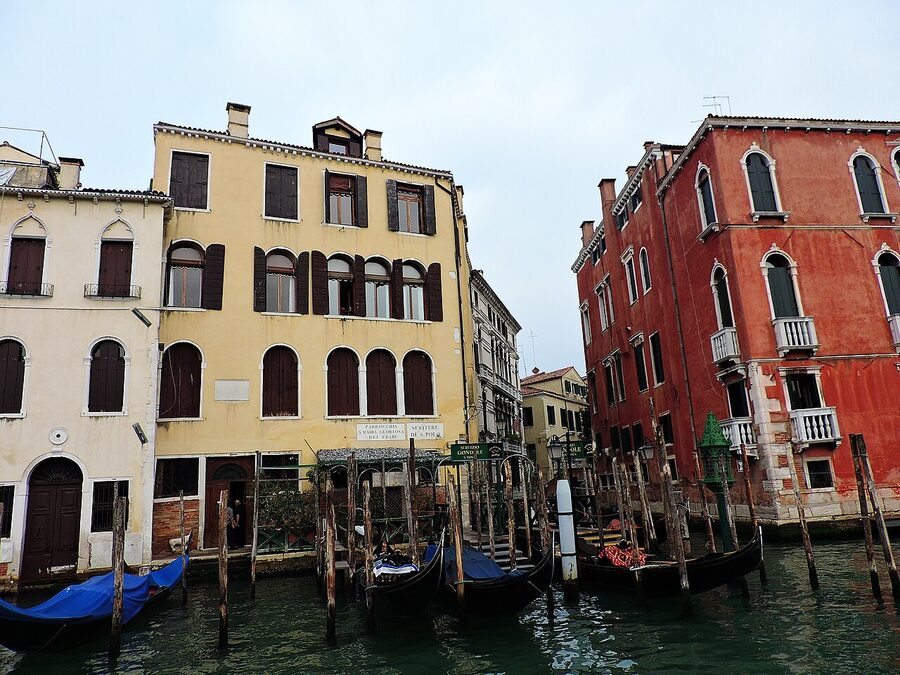
The traghetto. A working gondola with two oarsmen that ferries passengers across the Grand Canal at points where there’s no nearby bridge. Costs around €2. Crossings are 200 metres at most. People sometimes call it a “gondola hack” but that misframes what it is. It’s a transport service Venetians actually use, and treating it as a sightseeing experience puts pressure on a thin local resource. If you need to cross the Grand Canal between Rialto and the Accademia, take it. Don’t queue for it just to say you’ve been on a gondola.
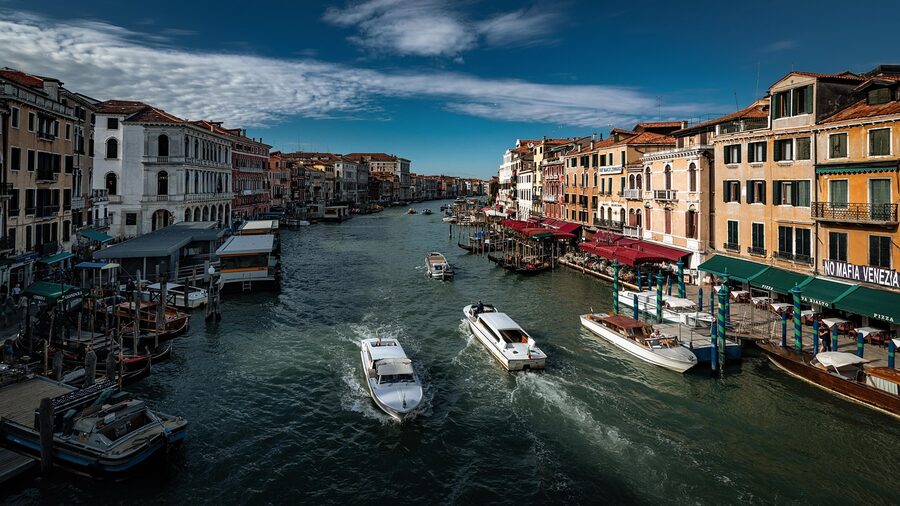
The vaporetto. The public water bus. Buy a 24-hour pass for around €25 and ride Line 1 down the Grand Canal. It’s not romantic, but if you grab a seat at the bow and avoid the rush hour, you’ll see the same palazzi the gondola passes, in a fraction of the time, for one twentieth of the price. The compromise is obvious: engine noise, locals on commute, no atmosphere. As a “see Venice from the water” budget option it’s perfectly fine. Same logic, scaled down, that you’d apply to riding the Florence hop-on hop-off bus or the Rome HOHO loop. Public transport with a view, not a packaged experience.
The water taxi. Genuinely fast, genuinely fun, genuinely expensive. Around €70 to €90 for an airport transfer or a hotel run. Worth it once if you’re already paying for a transfer. It gives you the speed-and-shortcut perspective on Venice that no gondola ever will. Not a gondola alternative emotionally, but it scratches the “Venice from the water” itch in a different way.
Learn to row. A few schools and rowing clubs run two-hour sessions teaching you to row a Venetian boat (not always a gondola, often the lighter batèla). Costs around €120 per person. The right pick if your interest in the gondola is the craft and the technique, not the romance of being rowed.
Practical things people don’t tell you
A few things that matter on the day, in no particular order:
- Bring something to sit on if it’s wet. The seats are leather, the cushions are velvet-ish, and they don’t dry quickly after a morning rain. Most gondolas have a towel, not all do.
- Don’t try to stand up mid-ride. The asymmetric hull is genuinely sensitive. Photographers tend to find this out the hard way leaning for a wider shot.
- Phone on a strap or a wrist tether. The canal is right there. Phones do go in. The gondolier is not getting in after it.
- Don’t bring full-size suitcases. A small tote, a daypack, fine. Anything larger and the centre of gravity becomes a problem.
- Tipping isn’t expected. The €90 is the regulated rate, and gondoliers don’t operate on tip-driven margins the way restaurant staff do. If the ride was great, €5 to €10 is a generous gesture rather than an obligation.
- If you’re the one not enjoying it, the half hour is short enough. Cynical or sceptical mindsets are real, and they tend to hijack the experience. Either commit to enjoying it or pick a different way to see Venice. There’s no neutral middle position on a gondola.
What the gondola actually shows you
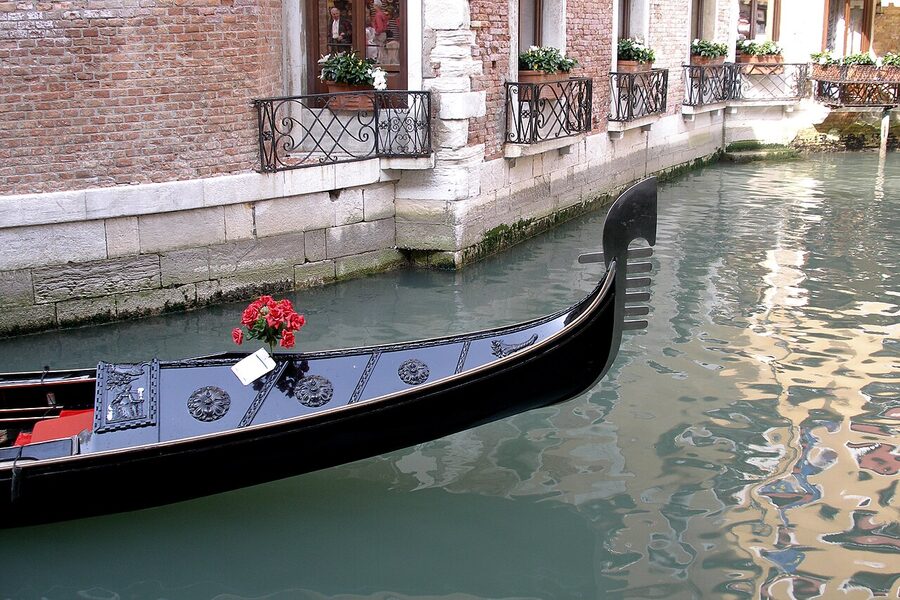
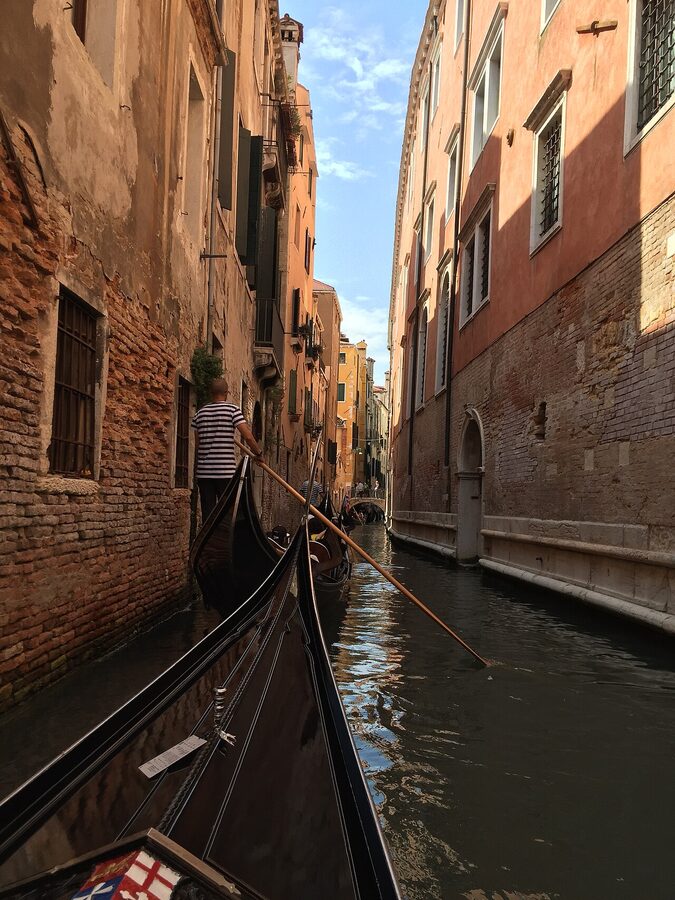
What you’re really paying for, if you’ve gotten the booking right, is a half hour at water level in a city designed to be seen from the water. You sit about 30cm above the canal, three feet from walls that are 500 years old, low enough to pass under bridges that feel like they’re going to clip your hair. You hear oars and footsteps and nothing else. There’s no engine. The gondolier is largely silent unless you ask him something.
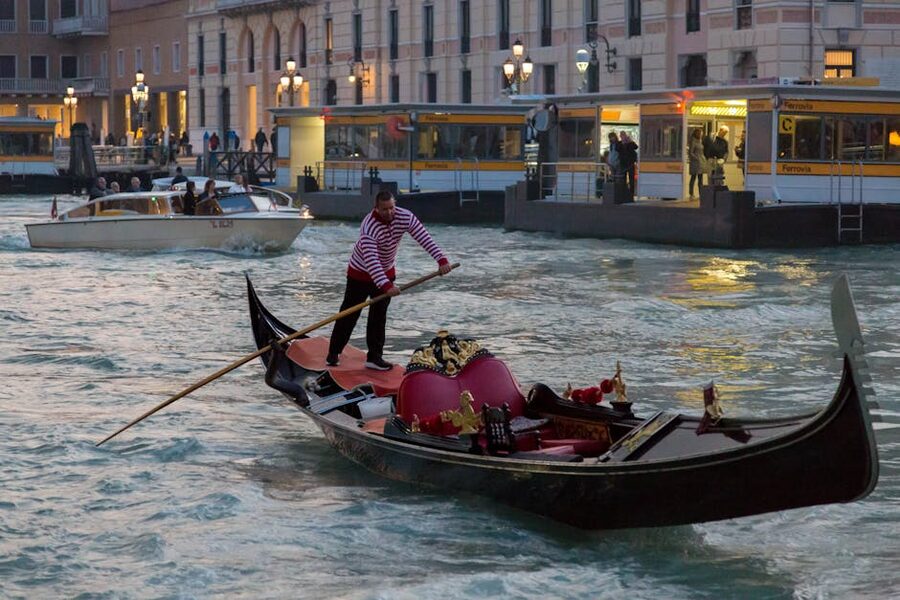
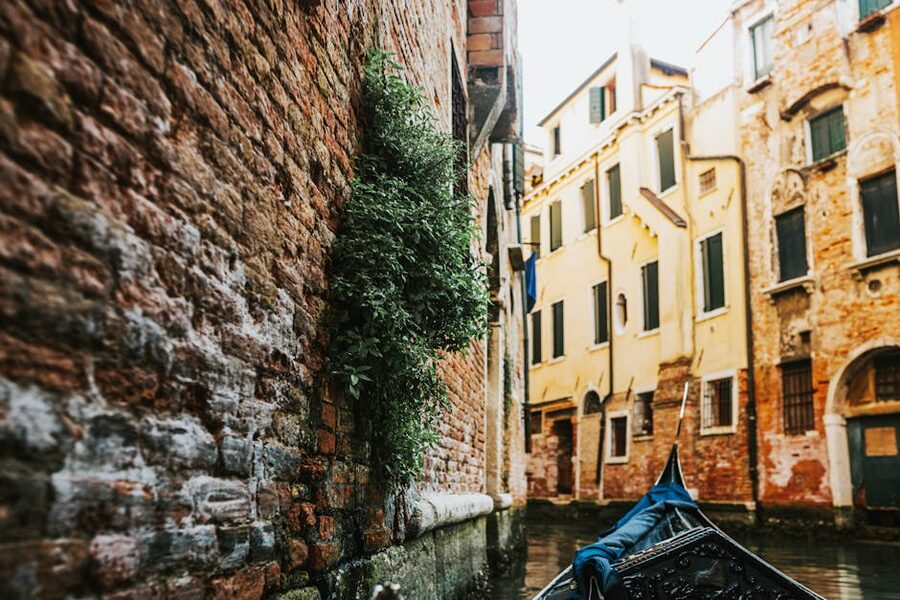
You’ll see canals you can’t reach on foot. You’ll see palace water gates from below, the way visitors arrived in the 18th century, when the Grand Canal was the city’s high street and everything important happened with someone tying up at a step. You’ll cross under the Bridge of Sighs from the prison side, pass shuttered windows where someone’s hanging laundry, drift past back doors that haven’t been used as front doors for 400 years.
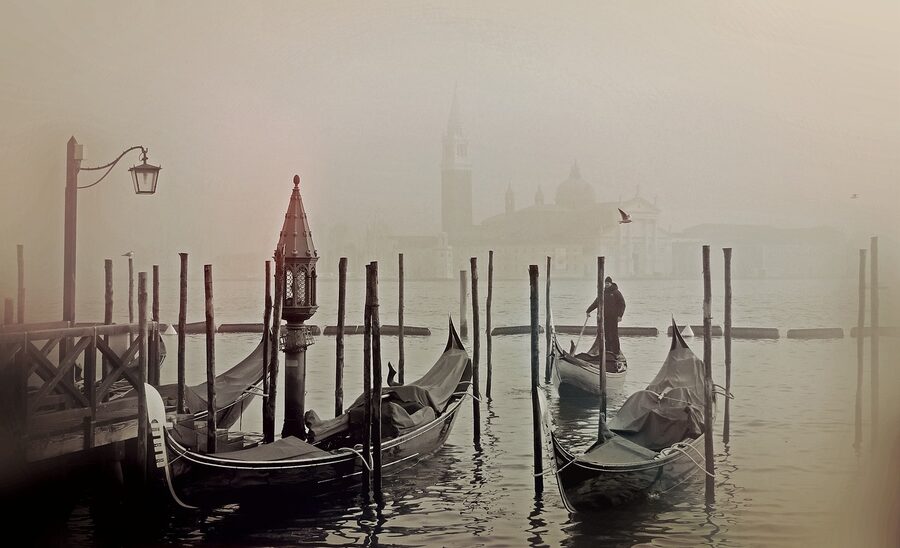
That’s the version that’s worth €90. If your booking puts you on choppy basin water for 25 minutes and a side canal for 5, you’ve paid for the wrong product. If the ratio is the other way around, you’ve gotten exactly what you came for.
Other Venice booking decisions worth getting right
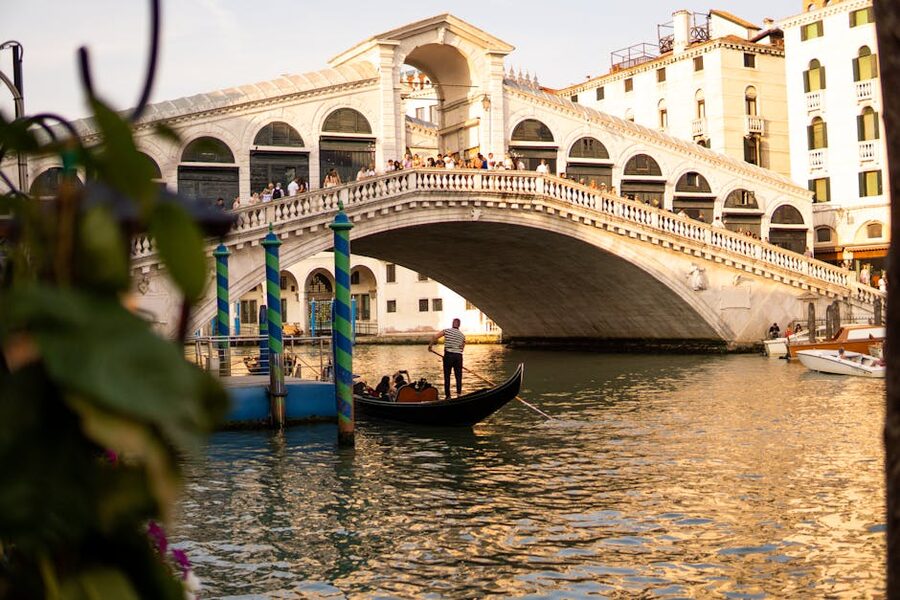
If you’re sketching out a Venice itinerary around the gondola, the same “book the right version, at the right time, at a quieter spot” logic applies to most of the city’s headline experiences. The Doge’s Palace is best done first thing in the morning with a reserved-entry ticket, the same fixed-price-but-experience-varies pattern as the gondola. St. Mark’s Basilica is technically free, but the part that’s worth queueing for (the Pala d’Oro, the upstairs museum, the loggia) costs separately, and the queue is unforgiving after 10am. A Murano-Burano-Torcello boat day is the obvious half-day to pair with a morning gondola ride if you’ve already done the basilica and the palace. And if you want one more cultural shot, La Fenice opera house handles the indoor-cultural side of Venice the way the gondola handles the outdoor-cultural side.
Coming from Florence or Rome? The bridge from those clusters is mostly the food-and-cultural-tour layer. Florence’s food and wine walks are a good warm-up for thinking about Venetian cicchetti, and Rome’s heritage venues like the Pantheon and the Vatican Museums use the same skip-the-line logic that applies to most paid Venice experiences. Book early, go early, pick the quieter version of the same product, and the whole country starts to feel less like a queue.