
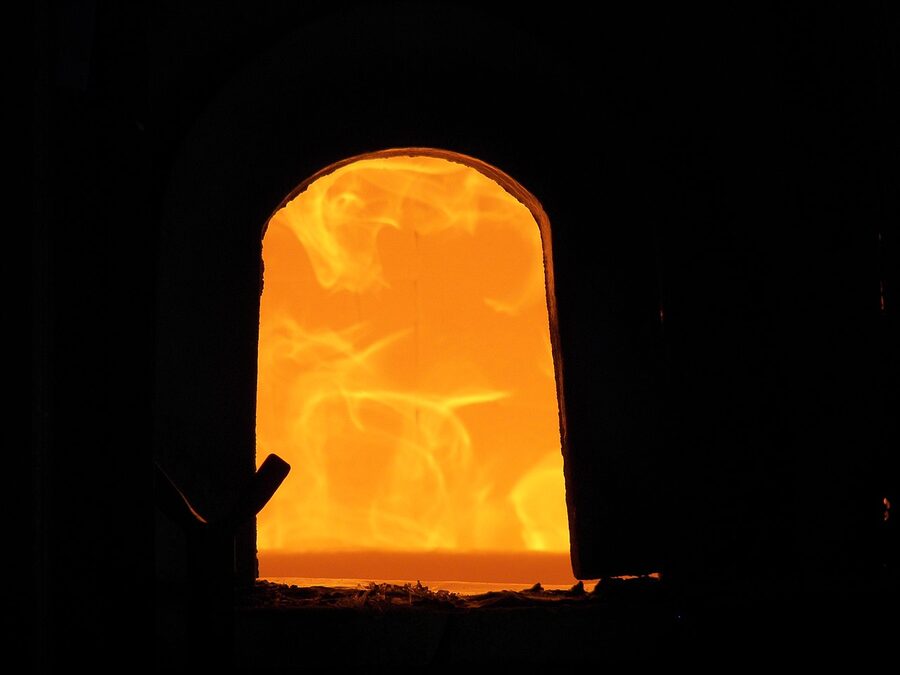
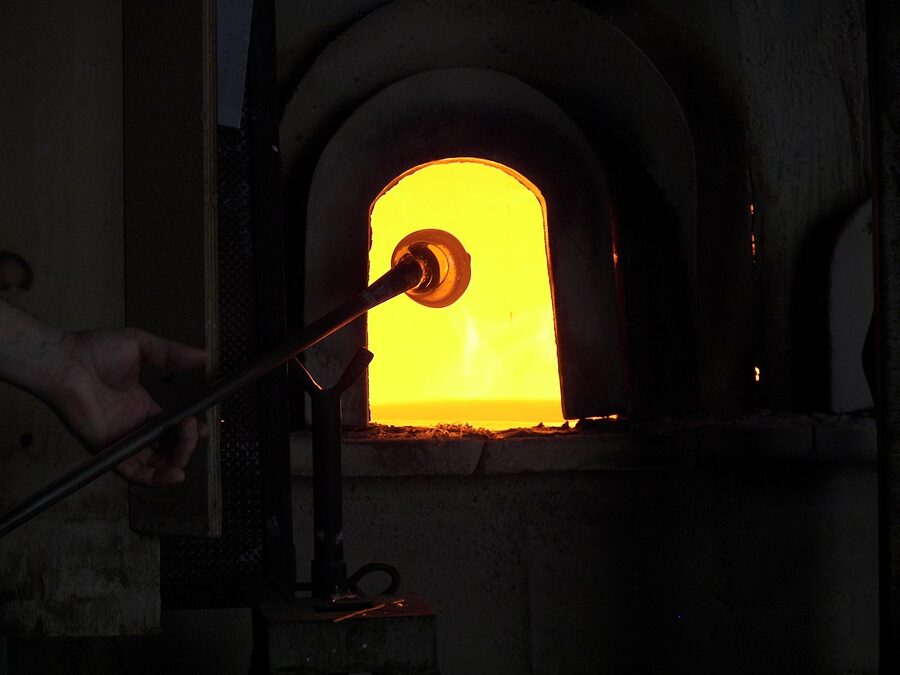
The furnace door swings open and you feel the heat from ten metres away. A wall of dry, orange air. The maestro reaches in with a long iron pipe, draws out a glob of glass that’s the colour of a small sun, and starts to spin. That’s Murano in twenty seconds. It’s the moment most people remember from the islands, and it’s why I’d argue you should treat the boat trip out of Venice as a full-day commitment, not a quick afternoon detour.
In a hurry? Three boat tours that work
- Cheapest pick ($29): Glimpse of Murano, Torcello & Burano (4.5–5.5 hr), the default, lowest-friction way to see all three.
- Best value ($28): Burano, Torcello & Murano with Glassblowing (6 hr), longer day, includes the glass demo without an upcharge.
- Skip-Torcello option ($34): Murano + Burano with Glass Factory, for travellers who only have a half-day and don’t care about the church.
Three islands, three completely different days out
Murano, Burano, and Torcello sit in the northern Venetian lagoon, all reachable in under an hour from Venice proper. Locals lump them together as “le isole“, the islands. Tourists lump them together as a single day trip. They shouldn’t.
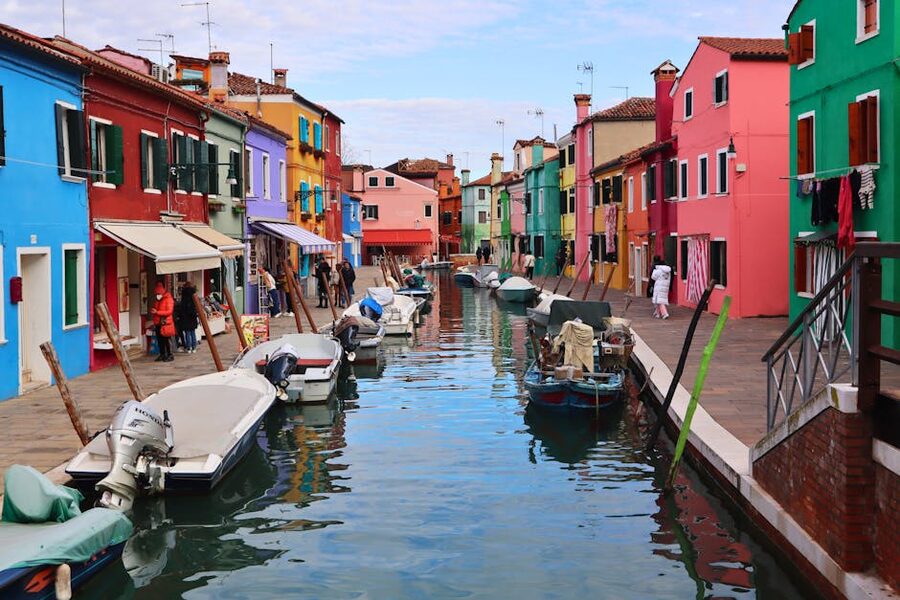
The three are nothing like each other. Murano is the working glass town. Burano is the photogenic fishing village painted in jukebox colours. Torcello is a near-deserted island that contains one of the oldest churches in the lagoon and not much else.
If you only have time for two, do Murano and Burano. If you have a full day and a soft spot for Byzantine mosaics or empty places, add Torcello. If you have an itch to do this without a guide, the public ferry covers all three on one ticket. More on that below. The “single landmark on its own island” pattern is one Italy does a lot. See what we wrote about Castel Sant’Angelo in Rome, which has a similar bridge-and-river-and-fortress geometry. The off-the-mainland-by-short-ferry rhythm reads almost identically to the Sainte-Marguerite ferry from Cannes, where you also pay for a 15-minute crossing to land somewhere that feels surprisingly far from the city.
How the day actually goes
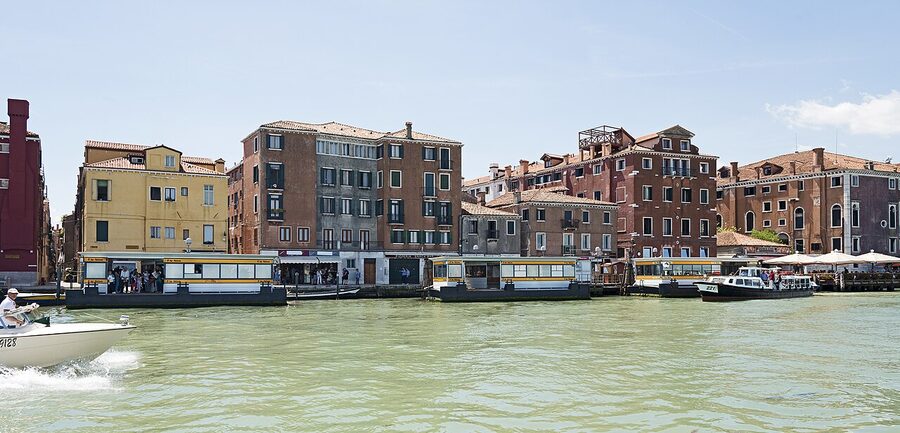
Whether you book a guided boat tour or do it yourself with a vaporetto pass, the route is the same. The same multi-stop logic shows up on the Mallorca catamaran cruises, where one ticket covers a string of coves rather than one big landing. Boats leave from Fondamente Nove on the northern edge of Venice. From there it’s about 10 minutes to Murano, another 30 to Burano, and another 5 to Torcello. The whole loop, with stops, is roughly 5 to 7 hours depending on how long you linger.
The order matters more than people think. The standard guidebook advice is Murano first, then Burano, then Torcello. I’d flip it. Go to Burano first. Get there before the second tour boat lands and you’ll have empty alleys for photos. Stop at Torcello on the way back if you’re including it. Save Murano for last, because by then the glass demos are running on rotation and you can drop in without queueing.
Vaporetto Line 12 (the DIY option)
If you’d rather skip the guided tour, you want ACTV Line 12. It departs from Fondamente Nove and runs out to Murano Faro, Mazzorbo, Torcello, Burano, and back. Roughly every 30 minutes during the day, less often early morning and after dark. If you know how Amsterdam’s canal hop-on-hop-off boats work, the mental model transfers cleanly to Venice.
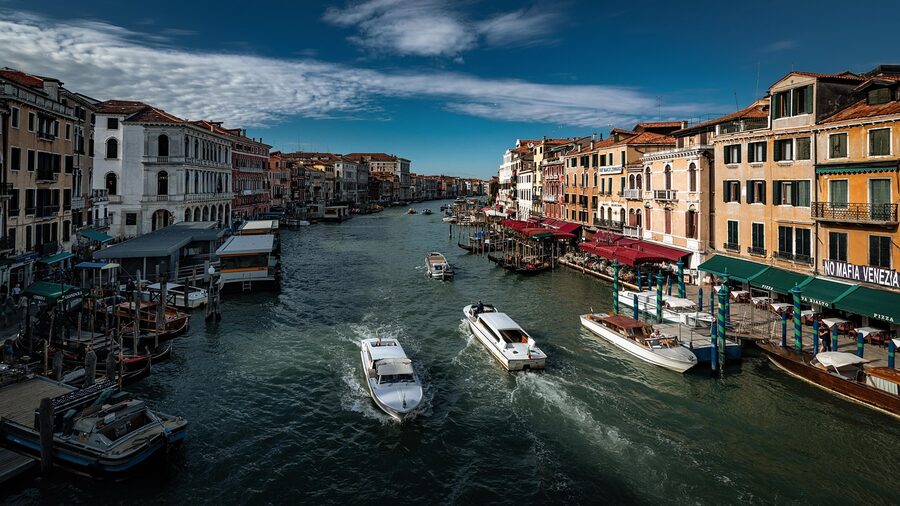
Tickets aren’t cheap. A single one-way fare is €9.50 (yes, really) and only valid for 75 minutes, so it’s useless for island-hopping. You want a day pass. ACTV passes, as of 2026:
- 1-day: €25
- 2-day: €35
- 3-day: €45
The day pass pays for itself the second you board the second boat. The transport-as-experience trade-off is the same one you’ll weigh on the Florence hop-on hop-off bus or the Rome version: the ticket gets you the transport, but the experience is what you do with the time it gives you back.
Under 30? Look at the Rolling Venice card. For €6 you get a discounted 3-day transit pass plus a long list of museum reductions (€12 off the Doge’s Palace alone; see our guide to seeing Doge’s Palace without the line for what to do with that). If you’re already going to do two or three Venice attractions, the maths is easy.
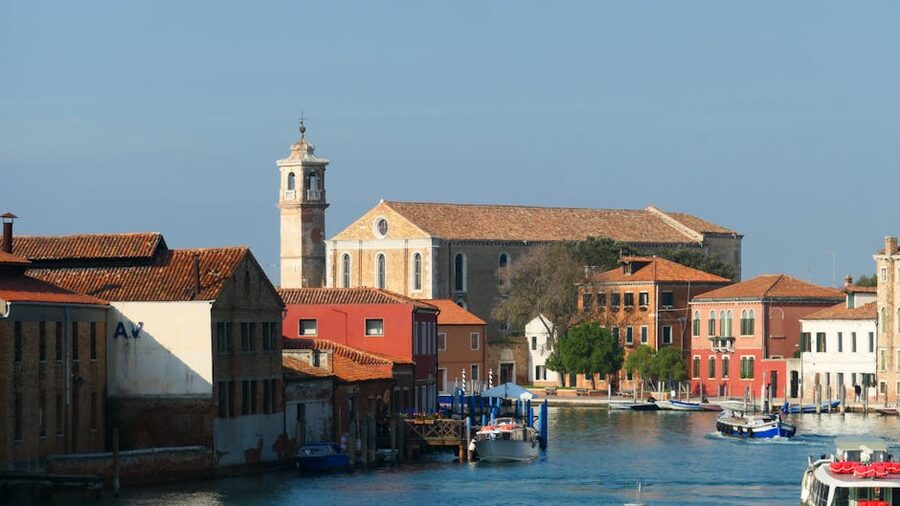
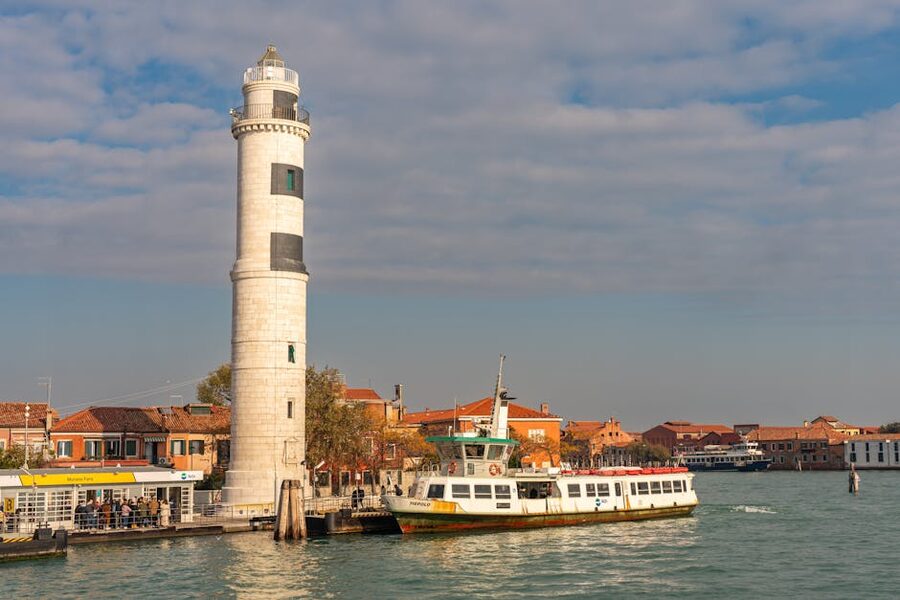
Murano: glass and not much else
Murano is what happens when an entire city’s industry gets exiled to one island. In 1291 the Venetian Republic ordered every glass furnace in the city moved here, supposedly to reduce fire risk in Venice itself, but really to keep the techniques away from spies. Seven centuries later the descendants of those furnace workers still run the trade.
The glass demo
Most of the bigger workshops run live demonstrations. Some are free if you walk in off the street and look like you might buy something. The proper sit-down demos run €5 to €10 a head and last 15 to 20 minutes. The maestro pulls a blob of molten glass, blows it into a vase, then turns the same lump into a galloping horse in about 90 seconds. It’s one of those crafts that looks impossible until you see it done, and then it still looks impossible.
Two warnings. First, the freebie demos are usually a 5-minute teaser designed to soften you up for the showroom upstairs, where a small espresso cup might be €120 and the salesperson will ask for your hotel name within the first sentence. Second, “Murano glass” is a protected name in Italy, but only if it carries the official “Vetro Artistico Murano” trademark sticker. Anything else might have been made in Murano, or it might have come from a factory in eastern Europe. If you’re spending real money, ask for the trademark.
Beyond the furnaces
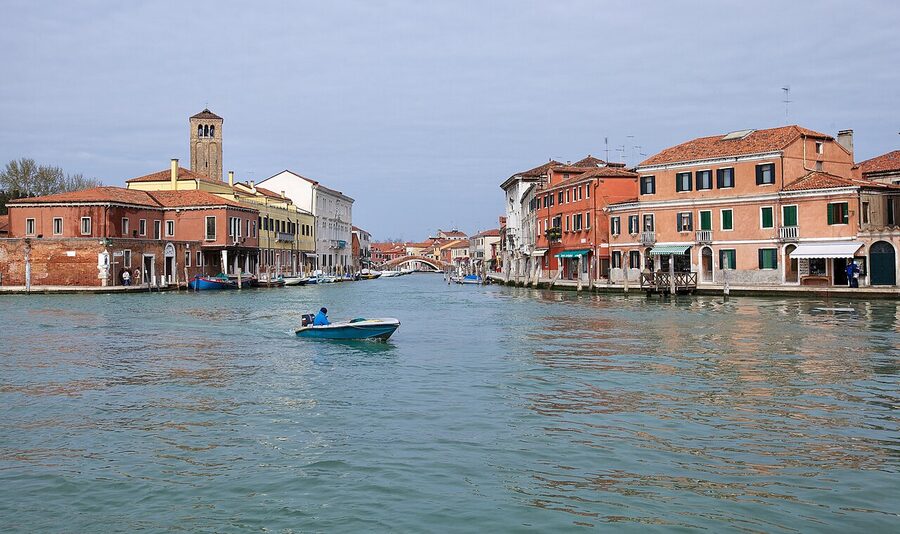
The truth is that once you’ve seen one demo and walked one canal, Murano is a smaller, less photogenic Venice. There’s a Murano Glass Museum in the old bishop’s palace that’s worth an hour if you’re a craft nerd (€10, closed Tuesdays). The Basilica dei Santi Maria e Donato has a 12th-century mosaic floor that almost nobody visits and is free to enter. Beyond that, an hour and a half on Murano is plenty.
Burano: the colour, the lace, the leaning tower
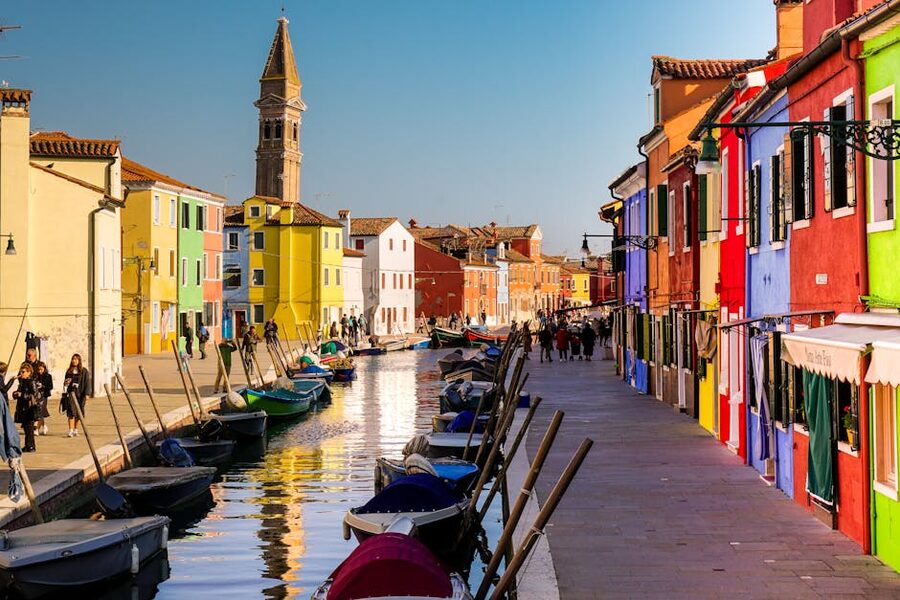
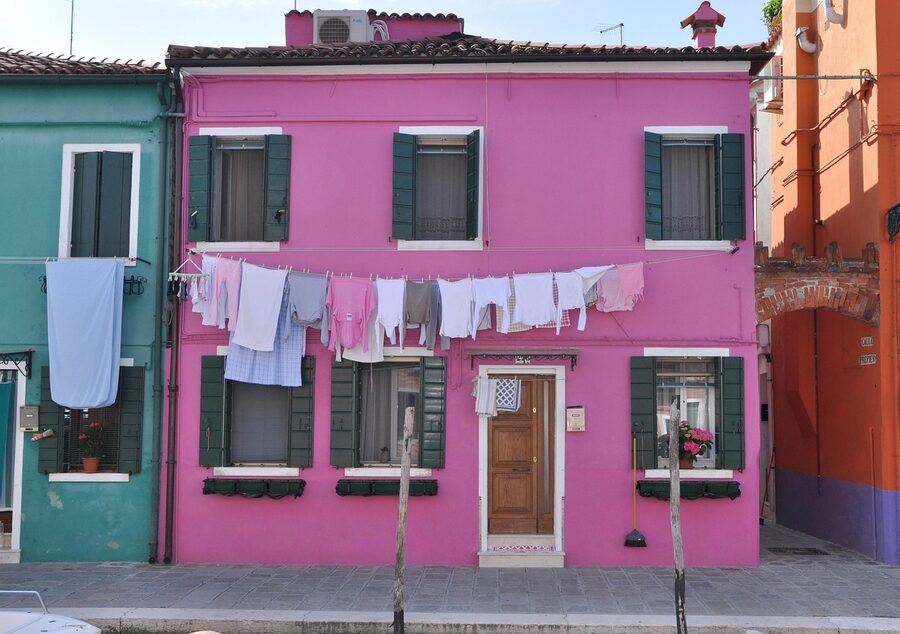
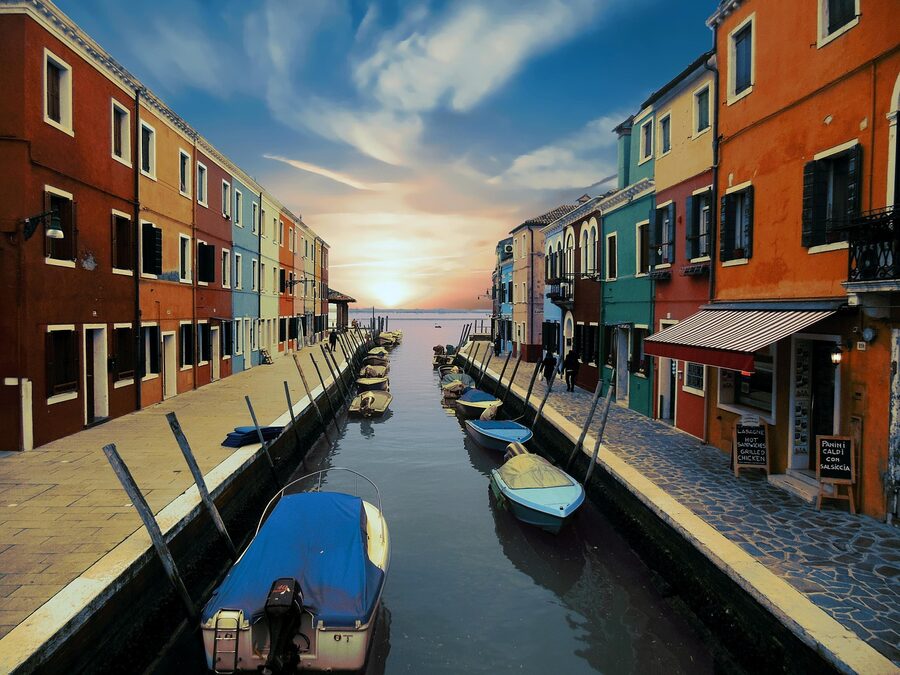
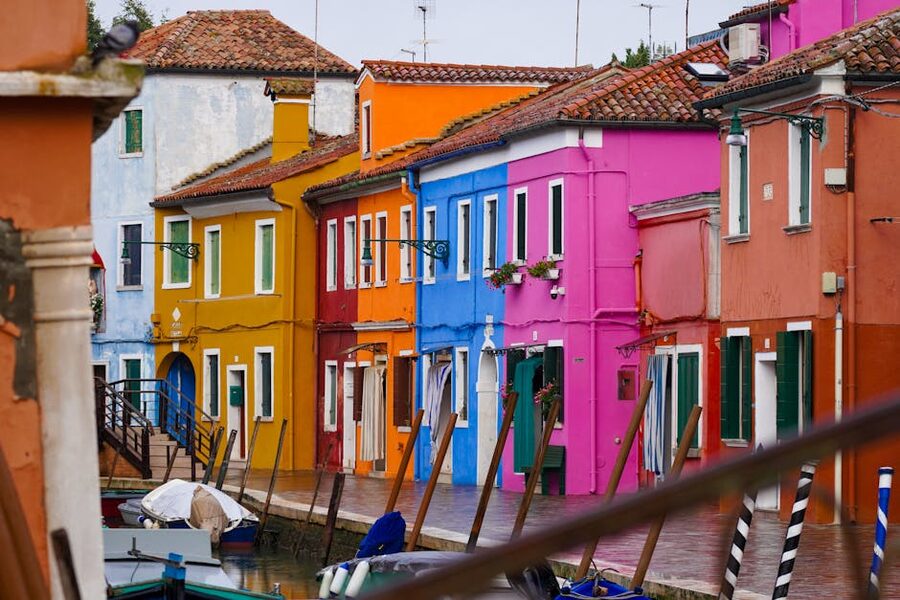
Burano is a 35-minute boat ride from Venice and looks like a child’s drawing of a fishing village, except real. The boat-out-to-a-bright-painted-island feeling is the same one you get on the Ibiza beach cruise, where the colour-saturated cove villages do most of the photographic work for you. Every house is painted a different colour. There’s a story that the local fishermen needed to spot their homes through the lagoon fog, so each family chose a different shade. The truth is more bureaucratic. The colour scheme is now regulated by the local council, and if you want to repaint your house you write to the town hall and they tell you which palette you’re allowed.
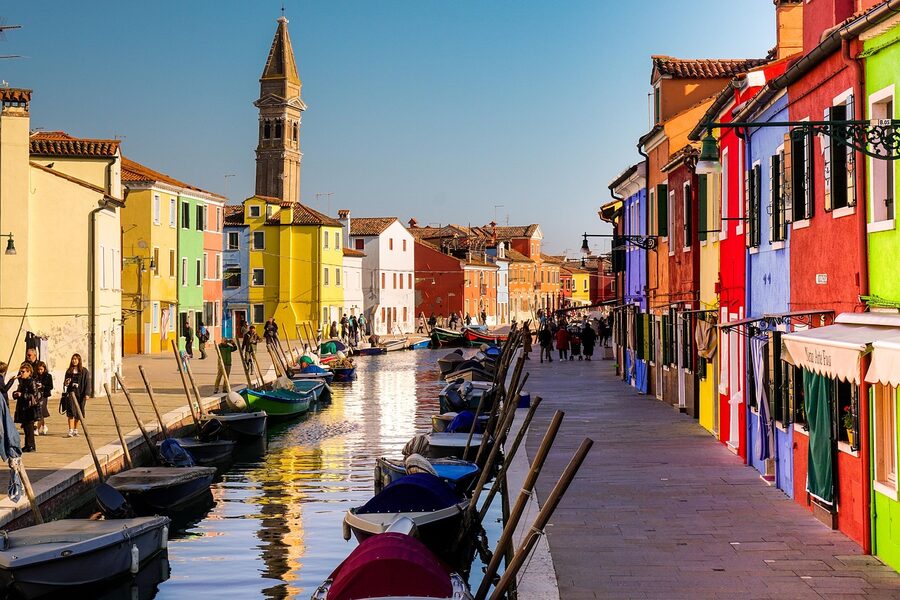
Photograph it before 10am
This is the most important sentence in the article: get to Burano on the first or second boat of the morning, walk the perimeter while the light is sideways, and you’ll have it close to empty. By 11am there are tour groups in matching lanyards. By noon the houses are washed-out in flat overhead light and the canal-edge benches are full.
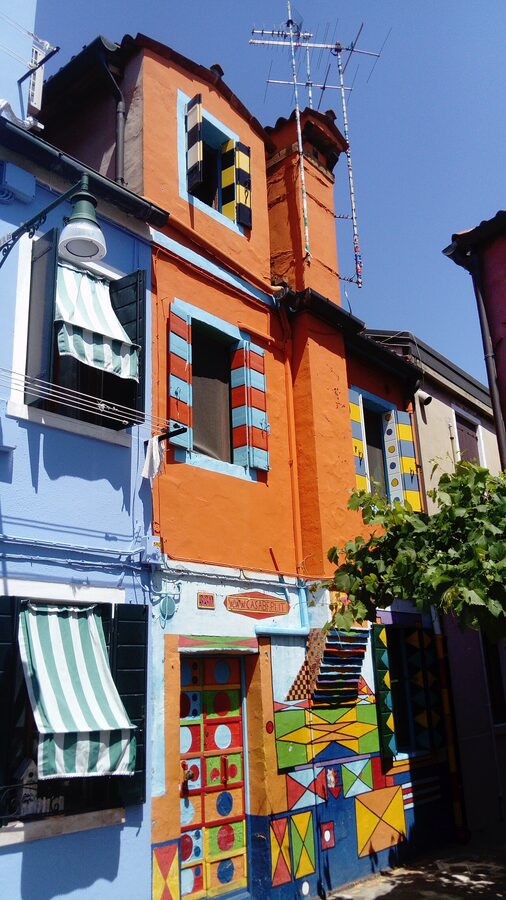
If you only have an hour, walk the loop counter-clockwise from the boat stop. You’ll pass Casa di Bepi Suà, a single house painted in geometric blocks of every colour, the work of a former local resident named Giuseppe “Bepi” Toselli, who died in 2002. The current owners have kept the design as a tribute and there’s almost always a small crowd around it.
The leaning tower
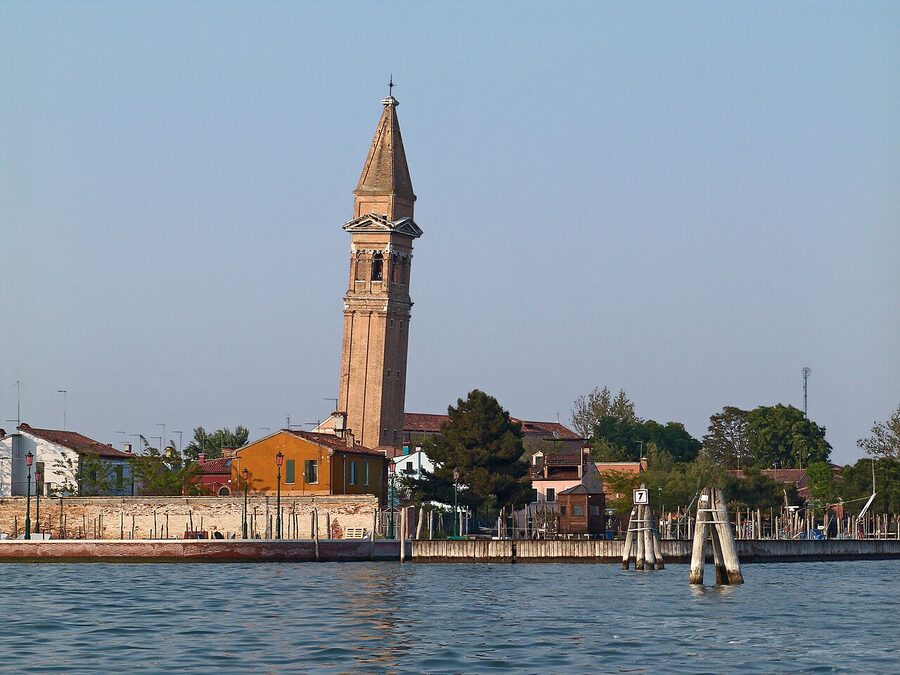
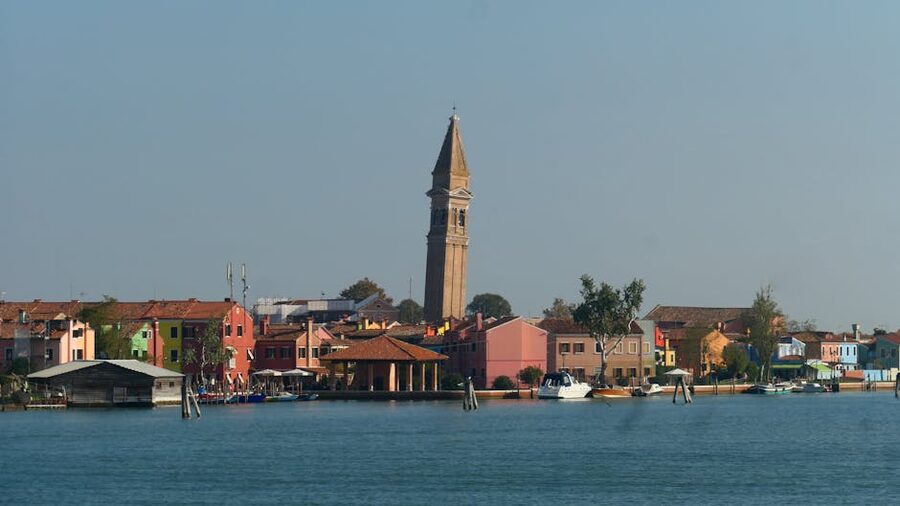
The bell tower of the Church of San Martino tilts almost two metres off vertical. The cause is the soft lagoon clay underneath, the same problem that gives Venice’s Campanile in St Mark’s Square its own slight lean (and once collapsed it entirely in 1902). San Martino’s tower is free to look at and worth a 30-second detour. The church itself is worth stepping into for the small Tiepolo crucifixion above the third altar on the left.
Lace and lunch
Burano was, before tourism, a lace-making town. The needlepoint technique called punto in aria, “stitch in the air”, was developed here in the 16th century and was a status symbol across Renaissance Europe. The Lace Museum on Piazza Galuppi (€5, closed Mondays) has examples that are genuinely jaw-dropping if you know what you’re looking at. If you don’t, skip it. Most of the “Burano lace” sold in the shops along the main drag is now made in China; the real stuff is rare and expensive (a small handkerchief easily €100+).
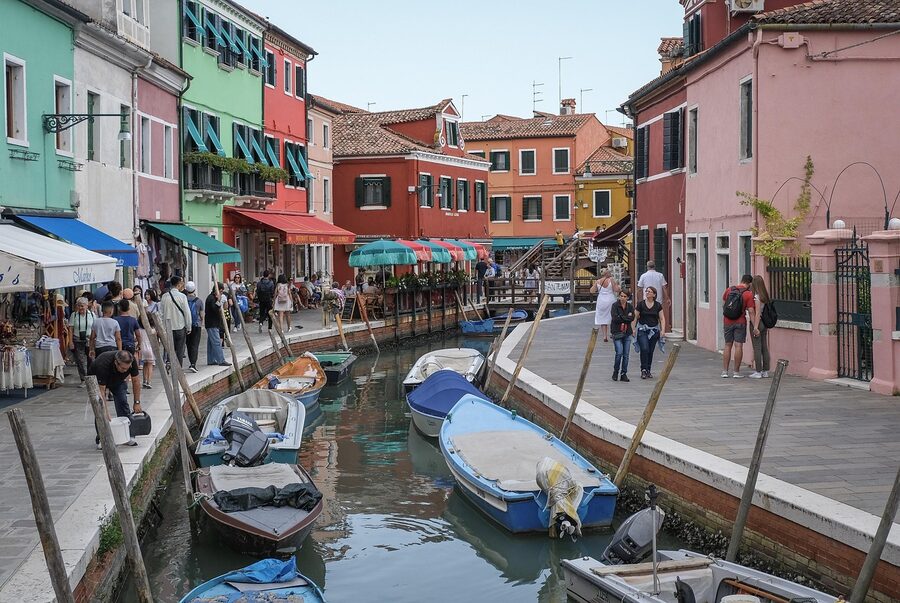
For lunch, the place to know is Trattoria al Gatto Nero, where Anthony Bourdain shot a long sequence for Parts Unknown. Their risotto with goby (a small lagoon fish) is properly excellent and they don’t open until 11am. Book ahead, they’re full on weekends. If you didn’t book, try Riva Rosa or Da Romano. Avoid the places with photo menus on the canal-edge tables; they’re priced for one-time visitors and the food is forgettable. If you’ve fallen for the artisan-maker side of the islands, the same instinct gets satisfied on the mainland by the small workshop visits in Florence’s food and wine tours and the producer-led tastings on the Chianti wine routes.
Torcello: the empty island
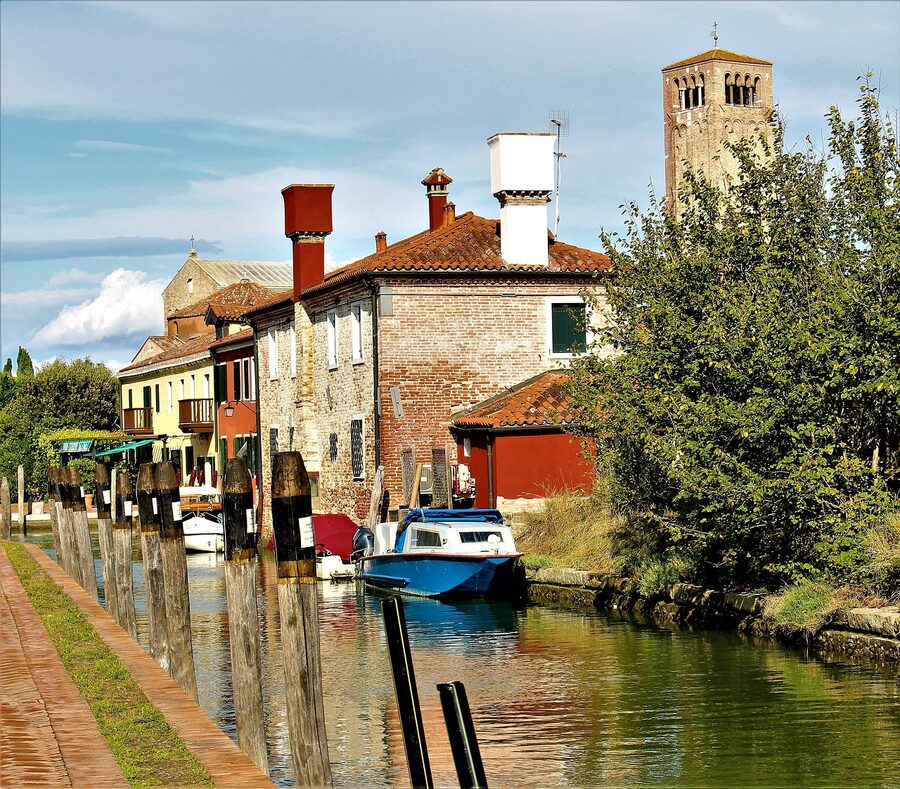
Torcello is the strangest stop on the loop. From the boat platform it’s a 10-minute walk along a single canal-side path with almost no buildings on either side. Then you arrive at a small piazza with two churches, a museum, a couple of restaurants, and basically nothing else.
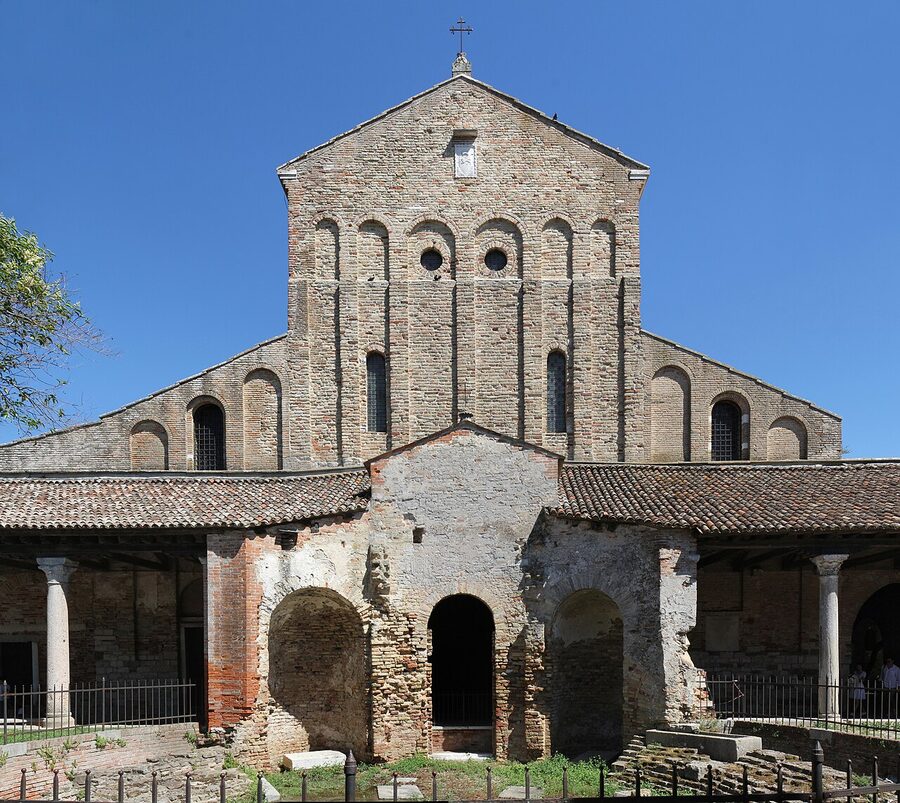
This was, for about 700 years, the most important island in the lagoon. Founded in the 5th century by mainlanders fleeing the Lombards, Torcello had 20,000 residents and 12 parish churches by the year 1000. Then the lagoon silted up around it, the harbour became a malarial swamp, and most of the population moved to what would become Venice. Today the official population is around 12 people. Twelve.
Santa Maria Assunta
The cathedral is the reason most people make the 10-minute detour. Entry is €5 (€8 combined with the campanile climb), and inside you’re standing in a building that’s been continuously in use since 639 AD. The basilica-plus-climb pricing logic is the same one you’ll see at the Florence Duomo and at St Peter’s in Rome, free or cheap to enter the church, paid extra for the upper level.
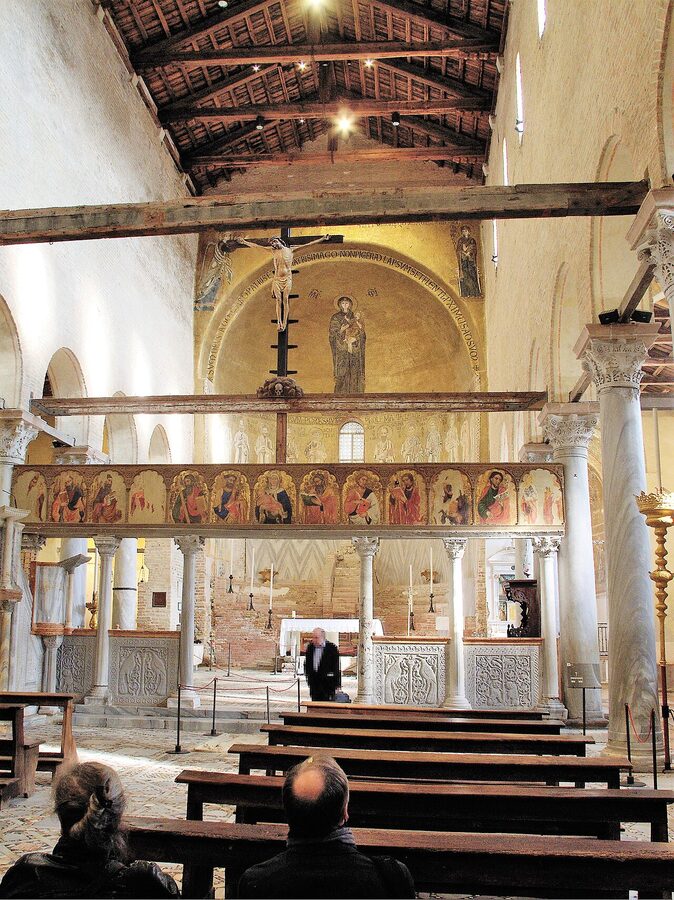
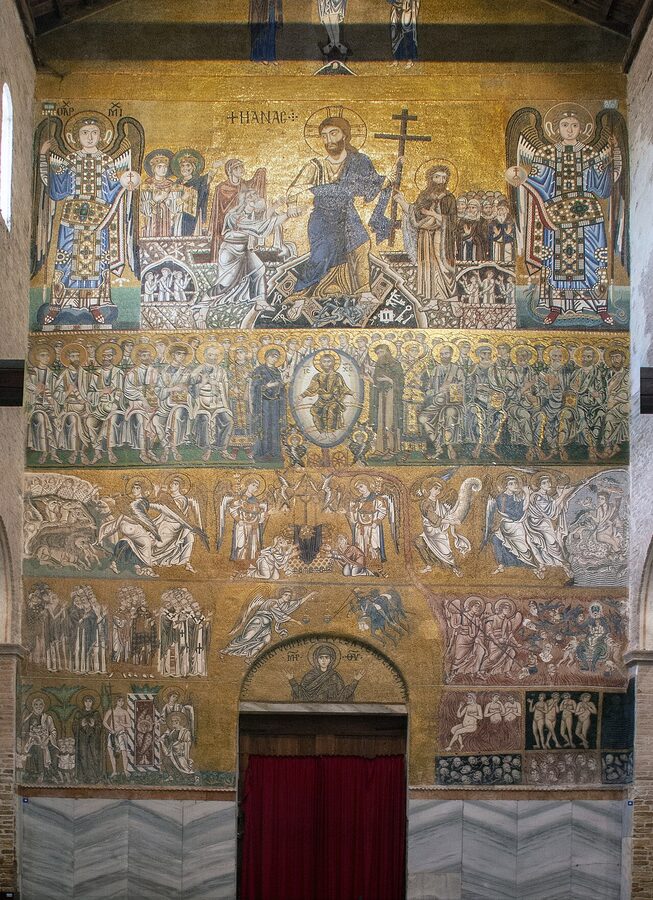
Walk in and turn around. The entire west wall is covered by a 12th-century mosaic of the Last Judgment. It’s one of the most complete medieval mosaics in Italy and you’ve probably never seen a photo of it, because Torcello is too far from the cruise-ship hordes for the image to circulate. The damned are in the bottom registers, getting devoured by serpents and demons; the saved are above, calmly arrayed in lines. There are no angels with floppy hair. The faces are severe, Eastern, almost Byzantine icons rather than Italian Renaissance figures. Hemingway loved this place and used it in Across the River and Into the Trees; the comparison most people miss is to Ravenna.
Photography is allowed without flash. There are no audio guides; the printed guidebook at the entrance for €2 is genuinely good, and the explanatory panels in the church are bilingual.
Climb the campanile if your knees are willing. It’s about 50 metres tall, accessed by a brick ramp rather than stairs (Torcello’s Doge could ride a horse to the top, supposedly). The view at the top is the entire northern lagoon, with Burano off to one side and the snow-capped Dolomites visible on a clear winter morning.
Should you skip Torcello?
Yes, if all you want is photos for Instagram. There is nothing to photograph except the church and the canal. The houses aren’t painted. There’s no shopping. There are seven restaurants total on the island and most of them are designed for tour groups. Once the church closes, there’s nothing.
No, if you care about old religious art, history, or just being in a quiet place for an hour. The 1.5 hours I’d allot for Torcello is the most peaceful stretch of the day, and the contrast with the Burano crowds is what makes the whole trip stick in memory. Skipping it is what most rushed day-trippers do, which is exactly why I’d recommend going.
Should you take a tour or do it yourself?
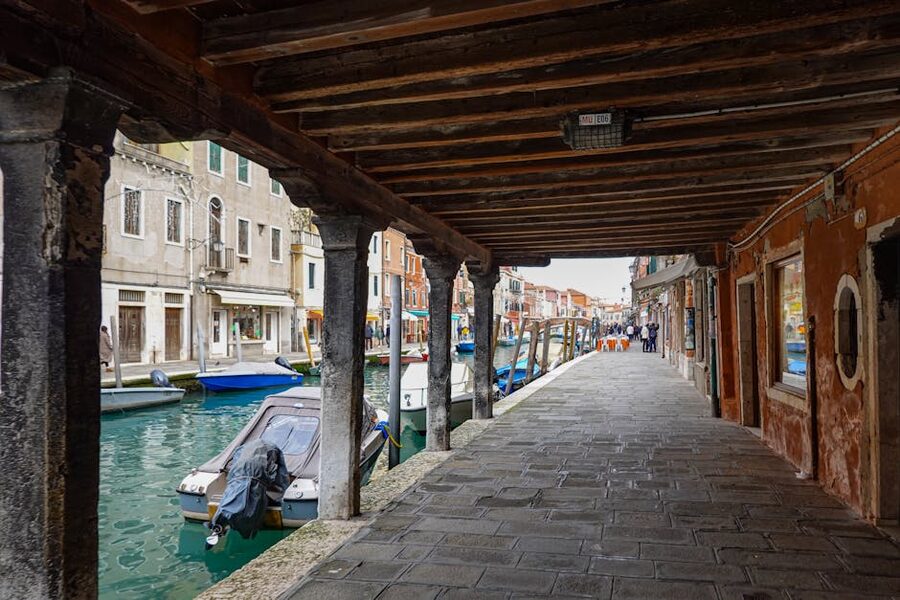
You don’t need a tour to do this trip. The vaporetto goes to all three islands, the Line 12 timetable is posted at every stop, and the islands are small enough that you can’t really get lost. The same DIY-versus-guided maths applies to Seine river cruises in Paris, where the public boat option is real but most travellers still pick the narrated version for the context. If you’re confident with public transport in a foreign country, do it yourself. You’ll save a few euros and you’ll set your own pace.
The case for the guided boat tour is different. It’s faster: a private boat shaves the inter-island transit time roughly in half, and you don’t queue for the vaporetto at peak times (which can mean missing the boat you wanted and waiting 30 minutes). You also get a guide who explains what you’re looking at, which is non-trivial on Murano if you’ve never seen glassblowing before, and on Torcello if you don’t read Italian art history. The narrated-versus-self-guided trade-off is the same one we wrote up for the Rotterdam harbour cruise, where the running commentary is half the value. The guided trips also typically include the glass demo as part of the price, where the DIY route means a separate €5 to €10 ticket.
The pricing is closer than you’d expect. A 1-day ACTV pass plus a €7 glass demo plus the €5 Torcello cathedral comes to around €37 a head. The cheapest guided tour, with all three included and a guide, is €29. The break-even point is whether you’d rather spend the difference on time savings and a context guide, or on the freedom to skip what bores you. The Italian state-museum ticket logic, timed entries, separate “skip the line” upcharges, third-party resellers competing with the official site, is identical to what you’ll hit at the Vatican Museums or the Borghese Gallery, so if you’ve booked one of those you already understand the playbook.
The same trade-off applies to a lot of Venice’s day-trip products, see what we wrote about Venice gondola rides and where the price actually goes for a related look at how the boat trade is structured here.
Three boat tours worth booking
If you’ve decided to go guided, these are the three I’d actually recommend. All three depart from somewhere in central Venice (St Mark’s or Fondamente Nove area), include the boat transfer, and feature a Murano glassblowing stop. They differ on duration, whether Torcello is included, and how much free time you get on each island.
1. Glimpse of Murano, Torcello & Burano: $29
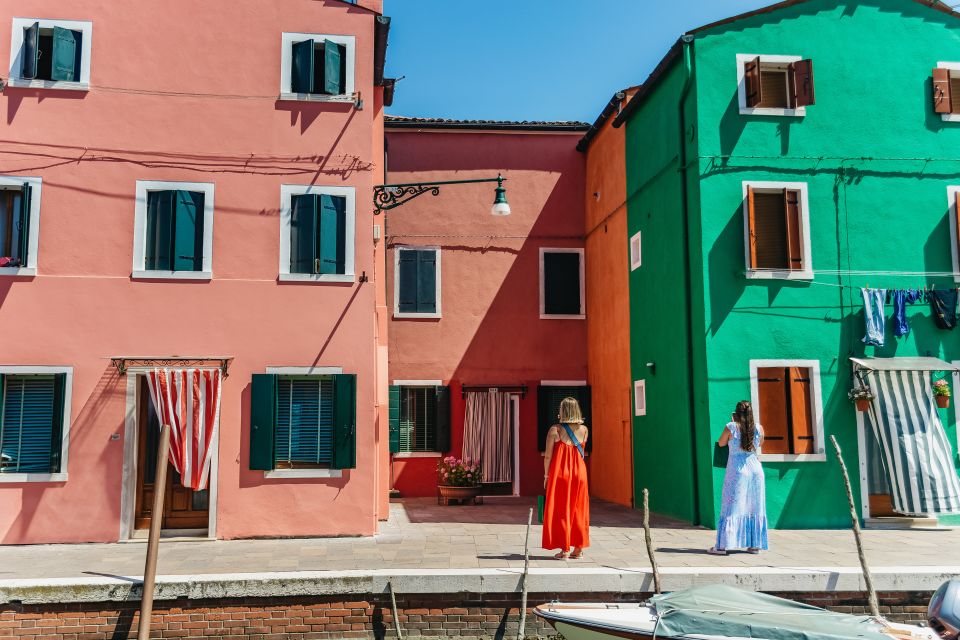
This is the right pick if you want to see all three islands and you’re not interested in lingering on any of them. The 4.5-hour duration means about 45 to 60 minutes on each island, which is enough to walk the main streets and get photos but not enough to sit down for a proper meal. Our full review covers exactly how the timing breaks down between Murano, Torcello, and Burano on this one.
2. Burano, Torcello & Murano with Glassblowing: $28
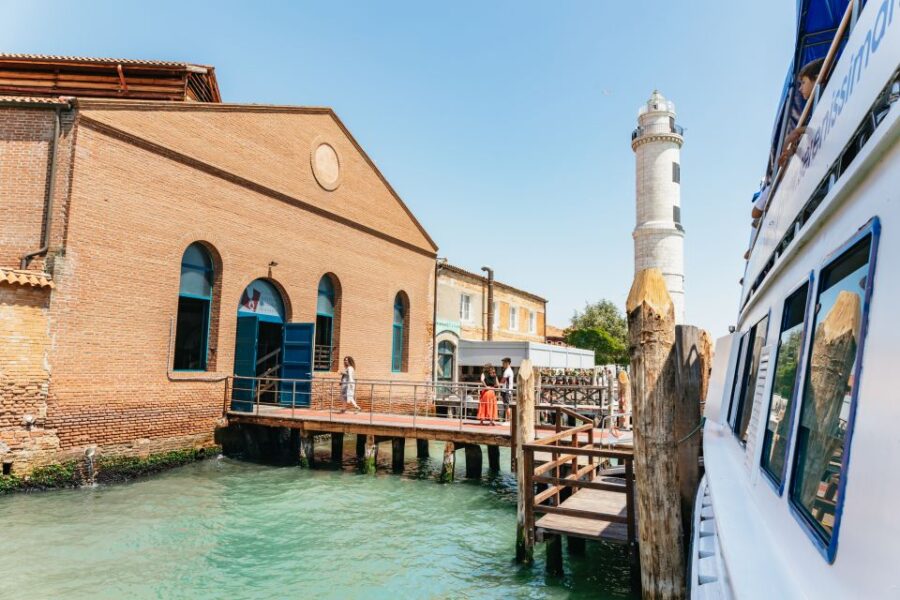
Pick this one if you want extra time at each island and you’d rather not pay separately for the glass demo. The longer day means you can actually have lunch on Burano without the boat leaving without you. The pacing is the most relaxed of the three on this list, and the price is the same as the half-day option which makes the maths obvious.
3. Murano and Burano with Glass Factory: $34
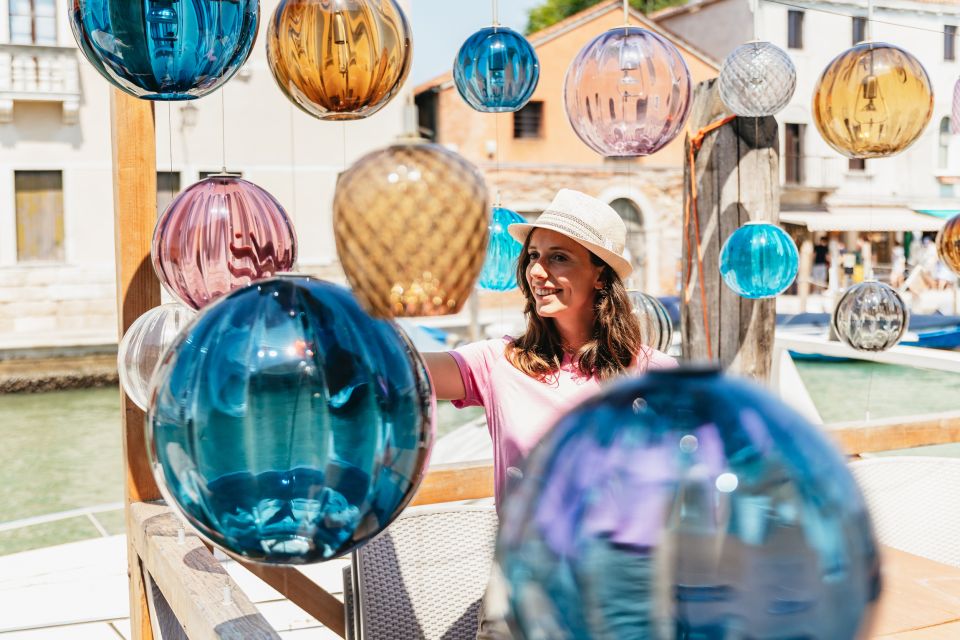
Choose this if Torcello doesn’t interest you or if you’re trying to fit the islands around another Venice activity in the same day. It’s the most expensive of the three because of the smaller boat capacity and the extra factory time, but it’s also the only one short enough to combine with, say, an afternoon at the Doge’s Palace or a sunset hour on a gondola ride through the Grand Canal on the same day.
Practical bits
When to go
Spring (April-May) and autumn (September-October) are best. Summer is hot, the lagoon smells, and Burano gets miserable with crowds. Winter is empty but plenty of restaurants close and the boat schedule thins out. If you’re forced into August, do this trip first thing, first vaporetto from Fondamente Nove is around 6am and the islands are nearly empty until 9.
What to wear
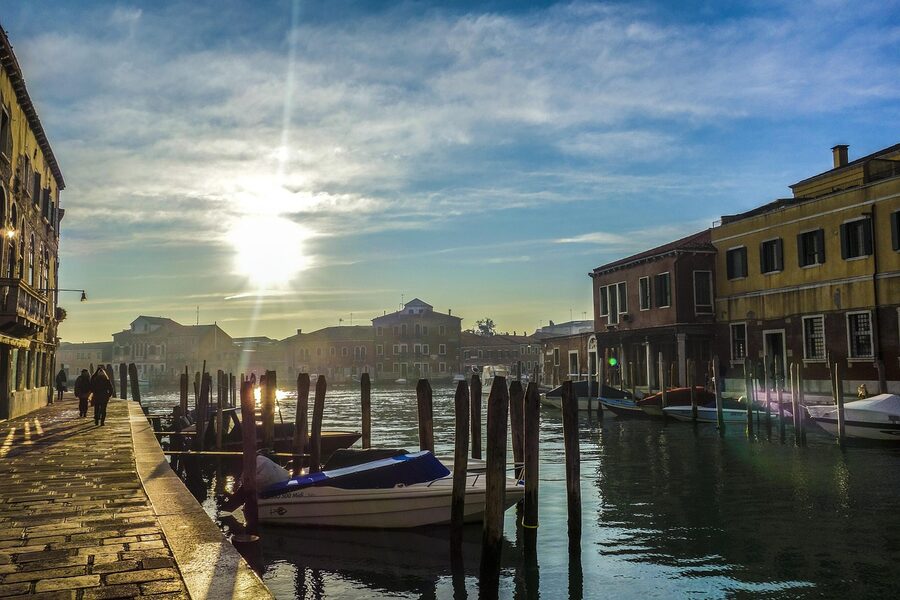
Comfortable shoes, you’re walking on uneven cobbles and brick. A layer for the boat ride; even in summer the wind across open water is cool. If you’re entering Santa Maria Assunta or San Martino, shoulders covered (carry a light scarf if you’re in a tank top). Sunglasses help against the glare off the water, especially heading west into Venice on the return.
Food and money
Cash for the small things, gelato stand, glass demo entry, lace museum, but cards are fine in restaurants and at the cathedral. Lunch on Burano runs €25 to €40 a head at a good place; the canal-edge tourist places are €15 to €25 for forgettable food. Coffee is overpriced everywhere on the islands; that one cafe on the corner near the Burano boat stop is famously the most expensive coffee in the lagoon.
The boat ride itself
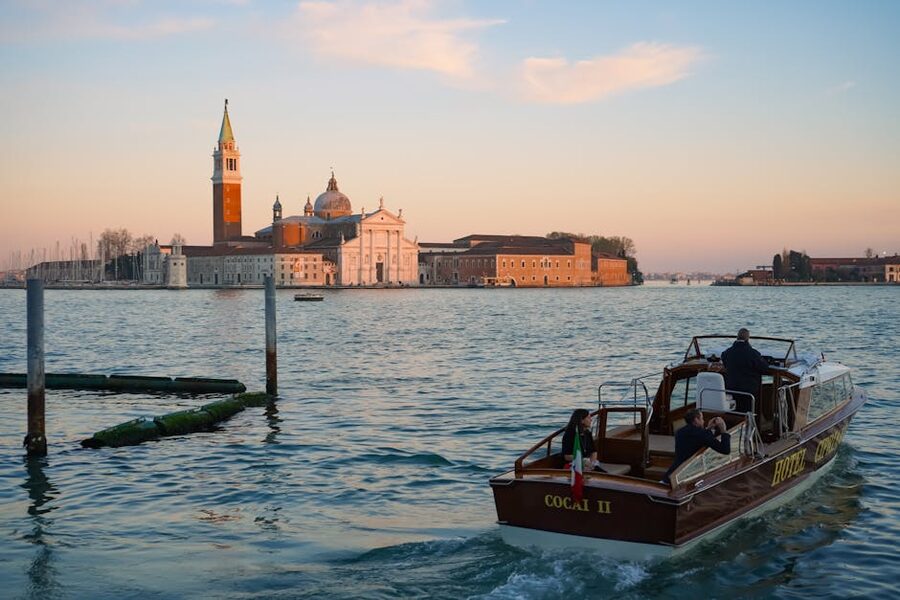
Sit on the rear deck if you can. The cabins have plexiglass windows that ruin photographs. The crossing to Burano is the most exposed leg, choppy in any kind of wind, and the lagoon can be surprisingly rough. Don’t bring a roller suitcase; the boat platforms are uneven, the gangways narrow, and you’ll be that person.
The day after the islands
If the islands have left you wanting more lagoon and less city centre, the obvious next move is the basilica side of Venice. See our guide to St Mark’s tickets, tours and timing for the right way to approach it without the queue. The mosaic-and-Byzantine thread runs straight from Torcello’s Last Judgment into St Mark’s golden interior, and doing them in that order is genuinely educational rather than just back-to-back sightseeing. For a different kind of day-trip-from-the-city pattern (working farms, tasting room visits, tour-bus economics), the way the Chianti tours from Florence are priced is the closest mainland comparison. And if you’re piecing together a Venice itinerary around bookable visits to maker-craftsman type places, the artisan ethos here echoes a lot of what’s in the Florence food and wine tour scene. Same instinct to support the small producer rather than the bus-coach showroom.