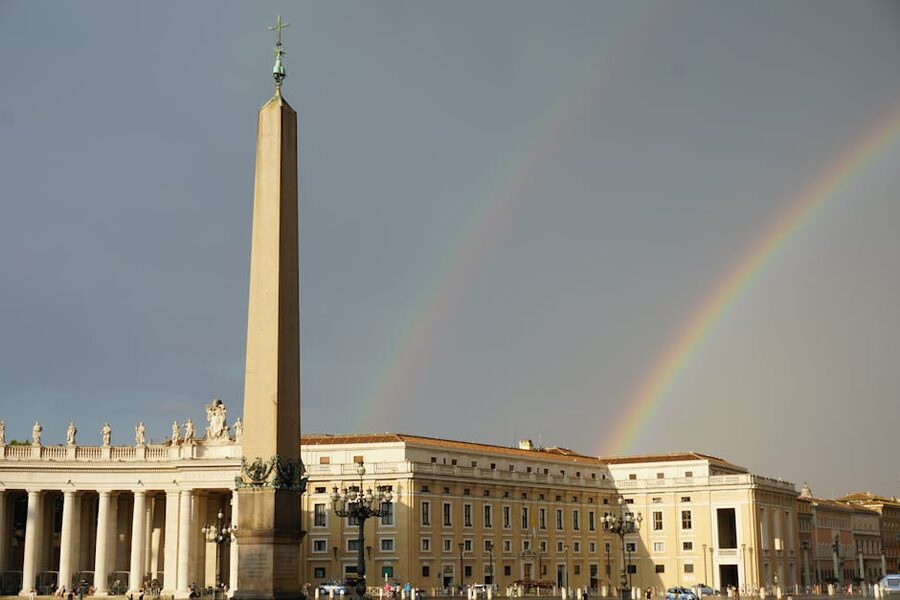
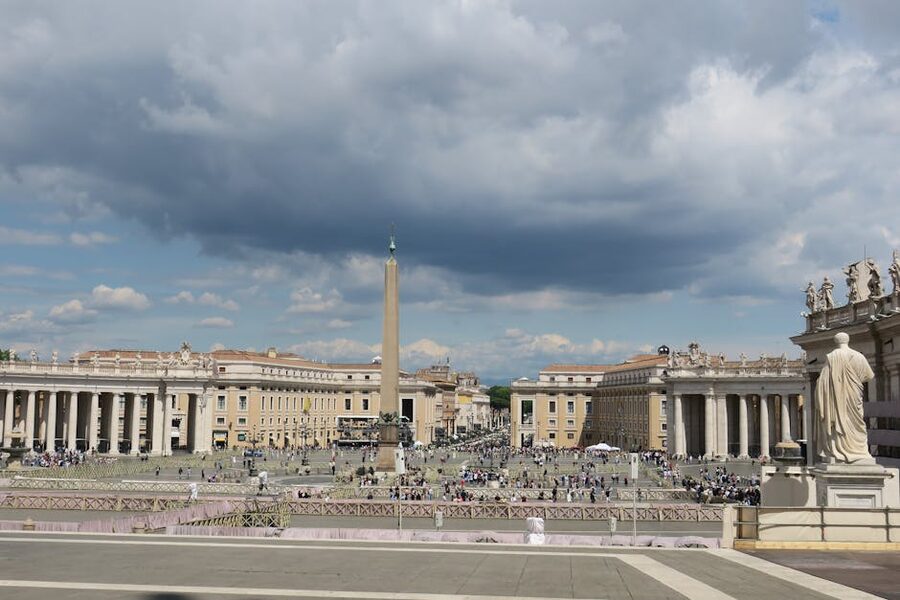
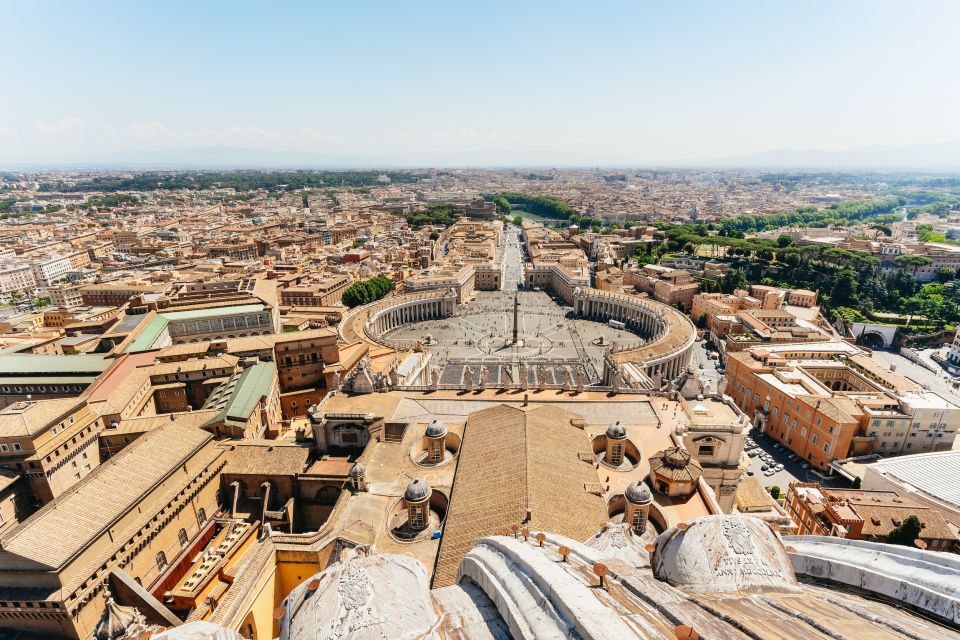
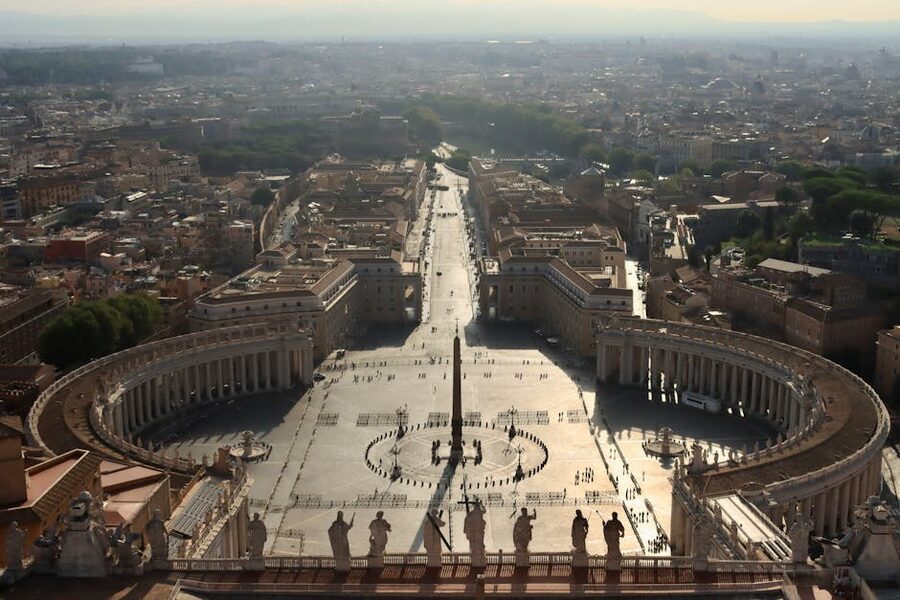
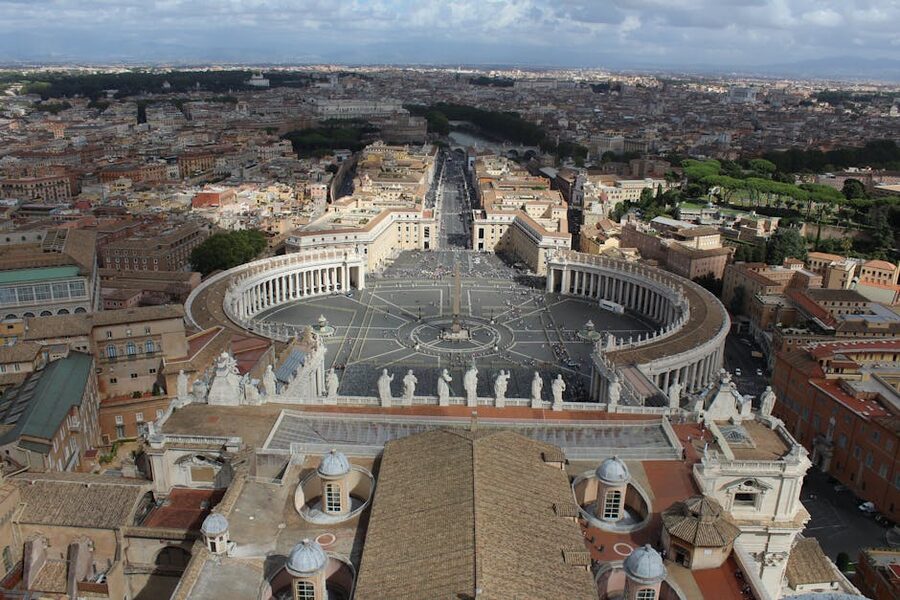
The staircase narrows as you get higher. By the time you reach the final stretch inside the dome, the walls curve inward and you’re climbing at an angle, one hand on the rope, squeezing past people coming down. Then you step outside onto the lantern balcony, 136 meters above St. Peter’s Square, and every rooftop in Rome stretches out below you in a terracotta panorama that goes on for miles.
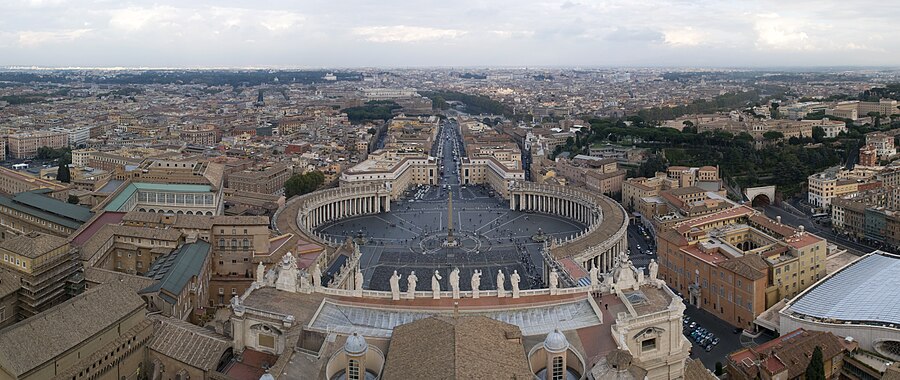
That view is not something you can see from ground level, and it’s not something a photo fully captures. The dome climb at St. Peter’s Basilica is one of the most memorable experiences in Rome, and one of the cheapest, at €17-22 depending on whether you take the stairs or the elevator. Most cities only offer one of these high-altitude church climbs: Barcelona has the towers at Sagrada Família, Paris hides the rooftop at Sainte-Chapelle‘s neighbour the Conciergerie, and Amsterdam settles for the marble grandeur of the Royal Palace at street level.
Here’s everything you need to know about visiting St. Peter’s Basilica and climbing the dome.
Short on Time? My Top Picks
St. Peter’s Basilica, Papal Tombs & Dome Climb Tour — $21.64. Guided tour covering the basilica interior, papal tombs underground, and the dome climb. Best value option.
St. Peter’s Basilica & Dome Climb Tour — $64. Similar route with a different operator, 105 minutes. Great guides who know the stories behind every chapel and mosaic.
Guided Tour of St. Peter’s With Dome Climb — $64. Two-hour guided experience with expert commentary. Good for visitors who want deeper context on the art and architecture.
The Basics: Entry Is Free, The Dome Costs Extra
This confuses a lot of visitors. Entering St. Peter’s Basilica is completely free. No ticket required. You walk through security, step inside, and you’re standing in the largest church in the world. No charge.
The dome climb is separate and does require a ticket. There are two options:
Stairs only (€17) — All 551 steps, starting from ground level. The first 231 steps are wide and easy. The final 320 steps, inside the dome itself, get progressively narrower and steeper, the same lung-burning final stretch you get climbing the Giralda tower in Seville or the bell ramp at Palma’s cathedral. It takes about 20-30 minutes to climb and is genuinely tiring. Not recommended if you have claustrophobia, knee problems, or are visiting with small children.
Elevator + stairs (€22) — The elevator takes you up the first 231 steps to the rooftop terrace level. From there, you still have to climb the remaining 320 steps through the dome on foot. There is no elevator to the top — the dome’s interior structure is too narrow. The €5 premium is worth it for most people.
The New Booking System
In 2024, St. Peter’s introduced a timed-entry booking system through their official website. For €7, you can book a timed slot for basilica entry, which lets you skip the general queue. The dome climb has its own separate ticket, also bookable online.
This is a significant improvement. Before 2024, the only way in was the general queue, which could stretch 60-90 minutes on a busy morning. The €7 timed entry essentially functions as a skip-the-line ticket — you enter through a priority lane and walk straight in.
Important: Book your basilica entry about 90 minutes before your dome climb slot. This gives you time to clear security, explore the interior, and reach the dome entrance without rushing.
The Best St. Peter’s Basilica Tours
You can absolutely visit St. Peter’s on your own — the basilica is free and the dome just needs a ticket. But a guided tour transforms the experience. Without context, you’re looking at a very large, very decorated church. With a guide, you’re standing where popes have been crowned for five centuries, looking at Michelangelo’s last masterpiece, and walking above the tomb where St. Peter himself is believed to be buried.
1. St. Peter’s Basilica, Papal Tombs & Dome Climb — $21.64
The best value guided tour available. Under $25 gets you a knowledgeable guide through the basilica interior, down into the papal tombs beneath the altar, and up to the dome for the panoramic views. Nearly 10,000 visitors have rated it 4.6 out of 5, and the guides consistently get singled out for praise. I dig into what the underground section is actually like — it’s the part most self-guided visitors miss entirely.
2. St. Peter’s Basilica & Dome Climb Tour — $64
Same route — basilica, tombs, dome — with a different operator and a slightly longer guided portion. The higher price point gets you smaller groups and guides who tend to go deeper into the artistic and architectural details. Visitor Lorenzo earned particular praise for his blend of humor and history. We compared this tour against the budget option to help you decide which pace suits you better.
3. Guided Tour of St. Peter’s With Dome Climb — $64
A two-hour guided experience that takes its time with the art and architecture. If you’re the kind of visitor who wants to understand why Bernini chose twisted columns for the baldachin, or what makes the Pieta structurally impossible, this is your tour. Sara, one of the regular guides, was praised for navigating Jubilee Year crowds with grace. More on what sets the guide quality apart from self-guided visits.
What You’ll See Inside
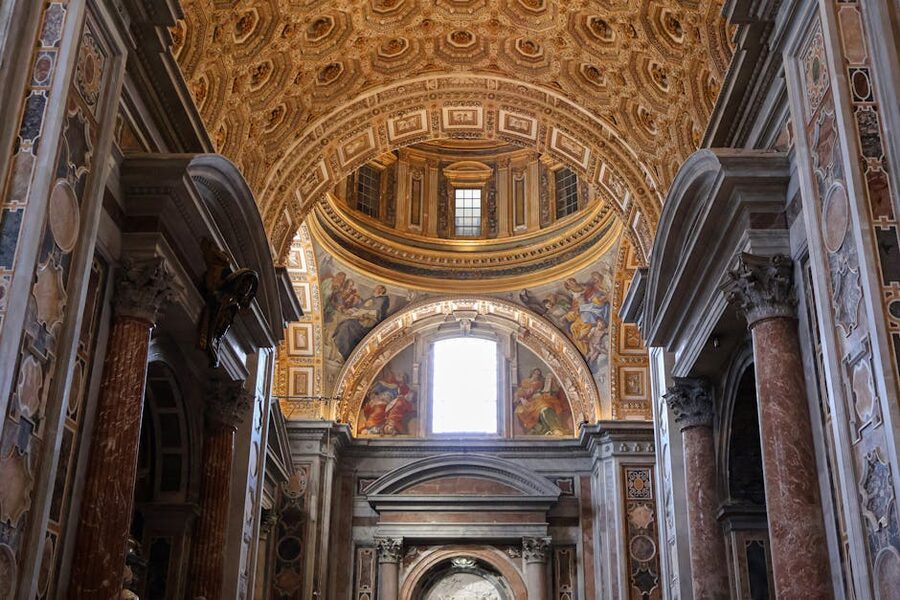
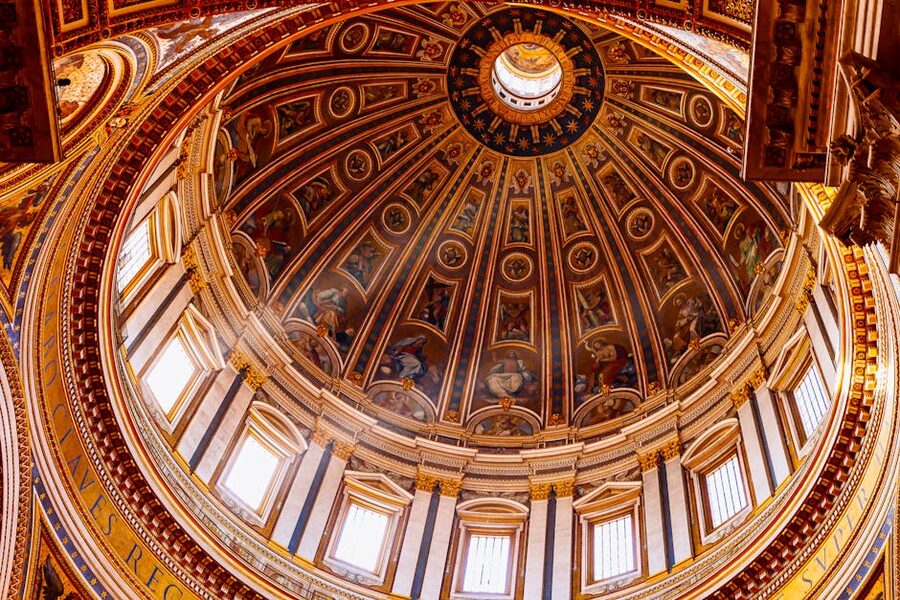
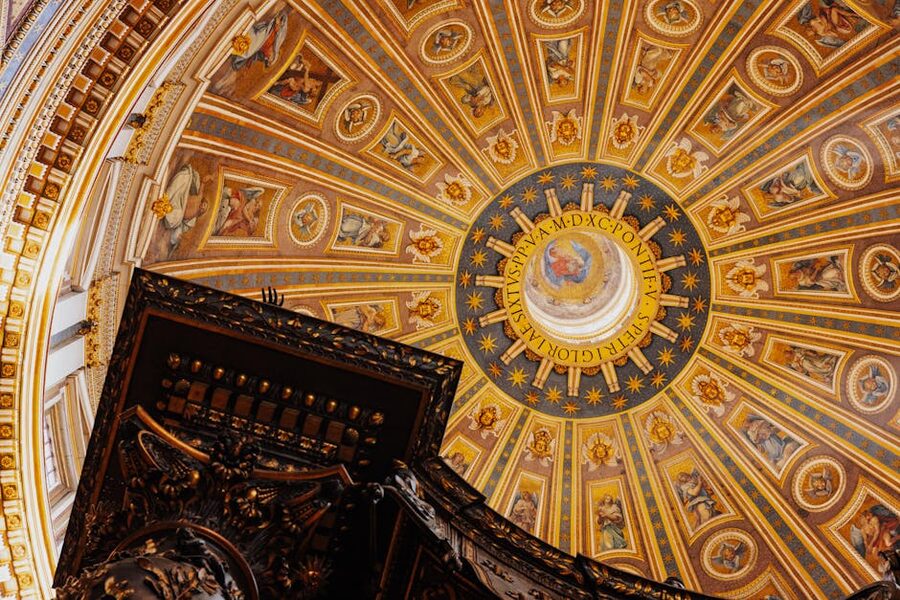
St. Peter’s Basilica is 218 meters long, 150 meters wide at the transepts, and the interior dome reaches 136 meters above the floor. These numbers don’t mean much until you’re standing inside and realize the bronze letters above the nave are each two meters tall, they look small from below. Everything in this building is designed to make you feel the scale of faith itself, the same trick of architectural intimidation that pulls off at Montparnasse Tower‘s 56-storey lookout in Paris from a secular angle.
The Pieta
Michelangelo’s Pieta is immediately to your right as you enter. It’s the first thing most visitors see, and the only work Michelangelo ever signed — he carved his name across the Madonna’s sash after overhearing someone attribute it to another sculptor. He was 24 when he finished it.
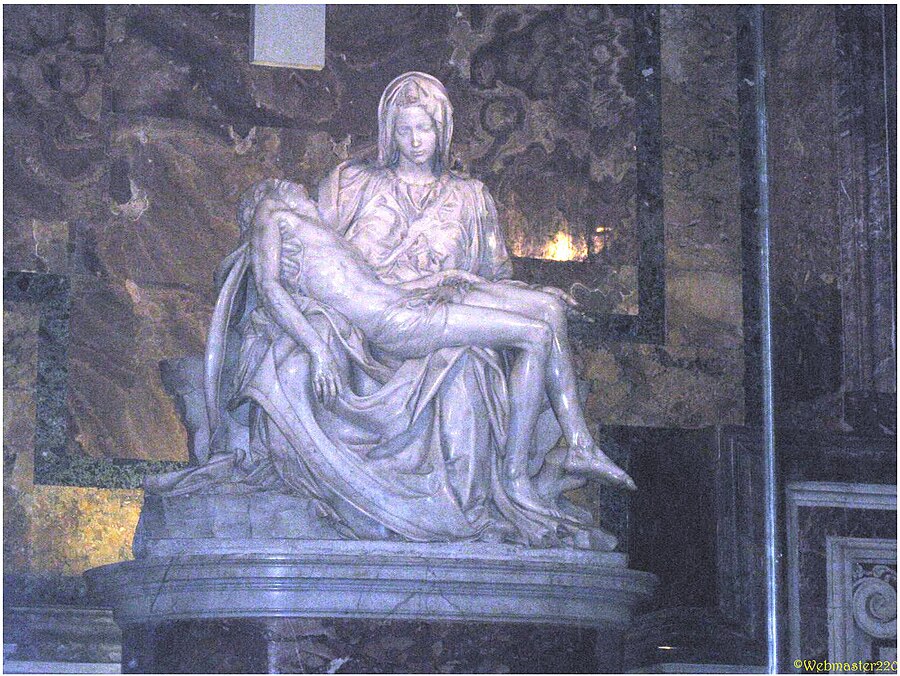
It sits behind bulletproof glass in a side chapel — the result of a vandal attack in 1972 that damaged the Madonna’s face and arm. Even through the glass, the sculpted fabric and the impossible softness of marble carved to look like draped cloth are extraordinary. Michelangelo made the Virgin deliberately young — younger than her son — which was controversial at the time but has become one of the work’s most discussed features.
Bernini’s Baldachin
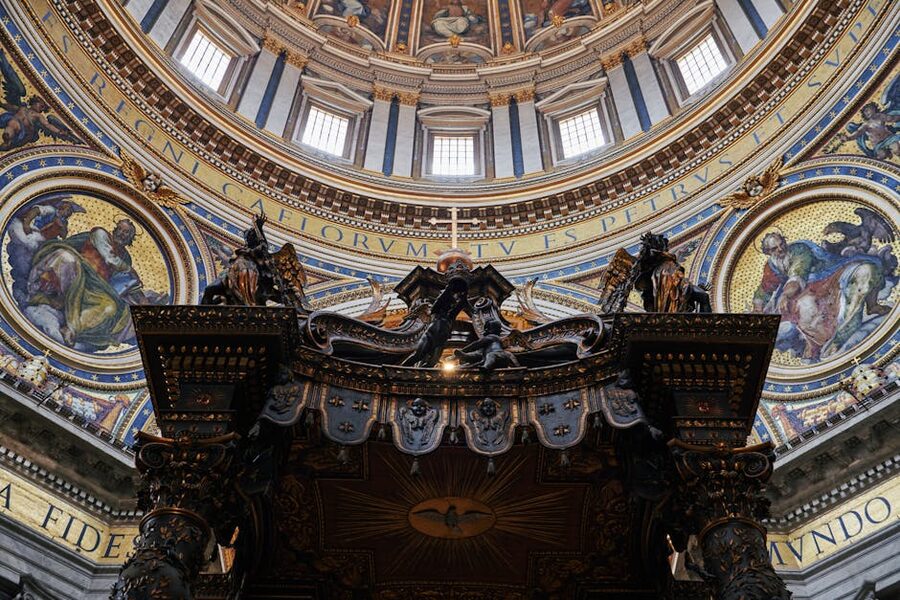
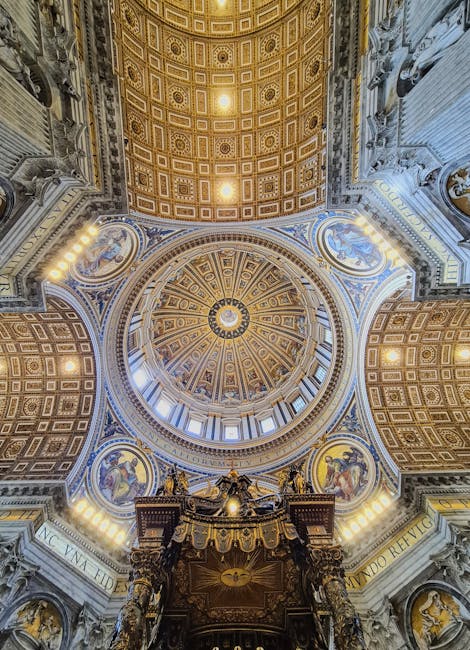
The enormous bronze canopy over the papal altar is impossible to miss. Standing 29 meters tall (roughly the height of a 10-story building), it was designed by Bernini at age 25 and took nine years to build. The bronze was controversially stripped from the portico of the Pantheon, leading to the famous Roman saying: “What the barbarians didn’t do, the Barberini did.”
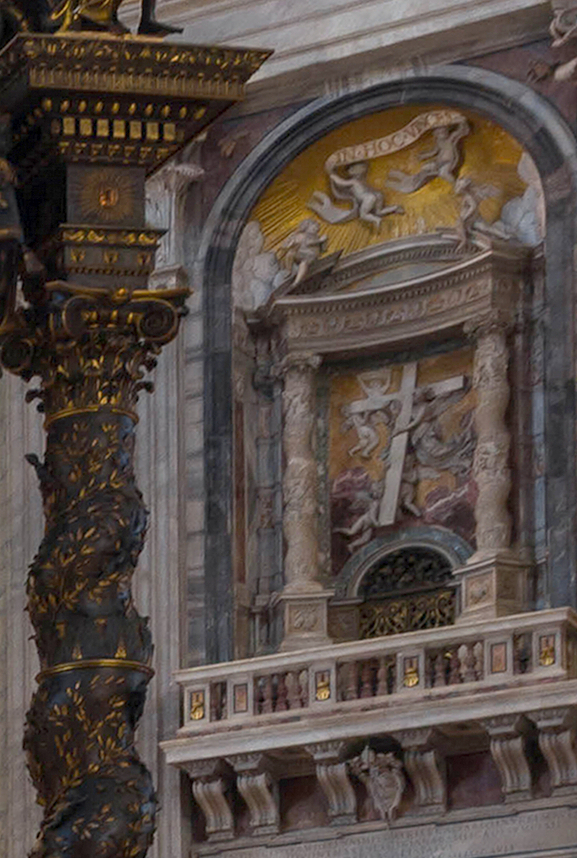
The four twisted columns are called Solomonic columns, inspired by ancient spiral columns believed to come from Solomon’s Temple. Look closely at the bases — they’re decorated with the Barberini family coat of arms, featuring three bees. On one side, if you walk around slowly, you’ll notice a progression of a woman’s face in labor, from pain to relief to joy. It’s the kind of detail a guide will point out; you’d never spot it alone.
The Papal Tombs
Beneath the main altar, accessible by stairs near the baldachin, are the Vatican Grottoes — the underground chambers where over 90 popes are buried. The space is solemn, quiet, and much cooler than the basilica above. Pope John Paul II’s tomb is the most visited, marked by a simple marble slab that’s almost always surrounded by flowers.
The grottoes also contain what the Vatican believes is the tomb of St. Peter himself, directly beneath the altar. Excavations in the 1940s uncovered a Roman-era burial site with bones that Pope Paul VI declared “identified in a way that we can consider convincing” as belonging to Peter.
The Dome Climb Step by Step
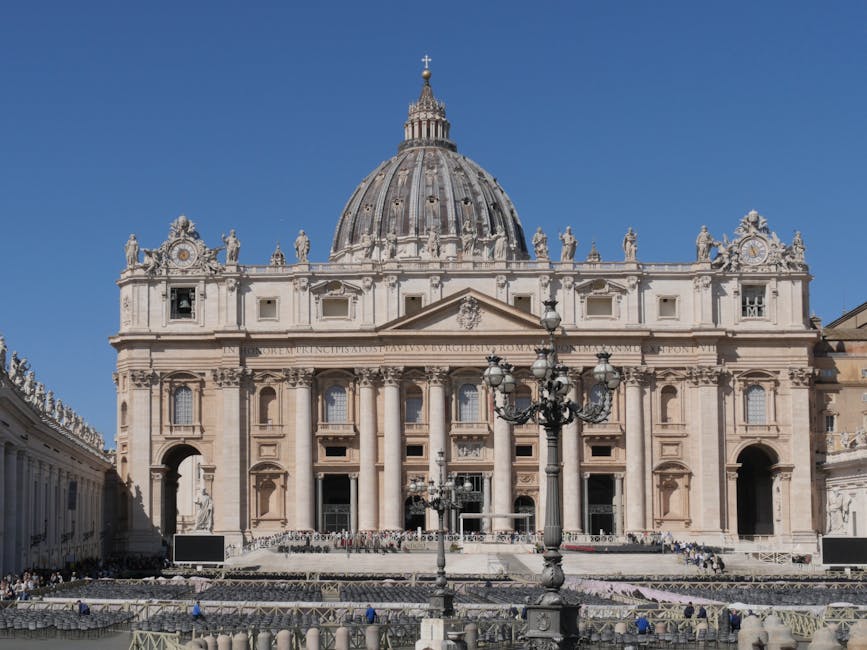
The dome entrance is separate from the basilica entrance. It’s located on the right side of the basilica facade, through a door marked “Cupola.” You’ll buy your ticket at a small office just inside.
The Rooftop Terrace (First Stop)
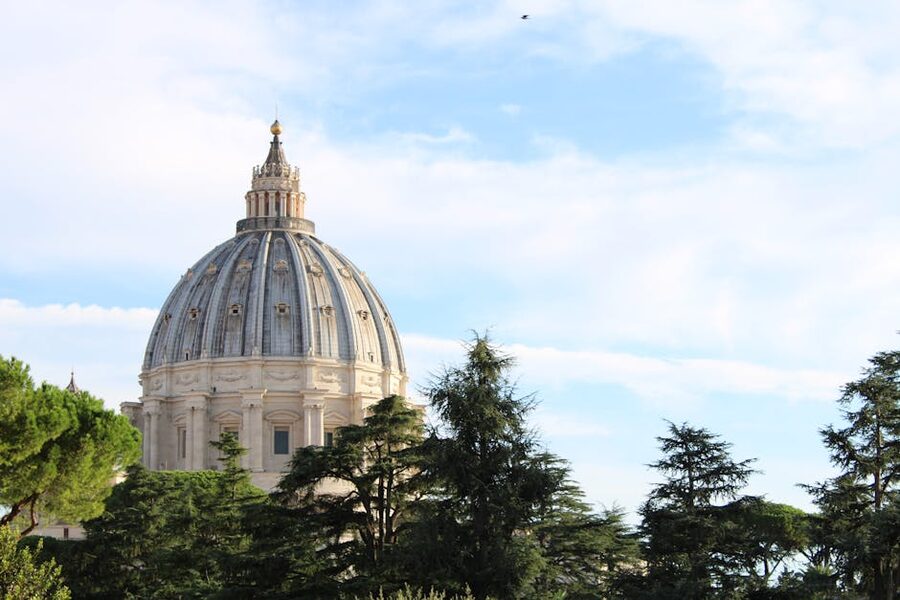
Whether you take the elevator or the stairs, you’ll first arrive at the rooftop terrace. This flat area sits above the nave and below the dome, offering close-up views of the dome exterior, the statues along the roofline, and a bird’s-eye view down into St. Peter’s Square. There’s a gift shop and a small cafe here. Take a moment — you’re about to enter the dome itself, and there’s no stopping once you start the narrow section.
Inside the Dome
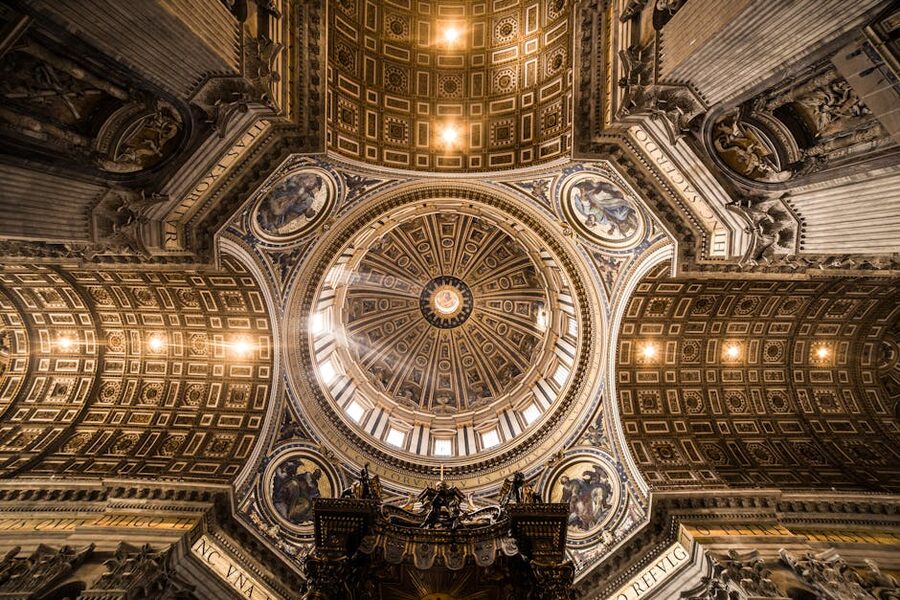
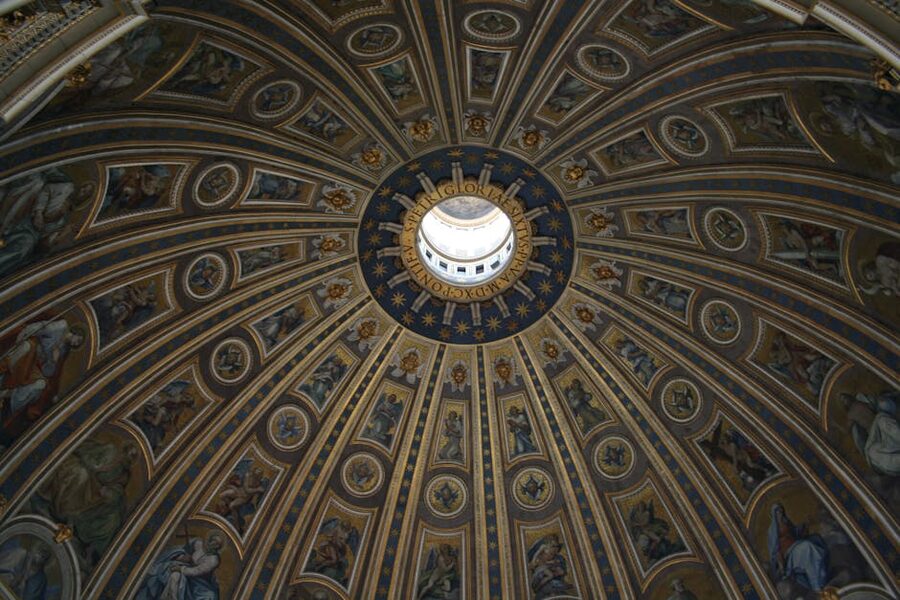
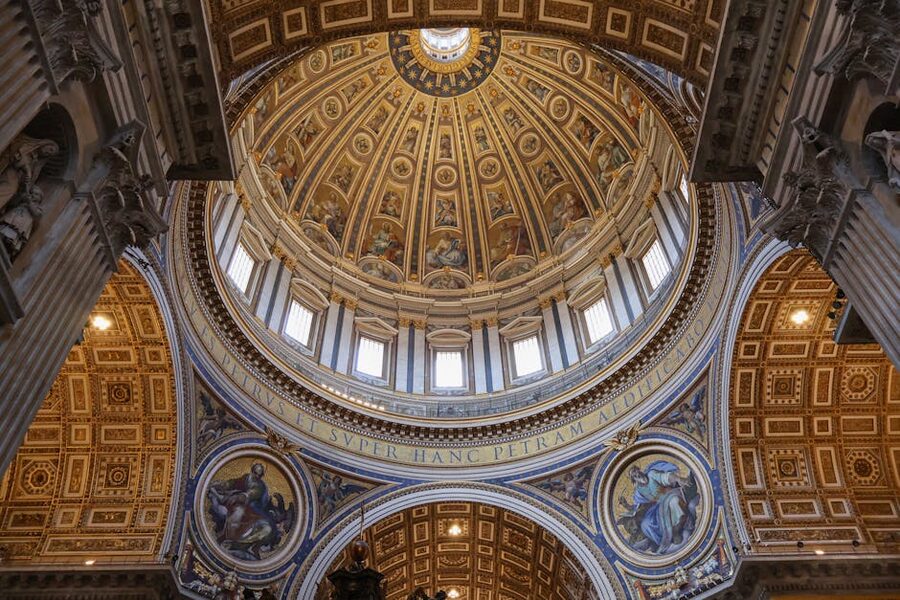
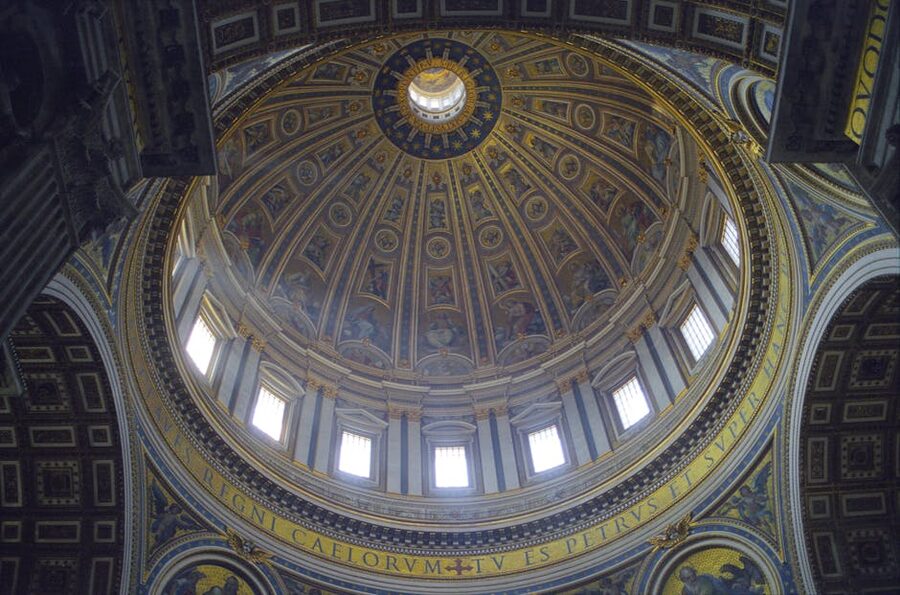
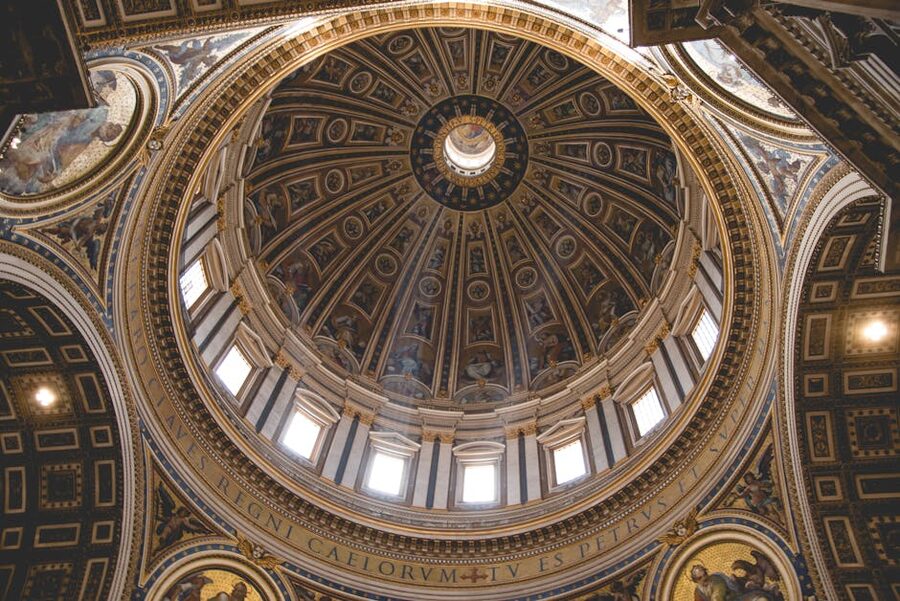
From the terrace, you enter the dome through a low doorway. The first section brings you to the interior gallery — a narrow walkway that rings the inside of the dome, 53 meters above the basilica floor. From here, you’re looking straight down at Bernini’s baldachin, and the mosaic inscriptions that look small from ground level turn out to be two meters tall. The tilt of the dome walls at this height gives the walkway a slightly unsettling lean.
The Final Climb
After the interior gallery, the real climb begins. You’re now between the inner and outer shells of the dome — a space that narrows dramatically as you go higher. The walls curve inward, the steps get steeper, and at several points you’re climbing in a corkscrew through passages barely wide enough for one person. It’s not for the claustrophobic. But the moment you emerge onto the outdoor lantern balcony at the very top, every step is justified.
A Brief History
The original St. Peter’s Basilica was built by Emperor Constantine in the 4th century over what was believed to be St. Peter’s burial site. By the 15th century, the building was crumbling, and Pope Nicholas V began plans for a complete reconstruction. The new basilica took 120 years to build (1506-1626) and involved a relay of the greatest architects of the Renaissance.
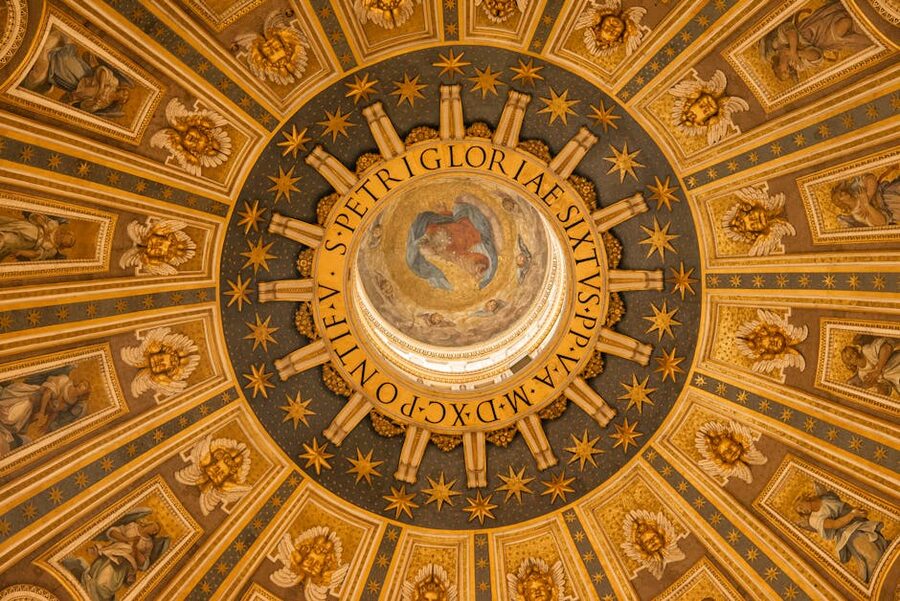
Bramante drew the initial plan. Raphael took over after Bramante’s death. Then Michelangelo, at age 72, was appointed chief architect and designed the dome that defines the Rome skyline today. He died in 1564, 26 years before the dome was completed.
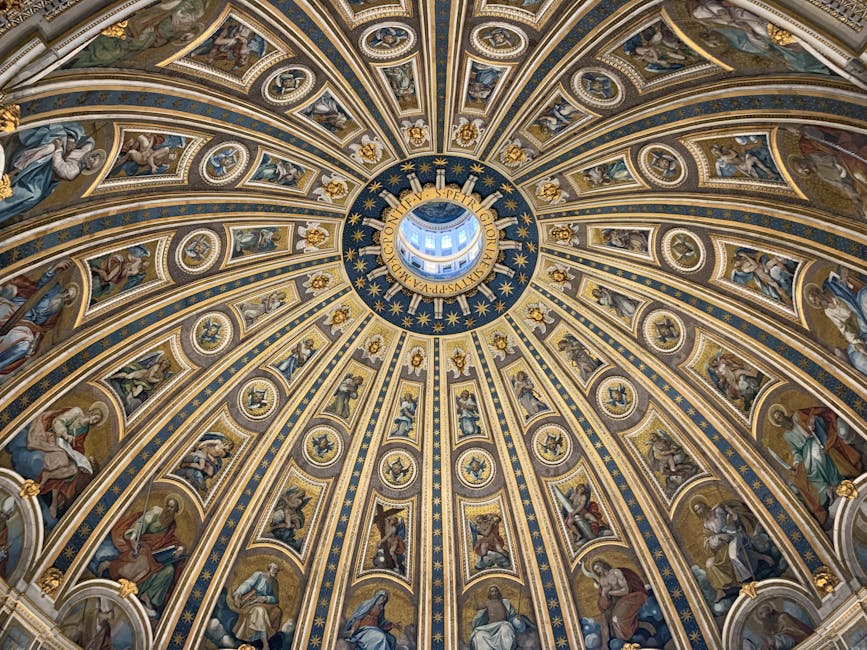
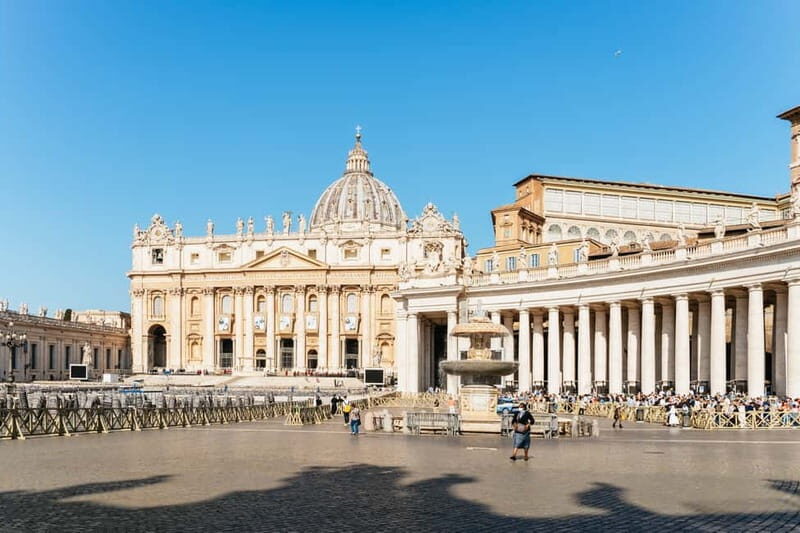
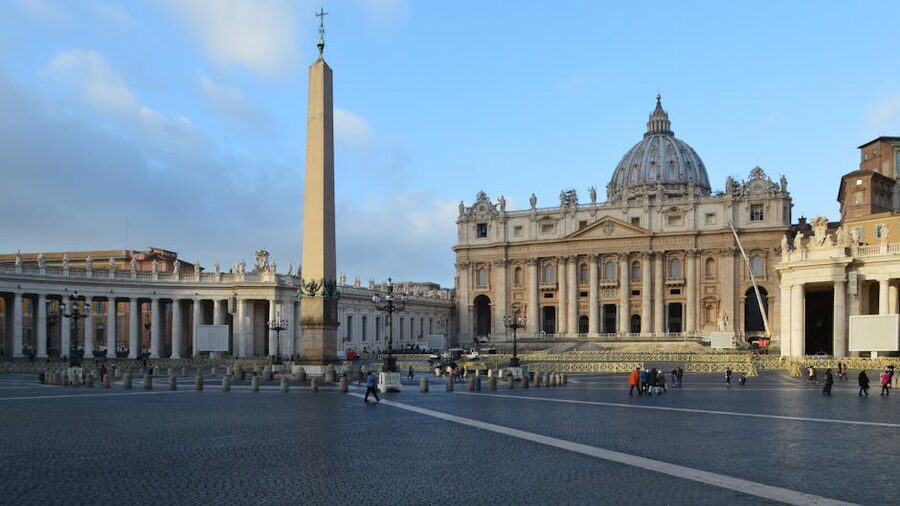
Carlo Maderno extended the nave and added the facade in the early 17th century, changing the building from a centralized Greek cross plan to the elongated Latin cross you see today. Bernini completed the interior decoration and designed the colonnaded piazza outside — the sweeping arms of columns meant to symbolize the church embracing the faithful.
Practical Tips
Dress code is strictly enforced. Bare shoulders and shorts above the knee will get you turned away — same rules as the Vatican Museums. Carry a light cover-up if you’re visiting in summer.
Visit the basilica early, climb the dome late. The basilica opens at 7 AM, an hour before the dome. Use that first hour to explore the interior when it’s nearly empty — the light through the windows is beautiful and you can actually stand in front of the Pieta without a crowd. Then climb the dome when it opens at 8 AM and you’ll beat the morning rush.
Allow 2-3 hours total. About 45-60 minutes for the basilica interior, 30-45 minutes for the dome climb (including time on the terrace and the top), and 15-20 minutes for the grottoes. Add time for the security queue — it can be 15-45 minutes depending on the day.
The security line forms at the right side of the square. It snakes along the colonnade. If you’ve booked a timed entry, there’s a separate lane that moves much faster.
There are no bathrooms inside the basilica. Use the facilities in the piazza before entering. There are clean public restrooms near the left colonnade.
Photography is allowed but no flash, no tripods. The interior is dim, so a phone with a good low-light camera makes a difference. The mosaics in the dome and the Pieta behind glass are the hardest shots to get right.
Getting There
St. Peter’s Basilica faces St. Peter’s Square in the western part of central Rome. The nearest metro station is Ottaviano on Line A, about a 10-minute walk south through the Prati neighborhood. You can also take Bus 64 from Termini station, which drops you at Largo di Porta Cavalleggeri, a 5-minute walk from the square.
If you’re coming from the Vatican Museums, there’s a shortcut through the Sistine Chapel that leads directly to the basilica. It’s technically reserved for tour groups, but individual visitors occasionally use it during quieter periods. Otherwise, the walk from the museum exit around the Vatican walls takes about 15 minutes.
From Trastevere, it’s about a 20-minute walk across the Tiber via Ponte Vittorio Emanuele II.
More Booking Guides for Rome
St. Peter’s pairs naturally with the Vatican Museums and Sistine Chapel — they’re right next to each other and many visitors do both in the same morning. The Colosseum is on the other side of the city center and deserves its own half-day, ideally on a separate day when your legs have recovered from the dome climb. And if you’re looking for a completely different pace, a food tour through Trastevere makes the perfect wind-down after a morning of Renaissance architecture and 551 stairs.