
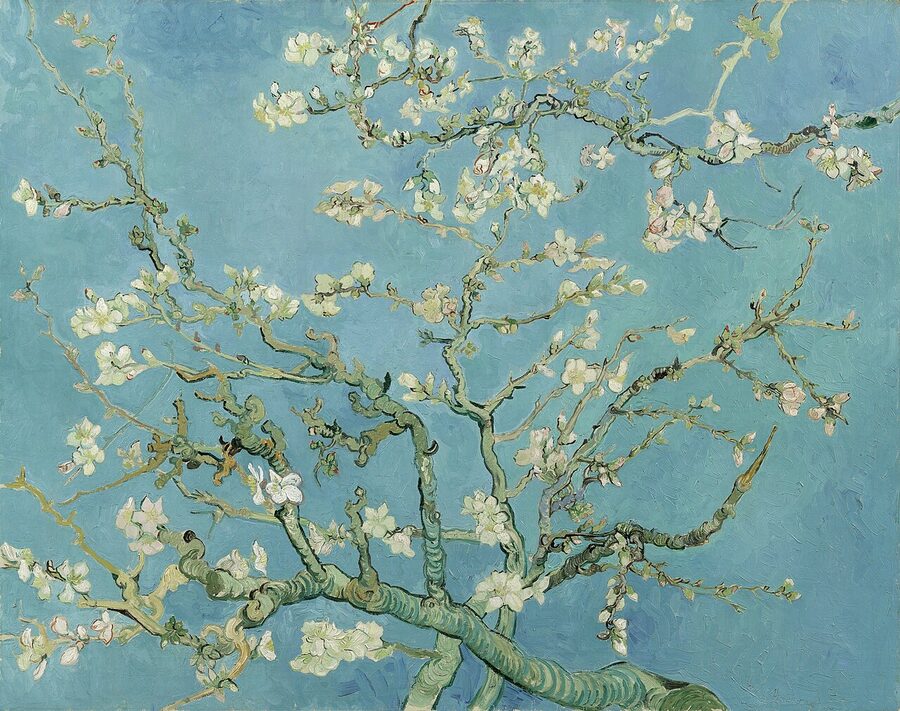
The first time I walked into the room with Almond Blossom, a Spanish woman in front of me put her hand on her chest and said something to her husband I couldn’t translate. I didn’t need to. The painting is small, about 73 by 92 centimetres, and from across the gallery it looks like a window someone cut into the wall to let the sky through. Vincent finished it in February 1890 for his brother Theo, whose son had just been born and been named after him. Six months later Vincent was dead.
That’s the painting most travellers walk straight past on their way to Sunflowers. It’s the one I’d send a friend to first.
In a hurry? Three picks worth your slot
- Standard timed-entry ticket ($32): the one you actually want. Direct entry to the museum, audio guide sold as an add-on at the door. Book the standard entry.
- Museum + canal cruise combo ($47): only if you actually want both today, otherwise the $15 premium is wasted. Book the combo.
- Museum + 1-hour skip-line cruise ($47): tighter timing window than the open-ticket combo, slightly cheaper boat operator. Book the alternative combo.
What you’re actually walking into
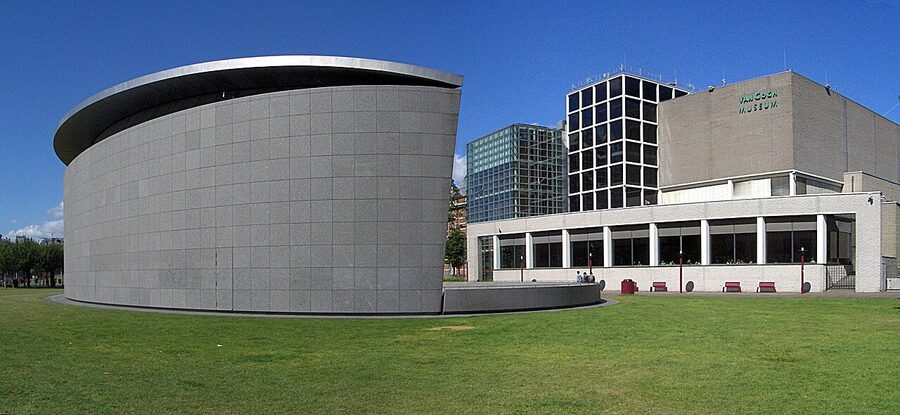
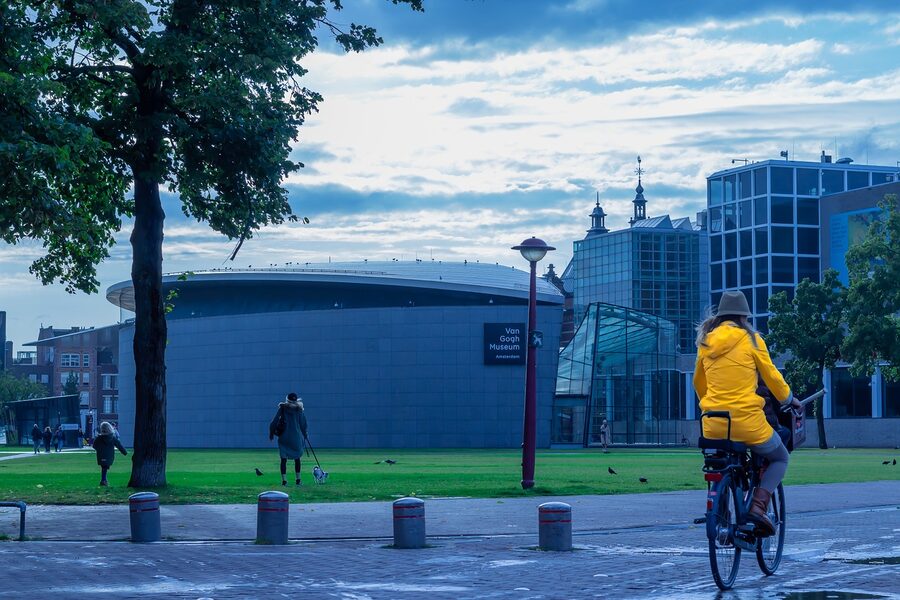
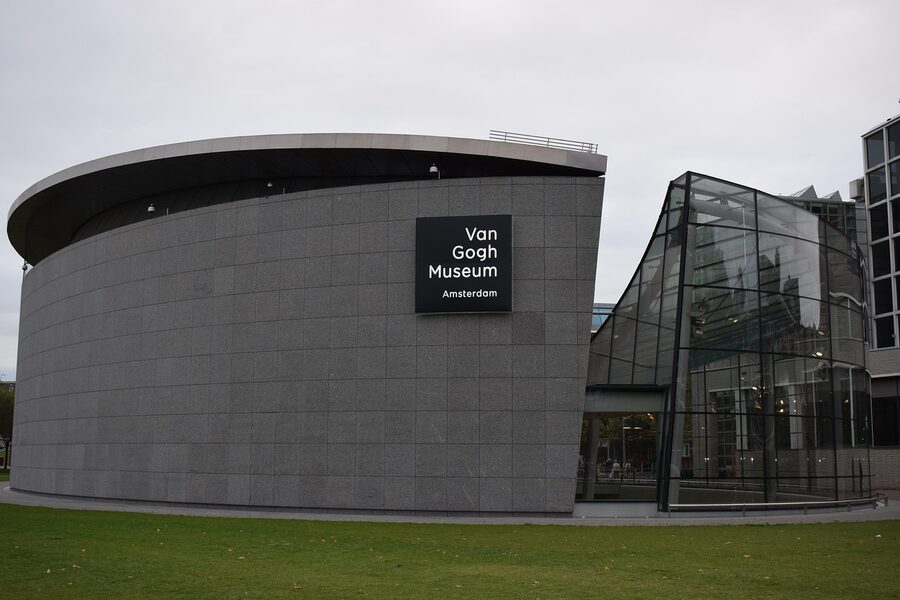
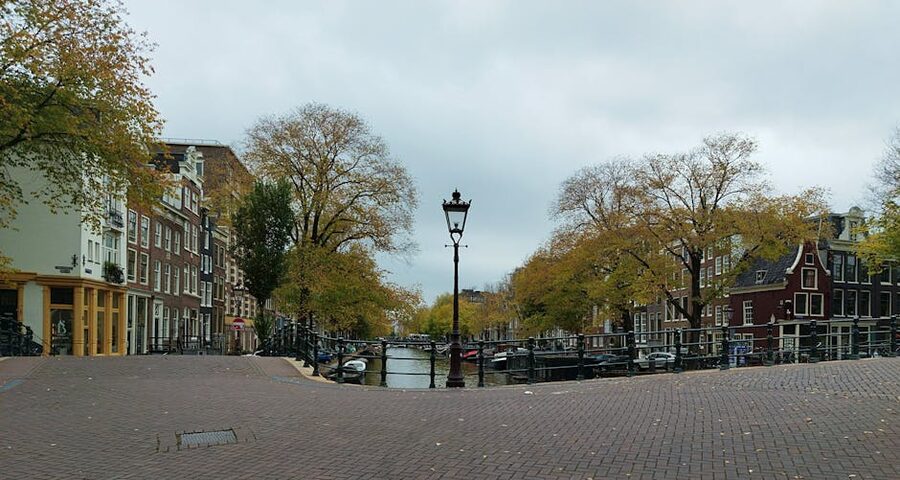
The Van Gogh Museum is on Museumplein in Amsterdam South, the same square as the Rijksmuseum and the Stedelijk. Trams 2, 5 and 12 stop at Van Baerlestraat. From Centraal it’s about 15 minutes by tram or 25 minutes on foot through the Jordaan and the canal belt. The walk is the better introduction to the city if you’re not in a hurry; the tram is fine if you’ve already done your canal cruise the day before and you’ve seen enough water for one trip.
The collection is the world’s largest single-artist gathering of Van Gogh: 200 paintings, around 500 drawings, and roughly 700 surviving letters. He produced about 860 paintings in a 10-year career. So roughly a quarter of his entire output is in this one building, plus most of his correspondence. There is no other place on Earth where you can stand in front of The Bedroom, Sunflowers, The Yellow House, Almond Blossom, Wheatfield with Crows, Tree Roots and The Potato Eaters in one ticket. The closest competitor is the Musée d’Orsay in Paris, which holds the second version of The Bedroom, Starry Night Over the Rhône, and his portrait of Doctor Gachet, but nothing like this density.
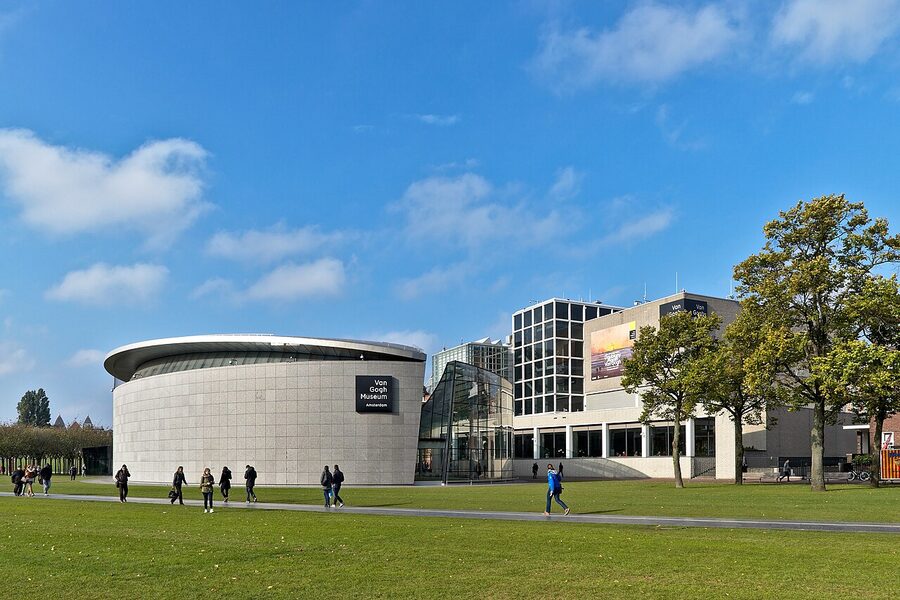
You enter through the Kurokawa wing, drop your coat in the cloakroom, pick up the audio guide if you’ve added it, and ride the escalator down to the underground link that takes you into the Rietveld block. The collection is spread across four floors. Ground floor: the Gallery of Honour, which is where most people spend most of their time. First floor: self-portraits and the Paris paintings. Second floor: contemporaries (Gauguin, Bernard, Toulouse-Lautrec, the friends, rivals, and people Vincent corresponded with). Third floor: late period, including Wheatfield with Crows and Tree Roots.
Booking and ticket types, briefly
Tickets are timed-entry only. You pick a 15-minute window when you book, you arrive within that window, and security lets you through. Walk-up is theoretically possible on quiet weekday mornings in winter; in practice the museum sells out two to three weeks ahead in summer and most weekends year-round. Don’t gamble. Book online.
The standard adult ticket is $32 (€22). Under-18s are free. The audio guide is a separate $5 add-on and it’s the one optional extra worth paying for. There are 40-plus tracks per gallery, the museum’s curators wrote them, and they’re better than the wall labels. They also work in the basement letters archive, which the wall labels barely cover.
Combo tickets exist that bundle the museum with a canal cruise for $47, about a $15 premium over buying both separately. Worth it only if you actually want a 1-hour cruise the same day; otherwise it’s a soft upsell. The same logic applies to the bundle versions sold for the Heineken Experience on the other side of the city. Bundles only save you money if you’d buy both anyway.
When to actually go in
The museum is open 09:00 to 17:00 most days, until 21:00 on Fridays. Peak crowd is between 13:00 and 16:00, when the morning canal cruisers, the cycle-tour groups and the lunchtime locals all overlap in the Gallery of Honour. The four windows that work for me, in rough order of preference:
- 10:00 weekday entry. The 09:00 slot looks better on paper but the early crowd is mostly tour groups doing the museum at speed. By 10:00 the rush has spread out and the Gallery of Honour is breathable.
- 18:00 Friday entry. The Friday late-night is the museum’s best-kept secret. After-work locals and a much smaller foreign crowd; you can stand in front of The Bedroom for two minutes without being shouldered out.
- 16:00 weekday. If you’re a slow looker, an hour from 16:00 to 17:00 is rushed but the lighting is the best of the day and the crowd is thinning.
- 09:00 weekend. Last resort. The doors-opening rush is real and you’ll spend the first 20 minutes in the Paris-period rooms while the Gallery of Honour clears.
Avoid the 14:00 slot. Avoid school-holiday Tuesdays. Avoid trying to do this on the same day as the Anne Frank walking tour. Both want your full attention and they don’t share well.
The hook of the place: Almond Blossom
I keep coming back to Almond Blossom because it’s the painting that breaks the legend. The standard story about Van Gogh is that he was a tortured genius who painted in a fury, sliced off his ear in a fit of madness, and shot himself in a wheatfield because he couldn’t bear his own mind. That’s the cinema version. Almond Blossom is the counter-evidence.
Theo and his wife Jo had a baby in January 1890. They named him Vincent Willem after his uncle. Vincent was in the asylum at Saint-Rémy when he heard. He wrote back, and instead of the wild, gestural late-period work he’d been making, he sat down and painted a near-still flowering branch against a flat blue-green sky. He worked from observation in the orchard, then refined the composition in the studio. The brushwork is calm. The colour is calm. He sent it north so it could hang above his nephew’s cradle.
The painting is in the Van Gogh Museum because Theo died seven months after Vincent, and Jo van Gogh-Bonger inherited the entire collection: the paintings, the drawings, and the bundles of letters. She is the reason any of this exists. Without her, the work would have been scattered into private collections in the 1890s and we’d know Vincent the way we know countless other minor late-19th-century painters: by reputation and a handful of pieces. She kept the collection together, organised the letters, translated them into French and English, and lobbied for retrospectives until the museum finally opened in 1973, decades after her death.
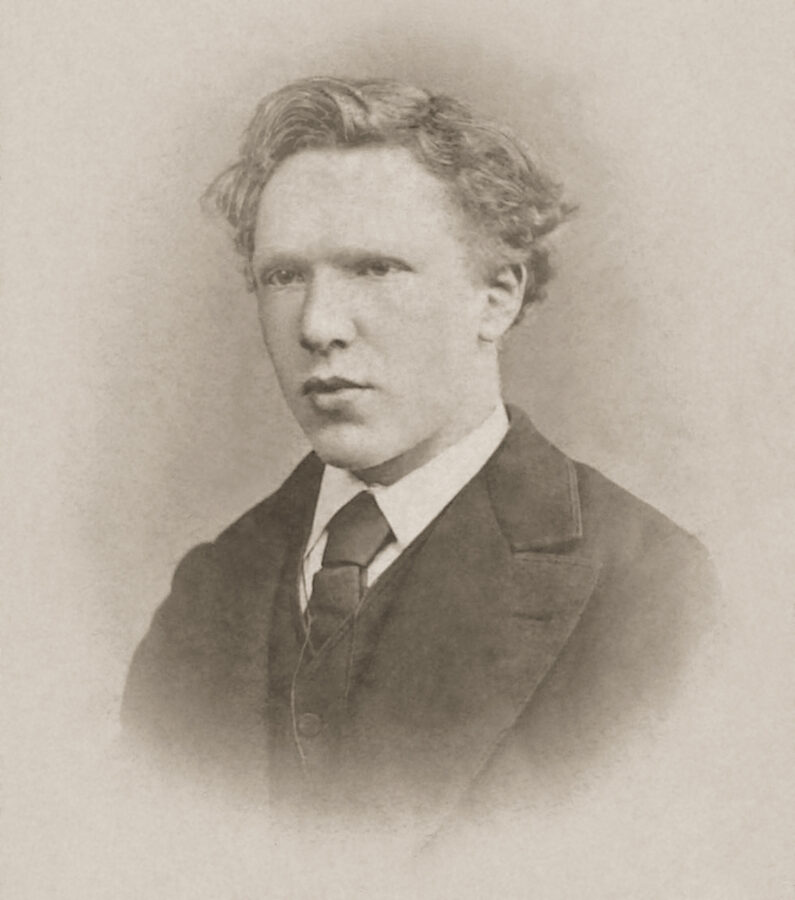
Skip the tortured-artist mythology
The museum’s own curation has shifted. From around 2023 the wall texts and audio guide started carrying a more medical-historian view of Vincent’s mental decline. The new framing is worth knowing because it changes how you read the late paintings.
The most accepted current explanation is a combination of factors, not a single tragic flaw. Lead-poisoning is one: chrome-yellow paint of the period contained lead, Vincent was known to lick his brushes and put pigment in his mouth when he was working manically, and chronic lead exposure produces neurological symptoms that overlap with what was historically called his madness. Epilepsy is another, possibly temporal-lobe. The “ear-cutting” episode in December 1888 was almost certainly a psychotic break, but the broader pattern of rage, tics, intrusive thoughts and motor symptoms reads, to modern eyes, more like Tourettes-spectrum or temporal-lobe epilepsy than the dramatic schizophrenic legend.
None of this makes him less of a painter. It does make him less of a movie character. The Vincent of the museum is a man who made art with terrifying focus during the windows when his head let him, and who knew exactly what he was doing. The “wild brushwork” that looks chaotic from across the room becomes, up close, controlled, repeatable, structured. He thought hard about colour theory. He studied Japanese woodblocks systematically. He ground his own pigments and complained to Theo about price-per-tube. This is not a man flinging paint.
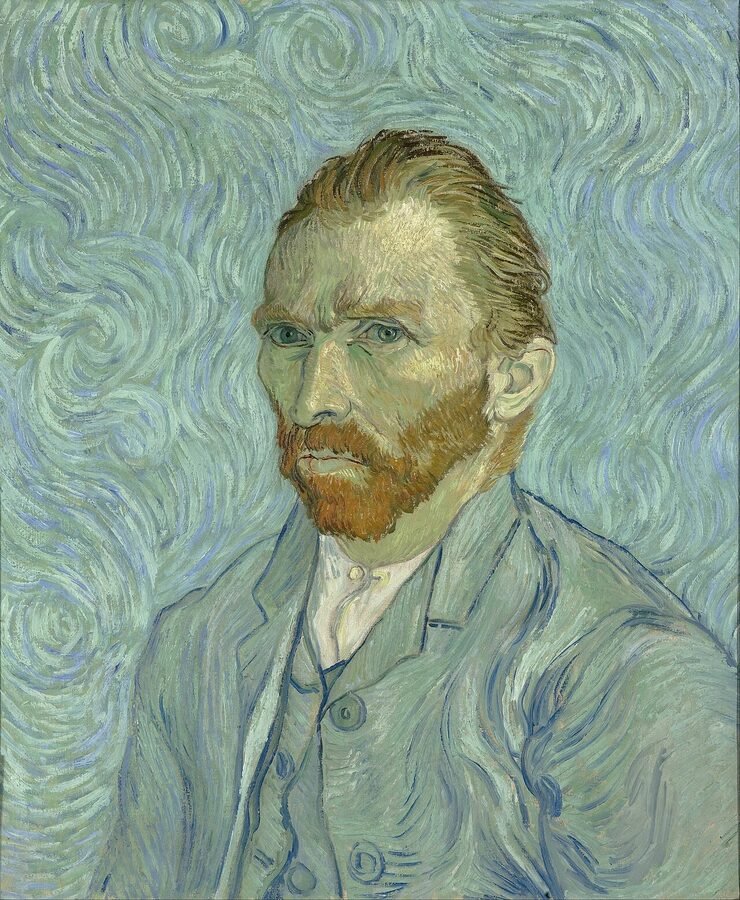
The Gallery of Honour: what to actually look at
The Gallery of Honour is the ground-floor room everyone heads to, and it’s right to. The works here are the ones that made him famous after his death. But most people do this room on autopilot. Phone-photograph each painting, walk past, queue for the next one. That’s the wrong rhythm.
Pick three or four of the ten or so paintings on the wall and sit with them. The benches in the centre of the gallery are placed so you can sit in front of any of the major works and look for five minutes without having someone’s elbow in your back. Five minutes is what these paintings reward. Two seconds and a phone shot is the price of admission for a postcard you could have bought online.
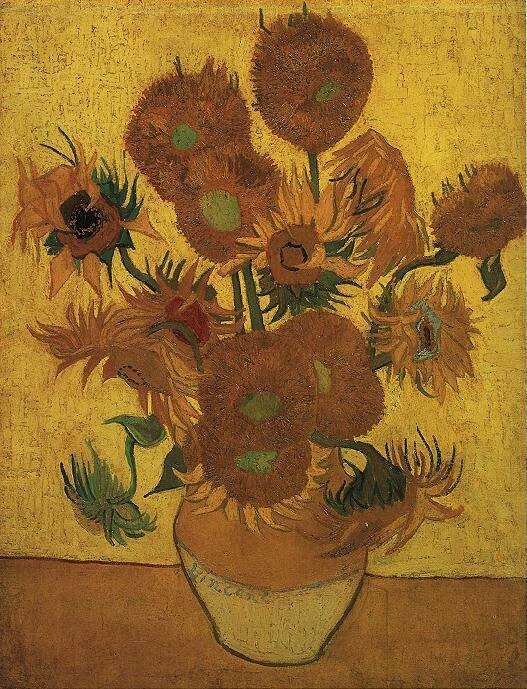
If I had to pick the four to sit with, this is the order:
- Almond Blossom, for the reasons above. Start here. It will recalibrate everything else.
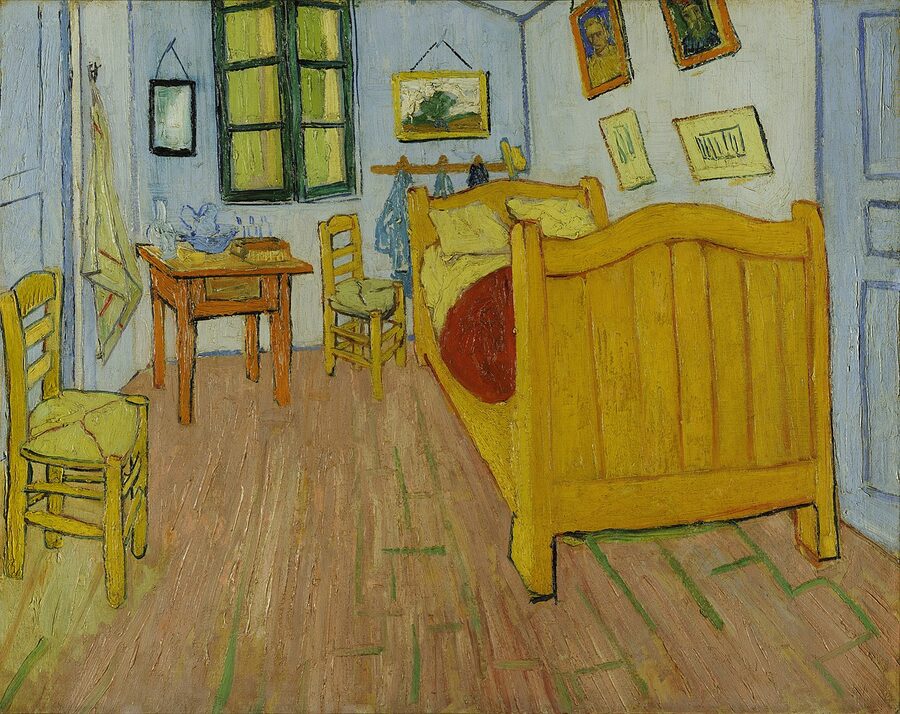
- The Bedroom. Note the empty chair. Note that the perspective is wrong on purpose; the back wall slants inward in a way no real bedroom does. He’s painting a feeling, not a room.
- Sunflowers (1889 Amsterdam version). Get close enough to see the brushwork. The petals are sculpted with paint, not brushed. He used a thicker paint than most painters, and the surface is closer to bas-relief than to flat oil.
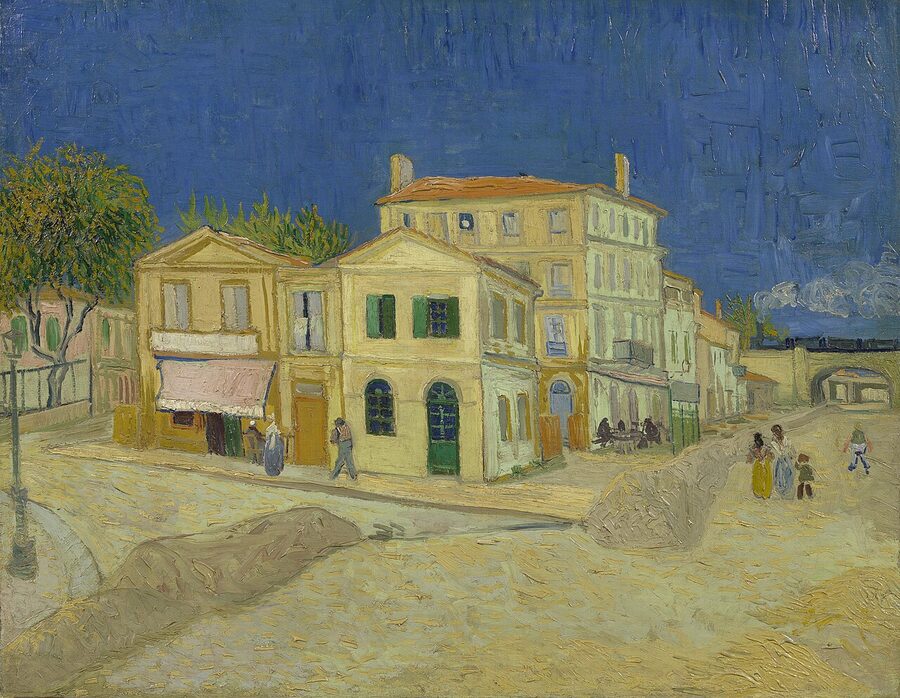
- The Yellow House, context for everything else. This is the building he rented in Arles, where he painted the first Bedroom, where Gauguin arrived in October 1888 and where the December breakdown happened. The building is gone. It was destroyed by an Allied bomb in 1944.
The upper floors are where the curation gets braver
Most travellers do the Gallery of Honour and quit. That’s leaving the better half of the museum behind. The upper floors are where the museum places his Dutch peasant paintings, his Paris experiments, his contemporaries’ work, and the late-period output that makes the Gallery of Honour make sense.
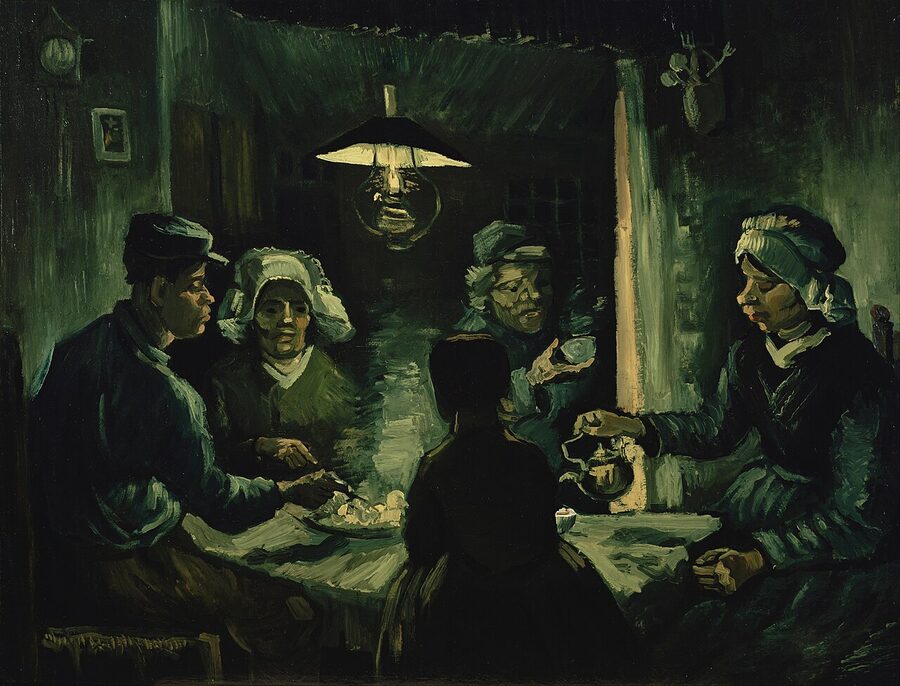
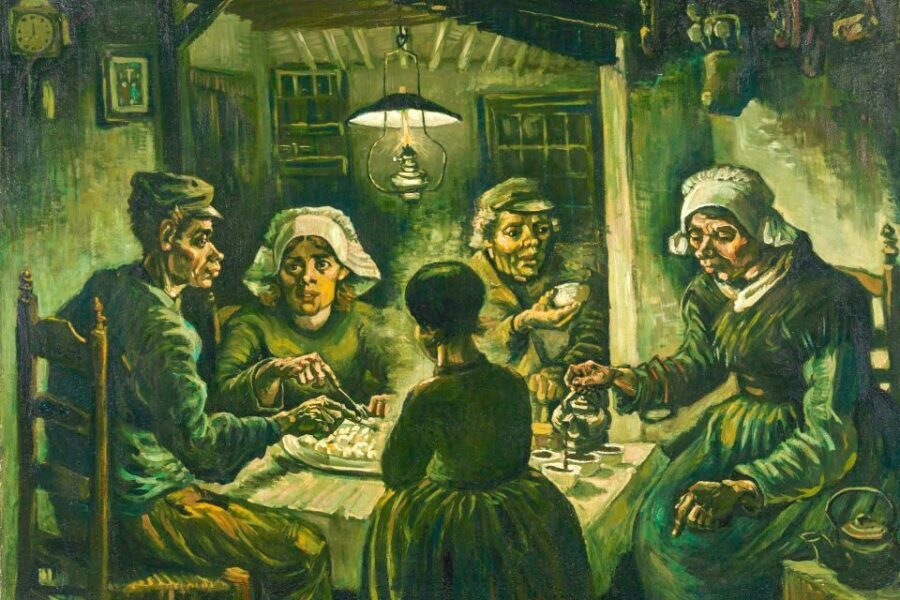
Start on the floor with the early Dutch work. The Potato Eaters is here. It’s the painting Vincent was proudest of in 1885, and the one that nearly ended his career. Theo, working as an art dealer in Paris, told him in writing that nobody would buy this. The faces are deliberately misshapen. The hands are the size of garden tools. The tonal range is dim brown to dim brown. He was painting peasants the way Millet and Daumier had taught him to paint peasants, but in a country where people wanted polite countryside scenes.
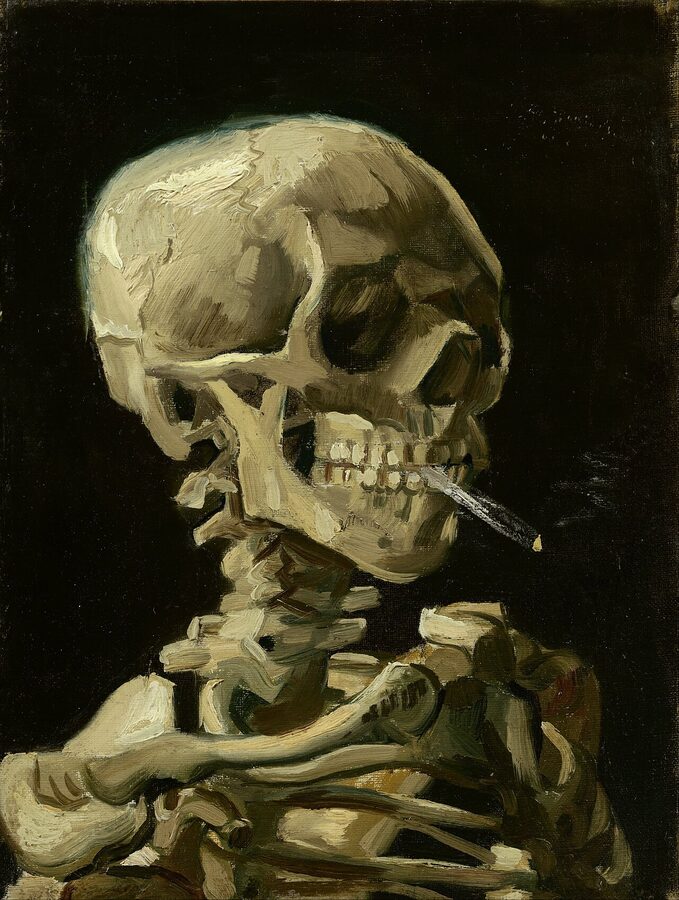
Walk through the Paris paintings on the first floor. This is where you watch him discover Impressionism in real time. He arrived in Paris in 1886 painting brown peasants and left two years later painting in colour broken into distinct strokes. The pointillist self-portraits are here. So is one of the more peculiar early works in the collection, the skeleton with a burning cigarette, painted as an Antwerp Academy in-joke.
The contemporaries floor is the room most travellers skip and where I’d send someone who already knows Van Gogh well. There’s a Gauguin self-portrait Gauguin sent to Vincent during their letter-friendship in 1888. There are works by Émile Bernard and Henri de Toulouse-Lautrec. The point of the floor is that Vincent didn’t paint in a vacuum. He was inside a network of friendships and rivalries with the post-Impressionist generation, and the museum’s curation makes this visible in a way most single-artist museums refuse to do. If you’re going on to the Orsay in Paris later in the trip, this floor is the bridge.
The basement letters archive
This is the room nobody mentions. The basement holds a rotating selection of the 700-plus surviving letters between Vincent and Theo, written across nearly 20 years. They are the largest body of personal correspondence by a major painter that we have. Most of the letters are illustrated. Vincent drew sketches in the margins and over the page-breaks of paintings he was working on, so Theo could see what he was making.
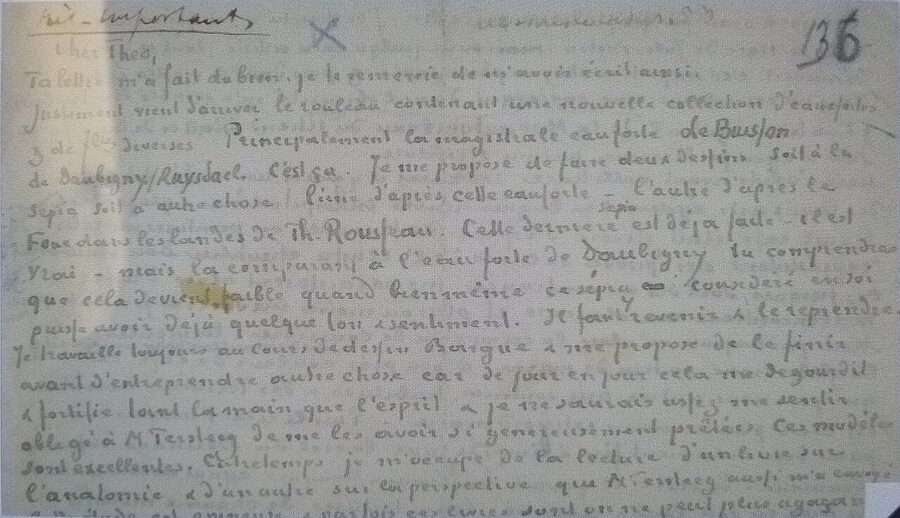
If the audio guide track for the basement is on, follow it. It plays excerpts from specific letters, in voice acting that the museum commissioned. The letter from July 1890 is the one I think about. Vincent writes to Theo about money, about whether his work will ever sell, about whether he’s a burden on Theo’s family. He signs off, and a week later he walks out into a wheatfield with a revolver. The audio guide doesn’t say “this is the letter before he died”, but the chronology in the wall labels makes it obvious if you’re paying attention.
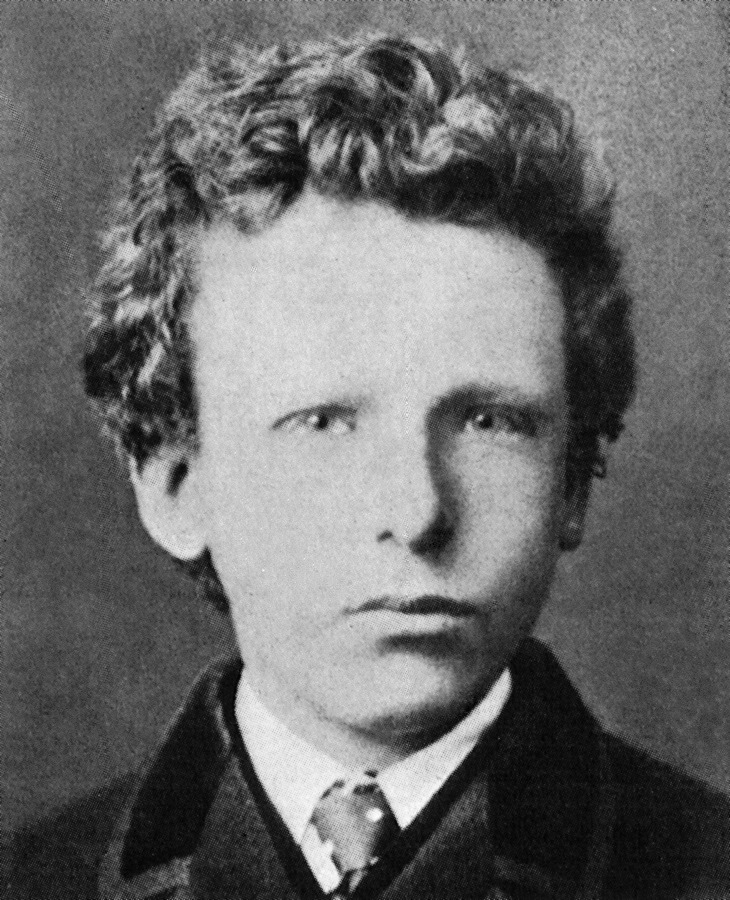
The late Auvers paintings, on the third floor
If you have an hour left, go up. The third floor holds the work from the last 70 days of Vincent’s life: May to July 1890, in the village of Auvers-sur-Oise north of Paris, where he was living under the care of Doctor Gachet. He painted with a frenetic productivity in this period, about a painting a day on average. Around half of those works are scattered globally; a meaningful share are here.
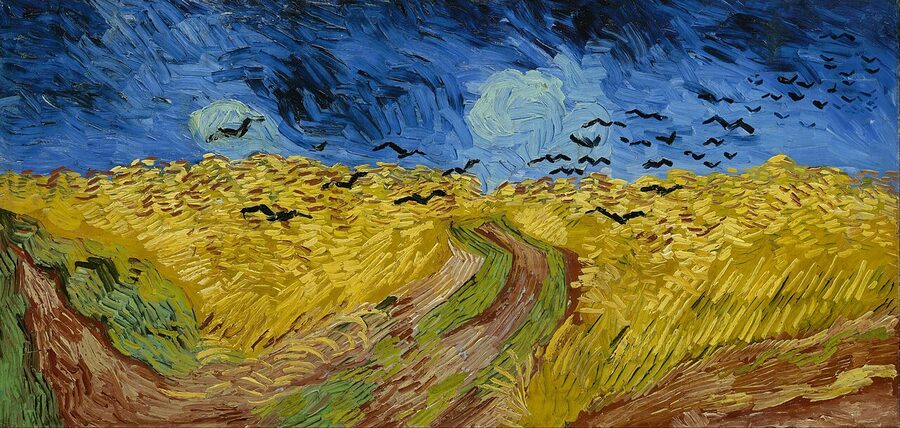
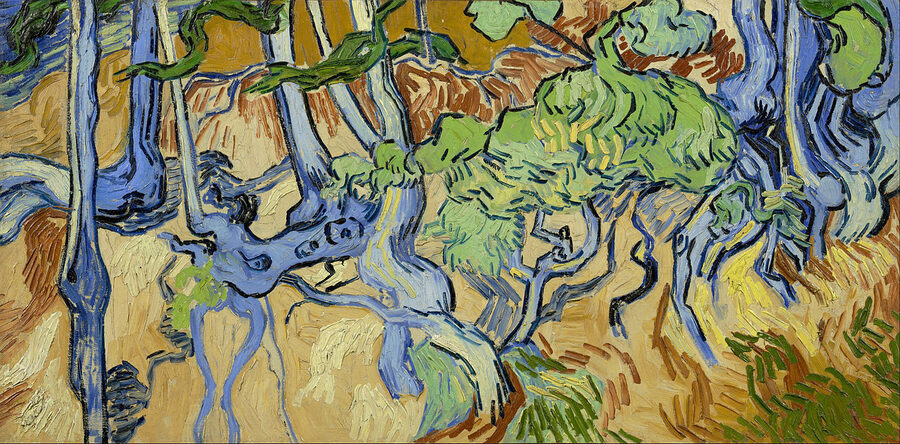
Wheatfield with Crows is the painting most travellers think of as his last. The recent scholarship suggests Tree Roots, an unfinished canvas of tangled tree trunks at the edge of a road in Auvers, may have been the actual final work. Researchers in 2020 identified the specific patch of road where it was painted, on a route Vincent walked the morning of his suicide. Either painting works as the closer; Tree Roots is the more haunting one, partly because it’s unfinished and partly because half of it is mud.
If you’ve already seen Starry Night elsewhere (most people picture it when they hear “Van Gogh”, but it’s not in Amsterdam, it’s at MoMA in New York), the third-floor late work is closer in spirit to it than anything in the Gallery of Honour. The brushwork is almost the same in places. The night sky in Starry Night Over the Rhône, which lives at the Musée d’Orsay, is from the same restless year.
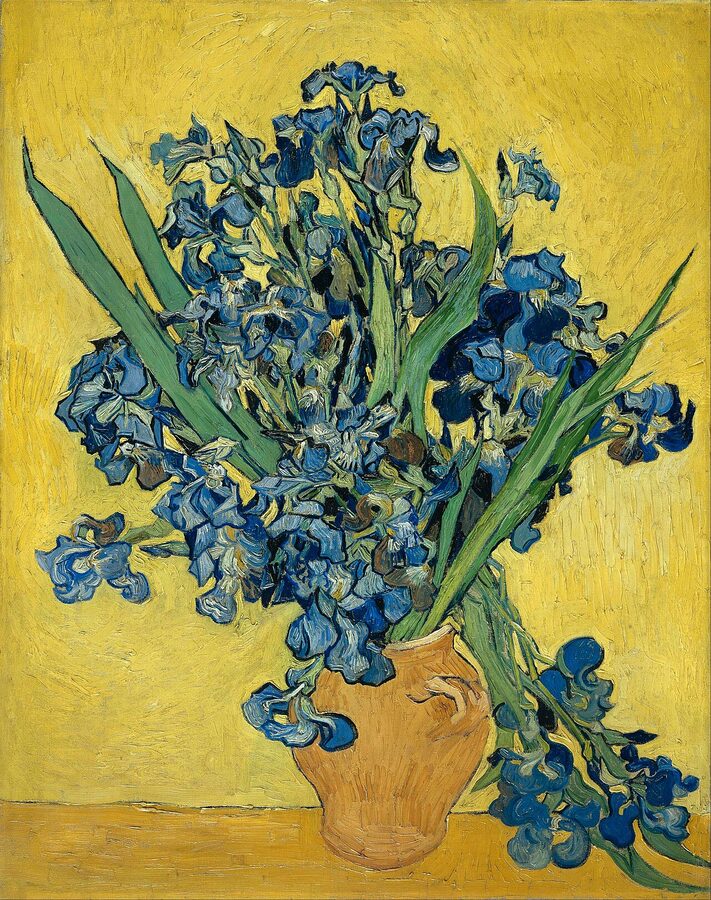
The recommended tour bookings
There are basically three live ways to buy your ticket online. They differ mostly in whether you want to bundle the museum with a canal cruise. The flagship for almost everyone is the standard timed-entry. Pick the combos only if the cruise is genuinely on your list. Here are the three I’d point a friend at, in the order I’d suggest them.
1. Standard Van Gogh Museum Ticket: $32
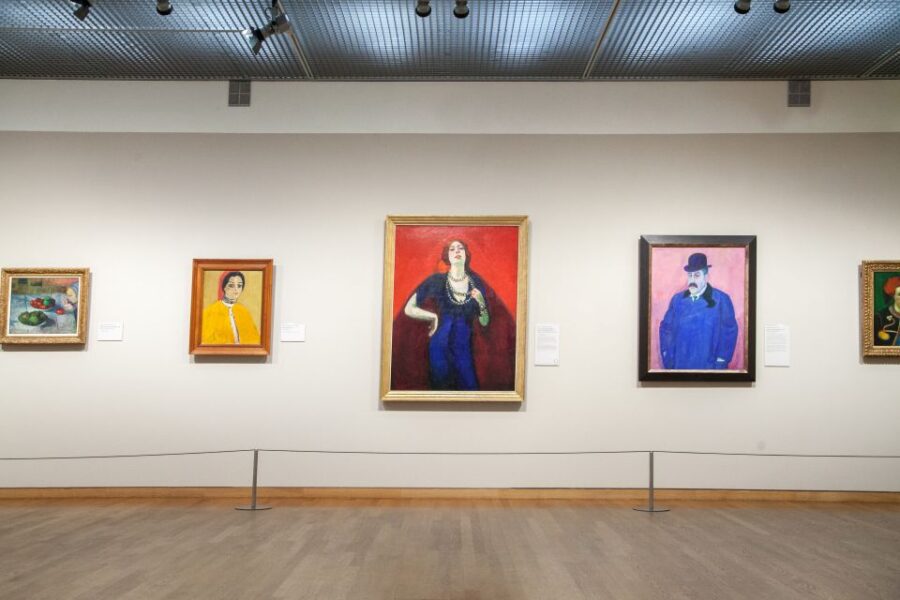
The flagship and the only one most travellers should pick: direct timed-entry, audio guide as a paid add-on at the door, your day open for everything else on Museumplein. Our full review walks through the entry process and what to skip. Pick this unless you specifically want a same-day cruise.
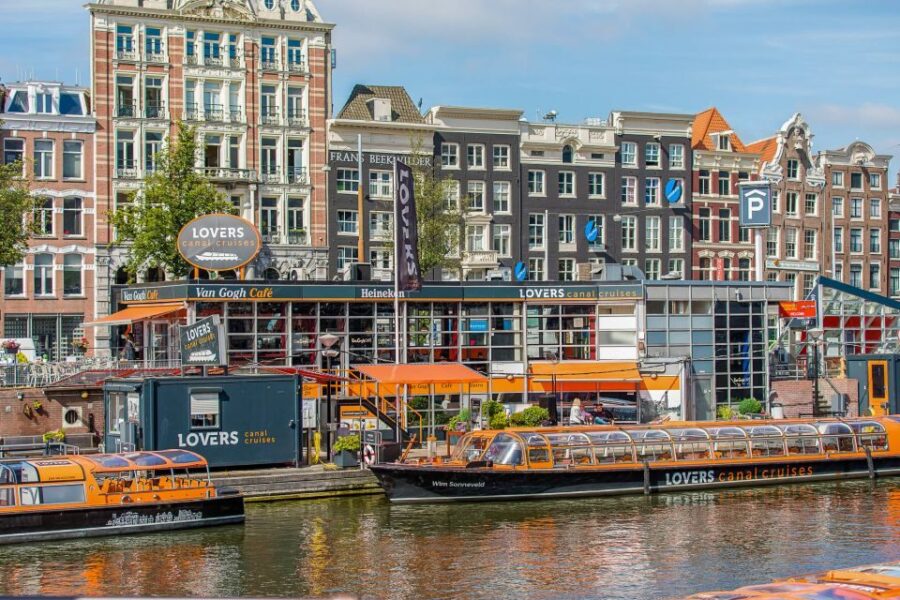
2. Museum Ticket and City Canal Cruise Combo: $47
The classic two-thing combo: a 75-minute classic canal loop with multilingual audio narrative, paired with the museum entry on an open-window booking, so you can do the gallery at 10:00 and float at 15:00. Our review of this combo covers the boarding point near the Hard Rock Cafe. Pick this only if you’d buy both anyway; it’s not a discount, it’s a planning shortcut.
3. Skip-the-Line Museum and 1-Hour Canal Cruise: $47
The alternative bundle: same museum entry, but a 60-minute cruise instead of 75 with a smaller-boat operator and a fixed-window timing rather than open. Our review covers the differences. Pick this if you want a slightly shorter boat with a smaller crowd.

How long to actually budget
The museum tells you to budget two hours. Two hours is the floor for the Gallery of Honour and a fast walk-through of the upper floors. It is not enough to read the audio guide carefully or to spend any real time in the basement letters archive.
My honest recommendation: three hours minimum if you care, four hours if you read every wall label and every audio track. I’ve spent five there once, in winter on a Friday late-night, and ran out of time in the contemporaries floor. The museum is bigger than it looks from the Museumplein side. The Rietveld block alone is four floors of paintings; the Kurokawa wing adds a temporary-exhibition floor that often holds a 30-minute show on top.
Plan the rest of the day around the museum, not the other way round. If you’ve got the museum at 10:00, don’t try to fit Anne Frank House at 13:00. You’ll be cooked. Lunch on Museumplein, walk the Vondelpark for an hour, and save the next big sit-down for the next day. Amsterdam’s most-photographed museums (Van Gogh, the Rijksmuseum and the Moco Museum across the lawn) are clustered specifically so you can do them as a sequence. Don’t.
What’s not in the museum
The painting most travellers expect to see in Amsterdam, Starry Night (the swirling night sky over the cypress and the village), isn’t here. It’s at the Museum of Modern Art in New York. Starry Night Over the Rhône, an earlier and to my eye better night sky, is at the Musée d’Orsay in Paris. The second version of The Bedroom is also at the Orsay. Vincent painted three; the museum has the first; the Art Institute of Chicago has the third.
The single-painting cult around The Last Supper in Milan, where you book months ahead for 15 minutes in front of one fresco, has its closest Van Gogh equivalent in Leonardo’s fresco and the Orangerie‘s Monet water-lily room. They are pilgrimage paintings where the experience is the room as much as the work. Amsterdam doesn’t have one of those. It has 200 paintings instead, and the magic is that you can spend three hours in the company of one painter’s whole arc, not 15 minutes in front of his single best thing. Compared to the Louvre, the Van Gogh Museum is a focused, careful, single-voice experience.
Practical bits I didn’t fit elsewhere
Lockers in the cloakroom are free for backpacks. Photography is allowed without flash in the permanent collection, banned in temporary exhibitions. The bathrooms on the third floor are the quietest. The cafe near the entrance is fine for coffee, expensive for a meal; walk five minutes to the De Pijp neighbourhood instead. Wheelchair access is good on every floor; lifts are large and clearly marked.
The shop is on the ground floor, near the exit. The reproductions are decent. The books, particularly the multi-volume edition of the letters, are the souvenir worth the suitcase weight. If you’re an art-museum traveller doing a multi-city trip, the museum’s letter compilation is a better souvenir than anything you’ll buy at the Prado or the Uffizi.
Where this fits in a longer Amsterdam trip
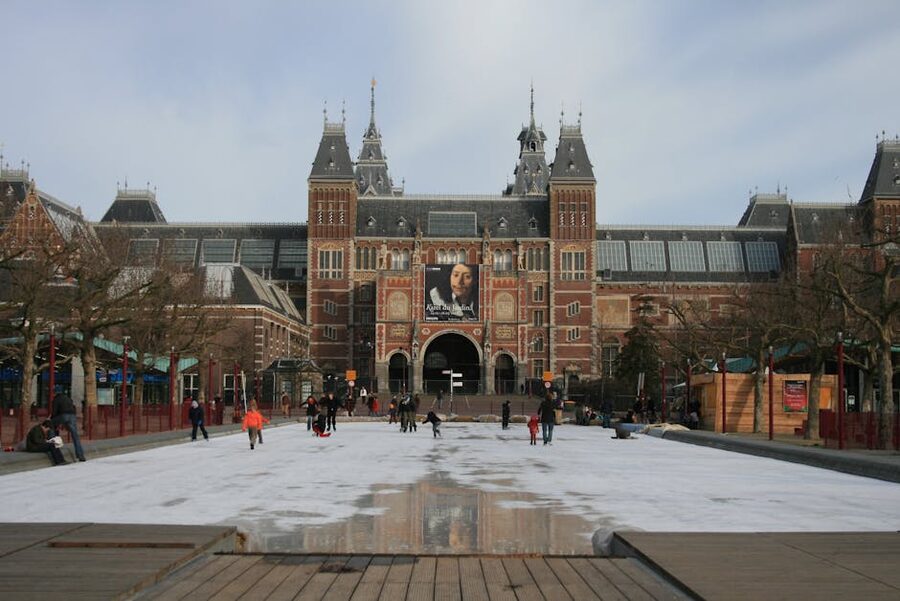
The Van Gogh Museum pairs naturally with the Rijksmuseum across the lawn. The Rijksmuseum is the Dutch Golden Age (1600 to 1700), the Van Gogh is the late 19th century. They’re chronologically about 200 years apart, and doing them in that order on consecutive days reads as a long historical sweep through Dutch painting. The Moco, also on Museumplein, is the modern-art counterweight if you’ve still got museum-stamina at the end.
The other obvious pairing is with the Anne Frank House walking tour, on the other side of the city centre. Both are emotional, both want your full attention, and they don’t share a day well. Split them. Day one Van Gogh, day two Anne Frank. Eat between them. Walk the canal belt. Don’t try to be efficient with grief.
For a day out of the city, the Keukenhof tulip gardens in spring are the closest thing to standing inside a Van Gogh. The colour blocks are similar; the scale is similar; the over-saturation is real. It’s a good day-after for someone who’s just spent three hours in front of Sunflowers.
Comparing to the rest of the post-Impressionist circuit
If you’re doing a multi-country art-museum trip in Europe, the Van Gogh Museum is one node in a network. The Musée d’Orsay in Paris is the other obvious one: same period, broader scope, less focused. The Orangerie in the Tuileries holds Monet’s late water lilies and a focused early-20th-century collection. Monet’s house at Giverny is the closest Impressionist analogue to a single-artist pilgrimage, and the only thing in France that comes close to the experience here.
The Fondation Louis Vuitton in Paris occasionally runs major Van Gogh shows, including a 2023 retrospective that pulled paintings from this museum on loan. The Picasso Museum in Málaga and the Reina Sofía in Madrid are the Spanish parallels: born-here, museum-built-later, single-or-near-single-artist focus. Each is its own version of the same idea: take one artist’s whole arc, give them a building, and let visitors spend three hours with the work in chronological order.
The Italian comparison is harder. The Uffizi is broader and earlier; The Last Supper in Milan is the closest single-painting-as-pilgrimage experience anywhere in Europe. Where the Last Supper is a 15-minute timed entry to one fresco, the Van Gogh Museum is a three-hour entry to one career. Both are worth the trip; they’re different products.
Closing thought, then go
Vincent sold one painting in his lifetime, for around 400 francs to Anna Boch in February 1890. He was 36. He died five months later, having made roughly 860 paintings in 10 years and never once seeing his work in a museum. The fact that you can walk through this collection for $32 in 2026 is the long, slow result of one woman, Jo van Gogh-Bonger, refusing to scatter the work. If you take nothing else from the visit, take a moment in the basement letters room and read the 1882 letter where Vincent tells Theo “If you can stand it, stand it”, the line they put on a wall plaque near the exit. Then go upstairs.
For the rest of your Amsterdam art days, the Rijksmuseum is the next stop, the Moco is the modern fix, and the Anne Frank walking tour is the other emotional weight to schedule on a separate day. If you’re heading on to Paris, the Orsay holds Vincent’s other Bedroom and his Rhône night sky; if you’re going further, the Louvre, the Orangerie and Giverny close the post-Impressionist loop. Skip the bus tour. Skip the booze cruise. Spend the time in the gallery instead.