
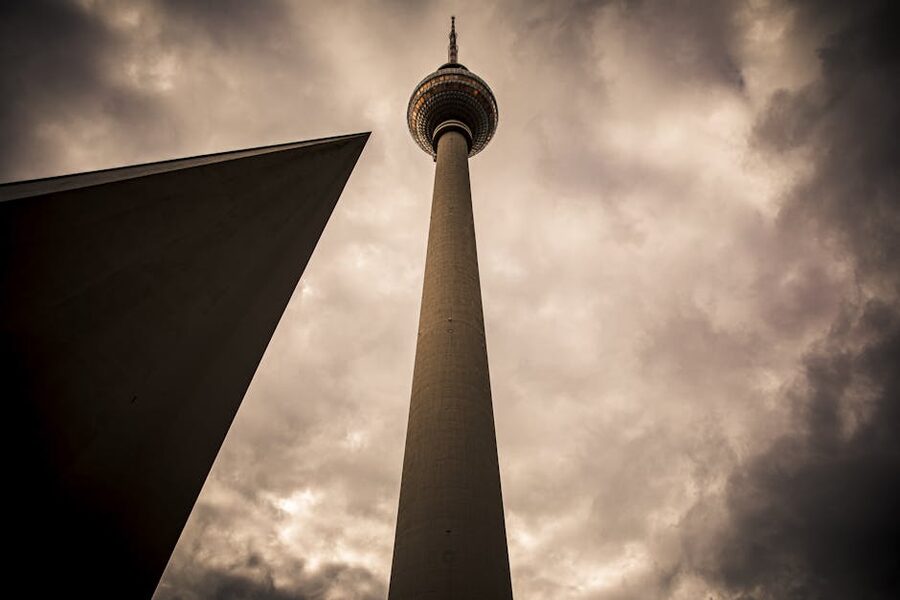
The lift takes 40 seconds. You step out at 203 metres and the city is laid out below you like a map someone hand-painted from memory. The reason to actually go up the Fernsehturm is what the view used to be, in 1969, when East Germany finished it and pointed it at the West like a 368-metre piece of propaganda.
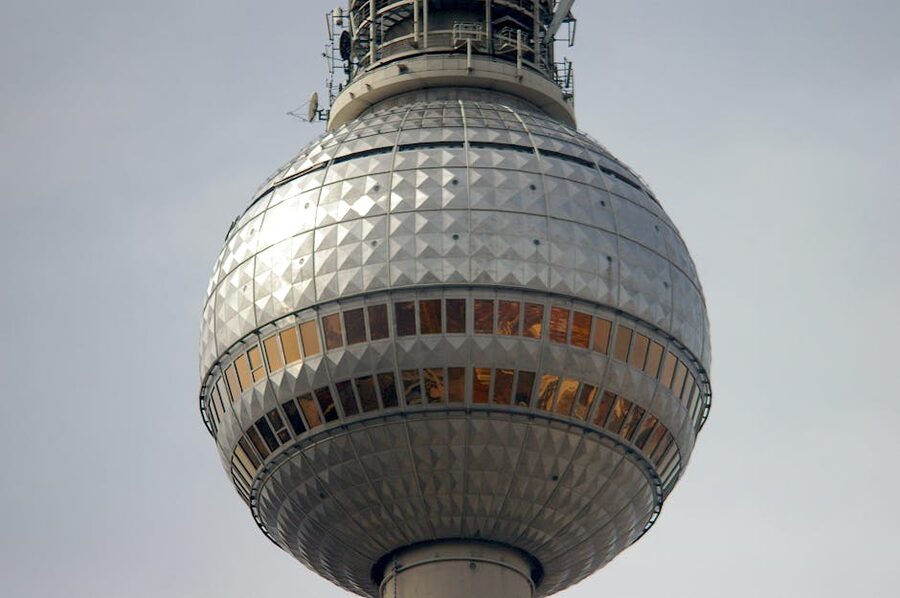
Then there’s the cross. Hit a sunny day and the steel-clad sphere reflects a perfect cross-shape across its surface. West Berliners called it Pope’s Revenge. The atheist GDR government tried to repaint, retreat, redesign. They never fixed it.
In a Hurry? Three Ways Up
- Standard ticket ($33): the one most people want. 45 minutes, fast-track lift, observation deck at 203 metres. Check availability.
- Sphere restaurant entry ($33, 2 hours): the rotating restaurant table experience. Food is fine, the rotation is the point. Check availability.
- Tower + VR ($43): add 20 minutes of nine-centuries-of-Berlin VR after the deck. Check availability.
Why the Cold War context changes the visit
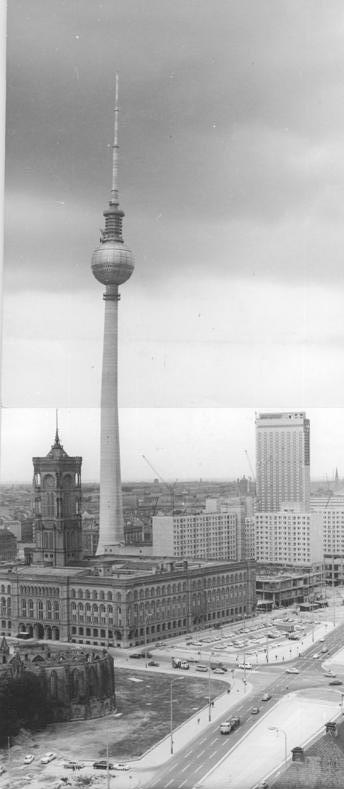
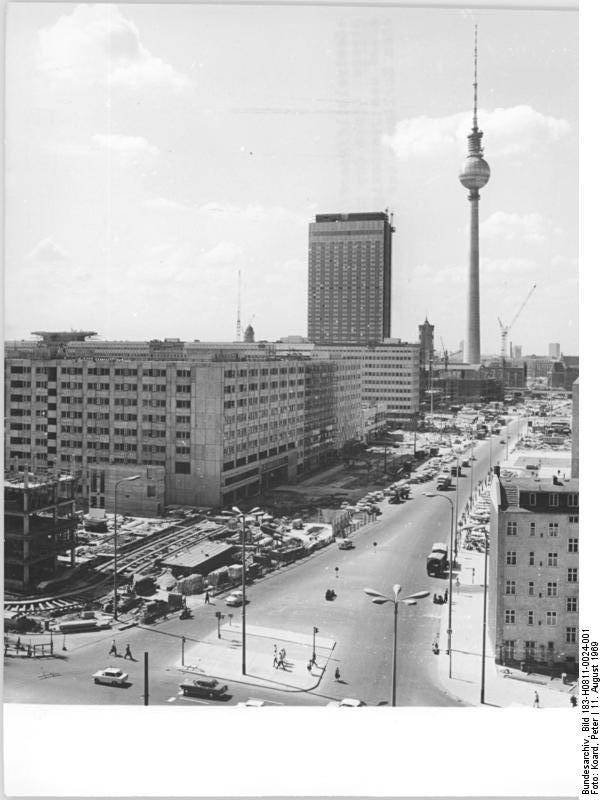
The Fernsehturm was built between 1965 and 1969 by the architects Hermann Henselmann, Jörg Streitparth and Werner Ahrendt. The brief from the GDR was simple. Make a broadcast tower. Make it taller than anything in the West. Make sure people see it from West Berlin viewpoints, from Tempelhof airport (the field that fed the 1948 to 1949 Berlin Airlift), from anywhere a Western tourist might point a camera.
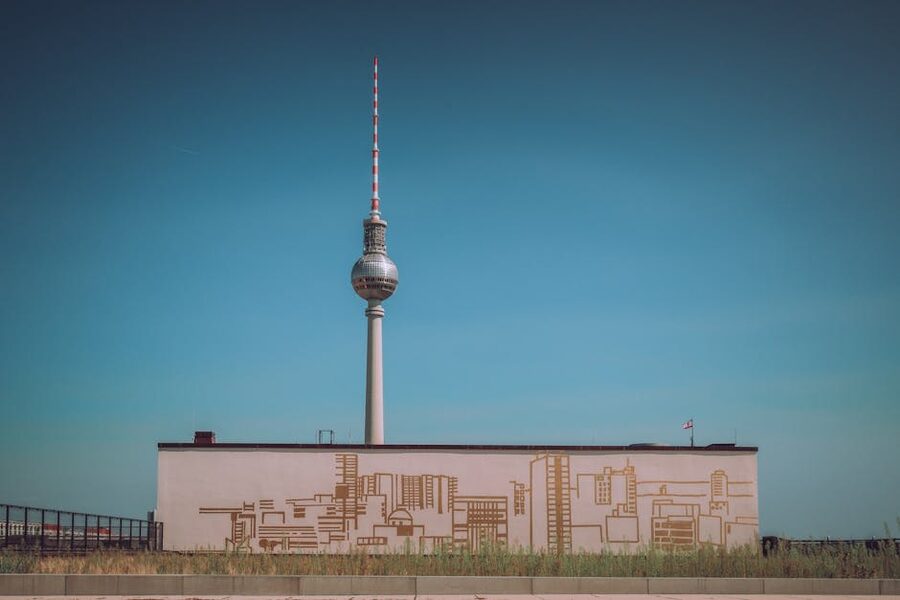
It worked. At 368 metres it remains the tallest structure in Germany, taller than the Eiffel (330m) by a margin you can feel from the ground when you stand at the foot of it. It’s also the third-tallest free-standing structure in the EU, after Riga’s TV Tower (1976) and Vienna’s Donauturm (1964). For comparison, when you’re booking the Eiffel Tower in Paris, you’re going up something Berlin’s GDR architects deliberately out-built by 38 metres.
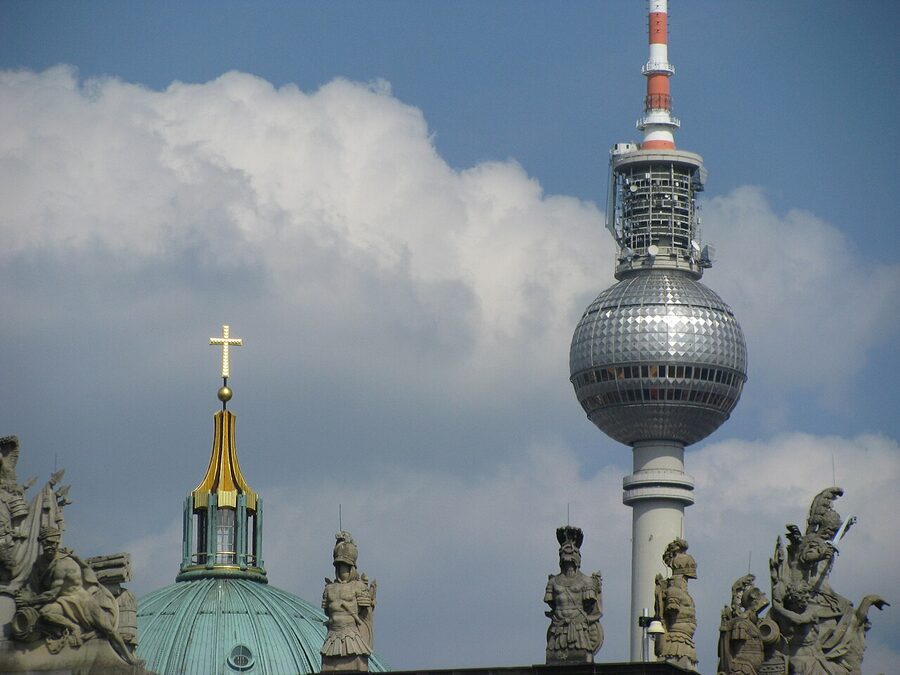
The sphere is the part nobody could have predicted would cause political trouble. It’s clad in stainless steel, faceted in a pattern that catches sunlight at certain angles. When the sun hits it right, the reflection forms a clean cross-shape across the curve.
The GDR was officially atheist. East Berliners noticed the cross within months. West Berliners noticed faster, and gleefully. The nickname stuck: Rache des Papstes, the Pope’s Revenge. Walter Ulbricht, the East German leader who had pushed for the tower, allegedly tried multiple solutions. None worked. The cross is still there. You’ll see it on a clear day if you walk up to the base from the Marienkirche side and look up.
What the trip up actually feels like
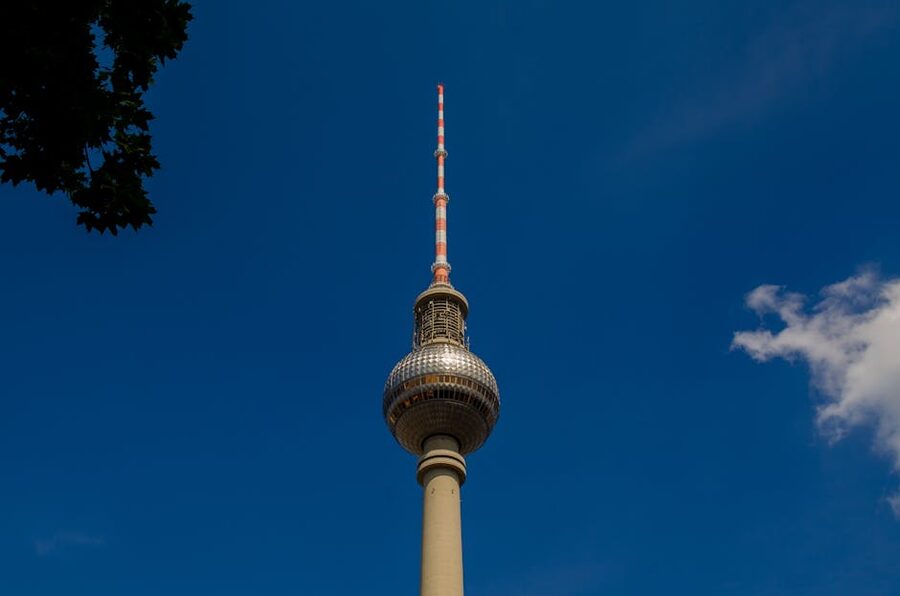
You go in at street level on Panoramastrasse 1A, in Mitte, right at Alexanderplatz. The base building is small. The shaft is enormous. There’s a security check, a ticket scan, and then the elevator hall. Two lifts run. They are fast. The full ride is about 40 seconds, ear-popping like a long elevator on the way up the Empire State.
You step out into a circular observation gallery, one continuous ring of windows, all of Berlin laid out below you. Then you walk one short flight of stairs up and you’re in the Sphere restaurant level, which rotates. One full rotation takes roughly 30 minutes. If you’re not eating, you don’t go up that flight. You stay on the observation deck and walk around the ring at your own pace.
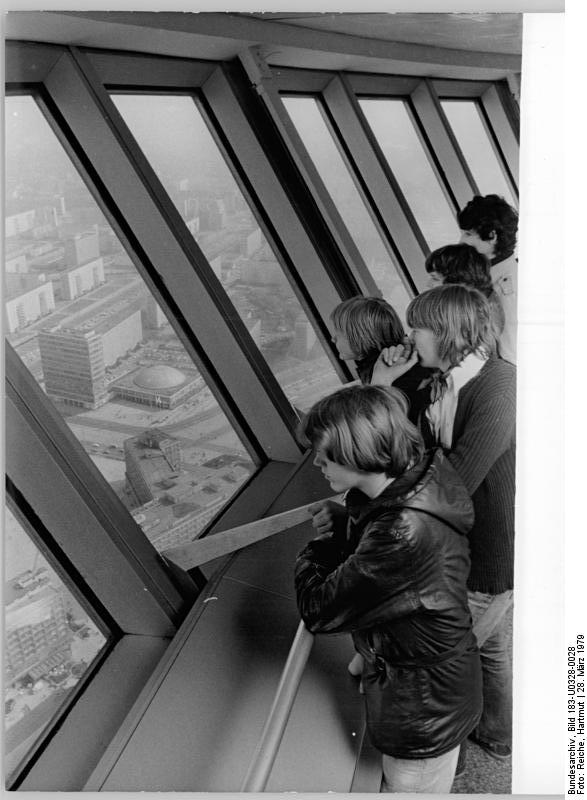
What you can see from up there, on a clear day: the Reichstag dome and the government district to the west, the Brandenburger Tor just past it, the Tiergarten as a vast green rectangle, the gold-tipped Victory Column inside it. To the north, Hauptbahnhof. To the south, the Spree threading past Museum Island. Out east, the Karl-Marx-Allee runs straight to the horizon (this was the GDR’s showpiece boulevard, the place the tower was deliberately positioned to anchor). On a hazy day you’ll get maybe 20 kilometres of visibility. On a clear winter day after rain, 60 kilometres, and you can see deep into Brandenburg.
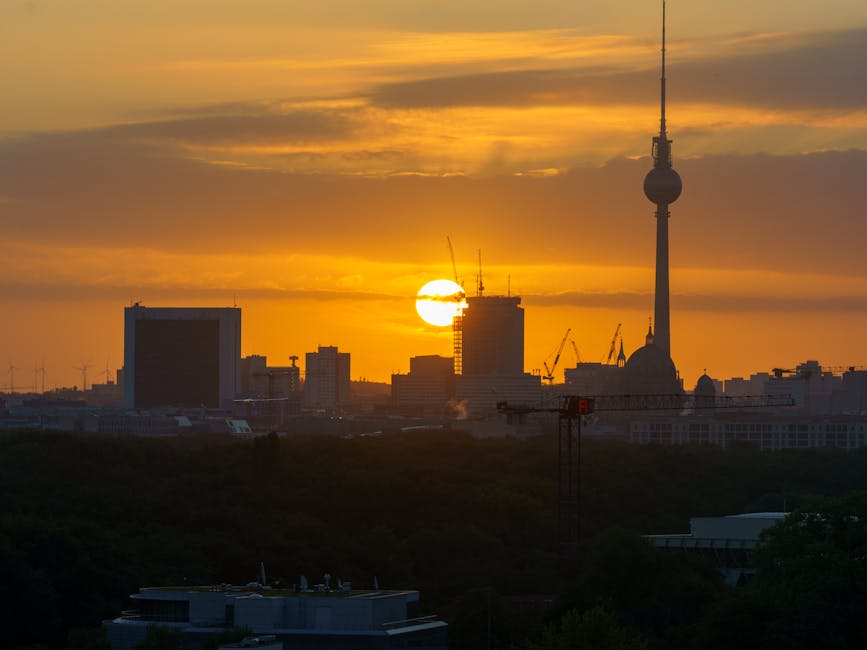
Sunset is the only time you should book
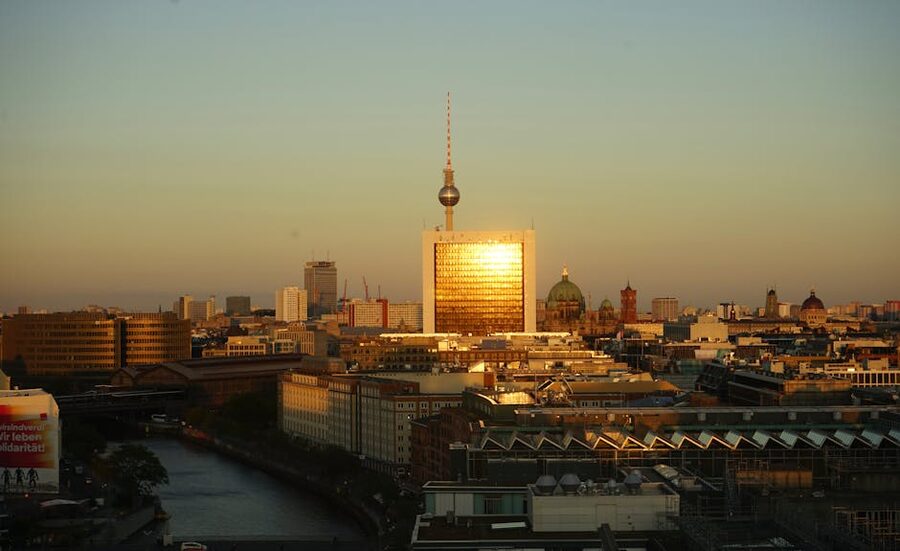
The Fernsehturm is open 09:00 to 23:00 daily, but you don’t want a midday slot. Midday gives you washed-out photos, hazy distance, and the worst of the Alexanderplatz crowds at the base.
What you want: book your entry slot for 30 to 45 minutes before sunset. Berlin sunsets land at 16:00 in December and 21:30 in late June, so check the date you’re booking for. Walk up, ride up, get on the deck while the gold-hour light is still on the buildings. Watch the sun drop behind the Brandenburger Tor and the Tiergarten. Stay another 20 minutes for blue hour, when the city lights come on and the river glows. Walk back down at full dark.
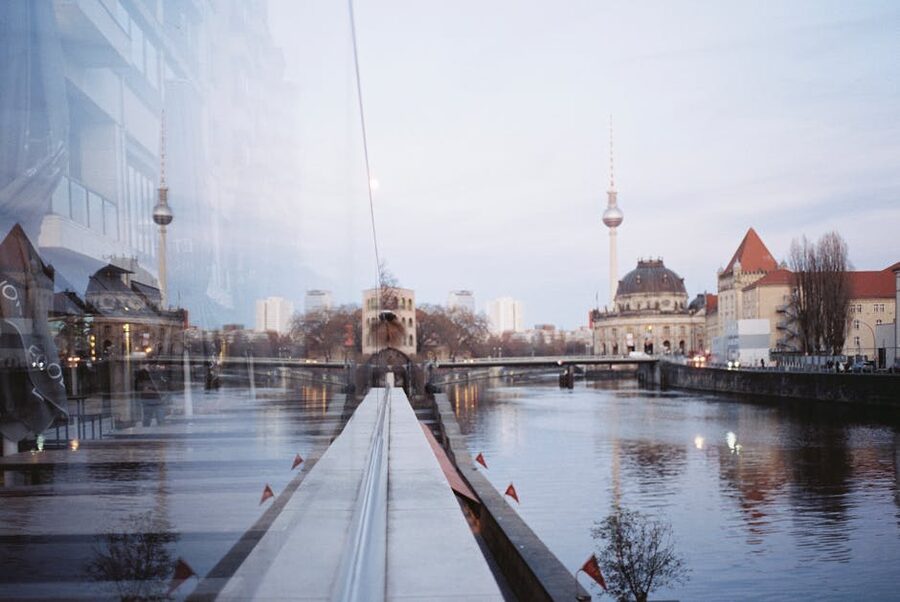
This isn’t a small tip. The price doesn’t change with time slot. The view does, dramatically. A 14:00 booking costs the same as a 19:30 booking and shows you a fraction of what you came for. The same logic applies at Tour Montparnasse in Paris and at the Setas de Sevilla in Seville: the view is on the building, but the experience is in the light.
Standard, Sphere or VR: picking your ticket
The standard ticket is what 90 percent of visitors actually want. $33 per adult, fast-track lift, deck access, you stay as long as you like. The fast-track lane matters in summer. Walk-up queues at the base run 60 to 90 minutes on July weekends. Pre-booked online entry, same lift, ten minutes.
The Sphere restaurant ticket is the one to think about carefully. It’s $33 for entry only (rather than $33 for entry plus a meal), and the meal package costs more on top. The restaurant is one floor above the deck, rotates once every 30 minutes, and has been on this site since 1969 (it was called the TeleCafé until 2013). The food is fine. Not extraordinary. The 2024 rebrand brought in chef Tim Raue’s name, and the menu lifted accordingly, but you’re not really there for the cuisine. You’re there to watch the city revolve past your fork.
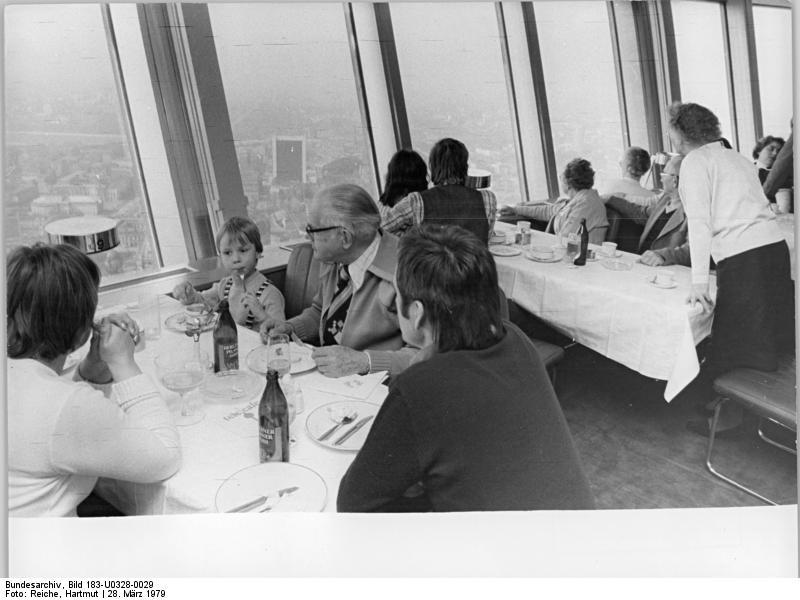
Book the restaurant only if the rotation itself is the point of your visit. If you’re chasing Berlin’s best food, eat anywhere else and come up here for the deck only. There are 50 better restaurants within a 15-minute walk. There is exactly one rotating one with this view.
The VR add-on is the one I’d skip unless you’re with kids. It’s a 20-minute virtual reality timeline of Berlin’s nine-centuries-of-history sequence, projected through a headset down on the lower level. It’s competently made. It’s also competing with the actual view of actual Berlin two floors above your head. Spend the $10 difference on a beer at the deck bar and look out the window.
Booking, queues, and what goes wrong
Tickets sell out for sunset slots in summer. May to September, book 5 to 14 days ahead for any weekend evening. Spring and autumn weekdays you can usually walk up and get a slot for the same hour. December and January are quietest because the sunsets are at 16:00 and the wind off the Spree cuts hard at the base.
The website to book direct is tv-turm.de, the operator. The same standard ticket is on GetYourGuide for the same price with free cancellation up to 24 hours before. I use the GetYourGuide route for one reason: if the weather rolls in and the visibility drops to 200 metres of fog, you cancel without an argument. The direct site is stricter.
Things that go wrong:
- The walk-up queue. If you didn’t pre-book, expect 60 to 120 minutes in summer. Pre-book everything.
- Late arrival. If your slot is 19:00 and you turn up at 19:25, the system has rolled to the next entry batch. They’ll usually let you in but you’ve lost your golden-hour window.
- Sphere restaurant timing confusion. The restaurant ticket lets you up at a specific time for a specific seating. The standard ticket is 45 minutes total on the deck. They are different products with different lift queues.
- Bag policy. Big rucksacks go to a locker in the basement. Plan an extra five minutes.
- The closure schedule. Maintenance closures are rare but they happen. Check the operator site for any scheduled closures the week of your visit.
Three ways up the tower, ranked
1. TV Tower Standard Entrance Ticket: $33
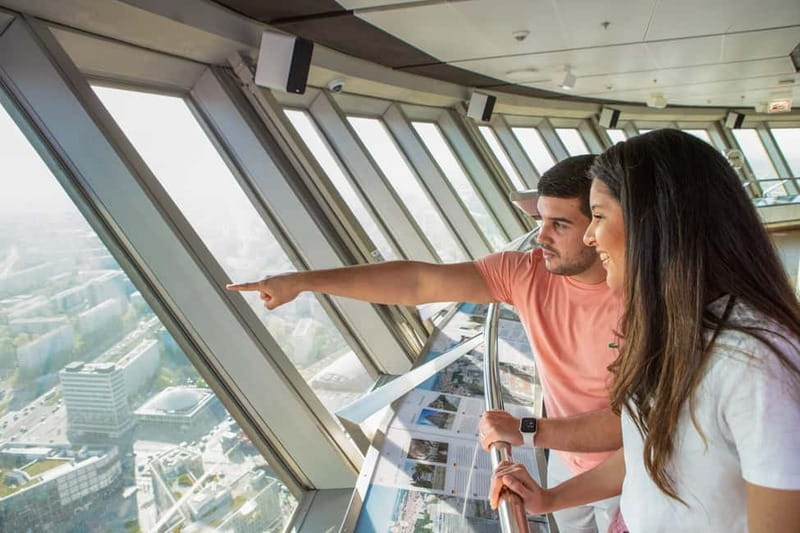
This is the right pick if you want the Berlin-from-above moment without the dinner commitment, and the most-booked Fernsehturm ticket on the market for good reason. Our full review walks through fast-track logistics and the deck-versus-restaurant decision in detail. Skip the walk-up queue, ride up, walk one ring, watch the city.
2. TV Tower SPHERE Restaurant Tim Raue Entry Ticket: $33
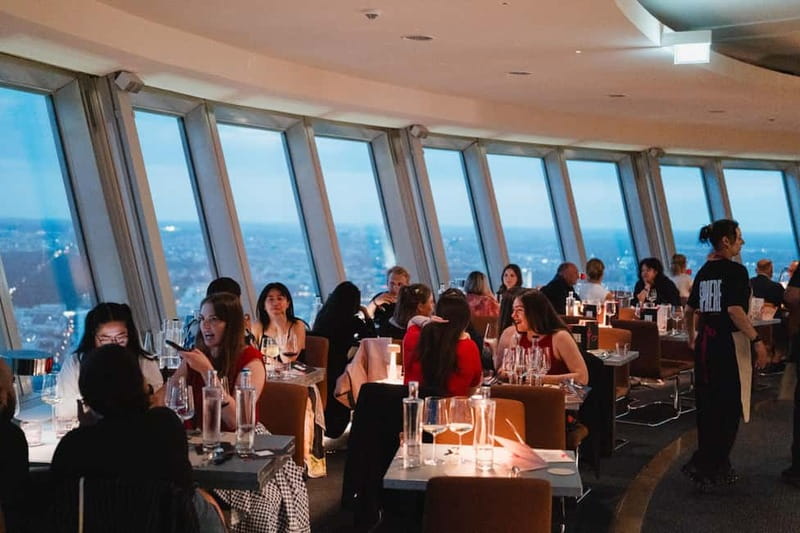
This is the right pick if you want the city-revolves-past-your-table moment that Berlin has been selling since 1969, and our full review of the Sphere experience covers what’s actually on the menu now. The trade-off: you’re paying for the engineering, not the cuisine. Eat elsewhere if you want a great Berlin meal; book this if the rotation is the entire point.
3. TV Tower Entrance and VR Experience: $43
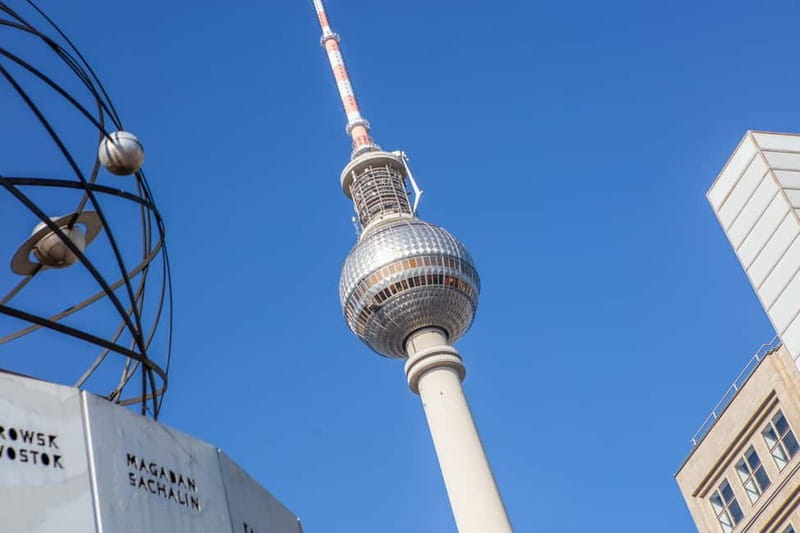
This is the right pick if you’re travelling with kids who need a structured story to anchor the visit, and the VR review walks through what the headset shows and what it doesn’t. The VR is fine. The actual view from 203m is the better story; if you’ve only got 45 minutes, skip the headset.
Getting there: Alexanderplatz at street level
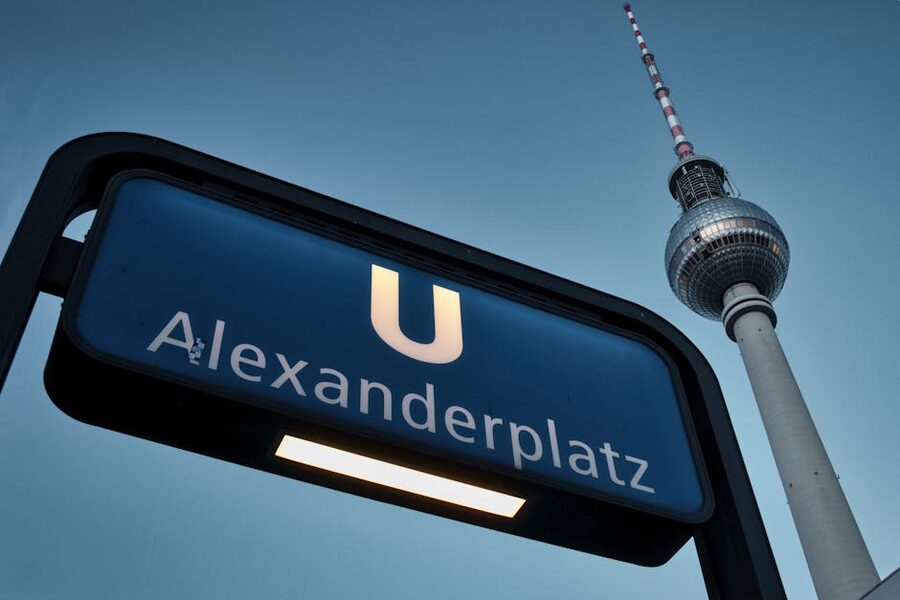
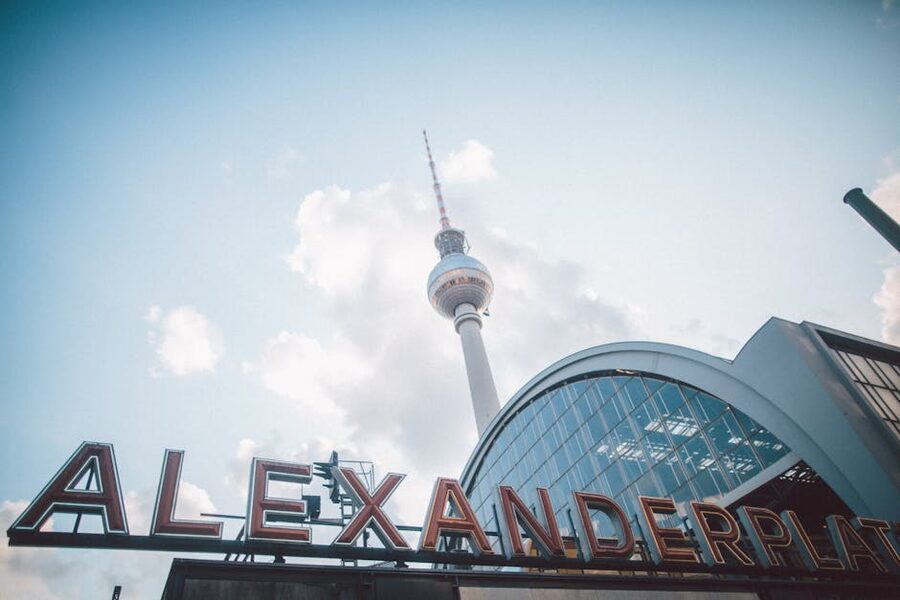
Alexanderplatz is one of Berlin’s three main transit hubs. S-Bahn lines S3, S5, S7, S9 all stop here. U-Bahn U2, U5, U8. Tram lines M2, M4, M5, M6. The square itself is a flat plaza with the Weltzeituhr (Urania World Clock) in the middle, the Park Inn hotel on one side, the Galeria Kaufhof on another, the Marienkirche tucked at one end.
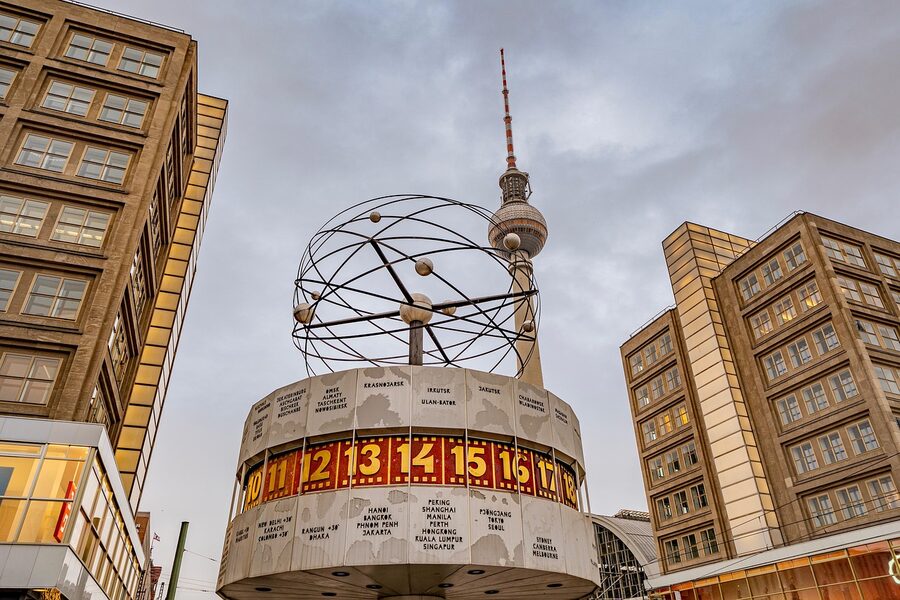
Walk distance from the U-Bahn exit to the tower base is about 200 metres, two minutes flat. The tower entrance is the small red-brick building called the Tower Pavilion, on Panoramastrasse, behind the larger glass entrance complex. There’s signage but it’s understated; if you’ve never been, look for the queue.
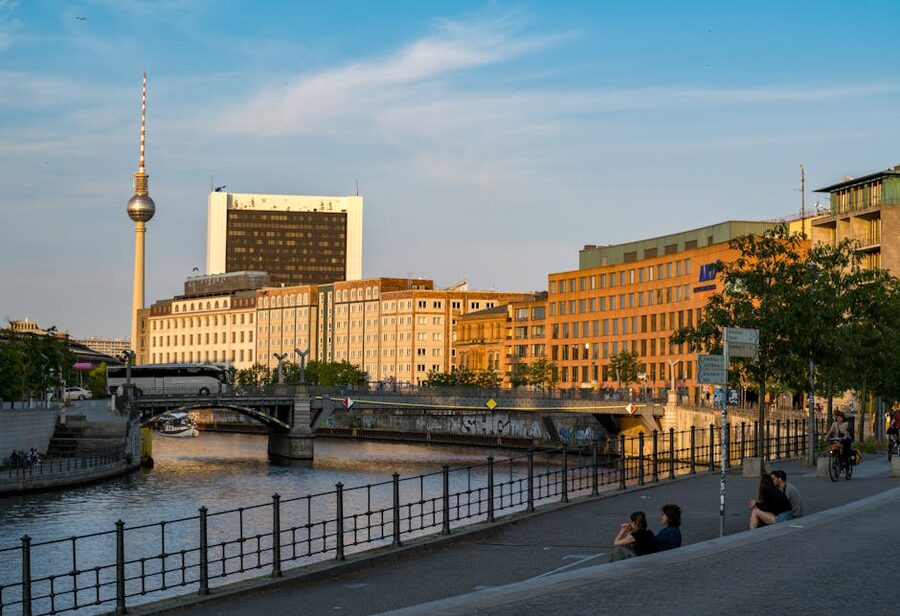
From elsewhere in central Berlin: it’s 2.5 kilometres east of the Reichstag, 1.8 kilometres east of Brandenburger Tor, walking distance from Hackescher Markt and Museum Island. If you’ve already done the Reichstag dome that morning, you can walk along the Spree to the Fernsehturm for an evening slot, about 35 minutes at a slow pace, mostly flat, mostly pleasant.
What to do around the tower if you’ve got an extra hour
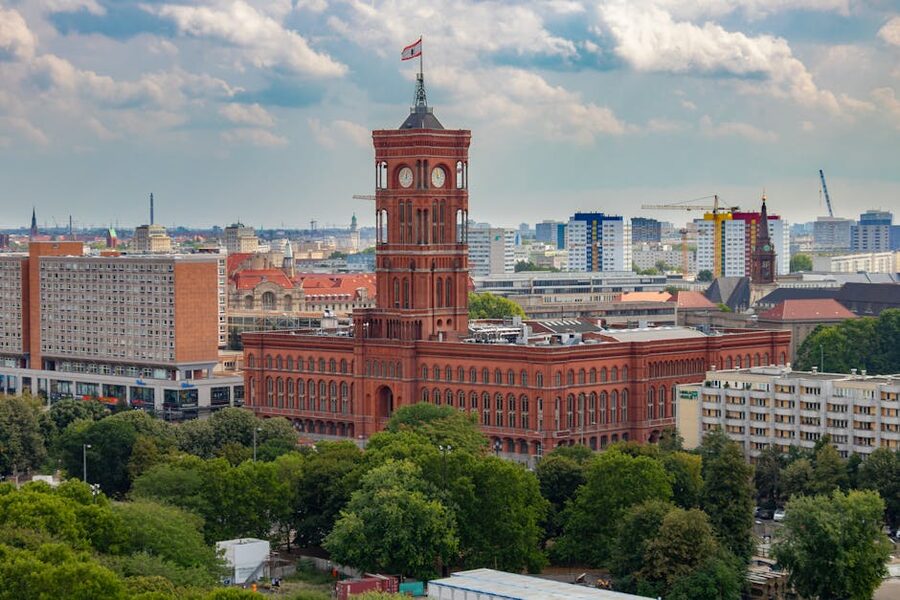
The square at the foot of the tower has more on it than most travellers realise. The Marienkirche, just to the south, is one of Berlin’s two surviving medieval churches; entry is free, the 15th-century Totentanz fresco inside is worth ten minutes. The Neptunbrunnen, the cast-iron Neptune fountain just south of that, was made in 1891 and originally stood in front of the Berlin City Palace. The Rotes Rathaus, the deep-red city hall, sits a short walk further. All of these are within a five-minute radius.
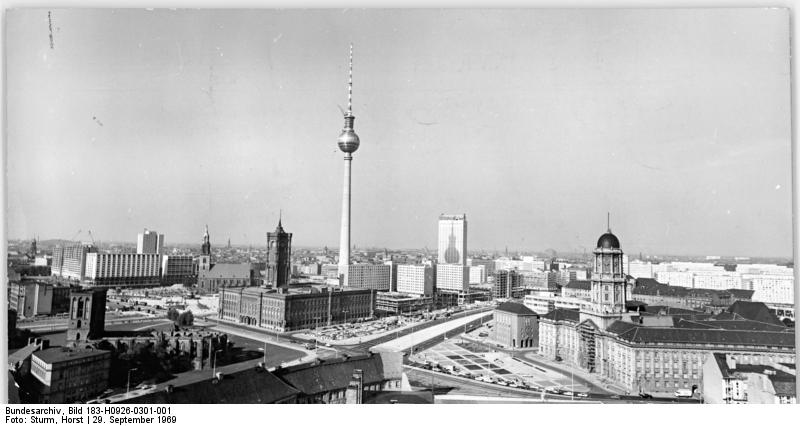
For a longer afternoon: walk west along Karl-Liebknecht-Strasse to Museum Island, 10 minutes flat. Or walk south along the Spree to the Jewish Museum Berlin, about 35 minutes (or one S-Bahn stop to Anhalter Bahnhof).
If you’ve got the WelcomeCard, the tower is not included free, but several adjacent attractions are. The Berlin WelcomeCard covers the public transport you’ll use to get here, and discounts off the Sphere restaurant if you flash it at the cashier inside.
The view as a history lesson
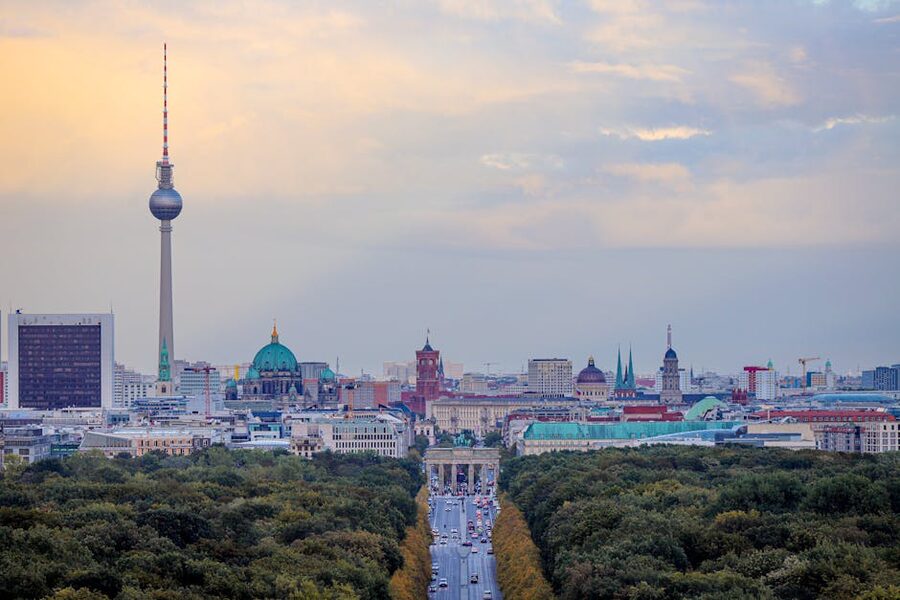
Stand on the deck and look west. You’re looking across what was East Berlin, then directly at where the Berlin Wall ran. The Brandenburger Tor sits on the line. Beyond it, West Berlin. The reason the GDR built the tower here, on this exact patch of Mitte ground, is so that anyone in West Berlin looking east would see this needle on the horizon and know who was bigger.
It’s the same logic that put the Karl-Marx-Allee straight east from this base. Look northeast from the deck and you can trace the boulevard’s eight-lane, plattenbau-flanked line straight out toward Friedrichshain. That was the GDR’s parade route. The tower was its anchor.
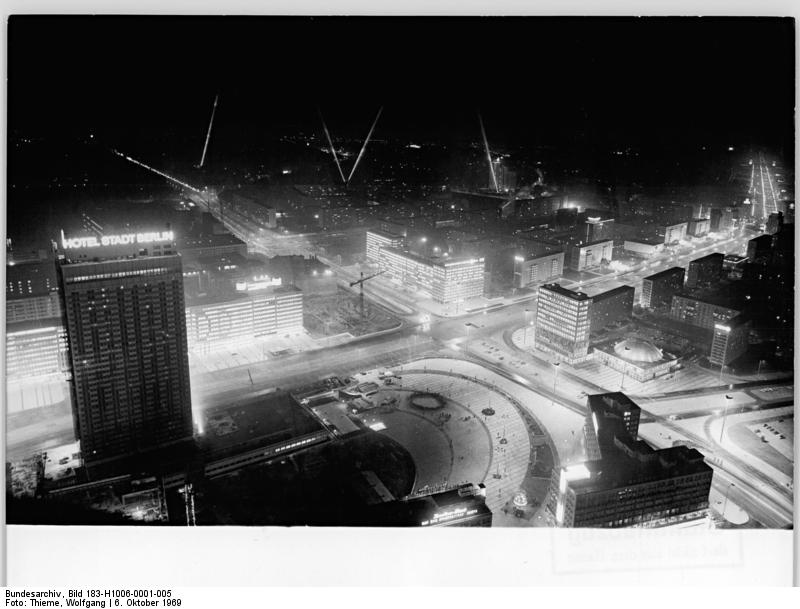
There’s a frame of the deck I always recommend: walk to the western side, find the section labelled with the Reichstag panel, look out at sunset. You’ll see the dome of the Reichstag 2.5km west, the Brandenburg Gate just past it, and the Tiergarten stretching beyond. That arc of buildings, from where you’re standing to where you’re looking, traces the line that divided this city for 28 years. The tower was built on the eastern side of that line. The Reichstag sat in West Berlin, technically owned by the West but inside East-controlled territory until 1990. Today you can walk between them in 35 minutes. That’s the story; the view is the visual aid.
What it’s not
The Fernsehturm is not the best museum in Berlin, not the best meal, not the best historical site. If you have one day in the city, do the Sachsenhausen memorial or the Jewish Museum first. The tower is a 90-minute commitment that earns its place in a 3-day visit, not a 1-day visit.
It’s also not the Eiffel. The Eiffel is a piece of public sculpture you climb. The Fernsehturm is a working broadcast antenna with around 50 transmission antennas mounted on the spike above the sphere; the deck is a feature of an industrial building, not the building’s whole purpose. You can feel the difference. The Eiffel is romantic. The Fernsehturm is practical. The romance up here is in the light, not the structure.
And it’s not unique to Berlin. Riga’s Soviet-built TV Tower (1976) is taller. Vienna’s Donauturm (1964) predates it. The pattern of “communist nation builds enormous broadcast tower as ideological statement” repeated across the Eastern Bloc; you can do the same kind of visit in Tallinn, Vilnius, Prague. What’s specific about the Berlin one is that it sits inside the city it was meant to dominate, not on the edge of it. You ride a public S-Bahn to the base.
How it compares to other European observation decks
If you’re collecting urban observation points across a multi-city trip, here’s the quick sketch of how the Fernsehturm fits in.
Eiffel Tower (Paris, 330m): built 1889 as a temporary world’s fair exhibit, became the symbol of Paris. The view is stronger because Paris is denser and more layered. The vibe is romantic. Booking the Eiffel is a different kind of project: longer queues, three viewing levels, an architectural pilgrimage as much as an observation deck.
Tour Montparnasse (Paris, 210m): the Eiffel’s contrarian alternative. The deck is roughly the same height as the Fernsehturm’s, the building is hated by Parisians, and you go up specifically because it’s the only Parisian deck that has the Eiffel in the foreground of your shot. Montparnasse is the Fernsehturm’s Parisian sibling in tone: a 1970s monolith with an underrated view.
Arc de Triomphe (Paris, 50m): low altitude but an unbeatable axial view down the Champs-Élysées. The Arc rooftop is what you do for free walking up; the Fernsehturm is what you do for a fast lift and altitude.
Brunelleschi’s Dome (Florence, 116m): the engineering masterpiece. Florence’s dome is a climb up 463 steps inside a 15th-century shell, with painted ceilings to look at on the way. The Fernsehturm has zero of that texture; you’re in a 1969 lift for 40 seconds.
St Peter’s dome (Rome, 137m): similar climb to Brunelleschi, with Vatican geometry below. St Peter’s is a religious site that happens to have a deck; the Fernsehturm is a broadcast tower that happens to have a deck.
Leaning Tower of Pisa (Pisa, 56m): the inverse of Berlin. Pisa’s tower is famous for the building, not the view. You climb it to say you climbed the leaning thing. The Fernsehturm is the opposite: nobody flies to Berlin to look at the tower, but the deck inside it is one of the city’s defining experiences.
Milan Duomo terraces (Milan, 70m): you walk along the rooftop of a Gothic cathedral among carved spires. Milan is for architecture lovers. The Fernsehturm is for cold-war historians.
Setas de Sevilla (Seville, 28m): a wooden mushroom canopy above a plaza, low altitude, terrific for sunset. Setas shares the Fernsehturm’s principle of “go up at sunset” but skips the height entirely.
Montjuïc Cable Car (Barcelona, sea-level to 173m): not a tower at all, a cable car up a hillside. Montjuïc is the lazy version: you don’t ascend a structure, the structure carries you.
The pattern across all of these: the deck is rarely the point. The point is the city below it, and the moment of light you choose. Berlin is the most political deck in Europe; the others are romantic, religious, architectural, or simply scenic. Pick by what you want to think about while you’re up there.
Quick FAQs
How long should I plan for the visit? 60 to 90 minutes total. 15 minutes from arrival to lift, 40 minutes on the deck, 5 minutes back down. If you’re doing the Sphere restaurant, plan two hours plus.
Is the tower wheelchair accessible? Yes. The lifts are full-size, the deck is one continuous level, the toilets at the deck level are accessible. The base entrance has a ramped side door.
Can I bring my own food and drink? No. The deck has a small bar, the Sphere has the restaurant. No outside food.
What if it rains? Tower stays open. View through wet windows is not great but the trip is unaffected. Heavy fog is the only weather that genuinely ruins the visit; check the operator’s webcam before you head over.
Is there a separate ticket for the antenna level above the sphere? No. The deck (203m) and the restaurant (207m) are the public limits. The antenna level is for engineering staff.
Children’s tickets? Under-3s are free, ages 4 to 14 around half price. Family bundles exist on the operator site.
Sphere restaurant dress code? Smart-casual is fine. Sneakers and jeans are accepted. They’ll turn you away in beachwear or sportswear.
Which language is the VR experience in? English and German. Headsets switch by tap.
Pair the tower with these for a full Berlin day
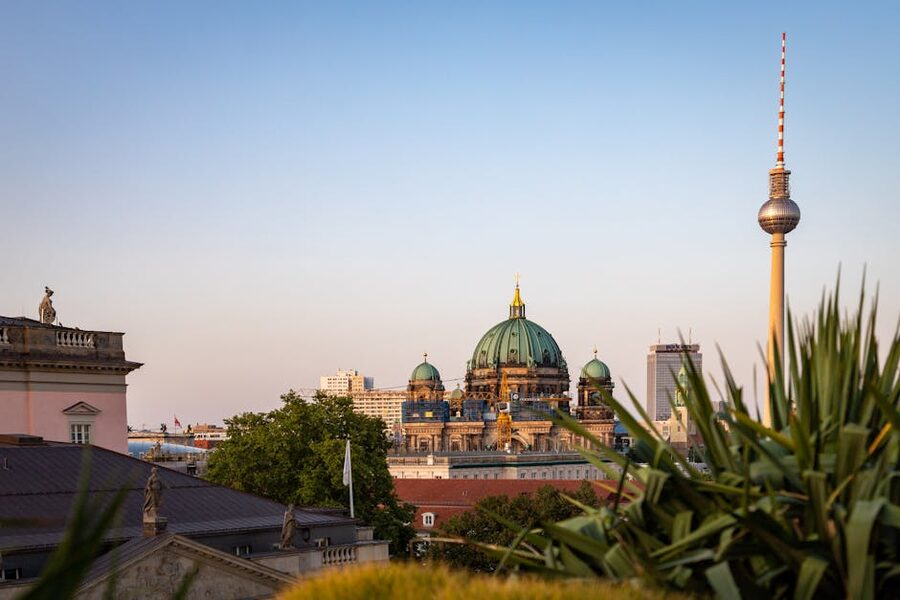
The default pairing for the Fernsehturm is the Reichstag dome in the morning (it’s free, but pre-book five days out at minimum), then a slow walk east along the Spree, lunch at one of the Friedrichstrasse cafés, and the tower for sunset. Two domes, one day, one stretch of river between them. Two pieces of architecture that anchored two halves of the city for 28 years.
If you’ve got more time, build the day around the Cold War story: a Third Reich and Cold War walking tour from the Brandenburger Tor in the morning, lunch around Checkpoint Charlie, the Berlin Story Bunker in the afternoon for the underground side of the same story, then the tower for the visual punchline. The bunker, the tower, the wall: the same decades, told three different ways.
Or pair it with water. An hour on the Spree from Friedrichstrasse in the late afternoon, off at the Nikolaiviertel pier, walk to the tower for sunset. You see the city from water level, then from 203 metres up, in the same hour. Berlin is one of the few European cities where that combo works because the river runs through the centre and the deck has a clear westward sightline.
And a forward link, for the rest of your trip: if you’re heading next to Milan’s Duomo terraces, or to the Leaning Tower of Pisa, or to Montjuïc cable car in Barcelona, you’re collecting different versions of the same idea. Each city has a way of being looked at from above. Berlin’s version is industrial, political, and lit by the most dramatic urban sunsets in Northern Europe. Time the visit right and you don’t need a second reason to go.