
The queue at the Pilier Sud lift stretched back through the security cordon, snaked around the south leg of the Tower, and disappeared behind a hot dog stand on the Quai Branly. The man behind me had been there ninety minutes. He had a 14:00 timed slot, it was 12:55, and the line wasn’t moving because Pilier Nord had stopped working an hour earlier. I peeled off, walked sixty metres to the Pilier Est entrance, and went up the stairs. I was on the second floor in thirty-two minutes.
That’s the trick most travellers miss. The Eiffel Tower has three levels, two ways up, and a queue mechanic that punishes the obvious choice. If you came expecting a one-hour visit, the elevator-and-summit combo will eat your afternoon.
The fastest version of this visit
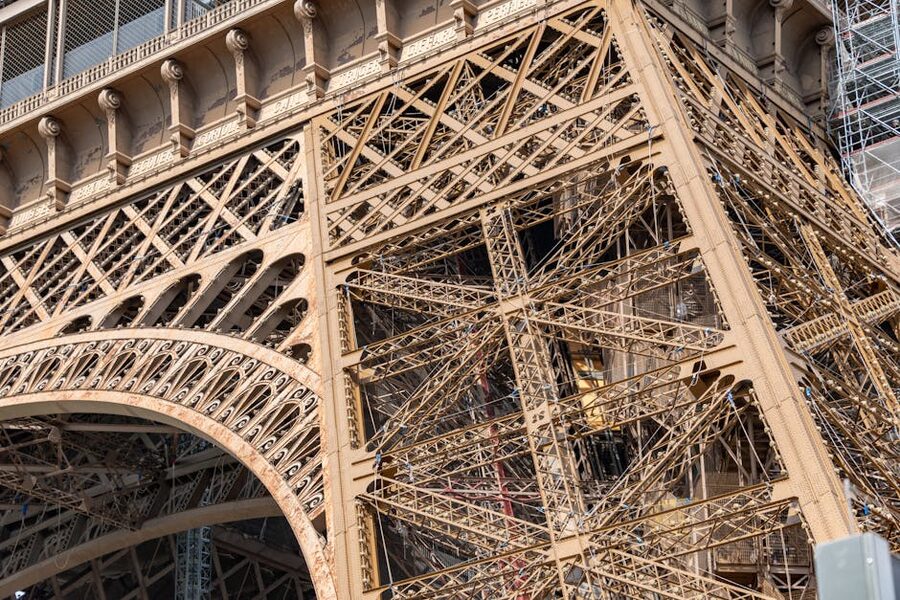
Buy the stairs ticket. Climb to the second floor. Look at Paris. Climb back down. Total time: 90 minutes if you stop for photos, 60 if you don’t. The stairs ticket is roughly half the price of the elevator at around $14 vs $30, the queue at the Pilier Est stair entrance moves at 30 to 45 minutes most of the year, and you arrive at the second floor with a different relationship to the structure than the lift gives you. You see the rivets up close. You see how the legs converge. You see how 7,300 tonnes of wrought iron actually hold themselves up.
The lift is a longer experience and a longer wait. It’s also the only way to reach the summit, because there are no stairs from the second floor to the top. So if you want the 276-metre view, the bottleneck isn’t optional. We’ll come back to that.
Quick picks
- Eiffel Tower Stairs Climb to Level 2 with Summit Option: the editorial pick. Half the wait, half the price, twice the experience.
- Eiffel Tower Entry Ticket with Optional Summit Access: the flagship lift product. Most-booked Tower ticket on the market.
- Eiffel Tower Summit or Second Floor Access: the all-in-one summit pre-buy. Skips the second-floor summit-ticket queue.
Three levels, and what each one is actually for
People treat the Eiffel as one experience. It isn’t. The three levels do three different things, and once you know what each one is for, the ticket question solves itself.
First floor (57 metres). Glass-floor walkway, immersive exhibits, two of the Tower’s restaurants, the gift shop most people don’t realise is also up here. The glass floor is the part everyone photographs. You stand on a transparent plate, look down, and watch tourists walk under your feet. The first floor is a fine destination on its own if you’re with kids, want the cheapest pure-stairs experience, or genuinely don’t care about the second-floor view. It’s also where you can stop for a sandwich at the 58 Tour Eiffel restaurant if you’ve booked.
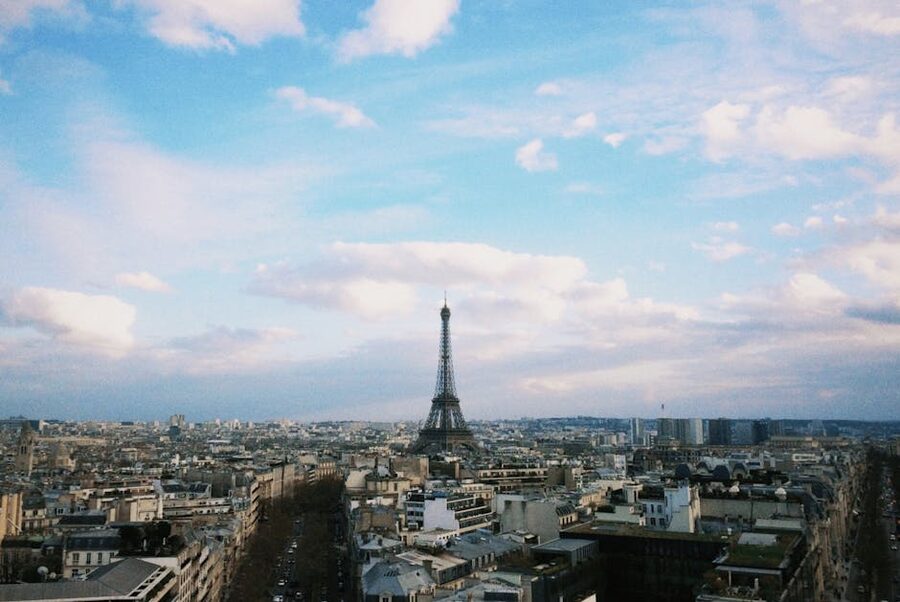
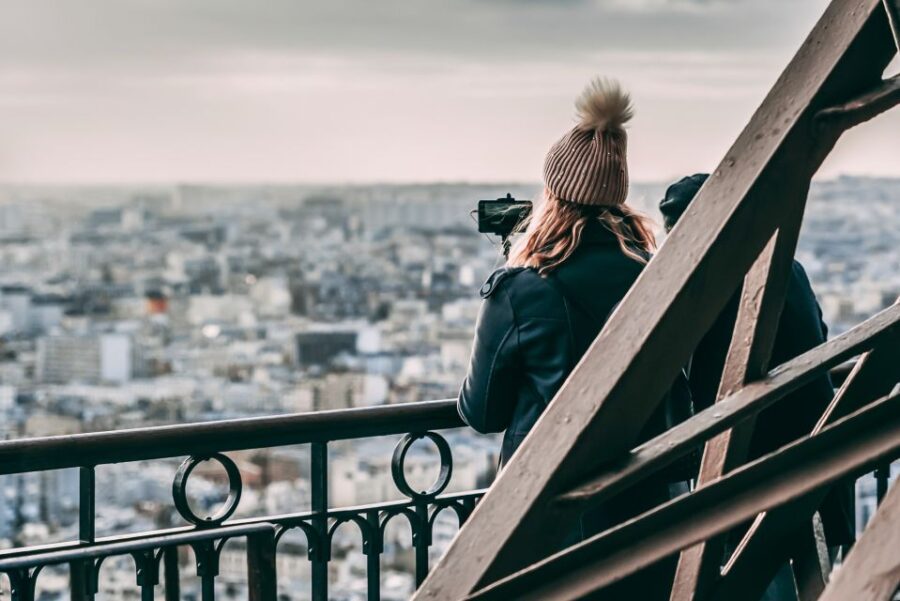
Second floor (115 metres). This is the one. The view from the second floor is the iconic Paris-from-above frame: Champ de Mars stretching south, Trocadéro across the river, Sacré-Cœur on its hill in the north, Les Invalides gold dome, the long straight cut of the Champs-Élysées heading to the Arc de Triomphe. The summit is taller and has bragging rights, but the second floor is where Paris actually composes itself into a city you can read. You see street grids, river bends, the whole 19th-century Haussmann renovation laid out beneath you. Most professional Paris photographs taken from the Tower were shot from this level.
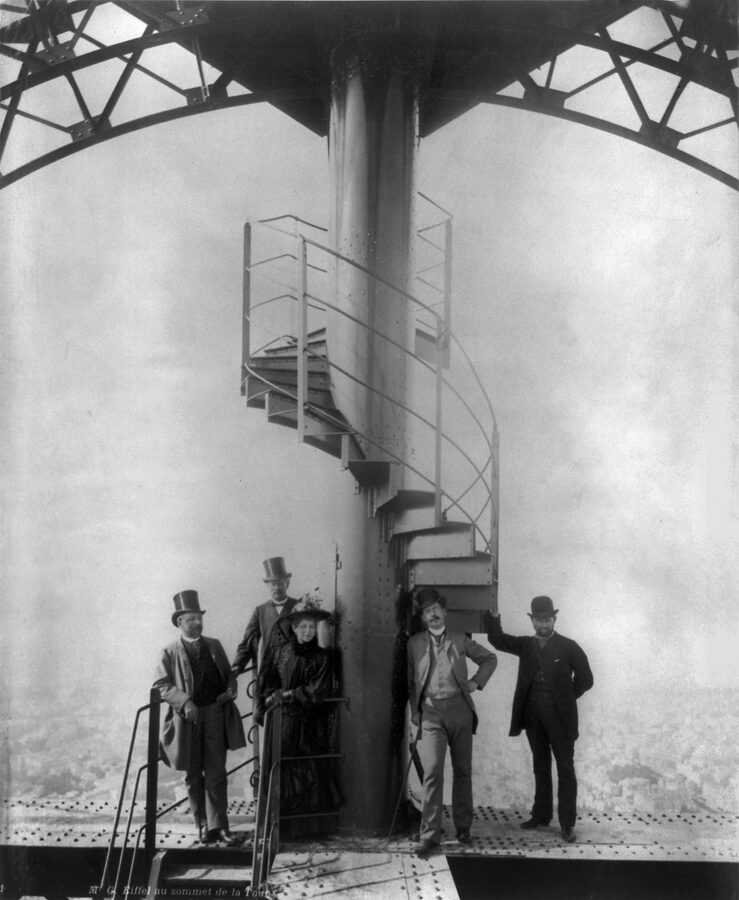
Summit (276 metres). Roughly 10 square metres of viewing platform with a glass-walled cabin section behind it. The summit is a vertigo experience, not a view experience. You feel the wind. You feel the slight sway. You see further on a clear day, perhaps 70 km on a perfect afternoon, but the city flattens into a pale grid that doesn’t read the way the second floor does. There’s also a small reconstructed Gustave Eiffel office at the top, mannequin and all, which is more endearing than it should be. If you’ve never been up the Tower and you want to say you’ve been to the top, do the summit. If you’ve done it before or you’re trying to optimise time, skip it. The second floor is the better visit.
Stairs vs elevator: the article’s whole argument
The single biggest decision a visitor makes is which entrance they queue for. The defaults punish you. Here’s the actual maths.
The first-floor lift entrance is at Pilier Nord. The second-floor combined elevator is at Pilier Sud. The stairs are at Pilier Est. The queues at the lift entrances run two to three hours in summer at peak times. I’ve seen 90 minutes in shoulder season. The stairs queue is rarely longer than 45 minutes, more often 20 to 30 in summer mornings, and frequently zero in winter or after 18:00.
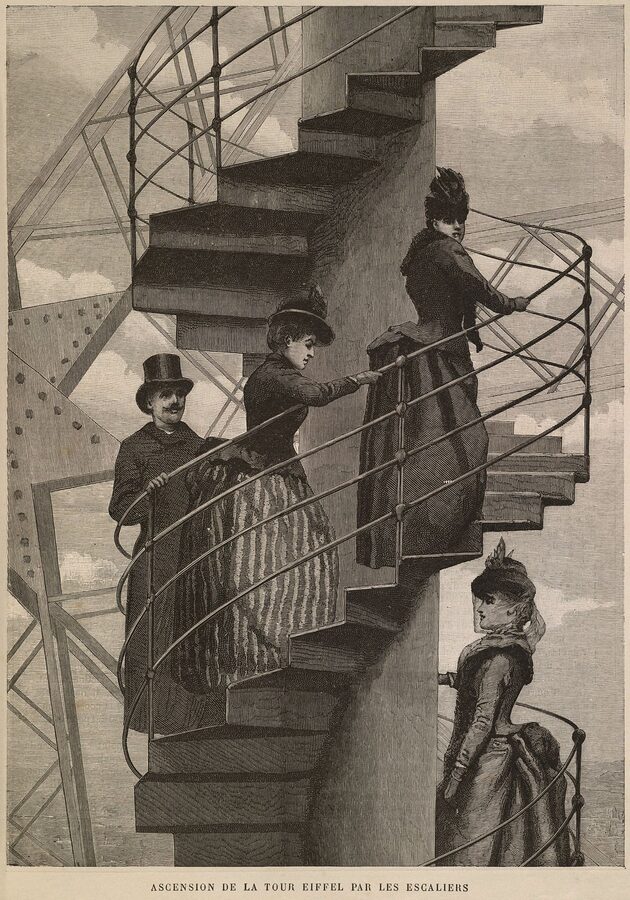
The climb itself is 360 steps to the first floor, then another 314 steps to the second, for a total of 674. Anyone reasonably fit can do it. There are landings every level for catching your breath, and if you stop and look out, the change in perspective happens in real time. From the first floor up, the steps are inside the leg and roughly enclosed; the lower section is more exposed.
The price gap is the other half. Stairs to the second floor: roughly $14. Elevator to the second floor: roughly $30. Same destination. Same view. Half the price. The only thing the elevator gets you is the option to continue to the summit on the same combined ticket, plus less effort. If those two things matter to you, fine, take the lift. If they don’t, the stairs are objectively the better deal, and that’s not even counting the queue savings.
The exception: if you have mobility limits, knees that don’t like 600+ steps, or you’re carrying small children, the lift is the right call and don’t feel bad about it. Take the lift, accept the wait, and go in shoulder season or evening.
The summit elevator trap
This catches more visitors than anything else. The summit elevator is a separate ticket, and it’s bought at the second floor. Not the ground. So even if you bought a “summit access” ticket at home, when you arrive at the second floor by lift, you join a second queue for the summit lift. That queue runs 30 to 90 minutes on a busy afternoon.
What that means in practice: the elevator-plus-summit visit is two queues, not one. Two to three hours at the ground, then 30 to 90 minutes at the second floor for the summit shuttle. A summit visit on a peak summer day can absorb your entire afternoon, with the actual time spent on the platforms running maybe 45 minutes total. The hours-to-experience ratio is brutal.
The workaround is the combined-ticket pre-buy that includes summit, OR the stairs-plus-summit hybrid. The hybrid is the smartest pick most visitors don’t know exists. You climb the stairs to the second floor, which dodges the ground-level lift queue entirely, and then you take the summit elevator up. The summit-lift queue at the second floor is the same whether you arrived on foot or by lift. So you’ve replaced the worst queue (ground lift) with a 30-minute climb, and kept the only queue you can’t avoid (summit lift). Same summit, half the lost time.
Booking 60 days ahead at midnight Paris time
Tickets to the Tower release exactly 60 days in advance, at 00:00 Paris time, on the official site. For peak-season slots (June, July, August, the week between Christmas and New Year), the morning windows sell out within the first 48 hours. Stairs tickets sell more slowly than lift tickets but still go quickly for the 09:00 to 11:00 windows.
What this means if you’re planning a trip: pick your travel dates, count back 60 days, set a phone alarm for 23:55 Paris time on that day, and be at your laptop with a card ready. If you miss the release window, you’re either reselling-site shopping (don’t, the markup is theft) or buying through a tour operator that holds inventory. The third-party operators booking through GetYourGuide and Viator buy bulk slots in advance and sell them with a guide bundled, which is why their last-minute availability often beats the official site by weeks.
The official ticket portal is etoureiffel.paris. Don’t buy from any other domain that looks similar. There’s a long-running scam ecosystem of lookalike sites that resell tickets at three times the face value or, worse, sell tickets that don’t exist.
The three tickets worth booking
I’ve sorted these by what they actually do for you, not by price. The first one is the editorial pick. The second is the most-booked. The third is the all-inclusive convenience play.
1. Eiffel Tower Stairs Climb to Level 2 with Summit Option: $42
This is the editorial pick if you can do stairs. You skip the multi-hour ground-lift wait, get a guided climb that turns the iron framework into actual content rather than a visual blur, and the summit add-on is included if you want it. Our full review of the stairs climb covers what the guide points out on the way up; comfortable shoes and layers for the second-floor wind and you’re done in two hours.
2. Eiffel Tower Entry Ticket with Optional Summit Access: $29
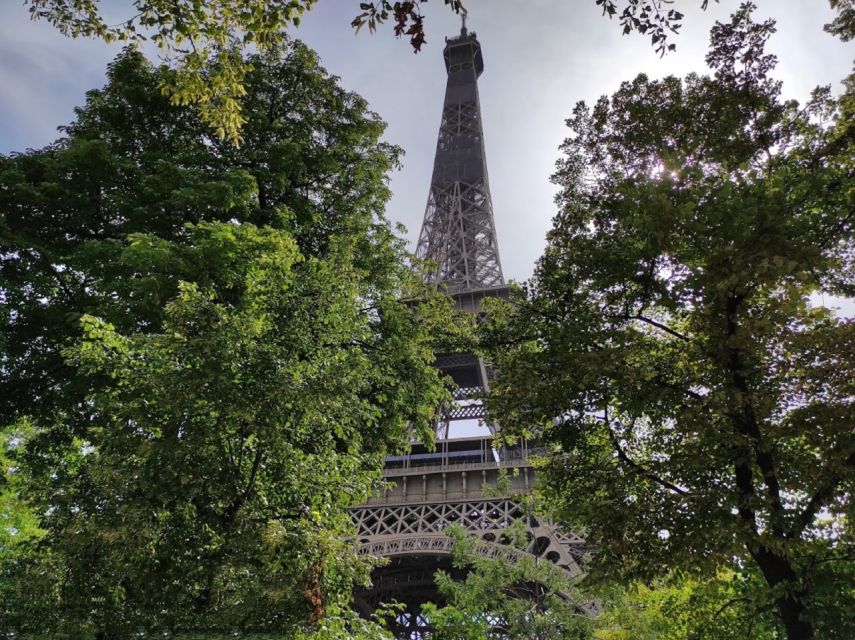
Pick this if stairs aren’t your thing and you want flexibility on the summit. The entry covers the second floor, and you can add the summit at the on-Tower counter on the day if conditions look good. Our review notes the catch: a busy-afternoon summit decision means a 30 to 90-minute wait at the second-floor turnstile, so book the morning slot.
3. Eiffel Tower Summit or Second Floor Access: $59
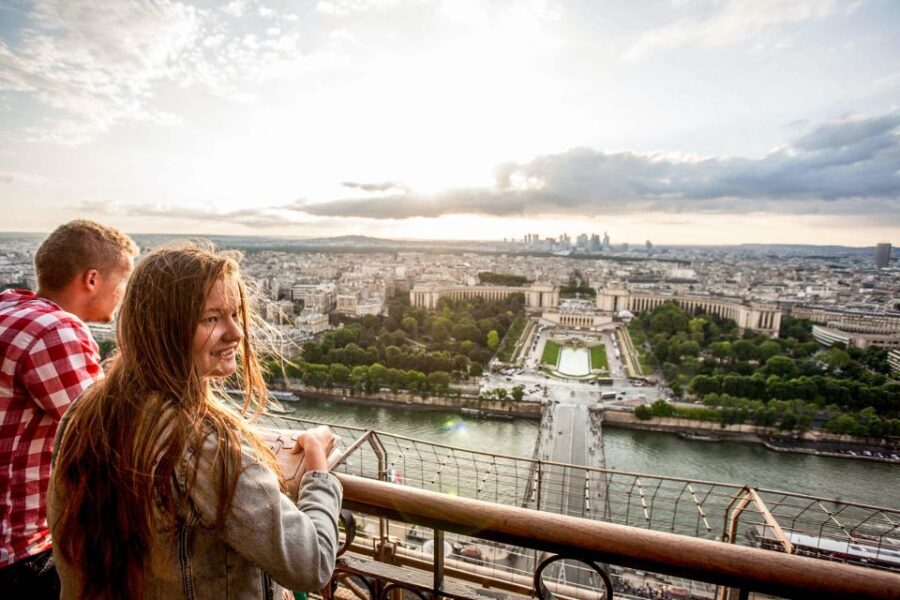
Choose this when you know you want the summit and the date is in peak season. The combined ticket reserves your slot all the way up and removes the second on-Tower queue, which is the part that ruins a busy afternoon. Our deeper look at the summit ticket notes that the price premium over the basic entry is mostly buying you queue avoidance, not extra view.
The hourly sparkle, and why you should plan around it
Every hour, on the hour, from sunset until 01:00, the Eiffel Tower sparkles. Twenty thousand bulbs flicker in patterns across the iron for five minutes. It is, quietly, the best free thing in Paris.
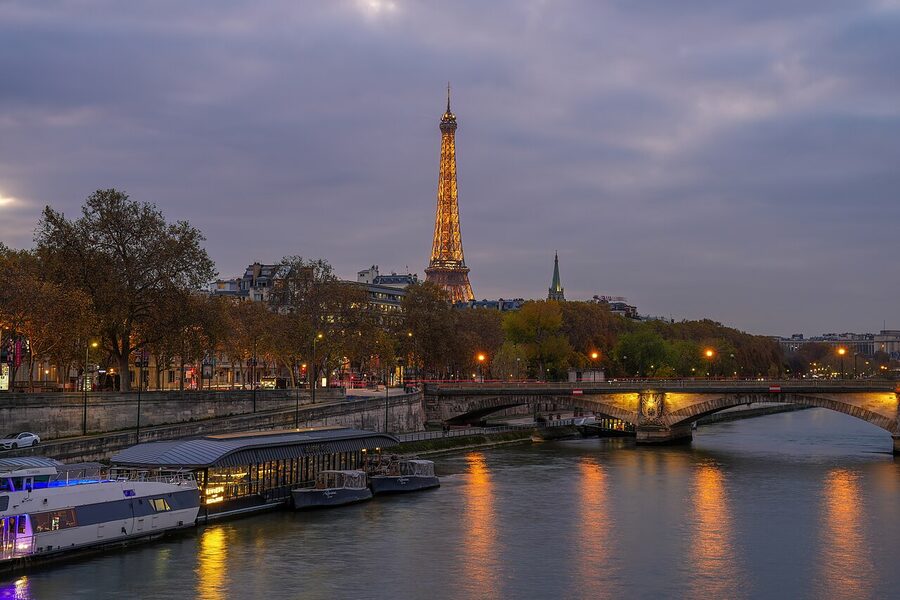
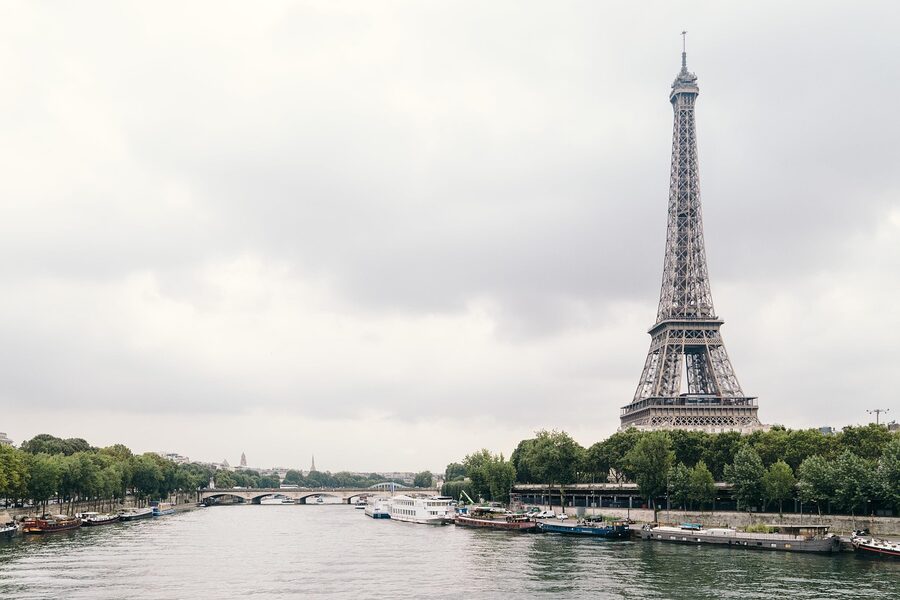
The best places to watch are not on the Tower. They’re across the river. The classic shot is from the Trocadéro terrace, second-largest viewing crowd in the city. Less crowded and arguably better is the Champ de Mars lawn directly south, where the Tower fills your whole view. A wilder option is the Pont de Bir-Hakeim, the bridge a few hundred metres downstream, where you get the Tower over the metro tracks and a foreground frame.
If you’re already booked on a Seine river cruise that departs at the Pont d’Iéna right under the Tower, the timing of the sparkle from the water is the single best moment of the cruise. Aim for a 21:00 winter departure or 21:30 summer to catch the sparkle on your way past the Tower.
What time to go (and what time not to)
Two windows work and most others don’t. 09:00 to 10:30 in summer: the queue is still building, the air is cooler, and the summit visibility is best before the haze rolls in. 21:00 winter: the sun has set, the sparkle is visible from the second floor, and the queues have collapsed because most visitors went home. Both windows reward you with manageable waits and good light.
The windows that don’t work: midday in summer (3-hour lift queues, full sun, hazy views), 17:00 to 19:00 any day (the dinner-cruise crowd converging on Pont d’Iéna), and any winter day during morning rain (slick stairs, cold platform, view-limiting cloud cover). If you’re stuck with a midday slot, accept it, eat lunch first, and skip the summit.
The structure most people don’t understand
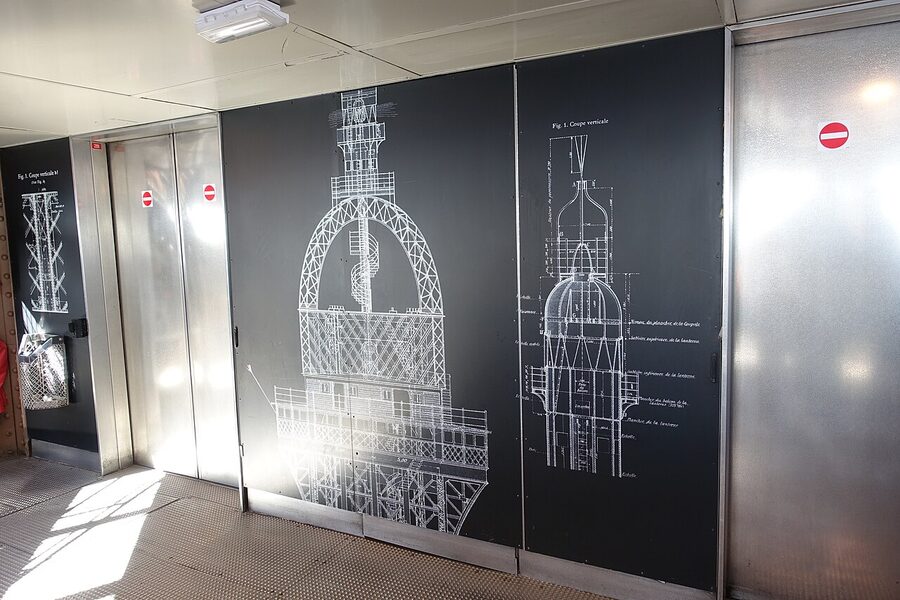
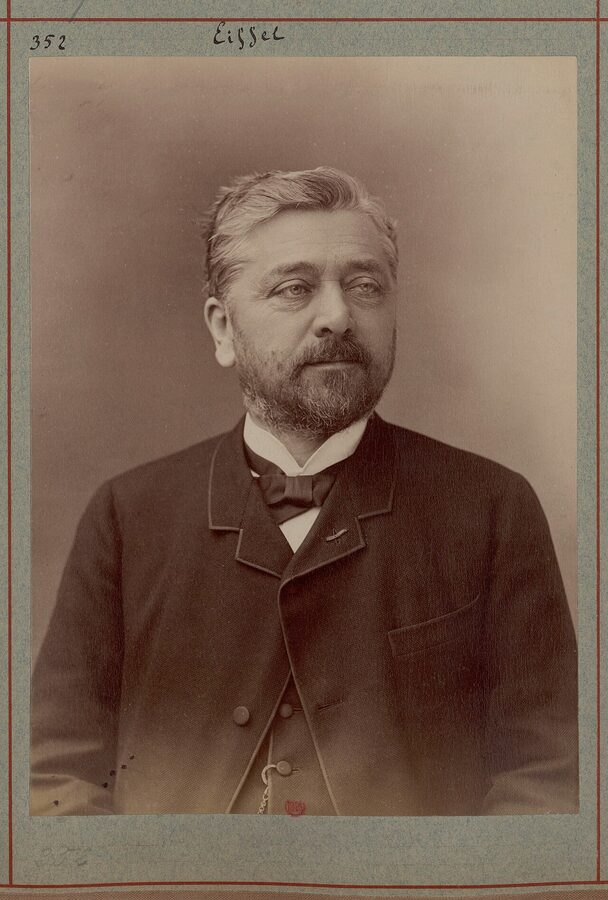
Worth knowing what you’re walking up. Gustave Eiffel didn’t actually design the Tower himself. He bought the design from two of his engineers, Maurice Koechlin and Émile Nouguier, who’d sketched it in May 1884 as a contribution to the upcoming 1889 Exposition Universelle. Eiffel initially didn’t like it. He bought it for his company anyway, hired the architect Stephen Sauvestre to soften the silhouette with the curved arches at the base, and then put his name on it. Koechlin did most of the actual mathematics.
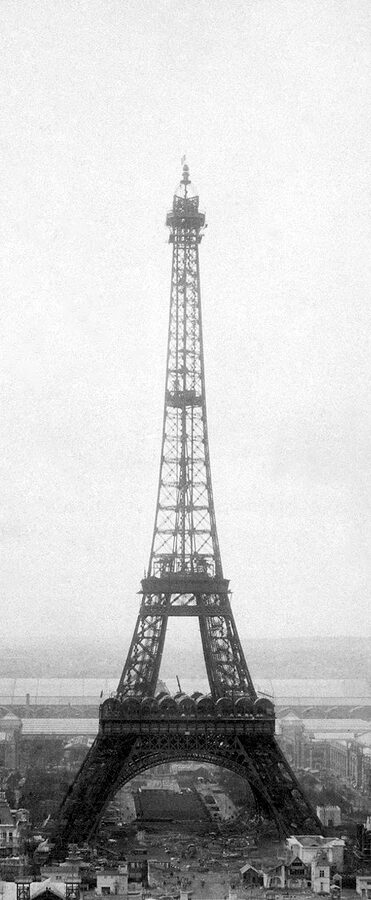
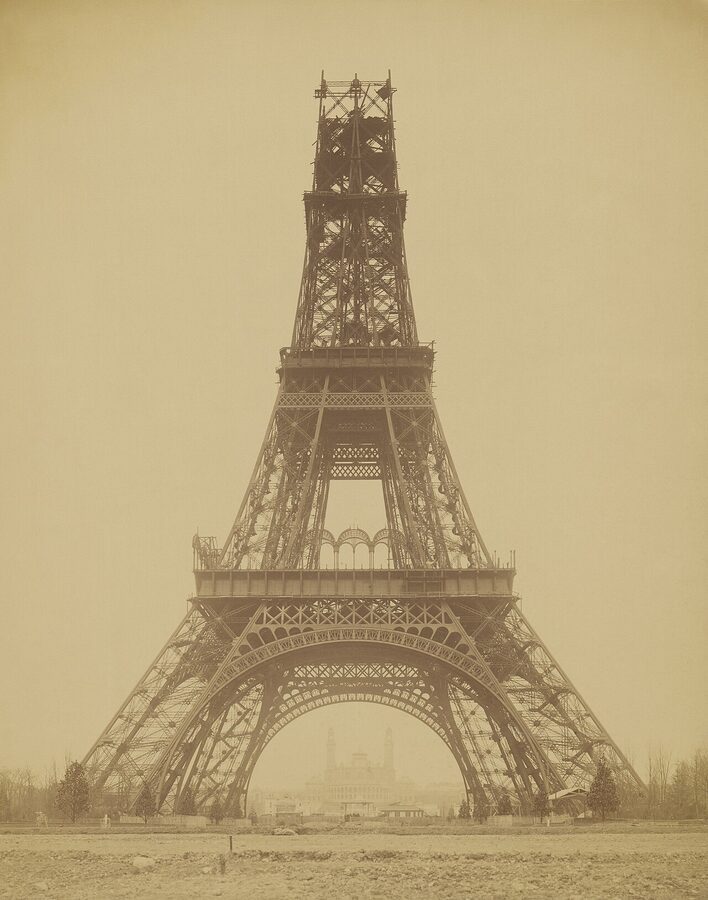
Construction took two years, two months and five days, which was extraordinary for the period. The site began in January 1887, the four legs rose simultaneously through 1887, the first floor connected in March 1888, the second floor by September 1888, and the summit was capped on 31 March 1889, three weeks before the Exposition opened. Total cost: 7.8 million francs, of which Eiffel personally fronted 5.5 million.
The numbers are still impressive. 324 metres total height including the antenna. 7,300 tonnes of iron. 18,038 individual wrought-iron pieces. 2.5 million rivets. The whole thing weighs less than the column of air contained in a 324-metre cylinder of the same base footprint, which is the line Eiffel used to defend the design when Parisian writers attacked it for being too heavy and too modern. He was correct on the engineering. The 300-name protest petition signed by Maupassant, Dumas fils, Garnier and others in February 1887 looks ridiculous in retrospect.
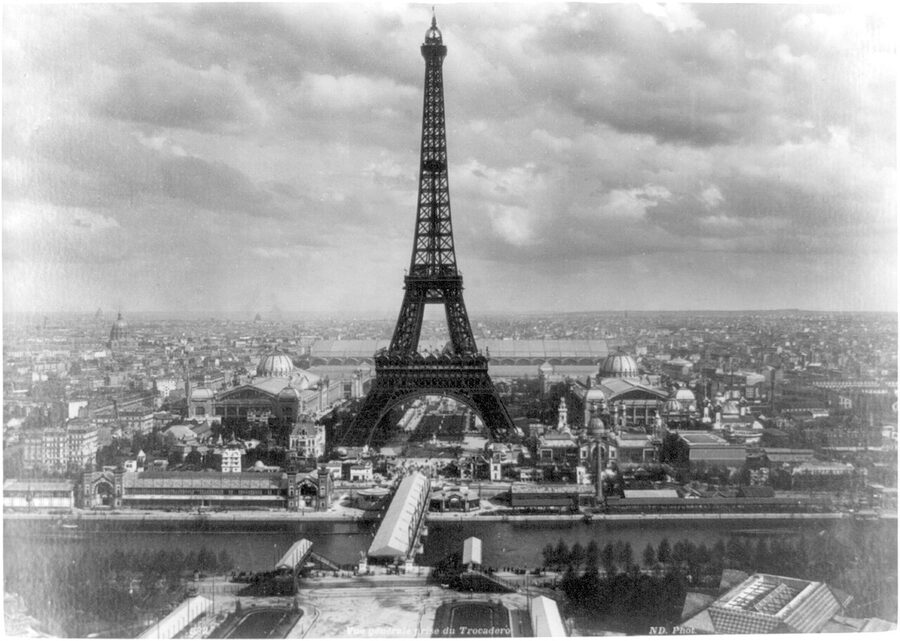
The Tower was meant to be temporary. The 1887 contract gave Eiffel a 20-year lease, after which the city was to dismantle it. The lease was due to expire in 1909. Eiffel saved the structure by turning it into a radio antenna in 1903 and proving it had military and scientific value. The first wireless transmission from the Tower to Pantin came in 1898; by 1909 it was a permanent military telegraphy installation, and by 1921 it was broadcasting the first regular radio programmes in France.
The painting cycle
The Tower is repainted every seven years, with the most recent campaign finishing in 2024 in time for the Olympics. It takes 60 tonnes of paint applied by hand. The colour is officially “Eiffel brown,” a bespoke shade designed in 1968 to graduate from a darker bottom to a lighter top so the structure visually disappears against the Paris sky. Look up from the base on a clear day and you can see the gradient if you know to look for it.
Earlier paint schemes were stranger. The original 1889 colour was reddish-brown. In 1899 it became yellow. In 1907 yellow-brown with five gradient bands from base to summit. By 1968 they’d settled on the current single-shade gradient. There’s a small permanent exhibit on the first floor that walks through this if you’re up there with time to spare.
Where to photograph from (the spots, ranked)
The Tower is the most-photographed building in the world, and 80% of those photographs come from three spots. None of those spots are on the Tower itself.
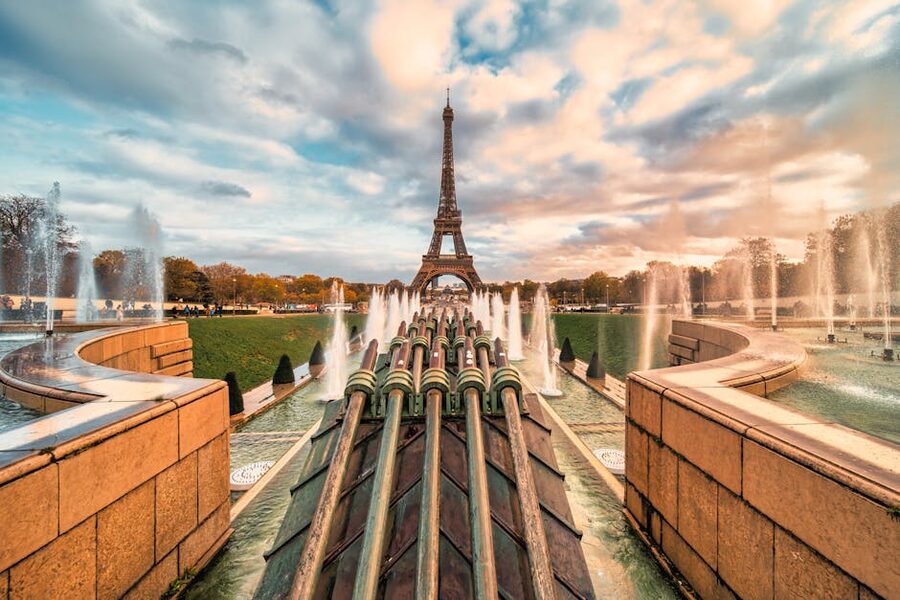
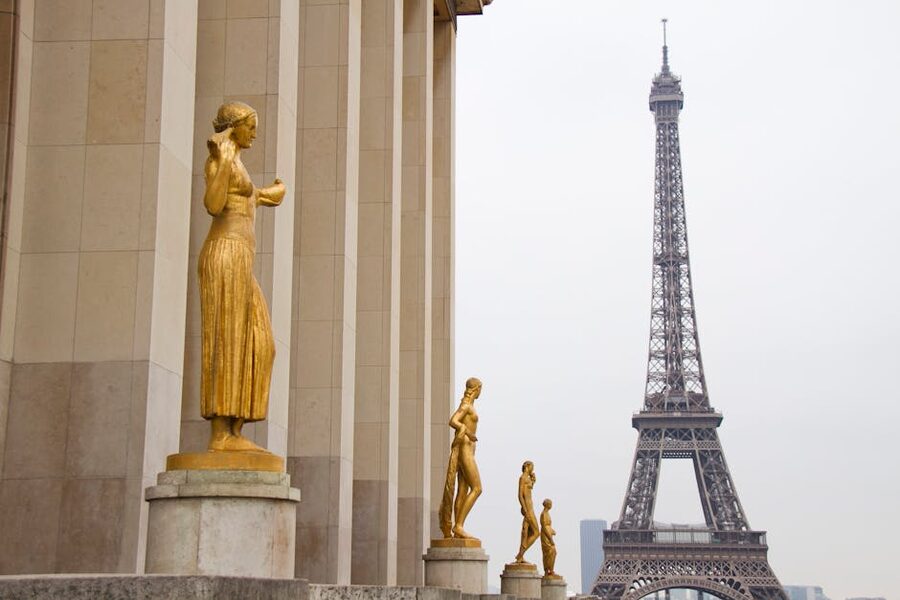
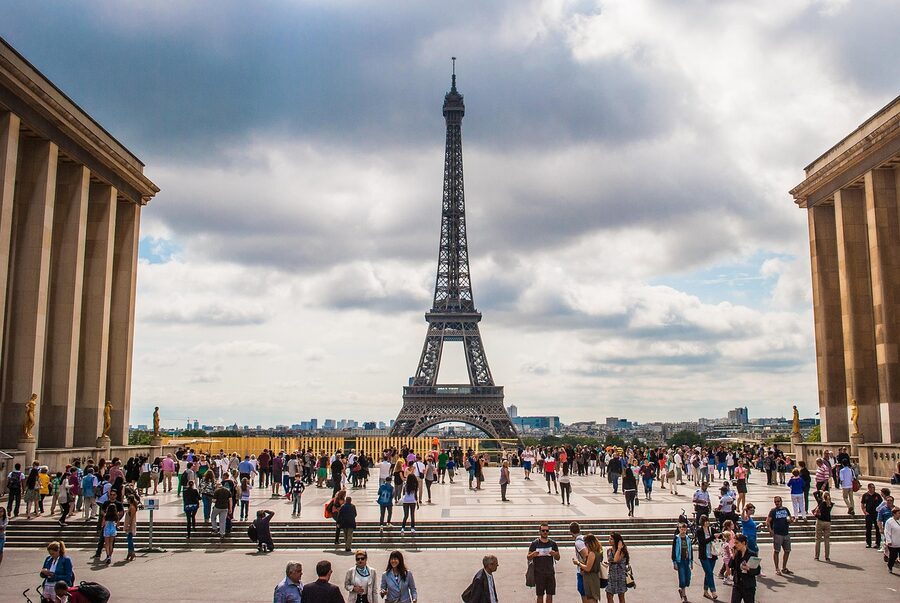
Trocadéro terrace. The classic. Cross the Pont d’Iéna, walk up through the Jardins du Trocadéro, stop at the terrace between the two wings of the Palais de Chaillot. This is the postcard frame. Crowded any time the Tower is lit, but the terrace is wide enough that you can find a spot. Best at sunset, golden hour, and during the hourly sparkle.
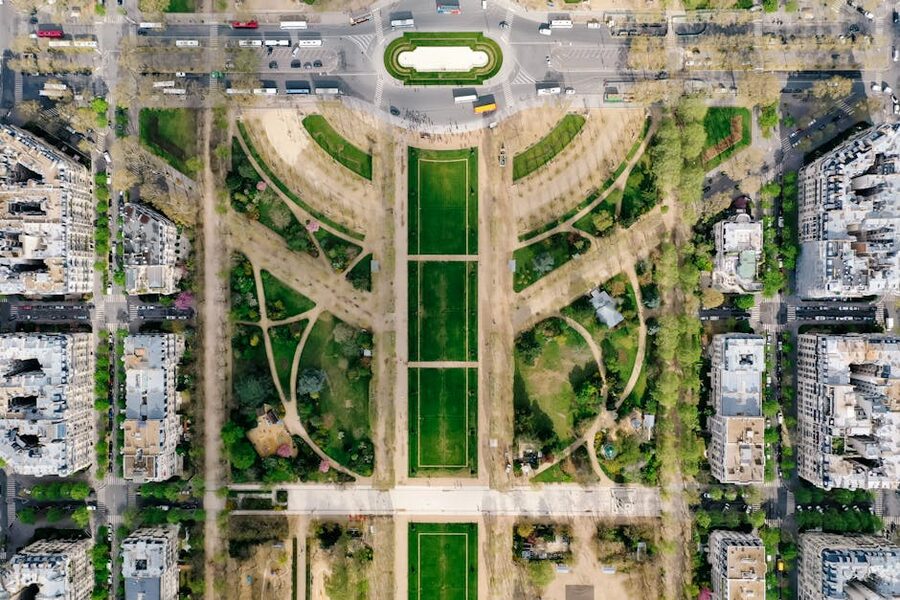
Champ de Mars. The lawn south of the Tower. The shot from here is the Tower above grass, full base visible, and on a sunny weekend you’ll have a hundred people picnicking in your foreground. That’s part of the picture. Walk roughly 200 metres south of the base and turn back; the sweet spot is about halfway down the lawn.
Pont de Bir-Hakeim. The bridge two kilometres downstream where the metro Line 6 crosses. This is where the Inception scene was shot. You get the Tower framed by the bridge’s iron arches with the metro tracks in the foreground. Lower-traffic photo spot than Trocadéro, and the angle is unusual enough that the result doesn’t look like a postcard.
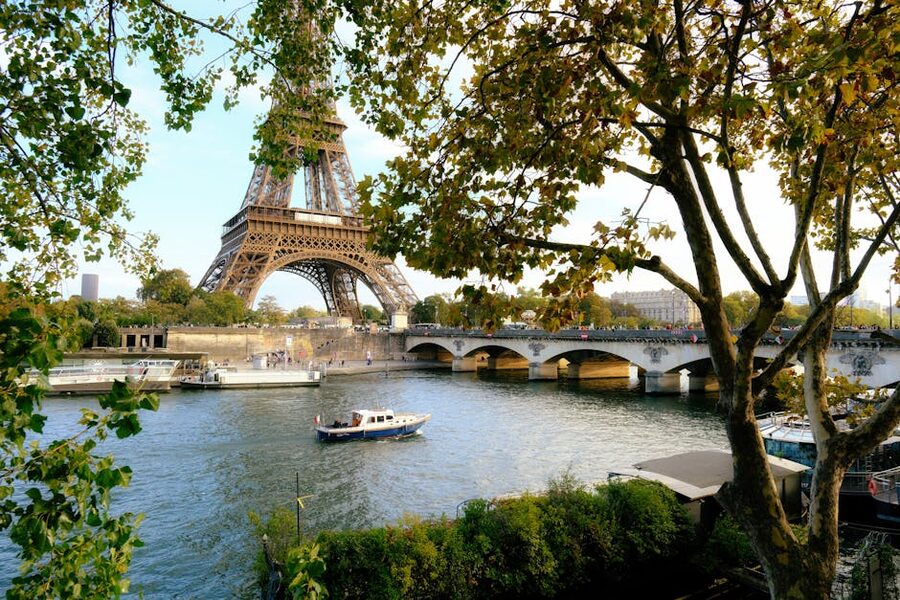
The Seine itself. If you book a one-hour Seine cruise, the boat passes directly under the Pont d’Iéna at the Tower’s base. From water level the structure rises straight up out of the river. The classic departure dock is at the Port de la Bourdonnais, twenty metres from the south leg of the Tower. Most cruise boats time their loop so you pass the Tower just before sunset on the evening departures, which means you get the gold-hour Eiffel from below.
Eating up there (a brief warning)
Two restaurants on the Tower: Madame Brasserie on the first floor (formerly 58 Tour Eiffel, rebranded in 2022) and Le Jules Verne on the second floor. The first is the casual one, the second is the serious one with a Michelin star and a price tag to match.
Madame Brasserie is fine. The menu is brasserie-classic, the room is glass-walled with the Champ de Mars view, lunch costs roughly €70 to €100 a head, dinner around €130 to €185 with the prix-fixe options. The advantage isn’t the food, it’s that the booking gets you a separate elevator entrance with no ground queue. If you’d been planning to wait two hours for the lift anyway, the brasserie booking is a sneaky workaround.
Le Jules Verne is something else entirely. Frédéric Anton runs it, the prix-fixe lunch is €190, dinner €255, and the booking lead time runs four to six weeks. It’s a destination meal. The view from the second-floor private dining room is roughly the same as the public second-floor balcony, but the food at this level is the actual draw. If you’re spending Le Jules Verne money, do it for the food, not the view.
The summit isn’t always the answer
This is the part most travel content gets wrong. The summit is sold as the trophy, the highest point, the goal. For a lot of visitors it’s actually the worst of the three options.
The view at the summit is wider but flatter. Paris reads better at 115 metres than at 276. The summit platform is small, often crowded, and the wind makes phone photography genuinely difficult. The summit elevator queue at the second floor adds 30 to 90 minutes to your visit. And the summit elevator itself is a slow, stop-start ride because it’s working harder than the ground lift.
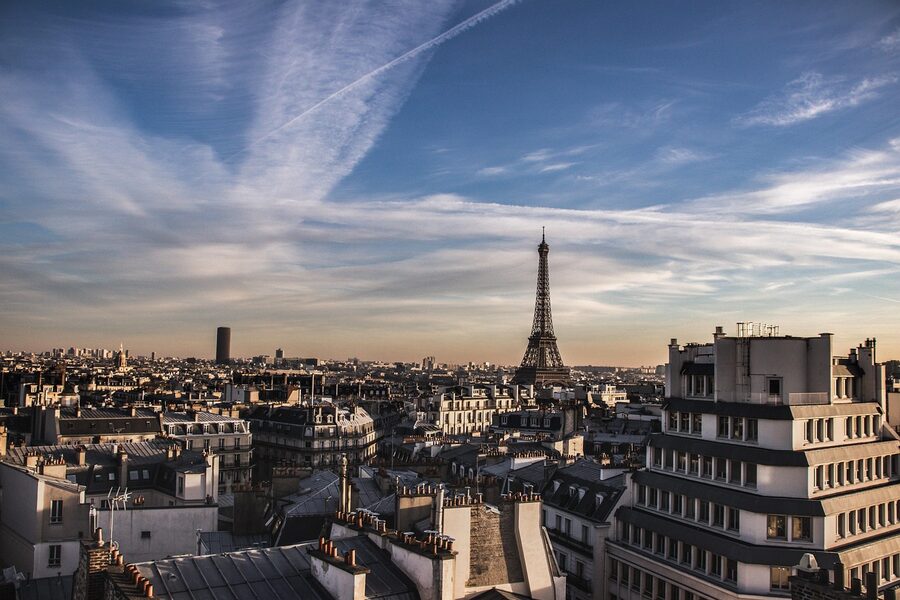
If you’ve never been up the Tower, do the summit once, get the bragging rights, and go. If you have an hour and want to see Paris from above, the second floor is the better answer. If you want a comparable view without the whole queue ecosystem, walk to the Montparnasse Tower instead. It’s the 200-metre office tower seven minutes south of Montparnasse station, and its rooftop deck has the single thing the Eiffel can’t give you: the Eiffel Tower itself in the frame. Most professional Paris-skyline photographs are shot from the Montparnasse roof for that reason.
The other Paris-from-above options
If you’ve seen the Tower from below and you want height without the Eiffel queue, the alternatives are worth knowing.
The Arc de Triomphe is 50 metres tall, and the rooftop terrace is open to the public via a 284-step climb (or a lift for accessibility). The view straight down the Champs-Élysées is the city’s other iconic axis. You can see the Eiffel from here, framed against Les Invalides. Cheaper and faster than the Tower, and it doesn’t have the bottleneck problem because the Arc rooftop is small enough that they cap the on-roof crowd.
Montparnasse Tower is the office building in the 14th. The roof deck is at 210 metres, fast lift, no queue, comfortable indoor and outdoor sections. As mentioned, the killer feature is that the Eiffel is in your view here, which it isn’t from the Eiffel itself. If your goal is “Paris from above with the Tower visible,” Montparnasse beats the Eiffel for the photograph.
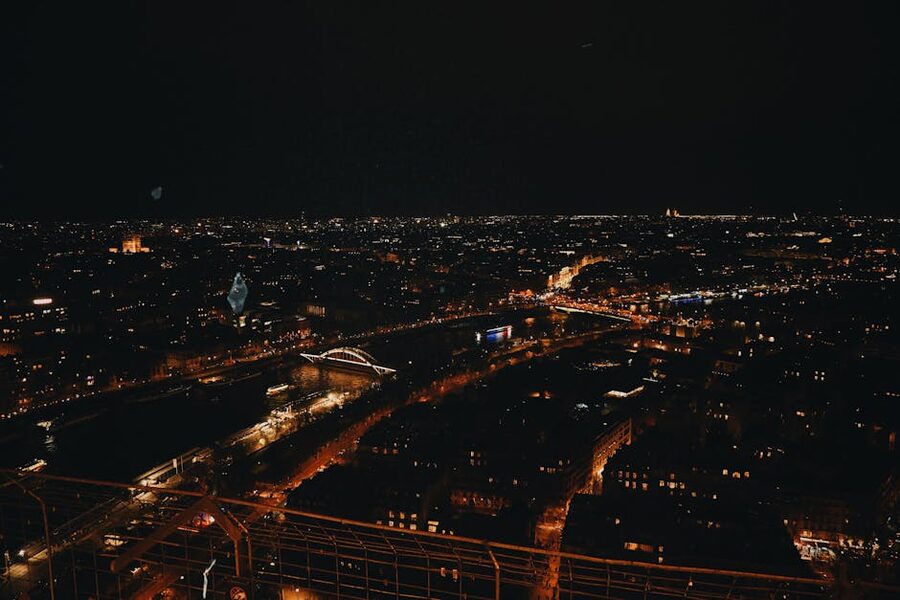
Slightly further afield: the Galeries Lafayette rooftop is free and gives a Right Bank-centred view. The Pompidou’s top-floor terrace (now closed for renovation through 2030) gave you the same. The Sacré-Cœur steps in Montmartre give you a 130-metre elevation panorama that’s the city’s third-most-photographed view after Trocadéro and the Eiffel platforms themselves. In the same free-rooftop tradition, Amsterdam’s Royal Palace on Dam Square is the civic equivalent: a low-rise 17th-century Stadhuis that anchors the city the way the Eiffel anchors Paris, except it does it at street level instead of 300 metres up.
Common mistakes I keep watching people make
Buying tickets from a lookalike domain. The official site is etoureiffel.paris. Anything else with “Eiffel” in the URL is a reseller at best and a scam at worst.
Going up at midday in July. Paris in summer is hazy. The view is at its worst in mid-afternoon. The crowd is at its peak in mid-afternoon. Both of those problems compound. Go early or late.
Booking the summit ticket without realising the second-floor queue exists. This is the big one. The “summit access” line on most tickets refers to the right to ride the summit lift, not a guarantee of when. You still queue at the second floor. Pre-buy the bundled summit ticket if you must summit on a peak day.
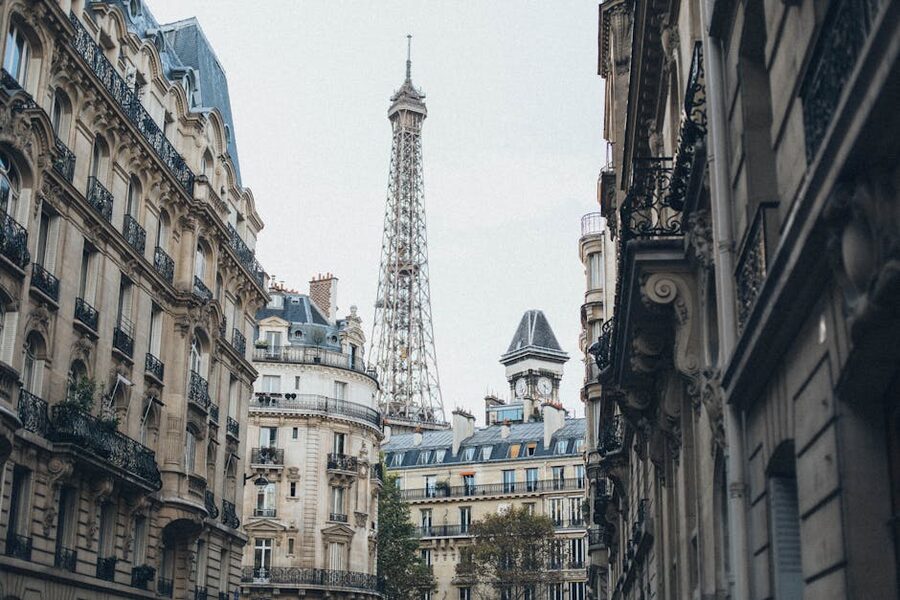
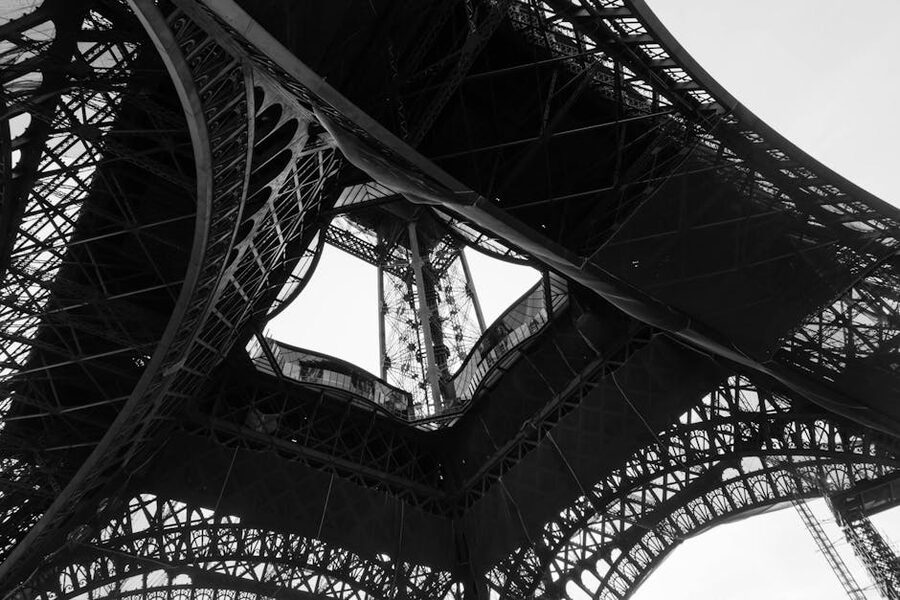
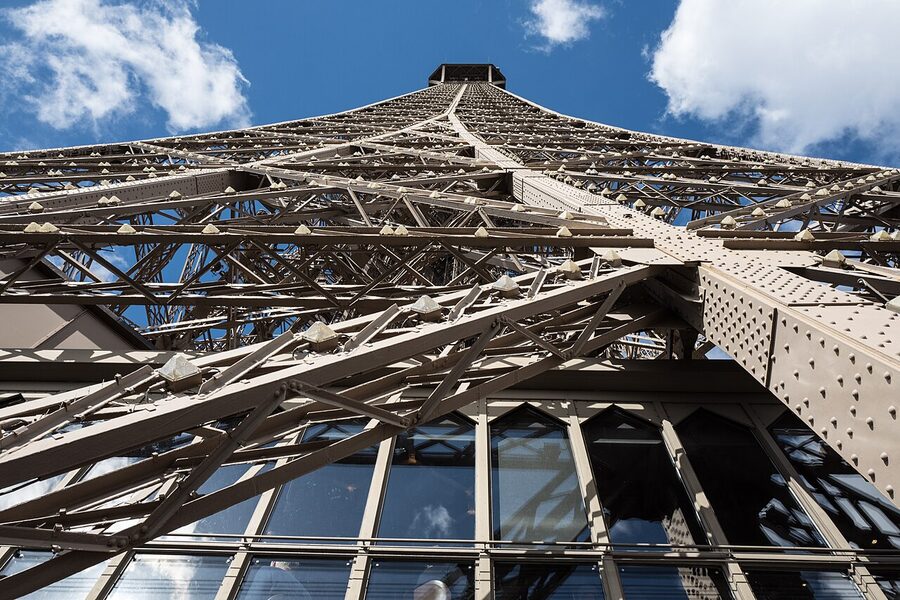
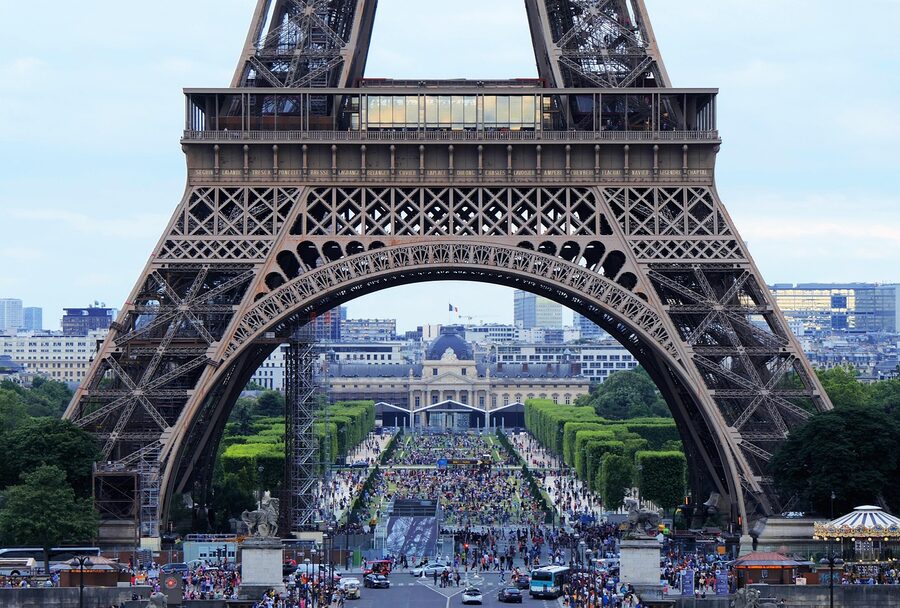
Skipping the underside. Most visitors arrive, queue, go up, come down, and leave. They don’t stand directly under the Tower. The view straight up from beneath the centre, where all four legs meet, is one of the best free things to do in Paris and it takes ten minutes. Most people miss it because they came for the up, not the under.
Trying to do the Tower as the day’s only attraction. It eats half a day if you do it right. Pair it with the Seine cruise at Pont d’Iéna directly underneath, or the Trocadéro and Place du Trocadéro photo session, or a long walk to the Arc de Triomphe through the 7th and 8th arrondissements. The Tower works best as part of a half-day flow, not a destination by itself.
Combining with the rest of Paris
The Tower sits in the 7th arrondissement, between two of the city’s most concentrated tourist clusters. To the east, you’ve got the Musée d’Orsay, Les Invalides with Napoleon’s tomb, and a long walk to the Louvre. To the west, the Trocadéro, the 16th, and a longer walk or a Metro hop to the Arc and the Champs-Élysées. The Tower is the centre of the fan; everything else is a spoke.
The day I’d build around the Tower goes like this. 09:00, climb the stairs, do the second floor, optionally summit. 11:30, descend, walk under the legs, photograph from Champ de Mars. 12:30, walk twenty minutes to Les Invalides for lunch and Napoleon’s tomb. 15:00, Metro one stop east to the Louvre for the late-afternoon slot when the day-tripper crush has cleared. 19:00, head back to the Pont d’Iéna for a 21:00 Seine cruise that catches the Tower sparkle from the water. That’s a full Paris day with the Tower as anchor.
The day I wouldn’t build around it: trying to fit the Tower plus Versailles into the same calendar day. Versailles needs its own day. The combination loses both attractions.
Accessibility
Wheelchairs and walkers can use the lifts to the first and second floors. The summit lift is also accessible, but the platform itself has limited turning space and uneven flooring at one section. The official site notes that visitors with mobility limits can request reduced-fare tickets and a separate entrance that bypasses the security queue at Pilier Nord. Email the Tower in advance via the site contact form to arrange.
The first-floor exhibits are wheelchair-accessible throughout, including the glass floor walkway. The Madame Brasserie restaurant is wheelchair-accessible. Le Jules Verne is reachable by lift but the dining room has a step, so call ahead.
Strollers can ride the lifts but not the stairs. If you’re with small children and want to climb anyway, leave the stroller at the ground-level cloakroom (free, located near the Pilier Est entrance) and bring the kid up on foot. The stairs are tighter than they look from below; a folding stroller can technically be carried, but it’s awkward.
Comparable monuments elsewhere
If the Eiffel inspires you to climb other towers, there’s a strong shortlist across the same trip. Brunelleschi’s Dome in Florence is the steeper, hotter, more medieval cousin. 463 steps, no lift, the climb takes you between the inner and outer shells of the dome past Vasari’s Last Judgement frescoes. Brunelleschi finished it in 1436 and it stayed the largest dome on earth for nearly 400 years. The view from the top is worth every step.
In Rome, St Peter’s Basilica dome is the other Renaissance dome climb. Michelangelo designed it; the climb is 551 steps; the dome itself was finished after his death and the view over the Vatican gardens is the city’s other “from above” trophy. Different scale to the Eiffel: smaller view, more religious context, no lift queue.
The Leaning Tower of Pisa is a 56-metre climb up a tilting medieval bell tower, more novelty than view, but the engineering is genuinely interesting once you understand the soft soil it was built on. The Milan Duomo terraces are a flatter, easier climb that puts you on top of the Duomo’s roof, walking past 135 spires and 3,400 statues. Different mood from the Eiffel: instead of an industrial iron tower, you’re walking through a Gothic stone cathedral roof.
Across the Pyrenees, the Setas de Sevilla is the modernist counterpart to the Eiffel: a wooden parasol structure that locals hated when it opened in 2011 and now use as the city’s main rooftop hangout. Montjuïc Cable Car in Barcelona is the lazy version of the same idea: cable car up a hill instead of stairs up a tower, same payoff of city-from-above. Sagrada Família’s tower lifts let you ride up Gaudí’s still-being-built basilica towers for an extra €10 on the standard ticket. All of them are worth thinking about as the Eiffel’s siblings: structures that tell their cities’ identities in iron, wood, stone or steel. Amsterdam’s NEMO Science Museum is the closest Dutch parallel to the Setas-style civic-roof idea: a Renzo Piano hull rising out of the IJ harbour with a free public roof terrace that locals treat as the city’s belvedere, no ticket required.
If you only have an hour
You don’t have to go up at all. A lot of travellers stand in line for two hours, ride the lift to the second floor, take a photo, and ride back down without ever having walked under the Tower properly. They saw it from the inside out. They didn’t see it from the outside up.
The hour-long version: walk to the Trocadéro terrace, photograph from there, cross the Pont d’Iéna, walk under the four legs, photograph straight up, walk south on the Champ de Mars 200 metres, photograph from there, leave. You’ve seen the Tower from three of its four canonical angles, you’ve felt it overhead, and you haven’t queued for anything. If you have a second hour, do the lawn picnic with a baguette and a bottle of red. That’s a Paris afternoon.
The visitors who go up because they think they have to are the ones who write the bad reviews. The ones who go up because they want the second-floor view, with eyes open about what the queue costs them, are the ones who write the good ones.
One last note on weather
The Tower closes the summit on high-wind days. The threshold is roughly 80 km/h sustained at the summit, which translates to a windy-but-walkable day at street level. If your booking includes the summit and the summit is closed on the day, you get a partial refund automatically applied within ten days. Don’t argue with the staff at the second-floor turnstile. They get this question fifty times a day and the system is automatic.
Rain doesn’t close the Tower but it makes the first-floor glass walkway slippery and the open-air sections of the second floor exposed. If you have a flexible date, watch the forecast. Paris weather changes quickly; an 11:00 visit on a forecast-rainy day often turns into a clear-sky 13:00 visit if you give it two hours.
What to read next
If you’ve sorted the Tower and you’re building the rest of your Paris days, the natural next reads are the rest of this Paris cluster: picking the right Seine cruise if you haven’t booked one already, the Louvre planning piece for the city’s biggest museum, and the Versailles day-trip article if you’re saving a full day for that. For the other Paris-from-above options, the Montparnasse Tower piece is the closest sibling. And if Paris is a stop on a longer European trip, our Florence guide to Brunelleschi’s Dome and the Rome guide to St Peter’s dome climb are the natural pairings: same itch (climb something old and look at the city), different cities, different centuries.