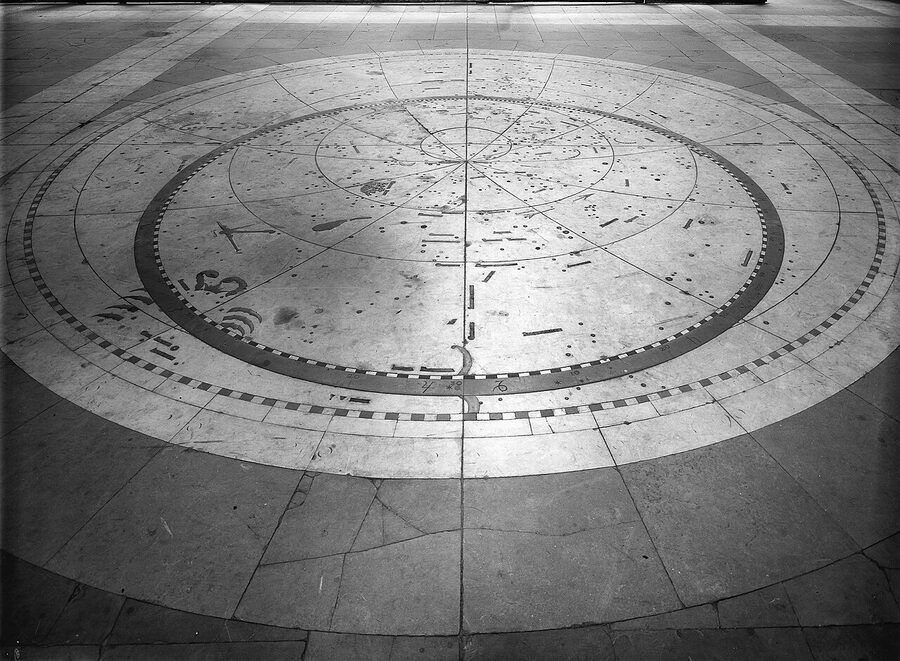
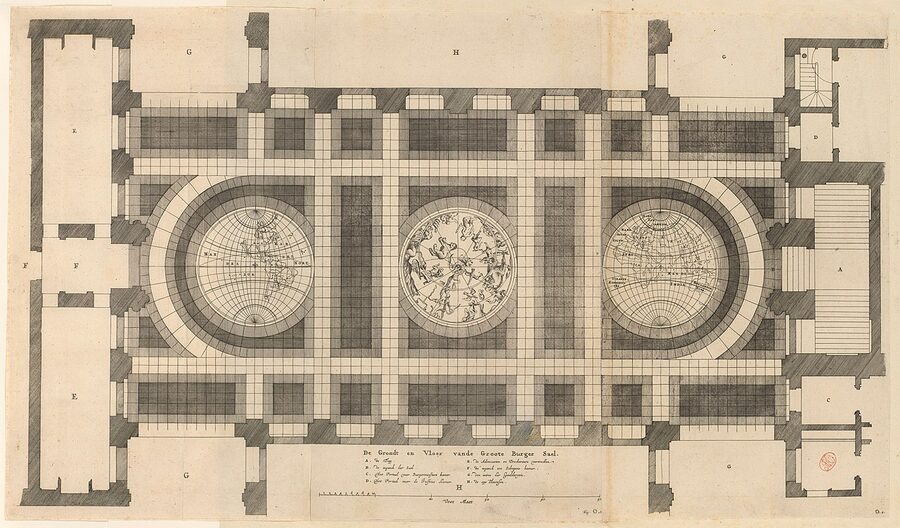
You walk into the Citizens’ Hall on the second floor of the Royal Palace Amsterdam and the first thing you notice is the light. The second thing is the floor. There are three giant marble circles inlaid into it, each one over six metres across, and one of them is a celestial map of the heavens as seen looking down from above. You are standing on a 17th-century picture of the world from God’s point of view. Most visitors walk over it without realising what they’re walking on.
Here’s the part most travellers don’t know. This building wasn’t built as a palace. It was built as a town hall. The Dutch Republic put it up between 1648 and 1665 as the seat of Amsterdam’s civic government, and it stayed a town hall for nearly 150 years. It only became a palace because Napoleon’s brother walked in and took it.
Quick picks for booking the Royal Palace Amsterdam
- Royal Palace Entry + Audio Guide ($14): the standard ticket. The audio guide is genuinely good. Book here
- Amsterdam Highlights Walking Tour ($36, 2.5 hours): small-group walk past the palace plus the rest of the old centre. Book here
- Historical Highlights Walking Tour with Tasting ($34, 2 hours): guided walk that ends with cheese and jenever. Book here
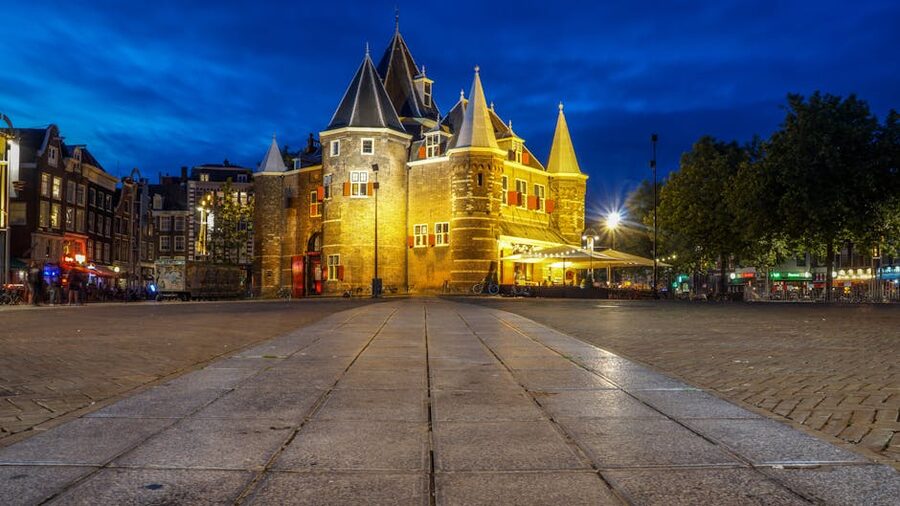
The town hall that became a palace by accident
Amsterdam in 1648 was the wealthiest city in the wealthiest country in Europe. The Dutch Republic had just signed the Peace of Westphalia, ending the Eighty Years’ War with Spain. The country was officially independent, officially Calvinist, and officially anti-monarchy. The Dutch had spent eighty years fighting a Catholic king and were not, for a moment, going to build themselves a palace.
What they built instead was a town hall. A staggeringly large town hall.
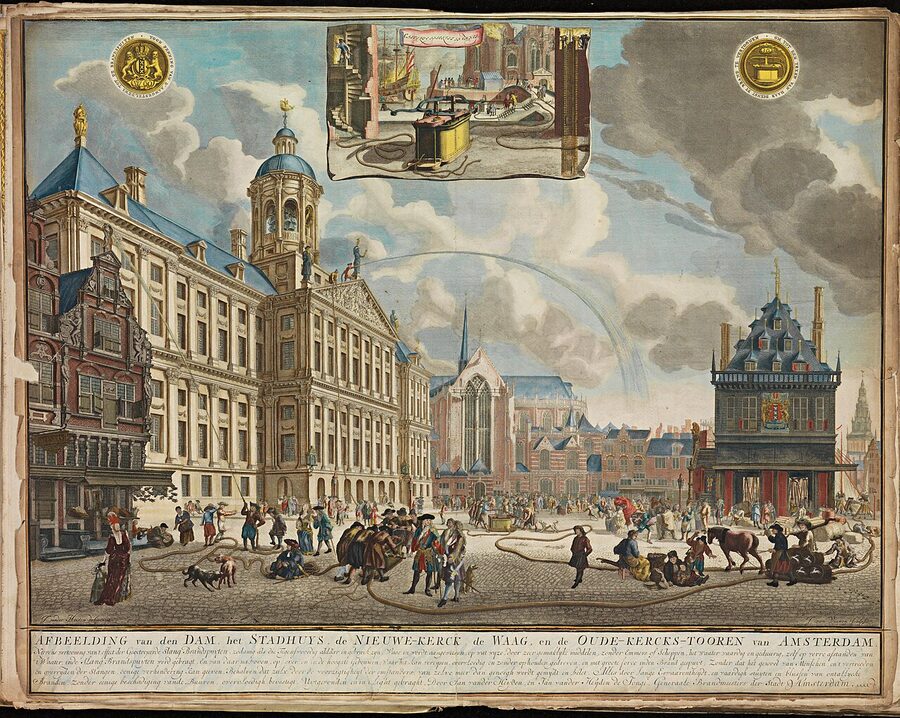
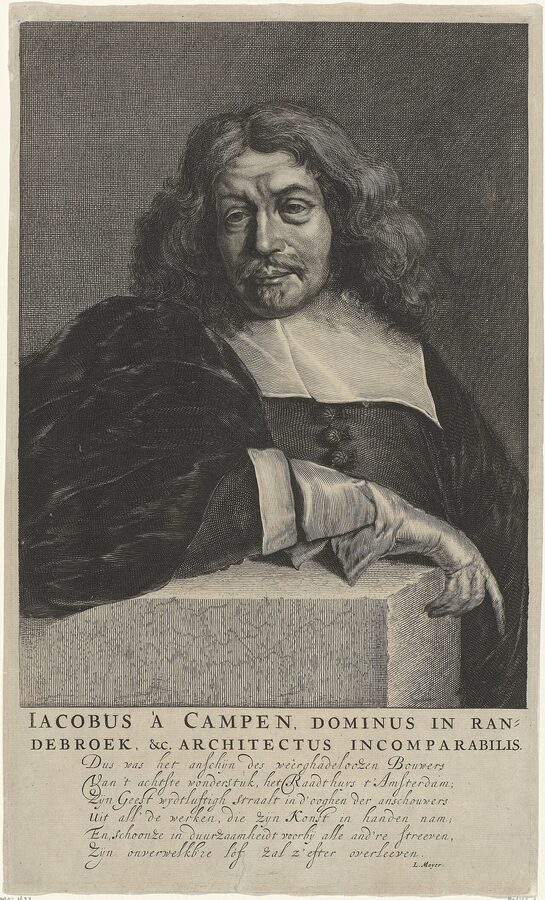
The architect was Jacob van Campen, a Dutch Classicist who had also designed the Mauritshuis in The Hague. He was given a brief that said, in essence, build something that says we run the world now. The contract was signed in 1648. The first stone was laid that same year. The building opened in 1655 and the final touches were done in 1665.
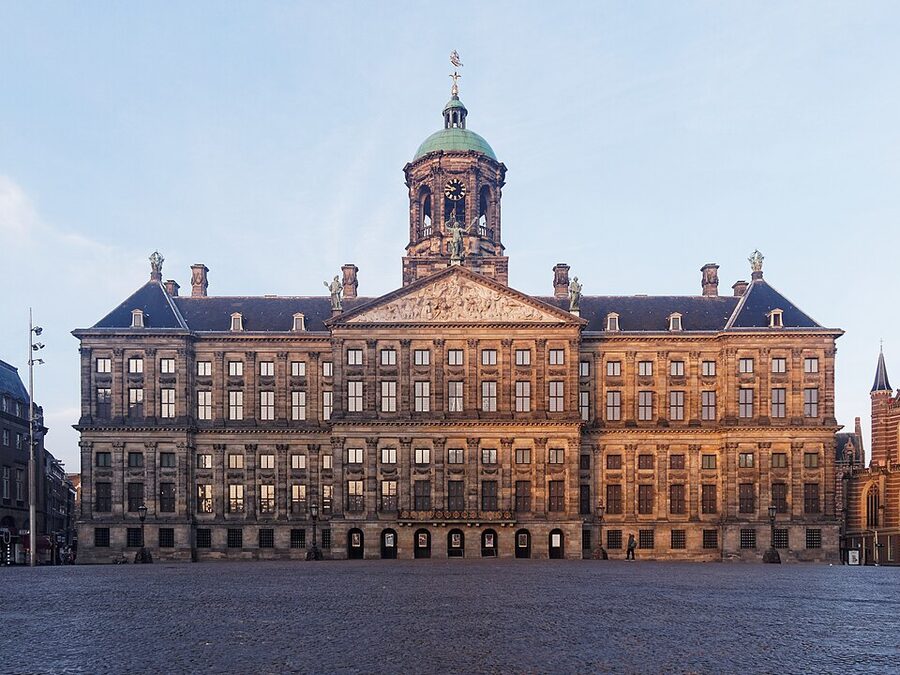
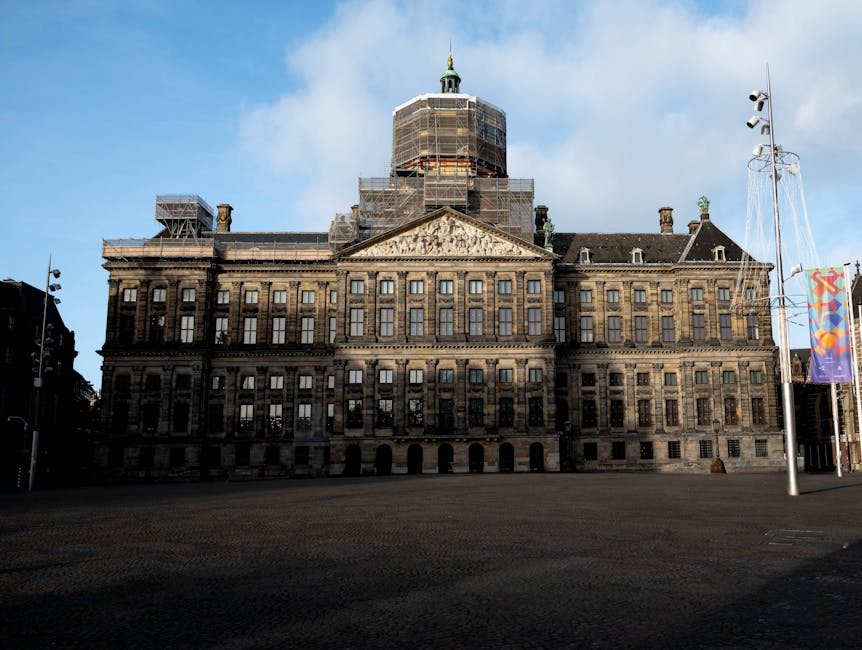
The numbers from the construction are the kind of thing that ends up on a fridge magnet. The footprint is roughly 79 metres by 56 metres. The tower at the back rises to 55 metres. The entire thing sits on 13,659 wooden piles driven by hand into Amsterdam’s mud. Norwegian spruce, every one of them. Constantijn Huygens called it the Eighth Wonder of the World, and at the time it was. The cost was 8.5 million guilders, the most expensive civic building anywhere in Europe.
Then in 1808 it stopped being a town hall.
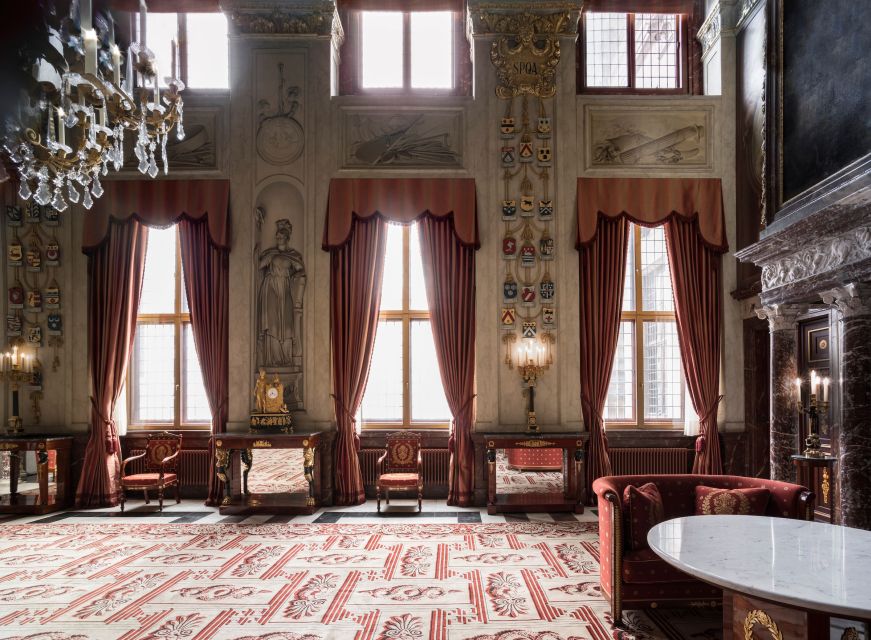
Napoleon had carved up Europe by then. He needed a friendly king for the Netherlands, so he installed his brother Louis Bonaparte. Louis was thirty years old, slightly idealistic, and hated by his brother for being too sympathetic to the Dutch. He arrived in Amsterdam looking for a residence, took one look at the Stadhuis, and requisitioned the whole building. The town council was given a few weeks to clear out. The interior was converted to imperial taste. The empire furniture you see in the Throne Room and the Royal Apartment today is from this period, 1808-1810. Louis was Louis I of Holland for four years. Then his brother Napoleon I forced him to abdicate in 1810 because he wasn’t being French enough.

By 1813 the French were out. The House of Orange came in. William I was crowned the first King of the Netherlands and inherited the building. He kept it as royal property. He never lived in it.
That last detail matters. The Dutch royal family has held this building since 1813 but has never actually used it as a residence. The current King Willem-Alexander and Queen Máxima live at Huis ten Bosch in The Hague, the way every Dutch monarch since 1813 has lived somewhere else. The Royal Palace Amsterdam is used about ten days a year, mostly for state functions: the king’s birthday reception, royal weddings, ambassadorial credentials. The rest of the year it’s open to the public as a museum, and that’s the version you’ll visit.
This is the editorial frame for the entire visit. You are not walking into a residence. You are walking into a republican town hall that briefly got hijacked into being a palace, and then never quite stopped being either thing.
Tour 1: Royal Palace Entry Ticket and Audio Guide ($14)
This is the one I’d buy first. The audio guide is the reason. It’s available in eight languages, it’ll tell you what each room was used for in both Town Hall mode and Palace mode, and you can read more in our full review of the entry-and-audio combo. The downside is the standard issue at any state-functions venue: book ahead because the palace closes for events about 130 days a year and the website calendar is the only place that tells you which.
The Citizens’ Hall: standing on a map of heaven
If you do nothing else inside, see this room.
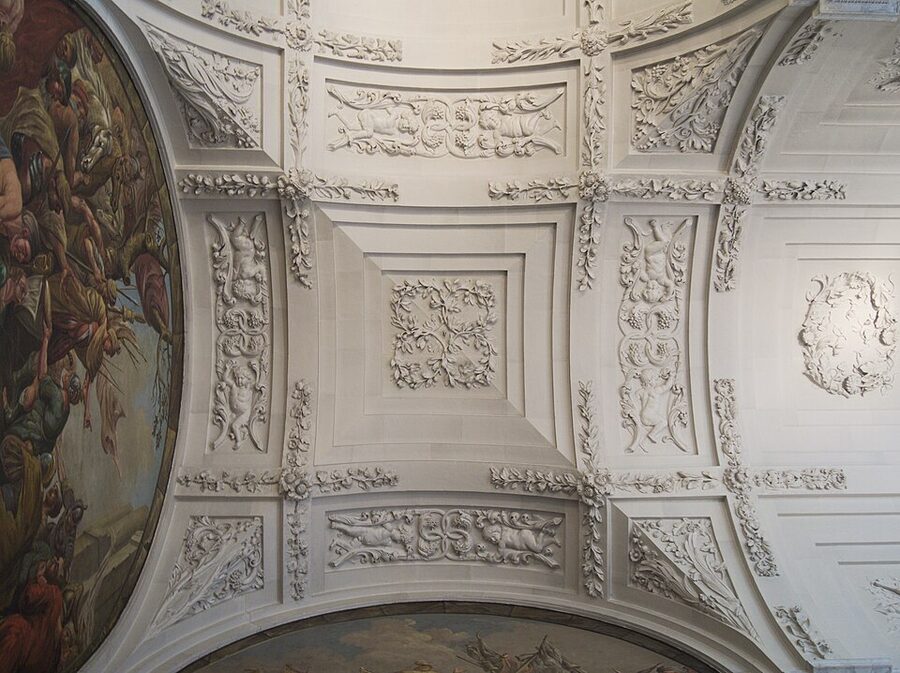
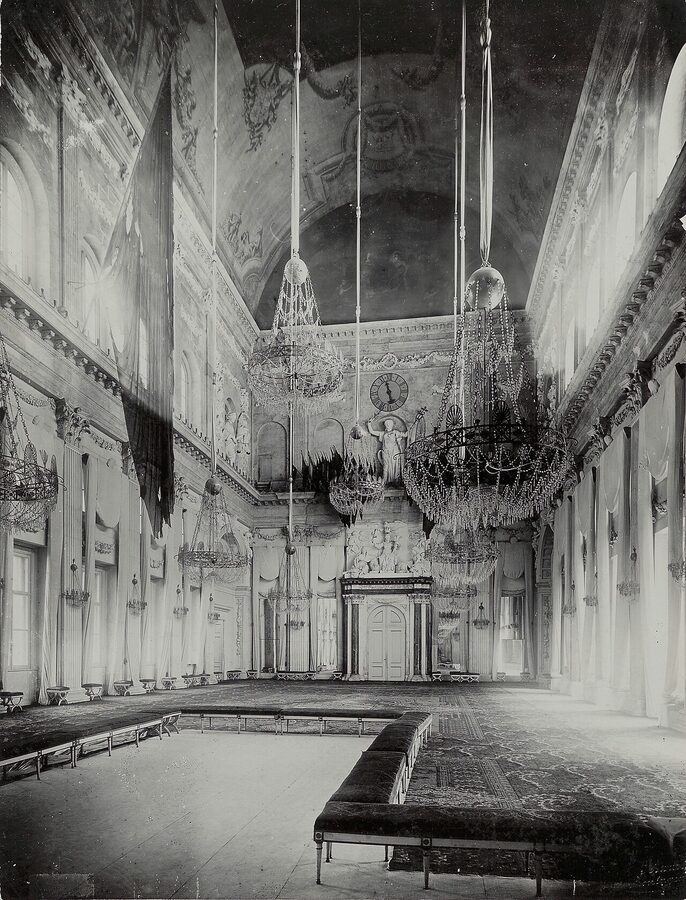
The Burgerzaal, the Citizens’ Hall, runs through the centre of the building like a cathedral nave. It’s roughly 34 metres long, 25 metres wide, and 27 metres high. The proportions are deliberate. Van Campen took them from Vitruvius and the rebuilding of Solomon’s Temple in the Old Testament. The Dutch Republic was telling its own citizens, every time they walked in to file a contract or settle a dispute, that they were entering a sacred civic space.
The floor is the part that makes you stop walking.
Three giant marble circles, each over six metres across, are inlaid into the white marble pavement. Two of them are maps of the eastern and western hemispheres of Earth. The third is a celestial map: the night sky, as seen from above, with the constellations laid out in mirror image. They were finished in 1655 by Cornelis Drebbel and his successors. The point of putting them on the floor was both literal and spiritual. The Dutch were the dominant maritime power on the planet at this moment, and the floor of their town hall was a globe you could walk across. You stood on the world. You looked up at Atlas holding it on his shoulders at the far end of the hall.
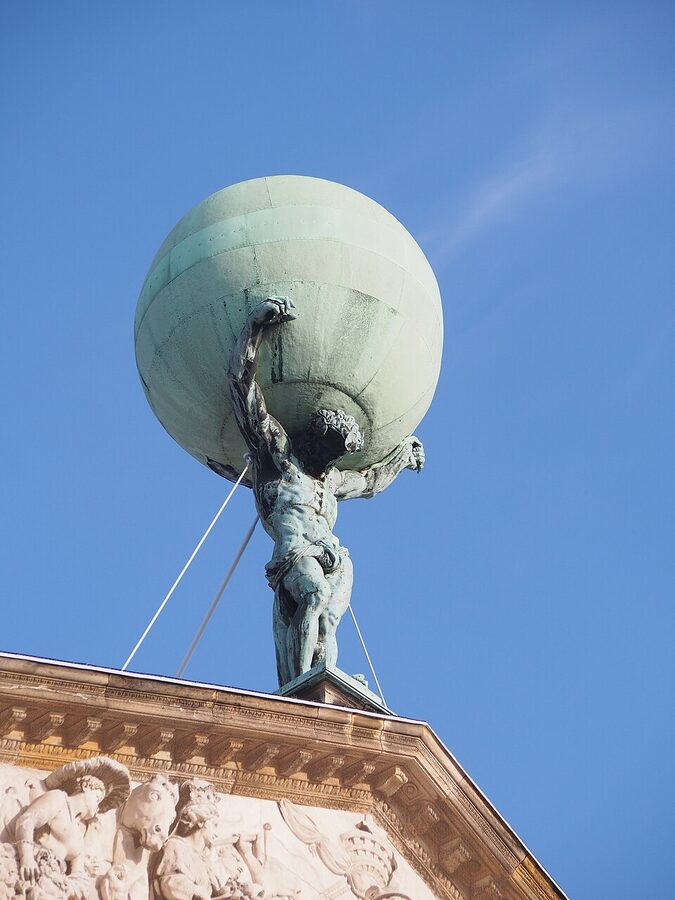
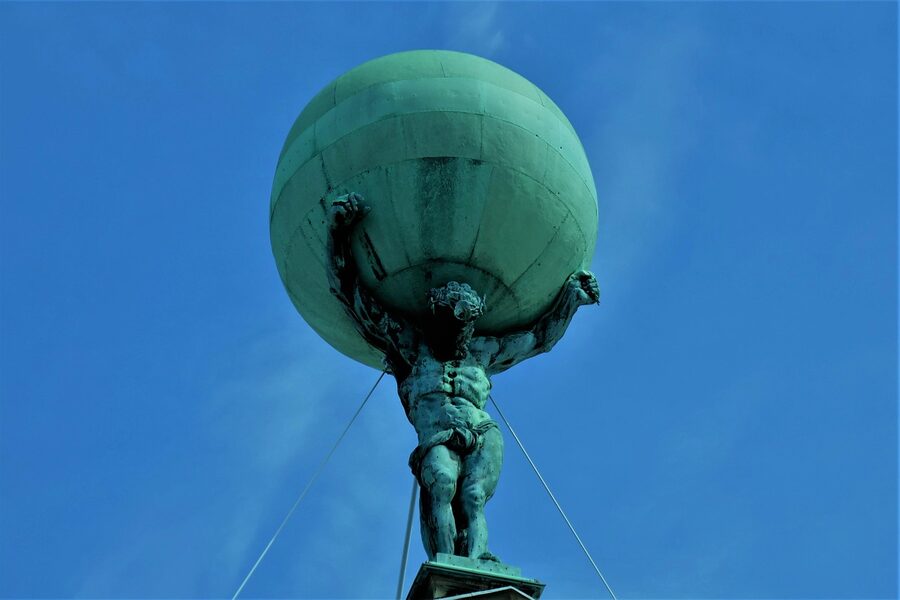
Atlas is a six-metre bronze, copper-green and slightly hunched, holding up a celestial globe at the southern end of the hall. There’s a smaller copy on the outside of the building at the western pediment. He’s holding the heavens, not the earth, which is the older Greek version of the myth. Below him, on the floor, the world he’s holding is rendered in marble. The whole thing is one continuous piece of cosmological theatre.
The other thing you’ll notice in the Burgerzaal is how few people are usually in it. Even when the palace is open and busy, the room is so big that twenty visitors look lost in it. This is unlike the Rijksmuseum two streets away, which is heaving by 11am for the Rembrandts. The Royal Palace gets a fraction of those numbers because most travellers don’t realise the inside is open. That’s the practical takeaway: come at noon and you’ll have one of the great civic interiors in Europe almost to yourself.
The Tribunal: where they used to hand down death sentences
If the Burgerzaal is the morally proudest room in the palace, the Tribunal is the darkest. It is also the room I’d most recommend you find.
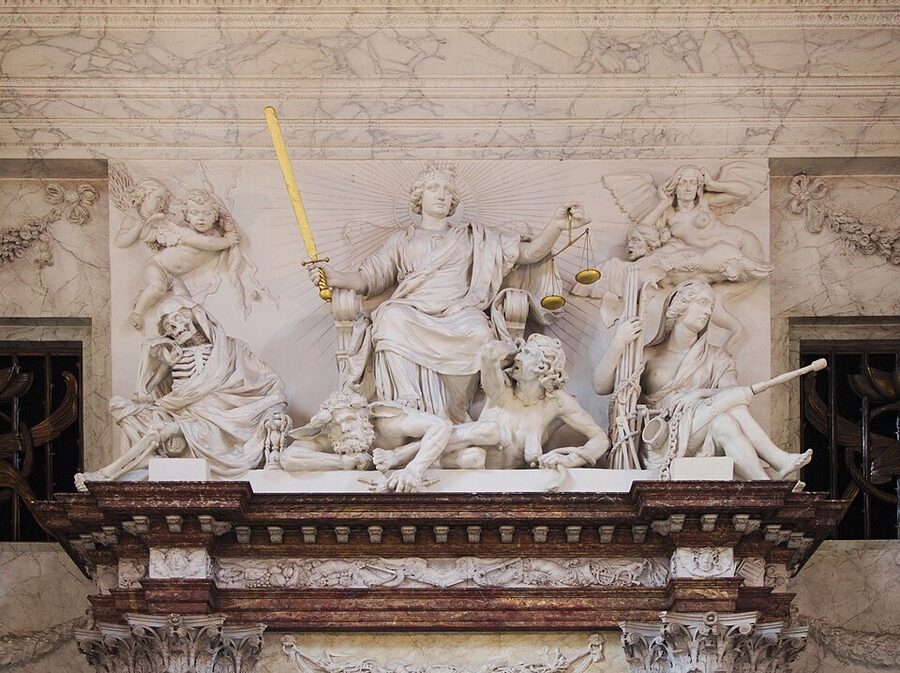
The Tribunal, sometimes called the Vierschaar after the four-cornered courtroom layout, is on the ground floor at the front of the building, just inside the Dam Square entrance. It’s a small chamber, dim, with a low coffered ceiling and a stone bench at the back where the magistrates sat. You walk past iron rails that fenced off the dock where the accused stood. Above the bench there are caryatid figures, weeping women holding their faces in their hands. The relief sculpture above the magistrates’ bench shows the Judgment of Brutus, the Roman story where Brutus had to sentence his own sons to death for treason and did it.
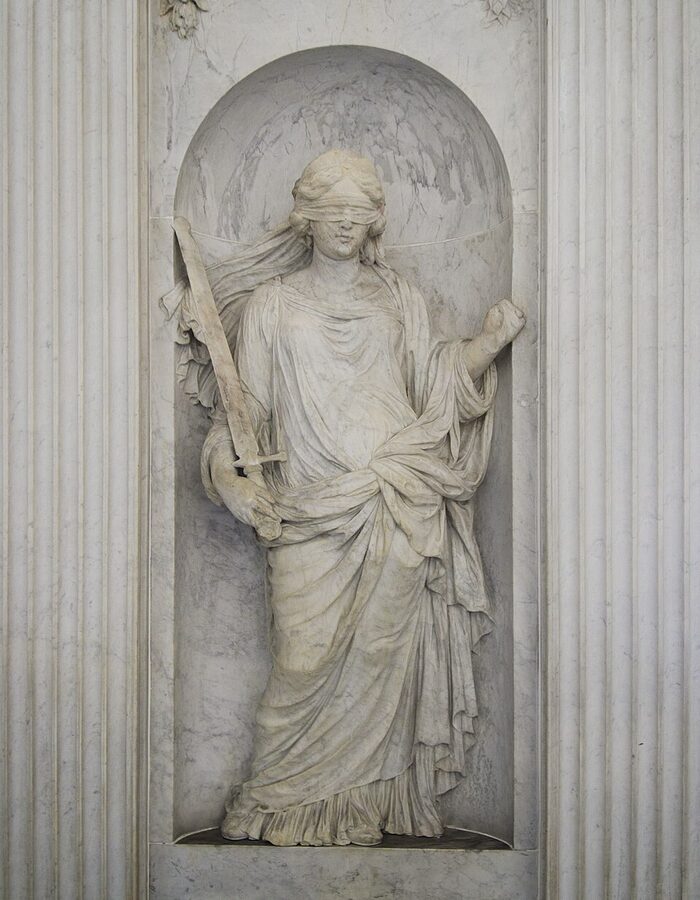
This is where the Amsterdam city magistrates handed down death sentences for the back half of the 17th century and most of the 18th. After the verdict was read inside, the condemned was led out through the front door of the building and onto a wooden scaffold built directly on Dam Square. The execution happened in public view, a stone’s throw from where you’ll be drinking a coffee on a café terrace today.
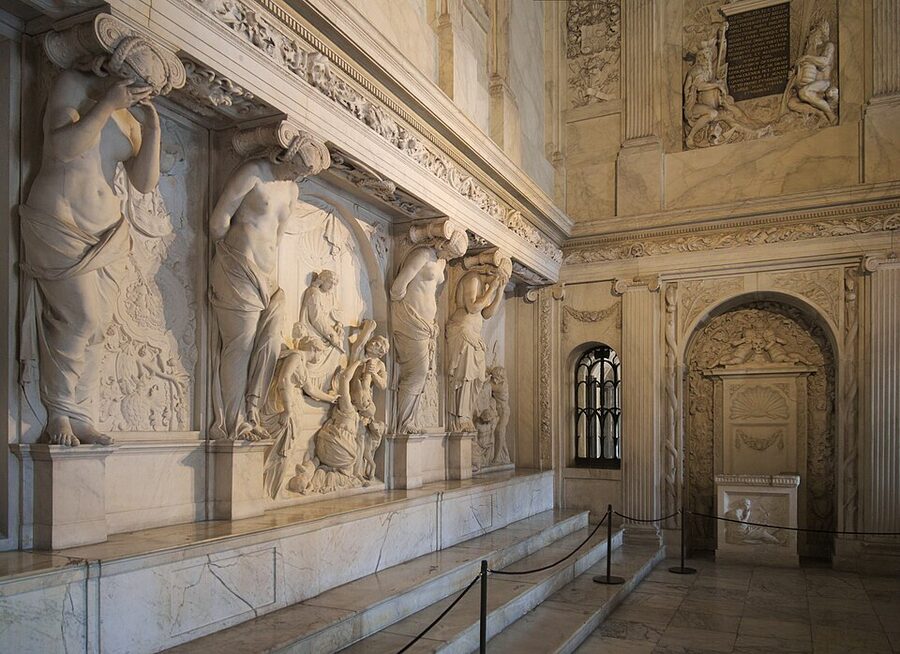
The Tribunal stopped being used for capital cases in 1811. By then the building was already a palace and the death penalty had been abolished in the kingdom. But the room was preserved exactly as it was. The bench, the dock rails, the caryatid weeping women, the Brutus relief: everything is original 1650s marble. This is the part of the building that gives the editorial spine of “civic monument first, palace second” its sharpest edge. The Dutch Republic carved its own moral seriousness into the floor plan. You can stand in it.
If you’ve been to the Doge’s Palace in Venice, you’ll recognise the genre. Both are republics making a building that says we mean it. The Venetian version uses gilded ceilings; the Dutch version uses dark marble and the Judgment of Brutus. The Dutch version is, frankly, the sterner of the two.
The Throne Room and the Royal Apartment: empire-style intrusion
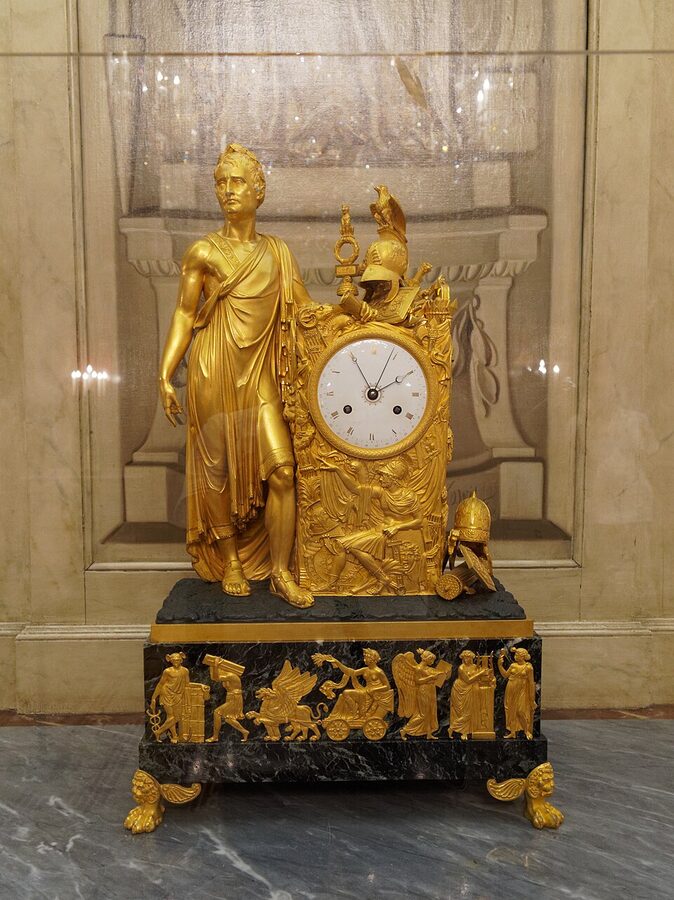
Upstairs, the rooms shift register. This is where Louis Bonaparte’s makeover left its biggest mark. The Throne Room, the Royal Apartment, the Council Chamber, the Burgomasters’ Chamber: all of these were redecorated between 1808 and 1810 in the empire style that was the Napoleonic house aesthetic. Heavy mahogany and gilt-bronze furniture. Cool grey-blue and crimson colour palette. The L monogram of Louis I worked into chandelier rosettes and the throne canopy.
It is genuinely beautiful. It is also, structurally, an imposed taste. You can feel the Republican proportions of the building underneath the Napoleonic furniture. A Dutch town hall room is solid and rectangular and high. Empire-style decoration wants soft drapery and flowing curves. The two are slightly at war. Once you notice it, you can’t un-notice it.
The Throne Room is where the king receives ambassadors when they present credentials. The throne itself is a relatively modest red-and-gold chair under a canopy. Compared to the throne rooms in Madrid’s Royal Palace or Versailles, it’s restrained. The Dutch monarchy has always been determinedly low-key, and the chair reflects that. The throne rooms at Versailles look like the king is being launched into the sun. The Amsterdam version looks like a particularly grand boardroom.
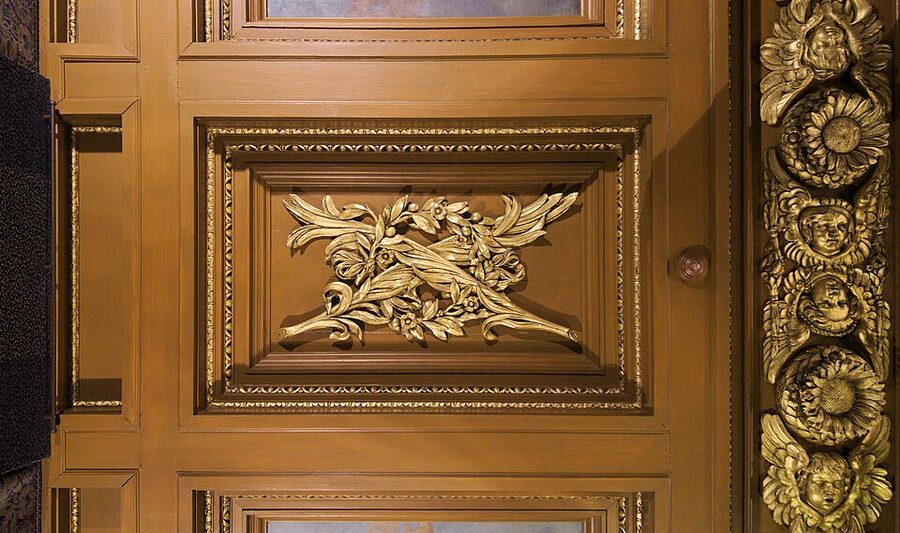
The smaller side rooms are where the Town Hall layer is most visible. The Burgomasters’ Chamber, the Orphans’ Chamber, the Schepenbank (the magistrates’ room): each of these had a specific civic function in 1655 and the ceilings were painted to match. The Orphans’ Chamber has a ceiling allegory of charity. The Burgomasters’ Chamber has the wisdom of Solomon. They were briefing rooms for civic decisions, decorated as moral lectures. Louis Bonaparte’s furniture sits underneath them, a layer that doesn’t quite match.
The Balcony Chamber: where the new kings get presented
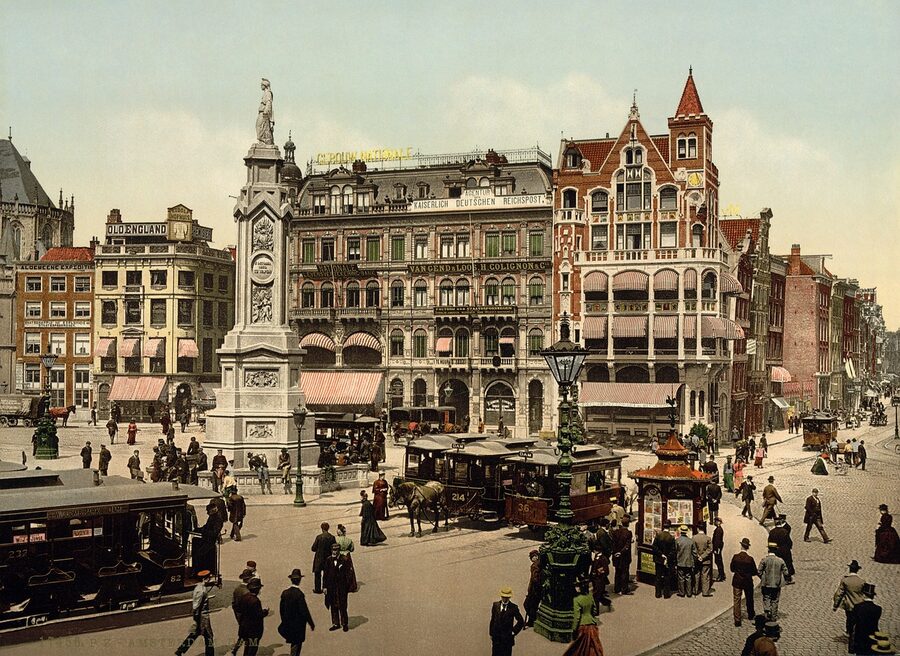
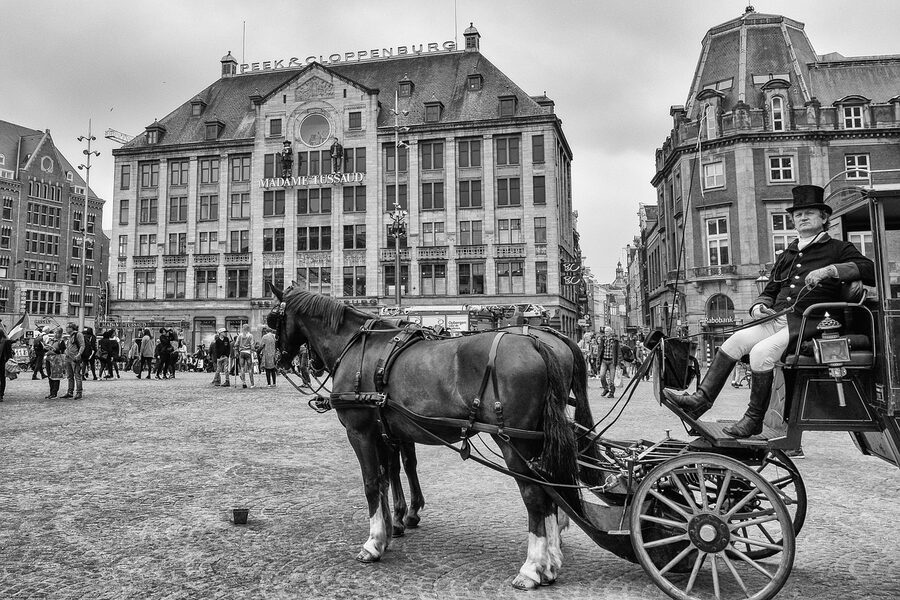
The Balcony Chamber is on the south side, facing Dam Square. The balcony is small. The view from it covers the whole square, the National Monument, the Bijenkorf department store, and the Madame Tussauds building directly opposite (which we covered in our Madame Tussauds Amsterdam guide if you’re combining the two).
This balcony is the ceremonial face the Dutch monarchy presents on its biggest days. The investiture of a new king happens here. The most recent investiture was on 30 April 2013, when Queen Beatrix abdicated in favour of her son Willem-Alexander. The actual swearing-in is held in the Nieuwe Kerk next door, but the new royal family steps onto this balcony afterwards to greet the crowd on Dam Square. Royal weddings get the same treatment. So does the king’s birthday in late April most years.
If you happen to be in Amsterdam during a state event, the palace closes and the balcony becomes the visible business of the day. The rest of the year you can stand inside the chamber and look out through the window glass at the same view. It’s worth doing. The angle is good and the symbolism is, on a quiet Tuesday in November, faintly comic. You’re standing where royalty waves at a crowd.
Tour 2: Amsterdam Highlights Small-Group Walking Tour ($36)
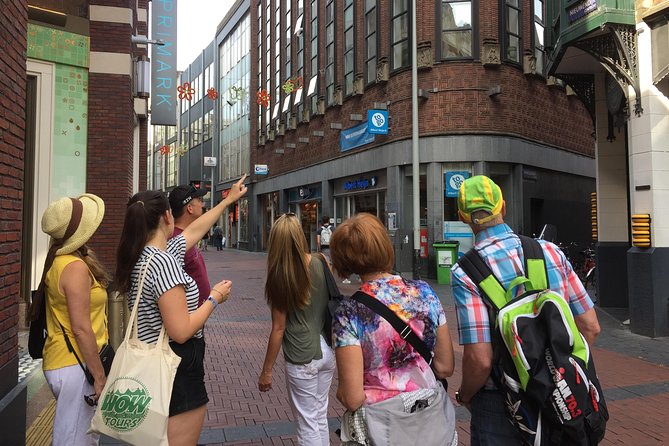
If you’d rather have a guide explain the palace from outside and then walk the rest of Amsterdam’s old centre with you, this is the cleaner pick. It’s small-group (around 10-15 people), 2 hours 30 minutes, and the route covers Dam Square, the canal belt, and the Jordaan; our full review of this tour goes into the route in detail. The trade-off is real: you don’t go inside the Royal Palace on this one, so pair it with a separate entry ticket if the interior is what you came for.
How the building actually got built: 13,659 wooden piles in the mud
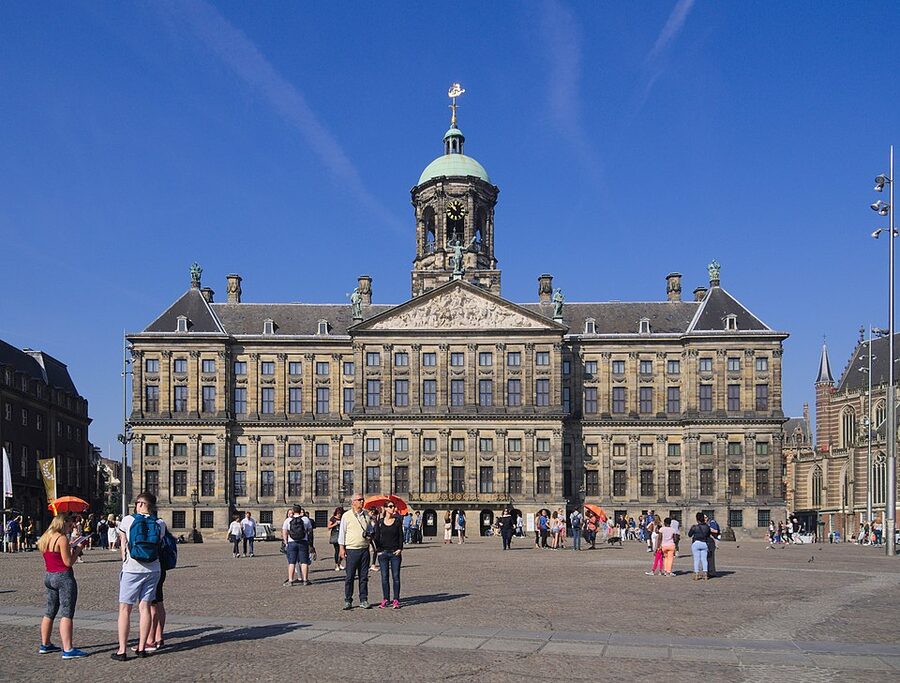
Amsterdam is built on peat and clay. There’s nothing solid for several metres down. Every significant building in the city sits on driven wooden piles, the way Venice does. The Royal Palace happens to sit on the most extreme example of this technique in pre-industrial Europe.
13,659 wooden piles. Norwegian spruce. Driven by hand, one at a time, between 1648 and 1652, before any of the visible building above ground existed. Every Amsterdam school child learns the number. The mnemonic is the year 1, then the days in the year (365), then the year again (9): 1-365-9. It’s not actually how you remember it, but it’s how the locals tell you the number.
The piles still hold. The 2005-2009 renovation included an inspection of the foundations, and they reported that the spruce was still solid because of the airless mud. Wood underwater doesn’t rot if oxygen can’t reach it. Piles in the dry would have collapsed three centuries ago. The same principle holds up large parts of the canal belt and the Anne Frank House neighbourhood: they’re all sitting on wood from the same era.
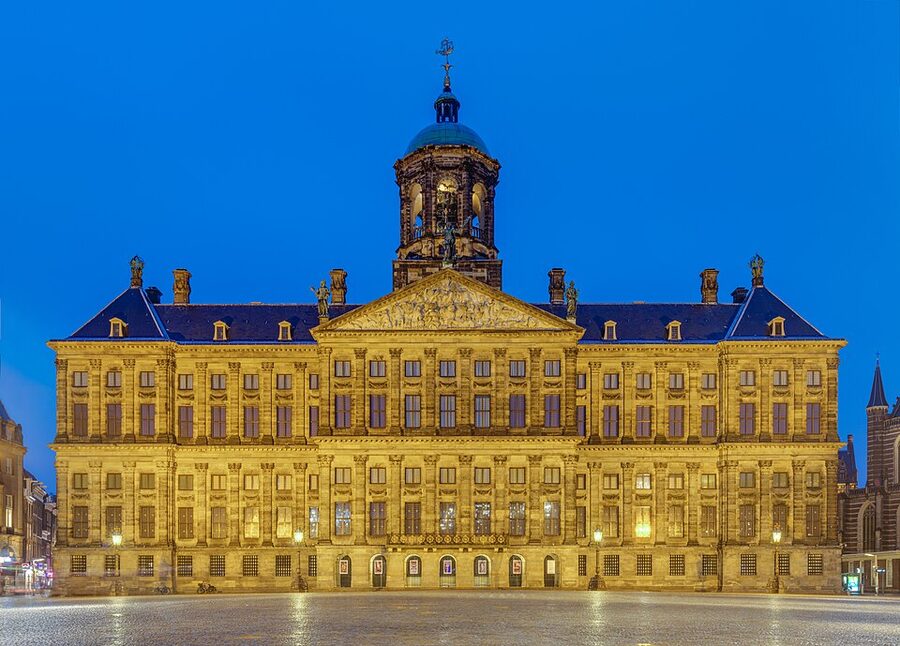
Above ground the construction is sandstone from Bentheim in Lower Saxony, hauled up the Rhine on river barges and reassembled on Dam Square. There’s almost no native building stone in the Netherlands, so any major Dutch building of this period is also a major piece of pre-industrial supply-chain work. The same stone went into the front of the Rijksmuseum when Cuypers built it two centuries later, and into half a dozen other Dutch civic landmarks.
The tower at the back of the building is the part most visitors miss. It rises 55 metres and houses a carillon of 49 bells. The carilloneur plays it regularly on Saturdays at noon. Stand on the north side of the building, just behind it on Nieuwezijds Voorburgwal, and you can hear the bells properly. From Dam Square the buildings around the palace muffle them.
Practical: tickets, opening hours, and the calendar problem
The single thing to know before you book: the Royal Palace closes for state functions about 130 days a year. Not weekdays only. Not predictable. The closure dates are posted on paleisamsterdam.nl and you have to check.
The calendar reality is worse than that number suggests. Some of the closures are last-minute, when an unexpected ambassador arrives or a state function gets added. Others are seasonal: the king’s birthday week in late April, the New Year reception (early January), the autumn diplomatic season (September-October), and most royal weddings. Always check the live calendar before you buy a ticket. If you book through GetYourGuide or Viator, both of those platforms read the official availability feed, so a booking on a closure day shouldn’t be possible. If you book through resellers further down the chain, occasionally a ticket comes through for a closure day and you have to chase a refund.
Once the date is right, the price structure is straightforward.
- Standard adult entry: $14 (€12.50 if you walk up, $14 with audio guide if you book through GetYourGuide).
- Children 0-17: free.
- Museumkaart holders: free.
- I Amsterdam City Card: not valid at this museum. Read the small print.
- Audio guide: included on the GYG ticket, $3 extra at the door.
- Group guided tour (up to 10 people): €105 weekday, €135 weekend, plus admission.
Opening hours are 10:00 to 17:00 daily on the days the palace is open. Last entry is 16:00. You’ll need at least 90 minutes to do the building justice and the audio guide takes about 75 minutes if you walk briskly. Two hours is comfortable.
The audio guide is genuinely well done. It’s written by the palace’s own curators and it’s available in Dutch, English, German, French, Italian, Spanish, Chinese, and Russian. There’s a separate children’s version in Dutch and English. You pick up the handset at the entrance and return it at the exit. It works on a numbered system: each room has a number on a small sign, you punch in the number, you get a 2-3 minute commentary. You can fast-forward and rewind. There are also longer optional segments on the architecture, the Bonaparte period, and the Burgerzaal floor maps if you want the deep cuts.
Tour 3: Historical Highlights Walking Tour with Tasting ($34)
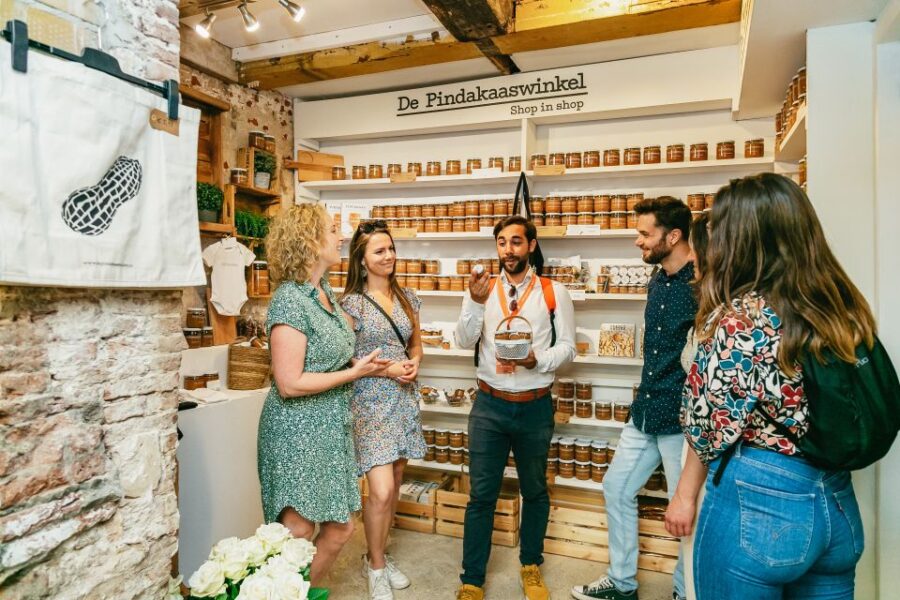
The third option, and the one I’d pick if you’ve already booked the palace entry separately. It’s a 2-hour guided walk that builds the Stadhuis-into-Palace story into the route, then ends with a Dutch tasting. Our full review covers what’s in the tasting (jenever, cheese, stroopwafel) and how the timing works around lunch. The catch is that small-group means small group: it caps at around 12 and the popular afternoon slots fill a week ahead in summer.
Getting there and what’s around it
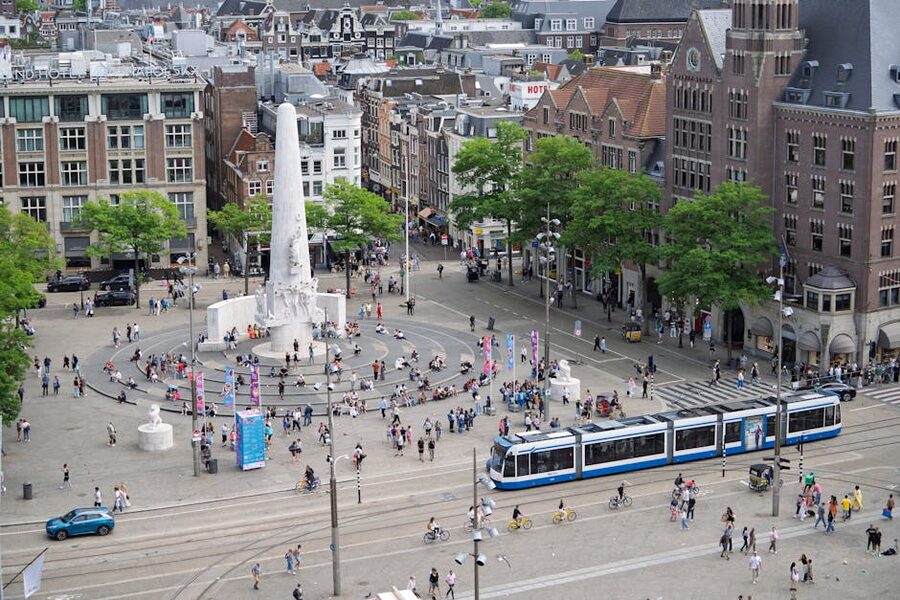
The address is just “Dam, Amsterdam”. The square doesn’t have a number. The entrance is on the east side, facing the National Monument and Madame Tussauds.
From Amsterdam Centraal Station, it’s a 10-minute walk south on Damrak. The walk itself is one of the loudest commercial drags in the city: souvenir shops, fast-food, sex museums, the lot. Don’t take it as the city. It’s the funnel. Once you cross under the tram lines into Dam Square the noise drops about 40%.
By tram: lines 4, 14, and 24 stop at Dam. By metro: there’s no metro stop on Dam Square itself; closest is Rokin (line 52, the new Noord-Zuidlijn), about 5 minutes’ walk south. Bicycles are a bad idea on Dam Square because the police will move you on. Park on Spuistraat or one of the side streets if you ride in.
The neighbours on Dam Square are worth knowing about because the geography of the visit will probably include them.
- Madame Tussauds Amsterdam is literally next door, 50 metres east of the palace entrance. Same square. Different building. We’ve covered the booking notes for it in our Madame Tussauds Amsterdam guide; the short version is that the on-site combo with the palace doesn’t really exist, but you can do both in a half-day.
- Nieuwe Kerk is attached to the north side of the palace. The “New Church” (built 1408, so not very new) is where Dutch monarchs are sworn in. The interior is open as an exhibition space; the church itself doesn’t hold regular services any more.
- Bijenkorf department store on the east side. Worth it for the architecture and the rooftop café in summer.
- National Monument, the obelisk in the centre of the square, commemorating the WWII dead. There’s a small ceremony here every 4 May; if you’re in town that day, the building closes early.
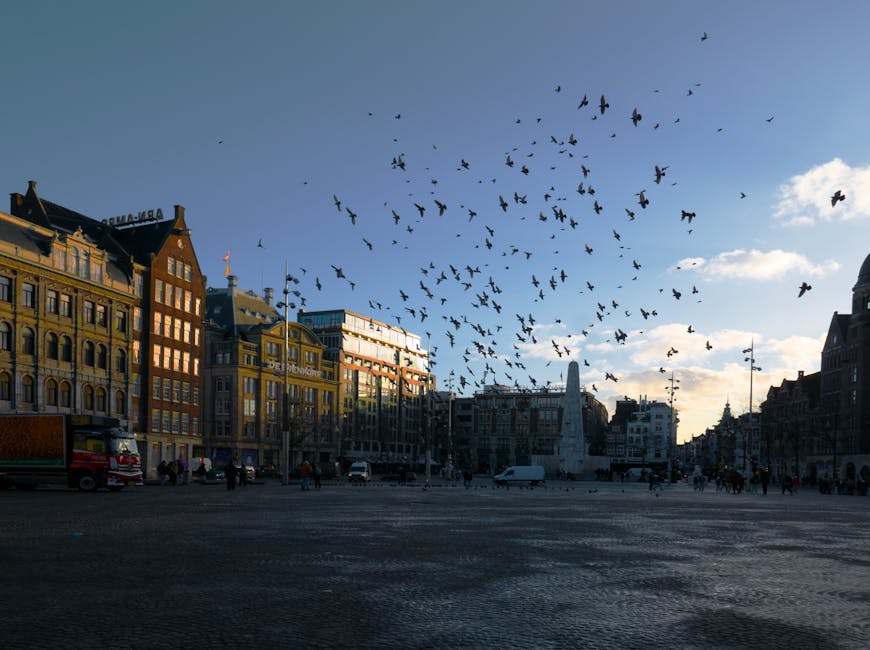
If you have a half day and you’ve already booked the palace, the obvious combination is palace plus Nieuwe Kerk plus a coffee on Spui or in the Begijnhof, then walk south along Kalverstraat to the Spui and the Bloemenmarkt. That’s a good morning. The afternoon you save for one of the bigger museums: Rijksmuseum or Van Gogh.
The other obvious pairing is the Red Light District walking tour, which starts about 8 minutes east of Dam Square at Oude Kerk. The two share the medieval-Amsterdam editorial frame and the contrast between civic-respectability and the city’s other traditions is genuinely interesting. Don’t try to do both in the same afternoon though; it’s too much walking on cobblestones.
The other rooms: Council Chamber, Mozes Hall, and the corridor maps
The audio guide will pull you through eight or nine rooms in addition to the Burgerzaal and the Tribunal. The ones worth slowing down in:
The Council Chamber. The largest of the upstairs rooms. The painted ceiling shows Amsterdam as the Maid of the City surrounded by the rivers of the world, an allegory for global trade. This was the working chamber of the Council during the Stadhuis era. Under Bonaparte it became a state dining room.
Mozes Hall (Moseszaal). Named for the painting cycle on the walls, scenes from the life of Moses. These were originally over the doors of the burgomasters’ room in the older town hall and were salvaged when the Stadhuis was built. They’re by Govert Flinck, who was Rembrandt’s pupil. If you came expecting Dutch Golden Age painting and felt like the Royal Palace doesn’t deliver on that front, this is your room.
The Burgomasters’ Chamber. Tiny, dark, intimate. The four burgomasters of Amsterdam met here to make city policy. The ceiling shows the Wisdom of Solomon. The original walnut wainscoting is still there. Probably the most atmospheric small room in the building.
The Galleries running around the Burgerzaal at the upper level. The marble reliefs along the gallery walls show the four elements, the four continents (as conceived in 1655: Europe, Asia, Africa, America), the four seasons, and a series of Roman virtues. Walk slowly and look up. The reliefs were carved by Artus Quellinus, the Flemish sculptor Van Campen brought to Amsterdam to lead the entire interior decoration programme.
Small details most visitors miss
A few things I’ve watched people walk past, repeatedly, that are worth catching.
The Bonaparte L’s. Louis I left his initial L worked into the chandeliers, the door fittings, the throne canopy, the parquet inlay. Once you see one you’ll see them everywhere upstairs. The Dutch never bothered scraping them off when the House of Orange took over in 1813, because the building was a museum by then anyway. Two centuries later they’re a quiet reminder of how thin the Dutch monarchy’s claim on this building actually is.
The plinth panels in the Burgerzaal. The black marble panels at floor level around the Citizens’ Hall are inscribed with Latin mottos drawn from Tacitus and Vergil. The audio guide will mention this in passing. The mottos are fundamentally about civic virtue. They’re addressed not to a king but to the citizens of Amsterdam.
The Atlas on the outside. When you leave, walk around to the back of the building (Nieuwezijds Voorburgwal side). On the western pediment there’s a smaller bronze Atlas, the same composition as the one inside, holding up the celestial globe. Most visitors don’t know it’s there because the back of the building isn’t on the standard tourist route. It’s catching the afternoon sun if you go around 4pm.
The carillon. 49 bells. Plays Saturday at noon. The carilloneur is Boudewijn Zwart, and he programmes things from medieval Dutch hymns to The Beatles depending on his mood. Stand around the back, on Spui or Singel, and you’ll hear it cleanly.
How does it compare to other royal palaces in Europe?
The short answer: it’s smaller and stranger than the famous ones, and that’s why it’s worth your time.
Versailles is the obvious comparison and it loses on every dimension except scale. Versailles was always a palace, built as a palace for a king who needed a stage. The Amsterdam Royal Palace was built as a town hall for a republic that thought itself above kings. Versailles has the Hall of Mirrors; Amsterdam has the Burgerzaal with its three marble globes and an executioner’s bench in the basement. Different points entirely. If you do both, do them in the right order: Amsterdam first, then Versailles, so the contrast lands.
The Royal Palace of Madrid is the next nearest sibling in scale. It’s about 135,000 square metres of floor space against Amsterdam’s 17,000. Madrid is in a different size class. It’s also still nominally a working royal residence, although the Spanish royals don’t sleep there either. The Madrid version is better if you came to see grand ceremonial space; the Amsterdam version is better if you came to see the Republic’s idea of a serious civic building.
The Real Alcázar of Seville and the Alhambra’s Nasrid Palaces are different beasts entirely (Islamic palace architecture, not European court architecture), but they share something with Amsterdam: a sense that the building’s sacred geometry is doing more work than the furniture. The celestial map on the Burgerzaal floor and the vegetal arabesques in the Nasrid courtyards both come from the same instinct, that a state’s important rooms should be cosmologically charged.
Les Invalides in Paris is the connecting room. Louis Bonaparte was Napoleon I’s brother. Napoleon’s tomb is at Les Invalides. Louis’s brief reign in Amsterdam, the Bonaparte L’s on the door fittings, the empire furniture in the Royal Apartment: all of it is a footnote to the bigger Napoleonic story you can read at Invalides. If you do Paris and Amsterdam in the same trip, the connection is genuinely interesting. The Bonapartes were a single family that owned every important capital in Western Europe for about a decade and the Royal Palace Amsterdam is their Dutch chapter.
Sainte-Chapelle and the Conciergerie in Paris are the closest comparison for the Tribunal. The Conciergerie was the medieval royal palace turned revolutionary prison; the Vierschaar in Amsterdam was a republican courtroom that handed down death sentences. Both rooms are about the moral weight of state power and both are unsettling to stand in. The Dutch version is older, smaller, and (in my view) better preserved.
The Pitti Palace in Florence is the other near-cousin. Built by a banking family to outshine the Medici. Eventually became a Medici palace. The Royal Palace Amsterdam was built by a republic to outshine the European monarchies. Eventually became a monarchy’s palace. Same arc, different starting point.
Combining with other Amsterdam attractions
The geographic reality of central Amsterdam is that almost every major attraction is within a 20-minute walk of Dam Square. So your day can fold a few things in.
The most natural pair is the palace plus the Upside Down Museum, which is a 12-minute walk west on Marnixstraat. The Upside Down is hands-on, photo-friendly, and aimed at families. The Royal Palace is contemplative and aimed at people who like history and proportion. Doing the Royal Palace in the morning and the Upside Down in the afternoon gives you a full register of what Amsterdam offers visitors. We covered the booking flow for that one in our Upside Down Museum guide; the short version is that timed-entry slots fill in summer.
Adding the Anne Frank walking tour makes the day morally heavier. The Anne Frank House itself is famously hard to book (you need to be online at exactly 11am six weeks before your visit), but the walking-tour product covers the Jordaan neighbourhood and the WWII context without entering the house. Pair this with the Royal Palace by walking from Dam Square north-west along Raadhuisstraat. It’s about 12 minutes on foot.
The Heineken Experience sits south of the canal belt, about 25 minutes’ walk or a 12-minute tram ride from Dam Square. Pair the Royal Palace with the Heineken in the same day if you want a republican civic morning followed by a corporate-Dutch afternoon. They tell two halves of the same national story, oddly.
If you’re staying for an evening, the Red Light District walking tour covers the historic side of the De Wallen neighbourhood, which is 8 minutes east of Dam Square. The tour explains the legal and historical context (this is the oldest part of Amsterdam, originally the sailors’ district, regulated since the 14th century) and skips the leering. It’s the right call if you want the area de-mystified rather than gawped at.
The 30-minute version
If you only have half an hour inside the building, here’s the route I’d take.
Skip the Tribunal queue (controversial) and head straight for the staircase. Climb to the first floor. Walk into the Burgerzaal. Stand on the celestial map for 60 seconds. Look up at Atlas at the south end. Walk to the gallery and look up at the marble reliefs around the room. Now drop back down to ground level, find the Tribunal at the front of the building, and stand inside it for 90 seconds. The two rooms together will give you the editorial spine of the building: civic ambition above, civic gravity below.
Do the rest if you have time. If you don’t, you’ve still seen the two rooms that matter.
What to read in the gift shop
The shop at the exit is small and reasonably priced. Two things worth pulling off the shelf: the official guidebook (well written, about €15), and the postcard set of the Burgerzaal floor maps which is the best souvenir of the building you can take home. Skip the fridge magnets.
If you want a deeper read, “The Royal Palace of Amsterdam in Paintings of the Golden Age” by Eymert-Jan Goossens (sold in the shop, also at the Rijksmuseum) is the one to buy. Goossens was the palace curator for years and the book traces the Stadhuis’s iconographic programme room by room. It’s about €30, but it makes the audio guide content stick.
Final word
Most travellers in Amsterdam don’t visit the Royal Palace. They walk past it on the way to the Anne Frank House or the Rijksmuseum or the canal cruises and never go in. The locals, if anything, visit even less often. It’s the kind of building that requires somebody to tell you to bother.
This is me telling you to bother. Pay the $14, take the audio guide, give it 90 minutes, and you’ll come out knowing more about why the Dutch are the Dutch than any other single building in the city will teach you. The celestial map is one of the great civic floors in Europe. The Tribunal is one of the morally heaviest rooms a state has ever built for itself. And the Bonaparte furniture upstairs is the long footnote on a four-year French interlude that the Dutch never quite got over.
It’s also empty most days. That’s the gift, in a city that’s increasingly hard to enjoy at peak hours. Go at noon on a Tuesday in November and you’ll have the Burgerzaal almost to yourself. Walk slowly. Look down at the floor.