
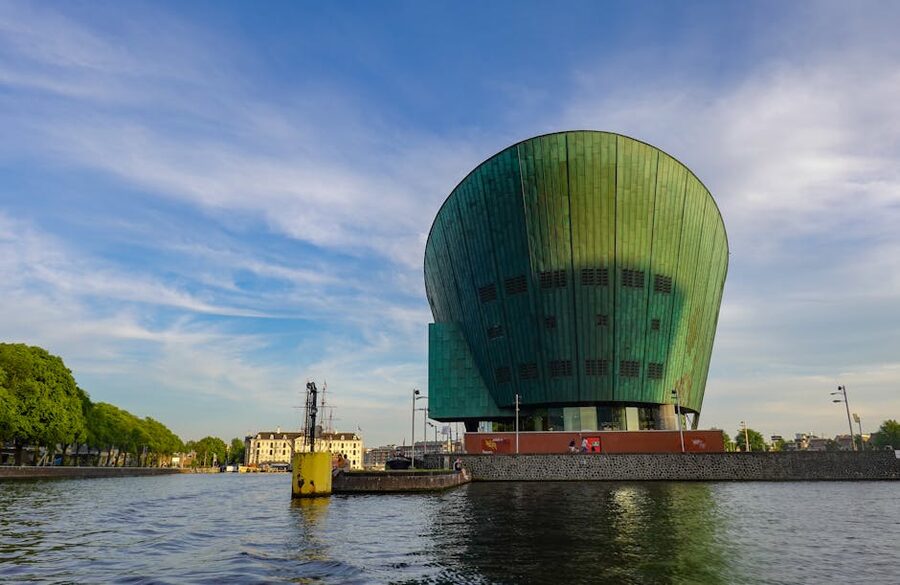
Here’s the move that the brochures don’t put on the front page. You walk to NEMO from Amsterdam Centraal in about ten minutes, you skip the ticket line, you take the wide stepped path on the outside of the green ship-shaped building straight up to the roof, and you stand there for free. No museum entry. No reservation. Just the highest publicly accessible square in central Amsterdam, with the IJ harbour spread out underneath you and the city flattening into a model of itself in the distance.
That rooftop, the one Renzo Piano sketched as a continuation of the street, is genuinely one of the best free experiences in town. The 5-floor science museum sitting under it is a different question, which I’ll get to.
In a Hurry
- Standard NEMO entry ($21): the flagship ticket. Five floors, five themed zones, fast-track entry. Book NEMO entry
- Canal cruise + NEMO combo ($40): 1-hour audio-guided cruise paired with the museum ticket. Good if you’re doing both anyway. Book the combo
- NEMO via Viator ($25.83): same museum ticket, different platform, sometimes priced lower. Book on Viator
The take on NEMO before you book anything
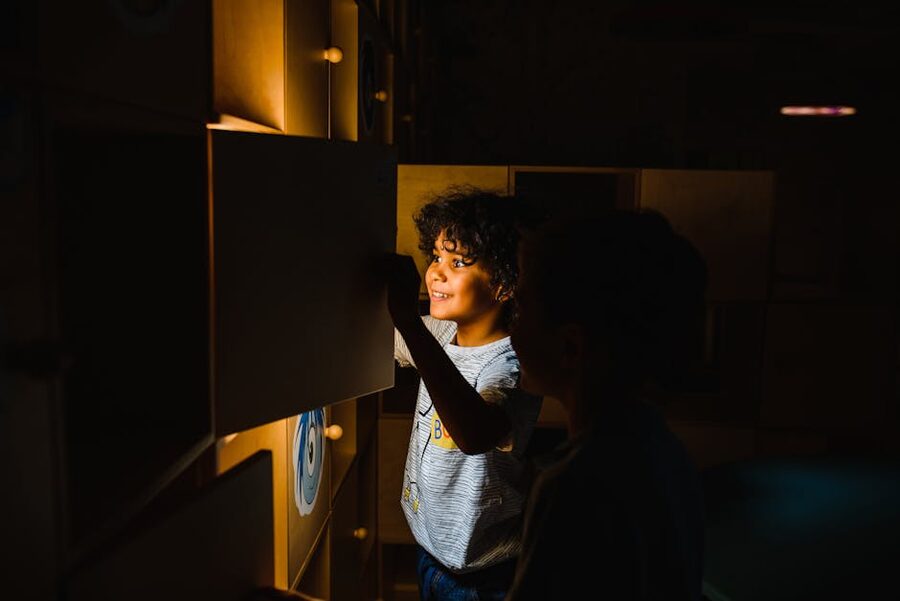
NEMO has a reputation as a kids’ science museum, and that reputation is technically correct. The interior is built for ages 4 to 12. The exhibits are loud, the floors are sticky, and on a school holiday Wednesday the place is essentially a giant climbing frame full of Dutch primary schoolers shouting at each other in three languages.
If you’re travelling without children and someone tells you NEMO is a must-see, they’re talking about the building, not the museum. There’s a difference and it matters.
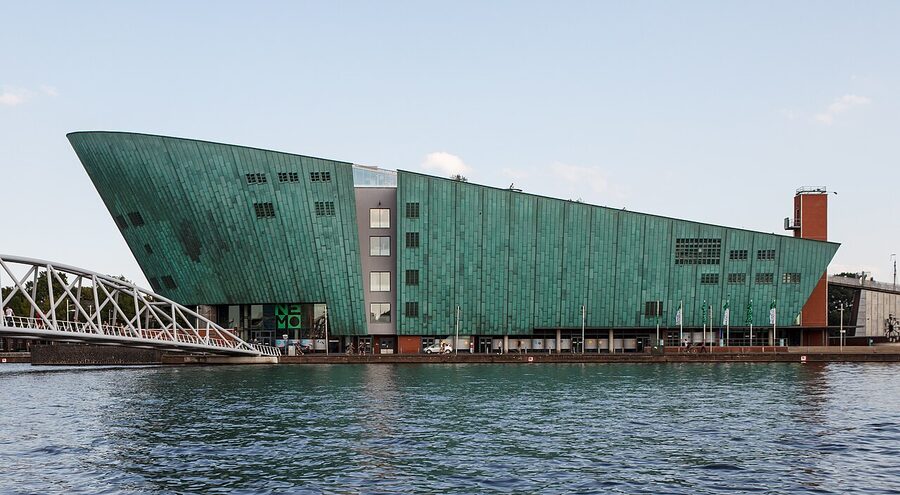
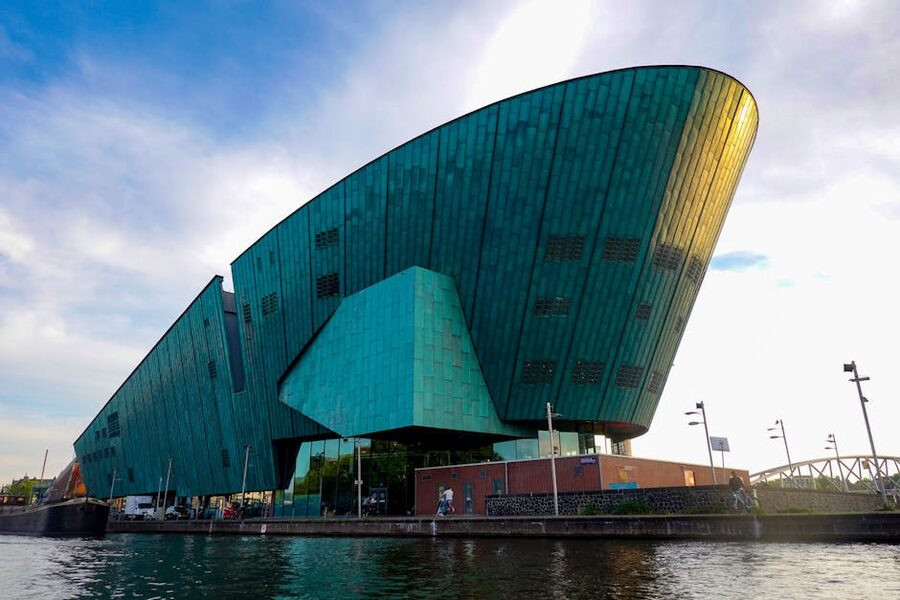
The building is a piece of architecture by Renzo Piano. Same architect who did the Centre Pompidou in Paris with Richard Rogers in 1977, who did the Genoa Aquarium in 1992, who did The Shard in London in 2012. NEMO is sandwiched between the Pompidou and the Shard chronologically. It’s worth ten minutes of your time on architectural merit alone, the way you might detour through Disneyland Paris for the construction of Sleeping Beauty Castle even if you don’t ride a thing.
The interior is a different conversation. If you’ve got kids 4 to 12, NEMO is one of the better family afternoons in Europe. If you don’t, the museum interior is skippable and the rooftop is not.
The rooftop. Free. Open to anyone.
This is the part of NEMO almost no guidebook leads with, and it’s the most useful thing in the article. The building’s roof is a public square. You walk up the long ramp on the south side from ground level. No queue, no ticket, no registration.
At the top there’s a stepped amphitheatre that local students sit on with takeaway lunches, a series of shallow water features and small fountains in the warmer months that double as a kind of casual paddling area for kids, a small café called Cafe-restaurant DEK5 with drinks and a view, and a wide flat plaza that gives you a 270-degree sweep over the IJ harbour. From here you can see the eastern docklands, the Maritime Museum’s reconstructed VOC ship parked next door, the spires of the old centre, and on a clear day the whole northern side of Amsterdam across the water.
It’s open more or less whenever the museum is open, which means roughly 10am to 5:30pm in low season and longer in summer. After the museum closes the rooftop is sometimes still accessible for a while, but the official line is that closing time is closing time. If you want to be sure, aim for between 10am opening and 4pm.
The rooftop is genuinely a competitor to the paid options. The Madame Tussauds rooftop on Dam Square doesn’t exist as a public space. The A’DAM Tower’s LOOKOUT across the water charges €17.50. Westerkerk’s tower charges €11. The NEMO rooftop charges nothing and the view, while not the highest, is the most architecturally rewarding because you’re standing on the building itself rather than looking at it. The closest parallel I can think of in the wider Netherlands is the harbour-level walking platform at the back of Hotel New York for a Rotterdam harbour cruise, which gives you a similar at-water-level view of a working port for free.
This is also the easiest pre-dinner detour in Amsterdam. You walk from the Anne Frank House neighbourhood in about 25 minutes, or from the Rijksmuseum in about 30. Or you take the free GVB ferry from Centraal across the IJ for completely different views, then walk back over to NEMO for this one.
What the building actually is, and why it’s worth knowing

Renzo Piano was 60 when NEMO opened in 1997. He’d already designed the Pompidou in his mid-30s, which had become one of the most argued-about buildings in Europe. By the late 1980s when Amsterdam commissioned him, Piano had pivoted to a quieter, more site-driven approach. The brief he was given was constraining: build a science museum on top of the IJtunnel entrance, on a tight rectangular footprint, in a city that has strong opinions about not letting any new building dominate the skyline.
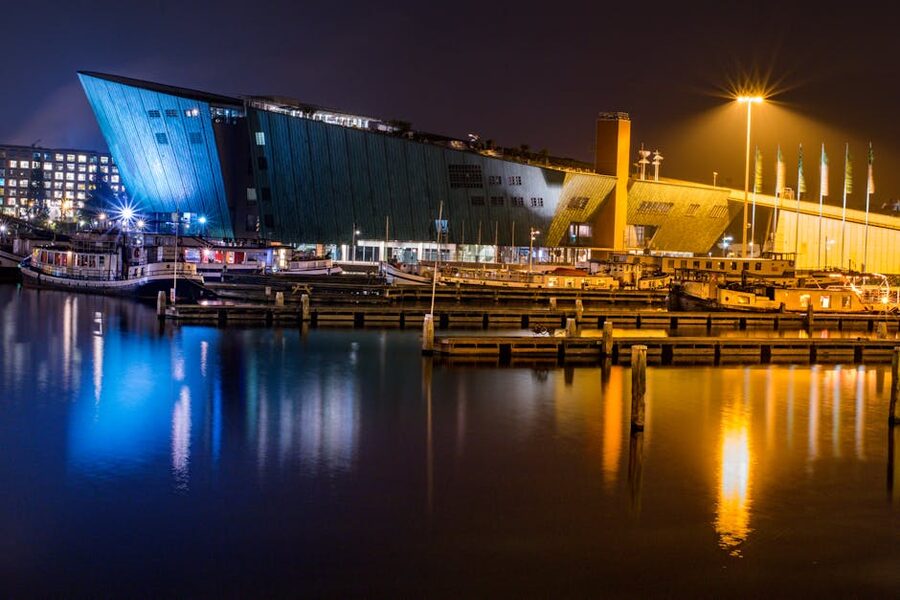
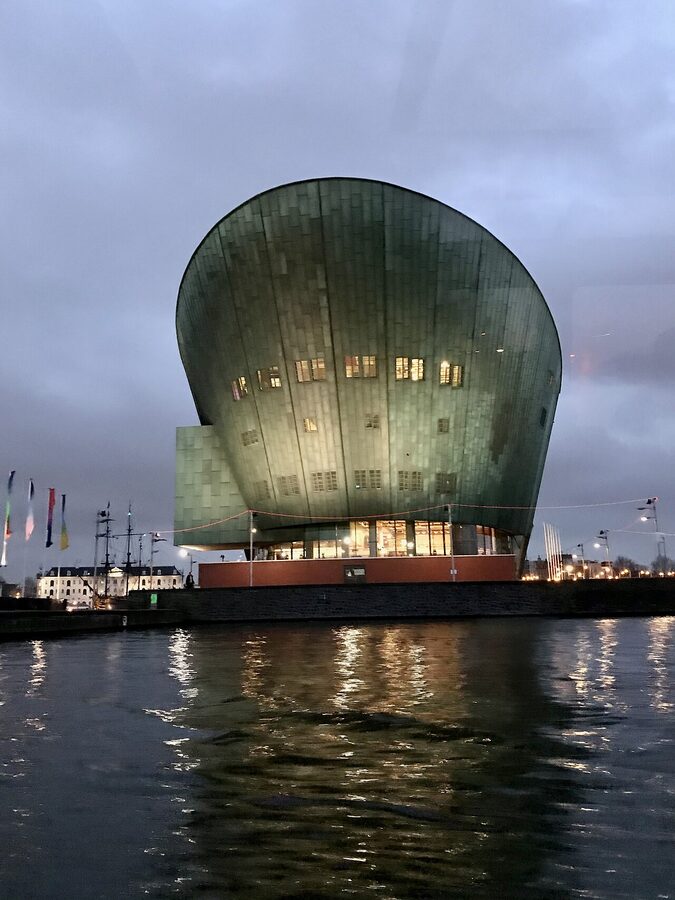
His answer was a 100-metre long building shaped like a ship sitting in the dock. The hull rises out of the water on the north side and slopes back down to ground level on the south side. The skin is patinated copper, which started off bright reddish-orange in 1997 and has weathered to the green you see now. The whole structure tilts up from the IJ side at the same angle that the IJtunnel slopes down underneath it, so the building reads as a continuation of the infrastructure rather than as something dropped onto a plot.
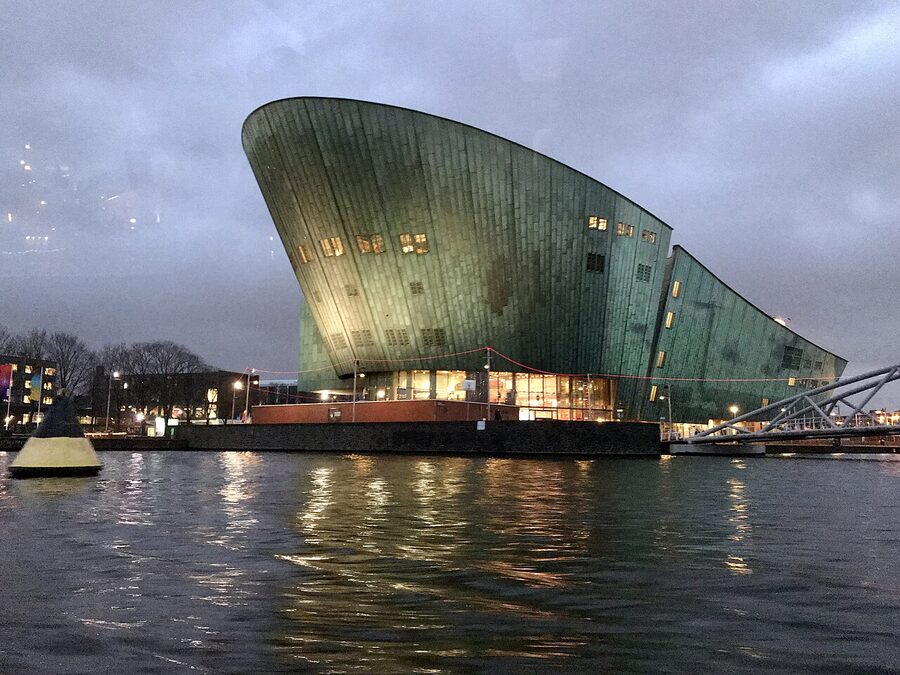
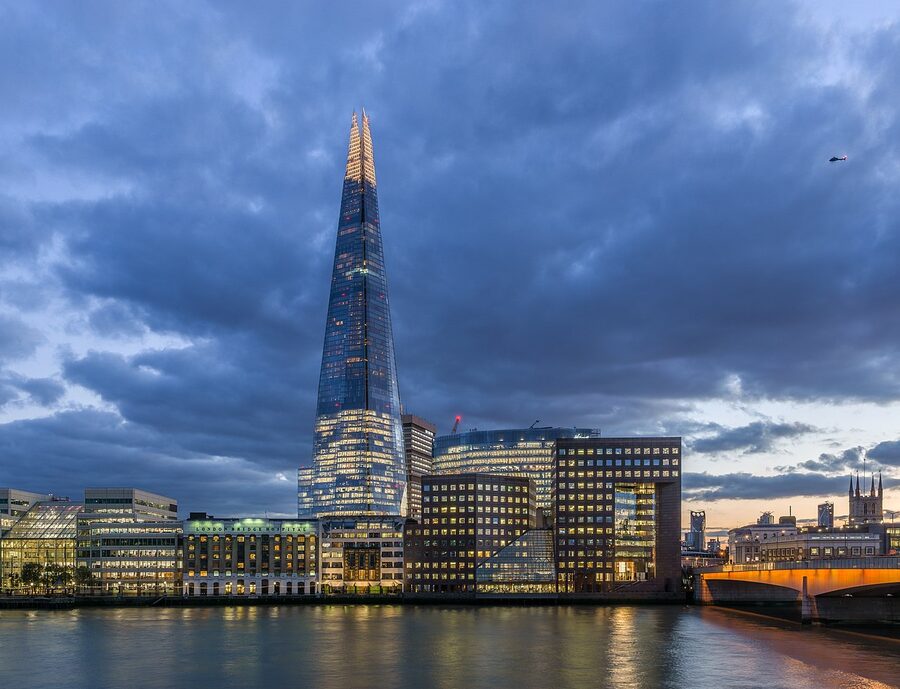
If you want to slot NEMO into Piano’s larger work, the easy way to do it: the Pompidou (1977) is the architect when he was wearing all his pipework on the outside as a political gesture, the Genoa Aquarium (1992) is the architect after he’d moved home and started designing buildings that look like ships because Genoa is a port city, and NEMO (1997) is the same instinct exported to Amsterdam. The Shard in London (2012) is much later Piano. Different vocabulary, same author.
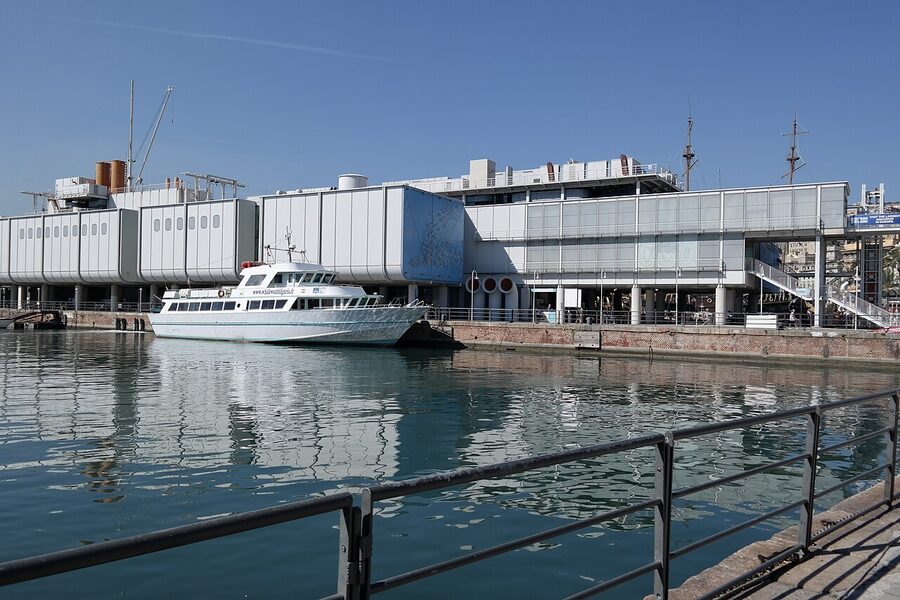
The architectural through-line is what makes NEMO interesting even if you don’t have kids. You can stand on the rooftop, look down at the slope of the copper skin, and read it as the same hand that did the building you might have seen in Paris, or the one in London. That’s a specific kind of pleasure that costs nothing. The same kind of pleasure, frankly, that you get standing in front of the Genoa Aquarium on its waterfront and recognising the same architect’s hand five years earlier.
What you actually get inside, floor by floor
Five floors. About 600,000 visitors a year. Aimed squarely at children 4 to 12, with most of the exhibits sized for someone under 4ft 6in tall. Adults can do the building in 90 minutes. Kids will not let you do it in 90 minutes.
Here’s the layout. The exhibits do change in detail year to year, but the zone names and the broad ideas have been roughly the same for over a decade.
Floor 1: Phenomena

The first floor is basic physics made tactile. There’s a giant sound dish, a rotating platform that demonstrates angular momentum if you sit on it and pull your knees in, lever-and-pulley puzzles, and a series of light tables with prisms. Adults find this floor familiar but well-executed. Kids find it a sandbox. If you’ve already done Siam Park’s water-physics setups in Tenerife with the same kids, the energy and the gravity-and-water exhibits here will feel familiar in spirit.
Floor 2: Humania
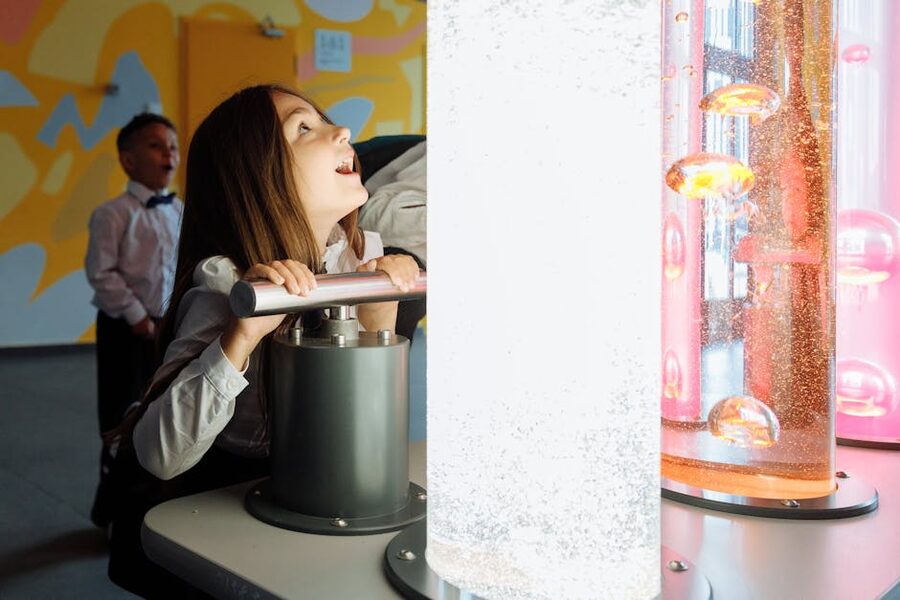
Humania covers the human body, biology, and behaviour. Some of it deals with puberty, sex education, reproduction, and consent in a way that’s notably more direct than what you’d get in a comparable American or British science museum. The 5-star review I read from an adult visitor specifically called this out positively as “way more open than US culture in some of the questions they posed”. If you’re travelling with American or British kids who haven’t seen this material handled like this, it can be a useful conversation starter. If you’d rather not, skim through this floor. Worth flagging for parents who’d rather their kids not encounter this kind of material before they’re ready: by the same logic, skip the Red Light District walking tour in the evening if you’re doing NEMO with under-12s.
Floor 3: Energy
Energy is the floor that’s changed most over time. The current version is built around climate, energy production, and renewables. There’s a cycling rig that lets kids generate enough electricity to power a small lamp. There’s an interactive that lets you balance a country’s energy grid using sliders. It’s been criticised in some quarters as preachy and praised in others for not pulling its punches. Both reviews are correct.
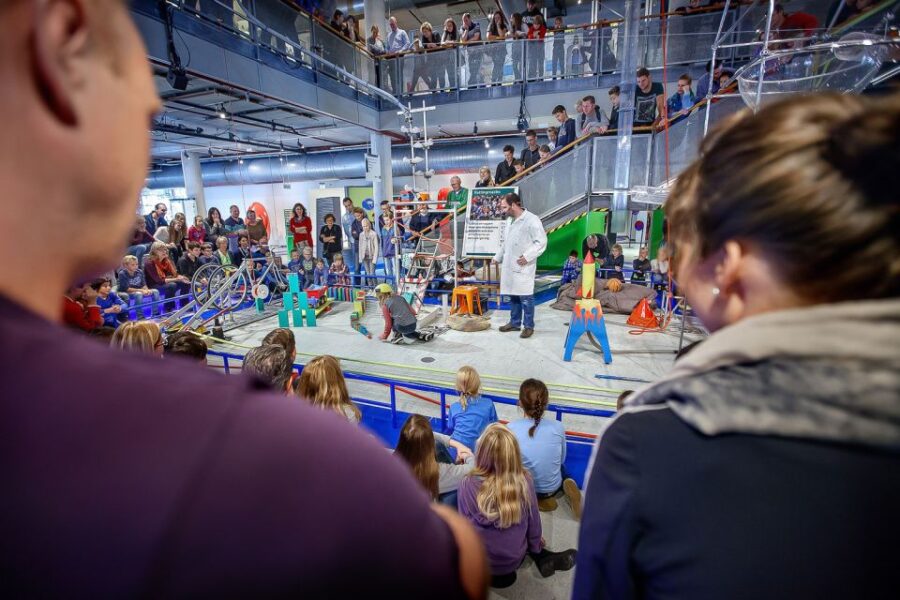
Floor 4: Chain Reaction (Kettingreactie) and Lab

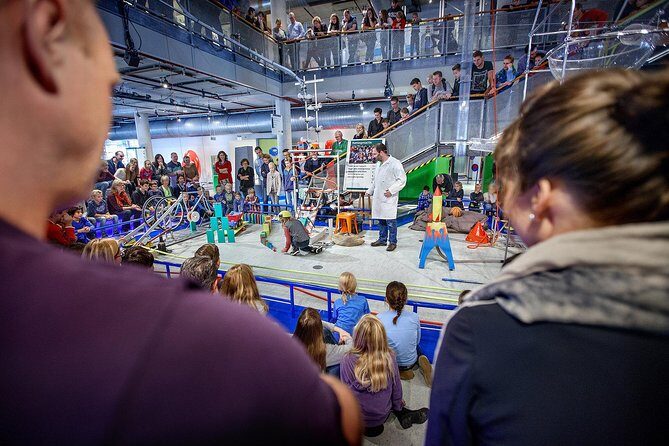
This is the floor everyone remembers. The Chain Reaction zone is a giant Rube Goldberg-style installation that runs on a schedule a few times a day, and the Lab is a small chemistry classroom where kids can do supervised experiments for about 20 minutes. The Lab requires a wristband and slots fill up in the morning, so if your kid is the chemistry-curious one, head to floor 4 first thing. It’s the closest analogue I’ve seen anywhere to the small-group animal-training experiences at Loro Parque in Tenerife: capped numbers, real materials, an actual professional running it.
Floor 5: Energy zone and the rooftop
The top floor of the interior connects to the rooftop. There’s a small exhibit about water management and the Dutch relationship with the sea, which is more interesting than it sounds because the Netherlands has spent 1,000 years engineering its way out of being underwater. Then you walk through a glass door and you’re outside on the public rooftop, with that view I keep going on about.
Tickets and how the booking works
Standard adult entry is around $21, kids 4 to 17 pay around $11, and under 4s are free. The ticket covers the whole museum and the rooftop. Note that you can also get to the rooftop for free without buying anything, which I’ll keep saying because it’s the most useful thing in this article.
The Museumkaart (Dutch museum card) gets you in for free. If you’re spending a week or more in the Netherlands and visiting more than three or four museums, the Museumkaart at €75 pays for itself fast. NEMO, the Rijksmuseum, the Van Gogh Museum, the Anne Frank House (when you can get a slot), the Stedelijk, the Tropenmuseum, the Amsterdam Museum, and dozens of regional museums are all included.
The I amsterdam City Card includes NEMO, plus most of the major museums and unlimited public transport. At €60 for 24 hours or €100 for 72 hours it’s worth doing the maths against a Museumkaart depending on how long you’re in town.
Pre-booking online saves you maybe 10 minutes on a peak Saturday and not much on a weekday. The advantage of buying online is locking in the date if you’re visiting during a Dutch school holiday week. The half-term and summer holidays are when the museum is genuinely full to the gills and the queue can stretch. (Compare to the Anne Frank House neighbourhood walks, which book out weeks in advance because the actual house has near-zero walk-in capacity. NEMO is much more flexible than that.)
The three tickets worth booking
Three options cover everyone. They’re not interchangeable: one is the standard ticket, one bundles a canal cruise on the same day, and one is the Viator listing for travellers who already use that platform.
1. Amsterdam: NEMO Science Museum Ticket: $21
This is the default pick if you’ve decided to go in. Fast-track skip-the-line, valid for the whole day, covers all five floors and the rooftop. Our full review of the standard NEMO ticket goes into the cancellation policy and what’s actually included.
2. Amsterdam: 1-Hour Canal Cruise & NEMO Combo: $40
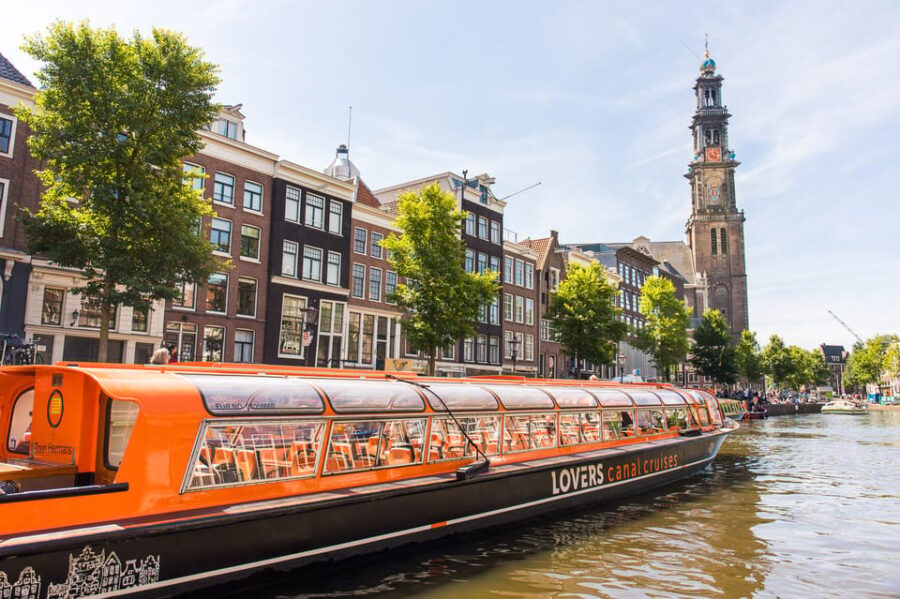
This pairs an audio-guided 1-hour canal cruise with NEMO entry, and at $40 it saves you about $5 versus booking the two separately. Useful if you’re doing both anyway, less useful if you’d rather a longer evening cruise. The full take is in our review of the canal cruise plus NEMO combo.
3. NEMO Science Museum Admission via Viator: $25.83
Identical to ticket 1, sold via Viator instead of GetYourGuide. Worth checking if you’ve got loyalty credit on the platform; otherwise the GYG listing is usually a touch cheaper. Our Viator listing review covers the platform-specific fine print.
Getting there: it’s a 10-minute walk from Centraal
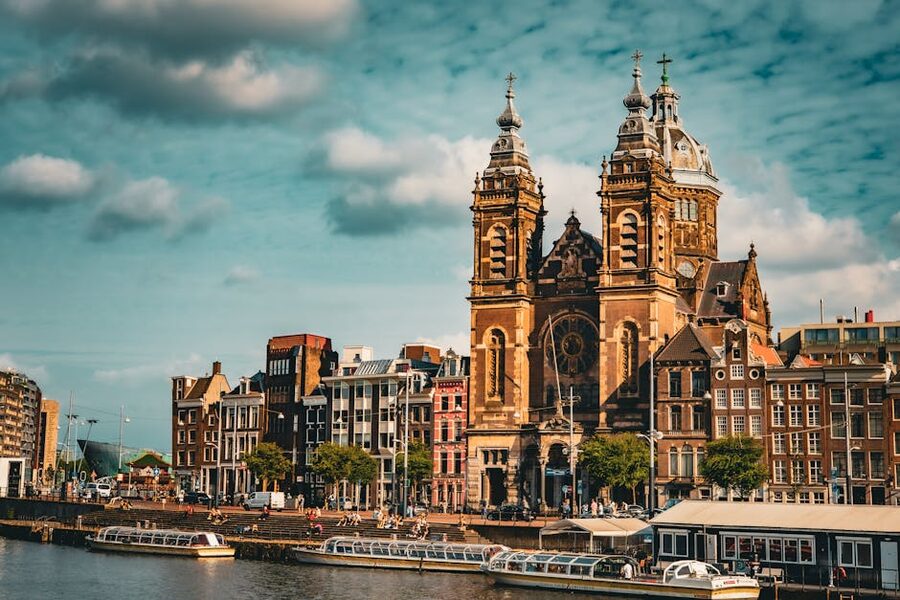
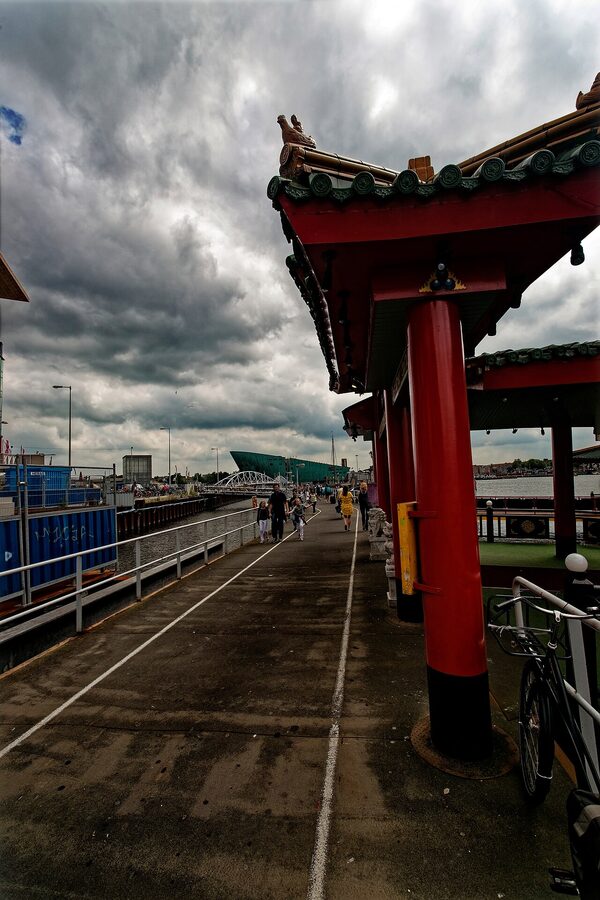
NEMO sits at Oosterdok 2, on the IJ harbour east of Amsterdam Centraal. From the front of Centraal Station you walk east along the harbour for about 10 minutes. The route is signposted, the path is wide, and the building is visible the entire way because of the green hull rising out of the water.
If you’re coming from the south of the city, take the metro or tram to Centraal and walk from there. There’s no direct tram or bus stop right at NEMO. The 22 bus from Centraal does stop near it but it’s barely faster than walking and you don’t get the harbour-side approach, which is half the experience.
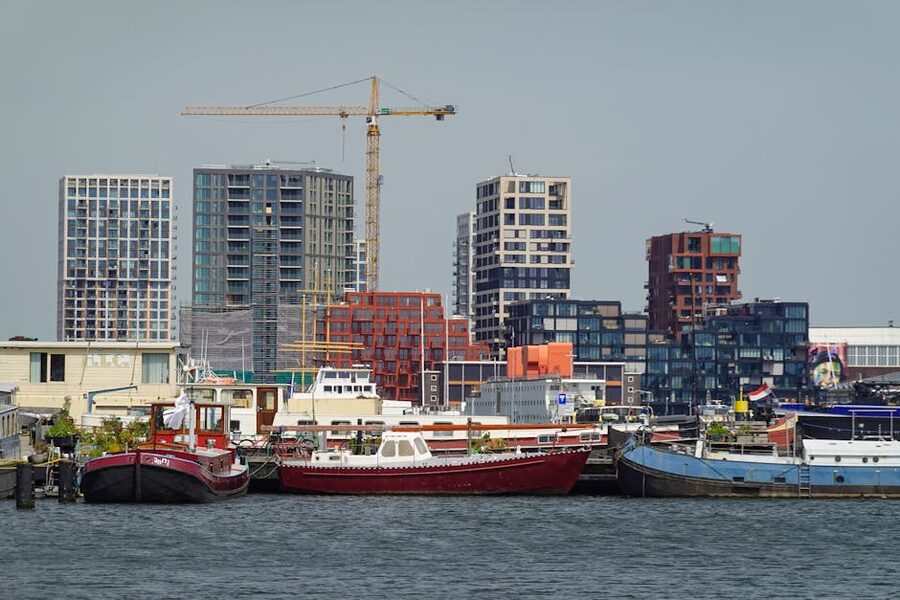
If you’re coming from outside the city, the train into Centraal handles it. Schiphol Airport to Centraal is about 17 minutes by direct train; it’s roughly half-hourly to hourly depending on time of day. Taxi from Schiphol is about €45 and gets stuck in traffic on the A10. The train is the right answer.
Best time to go (and the day to actively avoid)
The 9:30 weekday opening is the right answer for almost everyone. Tickets aren’t timed, so you can walk in at any point during the day, but the museum is dramatically less crowded between opening and about 11am. By midday on a weekend or school holiday it’s loud, the Lab slots are gone, and the popular exhibits have queues of small children waiting their turn.

Avoid Dutch school holidays if you can. The crocus holiday in February, the May holiday, the autumn week in October, the Christmas break, and especially the long summer holiday from early July through August are when NEMO is genuinely overrun. If you’re travelling in those windows and you’ve still got the museum on your list, the 9:30 opening becomes essential rather than just preferred.
Outside of school holidays, NEMO is closed on Mondays in low season, and open seven days a week the rest of the year. The opening hours are 10am to 5:30pm with last admission at 5pm. Seasonal extensions push closing to 6pm in summer.
For the rooftop alone, late afternoon is the sweet spot. Around 4 to 5pm in summer the light is soft, the day-trippers have gone, and you’ve got the upper plaza to yourself or close to it. Bring a beer from DEK5 and watch the sunset over the eastern docks.
Who NEMO is genuinely worth it for
Three reader profiles. Pick the one that fits.
Travelling with kids 4 to 12. Yes, book it. NEMO is one of the best children’s science museums in Europe and the half-day-plus you’ll get out of it justifies the family price tag easily. Plan for a full afternoon. Eat at DEK5 on the roof or pack lunch (there’s a permitted lunch zone on Floor 1).

Travelling with kids under 4 or teenagers 14+. Skippable. Under-4s won’t get the exhibits and won’t reach the buttons. Teenagers will roll their eyes at the Phenomena floor and ask why the building smells of school trip. The rooftop is still worth the walk, but don’t pay to go inside.
Travelling without kids at all. Skip the interior, but absolutely walk the rooftop. The Renzo Piano building from the outside, plus 20 minutes on the public roof with the harbour view, is the version of NEMO that adults travelling without children should book in their head as a free 30-minute item between Centraal and dinner.
If you’ve got an hour and you only want the rooftop
Here’s the actual itinerary. Walk east from Centraal along the harbour for 10 minutes. As you approach NEMO, ignore the main entrance with the queue. Walk around to the south side of the building, where you’ll find the long stepped path leading up the slope of the roof. Walk up. There are no signs telling you that you’re allowed up here because Amsterdam doesn’t oversell its public spaces. You’re allowed.
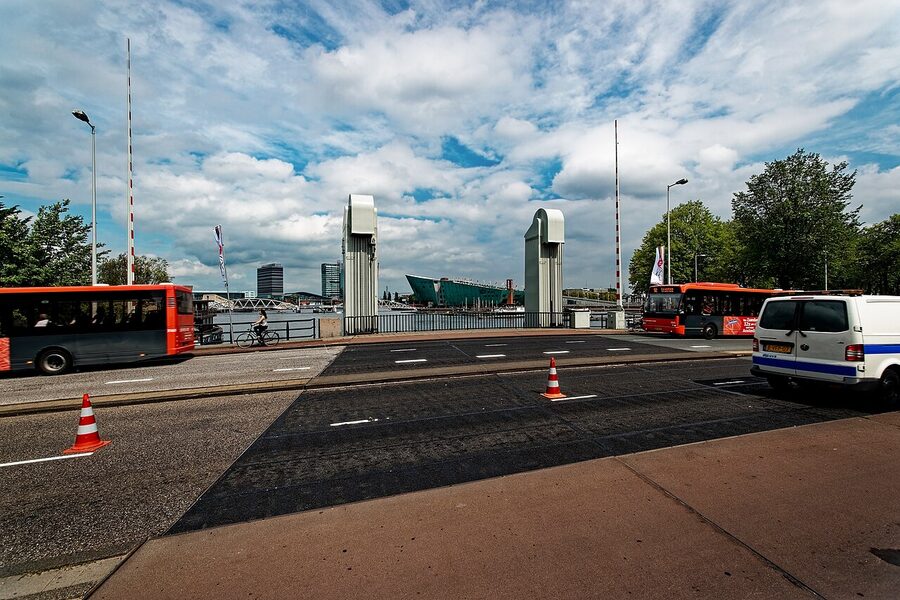
At the top, walk to the IJ-facing edge. The view runs from the Maritime Museum on your right, through the harbour and the cruise terminal, across to Amsterdam Noord on the far side. The A’DAM Tower’s tall white shape is visible to the north. The eastern docklands run away to your right.
If the weather’s good, sit on the steps. If it’s terrible, the café has windows. Walk back down. Total time: 25 to 40 minutes from Centraal back to Centraal. Total cost: zero.
Eating around NEMO
DEK5 on the rooftop is the obvious option and it’s better than rooftop cafés tend to be. Sandwiches, salads, soup, beer and wine, prices what you’d expect on top of an Amsterdam attraction. Not a destination meal but reliable.
For something more interesting, walk five minutes back toward Centraal to the Hannekes Boom on Dijksgracht. It’s a kind of wooden waterside bar-restaurant with a relaxed crowd and good seafood. Or further back into the centre, the Nieuwmarkt area has dozens of bruin cafés (traditional brown bars) for an Amsterdam-priced lunch.
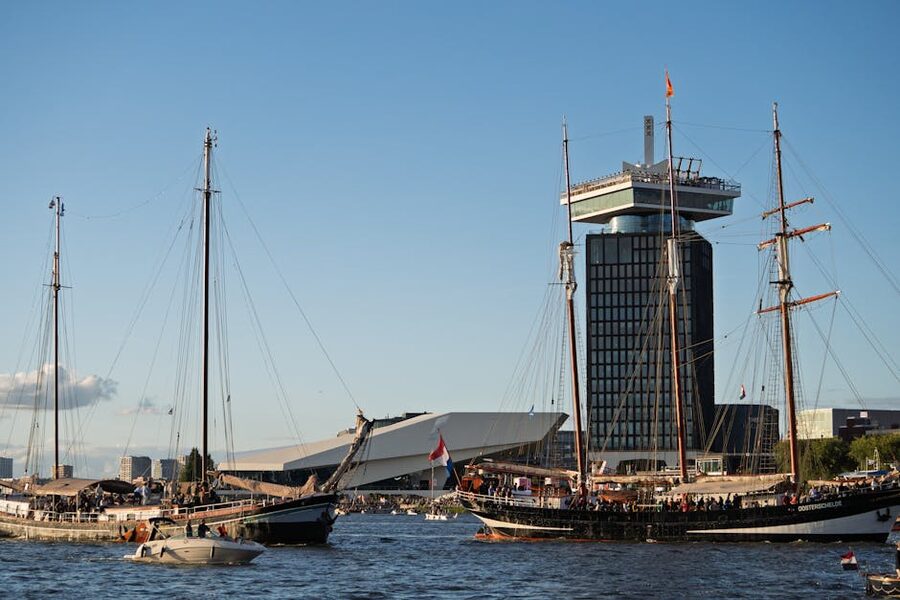
If you’re doing the canal-cruise combo ticket, the GVB ferry dock at the back of Centraal Station is also a five-minute walk and free. You can take it across to Amsterdam Noord, walk around the EYE film museum (modernist white wedge of a building), and ferry back. That’s a perfectly good free hour either before or after NEMO.
What’s nearby and worth your time
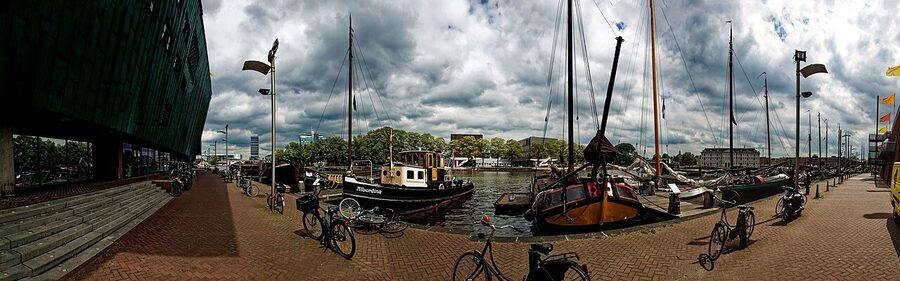
The Eastern Islands area NEMO sits in is one of the better parts of Amsterdam to wander, and most visitors miss it because they stay anchored in the canal belt. The Maritime Museum (Scheepvaartmuseum) is right next door, in a 17th-century arsenal building, and is worth a couple of hours if you’ve got any interest in the Dutch Golden Age. The reconstructed VOC ship parked outside is included in the ticket.
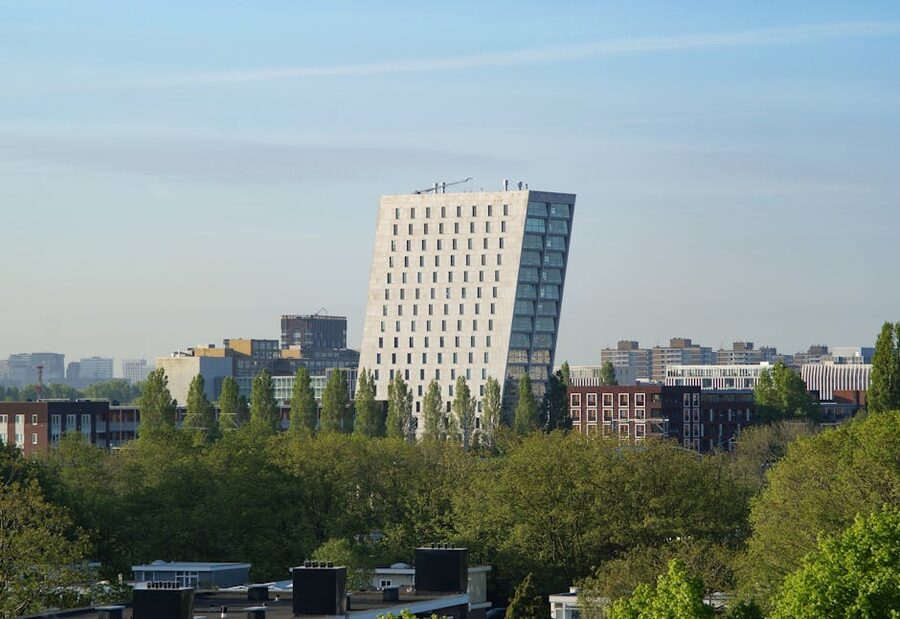
The Public Library (OBA Centrale) on Oosterdokskade is a four-minute walk and has its own free 7th-floor terrace café with similar IJ views. It’s the contingency plan if NEMO’s rooftop is closed for an event or weather.
The eastern docklands district behind NEMO is one of Europe’s better post-industrial regenerations, with apartments by Borneo Sporenburg, the Whale (Het Walvis), and bridges by Adriaan Geuze. If you like that kind of urbanism, walk an hour east of NEMO before you head back. If you don’t, ignore it.
Further out: the Heineken Experience is a tram ride south, the Van Gogh Museum and the Rijksmuseum are at Museumplein, and the canal cruises mostly leave from the Centraal area or Damrak. Most NEMO visitors pair it with a canal cruise as their “Amsterdam half-day” and that combination genuinely works.
Common questions, short answers
Can you visit just the rooftop? Yes, completely free, no ticket, no registration. Take the long stepped ramp on the south side of the building. Open during museum hours roughly.
Is NEMO worth it for adults? The interior, no, unless you’re an architect, a primary teacher, or genuinely curious about Dutch science education. The building and the rooftop, yes. Treat it as an architecture stop, not a museum.
How long do you need inside? Adults: 60 to 90 minutes. Kids: at least 3 hours. Many families spend a full half-day.
Is there a café or restaurant? Yes, DEK5 on the rooftop. Plus a smaller café on the ground floor. Both are reasonable for what they are.
What about a stroller? Strollers are allowed throughout. There are lifts. The interior is genuinely accessible. The rooftop is partly stepped but there’s a smooth path to the upper plaza.
Can you bring food? A designated picnic area on the ground floor, yes. Food in the exhibit zones, no.
Is it worth the Museumkaart? If you’re visiting more than three or four Dutch museums, the Museumkaart pays for itself. NEMO is one of the bigger-ticket inclusions on the card.
How NEMO compares to Amsterdam’s other family attractions
Amsterdam has a stronger family-attractions scene than its reputation suggests. Here’s how NEMO ranks against the others if you’re triaging.
Madame Tussauds Amsterdam is the polar opposite of NEMO. Tussauds is celebrity wax figures and Instagram moments; NEMO is hands-on science. If your kids are under 10 and you have to pick one, NEMO every time. If they’re 10 to 14 and obsessed with TikTok, Tussauds.
The Upside Down Museum and Moco Museum are sensory or pop-art family stops, fun for an hour, not a half-day. NEMO is the half-day pick.
The Icebar Amsterdam is a 30-minute novelty for older kids and adults. Zaanse Schans is the day trip pick if you want windmills and the Dutch countryside, not the city. Keukenhof Gardens is the spring-only flower option.
If you’re combining stops on a single day, NEMO plus Maritime Museum plus a canal cruise is the obvious eastern-Amsterdam loop. NEMO plus the Anne Frank walking tour works geographically if you start in the Jordaan and walk east. NEMO plus a Red Light District walking tour in the evening pairs the family-friendly daytime with the adult-friendly evening.
NEMO compared to similar science and family museums in Europe
Two of NEMO’s nearest peer attractions sit in cities I’ve now written about elsewhere on this site, and the comparison is useful.
Genoa Aquarium. Renzo Piano, 1992. Same architect, five years before NEMO. The Genoa Aquarium is a paid family attraction housed in a Piano building on a port, just like NEMO. The big difference is content: Genoa has actual marine life and an immersive ocean experience that adults find rewarding, while NEMO’s interior is more sand-pit-for-kids. If you’re a Piano completist doing both, the architectural pleasure is similar; if you’re picking a paid attraction for adults, Genoa wins.
Disneyland Paris. Different category entirely, but families on a Europe trip are often deciding between a “proper” attraction park and a science museum like NEMO. Disneyland Paris is a $90+ per person all-day commitment with rides and queues; NEMO is $21 and over in three hours. For young kids, NEMO is the better educational use of your time. For older kids, Disney is the bigger memory.
Eiffel Tower vs NEMO rooftop. Slightly absurd comparison, but bear with me. The Eiffel Tower is the iconic paid Parisian climb at €30 to €60 depending on level. The NEMO rooftop is the un-iconic free Amsterdam climb at €0. They scratch the same “I want to look down at a city from a built thing” itch. The Eiffel Tower has the better view and the better story; NEMO’s rooftop has the better price.
The closing case
NEMO is two attractions occupying the same building. The first one is a kids’ science museum that’s been doing its job for nearly 30 years and that’s worth the $21 if you’ve got primary-aged children. The second one is a Renzo Piano architectural sketch with a public square on its roof that costs nothing and that almost no Amsterdam guidebook leads with.
If you’re travelling without kids and someone has told you NEMO is a must-see, they’re talking about the second attraction. Take the 25-minute round trip from Centraal, walk the roof, look at the harbour, walk back. That’s the entire experience and it’s a good 30-minute use of an Amsterdam afternoon. The Pompidou-and-Shard architect doing his ship-as-public-square trick on the IJ. Free.
If you’ve got kids in the right age window, book the standard ticket. Use the morning. Eat lunch on the roof. Get back to the centre by mid-afternoon. The Maritime Museum or a canal cruise rounds out a full Amsterdam day. The booking decision should take about ten seconds.
What else to look at after this
The Amsterdam BB cluster on this site covers the obvious follow-on stops. If you’re doing the museum loop, the Rijksmuseum and the Van Gogh Museum at Museumplein are the heavy-hitters, and the Anne Frank walking tour is the route into the difficult-to-book Anne Frank House neighbourhood. For day trips out of the city, Zaanse Schans covers the windmills and Keukenhof covers the tulips in season. The Heineken Experience is the brewery stop and Madame Tussauds is the rainy-afternoon family backup. For getting around quickly the Amsterdam hop-on bus covers the standard tourist loop, although in central Amsterdam walking and the trams are usually faster.