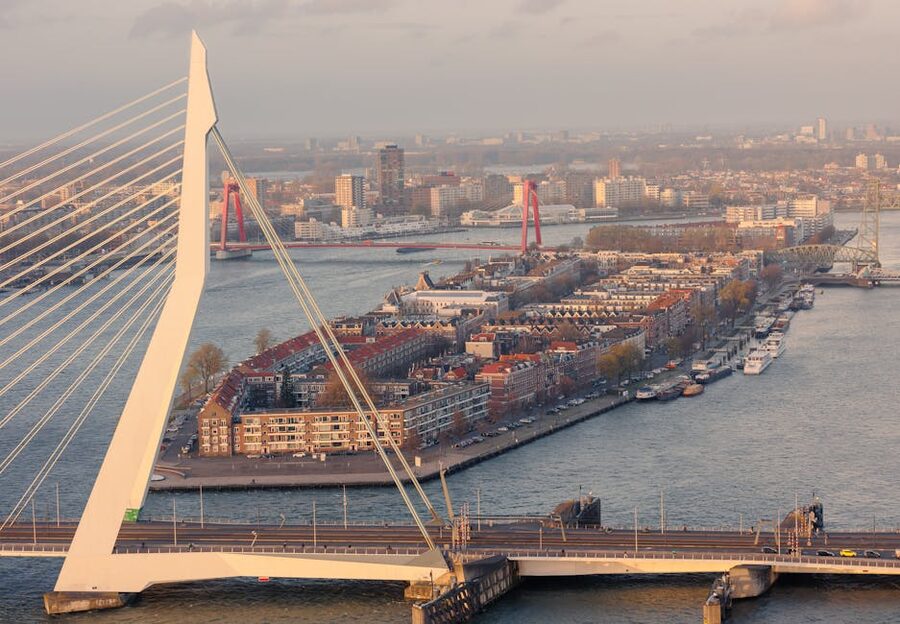
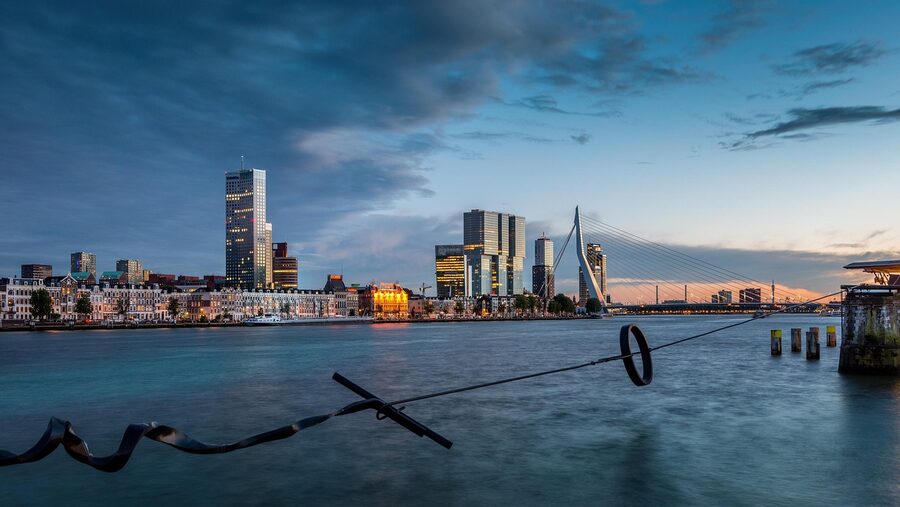
The Spido boat cuts left out of Willemskade and pushes south, and within ninety seconds the cables of the Erasmusbrug swing directly overhead. From the water it’s a different bridge entirely. You see the asymmetric pylon (the locals call it “The Swan” for a reason), the 802 metres of deck, and the way it cantilevers out to one side instead of the symmetrical arches every other European city seems to have.
Then the boat keeps going, into a working harbour. Real container ships, real cranes. The biggest port in Europe opens up around you for the next 75 minutes.
Most travellers fly into Schiphol, do four days in Amsterdam, and skip Rotterdam entirely thinking it’s “an industrial city”. That instinct is half right. Rotterdam is an industrial city, in the way that Liverpool or Hamburg are industrial cities. Real ships, real freight, real money moving through it. The 17th-century gabled-house Holland you booked the trip for is in Amsterdam and Delft and Haarlem. Rotterdam is a different country.
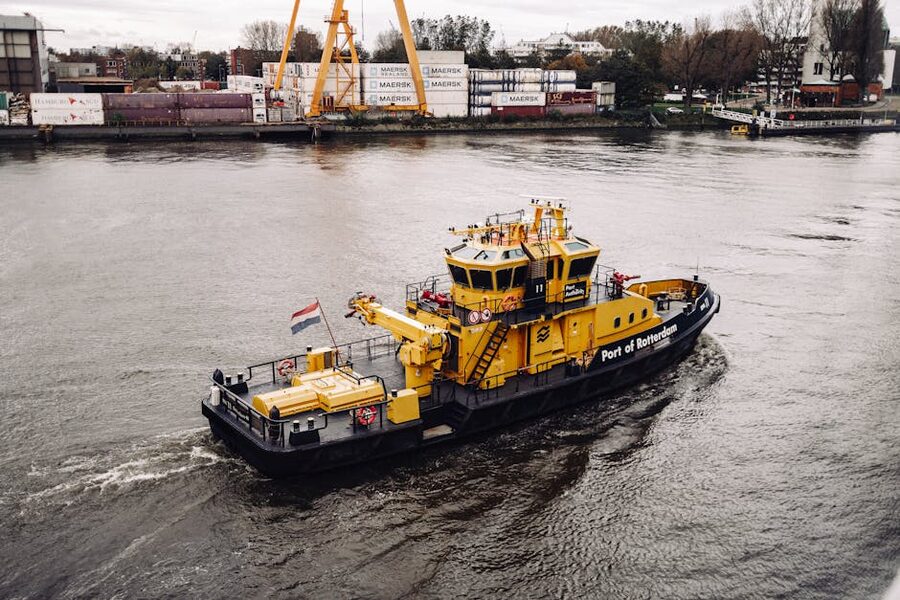
That different country is the point. Rotterdam is the only major Dutch city without a 17th-century centre, because the Luftwaffe flattened 80% of it on 14 May 1940. What got rebuilt after the war is what you’re looking at: a modern city with one of the strongest contemporary architecture collections in Europe, fronting onto the working port that pays for it. The Spido cruise out of Willemskade is how you read that story. Unlike the Amsterdam version which is canal-bound and decorative, this is a working harbour tour. You’ll pass real container terminals.
I went into this cruise the same way most people do. Dutch trip, four days in Amsterdam already booked, the Rijksmuseum done, the Van Gogh queue survived, the Anne Frank walking tour done as a half-day. Rotterdam was an afterthought train ticket. I came home thinking it was the most interesting day of the week. The cruise was the part that flipped my opinion.
In a hurry? Three picks to start with
- Spido Harbor Sightseeing Cruise ($22): the 75-minute classic out of Willemskade. The one to book first. Check availability.
- 1-Hour Sightseeing Splash Tour ($35): amphibious bus that drives the city, then drops into the Maas. Better for kids; the boat experience is shorter. Check availability.
- Rotterdam Pancake Cruise ($31): 75 minutes of the same harbour with all-you-can-eat Dutch pancakes. Better dinner than tour. Check availability.
What you actually see on a Spido harbour cruise
The standard Spido is 75 minutes round-trip out of Willemskade pier, which sits on the north bank of the Maas about 200 metres from the foot of the Erasmusbrug. It’s a five-minute walk from Leuvehaven metro station and a fifteen-minute walk from Rotterdam Centraal. There’s a tram stop almost at the door. If you’re driving, the parking garage under the bridge is the easiest option. Same general logistics as picking up an Amsterdam canal cruise from Centraal: city-centre pier, walking distance from the train, simple to find.
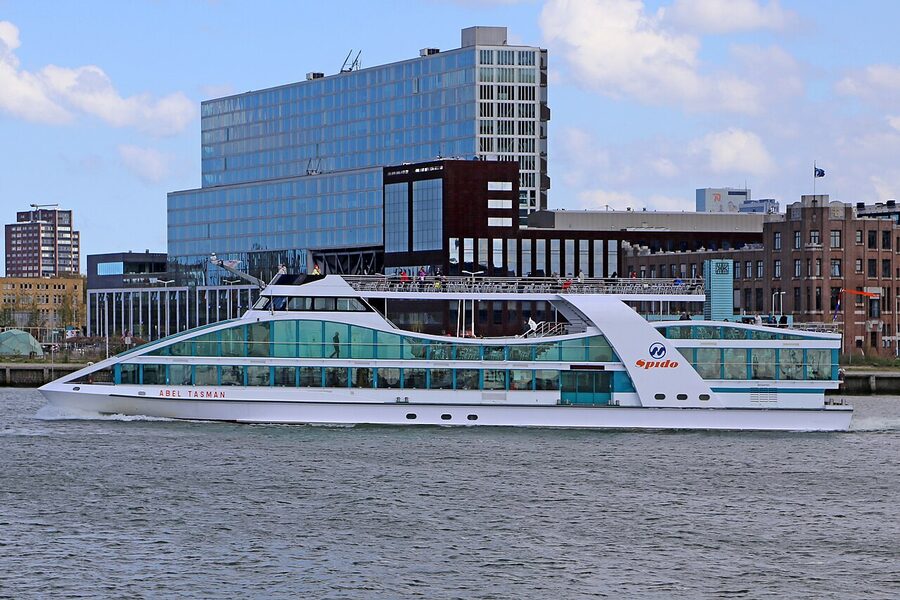
The boat heads east first, under the Erasmusbrug, then doubles back south along the Nieuwe Maas. You’ll get the bridge from below in the first three minutes, which is the photo most people are there for. The route then runs through the Maashaven and the larger Waalhaven, where the freight ships actually are, before turning back. Audio commentary plays in Dutch, English, German, and French, and unlike a lot of audio-guide tours it isn’t continuous. The crew talks for two minutes, then stops for two minutes so you can just look. That pacing is the right call. Compare to a Seine cruise in Paris, where the audio runs constantly and tells you about every monument going past. Rotterdam trusts you to look.
The take: this is a working-harbour tour, not a sightseeing-by-water tour. If you want pretty buildings reflected in pretty water, go to Amsterdam and take a canal cruise instead. If you want to see how a 21st-century European port actually functions, with the architecture as a bonus, this is the right boat.
The Erasmusbrug, from below
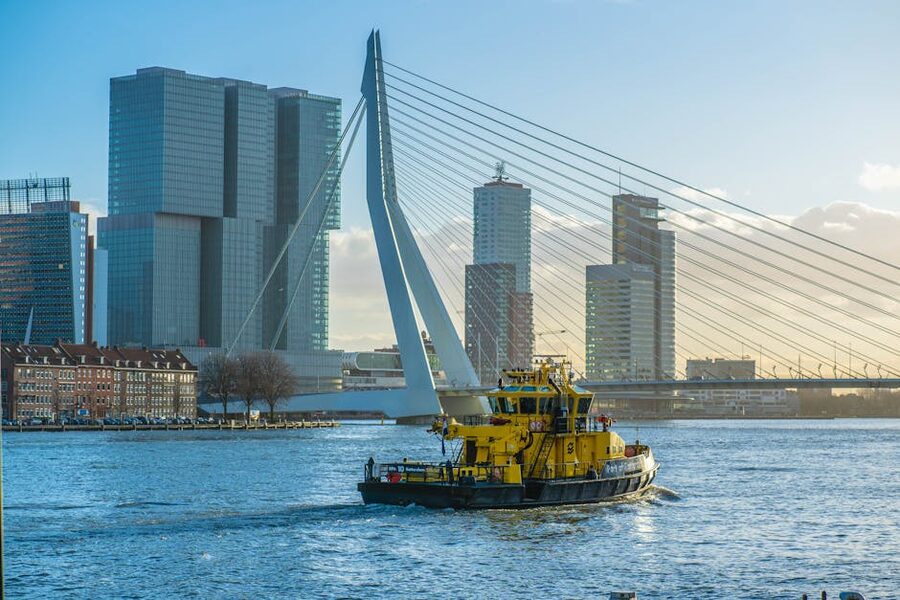
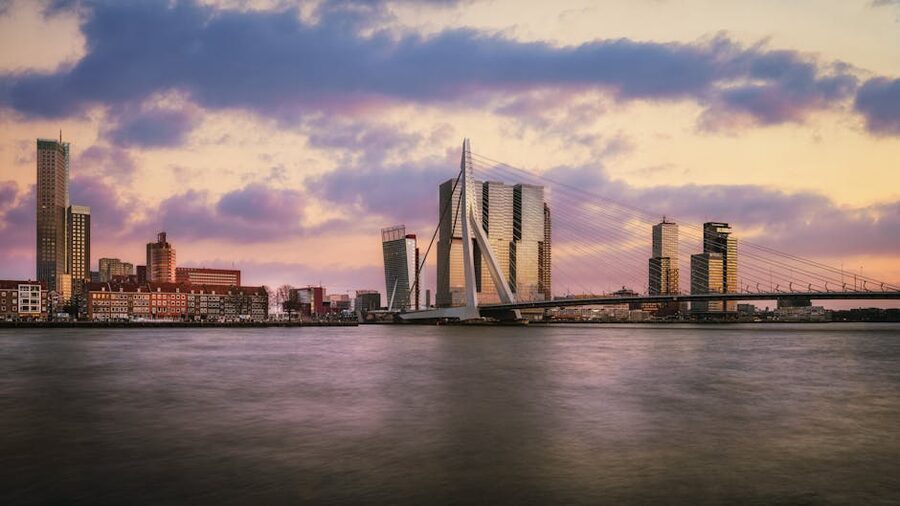
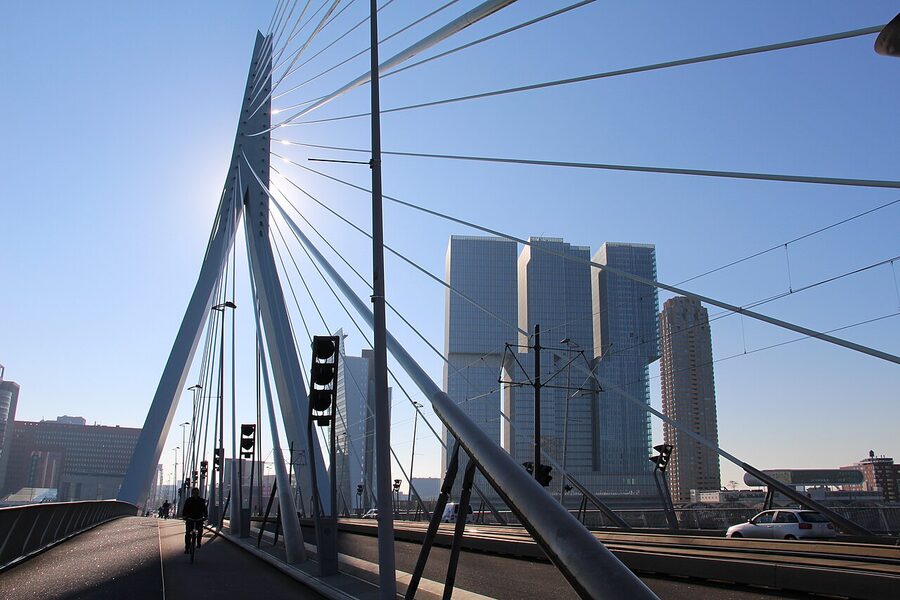
The bridge opened in 1996 and the locals nicknamed it “The Swan” almost immediately. Architect Ben van Berkel (UNStudio) designed it as a cable-stayed bridge with one off-centre pylon at 139 metres, with the cables fanning out asymmetrically to one side. It’s 802 metres total, with a bascule section that lifts for taller ships. From the water you see the engineering choices that the postcards hide. The pylon doesn’t sit in the centre. The cables aren’t symmetrical. The whole thing leans. The architectural tour de force is more obviously Dutch than anything you’ll see touring the Royal Palace in Amsterdam, which is 17th-century classical. The two buildings tell the same country’s story across three centuries.
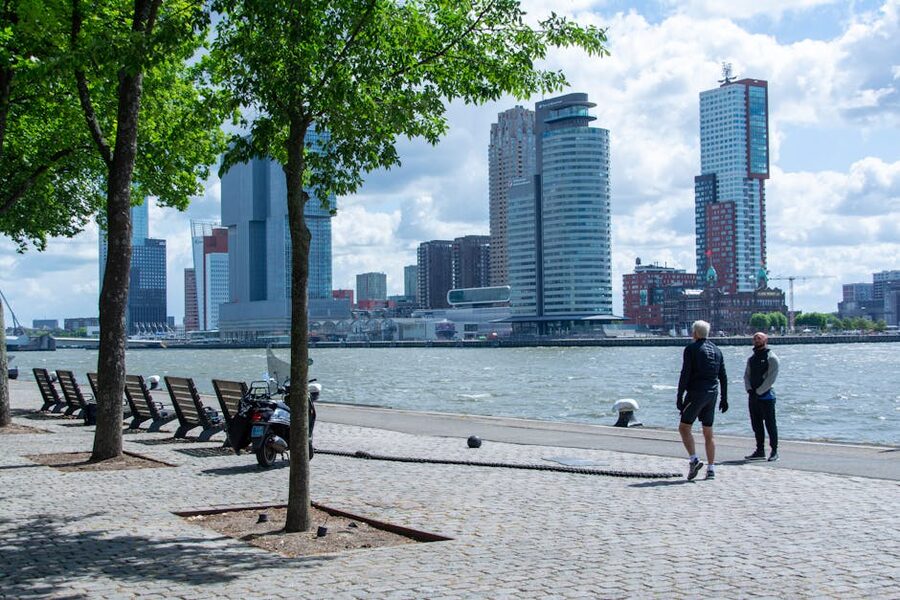
If you’re choosing between this boat and just walking the bridge at sunset, walk the bridge. It’s free, the view is the best in the city, and you’ll get the same skyline (Hotel New York, De Rotterdam, Maastoren) without paying anything. The boat shows you the bridge as a piece of engineering. The walk shows you the bridge as a viewing platform. They’re different products.
Hotel New York and the emigrant story
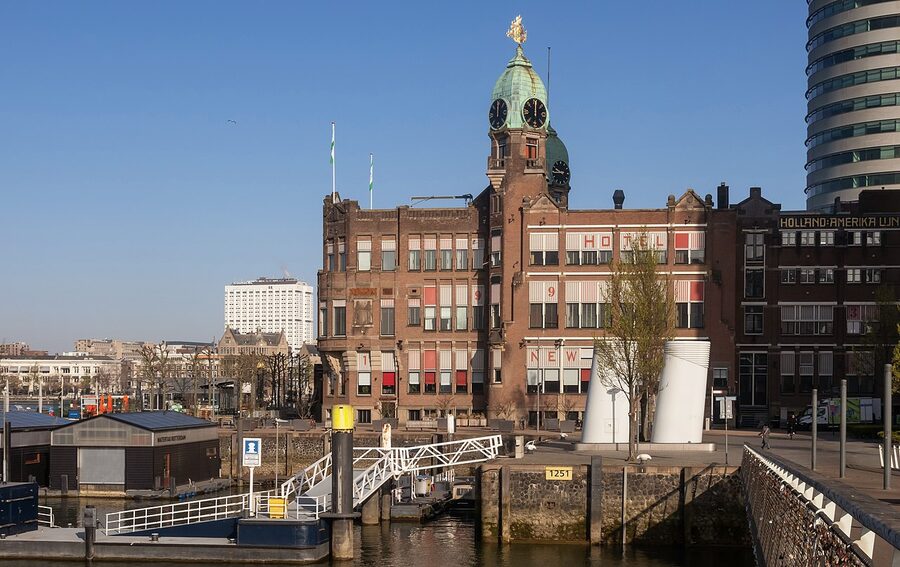
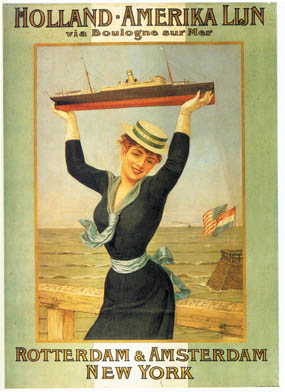
The Spido route doubles past Hotel New York on the way back. It’s the green-domed building on the south bank, the only piece of pre-war Wilhelminakade left standing. Between 1873 and 1971 over a million Dutch emigrants got on Holland-Amerika Lijn steamers from this exact pier and sailed to Hoboken or Ellis Island. If your family is American with Dutch surnames in the tree, there’s a real chance someone in your line walked through that door. The closest weight-of-history experience I can compare it to elsewhere in this site is doing the Anne Frank walking tour in Amsterdam. Different stories, similar physical-place charge.
The audio guide doesn’t go into much detail on this, which is a small failing. If you want the full emigrant story, allow yourself an hour at Hotel New York after the boat docks. The cafe inside is a working brasserie, the original boarding hall is largely intact, and there are old company photos along the corridors. It pairs well with the cruise rather than competing with it.
The post-war rebuild, from the water
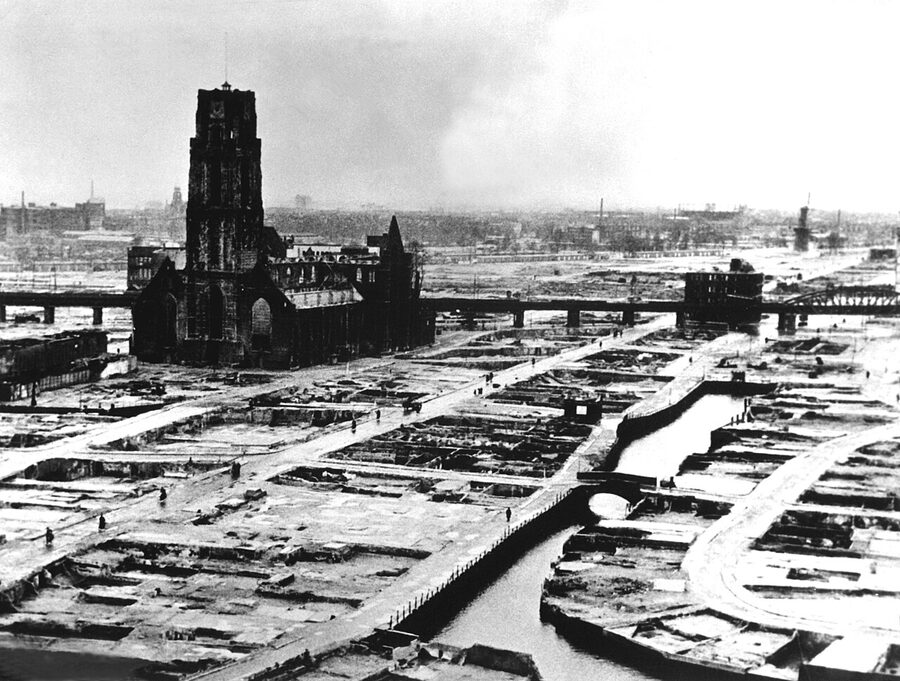
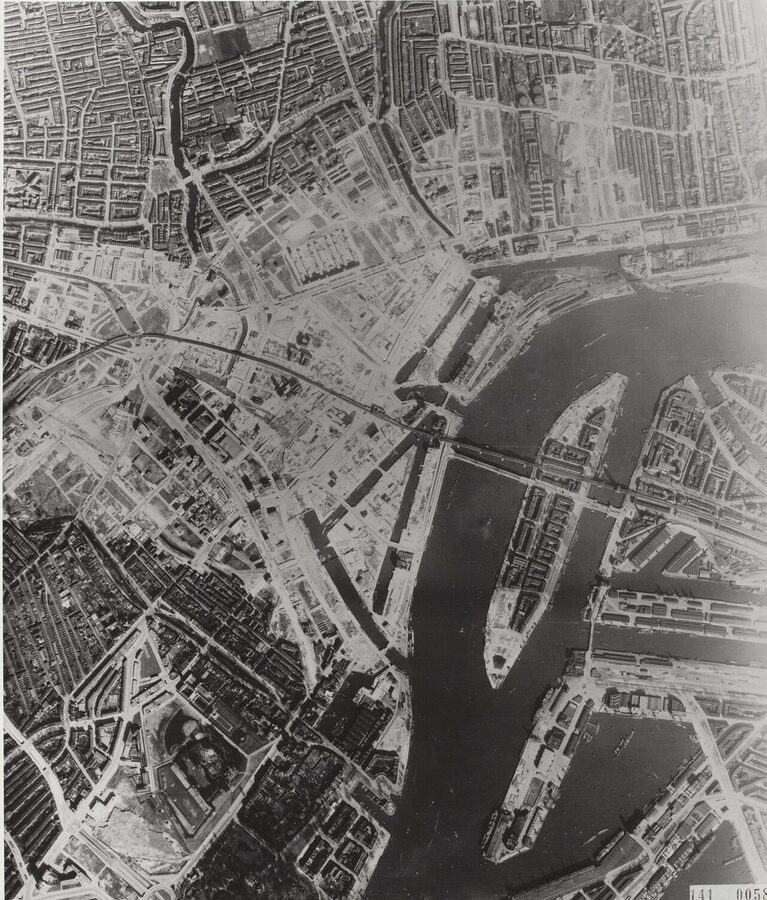
The story behind the modern skyline is the bombing. On 14 May 1940 the Luftwaffe flattened roughly 25,000 houses, around 80% of the historic city centre, in about two and a half hours. Around 900 people were killed. The Dutch surrendered the same day, in part because the Germans threatened the same treatment for Utrecht. The bombed area is still marked on the ground as the Brandgrens (the fire boundary), a line of bronze studs in the pavement that you can follow on foot.
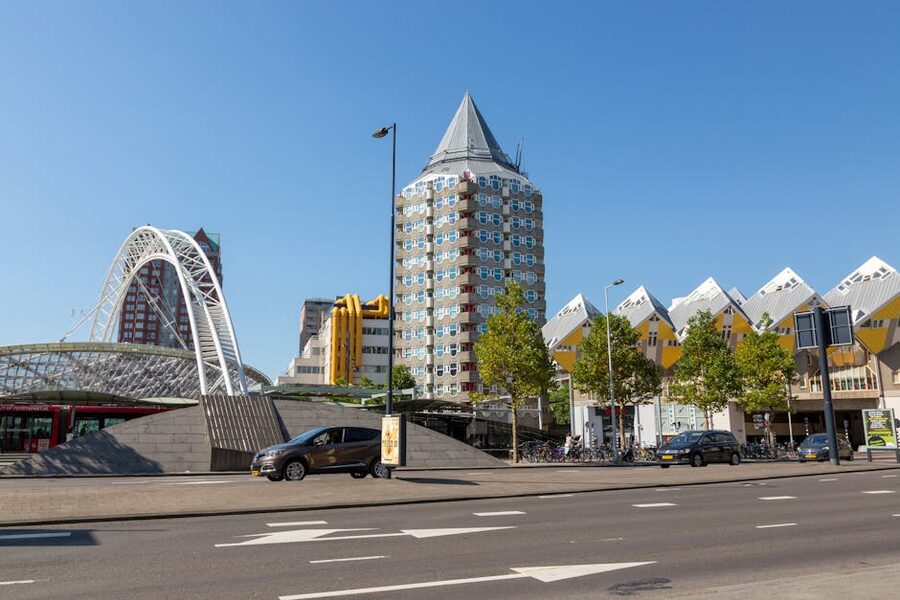
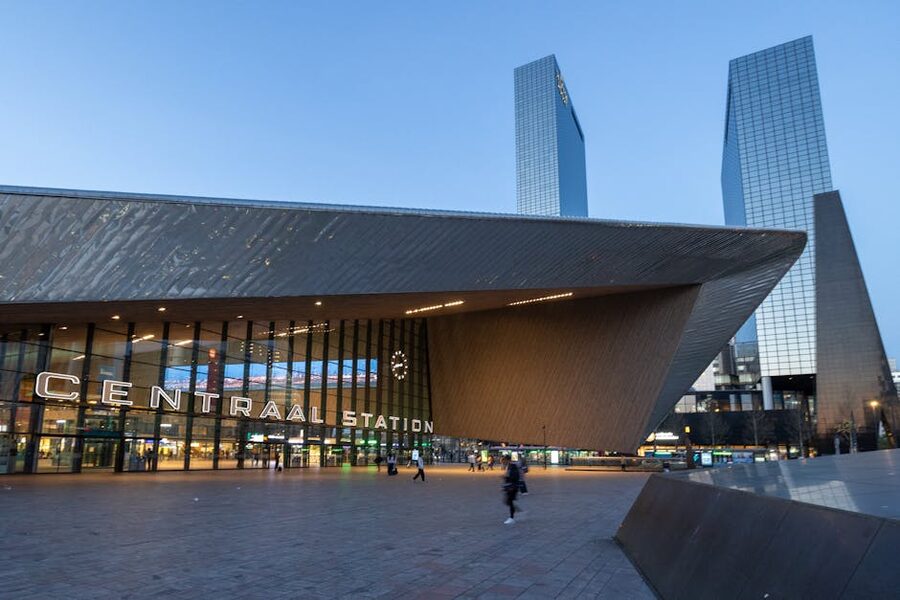
What got built afterwards is what you see from the boat. The first wave was utilitarian. The second wave (1980s onward) is what makes Rotterdam architecturally famous now. The Cube Houses (Piet Blom, 1984), the Markthal (MVRDV, 2014), the Erasmusbrug (1996), Rotterdam Centraal (2014), De Rotterdam (Koolhaas, 2013). Every Dutch architecture firm uses Rotterdam as its showroom. Every architect alive who isn’t Dutch has at least one project here. If your interest in Dutch contemporary art tracks alongside the architecture, the Moco in Amsterdam covers the 21st-century art version of the same story (Banksy, Warhol, Kaws), and the Fabrique des Lumières covers the projection-art version.
If you want to see this side of Rotterdam properly, the cruise is the introduction and a walking afternoon is the deep dive. The Markthal is a five-minute walk from Willemskade, the Cube Houses are next door, and Hotel New York and the Erasmusbrug are already on the boat route. You can do the cruise plus an architecture walk in a single day from Amsterdam (the train is 40 minutes, around $15-20 each way). Same logistical pattern as a Zaanse Schans day trip from Amsterdam (windmills, 30 minutes north) or a Keukenhof tulip gardens day in spring. Rotterdam is the modern-architecture entry in that day-trip set.
Inside the working port
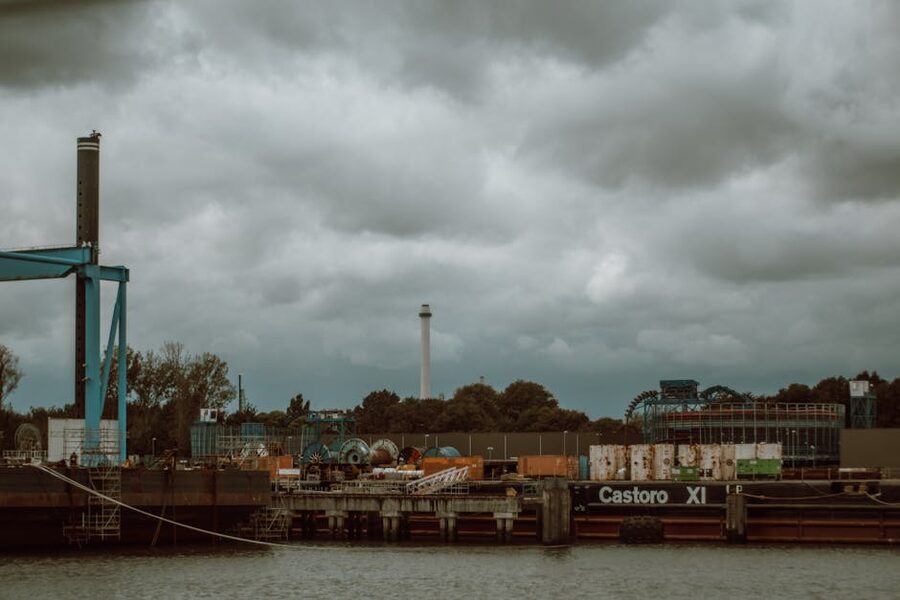
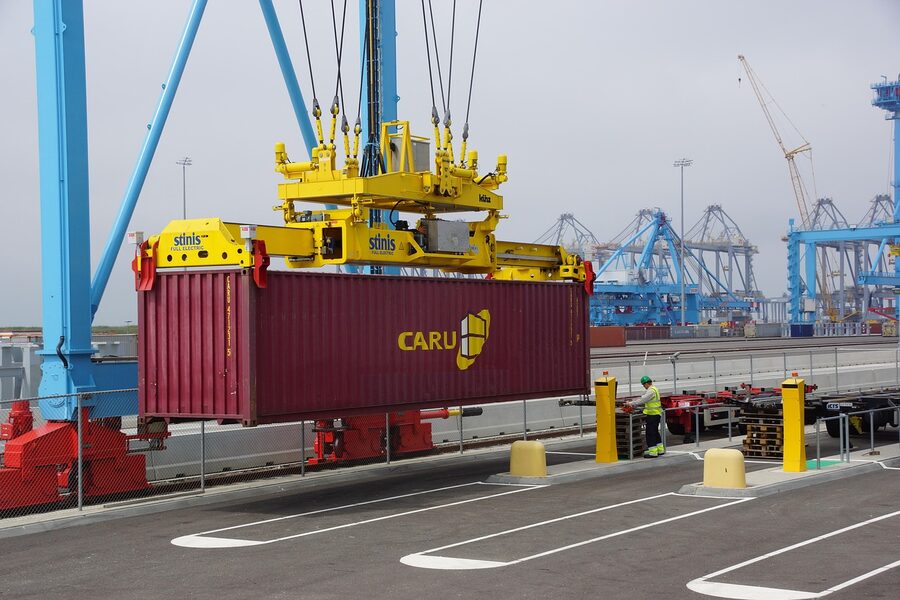
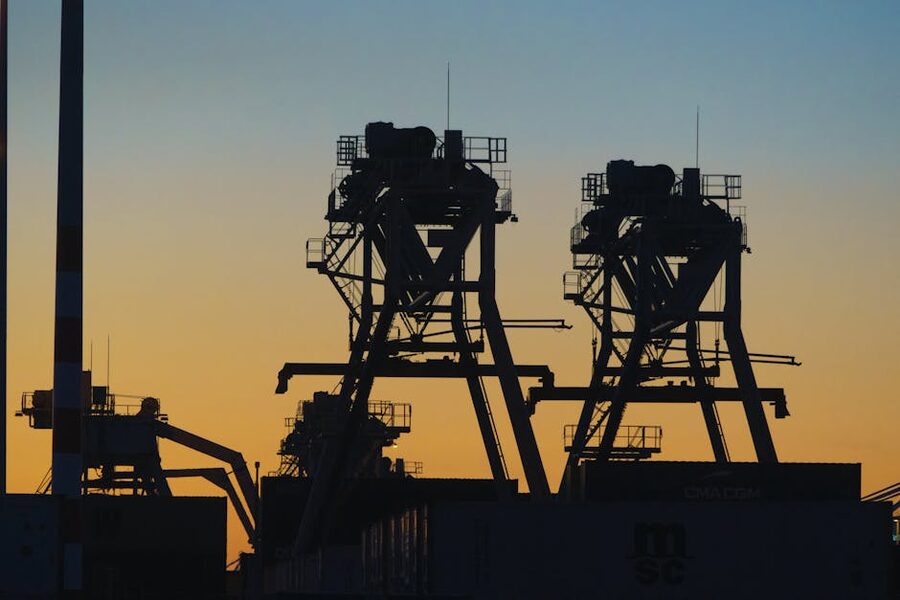
About fifteen minutes into the cruise the working port opens up. This is the part that surprises first-timers. Container ships at the terminals look small from the highway and enormous from a small boat at water level. You’ll pass within fifty metres of vessels that are 300 metres long carrying 14,000 containers. The audio guide gives you the numbers (Rotterdam handles around 470 million tonnes of cargo per year, more than 13 million containers, ships from every flag) and they land harder when the ship is right there. The closest comparison from elsewhere in Europe is a catamaran out of Barcelona harbour that drops you alongside the cruise and freight terminals there. Different scale entirely. Barcelona is a regional port. Rotterdam is the European trunk.
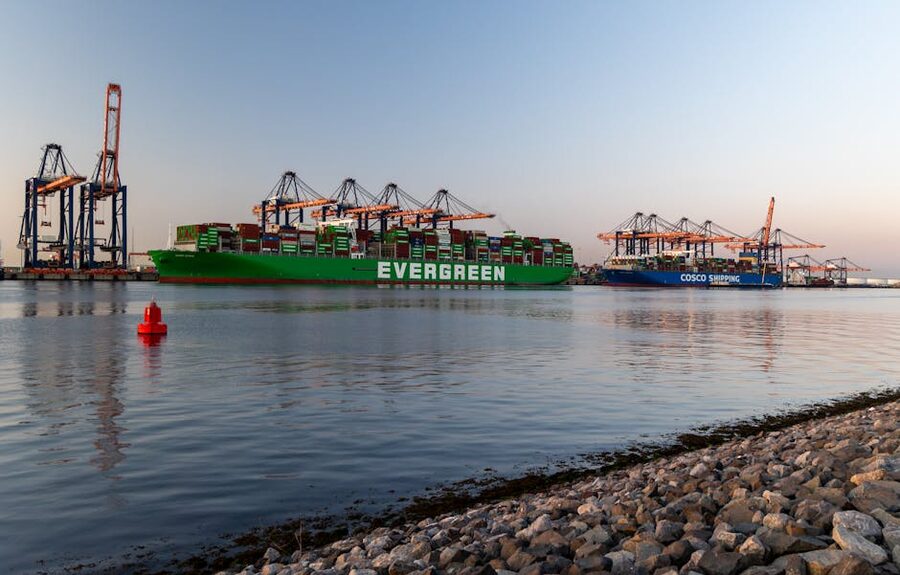
The harbour stretches 40 kilometres from the city centre to the North Sea, which is the geographical fact that makes Rotterdam Europe’s largest port. You’re not going to see all of it on a 75-minute cruise. What you see is the inner harbours (Maashaven, Waalhaven, Eemhaven), where the older terminals and the cruise port are. The deep-water container terminals are out at Maasvlakte, 22 kilometres further out. If you want those, you need to upgrade to the longer tour.
The other part of the port worth knowing about, even if you don’t see it on the standard cruise, is the Maeslantkering. It’s a two-armed storm-surge barrier 22 kilometres downstream at Hoek van Holland that closes when North Sea storm surges threaten the city. Each arm is the length of the Eiffel Tower laid on its side. It only closes fully in extreme conditions (a one-in-1000-year storm; it closed three times for real between 1997 and 2024) but it’s one of the largest movable structures on Earth. The Italian-engineered counterpart to compare it to is the smaller-scale flood-defence work that protects the Venice islands from acqua alta. Different problem (single sub-sea-level city vs. delta), same human-engineering category.
Three Spido tours, three different products
The “harbour cruise” name covers three booking options. They aren’t interchangeable. The flagship 75-minute classic is the right pick for almost everyone, but the alternatives have their place. Same product-tiering logic as Amsterdam canal cruises (classic / dinner / evening / pancake), where the choice between products matters more than the choice of operator.
1. Spido Harbor Sightseeing Cruise: $22
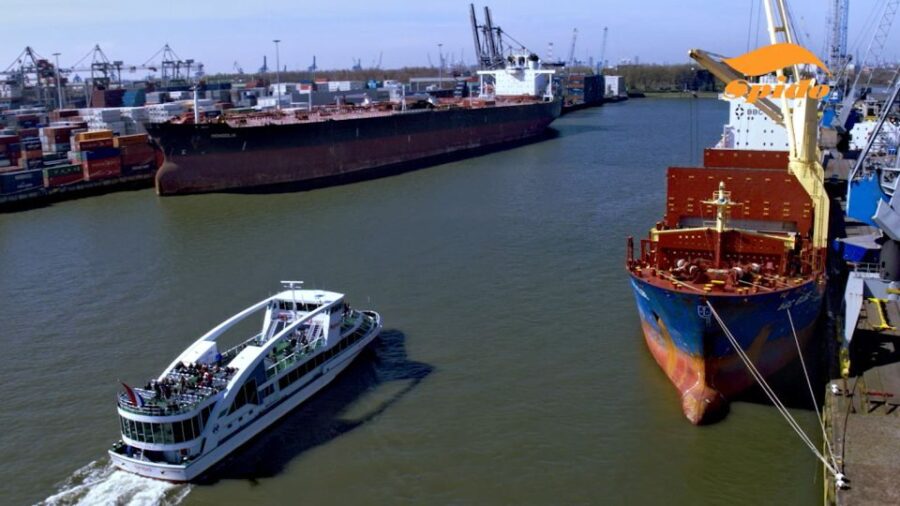
This is the right pick for almost everyone. It’s the original Spido product, runs hourly, and gives you the bridge plus the working port for $22 with audio commentary in four languages. Our review of the standard cruise covers the upper-deck-vs-lower-deck call and the best time of day to go.
2. Rotterdam 1-Hour Sightseeing Splash Tour: $35
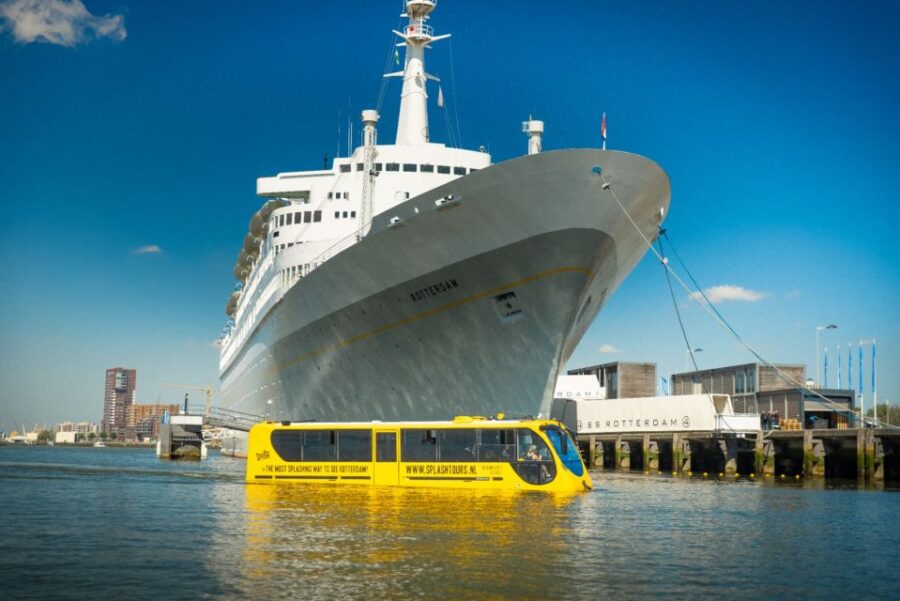
This is the pick if you have kids who’d find a 75-minute boat boring, or if you want city plus water in a single 60-minute hit. The Splash Tour review goes into the trade-off in detail. You get less time on the actual harbour, but you also see the Cube Houses and Markthal from the bus segment, and the splash entry into the Maas is fun once.
3. Rotterdam Pancake Cruise: $31
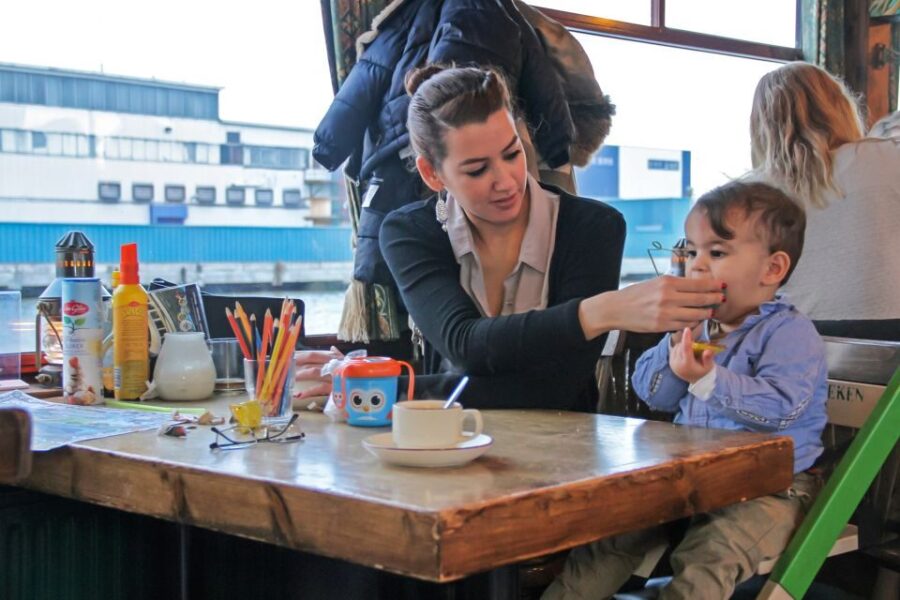
Best understood as a dinner cruise rather than a sightseeing cruise. The harbour route is identical to the standard Spido but the all-you-can-eat Dutch pancakes are the actual product, and the full Pancake Cruise review has the menu specifics. Good for couples in winter (the boat has a heated cabin) and for travelling families who want dinner sorted.
Practical: when to go, where to sit, what to skip
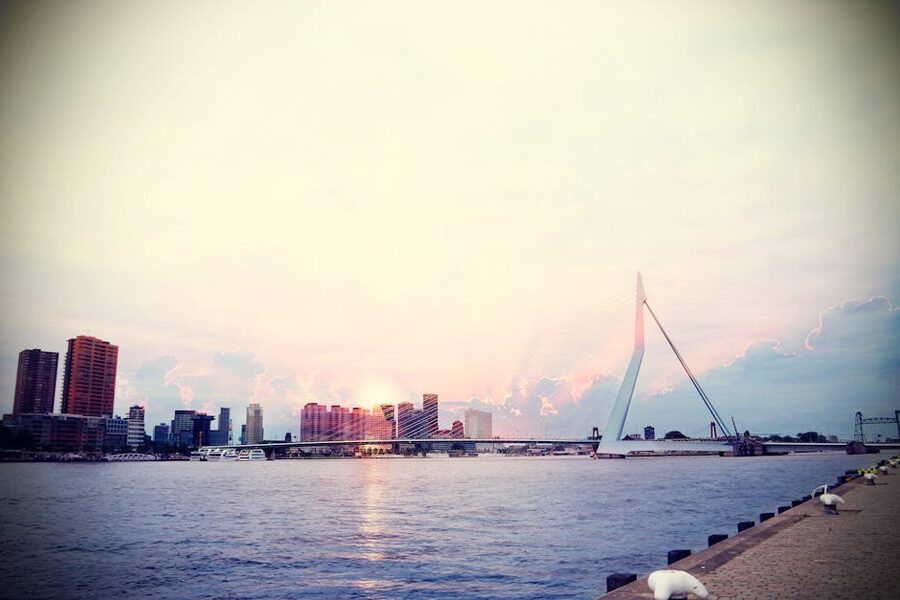
Best slot. Mid-afternoon to early evening, summer or shoulder season. The 18:00 in June puts you back at the pier just before sunset and the skyline lights are coming on. Avoid the first morning departure (10:00); the harbour is quieter, the light is flat, and the audio commentary feels longer. Winter cruises run but daylight hours are short. December departures end by 15:00.
Where to sit. Upper deck, right-hand side coming out of Willemskade. That puts the Erasmusbrug on your camera side first, then the Wilhelminakade skyline, then the working port. The lower deck has a bar and toilets but the windows are spray-stained and you can’t get good photos through them. If it’s raining, the upper deck has a partial roof; you stay dry but get the view.
Booking ahead. Necessary in summer school holidays, especially weekends. Off-season you can usually walk up. The GYG booking is the same boat as the door price; the only reason not to book online is if you’re flexible on day and want to see what the weather is doing first.
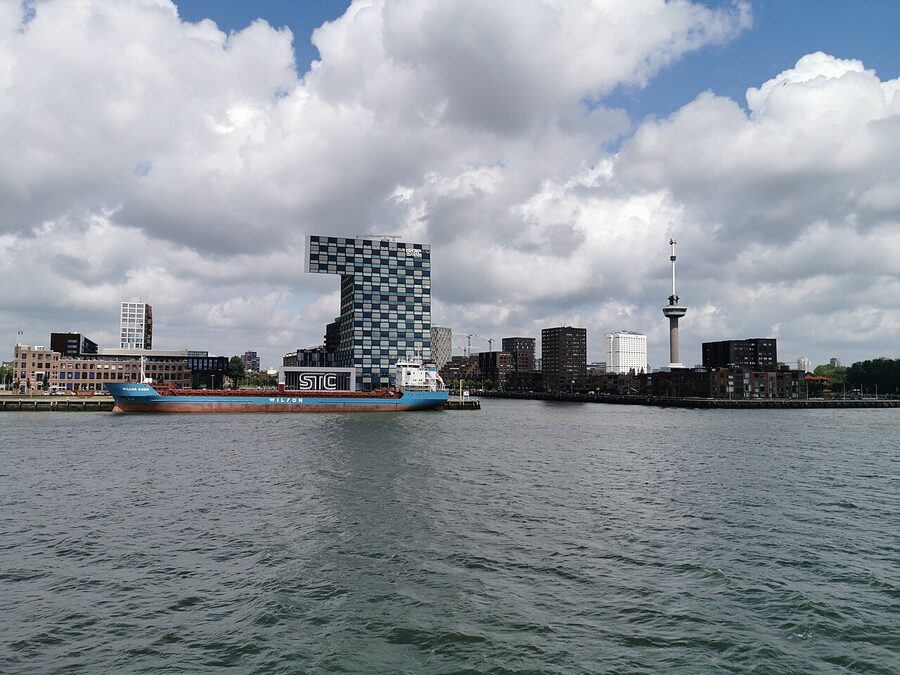
What to skip. The combo tickets that bundle the cruise with the Euromast tower (the 1960s observation tower in the Scheepvaartkwartier) look like a deal but the Euromast is a 25-minute experience max and the queue can eat a chunk of your day. Buy them separately if you want both. The Maritime Museum next to Willemskade is a much better add-on and only $15.
What’s worth adding. The Markthal (5-minute walk) for lunch, the Cube Houses (10 minutes further) for the architecture, and Hotel New York (a water taxi from Willemskade gets you across the river in 5 minutes for €4.50) for the emigrant history. The whole thing is a half-day if you move efficiently.
The Markthal, Cube Houses, and what to do after
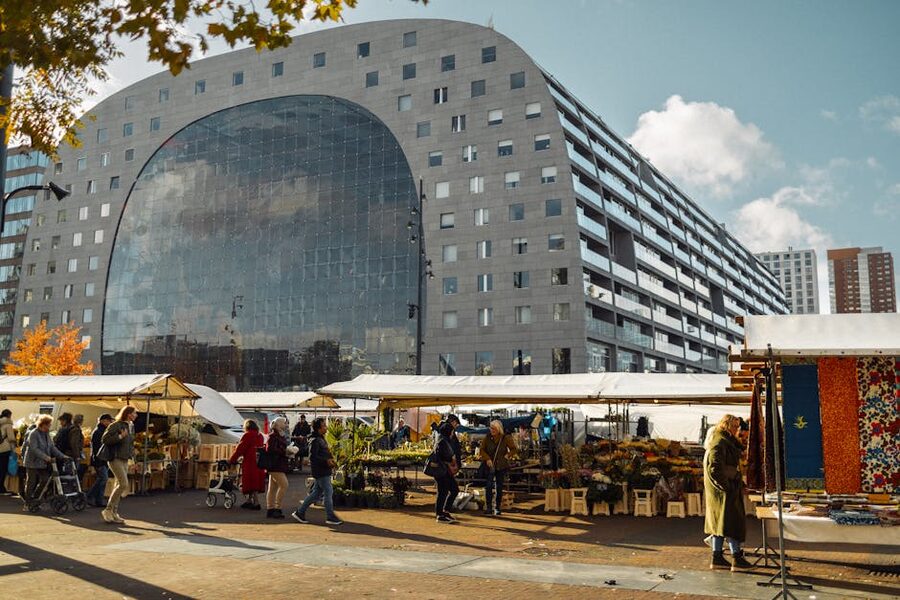
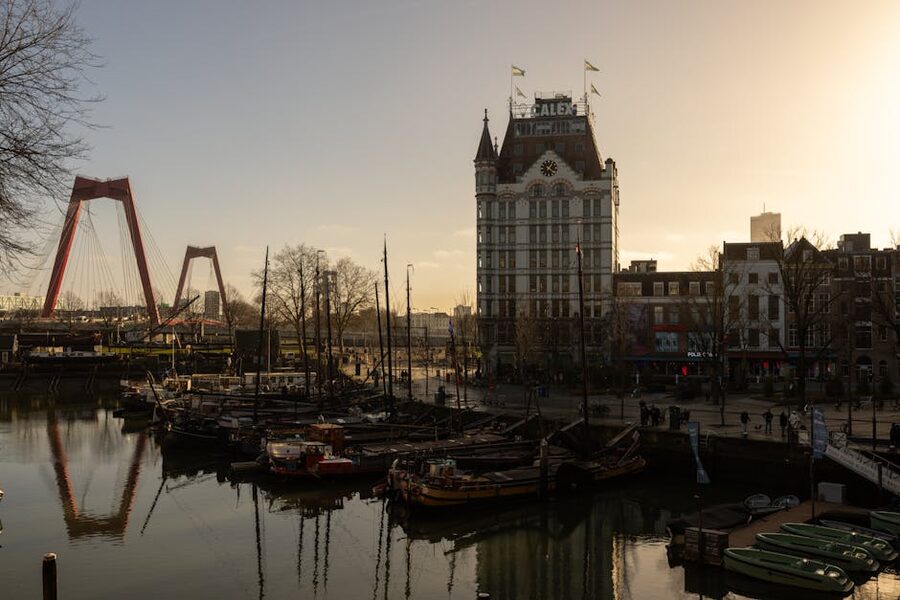
The cruise dumps you back at Willemskade with the rest of your afternoon free. The good news is that everything else worth seeing in central Rotterdam is within fifteen minutes’ walk. The Markthal, the Cube Houses, the Maritime Museum, the Witte Huis (the 1898 art-nouveau building that survived the bombing because it was on the river edge of the fire boundary), and the Erasmusbrug itself are all in the same compact district.
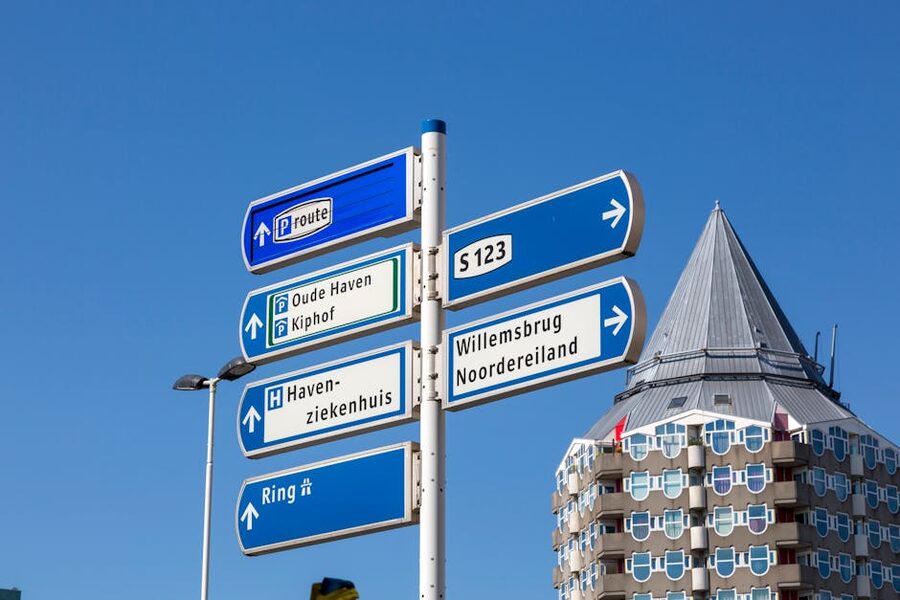
If you have a full day in Rotterdam, do the cruise around midday, the Markthal for lunch, the Cube Houses and Maritime Museum mid-afternoon, then walk the Erasmusbrug for sunset on the way back to Centraal. That’s the canonical Rotterdam day-trip from Amsterdam, and it works.
Rotterdam vs Amsterdam: which boat to take
If you’ve got time for one Dutch city and one boat ride, the answer depends on what you want from it. Amsterdam’s canal cruises are the classic 17th-century Dutch experience: gabled houses on either side, low arched bridges, narrow water, decorative not industrial. They’re the right pick if you’re in the country for the heritage Holland of the Vermeer paintings and the Rijksmuseum.
Rotterdam’s harbour cruise is the opposite of that. Wide water, working freight, contemporary architecture, no decorative gables anywhere. It’s the right pick if you’ve already done Amsterdam and want to see the part of the country that paid for it. Or if your taste runs to modern more than historical.
The two boats genuinely are different products. Don’t think of them as redundant. If you can do both on a Netherlands trip, do both. The contrast is most of the point. You can also pair Rotterdam with the Zaanse Schans windmills day trip (the heritage-Holland counterweight) or with Keukenhof in tulip season for a fuller picture of how varied the country actually is.
Where the harbour fits in a wider Dutch trip
For a one-week Netherlands trip with one Rotterdam day, the harbour cruise plus the Markthal-Cubes-Erasmusbrug walk fills the day comfortably. For a longer trip, Rotterdam pairs naturally with Delft (15 minutes by train, the Vermeer city), Kinderdijk windmills (30 minutes by water bus, UNESCO site), and The Hague (25 minutes by train, the political capital with the Mauritshuis museum). All four can be sampled on a single base in Rotterdam if you have three or four days.
If you’re cruising the rest of Europe by boat as well, this article sits in a small family of harbour and river cruise pieces I’ve written. The Seine river cruise in Paris covers a more ornamental boat experience (no working port, all monuments). The Guadalquivir cruise from Seville is closer in spirit to Rotterdam, with the river still being a working port. The Venetian gondola is the historical opposite of all of them. If you’ve already done the Venice islands by boat, the Rotterdam cruise will feel like a different category of thing entirely. Industrial scale instead of heritage scale.
The Holland-Amerika story is the editorial spine
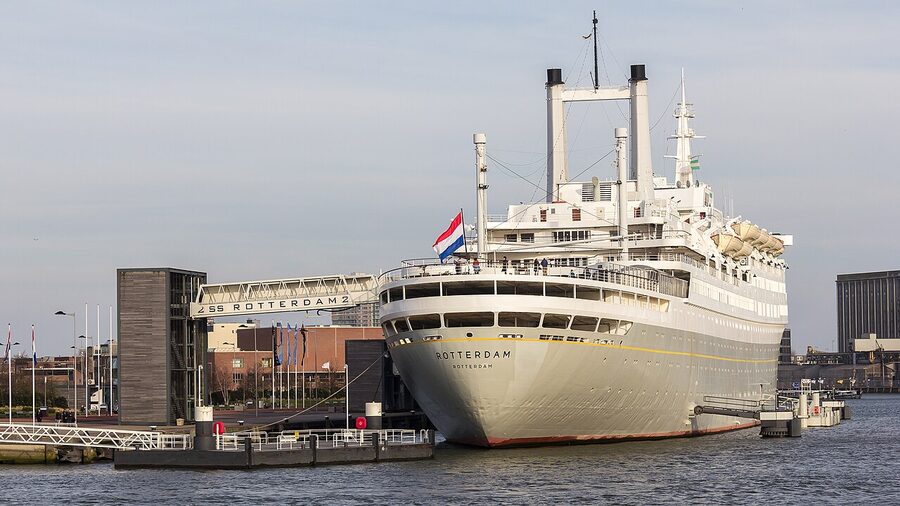
The single thing that pulls the whole cruise into a coherent story is the Holland-Amerika Lijn. The company HQ (now Hotel New York), the boats they ran (the SS Rotterdam, still moored as a hotel a kilometre upstream), the emigrant route they ran from 1873 to 1971, and the post-war rebuild that changed the city’s relationship with its own port. If you treat the cruise as “look at modern buildings from a boat” you’ll enjoy it but it’ll feel disconnected. If you treat it as “see the company town that sent a million Dutch families to America for a hundred years and then got bombed and rebuilt itself in the 1990s,” it adds up to something.
The audio guide doesn’t quite tell that story. It hits the architectural facts and skips the emigrant ones. So before you board, read the Hotel New York exhibit page online, or pick up the booklet at the Maritime Museum next door. Twenty minutes of context turns a boat ride into a piece of social history. That’s the difference between a Rotterdam cruise and an Amsterdam cruise: in Amsterdam the boat is the experience, in Rotterdam the boat is the introduction.
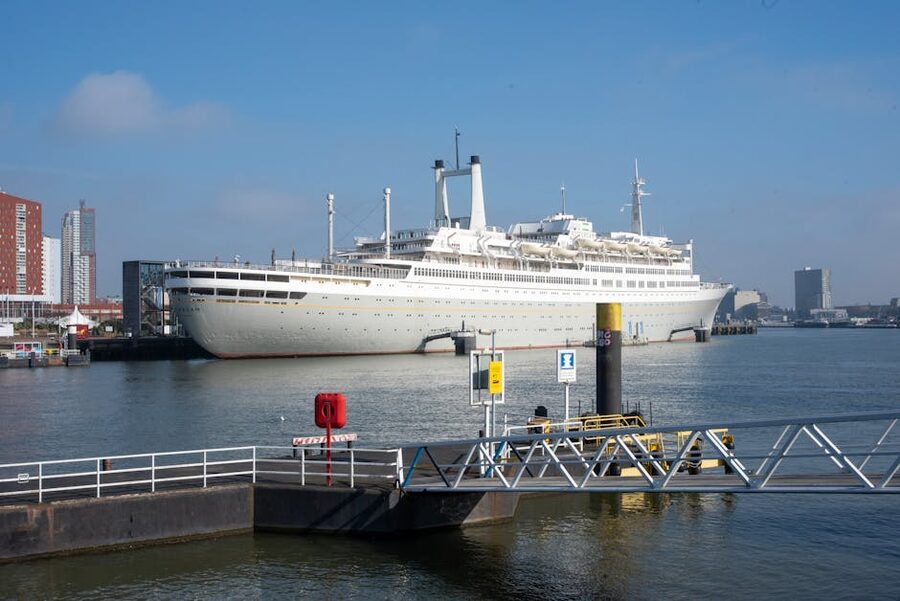
What to do in Rotterdam after the boat
The harbour cruise is one of those experiences that only makes sense paired with a few hours on foot. Walk the Erasmusbrug at sunset. Lunch at the Markthal. Half an hour in a cube house. Coffee at Hotel New York (the cafe stays open until 22:00, the brasserie later). If you’ve come specifically for architecture, add the Kunsthal (Koolhaas, 1992) and the Depot Boijmans Van Beuningen (the mirrored bowl, MVRDV, 2021). If you’ve come specifically for the emigrant history, the Hotel New York cafe and the Maritime Museum together do the job.
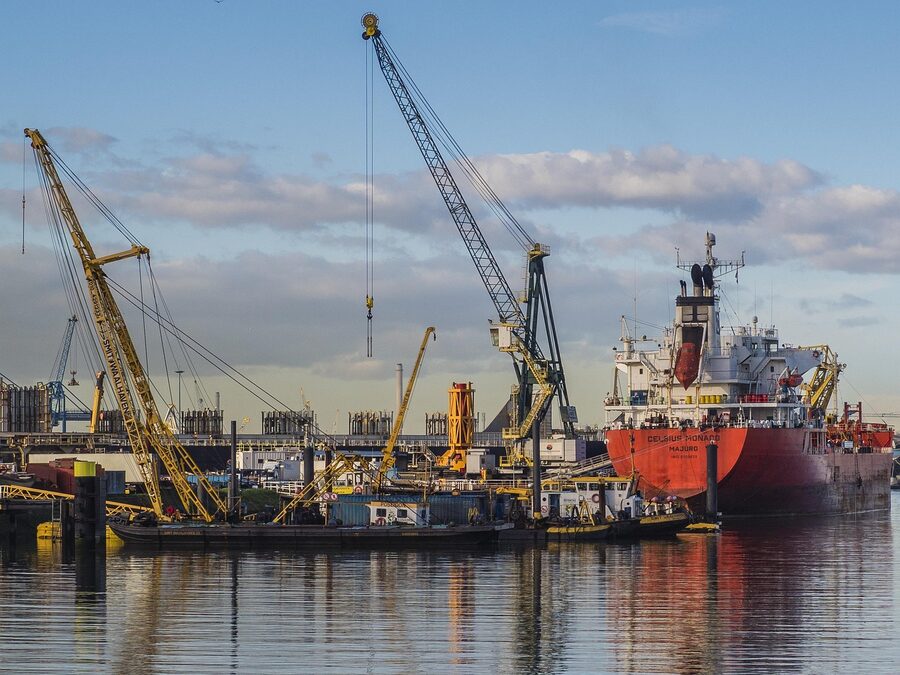
The closing recommendation: if Amsterdam is your only stop, spend a Tuesday or Wednesday on the Intercity to Rotterdam. Cruise at midday, Markthal for lunch, the Cubes and Erasmusbrug in the afternoon, train back to Amsterdam in time for dinner. You’ll see a different country than the one you booked the trip for, and you’ll see why the Dutch themselves think Rotterdam is more interesting than Amsterdam right now. Maybe you’ll agree, maybe you won’t. The answer depends on what you came for. Windmills, or cranes. The cruise is the way to find out which one is yours.