
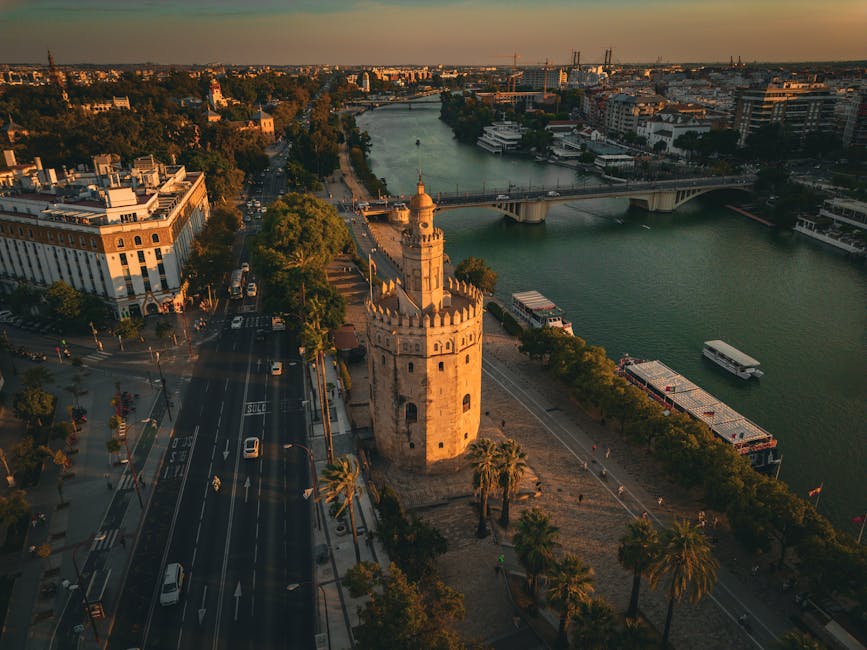
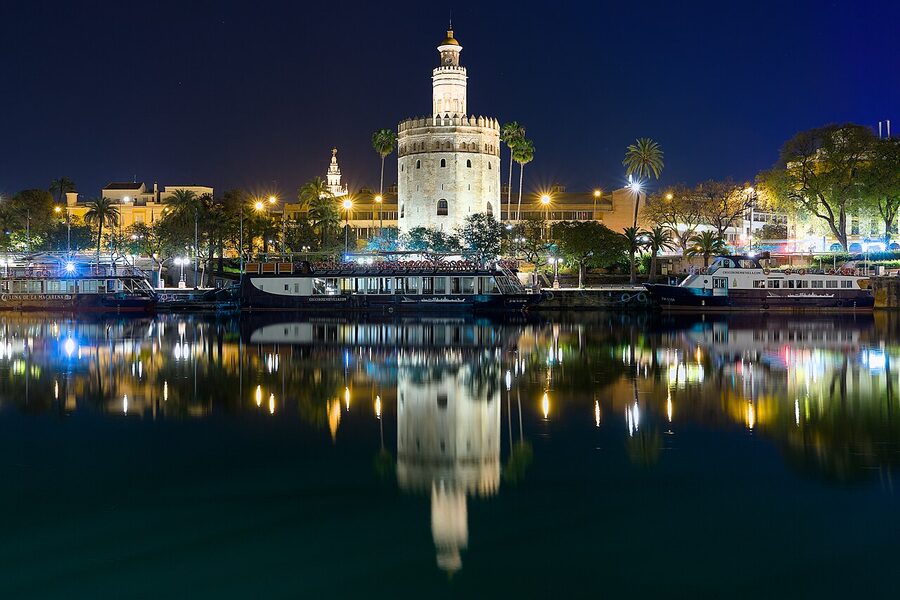
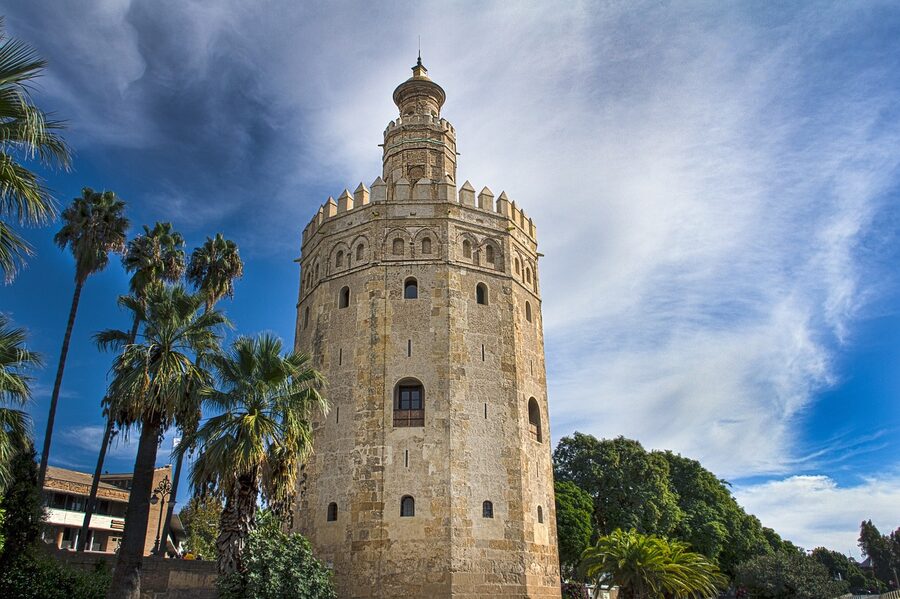
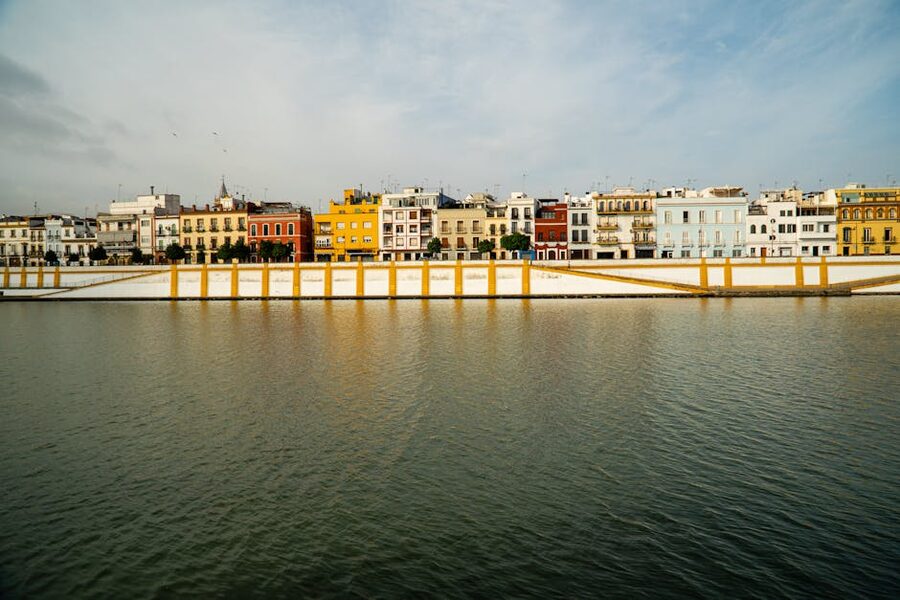
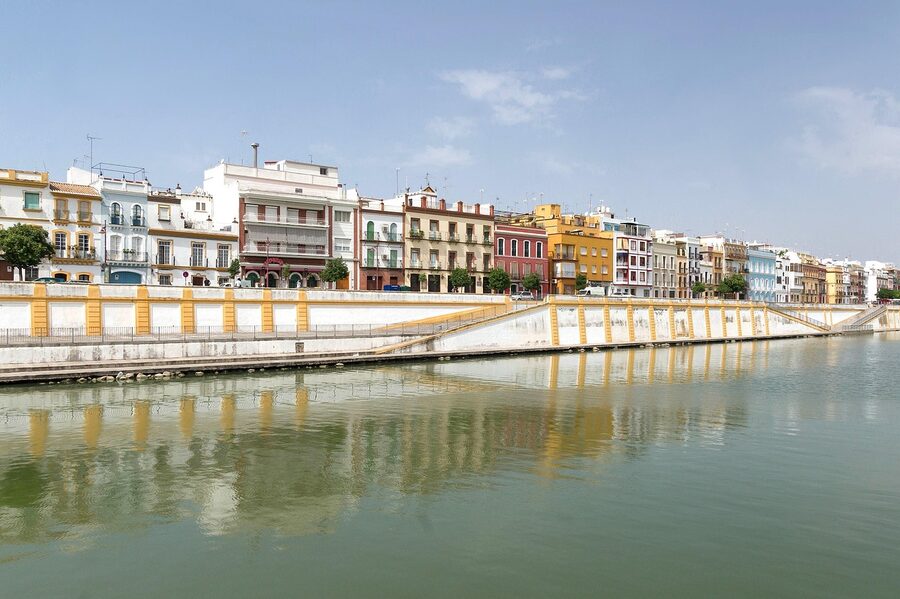
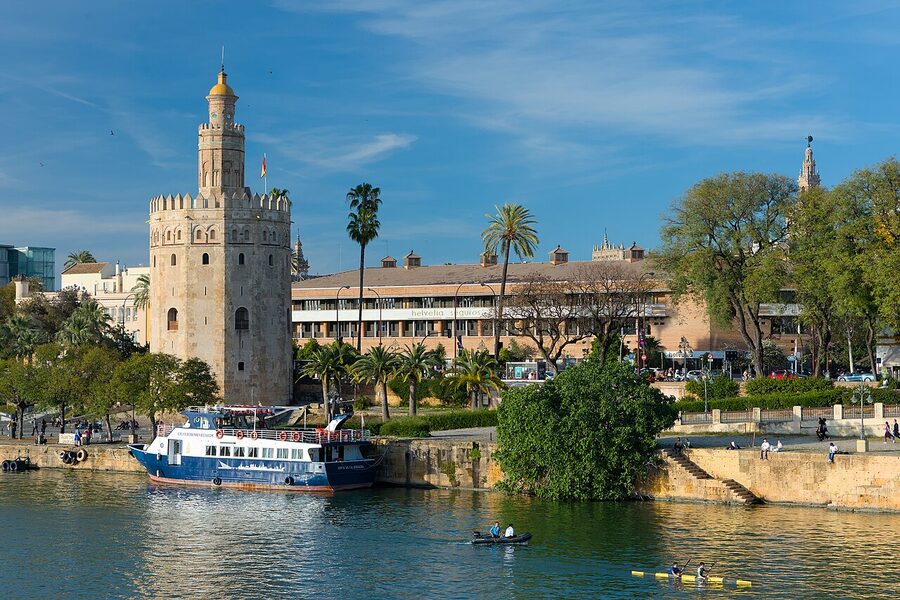
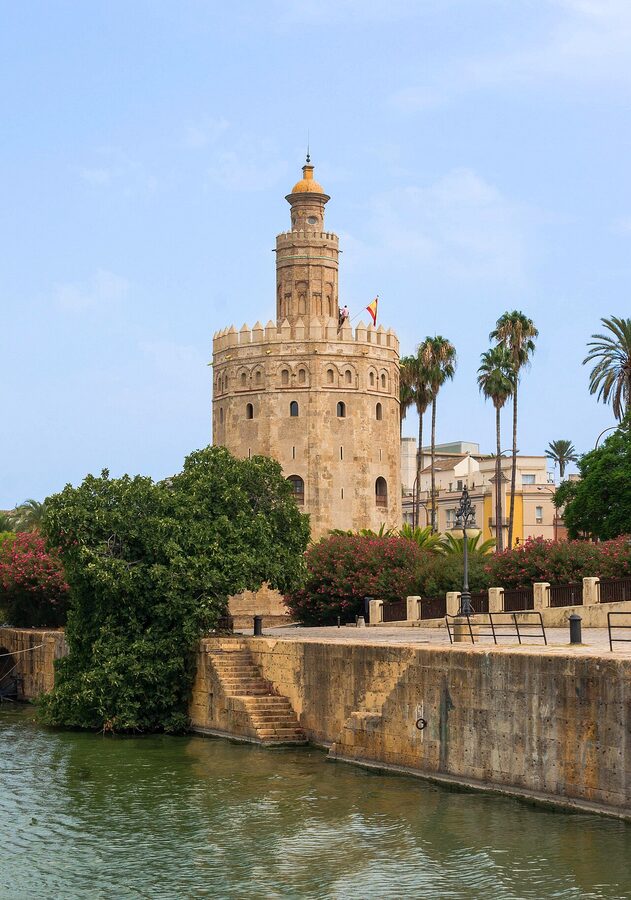
The light that hits the Torre del Oro about twenty minutes before sunset turns the stone the colour the building is named for. The cathedral’s bell tower, the Giralda, lifts above the rooftops in the same warm gold. And on the Triana side, the row of houses along Calle Betis goes quiet for a moment as the working day ends and the bars haven’t filled yet. You see all of it at once if you’re on the river. From the city, you see fragments.
That’s the case for taking a boat on the Guadalquivir. Not as an add-on. As the lens that explains everything else.
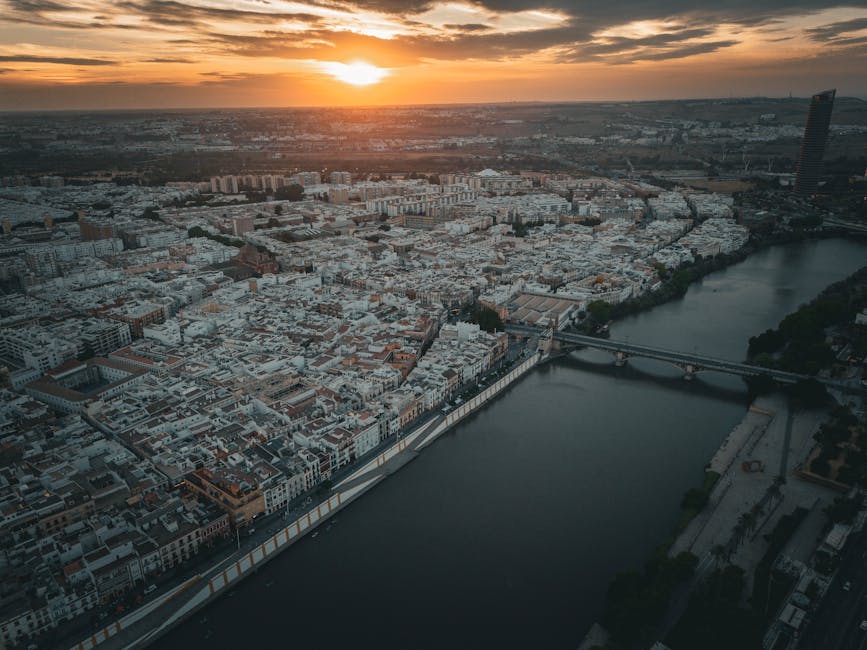
Seville exists because of this river. It’s the only inland Atlantic port in Spain, and after engineers dredged the channel in the 16th century, every ship returning from the Americas with gold, silver, sugar, and cacao docked here first. Columbus’s tomb is in the cathedral because Seville is where his journeys started and ended. Magellan’s expedition left from here in 1519. So did the conquistadors. For about 200 years, the Guadalquivir was the single most economically important river in Western Europe. The cruise reframes the visit. You’re not in a pretty Andalusian city that happens to have a river running through it. You’re in a city that is the river. Everything else, including the Alcázar, the cathedral, the Plaza de Toros, the Triana ceramics quarter, was built around what arrived and left on these docks.
In a hurry: top picks
- 1-Hour Eco Cruise ($19): the default for first-timers, daytime or sunset. Book on GetYourGuide
- Boat Tour with Lunch or Dinner ($29): pick this if you want the river plus a meal you didn’t have to plan. Book on GetYourGuide
- Self-Guided Kayak ($17): the active alternative; cheapest of the three, you do the work. Book on GetYourGuide
Why a boat changes the visit
Most people doing Seville on a long weekend see the river from above. They walk across the Puente de Triana on their way to dinner in the old gypsy quarter, glance down at the water, and that’s the river ticked off the list. That’s a miss. The river is the spine. The Cathedral, the Alcázar, the Casa de Contratación where every Americas voyage was registered, the Real Maestranza bullring, the Capilla del Carmen at the foot of Triana, and the warehouses behind Calle Betis are all river-facing buildings. They were designed to be seen from a deck, not a sidewalk.
And the guide’s commentary reorganises what you’ve already seen. If you’ve already done the Alcázar, the cruise tells you why Pedro the Cruel built his palace where he did. If you’ve already done the cathedral, the cruise tells you why the world’s largest Gothic church was built on this exact bend in this exact century. The order matters less than you’d think. Some travellers prefer to take the boat first because it gives them the map. Others prefer it last because it ties everything together. Both work.
Where you launch from, and what you actually see
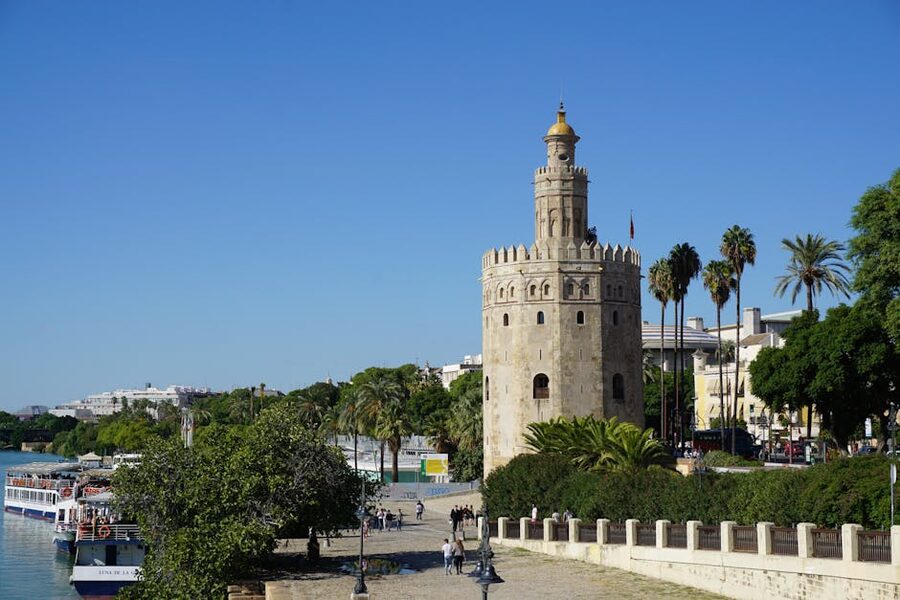
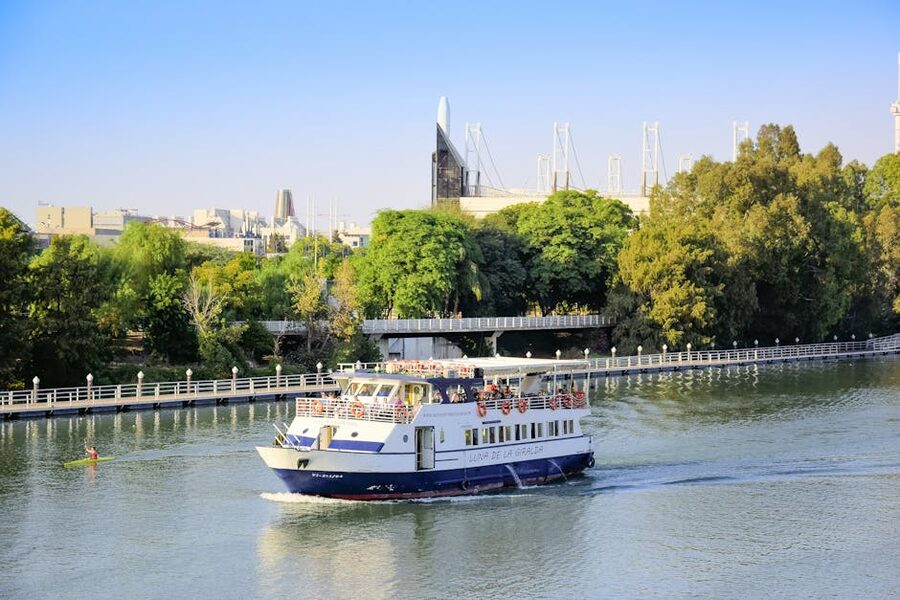
Almost every cruise leaves from the Torre del Oro jetty, on the east bank just south of the Puente de San Telmo. There’s a kiosk row, a couple of competing operators, and a boarding ramp that takes you straight onto the boat. Allow ten minutes to find it the first time. The signage is light and the riverside path is full of joggers, scooter rentals, and horse carriages.
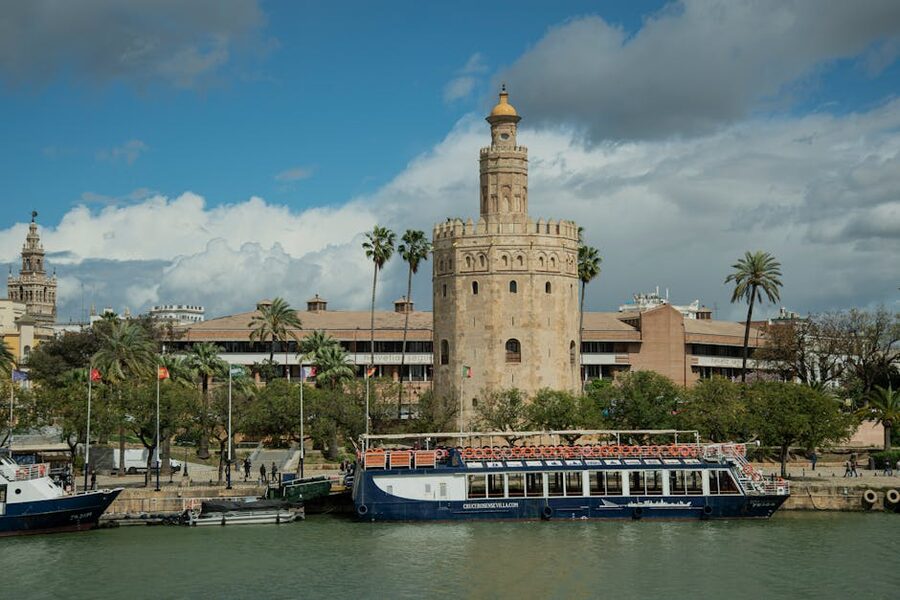
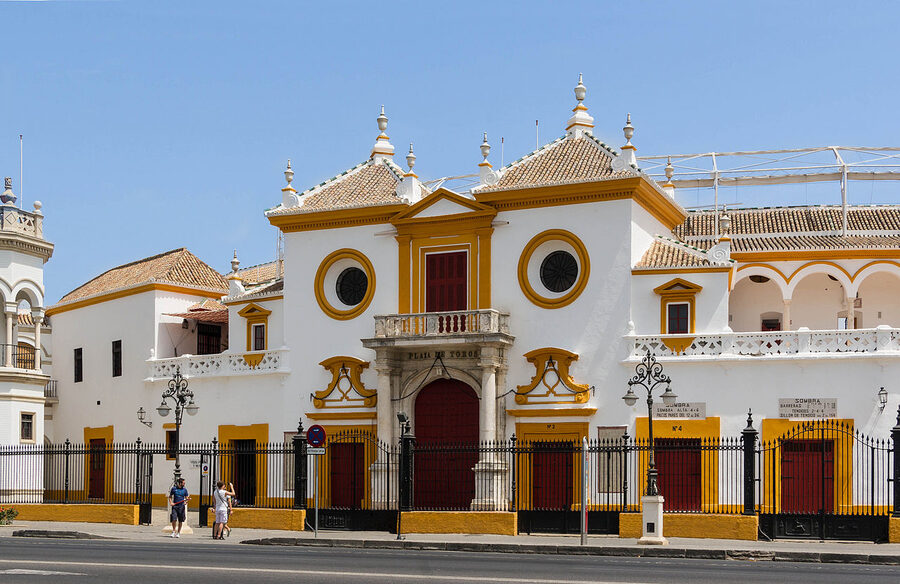
The standard one-hour route runs upriver from the Torre del Oro toward the modern bridges of Expo ’92, turns at the Puente del Alamillo, and comes back down past the Triana side. You’ll pass the Real Maestranza bullring (1761, the oldest still in use in Spain), the Capilla del Carmen at the foot of the Puente de Triana, the Calle Betis row of painted houses, the old ceramics works that gave Triana its name, and the Cartuja monastery that hosted Columbus during his planning years and later housed a Pickman porcelain factory before Expo ’92 turned the whole island into a fairground. By the time you hit the Alamillo, you’re effectively in modern Seville. By the time you turn back, the cathedral is rising above the south bank like the city is announcing itself.
When to take the cruise
Sunset is the obvious answer and it’s the right one for most people. The light hits the cathedral and the Giralda first, then sweeps west across the river to Triana. You watch it move. Boats running between an hour and ninety minutes before sunset usually finish in the warmest part of the light, which is the photo people come for.
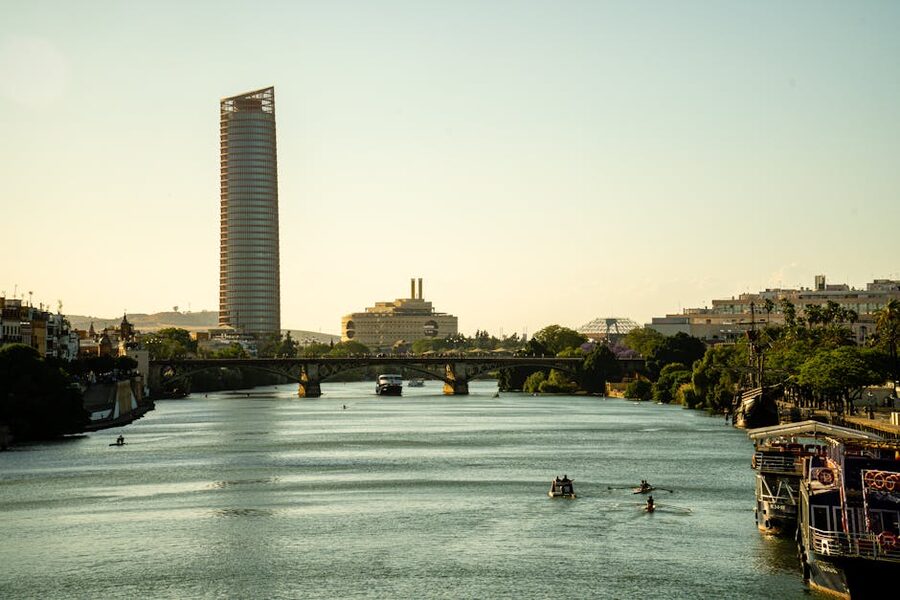
The catch with the sunset slot is that it sells out earliest, and prices on the upper deck creep up by a few euros in spring and autumn. If you can’t get a sunset boat, the next-best slots are mid-morning (the light is clean, the river is empty, the heat hasn’t arrived) and after dark on a summer night. Avoid mid-afternoon in July and August. The boats run, but the deck is brutal and the haze takes the edge off the views.
The river is the reason Seville exists
This is the part most guides skim and the part the cruise commentary actually leans on. So here’s the long version, which makes the rest of the city read differently.
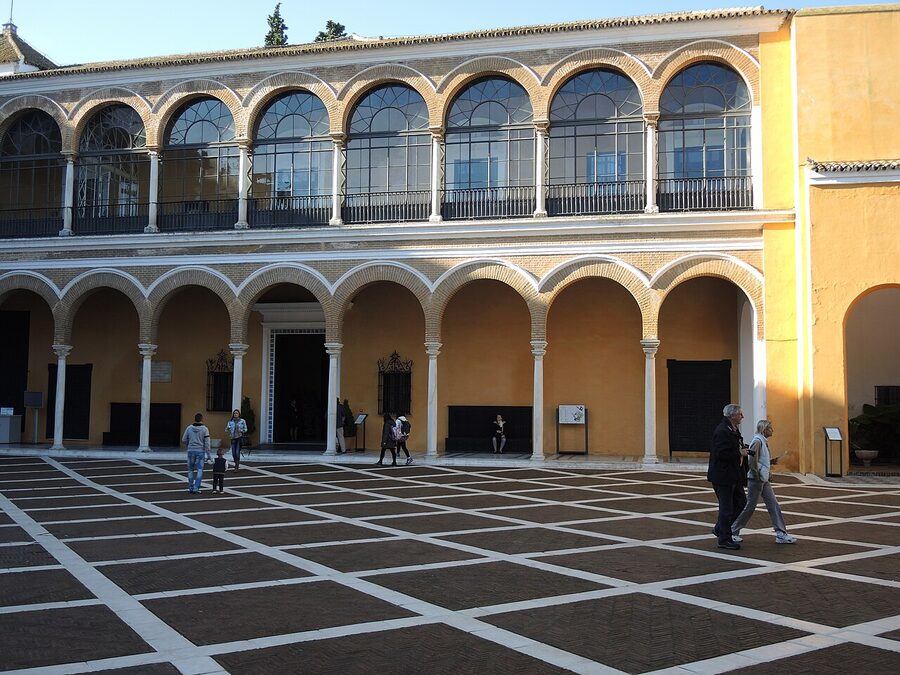
Seville sits about 80km inland from the Atlantic. The Guadalquivir is tidal up to the city and, after dredging, was navigable for ocean-going ships up to here from the late medieval period until the 17th century. That made it the only Atlantic port in Spain you could reach without exposing your fleet to the open sea. When Spain came back from the Americas with bullion, the Crown wanted those ships somewhere defensible and inspectable. Seville was it. The 1503 founding of the Casa de Contratación, the bureaucracy that registered every voyage to and from the Americas, locked the trade in. For 200 years, every ounce of New World silver entering Europe was unloaded at the docks below the Torre del Oro and weighed inside the Alcázar. The Casa de Contratación was housed there until 1717.

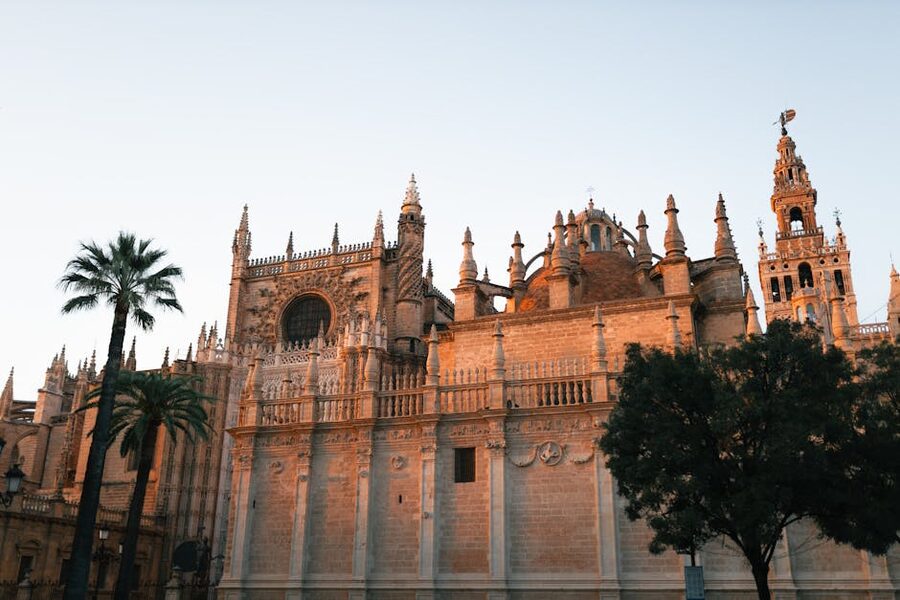
That changes how you read the cathedral. The Cathedral of Seville was completed in 1517 and is the world’s largest Gothic church by floor area, mostly because the chapter wanted a building that matched the wealth flowing in through the docks. The Casa de Contratación was inside the Alcázar, two minutes’ walk from the cathedral, also two minutes from the Torre del Oro. The whole administrative spine of the Spanish empire lived inside a five-minute walking radius of the river bend you’re now sitting on.
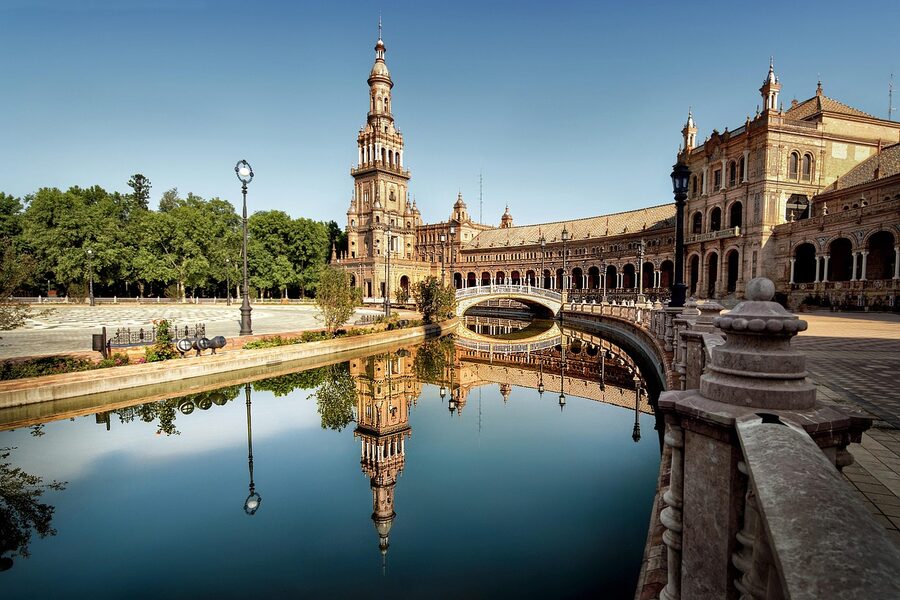
The river also explains why the trade ended. By the 17th century, ships were getting bigger. The Guadalquivir’s silt bar at Sanlúcar de Barrameda, where the river meets the Atlantic, kept getting harder to cross. Cádiz, on the open coast, took over the official trade in 1717. Seville’s empire moment closed. The city kept the cathedrals, the palaces, and the Triana ceramics, but the silver stopped arriving. You see the absence on the cruise. The grand 16th-century waterfront warehouses are gone or repurposed. What you see along the banks now is mostly 19th-century, with a 1929 Ibero-American Expo flourish (Plaza de España, the various pavilions) and a 1992 Universal Expo flourish on the Cartuja side. Three big bursts of building, separated by long quiet stretches.
The Triana side
Triana, the west bank, is the side most cruise commentaries skim past. Don’t let yours. This is where Seville’s working class lived for centuries, and where the city’s two great cultural exports were made: ceramics and flamenco.
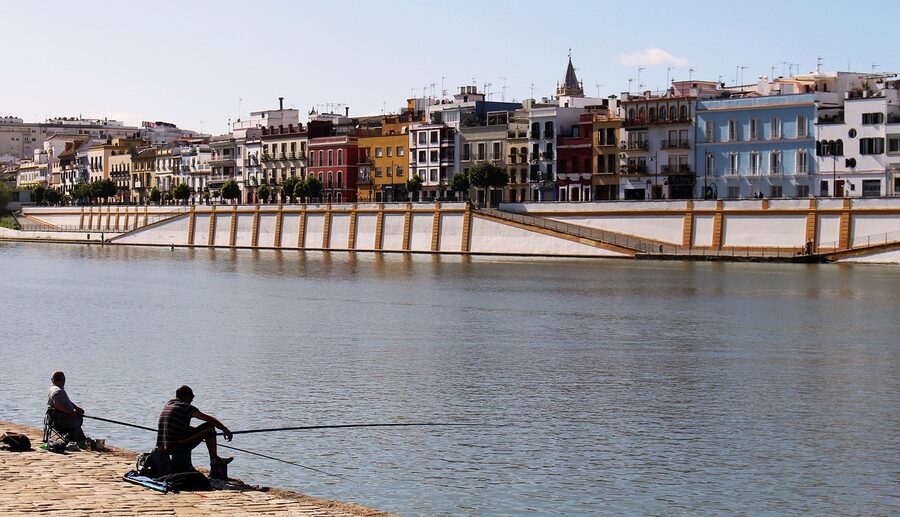
The ceramics workshops have been running on this bank since the Almohad period; tiles from Triana ended up in the Alcázar, in churches across the empire, and on the facades of the Plaza de España. The flamenco scene was born around the working-class bars of Calle Betis and the gypsy families who lived in the alleys behind. Seville flamenco is essentially Triana flamenco that walked across the bridge. If you can plan it, do the river cruise on a day when you’re also going to eat in Triana that night. The boat sets you up to read the neighbourhood the right way.
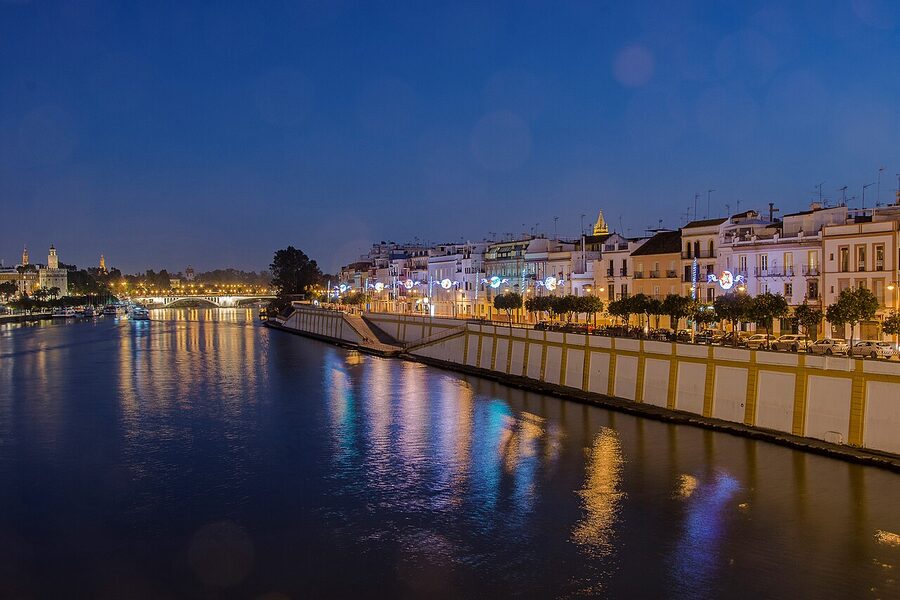
The bridges, in order
From south to north, the order you’ll cross or pass under in a standard cruise loop:
- Puente de San Telmo (1931): the southern entry to the cruise loop, the bridge most foot traffic uses to reach the cathedral side.
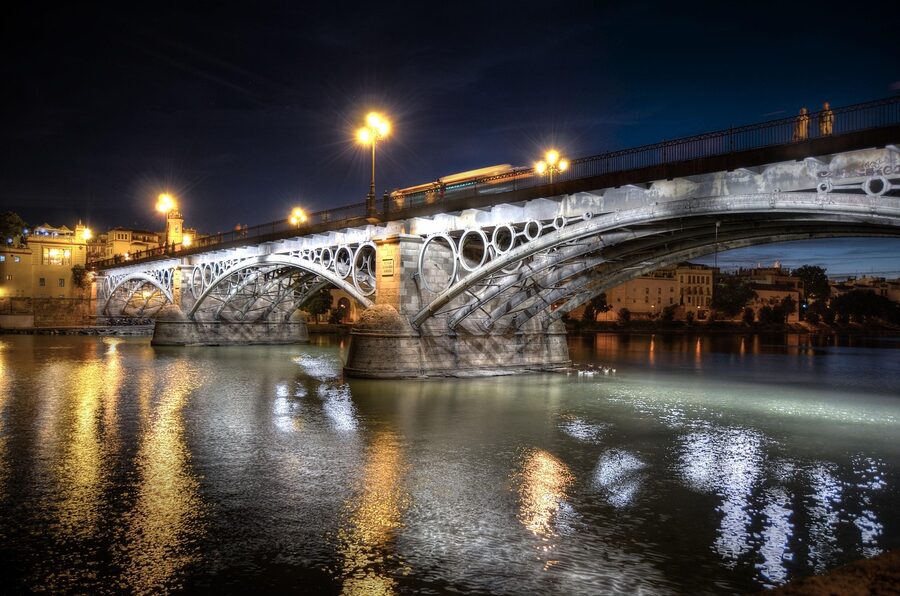
- Puente de Isabel II / Puente de Triana (1852): the iron one, the postcard. Modelled on the Pont du Carrousel in Paris, it was the first permanent bridge between Seville and Triana.
- Puente de la Cartuja (1991): built for Expo ’92, sleek and modern.
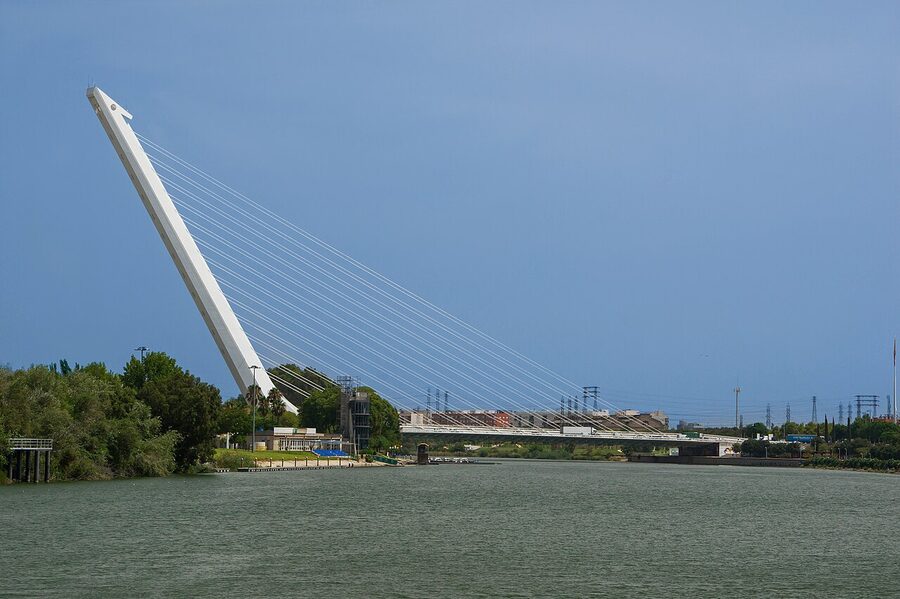
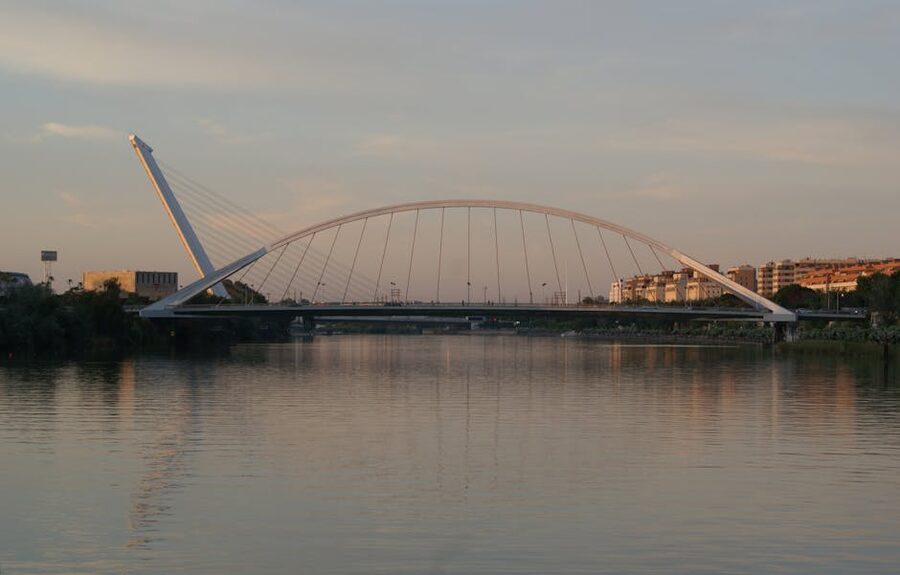
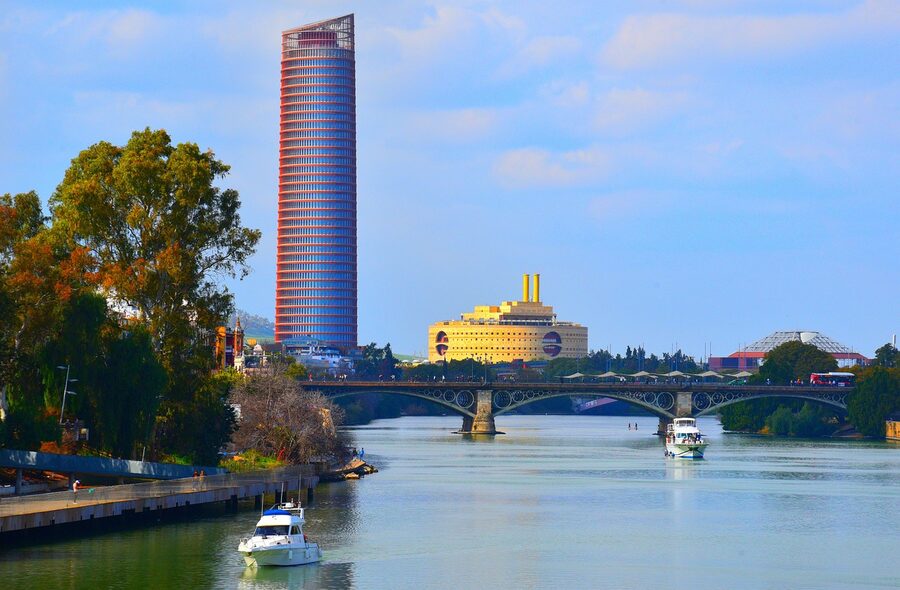
- Puente del Alamillo (1992): the cable-stayed Calatrava one with the single mast leaning back from the river. The boats usually turn here.
- Puente de la Barqueta (1992): the white arch, also Expo. Most cruises pass under it on the Cartuja loop.
Best tours to book
Three options that cover the use cases. The cheap default, the meal-included upgrade, and the active alternative for travellers who don’t want to sit.
1. 1-Hour Guadalquivir Eco Cruise: $19
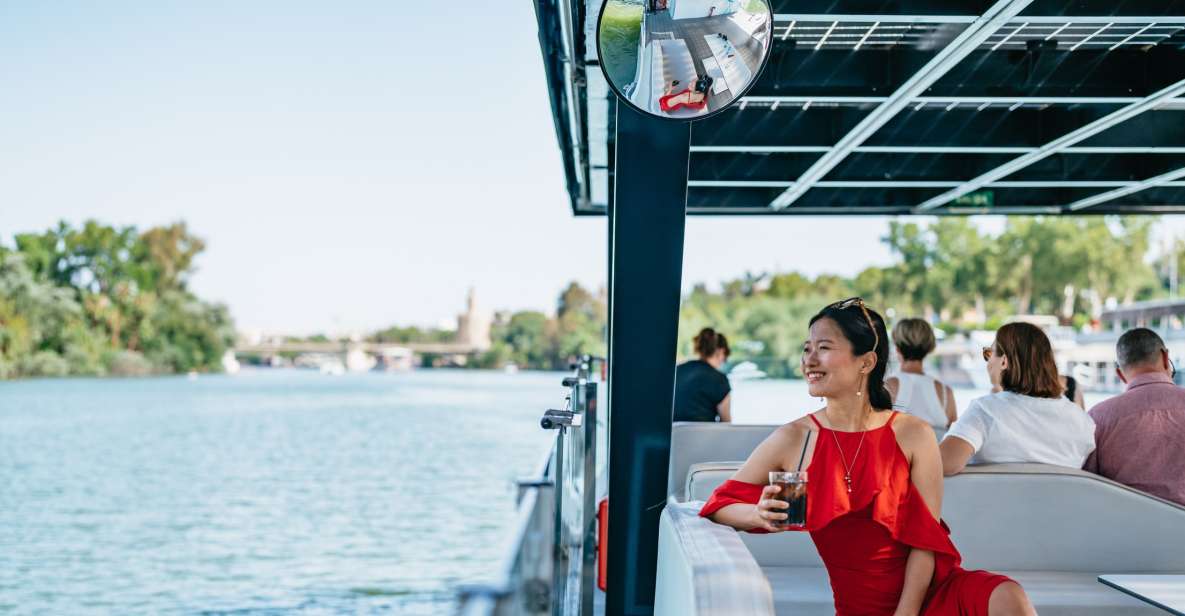
This is the right pick if you want the river without overthinking it: one hour, multilingual audio, the standard upriver-and-back loop, departures most hours through the afternoon. The boat itself is the main fleet operator on the river, which is why it’s the cheapest and the most-booked. Our full review covers seat strategy and the difference between the upper and lower deck.
2. Guadalquivir Boat Tour with Optional Lunch or Dinner: $29
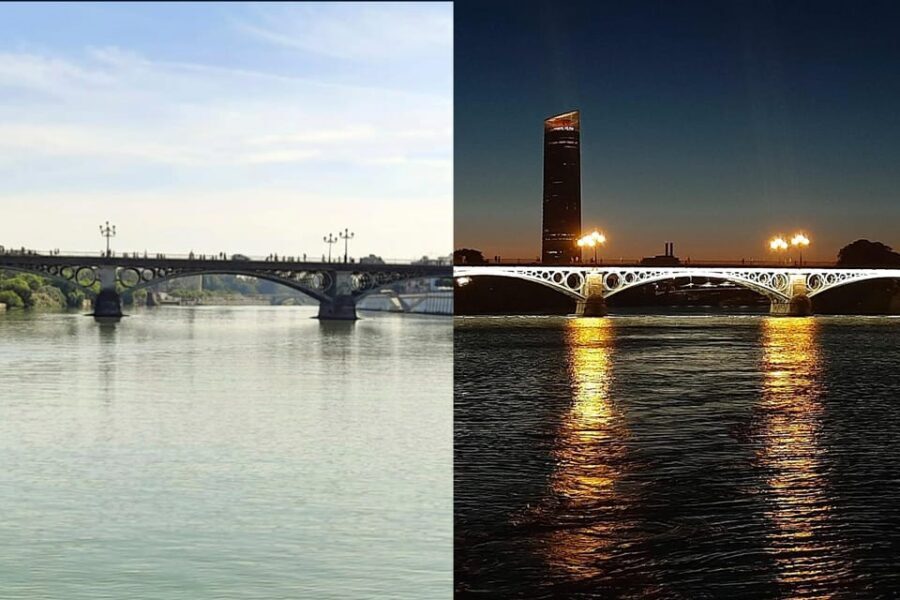
Pick this if you want a meal welded onto the river loop without the planning. The base cruise is 90 minutes; the dinner upgrade extends it to 2.5 hours with a five-course tasting menu and unlimited drinks. Our review walks through the menu plainly: the food is fine, not destination-level, but the value is in the combination.
3. Self-Guided Guadalquivir Kayak Trip: $17
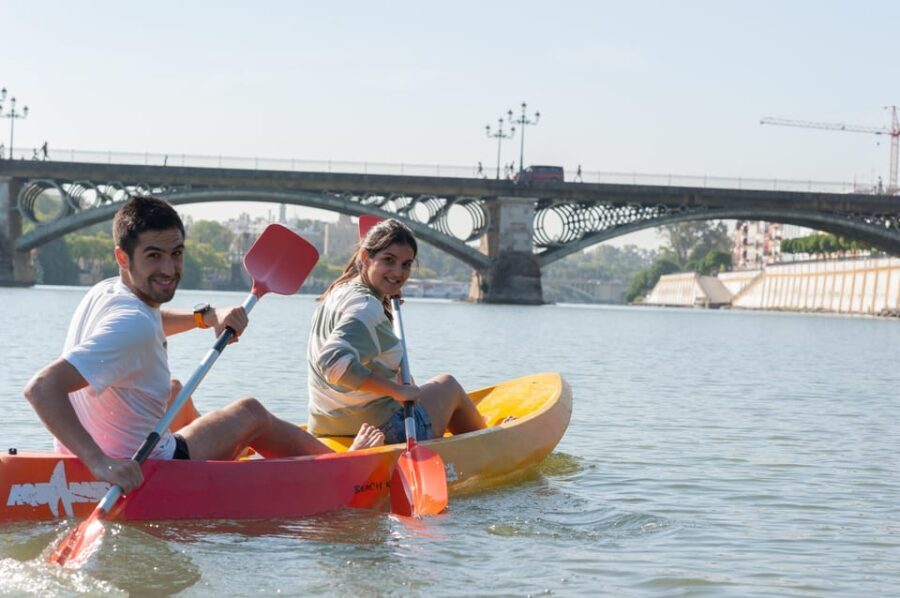
For travellers who’d rather paddle than sit. You’re at water level, you choose the pace, and the meeting point is across the river from the Torre del Oro on the Triana bank. The catch is finding it; the put-in isn’t obvious from the street, and as our review notes, you should pad fifteen minutes onto the start time.
Practical info
- Where boats leave: Torre del Oro jetty, Paseo Alcalde Marqués del Contadero, on the east bank just south of the Puente de San Telmo.
- Standard duration: 60 minutes for the eco cruise; 90 minutes for the boat-tour-with-tapas; up to 2.5 hours for the dinner upgrade.
- Price band: €17–€80 depending on whether you add a meal, drinks, or pick the kayak.
- Languages: Audio guide in English, Spanish, French, German, Italian, Portuguese on the eco cruise. Live commentary in Spanish + English on most others.
- What’s included: Audio guide, boarding from the jetty. The eco cruise has a small bar onboard; drinks aren’t included unless you’ve booked the dinner add-on.
- What to bring: Sunglasses (the river surface throws light back hard), a layer for the upper deck after dark in winter, water if you’re not on the meal version.
- Booking: Sunset slots sell out a few days ahead in spring and summer. Daytime mid-week, you can usually walk up.
What about a dinner cruise versus dinner in Triana?
Honest answer: Triana wins on food and the dinner cruise wins on view. The five-course menus on the dinner boats are competent without being interesting, and you’re paying more for the deck than for the kitchen, the same trade-off that runs on the Seine dinner cruise in Paris. If you eat well, book the eco cruise at sunset and have dinner in Triana afterwards. If your travel companions don’t care that much about food, the dinner cruise is a frictionless way to combine two evening plans into one.
Bringing it back to the rest of Seville
Once you’ve done the river, the rest of the city falls into a different shape. The Royal Alcázar reads as the administrative centre of an Atlantic empire, not just a pretty Mudéjar palace. The cathedral reads as a wealth monument funded by Americas trade, with Columbus’s tomb as the literal centrepiece. The Real Maestranza bullring reads as the social club for the families who got rich off that trade. Triana reads as the working side that made the goods and the music.
How the Guadalquivir cruise compares to other Spanish water tours
If you’ve already done the Barcelona catamaran, this is a different animal. The Barcelona one is open Mediterranean: salt, wind, sun, no buildings. The Guadalquivir is a city loop, more like a Seine cruise than a coastal one, and the entire selling point is the architecture. If you’ve done the Venice gondola or the Amsterdam canal loop, the Guadalquivir is the next logical sit. Different scale (the boats are 60-passenger, not 4-passenger), but the same idea: the city is the show, the boat is just the seat.
Closer to home: from Italy, the Polignano cliff cruise and the Capri boat tour are coastal experiences in a different register. They’re about geology and water. The Guadalquivir is about a city. If you have one boat day in Spain and one in Italy on the same trip, the Guadalquivir + Capri pairing covers both ends of the spectrum.
What you’ll want to do next on the river
The standard one-hour loop ends at the Alamillo and turns back. If you’ve enjoyed it and want more, two extensions worth knowing about. First, longer cruises run from Seville down to Sanlúcar de Barrameda, the river-mouth town where Magellan provisioned his fleet and where the river opens to the Atlantic. They’re full-day. Second, paddleboarding and kayak operators on the Triana bank rent by the half-hour and let you do your own thing. If you’ve got a free morning before a flight, an hour on a SUP at the Triana put-in is the cheapest way to extend the time on the water.
Common mistakes
The first one I see is people doing the cruise on day one of a Seville trip, before they’ve seen any of the buildings the cruise commentary references. The Cathedral, the Alcázar, and the Torre del Oro all need to have shape in your head for the boat narration to land. Day two or day three is the right slot.
The second is choosing the noon boat in summer. The light is hard, the heat is brutal, and the views go washed-out white. The boat keeps running and a lot of cruise-ship day-trippers end up on it because their schedule forced their hand. If you have the choice, don’t. Sunset or 10am or after dark.
The third is taking a “panoramic combo” tour that bundles the cruise with a hop-on-hop-off bus and a walking tour. They’re not bad value, but they pack three things into a half-day and you finish all three with a blurry version of each. If you’re going to take the bus anyway, see our Seville hop-on-hop-off guide and book it separately. The cruise needs its own slot to land.
The Triana ceramics workshops, since you’ll see them from the boat
The west bank between the Puente de Triana and the Puente del Cachorro hides the surviving working ceramics ateliers of the city. Fewer than there used to be, but a handful (Cerámica Santa Ana, Cerámica Triana) still produce the painted tiles you see on the Plaza de España, in the courtyard of the Casa de Pilatos, and on the back of half the bars in the old town. From the boat you get the rooftops and the chimneys; the workshops themselves are a five-minute walk inland from Calle Betis. If the cruise made you curious, do that walk after dinner.
The Cartuja side and Expo ’92
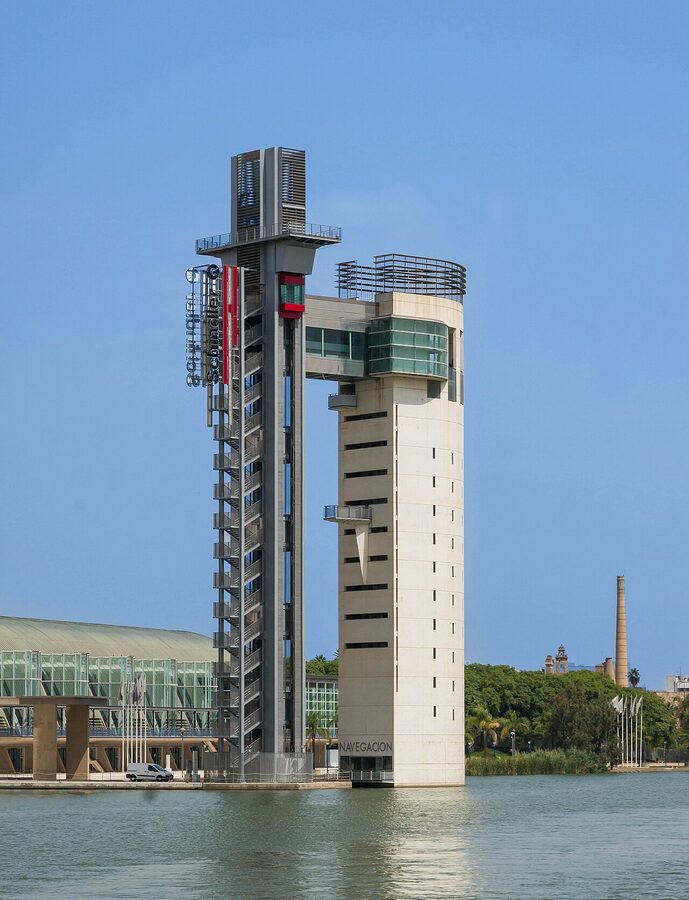
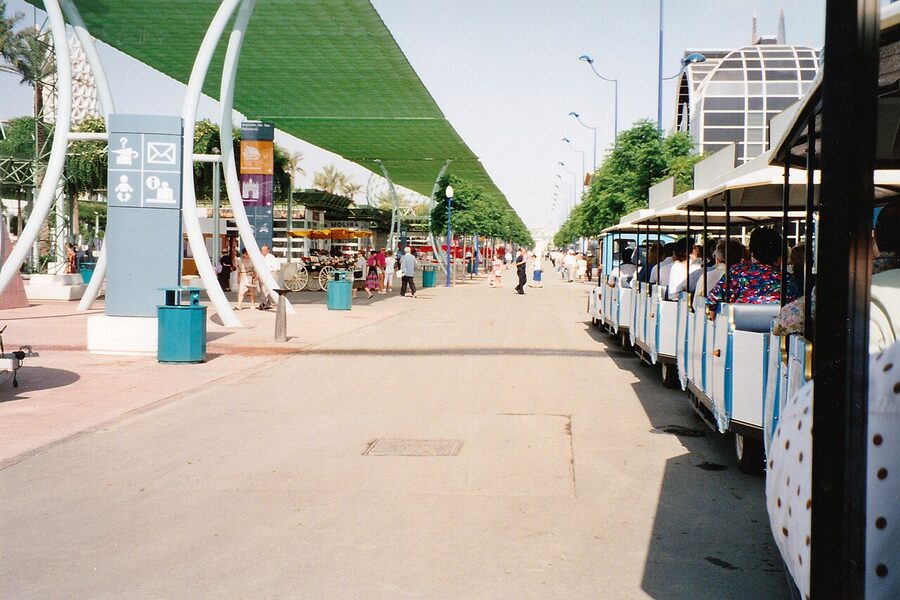
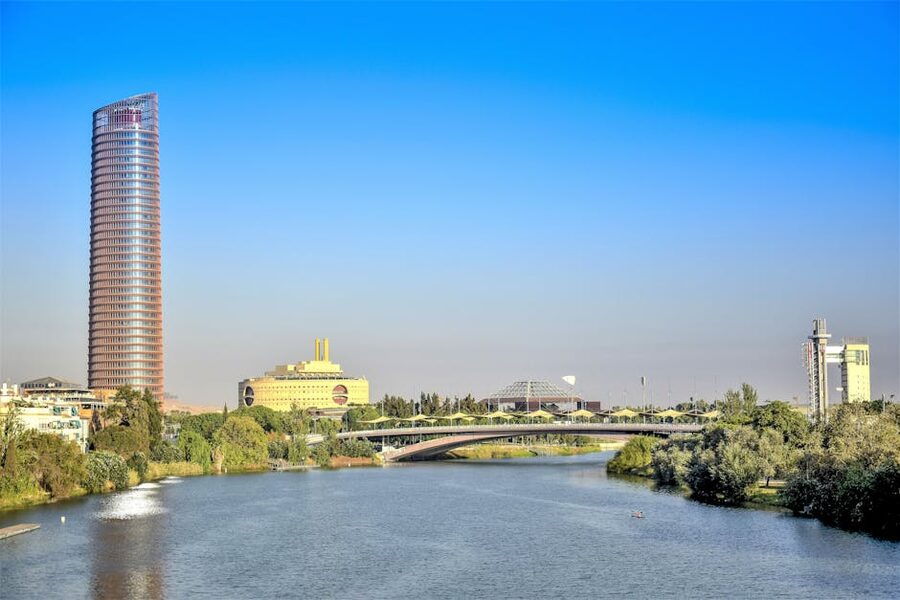
The north end of the cruise loop is dominated by the Cartuja, the island the river wraps around. Until 1992 it was monastery-and-warehouse land. For Expo ’92 the city built a science park, two new bridges, a cable car, and a thematic fairground covering the entire island, the kind of port-and-industry sprawl you also pass on the Rotterdam harbour cruise. After Expo it sat half-empty for fifteen years, and a lot of the pavilions are still abandoned. From the boat you’ll see the white sail of the Pavilion of Navigation, the cable-stayed Alamillo bridge, the Barqueta arch, and the Isla Mágica theme park sitting on top of what was the Italian and Russian pavilions. It’s a strange, uneven slice of recent Seville. The Pavilion of Navigation is the one historical-river museum I’d point a return visitor toward.
If you do one thing on the river
Take the eco cruise on day two or three of a Seville trip, on the slot that lets you finish in golden light, and have dinner on the Triana side after. That’s the ninety-minute version of this article and it’s the version I’d give a friend. Everything else is upgrade-paths and use-cases. The boat is the lens, not the destination, and the lens works best on someone who’s already started looking at the city.
Where to go after the river
If the cruise sold you on the layered Almohad-Mudéjar-Christian story of Seville, your next two stops are the Royal Alcázar and the Cathedral and Giralda. The Alcázar tells you what the Casa de Contratación looked like from the inside; the cathedral tells you what the wealth from the river built. For an evening that takes the river atmosphere and runs with it, see our piece on Seville flamenco: the homeland scene lives a five-minute walk from the Triana cruise side. And if Seville is part of a longer Spain trip, the Barcelona catamaran is the open-water counterpart that pairs well with this one. They’re not the same kind of boat day, but together they cover the country’s two big water angles.