
“What you saw in Barcelona was very good,” said Curro, the guitarist sitting next to me at La Carbonería, “but it was an export.” He tapped the lip of his beer twice for emphasis. “Here you don’t pay. Here flamenco happens because it has nowhere else to be.”
That conversation was three Decembers ago, on the night I first understood why Sevillanos talk about flamenco the way Neapolitans talk about pizza, with the slightly amused patience of people watching the rest of the world misuse a word that belongs to them. Seville did not adopt flamenco. Seville produced it, in Triana and the working-class patios across the river, and then watched it leave on tour. This guide is for people who want to see the real thing, the small rooms and the Romani neighbourhoods and the venues where the dancers actually live, not the one-hour theatre packages with the dinner add-on.
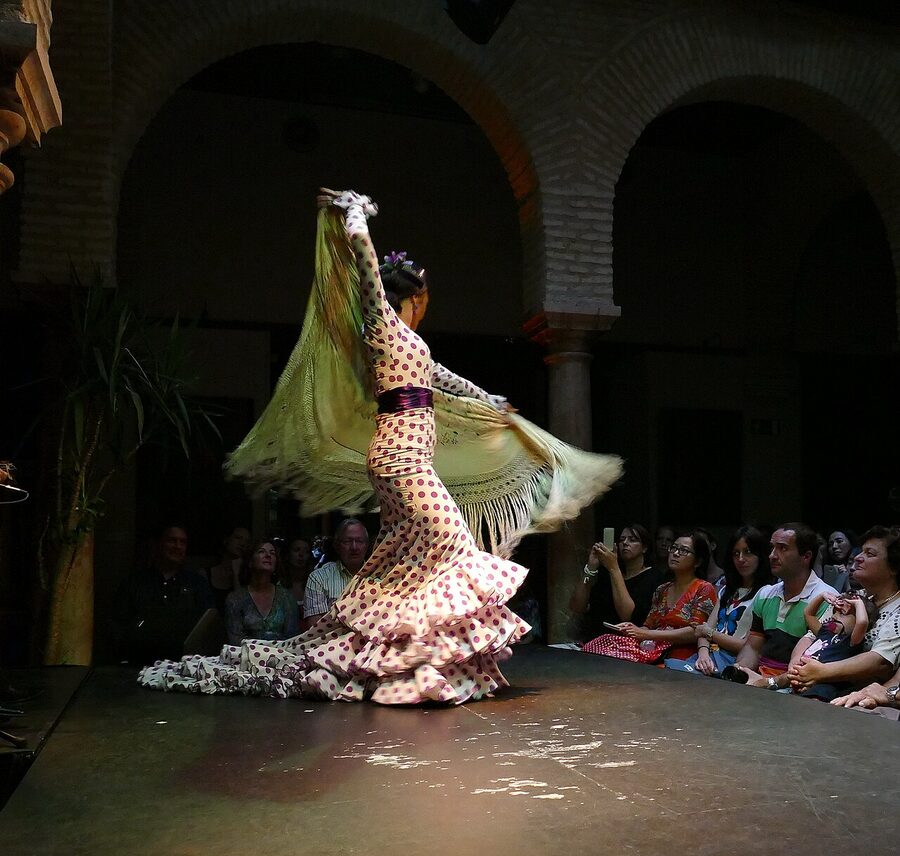
In a Hurry: Three Picks Worth Booking in Seville
- Live Flamenco Dancing Show at the Theater ($27): the most-booked flamenco show in Seville. One hour, six dancers in red, a proper theatre stage. The easy yes if you want a polished show with no decisions to make.
- Casa de la Memoria Flamenco Show ($28): a 15th-century courtyard tablao with about 100 seats, no microphones, the closest thing in central Seville to how a peña gathering actually feels.
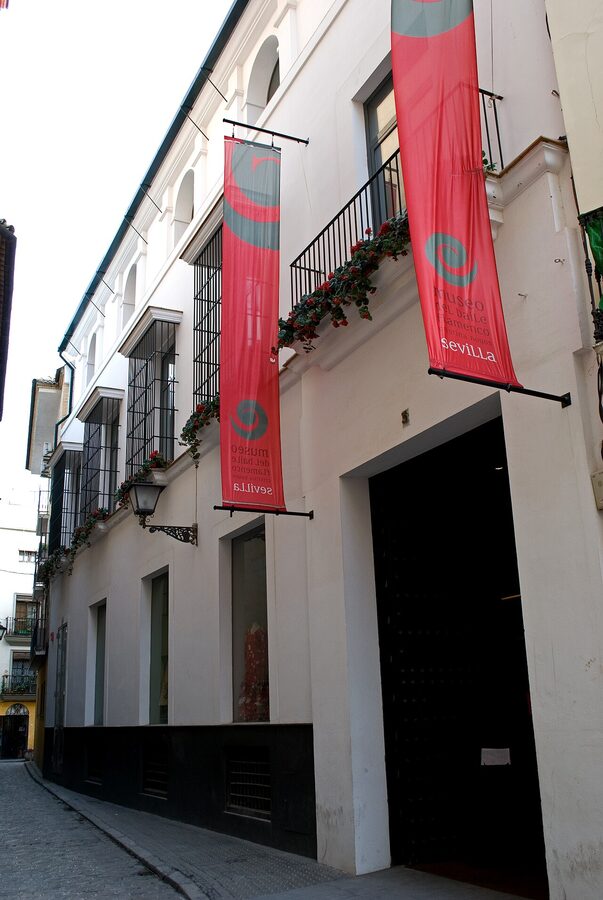
- Puro Flamenco at Museo del Baile Flamenco ($34): the flamenco-museum venue, an 18th-century courtyard with orange trees, a slightly more intimate room than Casa de la Memoria. Add the museum ticket to bracket the show with context.
The framing that matters: Seville is the homeland, not just a stop
Flamenco was born in Andalusia. That sentence is not poetic, it’s geographic. The art form took shape between roughly 1750 and 1850 in the Romani patios of Triana, the working-class neighbourhoods of Jerez de la Frontera about an hour south, and the gypsy quarters of Cádiz. UNESCO listed it as Intangible Cultural Heritage of Humanity in 2010, which is the official version of what every Sevillano will tell you over a beer in Calle Betis: this is where the form lives, and everything else is a touring company.
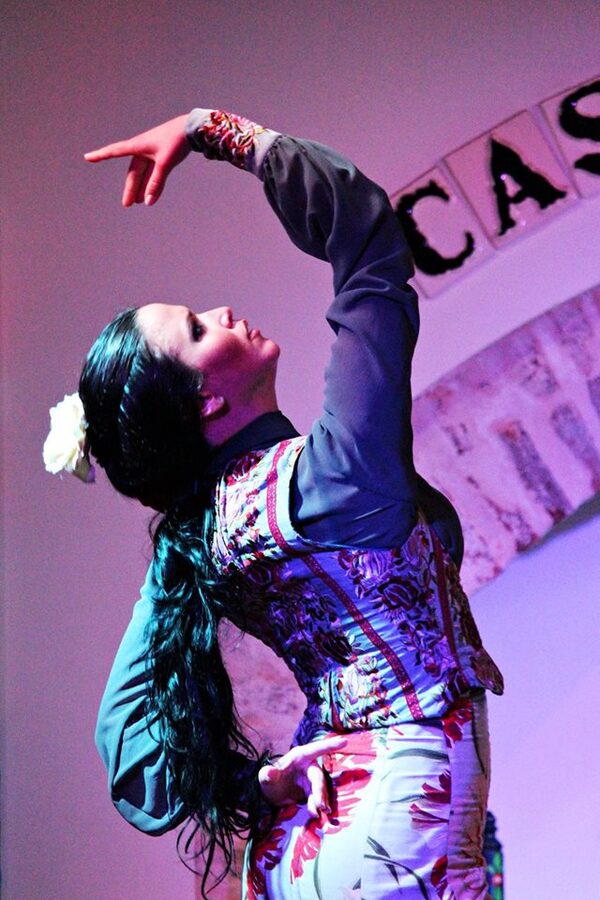
Flamenco is also good in other Spanish cities. The shows in flamenco in Barcelona are real performances by real artists, and the long-running tablaos there draw Andalusian dancers who tour. The same is true for the venues in flamenco in Madrid, where Cardamomo and Casa Patas have hosted some of the best cantaores alive. But the centre of gravity is here. The artists you see in Madrid, more often than not, are from Jerez or Seville. The cantaor at your Barcelona show has cousins in Triana. Andalusia is the source. The other cities are where the form pays its rent.
Why does that matter for you, on holiday with a single evening to fill? Two practical reasons. First, the depth of the talent pool here means the median performance is better than in any other city. The dancers and singers who don’t get hired in Seville tour the rest of Spain. Second, the structure of the local scene runs from polished tablao all the way down to neighbourhood bar and peña night, which means you can see flamenco several different ways across the same trip without seeing the same product twice.
What you’re actually watching: a quick decoder
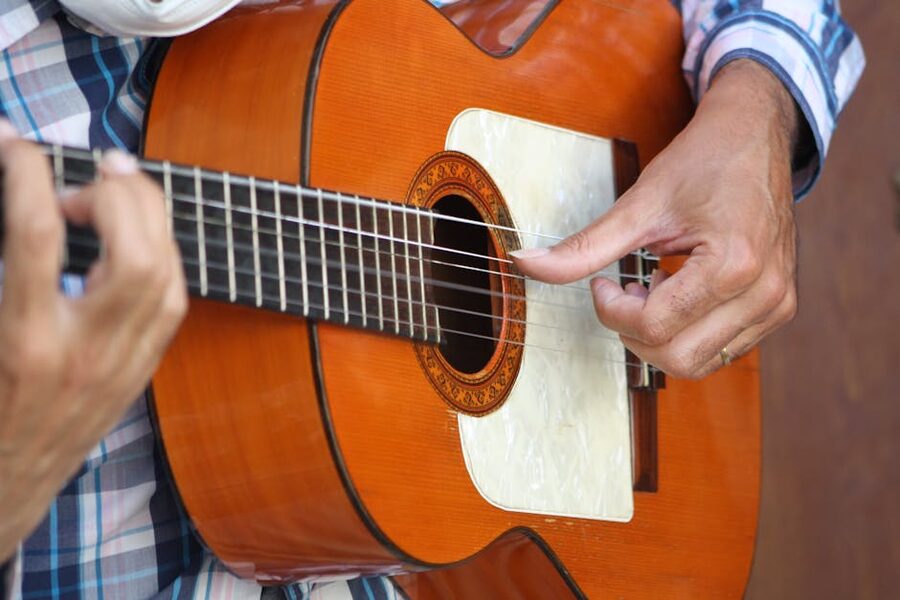
The single biggest mistake first-time viewers make is treating flamenco like a dance show with music. It isn’t. It’s three art forms in conversation, and the dancer is the third one to arrive.
The three pillars are cante (the singing), toque (the guitar) and baile (the dance). In that order, by tradition. The cantaor sits on a wooden chair at the back of the stage and works through a palo, one of about fifty rhythmic forms with names like soleá, seguiriya, bulerías, tangos, alegrías, and many more. Each palo has its own time signature, mood, and lineage. The guitarist is following the singer, not leading him. The dancer enters when the song calls for it, sometimes after several minutes of motionless waiting on a chair at the back of the stage.
That waiting is part of the form. So is the apparent chaos: handclaps from the back row that are actually the precision rhythm engine called palmas, the clipped shouts of olé and vamos from older audience members that are not enthusiasm so much as commentary, and the sudden silence when a dancer breaks off mid-step. The most important thing to know on a first visit is that the slow songs are not warmups. The slow songs are the form. If a tablao goes hard with castanets and skirts and polished routines from the first minute, it’s been engineered for tourists.
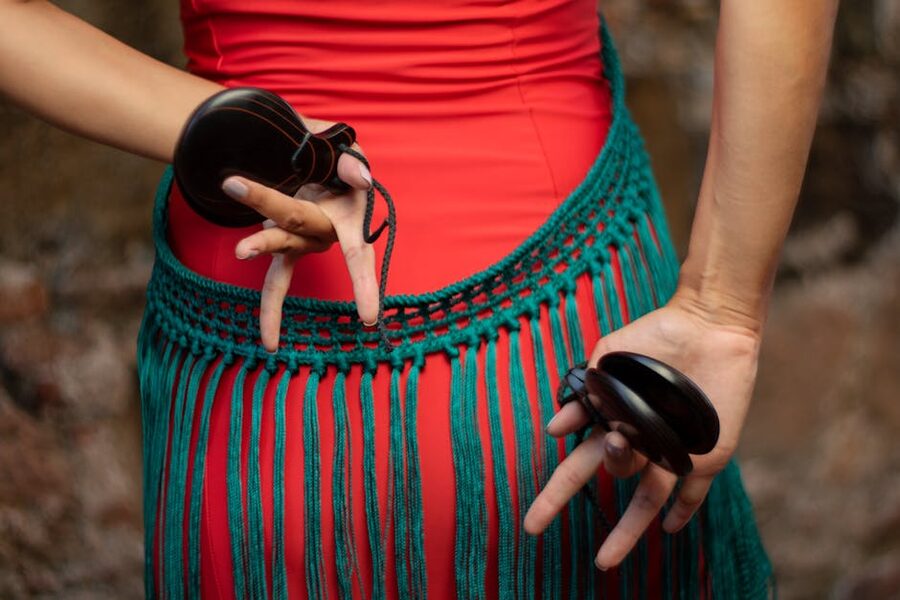
One other gentle warning. The cantaor’s voice, especially in the slower palos, often sounds harsh, scraped, almost broken. That harshness is the point, and it’s a sensory drop you don’t get from a polished projected show like Fabrique des Lumières in Amsterdam. The Andalusian word for the quality everyone is listening for is duende, sometimes translated as soul or fire but more accurately a kind of involuntary emotional collapse where the technique slips and the singer reaches for something they can’t quite hold. Federico García Lorca wrote a whole essay on it. You’ll know it when you hear it. The room goes still and someone older whispers olé exactly when they should.
Triana: the neighbourhood across the river
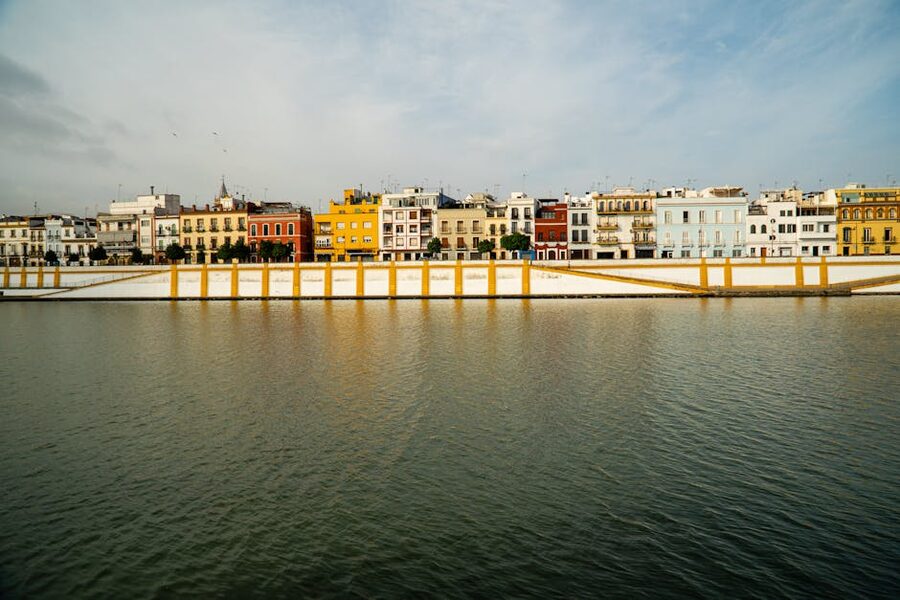
If you have time for one piece of pre-show context, walk to Triana. It’s the neighbourhood on the west bank of the Guadalquivir, ten minutes on foot from the cathedral over the Puente de Isabel II, and it is to flamenco what New Orleans’s Tremé is to jazz. The Romani families who developed flamenco between the 18th and 19th centuries lived here. Many of the legendary cantaores of the 20th century, including the Caracol, Pinini, and Pulgar dynasties, came out of Triana streets you can walk down today.
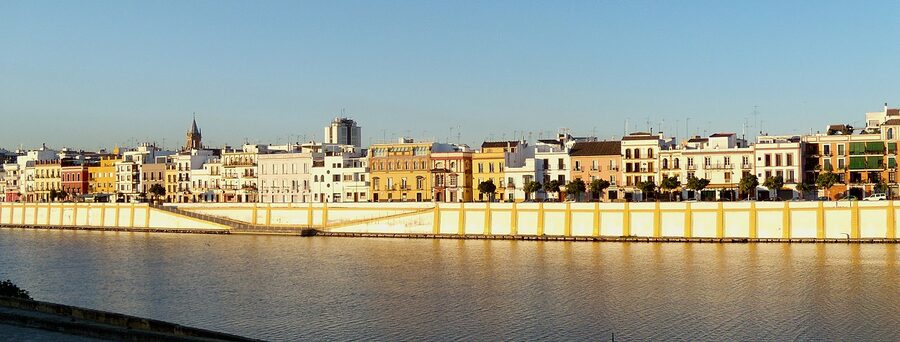
What used to be a dense Romani quarter is now mostly gentrified. The famous corrales de vecinos, the courtyard tenements where families lived around a shared patio and where the late-night fiestas that incubated flamenco actually happened, were largely demolished in the 1960s and 70s. What remains is the street pattern, a handful of working flamenco bars, the Centro Cerámico Triana (the neighbourhood’s other historical industry was tiles), and the bridge view. Walk over at sunset, have a beer at one of the Calle Betis terraces with the Torre del Oro across the water, and you’ve taken the most important pre-show class in the city.
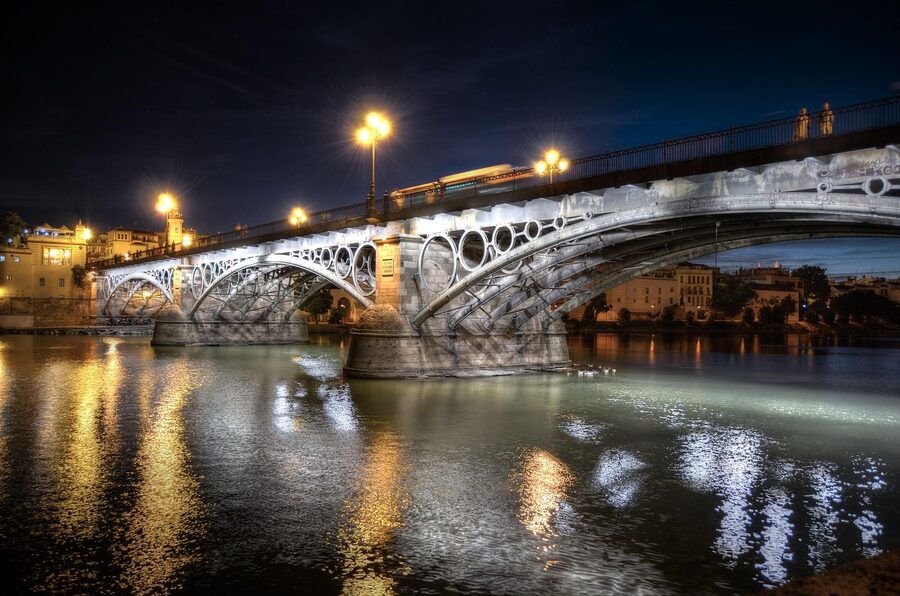
One small warning. Triana on a Friday or Saturday night has been thoroughly claimed by stag and hen weekends. The rowdy crowds are real and loud, the same energy that takes over the strip on an Amsterdam red-light walking tour in peak weekends. If you want the neighbourhood at its quieter best, go on a Tuesday or Wednesday, or arrive earlier in the evening before the bars warm up.
The five places worth your evening
There are roughly thirty venues calling themselves “flamenco” in central Seville. Most of them are fine. Five of them are reliably excellent across multiple visits, and they break into three useful categories: serious tablaos, free or near-free venues with real artistry, and the museum show. Here’s how to choose.
Casa de la Memoria: the central tablao to book first
Casa de la Memoria sits on Calle Cuna in the centre, a few minutes’ walk north of the cathedral. The venue is a 15th-century palacete with a rectangular courtyard now roofed over and seating about a hundred, and the show is the closest thing in central Seville to how a real flamenco audience listens. Three nightly performances at roughly 7:30pm, 9pm, and 10:30pm. No microphones, no amplification, no food and drink served during the set. Just the cantaor, the guitarist, the palmas, and the dancer about three metres in front of you.
The tickets are not cheap by Seville standards, but you’re paying for a rotating bill of programmed artists rather than a residency cast. On a good night the cantaor will reach for a note he barely lands and the room will hold its breath the way the room held its breath in a Barcelona tablao on a similar night, except here you are about a metre closer and the dancer is from Triana, not on tour from Triana.
Tablao El Arenal: the larger, classic show
Tablao El Arenal is the old guard. It opened in 1975 in the bullring district just south-west of the cathedral, holds about 130, and runs longer shows of around 90 minutes with a cast of six or seven artists. This is what most travel agents mean when they say “Seville flamenco show.” The room is more theatre than parlour, the staging is more produced than at Casa de la Memoria, and the show includes a meal or drinks option that is genuinely fine rather than airline-grade.
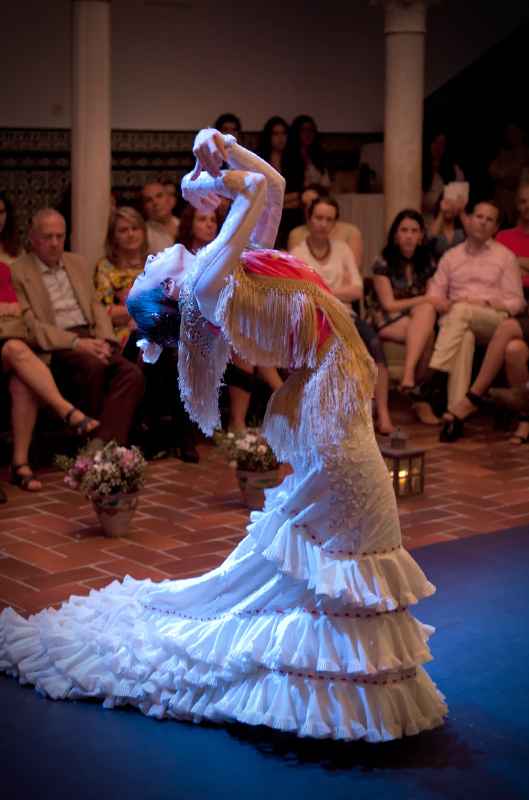
If you want one show that gives you the full polished tablao experience and you don’t want to think too hard about it, this is the pick. If you’ve already seen the polished version somewhere else, like the dinner-and-show packages people regret booking in Madrid’s Gran Vía, El Arenal is still a tier above those. The artists are working musicians, not seasonal hires.
La Carbonería: the famous “free” show
La Carbonería is a former coal yard a few blocks north-east of the cathedral, in a residential pocket of the Santa Cruz quarter, and for thirty-something years it has run a nightly flamenco set with no door charge. You buy a drink, you find a chair or a wall to lean on, and the show starts around 11pm and runs roughly an hour, sometimes two if the room is right. It is loud, smoky enough to feel period-correct, and packed.
What makes Carbonería special is not the artistry, which varies, but the audience. Half the room is local. The other half is travellers who have figured out that you don’t need to spend €30 to see good flamenco in Seville. The performers are usually younger, sometimes students from the conservatorio, sometimes seasoned cantaores moonlighting after their tablao shift. The show that costs nothing here on a Wednesday at 11pm is the show that will surprise you most for the price.
Do not skip the tip jar. The performers don’t get paid by the venue. A €3-5 contribution is the unwritten rule.
Casa Anselma: the late-night Triana institution
This one comes with conditions. Casa Anselma is in Triana, on Calle Pages del Corro, runs only Monday through Saturday and only after about 11:30pm, has no sign (look for the iron grille and the small line of people outside), takes no reservations, charges no entrance, and is run by Anselma herself, a former bailaora of legendary reputation who is now in her seventies and may or may not sing during your visit depending on her mood.
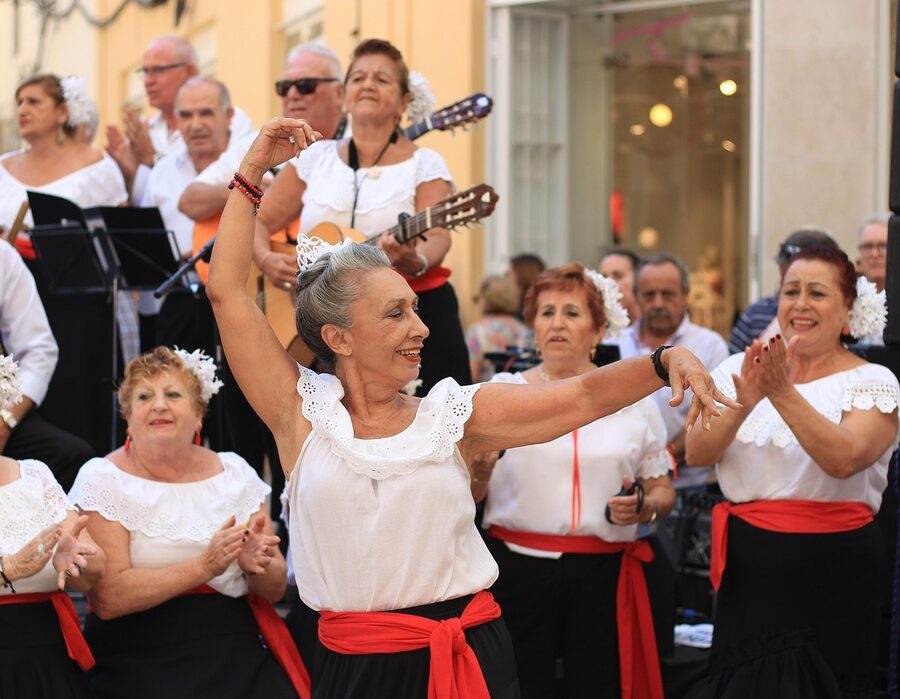
If you go, go for the experience, not for a guaranteed performance. Some nights are quiet. Some nights nobody sings. Some nights, around 1am, somebody starts a bulería at the back table and the bar erupts into a two-hour fiesta that ends up being the best flamenco of your trip. The drinks are cheap, the photos are forbidden, and Anselma doesn’t tolerate phone use. That’s the whole pitch.
Go after the Casa de la Memoria show, not instead of it. Anselma’s doesn’t replace a tablao visit, it tops it off.
Museo del Baile Flamenco: the show with context
The Museo del Baile Flamenco is on Calle Manuel Rojas Marcos, in an 18th-century palacete with an interior courtyard and a small basement cave space. The museum was founded by Cristina Hoyos, one of the great Spanish dancers of the 20th century, and the upstairs galleries walk through the form’s regional palos with video, costumes, and audio of historic singers. The downstairs space hosts the nightly Puro Flamenco show.
The combo ticket bundles museum entry with the show. If you have an afternoon free, this is the most efficient hour-and-a-half-of-context option in the city, and the show afterwards lands harder for the framing. The room itself is more intimate than El Arenal, comparable in feel to Casa de la Memoria, with a different rotating programme of artists.
The two free things you should do anyway
Beyond the booked venues, two free experiences belong in any flamenco week.
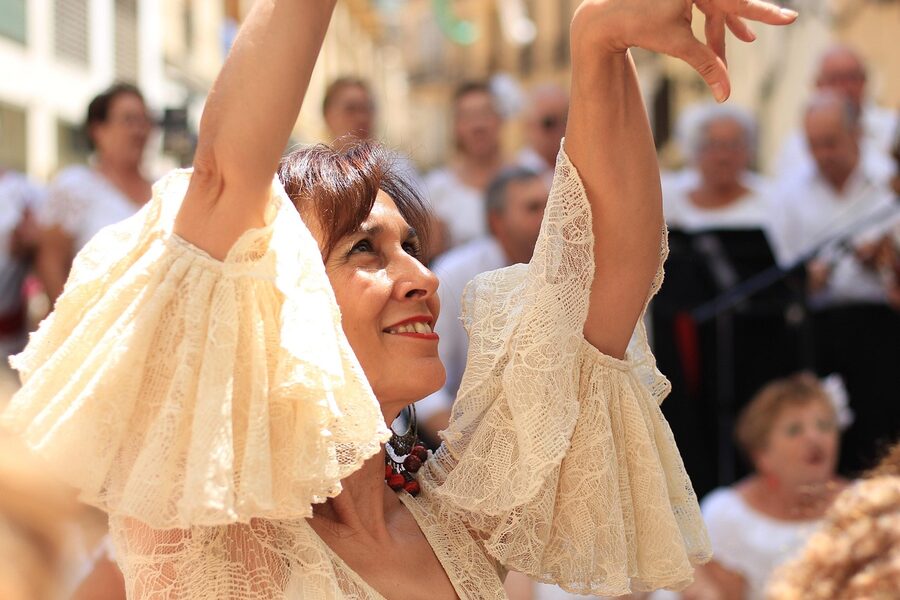
Plaza de España at sunset
The semicircular plaza built for the 1929 Ibero-American Exposition is one of Seville’s most photographed buildings. It is also, several afternoons a week, an open-air flamenco stage. Buskers set up under the colonnade on the inside curve, sometimes solo guitarists, sometimes full trios with a dancer working in heels on the tiled floor.
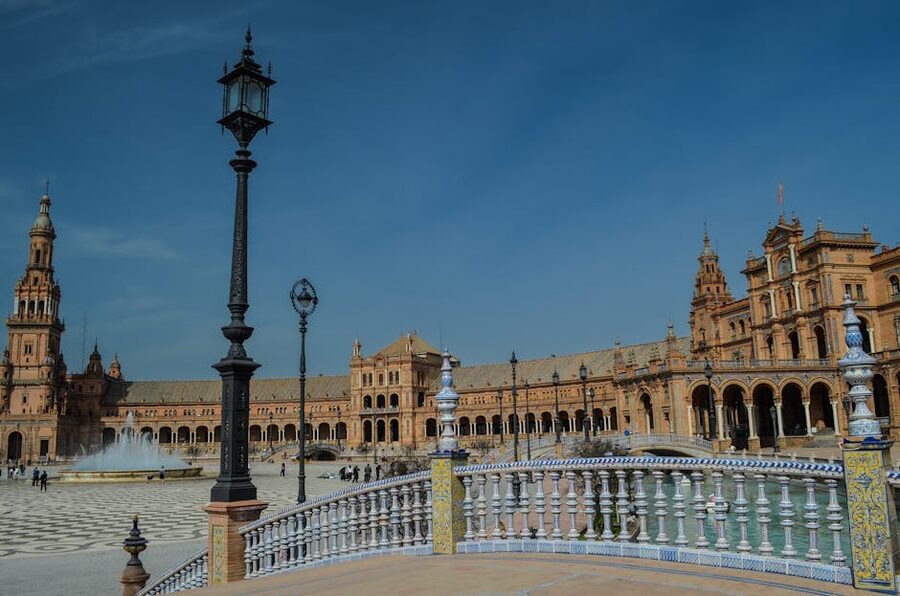
The performances are technically free, but a basket gets passed around after each set and €2-5 is the right contribution. The dancers here often skip the long-tailed dress for trousers and a jacket, which lets the footwork lead. It is a sharper, faster, more concentrated kind of flamenco than what you’ll see seated at a tablao. Worth an hour either side of sunset.
Setas de Sevilla and the surprise venues underneath
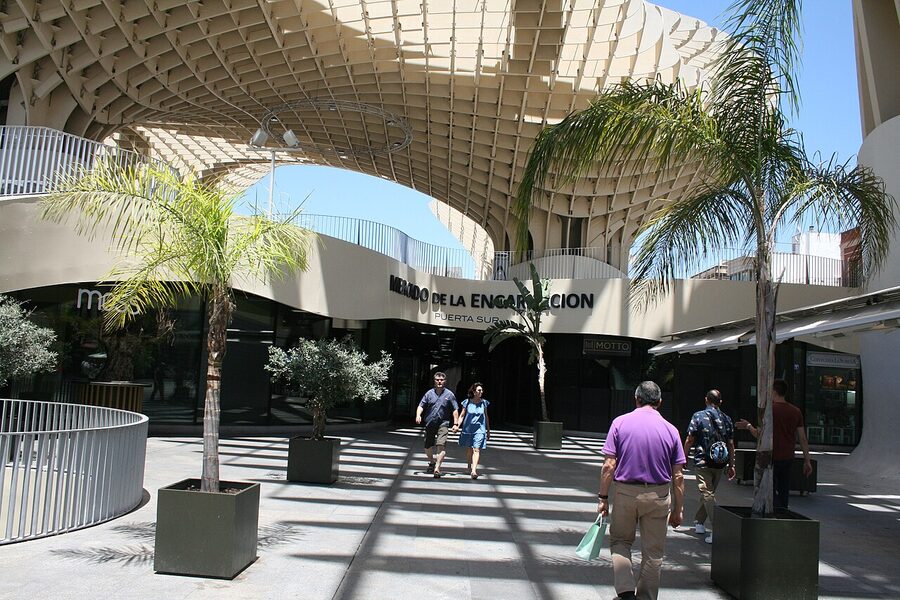
The wooden mushroom canopy in Plaza de la Encarnación, officially Metropol Parasol, locally Las Setas, has a small flamenco venue tucked into its base called Tablao Flamenco de Las Setas. Walking past it on a quiet evening you’ll hear the percussion before you see the entrance. The same is true of half a dozen smaller venues woven into the centre’s old streets. If you have a spare hour with no plan, walking from Las Setas south toward the cathedral, you’ll find at least one place where the sound is escaping a doorway.
Peñas: the deepest cut
If you have a week in Seville and you have already done two tablaos and two free shows, the peña is the next layer down. A peña flamenca is a members’ club for aficionados, usually founded by a group of friends and named after a great cantaor. They run their own modest performance schedules, often just one or two nights a week, and the audience is largely members and their friends.
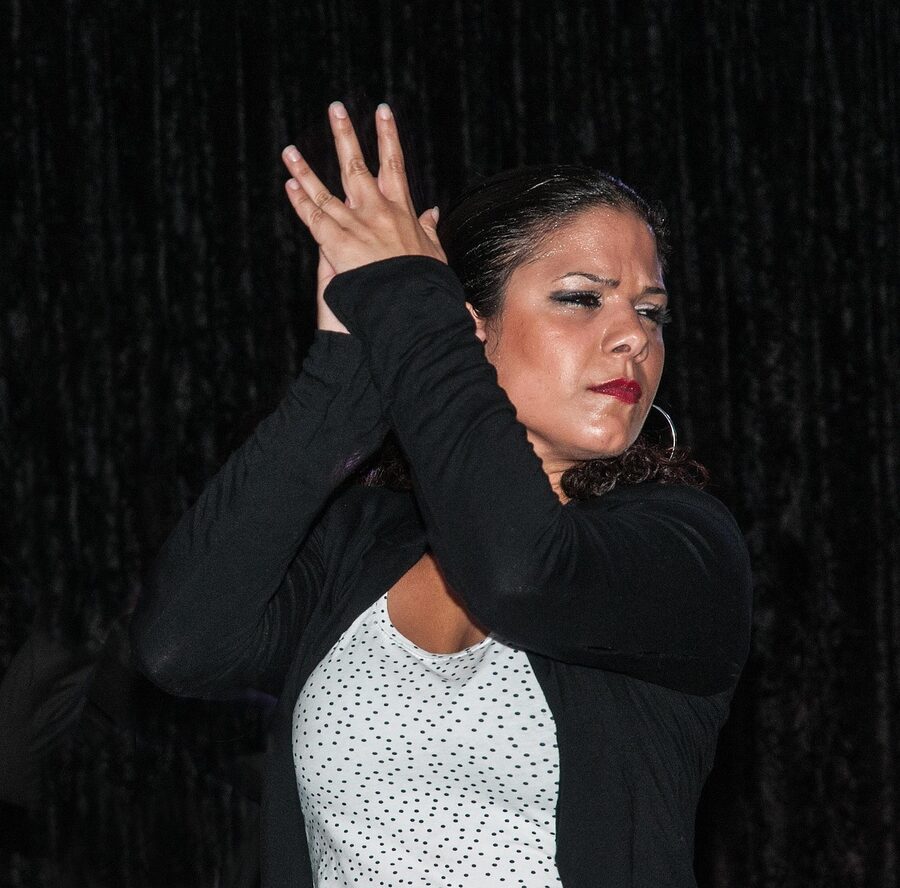
Peña Flamenca Torres Macarena, in the Macarena neighbourhood north of the centre, runs a regular Thursday-night session that is open to non-members. Peña Cultural Flamenca Pies Plomo, in Triana, similarly opens occasional public sessions. There is no website ticketing for either. You show up, you buy a drink at the bar, you sit where you can, and you don’t talk during the performances. The audience knows the palos and reacts on the right beats, which feels intimidating for about ten minutes and then becomes the most informative flamenco class you’ll ever sit in on.
If you want to try one, ask at your hotel or at Casa de la Memoria’s box office; staff there often know which peñas are open that week.
A short, useful history
You don’t need to read this section to enjoy a show. But fifteen minutes here will sharpen what you watch by about thirty per cent.
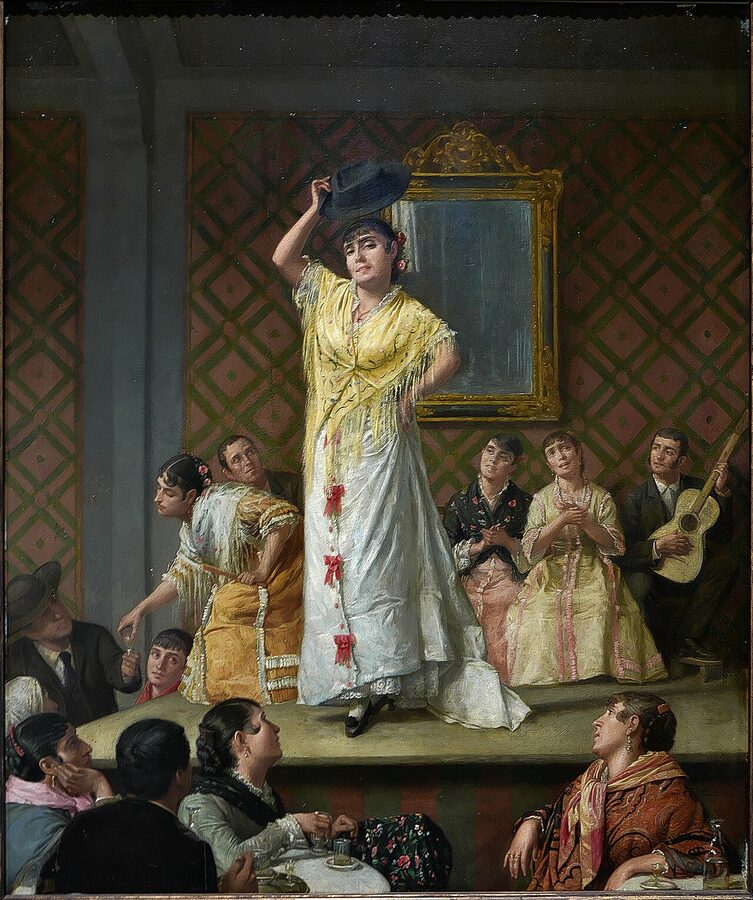
The standard scholarly story is that flamenco crystallised between roughly 1750 and 1860, in the Andalusian triangle of Seville, Jerez, and Cádiz, out of a long fusion. The ingredients: Romani musical traditions brought into Spain in the 15th century from Eastern Europe and the Middle East, Sephardic Jewish liturgical melismas (compulsory listening, those long bent notes you’ll hear in the older palos are kissing cousins to a synagogue cantorial line), Moorish vocal ornamentation surviving from eight centuries of Al-Andalus, and Castilian folk forms. The mix was incubated in the closed environment of Andalusian Romani families, who developed it as private music for life events, weddings, wakes, baptisms.
The pivot from private to public happened in the cafés cantantes of the second half of the 19th century. These were proto-cabaret venues across Spain, particularly in Seville and Madrid, where flamenco was performed for paying audiences for the first time, on the same Belle Époque circuit that produced the Moulin Rouge in Paris. The most important of them in Seville was Café Silverio, run by the cantaor Silverio Franconetti from 1881, in central Seville. By 1922 the form had its first national festival in Granada, organised by Manuel de Falla and Federico García Lorca. By the mid-20th century it was global.
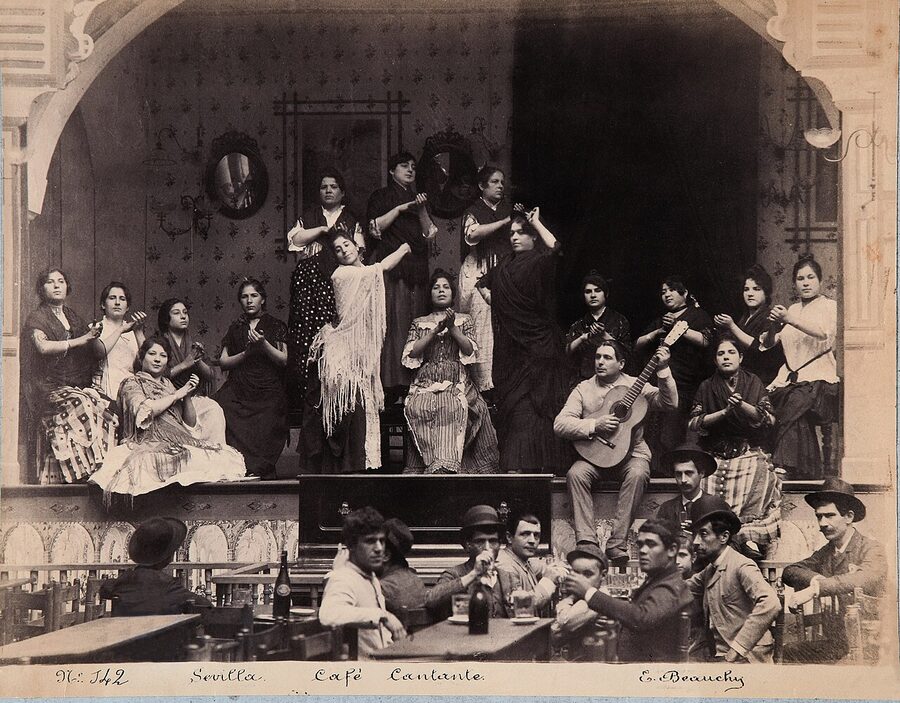
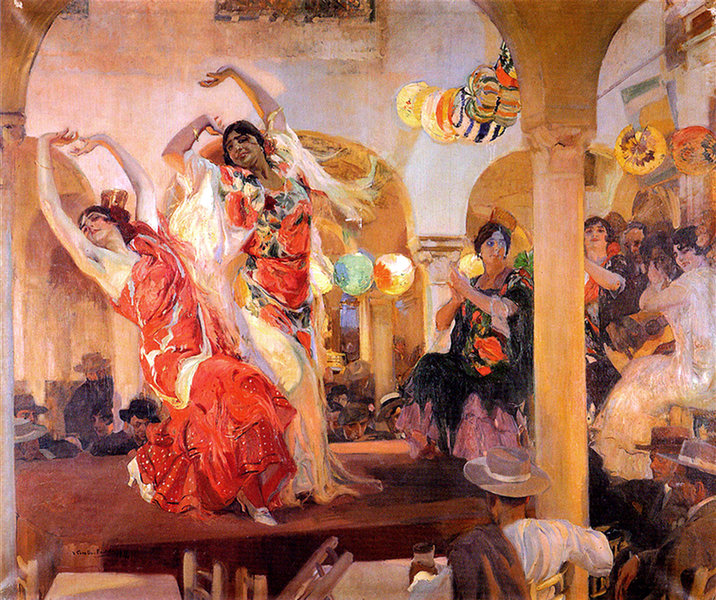
What this means for your week in Seville: the form you’re watching tonight has been continuously performed in this city, in roughly this configuration, for over 150 years. The Sorolla painting above of the Café Novedades was made in 1914. Walk into Casa de la Memoria tonight and the room shape is essentially the same. The dancer’s posture is the same. The chair the singer sits on is the same. Every other tourist art form in Europe has been edited and packaged. Flamenco mostly hasn’t.
Why Triana, why Jerez, and not Madrid
One question worth flagging. Why did this music coalesce in working-class Andalusian neighbourhoods and not somewhere richer or more central? Two reasons. First, the Romani population of Spain settled disproportionately in Andalusia after the 15th-century expulsion edicts, and the closed family structure preserved the musical traditions long enough to fuse with everything else around them. Second, Andalusia was poor. The cafés cantantes existed because there was an audience of working-class drinkers willing to pay coppers for an evening’s music, and a pool of professional musicians and dancers willing to work for those coppers. Madrid had aristocratic theatre. Andalusia had the room above the bar.
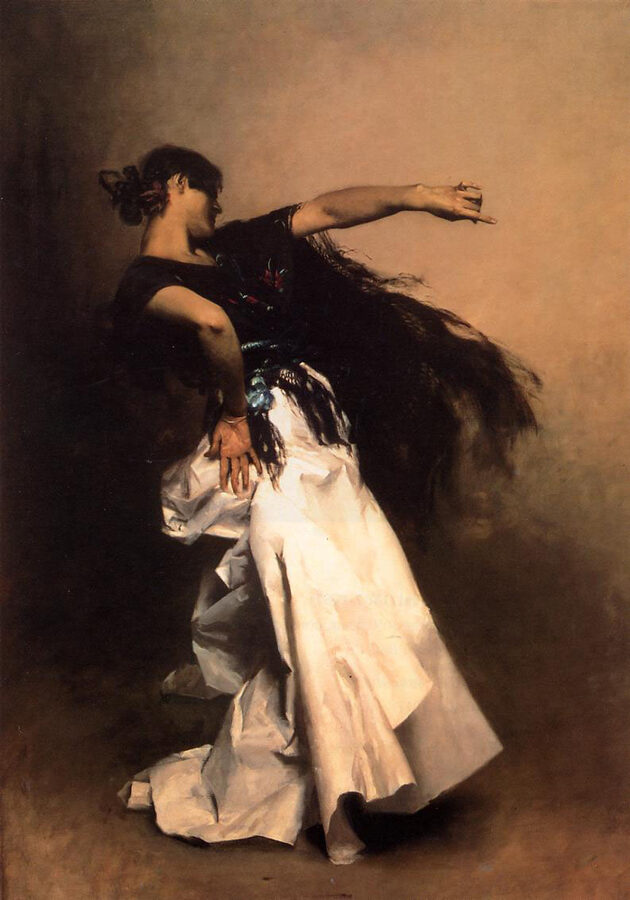
This is also why the Sacromonte cave shows in Granada and the upcoming flamenco in Málaga scene matter for context. They are the same family tree as Seville, branching slightly differently. The cave shows are heavier on the zambra palo, a Granadina form with North African inflection. Málaga leans toward verdiales and the lighter coastal styles. Jerez, an hour south of here, claims the bulería. Each Andalusian city has its corner of the form. Seville claims the centre, including the soleá and the seguiriya, which are the deepest, most demanding palos in the canon.
Practical: how to actually book your week
If you have one night in Seville, book Casa de la Memoria for the early show and stop there. It’s the highest floor of any single evening you can engineer in the city.
If you have two nights, book Casa de la Memoria on night one and either Tablao El Arenal (if you want polished theatrical with a meal option) or the Museo del Baile Flamenco’s Puro Flamenco show (if you want the museum context too). Skip La Carbonería on the early night, save it for late.
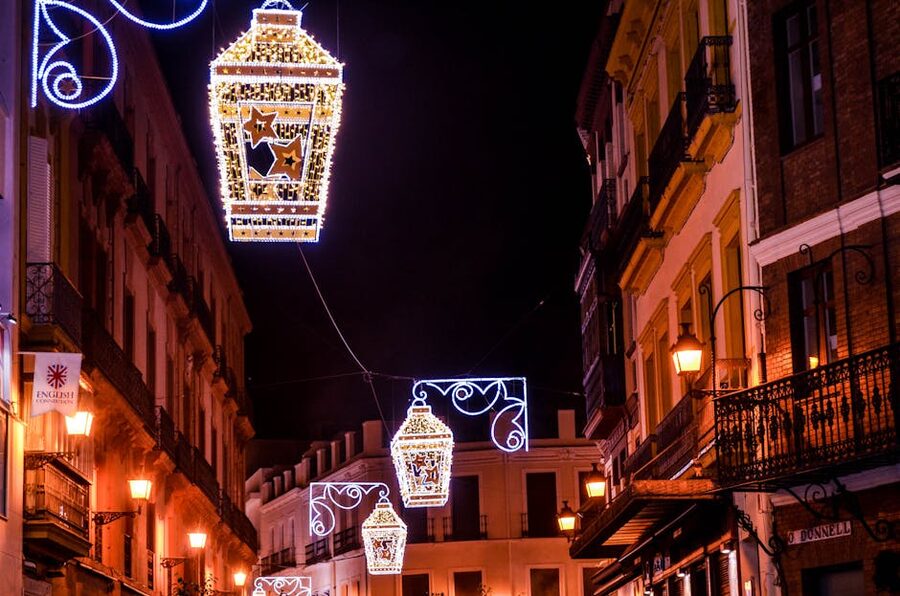
If you have three or more nights, the proper schedule looks like this. Night one, Casa de la Memoria. Night two, La Carbonería at 11pm. Night three, the Museo del Baile Flamenco show with the museum visit in the afternoon. Late on any of those nights, Casa Anselma in Triana. If your visit overlaps a Thursday and you have any energy left, ask at your hotel about Peña Torres Macarena for a pure deep-cut close-out.
Booking timing
Casa de la Memoria sells out two to three days ahead in shoulder season, a week ahead in April-May (during Feria) and September-October. Tablao El Arenal sells out further in advance because tour groups book it. Museo del Baile Flamenco usually has same-day availability except during Easter and Feria. La Carbonería and Casa Anselma never take bookings; you arrive, you queue, you get in or you don’t. For Anselma’s, a queue forms outside about 30 minutes before opening.
Dress and timing
Smart casual is correct everywhere. Nobody dresses up. The shows run late by Northern European standards: 9pm to midnight is standard, with peñas and Anselma’s running until 1am or 2am. Eat dinner early (7pm to 8pm) if you have a 10pm show, or eat the local way and have a late dinner after the show, which most tablao venues will arrange or recommend nearby.
Photography
Almost no venue allows photo or video during the performance. Casa de la Memoria, the Museo, El Arenal, and Anselma’s are all strict. Plaza de España buskers are fine with photos, and tipping covers it. Carbonería is technically permissive but the room is dark enough that your phone will fail anyway, so put it down and listen.
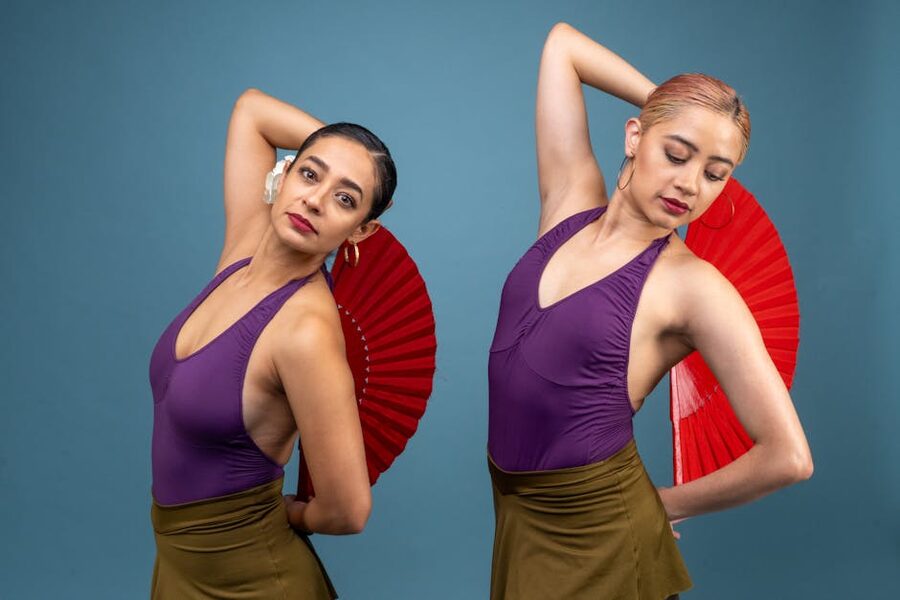
Three shows worth booking ahead
These three are the easiest pre-trip bookings if you don’t want to manage availability on arrival. Each has a different feel and a different price point.
1. Live Flamenco Dancing Show at the Theater: $27
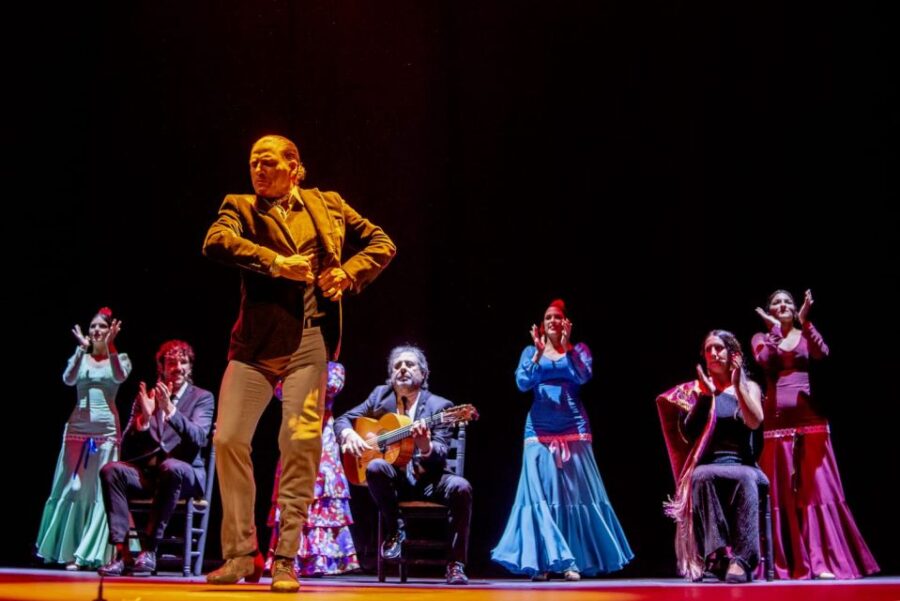
This is the most-booked flamenco ticket in Seville and the easiest single yes for a first-time visitor. It’s a one-hour theatre show with six dancers, full musical complement, and a large enough room that booking late still gets you a seat; our full review of the Theater show walks through how the cast rotates across the run and what to expect from the seat zones. Pick this one if you want a no-friction, polished introduction.
2. Casa de la Memoria Flamenco Show: $28
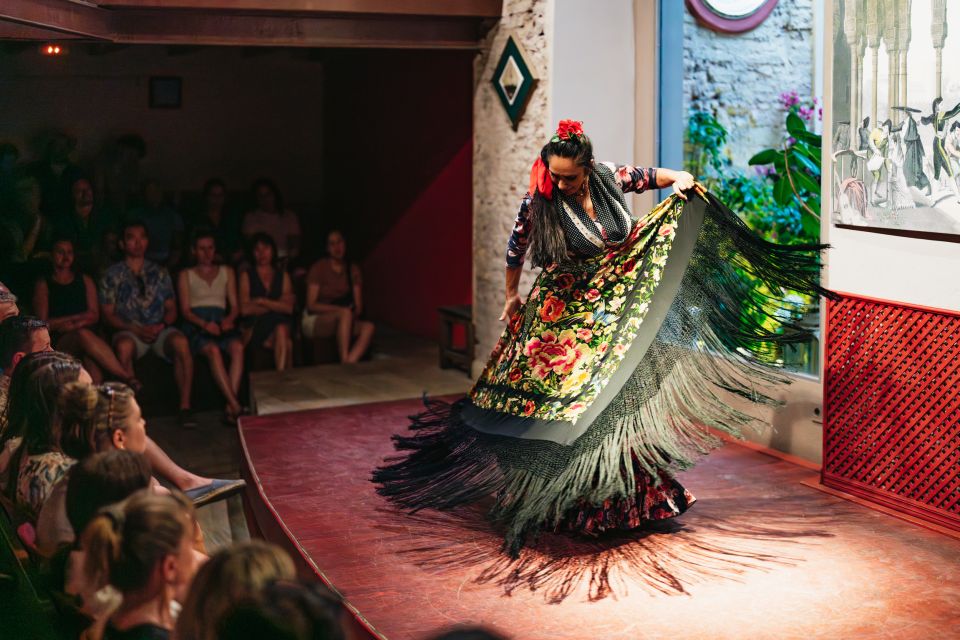
Casa de la Memoria is the central tablao to book first if you want a real Seville show rather than a stadium-style production; the pacing leans into the slow palos and the room is intimate enough to read the cantaor’s face, with details in our Casa de la Memoria review. Grab the early 7:30pm slot if you can; the late show fills with after-dinner crowds.
3. Puro Flamenco at Museo del Baile Flamenco: $34
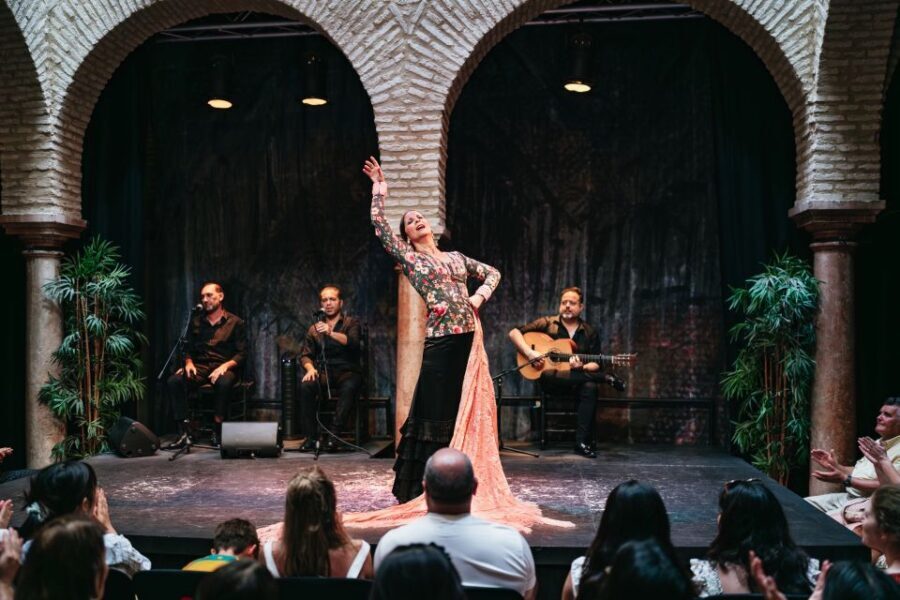
The Puro Flamenco show plus the museum is the best value for context-plus-performance in the city, and our Puro Flamenco review covers how to use the museum upstairs to brief yourself before the set. Add the combo ticket; the museum alone takes about an hour and changes how the show lands.
What else to fold into your Seville evenings
The flamenco scene runs from roughly 9pm to 1am, which leaves the rest of your day open. The two unmissable Seville sights inside the centre are walkable from any of the venues above. The Royal Alcázar is fifteen minutes from Casa de la Memoria on foot and absorbs an unhurried half-day, particularly if you book a morning slot. The cathedral and Giralda are next door to the Alcázar and pair efficiently with it. If you’re staying long enough to want a river cruise, a Guadalquivir cruise at sunset is the second-best free-form Seville activity after walking Triana, and a strong primer for the city’s relationship to the Atlantic trade.
For day trips out of Seville, the Ronda and white villages run is the standard, and a flamenco-leaning side note is that Jerez de la Frontera, an hour south by train, is where many of the cantaores you’ll see in town actually grew up. The Jerez Royal Andalusian School horse show is the other Andalusian art form that feels alive in performance. If your trip is bouncing between Andalusian capitals, pair Seville with the Alhambra in Granada for the Moorish layer and Córdoba’s Mezquita for the deepest cut of the same fusion that produced flamenco.
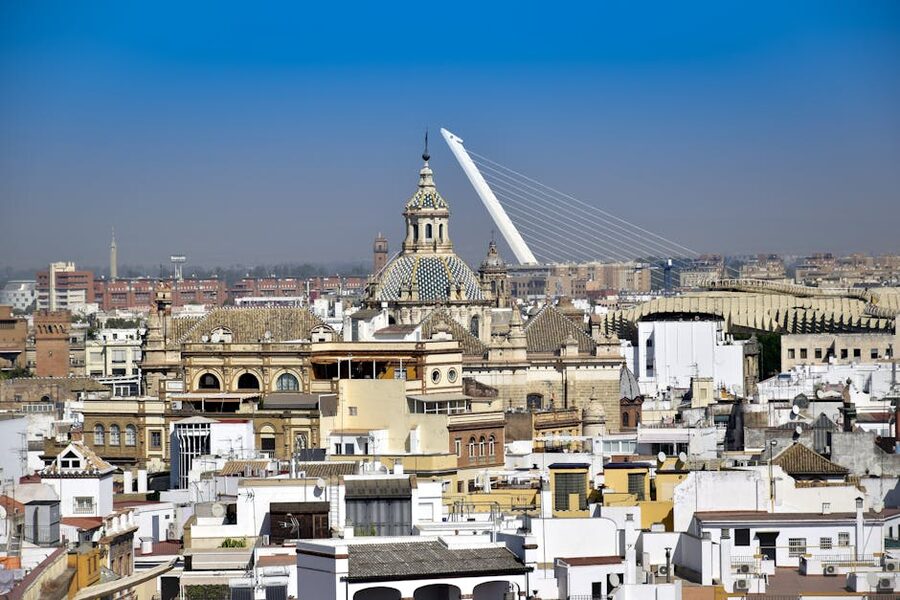
One last note from Curro
Three years after that first Carbonería conversation, I went back to Seville with the deliberate intention of seeing every venue in this guide in a single week. I succeeded. The most surprising thing about it was not how good the polished shows were, although Casa de la Memoria’s late-spring run that year had a cantaor who left half the audience genuinely tearful. It was how natural the form felt, by the seventh night, when I walked into a Triana bar and recognised the bulería being clapped at the back table because I had seen it sung correctly somewhere else two days earlier. The form is not a performance you watch. It’s a language you start picking up.
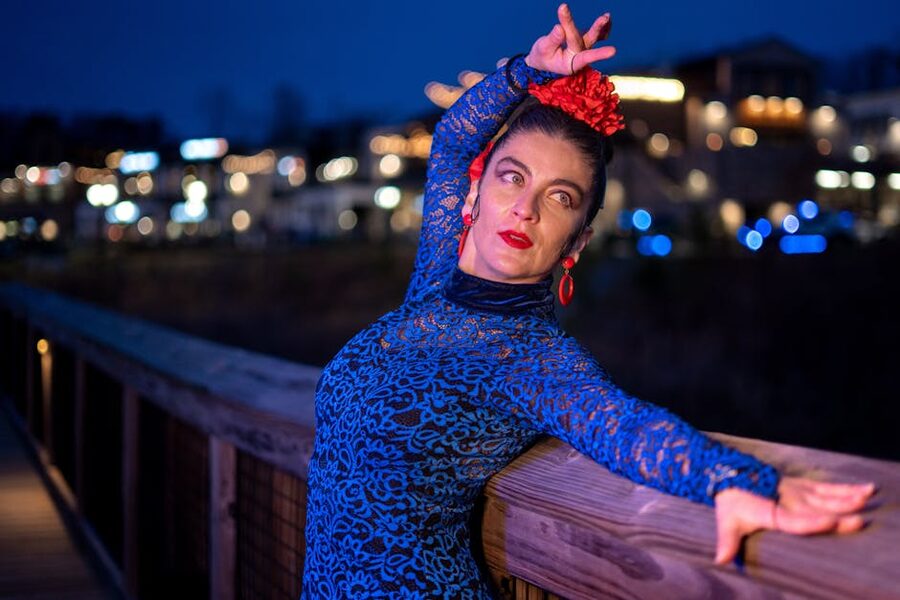
Curro got me a beer that night, refused to let me pay, and at one point clapped a complicated compás for me to demonstrate the rhythm of the song that had just finished. I missed the second beat. He laughed and bought me another one. “Don’t worry,” he said. “You’ll come back.”
That’s the right framing for Seville. You don’t see flamenco here once and check it off. You come back, and the form rewards repeat visits with a deepening you won’t get from a single tablao show in another city. Book one show, go for it, and let the rest of the week tell you what it wants to be.