
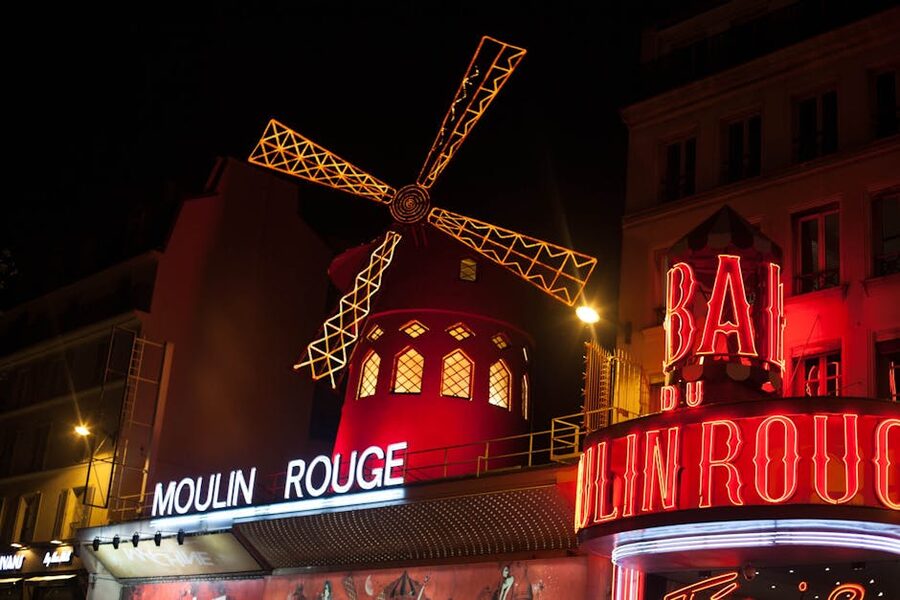
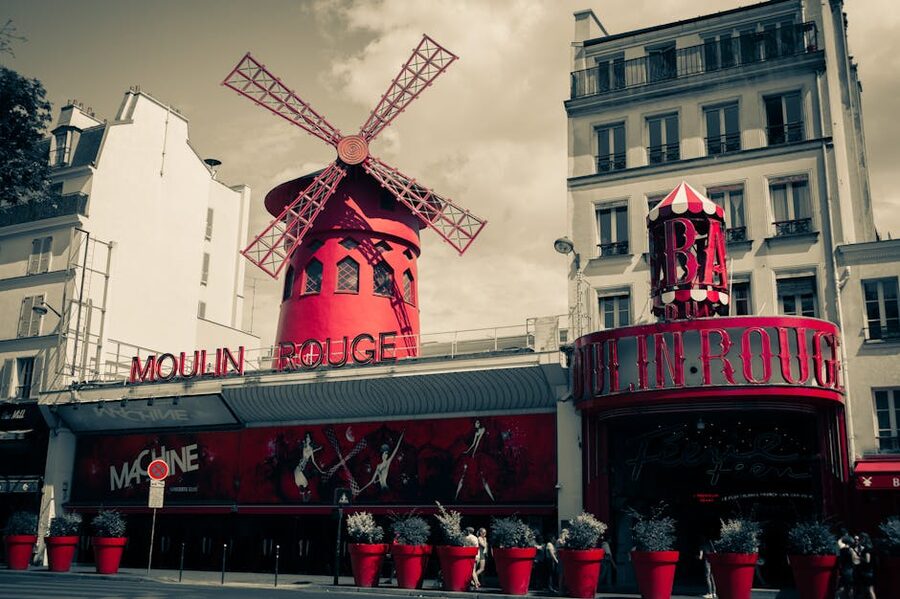
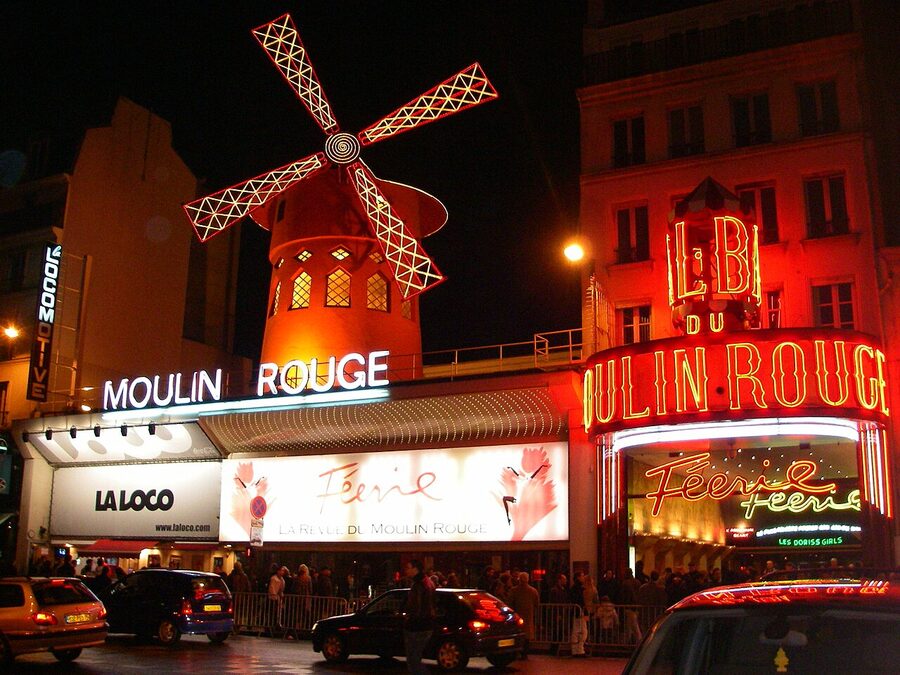
The Moulin Rouge has been doing this since 6 October 1889. The Eiffel Tower had opened only months earlier as the centrepiece of that year’s World’s Fair, and Joseph Oller and Charles Zidler picked the same news cycle to put a giant fake red windmill on a roof in the 18th arrondissement. The cancan started here that autumn. It is, more or less, still going.
That is the first thing to understand about a night at the Moulin Rouge. You are not booking a Paris show. You are booking a 137-year-old institution that has chosen, deliberately, not to update.
In a Hurry? The Three Ways To Book
The flagship show with Champagne ($115): the cabaret without the dinner commitment, half-bottle of Champagne at the table, 90 minutes plus a half-hour Champagne window before curtain. Book the show with Champagne.
The dinner show ($300): three-course French dinner served before the curtain, better seats, more time at the table. The premium pick if you want the whole evening on one bill. Book the dinner show.
The evening tour combo ($200): a coach tour of Paris by night, then the Moulin Rouge show with a glass of Champagne. Good if you want the city’s night-time landmarks bundled in. Book the city tour and show combo.
What you actually get for your money
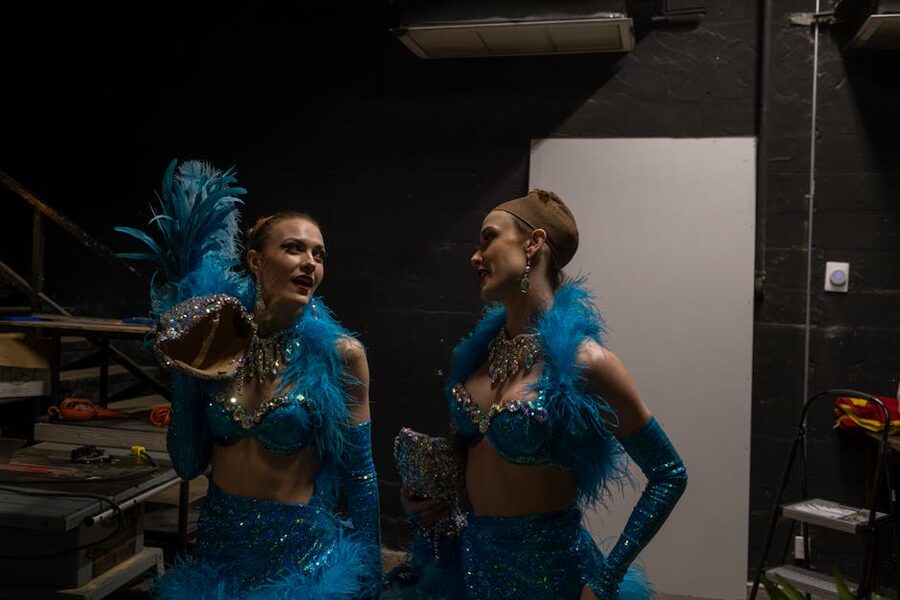
The current show is called Féerie. It premiered on 23 December 1999 and has been running, six nights a week, two shows a night, ever since. Same costume designer (Corrado Collabucci), same dance troupe (the Doriss Girls, a line of 60 dancers formed in 1957 by Doris Haug), same 23-act structure, same cancan finale. Around 600,000 people see it every year. The annual costume budget is roughly $3 million. The fabric is mostly feathers, sequins, and rhinestones, and it shows under the lights.
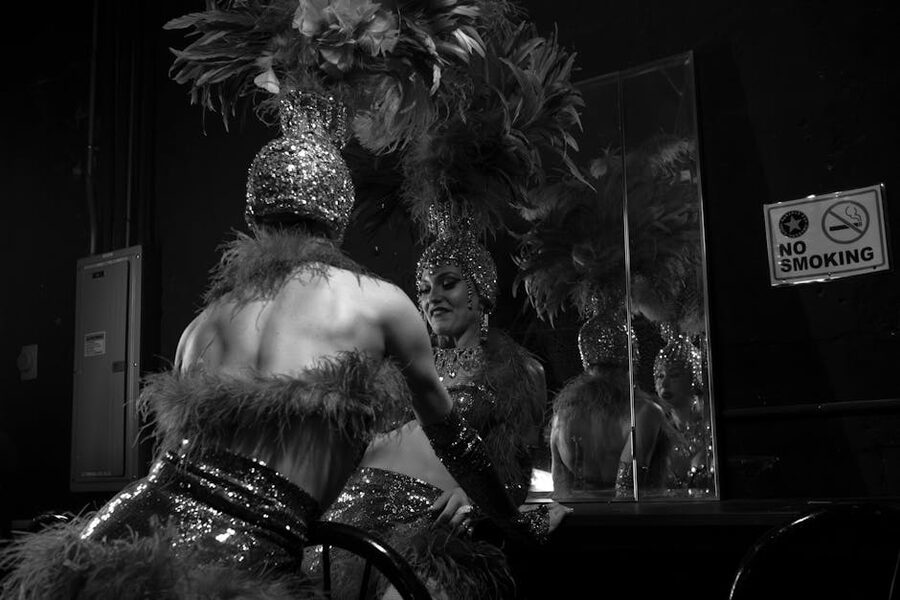
The show itself is the spectacle: ten or so themed numbers around a loose travelogue (Paris, the circus, the sea, a few flights of fancy in between), with specialty acts dropped in to break the rhythm. There’s a sword-swallower. There’s a contortionist in an aquarium with snakes. There’s a juggling routine. There’s a ventriloquist. The Doriss Girls open and close, and the cancan finale, the dance the venue invented, brings the house down for fifteen minutes of high kicks and full-volume music.
The room is small. About 850 seats, packed close, with red velvet banquettes and gilded mirrors and the kind of low ceilings that mean the dancers are practically on top of you in the front rows. This is the part that surprises first-timers. The Moulin Rouge isn’t a stadium show. You’re a few metres from the stage no matter where you sit, and the show was designed for that intimacy. If you’ve already spent an evening in a historic European theatre, the room itself is the closest cousin to La Fenice in Venice: same nineteenth-century scale, same red-and-gold visual language, same sense that the building is half the experience.
Show with Champagne or dinner show: the actual decision
This is the question that traps most first-time bookers, and the answer is straightforward once you stop overthinking it.
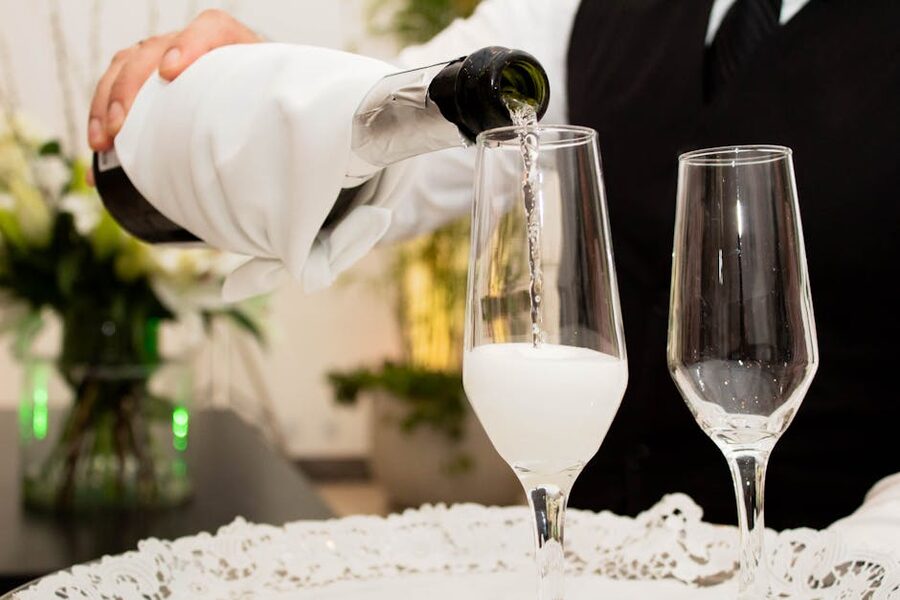
The show with Champagne ($115) is the show. You arrive about half an hour before curtain, you sit at your table, a half-bottle of Champagne is already there or arrives shortly after, you drink it, the show starts, you watch, you leave. Total time from arrival to street: about two and a half hours. This is what most people should book. It is what the Moulin Rouge does well, and it is most of what you came for.
The dinner show ($300) adds a three-course French dinner served at 19:00, two hours before the show. You get better seats, more time at your table, and a proper restaurant dinner with wine. The food is the part where opinions divide. This isn’t a Michelin kitchen. It’s a 600-cover service feeding a packed house in 90 minutes, and the menu is what you’d expect from that operation: a competent gala-banquet dinner, not a meal you’d seek out independently. If you read between the lines of any thorough review, the verdict converges: the dinner is fine, the show is the point, and the price gap is mostly buying you the seat upgrade and the convenience of not booking a restaurant separately.
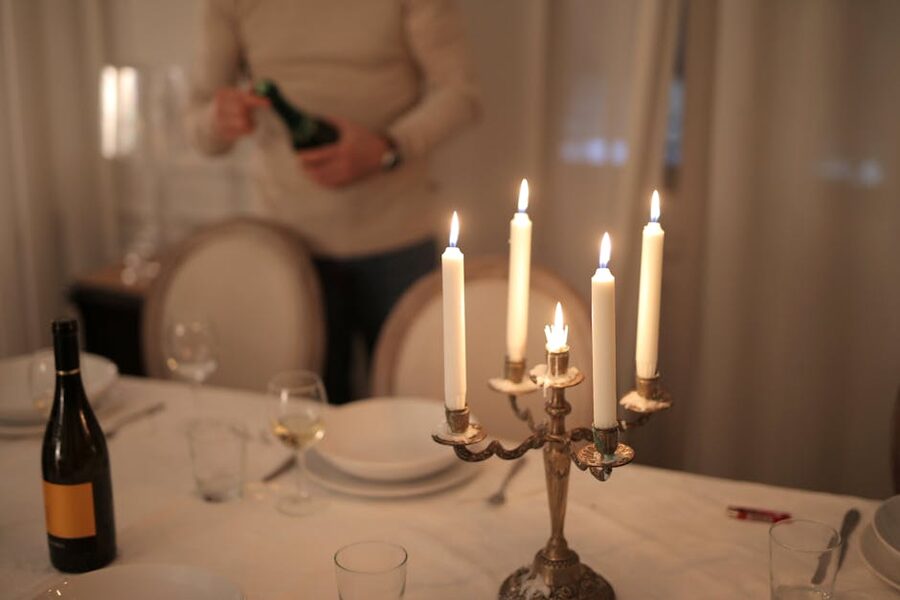
So the real test: do you want a four-hour evening in one venue with a guaranteed seat-upgrade, or do you want the show only and your dinner somewhere of your choosing? If the answer is “show only,” save yourself $185 a head, eat at a bistro you’ve researched, and walk over for 20:30. If the answer is “I want the whole evening on one bill,” book the dinner show. Both are valid. Neither is a mistake.
The third option, the evening sightseeing tour combo ($200), is the one to think about more carefully. It bundles a coach tour of Paris by night with the show. The coach part is the typical illuminated-Paris loop: Eiffel sparkle at 22:00, the Champs-Élysées, the Trocadéro, Place de la Concorde, sometimes a Seine drive-by. If you’ve already done a Seine river cruise or you’re planning one, the bus tour is redundant. It exists for travellers on a tight schedule who want both a city-by-night tour and the cabaret on the same night. If that’s you, fine. If not, skip it and book the show separately for a clean evening.
The Doriss Girls and why the dancers are not what you think
The line of dancers is the show’s spine, and the Doriss Girls are the reason the show holds together year after year. The troupe was formed in 1957 by Doris Haug, a German-born ballerina who built it as a permanent company at the Moulin Rouge rather than a rotating crew of freelancers. That decision is why the cancan still has the precision it has. These are trained classical dancers on multi-year contracts, not a temp pool.
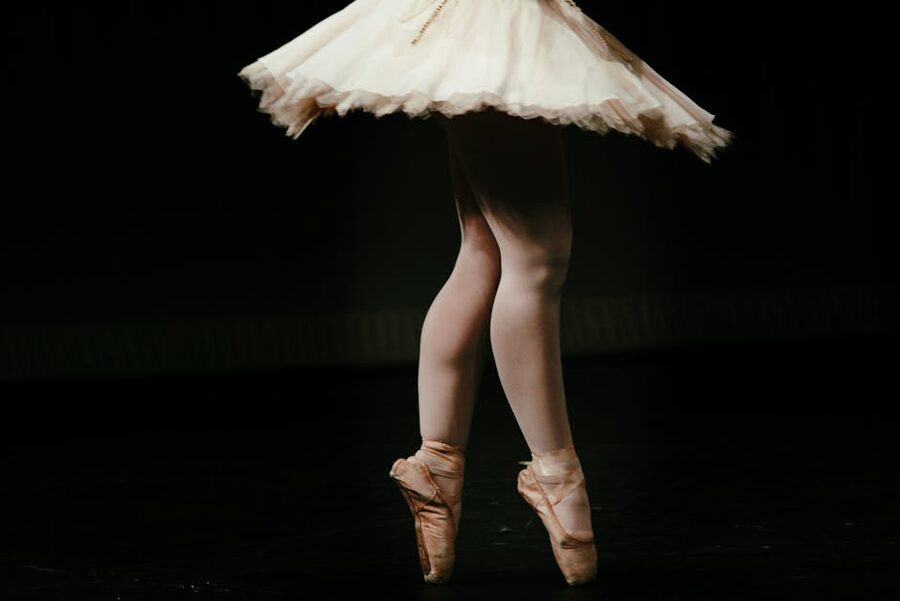
Every Doriss Girl auditions out of a classical-ballet pipeline. They’re tall (the troupe’s standard is 175cm minimum), trained in jazz and tap as well as classical, and they sign on knowing they’ll be doing two shows a night, six nights a week, until they age out or move on. The cancan you see at the finale isn’t twenty women kicking; it’s sixty trained dancers executing a choreographed routine that hasn’t been substantially rewritten since Doris Haug coached it into shape in the late 1950s. The high kick lands on the same beat in every show. That’s not improvisation. That’s drill.
Knowing that changes how you watch. The cancan has a reputation as the cheeky, frothy dance that ends every Moulin Rouge advert, and that’s true, but the choreography itself is genuinely difficult. The split jump, the rond de jambe, the pas marché, the high cartwheel: these are gymnastic movements you’d see at Paris Opera Ballet, and the Doriss Girls do them in heels, in costume, on a stage the size of a hotel ballroom, while singing. If you watch nothing else closely, watch the line work in the cancan. It’s the bit the venue is most proud of, and rightly.
Why the show looks like Toulouse-Lautrec
The Moulin Rouge has a visual language, and it has stuck with that language on purpose for over a century. The reason is in the museum next door at Albi, in the basement of the Musée d’Orsay, and on every poster you’ve ever seen advertising a Belle Époque Paris.
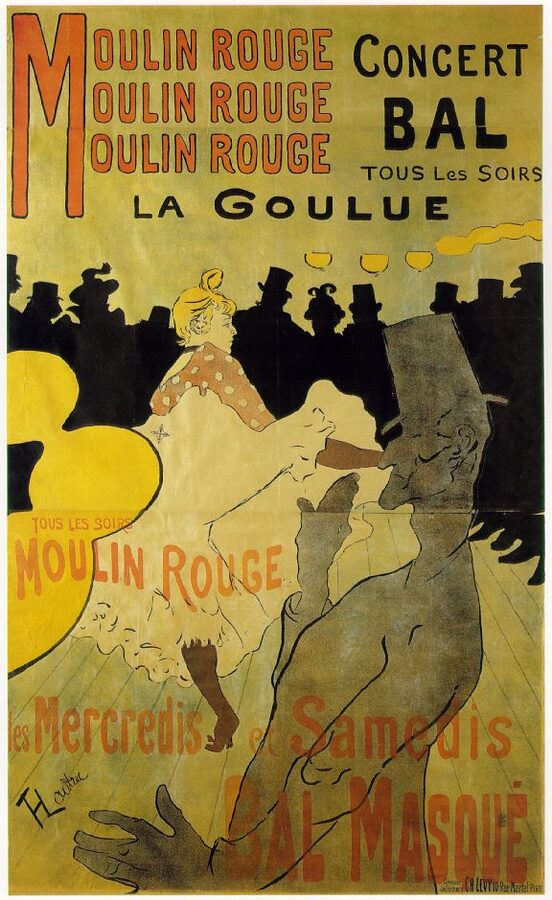
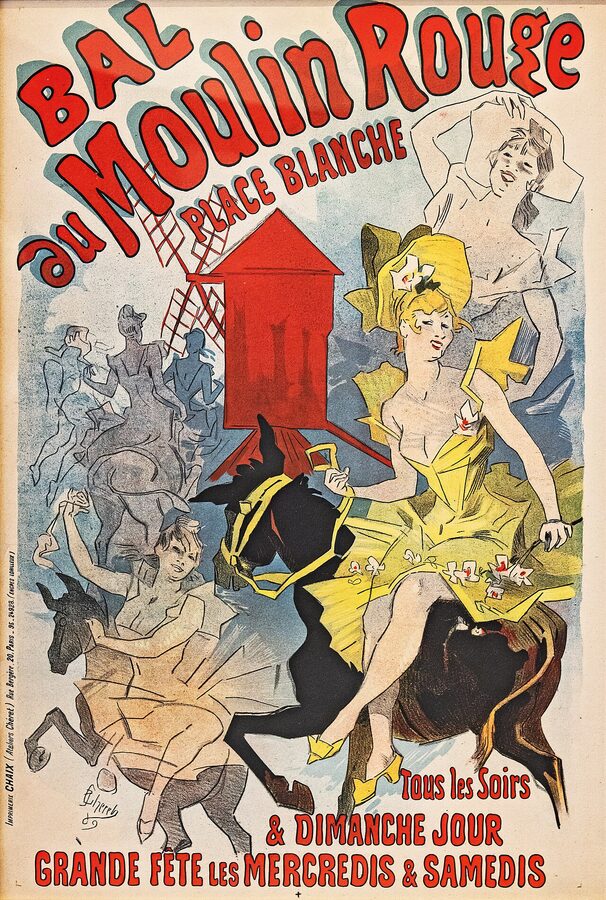
Henri de Toulouse-Lautrec was a regular at the Moulin Rouge from its opening in 1889 until 1893 or so. He drank there, sketched there, and was given a permanent table. The Moulin Rouge commissioned him to design the venue’s posters, and the lithographs he produced between 1891 and 1895, the La Goulue poster, the Jane Avril prints, the great oil At the Moulin Rouge, are the visual identity of the place. The flat colour fields, the silhouetted dancers in their black stockings, the cancan kick frozen mid-air: all of it became, almost immediately, what the Moulin Rouge looked like in the public imagination. And once that visual language locked in, the venue just kept using it.
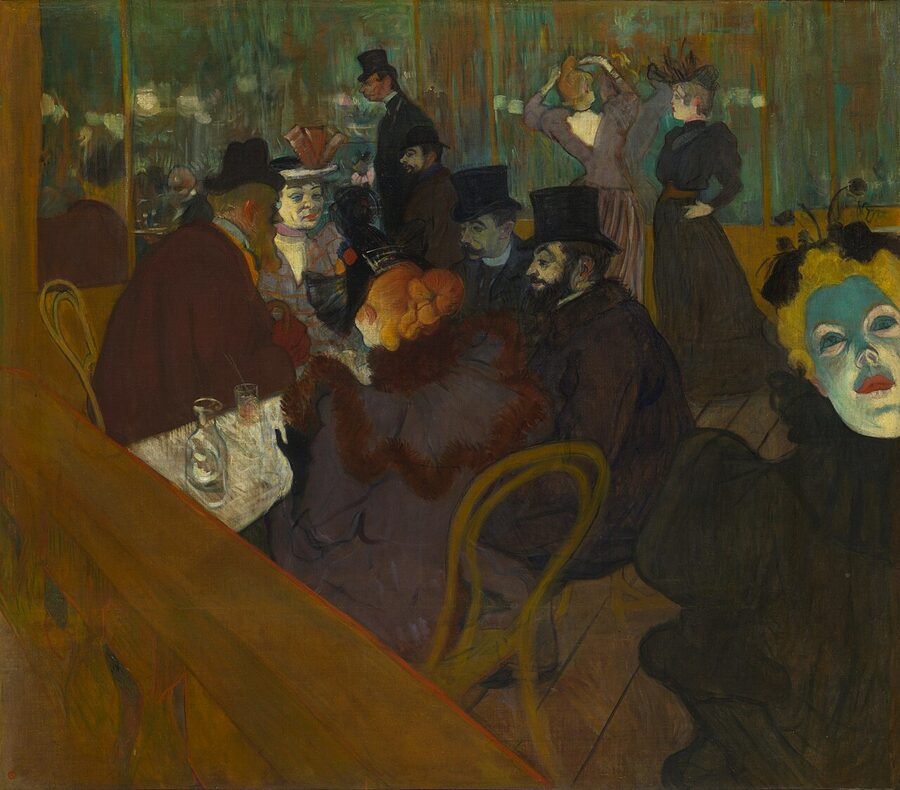
This is why the Moulin Rouge’s costumes, posters, programmes, and even the typography on the entrance signage all look unchanged from the Belle Époque. The current creative team is keeping faith with the 1890s posters because the 1890s posters are what people pay $115 to see. If you’ve spent any time looking at the Toulouse-Lautrec collection at the Musée d’Orsay earlier in your trip, the recognition kicks in within thirty seconds of the opening number. The cancan you’re watching is a careful, ongoing reproduction of the cancan he painted.
How to book without overpaying
Three rules. Book at least two weeks ahead for any Friday or Saturday show, six weeks ahead in summer. Book directly through the Moulin Rouge or through GetYourGuide; both have the same allocations and price structure, and there’s no premium-tour-broker advantage worth paying for. And don’t book the late show (23:00) unless you’re a confirmed night owl. The 21:00 show is the standard, the room is fuller, and the energy is better.
On seats, the venue divides the floor into rough price tiers. The cheapest standard tickets put you on the upper level or further back, the dinner-show tier puts you closer to the stage with table service, and the genuine front-row tables are reserved for the highest dinner-show category or for groups. It’s worth knowing that there are no bad seats in the room: the building is small enough that the back row is closer to the stage than the front row of a West End musical. If you’re choosing between an upgraded seat in the show-only category and the dinner show, take the dinner show; the seat difference is real.
The dress code is “smart casual minimum.” That means no shorts, no sneakers, no athletic wear, no flip-flops. Smart trousers and a collared shirt for men; a dress, smart trousers, or a skirt for women. Jacket optional but I’d wear one. The Moulin Rouge is one of the few attractions in Paris where the dress code is enforced at the door. Travellers in beach wear get turned away, full-stop.
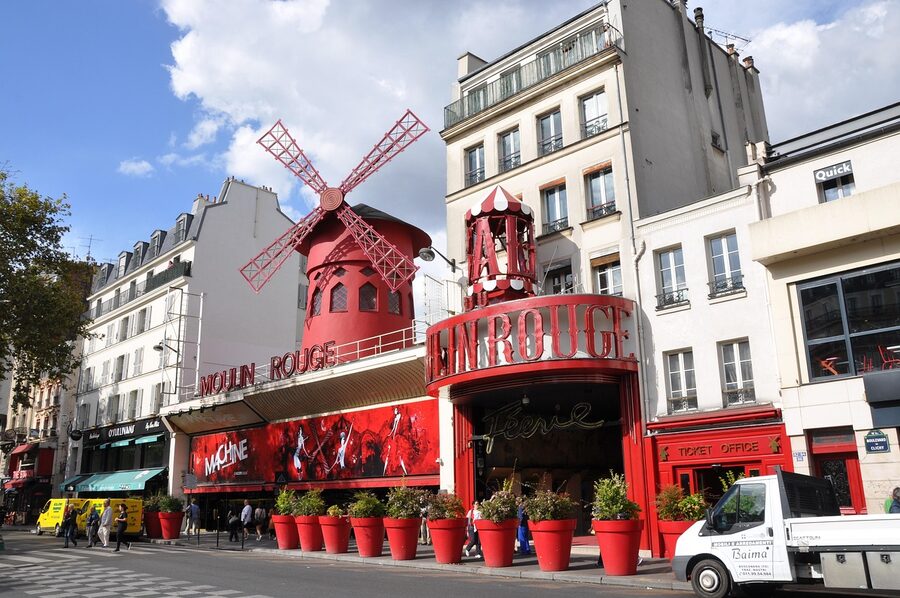
The flagship tour cards
1. Show with Champagne: $115
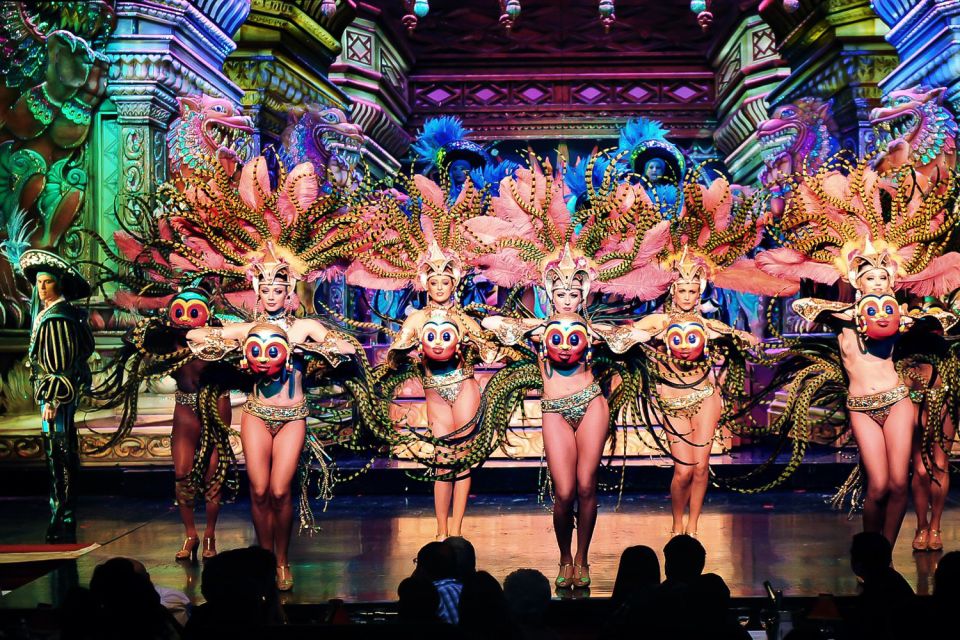
This is the right pick for most travellers. You get the show, the Champagne, and an evening that ends at a reasonable hour, and you can eat dinner wherever you want before or after. Our full review covers the seat-tier breakdown and what to expect from the Champagne service.
2. Dinner Show at the Moulin Rouge: $300
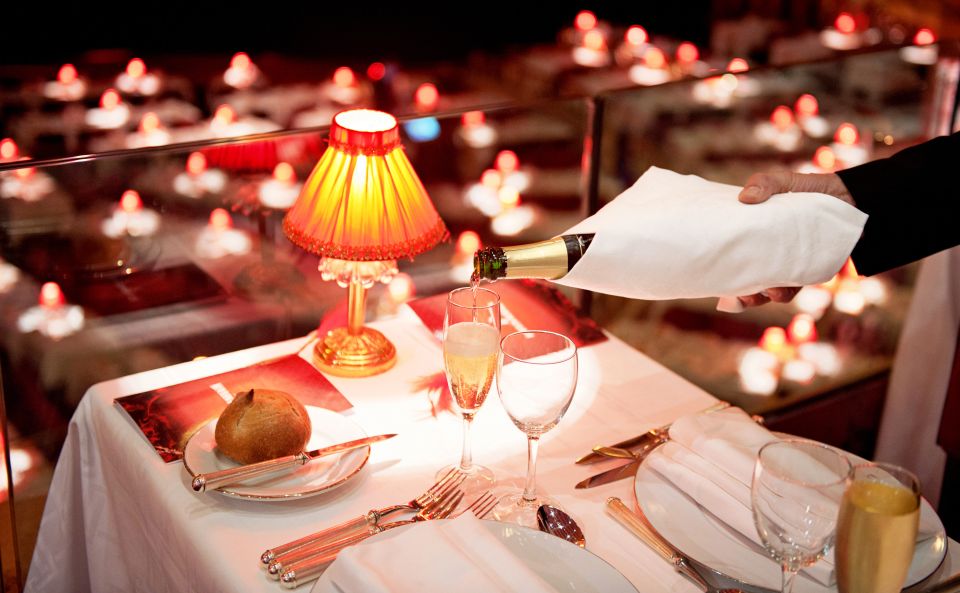
Pick this if you want the whole evening on one bill and the seat upgrade matters to you. Our full review walks through the menu courses and the seating tiers in detail.
3. Evening Sightseeing Tour and Moulin Rouge Show: $200
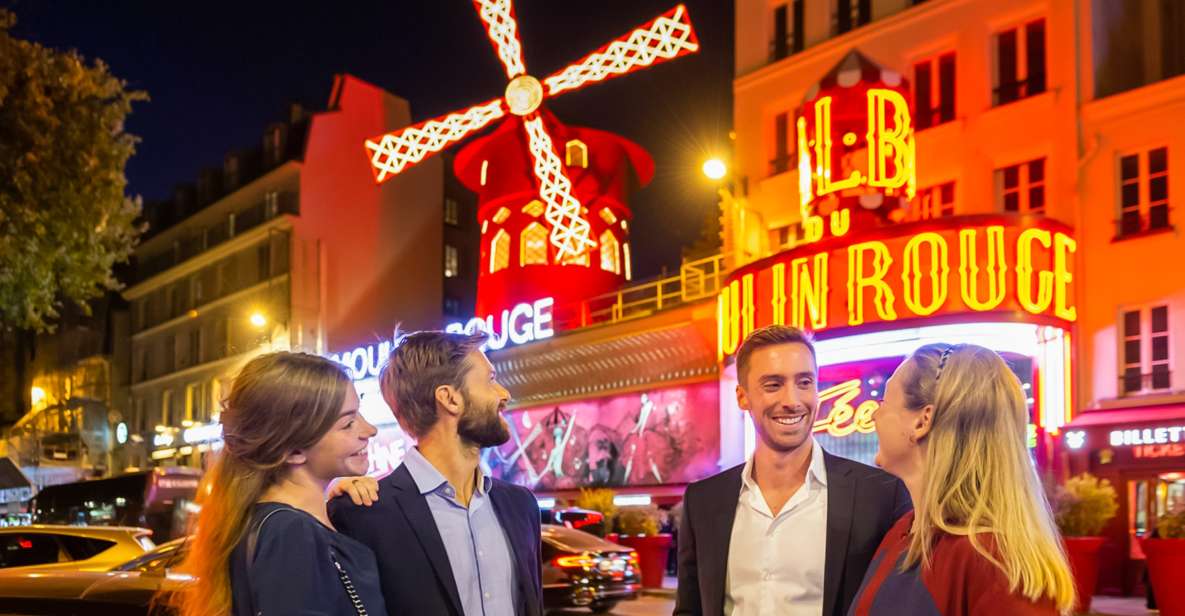
Worth it only if you genuinely want a night-bus tour of Paris bundled in. Our full review is direct about which travellers actually get value from the combo.
How the Moulin Rouge sits inside Paris
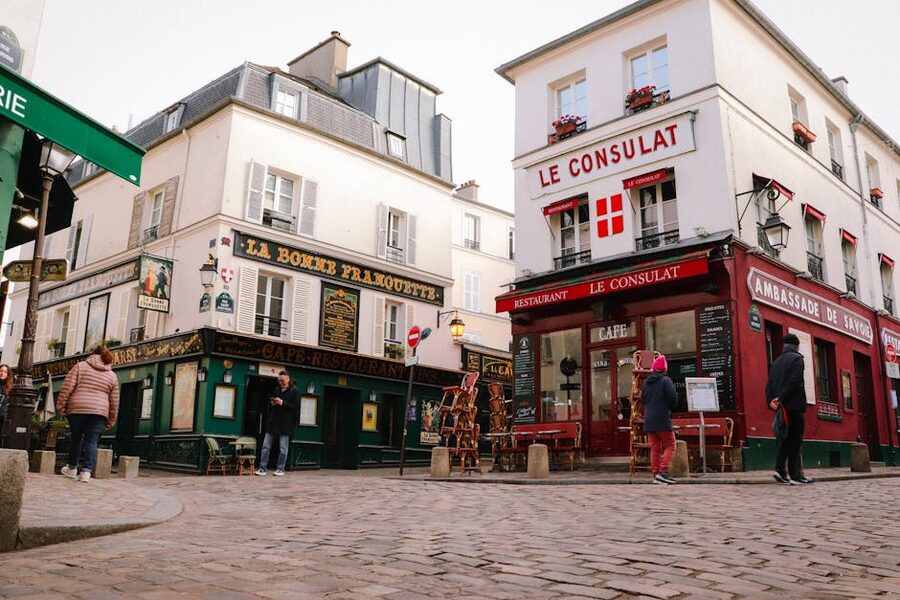
The address is 82 Boulevard de Clichy, in the 18th arrondissement, on the southern edge of Montmartre and at the eastern end of the Pigalle nightlife district. The closest Métro is Blanche on Line 2; the station literally exits on the same block. Pigalle station, on Line 12 and Line 2, is a four-minute walk east. If you’re staying near the Eiffel Tower, allow about twenty minutes by Métro with one change.
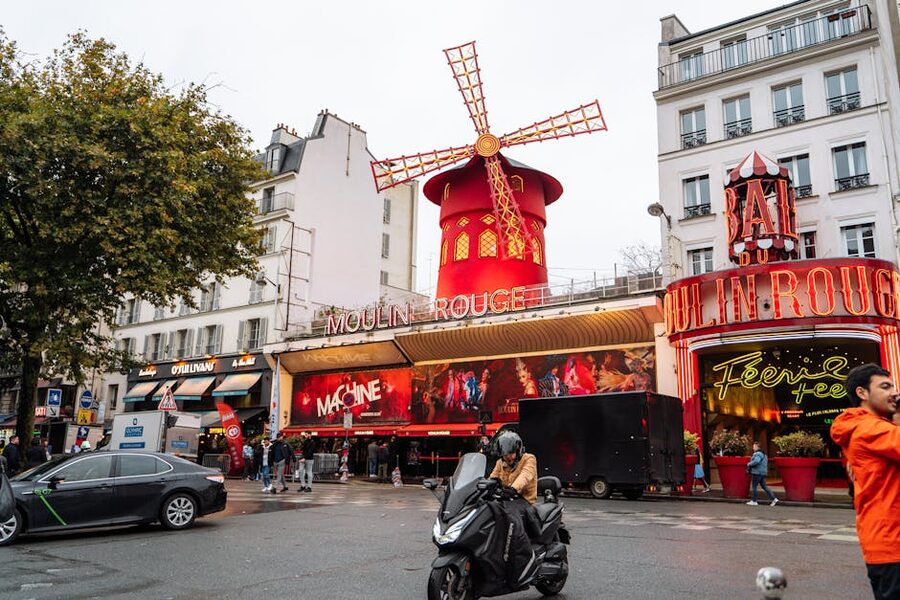
The neighbourhood deserves a plain sentence. Pigalle was Paris’s red-light district from the late nineteenth century onward, and although it’s been gentrifying for two decades, the Boulevard de Clichy stretch still has the residue. There are sex shops within sight of the Moulin Rouge entrance. There are touts. There are unlicensed strip clubs with aggressive doormen. None of this affects the show, none of it makes the area unsafe, and it has been part of the Moulin Rouge’s geography since 1889. But if you’ve come from the Marais or the 7th and you’re surprised, that’s why. The Moulin Rouge is a glamorous interior in an unglamorous patch of street.
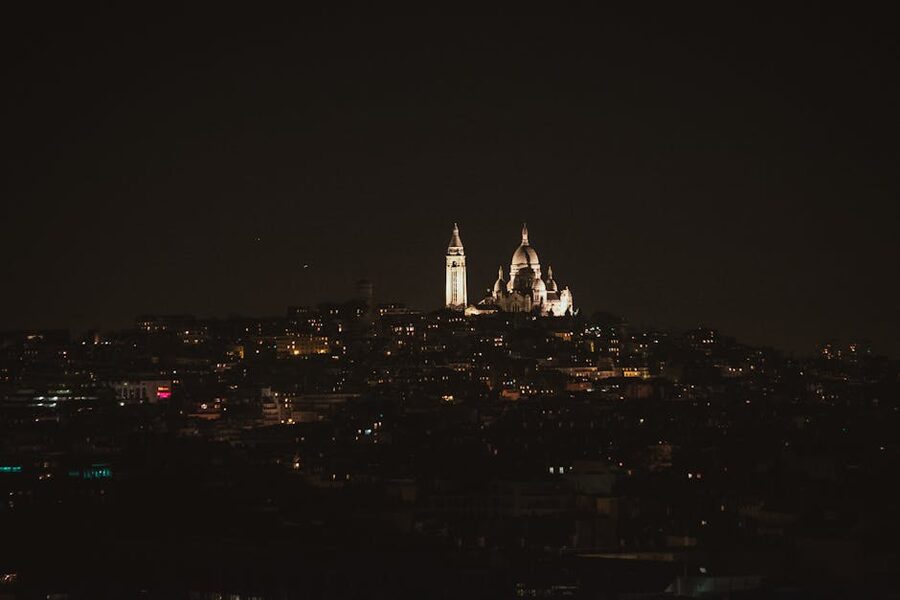
What’s worth doing on the same evening, if you have time before the show, is walking ten minutes uphill into Montmartre proper. The Sacré-Cœur basilica is there at the top of the hill, and the steps in front of it are one of the best free views in Paris. From the steps you can see across the city to the Panthéon, and on a clear evening, to the lit-up dome of Les Invalides. If you’ve been city-pass shopping for height views, walking up to Sacré-Cœur and skipping the paid Montparnasse Tower observation deck is a defensible call. It’s free, the view is good, and you’re already in the neighbourhood.
The history nobody tells you on the way in
Most show programmes give you a sentence about 1889 and move on. The longer history is the bit that explains why the venue feels so insistent on its own past.
Joseph Oller and Charles Zidler opened the Moulin Rouge on 6 October 1889. Oller was a Catalan impresario who already ran the Olympia music hall and the Hippodrome de l’Alma. Zidler was a butcher’s son who’d made his money operating dance halls in Belleville. They picked the site at Place Blanche because the area was working-class, cheap, and adjacent to Montmartre’s bohemian artist colony. The plan was deliberate: build a venue that felt scandalous to bourgeois Paris but accessible enough that bourgeois Paris would slum over and pay to look. The cancan, which already existed as a working-class dance, became the venue’s signature within months.
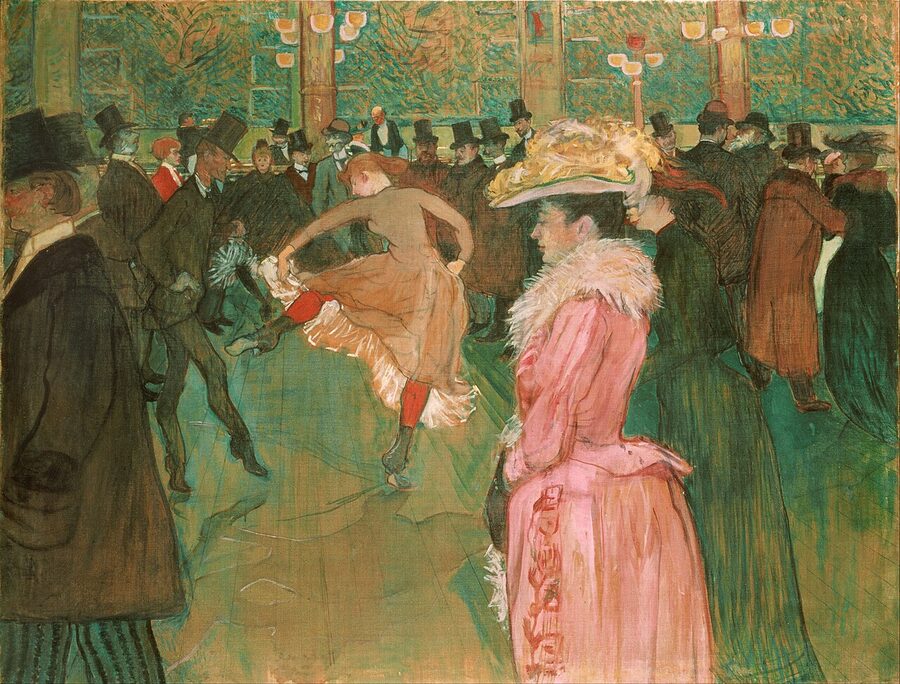
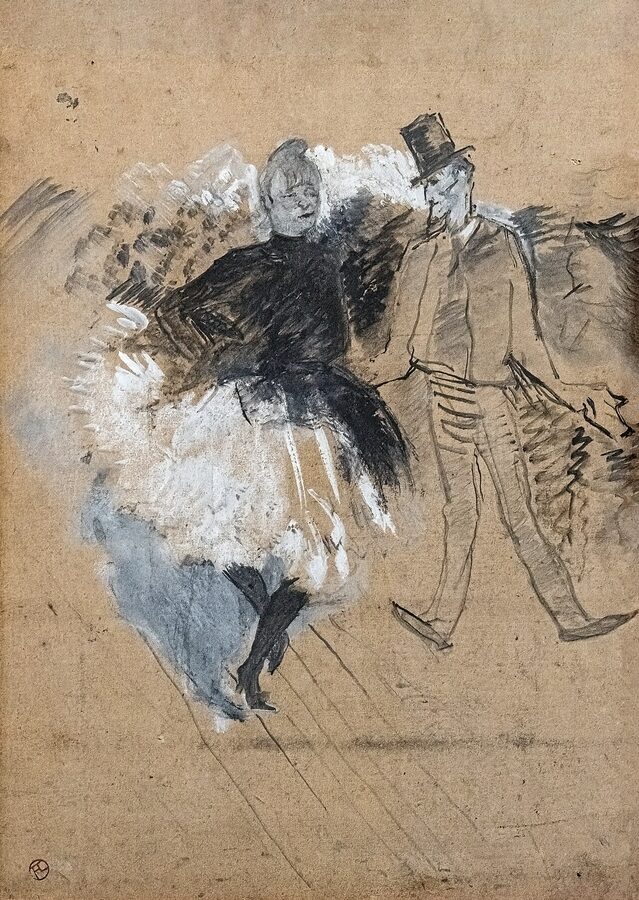
The early stars set the template. La Goulue (Louise Weber, born 1866) was the first headliner, a working-class woman from Alsace who had been dancing in the dance halls of Montmartre and brought the cancan with her. Her partner was Valentin le Désossé (Jacques Renaudin), a notary’s son who danced under the stage name “the Boneless” because of his absurd flexibility. Toulouse-Lautrec painted them obsessively. Both are in the 1890 At the Moulin Rouge: The Dance; La Goulue is alone in the 1891 lithograph that became the venue’s most reproduced image.
The Moulin Rouge burned down on 27 February 1915, halfway through its first major decline. The venue was rebuilt and reopened in 1921 in roughly the same form, but the inter-war years were rough: musical revues replaced the cancan, the venue tried hard to chase the Parisian appetite for jazz-age sophistication, and it kept failing to find a stable formula. The cancan returned permanently after 1945. The current building is the 1921 reconstruction, with substantial interior renovations in 1953 and again in 1981.
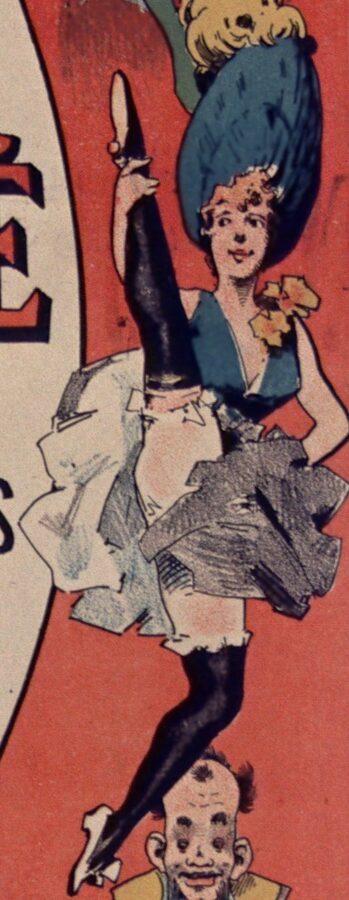
The current show, Féerie, was choreographed by Doris Haug and Ruggero Angeletti and opened on 23 December 1999. It replaced Formidable, which had run since 1988. Féerie is now the longest-running show in Moulin Rouge history, which tells you something about how the venue thinks: when something works, it stays. The same designer (Corrado Collabucci) has been making the costumes since 1999, the same choreographer has been adjusting the dance pieces, the same set pieces (the giant aquarium, the can-can stage, the staircase descent) have been staged the same way for 27 years. The audience renews itself every night; the show doesn’t.
The roof, the windmill, and what fell off in 2024
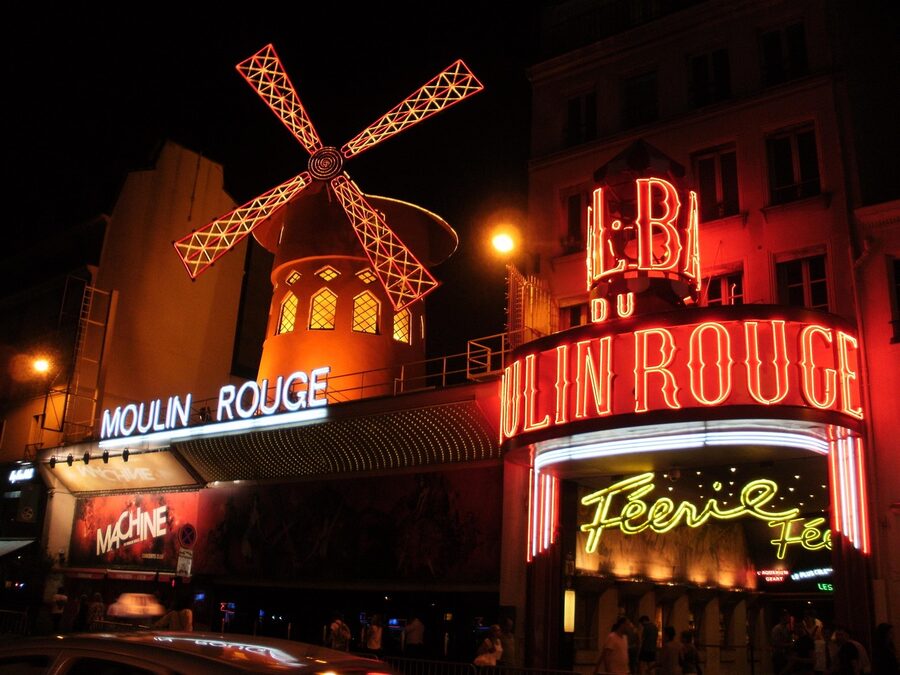
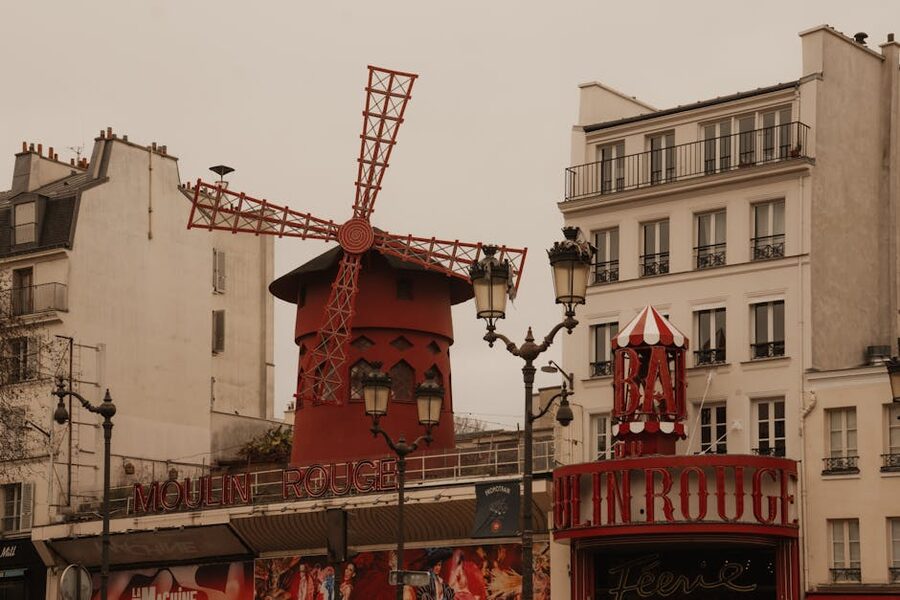
The red windmill on the roof is twelve metres by twelve metres and is the venue’s defining external feature. It’s not a working windmill: there’s nothing inside grinding, and the blades have been turned by an electric motor since the 1960s. But it’s the brand. There is genuinely no sign reading “Moulin Rouge” on the front of the building. The windmill is the sign.
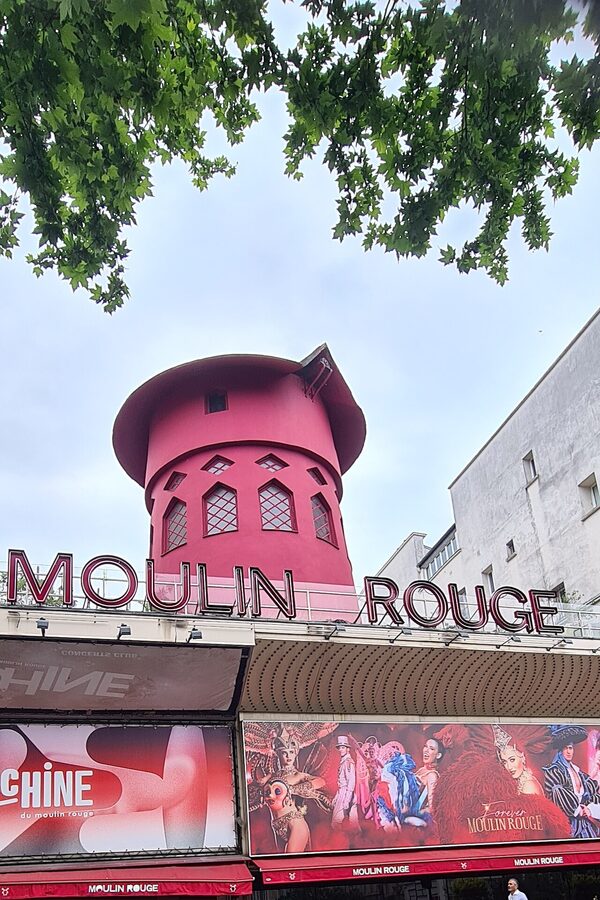
On the night of 25 April 2024, the windmill’s blades fell off the roof. They came down on the pavement of Boulevard de Clichy just before 02:00, no one was hurt, and the cause was a structural failure in the supporting frame. The venue stayed open. The show ran the next night without interruption. Replacement blades were fabricated and fitted in August 2024, and the windmill has been turning again since. If you’ve seen photographs of the Moulin Rouge from May, June, or July 2024, they show a four-storey building with a flat roof and no obvious identifier. The blades define the silhouette. Without them, the venue looked like a regular Pigalle commercial building. With them, it’s the Moulin Rouge.
That episode said something quiet about the place. A chain of management decisions kept the show running on a normal schedule through the loss of the venue’s most photographed feature. Nobody cancelled. Nobody refunded. The dancers worked. The Champagne arrived. The cancan finale closed each night while the front of the building waited for its hat. That’s the kind of institution it is.
What to wear, when to arrive, what to expect at the door
Arrive twenty to thirty minutes before your seating time. The dinner show seats from 19:00, the show with Champagne seats from 20:30, and the late show seats from 22:30. Doors open ahead of seating. You’ll be asked to show your booking on a phone or printed; ID isn’t requested unless you’re under 21 and a server queries the Champagne service. The venue handles entry through one of two side doors, not the main central archway: follow staff direction.
Inside, you’ll be shown to your table. You don’t pick. The maître d’ assigns based on your tier, and the assignment isn’t negotiable except on a voluntary upgrade fee. Couples are seated together, families are seated together, lone travellers are seated at communal tables of four to six (this is fine, it’s the convention, and most lone travellers say it adds to the night). The seating is tight. Banquettes seat four where most restaurants would seat three.
For photographs, the rule is simple and strict. No photography or video during the performance. Anything before the curtain or after the finale is fine, and the venue actively encourages photos in the foyer. Bring out a phone during the show and a server will be on you within thirty seconds. The rule is enforced because the dancers’ costumes and choreography are the venue’s intellectual property. Take your photos at the door.
Comparing the Moulin Rouge with the world’s other classic-spectacle nights
The Moulin Rouge is one of those bucket-list nights that travellers compare across cities, and the comparison is worth doing because the experience genuinely differs from venue to venue. The closest cousins are flamenco in Spain and opera in Italy.
If you’ve already done flamenco in Seville, the contrast lands hard. Seville flamenco is intimate, bare-stage, three or four performers, no costumes beyond a shawl and a ruffled dress, and the entire show runs on the friction between guitar, voice, and footwork. The Moulin Rouge is the opposite of all that: large-scale, costumed, choreographed in advance, polished to within an inch of its life. They’re both classic-spectacle nights, but they answer the same question (what does this country do best on a stage?) in opposite ways.
The same contrast holds against flamenco in Granada, where the show happens in a Sacromonte cave and the audience is fifteen people. Madrid’s tablao circuit is closer in scale to a small theatre but the energy is still the bare-stage tradition. Barcelona flamenco is the most touristed of the Spanish options and the most variable in quality. Málaga’s flamenco is the hidden corner of the tradition: smaller, cheaper, and worth seeking out. The Moulin Rouge is the loud, expensive, glittering opposite of all of them.
Italy’s La Fenice in Venice is the closer cousin in venue type. Both are nineteenth-century theatres, both have red-and-gold interiors, both are small enough that the building is half the show. But La Fenice is opera, classical seasons, premieres of La Traviata; the Moulin Rouge is cabaret, repeating the same revue every night for a quarter-century. La Fenice changes the bill weekly. The Moulin Rouge changes nothing.
The other Spanish comparison worth knowing is the Royal Andalusian School horse show in Jerez. Different art form, same DNA: a centuries-old institutional spectacle, drilled and rehearsed, performed in a heritage venue, the kind of evening you book once in your life and remember.
The Amsterdam parallel sits at the opposite extreme of the spectacle spectrum. The Red Light District guided walk is the city’s frank-look-at-its-own-history alternative to the Moulin Rouge’s choreographed reveal: no stage, no costumes, no Champagne, but the same Belle Époque-era nightlife economy reframed for a 21st-century audience. And the Fabrique des Lumières is the modern-immersive cousin, a 360-degree projection-art building in a former gas factory that hits the same eye-saturation button the Moulin Rouge feathers-and-rhinestones reveal hits, in a register no Belle Époque designer could have imagined.
What to combine with the show on a Paris itinerary
The Moulin Rouge is the night-time entry on the itinerary. Build the day around what comes before and after.
If you’re spending two days in Paris and the Moulin Rouge is your one big night, the natural day-before companion is a slow afternoon at the Louvre or the Musée d’Orsay, with the Toulouse-Lautrec rooms in the Orsay being the directly relevant prep. You’ll see the show differently after spending an hour with his paintings of it.
For Moulin Rouge night itself, a smart sequence is afternoon at the Eiffel Tower (book the noon timeslot to dodge the worst of the queues), back to the hotel, change into smart clothing, Métro to Blanche by 18:30 for an early dinner in Pigalle or 20:30 for the show. After the show finishes around 22:45, you’re a fifteen-minute walk to the Trocadéro for the late Eiffel sparkle, or twelve minutes uphill to the Sacré-Cœur steps for the Paris-from-above shot. The night caps itself.
For three-day Paris trips, the Moulin Rouge slots best on night two or three, after you’ve done the major museums and you want a contrast with the daytime sightseeing rhythm. Sainte-Chapelle on day one, the Arc de Triomphe and the Champs-Élysées on day two, the Moulin Rouge that night, then a day-trip out of Paris on day three. The cabaret is a closing-evening kind of attraction; don’t lead with it.
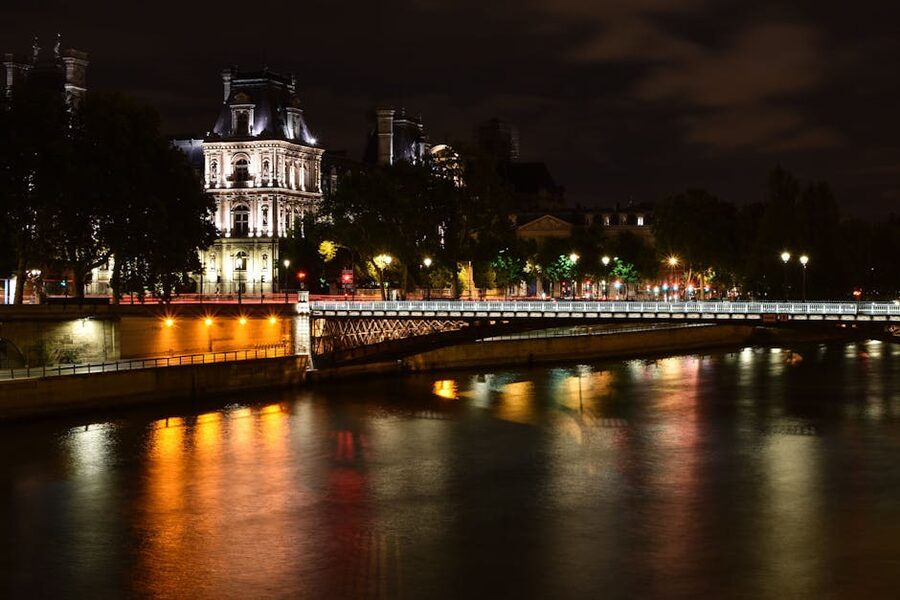
If you’re combining with a Seine option, the Seine dinner cruise doesn’t actually combine well on the same night with the Moulin Rouge dinner show: that’s two long sit-down evenings stacked together. Pick one. The cheap one-hour Seine sightseeing cruise at sunset, on the other hand, slots in nicely before the 21:00 cabaret if your hotel is near the river: cruise from 19:00 to 20:00, Métro to Blanche, in your seat by 20:40.
Practical bits that will save your evening
Cash is not needed. The venue takes all major cards, and the staff don’t expect tips beyond the optional rounding-up at the end. Champagne refills beyond your half-bottle are billed separately and are expensive: a second bottle is around €110. If you want more than the included Champagne, factor that in.
The bathrooms are downstairs and there’s a queue at the interval. Go before the show starts.
The cloakroom is included in the ticket. You leave your coat at the door, get a number, and pick it up on the way out. Don’t try to bring a coat or a large bag to your table; there’s no room.
The interval is twelve to fifteen minutes long. There’s a bar in the foyer, but the queue is brutal. Most regulars say: skip the interval drink, sit it out, listen to the orchestra warm-ups for the second half. The orchestra is the under-celebrated part of the show. Twelve musicians in the pit, all night, for a 90-minute revue with twenty-three musical cues. They know the music in their sleep. Listen to them tune.
The show does not include nudity in the way some travellers expect. There’s a topless dance segment lasting roughly four minutes, in the tradition of Parisian cabaret since the 1920s, but it’s choreographed and brief and not the focus. The Moulin Rouge has been clear for decades that it is a cabaret in the Belle Époque tradition, not a strip show. If you’ve been put off by that aspect, the four minutes are easily missed if you visit the bathroom.
The audience demographic skews older than you’d guess. Couples in their fifties and sixties are the dominant group, with a strong contingent of bachelorette parties (the venue is on every “girls’ weekend in Paris” list). Tour groups make up another big slice. If you’re under thirty and going as a couple, you’ll be in the minority but the venue handles every demographic the same.
What I’d skip and what I wouldn’t
I’d skip the Moulin Rouge tour combined with another attraction if “another attraction” is the bus tour. I’d take the city-by-night bus on a separate evening if I wanted that experience, or replace it with a Seine cruise. The bundle saves you maybe twenty euros over booking separately and locks you into a coach schedule.
I’d skip the upgraded show-only seats. The standard show-only ticket is fine, the room is small enough that the price-tier difference is mostly bragging rights, and if you genuinely want the front-row experience, just book the dinner show.
I’d skip the late show (23:00, Friday and Saturday only) unless you’re a confirmed late-night person. The energy is fine but the room thins out and the audience is more drunk. Book the 21:00 every time.
I would not skip the dinner show if you’re celebrating a milestone (anniversary, big birthday, engagement). The four-hour evening is what you want for that. The food is competent, the setting is right, and the dance line at the end is the kind of moment people remember from a trip. The $185-per-person upcharge is a fair price for what it is.
I would not skip the Champagne even if you don’t drink Champagne. It’s part of the room. Sip it slowly through the show; nurse what’s left through the cancan. The venue doesn’t really make sense without it.
I would not skip the walk up to Sacré-Cœur before or after the show, weather permitting. Twelve minutes uphill, fifteen back down, free, and the photographs you take from the steps are the photographs you’ll remember from Paris a year later. The cabaret is the indoor hour. The hill is the outdoor hour. Both belong to the same neighbourhood.
If you’re choosing between the Moulin Rouge and another Paris evening
The plain framing is that the Moulin Rouge is one of three or four Paris evenings worth booking for the whole night, and the choice between them depends on what you’ve already done.
If you’ve never been to a major European cabaret, the Moulin Rouge wins by default. There is nothing in Paris (or in Europe) that does Belle Époque revue better, and the institutional continuity is the real argument: you’re watching what Toulouse-Lautrec painted, not a tribute to it.
If you’ve been to Las Vegas’s classic-revue circuit (the Vegas headliner shows, the Cirque du Soleil residencies), the Moulin Rouge will feel small and old-fashioned by comparison. Vegas does scale and pyrotechnics; Paris does authenticity and continuity. They’re answering different questions. The Moulin Rouge is the older one and the original.
If you’ve already booked a Seine dinner cruise for the same trip, you can probably skip the Moulin Rouge dinner show: two long sit-down evenings inside three days is a lot. Book the show with Champagne instead, eat dinner separately, keep the budget intact.
If you’re travelling with kids under ten, the show isn’t suitable: there’s the brief topless segment, the Champagne is wasted on them, and the late finish is tough on bedtime. The venue technically permits children over six but I wouldn’t bring anyone under twelve.
The best way to think about the night
You’re not booking a show. You’re booking a night inside a 137-year-old institution that has decided not to update, because the original idea worked and the visual language built around it (Toulouse-Lautrec posters, cancan kicks, red velvet, sequins, Champagne) is more valuable as a continuous performance than as a museum piece. The Moulin Rouge is a museum that is also operating as itself. That’s the rare thing it does.
The cancan you see at the finale is the same cancan La Goulue danced in 1891. Not the choreography exactly, but the intention. The kick line. The high boots. The black stockings. Toulouse-Lautrec drew it; Doris Haug rebuilt it; sixty trained classical dancers are still doing it tonight, and tomorrow night, and the night after that. You sit in red velvet with a glass of Champagne at a table you didn’t choose and you watch.
Two and a half hours later, the windmill is still turning on the roof, the dancers are out of costume, and Boulevard de Clichy is the same restless street it was when you walked in. You take the Métro back to your hotel. You’ll think about the cancan for a week.
Other Paris evenings worth a look
If the Moulin Rouge is one bucket-list night and you want a second to balance it, the contrast pairs are obvious. A one-hour Seine cruise at sunset is the cheap, quiet, almost-the-opposite evening: outside, no spectacle, just the city sliding by. Sainte-Chapelle’s stained-glass interior is the daytime contrast in the same register of “Paris does it best”: both are interior spaces engineered for visual impact, both are over six centuries apart in age, and both reward a slow look. A loop on the hop-on-hop-off bus is the inverse-budget evening: cheap, casual, you see Paris from above without committing to any one venue. None of these substitute for the cabaret. They flank it on the itinerary.
And if you’ve come from Italy or Spain on the same trip, the rhythm matches. La Fenice is the Italian counterpoint, the Jerez horse show is the Spanish equestrian one, and the Seville tablao is the Spanish one most travellers compare directly. The Moulin Rouge is what Paris contributes to that conversation. Loud, glittering, sequined, and exactly itself.