
Most travellers come to Málaga for the beach, the Picasso museum, and a few cold beers in the old town, then fly home convinced flamenco is “really a Seville thing”. That’s the mistake. Málaga has its own flamenco subgenre called verdiales, played with violin and lute up in the mountains since long before tablaos existed, and the city’s two main theatres are smaller, cheaper, and looser than what you’ll sit through in Seville’s tourist quarter. This is the homeland-quality middle ground a lot of visitors walk past without noticing.

In a Hurry: My Three Picks
- Teatro Flamenco Málaga ($34): the flagship tablao in the old town, professional company, hour-long show, easy to combine with dinner nearby.
- Flamenco Alegría ($30): a touch more casual, near the Plaza de la Merced, the option I’d pick if you’ve already done a tablao in Seville and want something different.
- El Gallo Ronco (The Loud Rooster) ($27): the smallest, cheapest, and most local-feeling of the three, 55 minutes, ticket only, no dinner upsell.
Why Málaga Is the Flamenco City Most Visitors Skip
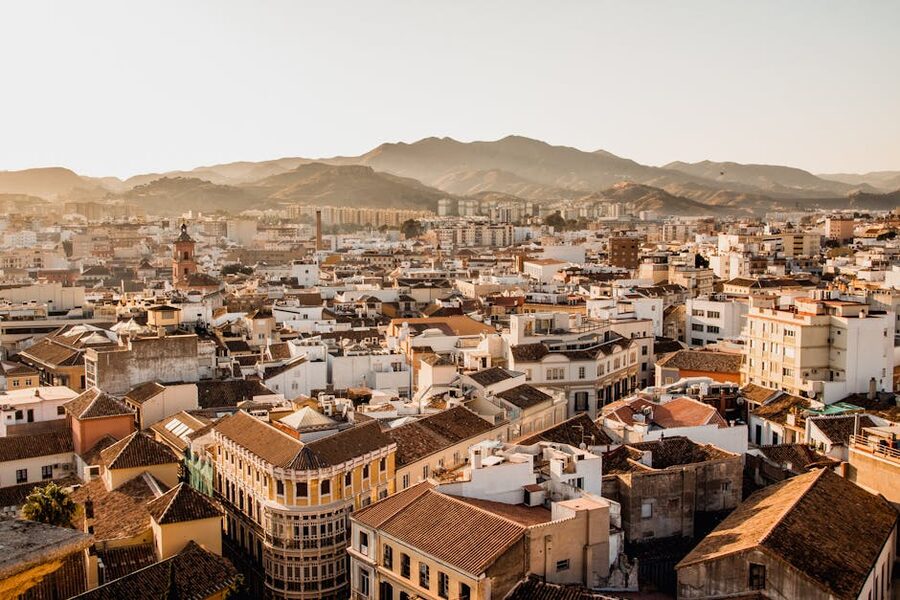
If you’ve read any flamenco guide in English, the route looks settled. Seville for the gravity, Granada for the cave shows in Sacromonte, Madrid for the late-night tablaos. Málaga rarely gets a paragraph. It’s not because the city lacks flamenco. It’s because Málaga’s flamenco has always been folded into Andalusian daily life rather than packaged for tourism, and that makes it harder to find from a hotel desk.
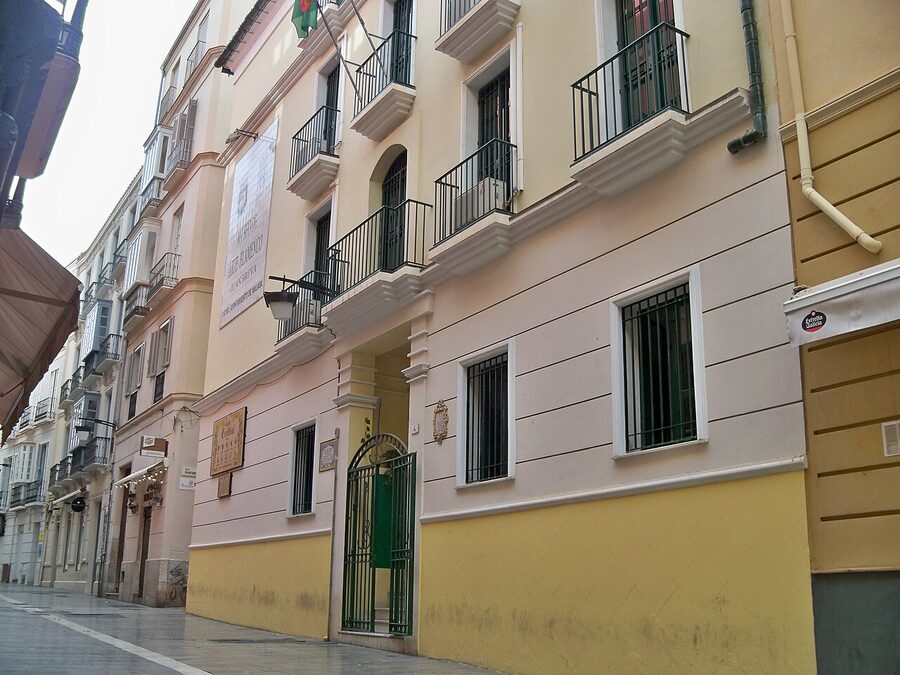
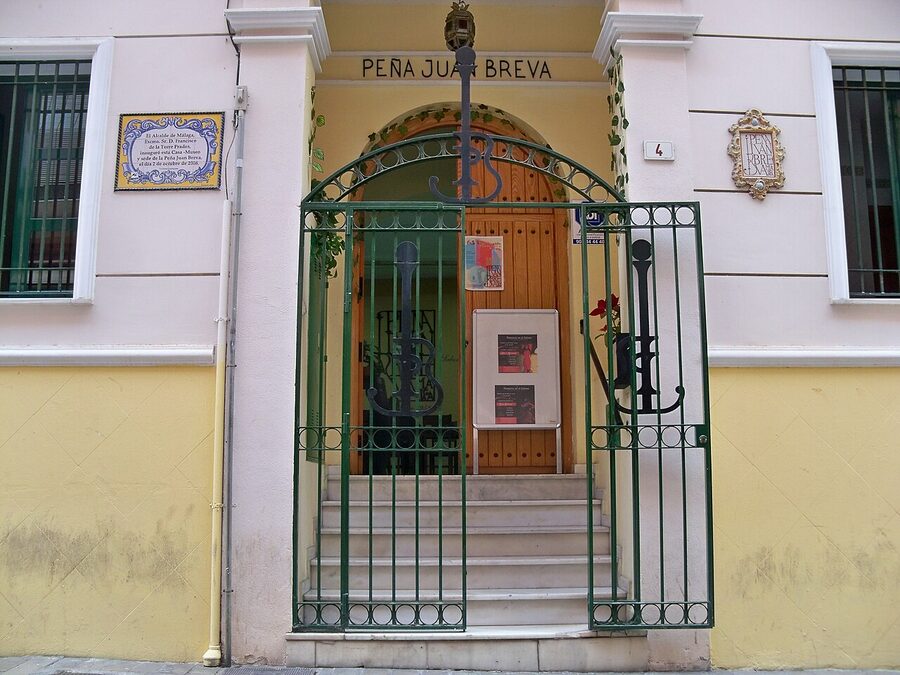
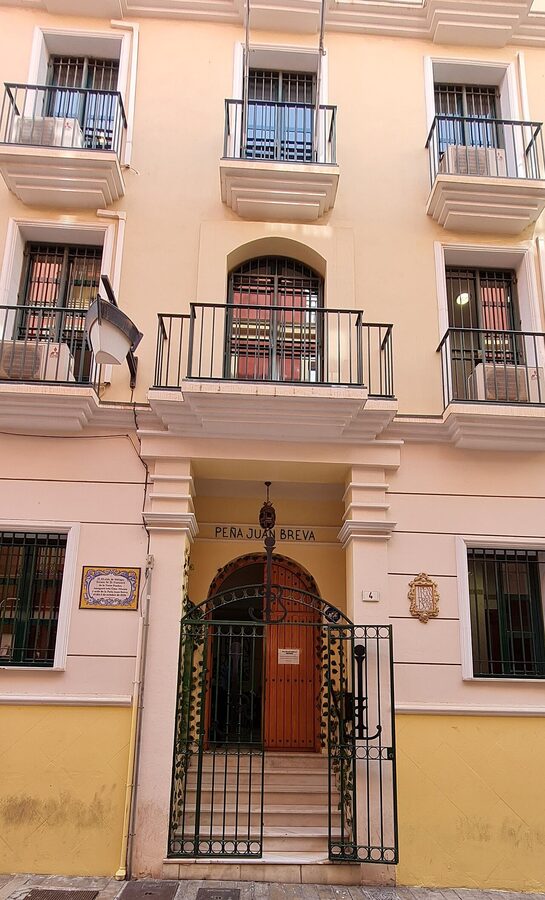
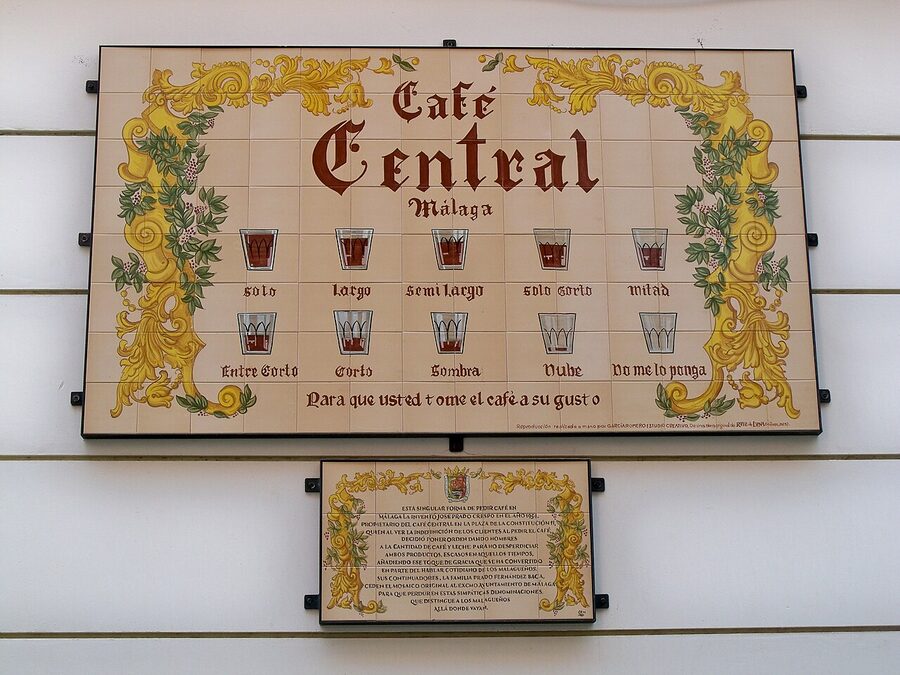
The city was a serious flamenco centre in the 19th century. Singers like Juan Breva (born nearby in Vélez-Málaga in 1844) and El Canario de Álora set the tone for what’s now called the cante malagueño. The famous Café Central on the Plaza de la Constitución hosted flamenco for decades. The peña that bears Juan Breva’s name still runs out of an unassuming building on calle Ramón Franquelo, four minutes’ walk from the cathedral, and it doubles as the city’s flamenco museum. Most visitors never find it.
Compare that with what happens in Seville. The tourist tablaos around the cathedral and Triana put on three or four shows a night for cruise crowds, and the prices reflect it. The shows are usually good. They’re also expensive, packed, and rehearsed within an inch of their life. If you’ve already booked a Seville show through our Seville flamenco guide, you know the feel. Málaga is the same art form, less varnish.
The reframe I’d offer: Málaga isn’t flamenco-lite. It’s flamenco at the volume the Andalusians actually live with, in a city that’s half-tourist, half-working, where the locals still go, the way Amsterdammers actually live around the streets you walk on a red-light walking tour.
The One Thing You Won’t See in Seville: Verdiales
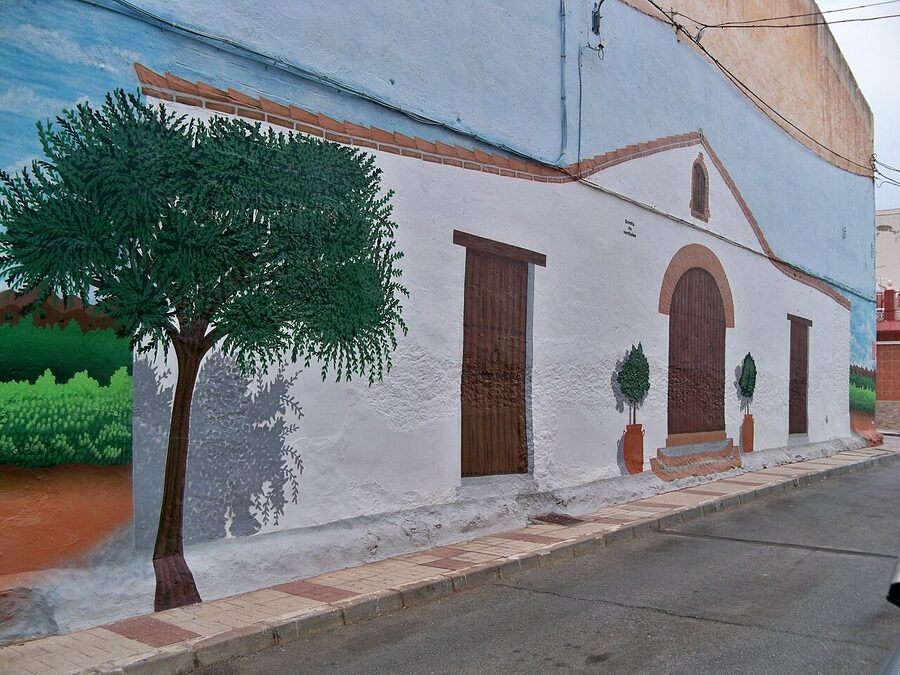
If you only learn one new word from this article, learn this one. Verdiales is the folk-music tradition of the Montes de Málaga, the hill country directly north of the city. It uses violin (not just guitar), small cymbals, tambourine, and a lute. It predates flamenco. Flamenco scholars argue endlessly about whether verdiales is a flamenco subgenre or a parallel tradition. What’s settled: Málaga’s flamenco singers grew up hearing it.
You won’t see verdiales at a tablao in Seville. You probably won’t see it at the Málaga tablaos either, in the strict sense. What you’ll see in Málaga is flamenco played by people who carry verdiales in their bones. The cante malagueño is melodic where Sevillian flamenco is percussive. The hands fly more, the foot percussion runs slower, the dancer keeps more eye contact with the singer. Once you know what to listen for, you can’t unhear it.
If you’re in Málaga over Christmas week, look up the Día de los Verdiales. It’s free, it’s outside, it’s chaotic, and it’s the truest thing you’ll see all year. The rest of the time, the Peña Juan Breva is the easiest way to hear it in town.
The Three Tablaos Worth Booking
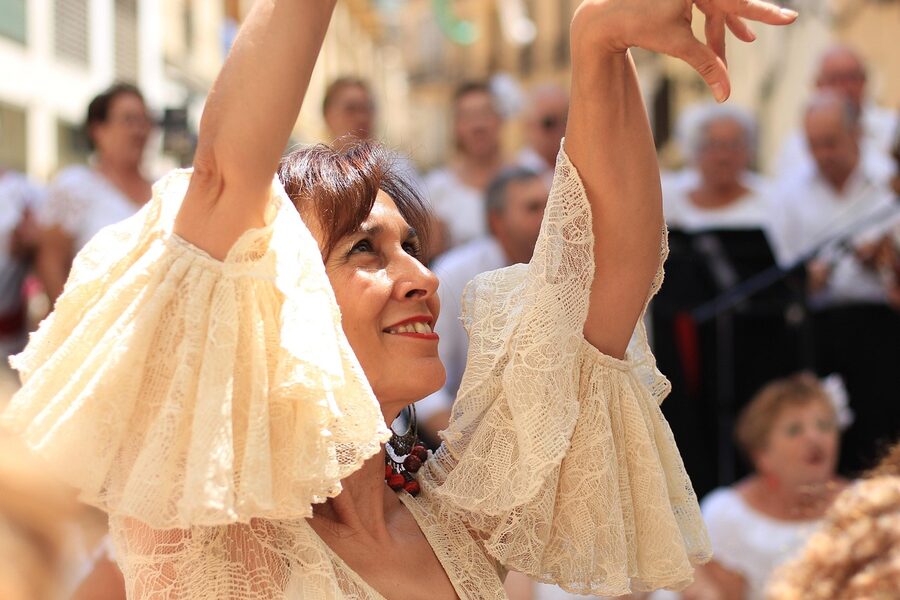
The city has three serious tablaos worth your time. None of them seat more than about 100 people. All three sit inside a 12-minute walk of each other in the historic centre. Pick by mood, not by ranking.
1. Teatro Flamenco Málaga: $34
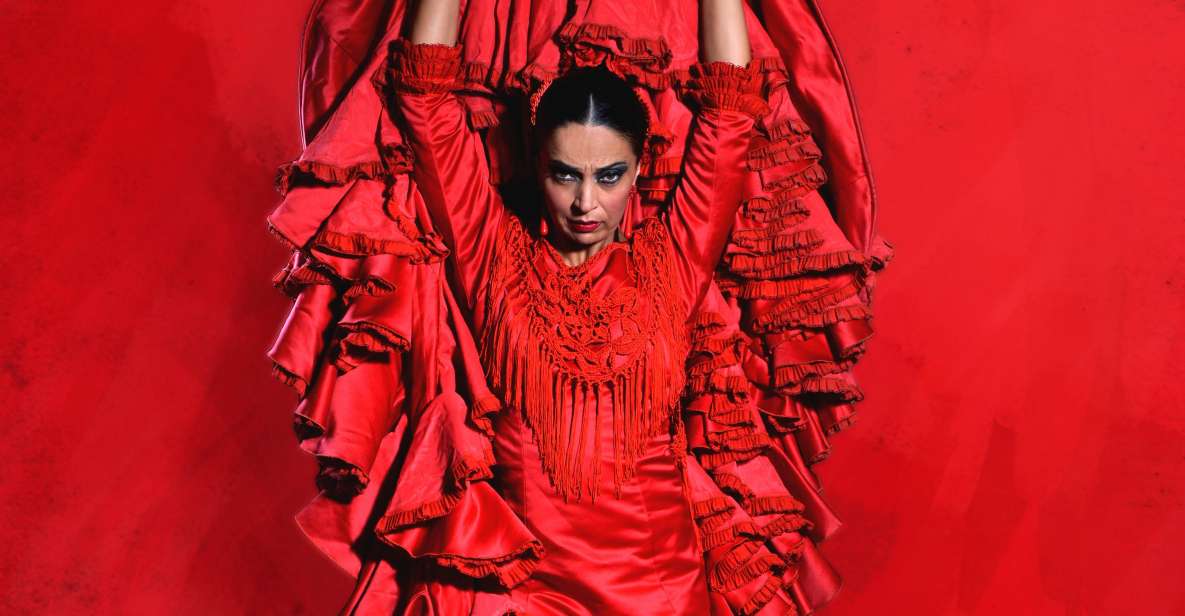
This is the city’s flagship and the easiest first booking. Hour-long, professional company, fixed seating in a proper small theatre rather than a restaurant table. If you want one Málaga tablao and you’re not picky about format, take this and go for tapas afterwards (our Barcelona tapas tour piece walks through how the Andalusian tapeo differs).
2. Flamenco Alegría: $30
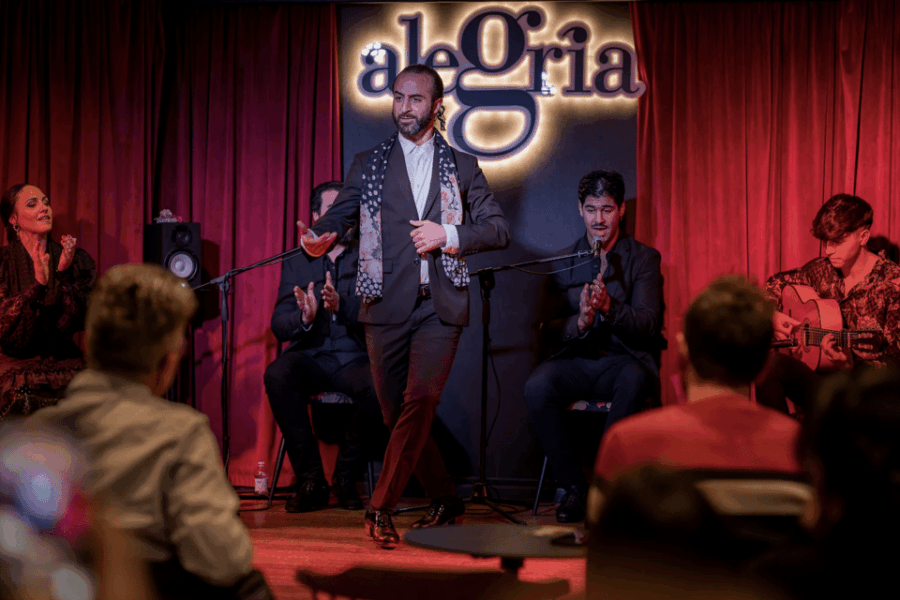
This is my pick if you’ve already seen a Seville show and want a Málaga programme that feels different rather than parallel. The cuadro at Alegría tends to favour cante (the singing) over the showier zapateado, which is closer to the malagueño tradition we covered above.
3. El Gallo Ronco (The Loud Rooster): $27
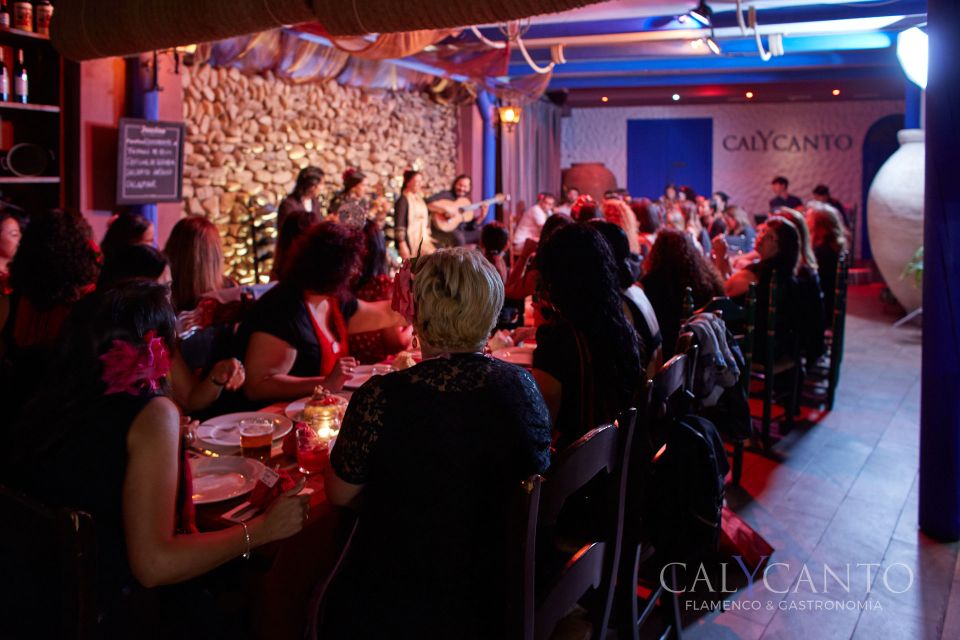
The cheapest of the three and the most intimate, in a venue that feels closer to a backroom peña than a theatre. Our review writeup notes the proximity to the band, which is what makes it work. If $27 versus $34 actually matters to you, take this one and you won’t feel cheated.
How Málaga Compares to the Other Flamenco Cities
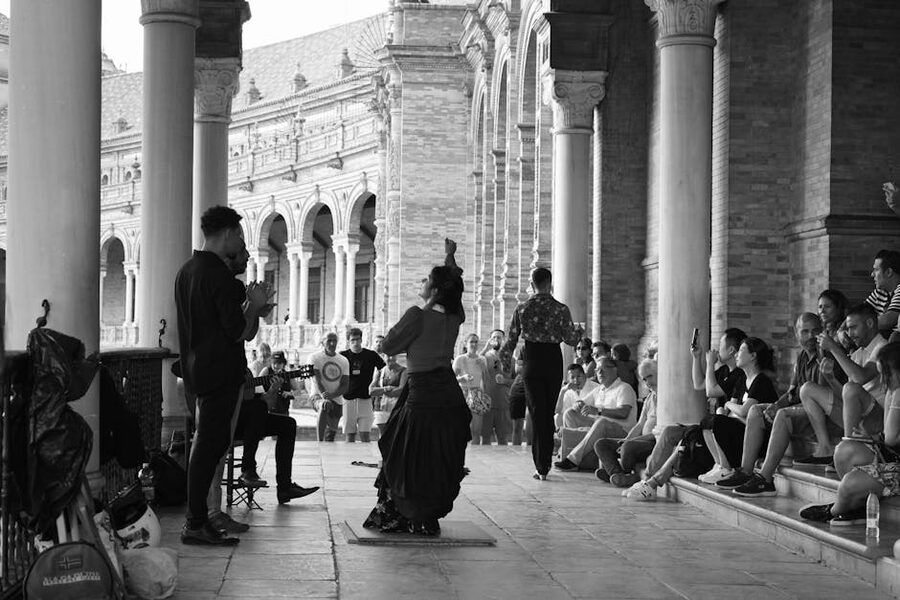
If you’re touring Andalusia and trying to decide which city to commit to a flamenco show in, here’s the honest sort. Flamenco in Seville is the deepest pool. Triana, Los Gallos, El Arenal, La Casa del Flamenco. You’ll pay $40 to $60 a head, the standard is high, the room will be full of cruise day-trippers. Granada’s Sacromonte cave shows are the strangest and the most photogenic, half spectacle, half folk concert. Madrid’s late-night tablaos draw the touring artists who don’t live in Andalusia, which is its own thing. Barcelona’s flamenco scene exists because Catalonia inherited the Andalusian diaspora, and the shows there reflect that distance from the source.
Málaga is the cheapest of the five and the easiest to fold into a beach-and-museum trip. The shows are shorter, the rooms are smaller, the locals go more often. If your priority is “I want to see flamenco in Spain and I don’t want to plan it as the centrepiece of my day”, Málaga is the right pick.
What a Show Actually Looks Like
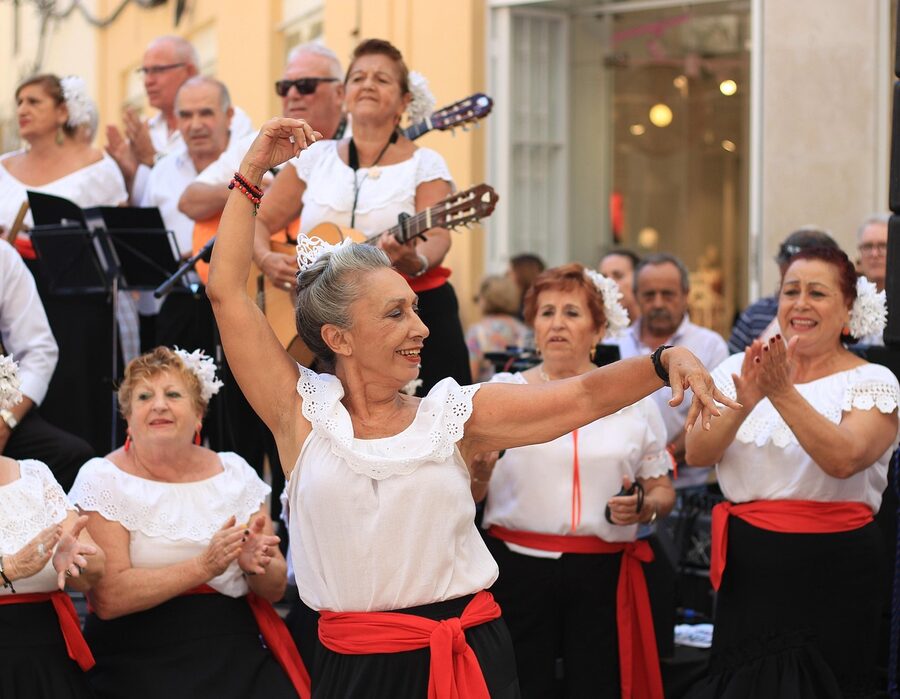
You arrive 15 minutes before the show, hand over the QR code at the door, walk into a small dark room, and pick a seat. The front row is best for the foot percussion (you’ll feel it in the floor). Row three is best for sightlines. The bar serves drinks for ten or fifteen minutes, then the lights drop.
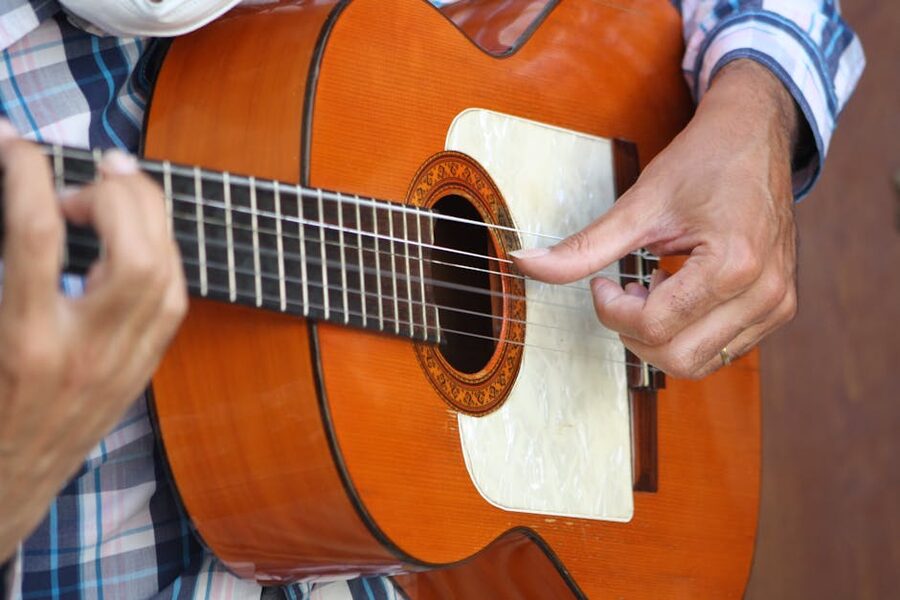
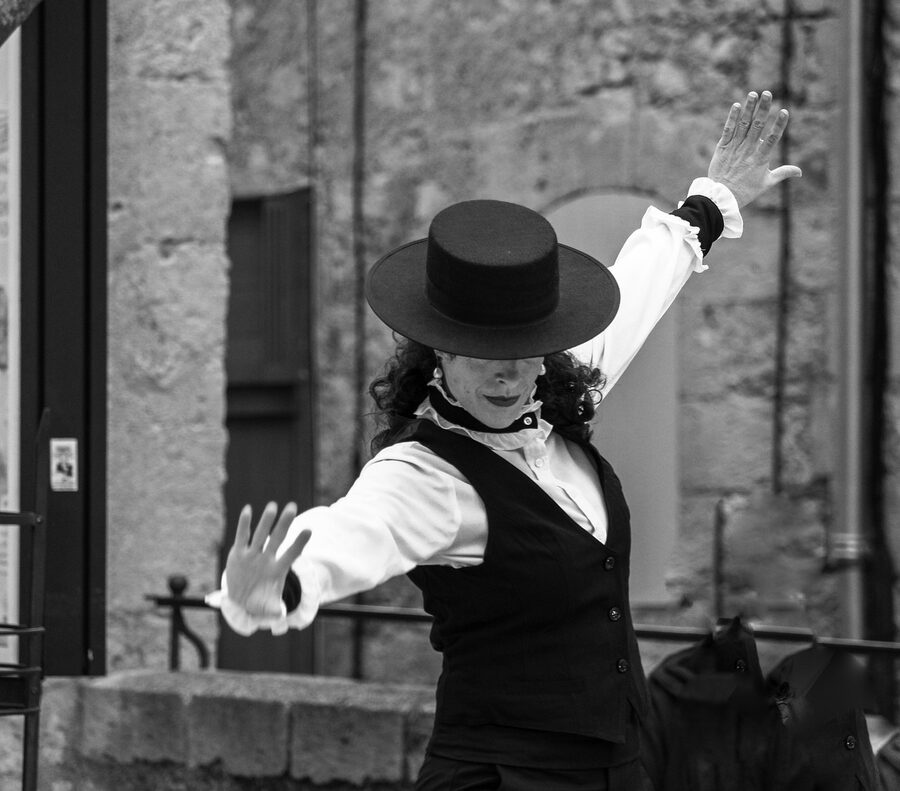
The cuadro walks on. Usually a guitarist, a singer (the cantaor or cantaora), one to three dancers, and someone clapping the compás on a wooden palo. The first piece is almost always a slow cante for the singer alone. New visitors expect dancers from minute one and don’t always know what to do with five minutes of solo singing in a language they don’t follow. Stay with it. The cante is the foundation of the entire art form, and the dancing reads completely differently after you’ve sat through it.
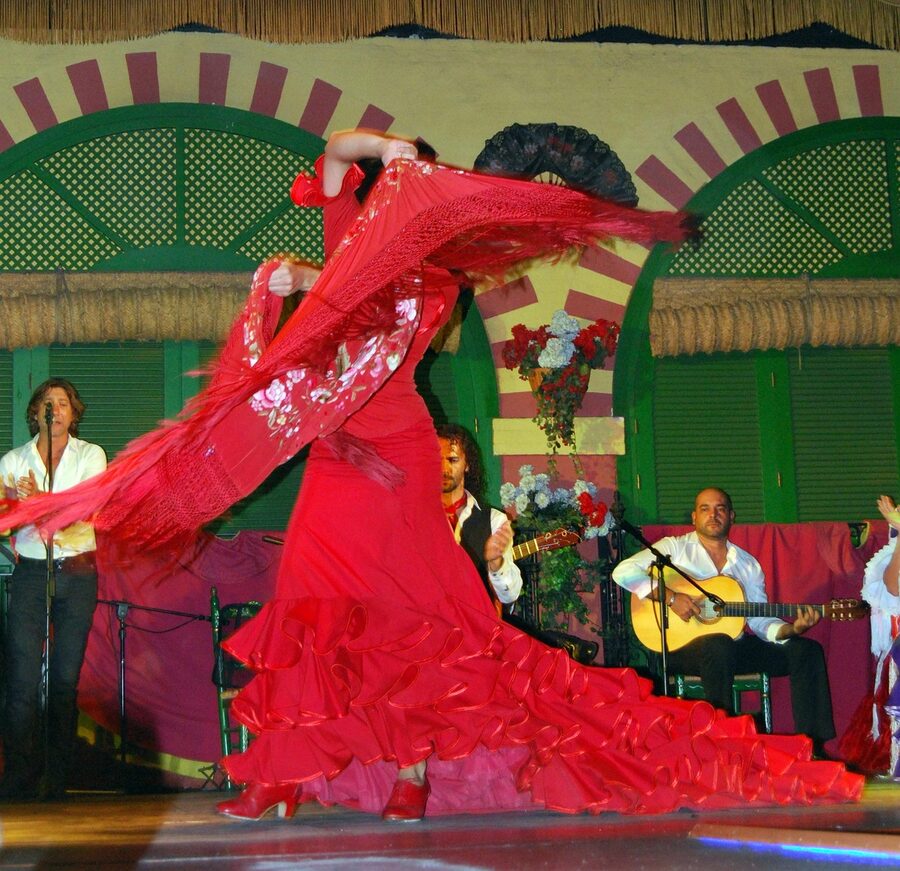
The dancing arrives in escalating waves. Solo, then duo, then the full cuadro. By the closing piece (often a bulería or alegría) everyone on stage is involved and the audience is clapping the compás along. You don’t need to know what palo (style) you’re listening to. You will feel when the energy lifts.
Length: 55 to 65 minutes. No interval. If you’ve booked a dinner package, you eat for an hour before the show, the music isn’t over food. That’s a good thing. Trying to eat tapas while a singer is opening with a soleá is uncomfortable for everyone.
Booking Practicalities
How far ahead. In high season (April to October, especially around Semana Santa and August) the flagship Teatro Flamenco show sells out two or three days ahead. Book before you fly. In low season you can usually walk up to the venue at 7pm for an 8pm show. I wouldn’t risk it for a group of four or more.
Show times. Most shows start between 7pm and 9.30pm. Teatro Flamenco runs two slots on busy nights. Alegría and El Gallo Ronco do one. Late-night flamenco the way Madrid does isn’t really a Málaga thing.
Dress code. None. The locals turn up in trainers. Tourists overdress. There’s no benefit to a smart shirt for a $30 ticket.
Photos. The venues will tell you no flash. They mean it. Phone shots without flash are tolerated but considered bad manners during the cante. Film during the dancing if you must.
Drinks. Built into most tickets at all three. Sangria, wine, beer, sometimes a beer-and-tapa option. The drinks aren’t great. The flamenco is.
The Peña Juan Breva and the Free Friday Question
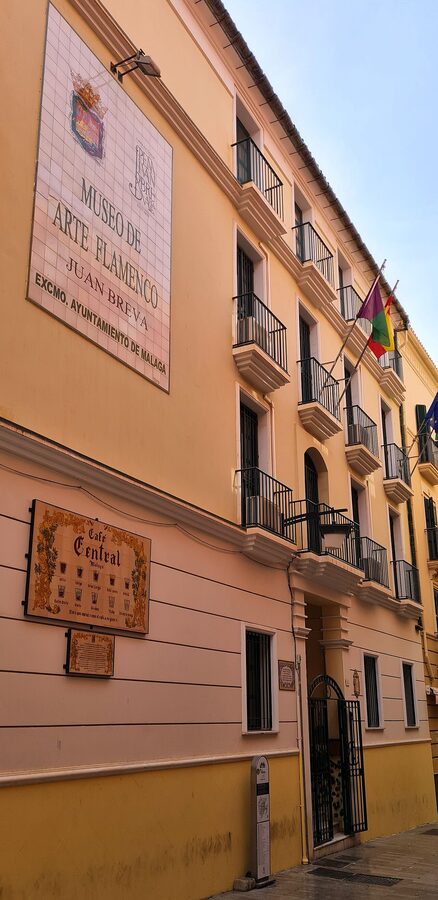
You may have read that the Peña Juan Breva runs free Friday-night flamenco. That used to be more reliable than it is now. The peña still runs flamenco evenings on a rotating schedule, sometimes Friday, sometimes another night, and the entrance is free or nominal (a couple of euros, sometimes a drink minimum). The catch: the schedule isn’t published online with any consistency, and the room is small. If you’re staying near the cathedral, walk past in the late afternoon, take a photo of the chalkboard, and come back at 9pm.
The other thing the peña does well: it doubles as the city’s flamenco museum. Modest, three rooms, a couple of euros to enter, and the staff (who are flamenco people, not curators) will sit and talk you through the cante malagueño in surprising depth. If your trip is two days and you can only do one flamenco-related thing in the morning, do this and book a tablao for the evening.
A Brief History of Flamenco in Málaga
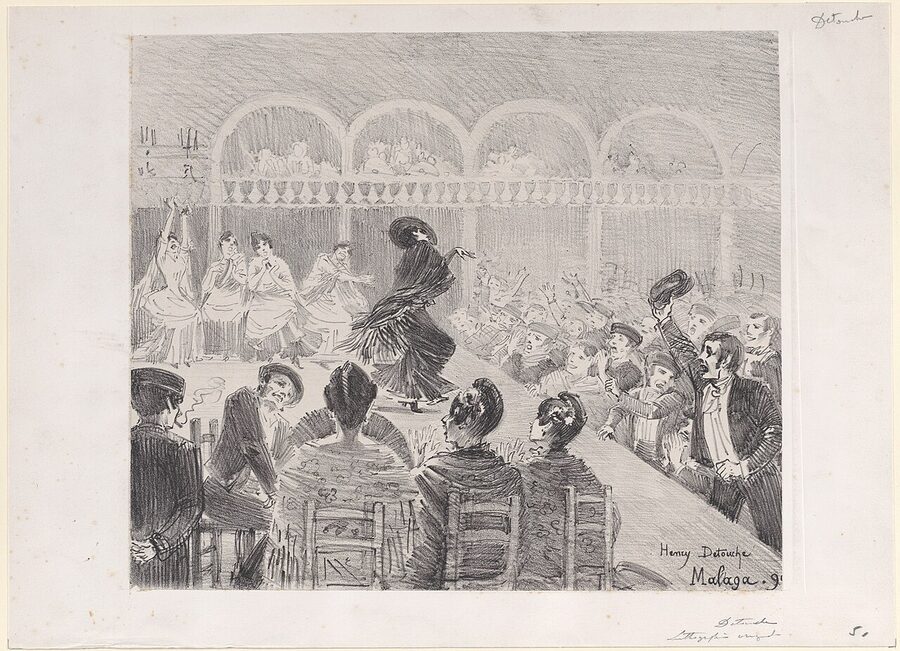
The shorthand version. By the 1840s flamenco was emerging across Andalusia as the music of the Romani and working-class south. Málaga’s Café Central on Plaza de la Constitución became one of the earliest commercial flamenco venues in Spain, with regular cante from the 1880s, on the same Belle Époque commercial-cabaret circuit that produced the Moulin Rouge in Pigalle. Juan Breva (real name Antonio Ortega Escalona, 1844 to 1918) was the first nationally famous flamenco singer associated with Málaga. He died poor, like most of the great early singers.
The cante malagueño consolidated through the late 19th century into a cluster of styles: malagueñas, jaberas, rondeñas, fandangos malagueños. They share a melodic, almost Moorish ornamentation and a structure that’s looser than the strict palos of Seville’s solea or Cádiz’s alegría, closer in feel to a single voice in a small dim room than to a wraparound projection like Fabrique des Lumières in Amsterdam. If you’ve stood in the Alhambra in Granada and noticed how Andalusian Christian architecture borrowed from the mosques, the flamenco lineage is doing something similar in sound.
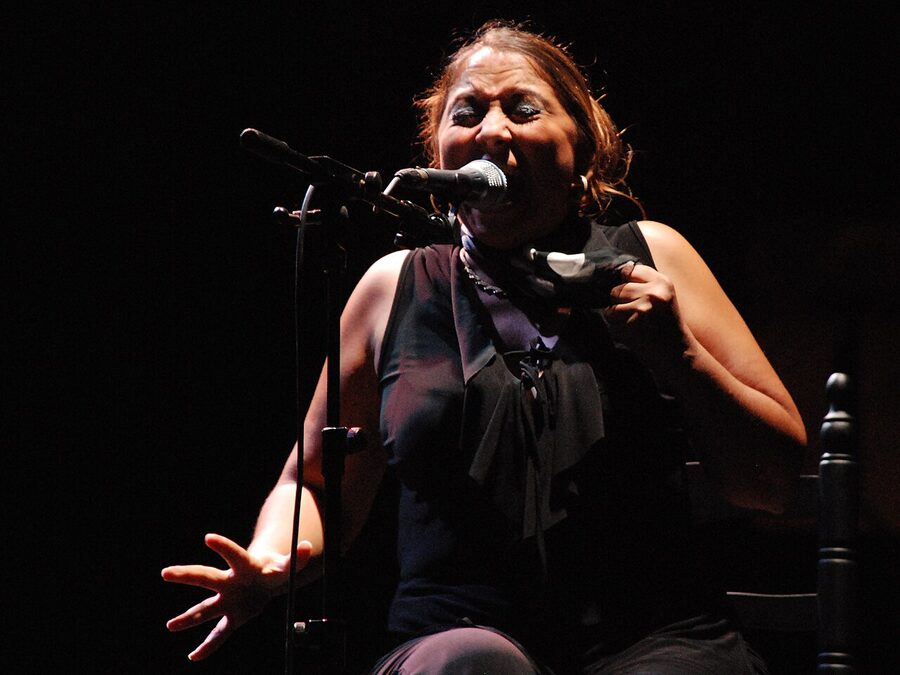
The 20th century is the long fade. The cafés cantantes closed. Franco’s regime tried to package flamenco as Spanish national folklore, which broke its connection to the Romani and working-class south. Málaga’s flamenco went underground, into the peñas (private flamenco clubs run by aficionados) and the verdiales fiestas in the mountains. The tablao revival you’re booking now is a 1970s-onward phenomenon, and the better Málaga venues are run by people whose families came up through the peñas.
Verdiales: The Mountain Detour
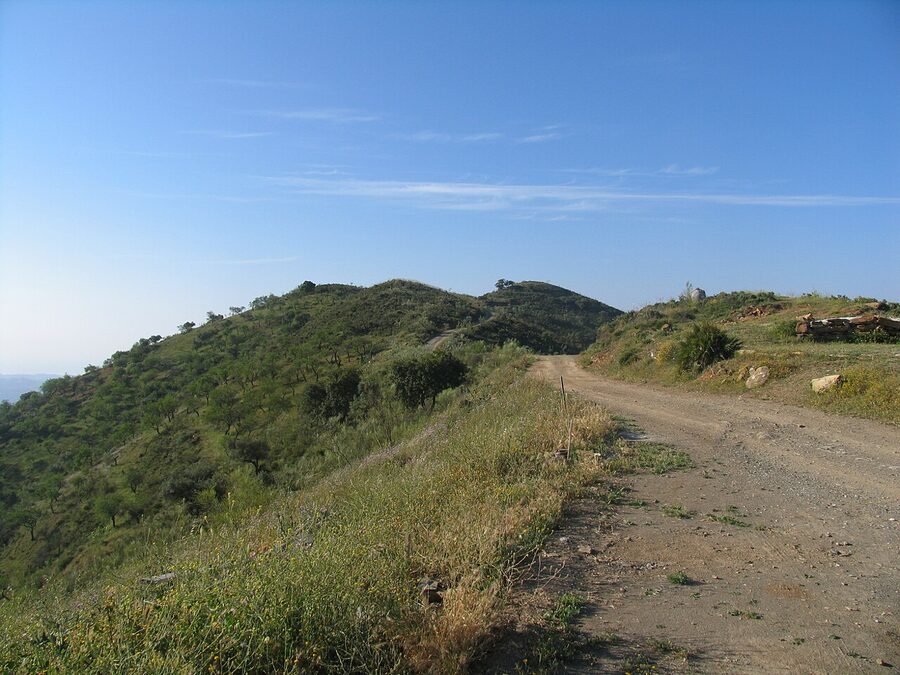
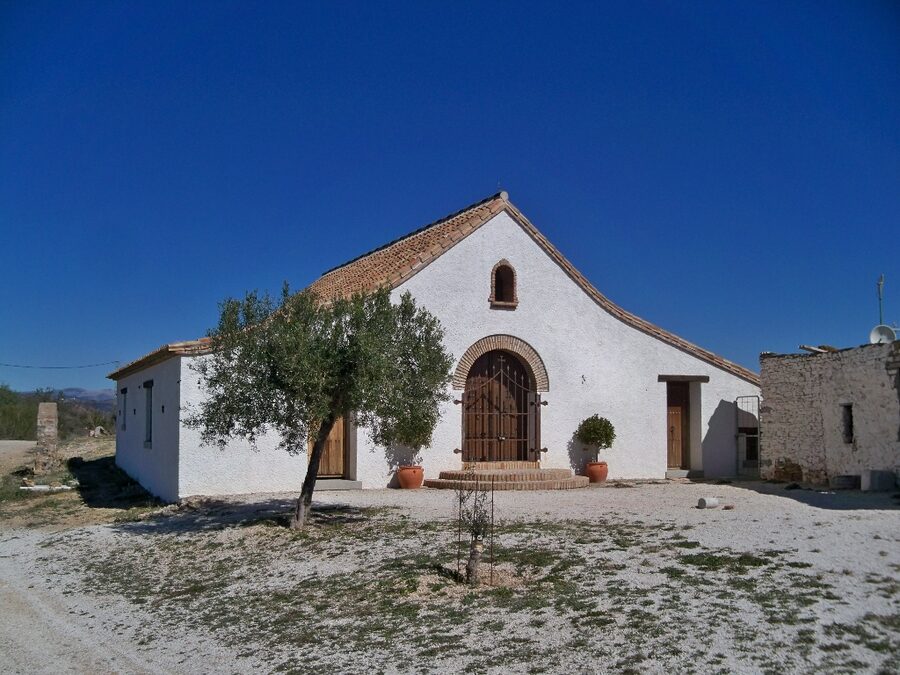
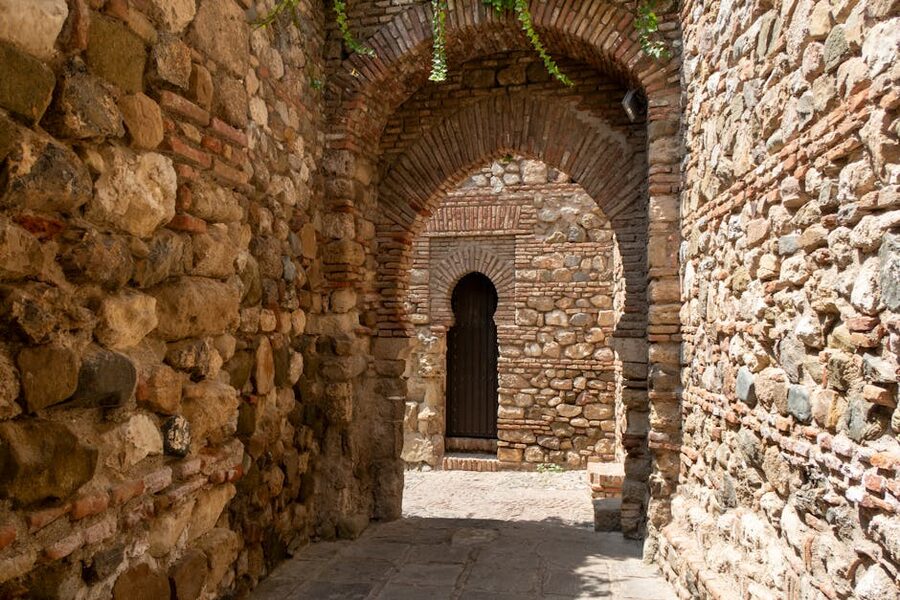
If you’ve got a free morning and a rental car, drive 25 minutes north into the Montes de Málaga to the Ermita de los Verdiales. This is the spiritual home of the verdiales tradition, and on the right Sundays you’ll catch a panda rehearsing. There’s no schedule, no website, no tickets. Just a small chapel, some olive trees, and the chance of music.
If you’re not going to drive into the hills, the next best thing is the verdiales rooms in the Peña Juan Breva museum, where the violin-and-lute instruments are explained. You’ll know how it sounds before you go, which makes the unfiltered version (when you eventually find it) hit harder.
The annual Día de los Verdiales falls on 28 December. It’s a working day in the Spanish calendar, the equivalent of April Fool’s, and the verdiales pandas come down from the hills and play in the city centre and at the hermitage. If your travel calendar lines up, this is the single best day of the year to be in Málaga for the music.
Pairing the Show with the Rest of Your Day
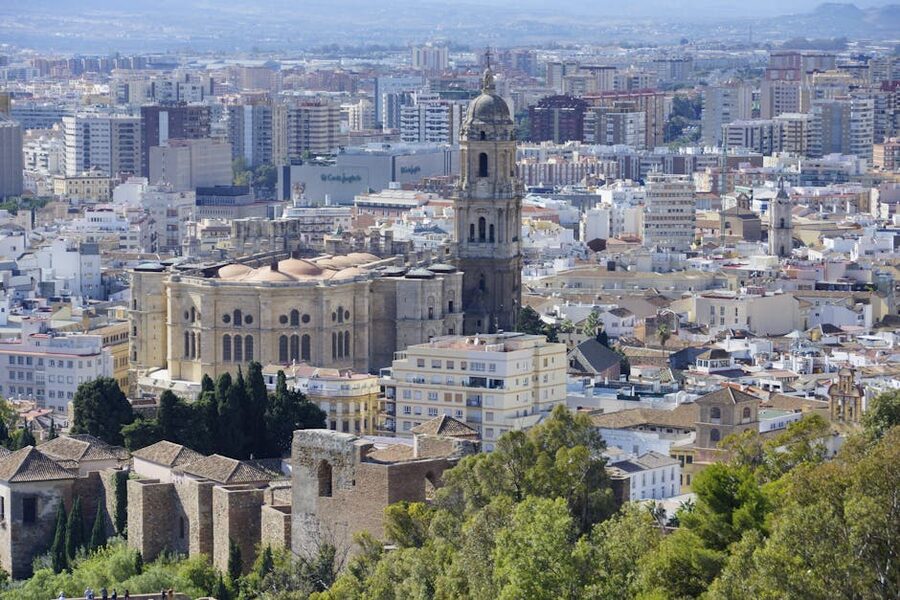
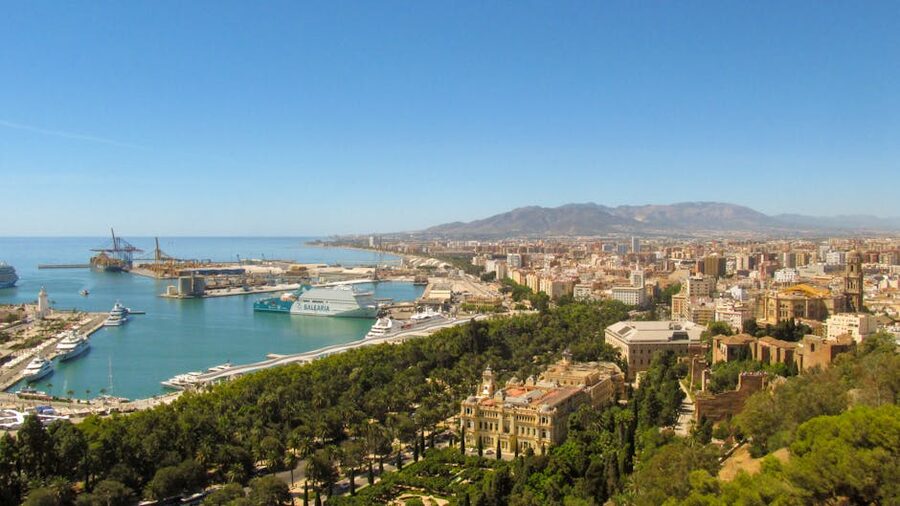
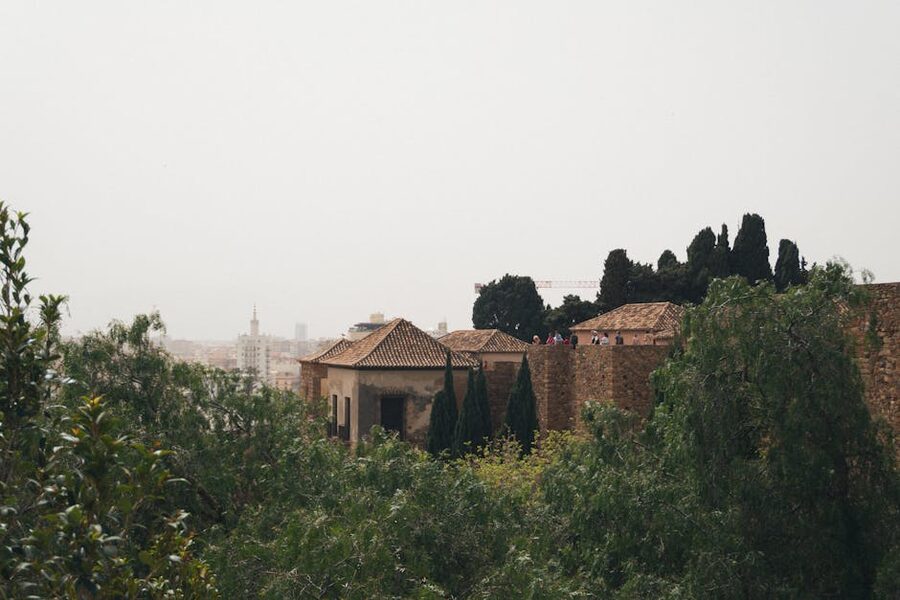
Málaga’s old town is small enough that you can build a full afternoon-into-evening around a tablao without taxis. A reasonable shape: the Picasso Museum in the late morning, lunch in the streets behind Plaza de la Merced, an afternoon climb up to the Alcazaba and Roman theatre, drinks back in the centre at 6pm, an 8pm flamenco show, tapas afterwards.
If you’ve got a second day, the Caminito del Rey works as a half-day out, and you’ll be back in Málaga by 4pm with time for an early show. Córdoba is a longer pull on the train but doable as a long day trip if you’ve already done the Alhambra and the Royal Alcázar circuit. Some travellers swap a Seville night for a Málaga night and find the trade favourable for the price.
Costs, Bluntly
The price ladder for a one-hour Málaga flamenco show looks like this:
- Show only: $27 to $34, drink usually included.
- Show plus tapa and drink: $35 to $45.
- Show plus multi-course dinner: $55 to $80.
Seville’s equivalent show-only ticket sits closer to $40 to $60, and the dinner shows can cross three figures. Granada’s Sacromonte cave shows track Seville’s pricing, sometimes higher once transport’s bundled in. So Málaga is consistently the cheapest of the four big flamenco cities.
If you’re choosing for cost: take El Gallo Ronco, skip the dinner add-on, eat tapas at Casa Aranda or El Pimpi after the show. You’ll spend about $50 total for a flamenco evening that compares fairly with anything you’d get in Seville for double.
Common Mistakes
Booking the dinner package by default. The food is fine, not great. The flamenco is the point. Eat before or after.
Choosing the venue by Google rating without reading recent reviews. The dancers and singers rotate. A tablao is only as good as the cuadro on stage that night. Read the latest 30 days of reviews, not the all-time average.
Skipping the cante. The first 10 minutes of solo singing isn’t a warm-up. It’s the foundation. If you walk in expecting nonstop dancing you’ll think the show is slow.
Trying to do flamenco in three different cities. One excellent show in one city beats three rushed shows. If your trip touches Seville, Granada, and Málaga, pick the one with the best timing for your evening and commit to it. The other cities give you their flamenco better through the streets, the museums, and the old quarters.
If You’re Picking Just One City for Flamenco in Spain

Pick Seville if it’s your only flamenco show and you want the postcard. Pick Granada if you want spectacle and a cave. Pick Madrid if you’re already there for the Prado and the Reina Sofía and your evenings need filling. Pick Barcelona if Catalonia is your base and you don’t want the train south.
Pick Málaga if you want the show that costs less, lasts the right length, and feels like the locals are still in the room. The verdiales heritage gives the city a flamenco DNA you won’t find at the Sevillian dinner shows, and the Peña Juan Breva is the kind of small institution that makes a city feel real. You won’t be disappointed. You’ll probably tell the next traveller they should skip Seville and come here instead.
What Else to Read Before You Go
If you’re building a longer Andalusian itinerary, the Royal Alcázar in Seville is the natural Moorish-architecture pair to Málaga’s own Alcazaba, and a flamenco-and-fortress double-day in either city pulls together. The Seville cathedral and Giralda piece covers the late-Gothic side of the same neighbourhood you’ll be eating in after a tablao. For Málaga specifically, our Picasso Museum write-up and the Caminito del Rey guide pair as a two-day plan with a flamenco evening sandwiched between. And if you’re still deciding between Andalusian cities, the Córdoba Mezquita-Catedral is the train-trip extension that closes the loop on the Moorish-Andalusian story the music is rooted in.