
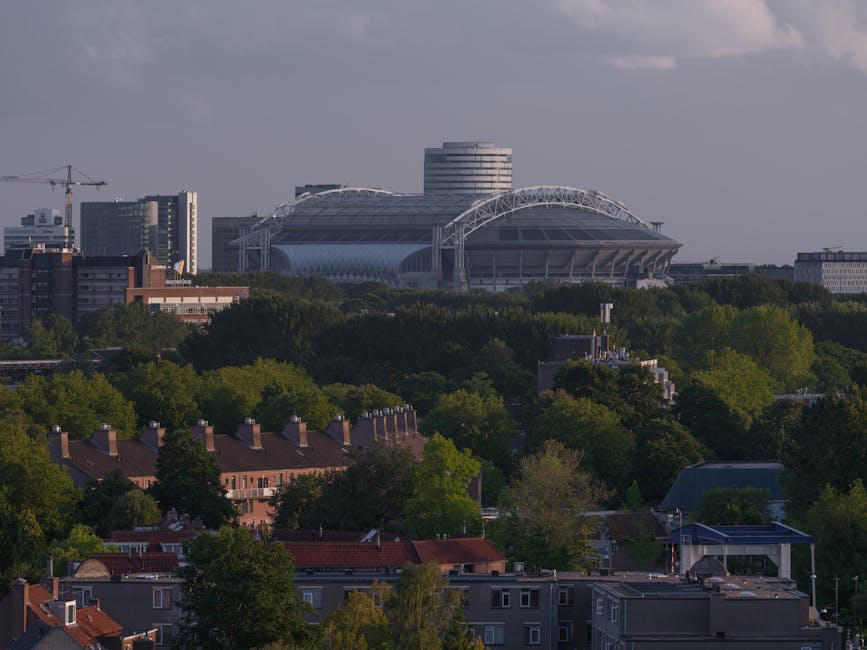
The Players’ Tunnel at the Johan Cruijff Arena is a short concrete corridor with low light and a slight ramp toward the pitch. Stand at the dressing-room end with a tour group on a quiet Tuesday and you can hear your own footsteps. Up the ramp the Bijlmer sky widens into the green oval where some of the most influential football of the 20th century was played.
This is Ajax’s home. The same Ajax of Cruijff and Rinus Michels, of total football, of four European Cups in five seasons, of the youth-academy pyramid that taught Spain’s La Masia how to make a Pep Guardiola. The stadium itself opened in 1996, was renamed for Johan Cruijff in April 2018, and you can walk the full back-of-house route in about ninety minutes for around $26. I’ll tell you exactly how to do it well.
Quick picks: book one of these
- Arena Tour with optional guide ($26): the classic 75-minute walk through tunnel, dressing rooms, press room, pitchside, and Ajax Museum. Check Availability
- VIP Tour with drink and scarf ($51): two hours, skybox view, complimentary drink, and you keep a Cruijff-numbered scarf. The pick if you actually care about Ajax. Check Availability
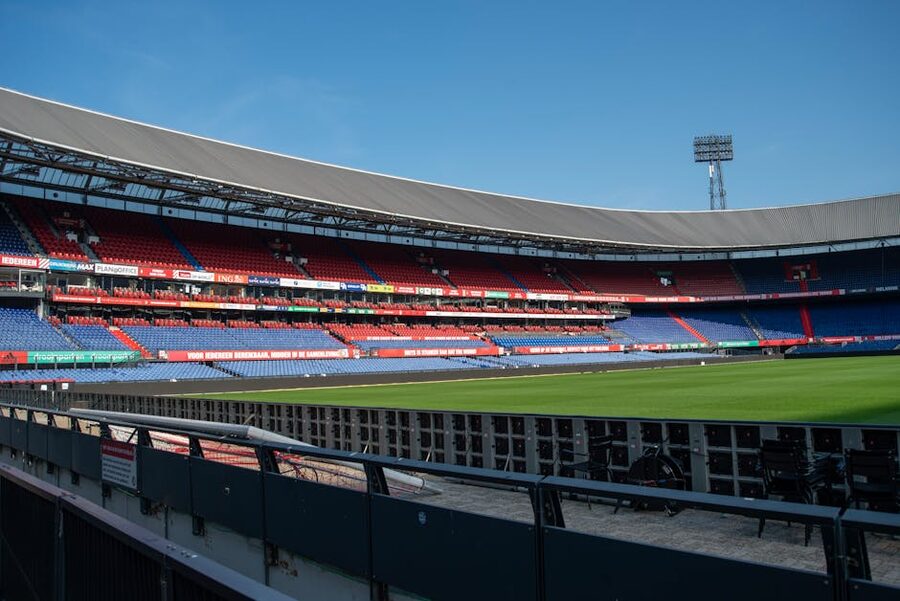
- Rotterdam: De Kuip Feyenoord Tour ($22): the Eredivisie’s other great stadium, 90 minutes, fierce rivalry, often quieter than the Arena. Check Availability
Why this stadium matters (and not just to football fans)
Ajax was founded in 1900 in Amsterdam-Oost. The club name is Greek mythology, the colour scheme is red and white from a 1911 promotion celebration, and for most of the twentieth century it was a mid-sized European side that won Dutch leagues without troubling the continent. Then in 1965 a coach called Rinus Michels took over.

What Michels did at Ajax is the reason a stadium tour in southeast Amsterdam is interesting and not just sentimental. He developed a way of playing where every outfield player could swap positions with every other outfield player. The full-back ran into the centre-forward’s space, the centre-forward dropped to midfield, the midfielder appeared on the wing. Defenders were not defenders. They were footballers who happened to start the move from deep. The pitch was treated as a single contested space the team compressed and stretched depending on who had the ball.
This is what’s now called total football. Ajax won the European Cup three years in a row, 1971, 1972, 1973. They beat Inter Milan in ’72 and Juventus in ’73, and the way they did it embarrassed both clubs publicly. Michels left for Barcelona in 1971, called Cruijff over in 1973, and the same ideas became Spanish ideas a generation later. If you’ve read about Pep Guardiola’s tiki-taka Barcelona, you’ve read about this stadium’s grandfather.
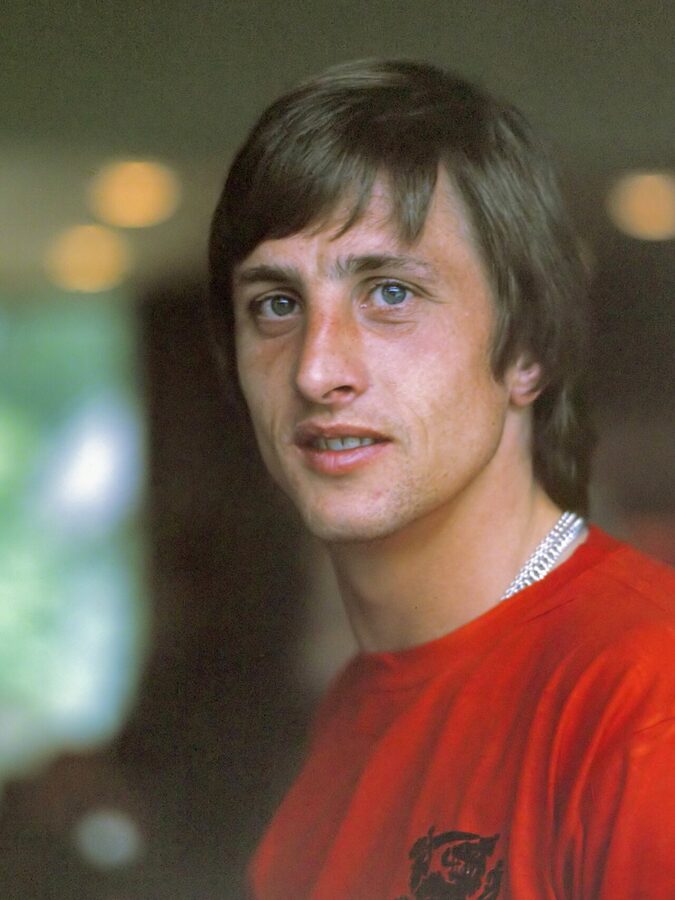
Cruijff himself was the heart of it. Born in Amsterdam in 1947, he joined Ajax’s youth system at ten, debuted in the first team at seventeen, and won three European Cups before he was twenty-six. He moved to Barcelona in 1973 for a world-record fee, returned to Ajax briefly at the end of his career in 1981-1983, then coached Barcelona from 1988 to 1996 and built the cantera youth system that produced Xavi, Iniesta, and Messi. He died of lung cancer in Barcelona in March 2016. The stadium was renamed for him in April 2018. His number 14 was retired by Ajax in 1985, the only retired number in the club’s history.
Booking the tour, in order of what actually matters
First thing: check the Ajax fixture calendar before you book. The tour does not run on home matchdays or the day before a major European fixture, and on smaller cup match days the route is shortened. Ajax’s home games are mostly Saturday or Sunday afternoons in the Eredivisie and Wednesday or Thursday evenings in Europe. If you’re in town for three days and one of them is a Saturday, build the tour around the other two.
Second thing: book online, not at the gate. Drop-in tickets exist but they’re sold from a small kiosk at the Arena Boulevard entrance and they sell out by mid-morning on weekends. The $26 GetYourGuide booking has free cancellation up to 24 hours before, which is what you want when Dutch weather decides to do its thing.
Third thing: choose between the standard tour and the VIP version, and be real about which one you’d actually use. The standard tour covers the same back-of-house route the players use on matchday. The VIP tour adds the skybox, a complimentary drink, and a Cruijff-era scarf, which sounds like fluff until you realise the skybox is the only place you actually see the Arena from above the pitch. If you’re a casual visitor, save the $25 difference and put it toward the Heineken Experience or a canal cruise. If you’re an Ajax person, the VIP version is the right pick and the scarf is a real one.
Tours run roughly hourly from 11am to 4pm in winter and 10am to 5pm April through September. The 11am Saturday slot fills up first because that’s when Ajax fans plan around the standard 4:30pm kickoff. Pick the late-morning Tuesday or Wednesday slot for the quietest tour. I went on a Tuesday in November and there were nine of us in the group.
What you actually walk through
The route is fixed and the order matters. You enter from Arena Boulevard near gate D, are checked in at a small visitor centre, and given a wristband. The guide collects you in groups of about fifteen, in English on the half-hour and Dutch on the hour. The tour starts in the basement.
1. The Press Room
You start where the head coach finishes his Saturday: a low-ceilinged room with the Ajax logo behind a long table and forty plastic chairs facing it. The guide picks up the long microphone the manager uses, sits, and walks you through what a real press conference is like. This is the only part of the tour where you can sit in the manager’s chair, which the guide will encourage you to do, and the photo is worth taking. After Frank de Boer’s resignation in 2015 he left through this same room without speaking, and the chair has a small chip on the right armrest from a journalist’s earpiece.
2. The Home Dressing Room
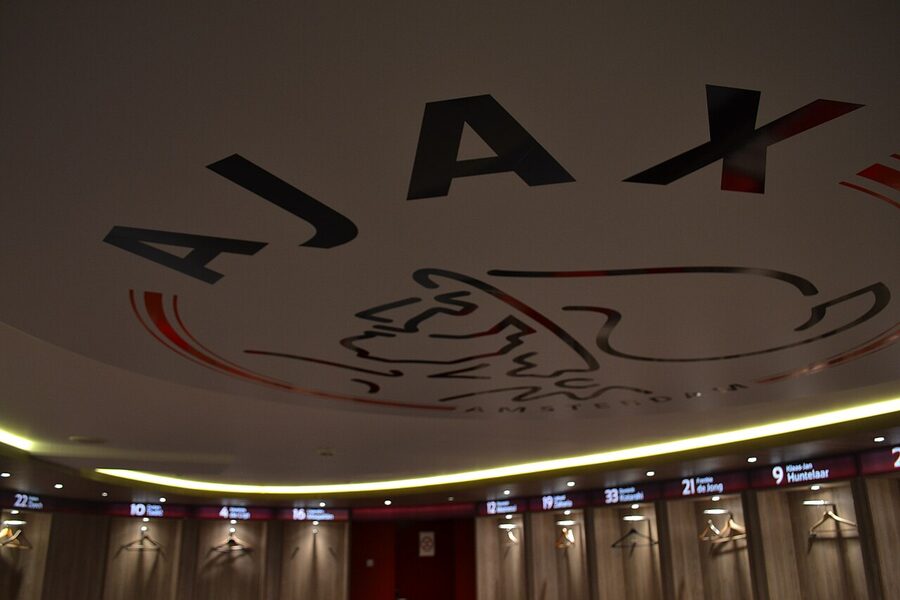
The home dressing room is bigger than you’d expect, U-shaped, with twenty-four stalls along the walls and a freestanding bench in the middle. Lockers are ordered roughly by squad number. The walls are lined in red and white. There’s a tactical board at the manager’s end and a team photo from the most recent league title above it. On tour days the stalls are dressed with current-season shirts, which means you stand in front of a stall and read the name above it: Edson Alvarez, Brian Brobbey, Jurrien Timber when he was still here, Steven Bergwijn, the academy graduates with one number digit and the imports with two.
The guide will tell you the away dressing room is twenty percent smaller. This is true and it’s deliberate. The home club picks the colour, the heating, and the seat width, and Ajax has used those margins for thirty years.
3. The Players’ Tunnel
This is the moment the tour earns its money. The tunnel runs about thirty metres from the dressing-room corridor up a slight ramp to the pitchside opening. It is concrete on the walls, fluorescent strip lighting, an Ajax shield mounted at the dressing-room end, and a UEFA-blue carpet on European matchdays that’s rolled away the rest of the time. The guide stops you halfway up. They’ll point at the shield, mention the Three Towers of Amsterdam underneath the Ajax red, and let you stand there in silence for thirty seconds. It’s a small theatrical pause and it works.
If you turn around, the dressing-room door is closed behind you. If you turn forward, the green of the pitch is framed at the end of the corridor like a film still. The first time I walked it I caught myself making the same forward-leaning posture I make on a long-haul flight when the cabin door closes.
4. Pitchside and the Bowl
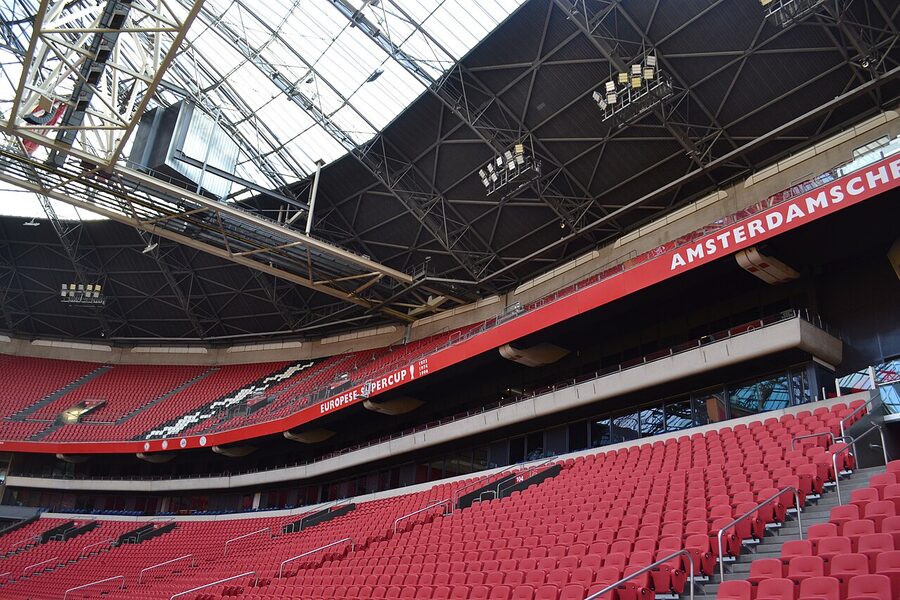
You emerge at the home dugout and walk the white tartan strip alongside the pitch for about twenty metres. You can’t step on the pitch itself. The grass is a hybrid of natural and synthetic fibres, replaced every off-season, and during summer concerts (Coldplay was here last September) it’s covered in interlocking plastic tiles that take a full week to lay and another week to remove.
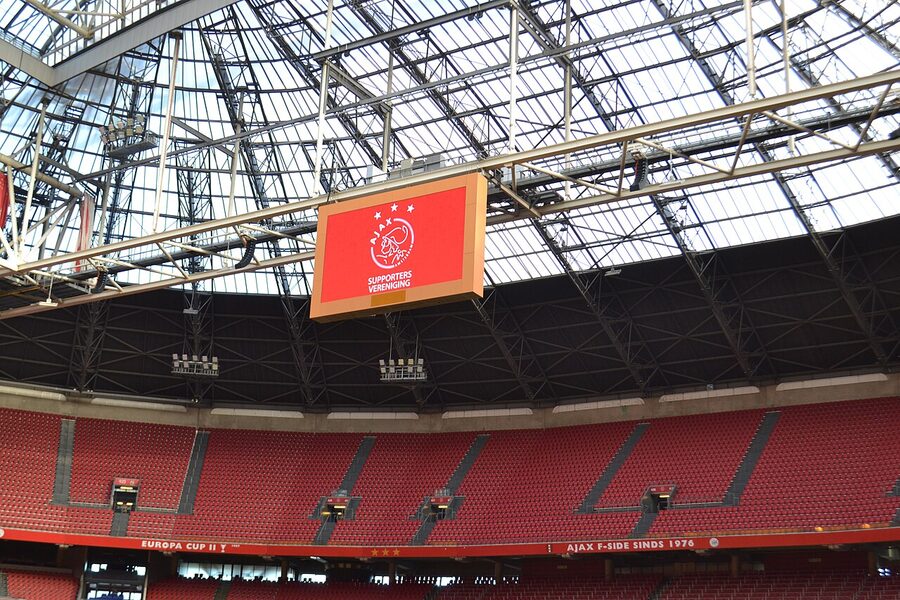
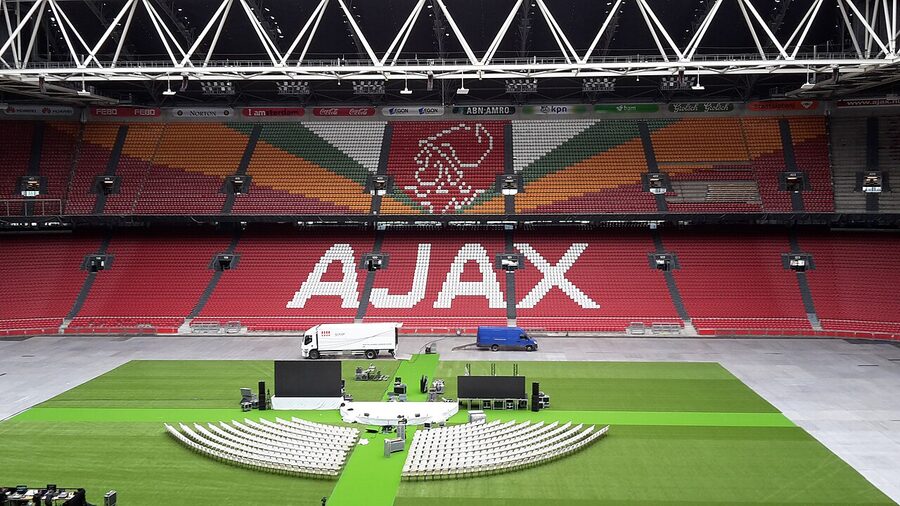
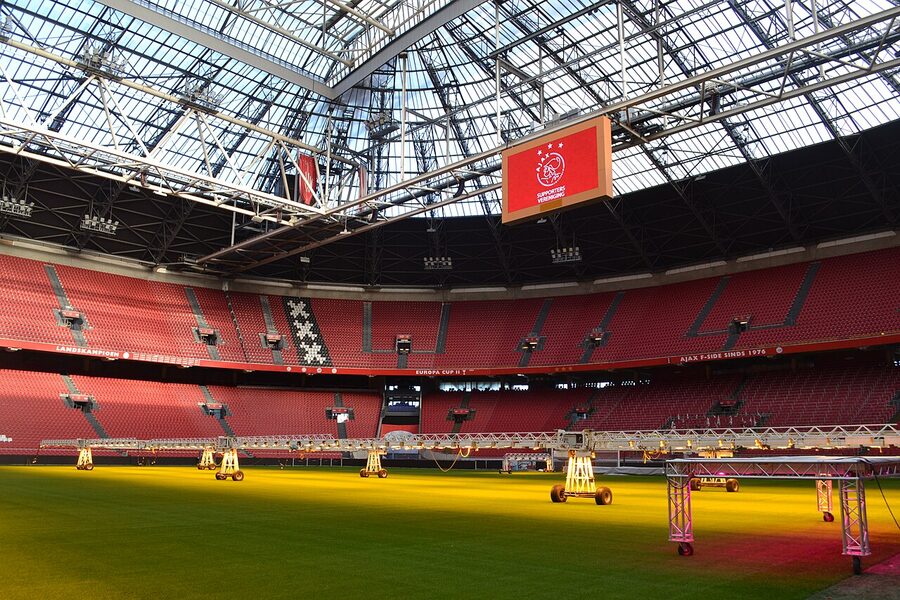
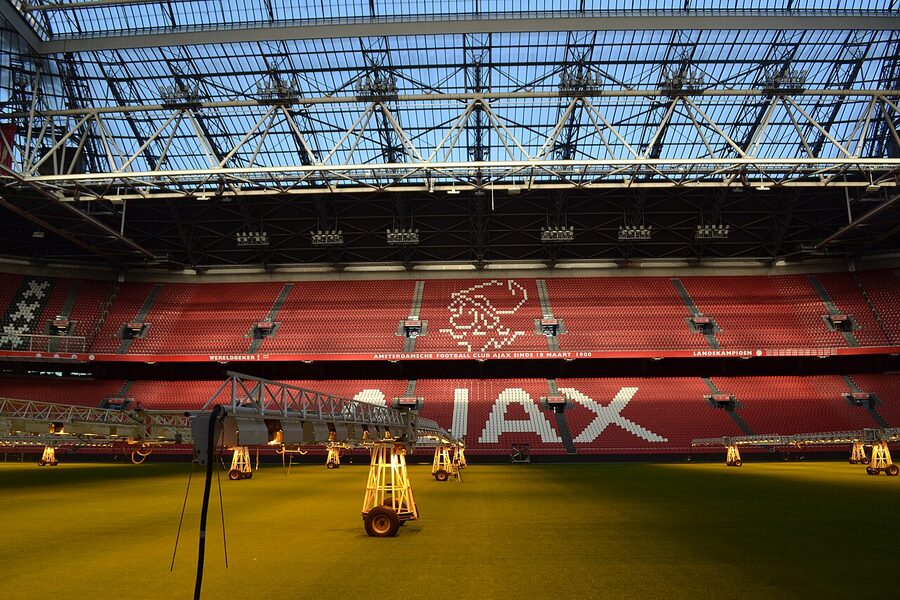
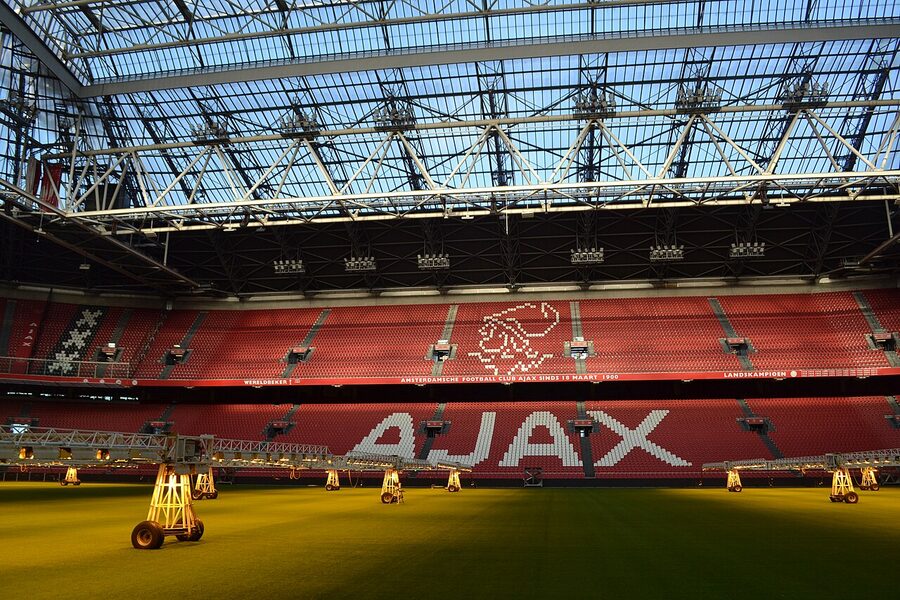
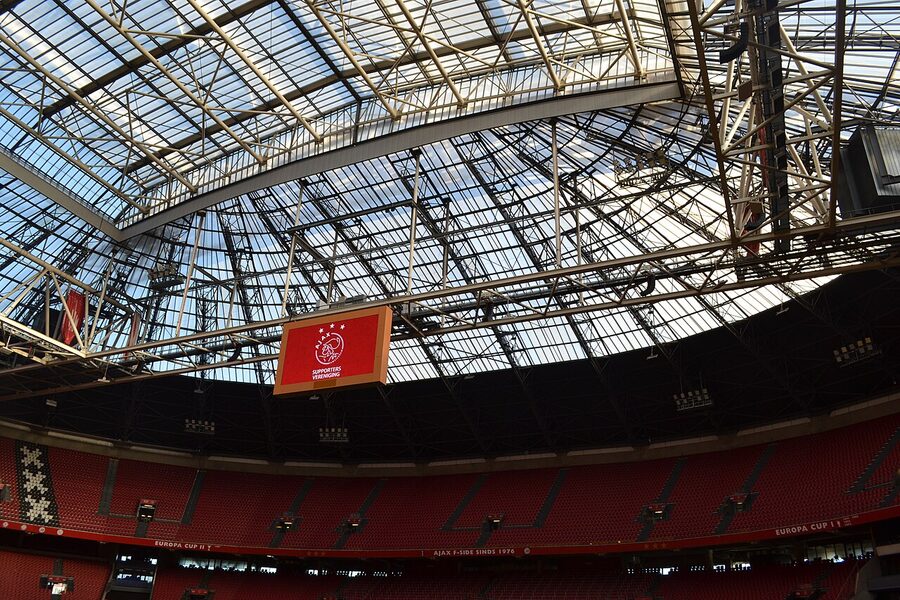
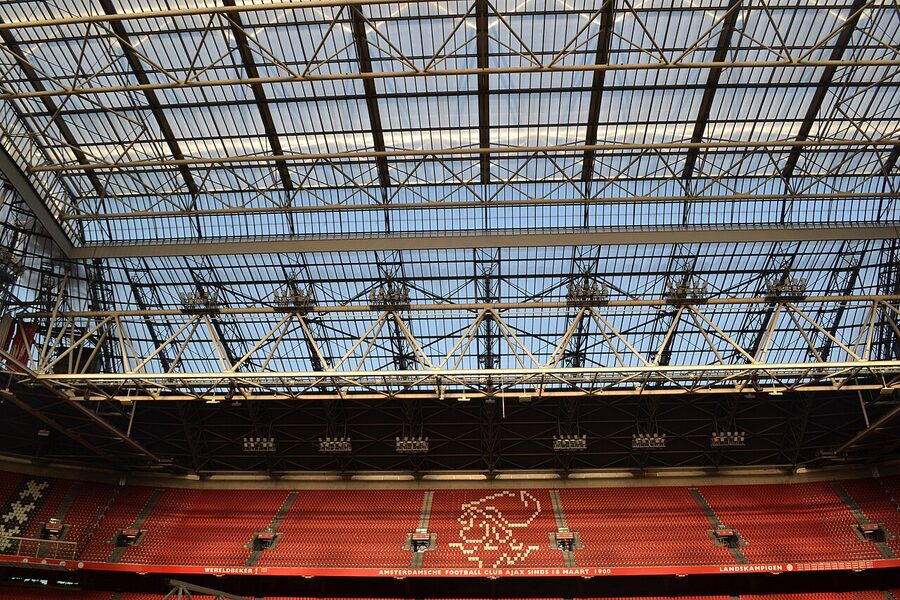
From pitchside you look up. The bowl is the steepest in Europe of any stadium with a 55,000+ capacity. The F-side stand, behind the south goal, is where the Ajax ultras congregate, and on home matchdays they don’t sit, not for the full ninety. The retractable roof above you is in two halves that meet over the centre circle. It was the first of its kind in Europe in 1996 and is still operated daily by a small team in a control room above the south stand.
5. The Skybox (VIP tour only)
If you booked the VIP version, you go up to one of the corporate skyboxes on the second tier for your complimentary drink. The view is what you came for. You’re roughly fifteen metres above pitch level, the dugout is a small box below you, and you can see how a coach actually reads the game. The away end is to your right, the F-side ultras to your left, and the centre circle is directly below the apex of the roof seam. Standard tour groups don’t get up here.
6. The Ajax Museum
The museum is the second draw of the tour, and you get as much time inside as you want. It’s all on one level, takes about twenty-five minutes to walk through properly, and runs chronologically from the 1900 founding to the most recent league title. The sections you should not miss:
- The 1971-1973 European Cup wall: three trophies in a row, three different opponents, three different formations. The accompanying tactical diagrams are the original ones Michels drew on a whiteboard and which the Ajax archivist has preserved.
- The Cruijff jersey case: the actual number-14 shirt from 1972, the boots from the 1974 World Cup, and a handwritten letter from Cruijff to the club requesting a friendly farewell match in 1983.
- The 1995 European Cup section: Patrick Kluivert’s debut, the AC Milan final, and the eighteen-year-old’s matchday boots.
- The youth-academy display: portraits of every academy graduate who has won the Eredivisie with the first team. There are over a hundred. Mark Overmars’s youth contract is one of the documents.
The museum’s tactical-diagram section is the part most casual visitors blow past, and it’s the part that actually explains why this stadium matters. Spend ten minutes there. The diagrams show how a 4-3-3 morphs into a 3-4-3 morphs into a 3-3-4 over the course of three minutes of build-up play, and they are the same diagrams that ended up on Pep Guardiola’s coaching whiteboards forty years later.
The Cruijff connection: Amsterdam to Barcelona
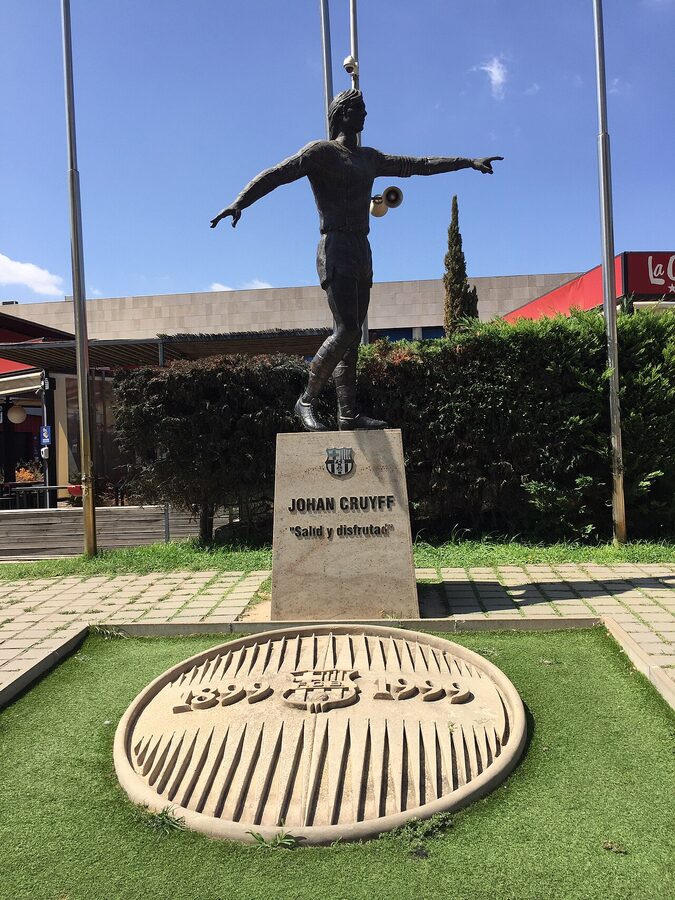
One thing that struck me on my first visit: the Ajax Museum makes Cruijff out to be the centre of the universe, but the actual museum room he gets is one of the smaller ones. The big room is the Total Football tactical room. This is correct. Cruijff was the player who made the system work, but the system existed before him and worked without him. He understood that better than anyone, which is why his coaching career at Barcelona from 1988 to 1996 was not about reproducing himself. It was about building a youth academy that produced players who could think like him.
If you’ve already done the Camp Nou tour in Barcelona, you’ll notice the same architectural language. Cruijff joined Barcelona in 1973 as a player, retired in ’78, and came back as coach in 1988. He was at the club for fifteen years across two stints. The Dream Team he built between 1988 and 1994 won four La Liga titles and Barca’s first European Cup. Pep Guardiola was the deep-lying midfielder. Twenty years later Pep would coach the same club in the same way and call it tiki-taka, and the Spanish national team would win a World Cup playing it.

The two stadium tours are sister experiences. If you’re doing a longer Europe trip and you’ve also got Barcelona on the itinerary, do Ajax first. The Cruijff story makes more sense if you arrive at Camp Nou after walking through the place that made him.
Three tours worth booking
1. Arena Tour With Optional Guide: $26

This is the booking for ninety percent of visitors. Our full review of the Arena Tour covers the optional-guide upgrade, which is genuinely worth the extra few euros if you don’t already know Ajax’s history. Free cancellation up to 24 hours, kids ages 4-12 are heavily discounted, and the audio-guide-only version costs the same as the live-guide version on weekday slots.
2. VIP Tour With Drink and Scarf: $51
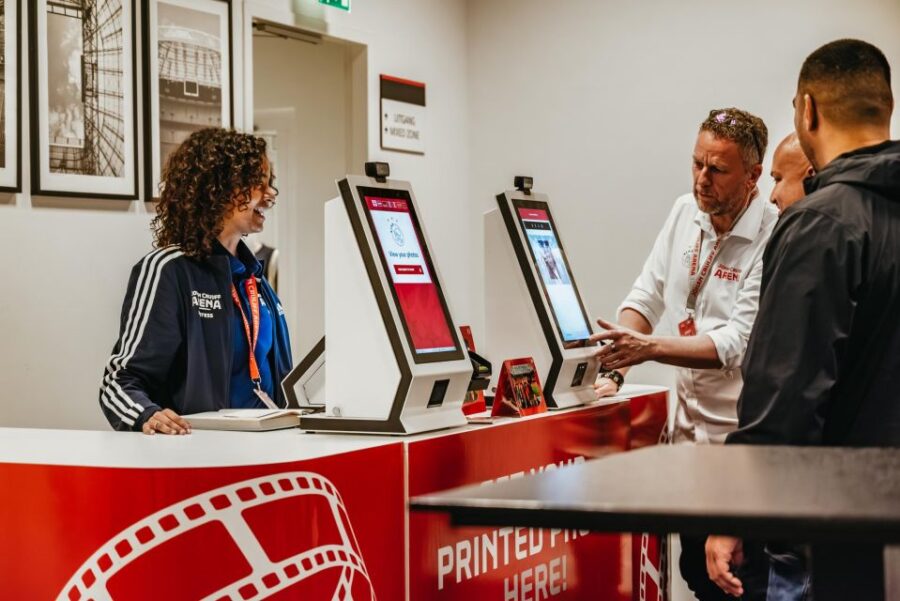
If you actually care about Ajax, do this one. Our review of the VIP version walks through what the skybox view actually adds and whether the scarf feels token (it doesn’t; it’s the real Cruijff-era replica). Two hours instead of seventy-five minutes, smaller groups, and the only tour that goes above pitch level.
3. Rotterdam: De Kuip Feyenoord Tour: $22
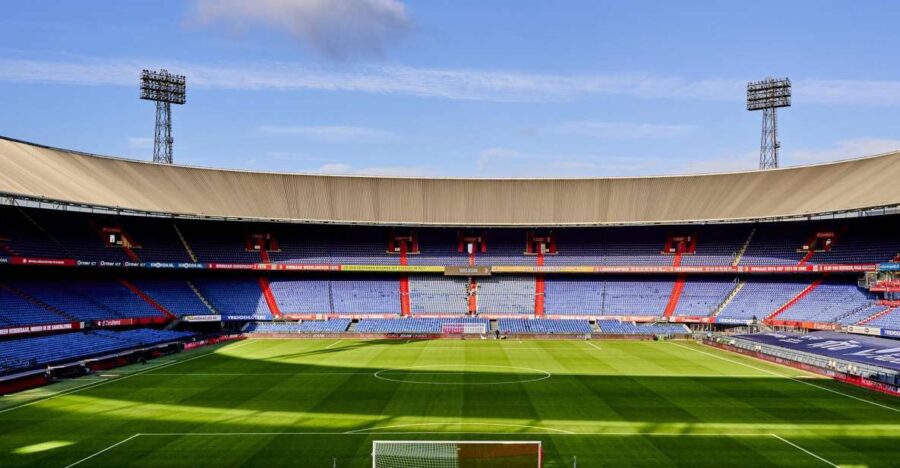
If you’ve got time and a real interest in Dutch football, do both. Our De Kuip tour review covers what makes Feyenoord’s home different (older, lower, louder, and arguably more atmospheric than the Arena). It pairs naturally with a Rotterdam harbor cruise for a full day in the city.
Practical info
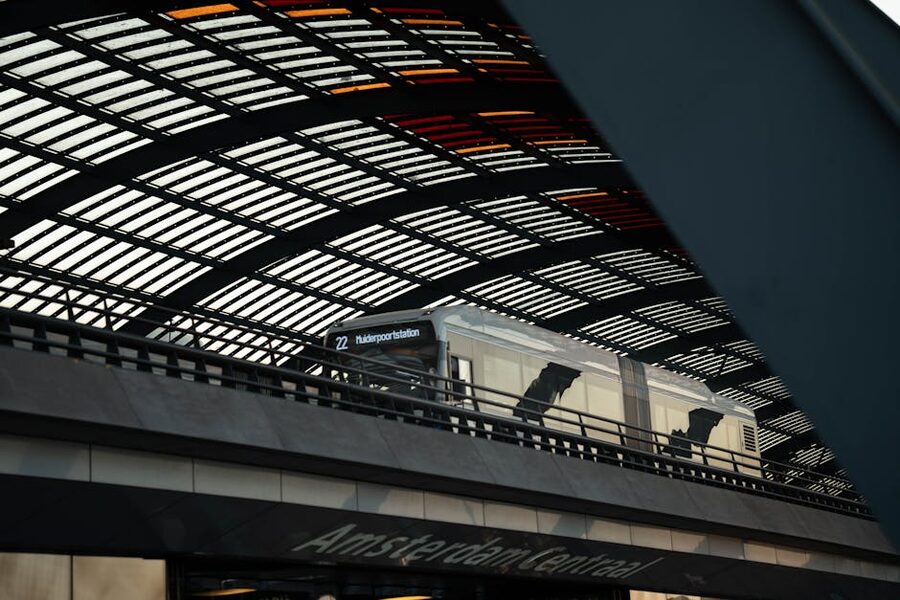
- Address: ArenA Boulevard 1, 1101 AX Amsterdam (Bijlmer-Centrum, southeast Amsterdam)
- From Centraal Station: Metro 50 or 54 to Bijlmer ArenA, 15 minutes. Or Sprinter train, 10 minutes
- Tour duration: 75 minutes (standard), 120 minutes (VIP)
- Price: from $26 standard, $51 VIP
- Tour times: roughly hourly, 11am-4pm winter, 10am-5pm April-September
- Languages: English on the half-hour, Dutch on the hour, audio guides available in 12 languages
- Closed: home matchdays, day before major European fixtures, December 25 and 26, January 1
- Wheelchair access: full route accessible, lifts available, free companion entry
- Lockers: available at the visitor centre, EUR 2 coin return
- Cafe: the small Arena Cafe at the visitor centre serves coffee and stroopwafels
Pairing the tour with the rest of Amsterdam
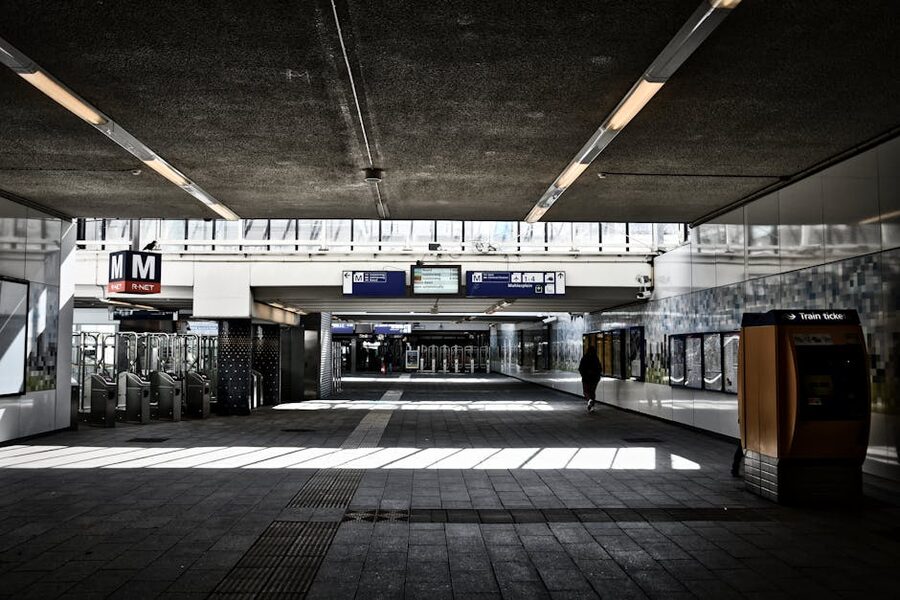
The Arena is a southeast-corner attraction. You don’t pass it on the way to anything else, which means you have to plan a half-day around it. The way I’d build the day: morning at the Arena, lunch back near Bijlmer ArenA station (the area’s getting better; there are real cafes now around the World of Food and Tower), then metro back into town for an afternoon of canal-side wandering.
If you’re stacking attractions, the natural pairing is something else that’s southeast or transit-adjacent: the Upside Down Museum is a 20-minute metro ride away, and NEMO Science Museum is on the route back if you change at Centraal. For families, that combination plus a stop at Madame Tussauds Amsterdam on Dam Square fills the day.
If you want a more historical day, do the Arena in the morning and head to an Anne Frank walking tour in the afternoon. Football and the Holocaust feel like odd companions on paper but they’re part of the same Amsterdam story; Ajax has the largest Jewish supporter heritage of any Eredivisie club, and the F-side ultras still sing about it.
The art-museum days, the football day
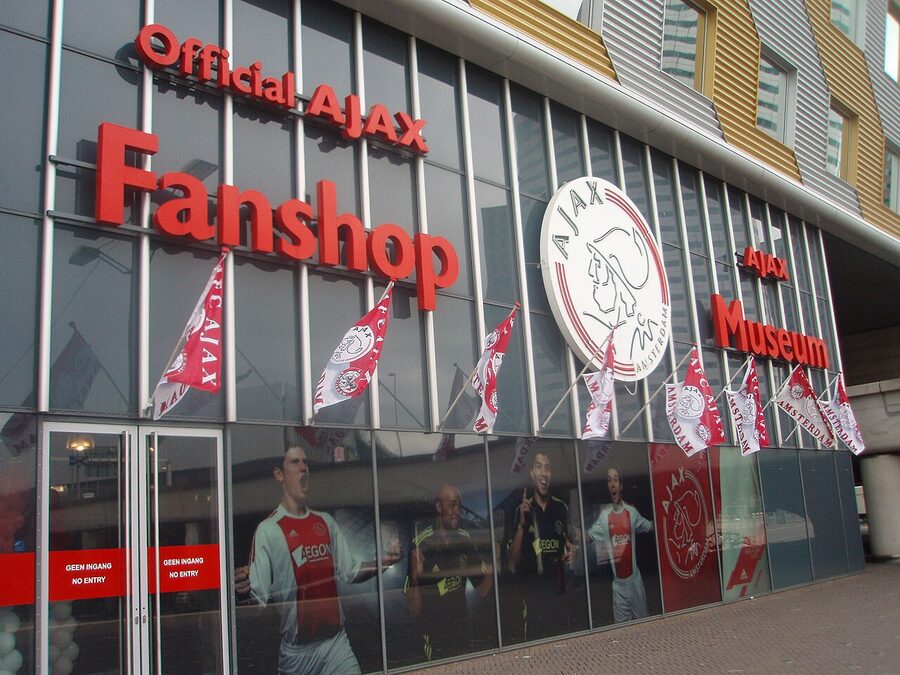
Most travellers do Amsterdam as an art-museum city. The Van Gogh Museum and Rijksmuseum are the headlines, with the Moco Museum and the immersive Fabrique des Lumieres for contemporary takes. The Arena tour fits oddly with this, which is part of why it’s worth doing. It pulls you out of the canal-belt postcard version of Amsterdam and into the actual city. Bijlmer is where most modern Amsterdammers live, not where they sell stroopwafels.
If you’ve already used the Amsterdam hop-on-hop-off bus to cover the centre, the Arena is one of the few major attractions the bus loops don’t reach. You’re going to need the metro one way or the other.
For a multi-day Netherlands trip, the obvious side outings extend the football theme into the rural-Dutch theme. Zaanse Schans is the windmill village 20 minutes north and works as an afternoon. Keukenhof Gardens is the spring-only flower-fields half-day. Both are easier to schedule when the Arena tour fixes one half of one day and frees up the rest.
Three sister stadium tours, in order of how much football they assume
If the Arena tour leaves you wanting more, there are three other European stadium tours in the same conversation, and they each tell a different chapter of the same story. Camp Nou in Barcelona is the Cruijff legacy as built by his disciples; the museum there is bigger and more polished than the Ajax one but the story it tells is downstream of what you saw at the Arena. The Bernabeu in Madrid is the rival philosophy: not academy, not system, but Galacticos, signed superstars, the opposite of the Ajax cantera approach. San Siro in Milan is the Italian variant: catenaccio, the defensive opposite of total football, the school Ajax beat in two consecutive European Cup finals.
If I had to rank them for a non-Ajax-fan visitor, I’d put Camp Nou first for sheer scale, the Cruijff Arena second for historical depth, and the Bernabeu third for spectacle. San Siro is the one to skip unless you specifically care about Italian football.
What to skip
I’ll save you the experiments. Don’t book the dawn or after-hours tours that occasionally pop up on third-party platforms; they’re 15-20 euros cheaper but the route is shortened and you don’t get the trophy room. Don’t pay for the matchday tour-then-game combo unless you genuinely want to see Ajax play, because the kickoff-day pricing is 40-50% above the standalone tour and the access is restricted.
Don’t bring large bags. The lockers are small and there’s no luggage check at the visitor centre. The Bijlmer ArenA station has lockers if you’ve come straight from Schiphol or Centraal.
And don’t bother with the Stadium Walk audio app some travel guides recommend; it’s a third-party product that overlays the official tour and the guide will tell you to put your headphones away. The official tour is the tour.
Euro 2020, Euro 2032, and what comes next
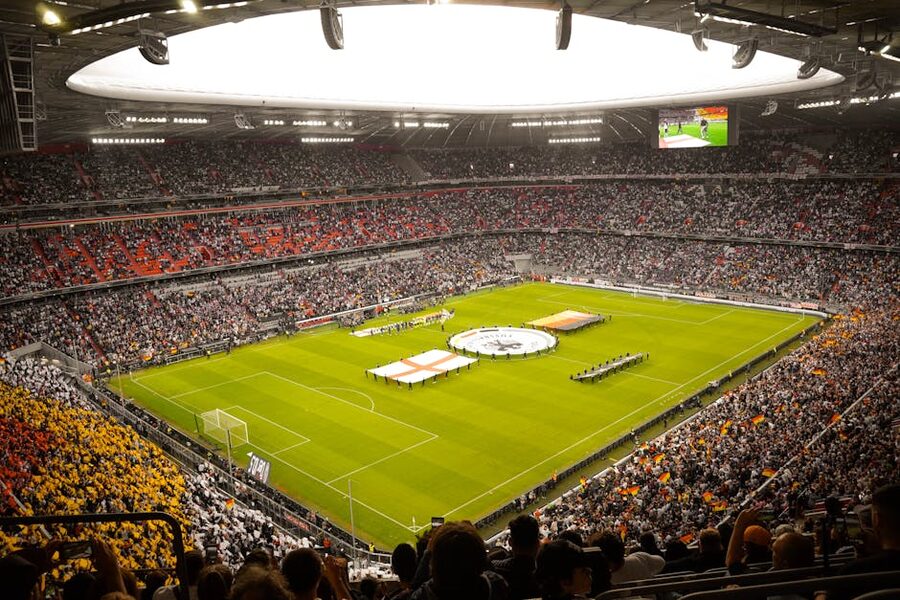
The Arena hosted four Euro 2020 matches (delayed to 2021 because of the pandemic): three group games for the Netherlands plus a round-of-16 fixture. It will host four more at Euro 2032, the tournament Italy and Turkey are co-hosting, including a quarter-final. The official capacity for Euro fixtures rises to 56,000 with temporary additional standing, and the tour is suspended for the full month of the tournament.
If you’re planning a 2032 trip around football, build the Arena tour in for the week before the tournament starts. Once the matches begin you can’t get inside outside of matchday tickets.
The legacy room you actually came to see
The room you came to see, if you came to see one room, is the trophy hall. Four European Cups (1971, 1972, 1973, 1995) plus a fifth in the form of the 1992 UEFA Cup and a sixth in the 1987 Cup Winners’ Cup. Two Intercontinental Cups (1972, 1995). Thirty-six Eredivisie titles, more than any other Dutch club. Twenty KNVB Beker (Dutch Cup) wins.
The Cruijff jersey case is in this hall, in low light, behind glass that’s been there since 1985 when his number 14 was retired. The jersey is from the 1972 European Cup final against Inter. The signature on the inside collar is Cruijff’s own. There’s no rope, no queue, you stand in front of it for as long as you want, and the glass is at exactly the height where you can read his handwriting. That, more than the tunnel, is the moment of the tour.

What’s near the Arena that’s actually worth your time
Most stadium-tour guides will pad this section. I’ll keep it short. The Bijlmer-Centrum area has improved substantially since the early 2000s rebuild, but it’s still not a destination quarter. The World of Food, a two-minute walk from the Arena, is a good lunch stop with about thirty international counters. The Heineken Music Hall (now AFAS Live) and Ziggo Dome are evening venues; if you’ve got an Ed Sheeran or a Beyonce night booked, the Arena can be a daytime add-on.
Past that, the Bijlmer is residential. The famous Bijlmer Memorial in Amsterdamse Poort, commemorating the 1992 El Al cargo plane crash that killed 43 people in the high-rise apartments, is twenty minutes by foot and a sobering counterweight to the football. It’s not on any tourist itinerary and that’s part of why it’s worth seeing.
For dinner, head back to the city. The metro takes 15 minutes. The center has the restaurants. A Red Light District walking tour is the natural evening counterpart if you want to see the historical side of central Amsterdam without the daytime crowds, and it’s the kind of thing you do once and then have a story about.
Bottom line
The Johan Cruijff Arena is not the most beautiful stadium tour in Europe. The Bernabeu is shinier, Camp Nou is bigger, the San Siro is more atmospheric. What the Arena has is the highest density of football history per square metre of any stadium in the world. Total football, the youth academy, the Dutch School, the four European Cups, the system that became Spanish football, the man whose name is on the building. Ninety minutes, $26, the metro back to town. It’s the most-influential football club of the twentieth century, and you can walk through its house on a Tuesday morning for the price of two coffees.
Book the standard tour if you’re a tourist, the VIP tour if you’re a fan, and a trip out to De Kuip in Rotterdam if you’ve got an extra afternoon and want to feel what Dutch football is like at its most lived-in. That, plus a fixture-calendar check before you book, is everything you need.