Keukenhof closes for forty-four weeks of the year. The 32 hectares of curated flower beds you see in every Amsterdam guidebook only exist between mid-March and mid-May, and the rest of the time the place is locked behind a chain-link fence while gardeners replant 7 million bulbs for the next eight-week run. The 2026 season is March 19 to May 10. If you are not in the Netherlands during those eight weeks, the world’s largest flower garden may as well not exist. The natural backup for off-season Amsterdam is a windmill day at Zaanse Schans, but that’s a different kind of day out.
In a Hurry? Top Picks
- Entry plus shuttle, flexible return: $41. The default. Bus from Amsterdam RAI, you choose when to come back. Check availability
- Roundtrip shuttle bundle: $40. Same product, fixed return slot. Check availability
- Garden plus windmill canal cruise: $64. The bulb-fields option, which the standard shuttle skips. Check availability
The eight-week problem
Keukenhof is the most weather-dependent attraction in Europe. The garden runs on bloom forecasts published in November, and the actual peak window inside the eight-week run shifts based on how cold March was. Three rough phases:
- Mid-March to early April: daffodils and crocuses peak. The hyacinths are starting. Tulips are mostly leaves with a few early reds. Crowds are light, hotels are cheap, and you can walk through the park without a queue at the front gate.
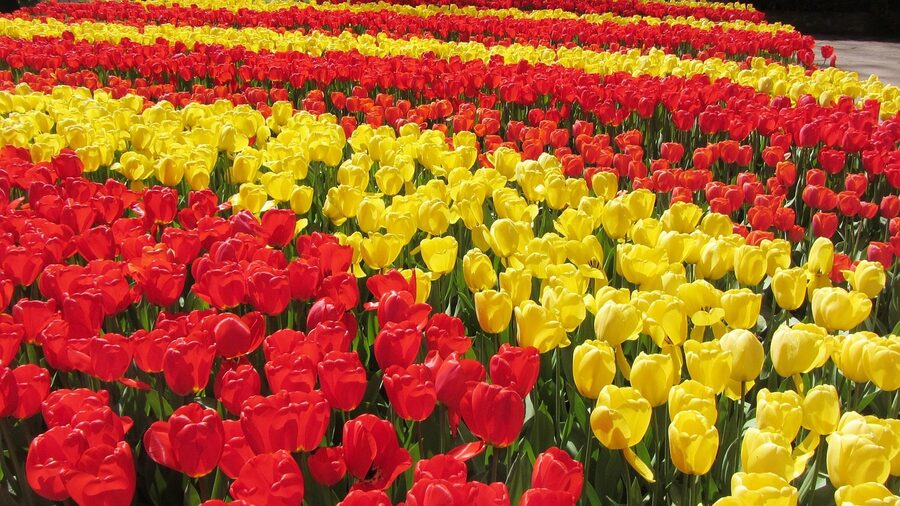
- Mid-April: peak tulip bloom and peak everything else. The Tulip Festival weekend pulls 60,000 visitors a day. The Amsterdam-Keukenhof shuttles run full from 8am, the Willem-Alexander Pavilion has a 30-minute queue, and the photographs you came for are taken with a stranger’s elbow in your shot.
- Late April to mid-May: tulip beds are past their best but the late hyacinths and dahlias are still good. Crowds drop sharply after the third week of April. This is the underrated window for anyone who likes flowers but doesn’t need the showstopper tulip carpet.
The 2026 season runs March 19 to May 10. Hours are 08:00 to 19:30 daily. The eight-week schedule is published a year in advance on keukenhof.nl and the timed-entry system is real. You cannot just turn up. Compare this to the easy walk-up access at the Rijksmuseum or the year-round flexibility of an Amsterdam canal cruise, both of which you can book the night before. Keukenhof is the opposite. Plan ahead.
What you are actually buying
Worth knowing before you book: Keukenhof is not a botanical garden in the academic sense. It is a 65-year-old commercial showcase for the Dutch bulb industry. The mayor of Lisse, Cees van Tongeren, set it up in 1949 as a way for local growers to display their cultivars to international buyers. The bulbs you see are donated each autumn by about 100 growers from the surrounding Bollenstreek (literally, “bulb region”). The gardeners plant 7 million bulbs, the public walks through, and the growers get a free shop window for spring orders.
That history matters because it explains the layout. Keukenhof is essentially a trade-show floor with a coffee shop, a windmill, and 32 hectares of grass between the booths. The themed beds at the Willem-Alexander Pavilion change every year because each year a different group of growers gets the headline display. The Oranje Nassau pavilion runs the indoor shows, where you see cultivars too delicate for the open beds. If you’ve walked the formal beds at Versailles or the terraced gardens of the Borromean Islands on Lake Maggiore, the contrast is stark: those gardens are designed for permanence and geometry. Keukenhof is designed for one season and replanted from scratch.
None of this makes the place less beautiful. It just reframes what you are looking at. You are not in a wild meadow. You are inside an industry’s annual marketing event, which happens to be one of the best photographs you can take in Europe. The same kind of commercial-showcase logic, by the way, sits behind the Heineken Experience in Amsterdam (a brand museum dressed as an attraction) and the corporate-but-charming Madame Tussauds on Dam Square. Once you know what you’re inside, you can enjoy it without the marketing spin.
Getting there from Amsterdam
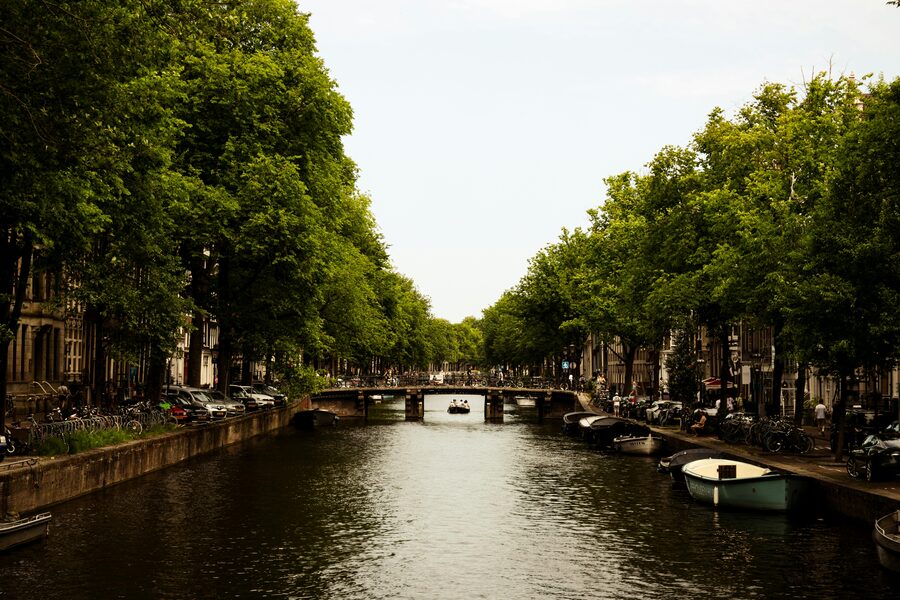
Keukenhof sits in Lisse, about 25km southwest of Amsterdam Centraal. There is no train station in Lisse. To reach the gardens you have three options.
The combo shuttle from Amsterdam RAI. This is what most visitors book and what I’d book again. Buses leave from RAI station every 15 to 30 minutes from 8am, the journey is 35 to 40 minutes, and your ticket bundles entry plus the round trip. The flexible-return version means you can leave whenever you want. The fixed-return version costs about a dollar less and locks you to a slot.
Train plus bus 854 from Schiphol. This is the DIY option. Train from Centraal to Schiphol Airport (15 minutes, around €5), then bus 854 directly to Keukenhof (30 minutes, around €5). Total cost is similar to the combo, but you save zero time and gain only the freedom to detour through Schiphol on the way back. Skip it unless you are flying out the same day.
Train plus bus 858 from Hoofddorp or Leiden. The 858 leaves from Leiden Centraal and the 859 from Hoofddorp. Both go directly to Keukenhof. If you are based in Leiden or The Hague rather than Amsterdam, this is the natural route. From Amsterdam it is slower than the RAI shuttle, and you’d lose half a day you could have spent at the Van Gogh Museum or on a serious morning at the Anne Frank walking tour.
One more option for anyone who wants the bulb fields and the canal scenery on the same day. The Keukenhof + windmill cruise day trip bundles the garden entry with a 45-minute boat ride through the Bollenstreek bulb fields. More on that below, because the cruise is genuinely the better photograph. The boat-versus-bus calculation is similar to the one at Giverny in France, where a Seine-and-Vernon arrival changes the texture of the day completely.
The best three tours from Amsterdam
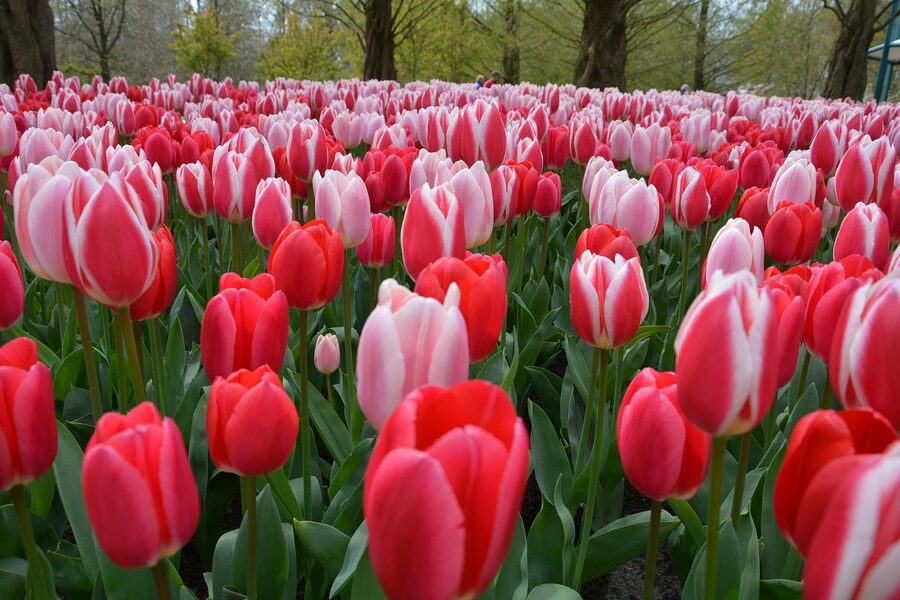
I went through every Keukenhof option on the major booking platforms. The pool collapses to three real choices once you strip out the obvious duplicates and the inflated guided versions that add nothing for the extra forty euros. Here are the three to actually book.
1. Keukenhof Entry plus Shuttlebus with Flexible Return: $41
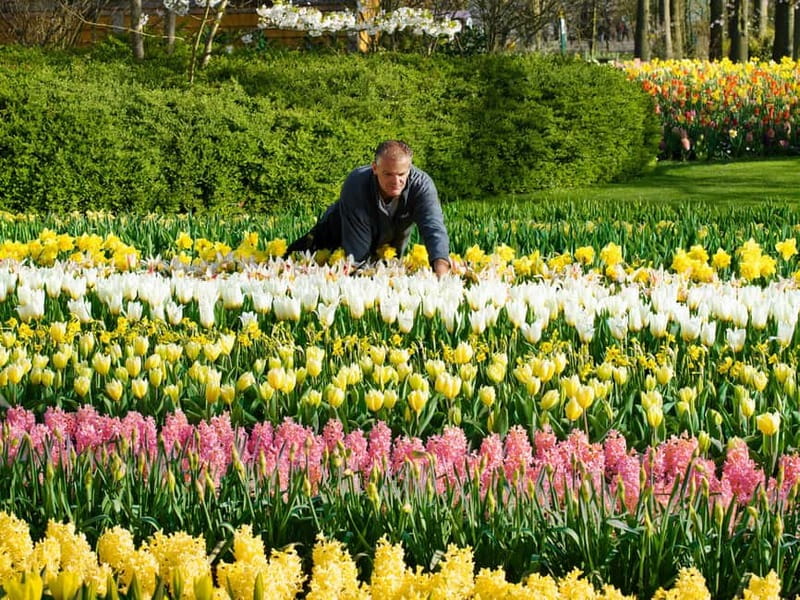
This is the right pick for most people: cheapest combo, includes the timed-entry ticket, and the flexible return means if you decide at 11am that the crowds are too much, you can leave by noon. Our full review covers the boarding logistics at RAI and the queues you will hit on Tulip Festival weekend. Book the earliest morning slot you can stomach because tour buses arrive from 10am.
2. Keukenhof Ticket and Roundtrip Shuttle Transfer: $40
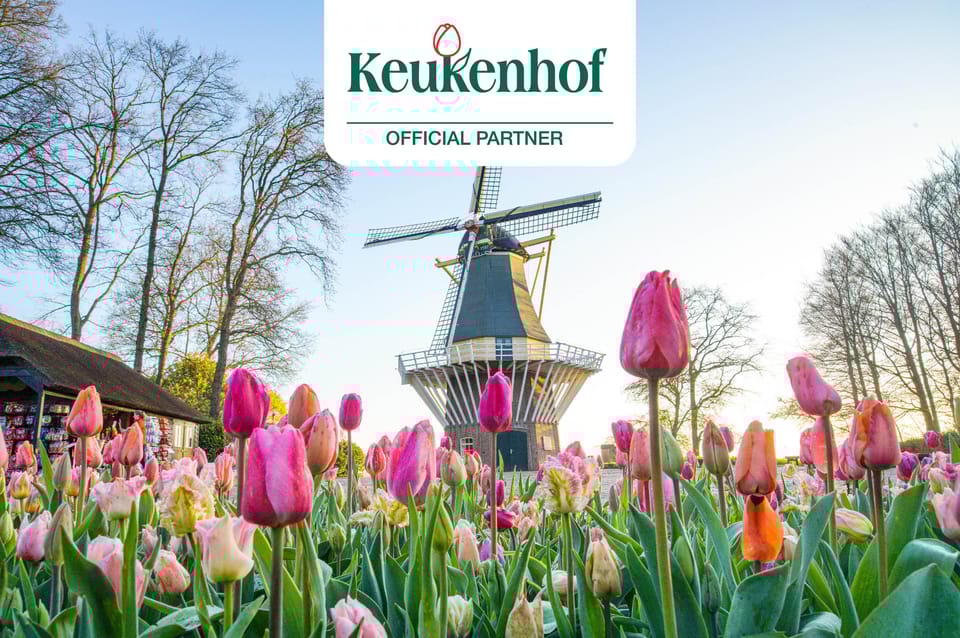
If your dates are tight and your Keukenhof slot is one fixed window, the roundtrip transfer is a dollar cheaper for what is essentially the same experience: same shuttle, same RAI departure, same garden. Our review goes through why I’d still book the flexible version unless you genuinely have a hard 4pm Anne Frank slot to make. The flexibility is worth the dollar.
3. Keukenhof Gardens Tour with Windmill Cruise: $64
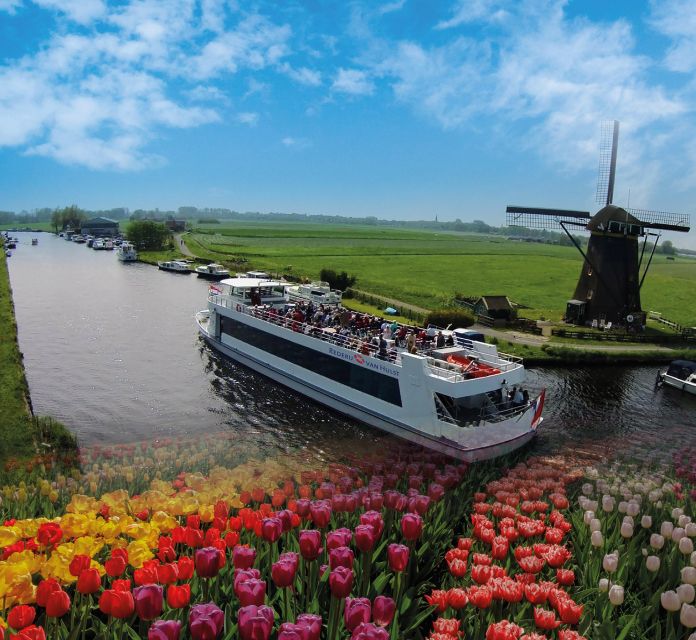
This is the pick if you are spending a full day on tulips and you want the version most travellers miss. The boat ride goes through the Bollenstreek canals at low speed, you see the real industrial-scale bulb fields stretching to the horizon, and the captain points out the windmills that the standard shuttle does not stop at. Our full review explains why I rate this above any guided walk inside Keukenhof itself.
The bulb fields outside the fence
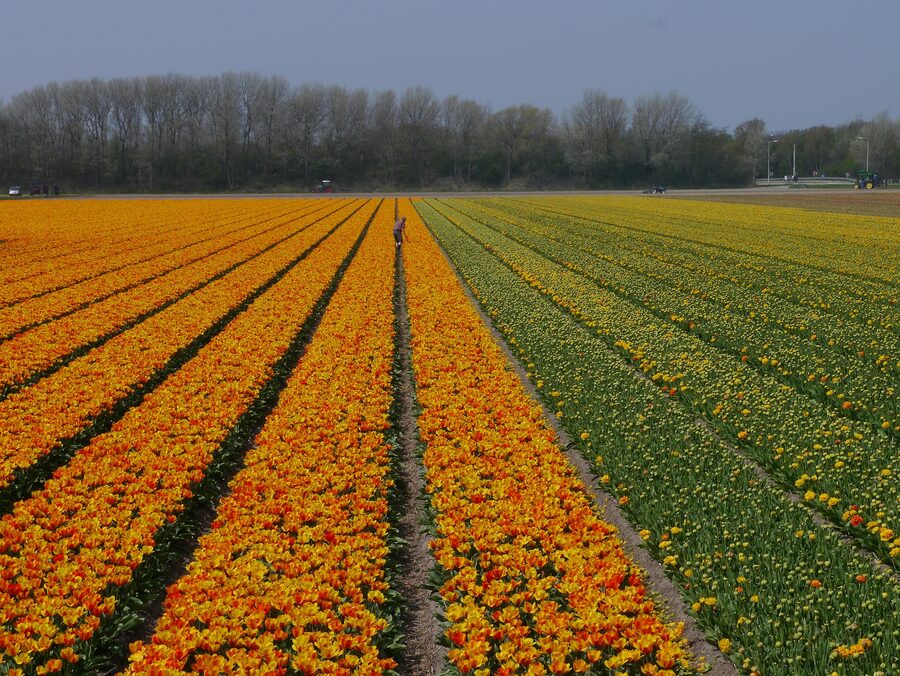
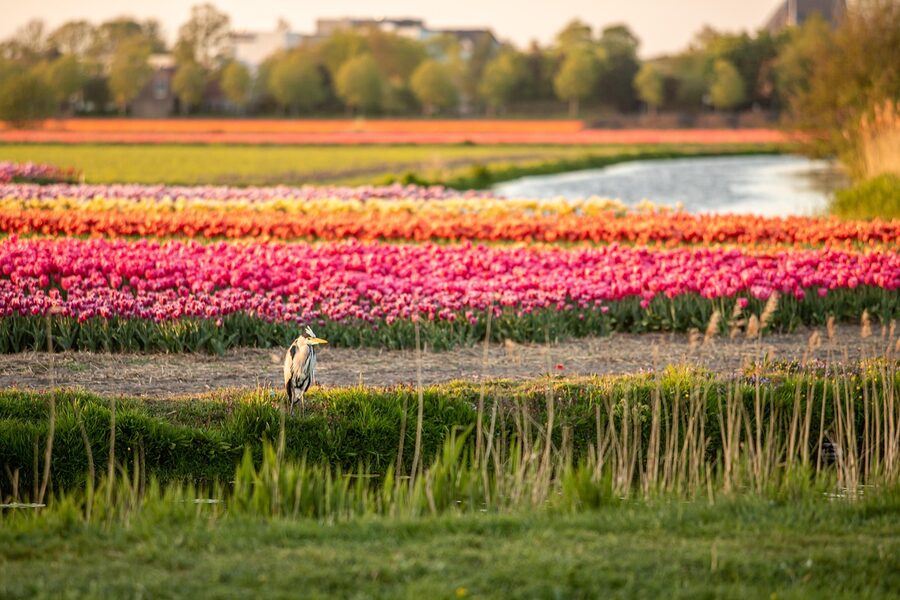
Here is the part most Amsterdam guidebooks bury at the bottom: the gardens inside Keukenhof are mixed-bed plantings. The fields outside the gates are the pure-colour, horizon-to-horizon, single-cultivar tulip carpets you have seen in every drone photograph of the Netherlands. They are not in Keukenhof. They are around it.
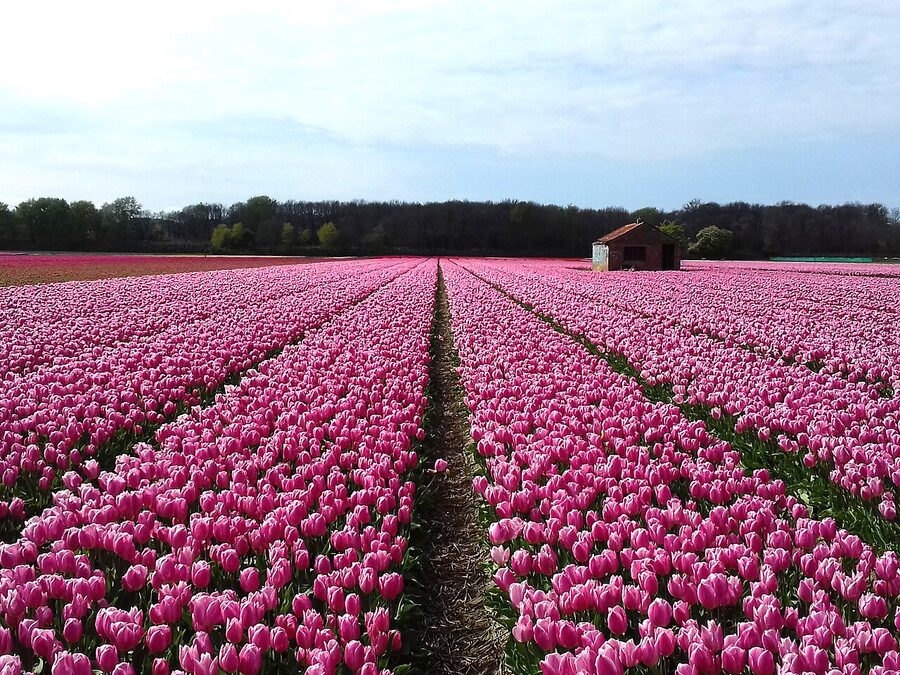
The Bollenstreek is a 30-kilometre strip of bulb-growing country between Haarlem and Leiden. Around 27,000 hectares are planted commercially. Lisse is roughly the centre. The drive from Lisse north on the N207 toward Hillegom and Vogelenzang takes you past kilometre after kilometre of bulb fields in solid blocks of red, pink, yellow, and white. In peak weeks (typically the second and third weeks of April), the colours go on for as far as the road runs.
You can see them from a rented bike, from a car, from the windmill cruise, or from the train if you sit on the right side going from Schiphol toward Leiden. You cannot easily walk into them. The fields are private, you can damage the bulbs if you trample plantings, and the growers police the borders during peak weeks because Instagram crowds were genuinely a problem from about 2017 onward. There are signed paths and viewing platforms, including a free one at the Tulip Barn in Hillegom, where you pay a few euros to walk through a planted strip without trampling anything.

One detail Dutch locals know but tourists don’t: in late May, after Keukenhof closes, the bulb-harvesting machines come through and mow the flowers off the fields. The flowers are waste. The bulbs are the crop, and they need the leaves to die back into the bulb before harvest. Locals call this de tulpenmoord, the tulip massacre. If you visit in the third week of May you might catch the tail end of it. The fields go from technicolour to brown stubble in about 48 hours.
The windmill, and the canal cruise that goes past it
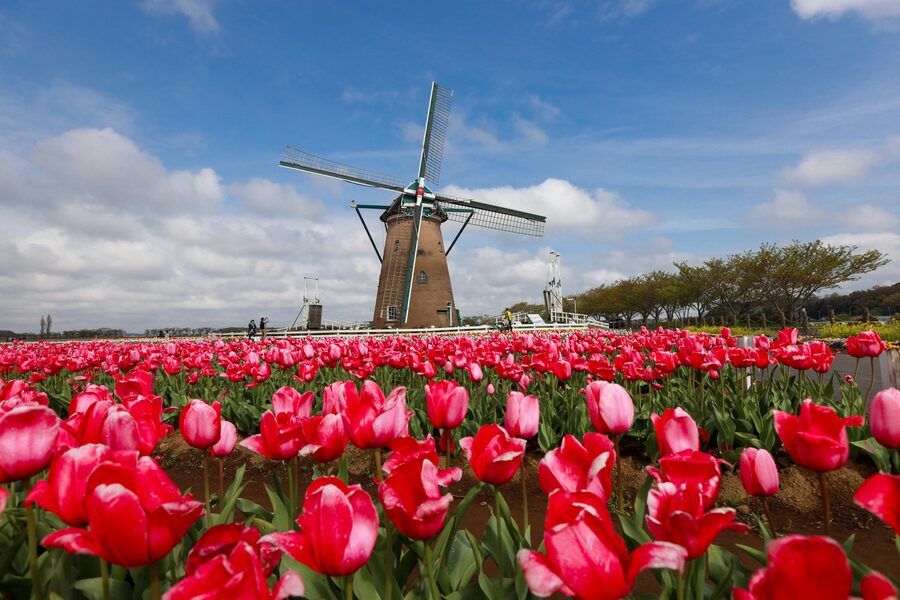
The windmill inside Keukenhof is De Geldlaan, restored in 2007 from a Lisse village mill that had stood unused for years. It costs about €5 to climb. The view from the top frames the show garden in the foreground against the commercial bulb fields beyond, which is the only place inside the park where you see the industrial scale that Keukenhof is selling for.
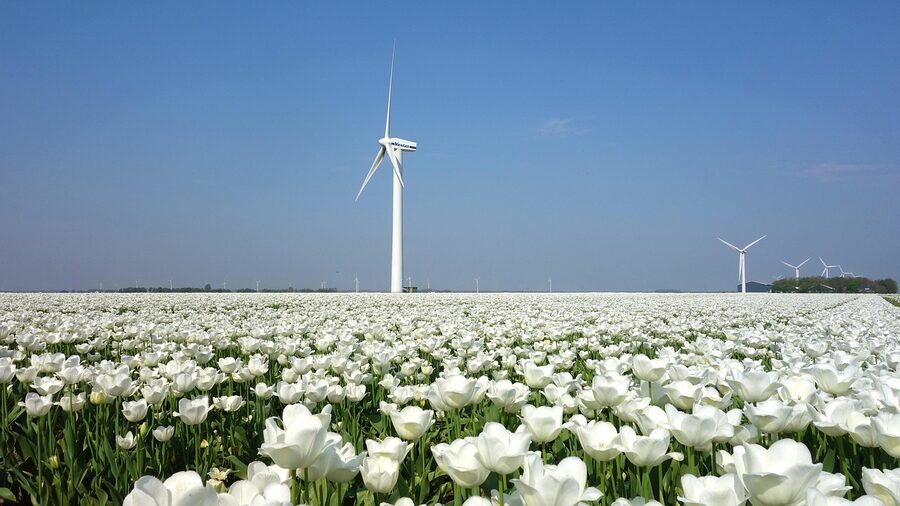
The windmill cruise is a separate product. A 45-minute electric-boat ride that loops through the Bollenstreek canals near Lisse, passing the working farms and small windmills the Keukenhof shuttle drives past at 80km/h. The boat does not enter the Keukenhof grounds. It runs on the canals around them. You usually take the cruise after walking through the gardens, and the contrast is the point: the curated mosaic inside Keukenhof, then the industrial wall of single-colour tulips outside.
If you have done the canal cruises in Amsterdam itself, the rhythm is similar but the scenery is completely different. Amsterdam canals are about architecture and houseboats. Bollenstreek canals are about agriculture and horizon. The flat polder landscape stretches further than Amsterdam ever does, and you sometimes see Dutch grandmothers cycling past with a small dog in the front basket. That is not invented detail. They cycle the bulb-field roads as exercise.
What is actually inside the fence
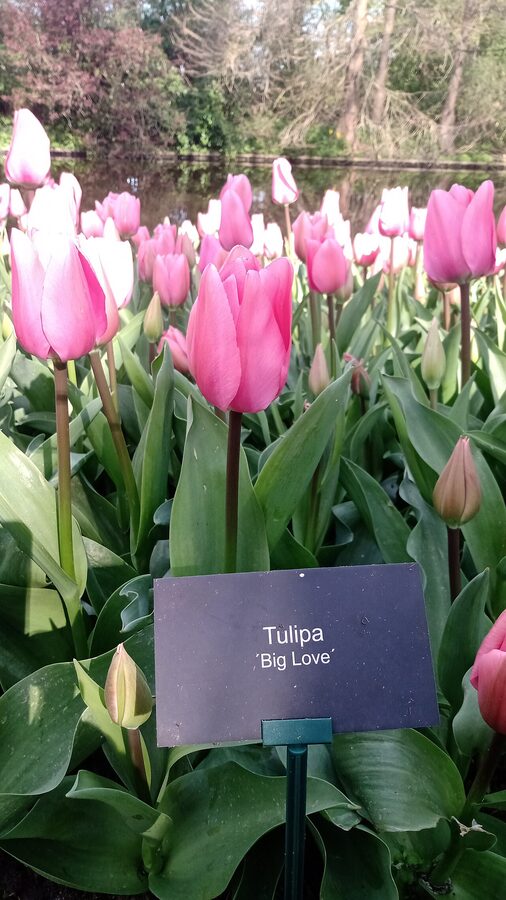
Once you are through the gate, Keukenhof is a 32-hectare park organised around a central lake, three large indoor pavilions, several themed gardens, and a network of paths between flower beds. You walk it counterclockwise as a default, and a casual visit takes about three hours. A photographer’s visit takes five.
The four set pieces are:
- The Willem-Alexander Pavilion. The big themed indoor display. The theme changes annually, which is the trick that keeps visitors coming back year after year. In recent years, themes have included Romantic Garden, Flower Power, A World of Colours, and Dutch Design. Inside, the cut-tulip displays are genuinely showstopping.
- The Oranje Nassau Pavilion. Smaller, and it runs rotating shows through the eight-week season: anemones, daffodils, lilies, and so on. If you visit in the first week, you see the early-spring shows. Last week of the season, you see the late-spring ones.
- The Beatrix Pavilion. Orchids and bromeliads. The weakest of the three for a Dutch context, in my opinion. Skip if you are short on time.
- The Juliana / Tulpomania Pavilion. The history section. This is where Keukenhof tells the 17th-century tulipmania story, the one where individual tulip bulbs sold for the price of an Amsterdam canal house in 1637 before the market collapsed in February the next year. Worth ten minutes if you like financial history.
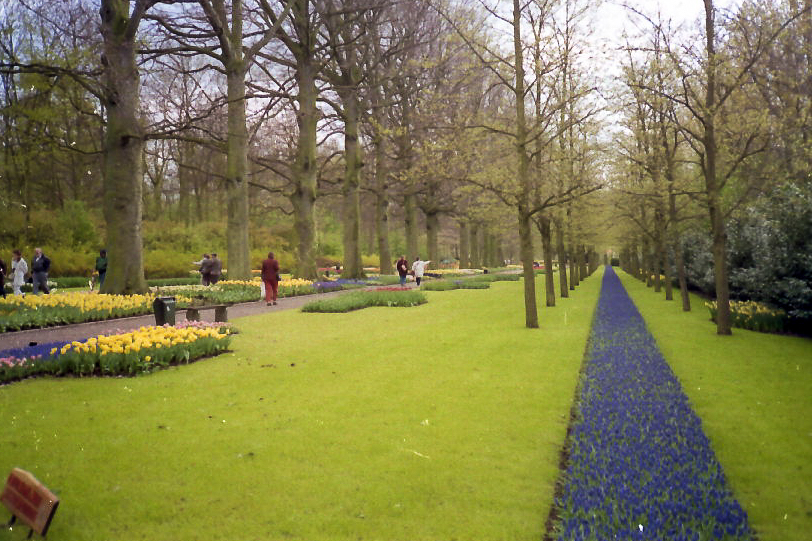
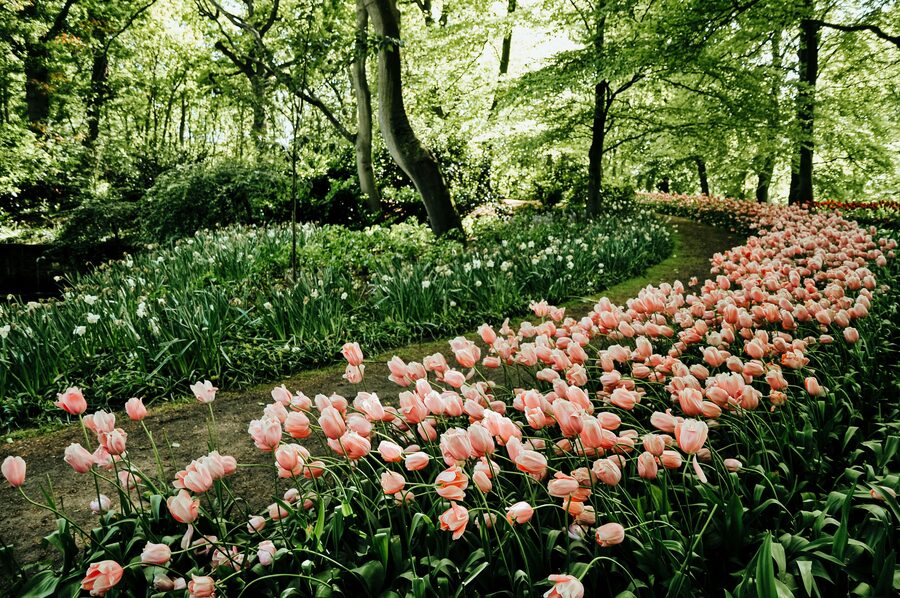
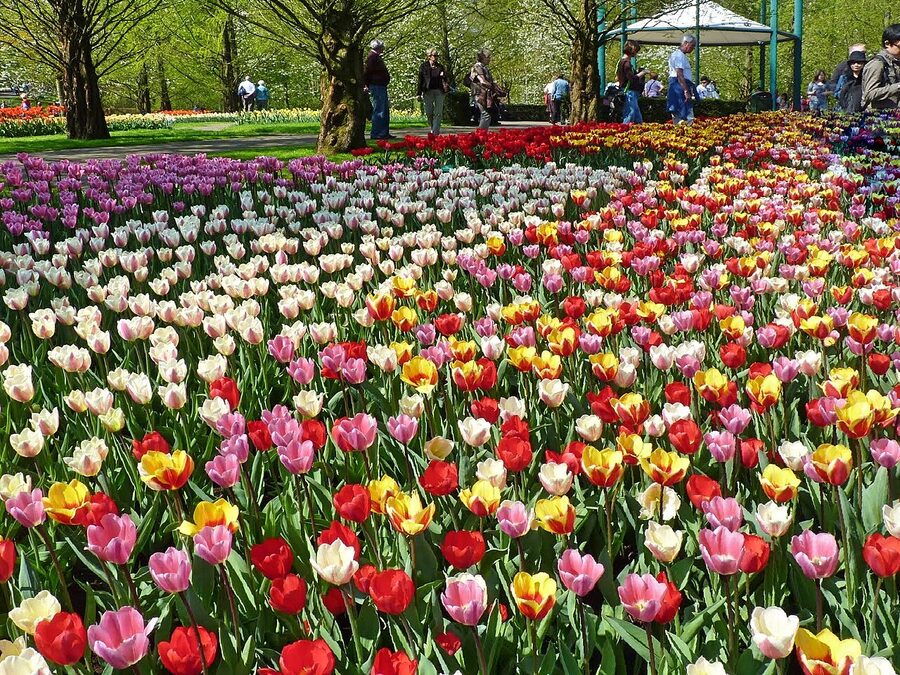
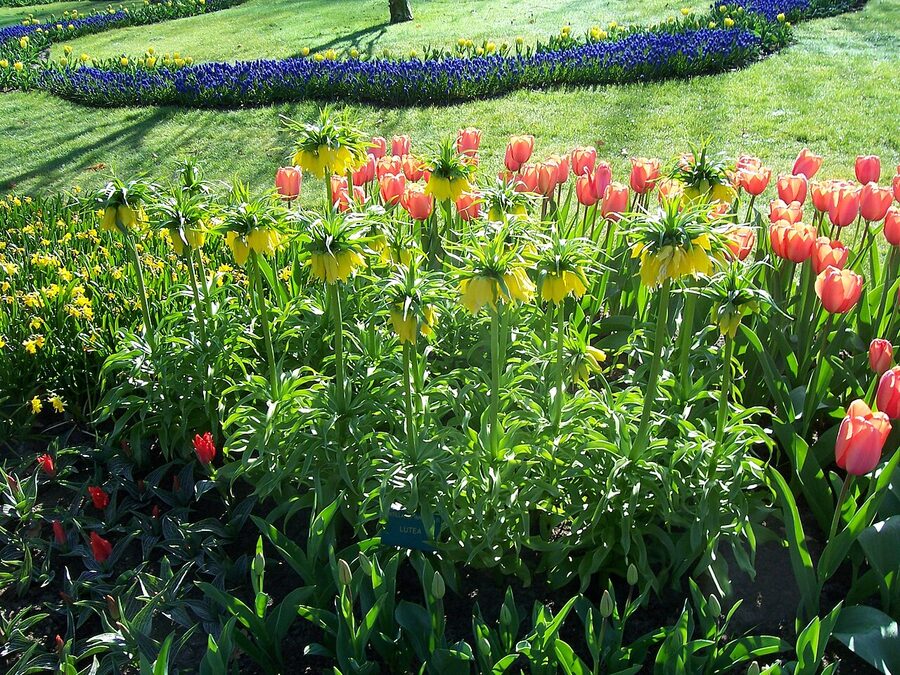
Outside the pavilions, the open-air beds are arranged thematically: the Inspiration Gardens (small show gardens by Dutch landscape designers), the Romantic Garden, the Nature Garden, the Music Garden. Most are pleasant. None are essential. The reason you came is the open beds along the central paths, where the mixed plantings are deliberately designed for photography. The garden’s path layout follows lines of sight, not horticultural logic.
The history nobody tells you
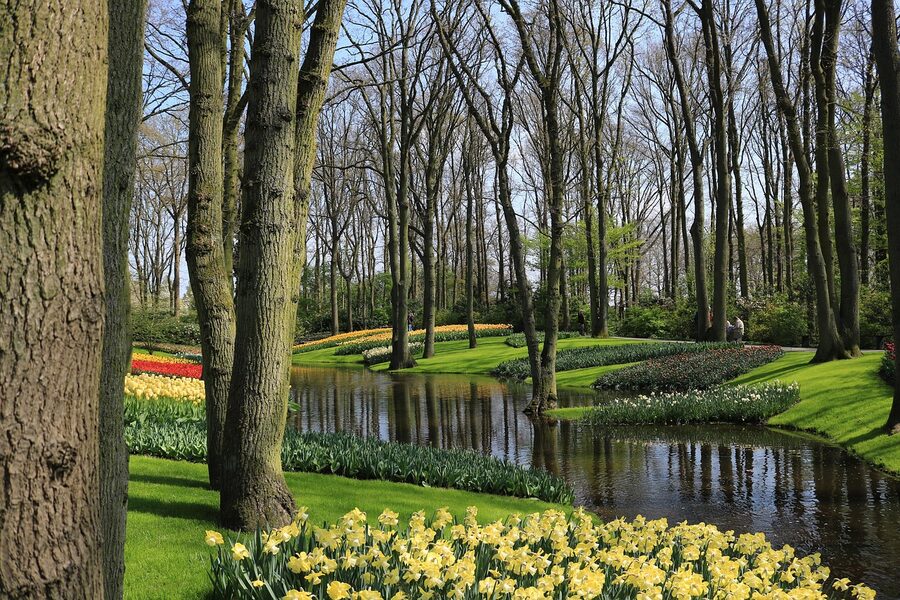
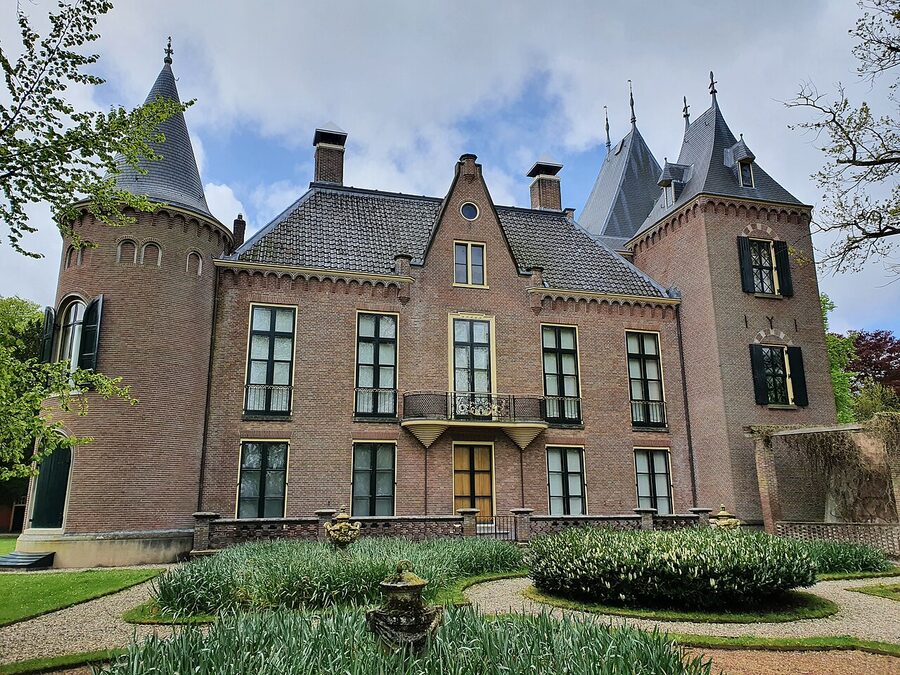
The site was a kitchen garden (keukenhof literally means “kitchen courtyard”) for the 15th-century Castle of Jacoba van Beieren. The medieval lady of the castle grew herbs and vegetables there. The land passed through several aristocratic owners and by the 19th century was the estate of Baron and Baroness Van Pallandt, who hired the landscape architects who later did Amsterdam’s Vondelpark to redesign the grounds in 1857. That landscape design, with its winding paths, central lake, and groves of mature trees, is what Keukenhof still uses today. The current park layout is essentially the 1857 estate replanted with tulips.
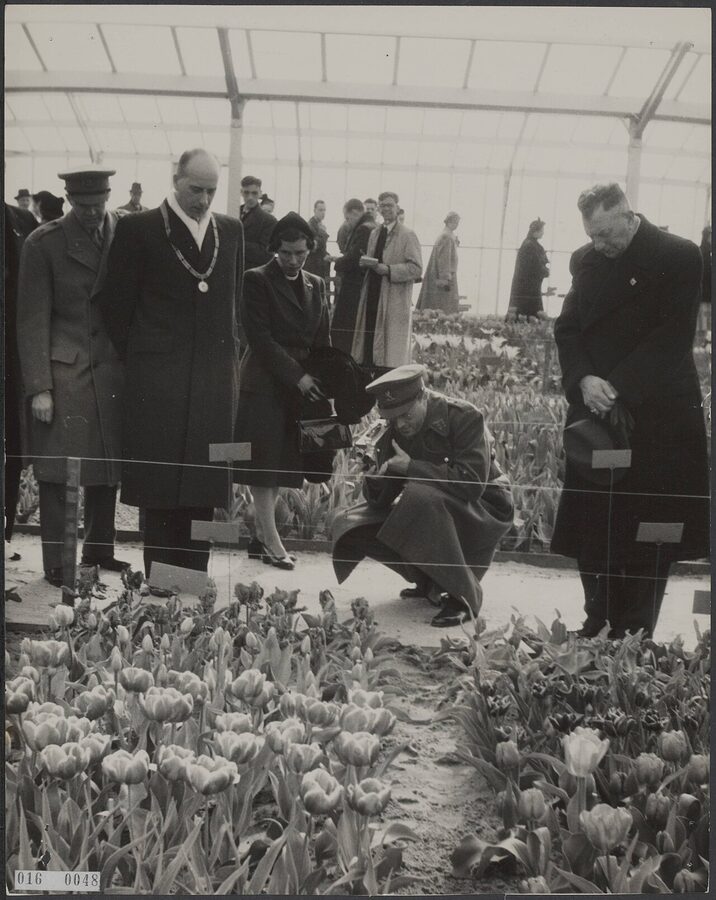
The flower-show idea came in 1949. The mayor of Lisse, Cees van Tongeren, was looking for a way to boost the regional bulb trade after the war. He convinced the Van Pallandt heirs to lend the estate, persuaded twenty local growers to donate bulbs for free, and opened the first Keukenhof flower exhibition in March 1950. It pulled 236,000 visitors in its first season. The model worked, the exhibition became annual, and by the late 1960s Keukenhof was drawing over a million visitors a year. The current annual figure is around 1.4 million across the eight-week run, which is roughly 25,000 visitors a day.
The historical irony of all this: the Netherlands didn’t invent tulips. Tulips are native to Central Asia, were cultivated in Ottoman Turkey by the 11th century, and only reached Western Europe in the 16th. They became the Dutch national symbol because Carolus Clusius, the Habsburg court botanist, planted bulbs at Leiden University in 1593 and the soil and climate of the Bollenstreek turned out to be perfect for commercial cultivation. By 1637 the Dutch had created the world’s first speculative bubble around tulip bulbs. By 1949 they had built a permanent annual marketing event around the flower they had borrowed from Turkey 350 years earlier.
The crowds, and how to dodge them
Keukenhof gets 1.4 million visitors across 56 days. That is 25,000 a day on average and over 60,000 on Tulip Festival Saturdays. The park can absorb a lot. The bottlenecks are the Willem-Alexander Pavilion entrance, the bridge near the central lake, and the queues at the food trucks around 12:30pm.
What works:
- The 8am opening. The first shuttle from RAI gets you to Keukenhof at about 8:45am, the gates are quiet for the first hour, and you have most of the photo locations to yourself until the 10am tour buses arrive.
- Last entry at 18:00, with the park open until 19:30. The 5pm to 7pm window is the second-best slot. Most tour buses have left, the western light is golden, and the place empties out fast after dinner.
- Tuesdays and Wednesdays. Weekends are mobbed. Mondays and Thursdays are middling. The shoulder weekdays are notably quieter.
- The third week of March (right at the season opening) and the first week of May (right before close). Crowds drop sharply outside the peak-bloom window.
What doesn’t work: showing up after 11am on a peak-week Saturday, expecting to take Instagram photos. You will be queueing for ten minutes per spot. There is a reason the same six photo angles appear on every travel blog. They are the only angles that don’t get photo-bombed.
What to eat, what to drink, what to skip
You don’t visit Keukenhof for the food. The Wilhelmina building near the central lake has the biggest indoor cafeteria, with sandwiches, salads, and Dutch staples like bitterballen and stamppot. The food is better than visitor-centre food usually is, the prices are fair (€8 to €12 for a hot meal), and the seating is plentiful. If it rains, this is where you wait it out.
The food trucks scattered through the park sell stroopwafels, Belgian fries (worth queueing for, hand-cut, served with mayo or curry), poffertjes (small Dutch pancakes dusted with powdered sugar), and oliebollen during the colder weeks. None of it is a culinary experience, but the fries are properly good.
The Heineken brand is everywhere. Beer, Heineken kiosks, branded umbrellas at outdoor tables. If you have already done the Heineken Experience tour in Amsterdam, you’ll recognise the corporate aesthetic. Pass on the beer and get a coffee instead. The coffee at the Juliana / Tulpomania visitor centre is the best on-site, by a clear margin.
Bring an umbrella regardless of forecast. Keukenhof is exposed flat ground and Dutch spring rain arrives in 15-minute bursts about three times a day in April. The cafes are crowded when it rains, but the umbrella means you keep walking and the crowds vanish from the paths for the duration of the shower.
How Keukenhof fits into a wider Amsterdam trip
If you have already booked Amsterdam in spring, Keukenhof is essentially mandatory. The half-day-to-full-day commitment is small and the photographs justify it. But if you are flying to the Netherlands specifically for Keukenhof, you should know it is a four-hour visit that ate into one of your eight days. Build the rest of your itinerary around the windmill villages, the Bollenstreek, and Amsterdam itself.
The natural pairing is Zaanse Schans, the open-air windmill village 25 minutes north of Amsterdam. Some shuttle operators run combined Zaanse Schans + Keukenhof days, but I’d avoid them. Both attractions are full half-day visits and stuffing them into one day means you rush through both. Do them on separate days.
If your interest is botanical, the next-best add is the Van Gogh Museum. Van Gogh painted the Dutch landscape, the bulb fields, the irises and sunflowers, before he ever went to France. The museum’s early Dutch room makes more sense after you have stood in a tulip field. The same applies to the Rijksmuseum, where Vermeer and the still-life painters who built their careers on Dutch flowers all sit on the second floor.
For something completely different on a rainy spring afternoon: Madame Tussauds Amsterdam on Dam Square is the obvious wet-weather backup. Pair Keukenhof in the morning with Madame Tussauds in the afternoon if April rain rolls through.
If you booked Keukenhof on a Sunday, the Anne Frank walking tour in the Jordaan runs every day and gets you back into central Amsterdam by sunset. It is a serious, sobering tour and I’d avoid pairing it with the post-tulip mood. Better to do Anne Frank on its own day.
For a tourist-trap warning: the Red Light District walking tours run mostly evenings and won’t conflict with a Keukenhof day. But if you are traveling with kids and a Keukenhof morning runs into an Amsterdam afternoon, mind the De Wallen route. It is not a kids’ walk.
Comparing Keukenhof to other flower-garden pilgrimages
Keukenhof is the world’s largest seasonal flower garden, but it is not the only seasonal-flower pilgrimage worth taking in Europe. Two natural comparisons.
Giverny in France is the obvious sister destination. Monet’s house and water-lily pond are open from April to November, the Japanese bridge over the lily pond is the photograph, and the formal garden in front of the pink house is at peak bloom from May to July. Where Keukenhof is industrial in scale and seasonal in window, Giverny is intimate and runs longer. If you are doing both on a European trip, do Keukenhof first (April) and Giverny second (May or June). The water-lily pond hits its peak just as the tulip beds at Lisse are being harvested.
The other comparison is Versailles, in a different sense. Versailles is the formal-garden answer to Keukenhof’s commercial-bed showcase. Le Notre’s geometry, kept clipped year-round. Keukenhof’s chaos, replanted each November. They photograph completely differently and the garden traditions they represent are about as far apart as European horticulture goes.
If you’ve done Boboli Gardens in Florence or the Borromean Islands on Lake Maggiore, you have already seen the Italian-Renaissance answer to Keukenhof’s question: how do you arrange flowers to celebrate a place? In Italy the answer is sculptural and architectural. In the Netherlands the answer is industrial and commercial. Both have their merits, and they make a good loose pairing if you are doing a longer European tour through both countries.
Practical detail
A quick reference for anyone planning the day. Most of this is on keukenhof.nl, but the practical details are scattered across multiple pages.
- 2026 dates: March 19 to May 10. Eight weeks. The same window applies most years; check the official site for that year’s exact opening and closing days.
- Hours: 08:00 to 19:30 daily. Last entry 18:00. Timed-entry tickets in 30-minute slots.
- Standard ticket: €19.50 adult, €9 child (4 to 17), under 4 free. Combi with shuttle around €38.50 to €40 from Amsterdam RAI.
- Address: Stationsweg 166A, 2161 AM Lisse, Netherlands.
- Parking: paid, €15 for the day. About 4,000 spaces. Fills by 10am on peak Saturdays. If you are driving and didn’t pre-book parking, plan for the satellite lot.
- Bikes: bike rental at the gate is around €10 a day. Worthwhile if you are riding the bulb-field roads after your garden visit.
- Tulip Festival weekend: usually mid-April. Brings extra programming inside the park (parade floats, traditional Dutch music) but doubles the crowds. Skip unless you specifically want the festival atmosphere.
- Photography: tripods are technically allowed but discouraged on busy paths. Drone photography is banned over the park. The bulb fields outside the gates are a different story but private land applies.
- Accessibility: paths are mostly flat and stroller-friendly. Wheelchairs available at the entrance, free, first-come.
- Dogs: small dogs allowed on lead. Larger dogs can be a problem on the busiest days but technically allowed.
- Cash vs card: card accepted everywhere inside the park including food trucks. Some bus drivers on the regional 858 / 859 buses still want cash for one-way tickets, so carry a few euros in coin if you are doing the DIY public-transport option.
If you only do one thing
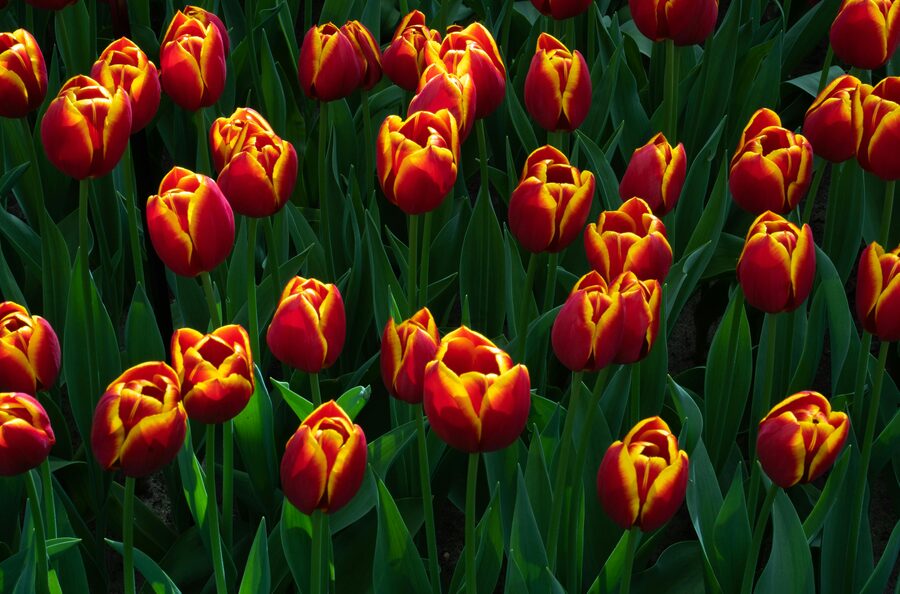
If you have one day in spring and you are choosing between Keukenhof and a windmill day at Zaanse Schans, take Keukenhof. The eight-week window means you may not get a second chance. Zaanse Schans is open year-round. The flower garden closes for forty-four weeks of the year, and the closure is the one editorial fact that defines the visit.
If you are doing both, do Keukenhof first. The peak-bloom risk is real, the weather risk is real, and you do not want to lose your one shot at the flowers because you front-loaded windmills.
If you are doing only Keukenhof, do the morning shuttle, walk counterclockwise from the main gate, climb the windmill at midday, eat your fries, and book the windmill cruise add-on. The cruise is the photograph that justifies the trip. The garden is the experience the cruise is selling for.
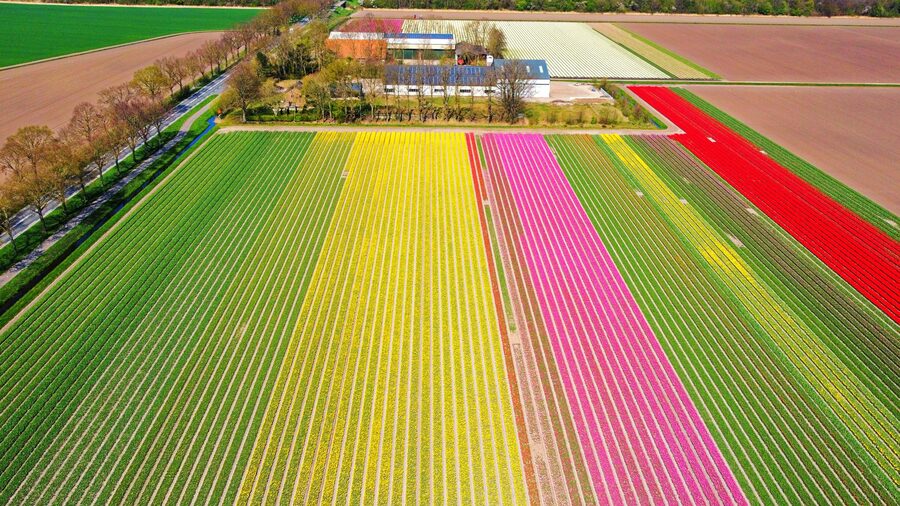
One last note: if your trip falls in the third or fourth week of May, after Keukenhof has closed, the bulb fields are still there. The flowers will be gone. The windmill cruises through the Bollenstreek run into early June with reduced frequency. You can still rent a bike in Lisse and ride the empty roads. It is not the same as the eight-week peak, and you would not fly across the world for it. But if you are already in the Netherlands and the calendar didn’t cooperate, the place is still beautiful in the off-season. Just empty.