
The thing nobody tells you about Isola Bella is that the island isn’t really an island. Not in the way Capri or Murano are. In 1632, Carlo III Borromeo bought a barren spike of rock about 400 metres off the Stresa shore, with one fishing chapel and almost no soil on it. His son Vitaliano VI spent the next four decades stepping the rock into ten terraces, hauling soil across Lake Maggiore by barge, and crowning the whole thing with a baroque palace. The “Isola Bella” you photograph from the lakeshore today, all wedding-cake terraces and gardens that drop straight into the water, was finished in 1671 as a 17th-century vanity project. The fact that it became one of Lake Maggiore’s most-visited sights is the punchline, not the premise.
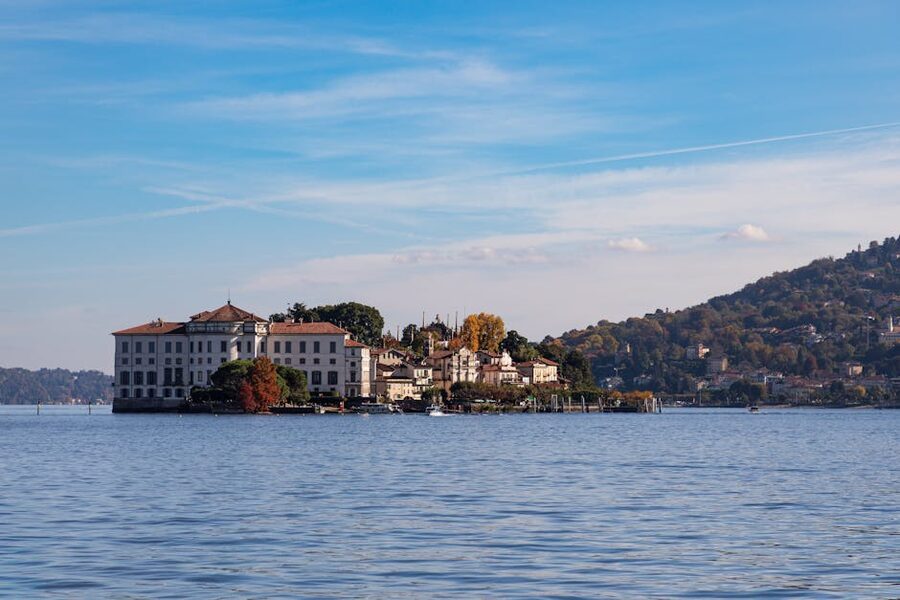
If you’re planning the day, you have three real choices: the cheap hop-on-hop-off ticket, a guided three-island tour, or a stripped-down “palaces only” version that skips the fishing-village stop. Below is the picker, then the rest of the article goes into how this strange archipelago actually works.
In a hurry? The 3 we’d actually book
- Stresa: 3 Borromean Islands Hop-On Hop-Off Boat Tour ($14). The budget pick. Boat-only, all three islands, you set the pace.
- Stresa: 3 Borromean Islands Boat Tour ($17). Same three islands but with a guide. Worth it if you want the Borromeo backstory unpacked on the water.
- Stresa: Madre & Bella Borromean Islands Boat Trip ($15). Palaces-and-gardens only. Skips Pescatori. Pick this one if lunch isn’t the priority.
The constructed-island story, briefly
The Borromeos were aristocratic Milanese bankers from the 1400s. They became an Italian power family in the late 1500s when Charles Borromeo was made an Archbishop and then a saint. By the 17th century the family had bought all four of what are now called the Borromean Islands, on a scale that approaches the contemporary Bourbon construction at Versailles and the Loire-Valley statement projects of Château de Chambord. Three of them they remodelled, one of them they kept private.
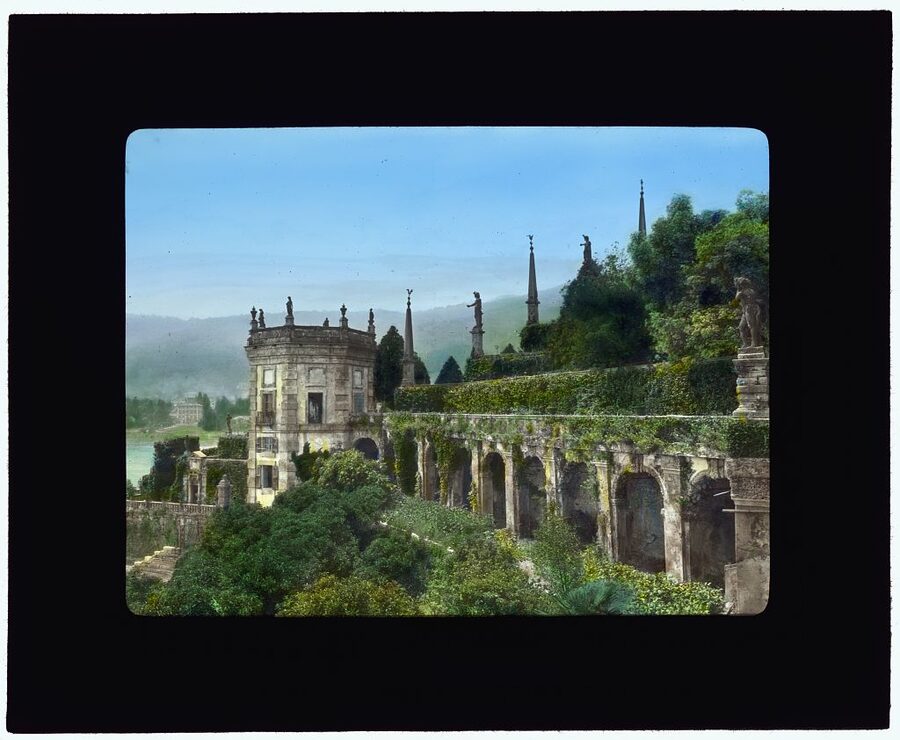
The remodel started with Carlo III in 1632 buying the rock that became Isola Bella, and his son Vitaliano VI inheriting the project. Vitaliano was the obsessive. He named the island after his mother Isabella, hired the architect Andrea Crivelli and later Carlo Fontana, and ran the construction as a 40-year court flex. The trick was the terraces: the island slopes naturally, so the gardens are stepped, ten levels high at the southern tip, with the topmost crowned by a Pegasus and called the Teatro Massimo. The water-and-terraces idea predates the wing of Château de Chenonceau that arches across the Cher and the formal-garden terraces at the Royal Alcázar of Seville. The soil to fill them came across on barges. You’ll still see the family coat of arms (three interlocking circles) carved into doorways once you start looking.
The other three islands followed a different logic. Isola Madre is older as a Borromeo holding (16th century) and is the largest of the four; Vitaliano’s grandfather had a residence there before Bella was built. Isola dei Pescatori, the small fishing village in the middle, is the only one the family never owned. And Isolino di San Giovanni, the smallest, is closed to the public and still privately held. Lake Como’s Bellagio peninsula tells a similar Italian-lake story of family power consolidating around scenic real estate, but Lake Maggiore’s version is more concentrated. One family, four islands, four hundred years.
Getting there: Stresa is the gateway, but not the only one
Stresa sits about an hour northwest of Milan by direct train. From Milano Centrale or Milano Porta Garibaldi, the Trenitalia regional and intercity trains take 60 to 90 minutes and drop you at Stresa station, a 10-minute downhill walk to the lakefront. From Turin it’s slower; you transfer at Rho Fiera and the total is just under 2 hours. Driving from Milan is about 75 minutes via the A8, but parking in Stresa is the catch on summer weekends. If you’re already in the lakes region, Stresa is reachable in 30 minutes from Lake Orta and in around an hour from the Bernina end of Lombardy if you’re stitching this onto the Bernina Express loop.
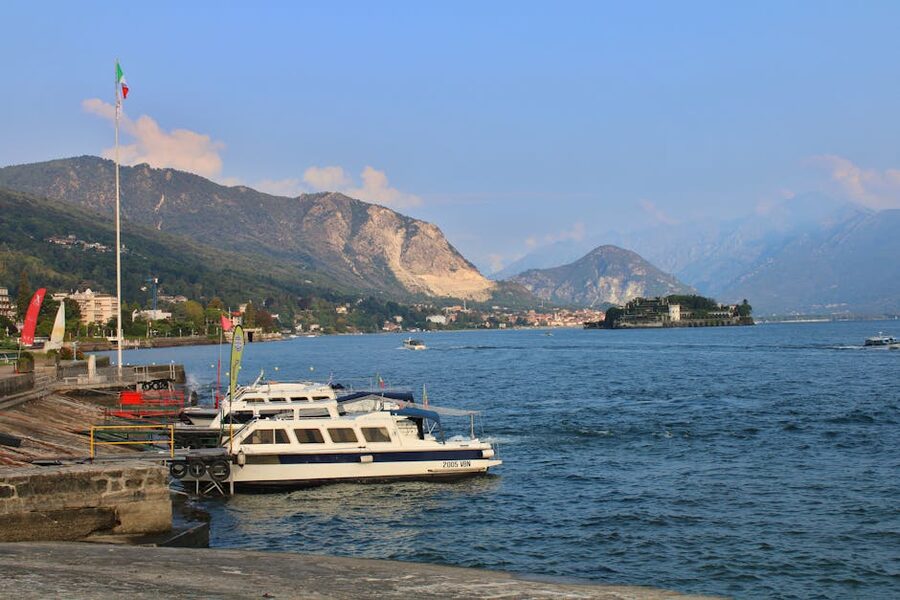
The detail most blogs skip: you don’t have to leave from Stresa. The official public ferry (Navigazione Lago Maggiore) also runs from Baveno, Pallanza and Verbania, all on the same lake. Baveno is closer to Isola Madre, Pallanza is closer still. If you’re staying in any of those towns, walk to the local pier instead of riding to Stresa. The hop-on-hop-off boats from private operators are the ones that all leave from Stresa’s Piazza Marconi.
Public ferry vs hop-on boat vs private motor boat
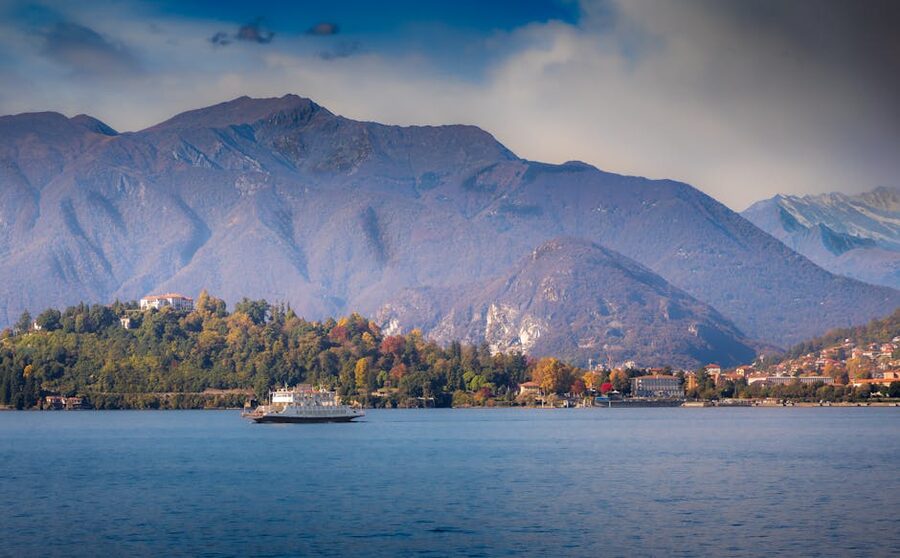
This is where most visitors get tangled up, so it’s worth being concrete. There are three operators on the same water and they don’t run the same product.
The Navigazione Lago Maggiore public ferry. A government-run service with set timetables, slower boats, and the cheapest fares (a one-way Stresa–Isola Bella runs a few euros, a multi-island ticket about €17). You buy tickets at the green-and-white kiosk on the Stresa pier. It runs all year. The downside is the timetable: if you miss a return ferry from Pescatori, the next one might be 90 minutes out, and that 90 minutes will eat your Isola Madre stop.
The hop-on-hop-off private boats. The product the GetYourGuide and Viator listings sell. Smaller boats, departures every 20 to 30 minutes, you flash your ticket and get on whichever is at the dock. This is what almost every solo traveller and family ends up using because the cadence matters more than the saved euro. The boats are open-top in summer and that’s the right way to see the islands.
The private motor-boat operators. The little wooden taxis lined up north of Piazza Marconi. They’re more expensive (€80 to €150 for two people for a half-day) but you can ask them to wait at each island, change the order, or skip Pescatori entirely. Worth it if you’re a couple celebrating something or a family of five where the per-person cost on a hop-on starts to look comparable.
Isola Bella: the palace and the gardens
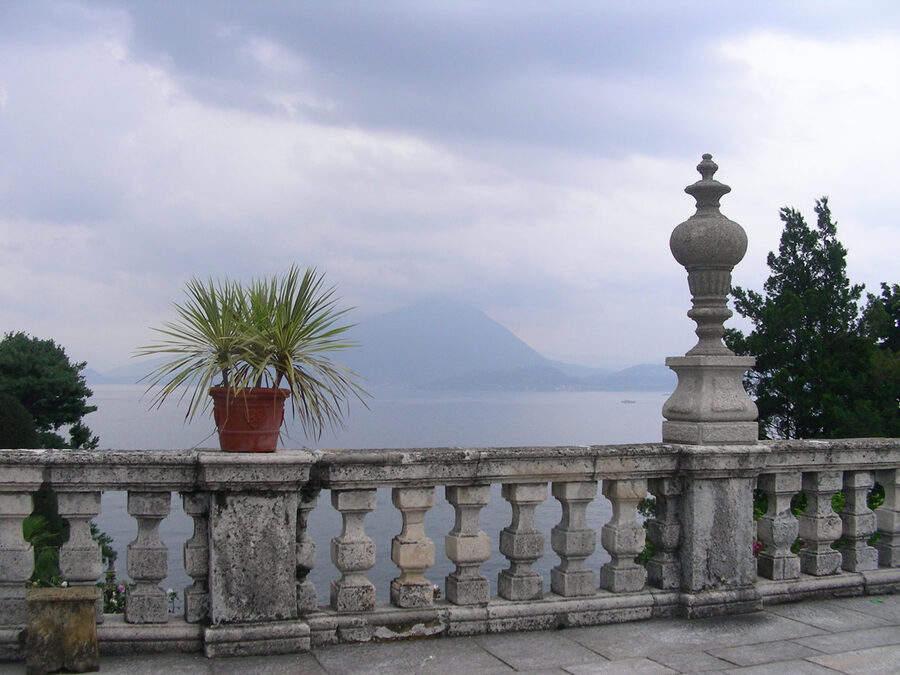
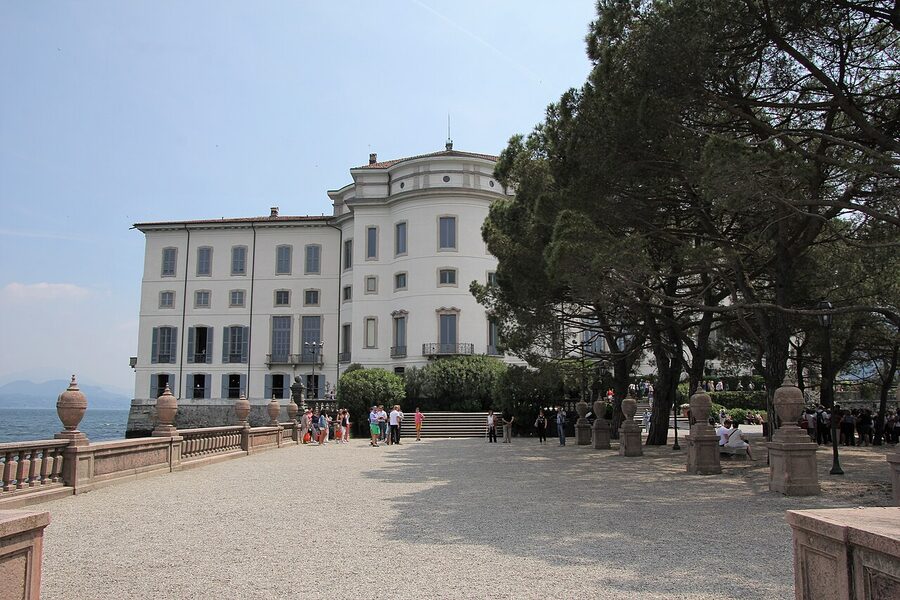
You arrive on Isola Bella at the front door of the palazzo, which is unusual. There’s no walking up to it from a town square. The boat docks, you pay your entry, you step inside. Allow about three hours total: ninety minutes for the palace, ninety for the gardens.
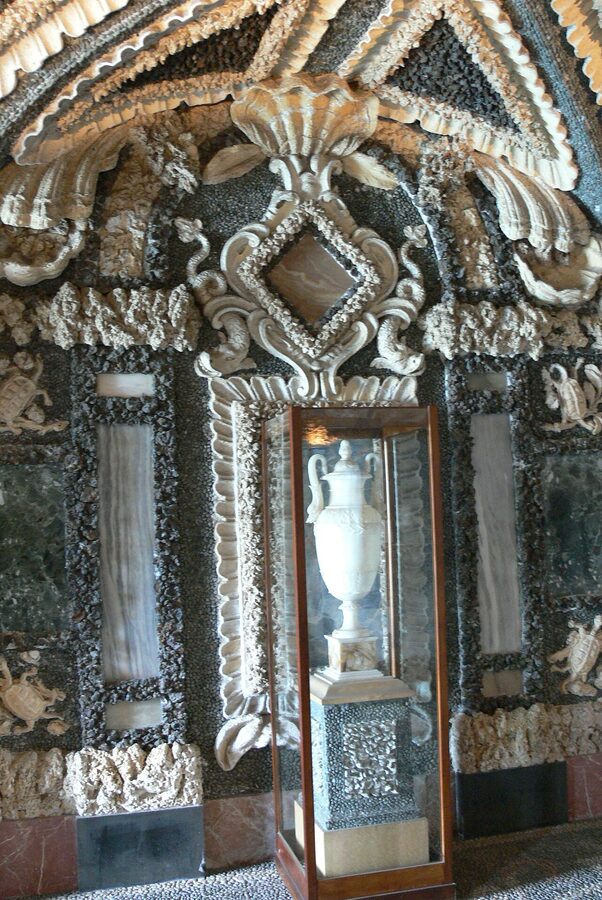
Inside the palace, do the rooms quickly until you reach the grottoes. They’re underneath the building on the lake-water side, six rooms with the walls and ceilings completely encrusted in pebbles, shells, marble fragments and black volcanic rock. Carlo IV Borromeo built them in the 18th century to escape the summer heat, the same Mediterranean cool-room logic that produces the tiled water rooms at the Nasrid palaces of the Alhambra. They still feel ten degrees colder than the outside today. The black-and-white pebble floors, the shell pyramids, the way the patterns crawl up onto the ceiling, none of it is what you expect from a baroque palace. The grottoes are the part of the visit you’ll remember in five years.
After the grottoes you cross into the hall of Flemish wall hangings (six 16th-century pieces with mythological animals, including a unicorn versus a lion that you’ll see again as the family emblem). Then you exit straight into the gardens, which sit in the same Italian-courtyard tradition as the painted patios at Casa de Pilatos in Seville. The terraces are the photographable part. The Teatro Massimo at the top, with its tiered fountain and unicorn statue, is the postcard. But the layer most visitors miss is the pavilion on the eastern terrace, half-hidden by trees, with views toward Pescatori. Sit there for ten minutes before you walk back down.
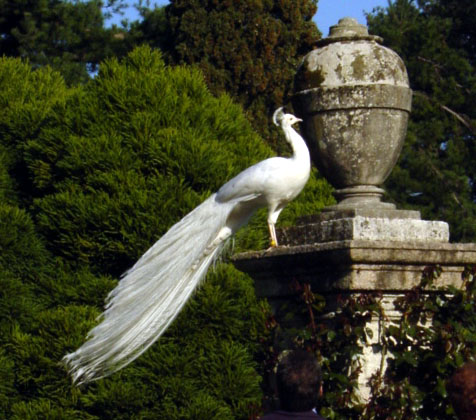
The white peacocks are a real thing. They wander the upper terraces and are completely unbothered by visitors, which means you can get within a metre. They’re loudest in the morning, around 9:30 to 10:30. If your boat lands at that time you’ll spend twenty minutes just photographing them and never make it to the palace, which is fine. The garden ticket on the way back out is the same one. The terraced-garden setup is the same architectural language you see at Pitti Palace and the Boboli Gardens in Florence, but compressed onto an island the size of a city block instead of spread up a Tuscan hillside.
Tickets and timing for Isola Bella
The palace and gardens open mid-March and close at the start of November. Inside that window, hours are roughly 9am to 5:30pm with the last entry an hour before closing. A combined ticket for the palace and gardens is around €22 adult; you can buy it at the gate or skip the queue by booking online. The ticket also works as an entry on Isola Madre on the same day, which is a small detail worth knowing if you’re doing both islands.
The timing rule that actually matters: get to Isola Bella first thing. The palace’s interior corridors are narrow, the rooms are darkened, and by 11am there are tour groups stacked on the staircases. Boats from Stresa start at around 9am. Get on the first one.
Isola dei Pescatori: lunch, and the rest of the day
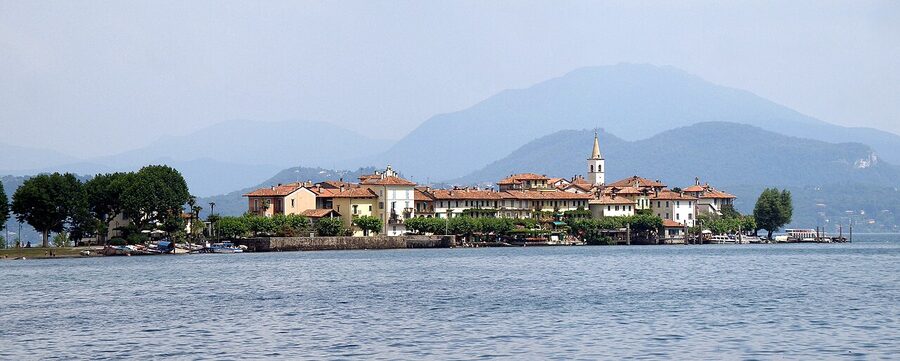
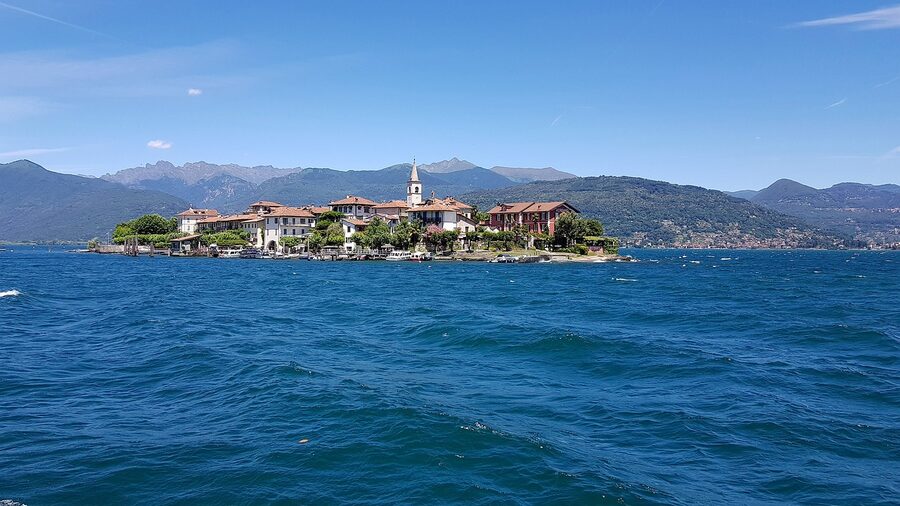
Pescatori is the small one in the middle and it’s where you eat lunch. About 25 people live on it year-round, the streets are two narrow lanes, and the whole island is walkable end to end in eight minutes. The waterfront is mostly restaurants now (perch fillets, lake risotto, fritto misto di lago), but the church of San Vittore at the eastern tip is open and worth a stop. There’s a small fishing-tradition museum near the dock.
The lunch trick: the restaurants don’t open until 12:30, which is the standard Italian lunch hour. If you arrive at 11am hungry you’ll wait. The restaurant moves are the simple ones (Verbano, Belvedere, Casabella) and almost all of them have lake-facing terraces that fill up first; reserve if you can, especially in July and August. Skip the gelato shop right by the boat dock and walk two minutes inland for a better one.
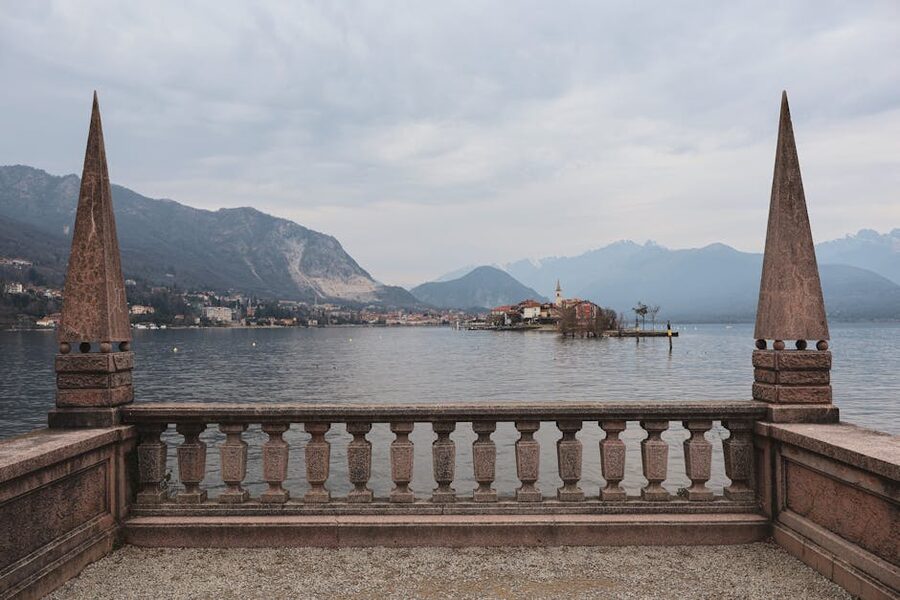
Time your boat off Pescatori for around 2pm. That gives you 90 minutes for lunch (Italian portions, no rush) and lands you on Isola Madre with enough afternoon light to do the gardens.
Isola Madre: the gardens that don’t get the press
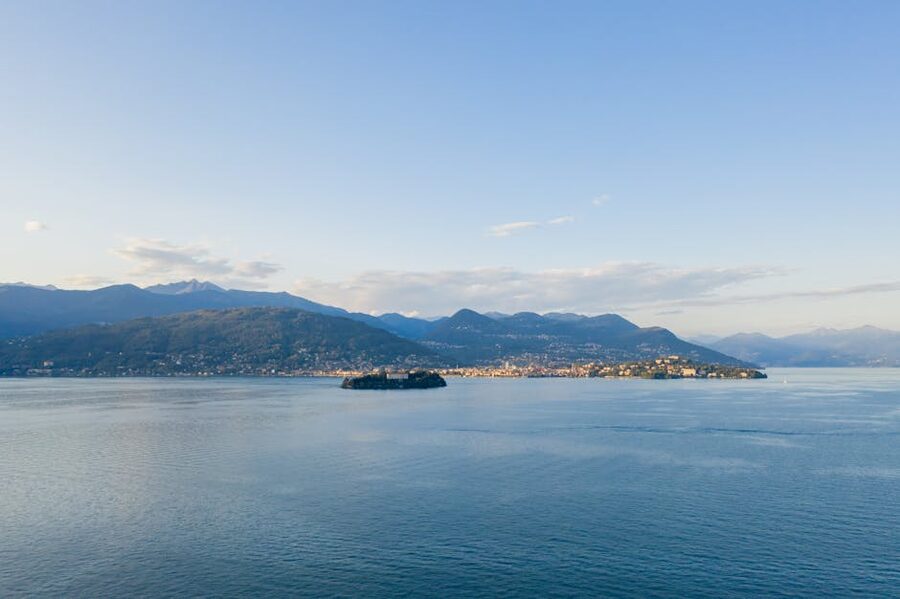
Most day-trippers skip Madre because it’s furthest from Stresa and they’re tired by 3pm. The cost of skipping it is real: Madre is the older Borromeo island, the larger of the two with a palace, and the gardens are completely different to Bella’s. Where Bella is rigid baroque geometry, Madre is loose English botanical: cypresses, magnolias, citrus, hibiscus, palms, and a giant Kashmir cypress that’s been there since the 1860s. There are 20 acres of it. White peacocks on Madre too, but also pheasants and parrots. The English-romantic planting style is the same one that filled Monet’s water gardens at Giverny.
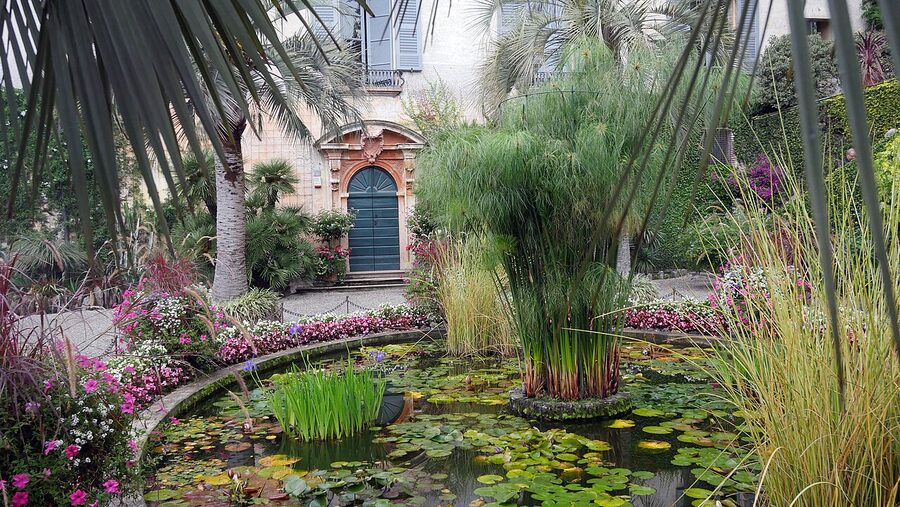
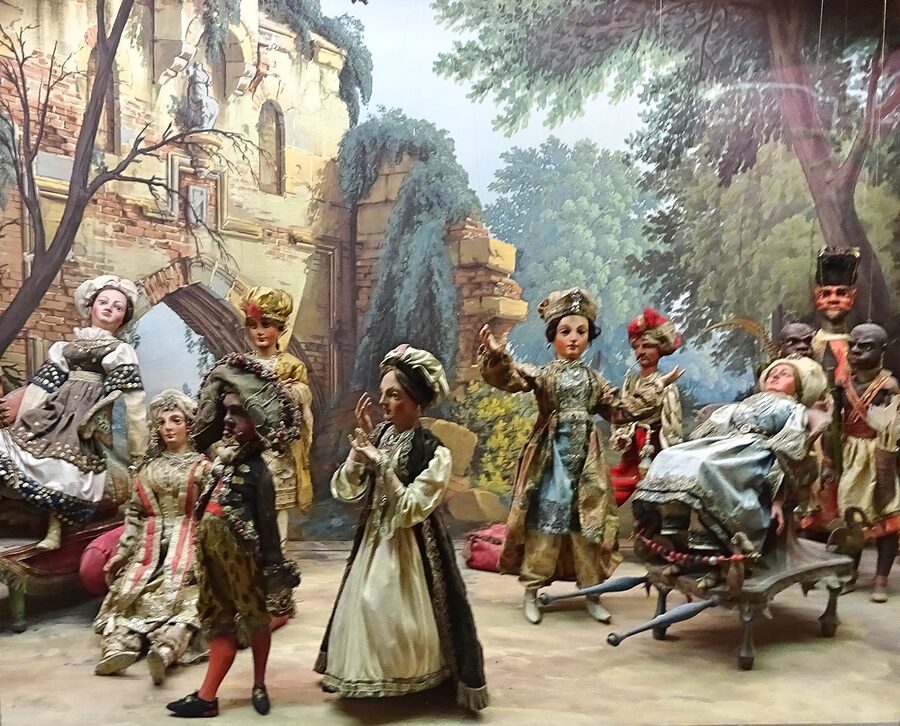
The palazzo is open and worth the 30 minutes. It’s smaller and warmer than Bella’s: a family residence rather than a flex piece, with portrait galleries, period furniture, and a 17th-century puppet theatre with hand-painted backdrops that’s the most unexpected room on either island. If you only have time for one of the two palaces, ask your future self which one you’ll talk about, and the answer is usually Madre’s puppet theatre, not Bella’s mirrored salons.
The same combined ticket from Bella works on Madre. Closing time is the same (5:30pm-ish, last entry an hour before). The last hop-on boat back to Stresa from Madre is usually around 6pm in summer and 5pm in shoulder season; check the operator’s printed schedule when you board in the morning.
The fourth island, briefly
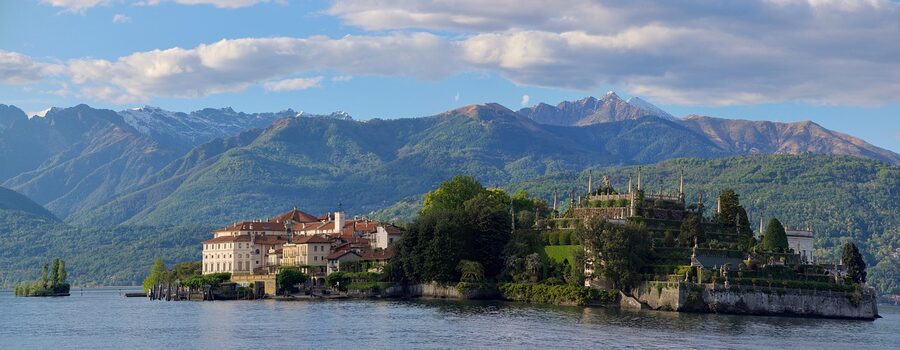
Isolino di San Giovanni, the fourth island, is private. You can see it from the Pallanza waterfront (it’s less than 30 metres from shore) but you can’t visit. Arturo Toscanini, the conductor of La Scala and the New York Philharmonic, lived there for 25 years across the 1930s and 1940s. The Borromeos still own it, in the way the House of Orange still owns the working ceremonial rooms inside the Royal Palace on Amsterdam’s Dam Square. Mention it to your boat captain on the way to Madre and you’ll get a longer answer than you bargained for.
Tickets and the actual day, planned
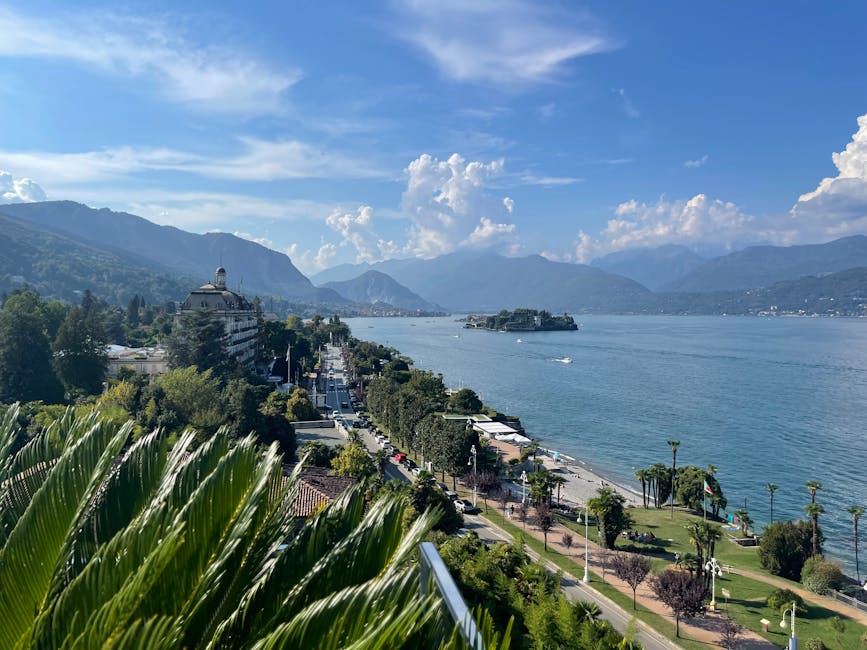
The realistic structure of a day from Stresa goes like this. Catch the 9am hop-on boat. Land on Isola Bella, do the palace then the gardens, three hours. Take the boat to Pescatori around 12:30 for lunch. Boat to Madre at 2pm, two hours in the gardens and palace. Last boat back to Stresa around 5pm. You’ll be tired. That’s the right amount of tired.
If you only want two islands, the rule is Bella plus Madre (skip Pescatori, eat in Stresa before or after) or Bella plus Pescatori (skip Madre if you’ve used up the day). Doing only Bella is what cruise day-trippers from Genoa or Milan default to and it’s the wrong call: Bella alone takes 3 hours and then you’ve got a four-hour slot to fill on a tiny waterfront. The whole point of the hop-on ticket is that the next island is fifteen minutes away. Use it.
Best time to go
The palaces and gardens open from mid-March and close at the start of November. Inside that, the answer is April to early June, then September. Spring gets you the magnolia and rhododendron bloom on Madre and the citrus on Bella’s terraces, with weekday crowds that don’t queue. July and August double the boat traffic and put a 30-minute wait on the Bella ticket gate; if those are your only options, book the entry online and arrive on the first boat of the day. October light on the lake is exceptional and the gardens are still half-functional. November shuts most of it down.
The closing-day calendar shifts each year by a few days; check the Borromeo properties website (isoleborromee.it) before booking a hard date, especially around the November close. The boats run all year, but with no palace or garden access from November to mid-March there’s not much reason to be on them.
Three tours that actually make sense
This is the booking section. Three options across the price spread. A direct take on each, with the link to our review for the long-form details.
1. Stresa: 3 Borromean Islands Hop-On Hop-Off Boat Tour: $14
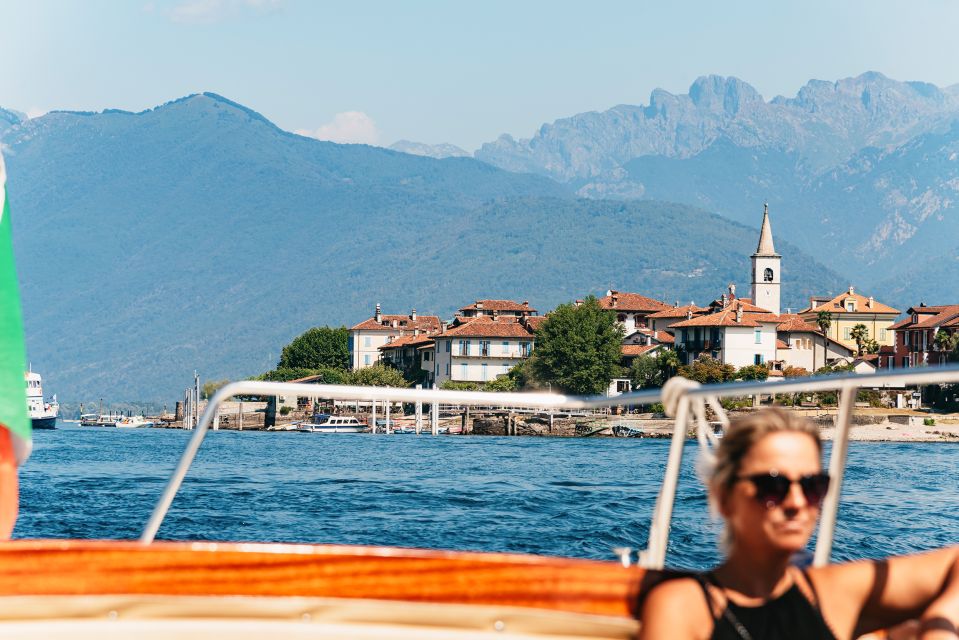
This is what most independent travellers default to and it’s the right default. The pass covers the boat only, not the palace or garden tickets, which you buy at each landing. Our full review has the timetable detail and the section on which Stresa pier the boats actually leave from, since the marketing maps undersell that.
2. Stresa: 3 Borromean Islands Boat Tour (Guided): $17
Worth the extra €3 if you want the family-history context unpacked while you’re on the water rather than reading it off a panel inside the palace. Our review of the guided version covers what the commentary actually includes, which is more architectural than I expected.
3. Stresa: Madre & Bella Borromean Islands Boat Trip: $15
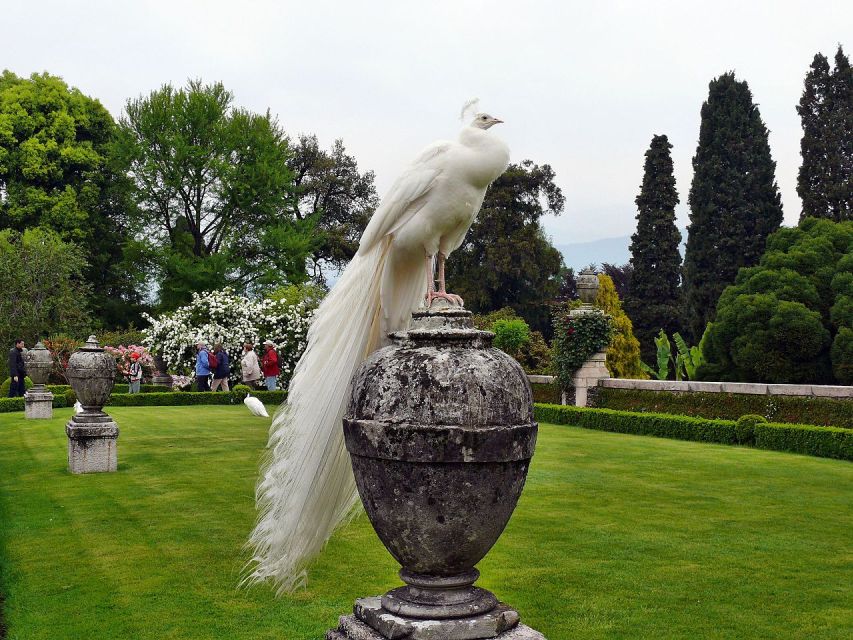
This one filters the day down to the two Borromeo properties and cuts the middle-island fishing-village stop. Our review walks through how the timing changes when you remove Pescatori from the loop; you can do both palaces in a long morning instead of a full day.
What to skip
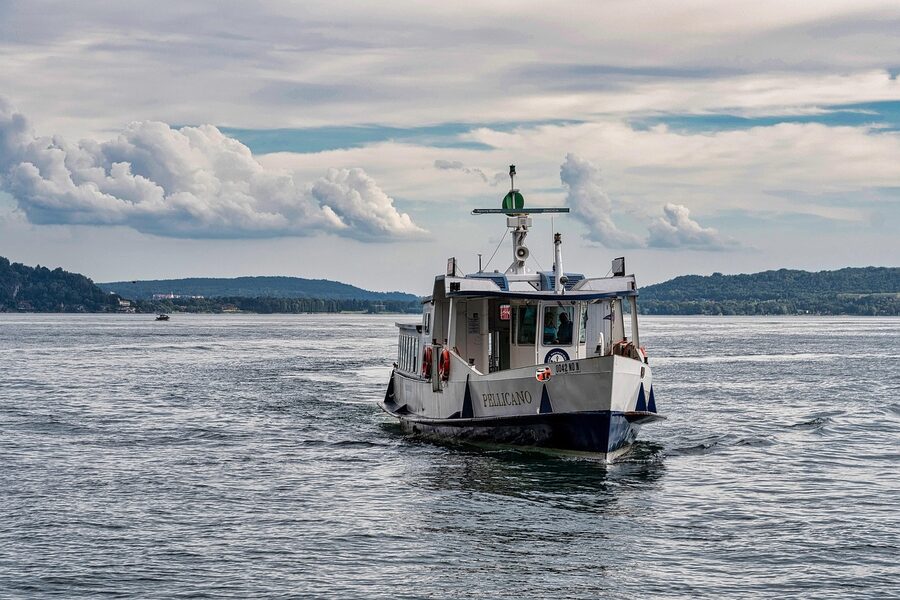
The two upgrades I’d push back on. The first is the “private speedboat” tier on Viator, which is just a hop-on boat with the dock waits removed; it costs five times the standard ticket and saves you maybe 40 minutes. The second is the dinner-cruise add-on. Dinner on Pescatori at one of the restaurant terraces is better than dinner on a boat circling the same water you saw all day. The view is the islands; you don’t need to be moving.
I’d also skip Stresa-as-overnight-base unless you’re already booked there. Pallanza is more atmospheric, has an actual town centre, and the boat distances to the islands are similar. The town of Stresa is built around the boat pier and a row of grand hotels from the 1900s; it’s pretty for an afternoon, not a stay.
Where to go after
If the Borromean day worked for you, the natural next move depends on which part you liked. Garden people tend to take the train down to Milan and then carry on to Florence for the Boboli Gardens behind Pitti Palace, which is the other great Italian terraced-garden composition. Boat people often pair the day with Lake Como from Milan the day after, which gives you the comparison set on the two big Lombardy lakes. If you’re heading further south for archipelago boating, La Maddalena off Sardinia is the sister day; granite islets and turquoise water instead of palaces and white peacocks, but the same “all-day-on-a-small-boat” rhythm. And if you’re staying north and have a weather window, the Bernina Express across the Alps is the obvious follow-on for one more big day from Stresa or Milan.
The Borromean Islands sit in the same conversation as the Doge’s Palace in Venice and Leonardo’s Last Supper in Milan: 17th-century Italian aristocratic statement projects that became 21st-century tourist obligations. Bella is unusual because the statement project is the place itself. The Borromeos didn’t fill an island with a palace; they built the island to put the palace on. That’s the part the day repays you for noticing.