
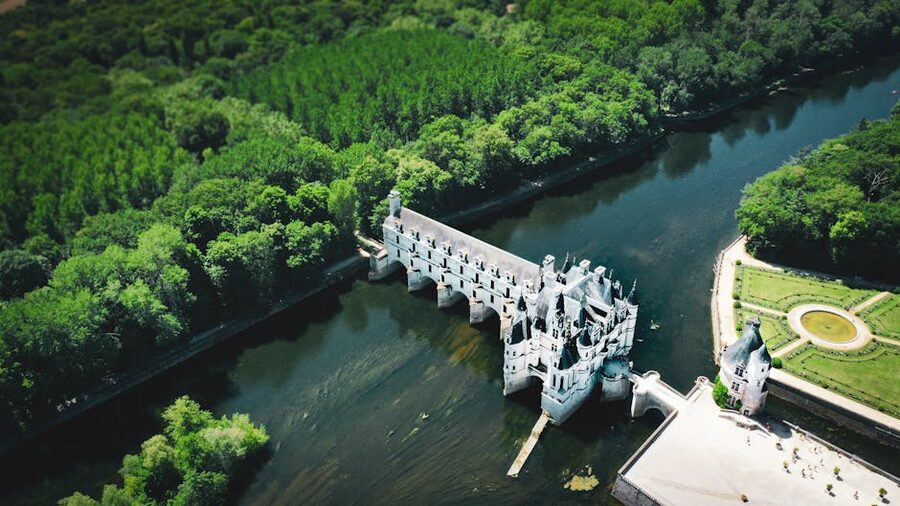
You walk into the Galerie de Catherine de’ Medici at four in the afternoon and the floor stops you. Black and white tiles run the length of a 60-metre ballroom, eighteen tall windows on each long side, and the river is on both sides of you at once. Look left and the Cher flows toward Tours. Look right and it flows toward the source. You’re standing on a bridge that someone turned into a house.
Most great châteaux were built by men. Chenonceau was built almost entirely by a series of women across two centuries, and the building you walk through is a physical record of one of the most famous succession disputes in French history.
If you’ve already decided you’re going
- Standard admission, $22: Chenonceau Castle Admission Ticket. The way most independent travellers do it. Drive yourself, park free, walk in.
- From Paris with Chambord, $104: Loire Valley Castles with Wine Tasting. The right pick if Paris is your base and you want both castles in one go.
- Premium small-group from Paris, $160: Loire Castles with Chenonceau and Chambord. The pick if you’re willing to pay more for a smaller bus and longer time at each château.
The “château built by women” framing isn’t marketing
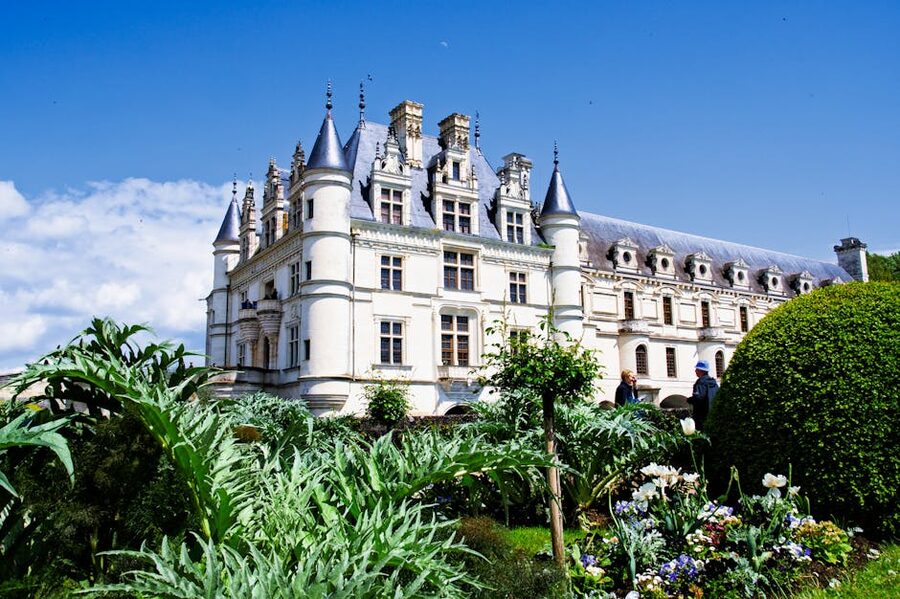
Chenonceau is officially called the Château des Dames, the Ladies’ Château, and that’s not a tourist-board flourish. It’s a literal description of who actually built and shaped the place.
The math is straightforward. Catherine Briçonnet oversaw the construction of the original tower in 1513 while her husband Thomas Bohier was off being King François I’s tax collector in Italy. Diane de Poitiers got the château from Henri II in 1547 and immediately commissioned the bridge across the Cher, completed in 1559. Catherine de’ Medici evicted Diane within months of Henri II’s death the same year, took the château back as crown property, and built the gallery on top of the bridge between 1570 and 1576. Louise of Lorraine, Henri III’s widow, retreated here after his 1589 assassination and lived in mourning black until her death in 1601. Madame Dupin ran an Enlightenment salon here from 1733 and personally prevented the château’s destruction during the Revolution. Madame Pelouze bought the building in 1864 and funded the major restoration that’s still essentially what you walk through today.
Six women, two hundred years, one building. Most “great châteaux” tell the story of a king. This one tells the story of his wives, mistresses, and widows. The closest northern parallel is the Royal Palace on Dam Square in Amsterdam, where successive Dutch queens (Wilhelmina, Juliana, Beatrix) shaped the interior across the 20th century even though the building started life as a male-civic 1665 town hall.
How the bridge became a building (the architectural argument)
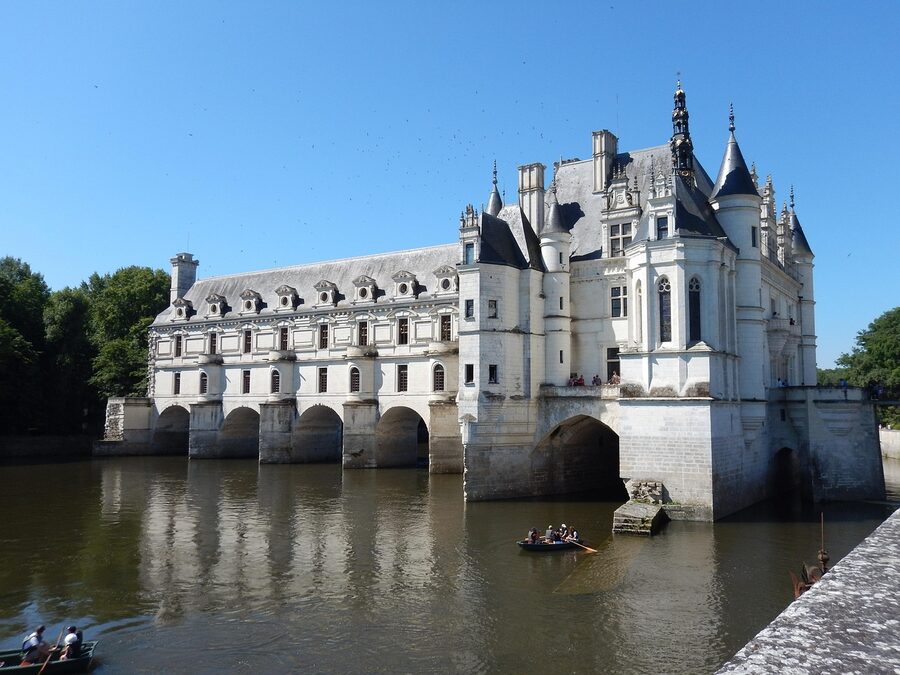
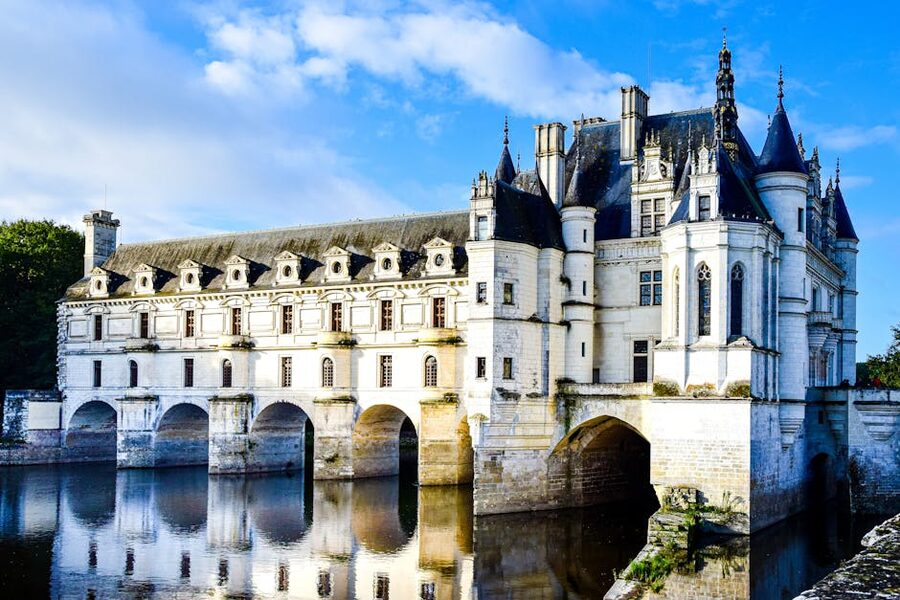
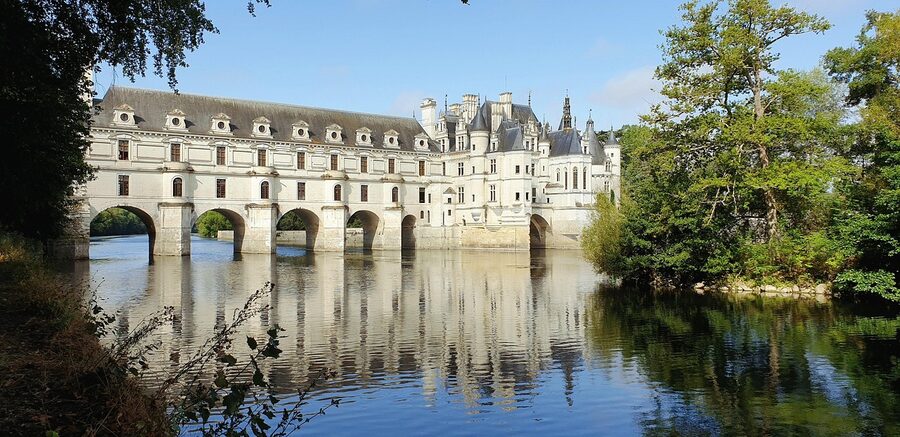
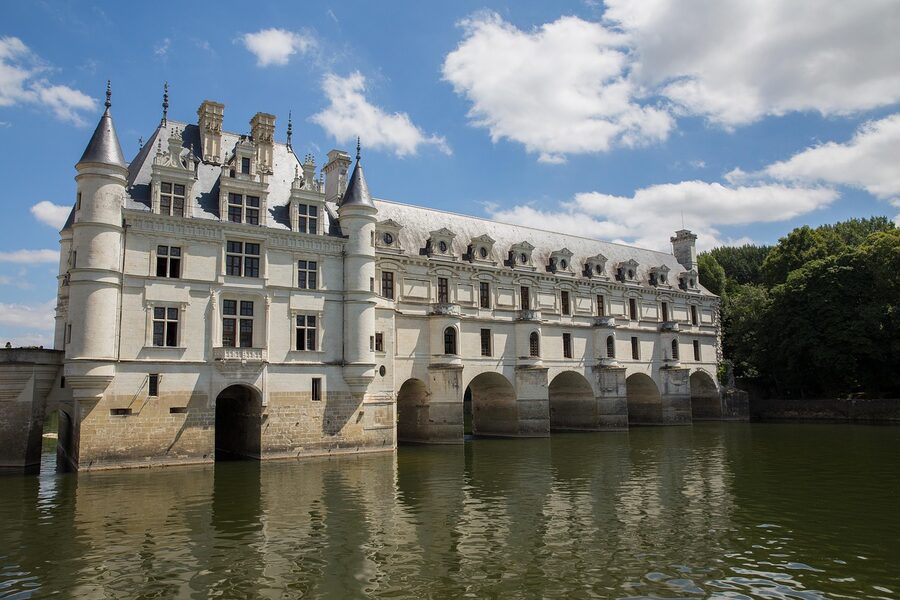
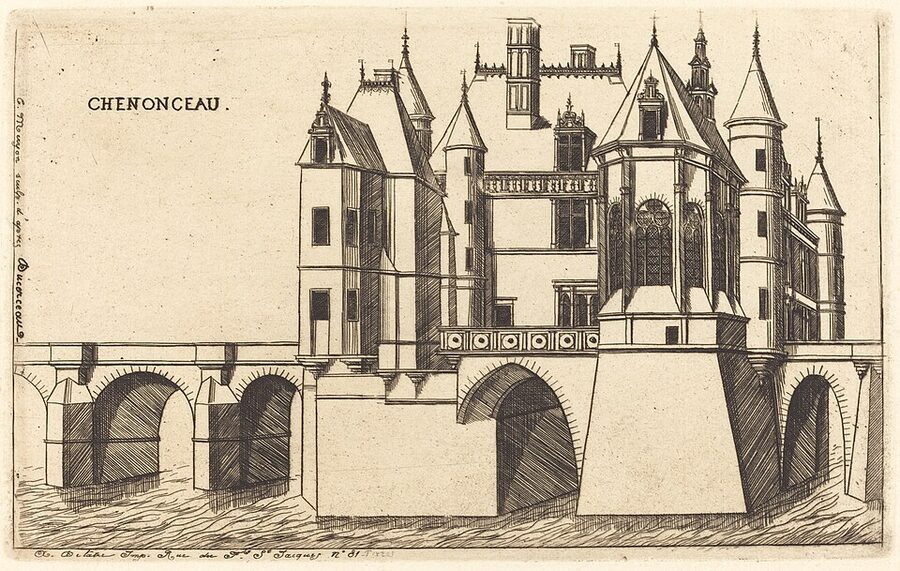
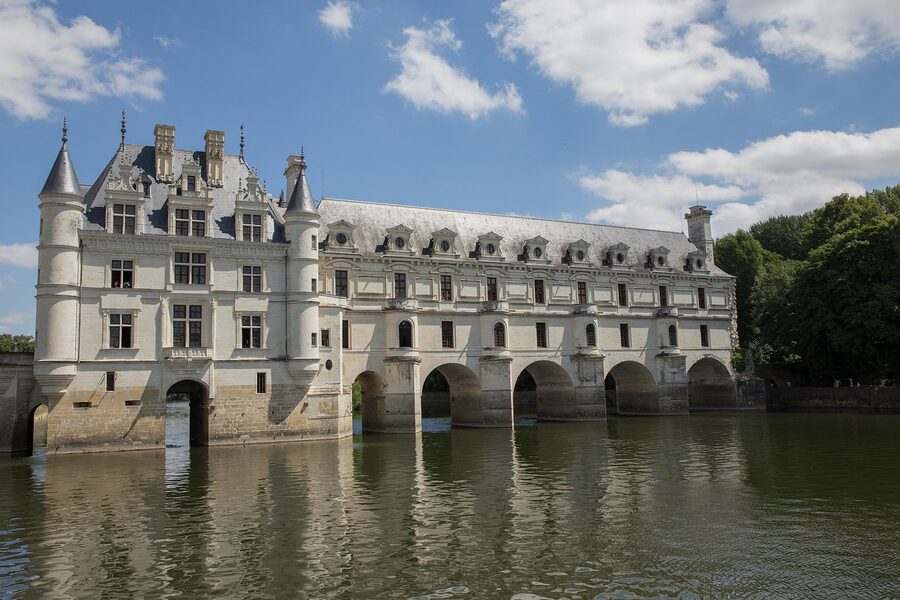
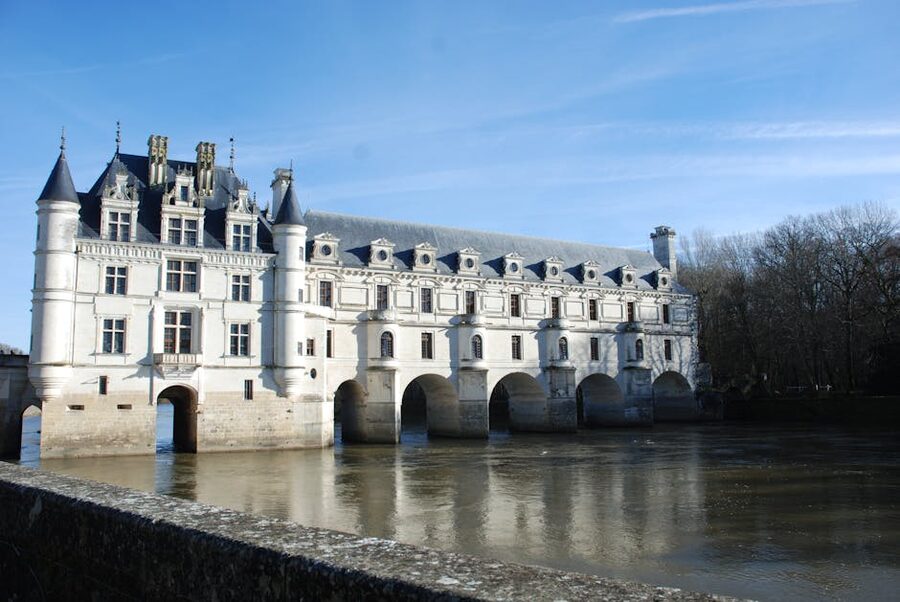
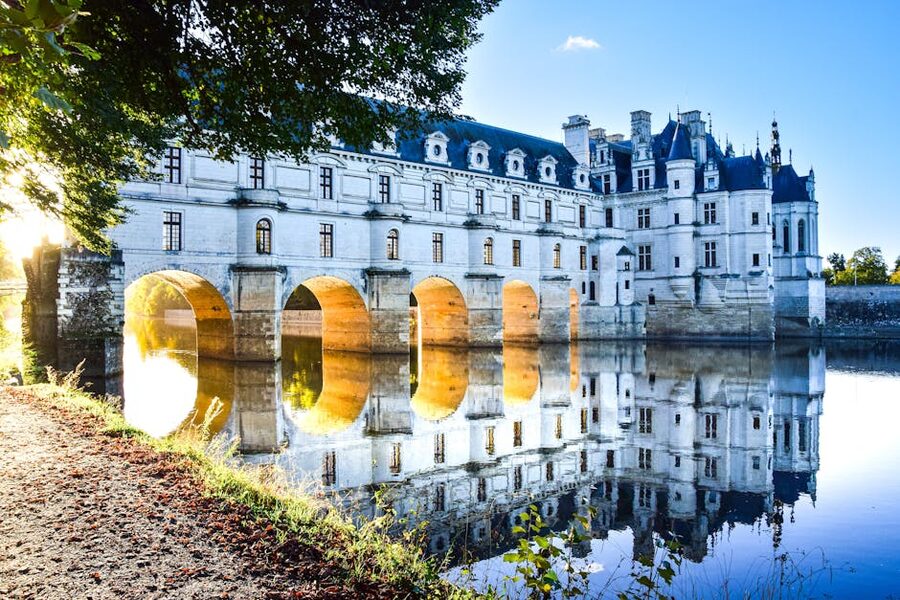
The thing to understand about Chenonceau is that the disputed succession isn’t just gossip. It’s visible in the building. Diane built the bridge. Catherine built the gallery on top of the bridge. The argument between them is right there in the silhouette.
Henri II had been Catherine’s husband for twenty-six years and Diane’s lover for almost as long. Diane was nineteen years older than Henri and the most powerful woman in France during his reign. When she got Chenonceau in 1547, she hired Philibert Delorme, the era’s best architect, to build the five-arched bridge from the south wall of the original keep across the Cher to the south bank. The bridge was finished in 1559. Two months later, Henri II died from a jousting injury in Paris.
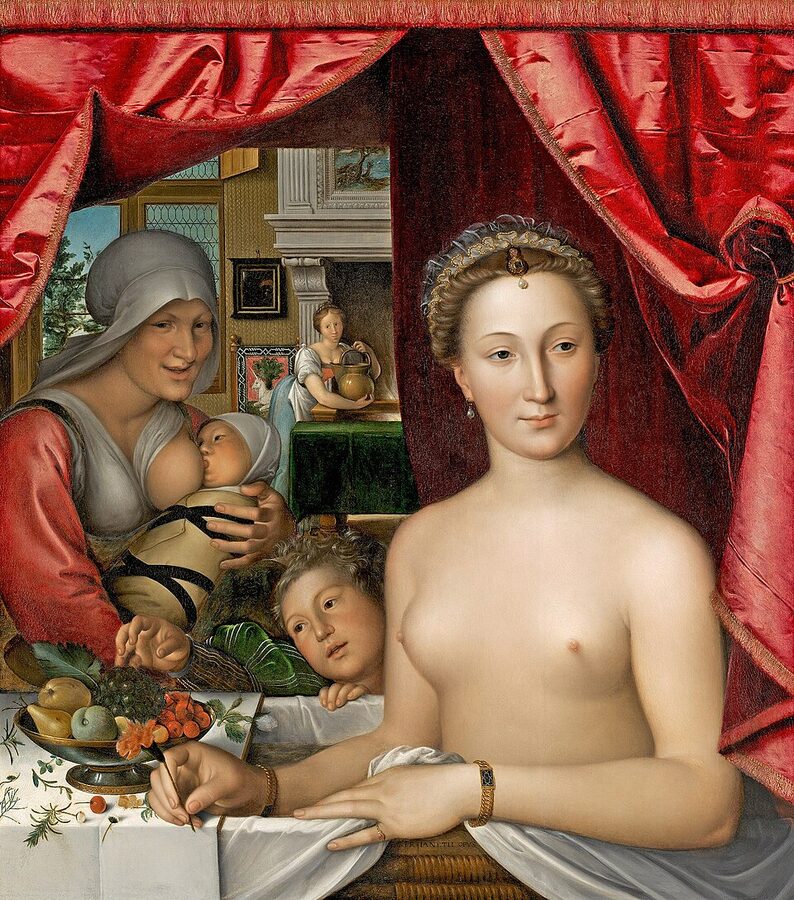
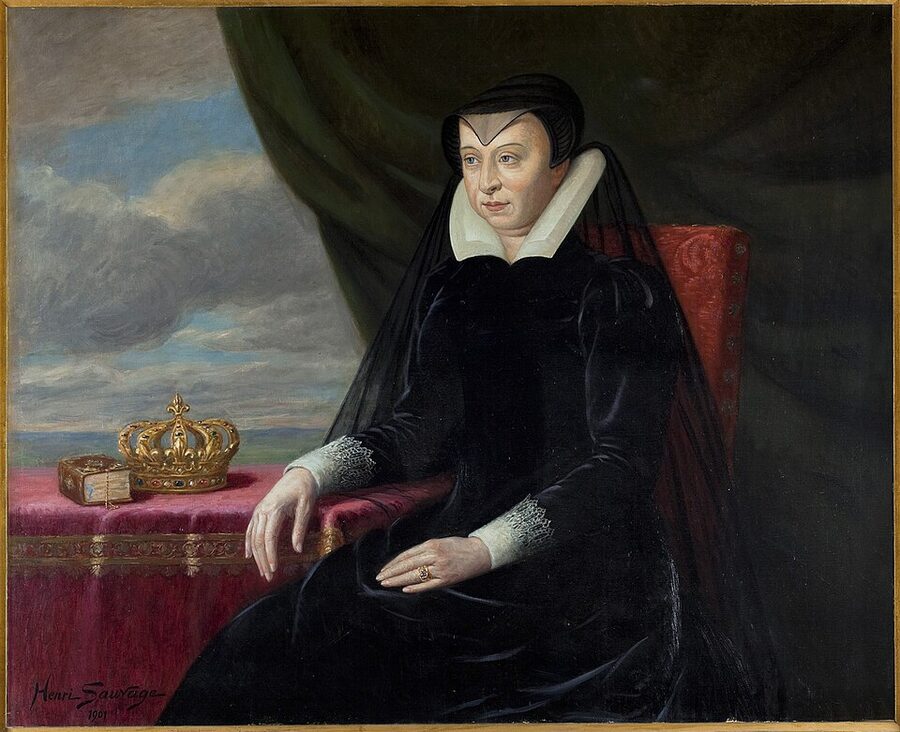
Catherine moved within weeks. She had Diane out of Chenonceau and into Chaumont (a smaller, draughtier château 50km north) by the start of 1560. Then she sat on the bridge for ten years before deciding what to do with it.
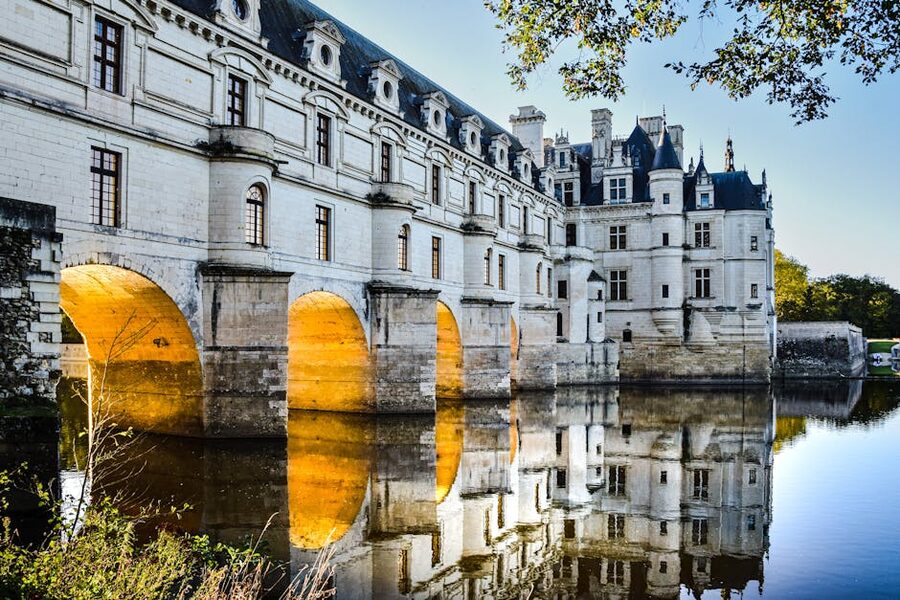
What she did was hire Jean Bullant and put a two-storey gallery on top of Diane’s bridge. The structure went up between 1570 and 1576. It is the single most-photographed feature of the château and the most architecturally insistent: Diane built a bridge, Catherine built a building on top of Diane’s bridge, and the visible result is that Catherine’s name is the one carved over the front. The gallery is also the largest party room any French queen had ever commissioned. Catherine threw enormous fêtes here, including a famously expensive one in 1577 featuring the first French ballet.
The gallery itself: 60 metres of architectural revenge
You enter the gallery from the long thin Salle des Gardes inside the original keep. It opens up suddenly. Sixty metres long, six metres wide, eighteen tall casement windows on each side, black and white tiles laid in alternating rows for the entire length, and the river visible through every window.
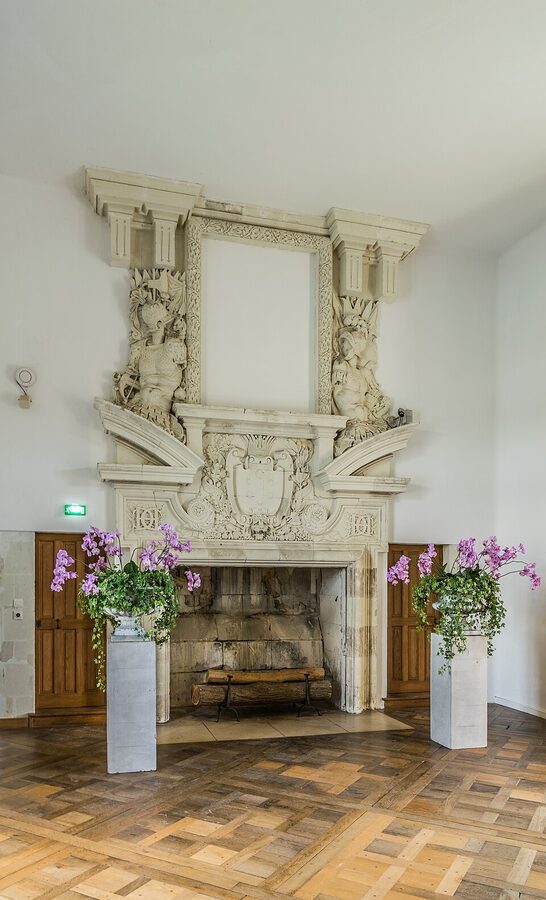
If you visit at four in the afternoon (the unofficial best time, see below), the river is doing two things. Look out the south windows, the Cher flows downstream toward Tours, slow and clear, lined with willows. Look out the north windows, the Cher flows upstream from the source, lined with the formal Catherine de’ Medici garden. You’re inside a room that exists on both sides of the river simultaneously. There’s no other room in any French château that does this.
The gallery has had three lives beyond ballroom. It became a 120-bed military hospital during World War One, treating around 2,200 wounded soldiers between 1914 and 1918. It became a literal border crossing in World War Two between June 1940 and November 1942: the demarcation line between Vichy France and the German-occupied zone ran exactly along the Cher, the south door of the gallery opened into Free France, and the north door opened into the occupied zone. The Menier family (who own the château, more on them later) helped people cross the line through the gallery floor, working with the Resistance. Then it went back to being a ballroom.
Tickets: how to actually get in
Standard adult admission is $22 (around €20 at the gate). Children 7-18 are $19. Under 7 is free. The price gets you the château interior, both gardens, the maze, the donkey paddock, and a multilingual audio guide app that you download to your phone. Parking is free in the large lot before the long tree-lined entrance avenue.
The single most important practical thing: you do not need a guide and you do not need a tour. Chenonceau is a self-guided visit by design. The audio guide app (free with the ticket) is good. The signage in each room is good. The crowd flow is good. You walk in, you walk through, you walk out. Most independent travellers spend two and a half to three hours inside and around the gardens.
Hours are 09:00 to 19:30 in summer (mid-April through September), and tighten to 09:30 to 17:00 in winter (November through February). The shoulder months (October, March) run roughly 09:30 to 18:00. The château is open 365 days a year, including Christmas and New Year’s Day, which is unusual for French heritage sites.
Buy the ticket on the official site or via GetYourGuide. The price is the same. GYG’s only advantage is the cancellation flexibility and the fact that the ticket lives in the same app as the rest of your trip. There is no skip-the-line option, because there is essentially never a line at the actual gate. The bottleneck, when there is one, is the path to the entrance, and a paid ticket doesn’t help you walk faster.
The best time to go is genuinely 4pm
I know “best time” lists are filler. This one isn’t. Four in the afternoon at Chenonceau actually changes the experience.
The reason is the light. The gallery’s eighteen south-facing windows hit the river at a low angle starting around 16:00 in summer, which is when the river goes silver and the gallery turns amber. This is the photo. It is also when the bus-tour crowds (Paris day-trippers, mostly arriving via the 9:30am combo with Chambord) are leaving for the four-hour drive back. Between roughly 4 and 6pm in season, you have something close to the place to yourself.
The corollary: the bus tours from Paris arrive in a clump around 11:30am. If you’re driving from anywhere within two hours, set off late, eat lunch in nearby Amboise (about 12km north), and arrive at the gate around 14:30. You’ll trail the lunch-stop bus crowd into the keep, then have the gallery and gardens to yourself by 16:00. The opposite arrival pattern (early morning, beat the crowds) doesn’t work as well at Chenonceau because the tour buses are timed to arrive late-morning anyway.
Three tours worth booking
If you’re travelling without a car, or if you’d genuinely rather have someone else drive, these are the three I’d point you at. Two of them include Chambord; one is just Chenonceau by itself. Pick by where you’re starting.
1. Chenonceau Castle Admission Ticket: $22
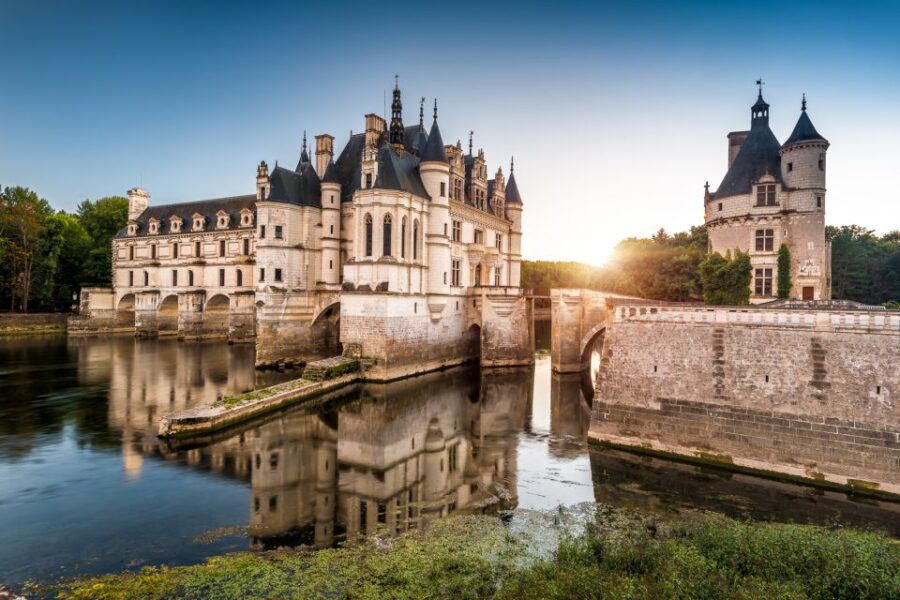
This is the right pick if you’ve got a car or you’re staying in the Loire region. Our full review goes through the audio-guide app and what to expect at the gate. Cancellation is free up to 24 hours before, which is the reason to book through GYG rather than at the kiosk.
2. From Paris with Chambord and Wine Tasting: $104
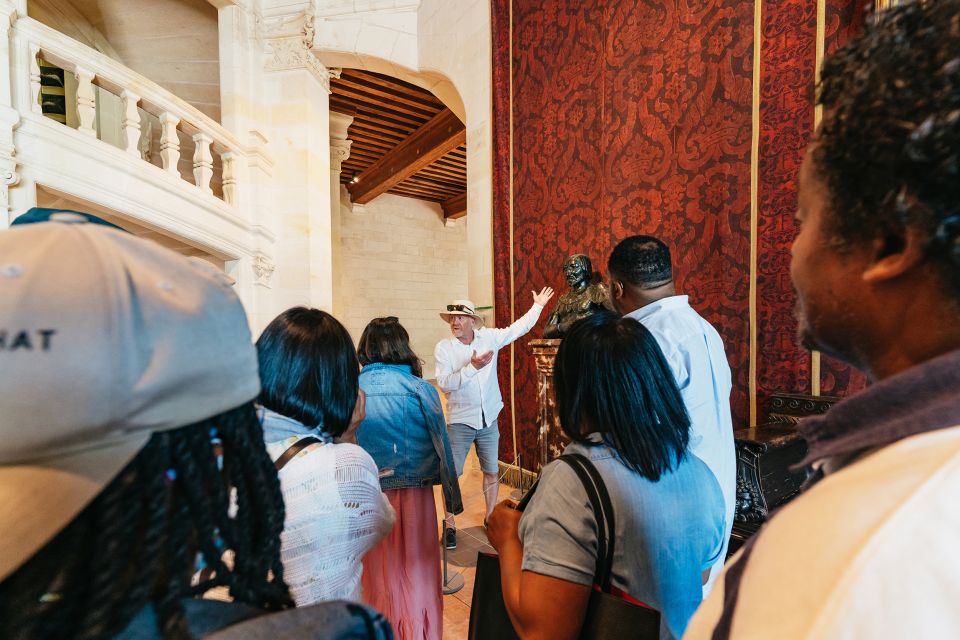
The right pick if Paris is your base and you want both castles in one go. Our full review covers the 13-hour day length: it’s long, the bus is full-size, and you only get about ninety minutes inside Chenonceau. But the price is fair for what’s included.
3. Loire Castles with Chenonceau and Chambord: $160
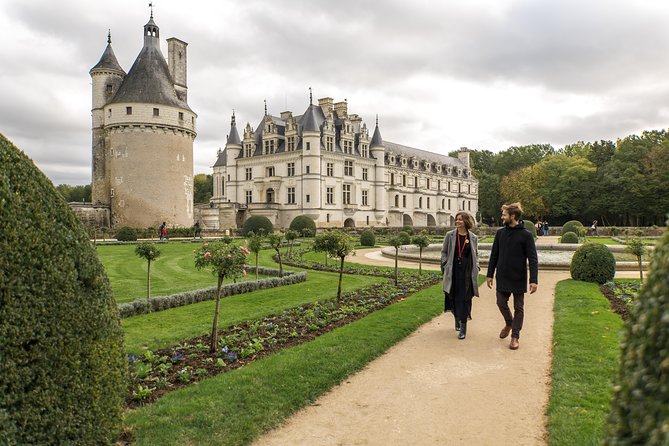
Worth the upcharge if you’d rather not be in a 50-seat coach all day. Our full review notes the three guide levels (none, app-based, or live receivers) and the fact that this version actually gives you a real lunch stop rather than a 30-minute box-meal. The trade-off is the price.
Getting there: car, train, or bus from Paris
Chenonceau is in the Indre-et-Loire department, about 220km southwest of Paris and 35km east of Tours. The drive from Paris is two and a half hours via the A10 motorway plus the A85, no surprises. From Tours it’s 35 minutes. From Chambord it’s about an hour west on the country roads through Cheverny and Chaumont.
The train option is real and it’s underused. The SNCF runs a regional TER train from Paris Austerlitz directly to the Chenonceaux village station, which is a five-minute walk from the château gate. Total journey time is about two hours from Paris, the fare is around €30 each way booked in advance, and the platform is genuinely on the same lane as the entrance avenue. If you don’t want to drive and you want to skip the bus tour, this is the move.
Bus from Paris is the third option and the one I’d recommend least. The drive eats six hours of the day, the buses are 50-seaters, and you’re sharing the gallery with thirty people from your own bus plus another thirty from someone else’s. If your only window for visiting Chenonceau is one day from Paris, the wine-tasting combo (option 2 above) makes the day tolerable; just go in with realistic expectations about pace.
For comparison, our Loire Valley overview goes through which other châteaux pair best with Chenonceau on the same day if you’ve got a car. The short version: Chambord is the obvious pairing (Chenonceau is the BEAUTIFUL one, Chambord is the FAMOUS one, you do them both in a day and you understand the Loire). Amboise is the second pairing if you’re in the area for two days.
What you actually walk through inside
The interior route is a 90-minute self-guided loop. You enter from the front courtyard, climb to the first floor, and proceed through the rooms in chronological order of who lived in them. The audio guide app keeps you on track. Highlights, in the order you’ll see them:
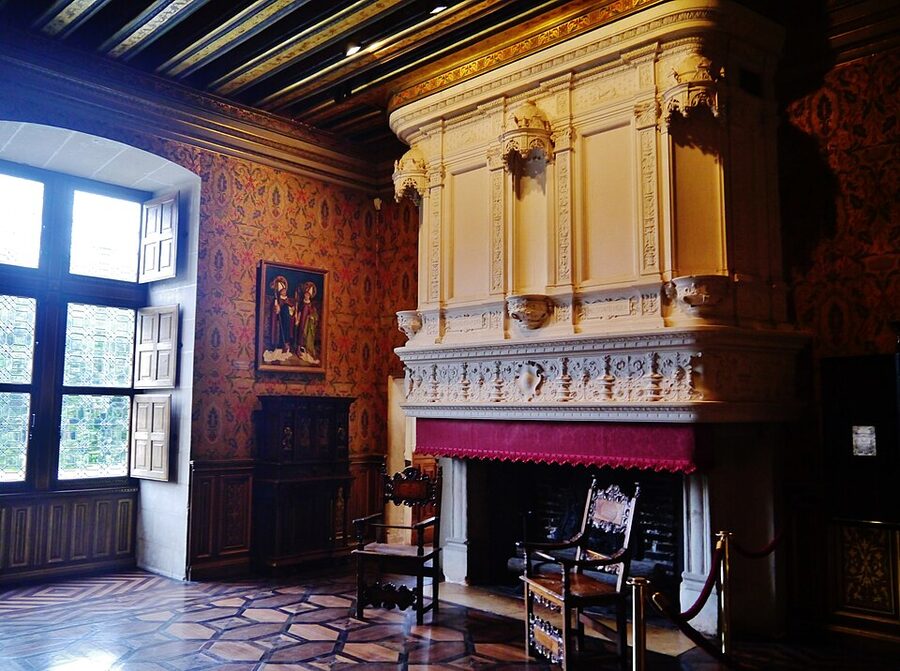
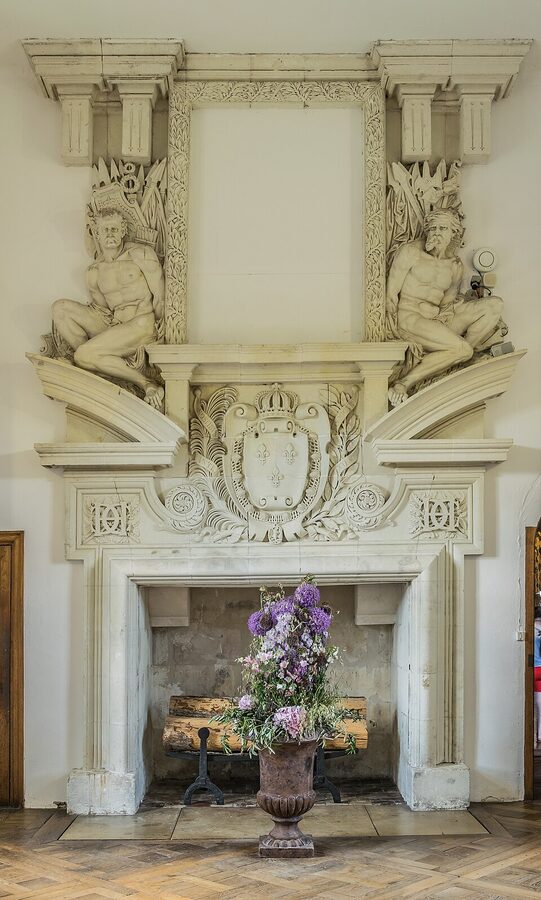
The Chambre de Diane de Poitiers is the first proper bedroom on the route. Period bed, original tapestries showing scenes of Diana the huntress (an obvious flattery of Diane’s mythological namesake), and a fireplace dated 1547. This is where Diane slept when she was the lady of the house.
The Chambre de Catherine de’ Medici is two rooms further along. Smaller bed, darker tapestries, and a portrait of Catherine herself on the wall. The audio guide makes the contrast explicit and the rooms feel small after Diane’s. This is on purpose: when Catherine took over, she moved Diane’s bed out of the master suite and used it as a rotating guest bed for visiting royalty. The architectural argument again.
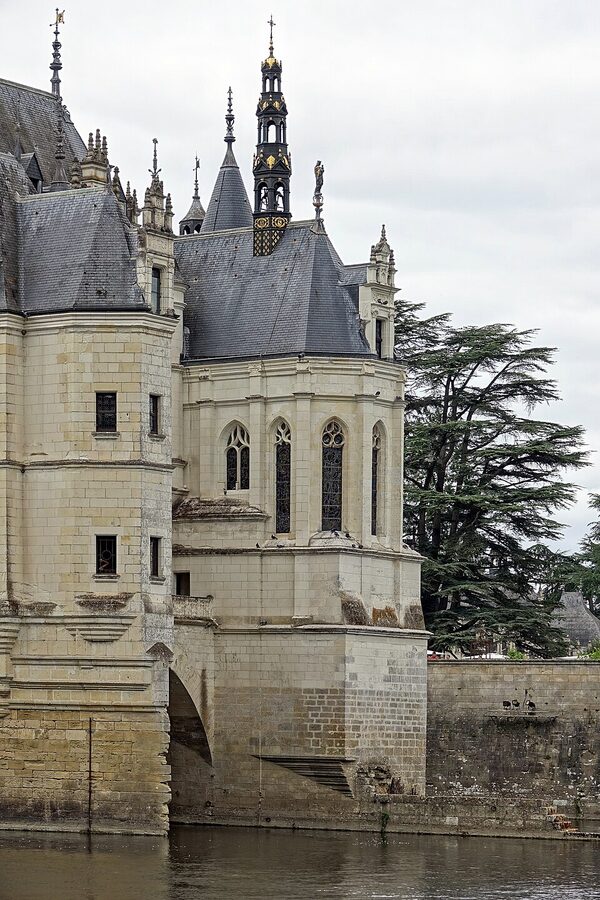
The chapel is small, late-Gothic, and contains the only original sixteenth-century stained glass in the château (the rest was replaced after a 1944 bomb destroyed the originals during the German retreat). The graffiti on the chapel walls is genuine: Scottish Stuart guards posted to Marie Stuart in 1543 left their names carved into the stone. They were teenagers when they did it.
The Chambre des Cinq Reines is the room of the five queens, named for Catherine de’ Medici’s two daughters and three daughters-in-law (Mary Queen of Scots was one of them). The four-poster bed is original and the ceiling beams are painted with each queen’s coat of arms. This is the room where Henri III’s widow Louise of Lorraine reportedly chose to sleep when she was in mourning, before retreating fully to the upper floor.
The chambre verte is Louise of Lorraine’s actual mourning suite. Catherine de’ Medici had ordered everything black after Henri III’s 1589 assassination, and Louise stayed in the suite for twelve years until her death in 1601, hand-stitching mourning vestments and refusing to leave. The walls were originally hung with black silk; what you see today is reconstructed from period descriptions, not original.
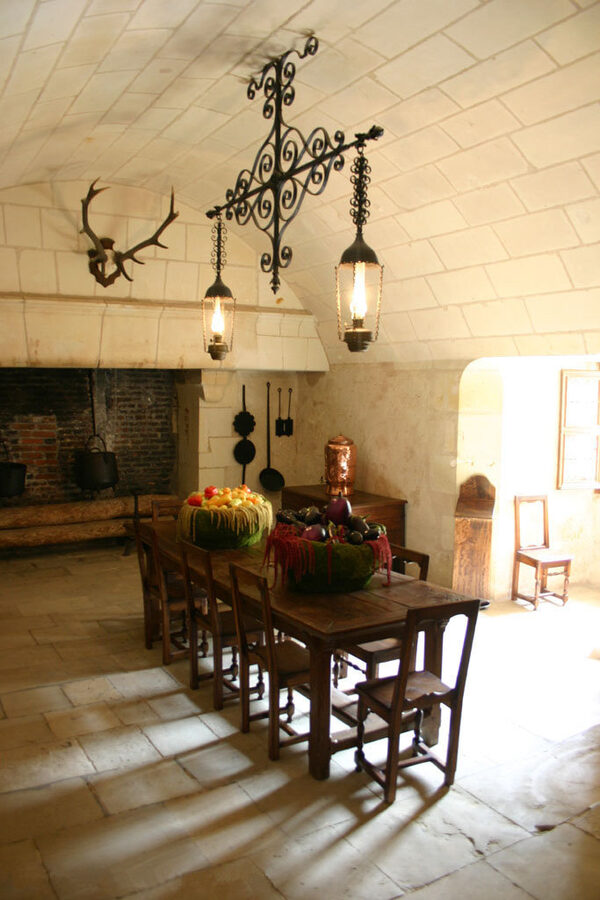
You then cross into the gallery (described above) and back into the original keep. The keep section ends in the vaulted kitchen, which is genuinely the best-preserved Renaissance kitchen in any French château. It’s built into the bridge piers, half-buried in the river, with the chopping table directly above the water for fish-cleaning purposes. The wood-burning oven still works and the rotisserie spit is original.
The two gardens (Diane’s vs Catherine’s, still distinguishable)
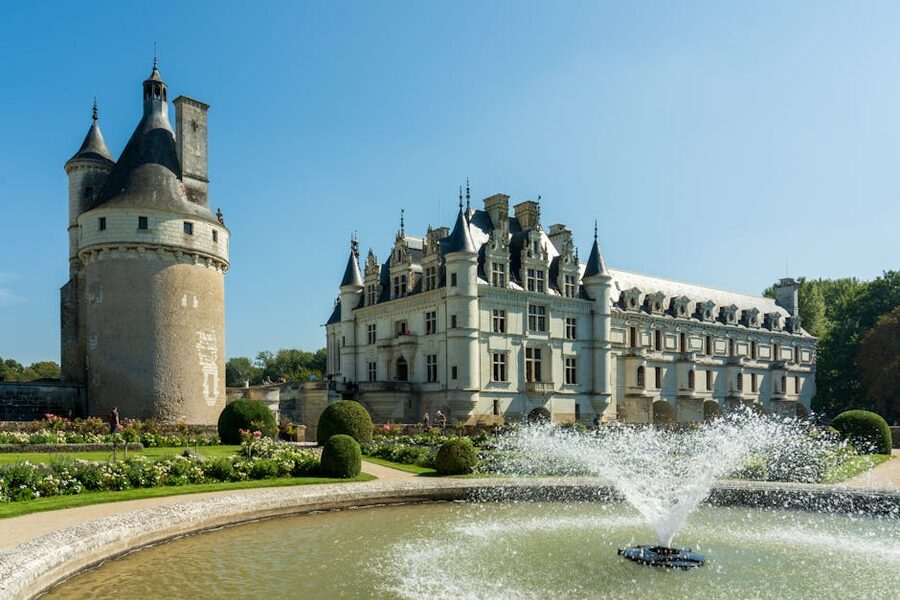
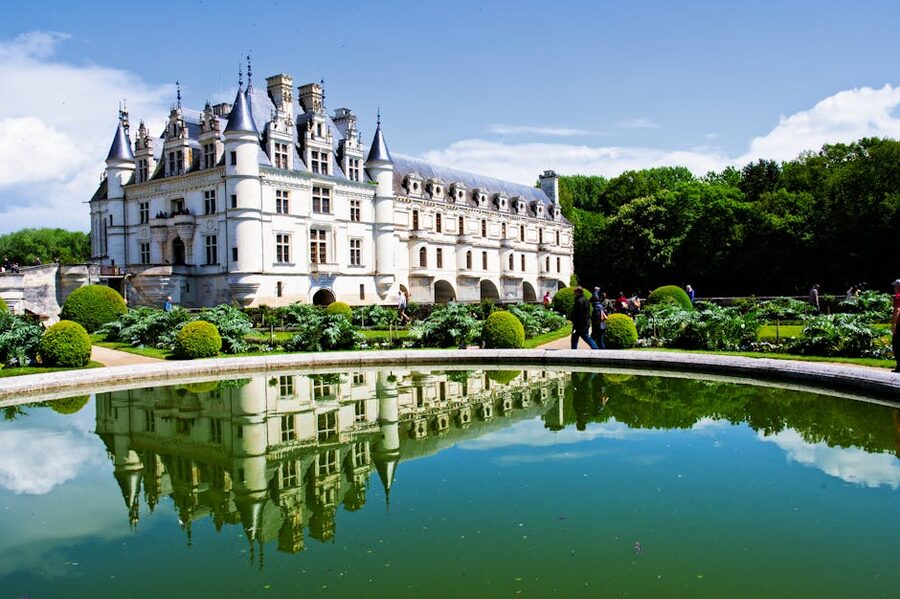
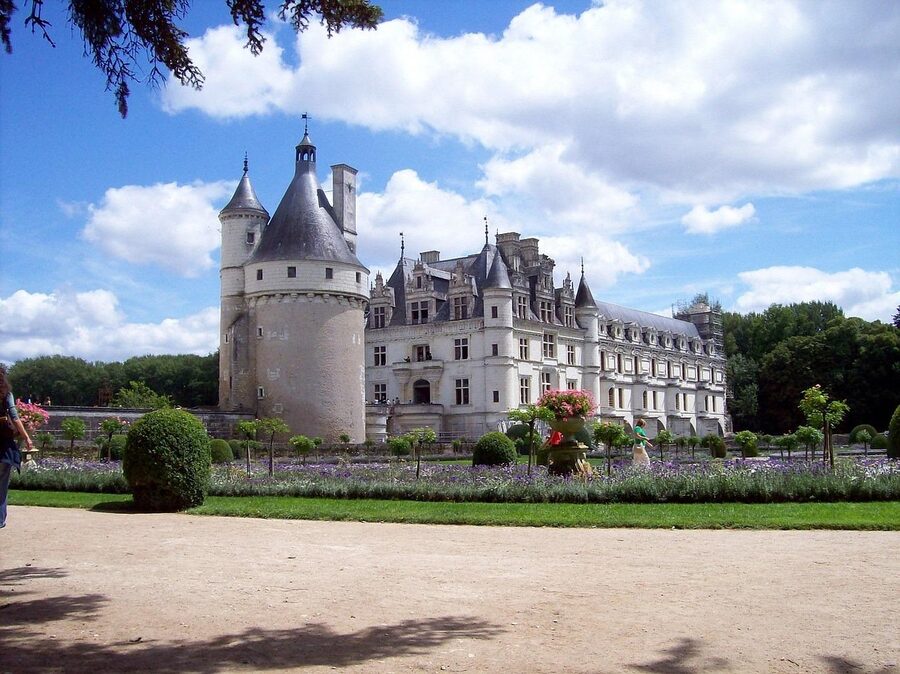
Both rivals laid out gardens. They’re still here. Diane’s is on the south side of the keep, framed by the original moat and laid out as four quadrants of formal beds with a central fountain. Catherine’s is on the north side, smaller, more intricate, and originally designed for evening fêtes by torchlight. The two were so close they were intervisible from the gallery windows, which is presumably exactly the way Catherine planned it.

Diane’s garden is the bigger one and the more obviously formal. Catherine’s is the smaller, more private one, and it’s the one the gallery looks down on. If you only have time for one (you don’t, you have time for both, the loop is short), Catherine’s has the better photo angle of the gallery. The same rivalry-of-ornamental-display energy plays out at Keukenhof outside Amsterdam, where competing Dutch growers stage colour blocks against each other across 79 acres each spring.
The Russell Page garden, added in the 1970s, is at the back of the property near the maze. It’s a quiet shaded space and most visitors miss it. Worth the ten minutes if you’ve got the time.
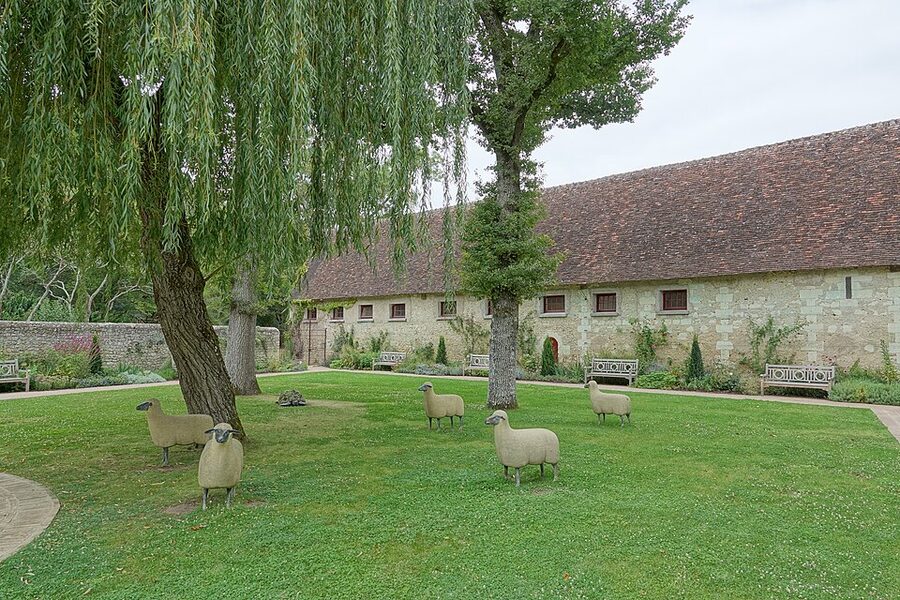
The hedge maze is small (about 70 metres on a side) and built around a central gazebo. Kids love it. Adults can solve it in three minutes. It’s worth a walk-through if you’re with children, otherwise skip.
Madame Dupin saved the building (literally)
Most châteaux in the Loire have a story about how the Revolution gutted them. Chambord was stripped of its furniture and used as a barn. Cheverny was confiscated. The royal château at Blois was in ruins by 1815. Chenonceau is in the condition it’s in because of one specific eighteenth-century woman.

Louise-Marie-Madeleine Dupin bought Chenonceau in 1733 with her financier husband Claude Dupin, and she ran one of the most important Enlightenment salons in France out of these rooms for the next sixty years. Voltaire, Rousseau, Diderot, Buffon and Montesquieu were all regulars. Rousseau spent two summers as her son’s tutor and wrote part of Émile in a room you can still walk through.
When the Revolution arrived in 1789, the château was on every list of “aristocratic property to demolish.” Madame Dupin, by then in her eighties, presented herself to the local Revolutionary committee with a written argument that the château was the only bridge across the Cher for several miles, that destroying it would isolate the village, and that as a piece of public infrastructure it should be preserved as a national asset. The committee agreed. The building was nationalised but not demolished. She lived in it until she died in 1799 at the age of ninety-three.
The local commune was loyal enough that they hid her body when she died, fearing Revolutionary vandals would dig her up. She is buried under a tree in the woods on the estate; the spot is marked but the path isn’t on the visitor route. Ask at the ticket office if you want to find it.
The WWII demarcation line is the second-most-told story here
The Cher river was the demarcation line between Vichy France and German-occupied France between June 1940 and November 1942. The line ran exactly along the Cher’s main channel. The south bank was Vichy, technically Free France. The north bank was occupied. The gallery’s south door opened into one zone; the north door opened into the other. The gallery floor was a literal border.
The Menier family (chocolate dynasty, owners since 1913) used the gallery as a passage point. People who needed to cross from occupied France to Vichy could enter through the north door, walk the gallery, and exit south. This was technically illegal under both regimes. The Menier family was active in the local Resistance and one of the family members, Gaston Menier’s son, was deported to Buchenwald in 1944. The German army knew about the crossings; they tolerated them because the Cher was full of bridges that mattered more, militarily, than this one.
If you’re doing the Loire as part of a wider WWII tour route, this is the third site after the obvious ones. The first is the Normandy beaches; Versailles is fourth on most itineraries because of the 1919 treaty signing in the Hall of Mirrors. Chenonceau quietly belongs in that company.
Chenonceau vs Chambord: pick by what you want
The two châteaux are 60km apart and both worth seeing. They’re also fundamentally different buildings. Chambord is the famous one; Chenonceau is the beautiful one. If you’re doing a Loire day trip, you do both. If you’re forced to pick one, the question is what you actually want from a Loire visit.
Chambord is the king’s hunting lodge: 440 rooms, a 13,500-hectare park, the famous Leonardo double-helix staircase, the Chambord-style turret roofline. It’s a power statement built by François I in 1519 to show off, and it never finished interior decoration because it was always more about the silhouette than the rooms. You go to Chambord for scale.
Chenonceau is the opposite. Sixty rooms of fully decorated interior, two formal gardens, a half-kilometer building footprint that you can walk in twenty minutes. You go to Chenonceau for the experience of being inside the architecture, not for the photo from outside.
Chambord works better in the morning when the parkland is quiet, and Chenonceau works better in the afternoon when the gallery light comes through. So if you’re doing both in a day, do them in that order. Our Loire Valley itinerary article goes through the day-trip routing and which other châteaux fit if you’ve got a second day.
How Chenonceau compares to other royal residences
If you’re planning a French heritage circuit, Chenonceau slots in alongside two others. Versailles is the obvious one, the Sun King’s machine of court ceremony, an order of magnitude larger than anything in the Loire. The Hall of Mirrors plays a similar role to Chenonceau’s gallery in that it’s a long room you cross, but it’s a propaganda statement, not a piece of architectural rivalry. Giverny is the smaller, more personal counterpoint: it’s an artist’s house, not an aristocratic one.
Chenonceau’s closest analogue across the border is the Pitti Palace and Boboli Gardens in Florence. The Medici garden tradition that produced Boboli is the same tradition Catherine de’ Medici brought to Chenonceau when she was building the north garden and the gallery; she’d grown up with it. The Pitti’s relationship to its garden is the most direct Italian comparison to what Catherine was doing in the Loire.
The other comparable Renaissance residence on the Italian side is the Borromean Islands palace and garden on Lake Maggiore. The Isola Bella palace was finished in 1632 and the formal Italian garden built on top of it is the Lombard equivalent of what Catherine built at Chenonceau: the same tradition of palace-as-stage-set, garden-as-extension-of-architecture.
The closest non-French analogue to the “house built by women” thread, weirdly, is the Casa de Pilatos in Seville. Different country, different era, but a similar pattern of a noble residence shaped by successive female owners across two centuries.
If you want a Spanish royal palace comparison, the Royal Alcázar of Seville and the Alhambra’s Nasrid Palaces are the obvious ones. Both work by the same logic as Chenonceau’s gallery: a long horizontal room you cross, the architecture itself is the spectacle. The Alhambra’s Hall of the Ambassadors is the closest peer in proportions and approach.
The Menier family and what “still owned” means
The Menier family of Paris (chocolate dynasty, the same Menier brand that’s still on French supermarket shelves) bought Chenonceau in 1913 from the Pelouze heirs. They’ve owned it ever since. The current head of the family, Hubert Menier-Castan, lives elsewhere but the family runs the château through the estate’s foundation.
“Still owned” matters because Chenonceau is one of very few French châteaux of this caliber in private hands. Versailles is state-owned. Chambord is state-owned. Most of the major Loire châteaux are owned by either the state or one of the regional governments. Chenonceau is privately operated, which is why it’s open 365 days a year, which is why the audio guide app is good, which is why the gardens are maintained at the level they are. Private ownership at this scale requires the visitor revenue, and the visitor experience reflects it.
The trade-off is that Chenonceau is more expensive than the state châteaux ($22 versus $16 at Chambord, for instance), and the gift shop is, frankly, a little aggressive. The audio-guide app routes you through the gift shop on the exit. You can skip it; just walk past.
Practical micro-details
The food on site: the L’Orangerie restaurant inside the estate is the upmarket option, around €60 for lunch with wine, decent French regional menu, you need to reserve. The Le Self cafeteria is the budget option, around €15 for a hot plate, fine but not memorable. The picnic option is the best one: there’s a designated picnic lawn with tables behind the maze, and the village bakery in Chenonceaux does perfectly good baguette sandwiches for €6.
The bathrooms are at the entrance pavilion and at the back of the gallery. There are no bathrooms inside the upper-floor rooms, which means you should plan around the loop.
The audio guide app: download it before you arrive. The wifi at the gate works but the audio files are big and the queue at the gate is for downloading, not for tickets. Ours took eight minutes to download on a slow morning. You can also use it on a tablet if you have one in your bag.
Photography: tripods are not allowed inside. Phone photos and small camera photos are fine. The gallery is the photo; the kitchen is the second photo; the chapel and the bedrooms are dim and the no-flash rule means most amateur shots come out grey. Don’t bother.
Stroller and wheelchair access: the ground floor is fully accessible, including the gallery and the kitchen. The upper-floor rooms (Diane’s bedroom, Catherine’s bedroom, Louise’s mourning suite) require stairs. There is no elevator. The estate provides loaner wheelchairs at the entrance pavilion.
The boat ride is real and most people don’t know about it
The estate operates flat-bottomed rowboats from a pier behind the keep. Twenty euros for an hour. You row yourself. The pier is at the back of the property, past the maze, signed in French only.
This is the view nobody else on your day-tour bus is getting. You take the boat upstream to the bridge piers, slip underneath the gallery, and look up at the sixteenth-century vaulting. The water echo is loud. The view from directly below the gallery is the view Catherine de’ Medici intended people to have when they arrived by river barge for the 1577 fête, and almost no modern visitor bothers with the boats. Highly recommended if you’ve got the time.
If you’re a Seine cruise kind of traveller and you like seeing buildings from the water, this is the smaller-scale Loire version of that idea. The Cher isn’t the Seine and the rowboat isn’t a tour boat, but the perspective shift is the same.
Other Paris-area heritage that pairs well
If Chenonceau is part of a longer French heritage trip, the obvious adjacent sites in Paris are the Louvre (which holds the Catherine de’ Medici tomb effigy and several Chenonceau-period portraits in the French Renaissance galleries on the second floor of the Sully wing), the Musée d’Orsay (for the nineteenth-century period when Madame Pelouze was restoring the building), and Sainte-Chapelle and the Conciergerie (for the gothic-into-Renaissance transition that bookends Chenonceau’s century).
The Eiffel Tower dates from 1889, the same generation as Madame Pelouze’s 1864 restoration of Chenonceau. They’re contemporaneous Belle Époque-adjacent landmarks, both products of a French nineteenth century that was rediscovering its architectural heritage and adding to it.
For a Doge’s Palace comparison on the Italian side, our Doge’s Palace article covers a similar logic: a Renaissance state residence where the architectural detail tells the story of the politics, and where you cross from one regime’s space to another’s by walking through doorways.
Quick FAQs from people about to book
Is one ticket enough or do I need a pass? One ticket is enough. There is no Chenonceau-specific pass and no upgrade. The standard $22 admission gets you everything: château, both gardens, maze, audio guide.
Do I need to book in advance? Not really. Walk-up tickets are available at the gate every day of the year. The only reason to book ahead is if you want the cancellation flexibility from GYG, or if you’re visiting on a peak weekend (mid-July through mid-August, plus the first weekend in September) when the parking lot fills up before noon.
Can I take photos inside? Yes, no flash, no tripod. The gallery is the photo. The kitchen is the second photo. The bedrooms are dim.
How long does the visit actually take? Two and a half to three hours including both gardens, maybe four if you do the rowboat and the maze. The bus tours allow ninety minutes, which is too short.
Is there food on site? Yes, two restaurants on the estate plus a picnic lawn. The village bakery in Chenonceaux makes the best lunch.
Wheelchair-accessible? Ground floor yes, upper floors no. Loaner wheelchairs at the entrance.
Best month to go? Mid-May through mid-June, and mid-September. The gardens are peak-bloom in May; the autumn light through the gallery is best in September. July and August are crowded with school-holiday traffic.
What I’d do if I were planning your trip
If you’ve got a car: drive from Paris in the morning, eat lunch in Amboise (12km north), arrive at the gate around 14:30, do the interior loop in 90 minutes, do the gardens between 16:00 and 17:30 when the gallery light is at its best, take the rowboat at 17:00 if you’re up for it, eat dinner in Chenonceaux village or in Amboise, drive back the next day after a morning at Chambord.
If you’re train-only from Paris: take the morning Austerlitz train (around 9:30 departure), arrive at the village station at 11:30, do the full loop in two hours, eat at the picnic lawn or L’Orangerie, do the gardens after lunch, take the late-afternoon train back. You’ll get back to Paris around 19:00.
If you’ve only got one day from Paris and you want both castles: take the $104 combo tour (option 2 in the cards above). It’s a 13-hour day. Bring a book for the bus.
If you’ve got two days in the Loire region: stay in Amboise (the centrally located base for the eastern Loire), do Chenonceau on day one in the afternoon, do Chambord on day two in the morning, eat both nights at L’Épicerie or Chez Bruno in Amboise, drive back to Paris on day three. This is the version most independent travellers choose.
The thing I’d avoid: trying to do four châteaux in a day. The Loire has too many. You’ll see them all and feel nothing. Better to do two well than four badly.
Where Chenonceau lands in the Loire pantheon
There are around 300 châteaux in the Loire valley if you count generously. About 30 are open to the public. Six are world-tier: Chambord, Chenonceau, Amboise, Blois, Cheverny, and Villandry. Of those six, Chambord and Chenonceau are the two that actually move people the way the Loire is supposed to move you. The other four are good. These two are great.
If I had to pick a single Loire moment that captures why people travel here, it’d be standing in the gallery at four in the afternoon and watching the river run two ways at once. The architectural argument between Diane and Catherine is now five hundred years old. The river is older. The light through the windows hasn’t changed. You’re in a room that exists on a bridge that exists on a river, and the whole thing was built by women, and somehow it’s still standing because one of the women three hundred years later talked her local Revolutionary committee out of tearing it down.
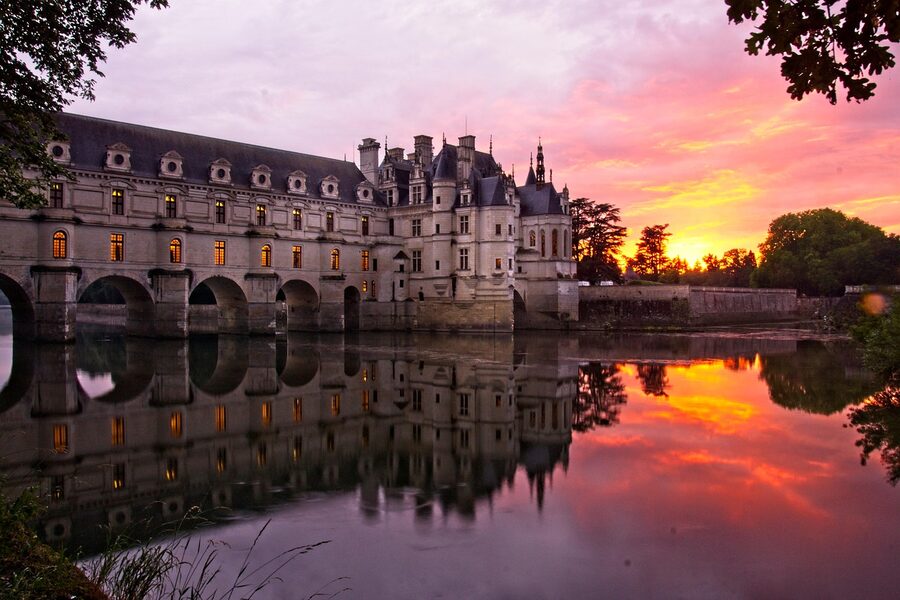
The bridge is the building. The building is the argument. The argument is still here.
If you’re putting the day together
For the broader Loire decision-making (which châteaux pair best, where to base yourself, how to get around without a car), our Loire Valley castles overview is the place to start. Chambord is the obvious second-day move. If you’ve got more time and you’re swinging through Paris first, Giverny for an artist-house counterpoint and Versailles for the Sun King scale-up are the natural Paris-area pairings. A Seine cruise is a good way to spend the evening you arrive back in Paris before catching the train home.