
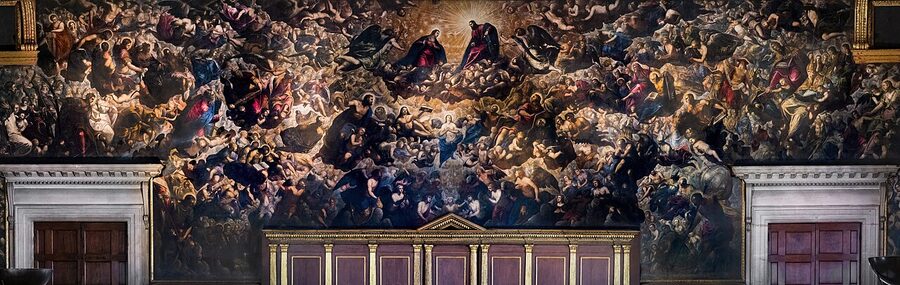
You are standing in the middle of a room the size of a tennis court, your neck tilted back, looking at what is the largest oil painting in the world. Tintoretto’s Paradiso covers the entire end wall of the Sala del Maggior Consiglio: 9 metres tall, 22 metres wide, around 500 figures, and not a soul in front of you because you booked the 9am slot and the school groups don’t reach this room until ten. This is the moment that justifies the line you skipped.
The Doge’s Palace (Palazzo Ducale) is the one Venice attraction where the queue economics actually matter. The on-site ticket office line spirals around the courtyard for a reason: this is the most-visited paid attraction in the city after St. Mark’s Basilica, and the official site sells out timed slots a week ahead in summer. Showing up without a ticket on a July morning means a 90-minute wait outside, then another 20 minutes for security, then you are inside on jet-lagged feet for three hours. The same crush hits Versailles and Seville’s Royal Alcázar at peak season — book a timed ticket or lose your morning.
Don’t do that. There are three ways to skip the line, and the price difference between them is smaller than you’d expect.
In a hurry? Three picks for skipping the Doge’s Palace line
- Cheapest skip-the-line ($41): Reserved-entry timed ticket. Walk up at your slot, scan, in. Book on GetYourGuide
- Best two-for-one ($123): Doge’s Palace + St. Mark’s Basilica with terrace access, guided. Fixes both queue problems in one ticket. Book on GetYourGuide
- Cheaper combo, optional terrace (from $76): Same two sites, modular pricing if you don’t need the basilica terrace upgrade. Book on GetYourGuide
Why the line is so bad (and how skip-the-line actually works)
The Doge’s Palace shares the same ticket office with the Museo Correr, the National Archaeological Museum, and the Marciana Library across the square. One ticket gets you all four. That sounds efficient, except everyone is queued at the same San Marco-side door because the palace is the headline attraction. The Museo Correr door, on the opposite side of the square, almost never has a line. If you have any ticket (official, third-party, museum pass), you can enter through Museo Correr first, walk through the connected museums, and arrive at the Doge’s Palace already inside the security perimeter. This is the local trick that nobody tells you outside Reddit threads.
“Skip the line” via reseller tickets is therefore slightly oversold. You skip the ticket queue, but you still have a security queue at peak times. Reviews of the GYG reserved-entry tickets do mention a fifteen-minute wait at the door. That’s still vastly better than the standby line. The Secret Itineraries guided tour is the only option that gets you in through a separate, faster door. More on that below.
The three tickets you should actually consider
1. Reserved Entry Ticket: $41 (the default)
This is the most-booked Doge’s Palace ticket on the market and for good reason: it is the cheapest reliable skip-the-line option, the timed slot is real, and it bundles three other museums you’d otherwise pay separately for. Our full review covers the slot times, the Correr-side entrance trick, and what to skip if you only have an hour. Pick it if you’re confident wandering on your own with the audio guide.
2. Doge’s Palace + St. Mark’s Basilica with Terrace: $123 (the smart upgrade)
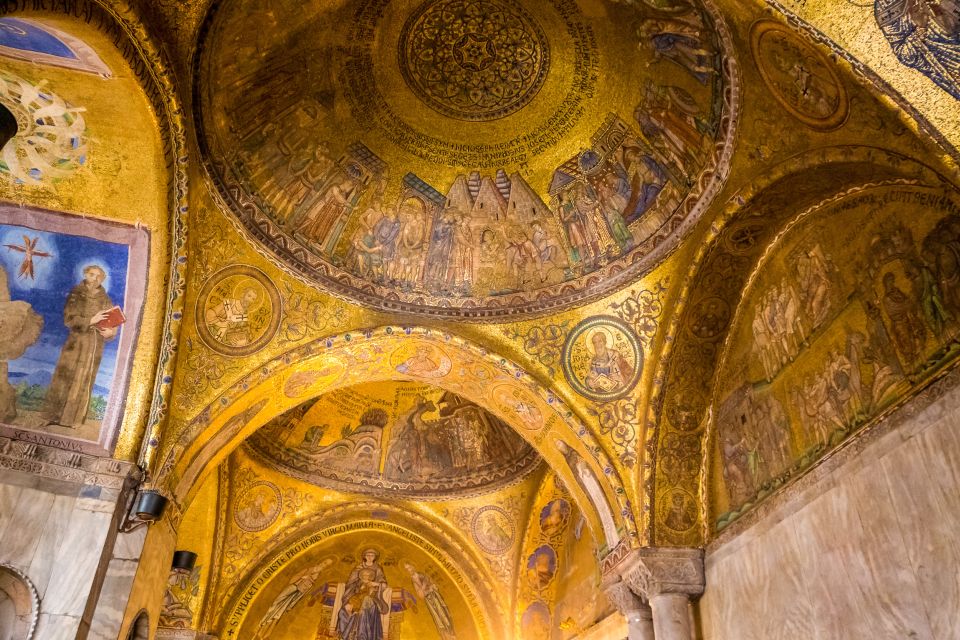
Pay the upgrade if it’s your one trip to Venice and you don’t want to lose half a morning to two separate ticket lines. The guide front-loads the basilica’s mosaics (which the audio guide can’t really explain) and gets you out onto the loggia before walking you across to the palace, and our review breaks down what the terrace access actually buys you versus the basilica-only ticket. If you’ve already handled St. Mark’s separately, skip this and book option 1.
3. Doge’s Palace + St. Mark’s, Optional Terrace: from $76
This is the version to book if option 2’s terrace upgrade isn’t worth the extra €40 to you, or if you’re travelling with kids who’d rather hit the islands than climb stairs. Our review compares it directly with option 2 on what’s covered and what isn’t. Lower rating than the others but the price gap explains most of it; you’re getting a competent group tour, not a private experience.
The Secret Itineraries tour, briefly, because everyone asks
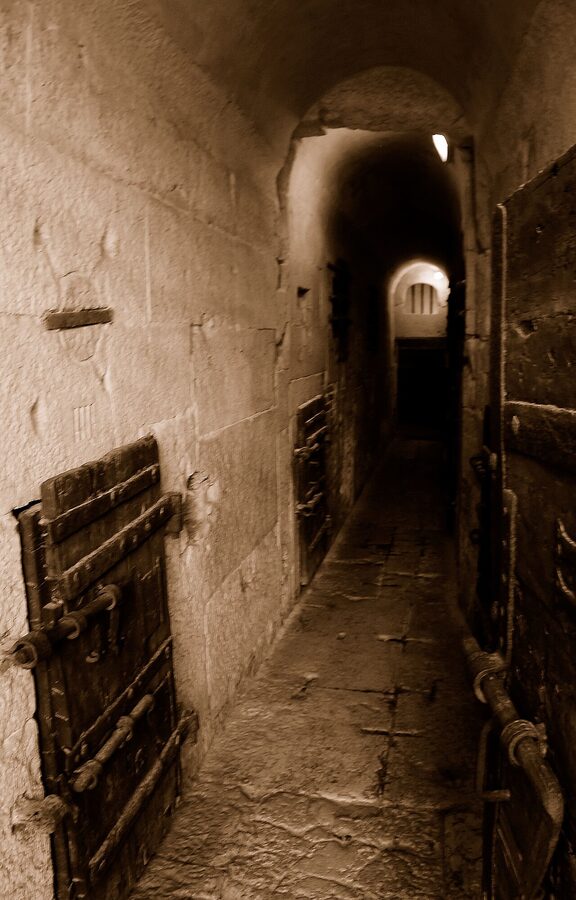
The Secret Itineraries (Itinerari Segreti) is a separate guided tour run by the museum itself, not by GYG or Viator. It opens doors that are closed to the standard ticket: the wooden Inquisition chambers, the rope-and-pulley torture room, the Casanova cell in the Piombi (the lead-roof prisons under the palace’s tiles), and the secret administrative offices where the Council of Ten ran their police state. About 75 minutes, twice in English daily, twice in Italian. Capped at twenty-five people. €32 from the official site, and the ticket also lets you do the rest of the palace at your own pace afterwards.
The catch: it is very hard to book online unless you’re flexible. Two English slots a day x 25 people x sells out months ahead. If you can’t get a date, you can sometimes walk up at 9am the day-of and grab a same-day cancellation. We’d say it’s worth the effort if you’ve already done the regular palace once before. For first-timers it can feel like you’re being rushed past the headline rooms (the Sala del Maggior Consiglio, the Council of Ten chamber) to make time for the secret bits. If this is your only Venice trip and you’ve never seen the palace, do option 1 first. If you’re a return visitor or a serious history nerd, the Secret Itineraries is the experience the regular tickets can’t match.
What’s actually inside (in the order you’ll see it)
The standard route through the palace takes you on a one-way loop, no shortcuts. The signage is good, the audio guide is decent, and you can’t really get lost. Plan for two-and-a-half hours minimum if you’re going to read the panels. Three hours if you’re a slow looker.
The courtyard and the Scala dei Giganti
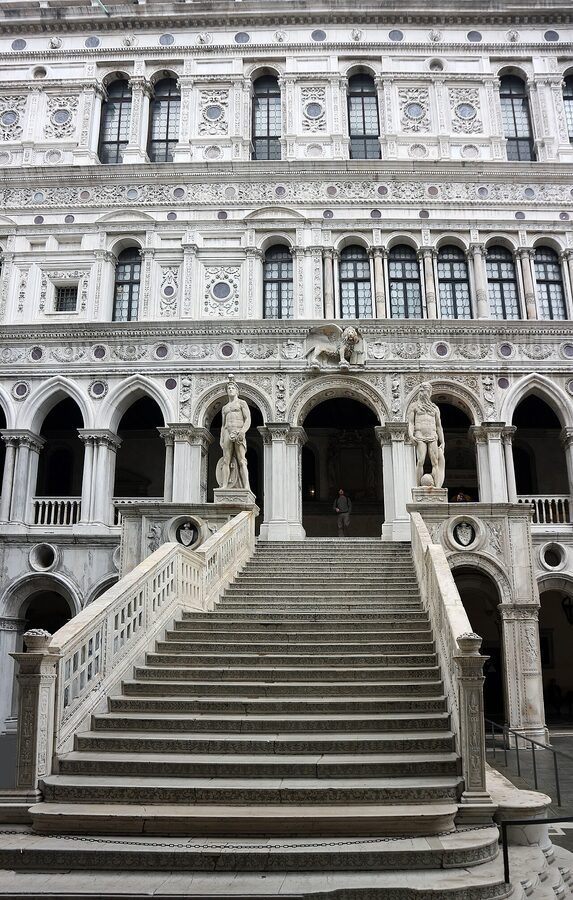
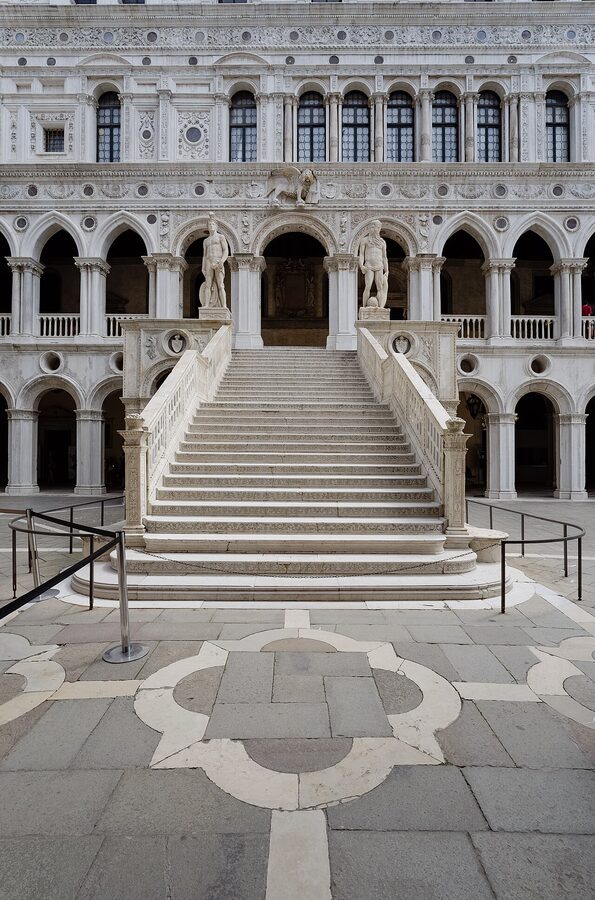
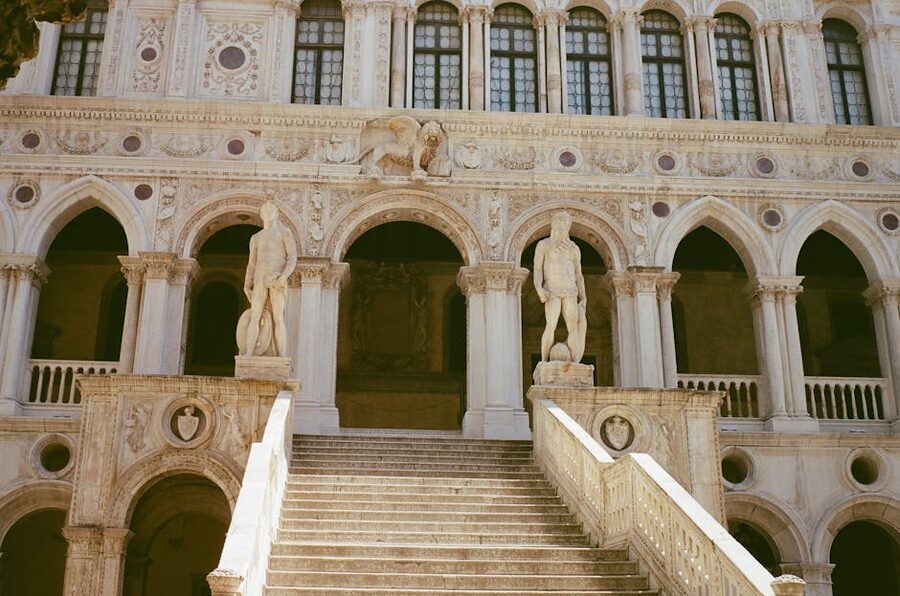
You enter through the Porta del Frumento on the lagoon side, drop your jacket at the cloakroom (mandatory for big bags, free), and step into the courtyard. The two well-heads in the middle are 16th-century bronze, working until the 19th, and stand directly above the cisterns that supplied the palace’s drinking water in a city otherwise surrounded by salt water. The Scala dei Giganti is the staircase against the far wall. You don’t actually climb the Scala dei Giganti as a visitor. That’s reserved for ceremonial use. You go up via the Scala d’Oro inside.
The Doge’s apartments
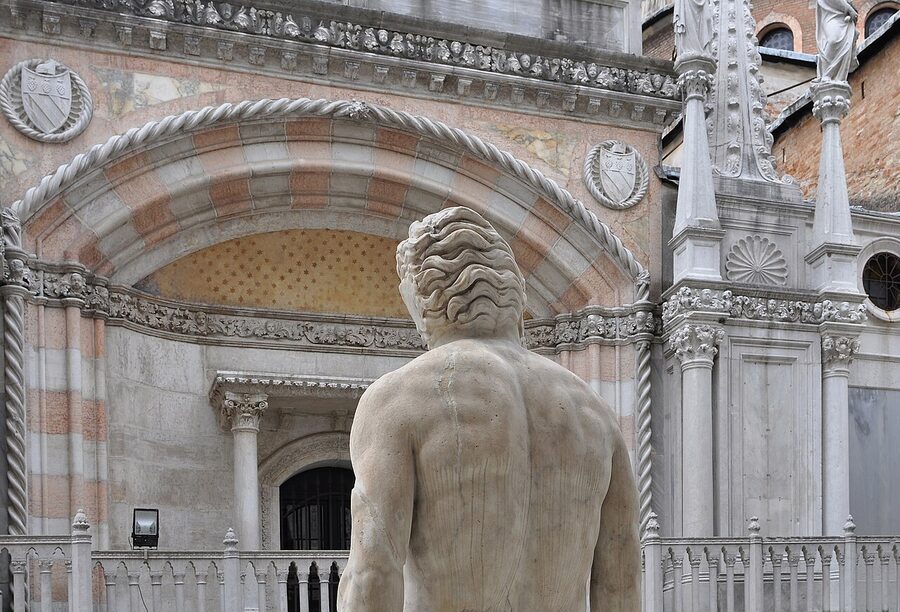
First floor up. These rooms feel oddly modest after the courtyard buildup. That is the point. Venice’s elected Doge was a constitutional figurehead, not a king, and his living quarters were deliberately less grand than the meeting rooms above. The most interesting bit here is the small map room: a 16th-century world map that puts Venice geometrically in the centre of the world. Pause for two minutes, then keep moving. The crowds slow down in this section because everyone reads every panel. You don’t need to. Compare this restraint with the Moorish opulence of Granada’s Alhambra Nasrid quarters or the gilded ceilings of Amsterdam’s Royal Palace, both of which leaned hard into spectacle.
Sala delle Quattro Porte and Sala del Collegio
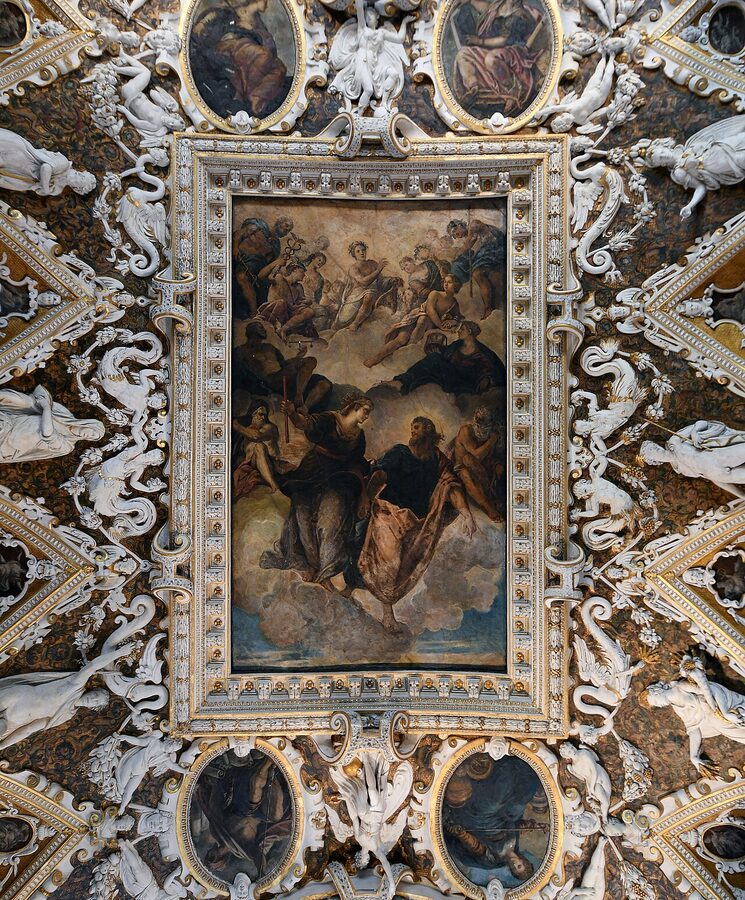
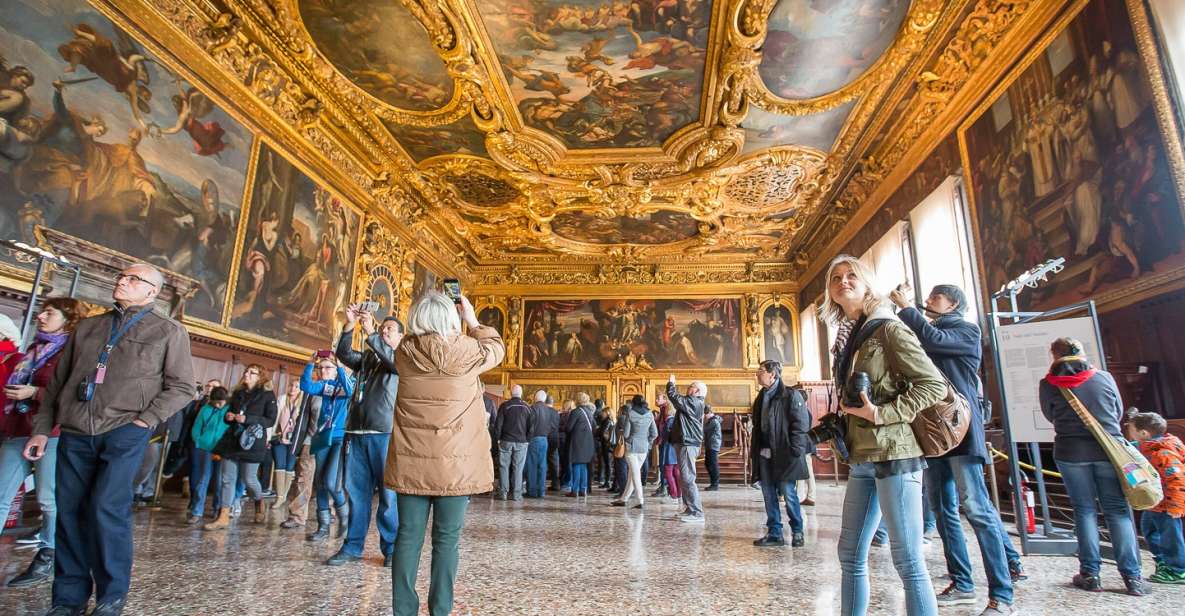
This is where the palace switches from “interesting” to “you understand why people queue for two hours.” The Sala delle Quattro Porte was the antechamber where foreign ambassadors waited to be received; the four ornate doorframes mark which inner room each delegation was allowed into. Look up. Then keep looking up. The ceiling work in this stretch of the palace is ridiculous, and you’ll stop noticing it by the third room if you don’t pay attention now.
Sala del Maggior Consiglio (the room you came for)
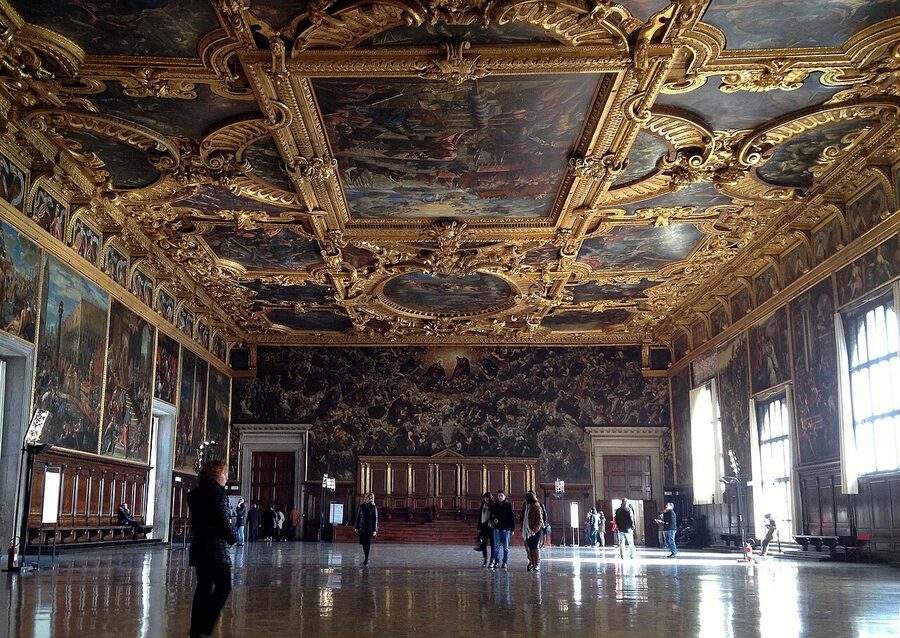
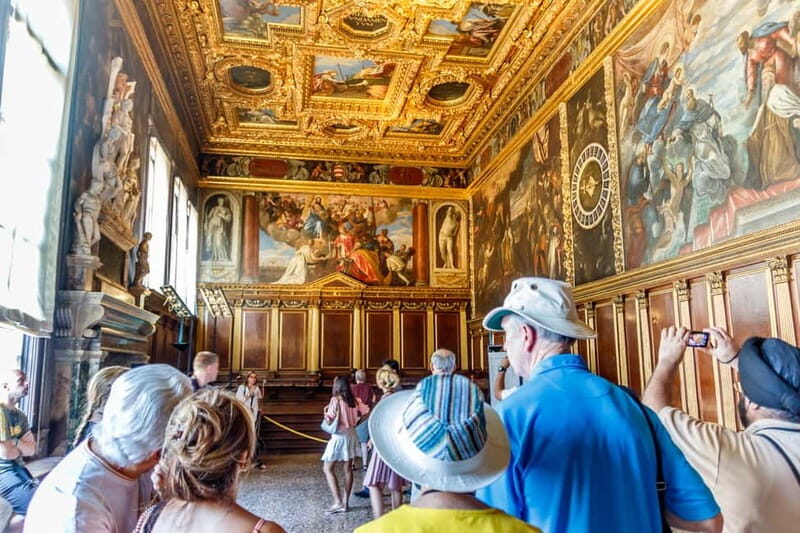
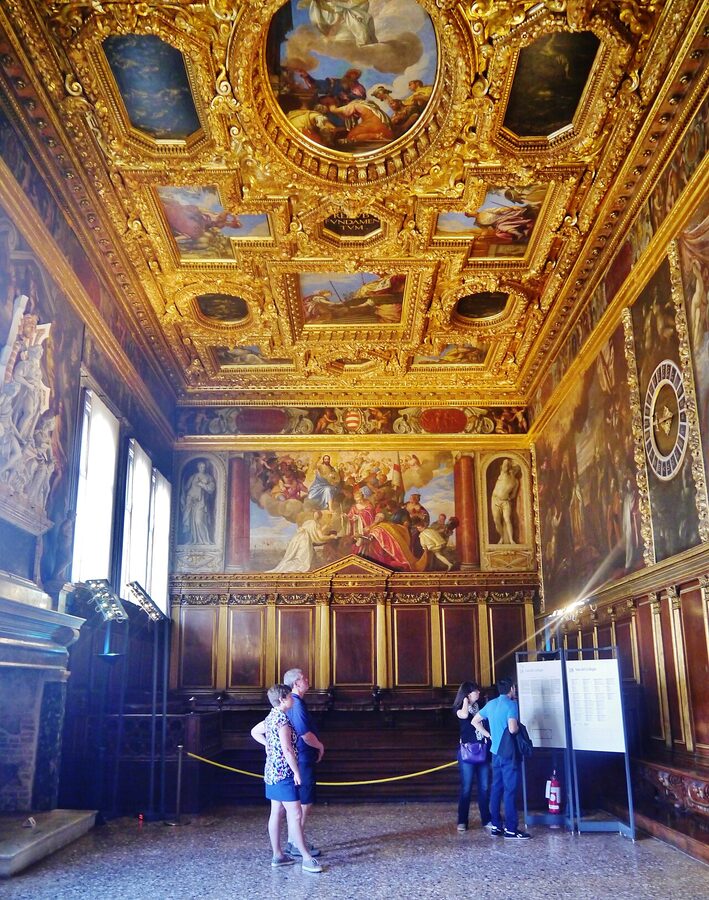
This is the headline room. Enter from the side and resist the urge to walk straight in. The painting that hits you is Tintoretto’s Paradiso, on the end wall on your left. Look at the friezes high on the long walls: portraits of every Doge in the Republic’s history, except for one black square where the painting of Doge Marino Faliero would be. He was beheaded for treason in 1355 and his portrait was officially erased from the record. The block reads, in Latin, “this is the place of Marino Faliero, beheaded for his crimes.” It’s a 700-year-old cancellation that still works as theatre, the same way the empty wall niche commemorating exiled Bourbons at Madrid’s Royal Palace still gets pointed out by guides today.
For comparison: the Florence civic-power equivalent is the Salone dei Cinquecento in the Palazzo Vecchio. Cosimo I deliberately built it to outscale Venice’s chamber, and Vasari’s ceiling there is the response to Tintoretto’s Paradiso. Doing both rooms on the same trip is the closest thing you’ll get to Renaissance Italian power-architecture as a lived-in experience.
The Bridge of Sighs and the prisons
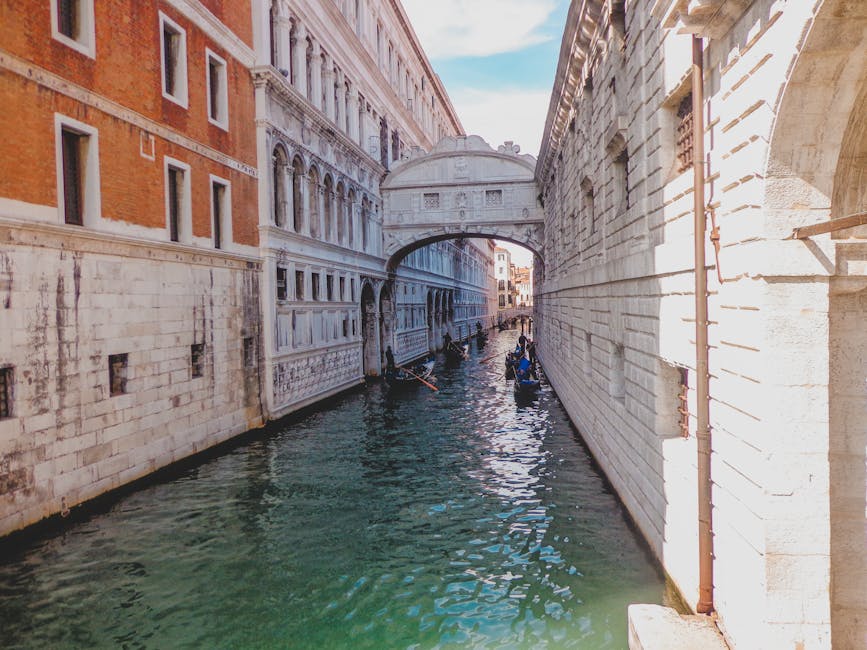
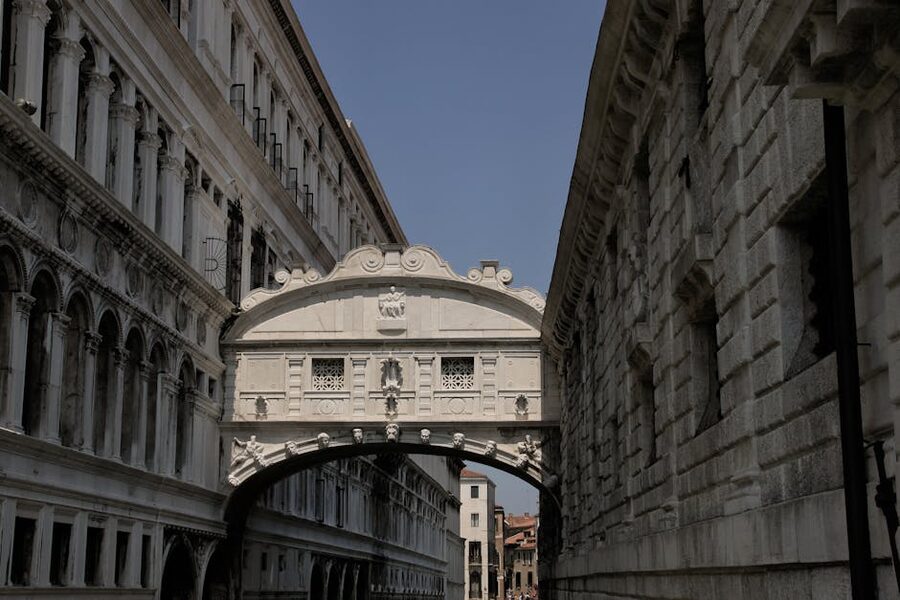
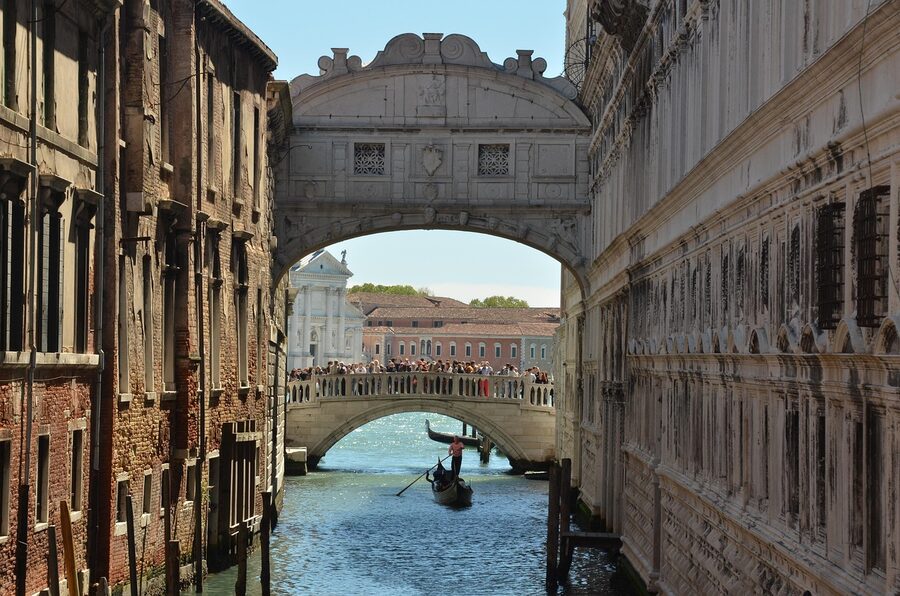
The route loops you down across the Bridge of Sighs into the New Prisons, then back. Crossing it is short, five seconds maybe. The actual experience is the two stone-latticed windows on either side, looking out at the lagoon. That’s the “sigh” of the name: 19th-century romantic legend that prisoners glimpsed Venice for the last time as they crossed from the courthouse on the palace side to their cells. Reality is more boring (most prisoners crossing the bridge were minor offenders heading to short sentences), but the architecture and the view through that lattice window stand on their own.
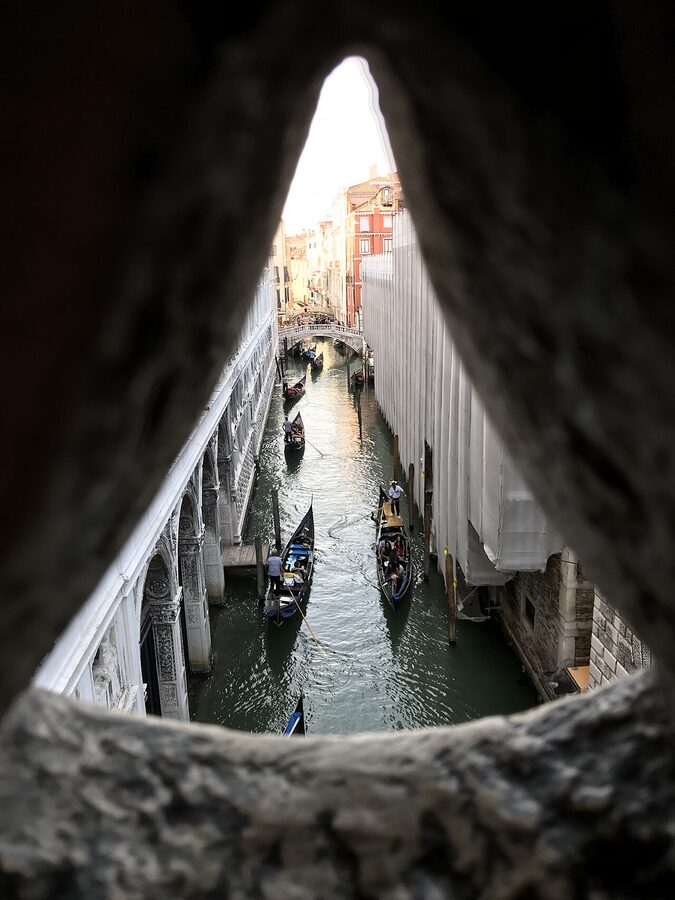
The prison cells on the far side are the New Prisons (Prigioni Nuove), built in 1614 across the canal because the original Piombi cells in the palace’s attic were over-capacity. They’re stone-cold, low-ceilinged, and grim in the most photogenic way. Allow ten minutes here. Watch the doorway lintels. Most are too low for anyone over six foot and you will hit your head on at least one. The same architecture-meets-incarceration tension shows up at Paris’s Les Invalides, where Napoleon’s tomb shares a complex with old veterans’ barracks.
The armoury
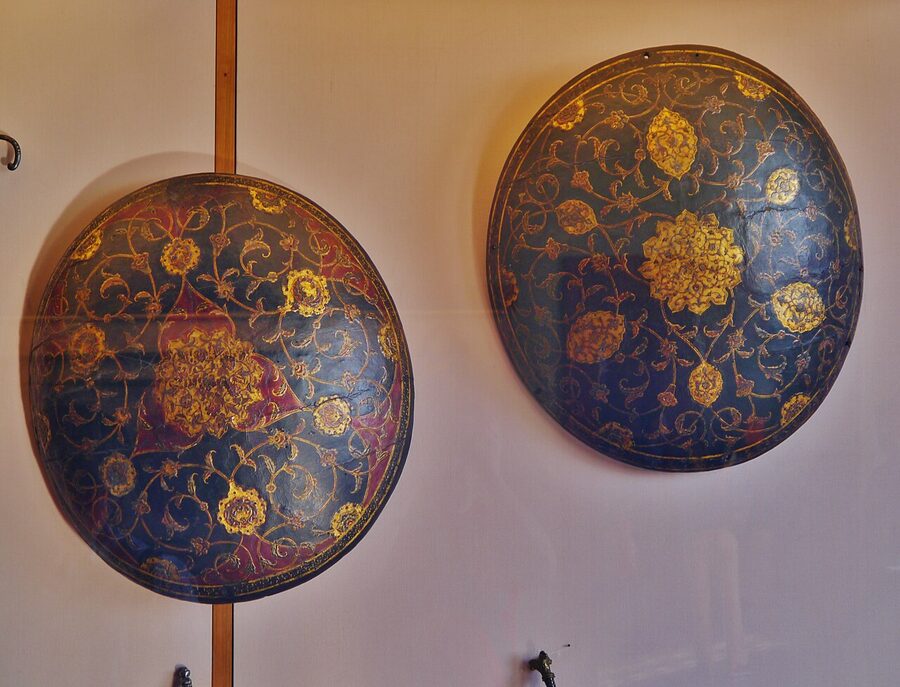
The armoury is at the end of the route and most groups blow past it. Don’t. Twenty minutes here is plenty, but it’s the only part of the palace where you see the military backstop behind the marble diplomacy. The gunpowder room, originally the Council of Ten’s private arsenal, has the prettier display.
Timing the visit
Hours and timing:
- Opens 9am (8.30am in summer), closes 7pm with last entry at 6pm.
- Quiet slots: the first hour after opening, and from 4pm onwards.
- Avoid 11am to 1pm. Cruise tours and big-bus daytrippers all book that window.
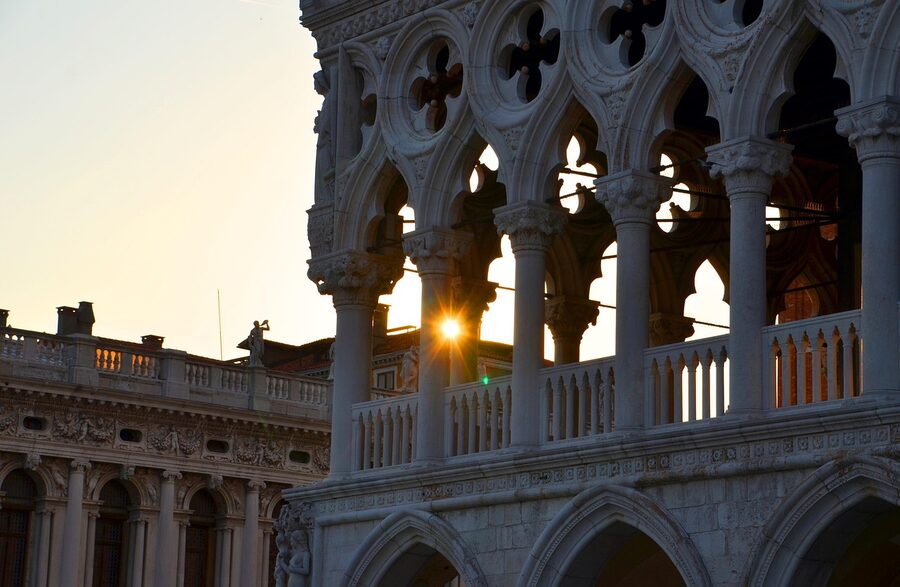
If you have a 9am ticket, set a 7.45 alarm, get coffee at Caffè Florian in the square (yes it’s a tourist trap, no the espresso is not bad, it’s €7 standing at the counter), and be at the Porta del Frumento at 8.50.
One more practical note: there is no big-bag storage and the cloakroom only takes coats and small items. If you’ve checked out of your hotel and are dragging luggage, leave it at the KiPoint at Santa Lucia station before coming. €6-€8 per bag, open until 9pm.
What to combine it with
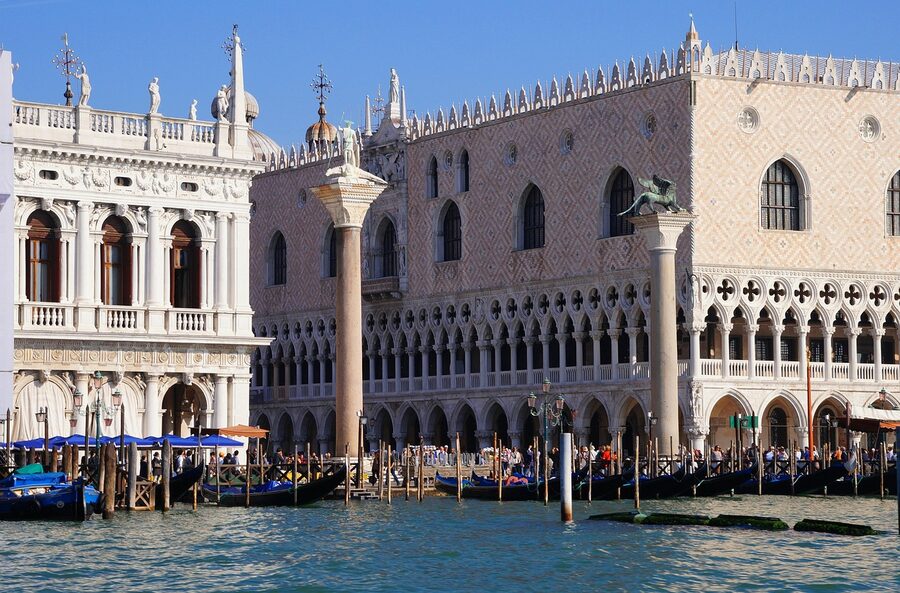
St. Mark’s Basilica is the obvious pairing: the basilica is free to enter but the interesting bits cost extra, and the line moves faster than the palace’s. Do the basilica first thing (queue moves at 8.30 for the 9.30 opening) and the palace at your timed slot, with lunch on Calle dei Fabbri in between.
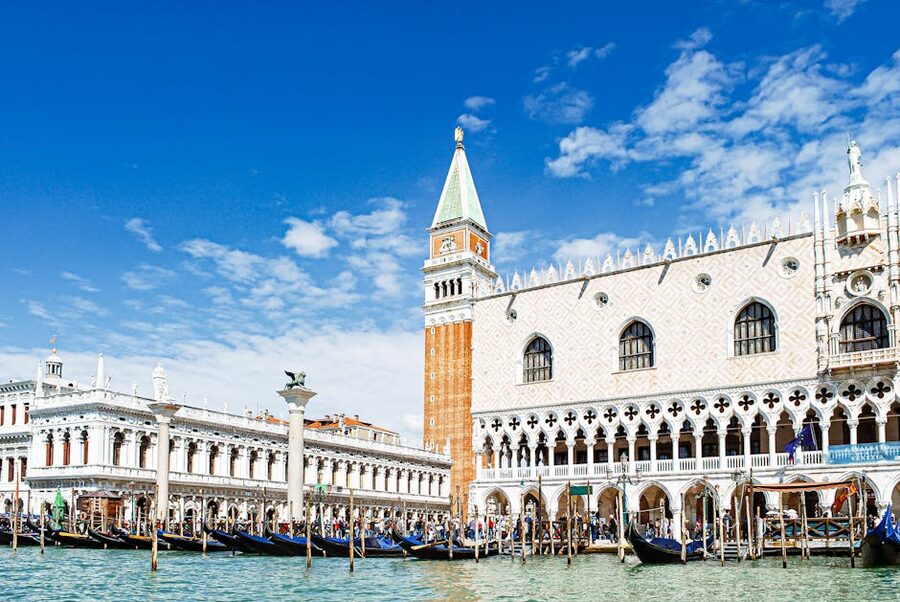
If you have half a day spare, the Murano-Burano-Torcello island loop is the natural Venice-day-two combo. And the gondola rides are a separate decision. Booking one in front of the palace from the San Marco gondola stand is the most expensive way to do it. Walk five minutes to a quieter stand for the same boat at half the price.
A short history, because the building’s age is the point
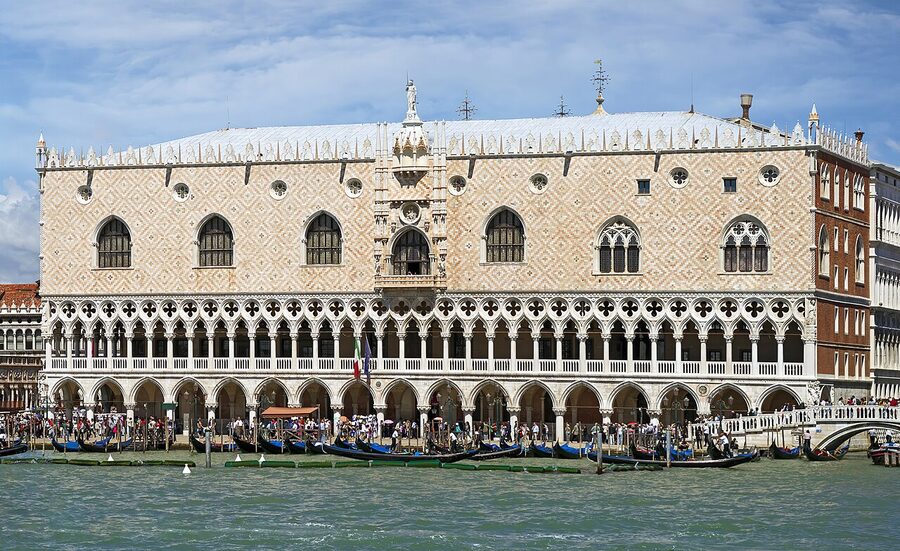
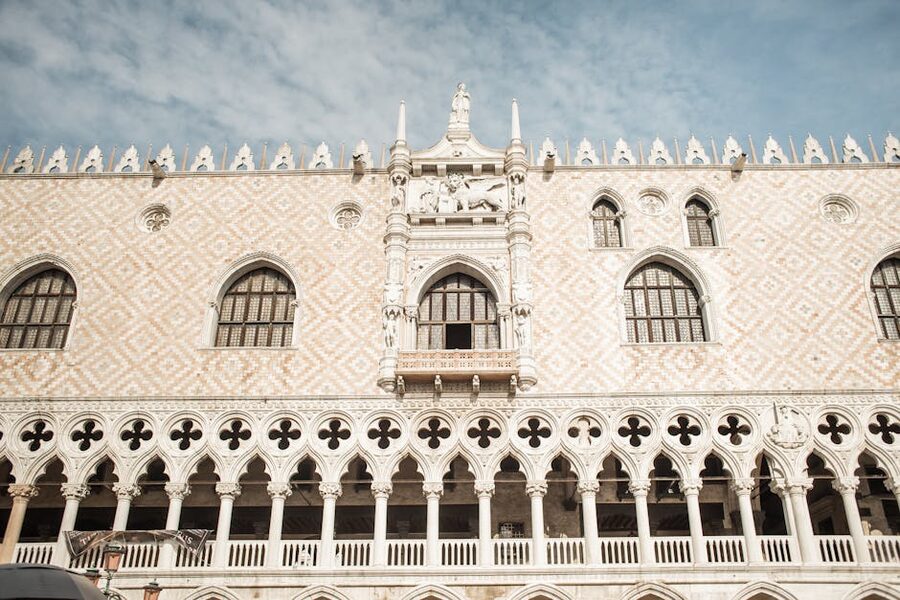
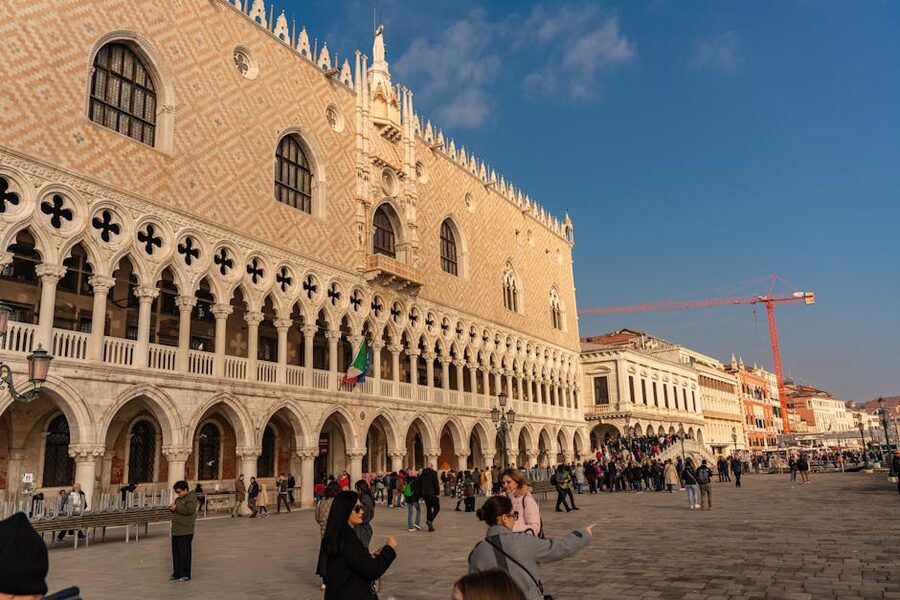
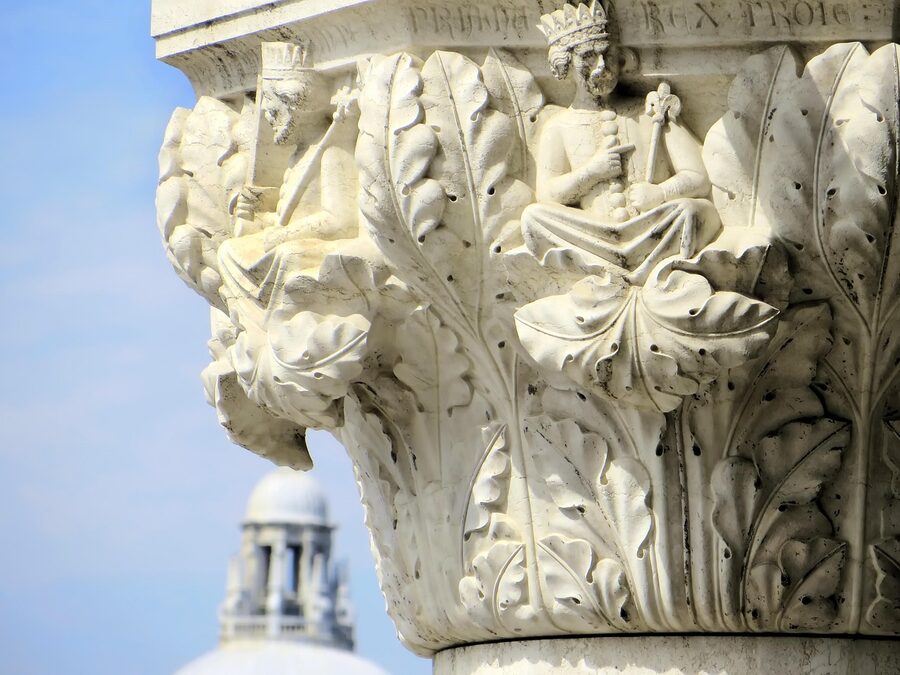
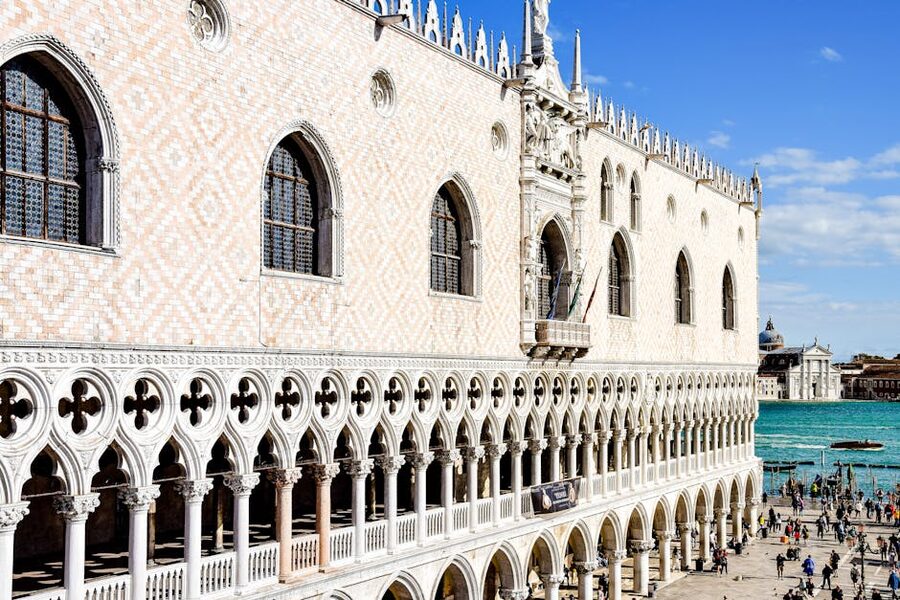
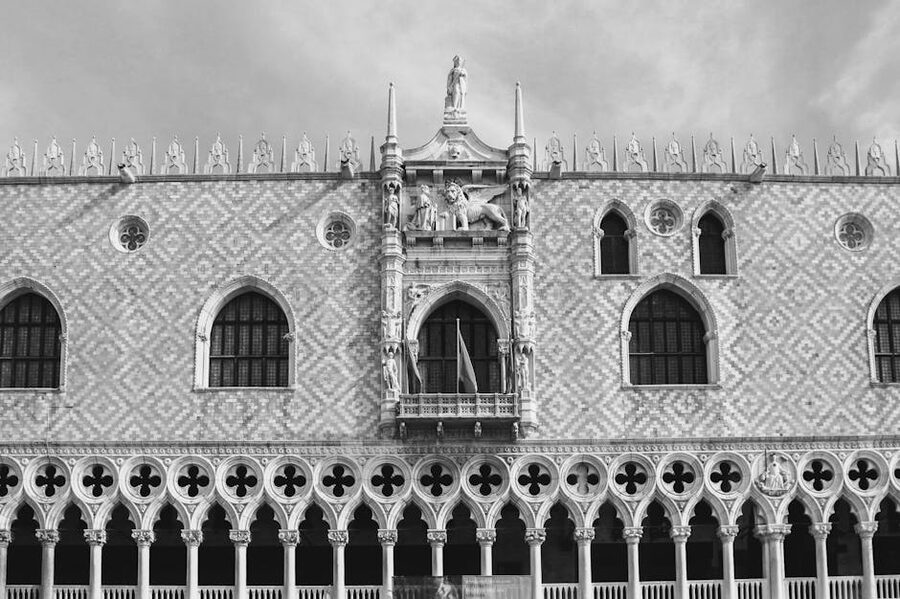
There has been a Doge’s residence on this spot since around 810 CE, when Doge Agnello Particiaco moved the Republic’s seat from Malamocco to Rialto. The current building is the third on the site. The first two burned down (once in the 10th century, once in 1106), and the second was demolished in the 14th to make way for the Gothic palace you see now. Construction on the current building started in 1340 and didn’t finish until the 15th century.
The Republic of Venice ran from this building for about a thousand years, ending in 1797 when Napoleon entered the city. He stripped the palace of about half its art (some of which is now in the Louvre), abolished the Republic, and gave Venice to the Austrians. The palace became a museum in 1923. Most of the painting cycles you’ll see today are originals. What Napoleon took was mainly removable canvases and small bronzes. The vast wall and ceiling work was too big to ship to Paris, which is why we still have it.
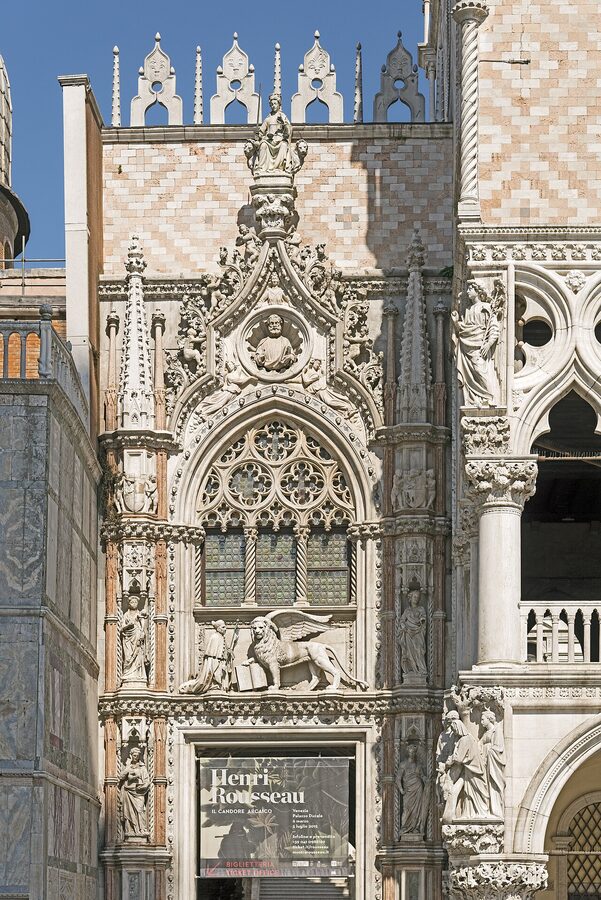
The Doge himself was elected for life by the patrician class but tightly constrained by a network of councils: the Maggior Consiglio (Great Council) for legislation, the Senate for foreign policy, the Council of Ten for state security and what we’d call espionage today. The Council of Ten ran a city-wide surveillance network out of this palace, including the famous “bocche di leone”, lion-mouth letterboxes set into walls around the city where citizens could drop anonymous denunciations. Several of these still survive. There’s one inside the palace, on the second floor, near the staircase down to the prisons.
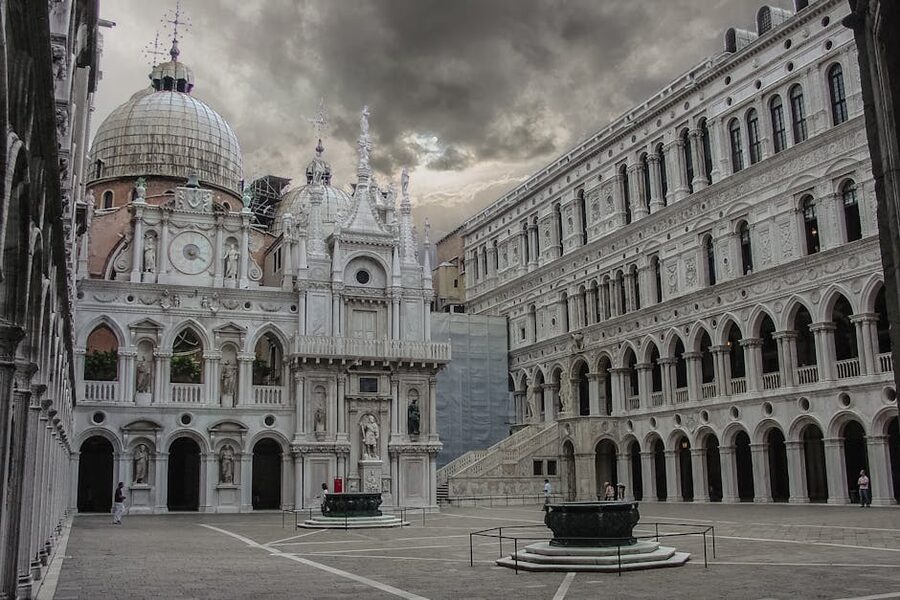
Practical bits you’ll want before you go
Cost beyond the ticket: the cloakroom is free for jackets and small bags; large luggage is not allowed and there’s no on-site storage. Photography is allowed throughout the museum without flash; the Bridge of Sighs and prisons are darker than they look in photos so put your phone in night mode. There’s a museum cafe on the ground floor with €4 espresso and a museum shop at the exit. Both are skippable.
Accessibility: the palace is partially accessible but not fully. There are lift workarounds for the main rooms, but the Bridge of Sighs and the prisons involve narrow stairs that aren’t wheelchair-friendly. The official site lists the alternative route. If anyone in your group has mobility issues, book the official ticket directly via the museum and email ahead. They’ll arrange staff to meet you at the accessible entrance.
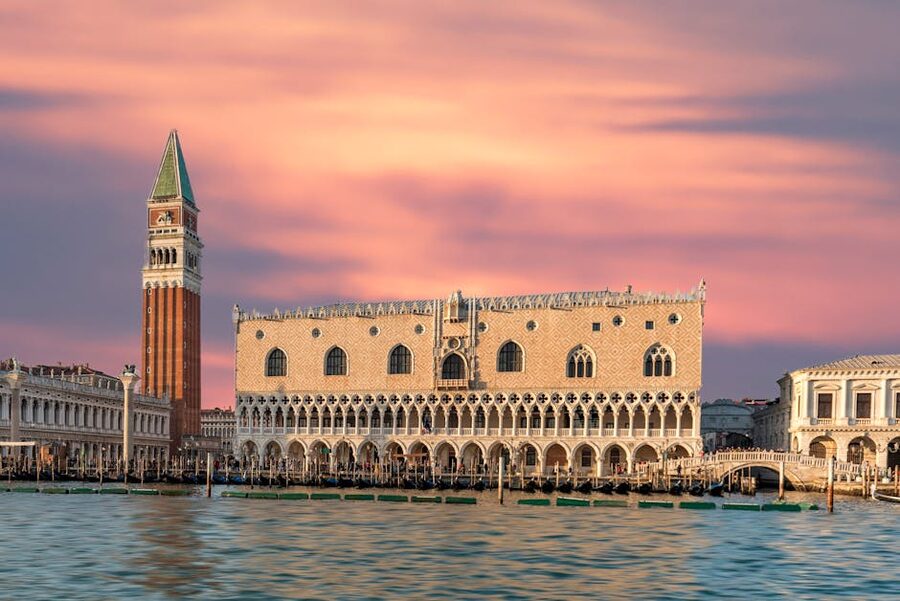
Comparing it to other Italian state museum tickets: the Doge’s Palace ticketing system is more reliable than the Italian state museum system in cities like Florence and Rome. The same MUVE foundation that runs the Doge’s Palace also runs Ca’ Rezzonico and the Museo Correr, and the booking site is consistent. It’s a smoother experience than dealing with the official Galleria Borghese site in Rome, which still feels stuck in 2008. If you’ve struggled with that or with the Uffizi booking flow, the Doge’s Palace will feel like a relief.
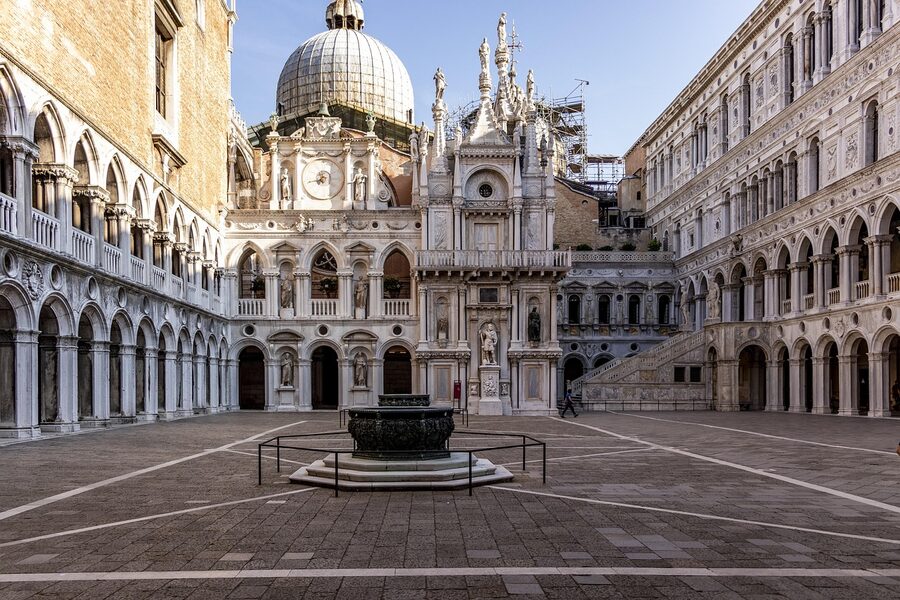
Where it sits on a Venice itinerary
If Venice is your first stop after Rome or Florence, the Doge’s Palace will read differently than if it’s the only Italian art-history thing you’re doing on this trip. After the Palazzo Vecchio in Florence you’ll notice how much smaller the Doge’s living quarters are. Florence’s was a Medici flex; Venice’s was a working office for elected functionaries. After the Vatican the Doge’s Palace is the smaller, denser experience: less to walk through, more to look up at. And anyone who’s done the Pitti Palace as the Florence “what palaces actually felt like” benchmark will see the Doge’s Palace as the political-power flip-side: less domestic, more theatrical, and architecturally more interesting because the building’s actual function is the explanation for every weird design choice. The Doge’s Palace, the basilica, and a gondola are the irreducible Venice trio. You can do all three in a day, but a leisurely two days lets the palace breathe properly.
Pairing the palace with the rest of the city
Two days in Venice and the palace deserves a clear morning of its own. Don’t try to bolt it onto a packed island day. The smart move is palace + St. Mark’s on day one, then Murano, Burano, and Torcello by boat on day two. Save the gondola for golden hour on either day, somewhere quieter than the San Marco stand. La Fenice Opera House makes a good evening cap if there’s a performance on; the daytime tour is good too but evenings are why the building exists.
One last practical: if it’s raining and the lagoon is high (acqua alta), the courtyard floods. The palace stays open (they put down raised walkways), but your shoes will not survive without overshoe protection. Buy a pair of plastic boot covers from any tabacchi for €2 before you go. They’re faintly ridiculous and they work.