
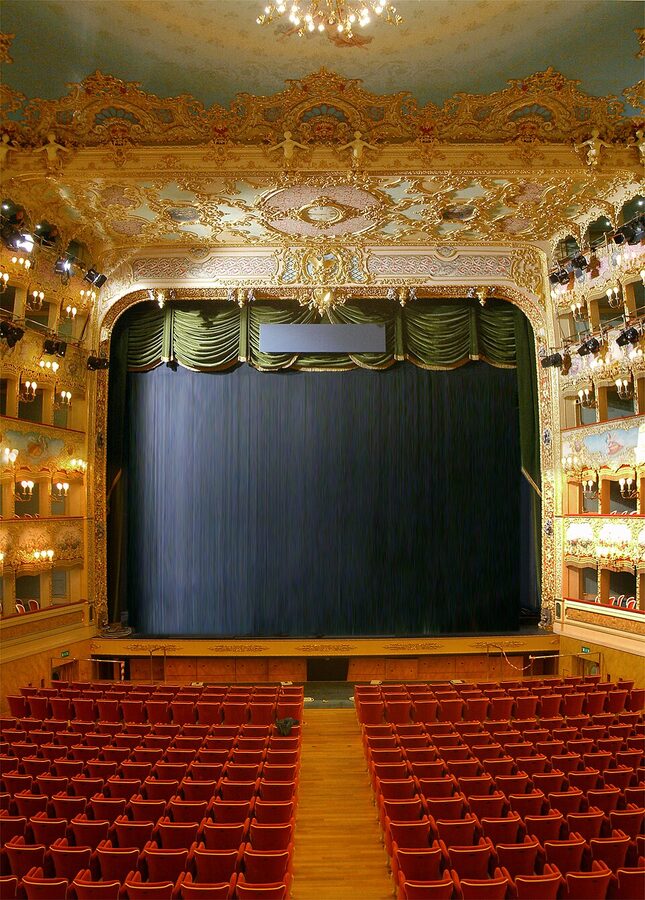
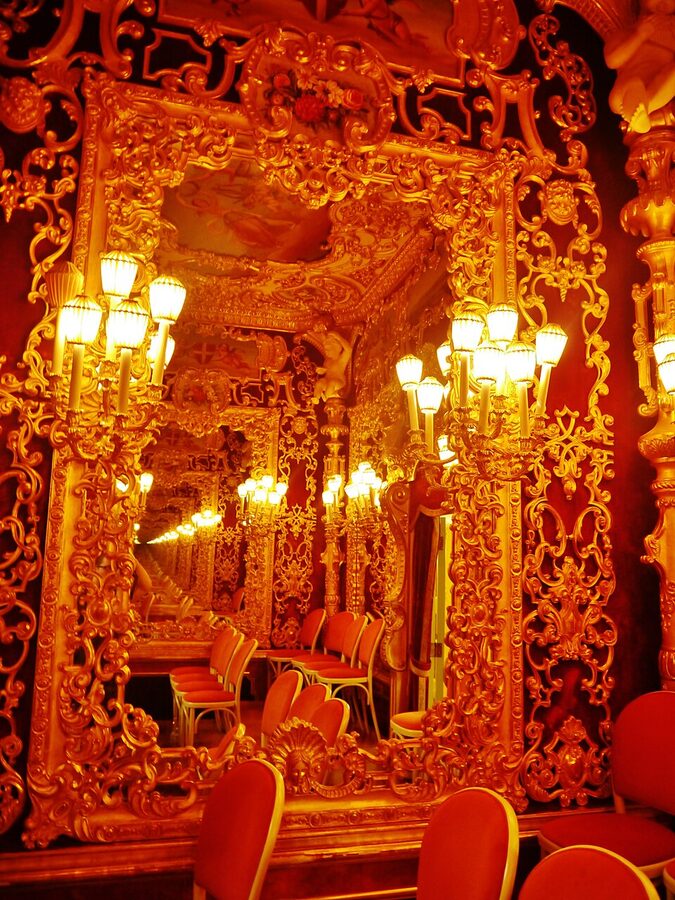
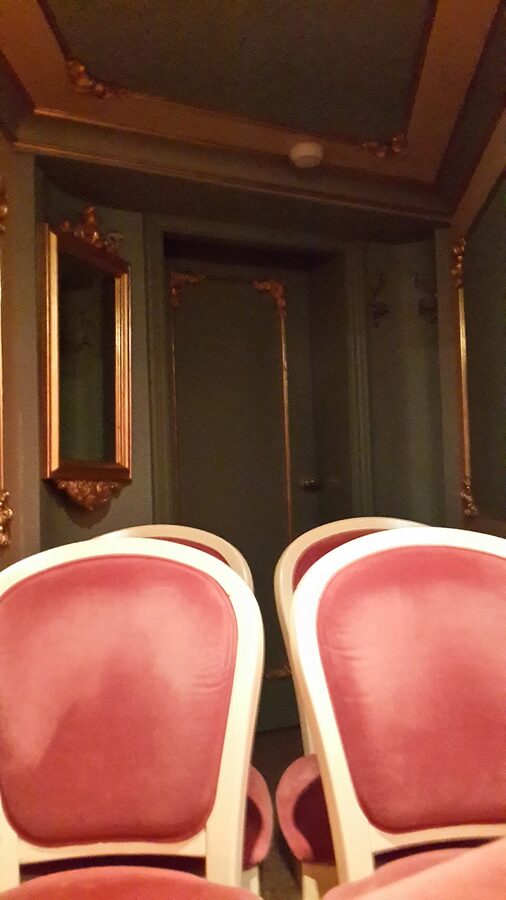
The orchestra is tuning. You’re sitting in a horseshoe of gilt and red velvet that looks five hundred years old, and Vivaldi’s Four Seasons is about to start. Then the houselights drop, the chandelier above you dims, and you remember the part you read on the way in: this entire room burned to the ground in 1996. Every cherub, every painted panel, every gilded curl above your head was rebuilt from photographs. La Fenice means The Phoenix, and it has earned that name three times now.
This guide covers the two ways most travellers see La Fenice (a daytime ticket with an audio guide, or an evening concert), what each one actually feels like, what to wear, when to book, and where La Fenice fits if you’ve already done the obvious Venice stops. If you came for the short version, here it is.
The fast picks
- Daytime entry, audio guide, about $14 (one hour): Book the audio-guide ticket. The default pick if you only have an hour.
- Vivaldi Four Seasons concert in costume, about $41 (75 minutes): Book the Vivaldi concert. You hear the music in Venice, where Vivaldi wrote it.
- Interpreti Veneziani at Church of San Vidal, about $37 (90 minutes): Book San Vidal. The serious music pick if you’d rather a baroque church than a costume show.
Why this place is named The Phoenix
The name was a joke that became prophecy. The original opera company, Teatro San Benedetto, lost a legal battle over their building in 1774 and decided to build a new theatre from scratch. They called it La Fenice because they had risen from the ashes of that legal fight. Then the new theatre actually burned in 1836 and was rebuilt. Then, on the night of January 29, 1996, two electricians who were behind on a renovation contract set the place on fire to cover up missed deadlines. The whole interior went up. The stone shell stood, the roof and the auditorium did not.
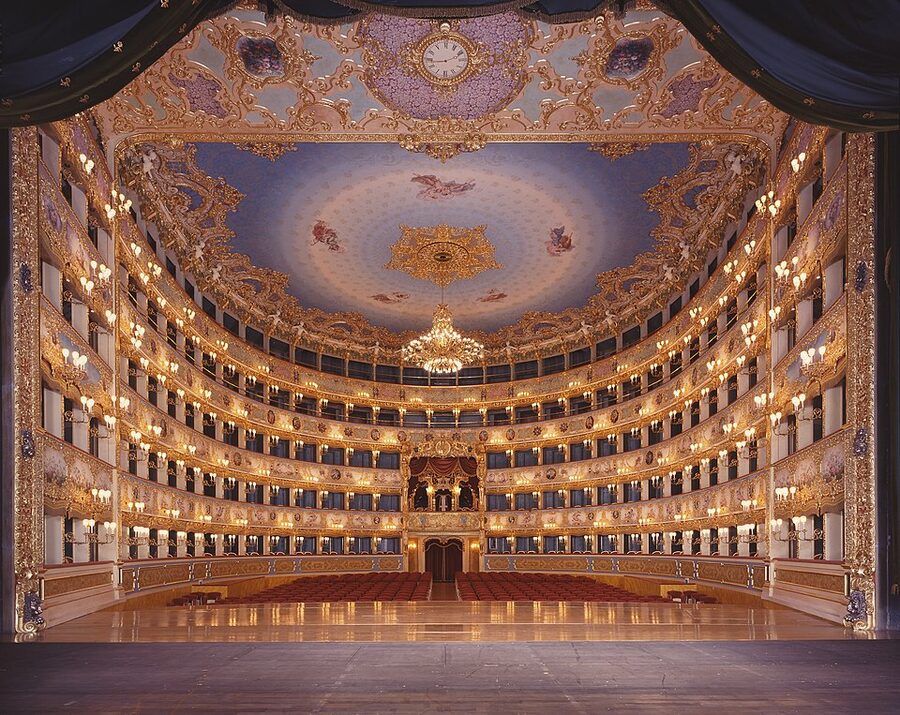
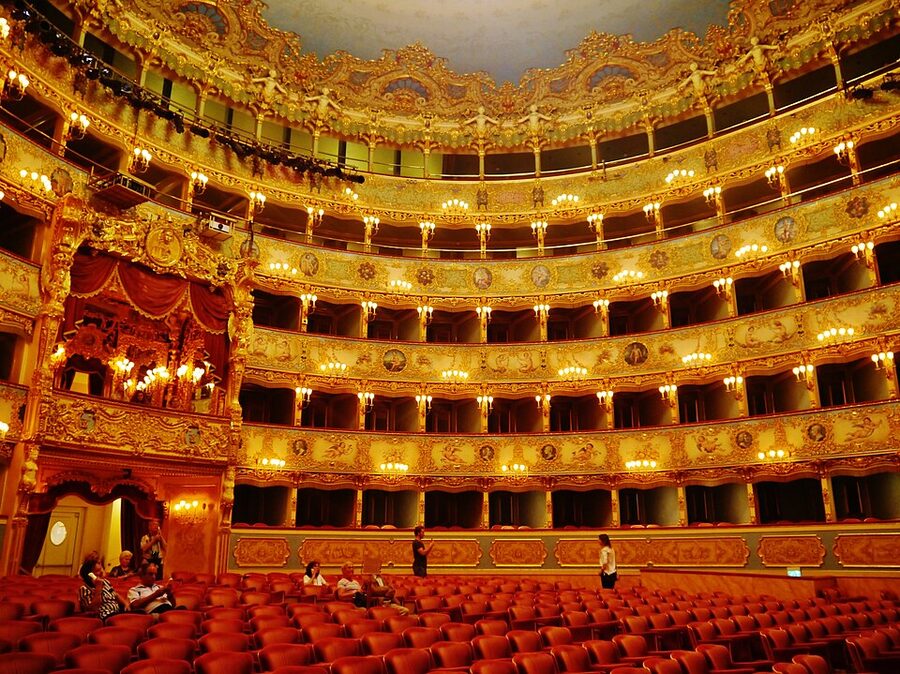
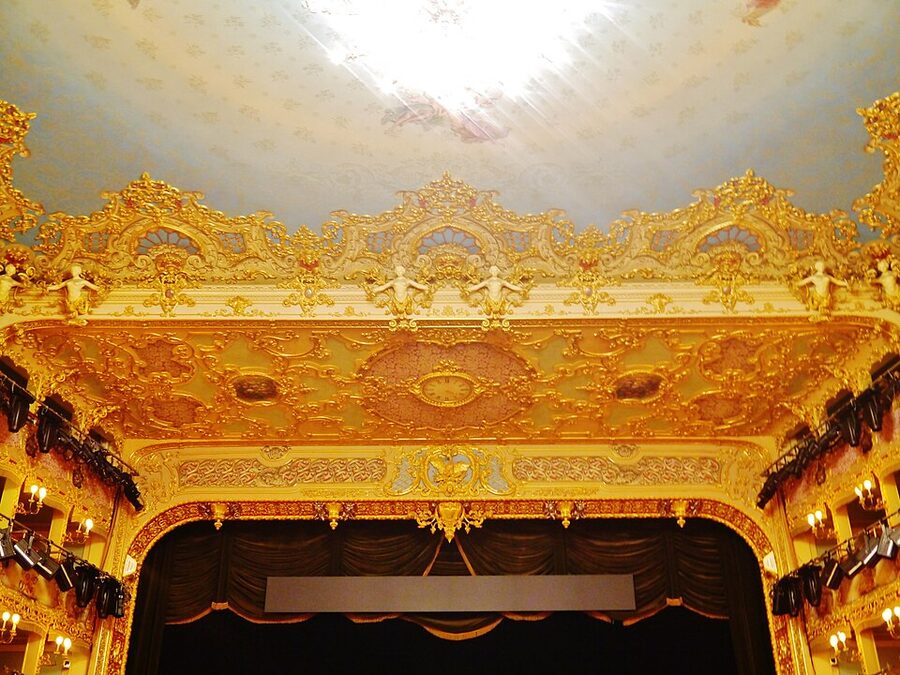
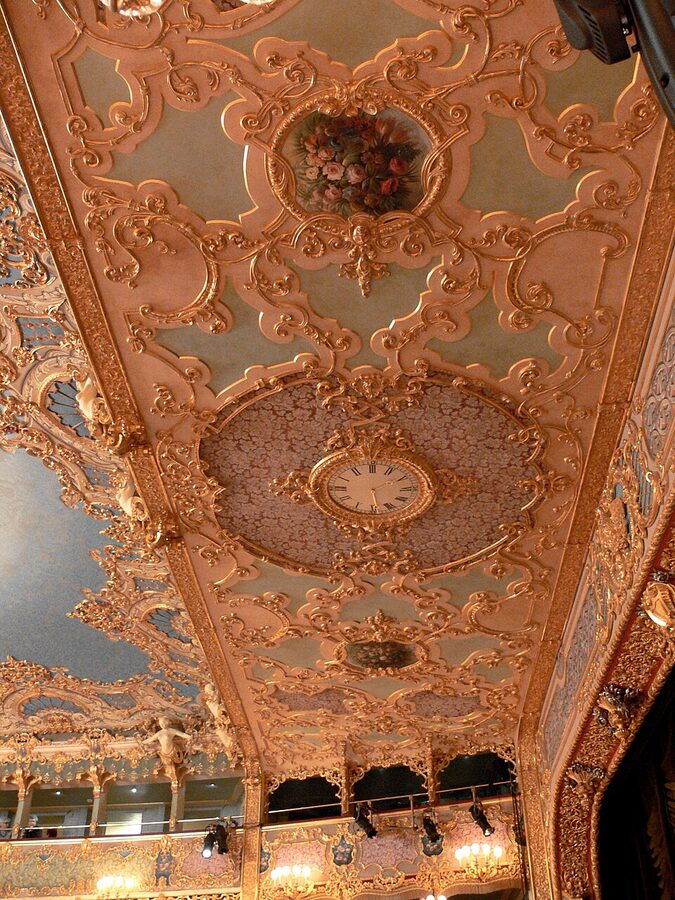
The reconstruction took until 2003. The brief was strict: rebuild the 1837 interior exactly, because the 1837 interior was already a faithful rebuild of the 1792 original. So what you walk into now is a careful, deliberate replica of a replica. The gilt cherubs were re-carved. The painted ceiling panels were repainted from photographs and from a few cinematic frames Visconti had shot inside the hall in 1954 for Senso, which became part of the reference material the restorers used. It’s not pretending to be old. It’s a brand-new room copied down to the millimetre from an old one, and that fact is part of why standing inside it feels strange in the best way.
The two ways to see it
There are really only two routes most visitors use, and they answer different questions. Pick the one that matches what you actually want from the visit.
Daytime entry with audio guide
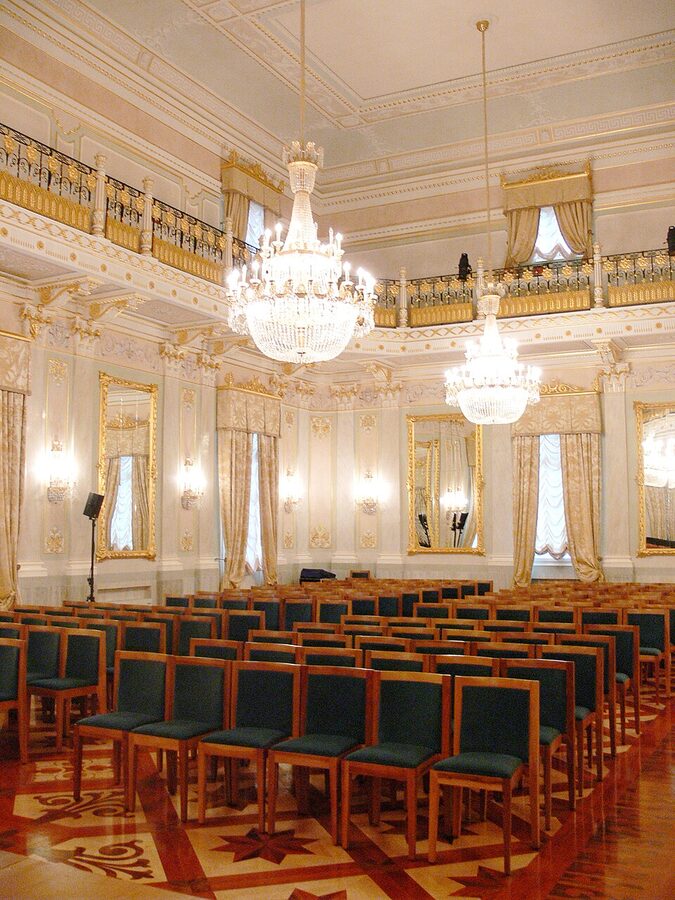
This is the cheap, flexible option, and the one most people end up choosing. You buy a timed ticket, walk in, get handed a small audio device, and follow the route at your own pace. It runs about an hour if you actually listen, twenty minutes if you don’t. You see the foyer, the main auditorium, the Apollonian Rooms upstairs (these are the gilded reception halls where the Venetian aristocracy used to meet between acts), and you finish at a small museum room with restored fragments and the reconstruction story. The audio guide is in seven languages including English. It opens at 9.30am most days. It’s the lowest-friction way to walk inside the hall and see what all the fuss is about.
Concert or opera ticket
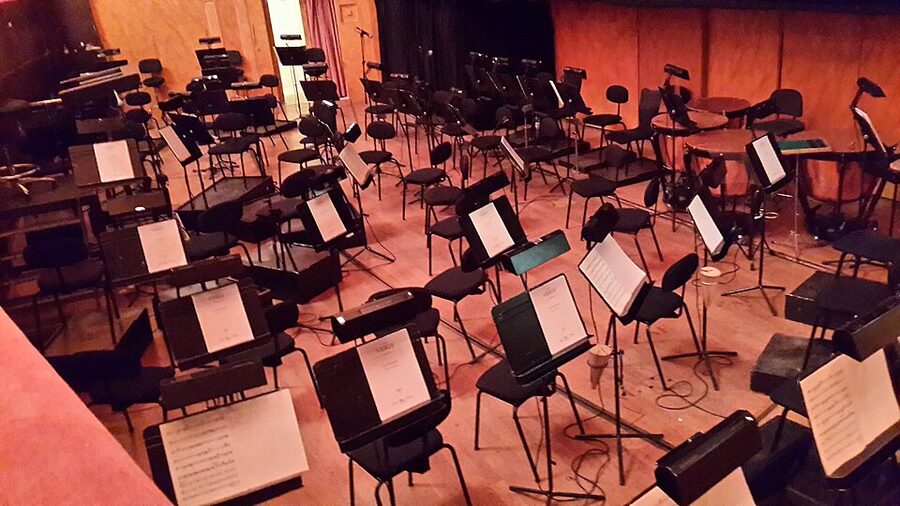
The other route is to go in the evening, sit down, and watch a performance. Concerts at La Fenice run almost year-round; full opera productions run on a published season schedule that you can usually see five or six months ahead. The book-the-show-not-the-tour decision is the same one Paris travellers face with the Moulin Rouge cabaret: the city has dozens of evening options, but one venue carries the story you actually came to hear. The evening visit is slower and infinitely more atmospheric. The hall sounds different when there’s actually music in it, the audience dresses up a little, and the chandelier dims rather than just being there as a static object.
Pricing splits into rough tiers, depending on what’s running:
- Concert (gallery seat): from about €25. The ticket-tier spread maps almost exactly onto a flamenco show in Seville, where front-row tablao seats cost three times the back row.
- Concert (stalls or box): €60 to €200+.
- Full opera (upper gallery, “the gods”): from about €50.
- Full opera (prime stalls, opening night of a major Verdi or Puccini): can hit €400.
Top picks if you only book one thing
Here are the three I’d actually book today, in order of who they’re for. The numbers I’m quoting are starting prices on the most common booking pages; expect higher tiers for premium seats.
1. La Fenice Audio-Guide Entry: $14
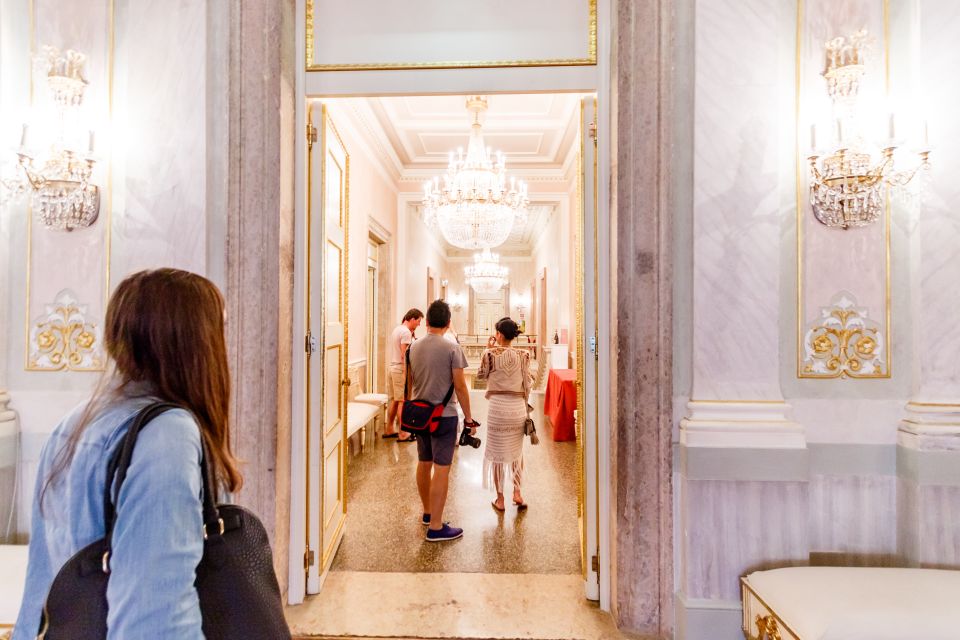
This is the right pick if you’ve got a packed Venice itinerary and want the cheapest, fastest way to actually walk inside the hall. The audio is the standard route through foyer, auditorium, royal box view, and Apollonian Rooms; our full review walks through what each room covers. You won’t get a guide answering questions, but at this price you don’t need one to make it worth doing.
2. Vivaldi’s Four Seasons Live Concert: $41
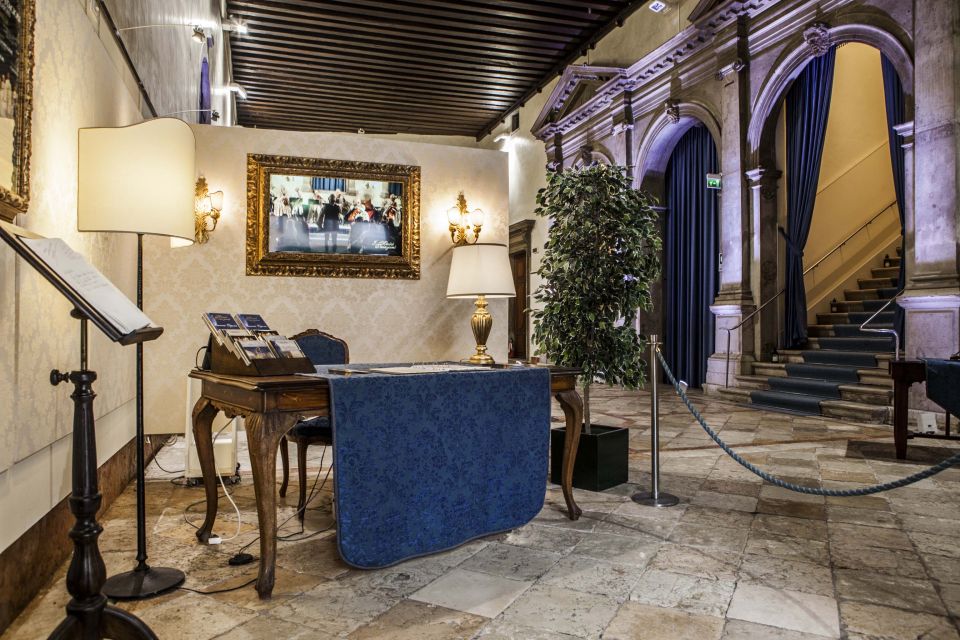
This is the right pick if you want the music, the costumes, and a manageable 75-minute window. The ensemble plays the Four Seasons in full plus a couple of arias, and the venue rotates between a few historic Venetian rooms (not always La Fenice itself, so check the details on our full review). It’s a tourist-friendly Vivaldi night, not a serious music-purist event, and it works exactly because of that.
3. Interpreti Veneziani at Church of San Vidal: $37
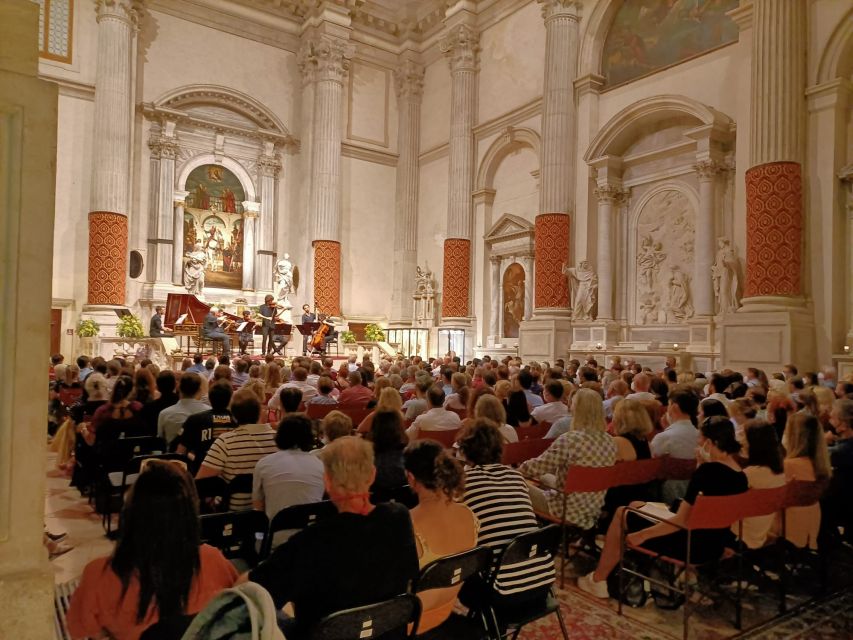
This is the right pick if you’d rather a real baroque space than a costume night, and you care about how the music sounds. The Interpreti Veneziani have been playing in San Vidal for decades and the church’s acoustic carries the strings beautifully; our full review covers the seat tiers (front pews are worth the upgrade for sightlines). It’s a 90-minute set, mostly Vivaldi and Bach, sometimes with a guest pianist.
Booking the daytime audio-guide ticket
This is the simplest visit in Venice to organise, and one of the few popular sights here that you almost never actually need to book ahead for. The hall takes daytime visitors on a rolling timed-entry basis. You pick a slot, you turn up, you walk in. A few practical notes:
- Where to buy: the official Teatro La Fenice website, or via aggregators like GetYourGuide / Tiqets. The aggregators sometimes bundle a free skip-the-line option that saves five minutes; the price difference is small.
- When you actually need to book ahead: mid-morning slots from May through September, and any time during Carnival (early February). Outside those windows, walk-up is fine.
- What’s open and what isn’t: the auditorium is closed to daytime visitors when there’s a rehearsal. The website publishes the rehearsal calendar; the audio-guide ticket gets refunded or rebooked if your slot lands on a closed day.
- How long it takes: about an hour with the audio guide, twenty minutes without.
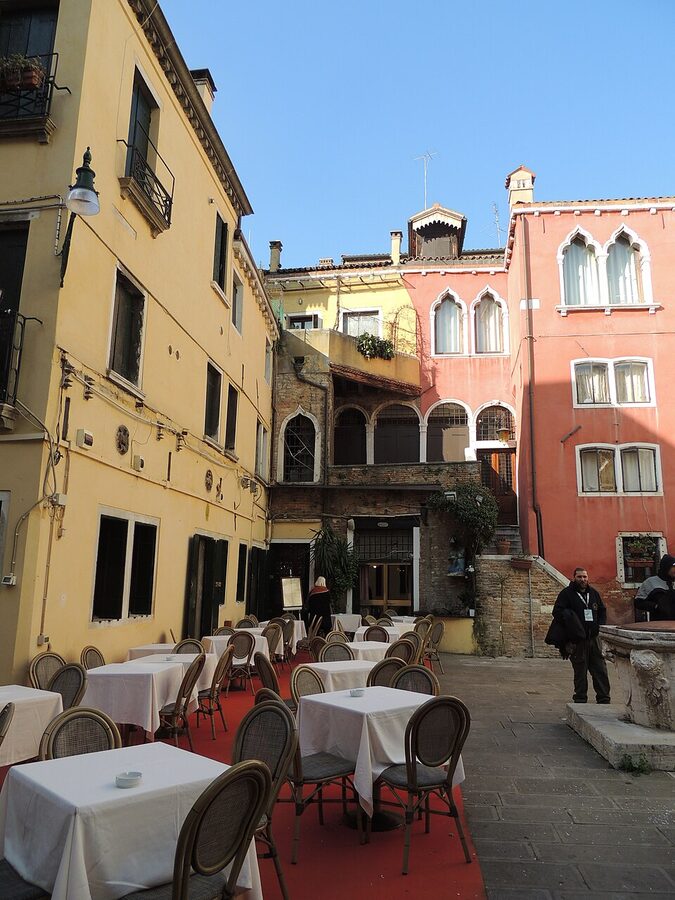
- Address: Campo San Fantin 1965. About a ten-minute walk from Piazza San Marco, slightly less from the Rialto vaporetto stop.
Booking a concert or opera
This is harder, because it depends on what’s running. The full opera season runs roughly November to July, with the bulk of productions clustered in late winter and spring. Concerts run year-round, including most of August when the opera season is dark. The published-season-then-book-early rhythm reads almost identically to the Royal Andalusian School horse show in Jerez, where the headline performances sell out months ahead. Here’s how the booking actually works:
The official site is your first stop. The season catalogue is published months in advance, usually with the next season’s headline productions visible by the previous summer. When tickets release for a specific run, prime seats sell first; gallery seats stay available much longer. If you’re flexible on date, you’ll get a much wider choice on a midweek performance than a Saturday.
For premiere or first-night tickets, expect to commit early. Opening nights of the headline operas (almost always a Verdi or Puccini) sell out fast, and the dress code on those nights is genuinely formal. For a regular performance, smart casual is fine. People do show up in jeans and aren’t turned away, but you’ll feel underdressed if everyone else is in a jacket.
Where to sit
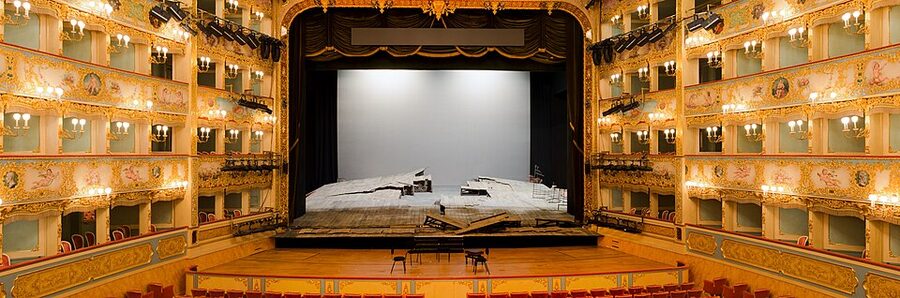
La Fenice is a horseshoe theatre, which is a different geometry from the modern fan-shaped halls most travellers are used to. The trade-offs aren’t obvious from a seating chart, so here’s what each section actually feels like.
Stalls (Platea). Best sound, expensive, and the view is straight at the stage with no boxes between you and it. If the music is your priority and budget allows, this is the seat to take.
Side boxes (Palchi). The romantic option. You’re sharing a small private box with one or two other parties, you’re seated at a slight angle, and the sightline is partial. The aristocratic-private-room atmosphere is the same one that survives in the royal apartments at Versailles, scaled-up but with the same logic of social tiering written into the architecture. The boxes closest to the stage have the worst sightline (you can lose a corner of the stage entirely) but the most atmosphere. Boxes in the middle of the horseshoe get a clean view. The royal box in the dead centre is reserved.
Upper galleries (Loggione). The cheap seats, named for the standing-room “loggionisti” who used to inhabit them in the 19th century. You’re looking down at the stage from a steep angle. The sound up here is famously good (the dome above carries it), the view is fine if you don’t mind the angle, and you’ll spend a third of what the stalls cost.
The 1996 fire and the rebuild
This is the part of the story that makes the visit feel meaningful, so worth knowing. On the night of January 29, 1996, La Fenice was empty and mid-renovation. Two of the contracted electricians, Enrico Carella and his cousin Massimiliano Marchetti, were behind on their work and facing financial penalties for missing their delivery date. They started a small fire in the offices intending it to be controllable. It wasn’t. By the time the alarms went off, the canals around the building were drained for separate maintenance work, the fire boats couldn’t get close enough, and the fire had reached the wooden auditorium.
What burned: every interior surface, the entire stage, the stalls, every box, every painted panel, and the orchestra pit. What survived: the outer stone walls, the foyer, and a few of the staircases. The aerial photographs from the morning after show smoke still rising from a hollow stone shell.
The rebuild took seven years, finishing in November 2003. The brief from the city was unusual: don’t modernise. The architects, led by Aldo Rossi (who died before the project finished), were told to recreate the 1837 Meduna interior down to the painted putti above each box. They worked from old photographs, from drawings in the Venice archives, from Visconti’s 1954 film footage, and from a handful of architectural fragments that had survived. Where they couldn’t determine an exact colour, they matched it to the surviving fragments of plaster. The reopening concert was Beethoven’s Ninth, conducted by Riccardo Muti. Carella and Marchetti were eventually convicted of arson; Carella served a six-year sentence after a stretch as a fugitive in Mexico.
None of this is hidden inside the audio-guide. The last room of the visit is essentially a small museum about the fire and the reconstruction, with photographs from January 30, 1996 alongside the mock-ups the architects worked from. It’s the part most visitors find moving.
The opera history that happened in this room
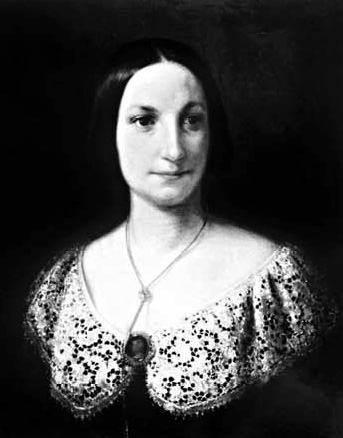
La Fenice’s importance to opera goes well beyond Venetian local pride. Five Verdi operas had their world premieres on this stage: Ernani (1844), Attila (1846), Rigoletto (1851), La Traviata (1853), and Simon Boccanegra (1857). La Traviata famously flopped on its first night here. The soprano singing Violetta was Fanny Salvini-Donatelli, who was widely felt to be too old and too well-built for the role of a young consumptive, and the audience laughed at the death scene. Verdi rewrote parts of the score, recast it, and the second production was the success the work has been ever since.
Stravinsky’s The Rake’s Progress premiered here in 1951. Britten’s The Turn of the Screw premiered here in 1954. The room you’re sitting in has heard more first performances of works that became repertoire staples than almost any other opera house in Italy, including La Scala. It’s a useful frame for the visit: the building is a replica, but it’s a replica of the room where these specific premieres happened, and the orchestra and singers in the rebuilt house operate inside that same lineage.
How long to spend, and what to do either side
For the daytime audio-guide visit, budget about an hour inside plus fifteen minutes either side for security and the audio-pickup desk. The same envelope works for the Royal Palace in Amsterdam, where the audio loop comfortably fills an hour and very little more. Including that, an hour and a half is realistic from arrival back to standing on the canal-side again. For an evening concert, the standard timing is doors thirty minutes before, the show itself is around 75 to 90 minutes for a concert and three to four hours for a full opera (with one or two intervals).
Either way, plan around the meal. Venice restaurants near La Fenice get busy from 7pm and most stop seating by 10pm, so a pre-show dinner needs to start early or you’re eating after the show. A few of the smaller bacari around Campo San Fantin do cicchetti and a glass of wine until late, which is the easiest answer if your concert ends at 10.30pm and you don’t want to commit to a sit-down meal. (For a full Venetian sit-down dinner before a show, the sort of restaurant-as-event approach you’d take in Florence’s food-tour scene works the same way here: book a 6.30pm or 7pm slot, eat efficiently, walk over.)
How La Fenice fits into a Venice itinerary
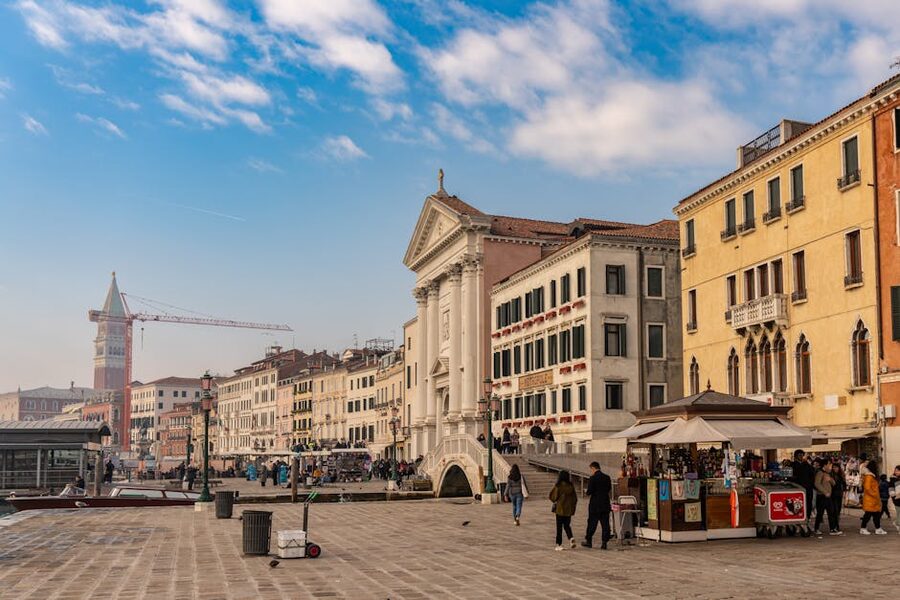
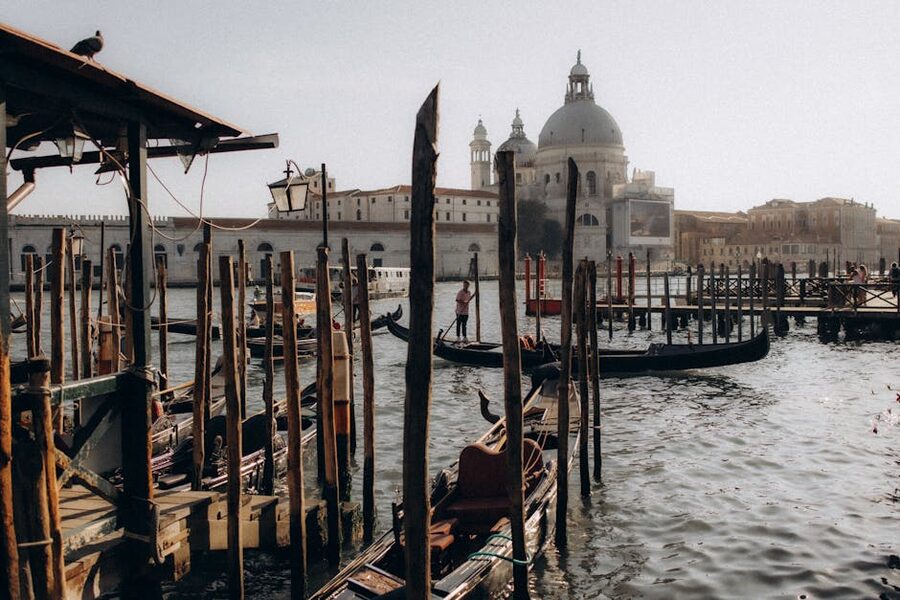
The hard truth: most travellers won’t make this their priority Venice stop. Doge’s Palace and St Mark’s Basilica are the two big-ticket interiors and they take a half-day each if you do them properly. A gondola ride is the photographic memory people come back with. A trip to Murano, Burano and Torcello eats another full day if you do all three.
That makes La Fenice a slot-in: the cheap audio-guide visit fills an awkward 90-minute gap in the day, and the evening concert turns one of your three Venice nights into something memorable. If you’ve only got two nights in the city and one is already committed to a sunset gondola or a long dinner, it’s hard to fit a full opera in. A 75-minute Vivaldi concert is the easier swap.
Worth saying: if you’ve come to Venice and you don’t care about classical music or architecture, the daytime visit will still land. The hall is genuinely beautiful in a way that doesn’t require musical literacy to appreciate. But if neither the music nor the building does anything for you, skip it without guilt and put the time toward more time on the islands.
Practical bits people get wrong
- The audio-guide ticket is not a guided tour. If you want a human guiding you through the architecture and history, you need a separate guided tour or a small-group backstage option, both of which cost more.
- Photography inside is allowed for daytime visits, no flash. During performances, no photos at all, phones away. They are strict about this.
- The audio device is in seven languages. Don’t queue twice: pick the language at the desk, switch on the device, you’re done.
- Late arrivals to a performance are not seated until the first interval. This is the rule everyone breaks accidentally. Allow more buffer than you think for the walk over, especially at night when Venice’s narrow streets are harder to navigate by Google Maps. The same buffer-for-the-night-walk applies on the Amsterdam red-light-district walking tour, where the meeting point is fixed and the guide does not wait.
- Air-conditioning during summer concerts. The hall has it but it’s modest by modern standards. In July and August, expect a slight warmth. The dress code stays the same regardless.
- Carnival surcharges. Specific masked-ball events at La Fenice during Carnival are not standard concerts and run hundreds of euros per seat. Read the event title carefully when you book.
Other Venetian classical music venues worth knowing about
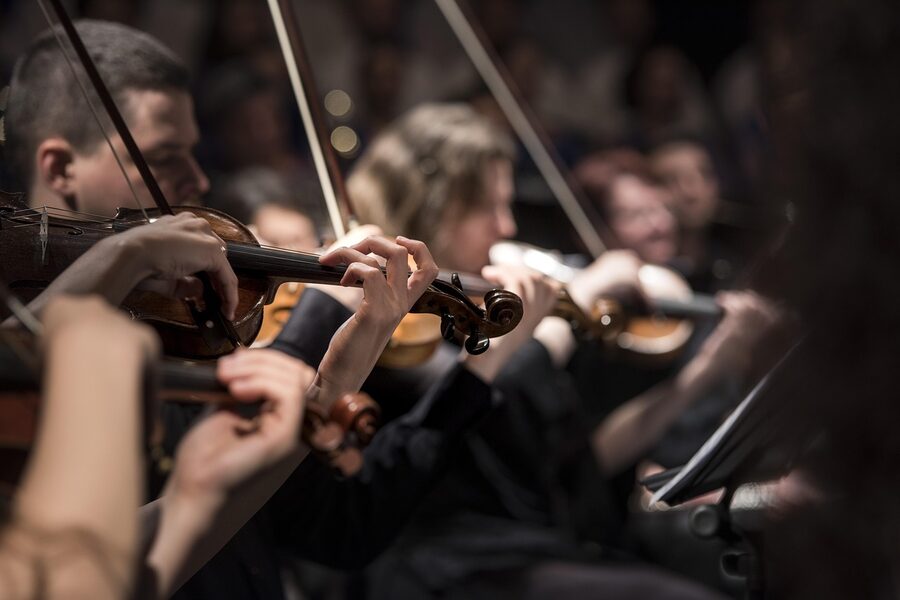
Vivaldi-themed concerts are everywhere in Venice. Some are excellent, most are perfectly fine, and a few are tourist traps that deliver less than they promise. Three real venues worth knowing if La Fenice doesn’t fit your schedule:
- Church of San Vidal. Where the Interpreti Veneziani play. A 17th-century deconsecrated church near Campo Santo Stefano with proper acoustics and a serious house ensemble.
- Scuola Grande di San Teodoro. A Venetian Scuola near Rialto that hosts costumed Vivaldi nights with I Musici Veneziani. Showier than San Vidal, friendlier to first-time concertgoers.
- Musica a Palazzo. The “travelling opera” concept: you walk between three rooms of a Grand Canal palace as the singers move between scenes. Smaller scale than La Fenice but it’s a totally different experience and worth knowing about as an alternative on a night when La Fenice is dark.
None of these are substitutes for the daytime audio-guide visit, which is specifically about the building. They’re alternatives for the evening if a La Fenice ticket doesn’t work out.
If you only see the outside
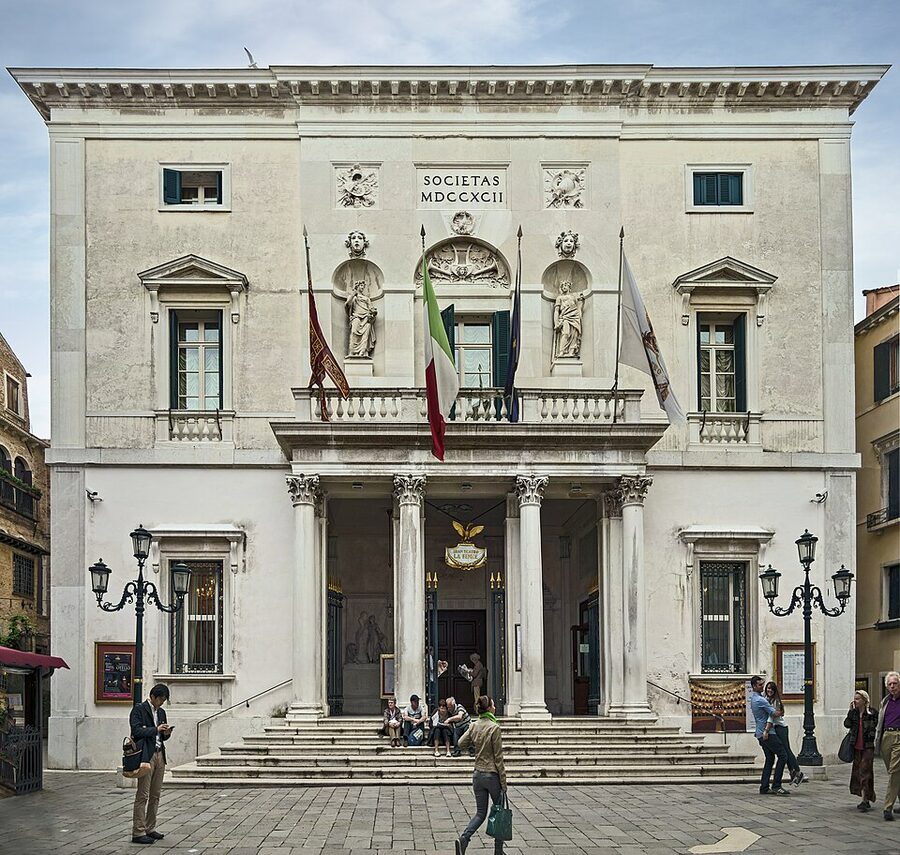
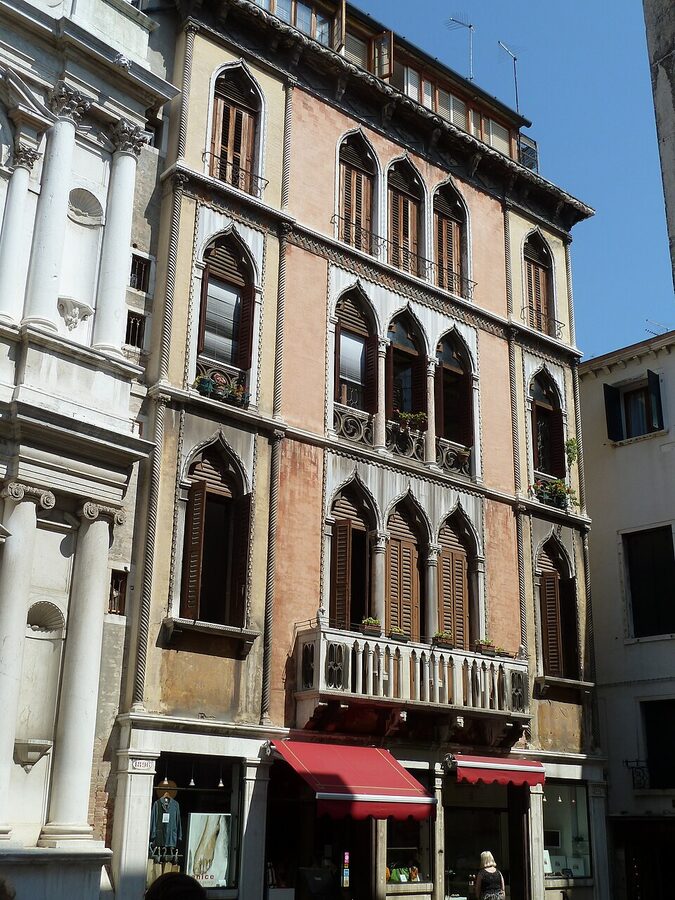
This is fine and surprisingly common. The facade on Campo San Fantin is genuinely worth fifteen minutes of just standing there with a coffee from the café opposite. The square is one of the quieter ones in central Venice (most tourists don’t realise La Fenice is here) and the Chiesa di San Fantin opposite the theatre is a small, free Renaissance church that almost no one walks into. If you’re walking from Piazza San Marco to Rialto, this whole block is barely a five-minute detour.
One last frame
The thing that sticks with most visitors isn’t the gilt or the chandelier or even the music. It’s the layered nature of what you’re standing inside. The 2003 reconstruction copies the 1837 reconstruction, which copied the 1792 original. The room has been “the same room” since the 18th century and physically rebuilt, in part or in full, three times. There aren’t many spaces in Europe where the brief was that explicit: not “make it like the old building”, but “make it the old building, again”. When you’re standing in the auditorium with the audio guide describing the painted putti above box 17, and the device tells you that specific putto was repainted in 2002 from a photograph taken in 1955 of a putto carved in 1837, you start to understand what La Fenice means by The Phoenix. It’s not metaphor. It’s the building’s actual job.
What to pair this with
If La Fenice is the cultural-heritage hour of your Venice trip, the rest of the city is mostly outdoors. Most travellers do St Mark’s Basilica and the Doge’s Palace in the same morning (they’re across the square from each other). The other two highlights are a gondola ride and a half-day boat trip out to Murano, Burano and Torcello. If you’re coming up from a Florence leg, the equivalent civic monument there is Palazzo Vecchio, and the one big-restoration story comparable to La Fenice’s 1996 fire is the engineering history of Brunelleschi’s Dome. Both are worth the parallel if you’re doing a north-Italy run and you’ve got opera-house mood now.