
You walk up the spiral ramp inside the Reichstag dome and the floor below you is the working chamber of the German parliament. Not a model. Not a recreation.
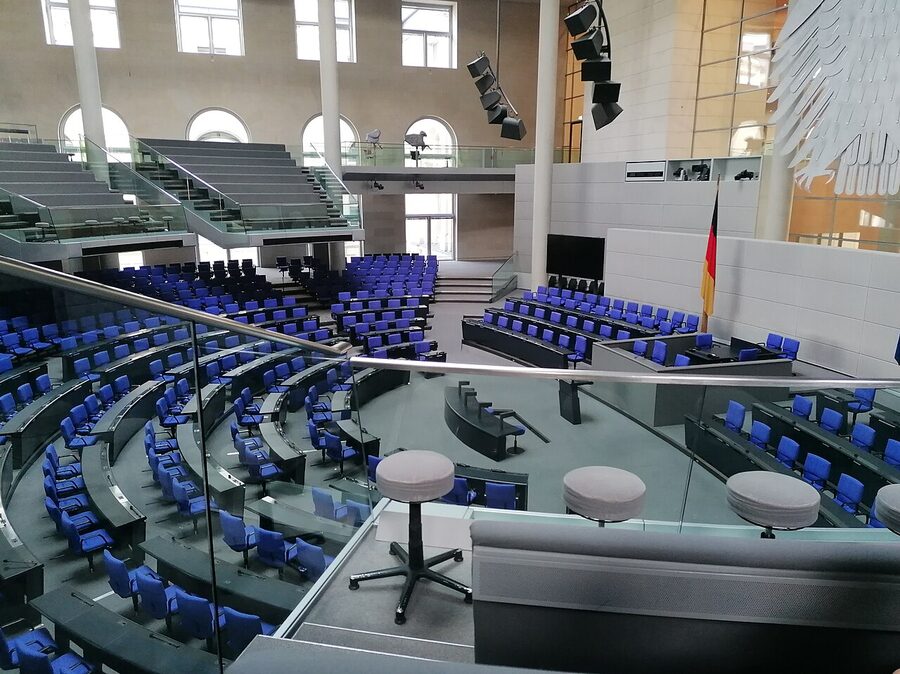
The plenary hall of the Bundestag sits twenty metres beneath your feet, with the eagle on the back wall and the dark blue seats arranged in a horseshoe.
The dome is free to visit. That’s the part most travellers miss. The other part most travellers miss is that “free” comes with a six-step booking system, a passport check, and a registration window that fills up six weeks ahead in summer.
The walk-up queue at the gate is a fiction. There is no walk-up queue. If you didn’t register, you don’t go in.
In a hurry? Three tours that solve the booking problem for you
- Reichstag, Dome and Government District Guided Tour ($18). The flagship. Guide handles the security paperwork, walks you through the government quarter, takes you up the dome at the end. Check availability.
- Reichstag, Plenary Chamber, Cupola and Government Tour ($18). The deeper one. You actually go inside the plenary chamber, not just look at it from above. Check availability.
- Government District around the Reichstag Guided Tour ($284 per group up to 24). The private option for families and small groups, no random strangers in your tour. Check availability.
The free dome problem (and why everyone gets it wrong)
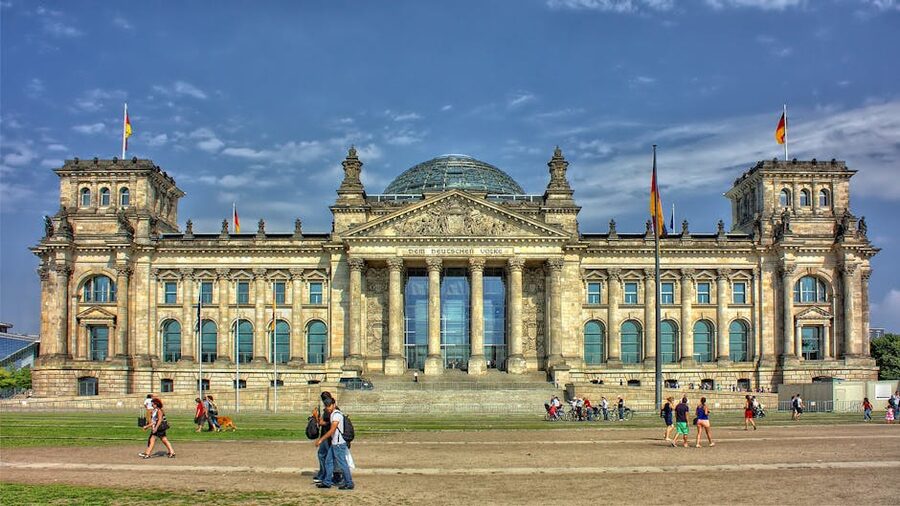
Here is the thing about the Reichstag dome. It costs nothing. Zero euros. No ticket. The Bundestag, which runs the building, decided in the late 1990s that the seat of German democracy should be visitable for free as a gesture of public ownership. That part is genuinely beautiful and not enough other parliaments do it. (The Royal Palace in Madrid charges €14, the Royal Palace in Amsterdam charges €12.50, the Doge’s Palace in Venice charges €30 in peak season.)
The catch is logistical, not financial. You need to register in advance. Online. With your full name, date of birth, passport number, and a chosen 90-minute time window. A confirmation email comes through. You bring that email and a passport (driving licence will not do; the Bundestag wants the same document type you registered with) to the visitor entrance on Scheidemannstraße. Security is airport-grade. There’s a metal detector, a bag X-ray, and a guard who actually checks your face against your passport photo.
How far ahead to book depends on the season. In November on a wet Tuesday you can probably register four days out. In June and July the popular slots (sunset, weekends, anything between 4pm and 8pm) fill six weeks ahead. The official line is “minimum five days.” The real answer is: try as soon as you have flights booked.
If you missed the booking window
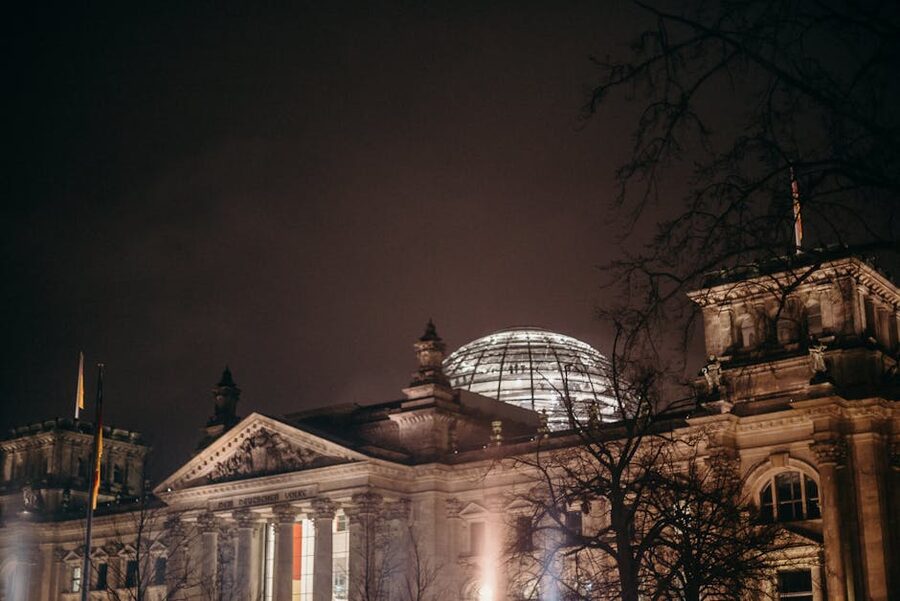
The standard advice if you miss the registration window is to walk up to the white visitor service container on the lawn, fill out a same-day form, and hope for a slot in the next few days. This works in low season. It rarely works in summer. The line for that container starts forming around 8am and the slots run out by mid-morning.
The real fix if you’ve left it too late is a guided tour. The three tour operators below have block-booked slots from the Bundestag press office, which is a different reservation pool from the public one. They can usually get you in within 48 hours, sometimes the same day. Yes, you’re paying for what’s technically free, but you’re really paying for the access slot, the guide who knows what you’re looking at, and the fact that you don’t have to coordinate any of the booking yourself. For a half-day saved on a four-day Berlin trip, the maths usually pencils out.
The other reason to consider a tour, even if you have the time to register independently, is the plenary chamber. The free public visit only goes to the dome. To stand inside the chamber where the laws actually get debated, you need either the Plenary Chamber tour or a German diplomatic connection. Most travellers don’t have the second.
Norman Foster’s glass cone
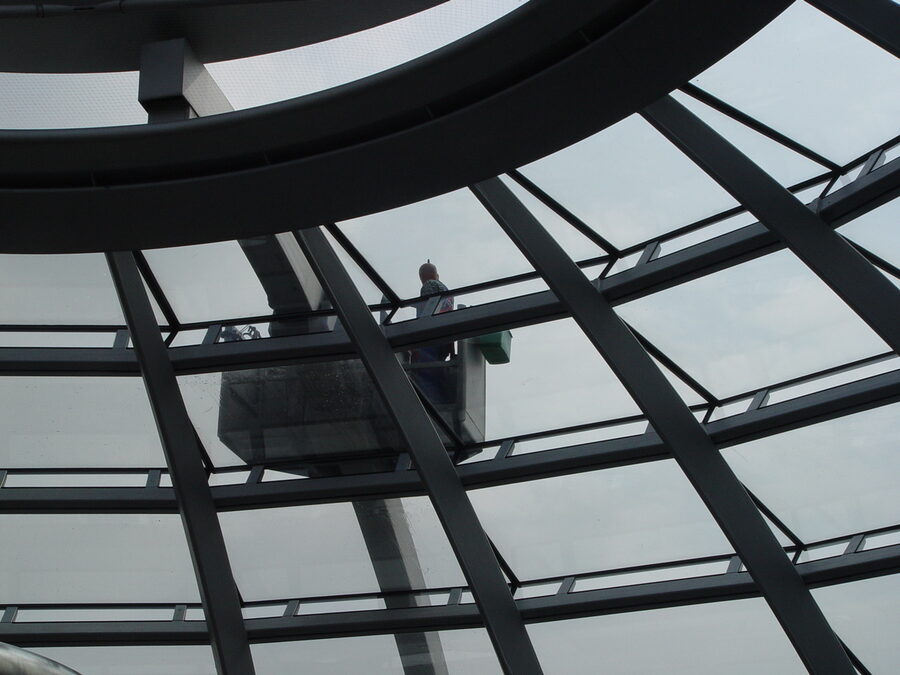
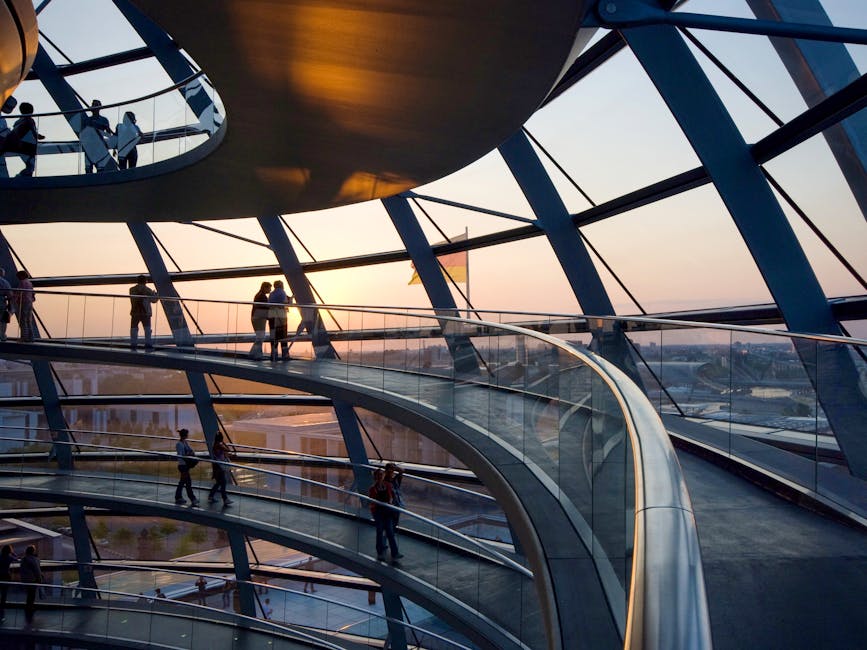
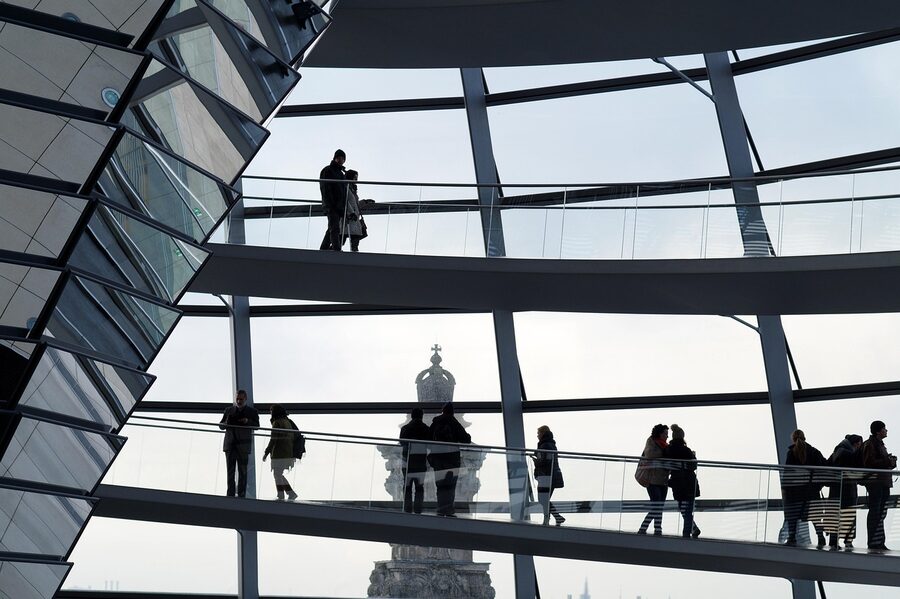
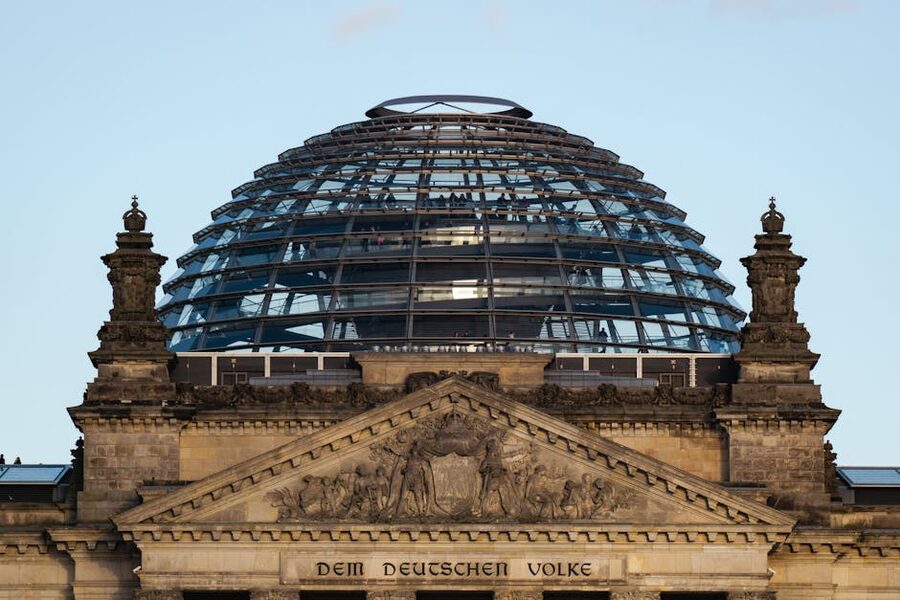
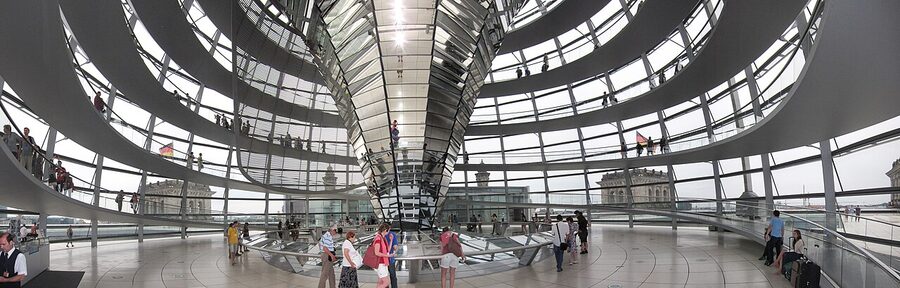
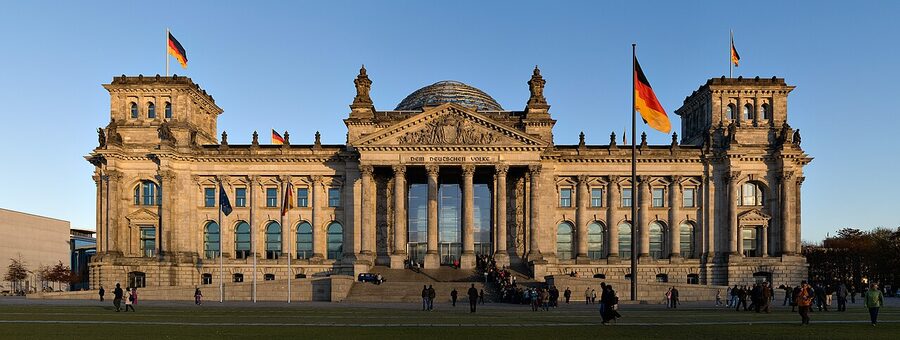
The dome you walk up was finished in 1999 and designed by the British architect Norman Foster. It is 23 metres tall, 40 metres in diameter, and made of 3,000 square metres of glass over a steel frame. From outside it looks like a transparent crown sitting on top of an old neoclassical building. From inside, two ramps spiral around an inverted cone covered in 360 mirrors. You walk up one ramp, you walk down the other, and the entire 230-metre route gives you a 360-degree view of central Berlin.
Foster won the redesign competition in 1992 and his original concept did not include the dome at all. The Bundestag insisted. They wanted a visible symbol that the parliament was open to the public. The dome that resulted is doing three jobs at once. It’s a viewing platform for visitors, a statement about democratic transparency (the public literally walks above the politicians), and a passive solar device that lights and ventilates the chamber below.
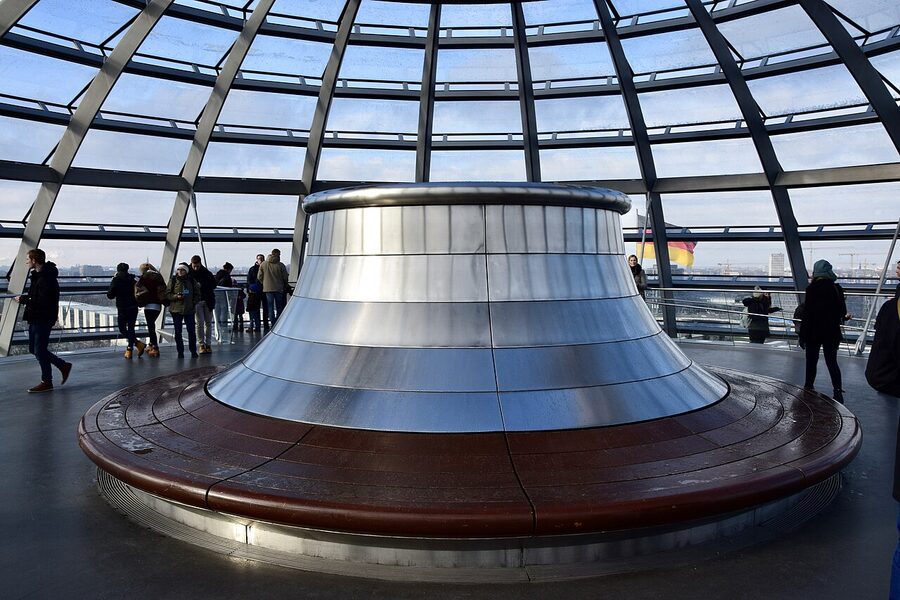
The audio guide kicks in automatically as you climb. Your handset uses a position sensor and triggers commentary based on which direction you’re facing: Brandenburger Tor to the east, Tiergarten and the Victory Column to the west, the Hauptbahnhof and the river Spree to the north, Potsdamer Platz to the south. It’s clever. It’s also the only audio guide I’ve used where the timing actually matches the view, which means you don’t get stuck looking at the wrong building while the narrator describes a different one.
What you actually see when you look down
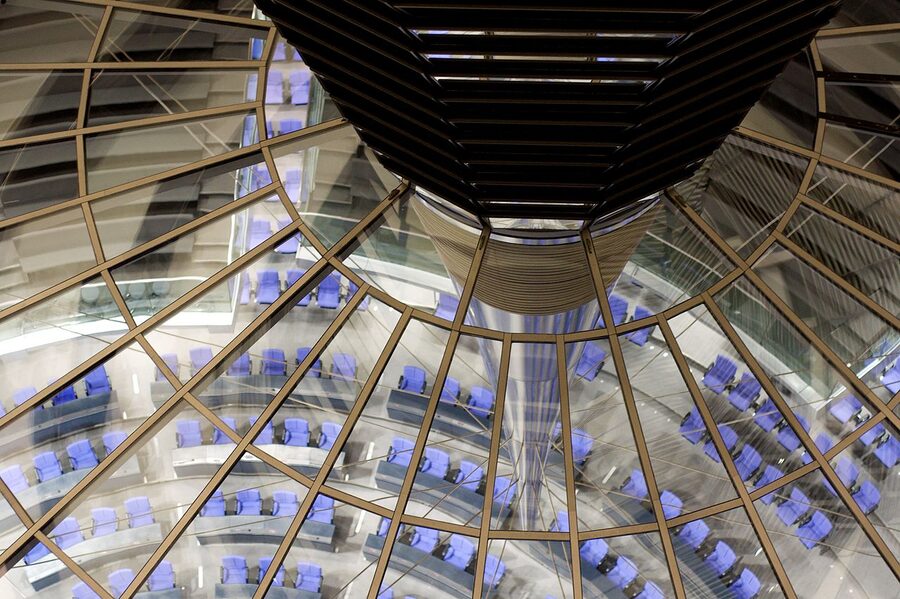
At the base of the inverted cone there is a circular glass floor and a railing. You stand here and look directly down through the cone into the plenary chamber. The chamber is twenty metres below. The seats are visible. The lectern is visible. The eagle is visible. If the Bundestag is in session (which happens on roughly 22 weeks of the year, mostly Wednesdays and Thursdays) you may see actual MPs in actual seats arguing about actual policy. There is no glass between you and the chamber, just open air through the cone, but the dome is acoustically separated so they can’t hear you and you can’t hear them.
This is the editorial idea of the building. The German word the architects used was “Transparenz”, meaning political transparency. The image they wanted was the public physically standing above their elected representatives, looking down on the work of government. After what Germany did in the twentieth century, the symbolism is heavy and not subtle. It also genuinely works. You stand there for about a minute, do the calculation about who is above whom, and the building has made its point.
The fire, the flag, and why the building is older than it looks
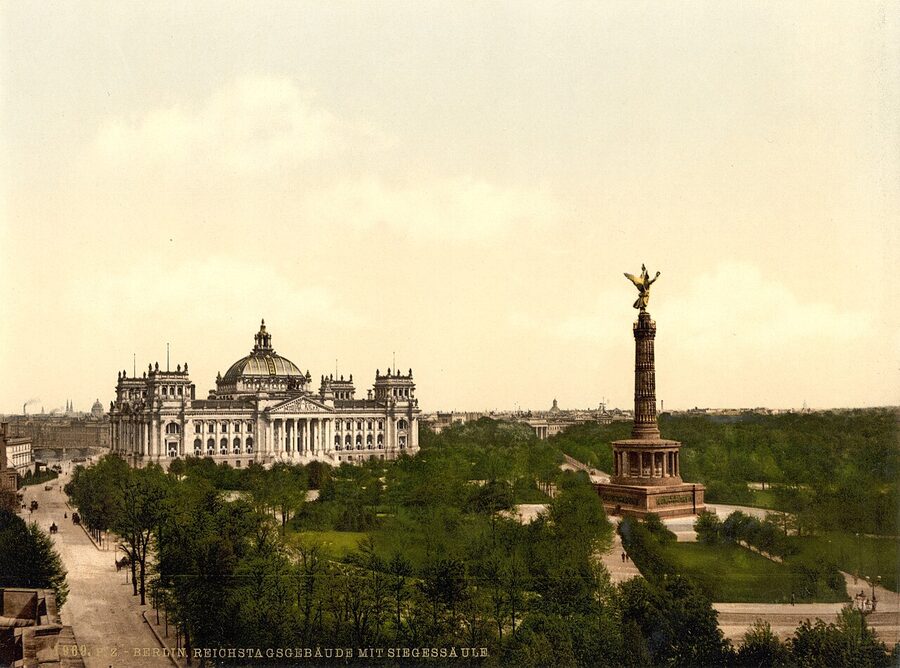
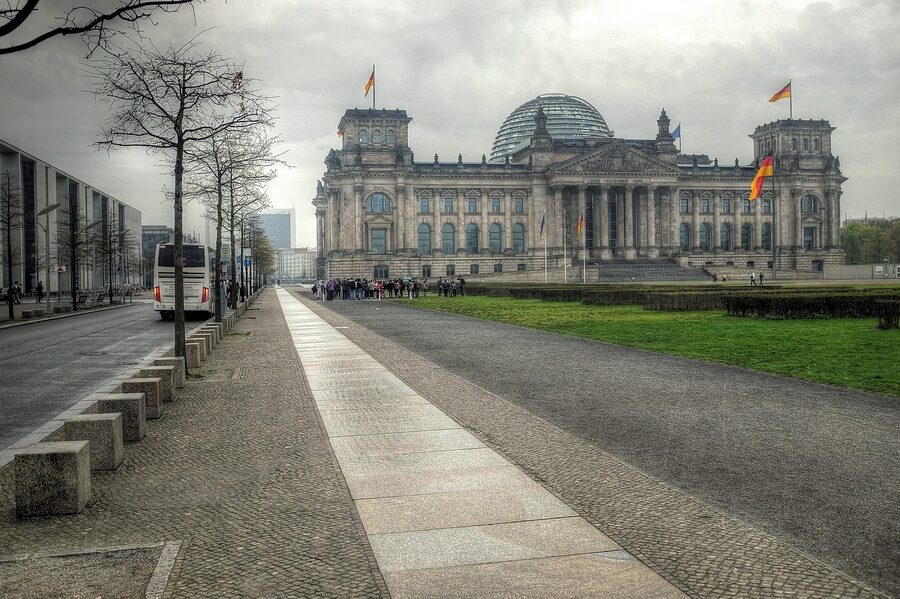
The neoclassical shell you see was finished in 1894 and designed by Paul Wallot. The site was Platz der Republik, then called Königsplatz, in the centre of Wilhelmine Berlin. The four corner towers represent the four kingdoms of the German Empire: Prussia, Bavaria, Saxony, and Württemberg. The original dome was 75 metres tall, made of glass and steel, and at the time was a piece of engineering as ambitious as Foster’s replacement.
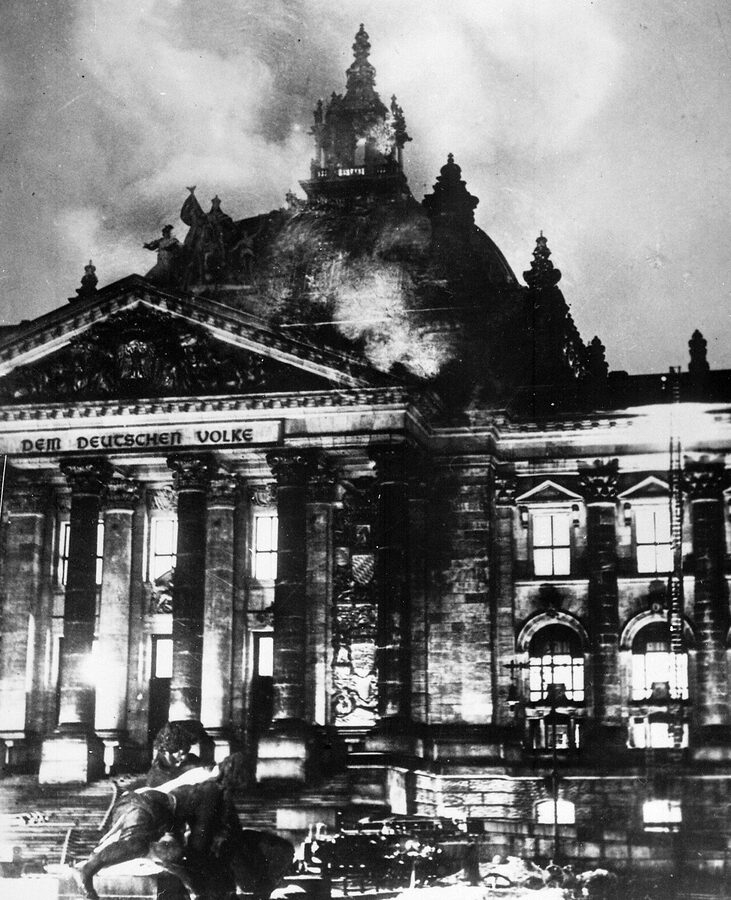
The Reichstag housed the German parliament from 1894 until the night of 27 February 1933. That night, a young Dutch communist named Marinus van der Lubbe set fire to the building. The chamber burned. The Nazis used the fire as the pretext for the Reichstag Fire Decree, signed by Hindenburg the next day, which suspended civil liberties indefinitely. Three weeks later the Enabling Act passed, dissolving democratic rule. The fire is the pivot. Everything that came after (the camps, the war, the Holocaust) was made legally possible in the four weeks following 27 February. If you want to walk the full arc of that history on a single trip, the Sachsenhausen memorial north of the city is the second visit to make, and a Third Reich and Cold War walking tour connects the dots in central Berlin.
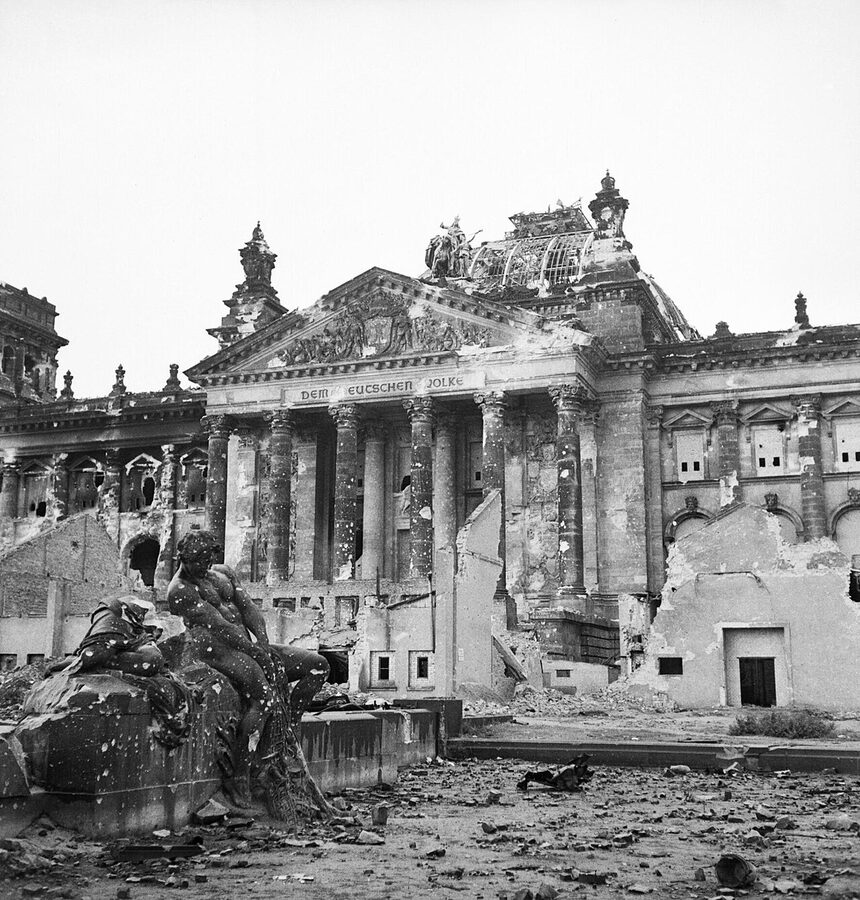
The Reichstag stood damaged and largely unused through the rest of the Nazi period. Hitler preferred to govern from the Reich Chancellery, on Voßstraße half a kilometre away. The chamber was never repaired. By the end of the war the building was a hollowed-out neoclassical ruin, and on 30 April 1945 the Soviet 3rd Shock Army stormed it from the east in one of the closing acts of the Battle of Berlin. The famous Yevgeny Khaldei photograph of a Red Army soldier raising the Soviet flag over the Reichstag was taken on 2 May, after the actual flag-raising, as a staged commemoration. The image still works.
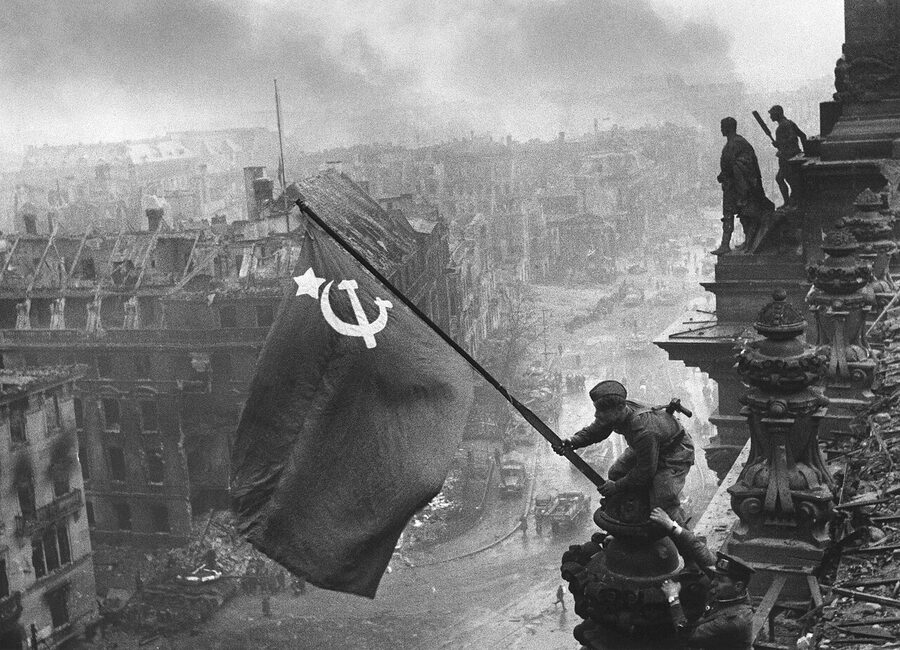
After 1945 the Reichstag sat in West Berlin, a few metres from the Berlin Wall, but the West German parliament met in Bonn. The building was patched up enough to host occasional ceremonies but it had no political function for nearly fifty years. On 3 October 1990 (German Unity Day) the official ceremony of reunification was held on the lawn outside it, and on that night the Bundestag voted to move the capital back to Berlin. Foster’s renovation began six years later.
The Christo wrapping
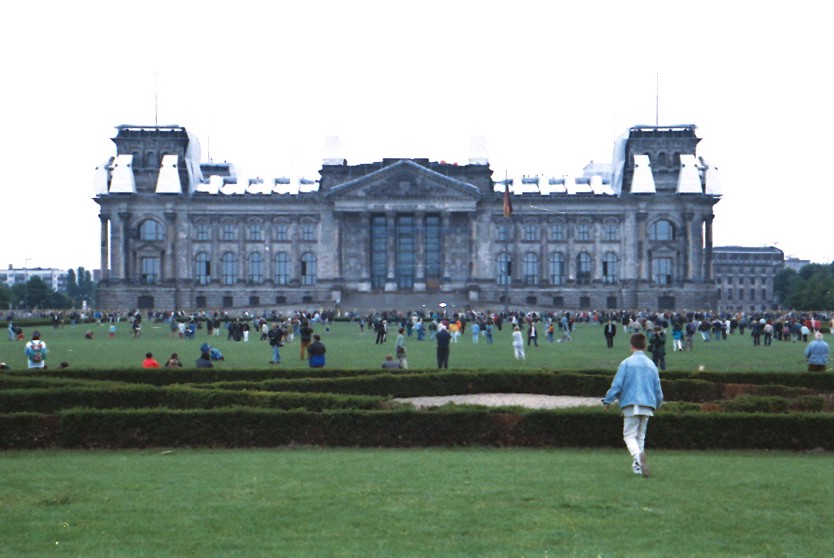
For fourteen days in June and July 1995 the entire building was wrapped in 100,000 square metres of aluminium-coated silver fabric and 15 kilometres of blue rope. The artists were Christo Vladimirov Javacheff and his wife Jeanne-Claude. They had been campaigning to wrap the Reichstag since 1971. The Bundestag finally voted yes in 1994, by a margin of 292 to 223. Five million people came to see it during its two weeks of existence.
The wrapping was deliberately scheduled before Foster’s reconstruction began. The point was to draw a line under the building’s twentieth-century history before its twenty-first-century reinvention. Same building, redrawn. The architectural critic Hans Ibelings called it the most successful piece of public art Germany ever paid for, and he was probably right.
The booking process, in actual steps
The official process for the free visit:
- Go to visite.bundestag.de (the public visit portal). It’s available in German and English.
- Select “Visit to the dome and the rooftop terrace.”
- Pick a date and a 90-minute window. Slots open every quarter hour.
- Enter every visitor’s full name, date of birth, and passport or ID number. Children under 14 don’t need ID but still need to be registered.
- Wait for the confirmation email. It usually arrives within an hour but can take up to two business days at peak times.
- Print the email. Phone screens work in theory; printed copies cause less friction at security.
On the day, arrive at the visitor service centre on Scheidemannstraße at least 15 minutes before your slot. The actual entrance to the building is on the west side. Security is thorough. Liquids over 100ml get binned, large bags are not allowed (there’s a free cloakroom but it fills up), and the metal detector triggers easily, so wear a belt with no buckle if you can. The whole walk from registration check to the bottom of the ramp takes about 20 minutes if security is busy, less if it’s not.
Best slot to book
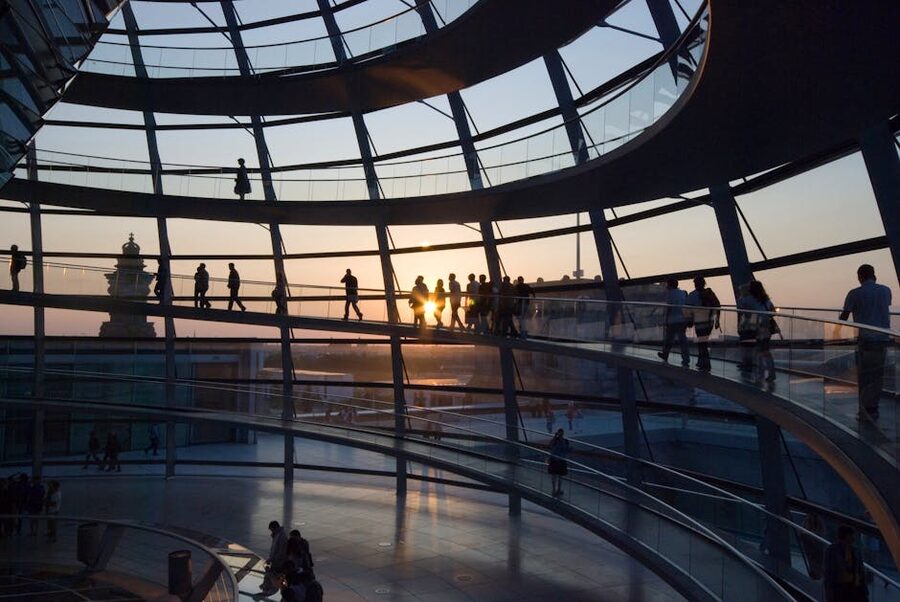
The best time to book is the slot starting 45 minutes before sunset, which moves through the year. In June that’s about 8:30pm. In December it’s around 3:15pm. The 90-minute window covers the colour change, the Tiergarten silhouette, and the city’s lighting transition. You can stay up there for the full window. Staff don’t move you on early.
Second best is one hour after sunset, especially in summer when the late blue light lingers. Third is the first slot of the morning, around 8am, when the dome is mostly empty and you can stand at the cone railing for as long as you want. The slot to actively avoid is mid-afternoon on a sunny day. The cone gets bright, the temperature climbs, and the photos look flat.
The terrace at the top
Most travellers walk to the top of the ramp, look out, walk back down. The actual top of the dome is open to the sky. If you go to the highest point, an oculus opens above you and on a clear day you can see directly up into the cloud layer. Rain on the dome falls through the open top into a drainage system at the base of the cone. It’s one of the cleverest passive bits of architecture in central Europe and most visitors miss it because they’re looking horizontally at the city, not vertically.
The rooftop terrace is the level below the dome. It’s accessible from the same lift system and gives you an outdoor view of Brandenburger Tor, the Spree bend, and the chancellery building behind. There’s a restaurant up there, called Käfer Dachgarten, which is a separate booking with a separate menu. You don’t need to eat there to use the terrace. The terrace is part of the free visit.
The buildings around the Reichstag
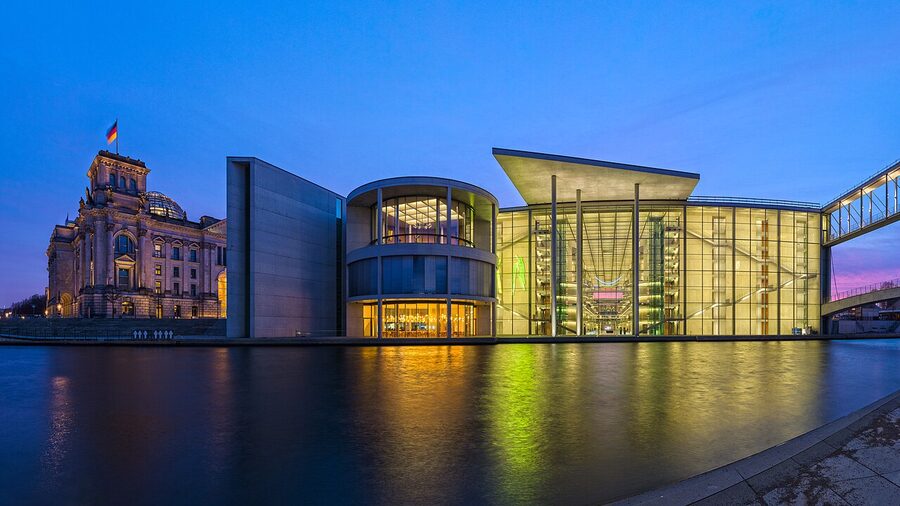
The Reichstag does not stand alone. The whole government quarter, called the Band des Bundes (the “ribbon of the federation”), runs east-west across a Spree bend. Walking from west to east you have the Bundeskanzleramt (chancellery, where the chancellor works), the Paul-Löbe-Haus (MP offices), the Reichstag itself, and the Marie-Elisabeth-Lüders-Haus (the parliamentary library) on the far bank. The buildings are connected by skybridges and a tunnel, and they were all designed by different architects in the late 1990s as a single composition.
The chancellery is the white modernist box visible from the western lawn. It’s nicknamed “the washing machine” by Berliners because of its circular front cutouts and the way it sits opposite the main entrance like an architectural appliance. Angela Merkel’s office was on the seventh floor, north corner; Olaf Scholz inherited the same office. You can’t visit the chancellery. Security is the obvious reason. You can walk all the way around it.
If you compare this layout to other European political quarters, the contrast is striking. The Panthéon in Paris is a single ceremonial building that holds the great-and-good of the French republic but doesn’t house any working government function. Les Invalides is similar: Napoleon’s tomb plus military museum, no current parliament. The Arc de Triomphe is pure monument. The German government chose instead to make its working parliament the visitor attraction, which is why the Reichstag feels different from those landmarks. You’re not visiting a memorial. You’re visiting the office where the laws get written.
How long the visit actually takes
Plan on 90 minutes from the moment you join the security queue to the moment you walk out. That breaks down as:
- 10 to 20 minutes for security and ID check
- 5 minutes for the lift up to the rooftop level
- 10 minutes for the audio guide at the start of the ramp
- 25 minutes to walk up
- 10 minutes at the top oculus
- 15 minutes back down
- 5 minutes for the lift back to ground
You can do the whole thing in 45 minutes if you’re rushing. You can stretch it to two hours if you stop on the terrace and order coffee. The 90-minute slot is generous on purpose.
Three tours that book the dome for you
The three tours below are all GetYourGuide products operating with Bundestag press-office access. Each handles the registration, the security paperwork, and the timing. The differences are what they include around the dome.
1. Reichstag, Dome and Government District Guided Tour: $18
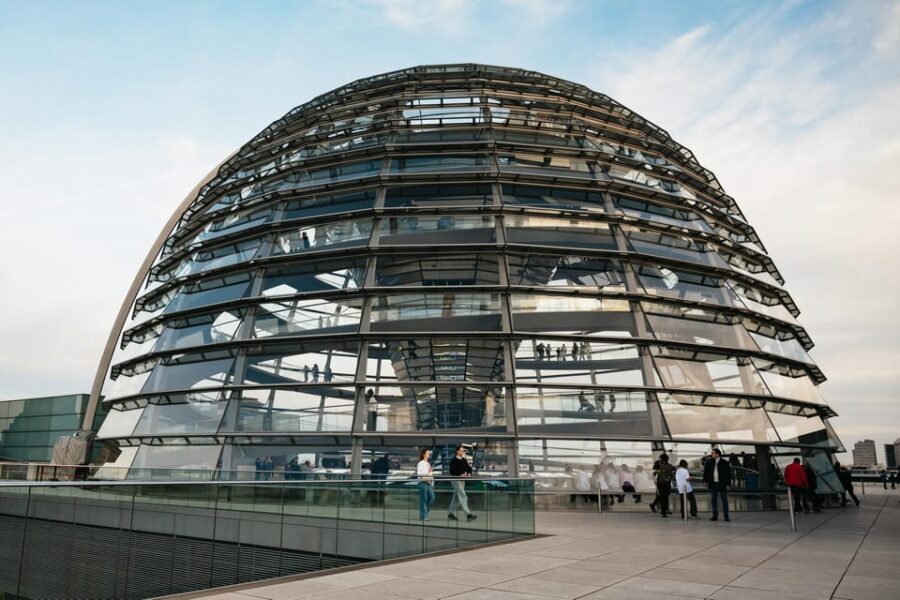
The flagship product on this topic, by some distance. Two and a half hours covering the dome plus the chancellor’s office, the Marie-Elisabeth-Lüders-Haus, and the wider Band des Bundes. Our full review of this tour goes into what makes the guide quality consistent across operators.
2. Reichstag, Plenary Chamber, Cupola and Government Tour: $18
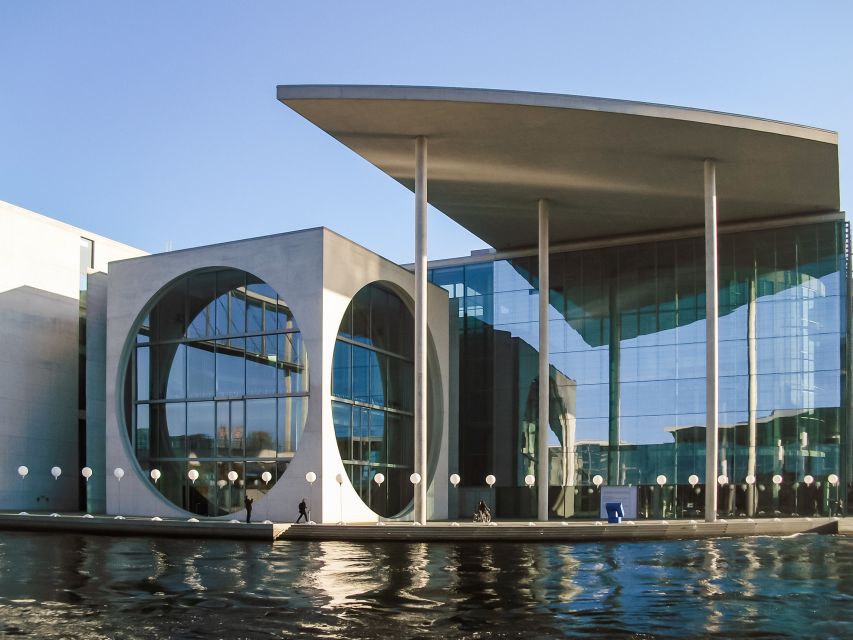
Same price as tour 1 but with chamber access, which is the part most visitors can’t normally get. Our review explains when chamber access is actually open to tour groups (it depends on whether the Bundestag is sitting that day). Pick this if you’ve already done a generic Berlin city tour and want something that goes deeper.
3. Government District around the Reichstag (Private): $284 per group up to 24
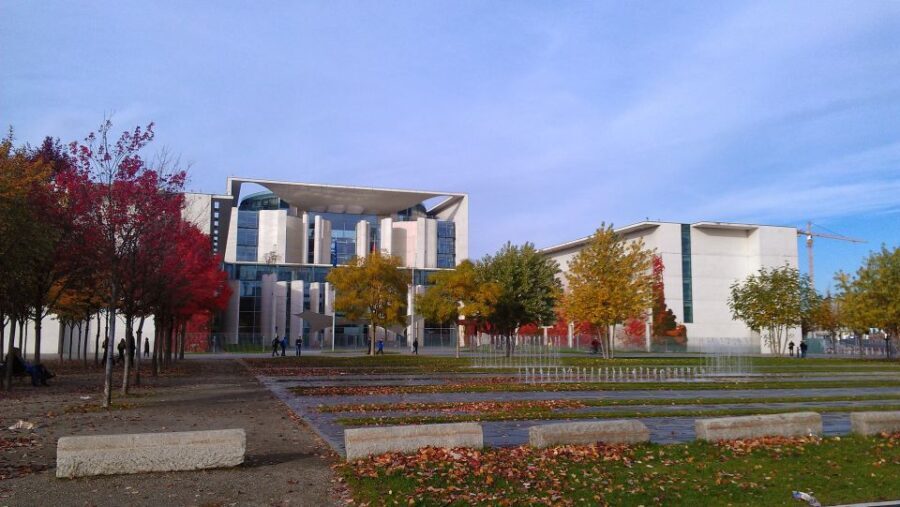
Private group tour, useful for families with kids who’d find a 24-stranger group hard work. The fixed price covers up to 24 people, so it makes economic sense at four guests or more. The full review covers what guides actually adjust when they have a private group versus a public one.
What to do before or after
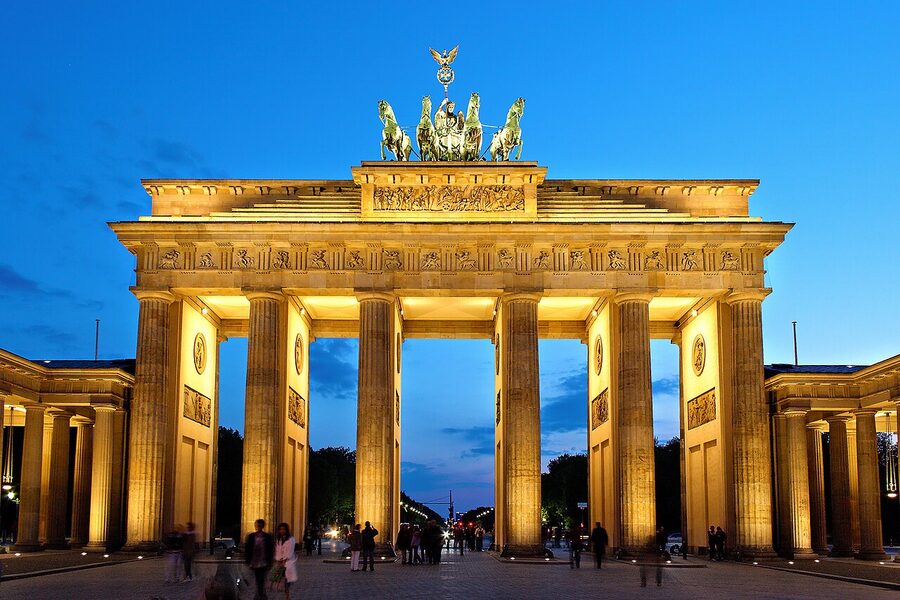
The Brandenburger Tor is 500 metres east of the visitor entrance. Walk through it and you’re on Pariser Platz, then on Unter den Linden, then at the Holocaust Memorial five minutes south. The 2,711 concrete stelae are open 24 hours. They’re free. They’re a heavy thing to do straight after the dome, but the geographic logic of the area is almost designed to push you that way.
The Spree runs directly behind the Reichstag and you can pick up a one-hour Spree boat tour from the dock just north of the building. The boats pass the Bundeskanzleramt, the Paul-Löbe-Haus, and the Marie-Elisabeth-Lüders-Haus from the water: three buildings you’ve just been looking at from above. It’s a different and surprisingly good way to see the same architecture.
If you’re staying for a full Berlin trip and want the political-history line continued, the next two stops are the Jewish Museum Berlin in Kreuzberg and the Sachsenhausen memorial on the S-Bahn out toward Oranienburg. Both are emotionally heavy. Both are essential. The Jewish Museum’s Daniel Libeskind building is the architectural counterpart to the Reichstag: same period, opposite design language, same political weight.
How it compares to other booking-required landmarks
If you’ve done the Alhambra in Granada, the Reichstag booking system will feel familiar. Both are advance-only. Both are popular enough that summer slots vanish six weeks ahead. Both punish travellers who think they can sort it out on arrival. The difference is the price (the Alhambra costs €19, the Reichstag costs nothing) and the geography. Granada has alternative things to do if you miss your slot. Berlin has fifty.
The other useful comparison is the Anne Frank House in Amsterdam, which uses the same advance-registration model, also booked weeks ahead, also punitive on walk-ups. The pattern is the same across European institutions that combine high demand with limited capacity and a serious historical subject. They handle the demand by demanding advance commitment from the visitor, and they trust that anyone willing to commit will treat the visit appropriately.
What to pack for the visit
Passport. The exact same one you registered with. A driving licence will get you turned away even if it’s the same name. Liquids under 100ml in a clear bag (same rules as airport security). A camera or phone (photos are allowed everywhere except inside the chamber on the deeper tour). Headphones if you want to use the audio guide via your own pair (you can plug in to the handset rather than holding it to your ear). A jacket if you’re booking a winter sunset slot, because the rooftop terrace is genuinely cold.
Things to leave at the hotel: large bags, tripods, drone equipment, food and drink. The free cloakroom on the ground floor takes one bag per visitor but it’s small.
Closing thought
The Reichstag is the only major government building in Europe that lets the public physically stand above the elected chamber. It does this for free, requires only that you book ahead, and rewards the booking with one of the best architectural and political experiences in central Europe. Most travellers don’t realise how the system works and lose half a day to the wrong queue. If you’ve read this far, you won’t.
Book the sunset slot. Bring the right passport. Take the audio guide. Stand at the cone railing for at least a full minute before you walk back down. The whole point of the building is that minute.