The wind picked up a few minutes after I climbed the outer balcony of De Kat. Below me, four sailcloth sails caught it together, and the whole windmill creaked once and started to turn. Inside, two enormous millstones, each about the diameter of a small dinner table, began grinding chalk into pigment. The miller, a man called Pieter who had been at this since 2003, said something I didn’t catch over the gear-clatter. He repeated it. “This is the only working paint mill left in the world. We grind to order.” That was at 09:40 on a Tuesday in April, twenty minutes after the gates opened, and I had the gallery floor of a 17th-century industrial machine almost to myself.
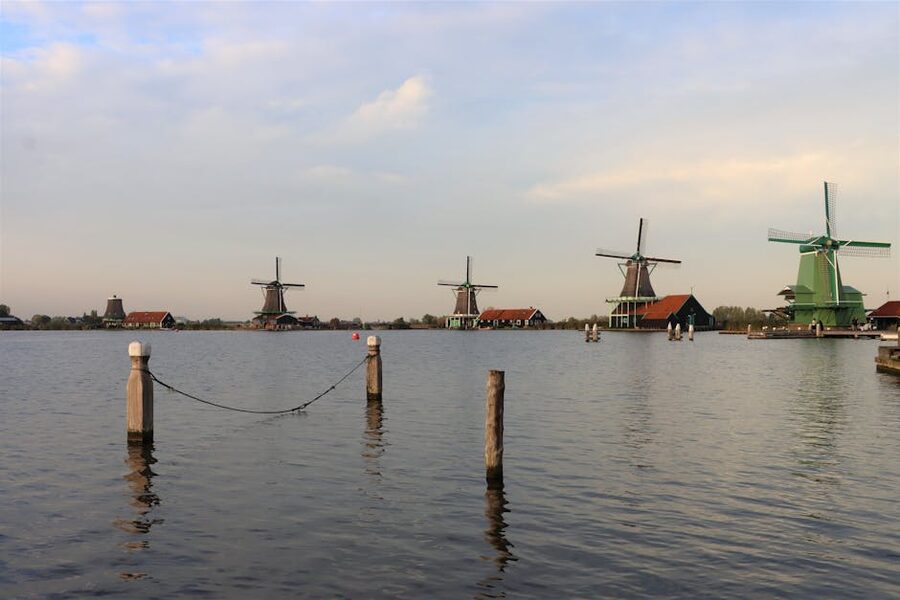
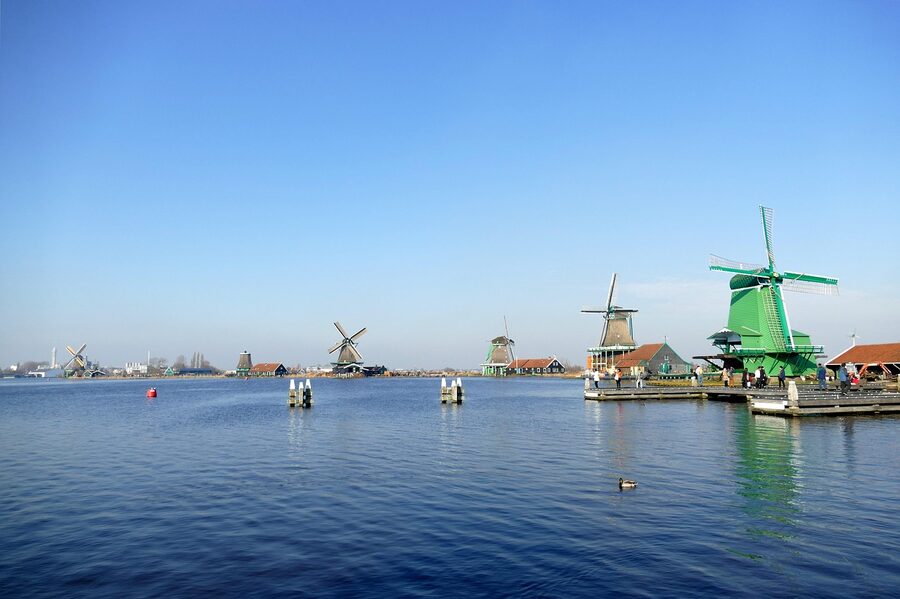
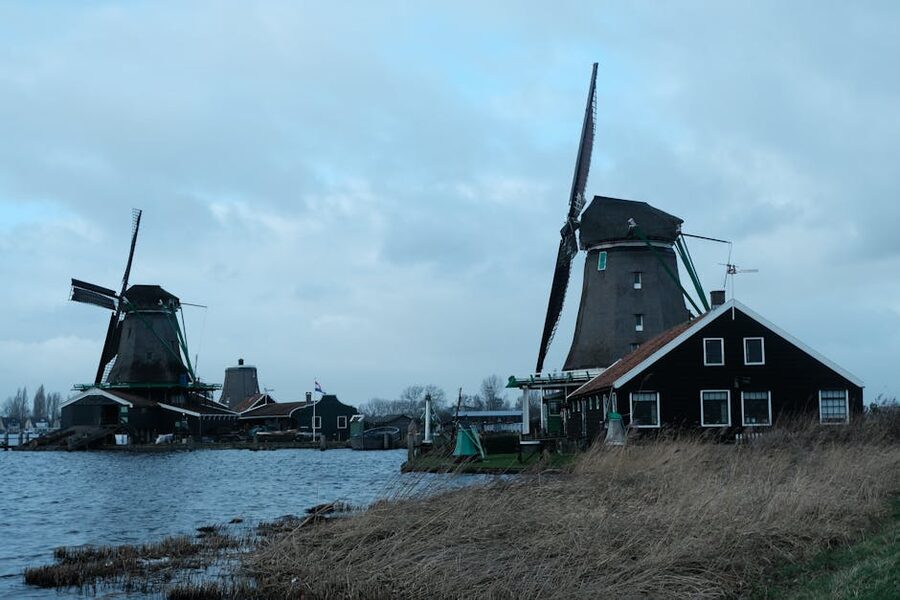
Zaanse Schans is what most travellers see when they Google “Dutch windmill day trip from Amsterdam,” and the picture they have in their head is mostly accurate. Eight working windmills, painted wooden houses, a working cheese farm, a clog-carving workshop. What the picture leaves out is that almost none of these buildings stood here originally. Zaanse Schans is a deliberate reconstruction, an open-air museum that consolidated what was left of a vanished industrial heartland. That’s not a knock on the place. The buildings are real, the windmills genuinely work, the millers genuinely grind. It’s just useful to know what you’re looking at before you go, because it changes how you spend the day.
In a hurry? Three picks for the day
Zaanse Schans + Volendam + Marken Day Trip ($43): The flagship combo bus, 5.5 hours, all three classic stops. Check availability
Zaanse Schans + Edam + Volendam + Marken Bus Tour ($32): Adds the Edam cheese town for the same price. 8 hours, slower pace. Check availability
Cheese, Windmills & Wooden Shoes Tour: 6 hours, the most demonstration-heavy of the three. Best if you actually want to watch a clog being carved. Check availability
What Zaanse Schans actually is
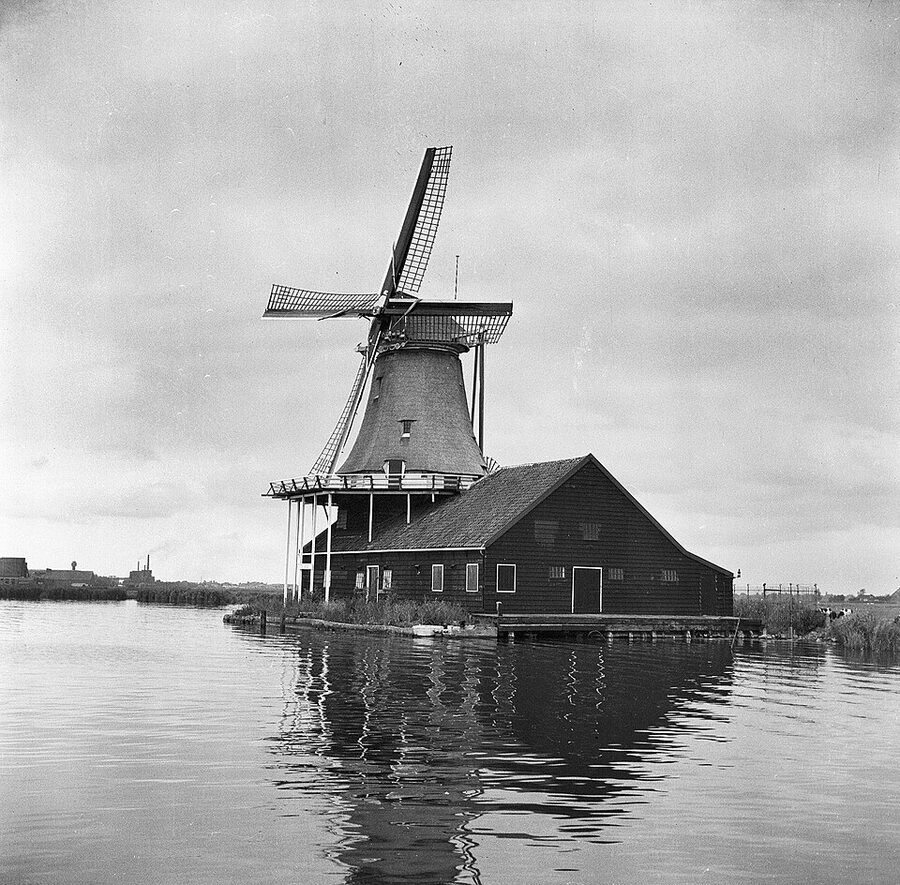
The Zaan region, the area immediately north of Amsterdam, was the world’s first industrial zone. Between roughly 1574 and 1850, it had more than 1,200 working windmills lined along the Zaan river. They sawed timber for the Dutch East India Company’s fleets. They ground spices brought back from Indonesia. They pressed linseed oil. They mixed the pigments that Vermeer and Rembrandt painted with. By 1900 most of them had been replaced by steam, and by 1950 only a handful were left standing.
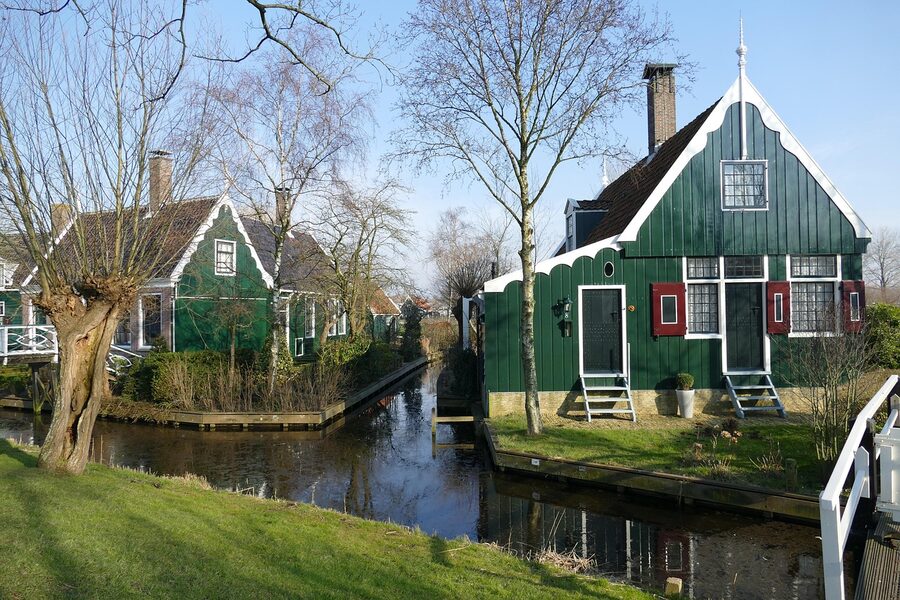
In 1961 a small group of Dutch architects and millers started moving the survivors. Wooden houses were dismantled plank by plank in nearby villages and rebuilt at one site on the Kalverringdijk. Five windmills were floated down the Zaan. The 1968 floods accelerated everything, because buildings near the water needed to be moved or lost. By 1974 the relocation was substantially done, and what visitors now call Zaanse Schans had taken its current shape: 8 working windmills, 5 wooden warehouses, 2 working farms, and a string of houses, all real 17th and 18th-century structures, just not in their original locations.
Two-point-two million people now visit each year. That sounds like a lot, and on a Saturday in July it absolutely is, but the place is genuinely big enough to absorb most of them, and the working spaces (the mills, the cheese farm, the clog shop) hold their character even when the path outside is busy.
The simplest version: train from Amsterdam Centraal
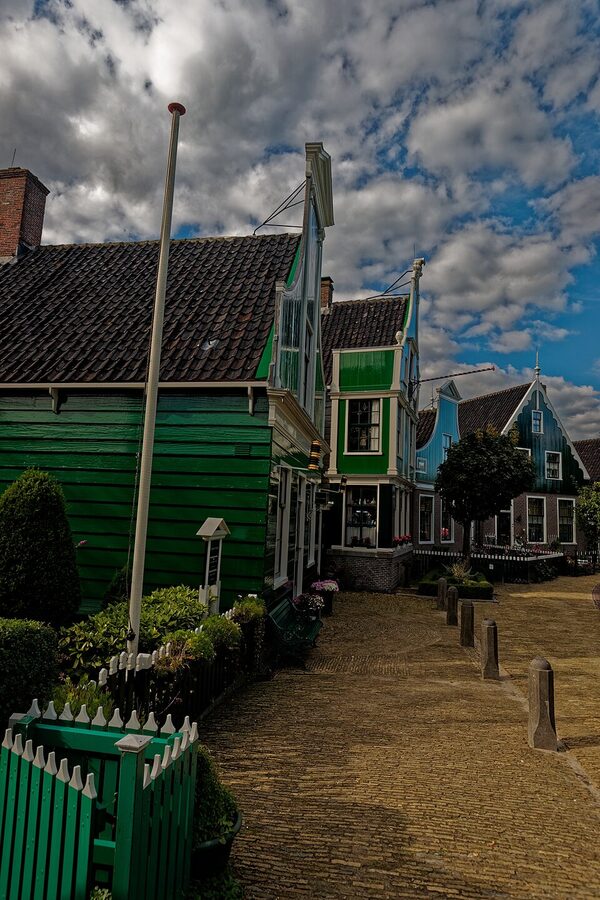
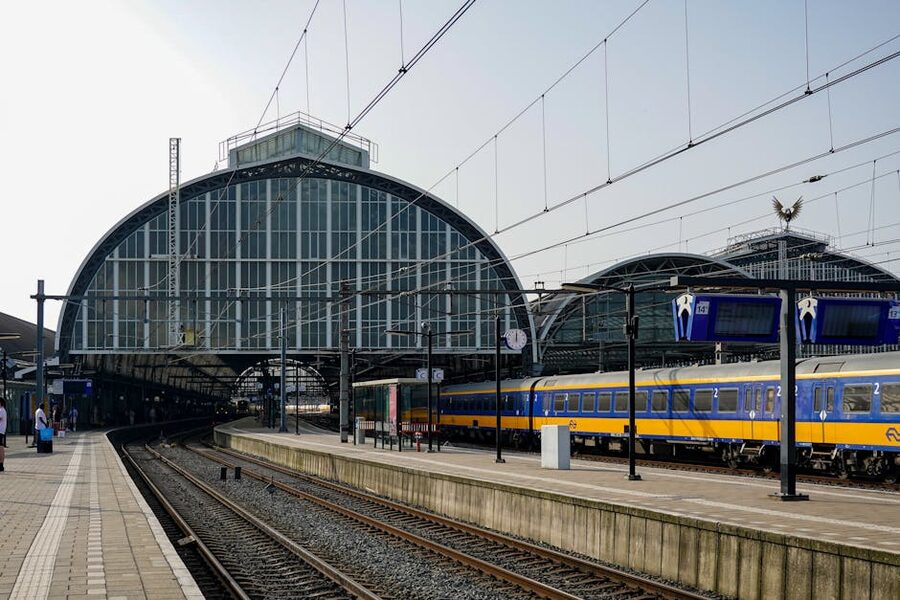
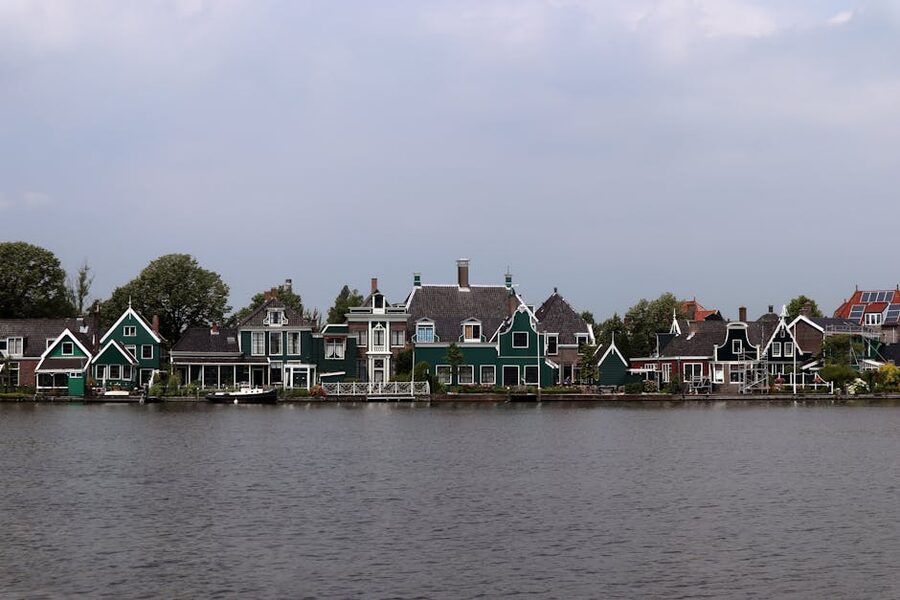
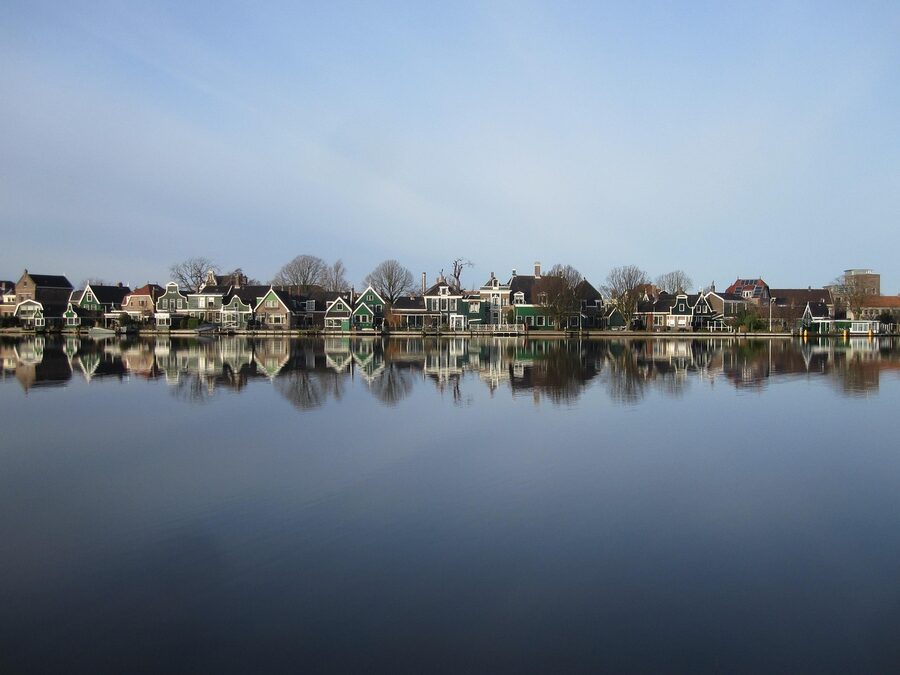
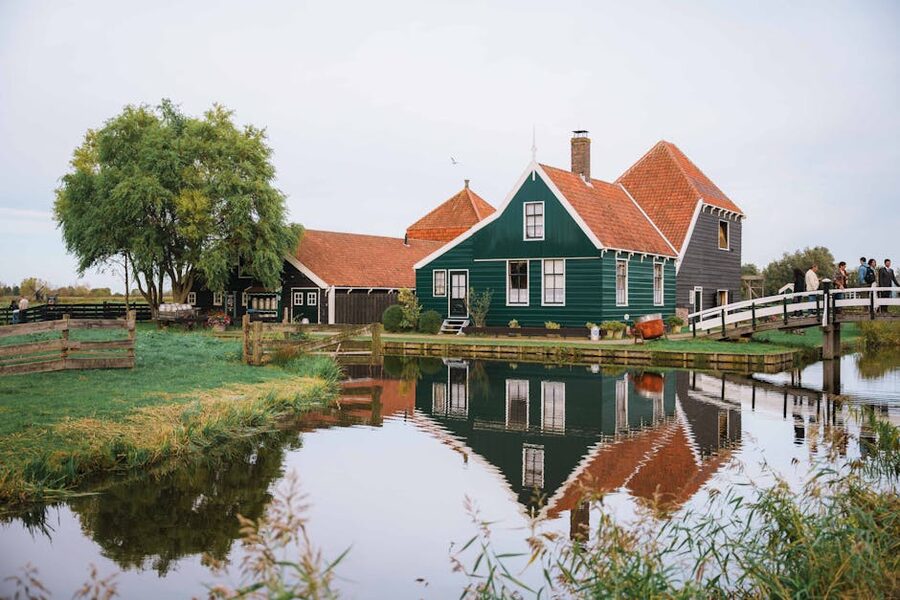
You don’t need a tour. The Sprinter train from Amsterdam Centraal to Zaandijk-Zaanse Schans takes 17 minutes, costs about €4 each way, and runs every 15 minutes from Platform 8a heading toward Uitgeest. From the small Zaandijk station, the walk to the entrance is 1.4km, about 15 minutes, over a footbridge across the Zaan river. The footbridge itself is the photograph everyone has seen in their Instagram feed: green wooden houses on the far bank, windmill sails behind them.
The park itself is free to walk around. You only pay if you want to climb a mill, enter a museum, or buy something at the cheese farm or clog shop. Individual mill entries are $5 to $9 (€5 to €9, the museum sets a flat €5.50 for most of them). If you plan to climb three or more mills, the Zaanse Schans Card at $25 is worth it. If you plan to climb one and spend the rest of the day walking and watching demonstrations, skip the card.
The whole independent visit costs about $14 in transit and entry fees, depending on how many mills you climb. A bus tour with the same three windmill-village stops costs $32 to $45. The bus is buying you the door-to-door driving, a guide, and the Volendam plus Marken add-ons that are awkward to do by public transport in the same day. If that’s worth $20 to $30 a head depends on whether the second and third villages matter to you.
The bus-tour calculation
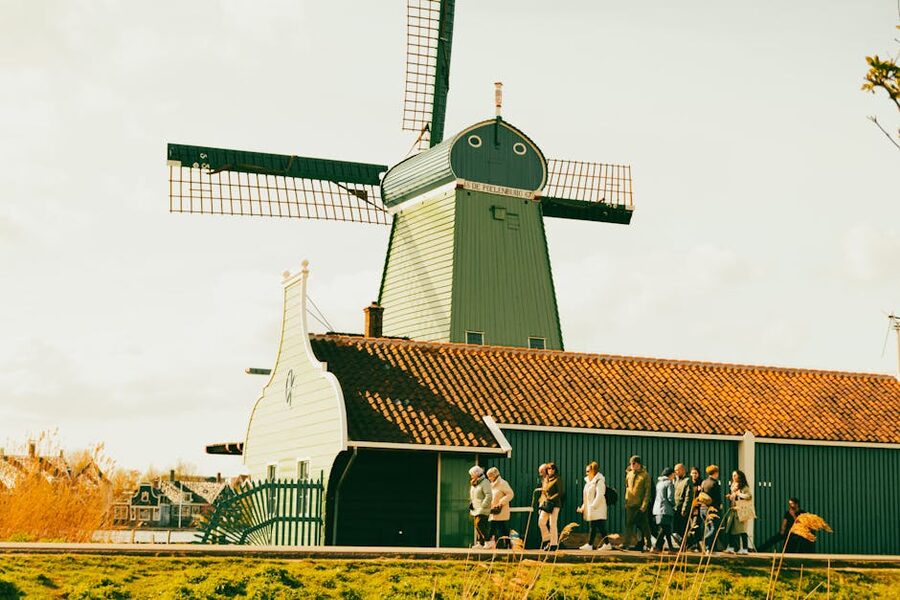
The classic bus product is the Zaanse Schans, Volendam & Marken Day Trip, which is what almost everyone books and which we cover in detail in the tour cards below. It’s a 5.5-hour loop: pick-up in central Amsterdam, an hour at Zaanse Schans, transit to Volendam (the working fishing harbour), an Eel-smoking demonstration and lunch break there, then a small ferry across to Marken (the former-island village, painted houses, lighthouse on a tiny spit), then back to Amsterdam. You see three things instead of one, you have a guide explaining what you’re looking at, and you don’t have to navigate transit.
Here’s where I’d push back on the marketing. The hour at Zaanse Schans is short. You’ll just barely have time to walk the Kalverringdijk and watch one demonstration before the bus reloads. If your single highest priority is the windmills, the bus is a worse product than the train. If you want a sampler of three coastal villages and you’re willing to trade depth for breadth, the bus is a fair deal at $32 to $43.
The math gets cleaner against other day trips from Amsterdam. The Keukenhof gardens bus only runs March through May and includes a serious flower park; that one’s an obvious bus booking. The Anne Frank walking tour stays in central Amsterdam and you do it on foot. Zaanse Schans sits in the middle: doable solo, but the bus add-ons are real and not generic, especially Marken, which is a hassle to reach independently in the same day.
The eight working mills, ranked by what they actually do
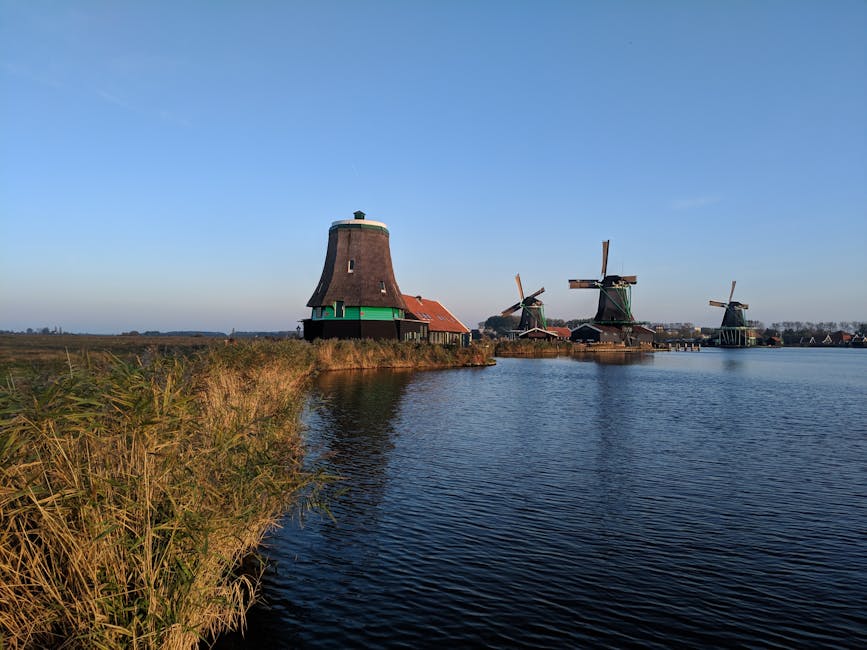
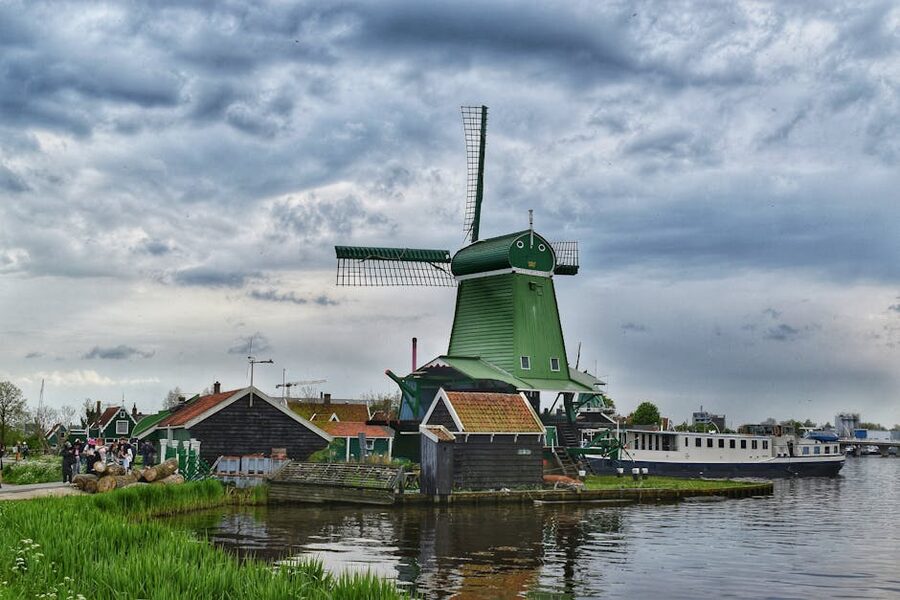
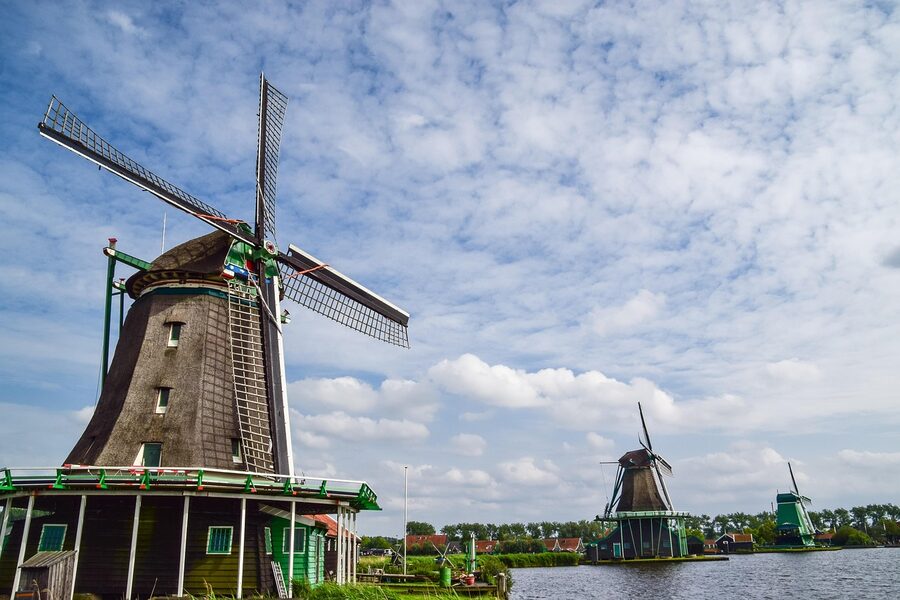
Eight working mills currently grind, saw, or press at Zaanse Schans. You can climb four of them. Of the four climbable, two are genuinely worth your time, one is fine, and one is for completists.
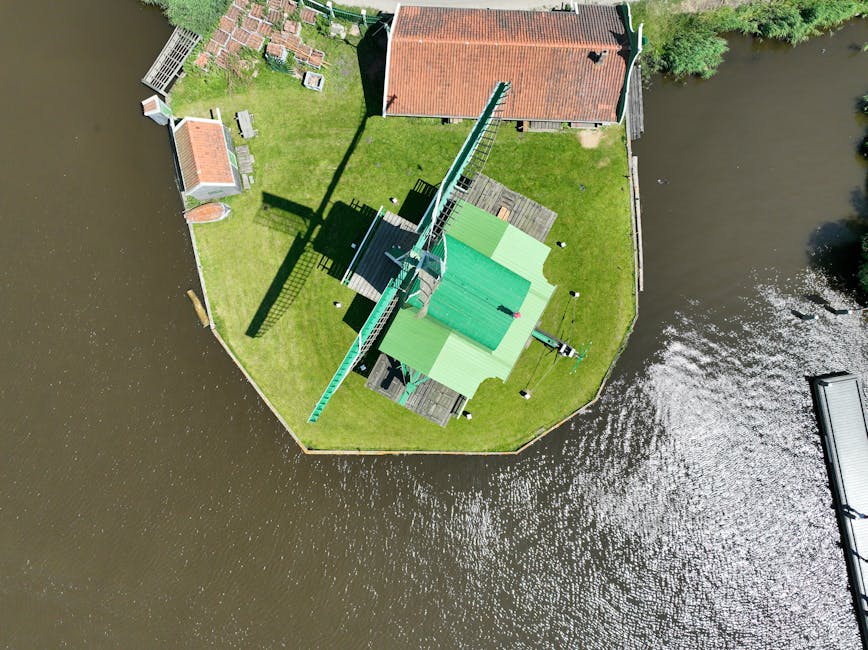
De Kat (paint mill, $5). The reason to come. Built in 1646, dismantled, relocated here, restored to working order in 1960. The only working paint mill in the world. Two enormous edge-runner stones grind pigments to order: ochre, umber, chalk white, lead red, the same colours that 17th-century Dutch painters bought from this exact mill. The miller-on-duty will explain the grinding mechanism, sell you a small jar of pigment in the shop, and on a windy day let you stand inside while the gears engage. Bring earplugs if you have them; it’s loud.
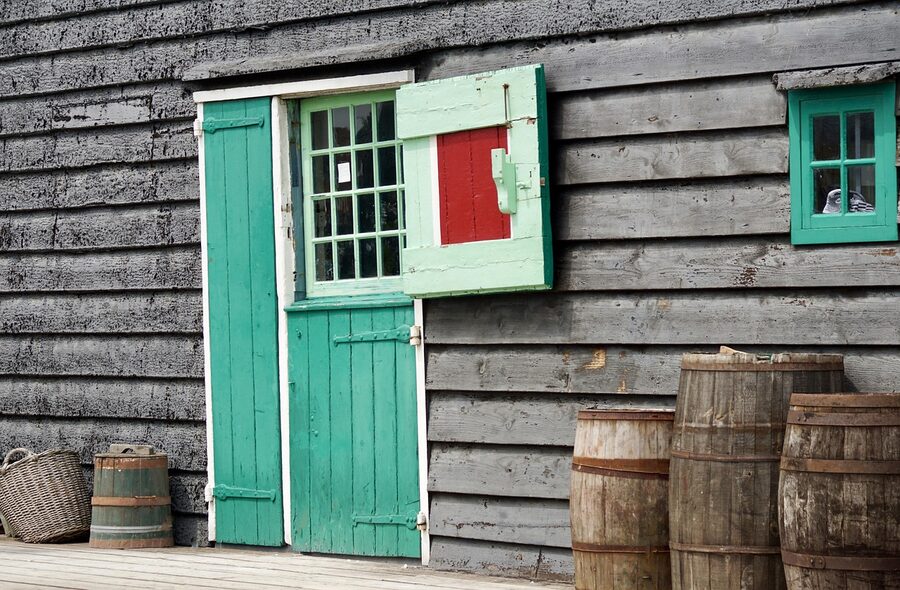
Het Jonge Schaap (sawmill, $7). “The Young Sheep” is the strangest one. The original was built in 1680 and demolished in 1942. In 2007 a research team rebuilt it from the original blueprints, by hand, using only 17th-century construction methods. The reconstruction is technically a 2007 building, but every joint and every gear is exactly as it would have been in 1680. The saw blades cut whole tree trunks into planks the way the Zaanstreek cut planks for the Dutch fleet, and you can stand on the lower deck while it operates. It’s a slightly philosophical visit (is this a 17th-century building or a 21st-century one?), but the saws themselves are unforgettable.
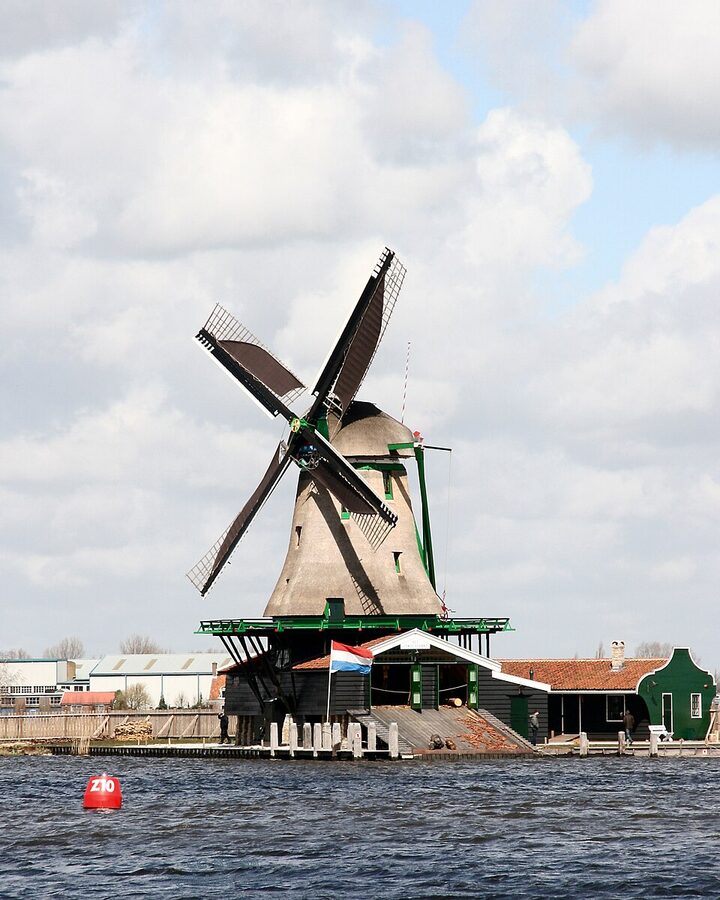
De Zoeker (oil mill, $5). “The Searcher” presses linseed and rapeseed oil. It’s smaller than De Kat, the gears are tighter, and the smell, slightly nutty, slightly burnt, is what most of the Zaan region smelled like in 1750. Worth a climb if you’ve already done De Kat and want to compare what the same wind could do to two different products.
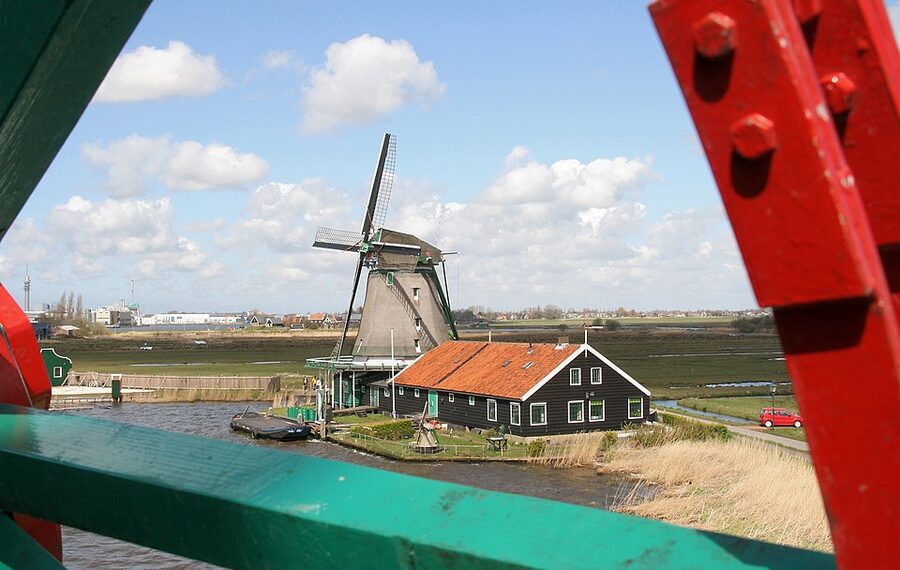
De Bonte Hen (sawmill, $5). “The Spotted Hen.” Older than Het Jonge Schaap (1693) and one of the few mills that’s been on this exact site continuously, never moved. It saws planks for traditional Dutch boatbuilders. The interior is darker and rougher than De Kat. Skip it unless you have all day and you’re working through a card.
The four non-climbable mills. De Huisman (mustard mill), De Gekroonde Poelenburg (sawmill, paltrokmolen design), Het Klaverblad (sawmill, the smallest), and De Hadel (a meadow drainage mill). All work. None let visitors inside. They’re worth photographing but not waiting for.
The pick, if you climb only one mill: De Kat. If you climb two: De Kat and Het Jonge Schaap. If you climb three, add De Zoeker. The Zaanse Schans Card pays back at three.
The cheese farm, which is a cheese shop with a tasting
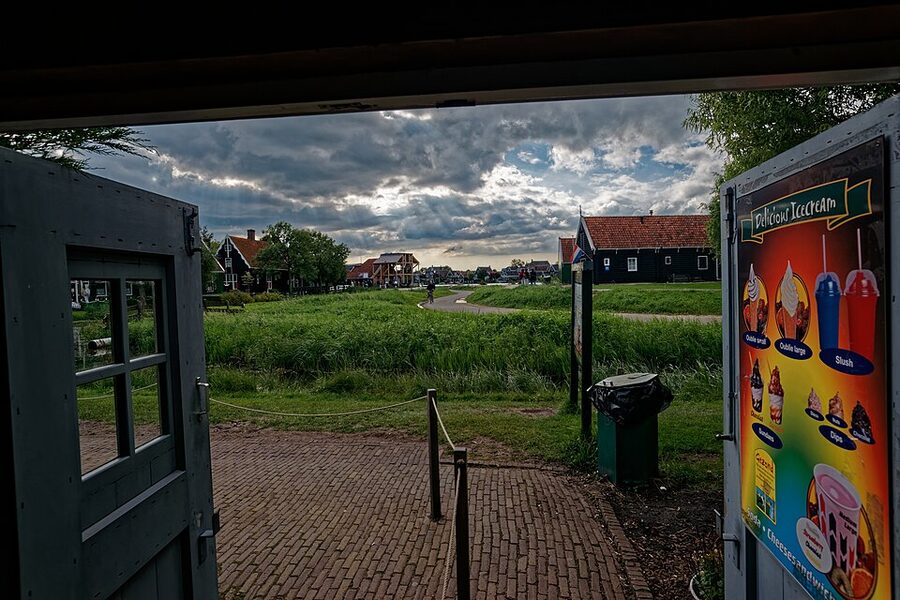
The Catharina Hoeve sits about 50 metres in from the main entrance, in a building that looks like a 19th-century Dutch farm because that’s what it is. Twin gabled roofs, hay loft, glass-walled tasting room. The cheese is real. The cows the cheese came from were milked that morning at a farm just north of here. The demonstration, where a Dutch employee in period costume walks visitors through curd-cutting and wheel-pressing, is also real, just compressed and slightly theatrical.
What it isn’t is a working dairy producing all the cheese sold in the shop. Most of the cheese for sale comes from the surrounding region, sorted and packaged here, and the demo is more akin to the espresso-pulling demo at a roastery than to a working factory floor. That’s not a criticism. It’s a useful reframe so you don’t expect the slow rural process of an actual cheese-making farm.
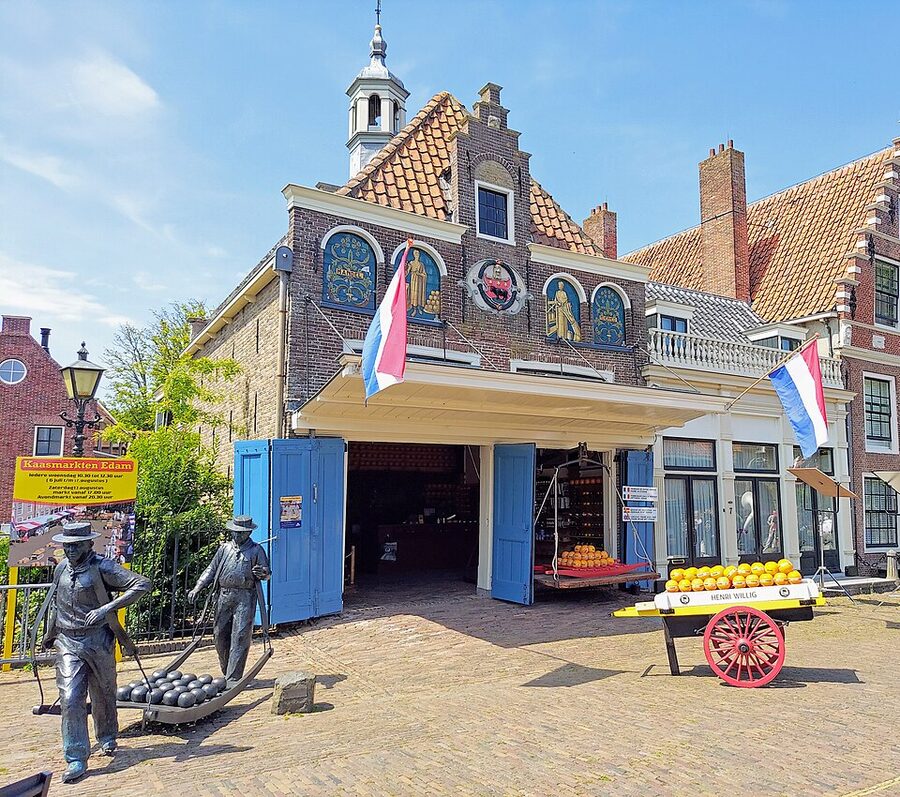
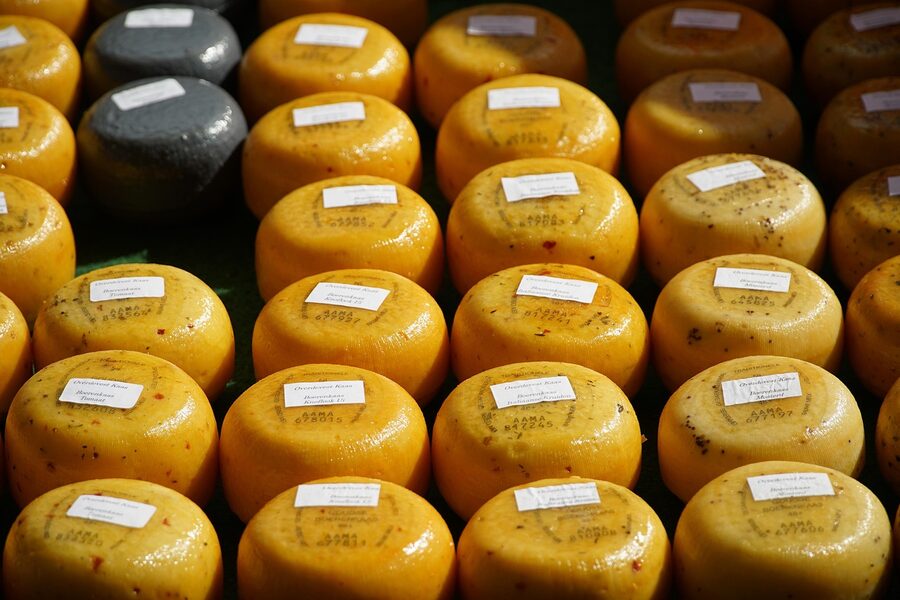
The tasting is free and you can try seven or eight varieties: young Gouda, aged Gouda, smoked, herb, the truffle one that everyone buys. They have wedges in vacuum packs that travel back to the UK or US in checked luggage; the staff will tell you which ones do and don’t survive a flight. If you want the Dutch cheese-market experience proper, the bus tours that stop at Edam on a Wednesday in July hit the actual cheese-market square, which still operates as a tourism-tinted but genuine market.
The Wooden Shoe Workshop
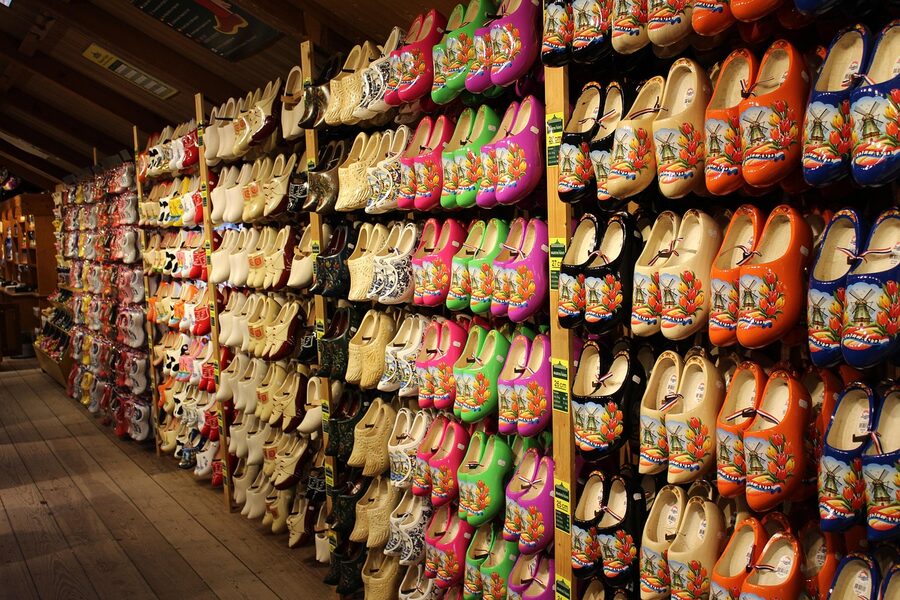
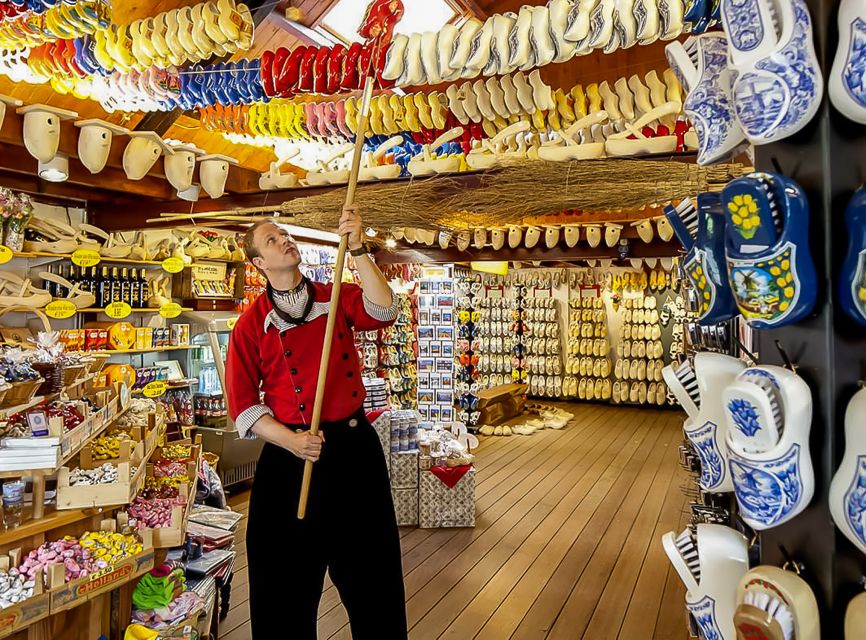
The workshop is in a building 30 metres up the path from the cheese farm. The demonstration runs every 20 minutes during opening hours, and the man who does it (Jan, who has been doing this since 2008, and yes, he’s seen everything) starts with a piece of poplar that hasn’t even been roughly shaped yet. Two machines, both originals from around 1900, hollow and carve a finished clog in about three minutes. The second machine is the one to watch. It’s a tracer-lathe; it copies a metal master clog and reproduces the shape in wood while you stand there. Jan will hold up the finished clog at the end and someone in the audience always asks if real Dutch farmers still wear these. Yes, they do, mostly the muddy unpainted version, kicked off at the door of the farmhouse.
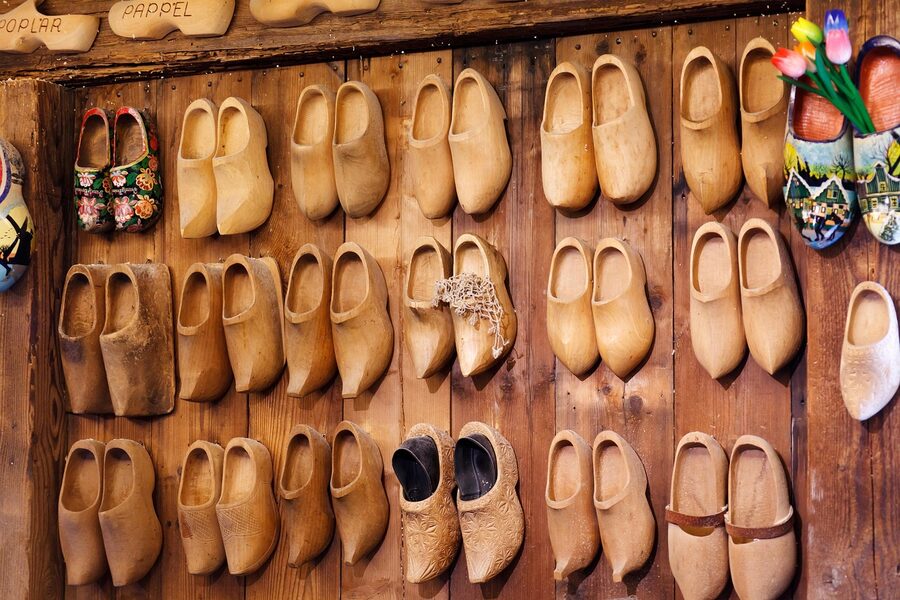
The shop sells two ranges. The painted tourist clogs run $25 to $40 a pair, hand-painted with windmills and tulips, which are real but more decorative than functional. The genuine working pairs in the back, in plain unpainted poplar, are $35 and last about a year of farmwork. Buy a working pair if anyone in your life still actually owns a garden.
The two villages the bus tours add: Volendam and Marken
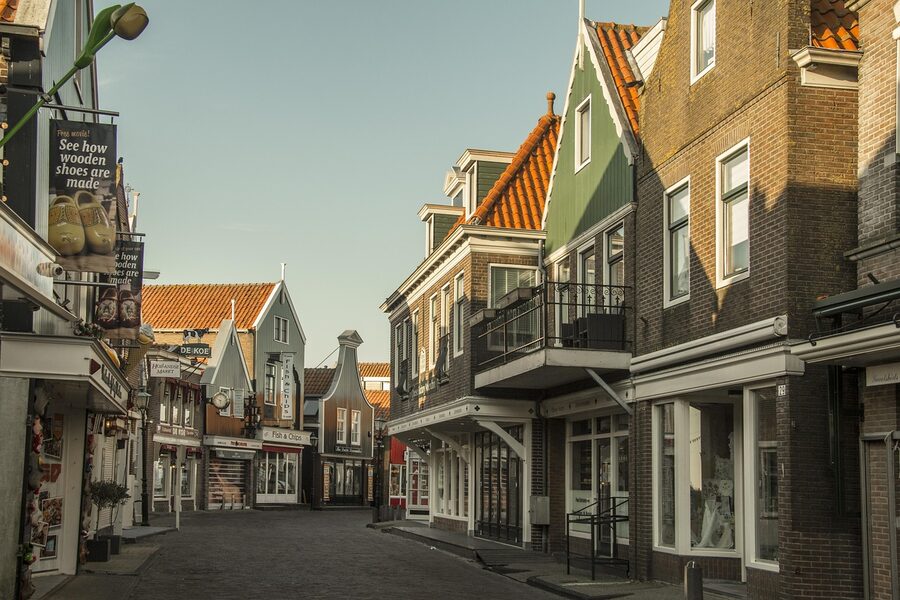
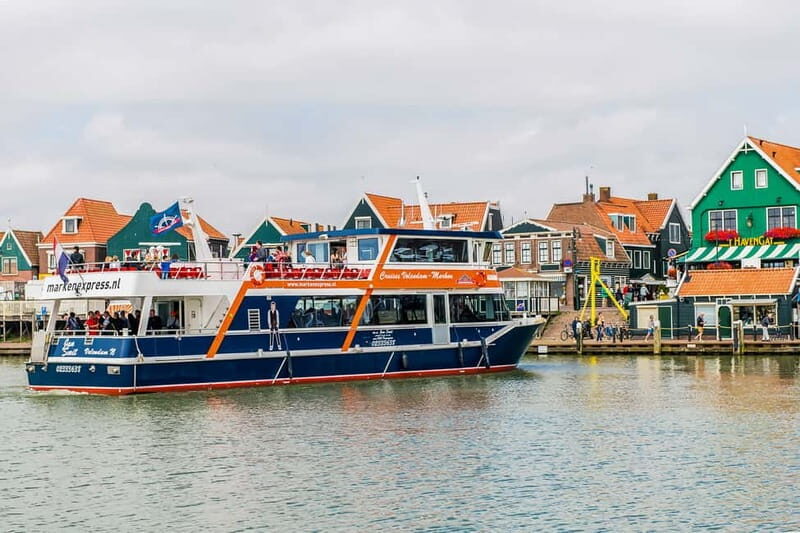
Volendam sits on the IJsselmeer, the inland sea that used to be the Zuiderzee until the Dutch dammed it in 1932. The town was a serious herring port for three centuries; the fleet has shrunk to about a dozen working boats, but the harbour still functions, and the smoked-eel stalls along the front aren’t tourist props, they’re old fish-shops that happened to end up next to a tour-bus stop. Order a small smoked-eel sandwich (about €6); it’s the genuine local snack and you won’t get a better version anywhere else in the Netherlands.
Volendam has the slightly unfortunate side-effect of being the easiest of the three stops to do badly. The bus tours park you here for an hour, and the obvious thing to do is buy fries and a souvenir and leave. Better: walk past the central square (which is fine but generic), continue 200m east along the dyke to where the working fishing boats moor, then walk the second row of houses set back from the harbour, which is where Volendam locals actually live. That’s the version of the village that’s worth the stop.
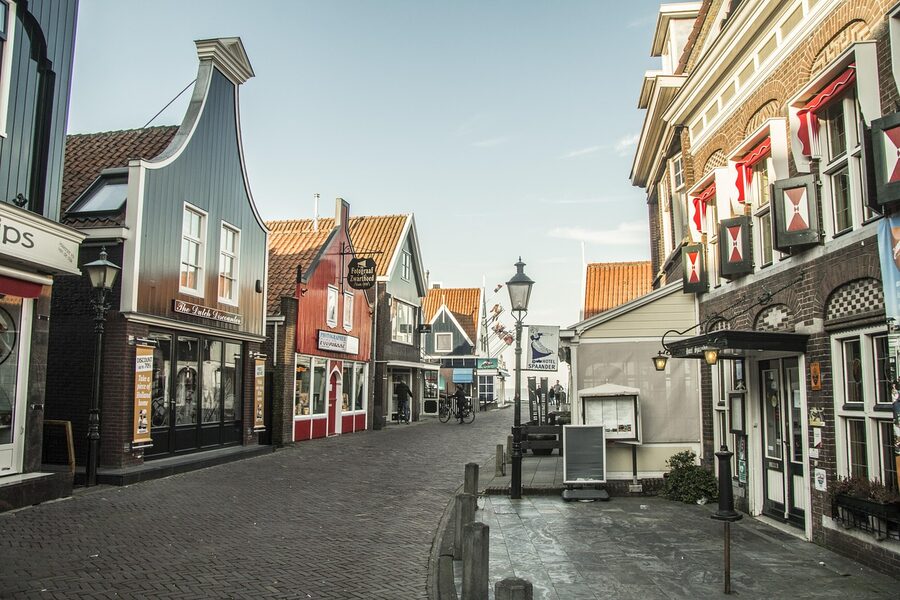
Marken is stranger and the more interesting stop. It was a real island until 1957, when the Dutch government built a 2km causeway connecting it to the mainland. Before the causeway, Marken was so isolated that its dialect, dress, and Protestant church traditions had drifted away from the rest of North Holland. The painted black-and-green wooden houses you see today are an actual surviving vernacular architecture, not a rebuild. The Paard van Marken, the small white lighthouse on a stub of land at the far tip, is the photograph everyone takes. The village square has two cafes, a small museum about the pre-causeway era, and a working harbour that takes about 20 minutes to walk around.
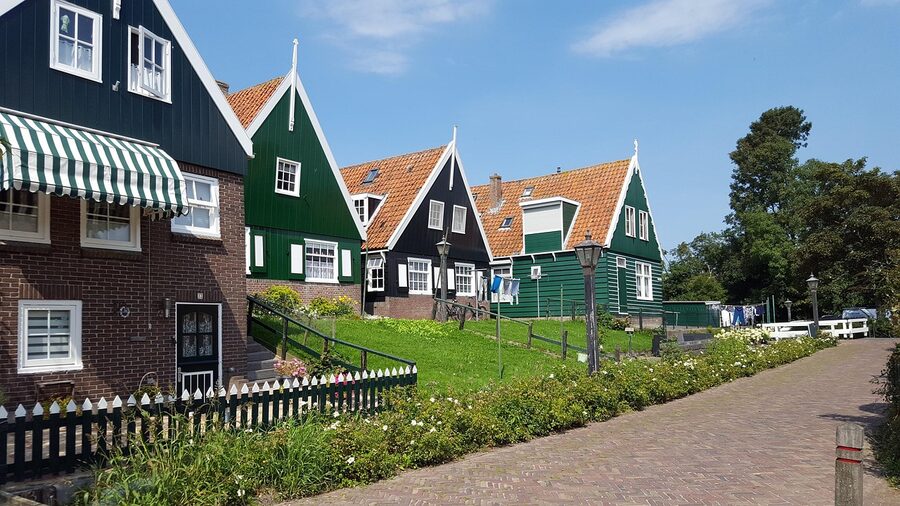
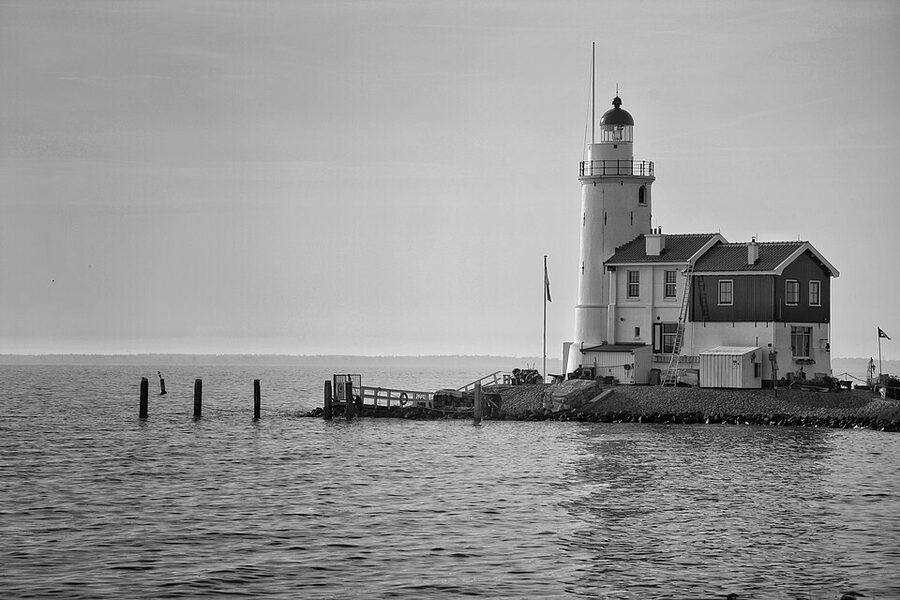
The small ferry between Volendam and Marken (March to October only, 30 minutes, €13 round trip) is the most authentic way to make the crossing, and most bus tours include it. If you’re doing this independently and skipping the bus, take the ferry one way and the causeway road back, or vice versa.
Three tours we’d actually book
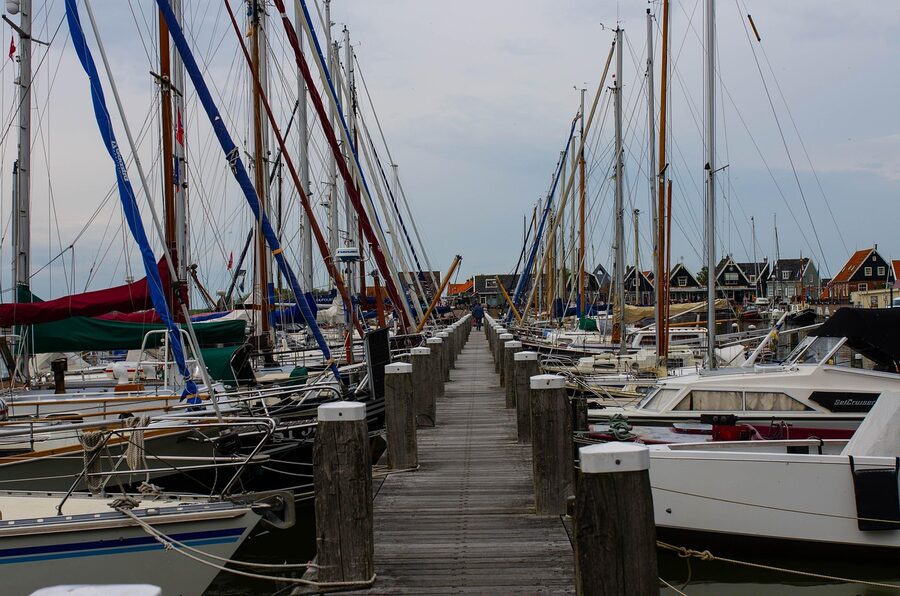
If the bus product makes sense for your day, here are the three I’d actually book, in order. We’ve covered the windmill-only solo train option above; these are for travellers who want the whole regional sampler in one shot.
1. From Amsterdam: Zaanse Schans, Volendam, and Marken Day Trip: $43
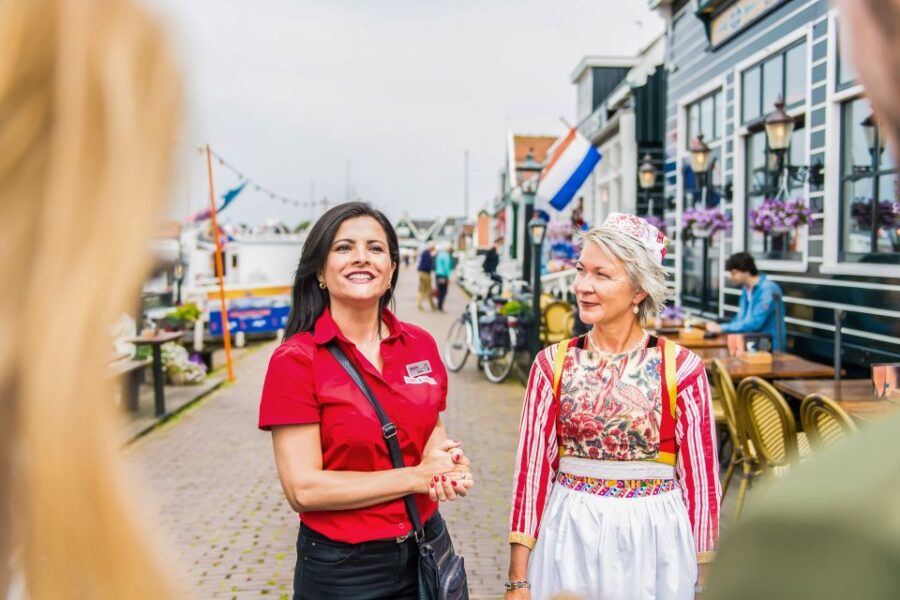
This is the right pick if you want all three classic stops in a single afternoon and you’re fine spending only an hour at Zaanse Schans, where our full review covers the smoked-eel stop in Volendam and the boat crossing to Marken. The trade-off is genuinely thin time at each village; you see all three but you don’t get to know any of them. Best for first-time visitors with one free day.
2. Amsterdam: Zaanse Schans, Edam, Volendam & Marken Bus Tour: $32
Pick this one if your trip falls between July and August on a Wednesday, when the live Edam cheese market is running and the tour times its Edam stop to coincide. Otherwise the four stops feel rushed; eight hours sounds long but at four villages it’s still only 90 minutes per place after transit. Cheaper than option 1 and better in summer if you care about the cheese piece.
3. From Amsterdam: Cheese, Windmills & Wooden Shoes Tour
This is the pick if you came specifically for the crafts side of Dutch culture and the lighthouse-village side leaves you cold; our review breaks down which demonstrations actually run on the day and which are seasonal. Smaller groups, more time at the workshops, less driving. Skip this one if Marken is on your list.
When to go, and what the seasons do
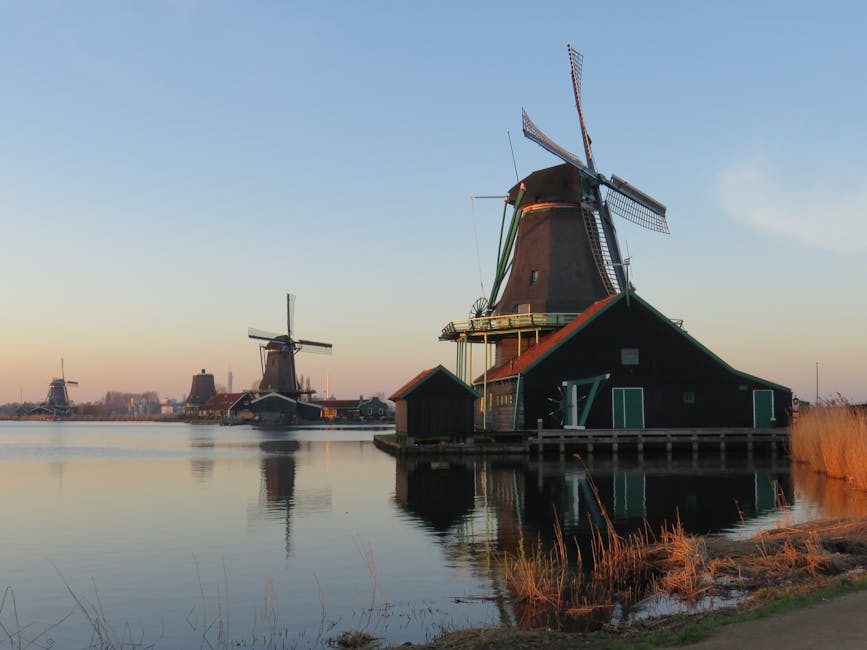
The windmills don’t always run in winter winds. Storms knock the sails offline; light winds don’t generate enough torque. April through October is the safe window. Mills tend to be running on most days from late April through mid-September, and on roughly 60% of days in October. The flag at the entrance gate tells you which mills are operating that day.
Spring (April-May) is the peak overlap with Keukenhof season, which means the same buses doing the windmill loop are also full of people who came for tulips. Combine the two if your trip falls in those weeks. The combined Zaanse Schans plus Keukenhof gardens day exists as a packaged product and runs about $80, which is fair for what you get. Summer is the busiest, July and August worst. Autumn (mid-September to mid-October) is the sweet spot: the crowds drop, the leaves turn, the windmills are still running on most days.
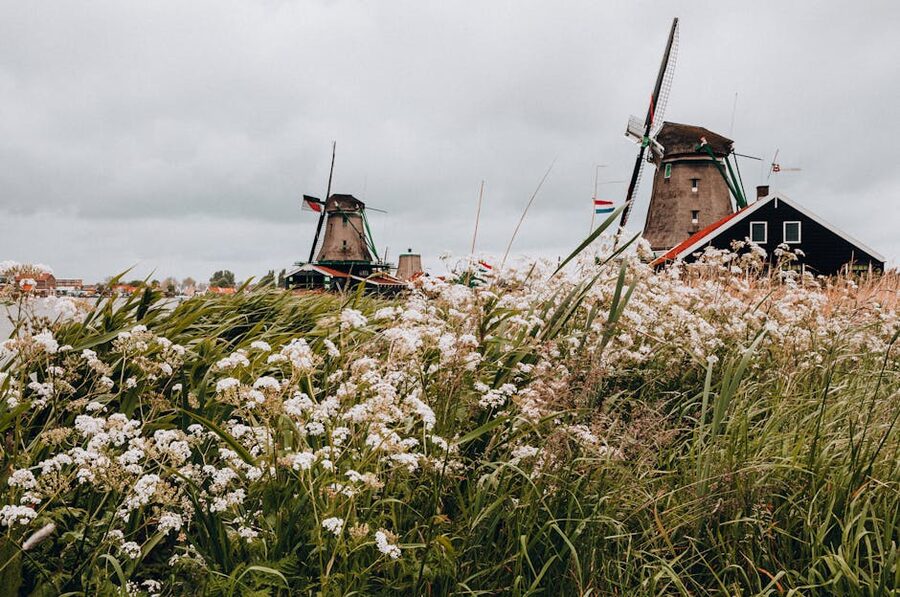
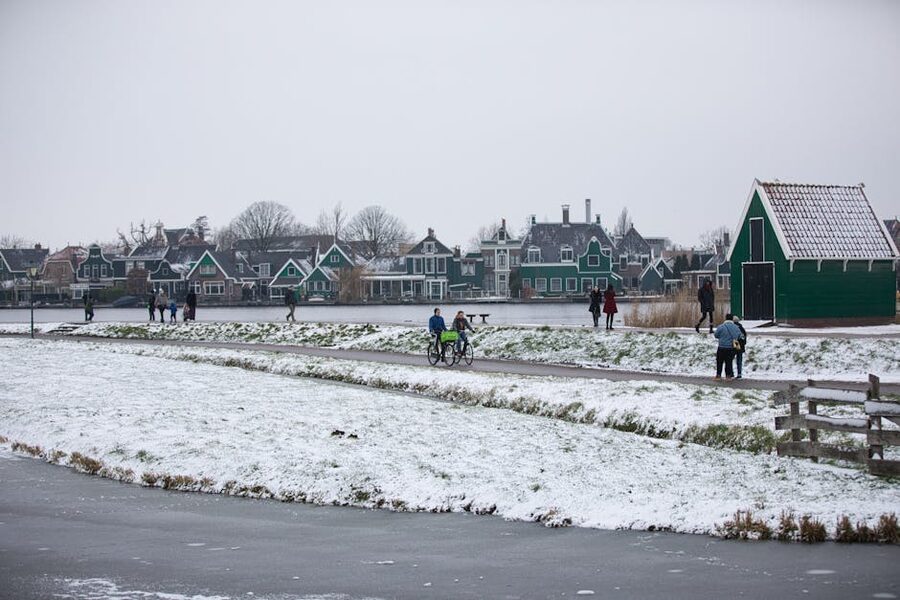
Winter is its own thing. The mills don’t always operate, the cheese demonstrations are still running, and on the rare snowy day Zaanse Schans is genuinely beautiful and almost empty. Plan for shorter daylight; the park technically closes at sunset, which in December is around 16:30, so start early.
Hours, fees, and the practical bits
The park is open 09:00-17:00 most of the year (08:30 in summer), free to enter and walk around. Individual buildings have their own hours:
- De Kat paint mill: 09:30-16:30, $5 entry, closed in heavy storms
- Het Jonge Schaap sawmill: 09:30-16:30, $7 entry
- De Zoeker oil mill: 10:00-16:00, $5 entry
- Catharina Hoeve cheese farm: 09:00-18:00, free tasting, free entry to the demonstration room
- Wooden Shoe Workshop: 09:00-18:00, free demonstrations every 20 minutes
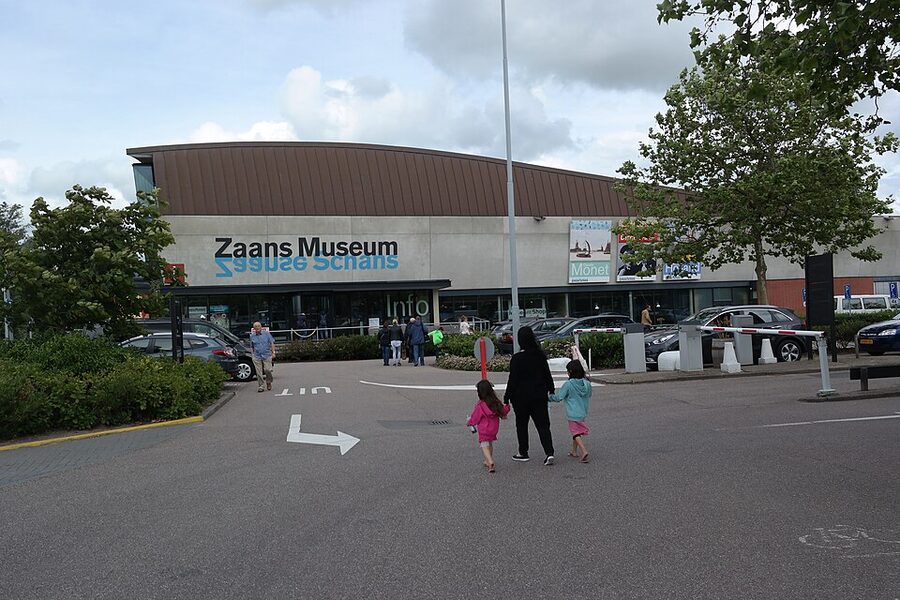
- Zaans Museum: 09:00-17:00, $14 entry, includes the Verkade chocolate factory exhibit
- Zaanse Schans Card: $25, covers all the mills plus the museum, pays back at three mill entries
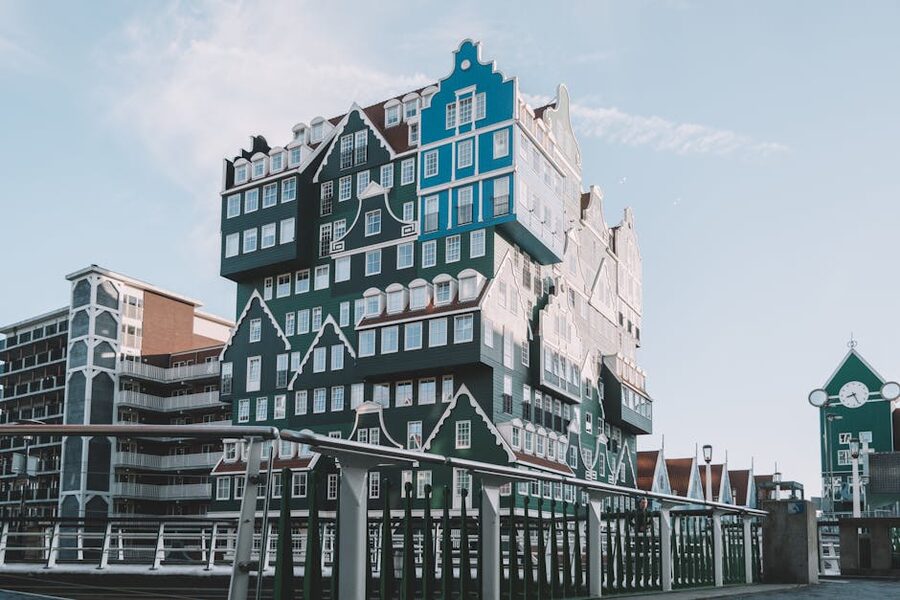
Lunch options inside the park are limited and overpriced. The main café (De Kraai) does fine pancakes and a Dutch split-pea soup that’s better than it has any right to be, but you’ll pay tourist prices. Better move: bring a sandwich, or walk back across the river to the Albert Heijn supermarket near the train station and assemble something. There’s a small Inntel café next to the train station that does decent coffee.
How long do you actually need?
The minimum useful visit is about 2.5 hours. That’s enough to walk the Kalverringdijk once each way, climb De Kat, watch the clog-carving demo, taste cheese at Catharina Hoeve, and get the photograph from the footbridge. If you’re doing it as a half-day from Amsterdam by train, allow four hours total: 17 minutes each way on the train, 15 minutes each way walking, plus your 2.5 to 3 hours in the park.
The maximum useful visit is about 5 hours. After that you’ve seen the working spaces, walked the path twice, climbed the mills you wanted to climb, and you’ll start repeating yourself. The park doesn’t get more interesting after hour five. Go back to Amsterdam, eat lunch, do an Amsterdam canal cruise in the late afternoon. The combination of windmill village in the morning and city canal cruise in the late afternoon is the right shape of a single day off if you’ve only got one.
How Zaanse Schans compares to other day trips from Amsterdam
Zaanse Schans sits in a particular slot in the Amsterdam day-trip menu. It’s the closest, the cheapest, and the most scenic of the easy options. Keukenhof is bigger, more spectacular, and only runs March-May. The Anne Frank walking tour is in the city itself and you do it on foot. Rotterdam’s harbor cruise is a longer day, an hour each way by train, and shows you a completely different Netherlands (modern, rebuilt, big-port). The canal cruises in the city itself are the right thing to do in the same afternoon you got back from Zaanse Schans, not as a substitute for it.
If you’re trying to slot Zaanse Schans into a longer European trip, the best comparison points are similar reconstructed rural-village experiences in other countries we’ve covered. France’s Giverny day trip is the closest analogue: a single day-trip site about an hour from a major capital, more carefully reconstructed than visitors expect, working as both an artist’s village and a piece of cultural history. Spain’s Ronda and white villages day from Seville is a more dramatic version of the same idea: small villages, painted houses, a working rural landscape. Italy’s Borromean Islands from Stresa sits in a similar slot too, though that one’s a constructed island garden rather than a relocated village.
The cleanest mental model: Zaanse Schans is to Amsterdam what Giverny is to Paris, what Segovia and Ávila are to Madrid, what Lake Como is to Milan. The right size of trip, the right price, the right amount of context to come back with one good story.
What to do with the rest of the day
If you do Zaanse Schans on the morning train and you’re back in Amsterdam by 13:30, you’ve got half a day left. The two strong pairings, in order of how well they fit:
An afternoon at the Rijksmuseum closes the loop the windmills opened: the De Kat paint mill grinds the same pigments the Dutch Golden Age painters bought, and you can stand in front of the actual Vermeers and Rembrandts they painted with those pigments. It’s the most satisfying narrative arc you can do in a day in this city. Or pair it with the Van Gogh Museum, which sits about ten minutes by tram from the Rijksmuseum and works as a continuation: post-impressionism using mostly the same Dutch palette.
The other pairing is lighter. Get back, drop your camera, get a beer at the Heineken Experience or do an evening canal cruise. The slow rural rhythm of the morning and the loud city rhythm of the evening balance out into a complete day. If you booked one of the bus tours that gets you back at 16:00, this is probably what you should do anyway, since you’ll be tired and the museums close at 17:00 most days.
The straight summary
Zaanse Schans is genuinely worth the morning. The eight working mills are real industrial machines, the paint mill is the only one of its kind anywhere in the world, and the Dutch craftsmen who run the demonstrations actually know what they’re doing. What it isn’t, and what most travellers misunderstand it to be, is a “preserved village.” It’s a constructed open-air museum that consolidated what was left of a vanished industrial region. Knowing that doesn’t reduce the place. It just changes what kind of visit you’re planning.
The cheap, fast version: morning train from Amsterdam Centraal, three hours in the park, climb De Kat, watch the clog demo, taste the cheese, walk back across the footbridge, train home. About $14 in transit and entry, half a day. The combo bus version: $32-43, 5.5 to 8 hours, three or four villages including Volendam and Marken, less depth at any single stop but a full sampler of coastal Dutch villages. The choice depends on whether the windmills alone justify the day, or whether the IJsselmeer-village add-ons matter to you.
For most travellers it’s a half-day morning, paired with a Rijksmuseum or canal-cruise afternoon. That combination, the rural industrial Netherlands of 1700 and the urban canal Amsterdam of 1900, is genuinely the best one-day compression of what this country was and what it became. And the train back to Centraal takes 17 minutes, which is the right amount of time to stare out the window at the grey Dutch sky and write the postcard in your head.
Beyond the windmills: where to go next from Amsterdam
If Zaanse Schans was the surprise of your Amsterdam trip and you’ve got more days, the obvious next move is Keukenhof in spring or the Rotterdam harbour cruise any time of year. Together they cover three different Netherlands: the rural-industrial past at Zaanse Schans, the spring flower-park spectacle at Keukenhof, and the rebuilt-after-the-bombing modernism of Rotterdam. In Amsterdam itself, the obvious art pairings are the Rijksmuseum for Dutch Golden Age and the Van Gogh Museum for the post-impressionist follow-up. The Anne Frank walking tour covers the WWII chapter that the rural villages don’t touch. And if you’ve got an evening, do an Amsterdam canal cruise as the last act; the canals look completely different from the water, and the late-afternoon light catches the gabled house facades the way no walking tour does.
If your trip extends beyond the Netherlands, the reconstructed-rural-village experience at Zaanse Schans has cousins all over Europe that we’ve covered in detail. The closest in spirit is France’s Giverny, which is also an artist-and-craft destination an hour outside a major city. The Loire Valley castles and Champagne day trip from Paris are bigger, longer days but in the same logical slot. Spain offers Montserrat from Barcelona as the religious-architectural equivalent. Italy’s Lake Como from Milan and Cinque Terre from Florence are the lake-and-coast versions of the same day-trip impulse. Each of them buys you a similar trade: a few hours of train, a single concentrated experience, a story to tell when you get back, and the relief of not having to pack up your hotel.