
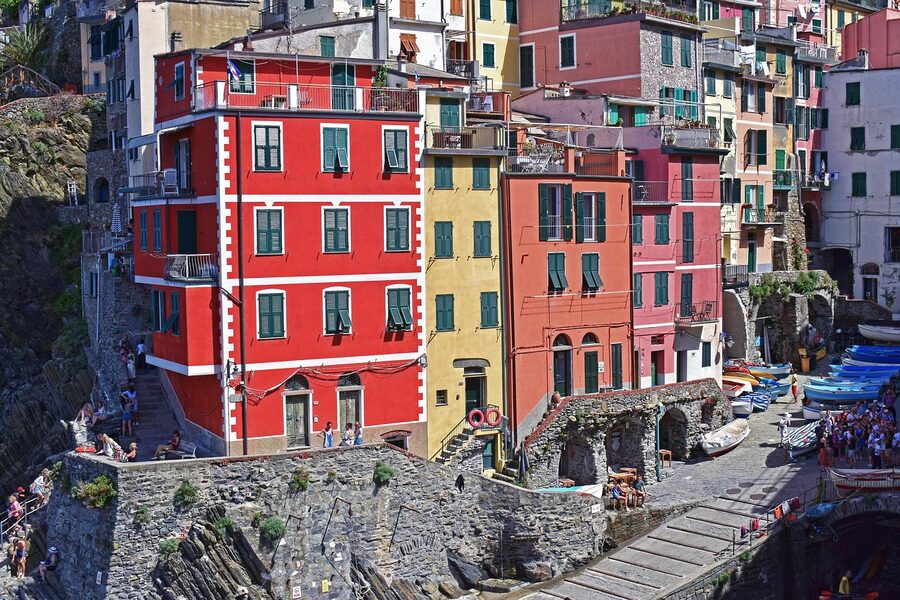
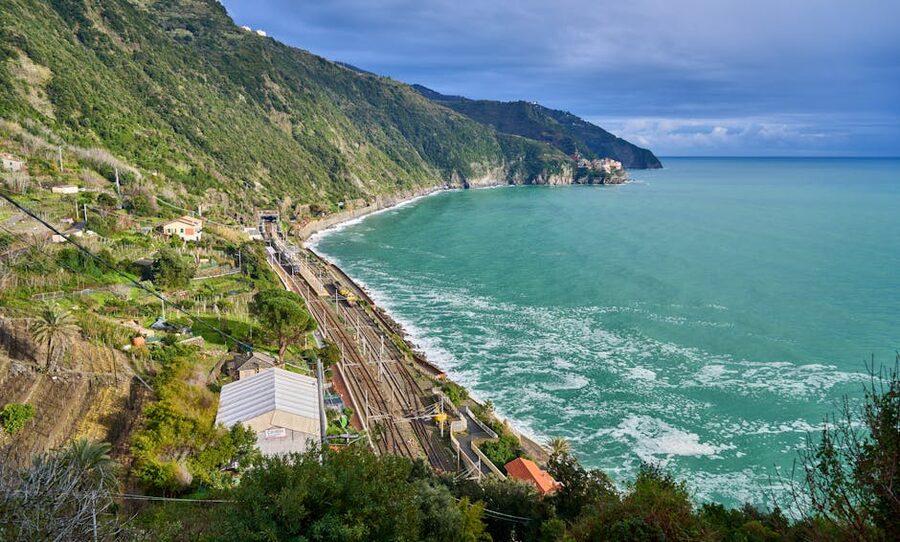
The train pushes into the dark for the third time in twenty minutes. Then the tunnel ends. And what’s there is a slot of cliff and ocean and pastel houses stacked on top of each other so densely you can’t see the rock they’re standing on. That’s Riomaggiore from the carriage window, the first of the five villages, and the moment that decides whether your whole day was worth the early alarm.
It is. Even with the logistics. Especially with the logistics.
If You Just Want the Quick Picks
- Best value, biggest tour: Cinque Terre Day Trip From Florence With Optional Hiking ($66.51). The most-booked one, 13 hours door-to-door, optional hike between two of the villages.
- Premium guided with lunch: Florence: Cinque Terre Day Trip With Optional Hike ($152.93). Smaller group, a real guide with you for the village transitions, lunch sorted.
- Full-day with the boat angle: Scent of the Sea: Cinque Terre Park Full Day Trip From Florence ($60.52). Coach plus train plus a stretch you see from the water, free time in Manarola and Monterosso.
Should You Even Do This as a Day Trip?
The real answer: two days in Cinque Terre is better. You sleep in one of the villages, you watch sunset from a different one, you swim in the morning. That’s the experience.
But if you’re already in Florence and you’re not coming back to Italy soon, one day from Florence is doable and worth it. You’ll see four of the five villages properly and walk past the fifth. You’ll be back in Florence for dinner. And the alternative (skipping it because you only have a day) is worse than doing it in one day.
The reason most people get this wrong is they try to “do” all five villages. Don’t. Pick three. Hike one stretch, take the train for the rest, swim at one of them, eat at another. The day works when you stop trying to make it a checklist.
Compare it to the other big Florence day trips. Pisa, Siena and San Gimignano in a single day is three Tuscan towns, mostly on a coach, around 90 minutes per stop, a smooth low-effort kind of day. Chianti from Florence is half a day mostly seated at wineries with food coming at you. Cinque Terre is different. It’s a longer day, more train than coach, and at least one stretch where you’re walking up a switchback and getting your shirt sweaty (closer in shape to a Ronda and the white-villages day out of Seville or a French Riviera village loop out of Nice). That’s the trade. You also get the only coastline of the three.
The Two Ways to Do It
Either you book a tour, or you DIY on the train. Both work. They produce a different day.
The Tour Day:
You meet a group at 7am near Santa Maria Novella. A coach takes you to La Spezia or sometimes Pisa first, then you transfer to the regional train into Cinque Terre. A guide handles the trail card, the train tickets, the lunch reservation if you bought one, and the timing. You get free time in two or three villages while the guide babysits the schedule. You’re back in Florence around 8pm.
This is what 90% of first-timers should book. The day is logistically annoying to do alone. The right train from Florence leaves from Campo di Marte, not Santa Maria Novella, and only once per day. Nobody tells you this. The tour skips the puzzle. Compare with how Lake Como from Milan works: that one’s also doable as a day trip but the bus drops you near the ferry pier and the rest is straightforward, the way Zaanse Schans from Amsterdam drops you in front of the windmill row. Cinque Terre’s logistics are messier.
The DIY Day:
You take the 7:50am direct regional train from Firenze Campo di Marte (not the main station) to La Spezia Centrale. About 1 hour 45 minutes. Then you transfer to the regional Levanto-La Spezia line that runs through all five villages every 15-20 minutes. You buy a Cinque Terre Treno MS card at La Spezia or Levanto stations. Done.
Cheaper, more flexible, no group pace. The catch is you need to get the morning train right, validate the regional ticket on the platform yellow boxes, and not miss the last direct train back to Florence around 7pm. If you’d rather not think about any of that, book the tour.
What the Cinque Terre Card Actually Buys You
Two cards exist and people confuse them constantly.
The Cinque Terre Trekking Card covers the paid sections of the coastal trails, chiefly the Sentiero Azzurro between the villages. It does not include the train.
The Cinque Terre Treno MS Card covers the trails AND unlimited train rides between Levanto and La Spezia, plus public toilets in the villages and free Wi-Fi at the village stations. This is the one you want for a day trip from Florence. Adult price runs €18.20 for one day (or €19.50 in peak summer when the Via dell’Amore extension is added). Tour groups have it sorted; if you’re DIY, buy it at La Spezia station the morning of, or in advance through the official park site.
The free-toilet bit sounds trivial until you’ve been refused at three café bathrooms in a row in Vernazza on a busy Saturday. It pays for itself.
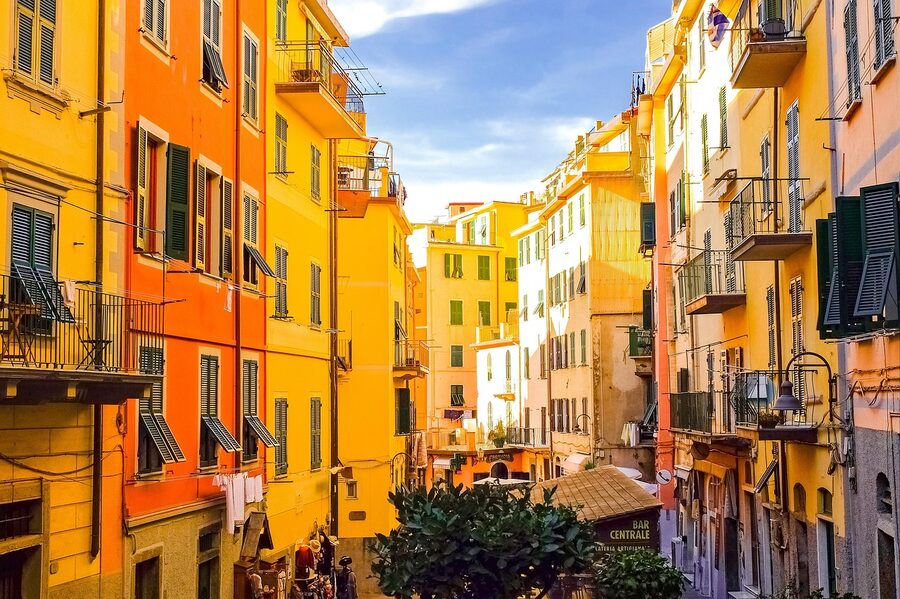
What Each of the Five Villages Is Actually For
You will not have time to fall in love with all five. Here’s what each one is actually for, and which to spend your hours on.
Riomaggiore:
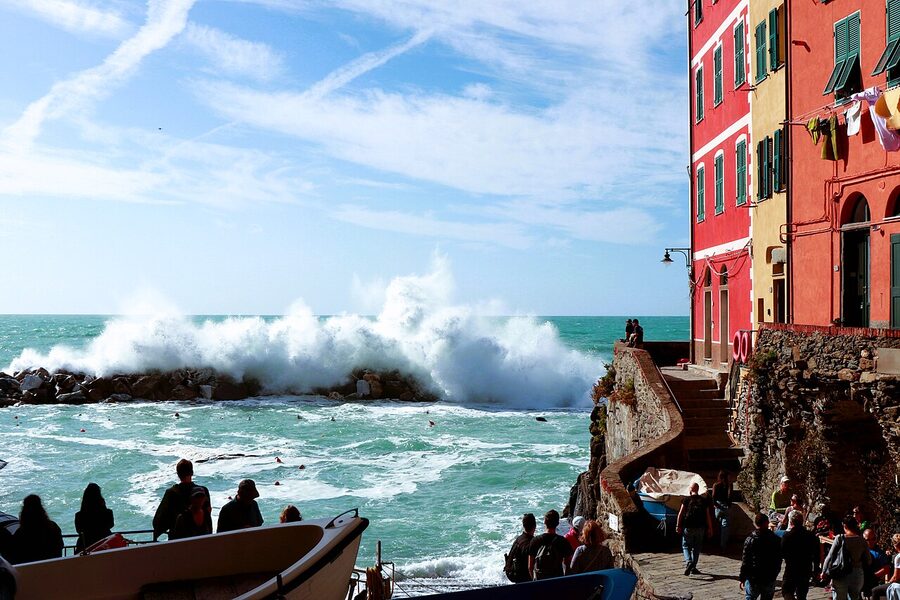
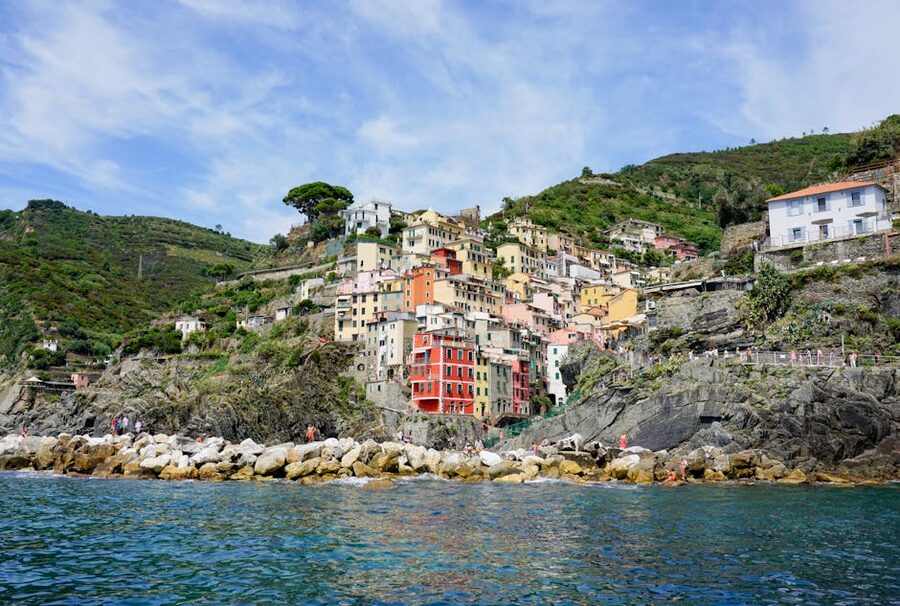
The first one when you arrive from Florence direction. Steep main street running down to a tiny harbor stacked with overturned fishing boats and pastel buildings rising on both sides. It’s the most photographed angle in Cinque Terre and you’ll know it the second you see it (the same single-image-defines-a-place effect as Mont-Saint-Michel). Spend 30 minutes here. Walk down, walk to the harbor, walk back up. Don’t sit down for a full meal. Better food is waiting in Manarola and Vernazza.
Manarola:
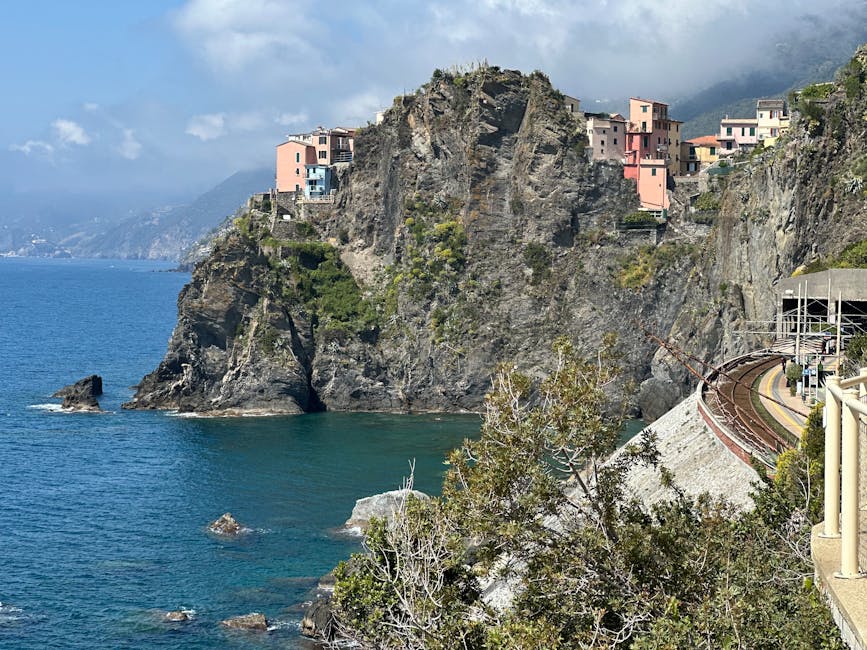
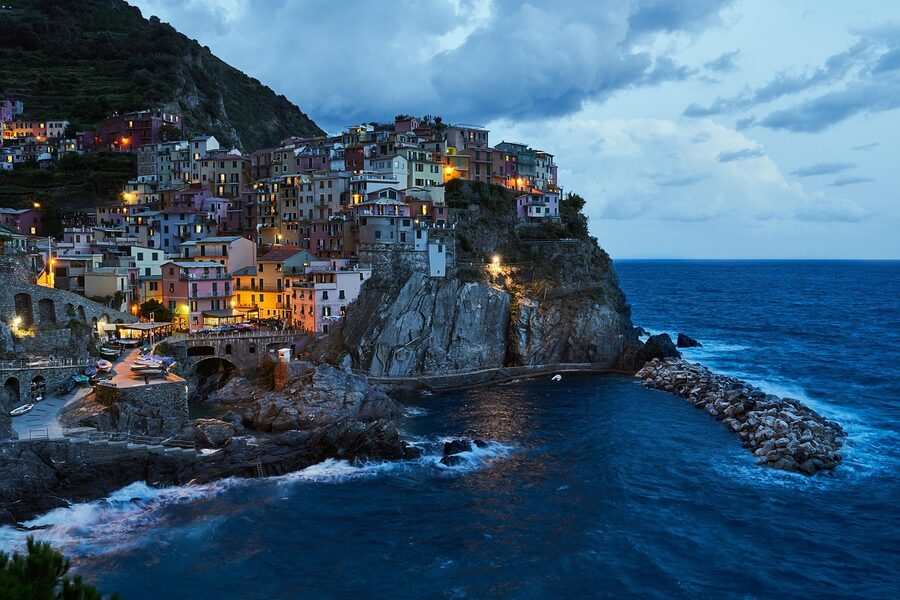
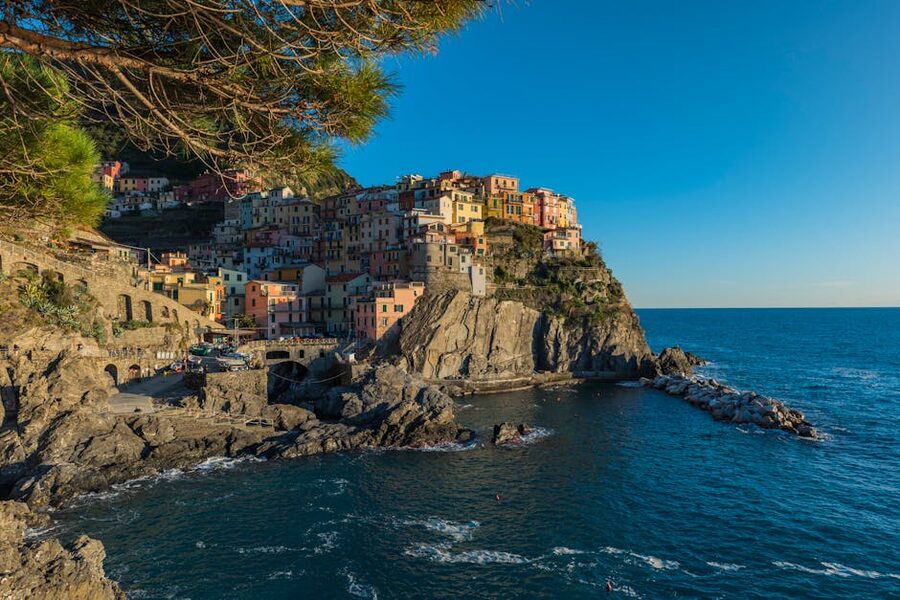
The most famous postcard village, and rightly. Houses tumbling down a finger of cliff with a swimming cove tucked into the base. This is where you stop for golden hour if you’re playing the late-train-back game. The viewpoint everyone shoots from is the cemetery walk on the Volastra side, about 8 minutes uphill from the village. Worth every step.
Corniglia:
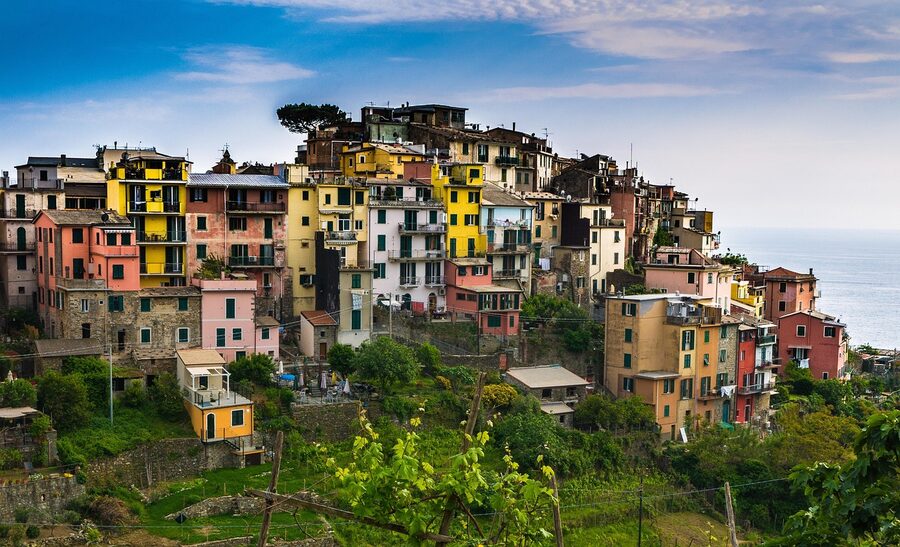
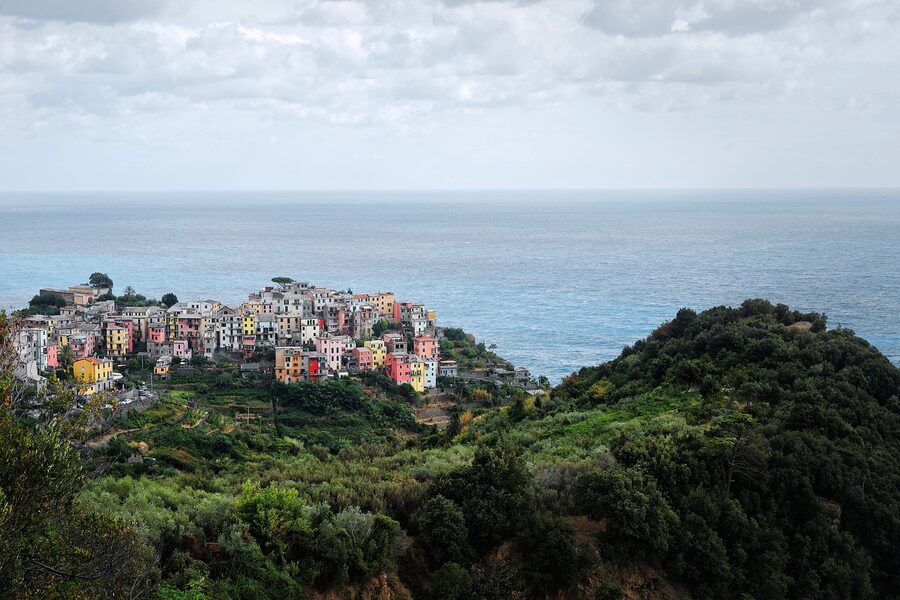
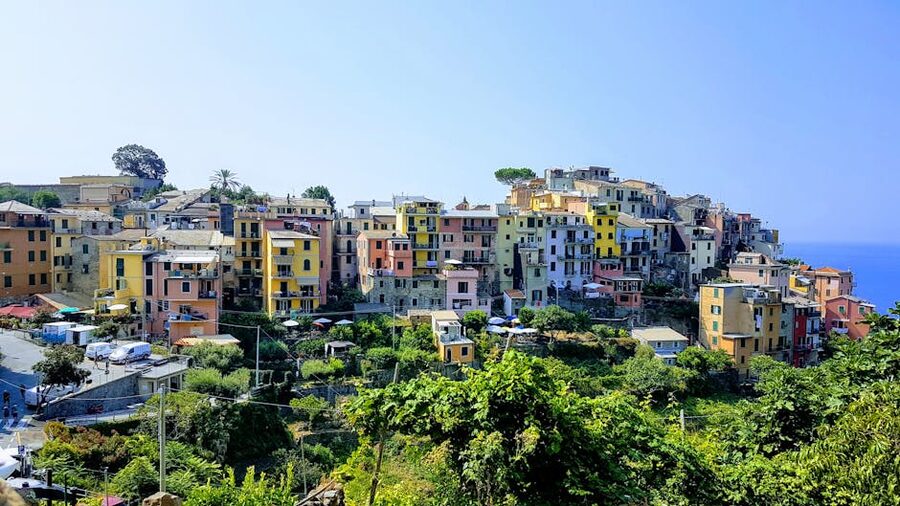
The middle one, the only one not on the water. Sits 100m up on a clifftop, accessible only by a brutal staircase from the train station (382 steps if you’re counting) or a shuttle bus that doesn’t run on a precise schedule. Most day-trippers skip Corniglia. Skip it. The view is the same view from elsewhere and the staircase eats time you don’t have.
Vernazza:
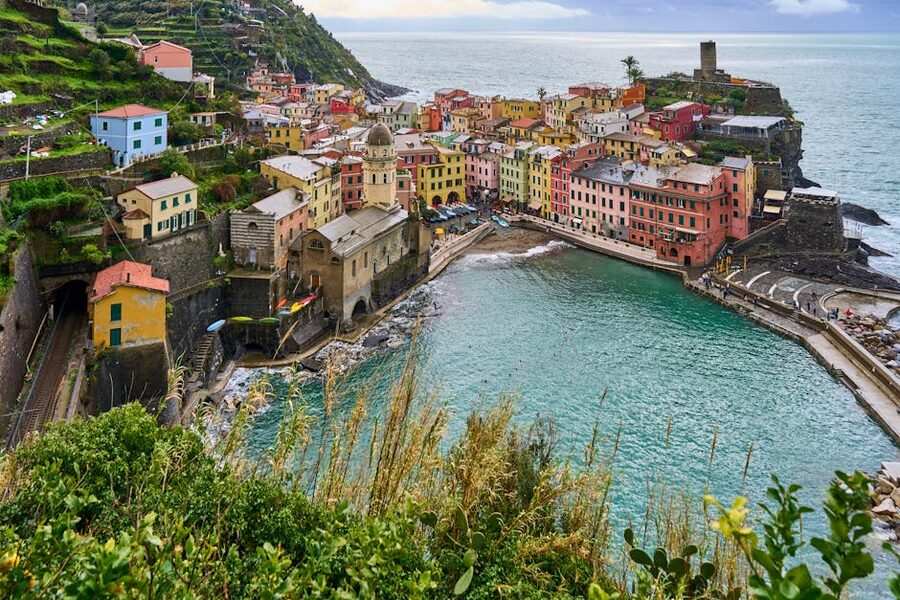
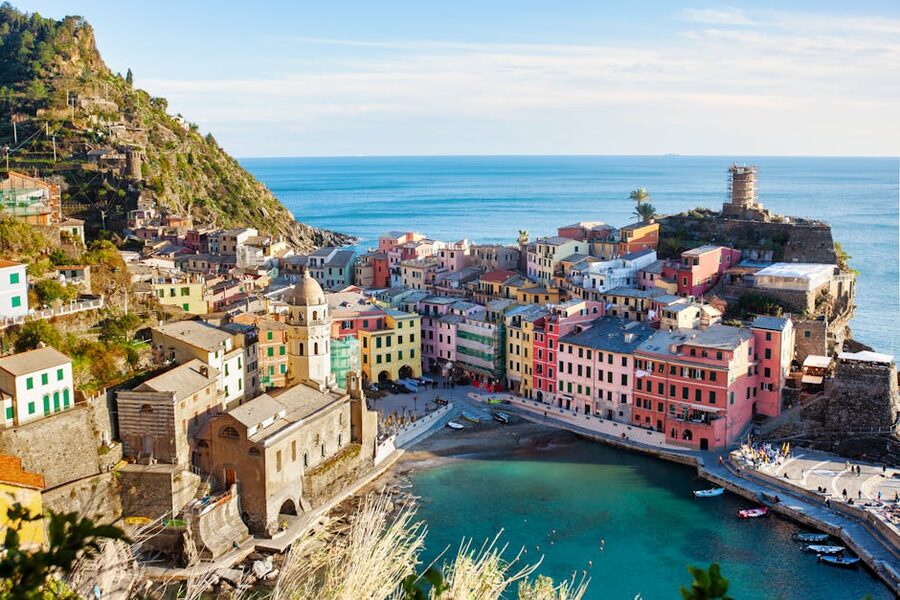
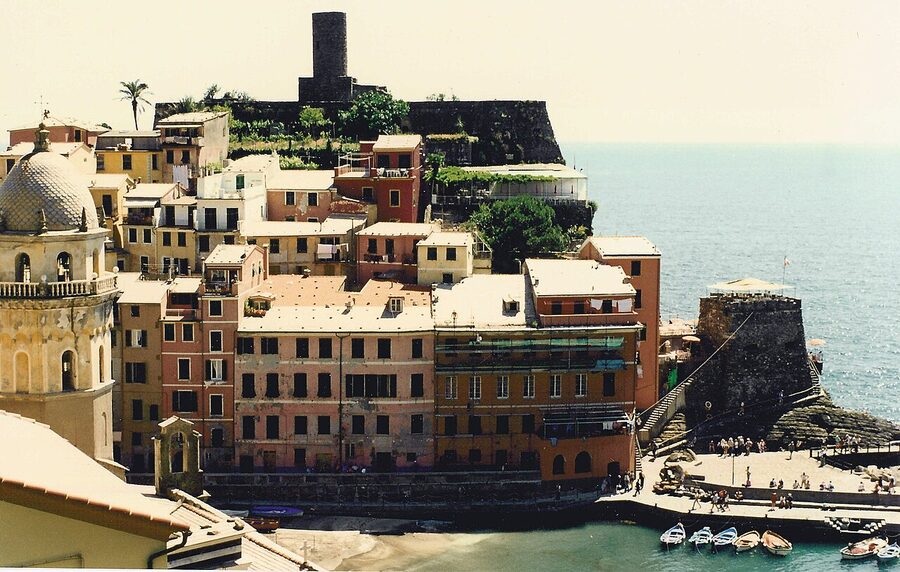
If you only do two villages, do this one and Manarola. Vernazza has the only proper natural harbor on this stretch of coast, a real piazza with cafés, and the ruined Doria castle on the headland. The wine bar Belforte built into the castle wall is the spot for a quick glass of Sciacchetrà if you have 30 spare minutes. Vernazza is the village that does what the Venice islands of Murano, Burano, and Torcello do for Venice: gives you the postcard photo without the headline-attraction crush.
Monterosso al Mare:
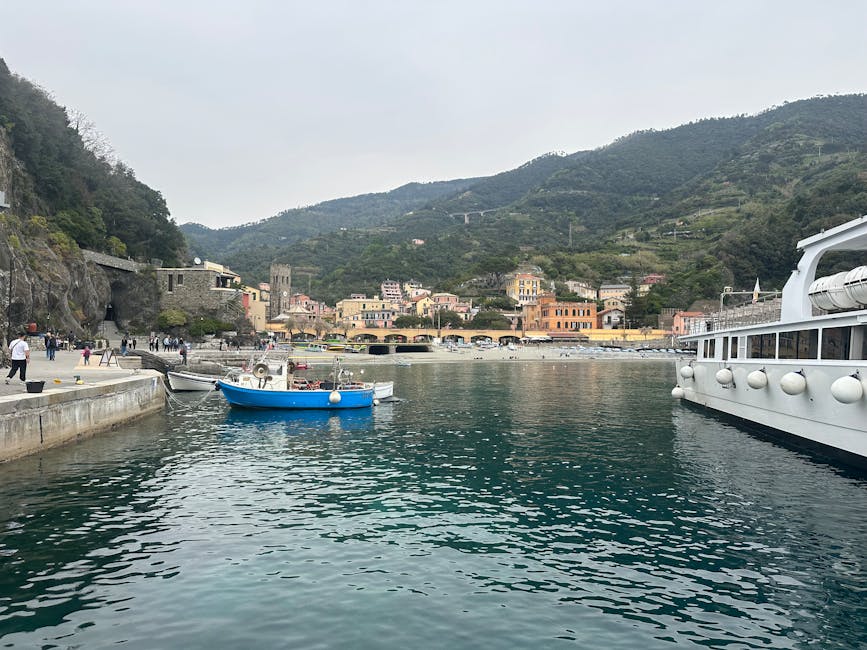
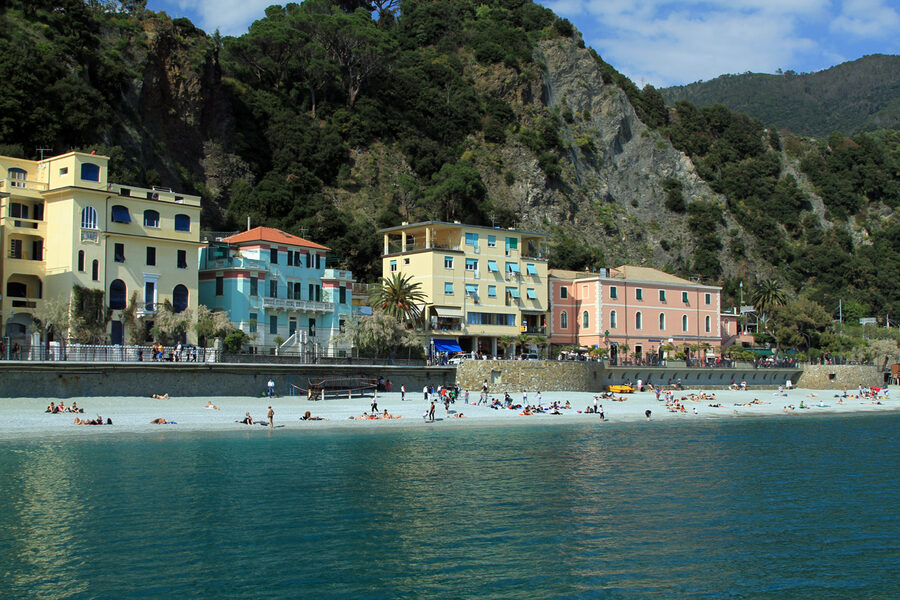
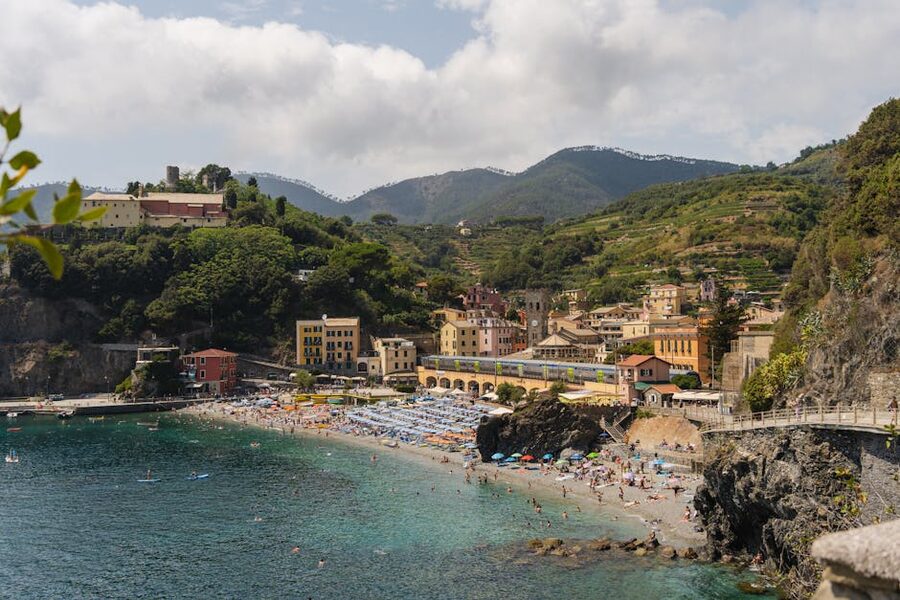
The last village heading north, and the only one with a proper sand beach (so this is your stop if you’d otherwise have booked something like a Gibraltar-and-coast day out of Málaga for your sand-and-swim fix). Or two beaches, technically, separated by a tunnel. This is the one you swim at. Bring a quick-dry towel in your day pack. Water in May and October is cold enough to make you yelp; in July it’s perfect. If swimming-from-village is your thing, the same kind of stop figures heavily in the Capri boat tour from Naples, just with the Tyrrhenian instead of the Ligurian.
Hike or Train? The Real Answer
The famous photo of the Cinque Terre is the Sentiero Azzurro (the Blue Trail) running along the cliffs between villages. People come for the hike. Then they realise it’s a hike.
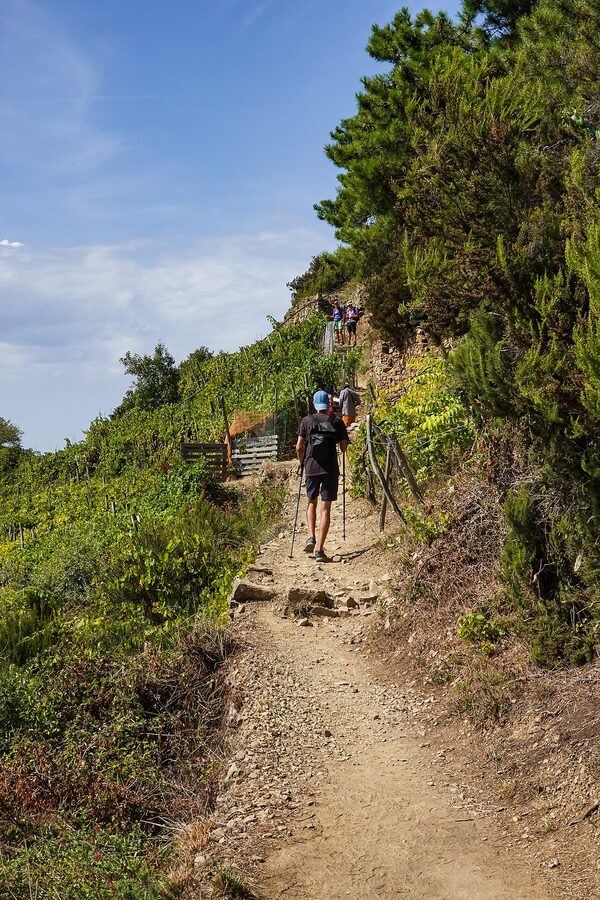
The Monterosso-to-Vernazza section is open and beautiful and takes about 2 hours. It’s also a constant up-and-down on uneven stone steps with a 200m elevation gain. In real numbers: you’ll be properly sweating, your knees will know about it the next day, and if you’ve worn the wrong shoes you’ll know about it within 15 minutes. Closer parallel: the Path of the Gods on the Amalfi Coast day trip. Same kind of cliff-side trail, slightly longer, same kind of “oh, this is a real hike” realisation 20 minutes in.
Vernazza-to-Corniglia is similar. Another 2 hours, similar elevation, similar terrain. Corniglia-to-Manarola has been intermittently closed for a decade after landslides, and the alternative inland route is longer and dull.
The most famous walk, the Via dell’Amore from Manarola to Riomaggiore, was closed for 12 years after the 2012 landslide. It reopened for paid access in summer 2024. It’s the easiest walk in Cinque Terre by a mile. Flat, paved, about 1km, takes 20-30 minutes including stops for photos. If you only walk one section, this is it. The card supplement runs an extra €5 in summer.
For a Florence day trip, walk Via dell’Amore (Manarola to Riomaggiore) for the iconic shot, take the train everywhere else. You preserve four hours of village time you’d otherwise spend on a trail. If you specifically came for hiking, do Monterosso-to-Vernazza in the morning when it’s cooler and you have legs left. Anything more than that and you’re spending the day hiking, not seeing villages. Different rhythm to the Pisa-Siena-San Gimignano day, which is mostly seated on a coach with town-walking at each stop.
The Tours I’d Actually Book
These are the three I’d put a friend on, ranked by who they’re for. Each one solves the day differently.
1. Cinque Terre Day Trip From Florence With Optional Hiking: $66.51
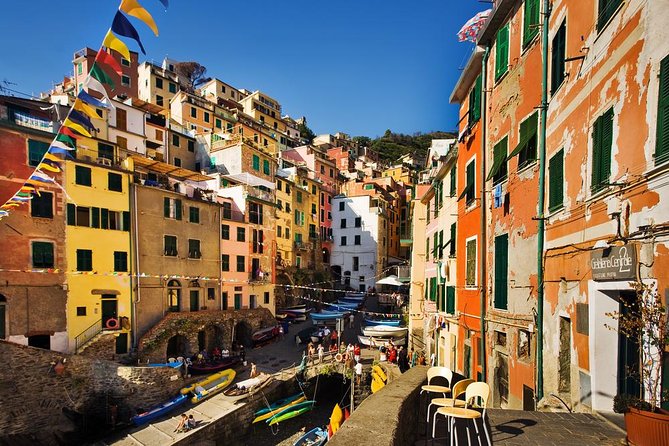
This is the busiest Cinque Terre day trip in the category for a reason: 13 hours door-to-door at a price basically equal to the train tickets alone if you DIY’d. The trade-off is group size, with 40+ on busy days. Our full review covers what the optional hike actually is and which villages you skip.
2. Florence: Cinque Terre Day Trip With Optional Hike: $152.93
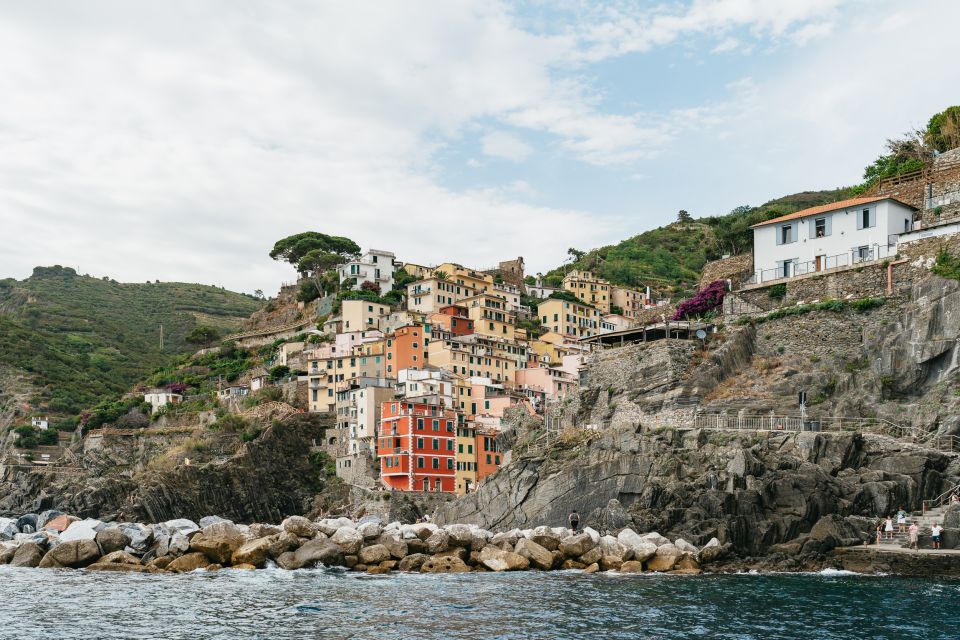
What you’re paying for at this tier is a guide who actually walks the villages with you and talks about what you’re seeing, not just a coach driver and a meeting time. Lunch is included and held at a real restaurant in one of the villages. Our review goes into the lunch quality and the guide handover, which is the bit most reviews skip.
3. Scent of the Sea: Cinque Terre Park Full Day Trip From Florence: $60.52
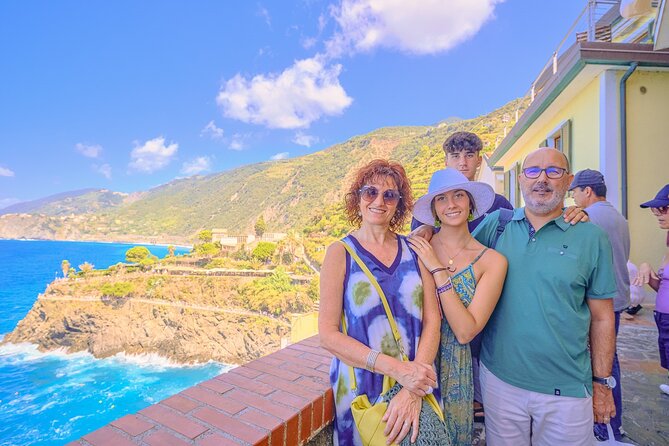
The differentiator here is the boat segment. You see the village line from the water, which is the photo angle that doesn’t appear on the standard train-and-walk day. Our review unpacks the swimming stop and the realistic free time per village (it’s tighter than the listing suggests).
What to Eat (Even on a Tight Day)
Cinque Terre food is Ligurian. That’s a specific thing, not generic Italian. The big four to find at least one of:
Pesto alla Genovese: born in this region, made with the local small-leaf basil that doesn’t taste like the pesto you’ve had elsewhere. Eat it on trofie pasta in Vernazza or Monterosso. The version on cardboard takeaway plates from a focacceria queue is fine; the version at a sit-down trattoria is better but takes 90 minutes you might not have.
Focaccia di Recco: flat bread with stracchino cheese baked between two paper-thin layers. Sounds basic, isn’t. Available at most bakeries in the villages and the queue at Il Frantoio in Monterosso usually moves quickly.
Acciughe di Monterosso: local salted anchovies, the most regional plate you’ll see. Either as antipasto with lemon and olive oil, or stuffed and baked. Worth ordering even if you don’t think you like anchovies. These taste different.
Sciacchetrà: the local sweet wine made from grapes hand-dried for two months in the village attics. Unique to Cinque Terre and almost entirely sold inside the region (the production is tiny). Belforte in Vernazza and a couple of enotecas in Manarola pour it by the glass for €6-8.
If food is the focus of your trip, our Florence food and wine tours piece covers the Tuscan side of the equation, and our eating pizza in Naples guide handles the south. Cinque Terre stands alone. None of the Florence food tours run out this far.
What to Pack for a Day Trip Specifically
This is a different packing list to most day trips out of Florence because there’s a real possibility of swimming, real walking on uneven stone, and a long train day where you want a small bag, not a tote.
- Walking shoes with grip. Trainers minimum. Sandals fail on the trail steps. Heels are a comedy choice and you will see one tourist in heels every visit.
- Quick-dry shorts or a swimsuit you can wear under. If you’re doing Monterosso even briefly, you’ll want to swim. You won’t if you have to fully change.
- A microfibre travel towel. Beach towels are too bulky for the train day. The microfibre ones pack into a fist.
- Sun and water. The trails have very little shade between Vernazza and Corniglia. Refill bottles at village fountains.
- Cash for the small places. Most cards work, but the focacceria with the best slice usually doesn’t.
The History Bit Most Day-Trippers Skip
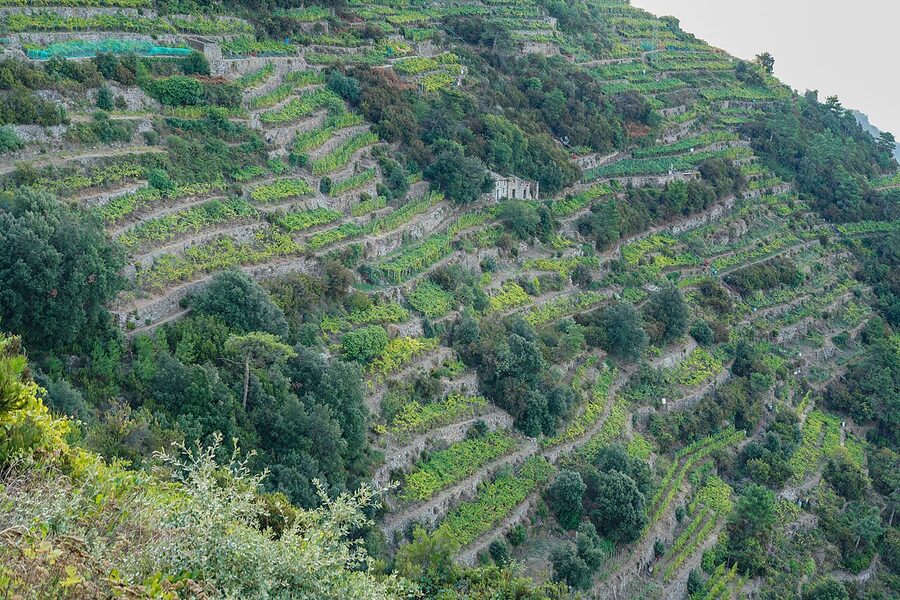
You’re in a UNESCO World Heritage Site. The five villages and the terraced hillsides above them have been continuously farmed since at least the 11th century, more or less the same era when the workers were laying the first foundations of the Florence cathedral that became the Duomo 300 years later. The dry-stone walls holding up the vineyard terraces add up to roughly 7,000km if you laid them end to end. That’s longer than the Great Wall of China. They’re the visible record of a thousand years of people growing grapes and lemons on a slope that wants to slide into the sea.
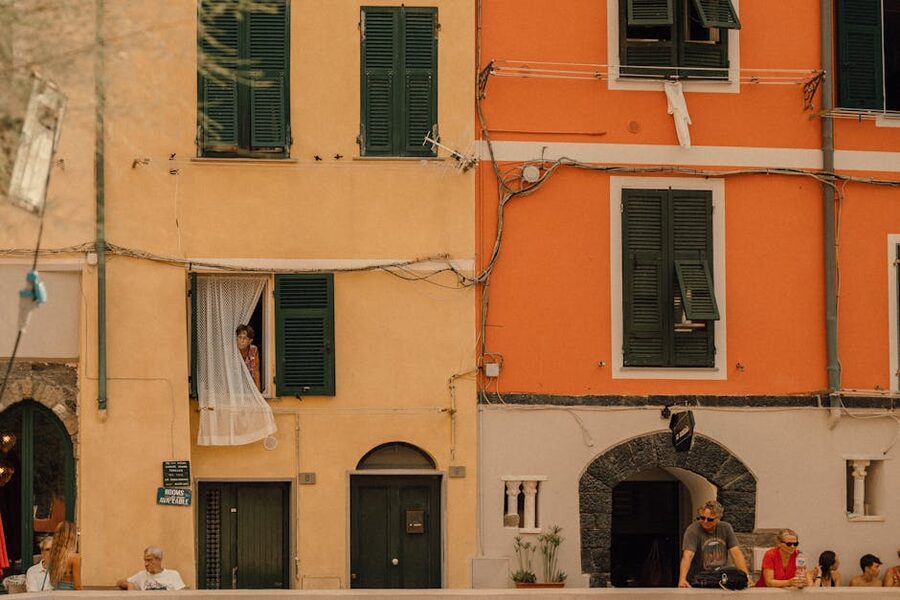
The villages were built tall and narrow because the cliffs gave them no other option, and they were painted in those bright colours so fishermen could pick out their own house from the boat (a working-logic colour palette in the same family as the planted bands of Keukenhof’s tulip fields outside Amsterdam, where each band is a registered cultivar rather than a registered family). Each colour was historically registered to a specific family. The pastel cliffside is a working logistic decision, not an aesthetic one.
The five names (Riomaggiore, Manarola, Corniglia, Vernazza, Monterosso al Mare) appear together as a defined region only from the 19th century onwards. Before that, they were just five separate fishing villages with their own dialects. The grouping became a tourism term, then an administrative one, then a UNESCO designation in 1997, then the Instagram backdrop.
If you want a longer historical thread, our pieces on Brunelleschi’s dome and the Uffizi cover the Florence side of what your day starts and ends in. The contrast is the point. Same morning, same evening, two completely different Italys in between.
Common Mistakes
Going to Santa Maria Novella for the morning train. The direct train to La Spezia leaves from Firenze Campo di Marte, the secondary station. Five-minute regional ride from Santa Maria Novella, but if you don’t know to make that transfer, you’ll watch your only direct train leave without you.
Not validating the regional ticket. Italian regional tickets need stamping in the yellow box on the platform before you board. The fine for an unvalidated ticket is around €50-200 and the conductor will not be moved by your story.
Trying to do all five villages. Three is the right number. Four is a stretch. Five is a slideshow at high speed.
Booking lunch at a sit-down restaurant. 90 minutes for lunch when your train back leaves at 5pm and you’ve still got Manarola to see is bad math. Eat focaccia or pesto pasta on the harbor wall, save the long lunch for back in Florence.
Wearing the wrong shoes. See above.
Not booking the train back in advance. The 7pm direct from La Spezia to Firenze Campo di Marte books up in summer. Do this first thing in the morning before you leave Florence.
Where to Next, From Here
If you loved the day and now want a coastal stretch with a different rhythm, the Amalfi Coast day trip is the southern parallel: bigger road, more drama, less hiking. Capri by boat from Naples is the same trick from the water side. Back in Florence, a half-day in Chianti resets the legs after a Cinque Terre day. And if you’re staying north and want a different day-trip-by-rail story, the Bernina Express from Milan is the Alps version. Same idea (let the train do the work), opposite topography.