
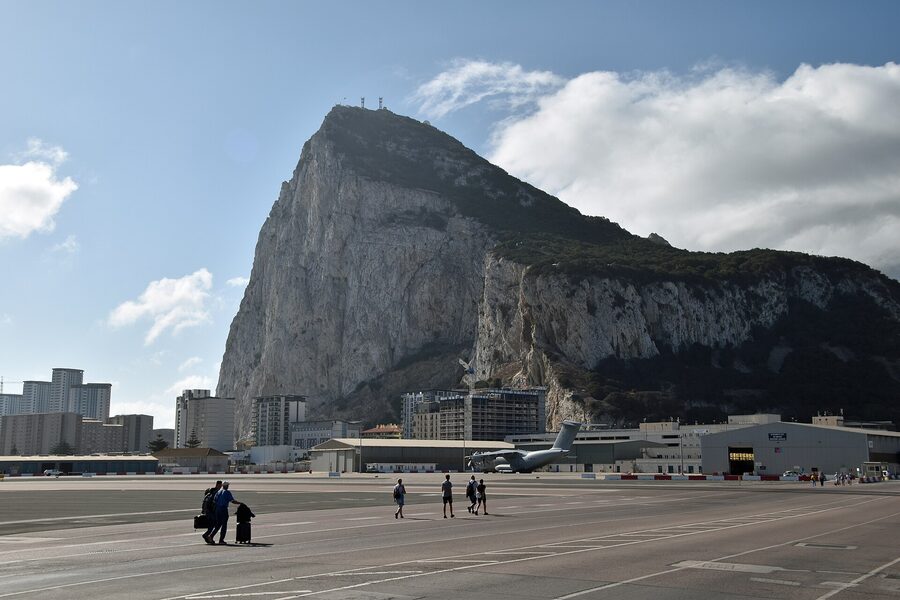
The road from Málaga ends at a traffic light next to an airport runway. You walk to the front of the queue, hand a guard your passport, wait for the man in the booth to wave you through. Then you step onto an active commercial runway. Painted lines on the tarmac. A wind sock somewhere off to your right. Locals on the other side, walking the opposite direction, treating the whole thing like a zebra crossing because for them it is one. If a plane is on approach the lights go red and the runway closes for ten minutes, sometimes thirty. Then you cross. You are now in the United Kingdom.
That is the moment that makes the Gibraltar day trip from Málaga worth doing, and the moment most travellers don’t realise is coming. Everything else, the macaques and the cable car and the cave concerts, the rest of the day downloads from there.
I want to lay out the structure of this trip before getting into the recommendations, because the most common mistake is treating Gibraltar like an immersive day out the way Ronda from Seville is, or the way the Caminito del Rey hike is. It isn’t. A day trip to Gibraltar from Málaga is roughly six hours on a bus and four hours on the ground, and those four ground hours split fairly cleanly between a Rock tour (cable car, macaques, St. Michael’s Cave, maybe the Great Siege Tunnels) and free time on Main Street, which is a tax-free shopping zone aimed at British weekenders. If you go in expecting a tightly choreographed Rick Steves walking tour you’ll be disappointed. If you go in knowing the day is structured around the runway crossing, the Rock, and a couple of hours of self-directed time, the whole thing becomes a clean, weird, oddly satisfying excursion.
In a Hurry
Quick Picks (Skip to Booking)
Best value Gibraltar day trip: From Málaga: Full-Day Trip to Gibraltar. $35, the cleanest version of the day, English-speaking guide, runway crossing included.
Most booked Gibraltar tour from Málaga: From Málaga and Costa Del Sol: Gibraltar Tour. $38, runs daily, picks up along the Costa del Sol so it works whether you’re staying in central Málaga or further west toward Marbella.
If you’d rather see dolphins than monkeys: From Málaga: Gibraltar and Dolphin Boat Tour. $73, swaps the upper-Rock bus tour for a 75-minute boat in the Strait. Real dolphins, not always lots of them.
Why a Day Trip and Not Two
You can stay overnight. Gibraltar has hotels, the Rock Hotel and the Sunborn (it’s a literal yacht permanently moored in the marina) are the two recognisable names, and there’s a youth hostel for people doing this on a backpacker budget. But ninety per cent of the people who visit Gibraltar from Málaga do it as a single day, and that’s the right call for almost everyone. The Rock is small. Actual landmass is 6.7 square kilometres, smaller than most city neighbourhoods, in the same micro-state size class as Monaco from Nice. About 33,000 people live there. You can walk the whole settled part in an afternoon and you’ll have already seen the headline attractions on the Upper Rock by the time the cable car drops you back into town.
Where staying overnight does pay off: pub crawls. Gibraltar’s pub culture is a genuine thing, not a tourist novelty, and it doesn’t really kick in until evening. The Lord Nelson on Casemates Square, the Edinburgh Arms, Jury’s, the Royal Calpe. If you want to see those at full tilt you need to skip the last bus home. But for a first visit, especially one paired with everything else Málaga itself has on offer, day trip is the right move.
How the Day Actually Looks
I’ll lay out the structure exactly so you know what you’re booking. A standard $35 to $38 organised day trip from Málaga runs roughly like this. Pick-up around 7:30 to 8am, depending on where you’re staying. The bus heads west along the AP-7 toll road. You pass the Málaga airport, then Torremolinos, Benalmádena, Fuengirola, Marbella. Most tours stop briefly at a service station around the Marbella area for a coffee and a bathroom break. Total drive is about two and a half hours if traffic cooperates. Two and a half hours back in the evening. So five hours sat on a bus. That’s the part nobody’s enthusiastic about and pretending otherwise sets you up wrong.
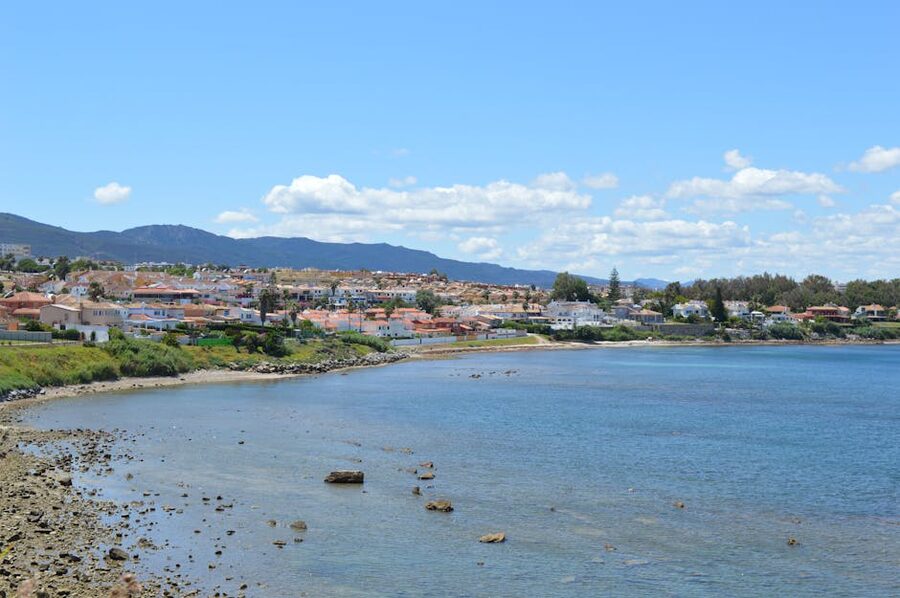
The bus drops you at La Línea de la Concepción, the Spanish frontier town. From there you walk. The bus does not enter Gibraltar. This is genuinely important for the day to make sense: Gibraltar is a separate territory with its own customs control, and most coach companies leave their vehicles on the Spanish side because the entry rules for commercial vehicles are a hassle. So you cross on foot. Spanish exit booth, a strip of no-mans-land, then UK customs. Then the runway crossing I described in the opening. The whole walk from bus park to first café in central Gibraltar is about twelve minutes if there’s no queue, twenty-five to forty minutes if there is.
Once across, the typical schedule splits in two. Some tours start with the Rock tour and end with free time. Some start with free time and end with the Rock tour. Both work. The Rock tour itself is a minibus loop with stops at the cable-car upper station, St. Michael’s Cave, the Apes’ Den, and (on the longer tours) the Great Siege Tunnels and the Moorish Castle. About two hours of moving and looking. Then you’re back in the lower town for whatever’s left of your free time, then back across the border, back on the bus, back to Málaga by 7 or 8pm.
The Border Crossing Is the Main Event

I keep coming back to this because it really is the part that everyone underestimates before they go and over-talks about afterwards. There are roughly 15,000 movements per year on Gibraltar’s runway. Easyjet, British Airways, Wizz, Eastern. So by definition, several times a day, the border closes. You stand in a polite British queue on a piece of tarmac that thirty minutes earlier was the underbelly of an A320. Then a bell rings, the lights go green, and you walk.
The crossing is on Winston Churchill Avenue, named after, well, you can guess. There has been a project on and off for over a decade to build a tunnel under the runway so the surface crossing can be retired. As of when I last checked, the tunnel exists, sort of, but the runway crossing still runs as the primary route on foot. So for the immediate future this is part of the visit. Treat it as the trip’s centrepiece. Bring your passport, even if you’re an EU national; UK control will sometimes wave EU IDs through but won’t always, and being the one person held back while your tour group walks ahead is not the souvenir you want.
A practical note on the queue. On a normal weekday morning the foot crossing takes ten minutes both ways. On weekends, on cruise-ship days, and during summer school holidays it can stretch to over an hour, the same crush you get on the ferry queue for the Cannes Sainte-Marguerite ferry in July. If you’re driving down independently and you’ve heard horror stories about the vehicle queue: those are real. The vehicle queue can take two hours. Park in La Línea, walk in. Every guidebook says this and they’re all right.
Up the Rock
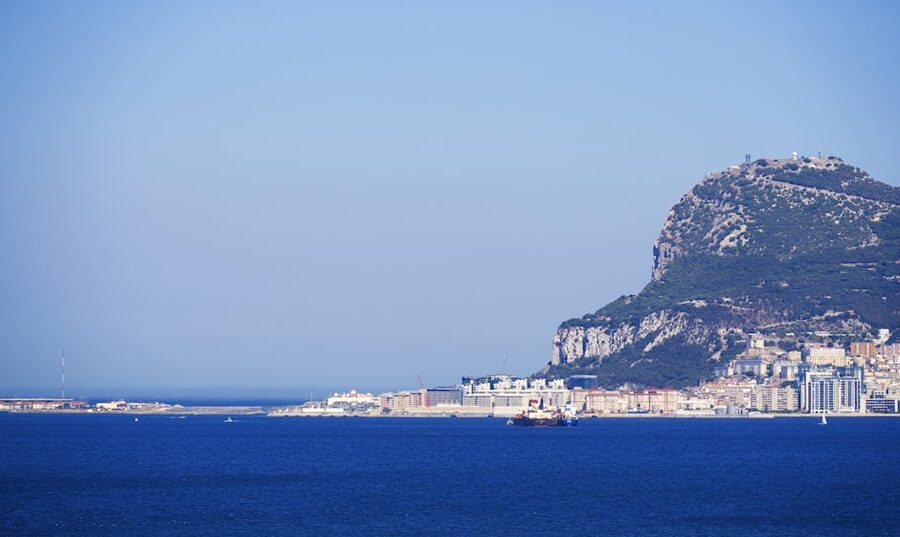
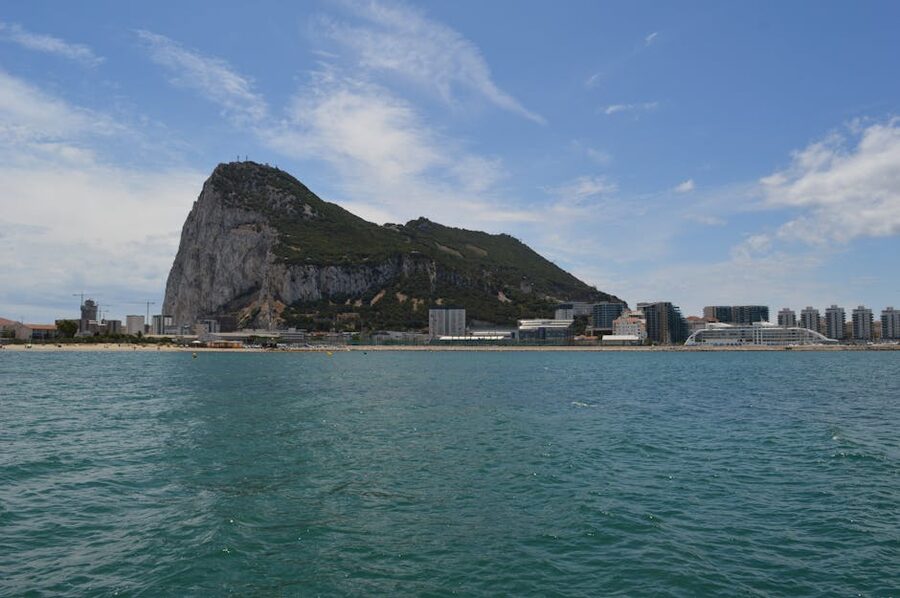
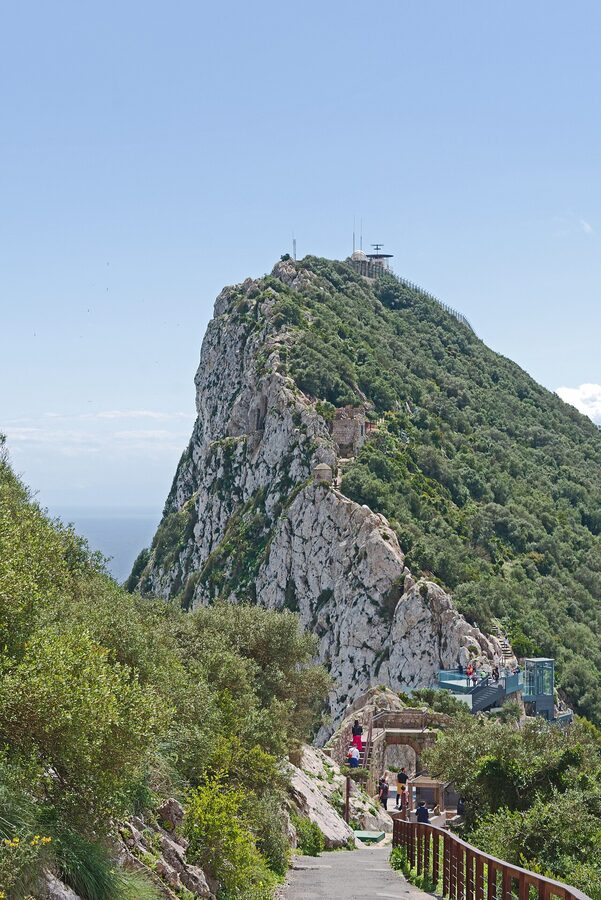
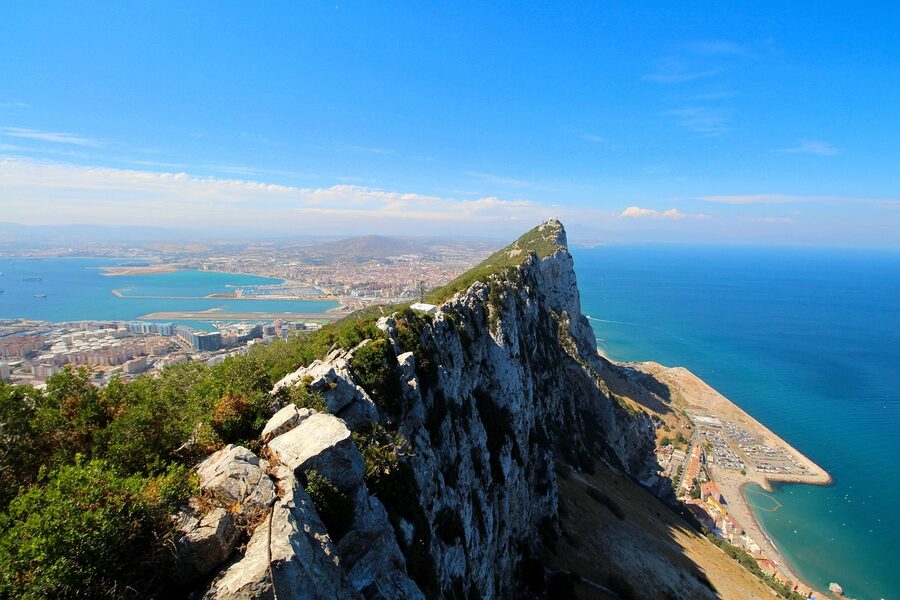
The Rock of Gibraltar is 426 metres at its highest point. Limestone, formed during the Jurassic, lifted into a vertical wall when the African plate started slamming into the European one about 5 million years ago. The same tectonic event that closed the Strait, dried out the Mediterranean, then reopened to fill it again in the Zanclean flood. So the Rock is geologically older than the sea it sits next to. That fact has been quietly impressing me ever since I learned it.
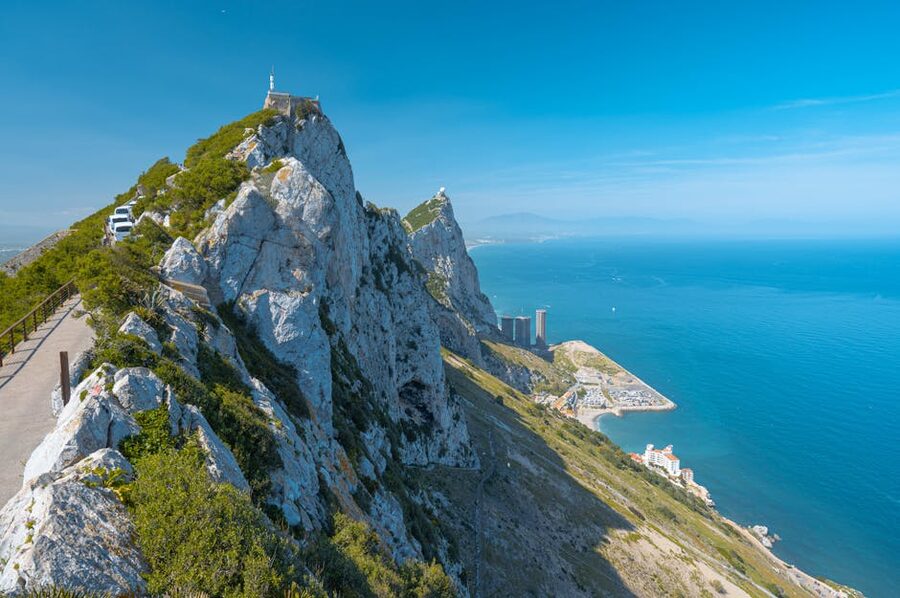
You get up by cable car. The bottom station is right next to the Alameda Botanical Gardens, walking distance from anywhere in central Gibraltar. The ride is six minutes. On the way up you’ll see Spain to the north, the marina to the west, and on a clear day, Morocco’s Jebel Musa to the south. There’s also a halfway stop at the Apes’ Den between November and March, which is when you’re more likely to see macaques on that side of the Rock. The rest of the year the cable car runs straight up.
If you’re with a guided tour, the bus version of the Rock tour does the same loop but lets you stop at multiple sites in sequence, which is usually a better deal in terms of total things-seen-per-hour. The cable car gives you the views but you have to walk the upper Rock yourself. The minibus tour drives you between cable-car-station, Apes’ Den, St. Michael’s Cave, the Tunnels, and the Pillars of Hercules monument with a guide commentating the whole way. Both are valid. The bus is more efficient, the cable car is more atmospheric.
The Macaques: The Only Wild Monkeys in Europe
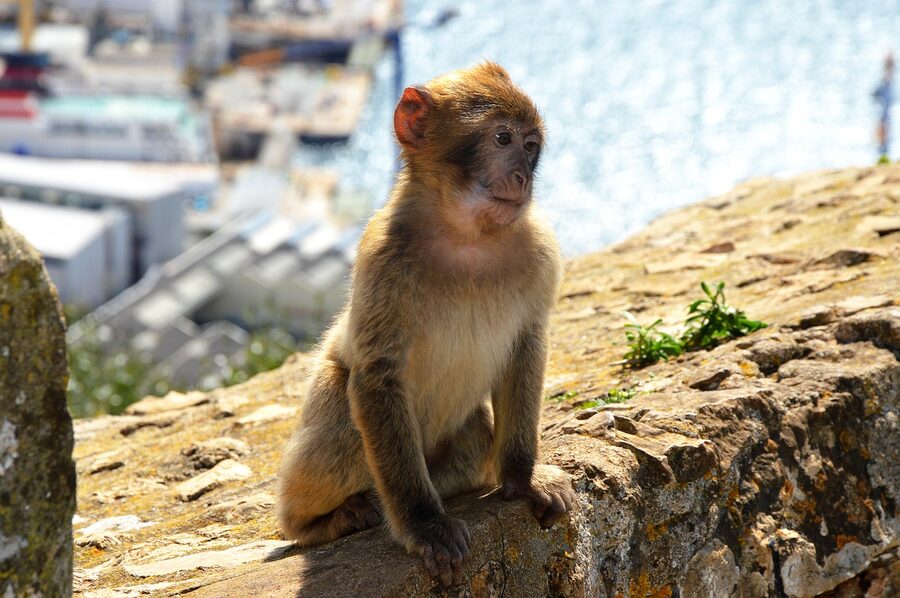
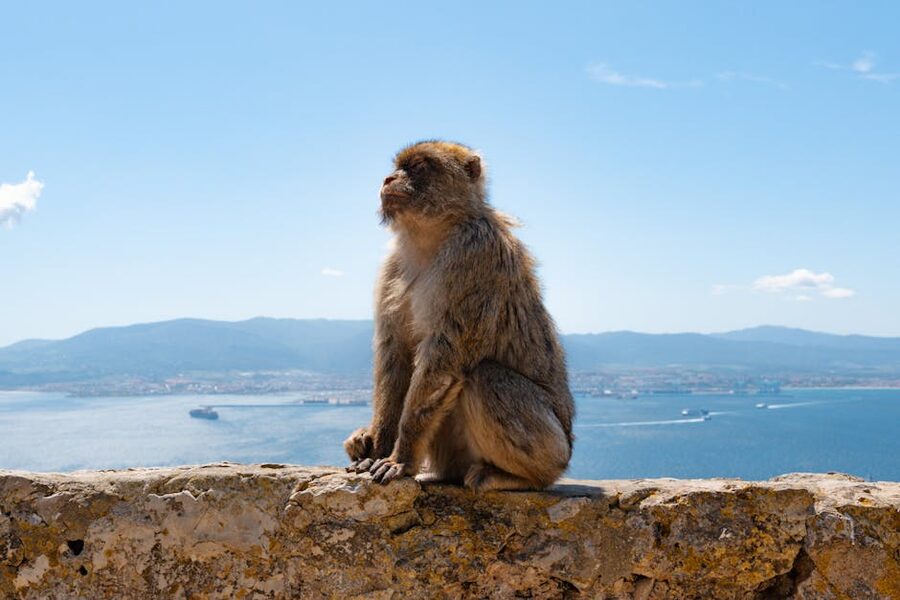
About 300 Barbary macaques live on the Rock. They are the only free-roaming wild monkey population in Europe. How they got there is genuinely contested. The clean story is that the Moors brought them over from North Africa in the 8th century. The other story is that they’re remnants of a population that was here before the land bridge to Africa closed. Recent genetic studies suggest a mix: most of the current population descends from imports, but there may be some pre-Roman ancestry in there. You can pick whichever version you find more romantic.
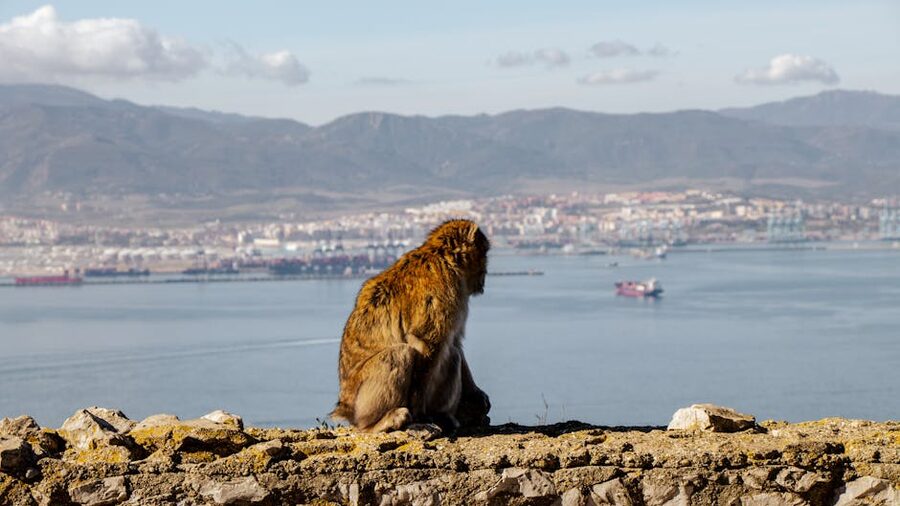
The British army legend is that if the macaques ever leave the Rock, British rule of Gibraltar ends. Churchill took this seriously enough that during World War II, when the population was crashing, he had reinforcements imported from Morocco. There’s a marker dating that import in the documents. I find this story delightful and I quote it in basically every conversation where Gibraltar comes up.
The practical advice on macaques is simple and the locals will tell it to you four times before you reach the upper station. Don’t feed them. Don’t carry visible food. Don’t make eye contact. Don’t try to pet them. Don’t get between a mother and a baby. Bites are not common but they happen, and if one bites you, you’re going on rabies prophylaxis as a precaution, which is a fast way to ruin a day trip. Treat them like the wild animals they are. Watch them, photograph them, move on.
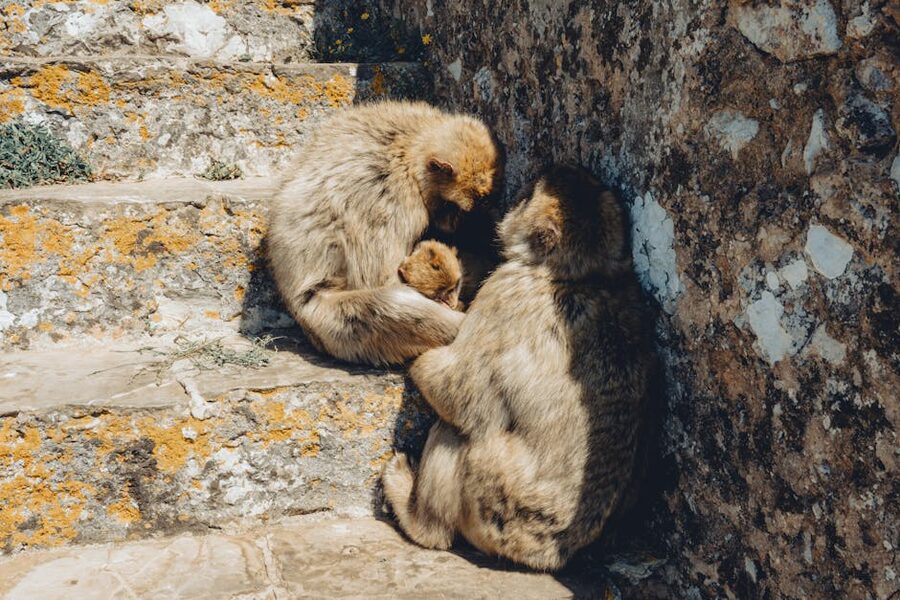
The Apes’ Den is the easiest place to see them, but they’re not confined there. They roam the upper Rock, drift down to the cable car upper station, sometimes get all the way down to the lower town. If you walk the full Mediterranean Steps trail you’ll often pass a group lounging near the path with not a single tour bus in sight, and that’s the version of seeing the macaques that lands hardest.
St. Michael’s Cave
The cave is a limestone cavern under the upper Rock that’s been used for everything you can use a cave for over the past few thousand years. Neolithic burials, Roman shrine, pirate hideout, and during World War II a fully kitted-out emergency military hospital that, fortunately for the people of Gibraltar, never had to be used. It’s now an auditorium with theatrical lighting and a stage built into the floor of the main chamber.
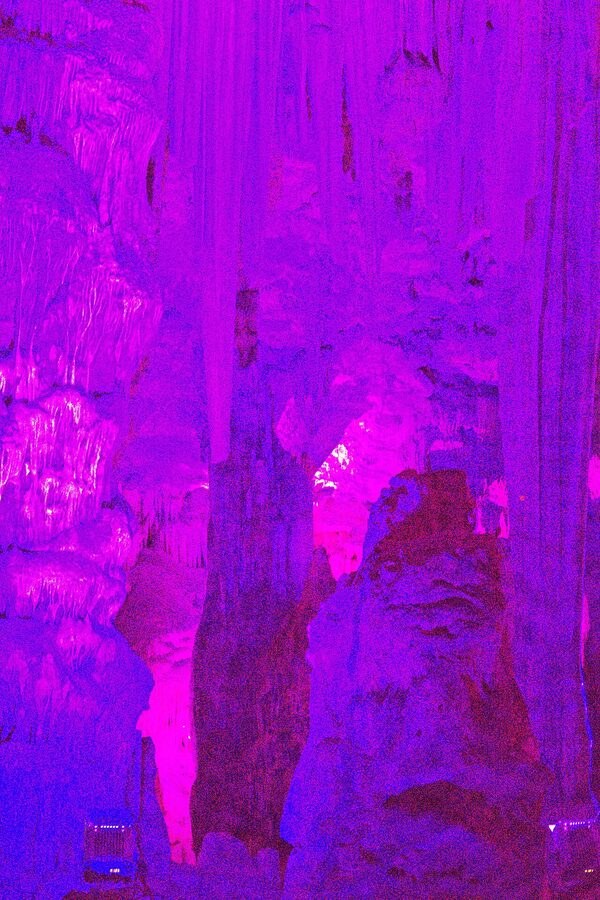
The acoustics are real. If you happen to time your visit with a rehearsal you’ll hear singing in there that does what cathedral singing does in Seville Cathedral, except the cathedral here was made by water and time and not by mason guilds in the 1400s. If you’re cave-curious in general, the depth of usable underground space across Andalusia and southern Spain is bigger than people realise. The Setas mushroom complex in Seville sits on top of an Antiquarium of Roman ruins, and Mallorca’s Caves of Hams (which I’ll cover when the Mallorca batch ships) are the closest comparison in atmosphere if you don’t make it to Gibraltar.
For a similar Italian payoff, the underground tour at Naples Underground is the closest tonal match: human-modified caves used for Greek burial, then Roman cisterns, then WWII shelters. Different place, same emotional structure. Going underground in Mediterranean cities reliably delivers depth.
The Great Siege Tunnels
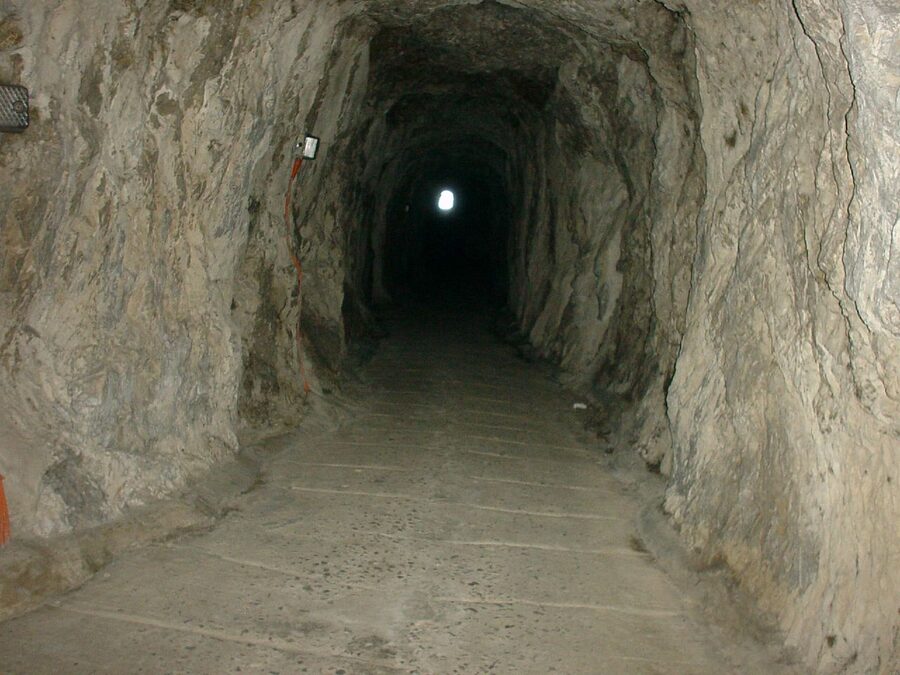
The Great Siege itself is the kind of military history most travellers haven’t run into. From 1779 to 1783, French and Spanish forces blockaded Gibraltar by land and sea trying to retake it from the British. The British dug tunnels through the limestone to mount cannon at angles that would otherwise have been impossible (specifically, they wanted to fire down on attackers approaching from the north, and the only way to get a cannon up there was to go through the rock). They held out. The treaty after the siege confirmed British sovereignty.
The tunnels you visit today are a fraction of the total. The Rock is honeycombed with about 55 kilometres of military tunnels in total, dug across multiple eras (the Great Siege ones are the originals, then there’s a much larger network from World War II when Gibraltar was the operational headquarters for the Mediterranean and Eisenhower planned Operation Torch from a tunnel in here, the same kind of WWII command-and-occupation history you read off the streets on an Anne Frank walking tour). Most of those tunnels are still classified or off-limits because they’re storing things or because the Rock is still functioning as a military base. The fact that you’re walking through a hill that contains, somewhere underneath you, things you’re not allowed to know about, is part of what gives the visit its texture.
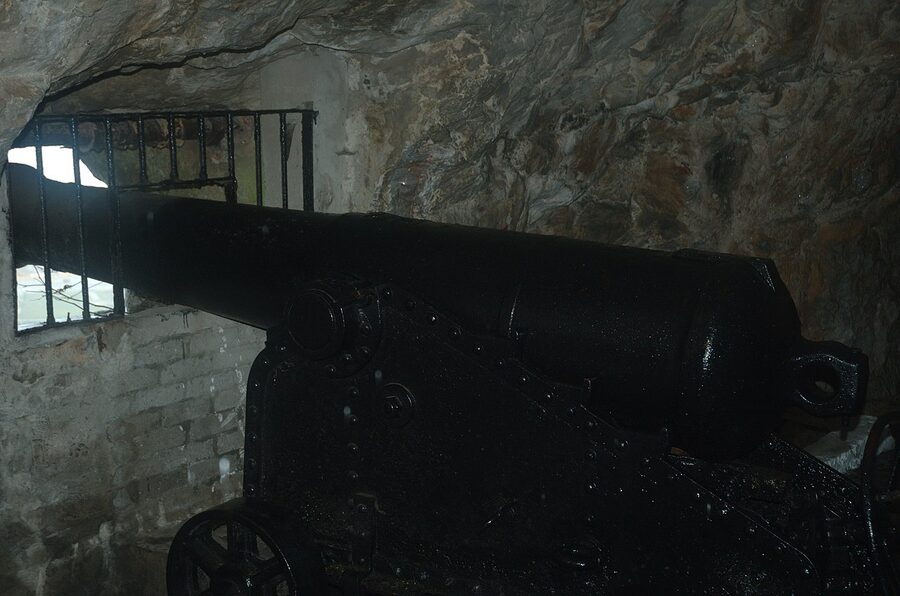
If your tour includes the Great Siege Tunnels, take it. The $35 to $38 standard tours sometimes do, sometimes don’t. Read the inclusions before you book. The tunnels are roughly £19 admission as a separate ticket if you go independently, and they’re worth it. If history of fortifications interests you, the parallel topic on the Italian side is the system of underground spaces below Naples around San Gennaro, which is also part military and part civilian.
The Pillars of Hercules and Looking Across at Africa
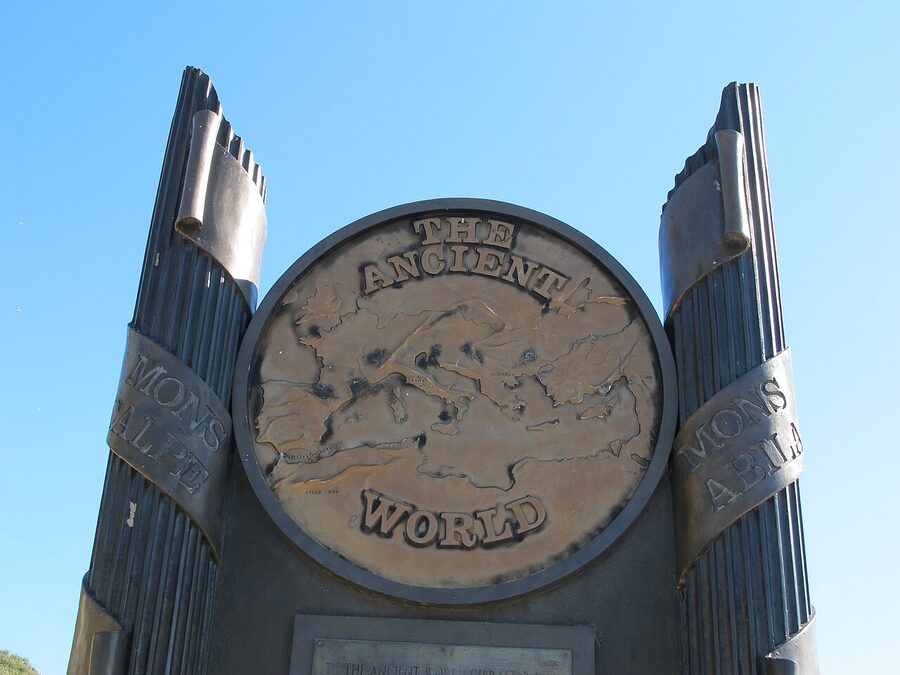
Pillars of Hercules: in the ancient Greek world, the western edge of the known map. Hercules was said to have split a mountain at the Strait, leaving two halves, one each side of the channel. The European half is the Rock of Gibraltar. The African half is Jebel Musa, just outside Ceuta. For Greek and Roman sailors this was the boundary; beyond it was the Atlantic, called Mare Tenebrosum, the Sea of Darkness, and the assumption was you don’t come back. The phrase Non Plus Ultra, “nothing further beyond”, was supposed to have been carved on these pillars by Hercules himself.
Then Spain happens. After Columbus, Charles V drops the Non from the motto, makes it Plus Ultra (more beyond), and that becomes the imperial Spanish national motto. You can still find Plus Ultra carved on Spanish town halls and minted on euro coins. The whole pivot of European geographical imagination from a closed sea to an open Atlantic is right here, at this strait, at this gap between two stones.
I hadn’t expected this part of Gibraltar to land for me, but it did. Standing at the monument with Morocco visible across the water (or implied, when the haze is too thick) is a stronger geography lesson than any classroom version. The same way the Mezquita in Córdoba shows you what ‘crossroads of civilisations’ means once you’re standing under the arches, the Pillars do the same thing for the move from Mediterranean to Atlantic.
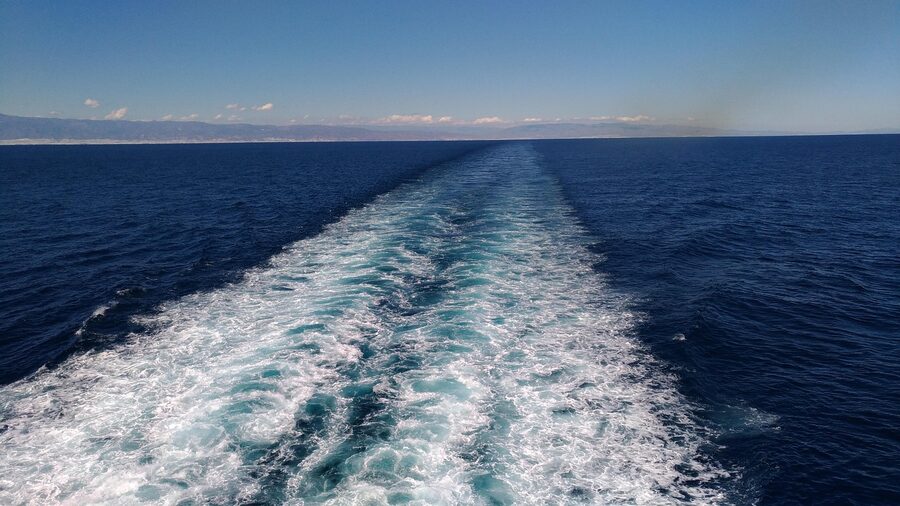
Europa Point and the Lighthouse
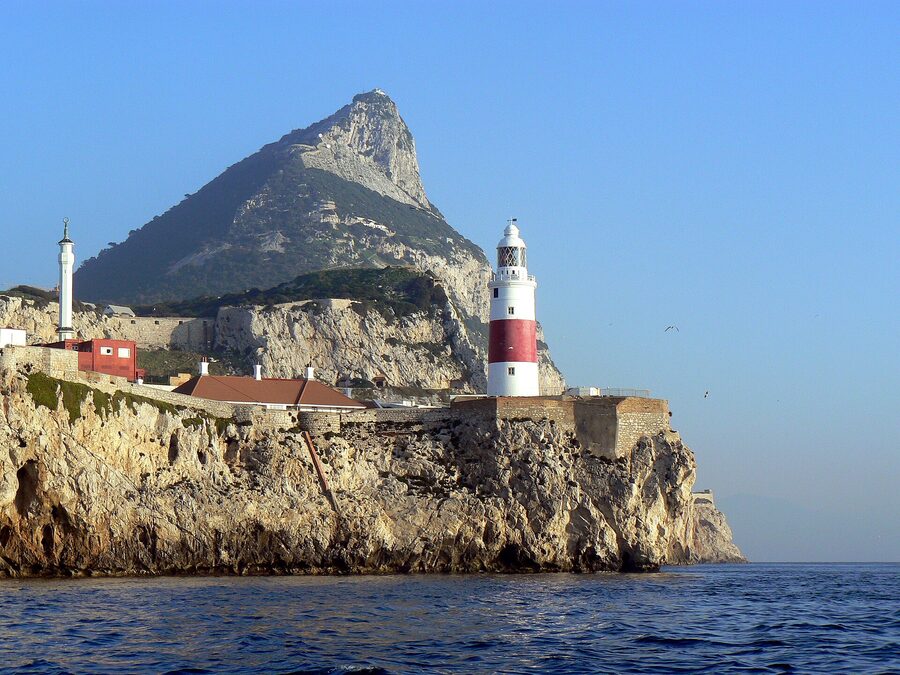
Europa Point is the southern tip. There’s a lighthouse, a mosque (the Ibrahim-al-Ibrahim Mosque, gifted to Gibraltar by Saudi King Fahd in the 1990s), a small park, and a lot of wind. The place itself isn’t really a destination. The view is what you came for: water in three directions, Africa on the horizon, freight tankers heading both ways through the Strait. About 70,000 ships transit per year, more than the Suez or the Panama in some years. You can sit on a bench at the southern edge for fifteen minutes and watch the global container trade move past you.
Most organised day trips don’t include Europa Point. If yours does, it’s a quick stop. If yours doesn’t, and you have spare free-time hours, take the local Bus 2 from the centre. £1.50 each way, runs every 15 minutes or so during the day. Don’t bother with a taxi unless you’re rushed.
The Moorish Castle and Why Gibraltar Was Worth Fighting Over
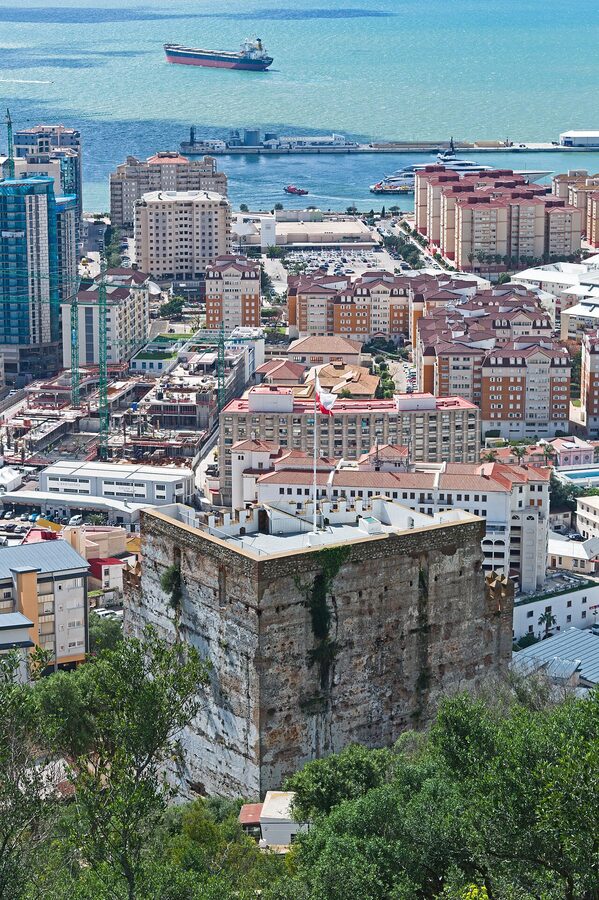
Why did anyone fight over a 6.7-square-kilometre rock for a thousand years? Because of the runway, basically. Or rather, because of what the runway was before there was a runway: the Strait. Gibraltar controls one side of an 8-mile-wide gap between Atlantic and Mediterranean. Whoever holds Gibraltar can, in theory, control naval traffic into and out of the Mediterranean. It was strategically vital to the Moors when they invaded Iberia in 711 (the name Gibraltar comes from Jebel Tariq, the mountain of Tariq, the general who led that invasion), it was vital to Spain after the Reconquista, vital to Britain after Spain ceded it in 1713, and vital to NATO during the Cold War.
The Moorish Castle’s tower has actual cannonball impact craters from the various sieges. It’s not a polished tourist site like the Alhambra in Granada or the Alcázar of Seville. It’s a small, slightly worn fortress that’s been continually reused for over a thousand years and looks it. The Almohad-era brickwork still visible in places makes it directly comparable, in a smaller way, to the Moorish layers under Málaga’s own Alcazaba. If you’ve already seen the Alcazaba, the Moorish Castle in Gibraltar is the same architectural family, just battered by more centuries of warfare.
The contested-history thing also rhymes with Toledo, where Moorish, Jewish, and Christian layers stack on the same hill. Gibraltar is rougher and smaller, but the layered-territory feeling is similar.
The Shopping Zone (and Whether It’s Worth It)
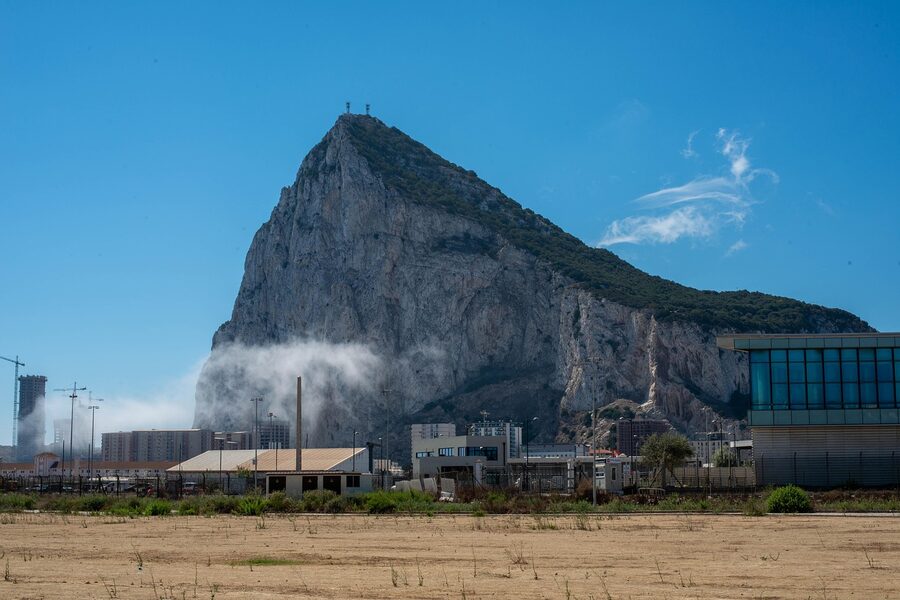
This is the part of Gibraltar most travel writers either oversell or hate. Here’s the take. Main Street and the Casemates Square area are the historic high street of Gibraltar, plus a duty-free shopping district. Tobacco, alcohol, perfume, and electronics are cheaper here than in Spain or the UK because Gibraltar has its own VAT regime (no VAT on most goods). British weekenders fly in for a weekend specifically to buy cigarettes. That’s why this area is the way it is.
For the typical day-tripper from Málaga, this means: if you want to bring a bottle of single malt back, this is a great place to do it. If you want a sense of authentic Gibraltarian street life, you’ll find a thinned-out version of it in the side streets off Main, but Main itself is mostly chain shops, jewellers, and tax-free booze. There’s a Marks & Spencer, a Mothercare, a couple of Greggs (or there were last time I went). It looks like a British high street circa 1995, transposed to Mediterranean light, with palm trees, the way Zaanse Schans north of Amsterdam looks like a 19th-century Dutch village transposed onto a busy day-trip stop.
What I’d recommend during the free-time block: skip Main Street unless you have a specific shopping mission. Walk to Casemates Square instead, which is the open square just inside the city walls when you come in from the runway. There are pubs around the perimeter. Get a fish and chips, get a pint, sit in the sun. That’s the Gibraltar version of the day a Spanish day trip should not give you. It’s the small bit of British transposition that justifies the eight hours on a bus.
The Dolphin Boat Alternative
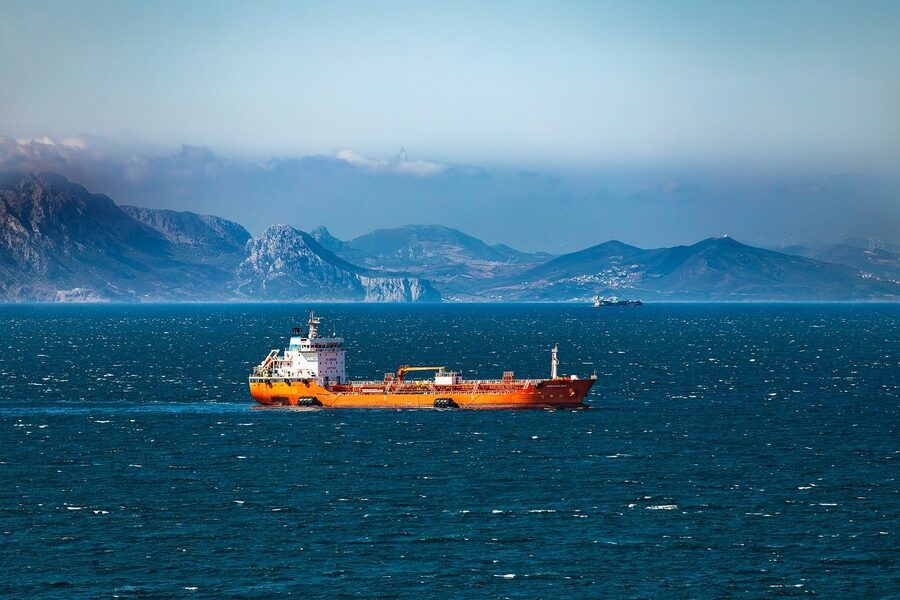
If you’ve been to Gibraltar before and you’re going back, or if you’re sceptical of the ape-and-cave route entirely, the dolphin boat alternative is worth considering. The boat trip runs about 75 to 90 minutes from the Gibraltar marina, going out into the bay and along the Strait. The Strait of Gibraltar genuinely is one of the better dolphin-watching corridors in the Mediterranean. Common, striped, and bottlenose dolphins all live there year-round, and you’ll often see pilot whales in summer. Sightings are not guaranteed, but the operators have a reasonably straight track record about it; on the dolphin boat tour I’d flag, sightings happen on roughly nine out of ten trips.
The trade-off is real. Booking the Gibraltar + dolphin combo means you skip the Rock minibus tour (the one that does Apes’ Den, St. Michael’s Cave, the Tunnels). You still cross the runway, you still see the lower town, you still get the cable-car option if you pay separately, but the guided upper-Rock minibus loop is replaced by a boat. Whether that’s the right swap depends on what you came for. If you’ve seen primates somewhere else and you’d rather see cetaceans, swap. If you really want the Apes’ Den photo, don’t.
For a similar boat-vs-land trade-off in Spain, the catamaran out of Barcelona and the Guadalquivir cruise in Seville are calmer, more aesthetic versions of the same idea. None of those have wildlife the way Gibraltar’s strait does. The Italian comparison would be the Capri boat tour from Naples, which has its own bay biology but doesn’t reliably deliver dolphins.
Currency, Passport, Practical Things
Gibraltar uses the Gibraltar pound. It’s pegged 1:1 with the British pound, but here’s the gotcha: Gibraltar pounds are only legal tender in Gibraltar. UK shops won’t take them. Spanish ATMs absolutely won’t. So if you withdraw cash there, spend it before you leave. Most places take British pounds without complaint, and many take euros (at usually unfavourable conversion). Cards work everywhere on Main Street and in restaurants. I’d carry £20 to £30 in cash for a small lunch and the bus, and pay everything else by card.
Passport: required. Always. There is no EU-national exception via national ID at the moment for most travellers (post-Brexit, the rules tightened). Bring your passport, and bring it physically. Photos and digital copies are not accepted at the border. If your passport expires within six months of your visit, check the rules.
Language: English everywhere. Spanish almost everywhere. The local accent (called Llanito) is a mix of British English and Andalusian Spanish, often code-switching mid-sentence; locals will be speaking it among themselves, but they’ll switch to clean English the moment they address you.
Time: Gibraltar is on UTC+1 in winter and UTC+2 in summer, same as Spain. So no time-zone change crossing the border. Your phone will probably switch networks as you cross the runway and connect to a UK provider; this can mean a roaming charge depending on your plan, and post-Brexit, EU mobile-roaming protections don’t apply to Gibraltar. Check before you leave the border. Or just turn off mobile data while you’re in Gibraltar. Wifi works fine in cafés.
Hop the Driver Tip and Other Bus-Day Etiquette
Tipping the bus guide is normal. €2 to €5 per person at the end of the day. Not mandatory. Don’t feel bad if you skip it for a guide who didn’t engage. Almost every guide will explicitly mention this near the end of the trip; if yours doesn’t, that’s a small hint you can probably keep your wallet shut.
Lunch on the day trip: most bus tours don’t include lunch. You eat in the free-time window in central Gibraltar. Budget about £15 for a pub lunch with a drink, less if you grab a sandwich. The fish and chips at the Lord Nelson on Casemates is a fine standard option. If you want something more local, the Roy’s Cods Place a couple of streets back from Main Street does a better job for less money. Vegetarians will find more options on side streets than on Main itself.
Bringing food on the Rock is a bad idea. The macaques can smell sandwich at fifty metres and they will get it. Eat before, eat after, eat in the lower town. Not on the cable-car patio. Not at the lookouts.
The Windsor Suspension Bridge
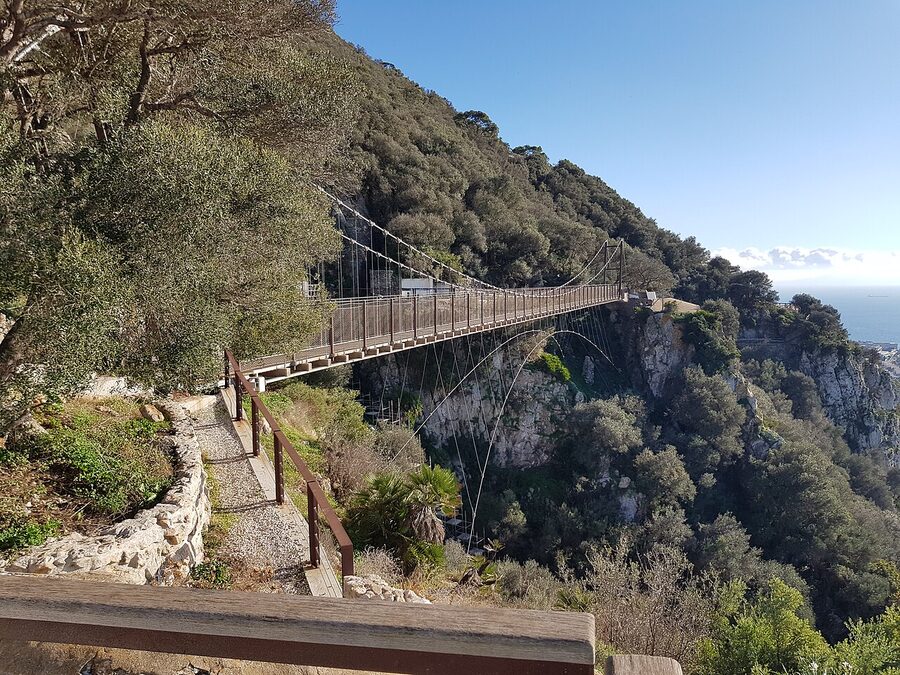
If you have time and you’re not afraid of heights, the Windsor Suspension Bridge is the newest of the Rock’s pay-to-cross attractions. It’s only included on the longer guided routes (or if you walk the upper Rock independently). The bridge sways. Locals call it the wobble. Some tour guides skip it because they hate organising tour groups across a swaying bridge. If yours offers it, take it. The view down the gorge to the harbour is the kind of thing that doesn’t photograph well but lands in person.
If suspension bridges and vertical drops are your thing, Andalusia delivers heavily on this. The Caminito del Rey is the best version, a 100-metre-high boardwalk pinned to a sheer gorge wall outside Málaga. Ronda’s Puente Nuevo bridges another massive gorge, El Tajo, and the comparison gets even closer when you realise both Ronda and Gibraltar are vertical-stone-icon towns built on isolated mountains. Catalonia gives you the same emotional payoff at Montserrat. In Italy, the comparison rhymes most strongly with Mount Vesuvius from Pompeii and Mount Etna from Catania: there’s something specific about a single dramatic vertical landform shaping a whole regional identity.
What To Do Back in Málaga That Evening
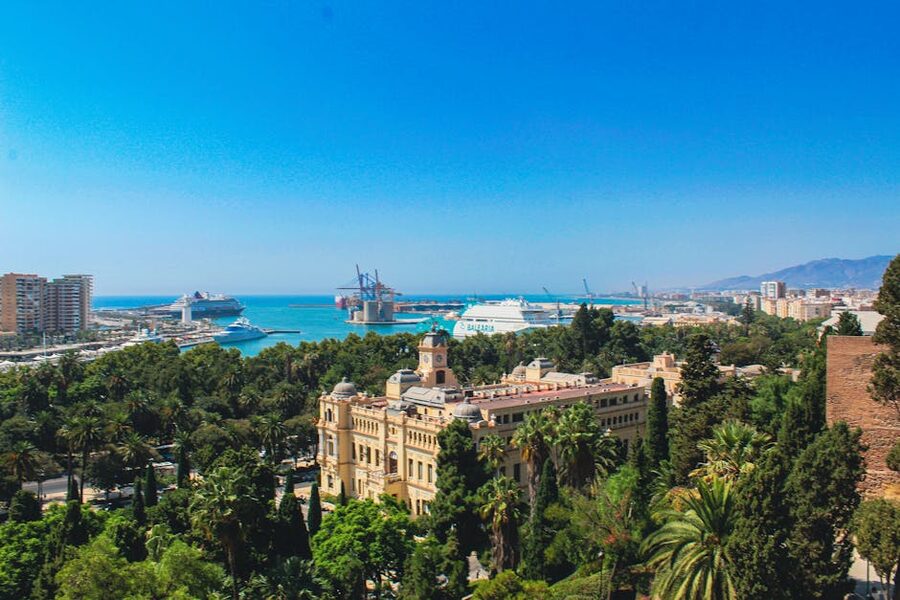
The bus drops you back in Málaga between 7pm and 8pm. You’re tired, you’ve done a lot, but the evening is yours and Málaga rewards a low-key one. Three options that pair well with a Gibraltar day:
The Picasso Museum. Closes at 7 or 8pm depending on day, so usually too late after a Gibraltar trip, but if your bus gets back early, the museum is a fifteen-minute walk from most central hotels and they’ve extended hours into the early evening on some weekdays. It’s the only Picasso museum in the city where he was born and baptised, and it’s denser per square metre than either the Reina Sofía in Madrid or the Picasso Museum in Barcelona.
Flamenco. The standard Málaga flamenco shows run at 8pm and 10pm. After Gibraltar, the 10pm show is the one to aim for, gives you time to shower and eat. Local Málaga flamenco has its own subgenre called verdiales, which is rougher and more rural than the Sevillian or Granadina styles, and worth seeing if you’re going to do flamenco only once.
The Alcazaba. If your bus is back by 6:30 in summer, the Alcazaba is open until quite late and is a different beast at sunset than at midday. The Moorish Castle on Gibraltar will have warmed you up to the architectural family. The Alcazaba is the polished, larger, less battered version, with the Roman theatre underneath and a view that aligns with the harbour where you started your morning bus.
Or, simply: dinner. The freidurías near the port do fried fish to a standard that justifies skipping anywhere fancier. You’ll have eaten lunch in a Gibraltar pub and dinner in an Andalusian fry shop in the same day, which is a kind of cultural diptych that doesn’t accidentally happen on most trips.
The Three Tour Options Compared
I’d narrow the choice down to three. All depart from Málaga, all handle the bus and border crossing for you, all run roughly the same daily schedule. They differ in price, what’s included on the Rock, and whether dolphins are part of the package. Pick by what your priorities are; all three are decent, and I’d genuinely book any of them.
1. From Málaga: Full-Day Trip to Gibraltar: $35
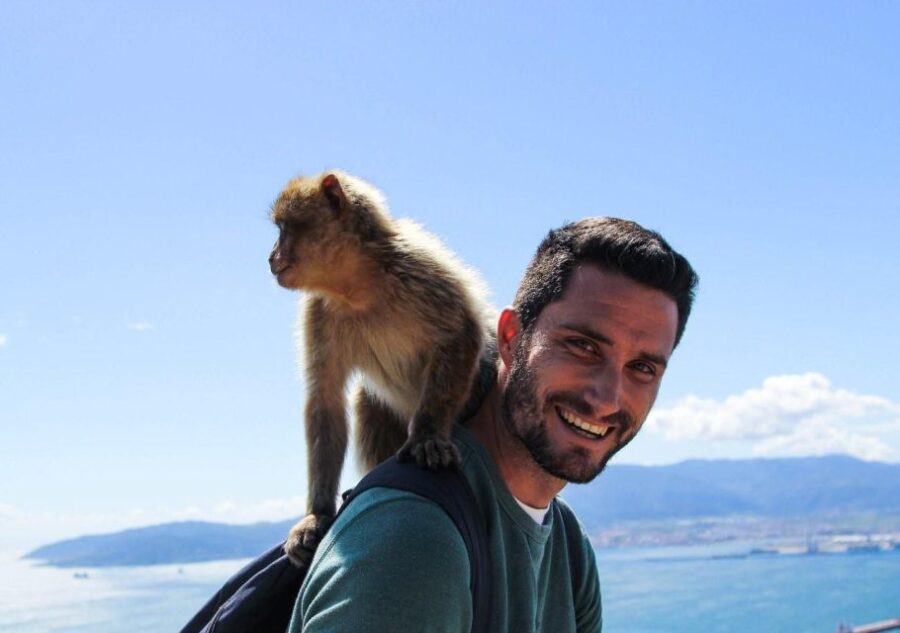
This is the one I’d default to. It’s the cleanest, lowest-friction version of the Málaga-to-Gibraltar day, and it covers everything someone visiting for the first time actually wants (cable car, macaques, St. Michael’s Cave, free time). Our full review covers what’s included on the Rock and where the bus picks up. If you only book one Gibraltar tour from Málaga, book this.
2. From Málaga and Costa Del Sol: Gibraltar Tour: $38
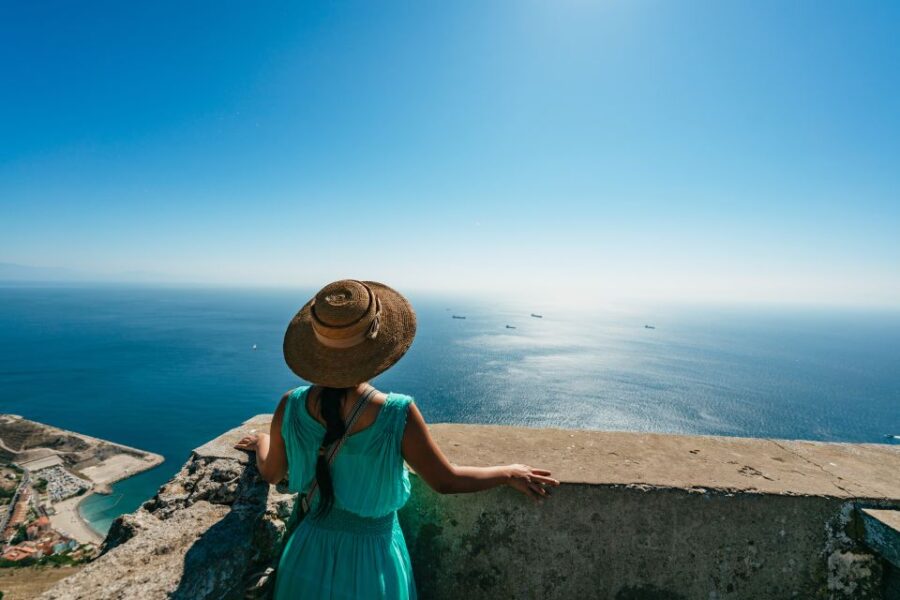
Pick this one if you’re not staying in central Málaga or you want maximum confidence in a smooth, well-run day. It’s the runaway market leader for a reason. Our full review walks through the Costa del Sol pickup logistics and the typical day on the Rock. The $3 difference vs option one is mostly the wider pickup network.
3. From Málaga: Day Trip to Gibraltar and Dolphin Boat Tour: $73
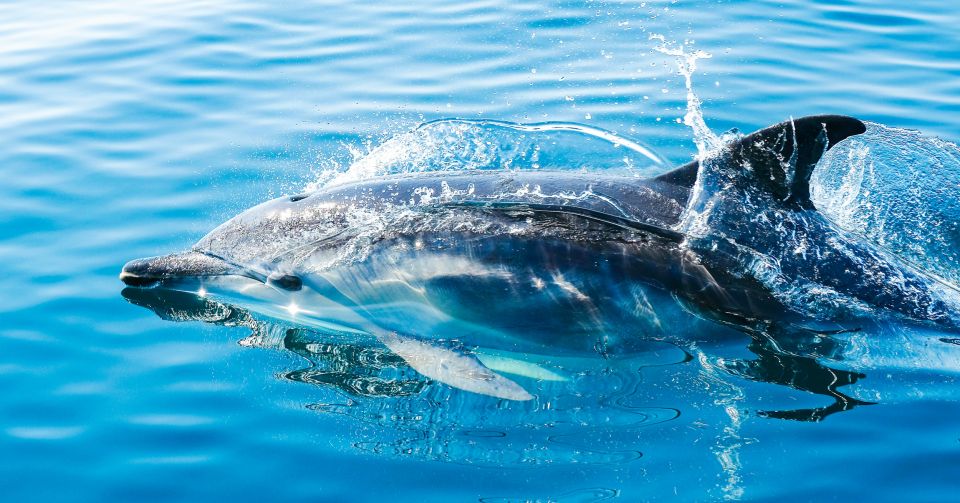
If you’d rather see dolphins than monkeys, this swaps the Rock-tour bus for a boat add-on. Sightings happen most days but aren’t guaranteed. Our full review covers what you trade off (the Apes’ Den, the cave) for what you gain (an actual chance at seeing pilot whales in the Strait).
The DIY Version (Why Most People Shouldn’t)
You can do this independently. Avanza buses run from Málaga’s main bus station (María Zambrano) to La Línea de la Concepción in roughly two hours for around €22 each way. From the La Línea bus station, it’s a seven-minute walk to the border. Cross on foot. Then you’re in Gibraltar, free to do whatever you want for as long as you want.
The catch: the buses only run a few times a day and the schedules don’t pair neatly with a Gibraltar day. The first practical bus from Málaga gets you to La Línea around 11am. The last sensible bus back leaves around 6pm. So you’ve got five hours on the ground if you do this independently. The €35 organised tour gives you a comparable amount of ground time, picks you up from your hotel, and handles the queue. The cost difference is, in practice, smaller than it looks.
Driving works if there’s three or four of you splitting the rental. The toll motorway from Málaga is roughly two hours, the free coast road two and a half. Park in La Línea (multiple paid car parks within walking distance of the border). Don’t take the rental into Gibraltar; the vehicle queue is brutal and many rental contracts forbid it.
Train: doesn’t really exist for this. Gibraltar has no train station. The nearest Spanish station is San Roque-La Línea, served only from Ronda and Algeciras, and it’s a 30-minute taxi from there to the border. So unless you’re already in Ronda, the train is the wrong call.
What Surprised Me About Gibraltar
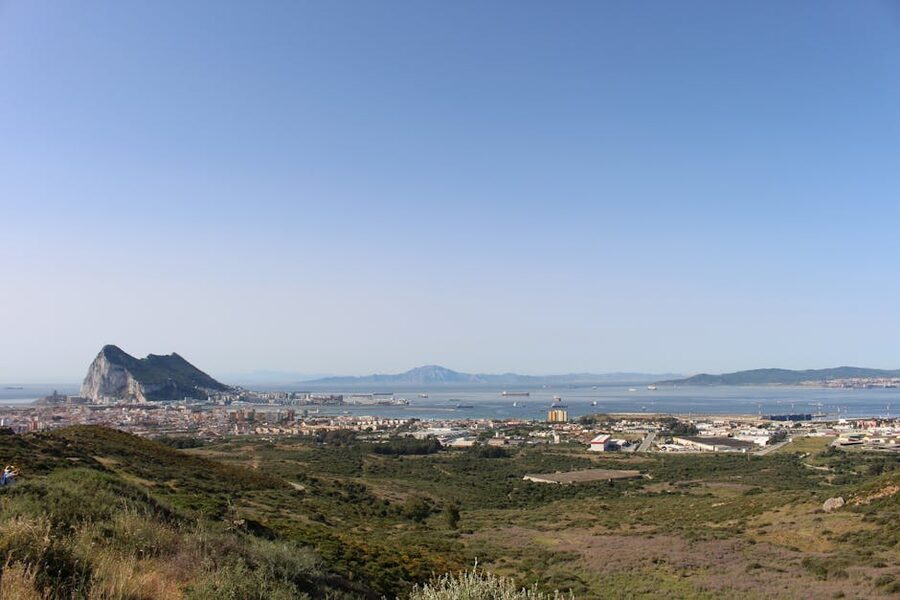
I went in cynical. I’d read enough to expect a tax-free shopping mall with a tame monkey theme park attached. What I didn’t expect was the geographical and historical density. The Strait of Gibraltar isn’t just a feature on a map: standing on the upper Rock you can physically see two continents and feel the wind that has shaped European naval strategy for two thousand years. The Pillars of Hercules monument hits hard not because it’s an ancient site (it isn’t, the monument is modern) but because the landscape behind it is exactly the geography Greek and Phoenician sailors were looking at when they decided not to go further west.
The macaques are also genuinely better than expected. I had braced for a primate petting zoo. What I got was a wild population doing wild-population things on a landscape they’ve adapted to over centuries, with humans tolerated because humans bring food. They’re not doing tricks. They’re sleeping, fighting, grooming, watching the boats, occasionally launching themselves at someone who didn’t put their sandwich away.
The cave concerts I haven’t been to. They’re the next-time thing on my list. If you can time a visit to coincide with one of the seasonal St. Michael’s Cave classical concerts, do.
What’s Most Likely to Go Wrong
Two things. First, the queue. On any given Saturday in summer, especially when there are cruise ships in port, the foot crossing back into Spain in the late afternoon can stretch to 90 minutes. If your bus is leaving from La Línea at a fixed time and you’re stuck in that queue, it’s a real problem. The defence: leave the upper Rock by 4pm, leave central Gibraltar by 5pm, target the border crossing for no later than 5:30pm if your bus is at 6.
Second, the macaques and the food. I keep mentioning it because every tour guide does. I’ve seen a tourist lose a Subway sandwich and a small handbag in the same fifteen-second incident at Apes’ Den. The macaque had unzipped the bag. There was no aggression but there was also no negotiating. Once they had the food, the food was theirs. So pack your snacks deep in a closed bag, keep that bag on the side of you not facing the macaques, and don’t take photos with food anywhere visible.

Third minor thing: weather. Gibraltar gets the Levante wind, an easterly that piles cloud onto the upper Rock and can cut visibility to a few metres at the lookouts. About 30 days a year are heavily Levante-affected. There’s no way to predict it more than a couple of days ahead. If you wake up to thick cloud over the Rock on the morning of your trip, the Rock tour will still happen but the views will be ruined. Some tour operators will let you defer; most won’t, because the bus is leaving regardless. Build in flexibility if you can.
If You Liked This Day Trip
The day-trip-out-of-Málaga circuit is broader than most travellers realise, and Gibraltar is the most exotic single option. The Caminito del Rey is the most physical (a boardwalk pinned to a 100-metre cliff, three to four hours of walking, no shopping zone). Ronda and the white villages is the most picturesque (Puente Nuevo bridging another gorge, El Tajo, with a vertical drop that rivals Gibraltar’s). Córdoba’s Mezquita is the most architecturally singular. None of them have monkeys, an active runway, or the British-pub-on-a-Mediterranean-coast oddity. So Gibraltar earns a slot of its own in the rotation.
If you’ve already done all the Andalusian day trips and you’re moving northward in your Spain itinerary, the closest emotional cousins are Toledo from Madrid (multi-faith historical layering on a hilltop town) and Segovia and Ávila (medieval stone cities with Roman engineering bonuses). For full-day rock-and-water itineraries on the Italian side, Cinque Terre from Florence, Lake Como from Milan, and the Amalfi Coast are the best parallels. They’re calmer than Gibraltar (no border, no monkeys, no airport runway), and they all share the day-trip-out-of-a-major-city structure that makes this kind of travel work.
And if you find yourself doing this sequence, you’ll discover what most multi-region Spain travellers do: the country’s day-trip layer is one of its real strengths. The cities are good, but the moments that stick are usually one bus ride away from them.