
The cell is on the second floor of the Fort Royal, behind a heavy door, in a stone box about four metres square. There’s a window, and through it you can see the Mediterranean. There’s a chair the prisoner used, preserved. He arrived in 1687, left in 1698, and nobody has ever proved who he was.
Most travellers do Cannes for the Croisette and the Film Festival. They miss that the actual day out is the 15-minute ferry across to the Lérins Islands. Sainte-Marguerite holds the prison. Saint-Honorat holds the monks. The crossing is $24 round-trip, and it changes the trip.

In a Hurry? Three Picks
- The flagship ferry to Sainte-Marguerite ($24). The 15-minute boat that drops you at the dock for the Fort Royal and the Iron Mask cell. The one to book if you book one thing. Check ferry availability.
- Esterel Calanques boat excursion ($88). 2.5 hours along the red-rock coast west of Cannes, two snorkel stops, 12-passenger boat. The pick if you want the coastline rather than the prison. Check Esterel availability.
- Cannes to Saint-Tropez transfer ($95). 75-minute coastal sail each way, five hours in Saint-Tropez. The pick if you’ve already done the Lérins and want a second day-trip. Check Saint-Tropez availability.
What the Lérins Islands actually are
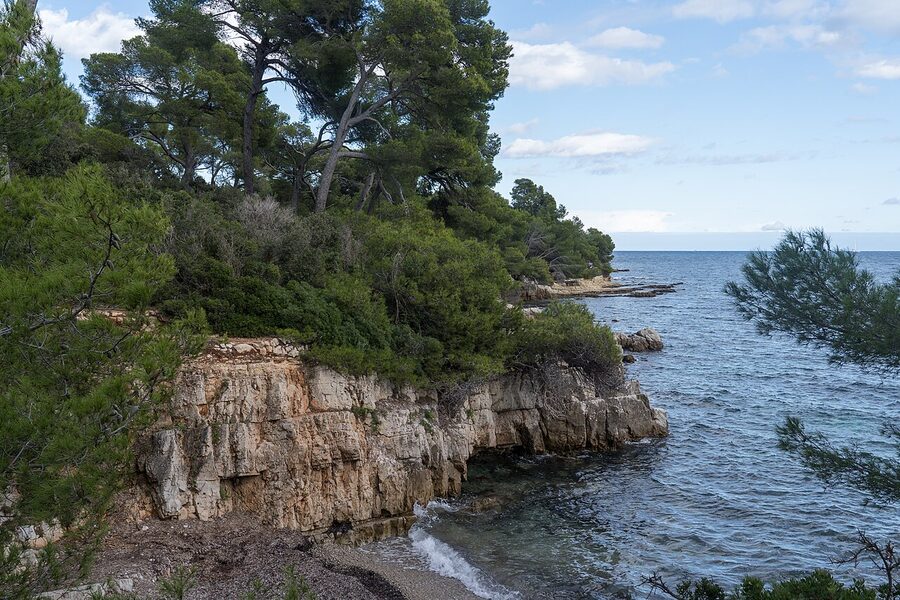
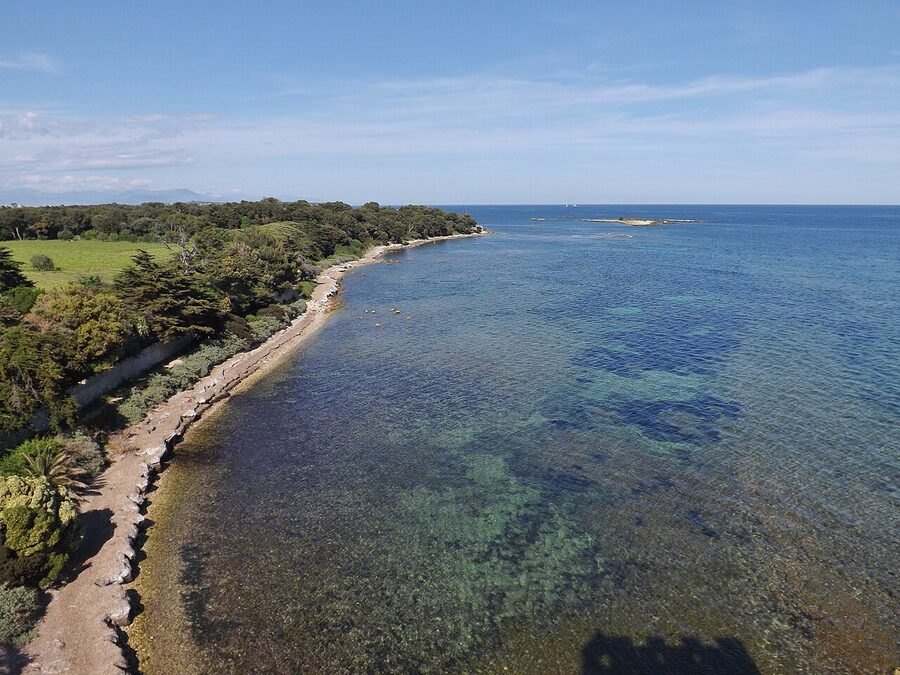
Four islands, 1km off Cannes, in the Mediterranean. Sainte-Marguerite is the bigger one, 950m wide and 3km long, mostly pine and eucalyptus forest with the Fort Royal at its eastern tip. Saint-Honorat is the smaller, 400m by 1.5km, the Cistercian monastery, the vineyards. The other two (Tradelière and Saint-Ferréol) are basically rocks with seabirds, and you don’t go to them.
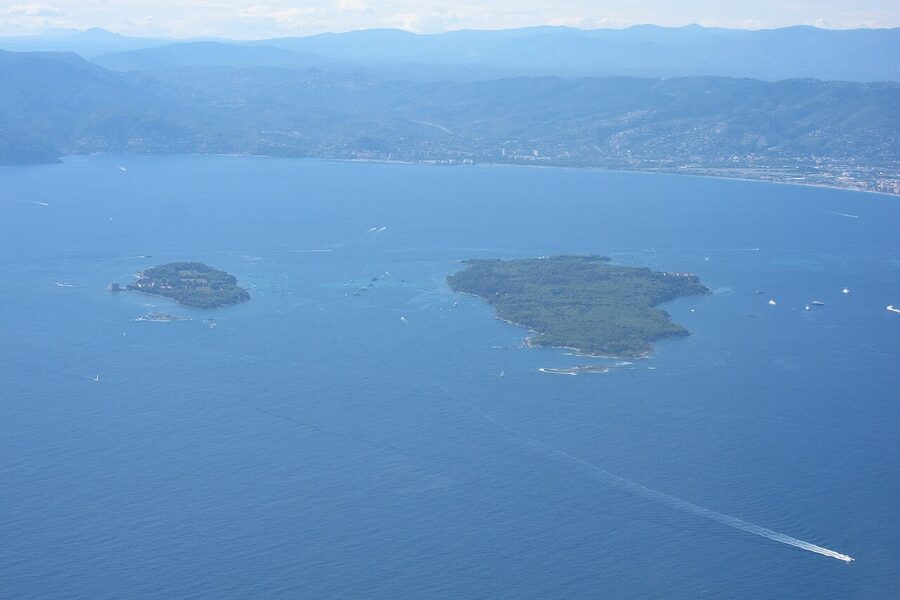
The two main islands run separate ferry companies, separate tickets, separate docks back in Cannes. You can do both in a day if you start early, but most people pick one. Sainte-Marguerite if you want the prison and the forest paths, Saint-Honorat if you want the abbey and the wine.
The crossing itself is short and unromantic. Fifteen minutes, plastic seats, a flat bow that slaps the chop. There are no scenic narration speakers, nothing announcing the approach. Then the dock, and you’re on the island, and the contrast with Cannes is immediate. No traffic. No cars at all. Pine resin instead of diesel and luxury perfume. The same short-functional-crossing rhythm runs the Spido harbour cruise out of Rotterdam, which spends 75 minutes among container ships and Maeslantkering surge barriers without ever pretending to be a sightseeing yacht.
For other day-trips on this stretch of coast, see the French Riviera from Nice for what’s east of here, Monaco from Nice for the principality day, the Verdon Gorge for the inland canyon, and the Marseille hop-on bus if you’re working west along the coast.
Getting to Cannes, then to the boat
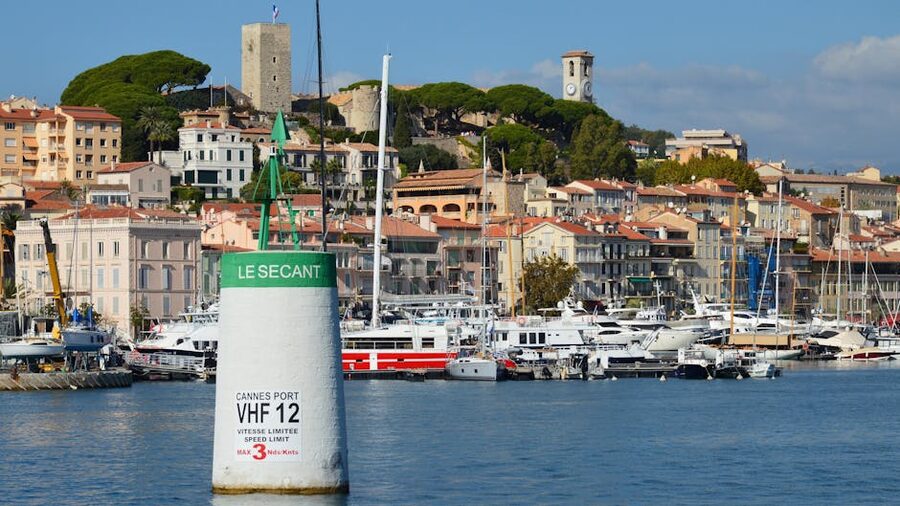
If you’re staying in Nice or Monaco, the SNCF train to Cannes takes about 30 minutes from Nice-Ville and costs $10 to $15 booked the day before. The station is a 10-minute walk from the Vieux Port. Walk south to the seafront, turn right, follow the Croisette past the Palais des Festivals, and the ferry kiosks are at the end of the Quai Laubeuf. The whole thing is well-signposted as Iles de Lérins.
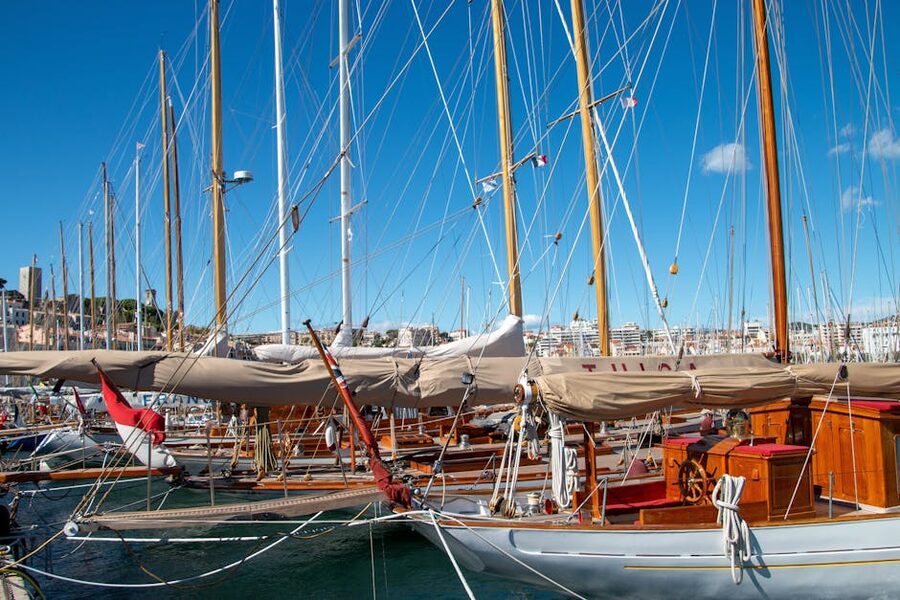
If you’re driving, parking near the port is awful in summer. The Palais des Festivals underground car park costs about €5 per hour and is the sanest option. Don’t try to park on the Croisette in July or August. You won’t.
The ticket office sells one-way and round-trip. Always buy round-trip. There’s no advantage to one-way (the price is identical), and the return queue at the island gets long in the afternoon. Round-trip means you board with whatever boat is leaving, no rebooking. Boats run roughly every 30 to 45 minutes from about 9am to 6pm in season.
The Fort Royal and the cell
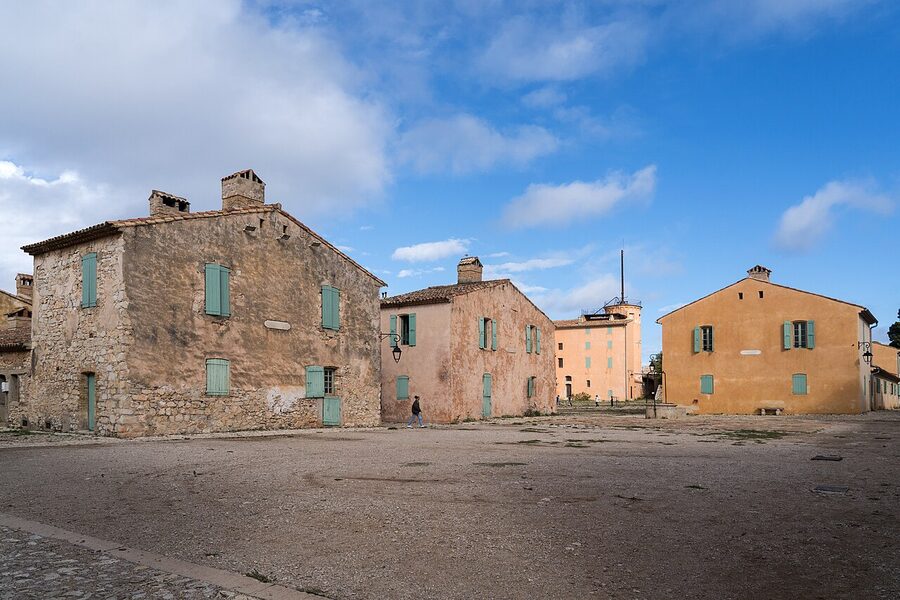
The Fort Royal was built in 1624 under Richelieu. It’s not subtle. Thick stone walls, a glacis, gun emplacements pointed back at the French mainland because most of the threats came from there, not from the sea. The fort became a state prison in 1687, and that’s when the prisoner who became famous as the Man in the Iron Mask arrived. He stayed for 11 years. Then he was transferred to the Bastille in Paris, and he died there in 1703.
The cell itself sits on the second floor of the prisoners’ wing. Four metres by four. A single window with bars, looking out over the channel between the islands. Stone floor, stone walls, a wooden chair preserved from the period. There’s a copy of the door, which has a small hinged hatch for passing food through. The room is plain. That’s the point. They didn’t decorate prisons in the 1690s.
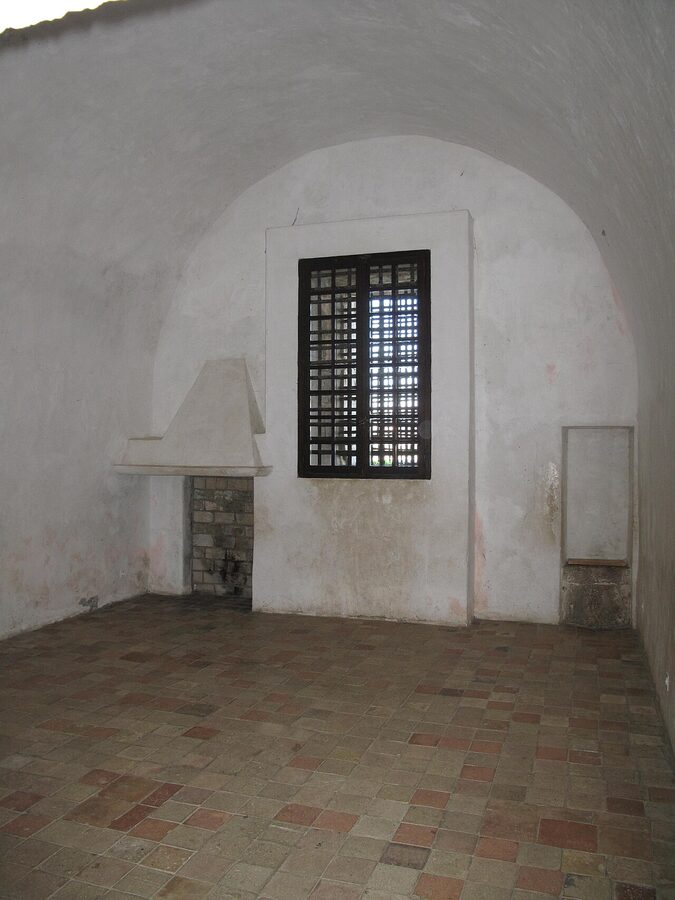
Standing in the cell is the moment of the trip. There’s no audio guide, no piped music, no recreated scene with mannequins. Just the room. People stand in there and don’t say much. A friend who went last spring told me she lasted maybe four minutes before she had to leave. The window is the worst part. He could see the mainland from it. The same physical-room-as-history-pilgrimage rule operates at the Anne Frank walking tour in Amsterdam, where the canal-house annex on Prinsengracht works the same way on visitors who actually get inside (or the walking-tour version that traces the route around the building).
The fort is now two museums under one roof: the Musée de la Mer (the maritime museum, with finds from a Roman shipwreck excavated off the island) and the Musée du Masque de Fer (the Iron Mask museum, which is mostly the cell, the documents, and a room of theories). Combined entry is about $8. You’ll spend roughly 90 minutes inside if you read the panels.
Who the Iron Mask actually was, probably
Here’s the situation. A real prisoner, masked in either velvet or black cloth (not iron, that’s Voltaire’s invention), held at Pignerol from 1669, then Exiles, then here at Sainte-Marguerite from 1687, then the Bastille. Strict orders that nobody could see his face. He died in 1703 and was buried under a false name. The records were burnt. That’s all genuinely documented.
What’s not documented is who he was. Voltaire was the first to call him “the iron mask” in his Siècle de Louis XIV in 1751, and Voltaire claimed he was Louis XIV’s twin brother, locked away to avoid a succession crisis. Dumas turned the twin theory into a 1850 novel, the novel became films, the films included the 1998 one with Leonardo DiCaprio, and the twin theory is now what most people think of when they hear “Iron Mask.” It’s also almost certainly fiction. There’s no contemporary evidence for a twin.
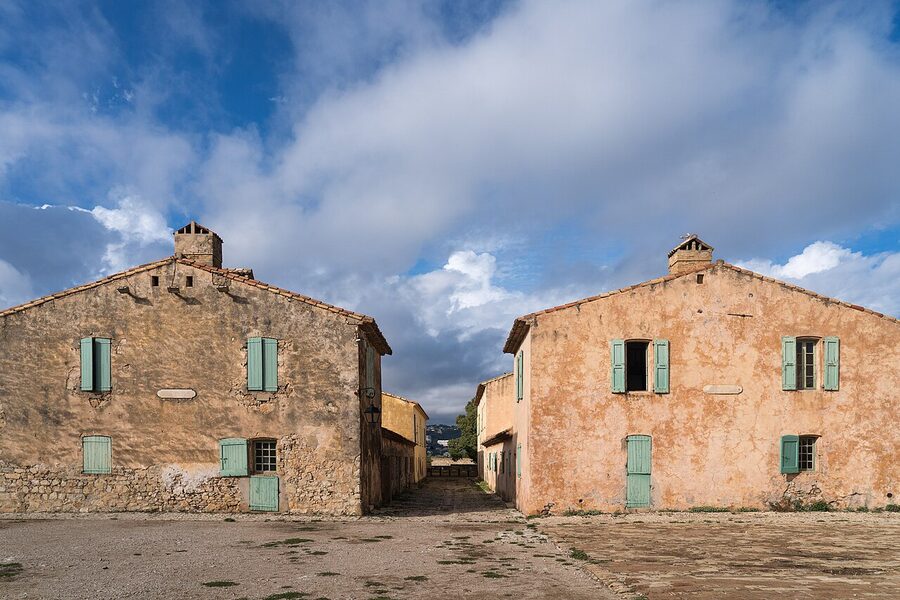
The two theories academic historians take seriously are duller and more plausible. The first, proposed by Andrew Lang in 1903 and refined since, is that the prisoner was Eustache Dauger, a valet or courier who knew something the king couldn’t have repeated. The second, popular in Italian scholarship, is that he was Ercole Antonio Mattioli, a count from Mantua who betrayed Louis XIV during the 1678 negotiations to buy the fortress of Casale. Both fit the dates. Neither fits all the documents perfectly. There’s also a long-shot theory that he was James de la Cloche, an illegitimate son of Charles II of England, but the dating is shaky.
The point of the museum’s iron mask room is that none of the theories fully resolves. You leave knowing more than you came in with, and certain only that someone real spent 11 years in that cell, and that the French state worked very hard to make sure nobody would ever know who.
Walking the rest of Sainte-Marguerite
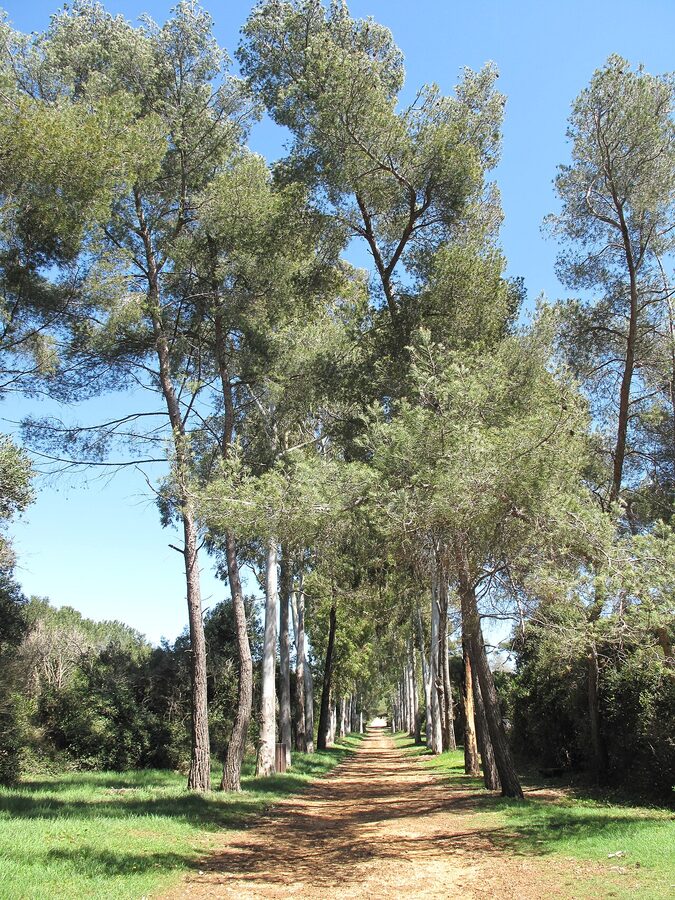
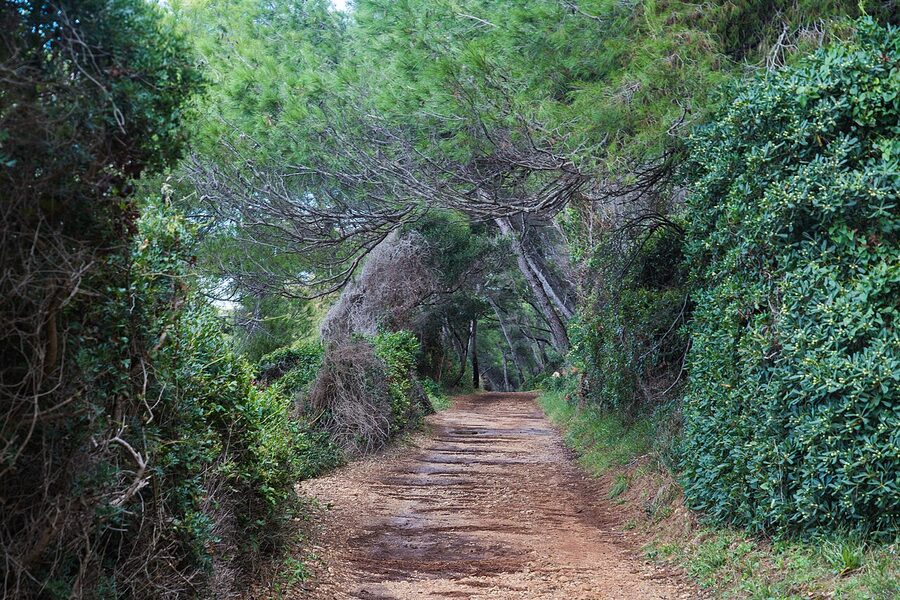
Most visitors do the fort and then leave, which is a mistake. Sainte-Marguerite is bigger than it looks on the map. There’s a perimeter trail that runs roughly 6km around the whole island, mostly flat, mostly under pine canopy. The full loop takes about two hours at a relaxed pace. You’ll pass an old military cemetery, a chapel ruin, a couple of tiny rocky beaches that are good for swimming if you’ve packed your kit.
The eucalyptus alley is the standout. It runs north-south through the middle of the island, and on a hot afternoon the air smells more like the inside of a Vicks bottle than a Mediterranean forest. The trees are not native. They were planted in the 1860s to drain marshland and reduce mosquito populations. The malaria-control programme worked. The trees stayed.
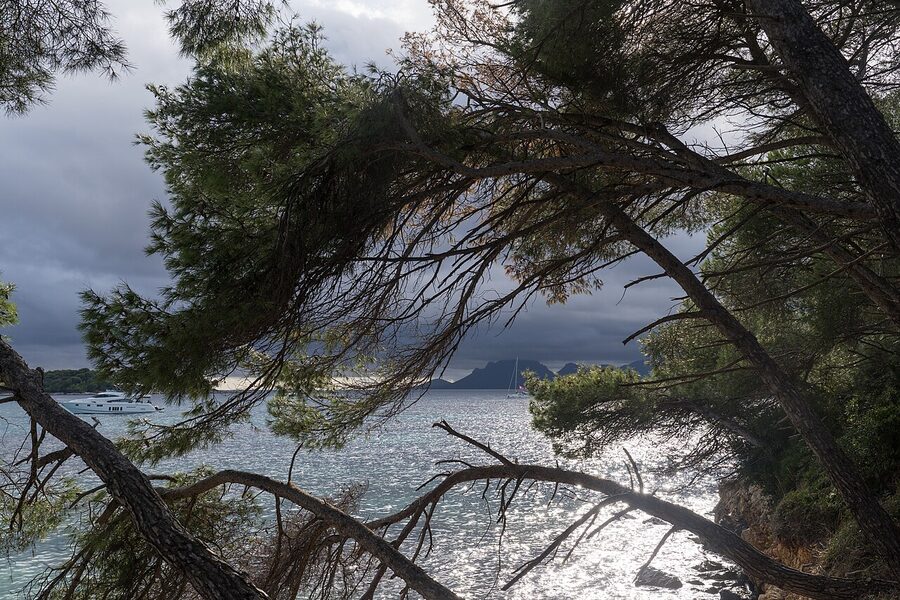
If you want to swim, the spot to head for is the Étang du Batéguier, a salt pond on the west side, and the rocky cove on its south edge. The water is colder than at the Cannes beaches because there’s no warm shallow shelf, but it’s clear and unbothered by jet skis. Bring water shoes, the entry is rocky.
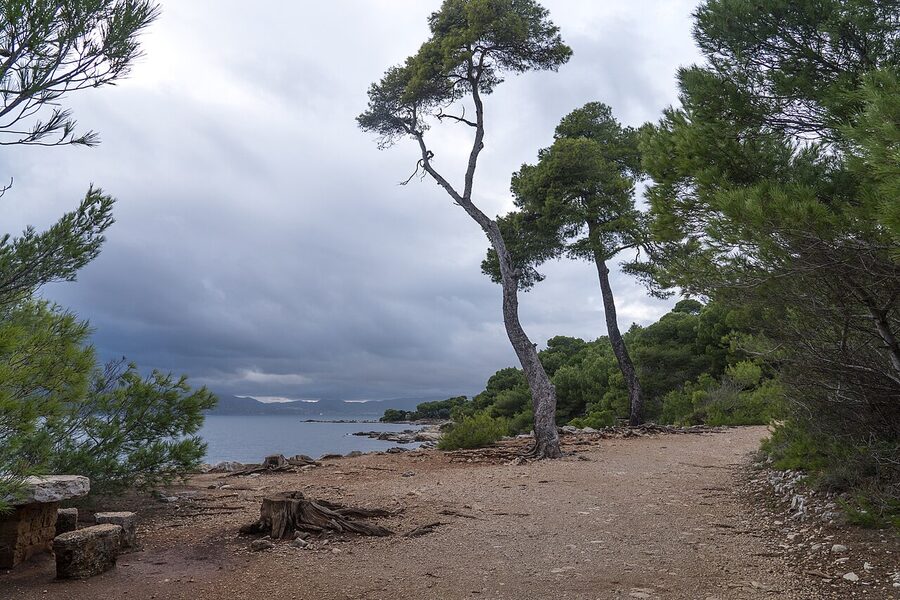
The island has one café-restaurant near the fort, which is fine and overpriced (€18 for a plate of pasta). Most regulars bring sandwiches and a bottle of water from a Cannes supermarket. There’s a fountain near the dock for refilling.
The other island: Saint-Honorat and the monks
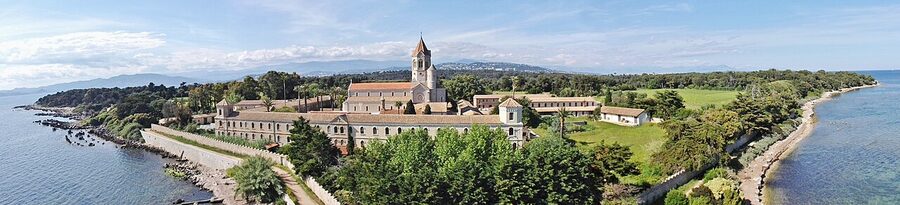
Saint-Honorat is the second island, smaller, and run as a working Cistercian monastery. There’s been a religious community here since around 410 AD, when Saint Honoratus founded it. The community has had bad centuries (Saracen raids in the 8th century, plague, dissolution during the Revolution) and good ones (the abbey was an intellectual centre of late-Roman Gaul, training half a dozen of the bishops who shaped early French Christianity). Today there are about 20 monks. They run the island.
The ferry to Saint-Honorat leaves from a different kiosk at Quai Laubeuf, run by Planaria, the monks’ own boat company. About $20 round-trip. The crossing is the same 15 minutes. When you arrive, you’re on monastic property. There are signs requesting silence in certain zones, no smoking, no drones, no swimming inside the monastery harbour. Take this seriously, because the monks can and will ask people to leave.

The vineyards are the surprise. The monks farm about eight hectares of vines, mostly Syrah and Mourvèdre on the reds, Chardonnay and Viognier on the whites. They’ve been making wine here in some form for over 1,500 years, with gaps, and the current production is small but seriously good. The Lérina label exists in red, white, and rosé, plus a sweet wine and a Lérina liqueur made with about 75 herbs to a recipe the monks won’t share. Bottles range from $25 to $50. You can only buy them from the monastery shop.
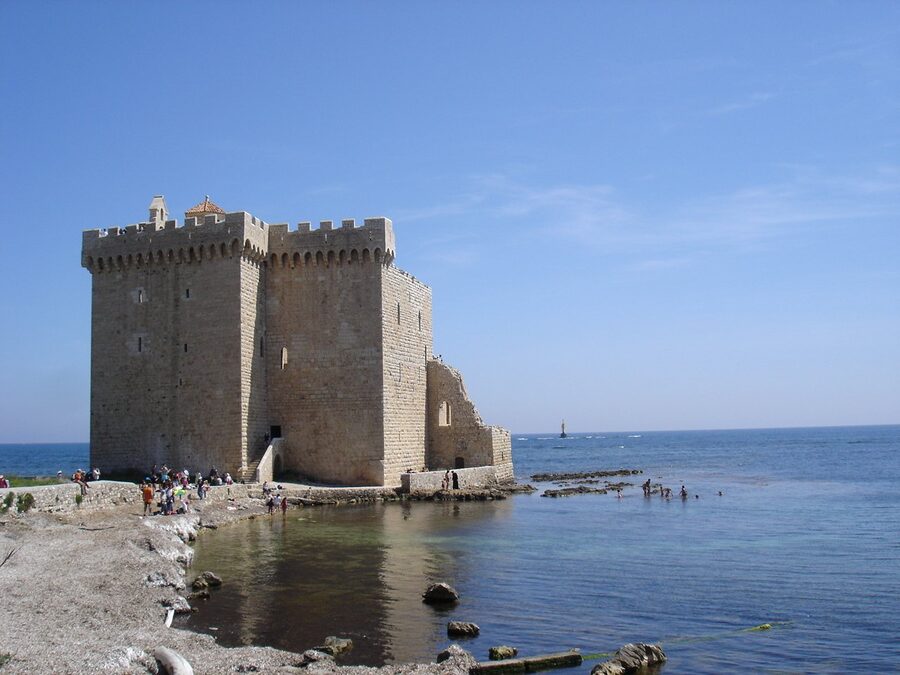
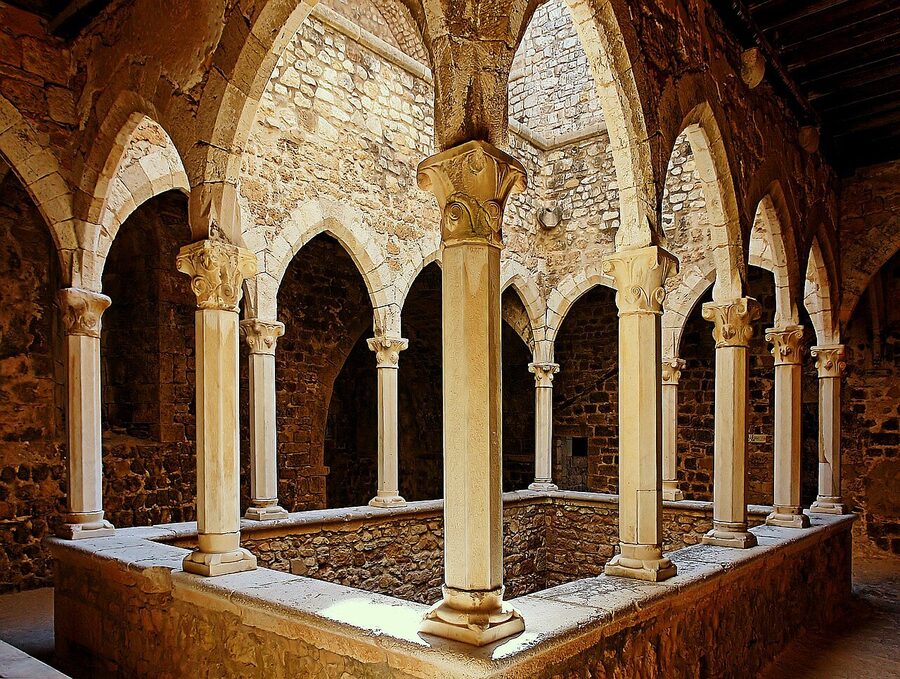
The cloister is open to visitors most of the day, with hours that close around lunchtime and again before evening prayer. There’s no entry fee. The 11th-century fortified tower next to the abbey was built to give the monks somewhere to retreat during Saracen raids, and you can climb it for the view across to Sainte-Marguerite.
The monks chant the offices four times a day. Vigils, Lauds, Vespers, Compline, in Latin and French. The chapel is open during these. If you can time a visit to catch one (Vespers around 5:45pm is the practical option for day-trippers), do it. It’s not a performance. They’re just praying. Tourists get to sit at the back. After 1,600 years of this, they don’t mind an audience.
Doing both islands in one day
You can, just. The two ferry companies don’t link, so you go back to Cannes between them. The trick is to start with Saint-Honorat, because the monks’ ferry runs less often, then switch to the Sainte-Marguerite boat after lunch. A workable timetable:
- 9:00am, first Planaria boat to Saint-Honorat. Cloister, vineyards, the chapel, the shop. About 2 hours.
- 11:30am, back to Cannes. Quick lunch in town (the place I’d send you is Aux Bons Enfants on Rue Meynadier, no reservations, no website, brilliant).
- 1:30pm, Compagnie des Îles boat to Sainte-Marguerite. The fort, the cell, the eucalyptus alley.
- 5:30pm, last reliable boat back. Don’t push it past this in season.
It’s a full day. You’ll be tired in a good way. If you only have time for one island, do Sainte-Marguerite for the prison story and the forest, do Saint-Honorat for the wine and the silence. They’re different trips.
The tours worth booking
Three options to get you on the water. The first is the standard ferry, which is what 90% of visitors use. The second and third are alternatives if you’ve already done the islands and want a different shape of day.
1. Round-Trip Ferry to Sainte-Marguerite from Cannes: $24
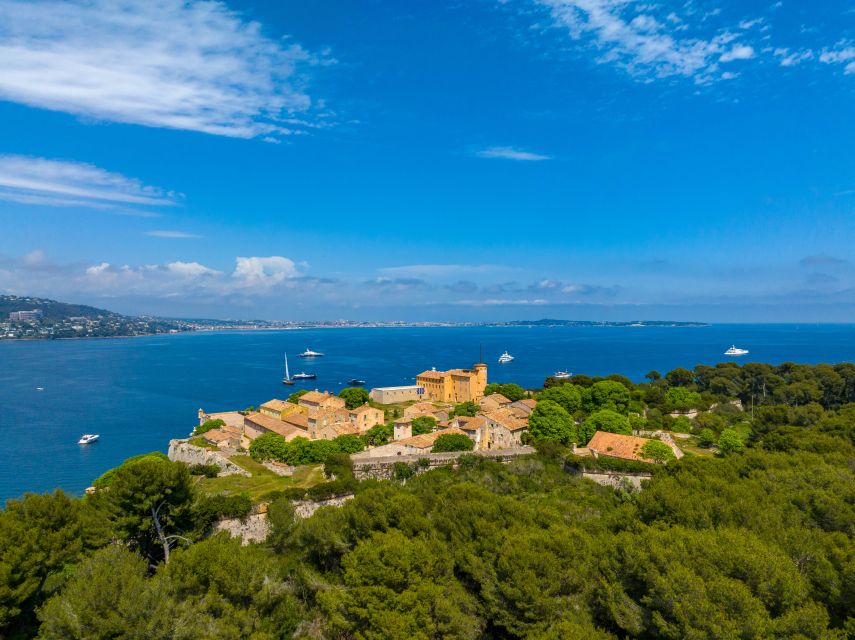
If you’re doing the Iron Mask cell and the fort, this is the only ticket you need. Our full review walks through where to buy the ticket, which dock to use, and what to skip. The boat takes 15 minutes each way and runs from morning to early evening.
2. Cannes Esterel Calanques 2.5-Hour Boat Excursion: $88
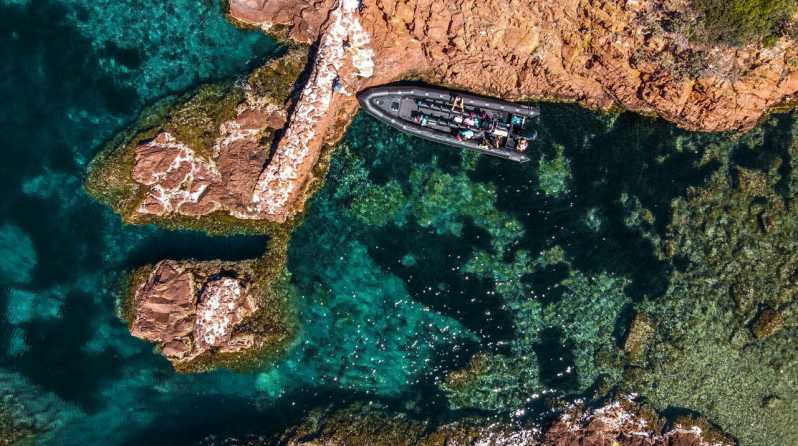
This goes the other direction from the islands, west into the Esterel volcanic coast. Our review covers what the snorkel stops are like and which captain is the regular. Small boat, about 12 people, decent skipper-led commentary in French and English.
3. Cannes to Saint-Tropez Round-Trip Boat: $95
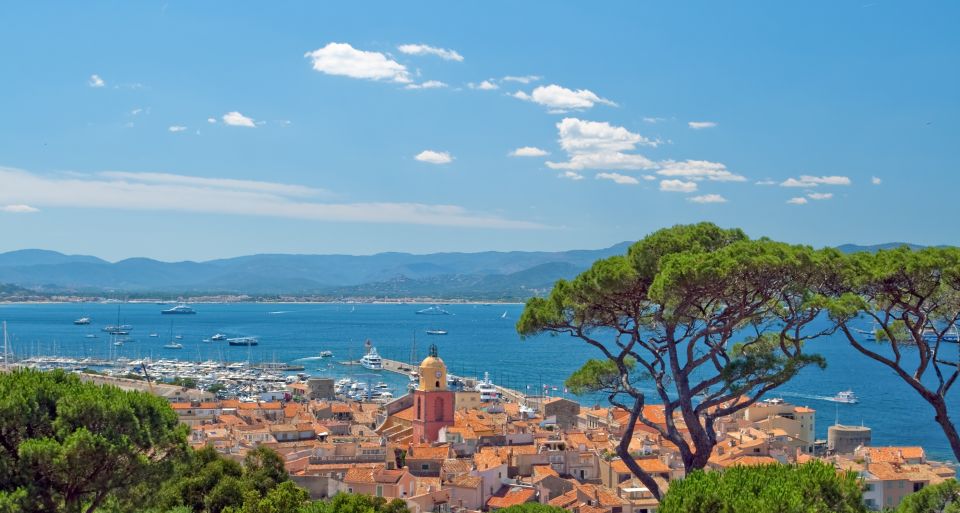
If you’ve done the Lérins and want a second day-trip from Cannes, this is the move. Our review compares the cost against the train-plus-bus option, which is technically cheaper but takes hours longer. The boat is faster and the views are better.
When to go, and the Film Festival question
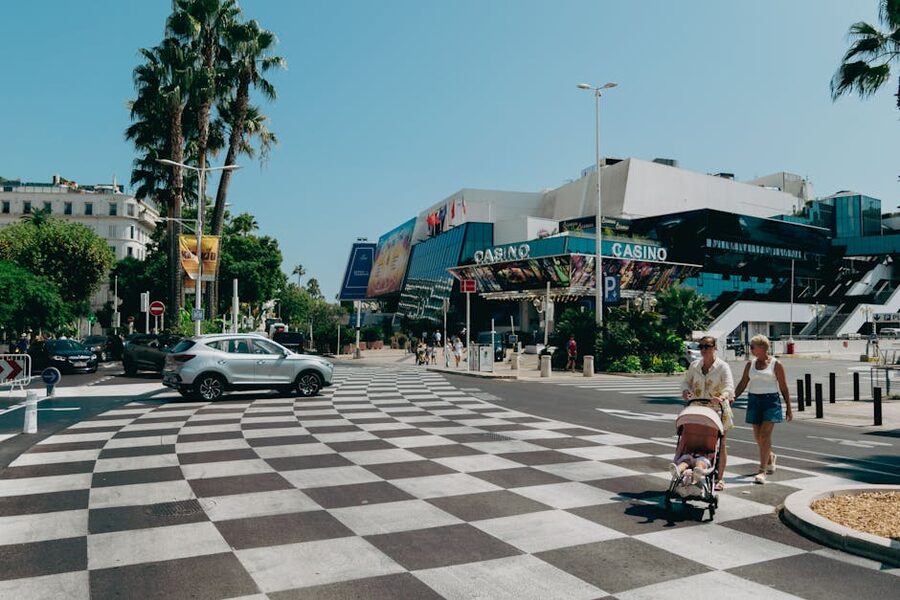
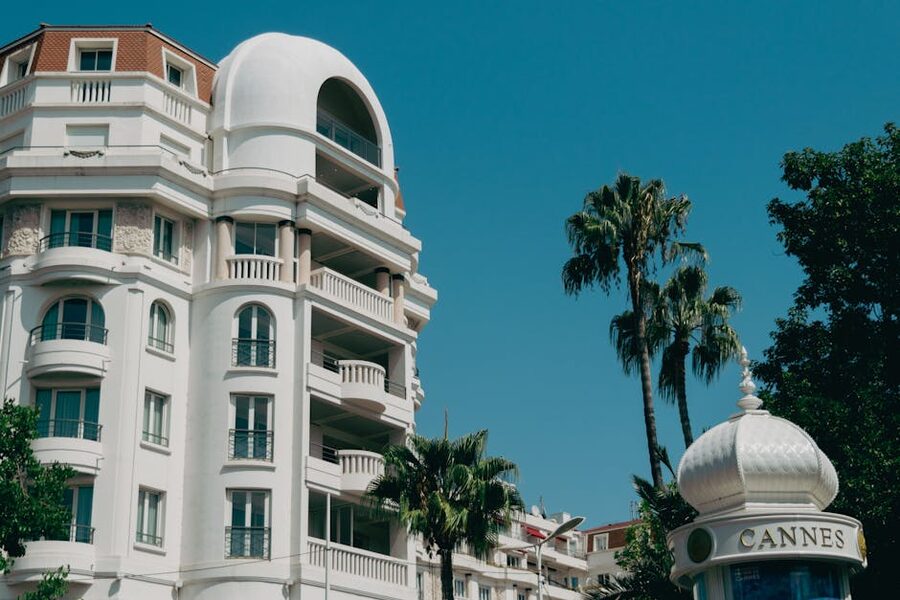
Best months are April through October. May and September are the sweet spot, warm enough to swim, not yet packed. July and August are the official peak, with hotter temperatures, busier ferries, and prices everywhere creeping up. The ferries to the islands run year-round but with reduced winter schedules, and some of the museum hours at the fort shrink in January-February.
The Cannes Film Festival sits in mid-May, usually the third week. People assume the Festival ruins everything in the city. It does, sort of. The Croisette is fenced, hotel rates triple, and the Palais des Festivals is locked down. But the islands are unaffected. The ferry kiosks still operate, the boats still run, and the islands themselves are quieter than usual because most of the journalists and producers don’t leave their hotels. If you’re in town during Festival week and you can’t deal with the city circus, the islands are an excellent escape route.
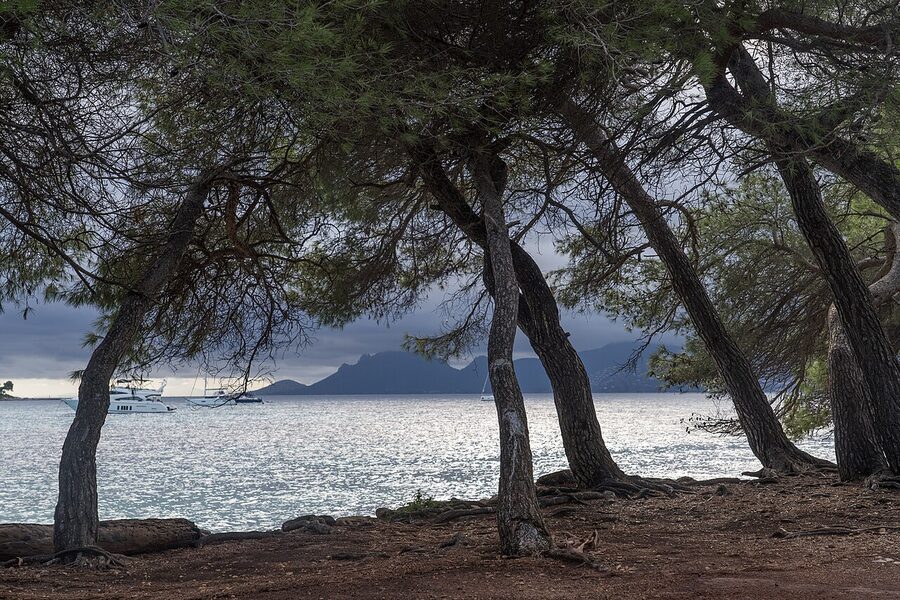
Weekends in summer are heavier than weekdays. If you can shift to Tuesday or Wednesday, do it. The first ferry of the morning (around 9am) is meaningfully quieter than the 11am, which is the wave that catches everyone who slept in. Boats coming back from the island after 3pm fill fast.
What it costs, end to end
For one person, doing the standard Sainte-Marguerite trip from Cannes, no extras, no overpriced lunch:
- Train from Nice to Cannes return: $25
- Round-trip ferry: $24
- Fort Royal museum entry: $8
- Sandwich and water from a supermarket: $7
- Total: $64
For two people doing both islands in one day, with a sit-down lunch in Cannes between boats and a bottle of Lérina white from the abbey shop:
- Two round-trip ferries (Sainte-Marguerite + Saint-Honorat): $88
- Fort Royal entry x2: $16
- Lunch at Aux Bons Enfants: $70
- Bottle of Lérina white: $32
- Total: $206
The Lérina bottle is the souvenir that pays back. You drink it at home six months later and the smell of pine and salt comes back with the first sip. It’s not the best wine on the Riviera. But it’s the most place-specific.
The history that justifies the trip
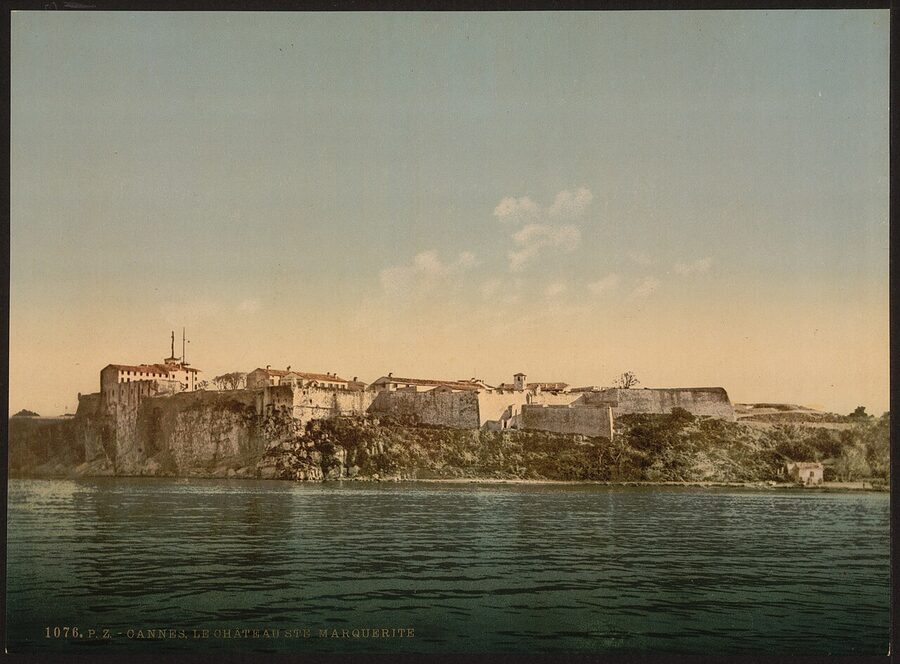
The Lérins were inhabited before Cannes itself was anything. The Romans built villas here. The 5th-century monks of Saint-Honorat were the educated end of the late-Roman Mediterranean. They trained the bishops who Christianised Provence. The community survived Saracen sacks in 732 and 1410, plague, and the Revolution, which closed the monastery for a century. The current monks came back in 1869 and rebuilt.
The Spanish occupied Sainte-Marguerite from 1635 to 1637 during the Thirty Years’ War. The Comte d’Harcourt took it back for France, and that’s when serious fortification started. By the 1690s the fort was a working state prison, and the prisoner who became the Iron Mask was its most secret tenant. He arrived in chains, masked, never named in any document by his real identity, and left the same way for Paris.
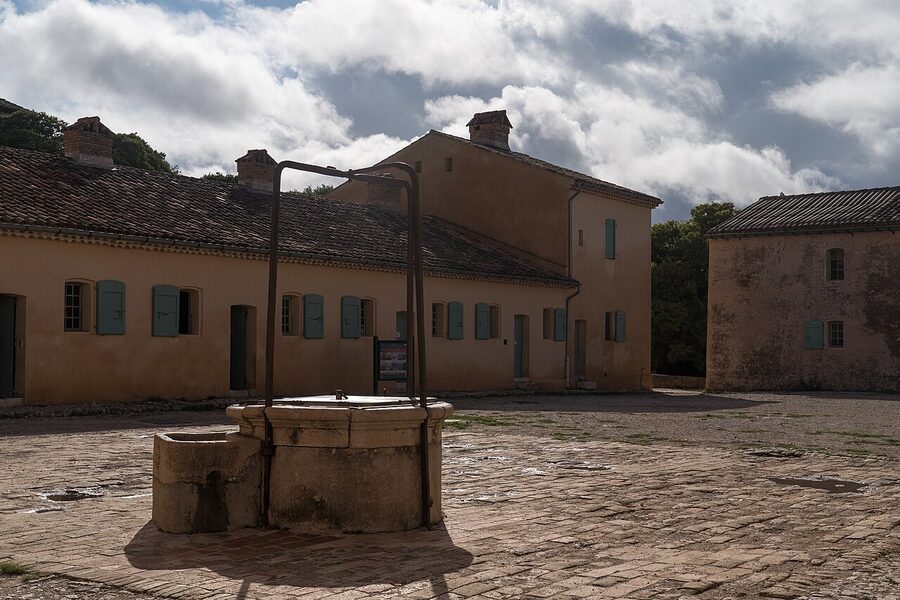
The fort kept holding prisoners after the Iron Mask. The most famous later inmate was Marshal Bazaine, who was sent here for surrendering Metz to the Prussians in 1870. He escaped in 1874 by climbing down a rope of knotted sheets and rowing to the mainland in a stolen boat. He was 64 years old. The escape route is signposted in the museum.
The fort was decommissioned as a prison in 1881 and used as a French Navy training site through both World Wars. The town of Cannes took it over in 1973. The museums opened in their current form in 1995. The cell of the Iron Mask has been preserved more or less continuously since the 1830s, when it became a tourist attraction even before the museum existed.
Compared with other ferry-to-an-island day trips
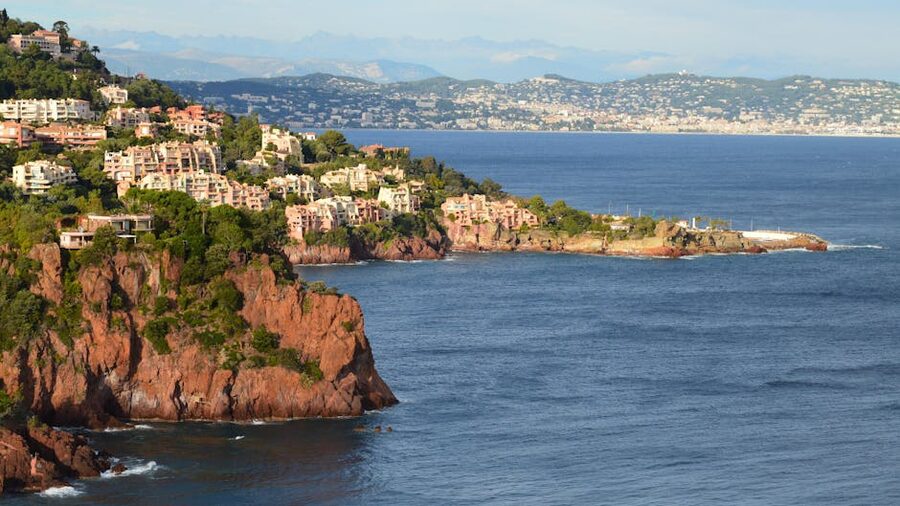
The Lérins crossing is short, cheap, and historically heavy. The closest equivalent in Italy is Capri from Naples, but at a completely different scale, the Capri ferry takes 50 minutes versus 15, costs four times as much, and the island is a fully developed resort with shops and a chairlift, not a forest with one prison. Capri is the bigger spectacle. Sainte-Marguerite is the more focused day.
The Sardinian archipelago day trip from La Maddalena is closer in feel but stretched over a longer water day, with multiple swim stops and almost no historical content. Cinque Terre from Florence is technically also a coastal cluster, but it’s villages on the mainland, not islands, and the train is the spine of the day. The Lérins are the only Riviera trip where the entire day is a boat ride and a single specific story.
For the Spanish equivalent, the closest analogue is an Ibiza beach cruise for the Mediterranean island-from-port shape, or a Mallorca catamaran day for the calm-water coastal trip from a port town. Or, for the mini-territory-attached-to-the-coast feeling, Gibraltar from Málaga, which is a different kind of day but uses the same “across a small body of water into a different jurisdiction” mechanic.
Practical bits I keep forgetting to tell people
Bring water. There are fountains on Sainte-Marguerite but no shops between the dock and the fort. The walk is exposed in midday, and the fort interior gets hot in summer.
Don’t wear flip-flops. The trails are pine-needle and rocky and you’ll regret it. Trainers or sandals with proper soles.
The toilets at the fort are old and there are queues. Use the ones at the dock café before you start the walk up.
If you have small children, the cell is fine but the fort itself has steep stone stairs without rails and a few low doorways. The eucalyptus alley and the swimming coves work better for under-6s than the museum.
The Saint-Honorat ferry has an absolute no-dogs policy, the Sainte-Marguerite ferry will accept small dogs on a lead. Neither will accept large dogs in summer when the boats fill.
Wifi on the islands is essentially zero. Save your map offline before you leave the Cannes seafront. There’s no panic-button service, but if anything happens the fort staff are reachable on a landline at the museum reception.
How this slots into a wider France trip
If you’re building a Riviera and Provence loop, the Lérins fit naturally between Nice (and the wider French Riviera coast) and Marseille. From Nice you can do a Monaco day, the Lérins, and the Verdon Gorge over three days without moving your hotel. From Arles, head south to the Camargue for the wetlands and the white horses, then back along the coast.
If your trip starts in Paris and you’re working south, you’ve probably already done the city’s heavyweights, the Eiffel Tower, a Seine cruise, the major museums. The day-trip add-ons that pair best with the Riviera mood are Monet’s house at Giverny for the Impressionist day and the Loire Valley castles for the chateau loop. Both are 2-3 hours from Paris by train and slot in either side of the south.
If you only have one afternoon
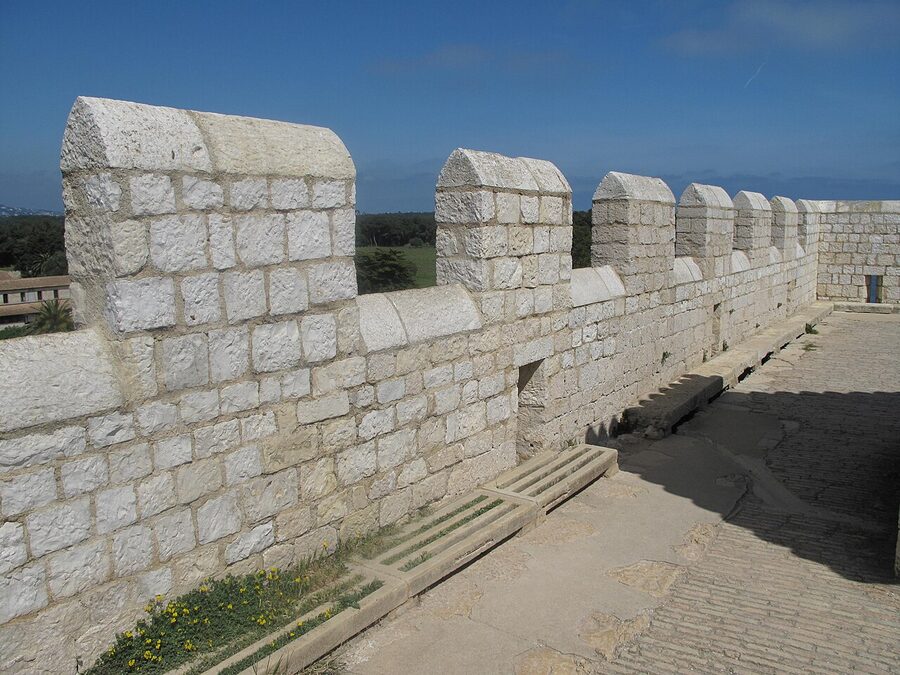
The minimum-viable Lérins trip: catch the 1pm Sainte-Marguerite ferry, walk straight to the fort, do the cell and the Iron Mask room (skip the maritime museum half), walk the eucalyptus alley back, catch the 4:30pm ferry. Three and a half hours total. You’ll be back on the Croisette before evening. You will not have done the Saint-Honorat side. You will have stood in the cell, which is the part that matters.
The longer day buys you the perimeter walk, the swim, the abbey, the Lérina bottle, lunch in Cannes between boats. Both versions work. The afternoon-only version is what most people end up doing because their morning got eaten by something else. It’s still the best three-and-a-half hours you can spend on the Riviera that doesn’t involve a celebrity sighting.
One last thing about the cell
People ask, every time, why the cell wasn’t more secure. Why a window. Why a chair. Why a courtyard he could exercise in. The answer is that the prisoner wasn’t being physically prevented from leaving (the island and the boat-around-the-island and the soldiers handled that). He was being prevented from being seen, from saying his name, from communicating with anyone outside the chain of command that had his identity. The mask did that work. The cell only had to hold a body.
That’s the part of the story that sticks with me. The point of the Iron Mask wasn’t iron. It was silence. A whole apparatus of state, held together for 34 years across three prisons and four wardens, dedicated to the one thing kings struggle most to do: keep a secret to the grave.
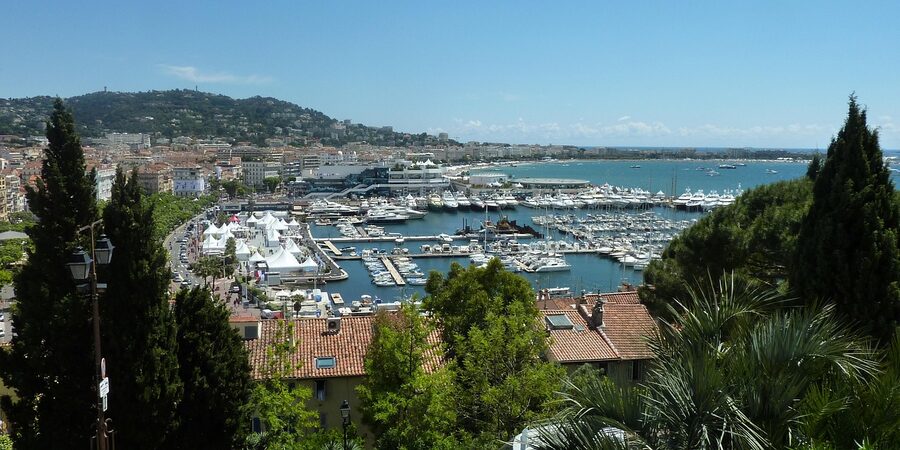
Stand in the cell, look out the window at the same sea he looked at, and you understand why the story has lasted 350 years. We still don’t know who he was. The French state, in 1703, won.