
Marseille is a city first and a tourist-attraction-cluster second, and that distinction is the whole answer on whether the hop-on hop-off bus is worth your $27. The format works in cities where the headline sights are spread out along a clear route. It misfires in port cities like Marseille where the best hours are spent on foot in the Vieux-Port and Le Panier, on a ferry to the Frioul islands, or on a kayak in the Calanques. Paris, the bus delivers. Marseille, mostly not, with one specific exception that earns it back.
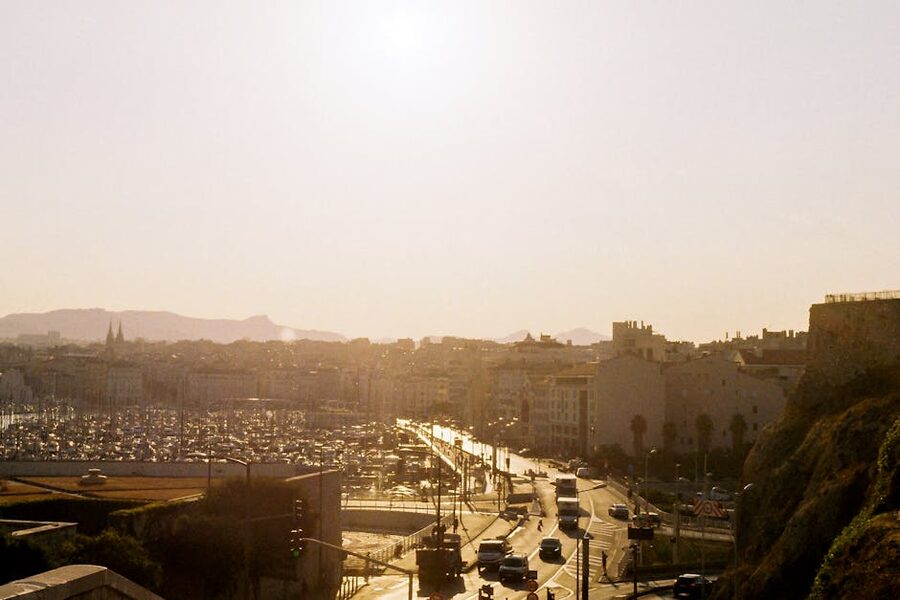
I’ll tell you upfront where this lands. The 24-hour ticket is $27, the operator is City Sightseeing red bus, and the Google rating sits at 3.8 stars across nearly 3,000 reviews. That’s the lowest of any major French city’s HOHO. Paris is 4.4. Nice is 4.0. The complaints you’ll read in those reviews, broken audio app, traffic delays through the Rive Neuve, route too short to justify the price, are real and recurring. So why is this article not just “skip it”? Because for one specific use case, the bus is genuinely the smart move, and the rest of the article is about when to ride and when to walk.
In a Hurry
- If you only want the basilica climb without taxi-ing or sweating up the hill: City Sightseeing 24-hour HOHO ($27)
- If you’ll hit 3+ paid attractions plus need transit: Marseille CityPass 24h/48h/72h ($42 and up)
- If you’d rather skip the bus entirely and spend the day right: Côte Bleue Calanques half-day kayak ($64)
Why the format misfits Marseille
Hop-on buses work brilliantly when a city’s sights are strung along a route the way pearls are strung on a string. Paris is the textbook case. The Paris HOHO rolls past the Eiffel Tower, the Louvre, Notre-Dame, Concorde, and the Arc de Triomphe in a single loop, and you can genuinely use it as your transport for the day. Barcelona’s the same idea on a slightly smaller scale, and our take on the Barcelona hop-on bus is that it’s worth it for the Gaudí spread. The northern equivalent is the Amsterdam hop-on bus, which runs the same logic across a compact canal city where every museum and palace falls onto a single ring road.
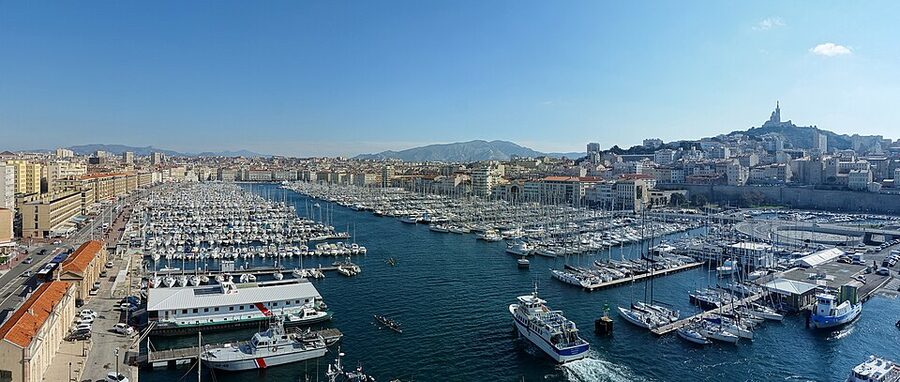
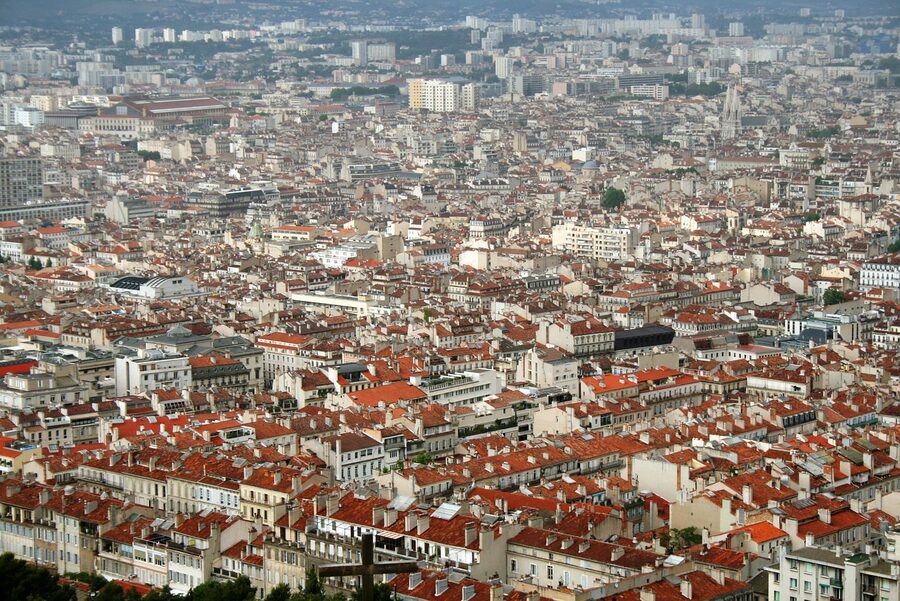
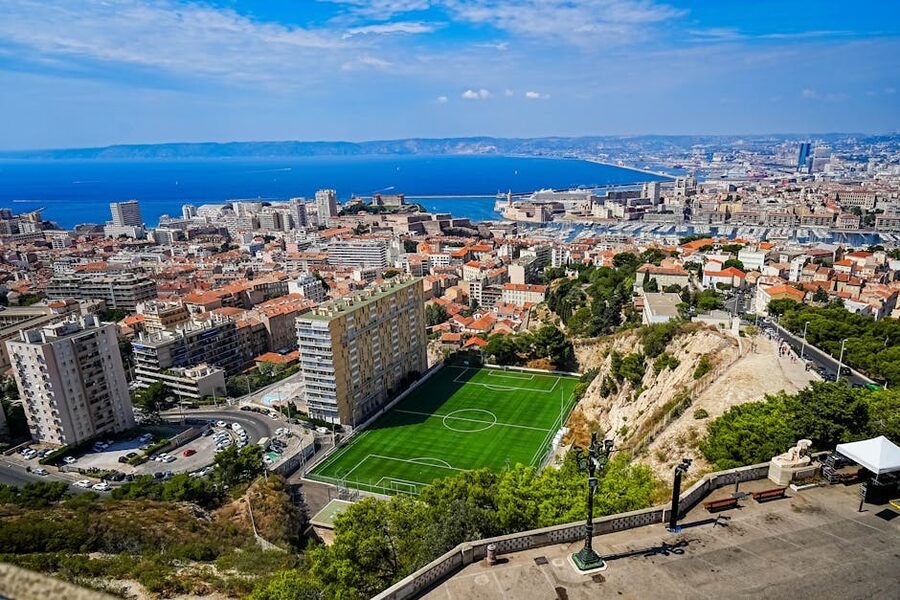
Marseille doesn’t work that way. The headline experiences here aren’t on the bus route. They’re in the harbour itself (which the bus circles but you can walk in fifteen minutes), in Le Panier old town (pedestrian-only, the bus skirts it), on a ferry to the Frioul islands or Château d’If (a port departure, not a bus stop), and in the Calanques (twenty kilometres east, well outside the loop). The two sights the bus genuinely delivers you to that you’d struggle to reach on foot are Notre-Dame de la Garde on its 162m hill and the residential outer port stops, which most travellers don’t actually need.
This is the same structural problem the Naples HOHO runs into, and Naples is Marseille’s sister Mediterranean port city in almost every way that matters. Both have a working harbour as the centre of gravity. Both have dense pedestrian-only old quarters that need feet, not wheels. Both have headline experiences (Capri, Pompeii, the Calanques) that sit twenty kilometres outside town. Both score around 3.8 to 4.0 on their HOHOs, which is the polite way of saying riders find them underwhelming. If you’ve already read our Naples piece, the playbook here will feel familiar.
What the City Sightseeing red bus actually is
Specifics, since the operator’s website buries them. The Marseille HOHO is run by City Sightseeing, the same red double-decker brand you see in Madrid, Rome, and a hundred other cities. There are 13 stops on a single line. A full loop, end to end without getting off, takes about 1 hour 30 minutes, traffic permitting. Audio commentary is delivered via an app that you download to your phone, with headphones supplied (the headphones are real, the app is the part that breaks). Buses run roughly every 30 minutes from around 10am to 6pm, with reduced winter frequency.
Pricing in May 2026:
- 24-hour ticket: $27 standard, around $14 for kids 5 to 15, free for under-5s
- 48-hour ticket: roughly $36 (the 48-hour is the better value if you’ll actually use it both days)
- Family ticket: two adults plus two kids around $70
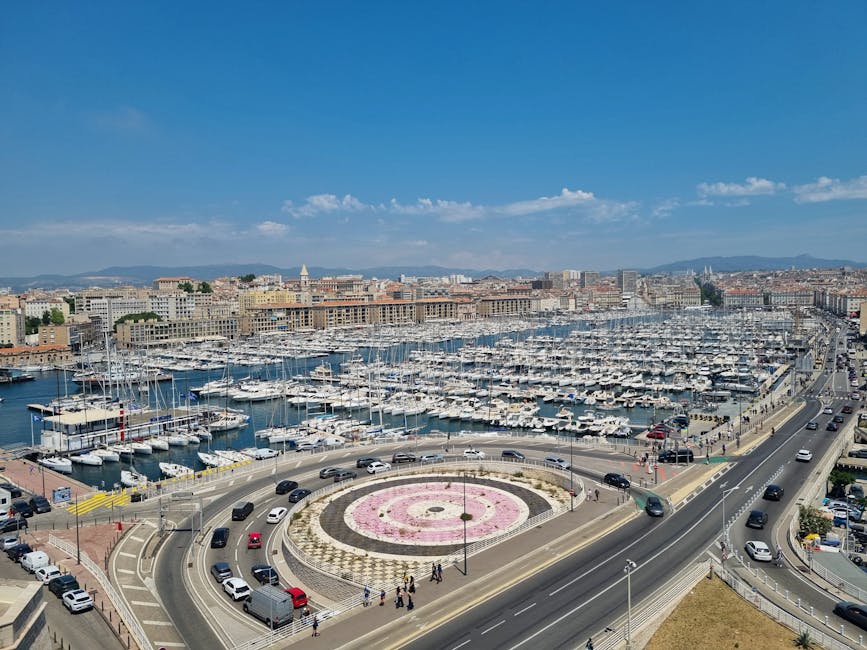
The route runs the harbour rim, climbs to Notre-Dame de la Garde, drops down past the Catalans beach to the residential southern stops, then loops back via the Prado avenue and the Borely park. About six of the thirteen stops are genuinely useful for a tourist. The other seven are residential or beach-suburb stops that locals use the public bus for and that you’ll probably stay on the bus through.
Where the bus genuinely earns its $27
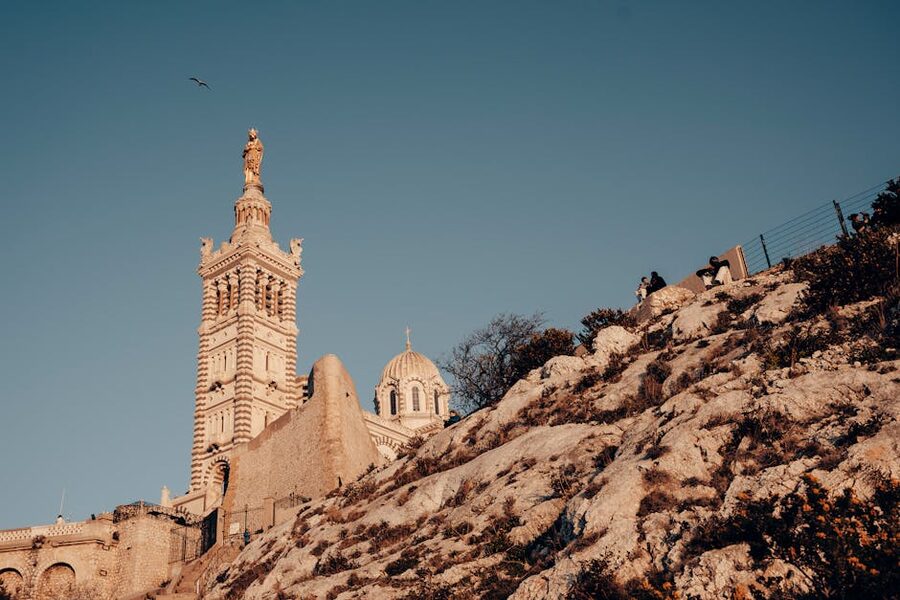
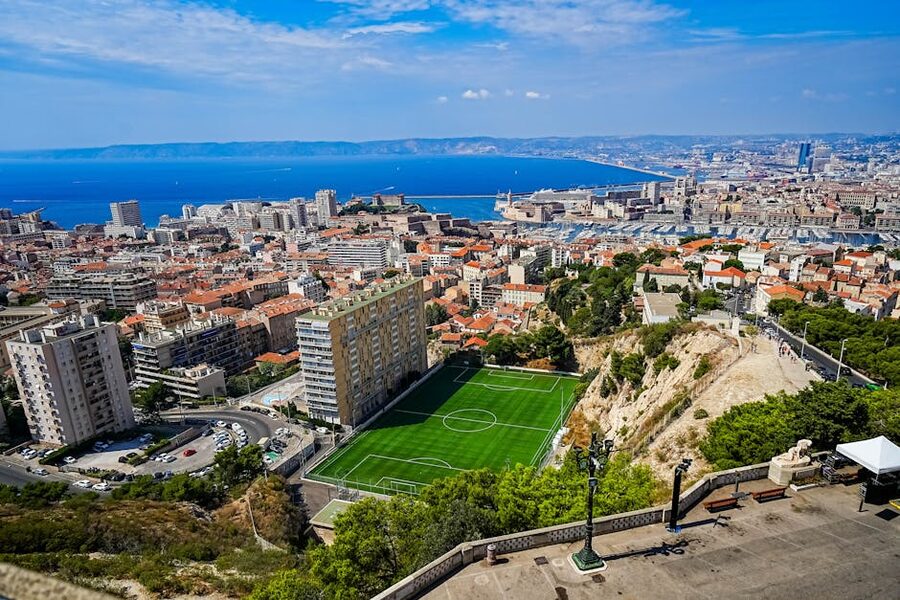
This is the part of the article where I tell you the HOHO is worth $27. Stop 3, Notre-Dame de la Garde, is the single use case that justifies the ticket. The basilica sits 162m above the city on a limestone hill that rises steeply from every approach. Without the bus, your three options are:
- A taxi from the Vieux-Port at around €15 to €20 each way
- The local bus 60, which is fine if you want to do public transit and have time to wait for it
- The 30-minute walk uphill, which is real exercise on real gradient and not what most travellers want at 11am in July
If you’re going to do the basilica (and you should, the views from up there are the best in the city), the HOHO drops you at the top, gives you as long as you want, and then you board the next bus down. That’s the use case. The rest of the route is bonus or filler depending on your day.
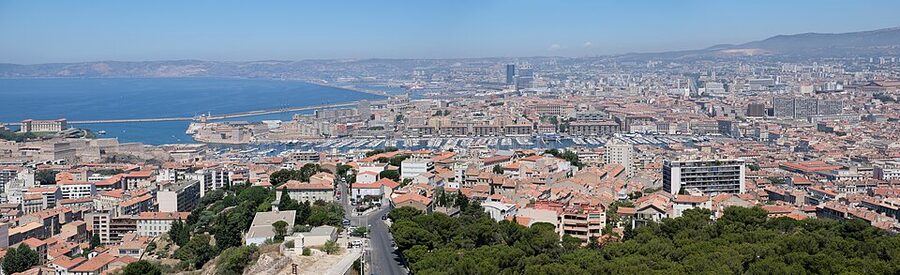
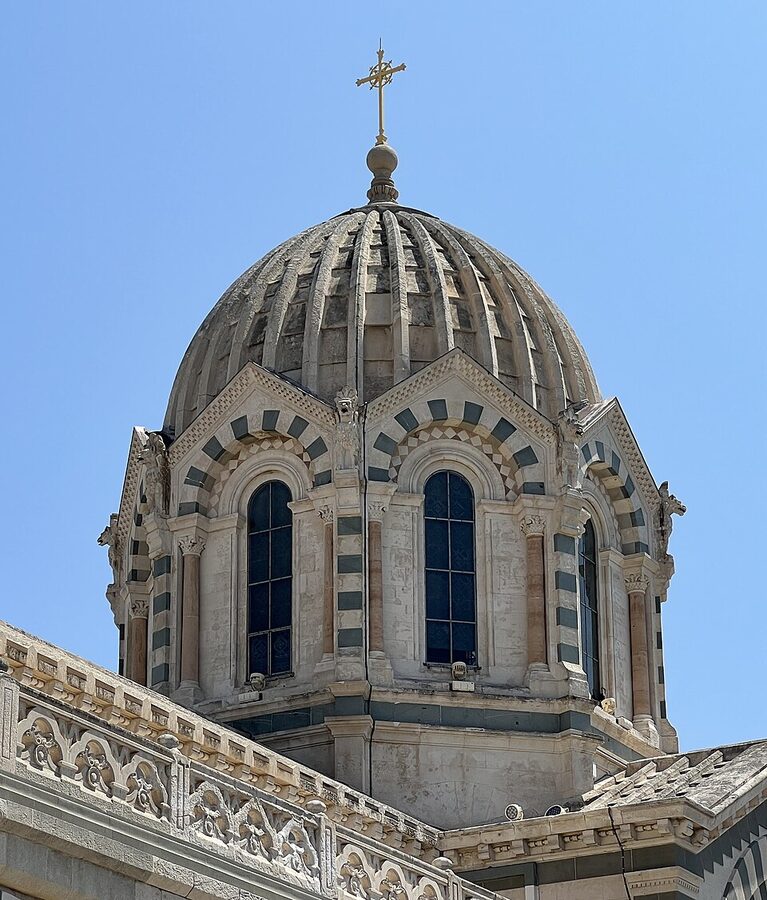
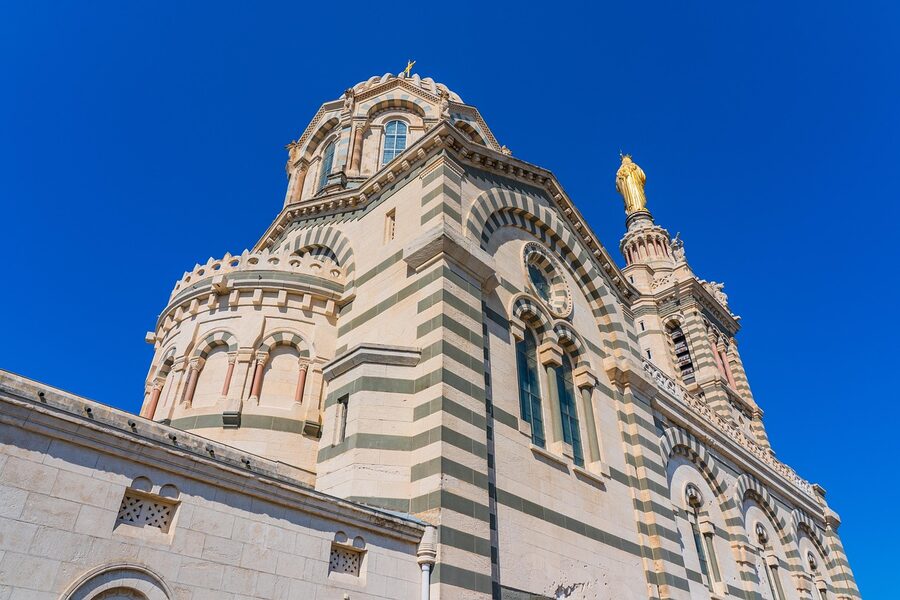
Once you’re up there, the basilica itself is free to enter. The interior is worth ten minutes for the marble work, the maritime ex-votos hanging from the ceiling (model ships donated by sailors over a century and a half), and the gilded statue of the Virgin Mary that crowns the bell tower. The locals call her La Bonne Mère, the Good Mother, and she’s 10m tall and visible from most of central Marseille. There’s a $5 elevator that runs from the bus stop to the church terrace if you don’t want to do the last set of steps. I’d take the steps. They’re not the climb you’d be doing if you walked from town, just a polite final flight.
Where the bus is fine but you don’t need it

Stops 1 and 2 are the Vieux-Port and the Quai des Belges. Both are on the harbour, both are five to fifteen minutes apart on foot, and the walk is one of the things you came to Marseille for. So while the bus does technically take you to them, you don’t actually need to use the bus to get there. You’re walking from your hotel anyway. Same applies to Stop 5 (Le Panier, the old town) which is a short uphill from the harbour and which is, again, pedestrian-only inside, so the bus drops you at the edge and you walk from there.
This isn’t a flaw with the bus. It’s a flaw with using a bus to see the parts of Marseille that aren’t really designed for buses. The Vieux-Port is the equivalent of using a HOHO to see Venice’s Piazza San Marco. Technically possible, completely unnecessary, faster on foot. The same logic applies to the Amsterdam canal cruise circuit, where the canal-belt is genuinely better seen from a boat than from a bus that has to obey one-way streets and tram crossings.
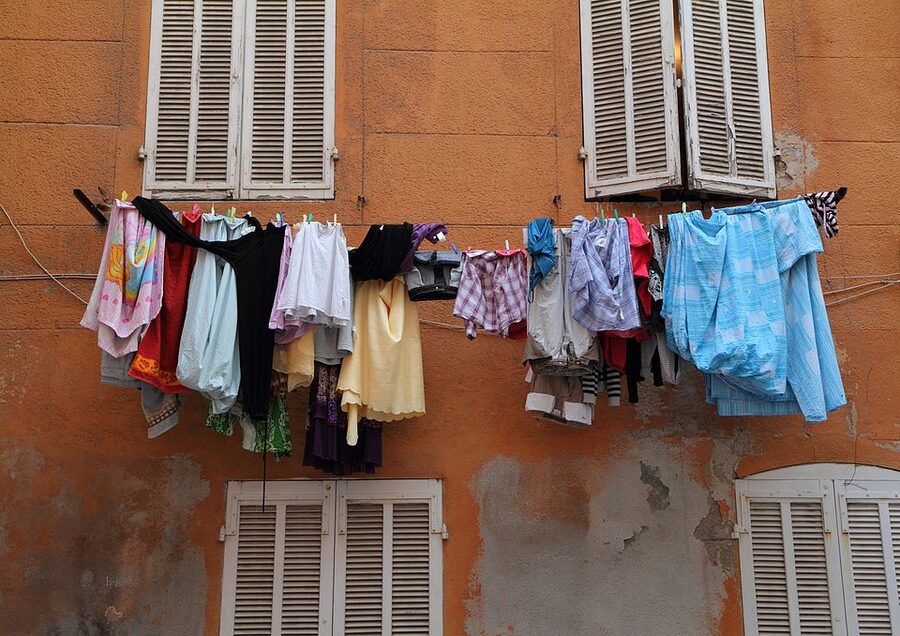
Le Panier on foot, with or without the bus
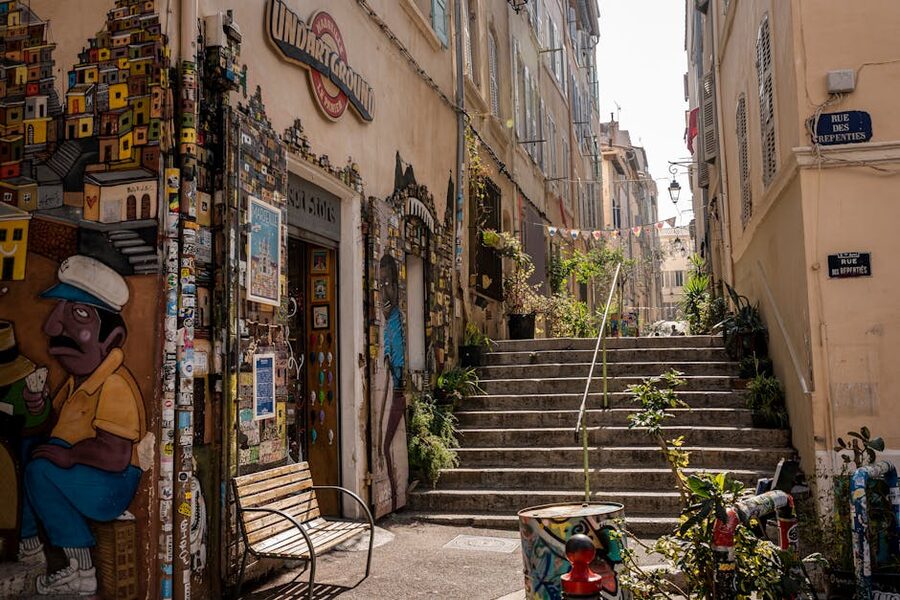
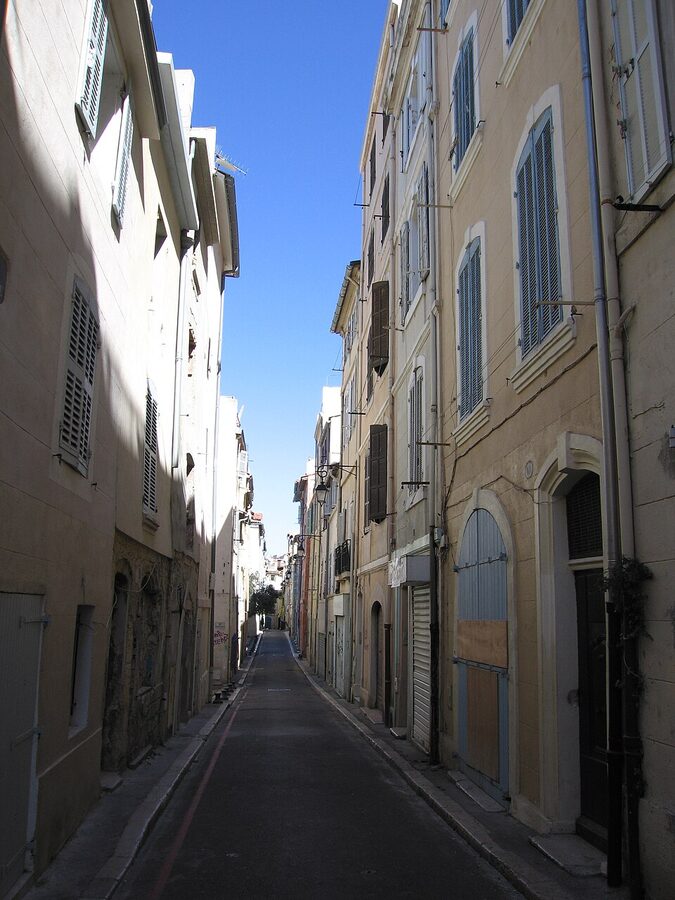
If you only do one thing in Marseille that isn’t a meal or a museum, do Le Panier on foot. It’s the city’s oldest neighbourhood, built on the Greek-foundation hill where Massalia started in around 600 BC. The streets are narrow and car-free for the most part. The shutters are painted in the Provençal palette: turquoise, ochre, dusty pink. The laundry strung between balconies is real and not a tourist set-dressing. Soap shops, ceramicists, and tiny bars share the alleys with families who’ve lived in the same flat for three generations.
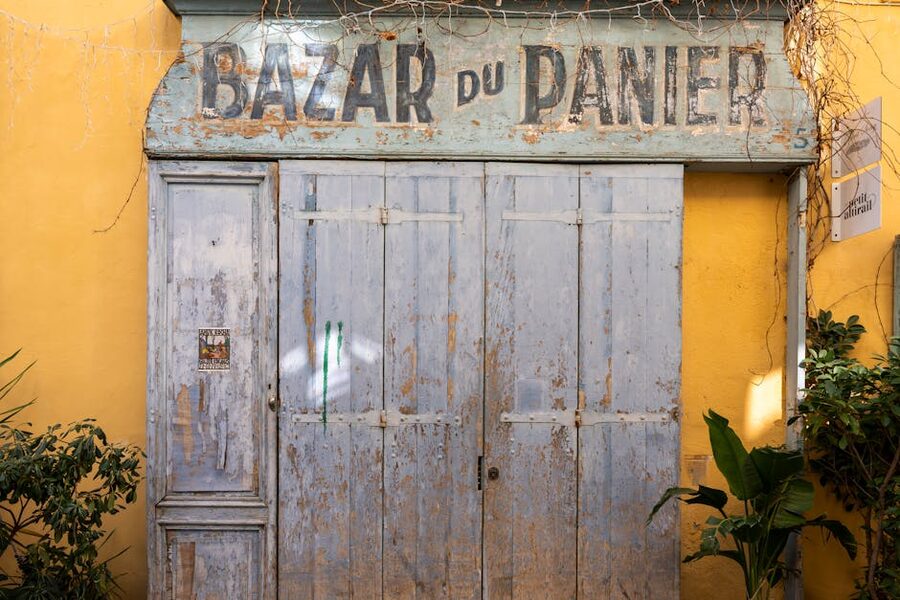
The bus drops you at the edge of the neighbourhood. You walk from there. A loose loop of about ninety minutes, with stops for coffee and a wander into a soap shop, gives you everything you need. Start at Place de Lenche (the old Greek agora, now a quiet square with a few cafés), climb up through the Rue du Petit Puits, hit the Vieille Charité in the middle (a 17th-century baroque hospice that’s now a museum complex with a beautiful chapel courtyard), and drop back down toward the Quai du Port via Rue Caisserie.
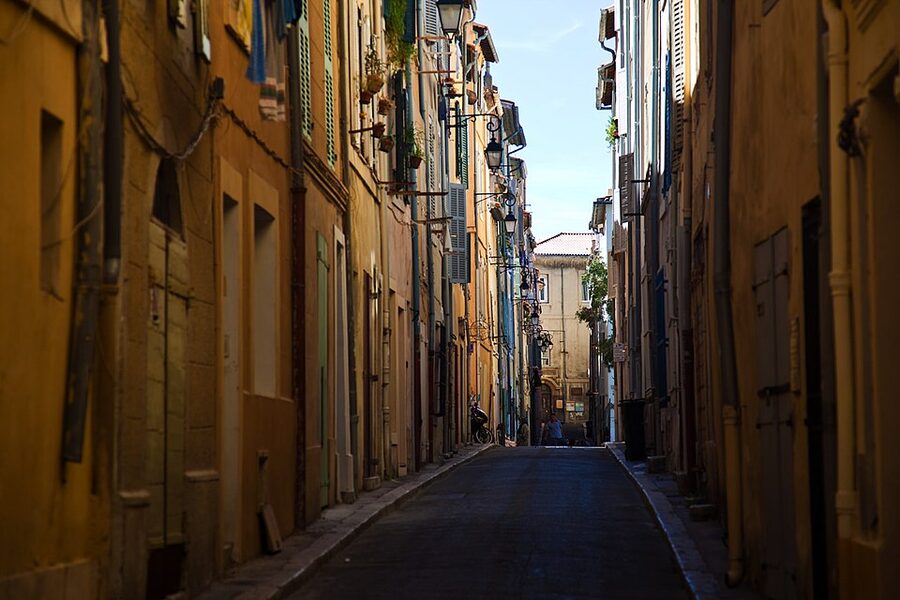
The MuCEM and the J4 esplanade
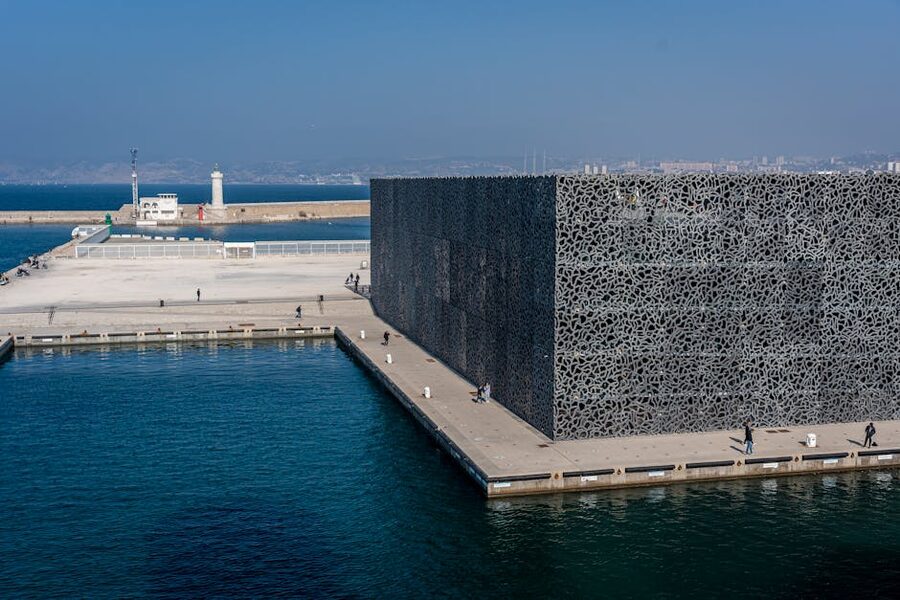
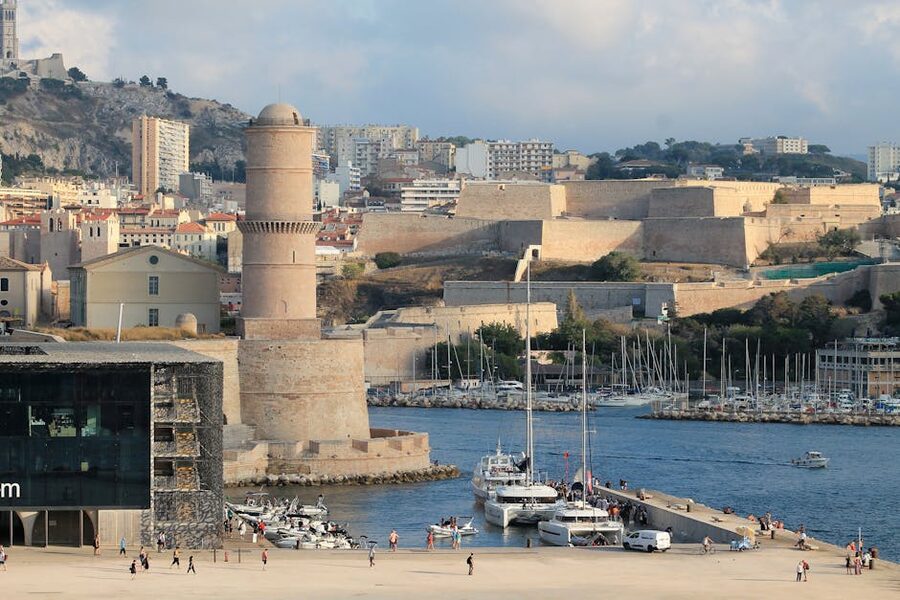
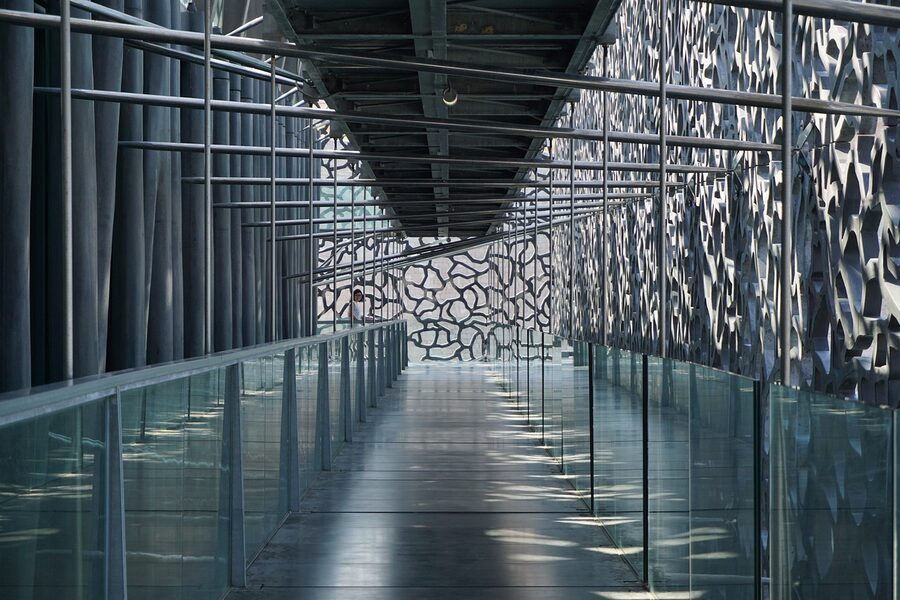
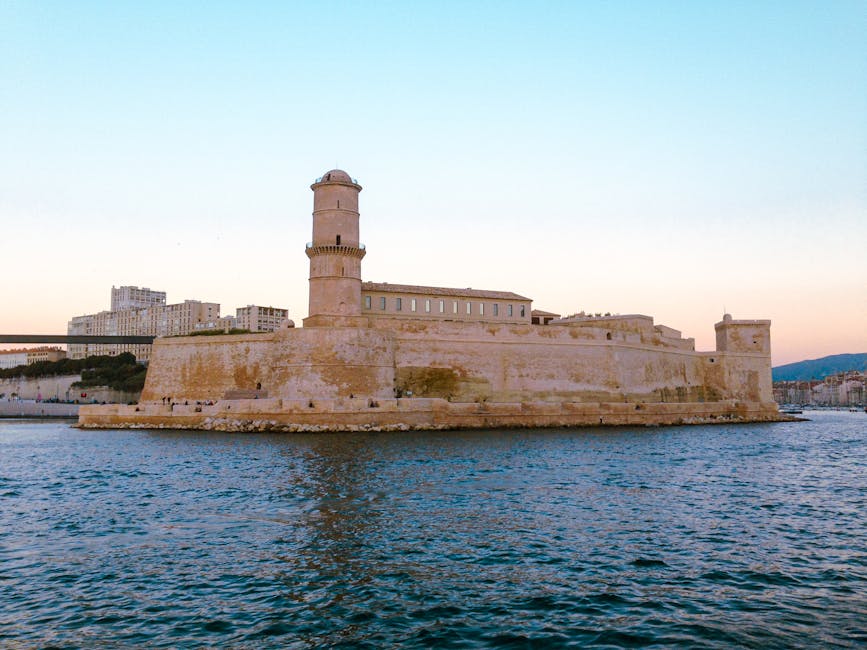
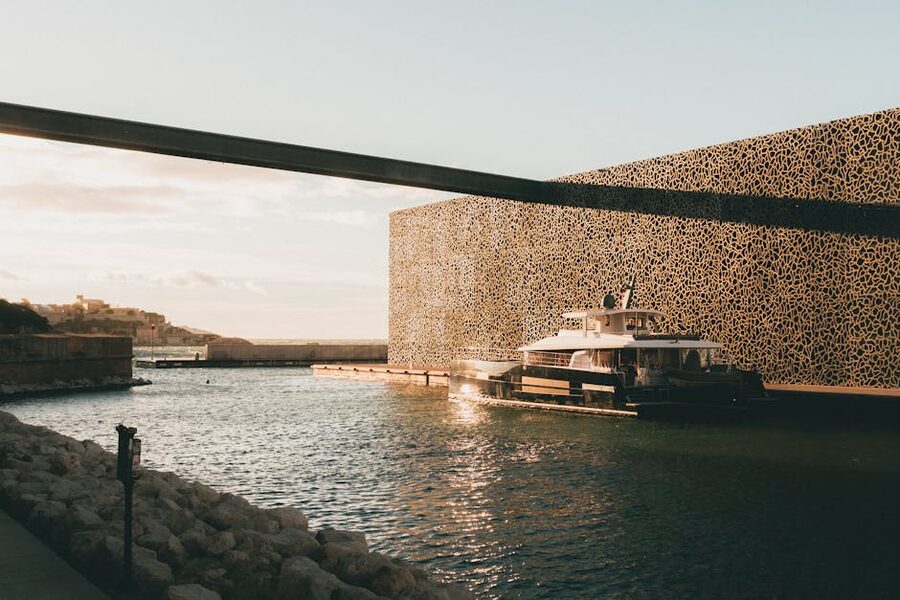
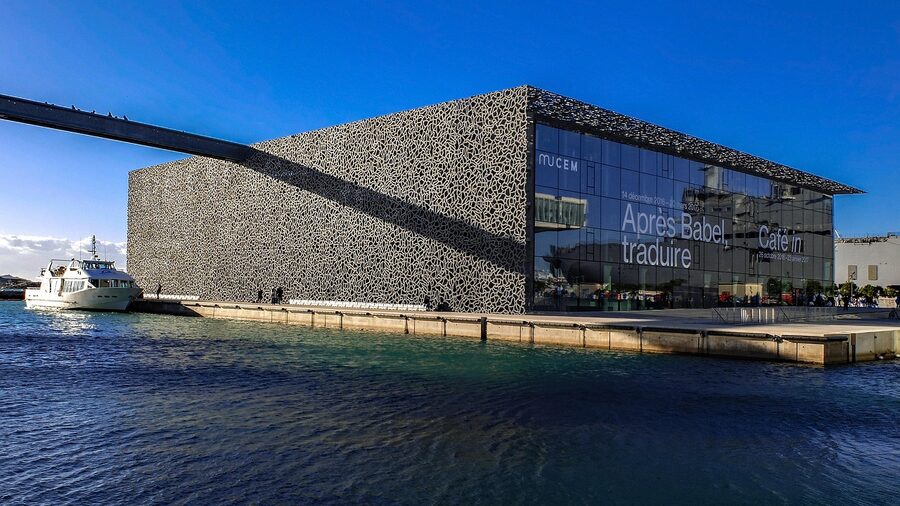
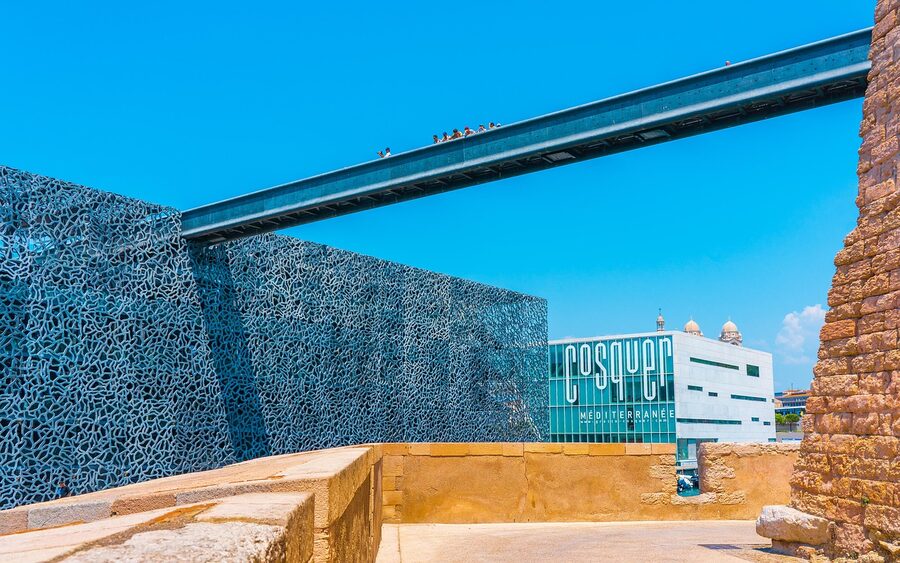
The MuCEM (Stop 1 area, walkable from the Vieux-Port) is the city’s flagship museum and arguably the best thing built in Marseille in the last fifty years. The full name is Musée des Civilisations de l’Europe et de la Méditerranée. It opened in 2013, when Marseille was European Capital of Culture, and the Rudy Ricciotti building is genuinely beautiful, a black perforated concrete lattice that wraps a glass cube, joined to the 17th-century Fort Saint-Jean by a sky bridge.
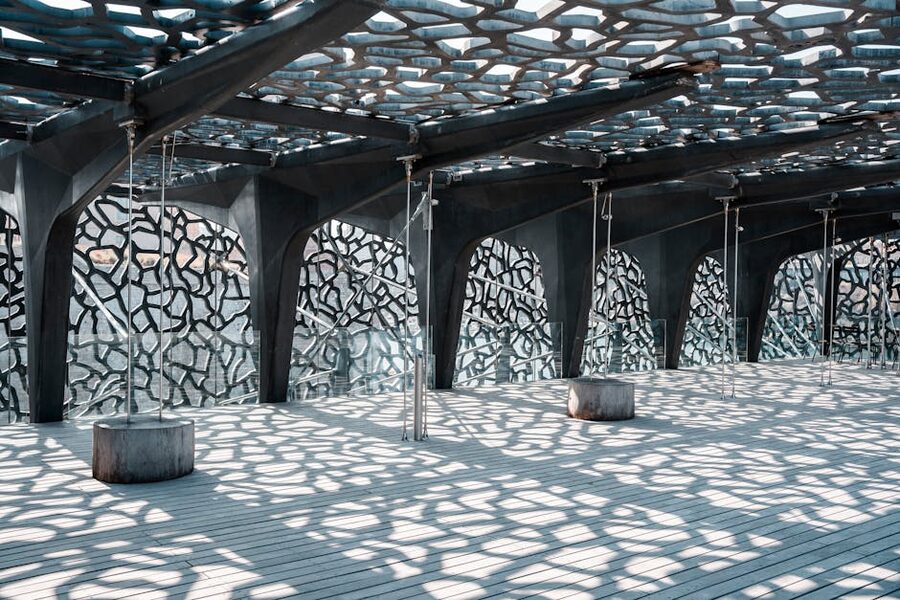
Standard ticket is around €11. The first Sunday of every month is free, and that day gets crowded fast. The collections cover Mediterranean civilisation across thousands of years (agriculture, religion, migration, trade) and they rotate. The permanent exhibitions can feel a little dry. The temporary exhibitions are usually the reason to go. Either way, the building itself, the rooftop terrace, and the walk across the sky bridge to the Fort Saint-Jean are worth the entry fee even if the show inside doesn’t grab you.
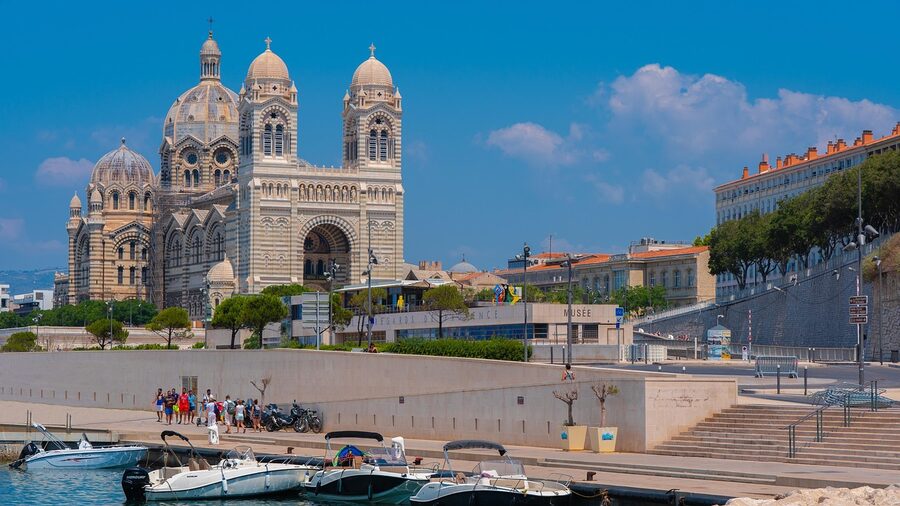
The bus passes near the MuCEM but doesn’t stop directly there. You’ll get off at the Vieux-Port and walk five minutes along the Quai du Port, which is the better way to arrive anyway. The approach across the J4 esplanade gives you the cathedral on your right, the fort straight ahead, and the museum sliding into view on your left.
The ferry to Frioul and Château d’If
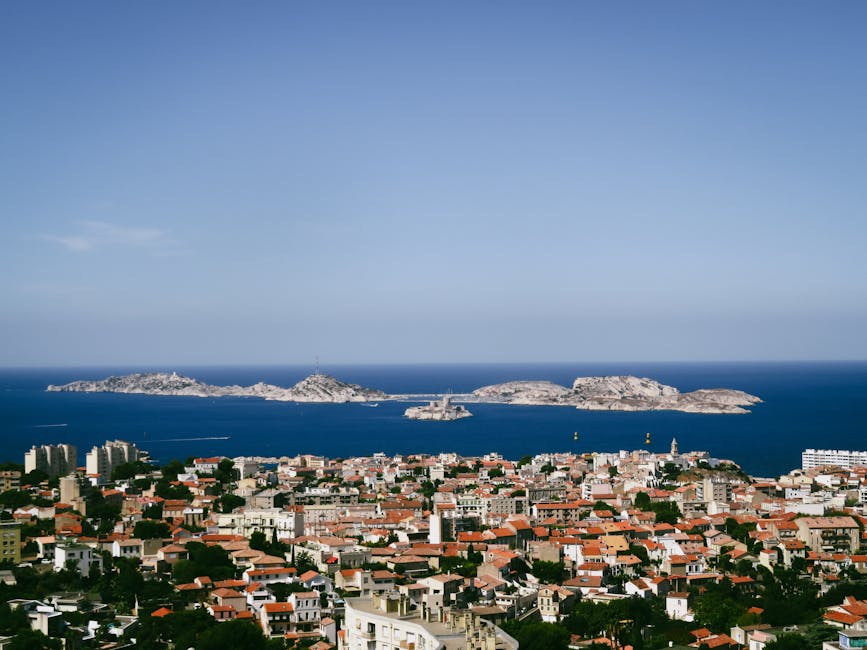
Worth knowing: the ferry to the Frioul islands and Château d’If is not part of the HOHO ticket. It’s a separate boat operation that leaves from the Quai des Belges in the Vieux-Port and runs about every hour. Round-trip is roughly €11 to one island, €16 if you want to do both Frioul and Château d’If. Both are absolutely worth your half-day if the weather cooperates. The Mistral wind, the cold dry north wind that defines Provence, can shut the ferries down without warning in summer when it picks up, so check the morning of.
Château d’If is the small fortress on the rock you can see from the basilica. Built in the 1520s as a coastal defence, repurposed as a prison, made famous by Alexandre Dumas’s The Count of Monte Cristo. The fortress itself is small. You can do it in 45 minutes. The boat ride and the views back at Marseille are the bigger part of the experience.
The Calanques: where you should actually be
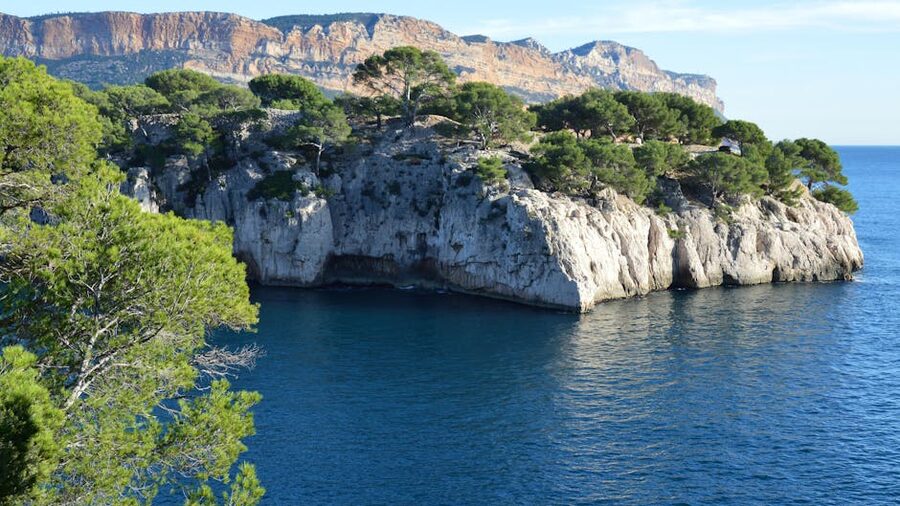
Here’s the structural truth about how to spend a day in Marseille. The HOHO bus is fine for Notre-Dame de la Garde and an okay alternative to walking the harbour rim. But the single best half-day you can spend from Marseille isn’t on the bus at all. It’s east of the city, in the Calanques National Park.
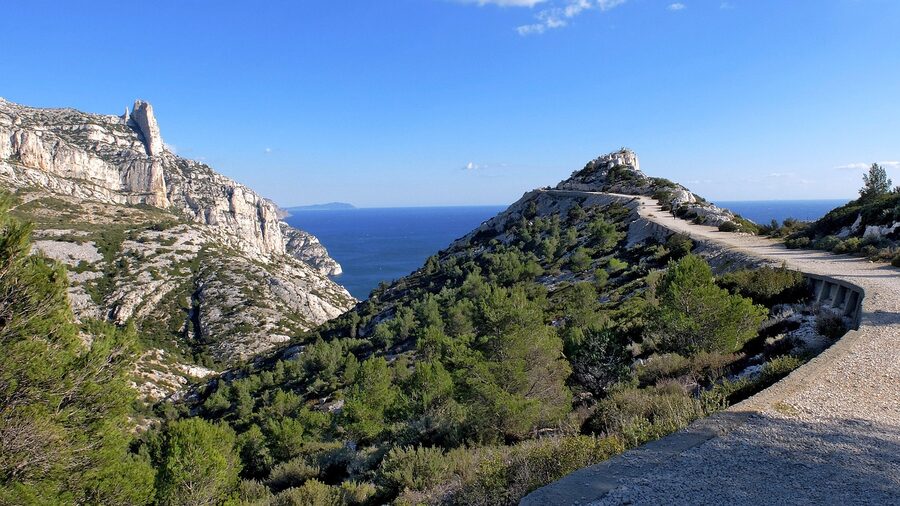
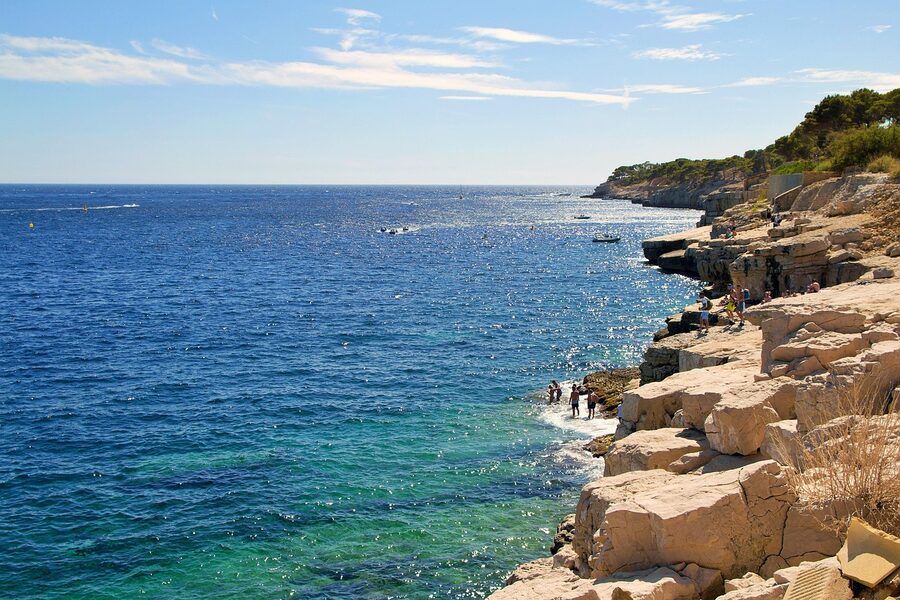
The Calanques are limestone fjords. Narrow inlets where the cliffs drop straight into the Mediterranean and the water turns the kind of turquoise that looks Photoshopped. There are roughly twenty of them along a 20km stretch of coast between Marseille and Cassis. Some are accessible by hike, some only by boat, some not at all. They’re a national park since 2012, which puts strict limits on how many people can hike in during summer fire season.
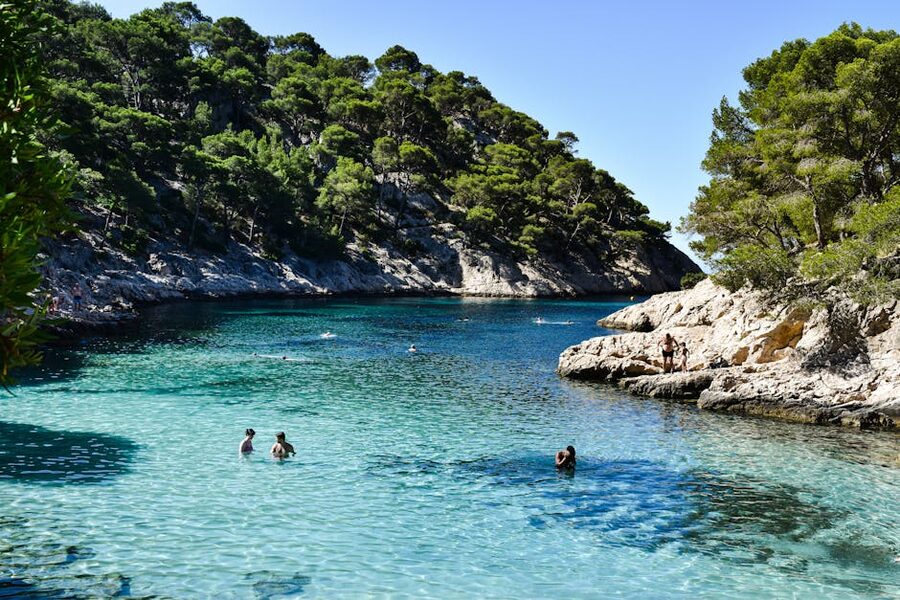
The half-day kayak tour from Cassis or the Côte Bleue is the best way to see the Calanques without committing to a multi-hour hike or a ferry tour where you stay on the boat. Around $50 to $80 gets you a guided paddle through three or four calanques, with swim stops, in groups of around eight to ten. The full-day version pushes deeper into the park.
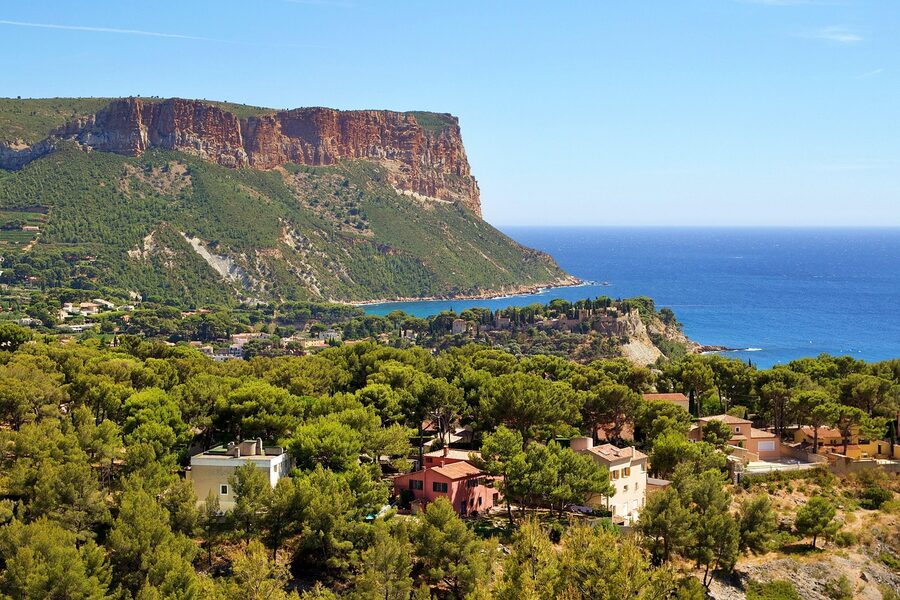
To get to Cassis from Marseille, the train takes 25 minutes from Saint-Charles station. The fare’s around €6. From Cassis station, it’s a fifteen-minute walk down to the harbour. So a Calanques day costs you about €12 in train fares plus the kayak rental, and you’re back in Marseille in time for dinner. Compare that to spending the same hours on a HOHO loop and the maths is straightforward.
How the bus compares to the CityPass
This is the part of the article where the bus’s real competition shows up. The Marseille CityPass is $42 for 24 hours, and what you get for the extra $15 over the HOHO is meaningful:
- Free entry to 19 attractions, including the MuCEM, Château d’If, the Vieille Charité, and most of the city’s other museums
- Free unlimited public transport (metro, bus, tram), which actually gets you to the basilica via local bus 60
- Free ferry to Frioul and Château d’If
- The HOHO is included as one of the perks (a one-time round trip on the City Sightseeing bus)
Run the numbers. If you’ll do MuCEM (€11) plus Château d’If with ferry (€16) plus Vieille Charité (€8) plus the local transit you’d otherwise pay for, you’re already past the $15 premium. If you’ll only do the basilica and walk the harbour, the HOHO alone is enough.
This is a similar trade-off to the one we walked through in the Paris Museum Pass piece. The pass is great if you’ll actually use it, dead weight if you won’t. Three or more paid attractions in a 24-hour window is the threshold where it starts to win.
What everyone complains about
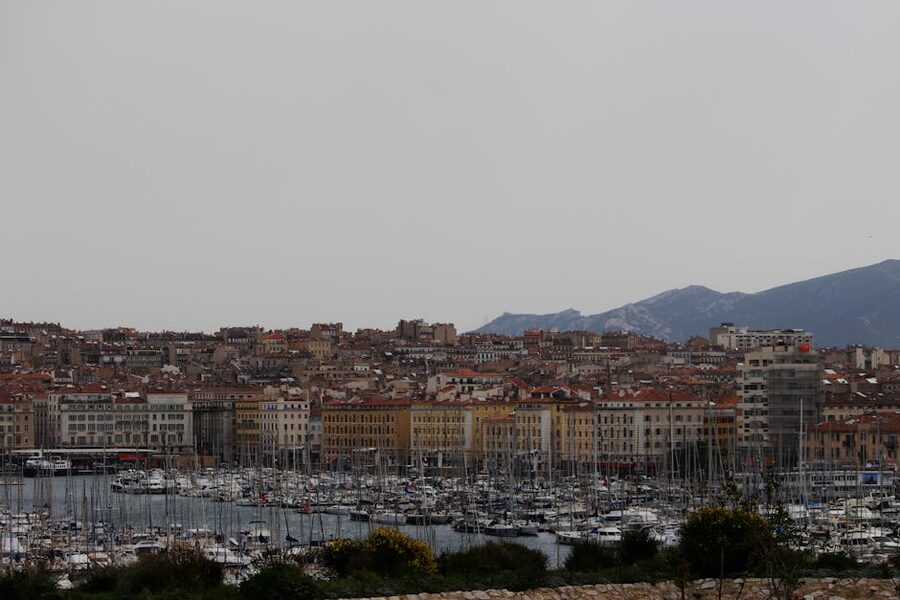
The 3.8-star rating doesn’t materialise from nowhere. Three things keep coming up in reviews and they’re the things you should know going in.
The audio app is unreliable. Marseille’s HOHO uses a smartphone app rather than an in-bus speaker system. When it works, the commentary is fine, in eight languages. When it doesn’t work, which is roughly a third of the rides going by traveller reports, the bus is a bus, with no narration at all. Pre-download the app on hotel WiFi before you board. Bring backup headphones in case the supplied earbuds don’t sit right. Have podcasts queued in case the app simply refuses.
Traffic on the harbour rim is real. The Quai de Rive Neuve, the southern side of the harbour, is a single bus lane that gets clogged in summer when restaurant deliveries and tourist coaches pile up. A loop that’s supposed to take 90 minutes can stretch to 2 hours 15. If you’re using the bus for a basilica run, this matters less. If you’re trying to catch a 6pm dinner reservation, build in a buffer.
Some of the stops aren’t worth getting off at. Endoume, Avenue du Prado, the southern beach areas. These are real Marseille neighbourhoods, and they’re nice, but they’re not the things a first-time visitor to the city has on their list. If you do hop off there expecting a sight, you’ll wait 25 minutes for the next bus and feel cheated. The flexible-with-your-time tourist enjoys these stops as a slice of local life. The first-timer with a list to tick should ride past them.
Best months and weather notes
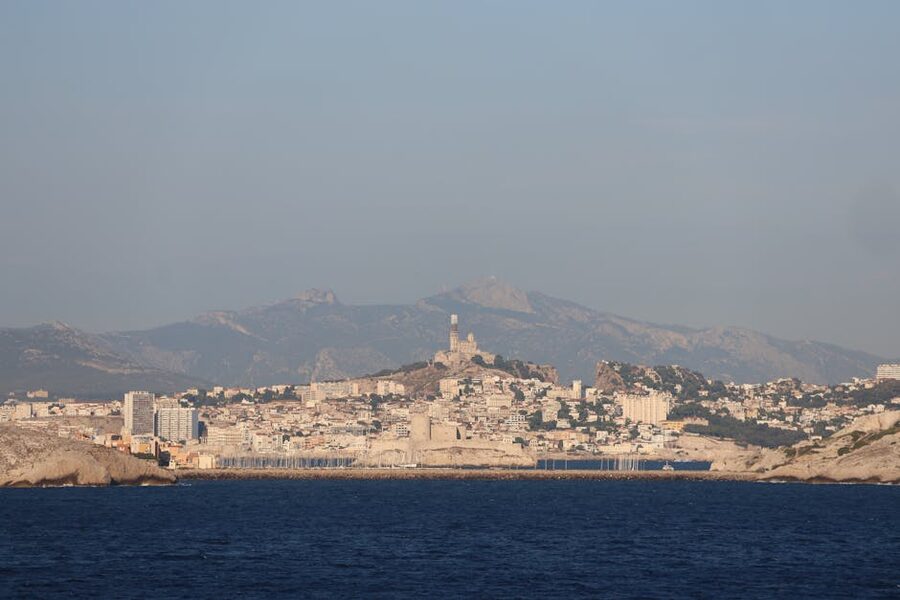
April through October is the rideable window. The bus runs year-round but the open-top deck (which is most of the appeal) doesn’t make sense in winter rain or January wind. July and August are when the Mistral can blow hard enough to disrupt the harbour ferries. The bus still runs but the bigger picture of your day (no Frioul, no Calanques boat tour) gets compromised. May, June, and September are the best months. Weather’s reliable, the heat hasn’t peaked, the Mistral hasn’t fully kicked in.
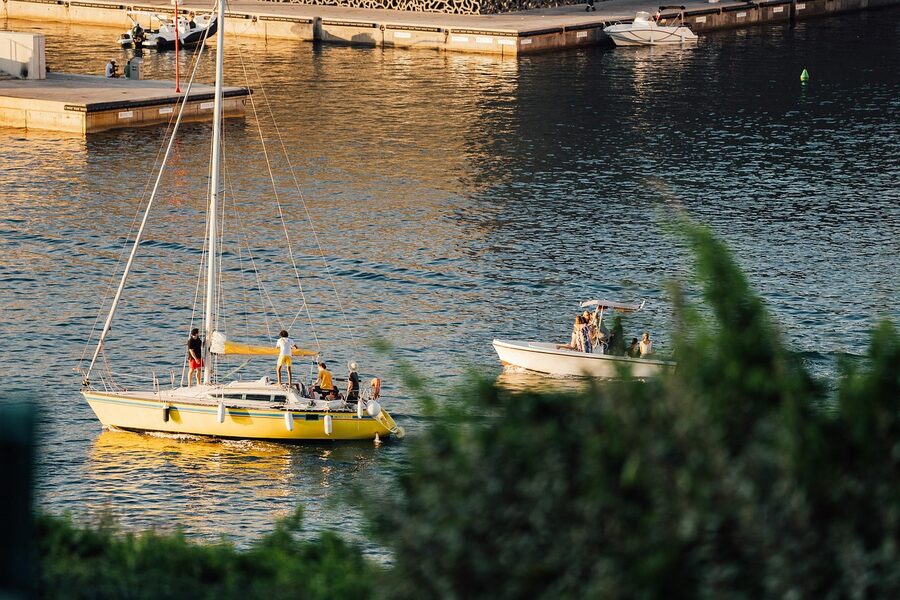
One Marseille-specific weather rule: the wind matters more than the rain. Mistral days are clear, sunny, and 30km/h gusts. They’re the days you want to be on the basilica terrace for the views, and the days you don’t want to be on a small boat in the Calanques. If the forecast says Mistral, swap your kayak day to a hike-from-Cassis day.
The three tour options
Three picks below. The first is the standard HOHO bus. The second is the City Pass that includes the bus plus a lot more. The third is the spend-the-day-better option for travellers who’d rather skip the loop entirely.
1. Marseille City Sightseeing Hop-On Hop-Off Bus: $27
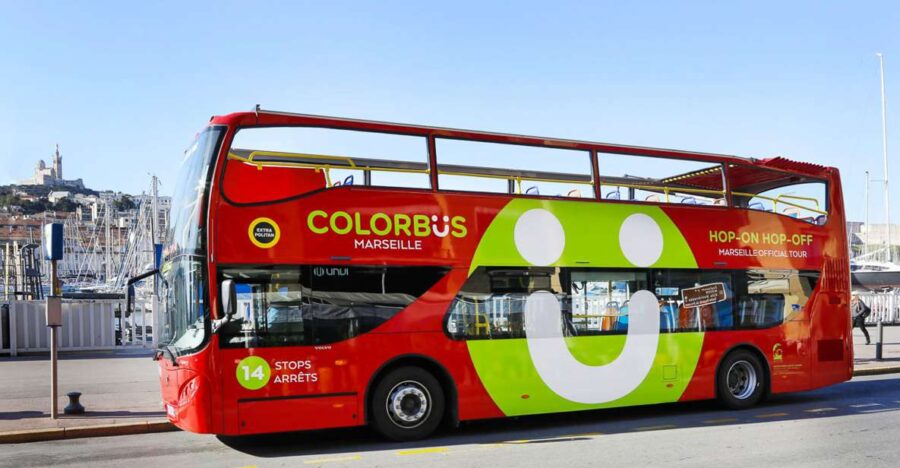
This is the right pick if you specifically want Notre-Dame de la Garde without taxi-ing or walking up. It’s the cheapest way to put a tourist on top of that hill, and our full take on the Marseille HOHO covers the audio-app gotcha. Buy on the day from the kiosk at Stop 1, no advance commitment needed.
2. Marseille CityPass 24h, 48h, or 72h with Public Transport: $42
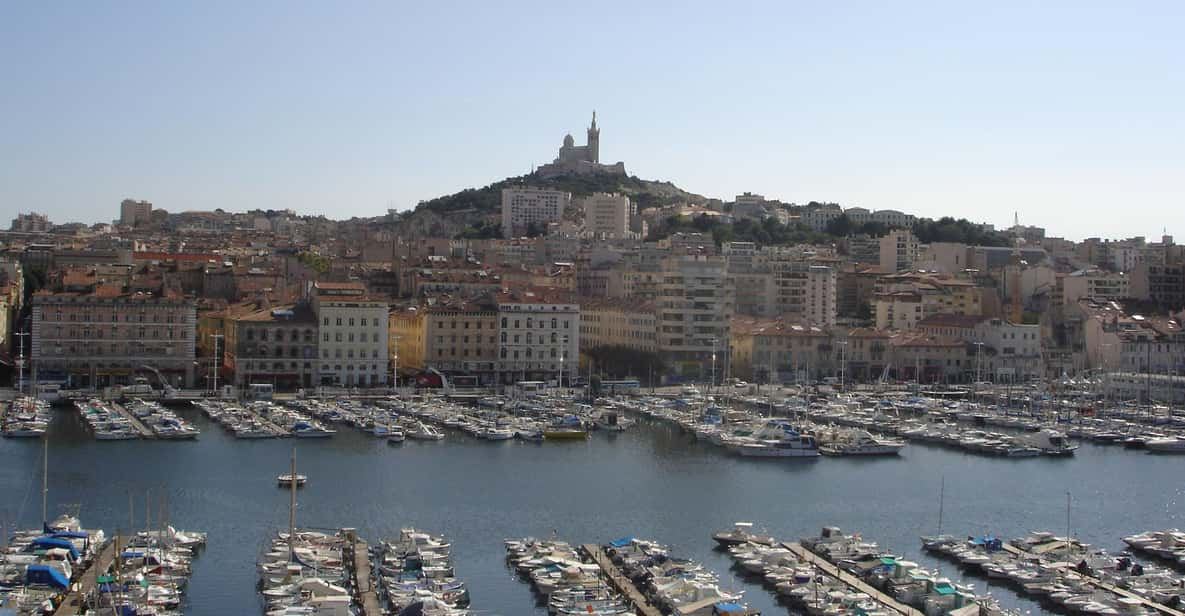
This is the right pick if you’ll do three or more paid attractions in a day, especially if MuCEM and Château d’If are on your list. The pass beats the HOHO alone on maths, and the public-transit access turns the city’s metro and tram from “figure it out” to “swipe and ride,” which is something the full pass review walks through. The 48-hour option is the sweet spot for most weekend visitors.
3. Côte Bleue Calanques Half-Day Kayak Tour: $64

This is the right pick if you’ve decided the HOHO isn’t your day, and our Côte Bleue kayak review spells out why this is the better spend. Three hours in the calanques, a guided paddle, swim stops, all gear included. You’re back in Marseille mid-afternoon with the rest of the day free for the basilica or a Vieux-Port apéro.
Building a day around the bus (or without it)
Here are the three day-shapes that actually work, depending on what you’ve decided.
The “I want the basilica plus the city” day with HOHO. Morning at Le Panier on foot. Lunch on the Quai du Port. Buy the HOHO from the kiosk after lunch, ride straight to Stop 3, an hour at the basilica including the climb to the bell-tower viewpoint. Bus back down. Walk to the MuCEM via the J4 esplanade, spend a couple of hours there. Dinner on the harbour rim. Total bus use: about 90 minutes of a 24-hour ticket, but the bus has done its job (the basilica climb).
The “I want the Calanques and the basilica” day, no HOHO. Train to Cassis at 9am. Kayak tour 10:30 to 13:30. Lunch in Cassis. Train back to Marseille around 4pm. Local bus 60 up to the basilica, an hour at the top, sunset on the terrace. Dinner in Le Panier. This is the better day for most travellers and the HOHO doesn’t appear in it.
The “I have 48 hours and want everything” plan with City Pass. Day 1: walk Le Panier and the harbour, MuCEM and Vieille Charité in the afternoon, Frioul ferry late afternoon. Day 2: train to Cassis for Calanques kayak, basilica at sunset on the way back. The pass covers the metro/tram/ferry plus the museum entries plus the bus when you want it.
Pairing Marseille with the rest of Provence
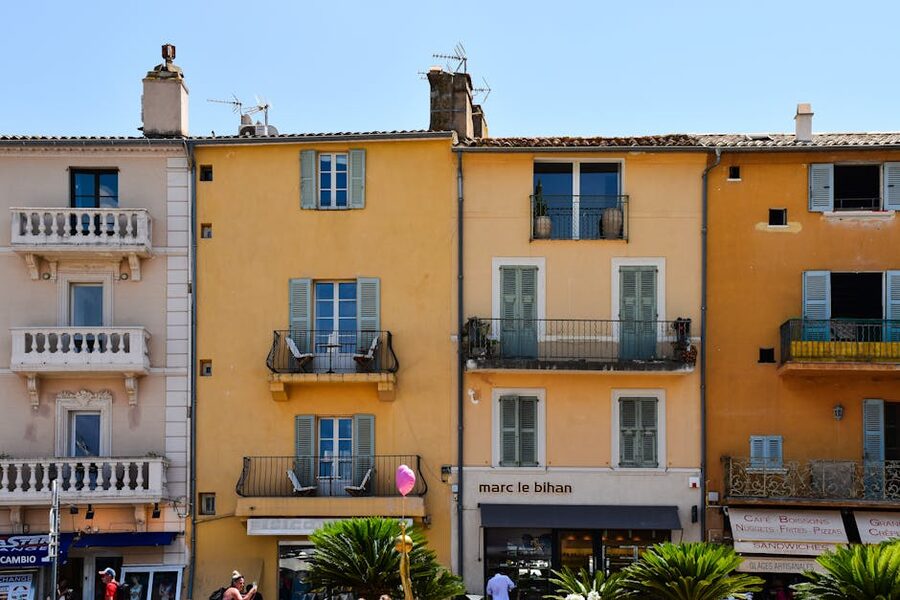
If Marseille is your base for a Provence trip, the surrounding region opens up nicely. A two-day Provence-from-Marseille shape pairs the city with a day in the Camargue and Arles, the marshland to the west where the white horses and pink flamingos live. The train to Arles takes about an hour from Marseille Saint-Charles, and you can do Camargue tours from there. The pairing works because the Camargue is everything Marseille isn’t (flat, quiet, agricultural), so the contrast is the point.
For travellers basing themselves in Nice instead of Marseille, the day-trip options are different. The French Riviera coastal run from Nice takes you to Eze, Antibes, and the cap; Monaco from Nice is the half-day version of the eastern Riviera; and the Verdon Gorge turquoise-river day-trip is the inland-Provence equivalent of doing the Calanques from Marseille. The Cannes to Sainte-Marguerite ferry is the Riviera version of doing Frioul from the Vieux-Port.
Comparing French city HOHOs across the country
If you’ve used hop-on buses elsewhere in France, the Marseille experience won’t slot in cleanly. Paris’s HOHO earns its 4.4 stars by stringing the postcard sights along a sensible loop, and we’ve made the case there for one specific scenario (the night tour) where it actually shines. Marseille’s bus has its own one-scenario case (the basilica). Beyond those, neither bus is your primary urban transit.
Across the border, the comparisons rhyme. Barcelona’s HOHO is the closest direct equivalent to Marseille. Both are port cities, both have dense old towns the bus skirts but doesn’t enter, both run into the same “great views, frustrating logistics” reviewer pattern. Barcelona’s bus rates higher because the Gaudí spread (Sagrada Familia, Park Güell, Casa Batlló, Casa Milà) is further apart and genuinely benefits from a route. Seville’s bus faces a different problem (the old town is so walkable the bus feels redundant). Palma’s HOHO in Mallorca is the one most similar in structure to Marseille: small port city, basilica or cathedral on the hill, ride it once for the elevation, walk the rest.
Italy’s port-city HOHOs run into the same misfit problem. Naples’s HOHO ranks even lower than Marseille’s, partly because the Naples old town traffic is among the worst in Italy and partly because the headline experiences (Pompeii, Capri, the Amalfi Coast) are all out-of-town day trips. Milan’s HOHO is the better Italian comparison for “fine, not magical.” Florence’s HOHO can’t even enter most of the old town because of the pedestrian zone. The pattern across all of these is the same: HOHOs work for spread-out attraction cities and underperform in walkable old towns.
The Roman exception is real. Rome’s HOHO earns its keep on the third or fourth day of a Rome trip when you’ve done the headline sights and want to see the Aurelian Walls, the Baths of Caracalla, and the parts of the city that are spread along the bus route rather than concentrated in the centre. Marseille doesn’t have that third-day need. The city’s tourist core is small enough to exhaust on foot in 36 hours.
Should you book the HOHO ahead
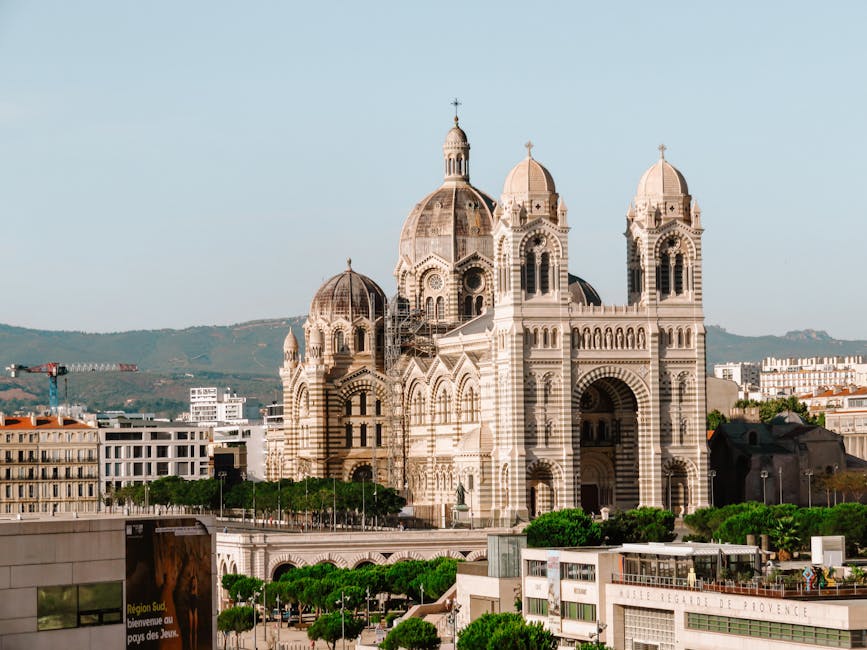
No, in most cases. The bus rarely sells out. The kiosk at Stop 1 (Vieux-Port, Quai des Belges) takes credit cards. Buying online via GetYourGuide does give you a few perks: usually a small discount, mobile-ticket flexibility, and the option to switch your start day if the morning weather turns Mistral. If you’re the kind of traveller who books everything in advance, book it. If you’re not, walk up and buy at 10am.
The exception is during the major Marseille events when buses get crowded: the Fête de la Saint-Jean in late June, the September Marseille Provence sailing weeks, and any cruise-ship-heavy days when one of the big liners docks at the J4 terminal. Those days, advance booking saves you from a kiosk queue. The cruise schedule’s published at the port website if you want to check.
The Signac painting and what to take from it
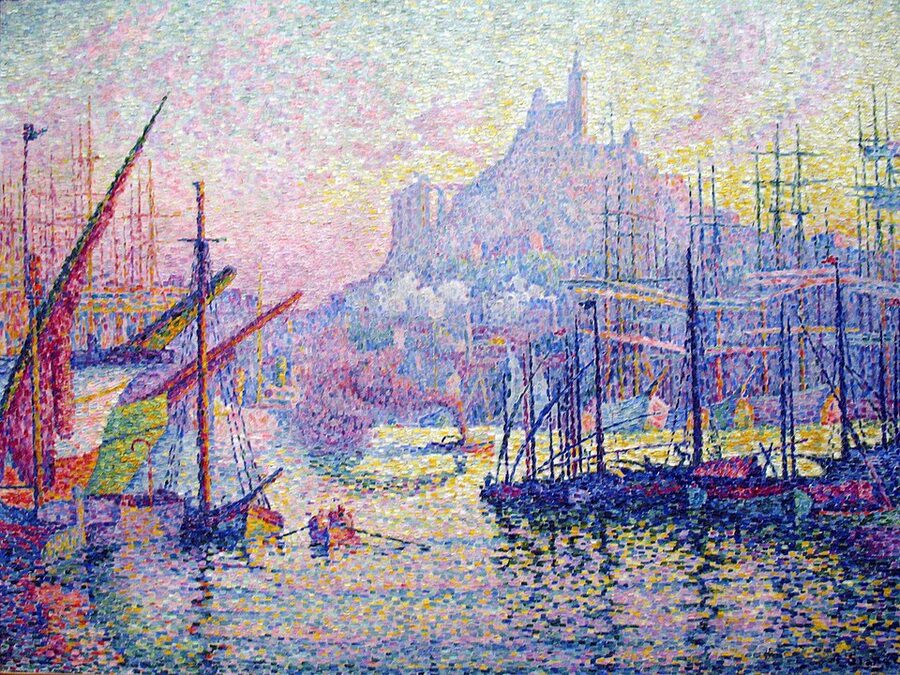
This 1905 Signac is hanging in the Musée d’Orsay in Paris, but I’m including it here because it’s the best argument for what Marseille actually is. Signac came down from Paris to paint the harbour and the basilica from a small fishing boat. The colours he used are the colours you’ll see if you stand on the Quai du Port at 5pm in May. The geography hasn’t moved. The light hasn’t changed. The thing he was painting is the thing you came here for, and the question of whether to spend $27 on a bus to see it is, in the longer view, sort of beside the point.
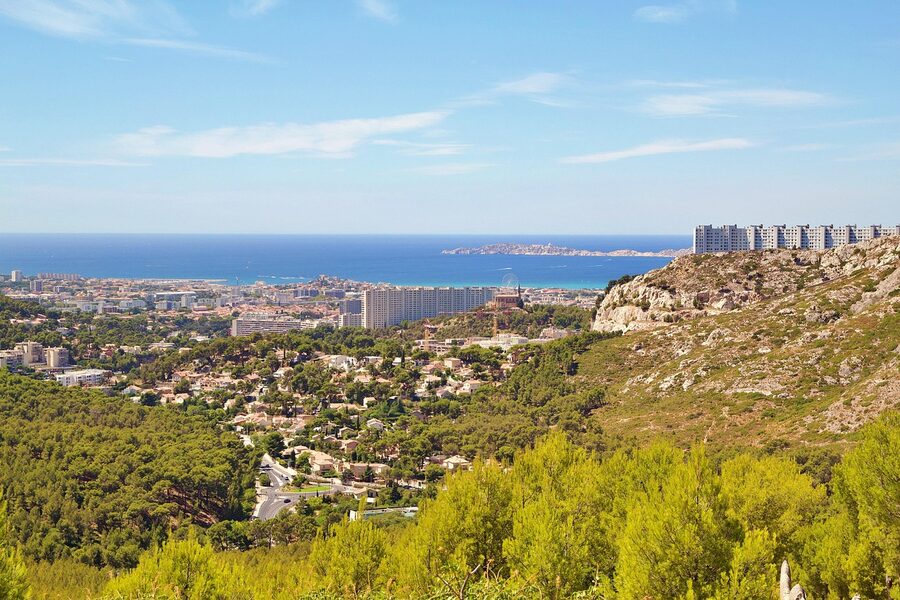
The Marseille that’s worth your time is the one Signac painted. The harbour, the hill, the basilica catching afternoon light, the small boats moving against a backdrop of rust-red roofs. You can see all of that on foot in a day. The bus helps with one piece of it (the basilica climb) and that’s the legitimate case for the $27. Everything else is preference.
So is it worth $27
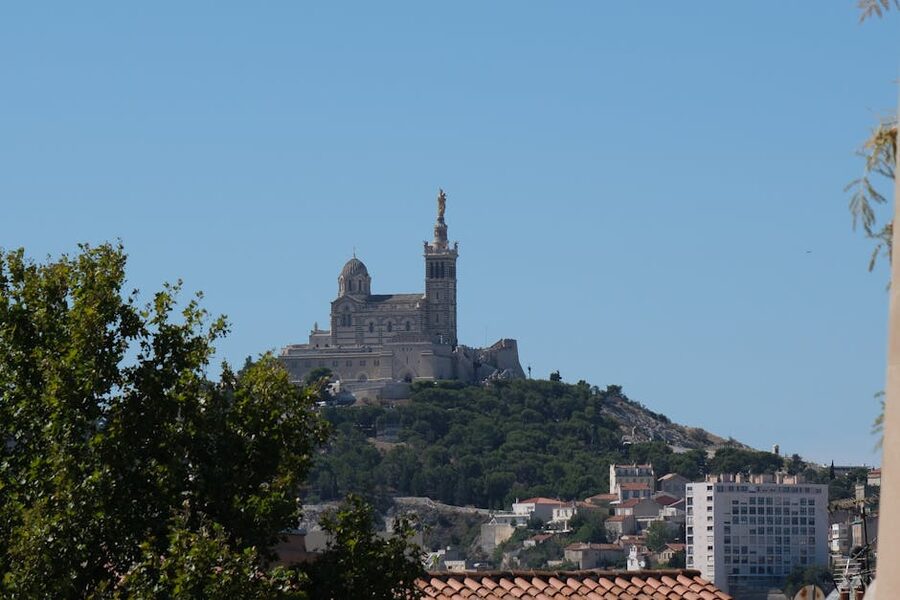
For a one-day Marseille visit where the basilica is on your list and you don’t want to taxi or walk up: yes. The HOHO is the cheapest, easiest way to get to Notre-Dame de la Garde and back, and using it just for that single trip is a fine deal even if the rest of the route is filler. About $27 for what would otherwise be €30+ in taxis and 90 minutes of walking, plus you ride the loop once for the views.
For a one-day visit without the basilica, or a multi-day visit where you’ll do museums and the ferry: no, get the City Pass. It includes the bus and a lot more.
For a traveller who’d rather spend the day in the Calanques than circle the harbour rim: skip the bus entirely and book the kayak. You’ll have a better story about Marseille at dinner.
The HOHO isn’t a bad bus. It’s a fine bus that’s been asked to do a job the city’s geography doesn’t quite let it do well. Knowing that going in is the difference between leaving a 3.8-star review and walking away thinking “fair enough, that did the basilica run, the rest was on me.”
What to read next from us
If Marseille is part of a longer Provence and Côte d’Azur trip, the obvious neighbour pieces are Camargue from Arles for the wetlands-and-flamingos counterpoint and the Cannes to Sainte-Marguerite ferry for the Riviera’s island-hopping equivalent of Frioul. Inland, the Verdon Gorge is what the Calanques would look like if you carved them through alpine forest instead of Mediterranean limestone. For travellers swinging through Paris, the Seine river cruise options give you the harbour-equivalent for the capital. And if you want to skip the bus question entirely and figure out which urban-loop guides are worth the headache, our pieces on the Barcelona, Seville, and Palma hop-on buses cover the same ground for the Spanish coast.