
Is the Barcelona hop-on hop-off bus worth it? You’ll get a different answer from every traveller who’s tried it, and most of them are right about their own trip.
Barcelona is flatter and more linear than people give it credit for. The Eixample grid where most first-timers sleep, eat, and shop is walkable end to end in twenty-five minutes. The Old City is dense, pedestrianised, and faster on foot than any bus could go. So the bus isn’t winning you anything in the tourist core. Where it earns its keep is the stuff most visitors underestimate before they get here: the climb to Park Güell, the long flat haul out to Montjuïc, the Diagonal-to-coast stretch that public transport handles fine but never with a view. Yes for the hilltops and the coast. No for the centre. That’s the answer earned, not the marketing one.
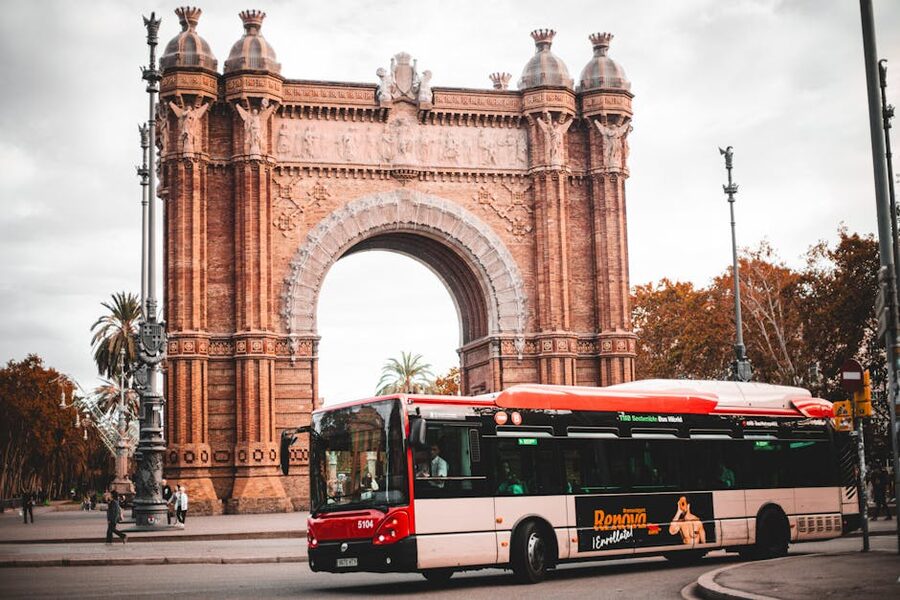
In a Hurry? The Three Picks
- Bus Turístic 24/48-Hour Pass ($39): The official double-decker, two routes, most stops at the Gaudí trio. Check availability.
- City Sightseeing Barcelona Pass ($39): The other operator (City Tour), real-time bus tracking in the app, hits the Barceloneta beach the Bus Turístic skips. Check availability.
- Viator-listed City Sightseeing Pass ($39.54): Same product, alternate booking channel if you collect Viator credits. Check availability.
The Two Operators (and Why It Matters)
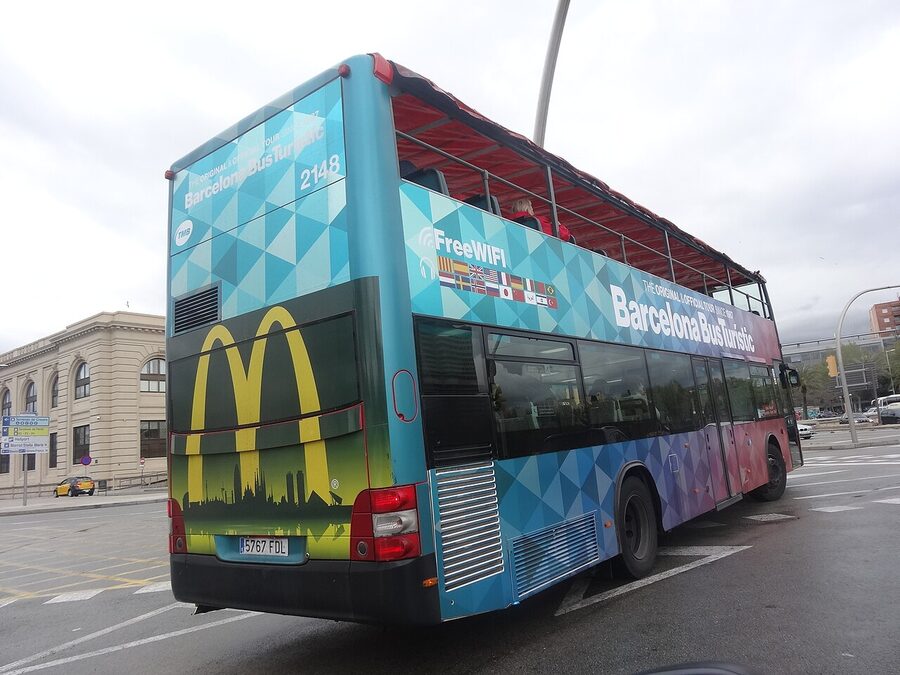
Most articles online treat “the Barcelona hop-on bus” as one thing. It isn’t. There are two completely separate companies running competing routes, and they don’t share tickets. Buy a 24-hour pass for one and you can’t transfer to the other.
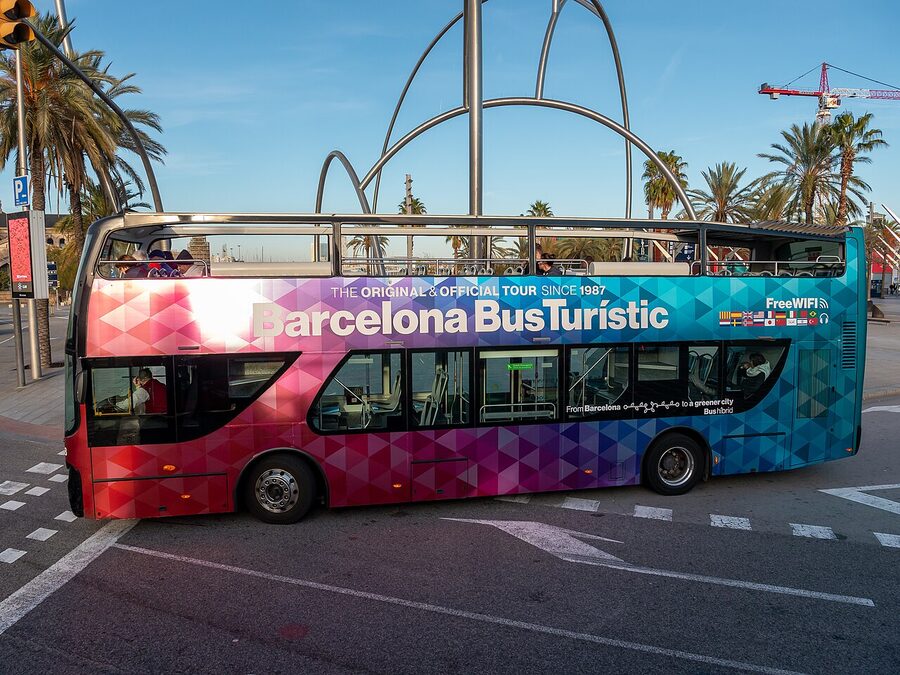
Barcelona Bus Turístic is the original, run by the city’s Transports Metropolitans (TMB) in partnership with City Sightseeing’s international network. Their buses are blue and red, two routes called Red and Blue, and the brand’s been operating in some form since 1987. They call themselves “the official tourist bus” because they’re publicly run.
Barcelona City Tour is the challenger, operated by Julia Travel and Moventis with Grey Line as the international partner. Their buses are deep red, two routes called Orange and Green. Newer fleet, real-time tracking in the app, hearing-impaired audio system. Smaller route network.
The pricing’s identical. Both run €33 for 24 hours and €44 for 48 hours, both run 9am to 7pm, both circulate roughly every twenty minutes, both close on January 1st and Christmas Day. The differences are in which neighbourhoods each one reaches and how easy it is to find your bus when you’ve hopped off.
Where the Bus Actually Pays Off
Pull up a map of Barcelona before you book. The bus pays off in four places, and they’re all the spots where Barcelona suddenly stops being walkable.
Park Güell: The 80-Metre Climb
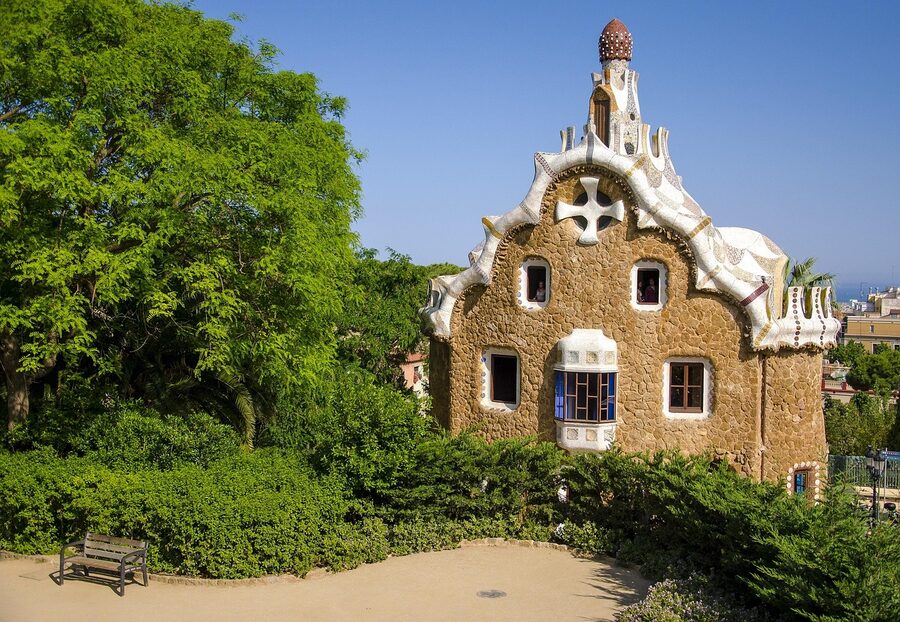
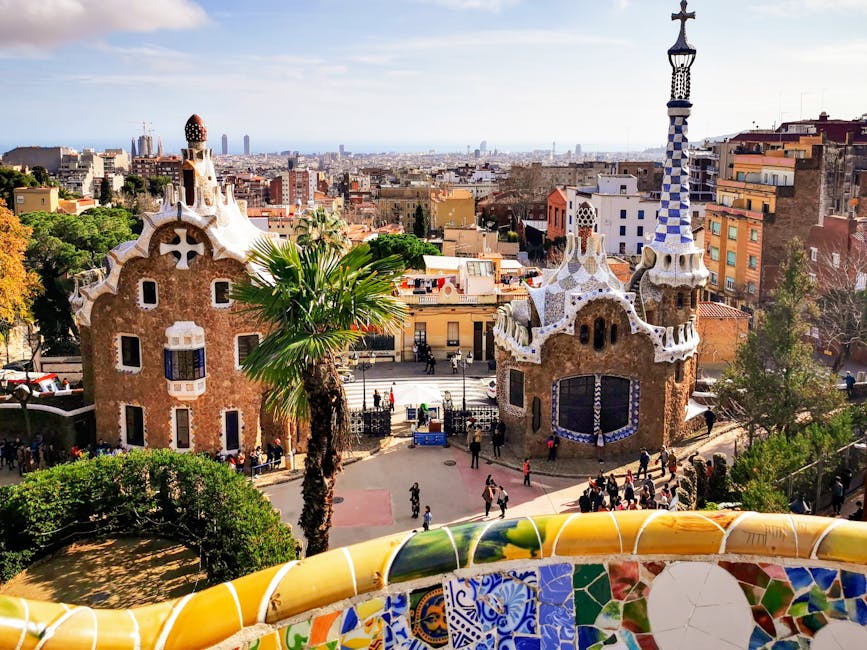
Park Güell is the case for the bus. The metro ride is fine until you get off at Lesseps or Vallcarca and realise you’ve still got 15-20 minutes of uphill walking ahead, the last stretch on stone steps that get slick in any drizzle. The bus drops you at a stop that’s still a 10-15 minute uphill walk away from the main entrance, but you’re already on a hop-on pass so the stair grind is the only stair grind. If you’re doing the Park Güell visit as part of a wider Gaudí day with Sagrada Familia and Casa Batlló, the bus genuinely saves you time.
Bus Turístic Blue Line and City Tour Green Line both stop in the Park Güell zone. Bus Turístic is the closer of the two; City Tour’s stop is a longer walk. Allow more time than you think for the uphill. Bring water in summer.
Montjuïc: The Hill Most Visitors Skip Wrong
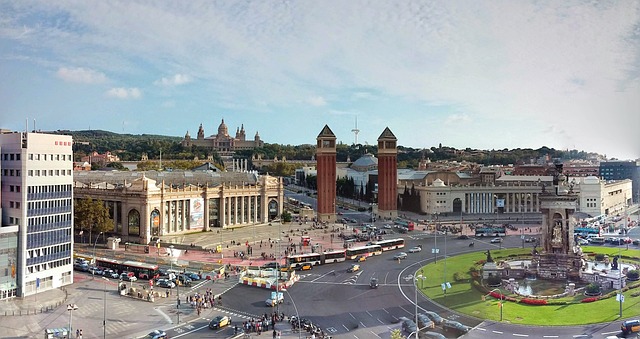
Montjuïc is the strongest single argument for the bus. The hill rolls south of the city centre, holds the MNAC museum, the Magic Fountain at Plaça d’Espanya, the Joan Miró Foundation, the Olympic Stadium, the Castle of Montjuïc up top, and the cable car. Public transport fragments it across at least three changes. The bus links them in one continuous loop with a single ticket.
The Bus Turístic Red Line covers Montjuïc going up via Plaça d’Espanya. The City Tour Orange Line covers it in the opposite direction. Either works. The Castle of Montjuïc itself isn’t on the bus loop; from the Miramar stop you take the cable car up the last stretch.
If you’ve got two days in Barcelona and one day worth of energy, Montjuïc is exactly the kind of half-day where the open top deck pays for itself. The road wraps the hill with views back over the Old City and the port. You won’t get that from the metro.
Tibidabo and the Zona Alta

Only the Bus Turístic Blue Line reaches the foot of Tibidabo. City Tour doesn’t service this side of the city at all. If Tibidabo’s amusement park, the Sagrat Cor cathedral on top, or the Cosmocaixa science museum is on your list, the Bus Turístic Blue is the route that matters. Same Blue Line gets you to the Pedralbes Monastery and the quieter Sarrià neighbourhood.

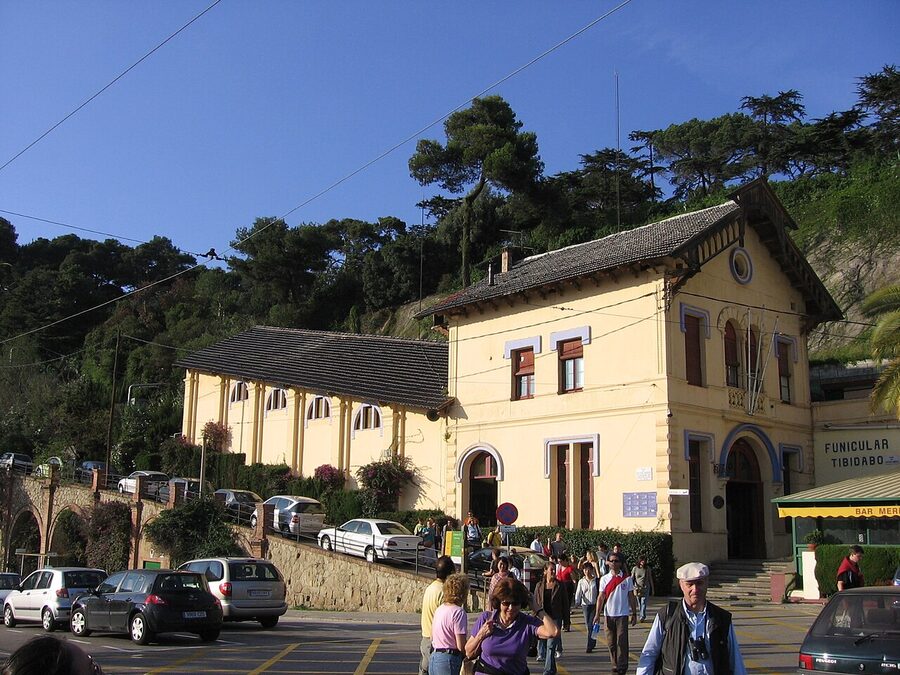
Note the cap on the bus’s reach: it doesn’t drive up to the Tibidabo summit. You change to the Tibibus or the historic funicular for the last leg. Plan for the transfer time and check the funicular hours before you go.
The Coast and Diagonal Mar
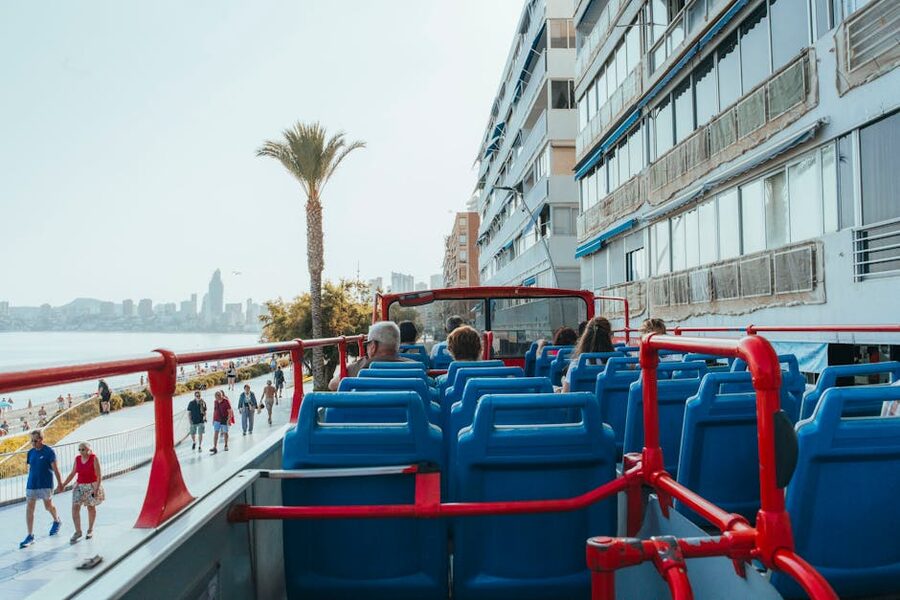
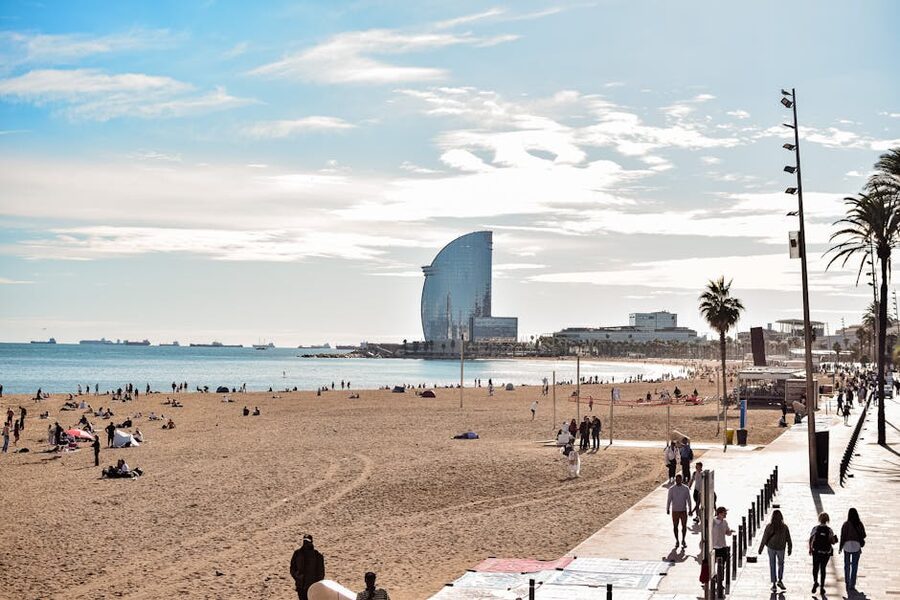
The eastern stretch from Port Olímpic out to Diagonal Mar and the Forum is fine on public transport but never with a view. The bus rides the long avenues with the upper deck open, which converts a transport ride into a sightseeing one. City Tour wins this segment because it actually swings through the Barceloneta beach district. Bus Turístic skips Barceloneta entirely. If walking the beach with a stop at the W Hotel is on your list, the City Tour is your bus.
Where the Bus Loses
The Eixample tourist core is where the bus stops being useful. From Plaça Catalunya north up Passeig de Gràcia to Casa Batlló, La Pedrera, and onward toward Sagrada Familia is twenty-five minutes on foot at strolling pace. The bus takes longer once you factor in the wait at the stop, the loop direction, and the crawl in mid-afternoon traffic. You’ll see more, photograph more, and eat better doing this stretch on your feet.


The Old City is the firmer “no”. The Gothic Quarter, Born, and the Raval are pedestrianised down to alley scale. Neither bus company can drive into them; both companies’ nearest stops are around the perimeter, and you’d be walking in regardless. Same goes for the Boqueria market on La Rambla. Walk it.
The bus also doesn’t run to the airport. El Prat is its own thing. Aerobús is the airport service from Plaça Catalunya, and it’s much cheaper than a tourist bus pass would ever be for the same trip.
One direction. Both operators run their loops one way only. If you take the bus to Park Güell and need to get back to your hotel near Passeig de Gràcia, you can’t reverse the bus. You either stay on through the rest of the loop (which can mean another hour) or break and take the metro back. Build the day around the loop direction or it’ll cost you the afternoon.
Bus Turístic vs City Tour: Which One
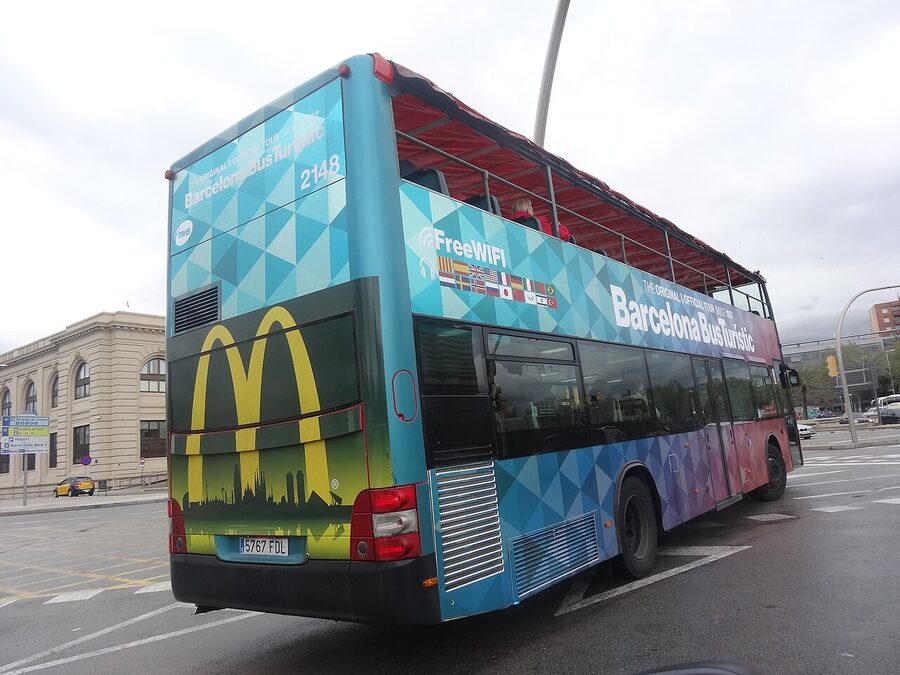
The comparison comes down to four factors.
Sagrada Familia connection: Bus Turístic Red Line passes the Sagrada Familia twice in a single loop. City Tour Orange Line runs it once but takes the most direct route from the centre, which matters if you’ve got a timed Sagrada Familia entry slot. If your skip-the-line ticket says 11am, the Orange Line gets you there with the least guesswork.
Northern reach: Bus Turístic wins this outright. Tibidabo, Sarrià, the Pedralbes Monastery, the Dragon Gate at Finca Güell. None of those are on City Tour’s network. If your itinerary touches any of them, take the Bus Turístic.
Coastal reach: City Tour wins. The Barceloneta beach stretch is on Green and Orange. Bus Turístic does the coast at Port Olímpic but skips the Barceloneta strip.
App and tracking: City Tour’s app shows real-time bus location. Bus Turístic’s doesn’t. If you’ve got tight timed entries through the day or you don’t like waiting at stops without knowing how long the wait is, City Tour’s app is genuinely useful.
For a typical first-time Barcelona itinerary that’s heavy on the Gaudí trio plus Park Güell plus Montjuïc, the Bus Turístic Red Line plus a single hop on the Blue Line covers everything you need. For an itinerary that’s lighter on Gaudí north and heavier on the beach plus a single Sagrada visit, City Tour does the job slightly better. There’s no wrong choice; there’s the route map matched to your day.
How the Day Actually Works (the Practical Bit)
You buy online before you fly. Both companies sell on GetYourGuide, Viator, and direct from their websites. Tickets validate on first scan, not on purchase. So booking ahead and not using the bus until day three of a five-day trip is fine. The 24-hour clock starts when you get on, not when you click “buy”.
You collect or scan at the first stop. Both companies use Plaça Catalunya as the de facto starting point even though the routes don’t technically start there. There’s a staffed kiosk, and on busy mornings the kiosk has a queue. Skip it by booking the e-ticket; you scan from your phone and walk on.
The audio guide runs in 16 languages on Bus Turístic, 15 on City Tour. The differences are minor: Bus Turístic adds Norwegian and Turkish, City Tour adds Hindi. Both have English, Catalan, Spanish, French, German, Italian, Japanese, Mandarin, Portuguese, Dutch, and Arabic. Headsets aren’t included; you bring your own earphones or use the bus’s USB charging port (City Tour only) to keep your phone alive for the audio.
The upper deck has a retractable roof, which is the part most reviews don’t mention. Light rain doesn’t kill the day; the roof slides forward and you stay dry. Heavy rain pushes everyone downstairs and the bus loses half its appeal. Check the morning forecast.
Buses are wheelchair accessible on the lower deck only. The upper deck is reached by a stairway. Both companies have designated luggage racks on the lower deck, but you’re responsible for it; don’t leave bags overhead while you go up.
Day Plans That Actually Work
One-Day, Bus Turístic Red:
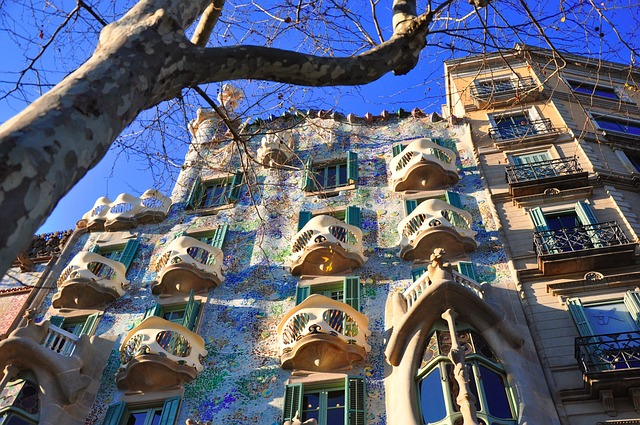
9:30am board at Plaça Catalunya. Ride down Passeig de Gràcia, hop off at Casa Batlló for the morning Gaudí stretch. Re-board, ride down to Plaça d’Espanya, transfer up to Montjuïc for MNAC and the Magic Fountain area. Stay on through Olympic Stadium and Miramar viewpoints. Ride down to the harbour for lunch in Barceloneta or near the Columbus statue. Re-board after lunch, ride east through the Olympic Village and the Diagonal Mar coast. The route loops back through Poblenou and lands you at Sagrada Familia in the late afternoon. Hop off for your timed entry, get back on after for the final leg back to Plaça Catalunya. That’s a full Barcelona day with one ticket, no public transport changes.
Two-Day, Bus Turístic Combined:
Day one: Red Line for Montjuïc, the harbour, and Sagrada Familia (as above). Day two: Blue Line for Park Güell, Tibidabo, and the upper-district neighbourhoods. The 48-hour pass covers both.
Cruise Day, City Tour Orange:
If you’re docking at Moll de Barcelona on a smaller ship, both companies stop at the World Trade Center pier. Take the Orange Line for the fastest connection from the harbour to Sagrada Familia and back to the ship in time. This is the only itinerary where City Tour outperforms Bus Turístic on Gaudí connection, because of where the Orange Line starts.
The Three Picks
1. Barcelona Bus Turístic 24 or 48-Hour Pass: $39
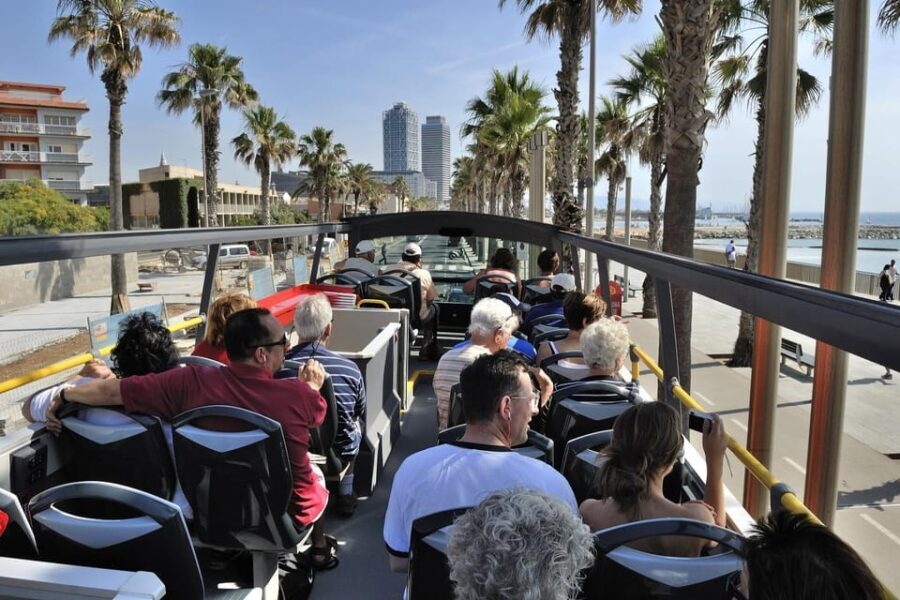
This is the right pick if your trip touches Tibidabo, Sarrià, the Pedralbes Monastery, or Park Güell, since City Tour doesn’t run those routes. Our full review of this pass walks through the Red versus Blue route trade-off and the discount booklet that comes with the ticket. Booklet includes vouchers for Poble Espanyol, the Aquarium, and the Montjuïc cable car, which are real money off if you were going to those anyway.
2. Barcelona City Sightseeing 1 or 2-Day Ticket: $39

Pick this one if your day’s heavier on the coast and lighter on the Gaudí north, or if you want the in-app live bus tracking that the Bus Turístic doesn’t offer. Our full review covers the 34-stop network and the optional boat ride between the Columbus statue and Port Olímpic that this operator bundles in. Free cancellation up to 24 hours is the other small win over Bus Turístic.
3. City Sightseeing Barcelona Hop-On Hop-Off Tour: $39.54

Same product as the City Sightseeing pass above, listed on Viator instead of GetYourGuide. Worth picking only if you collect Viator credits or already have an account there. The full review flags one common visitor frustration: stop locations on the booking confirmation aren’t precise enough for first-timers, so save the route map to your phone before you arrive.
Worth It or Not: The Verdict by Trip Type
Worth it. First-time visitor with two or three days, hitting Park Güell, Sagrada Familia, Casa Batlló, and Montjuïc. The bus connects what public transport fragments. The 48-hour pass divided across two days lands at about €22 a day, less than two single tickets and a metro change.
Worth it. Cruise day with eight hours in port. The bus solves the timing puzzle (which sights, in which order, with which transfers) by collapsing it into one moving loop.
Worth it. Mobility-limited or anyone travelling with a parent who tires walking. The bus is the difference between seeing five sights and seeing one.
Not worth it. Repeat visitor who’s already done the Gaudí round and just wants to wander the Born. Save the money and walk.
Not worth it. Single-day trip focused entirely on the Old City and La Rambla. The bus can’t get you any closer than your feet already are.
Not worth it. Anyone on a strict budget. €33 buys a lot of tapas, and Barcelona’s metro day pass is roughly €11 for unlimited rides. If saving money matters more than convenience, the metro plus your feet beats the bus on cost every time.
Comparing Across Cities
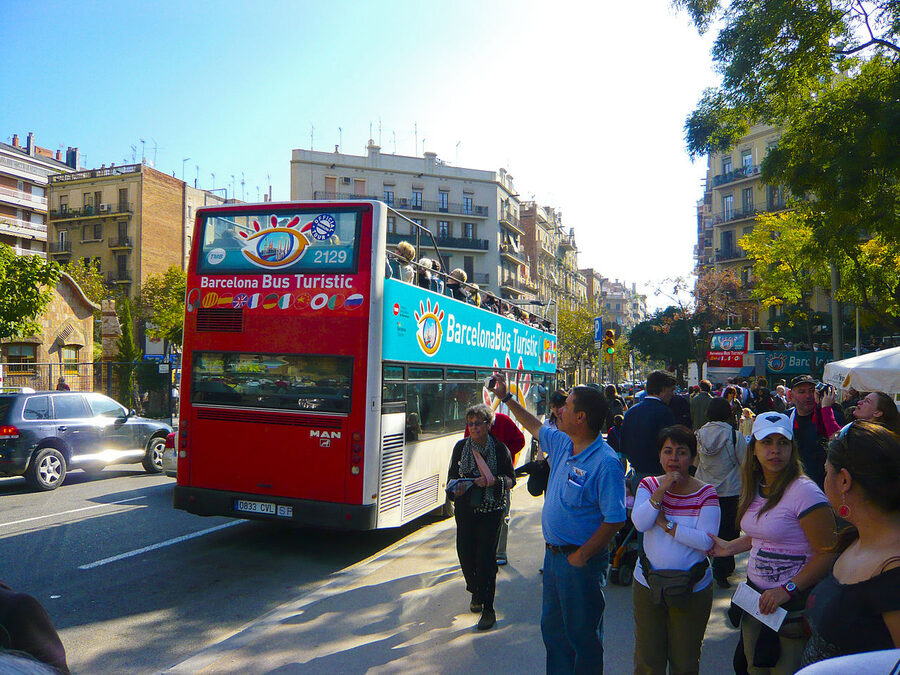
If you’ve taken hop-on buses elsewhere in Europe, Barcelona sits in the middle of the value range. It pays off harder than the Milan hop-on bus does, where the Duomo-Sforzesco-Last Supper triangle is genuinely walkable and the bus duplicates your feet. It’s about even with the Naples hop-on bus, where (like Barcelona) the bus earns its keep specifically on the hill routes (Posillipo, Vomero, Capodimonte) and adds nothing in the centro storico. It pays off less aggressively than the Rome hop-on bus, where the city’s spread and traffic mean public transport is a real chore. The Florence hop-on bus is the opposite case, where the historic centre is fully pedestrianised and the bus genuinely can’t reach the headline attractions at all. The Paris hop-on bus sits closer to Rome on this spectrum, where distances between Eiffel, Louvre, and Montmartre punish your feet, while the Marseille hop-on bus earns its keep mostly on the climb up to Notre-Dame de la Garde.
The pattern across all five Italian and Spanish cities: the hop-on bus is most worth it where geography is fragmented (hilltops, coast, multiple neighbourhoods that don’t connect on foot), and least worth it where the tourist core is compact, flat, and pedestrianised. The Amsterdam hop-on bus is a borderline case: the canal ring is walkable, but the outer ring of museums, the Heineken Experience, and the Johan Cruijff Arena spread the day across distances that punish anyone trying to do them on foot, much as the Johan Cruijff Arena tour does for stadium pilgrims.
One More Thing: The Combined-Pass Question

Barcelona has multiple city passes, and they overlap with the hop-on bus in different ways. The Hello Barcelona Travel Card is metro-only and doesn’t include the tourist bus. The Barcelona Pass and the GoCity Barcelona pass do bundle the Bus Turístic in, alongside skip-the-line tickets to Sagrada Familia, Park Güell, Casa Batlló, and other paid sites. The Turbopass bundles in City Tour instead. If you’re doing five or more paid sights plus the bus, the bundle saves money. If you’re doing the bus plus one or two sights, buy the bus and the sights separately.
For a closer look at the standalone Hello Barcelona transit card, that’s the metro and bus pass for getting around generally; it’s not a sightseeing-bus alternative.
The Two Things That Catch People Out
First, the loop direction. Read the route map before you board. If you’re staying near Casa Batlló and your day plan ends at Park Güell, the bus loop has to come back around through half the city to drop you. Plan to take the metro back instead, or build the day in the same direction as the bus runs.
Second, the audio guide volume. The upper deck is windy at speed, and the audio is whispered in a recorded voice. Bring real headphones, not earbuds. People who tried to listen to it on speaker on the upper deck universally said they couldn’t hear half of it.
If You’re Building a Wider Barcelona Day
Barcelona rewards layering the bus with everything else. A Gaudí-heavy day with morning Casa Batlló, midday Sagrada Familia, and late-afternoon Park Güell uses the Bus Turístic Red Line as the connector and saves you the metro headache. A coastal-and-Montjuïc day starts with the Magic Fountain area, drifts down to the harbour, and lands at the beach for an evening dinner; the bus runs that arc for you. A cathedral comparison day pulls you naturally toward the Sagrada Familia stop on either company’s network, and rhymes with the Italian counterparts at the Milan Duomo terraces, the Florence Duomo dome climb, and the St Peter’s Basilica dome in Rome. None of those four cathedrals were finished in the lifetimes of the architects who started them. Walk that thread once you’ve stood under the Sagrada Familia’s nave columns and you’ll see why.
For a half-day out of the city, look at Montserrat from Barcelona, which is the standard Barcelona day trip and connects from the Plaça d’Espanya station that the bus drops you at. Same Plaça d’Espanya is the transfer point for the Bus Turístic Red and the City Tour Orange. The bus pass and the day-trip ticket dovetail by accident of geography.