
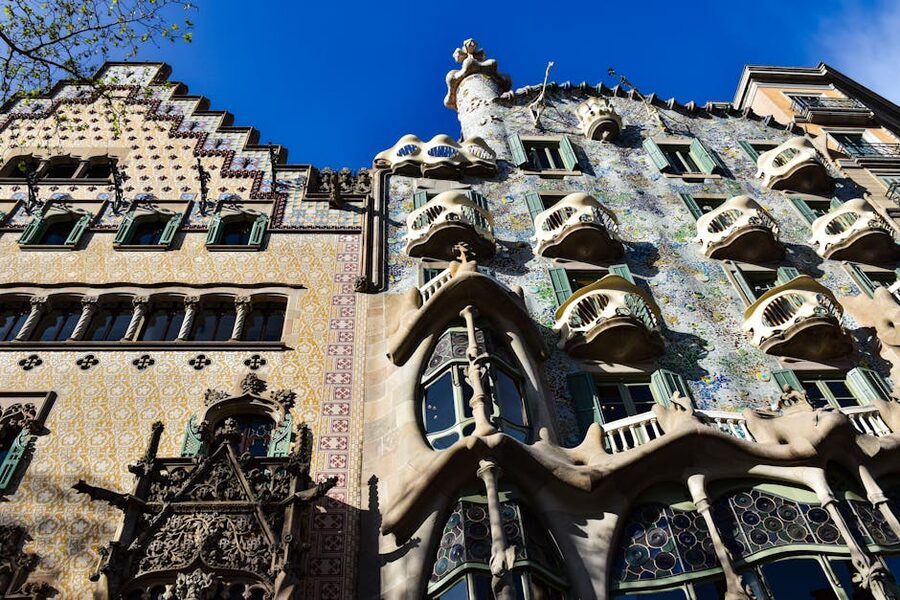
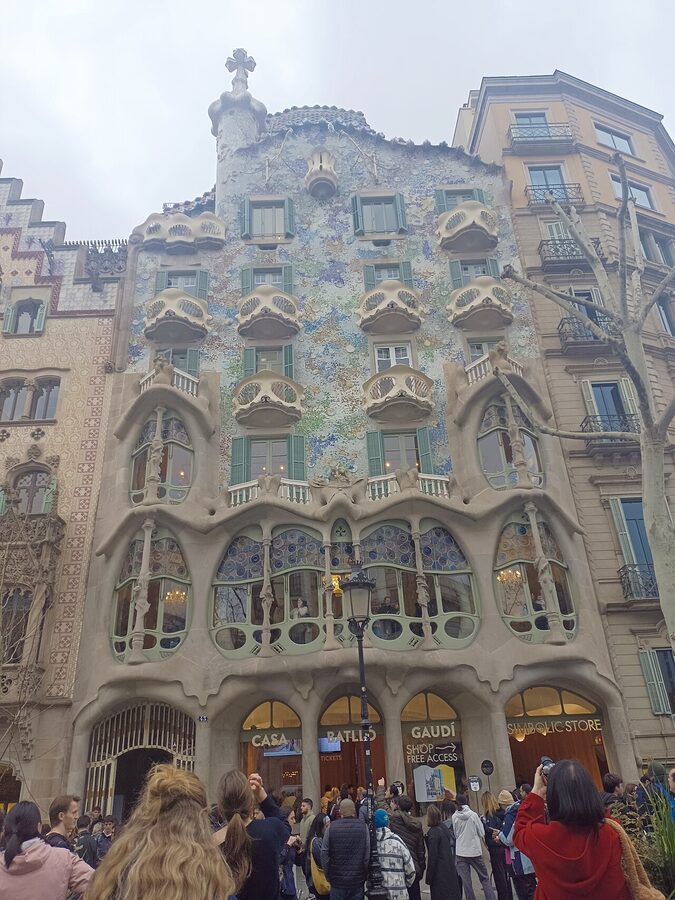
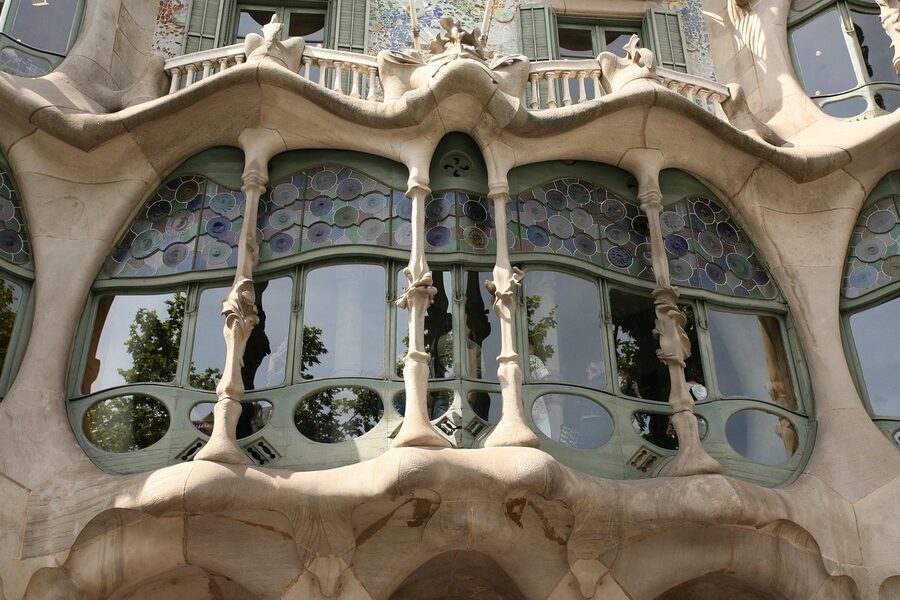
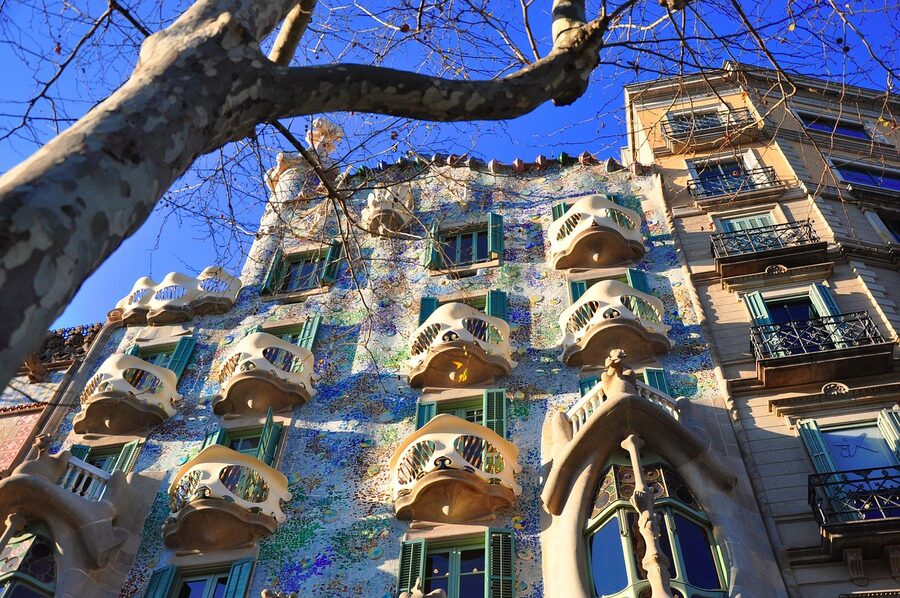
Stand on the Passeig de Gràcia pavement directly opposite number 43 and look up. The balconies are skulls. The mullions between the windows are femurs. The columns at the first-floor level are tibia bones with kneecap rings worked into the stone. Locals call it Casa dels Ossos, the House of Bones, and once you’ve seen it you can’t unsee it. Gaudí finished the renovation in 1906. He was borrowing from anatomy for the front and from marine life for the rest, and the building has been the most intensely visited Gaudí house in Barcelona ever since.
In a Hurry: Three Picks
The fast picks
- Cheapest entry, audio guide included ($34): Casa Batlló entry with self-audioguide and 10D Experience. The standard ticket nine in ten visitors book.
- First in the door, no queue ($53): Be The First entry ticket. The 8:30am opening slot, room to actually photograph the place.
- All three Gaudí houses in one shot ($162): Complete Gaudí guided tour. Casa Batlló plus Park Güell plus extended Sagrada Familia in 5.5 hours.
The biomimicry thread: every curve is borrowed from a body
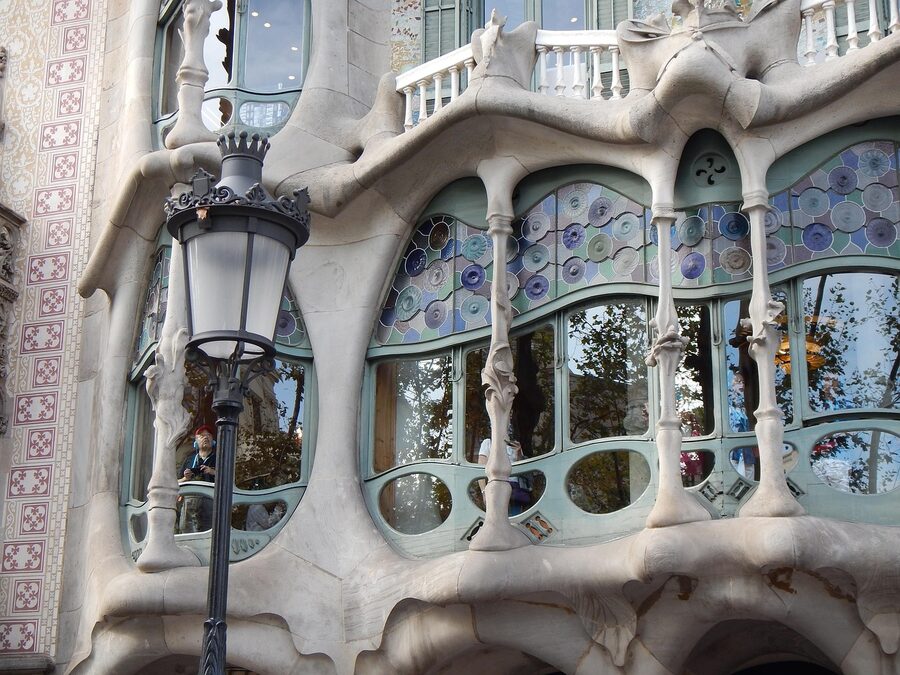
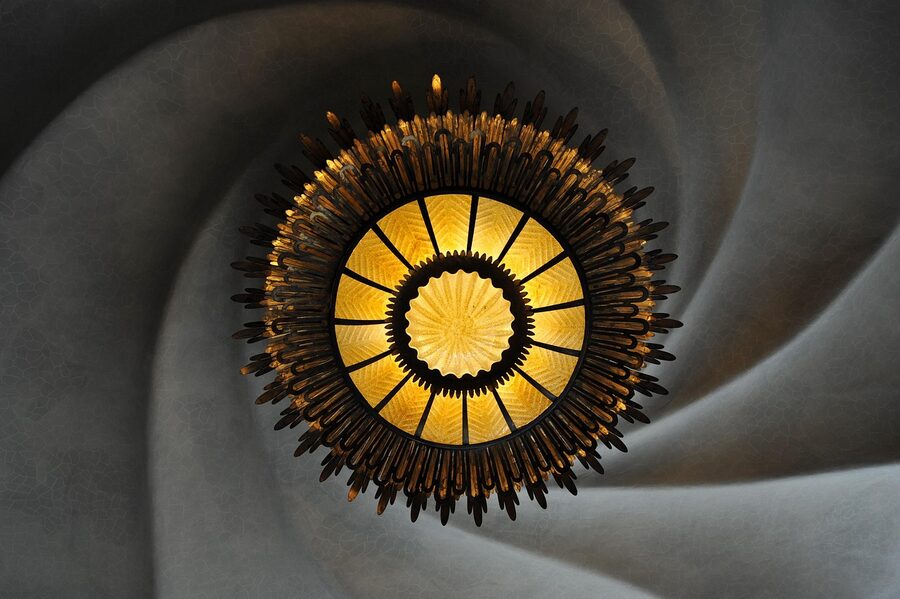
This is what makes Casa Batlló different from every other “pretty house” tour you’ll do in Europe. Gaudí wasn’t decorating. He was copying. Bones for the balconies. Fish scales for the roof. A reptile spine across the rooftop crest. Wave glass for the windows of the Noble Floor. The mushroom-shaped fireplace. The vertebra-shaped staircase handrail. None of it is metaphor. He looked at skeletons in anatomy books, at sea creatures in the Mediterranean, at the way light moves through water, and rebuilt all of it in stone, ceramic, glass, and forged iron.
If you want the cousin building that does the same trick with machines instead of bodies, the Leonardo Interactive Museum in Florence is the spiritual sibling. Leonardo borrowed bird flight to design his glider; Gaudí borrowed bone marrow to design his balconies. Same mind, four centuries apart, both building the natural world into engineering.
How tickets actually work in 2026
Casa Batlló sells eight different ticket tiers on its own site, which sounds chaotic until you realise most visitors only need to choose between two. Here’s the actual breakdown.
The 90% choice: the standard ticket with audio guide and the 10D Experience. This is what most people book. Around $34 on GetYourGuide, $35 if you go to the Casa Batlló box office (which you shouldn’t, because there’s no on-the-day availability in peak season). It includes the audio guide in 15 languages, the AR tablet that overlays virtual furniture into the rooms, the Gaudí Cube 360° room, and the Gaudí Dome immersive video room. You’ll be in the building about 80 to 90 minutes.
The 8:30am first-entry ticket, $53. This is the one I’d actually push. The standard ticket starts at 9am and the queues outside the door are already 200 people deep by 9:15. The first-entry ticket gets you in at 8:30 with maybe 30 other people in the whole building. You can photograph the courtyard without anyone in your shot. You can stand in the Noble Floor with morning light coming through the wave glass and not have someone’s elbow in your frame. For an extra 19 dollars and a slightly earlier alarm, it’s the one to take if you’ve travelled to Barcelona to see this specific building.
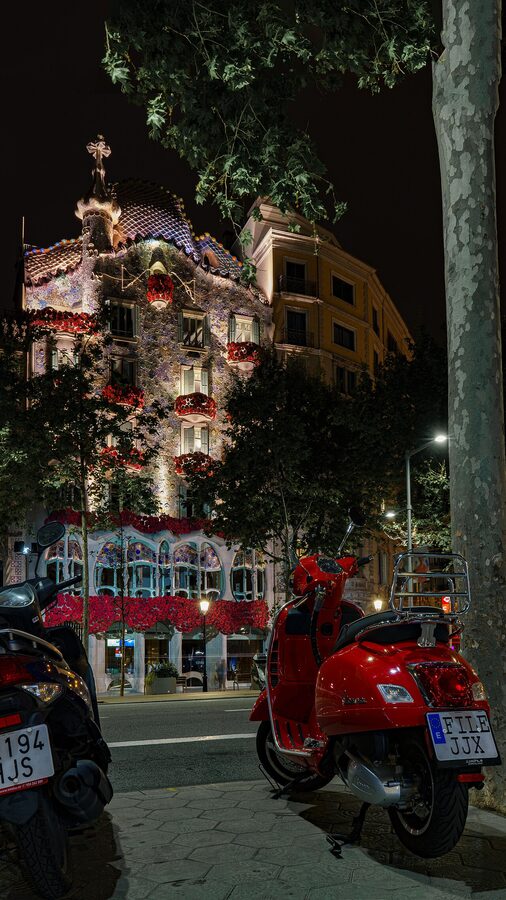
What I’d skip: the night visit with welcome drink ($66). The illuminated facade is photogenic from the outside on Passeig de Gràcia for free, and the interior at night feels like a stage set rather than a working building. Save that money for a tapas dinner instead. A proper tapas tour in Barcelona will run you about the same.
The book-on-the-spot myth, and why it doesn’t work in May–October
If you read older guides, they’ll tell you that you can buy at the door. You can. You’ll just be buying the 7pm slot at 11am, six hours after you wanted to see the building. From May through October the morning slots sell out a week in advance. November to March is more forgiving (I’ve walked up at 10am and got a noon slot in February), but there is no scenario in which booking at the door is faster than booking online the night before. Don’t try.
Refunds are tight: full refund up to 24 hours before, nothing after that. If the weather forecast wobbles, that doesn’t matter. Casa Batlló is entirely indoors except for the rooftop and you can stand under the chimney garden’s overhangs in light rain anyway. The only real reason to push your booking is illness.
The dragon roof, and why it’s the highlight
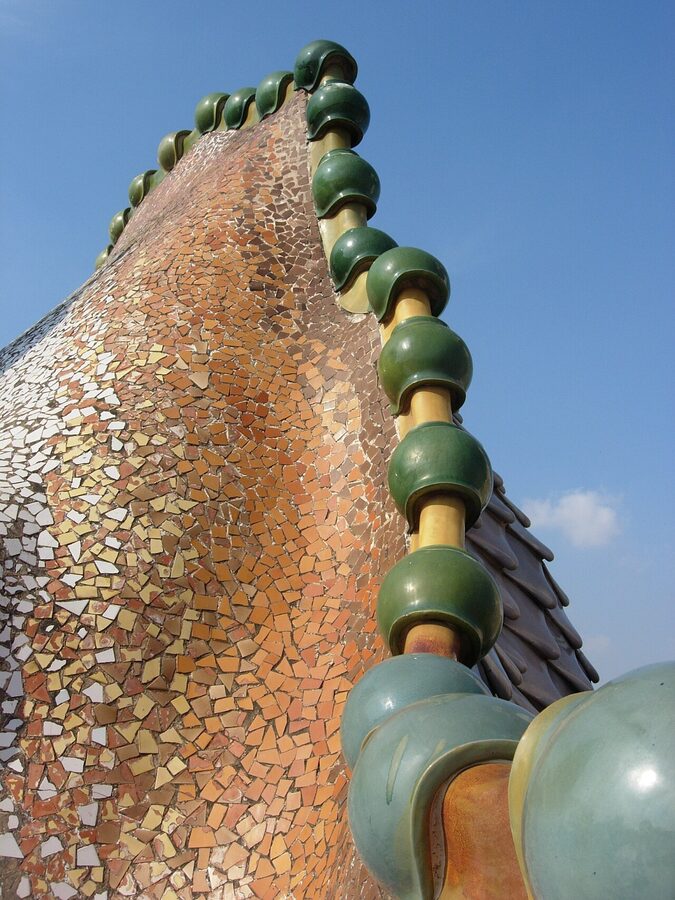
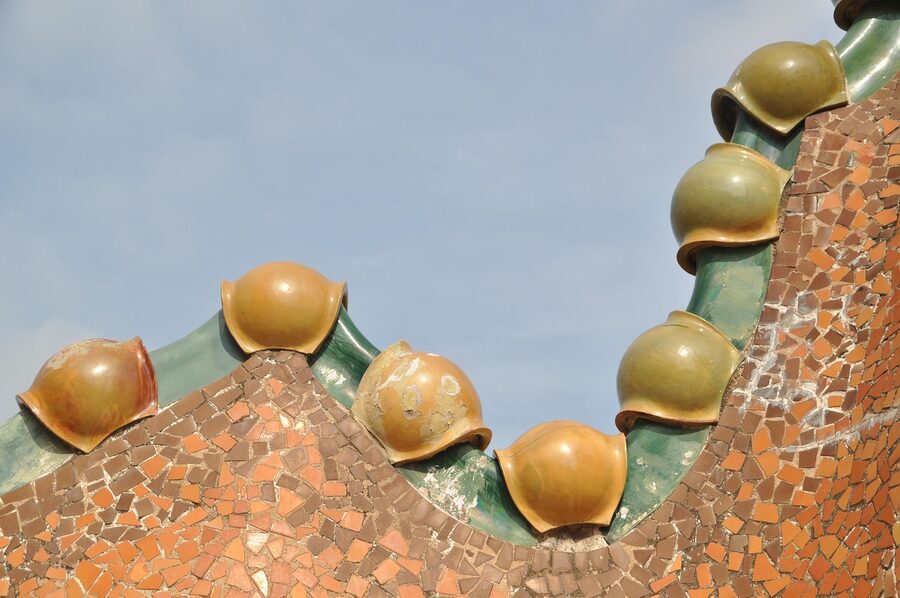
The rooftop is what people remember. The argument runs that the building’s whole external shape is a Saint George legend told in tile: the spine of a dragon (the curved roof crest), the cross of Saint George (the bulb-and-cross at the top), and on the right, the thin tower that’s meant to be the lance the saint drove into the dragon’s back. Gaudí was a devout Catholic and Saint George is the patron saint of Catalonia. The reading is plausible. Whether or not you buy it, the dragon-scale ceramic tiles change colour as you walk around the rooftop, because each piece was glazed at slightly different temperatures and sits at a slightly different angle to the light. Greens fade into blues. Pinks wash into ochres. It’s the most photographed surface in Barcelona for a reason.
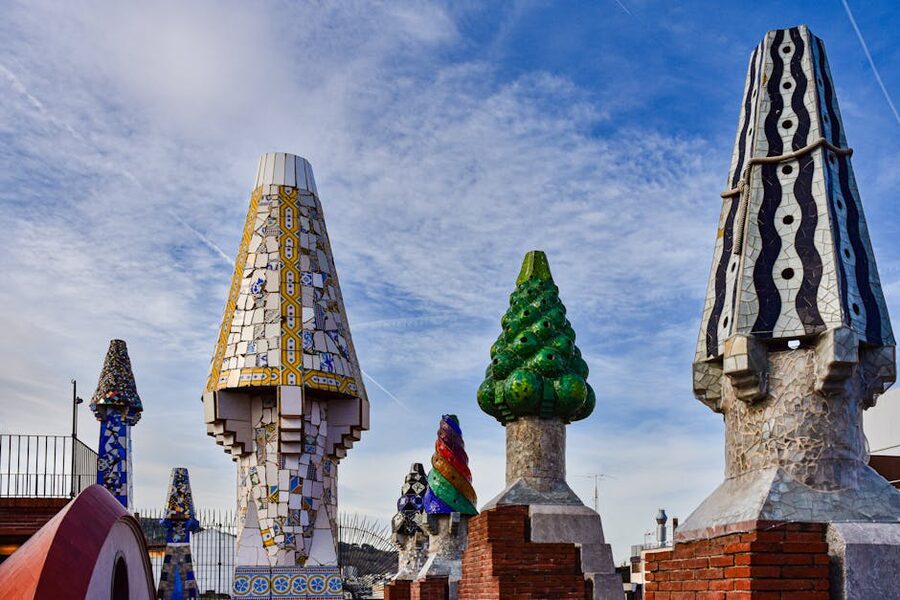
The chimney garden on the rooftop’s other side is the second photo opportunity. Gaudí topped each chimney with a helmeted ceramic hood, partly because Barcelona’s winds knock chimney pots off and a heavier head solves that, partly because he wanted the silhouette of armoured knights against the sky. Walk to the back chimney first. It has the cleanest angle on the dragon spine without other chimneys in your shot.
The Noble Floor: where the family actually lived
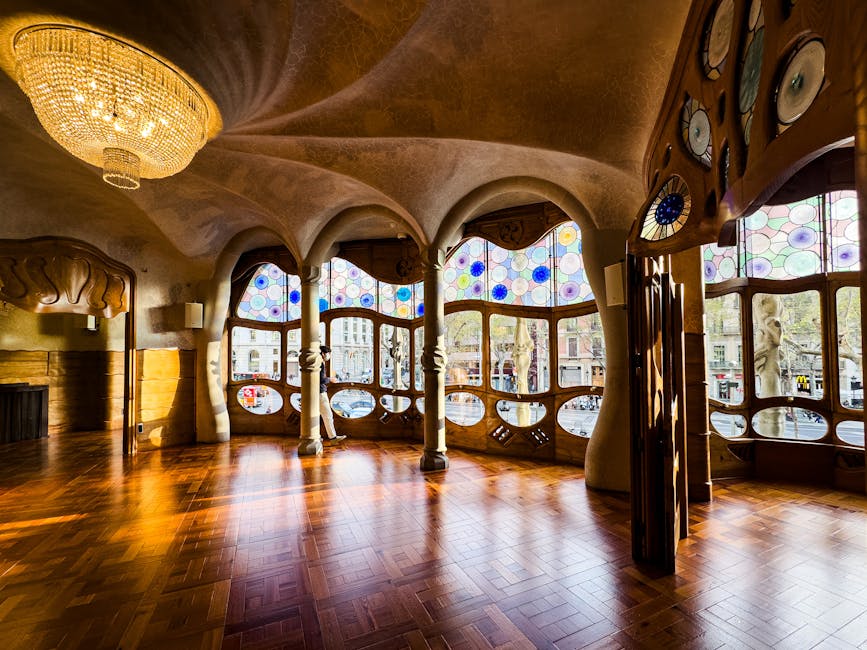
Most visitors run through the Noble Floor (the first floor) on the way to the rooftop, which is a mistake. This is where the Batlló family lived. It’s where the wave glass windows that face Passeig de Gràcia let in morning light that warps and curves on the wooden floor. The mushroom-shaped fireplace nook is here, with a built-in bench where two people can sit facing each other across a small fire. The doors are leaf-shaped. The handrails are spinal vertebrae. Stand in the salon for two minutes longer than you think you should. The way the building’s bones reveal themselves takes time.
The 10D Experience and AR tablet: gimmick or actually useful
The plain take: the AR tablet is genuinely useful, the 10D room is mid. The tablet they hand you at the entrance overlays virtual furniture, virtual chandeliers, and virtual stained glass into the empty rooms. Without it, the Noble Floor reads as a beautiful but empty stage. With it, you can see what the dining table looked like, where the family chairs sat, what the wallpaper would have been. That single feature is worth the audio-guide cost on its own.
The 10D Experience room and the Gaudí Dome are immersive video rooms. The 10D adds wind, scent, and vibration on top of the visuals. It’s a six-minute show. It’s fine. If you’ve been to a theme park dark ride in the last decade, none of it will surprise you, but it doesn’t add much beyond a brief sit-down moment between the Noble Floor and the rooftop. Treat it as a rest stop.
The three tours worth booking
I tested the standard audio entry, the first-entry ticket, and the combined Gaudí guided tour over three trips. Here’s the picker’s view.
1. Casa Batlló Self-Audio Entry: $34
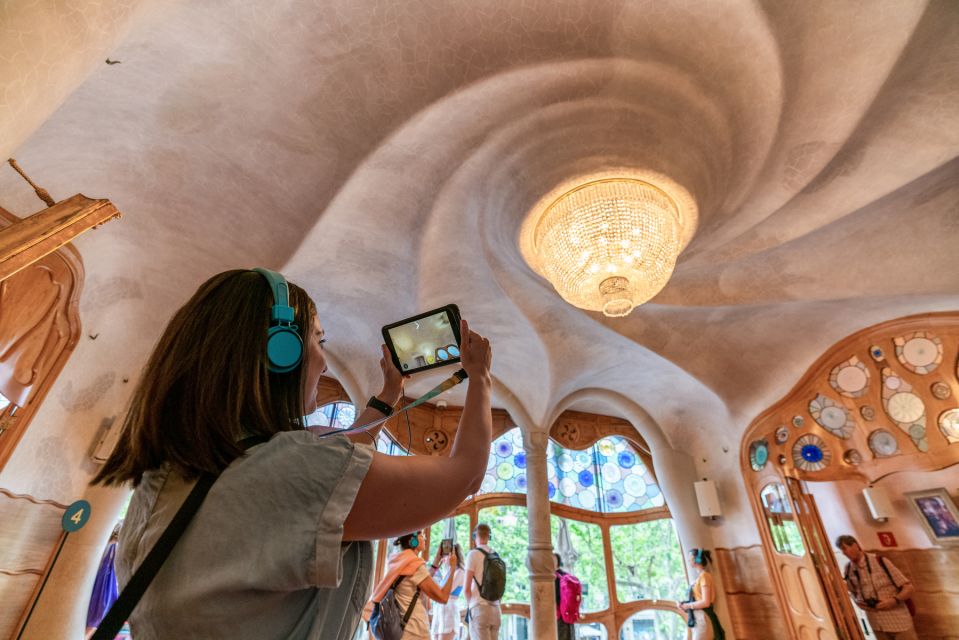
This is the right pick if you want to do Casa Batlló at your own pace and have it slot easily into a half-day Gaudí circuit (combine it with Park Güell in the afternoon). Our full review covers exactly which audio-guide tracks to skip and which to actually listen to. Expect midday queues in summer though, which is the one trade-off versus the first-entry option.
2. Be The First Entry Ticket: $53
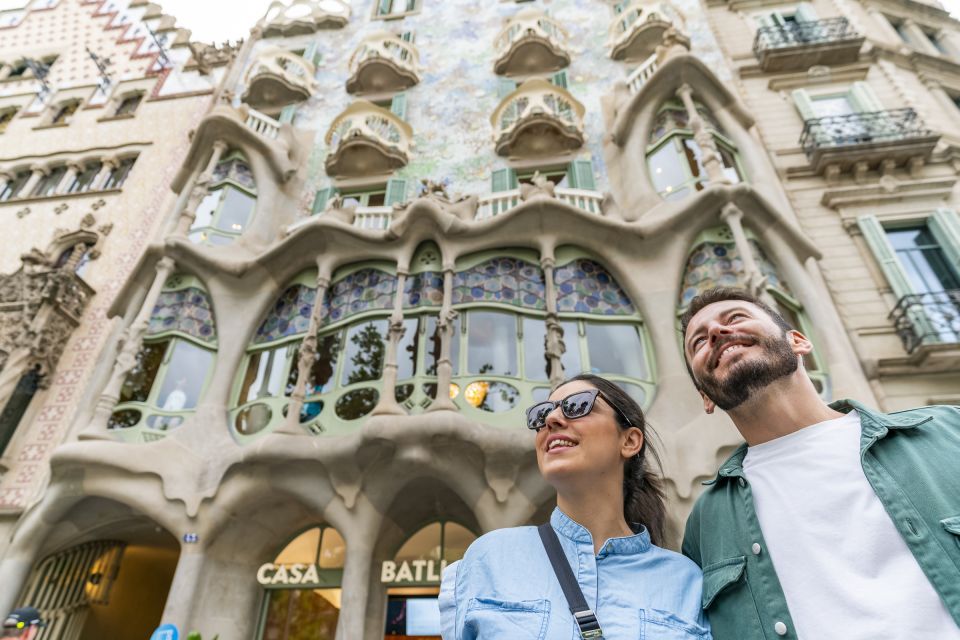
Pick this one if you’ve travelled specifically to see Gaudí and want clean photos without elbows in the frame. Our full review of the first-entry ticket walks through the difference between an 8:30 and 9:30 visit, and yes, it’s worth the extra $19.
3. Complete Gaudí Tour with Casa Batlló, Park Güell, Sagrada Família: $162
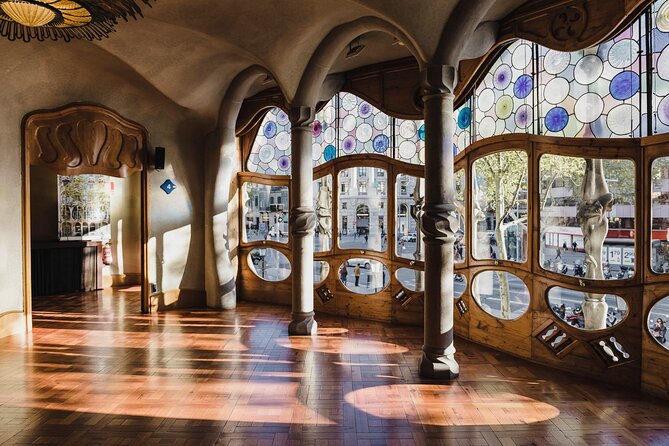
This is the picker for visitors with one day in Barcelona and a Gaudí brief. Our full review covers what gets squeezed in the 5.5-hour pace, but a guide who can talk you through Gaudí’s biomimicry across Sagrada Família’s bone-column nave is genuinely worth the premium over self-audio. Skip if you have multiple days, since you’ll see less per site than going solo with the first-entry ticket.
Getting there, and where to stand for the facade shot
Casa Batlló is at Passeig de Gràcia 43, in the Eixample district. The Passeig de Gràcia metro stop (lines L2, L3, L4) puts you on the same block. Walk one minute north and you’re standing in front of the building. From Plaça de Catalunya it’s about an eight-minute walk straight up the avenue.
For the facade photo: do not stand in front of the building. Stand on the opposite side of Passeig de Gràcia, on the wide pavement directly across from number 43. The skull balconies and bone columns only read from that distance. Phone cameras work fine. The morning light up to about 11am keeps the tile glaze from glaring; afternoon light makes the dragon-tile colours warmer but the bones harder to read. If you’re doing the night-illuminated shot, the facade lights come on around sunset and the cleanest angle is from the central pavement of the avenue itself, between the two car lanes. Watch the traffic.
Casa Batlló versus La Pedrera: which one if you only have time for one
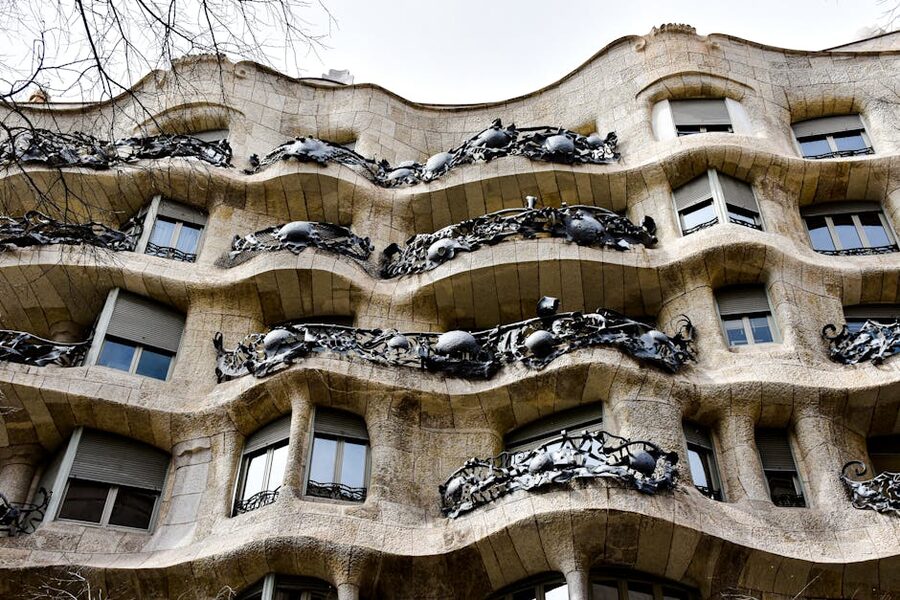
This is the question I get asked most. Both are Gaudí, both are on or just off Passeig de Gràcia, both have spectacular rooftops. The short answer: Casa Batlló if you care about colour and biomimicry. La Pedrera (Casa Milà) if you care about structure and geometry.
Casa Batlló is louder, more theatrical, more saturated with stained glass and trencadís ceramic. The Noble Floor and the rooftop are jaw-drop moments even if you don’t know any of the architectural backstory. La Pedrera is quieter, the colour palette is bone and stone, and the chimneys on the roof are sculptural but not as polychrome. La Pedrera also has a much bigger attic space with a Gaudí museum exhibition, which Casa Batlló doesn’t really do.
If you have one morning: Casa Batlló. If you have one full day: both, with Casa Batlló at 8:30 and La Pedrera at 11. They’re a five-minute walk apart. Some visitors also pair Casa Batlló with the lesser-known Casa Vicens, which was Gaudí’s first ever house (1885) and sits in Gràcia neighbourhood, but that’s a deep-cut Gaudí pilgrimage rather than a casual second stop. The Loire Valley equivalent is the double-helix staircase at Chambord, where Da Vinci’s hand turned a renovation into an architectural argument, and Amsterdam’s Fabrique des Lumières projects that same single-author energy at room scale.
The history: 1904, a textile baron, and a renovation that defined modernism
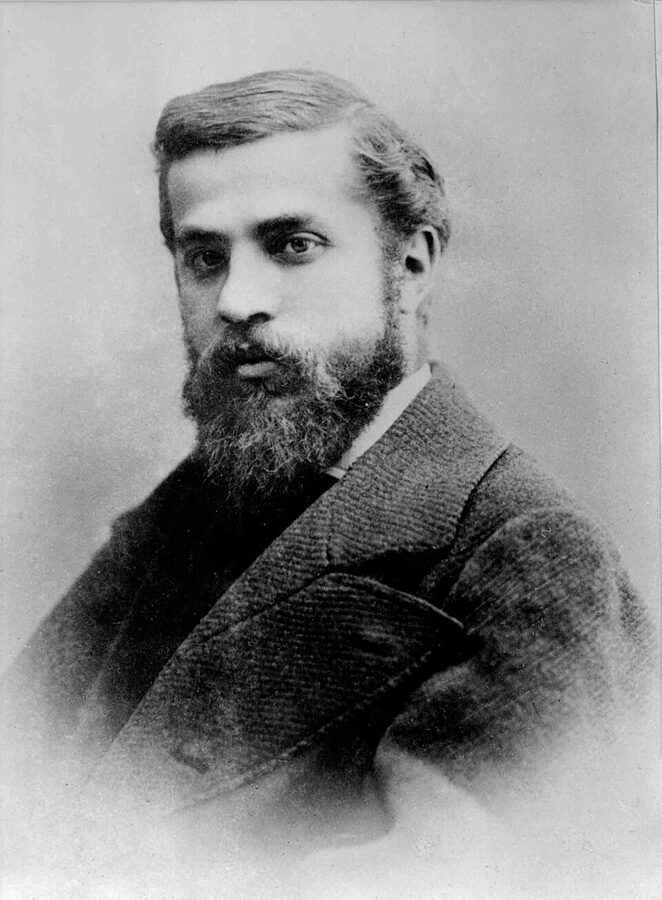
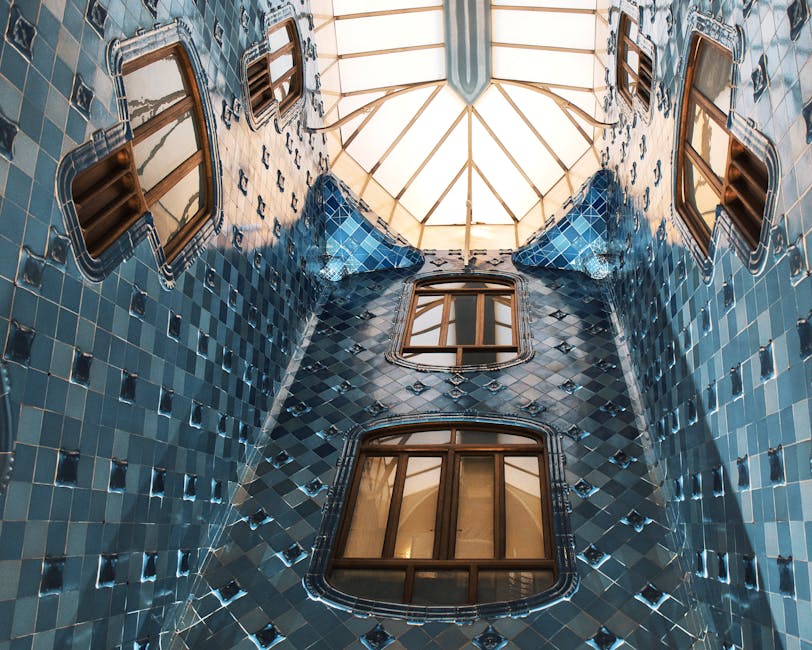
Josep Batlló i Casanovas owned a textile fortune. In 1903 he bought the building at Passeig de Gràcia 43, which was an unremarkable five-storey townhouse from 1877. He told Gaudí he wanted to demolish it and build something new. Gaudí said no. He’d renovate the existing building instead: strip the facade, rebuild the inner courtyard, add a Noble Floor, redesign the rooftop. The work ran from 1904 to 1906. When Gaudí finished, the building had no straight lines anywhere on the facade, the inner courtyard glowed blue from skylight to floor, and the rooftop crest looked like a dragon.
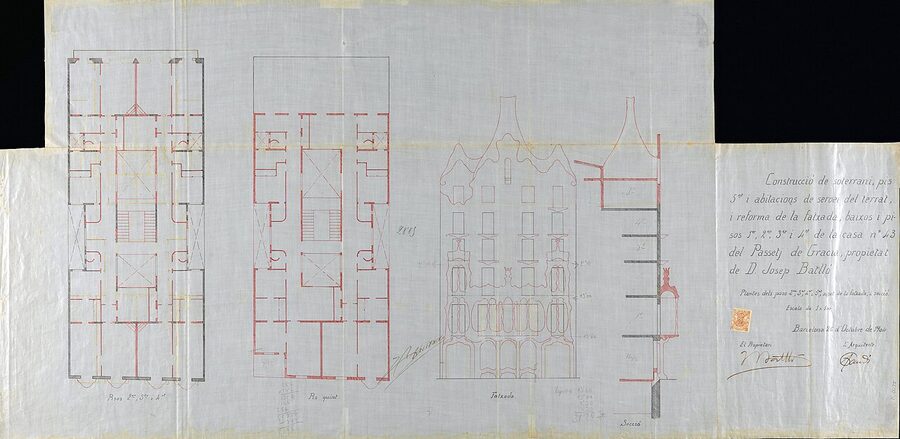
The Batlló family lived on the Noble Floor until 1954. The other floors were rented as apartments. After 1954 the building changed hands several times, was used as offices, was on the verge of being modified into condos in the 1990s. The current Bernat family bought it in 1993, restored Gaudí’s original details over a 12-year process, and opened it to the public in 2002. The 10D Experience and AR tablet were added in 2021, and the building has been one of the most visited paid attractions in Barcelona ever since.
Casa Batlló was designated a UNESCO World Heritage Site in 2005 as part of “Works of Antoni Gaudí.” Six other Gaudí buildings share the listing, including Sagrada Família, Park Güell, La Pedrera, the Crypt of the Colònia Güell, the Palau Güell, and the Casa Vicens. If you do all seven on one trip, you’ve done what Gaudí scholars call the full pilgrimage.
Practical: hours, accessibility, photography rules
Opening hours. 9am to 8pm year-round, last entry 7pm. The 8:30am Be The First slot starts thirty minutes before public opening. Closed on 25 December.
Accessibility. The Noble Floor is step-free via lift. The rooftop requires stairs and is not wheelchair-accessible. Casa Batlló offers a virtual rooftop experience on a tablet for visitors who can’t reach it. Strollers fit inside but the busy interior staircases make collapsible ones easier.
Photography. Photos and video are allowed everywhere except the 10D Experience room. No tripods, no selfie sticks, no flash. Drone shots above the rooftop are banned (Eixample airspace is closed).
How long inside. Plan 90 minutes for the standard visit, 2 hours if you want to linger on the Noble Floor and the rooftop. Anything under 60 minutes feels rushed.
Closest cafe to wait in if you arrive too early. Granja Petitbo on Passeig de Sant Joan 82, a six-minute walk, proper Catalan breakfast, opens at 8am.
If you’ve got more Gaudí days in Barcelona
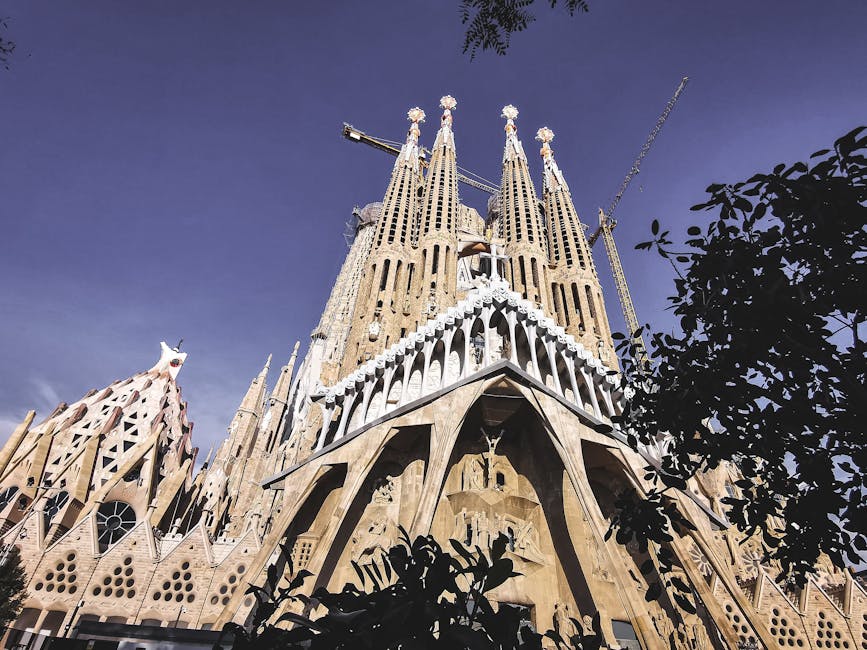
Casa Batlló is a one-morning visit. Once you’ve done it, the rest of the Gaudí circuit organises itself easily. Sagrada Família is the obvious afternoon. It’s a 25-minute metro ride, and after the Casa Batlló biomimicry brief, the bone-column nave makes infinitely more sense. Park Güell is the next-day morning, a different mood entirely (open-air, mosaic, the famous salamander, and the fact that the whole site started as a failed gated community is the thread that ties the visit together).
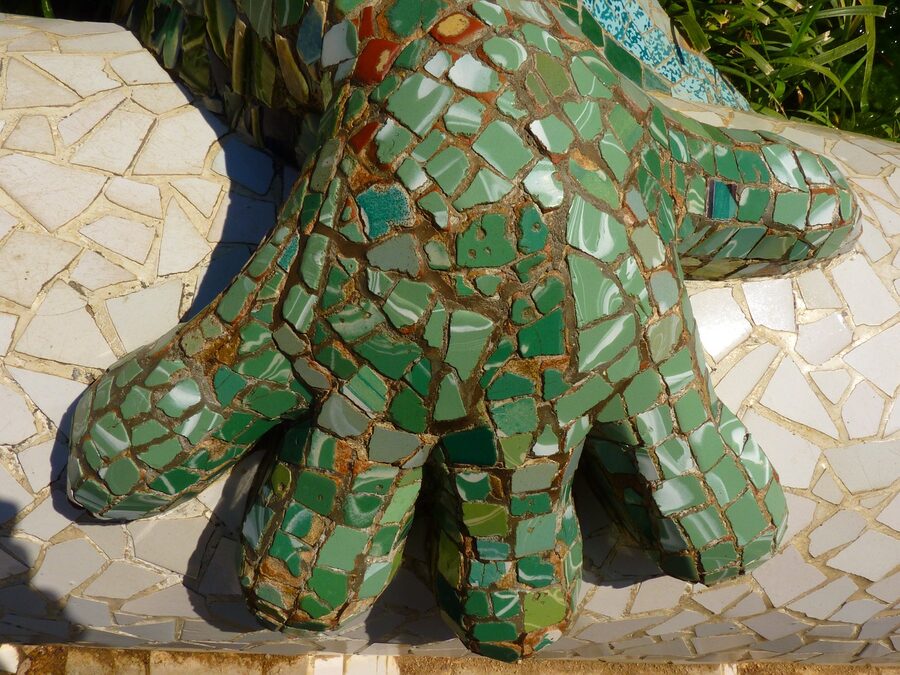
Combine Park Güell with the panoramic Montjuïc cable car later in the day for the city overview. If you want a day out of Barcelona entirely, Montserrat is the cleanest day trip: mountain abbey, 50 minutes by train, no Gaudí but plenty of jagged-rock-cathedral natural drama.
For a sister-city engineering parallel, the same biomimicry-as-architecture mind shows up four hundred years earlier in Florence. Brunelleschi’s Duomo was built without scaffolding because Brunelleschi borrowed the herringbone-brick pattern from a chicken’s egg. The Renaissance and Modernisme are closer relatives than they look. Same trick. The modern continuation of that single-architect-statement lineage shows up at Frank Gehry’s Fondation Louis Vuitton in Paris and Renzo Piano’s NEMO Science Museum in Amsterdam, both of them buildings that argue with their own physics in public.
Skip the Barcelona hop-on bus if you’re only doing the Gaudí circuit. The metro hits all the modernist sites faster. The bus is genuinely useful for Montjuïc and the coast, less so for the Eixample core.