
“If you order patatas bravas as your first dish, you’re already wrong.” That’s what Vincenzo, a tapas-tour guide in El Born, said to my friend on a Thursday evening in March, two minutes after the four of us sat down at a bar that has served the same four dishes since 1945. He wasn’t being a snob. He was telling us the order matters: vermut and olives, then the cured stuff, then the hot dishes, then dessert. Eat tapas the way Catalans eat tapas, and you’ll understand why two thousand bars in this city have a reason to exist beyond the tourists.
This guide is about that order. It’s about where to start your evening, what’s worth skipping, and which tour does the most for you if you only have one night to figure it out. The same logic that makes eating pizza in Naples a craft rather than a meal applies here, just with smaller plates and more drinks.
In a Hurry: Three Tours Worth Booking
- Tapas and Wine Experience Small-Group Walking Tour ($83): the most-booked tapas tour in Barcelona, three bars, real wines. Check availability on Viator.
- Tapas Walking Tour with Food, Wine, and History ($78): four stops in the Gothic Quarter, the cheapest full-evening tapas tour that’s still good. Check availability on GetYourGuide.
- El Born and Gothic Quarter Wine and Tapas Bar Tour ($81): the small-group pick if you don’t want to be in a group of fifteen. Check availability on GetYourGuide.
The Order of Eating in Barcelona
Catalans eat tapas in a sequence. Tourists treat it as a buffet. That’s the whole gap.
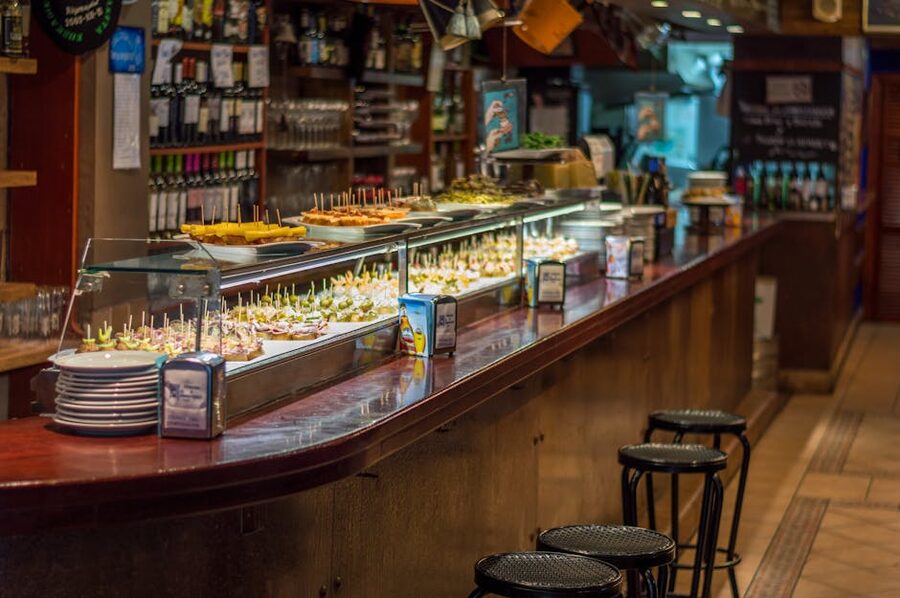
An evening of tapas isn’t a meal in the way a Sunday lunch is. It’s closer to how a Venetian evening of cicchetti runs through three or four bars, the way a hop between the Venice islands tells you about three different cultures in one half-day. You’re moving, you’re standing as much as sitting, and the whole thing is a sequence of small bites with the right drink at each one.
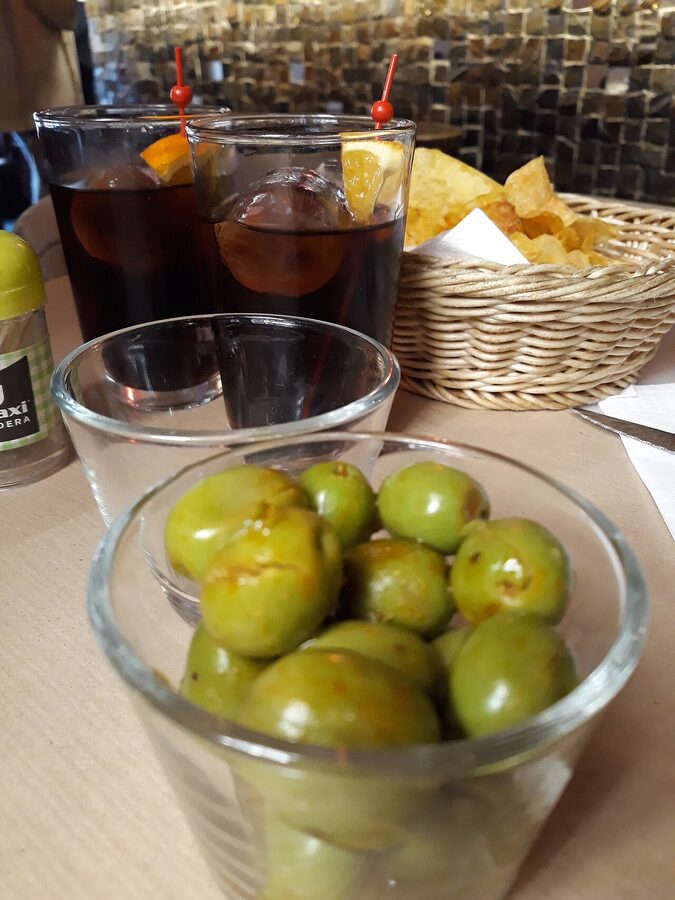
The sequence runs roughly like this. You start with vermut and a small dish of olives, then move through cured meats and cheese, then a couple of hot tapas, then maybe a heavier dish, and finally crema catalana for dessert. None of those courses are big. The whole point is small plates, paced over an evening, with a drink at every stop. A good tour like the Tapas Walking Tour with Food, Wine, and History walks you through that arc deliberately. It’s closer in spirit to how Florentines eat their way through a pasta-and-cooking-class evening than to anything you’ll do at a sit-down restaurant.
Step one: vermut and olives, never patatas bravas
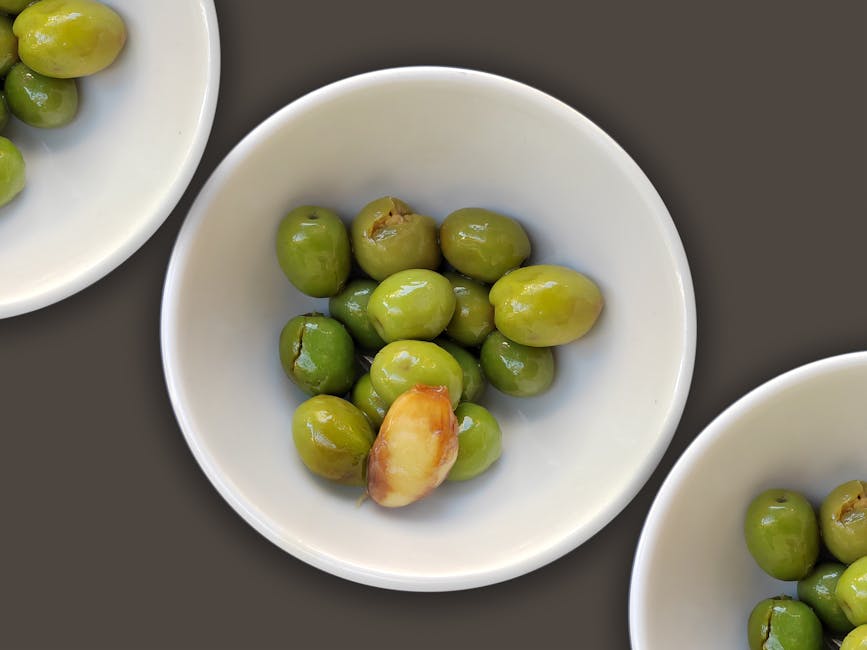
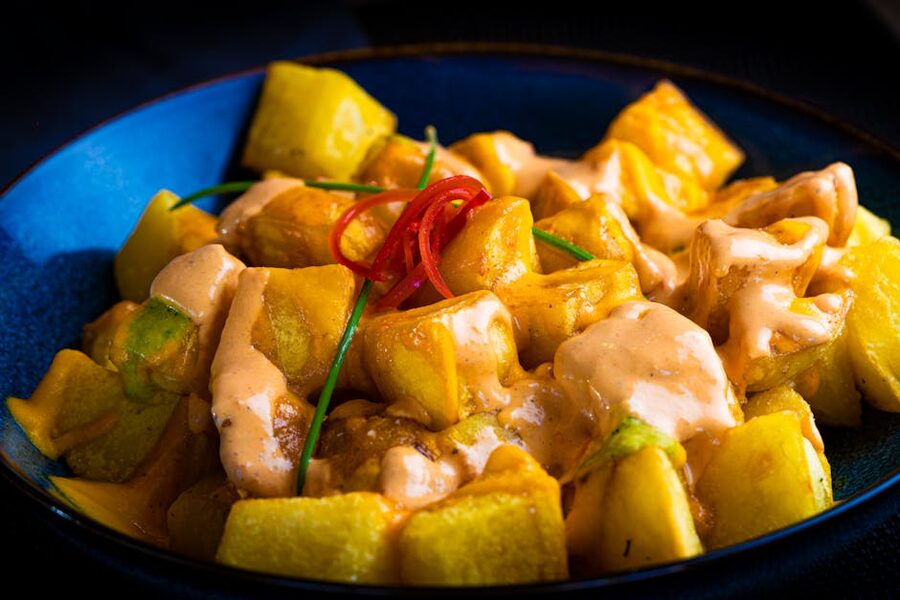
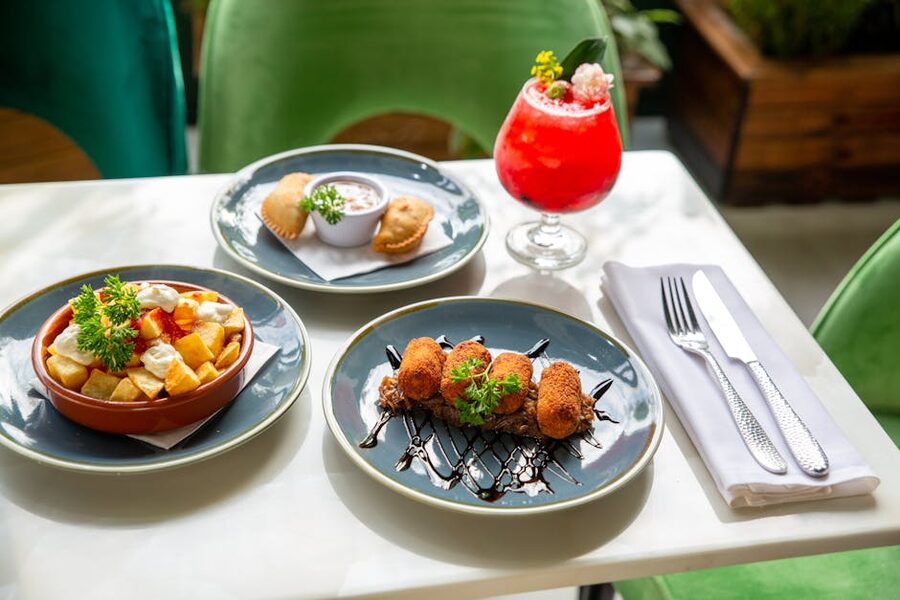
Patatas bravas is the most-ordered tapa in Barcelona by tourists and the most overrated. Done well it’s fried potato cubes with a smoky-spicy bravas sauce and a stripe of garlic aioli. Done badly, which is most of La Rambla, it’s frozen oven chips with a packet sauce. Skip it as a first dish. Order it later, at one specific bar (Bar Tomás in Sarrià is the legendary one if you’re north of the centre), or skip it entirely. The classic vermut hour aperitif is olives, salted almonds or marcona, a small dish of pickled anchovies called boquerones, and maybe a piece of toasted bread. The bars north of the centre are easier to reach with a Hello Barcelona travel card on the metro than on foot.
Step two: the cured table
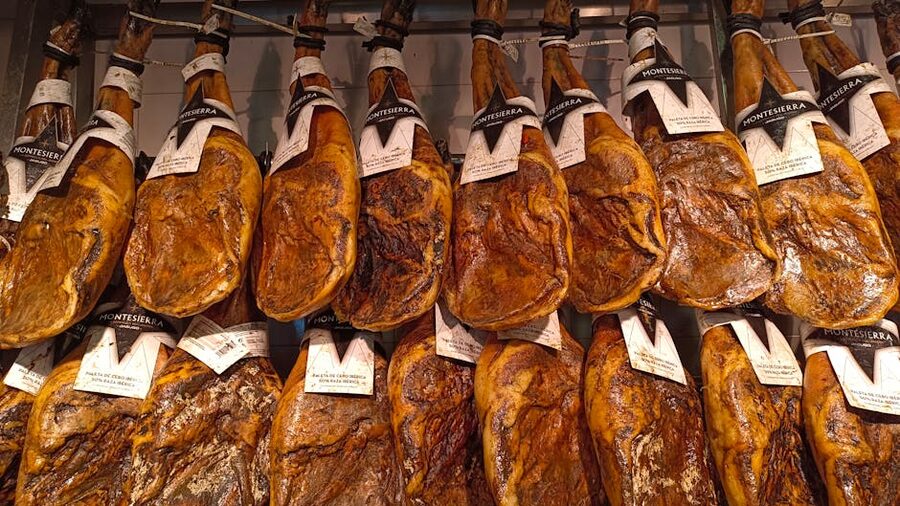
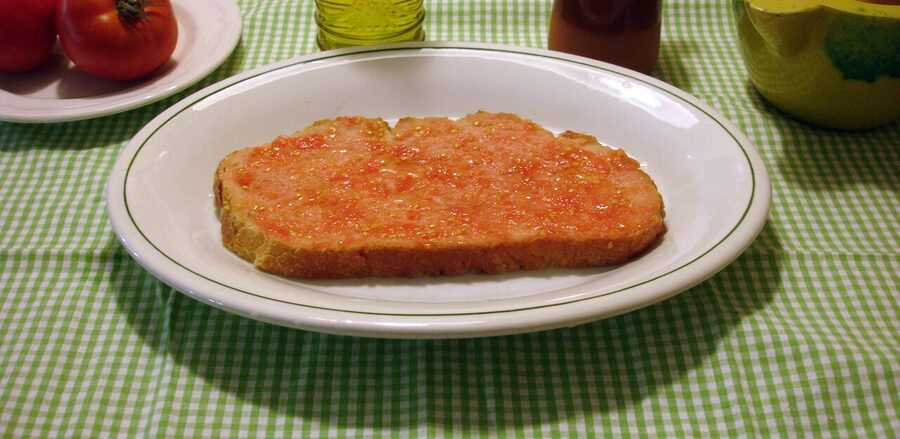
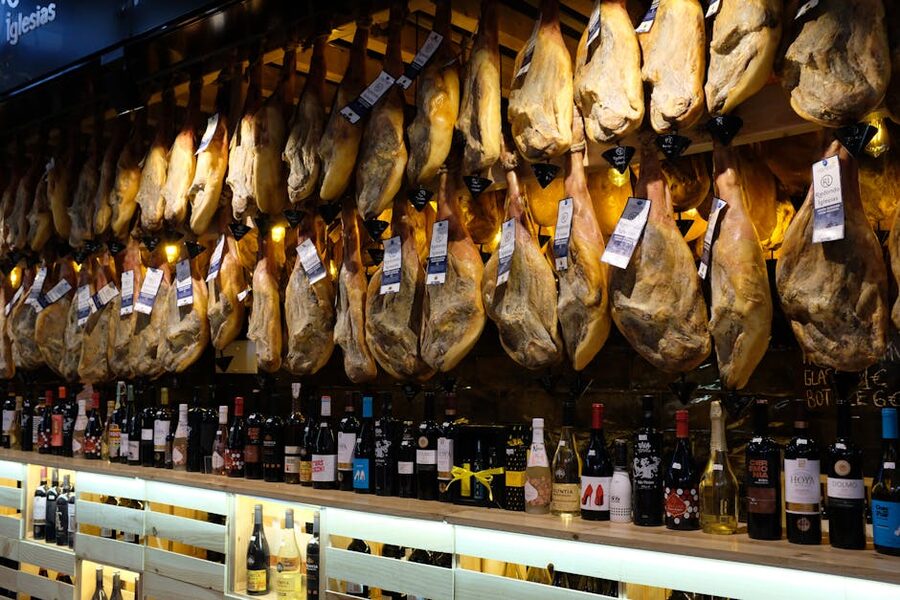
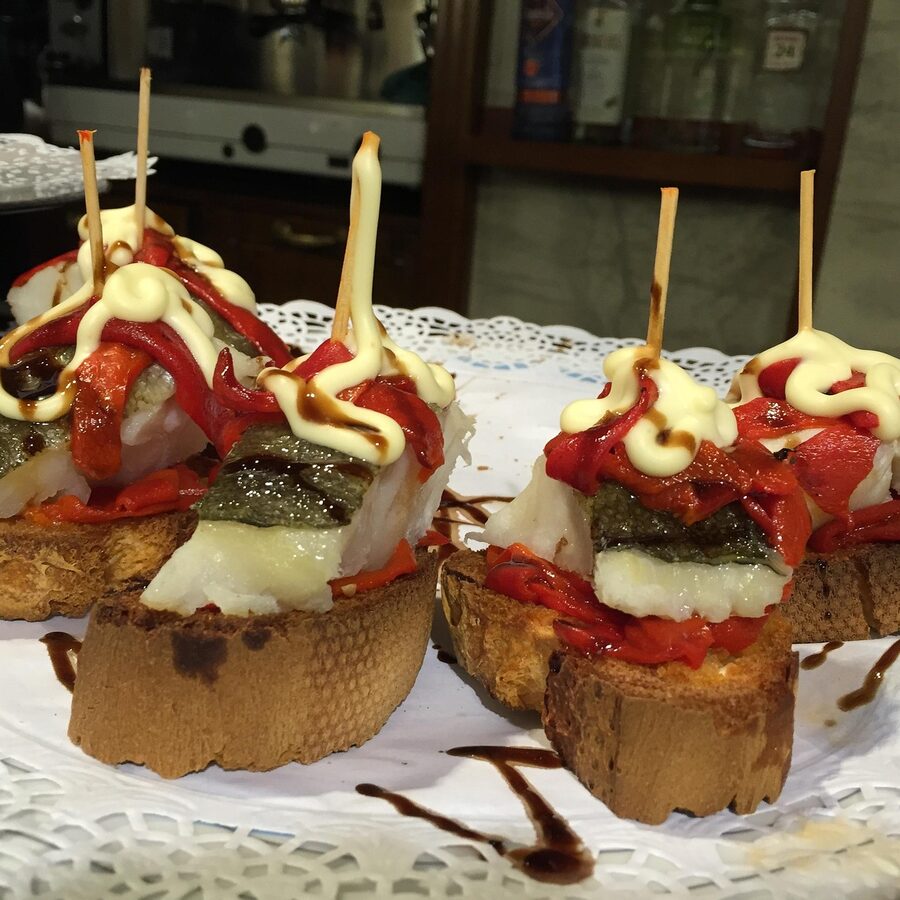
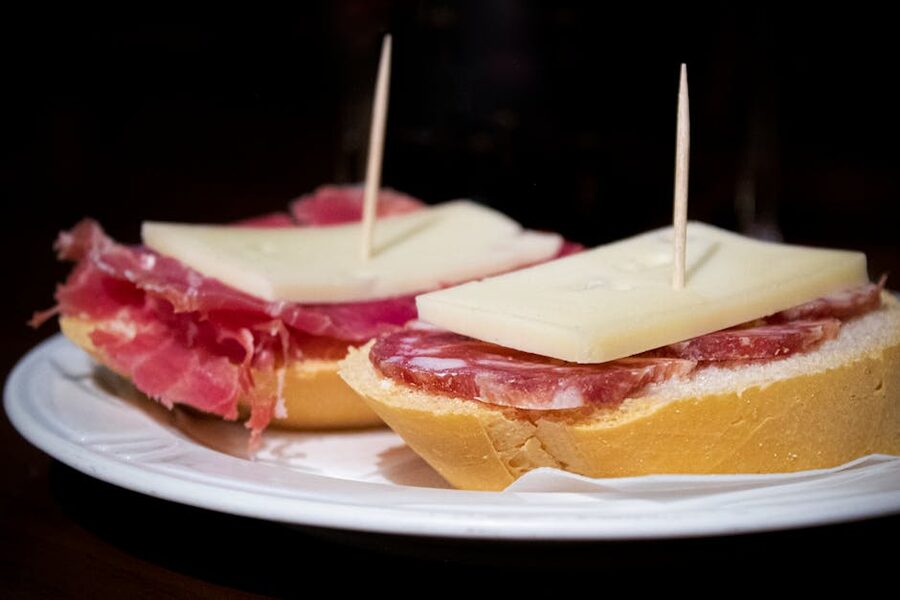
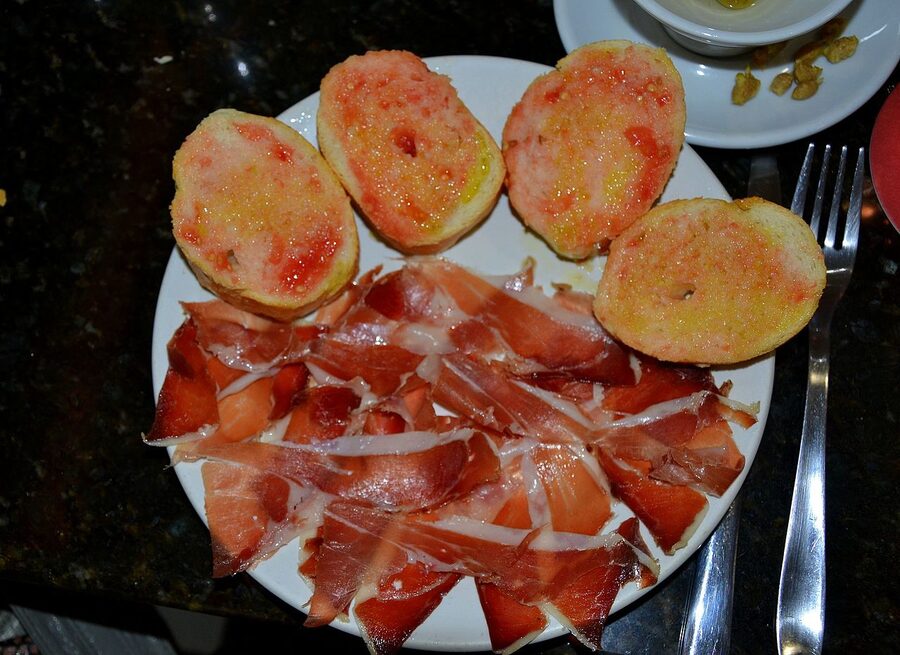
This is where I’d spend the most money on a self-guided night. If you’ve already done the cured-meats register at a Tuscan butcher on a Florence food and wine tour, the Catalan version reads as a different language using some of the same letters: thinner slicing, more emphasis on the breeze-cured pig leg as a single ingredient, less salumi-and-cheese-board theatre. Two cured plates: one of jamón ibérico, the acorn-fed black-foot pig that’s cured for three or four years; one of Catalan cheese (Garrotxa is the easy starter, Mahón if you like it sharp). A piece of fuet, which is a thin dry sausage that locals slice on the cutting board and put on a saucer. Add a small basket of pa amb tomàquet at any Catalan bar and you’ve covered most of the cured table for under thirty euros.
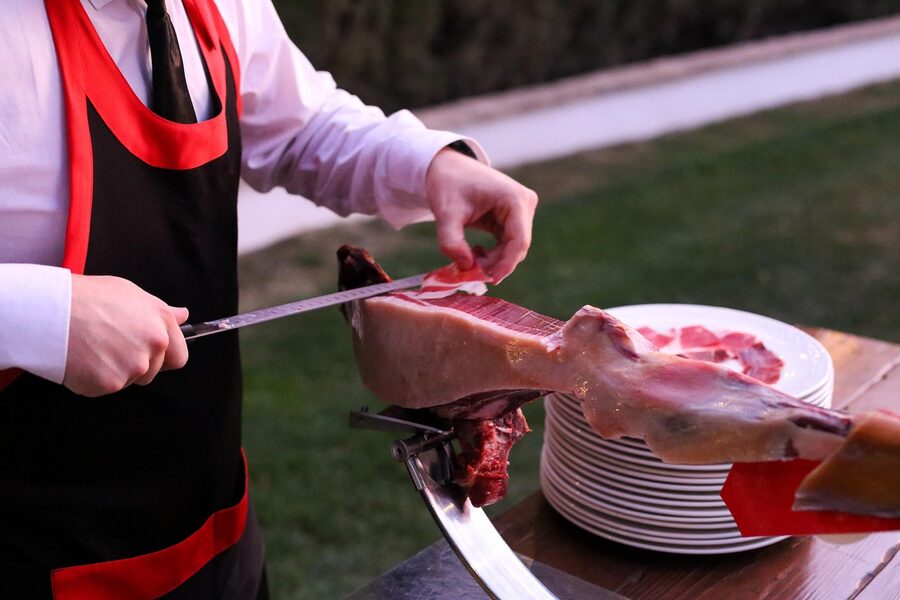
The Devour Tours Tapas and Wine Experience opens its second stop on this exact register: a tavern where the cutter is shaving jamón while you’re being seated. It’s dramatic and it’s accurate. You can’t fake good cured ham, and a tour where the guide can name the producer is worth the price differential over a tour where the guide just says “this is a famous Spanish dish.” The same level of expert sourcing is what separates a serious Rome food tour from the cheap walking version, and the price gap exists for the same reason.
Step three: the hot dishes
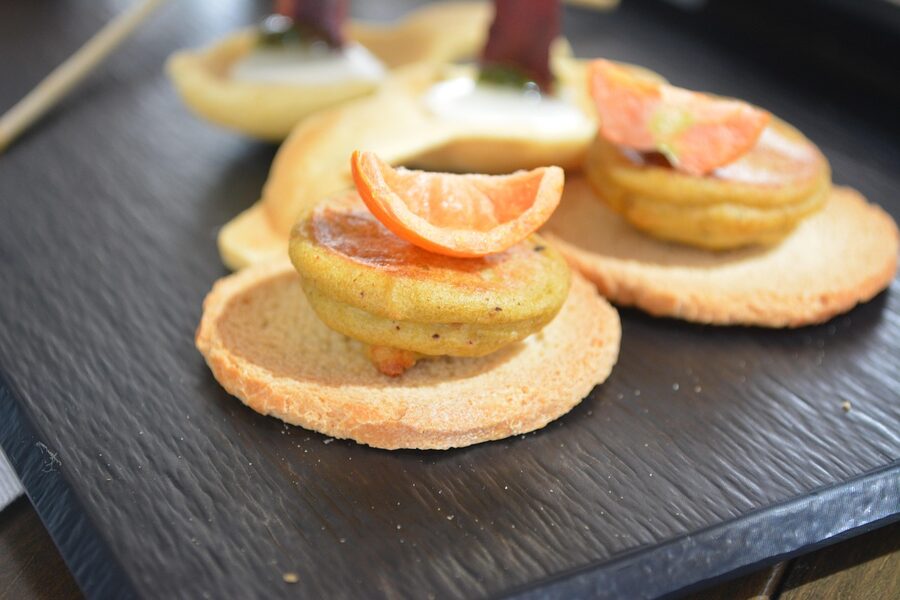
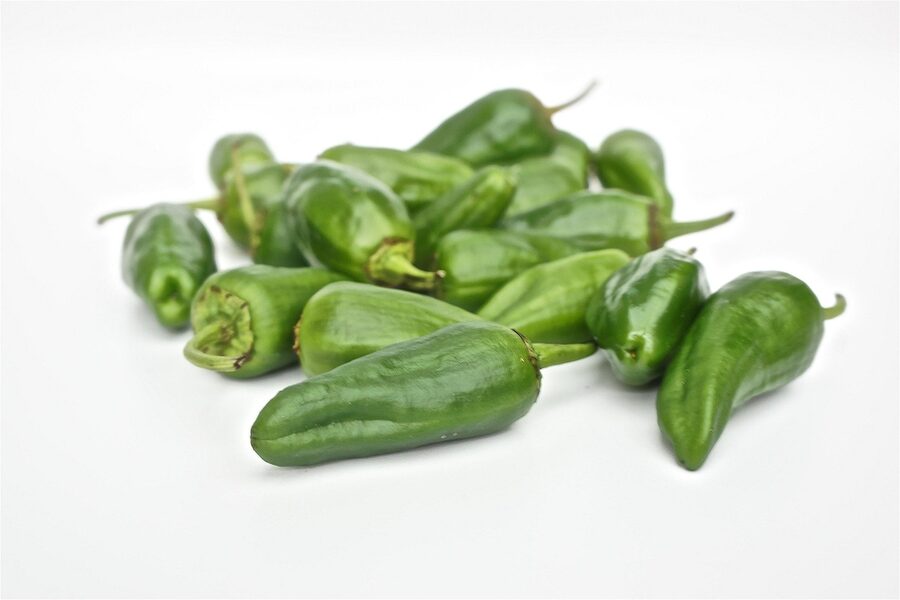
Hot dishes come third. Croquetas de jamón (creamy bechamel inside, fried crust outside, the size of an egg yolk). Tortilla española, the potato-and-egg omelette that’s debated more passionately than almost any other Spanish dish. Pimientos de Padrón, small green peppers blistered in olive oil with flake salt. Most are mild, one in fifteen is hot, and that’s the joke. A small dish of squid in its ink, or salt cod fritters called buñuelos de bacalao, if the bar has them.
This is the section of the meal where most cooking classes try to hook you in. The Florence pasta and cooking classes work the same way; you go because the dish looks technical, you leave realising it’s three ingredients done with care. Tortilla is two ingredients. Croquetas are five. The skill is in the pacing.
If you’ve travelled in Italy already and remember the way an Amalfi Coast day trip shifts from a sit-down lunch to a sequence of small stops at lemon stalls, granita carts, and harbour bars, you’ve already got the rhythm. Tapas is that, condensed into a single evening and a single neighbourhood.
Step four: dessert, and the after-dinner walk
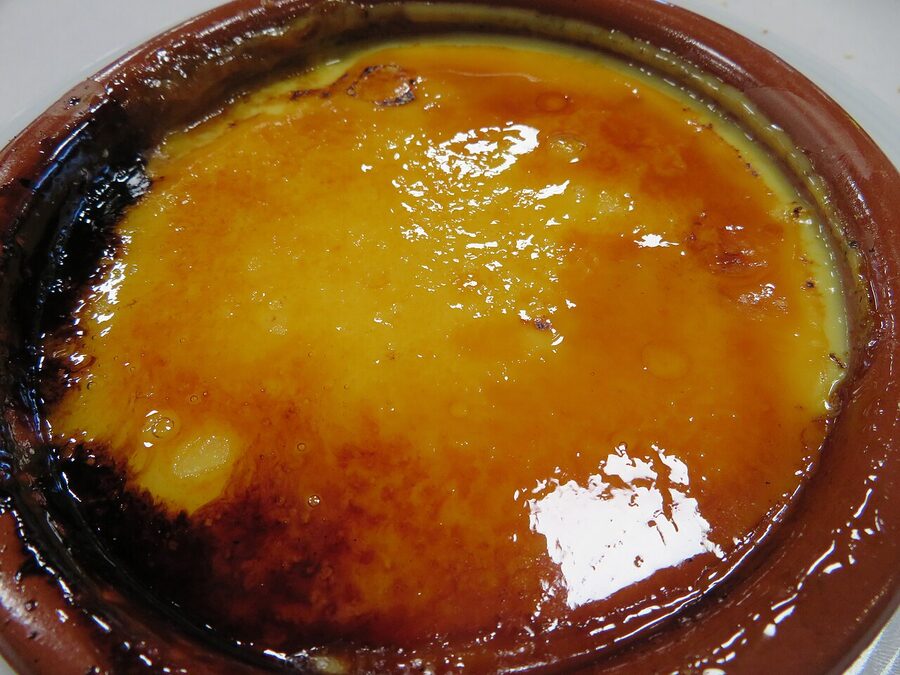
You finish with crema catalana, or with a glass of cava if you’ve still got room. Cava is the Catalan sparkling wine made in the Penedès region, half an hour southwest of Barcelona, by the same traditional method as Champagne. A glass at the bar should be three to five euros. If you’ve spent more than seven, you’re somewhere too touristy. The Devour evening tour finishes its three-bar arc with cava and crema catalana most nights, and that’s the right rhythm. If your evening is going to keep going after dinner, a flamenco show in Barcelona takes about ninety minutes and pairs naturally with the second-act energy of a tapas tour that wrapped at 9pm.
Three Recommended Tapas Tours
Tapas tours in Barcelona run from about €60 for the cheap-and-cheerful walking version to €250+ for fully private experiences. The three below are the ones I’d actually book on a first trip. They’re sequenced from highest-rated/most-popular to small-group/intimate so you can pick by what matters to you.
1. Tapas and Wine Experience Small-Group Walking Tour: $83
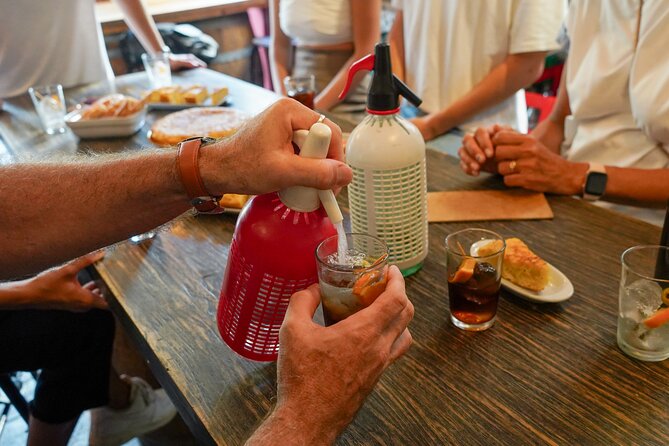
This is the highest-volume tapas tour in Barcelona on any platform, and the booking flow is forgiving on times and group sizes. Our full review goes through the wine pairings and the specific stops in order. The catch is that “small group” means up to twelve here, so it’s not the most intimate option on this list.
2. Tapas Walking Tour with Food, Wine, and History: $78
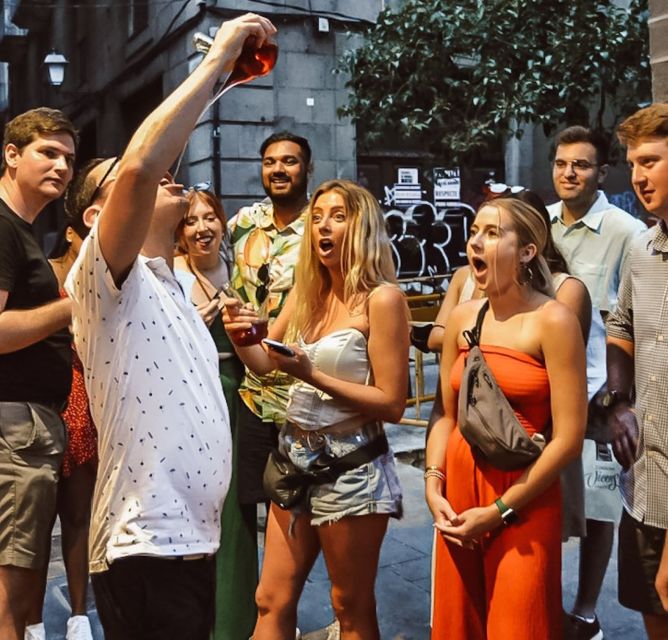
The history layer is what makes this one work; our full review notes that the guides walk you through Roman, medieval, and modern Barcelona between courses, which is more than most food tours bother doing. Group size runs up to sixteen, so this is the social pick rather than the intimate one. Solo travellers tend to like it for that reason.
3. El Born and Gothic Quarter Wine and Tapas Bar Tour: $81
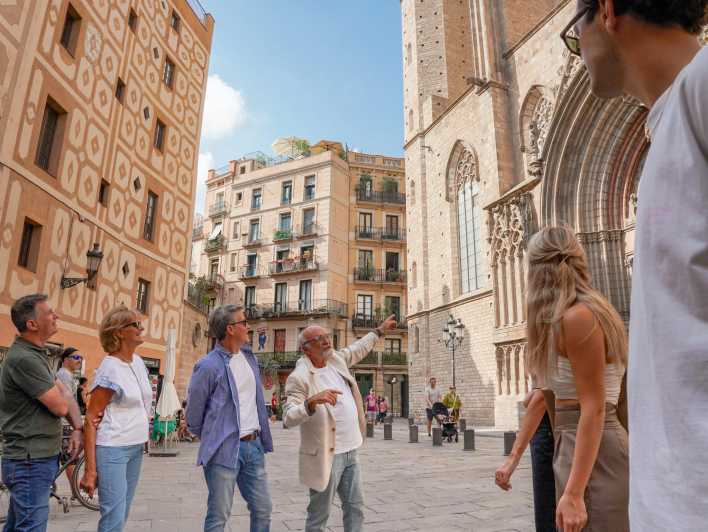
If the idea of fifteen strangers around one table is a deal-breaker, book this one. Our full review covers what the smaller cap actually changes: the guide can answer specific questions, the bartenders treat the group like regulars, and you’ll usually get a vermut on the house at one of the stops. Worth the small premium over the bigger group tours.
Where the Bars Actually Are
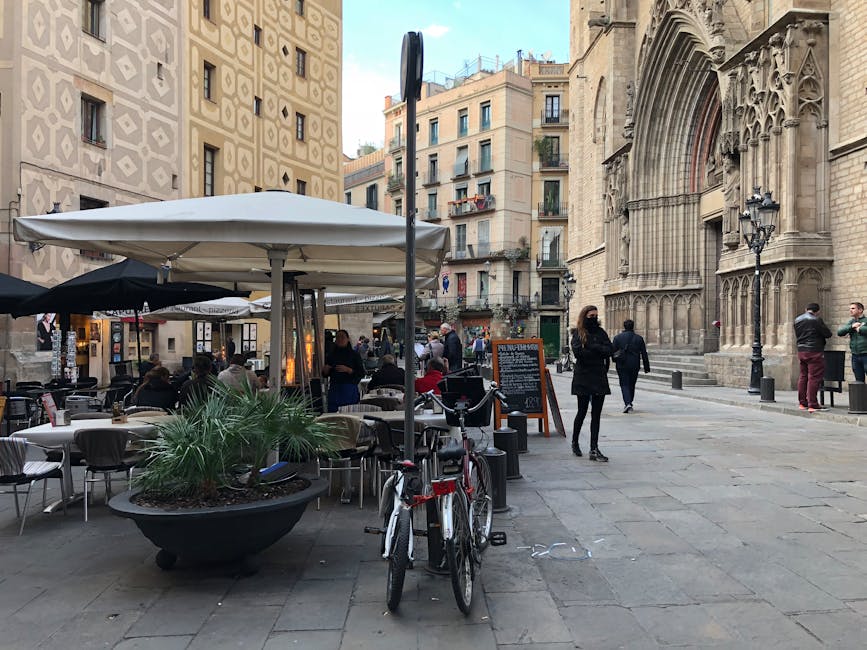
Tapas bars in Barcelona cluster in four districts, and where you eat changes what you eat. El Born has the most polished tapas scene, with restored medieval bars sitting under the shadow of Santa Maria del Mar. The Gothic Quarter is older and denser, with bars that have been pouring vermut since the 1860s and don’t intend to redecorate. Gràcia, north of the city centre, is where Barcelona locals actually go on a Tuesday. Fewer tourists, more domestic groups, smaller plates. Barceloneta is the seafood specialist; not really a tapas neighbourhood, but the place to go if you want fried squid and razor clams with the sea twenty metres away.
El Born and the Gothic Quarter (the tour neighbourhoods)
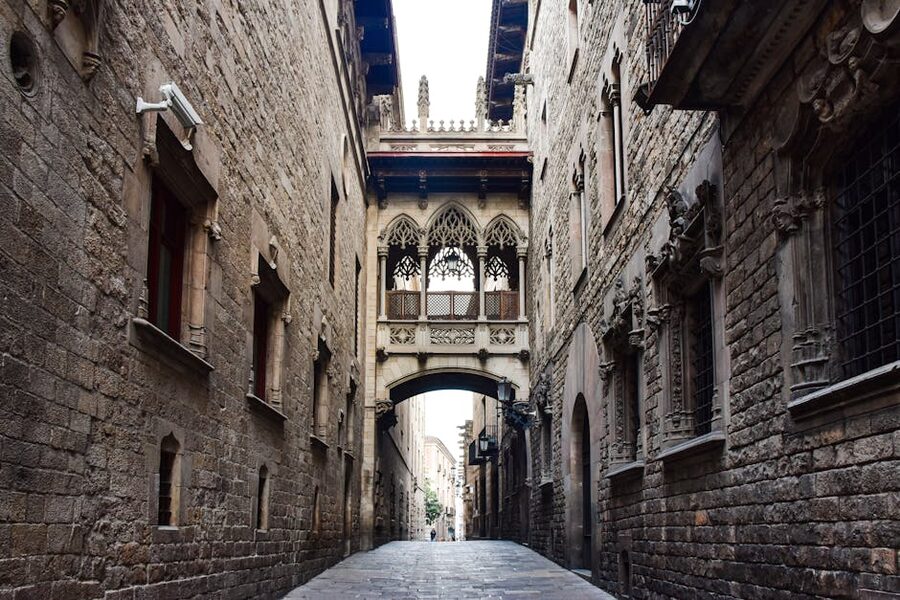
Almost every tapas tour you can book runs through these two adjoining neighbourhoods. The reason is simple: the highest density of bars worth visiting is here, the streets are narrow enough that a guided group of ten can move between three stops in a normal evening pace, and the historical backdrop adds a layer that pure-food tours in newer parts of the city can’t match. If you’ve already done a hop-on bus orientation of Barcelona, the tapas tour is the right way to fill in the El Born and Gothic Quarter blocks the bus mostly skips.
Gràcia (where locals actually go)
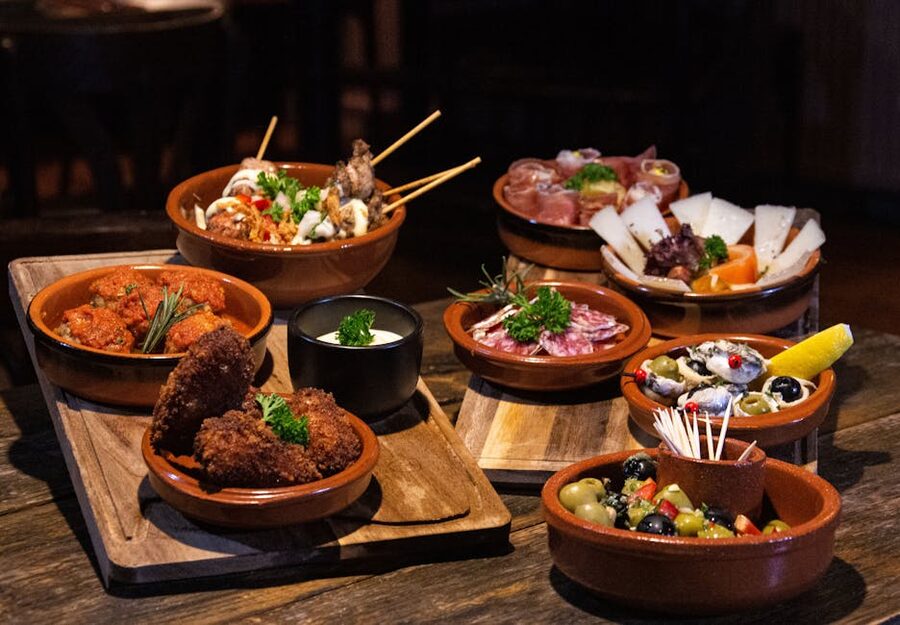
Gràcia is fifteen minutes north of the centre on the metro and has the best ratio of locals to tourists of any Barcelona neighbourhood. Bars open later, plates are smaller, and the price for a vermut and three tapas tends to be five to ten euros under what you’d pay in El Born. If you’re staying for more than three nights, this is where you go on the second or third evening, after the tour has taught you the order of eating. A Hello Barcelona travel card covers the metro to Fontana or Joanic, the two stops most useful for the Gràcia tapas streets.
Barceloneta (seafood, not tapas)
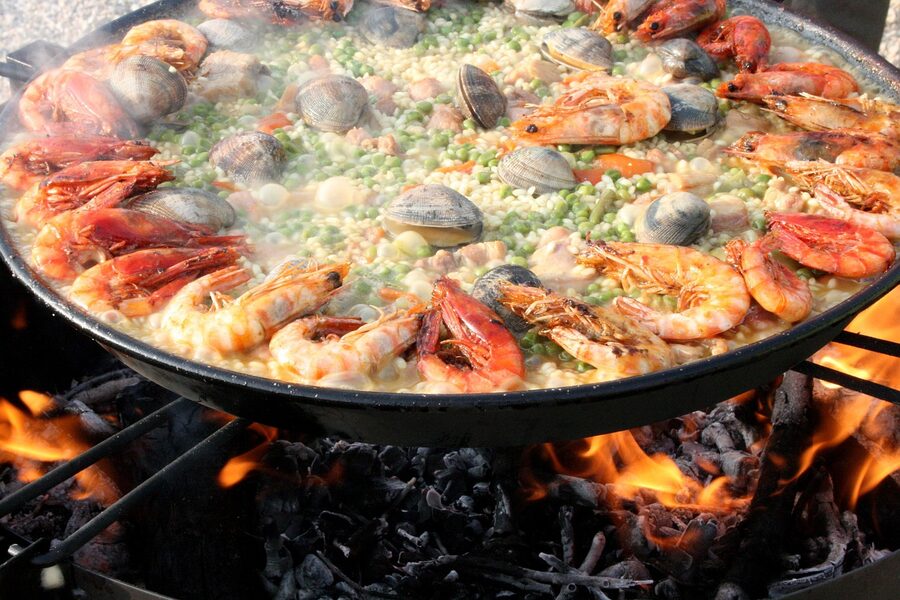
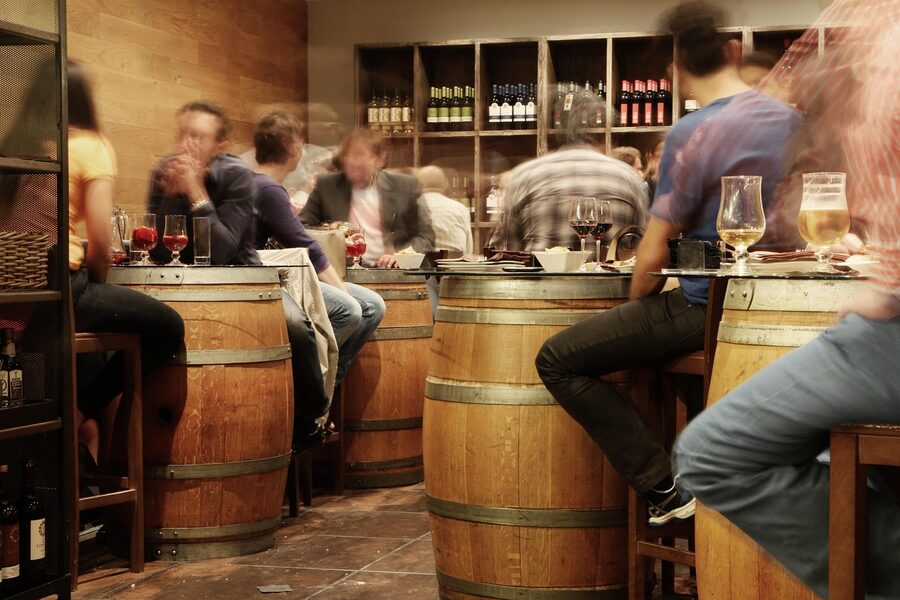
Don’t go to Barceloneta for a tapas tour. Go for grilled fish, paella in the afternoon (lunch only, since locals don’t eat paella at night), and razor clams with garlic and parsley. The seafront restaurants are tourist-priced; the ones a block back, on Carrer de Sant Carles or Carrer del Baluard, are where the captains and the fishermen eat. If you want to combine a seafood lunch with the open water afterwards, that’s where a catamaran cruise from Barcelona works well as an afternoon plan, leaving from the marina five minutes’ walk from any of those streets.
What Tour vs Self-Guided Actually Buys You
The tour-vs-DIY question matters because tapas isn’t expensive food. A self-guided tapas crawl in the Gothic Quarter, four bars, full vermut-to-crema-catalana sequence, costs about €40-50 per person if you order carefully. The cheapest evening tour is €60-80. So what does the extra €30 buy you?
Three things, really. First, access. The better tours have arrangements with bars that don’t take walk-ins easily, especially during dinner rush, and you’ll skip the half-hour wait. Second, sequencing: the order of dishes, the matched drinks, the timing of the walk between bars. You can read about it (and you just did), but eating it in the right order with someone who knows is faster. Third, the guide. A bad guide is a wasted €80; a good one is the difference between “I ate tapas in Barcelona” and “I understand what tapas is for.”
If you’re already comfortable navigating menus in a foreign language, you’ve eaten in Spain before, and you don’t need the guided arc, skip the tour. Spend €50 on a great Gothic Quarter crawl by yourself. If this is your first night in Barcelona, or your first time in Spain, or you want the sequencing handed to you so you can focus on eating, the tour earns its premium. The same logic that made the Florence food and wine tours worth booking applies here: you’re paying for the order of operations, not the food itself.
The Markets Are Their Own Tour
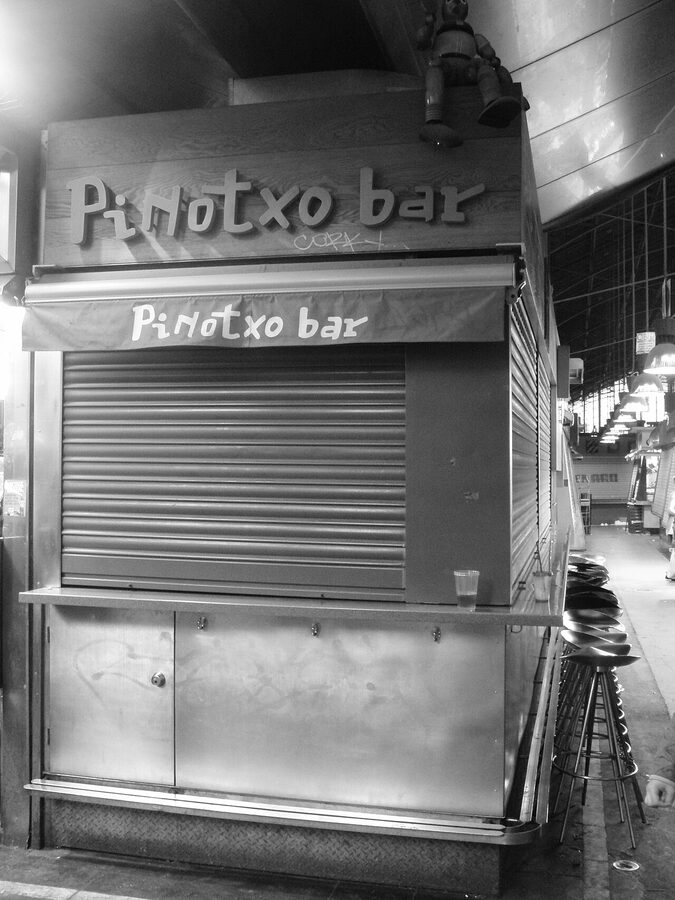
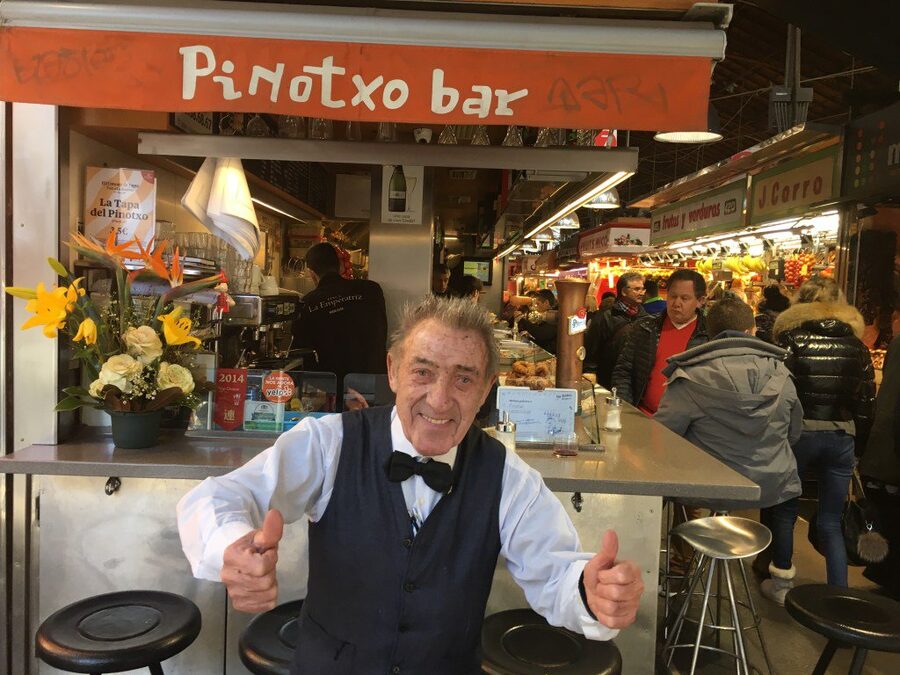
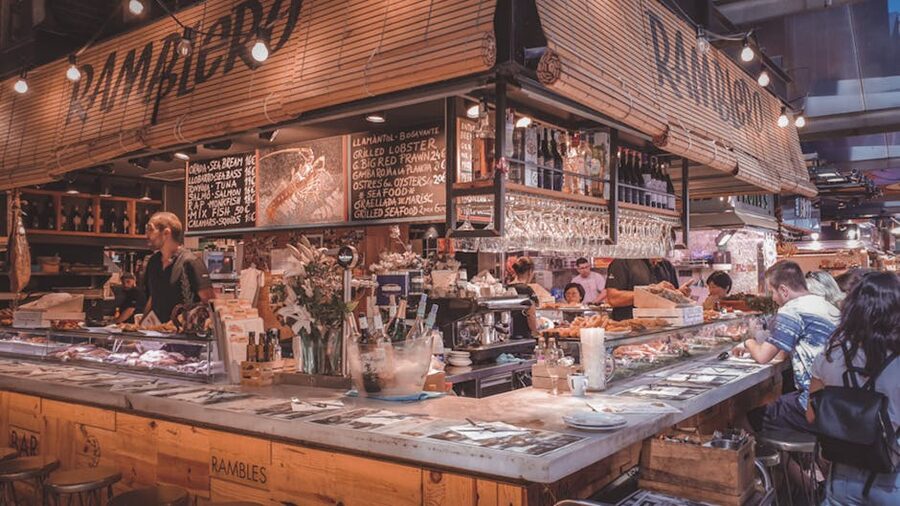
La Boqueria is the famous market and most tapas tours either stop there or studiously avoid it. The avoiders are right. La Boqueria is overrun, the prices on the front rows are tourist-priced, and the actual good stalls (Bar Pinotxo, El Quim) have queues that eat half your evening before you’ve ordered.
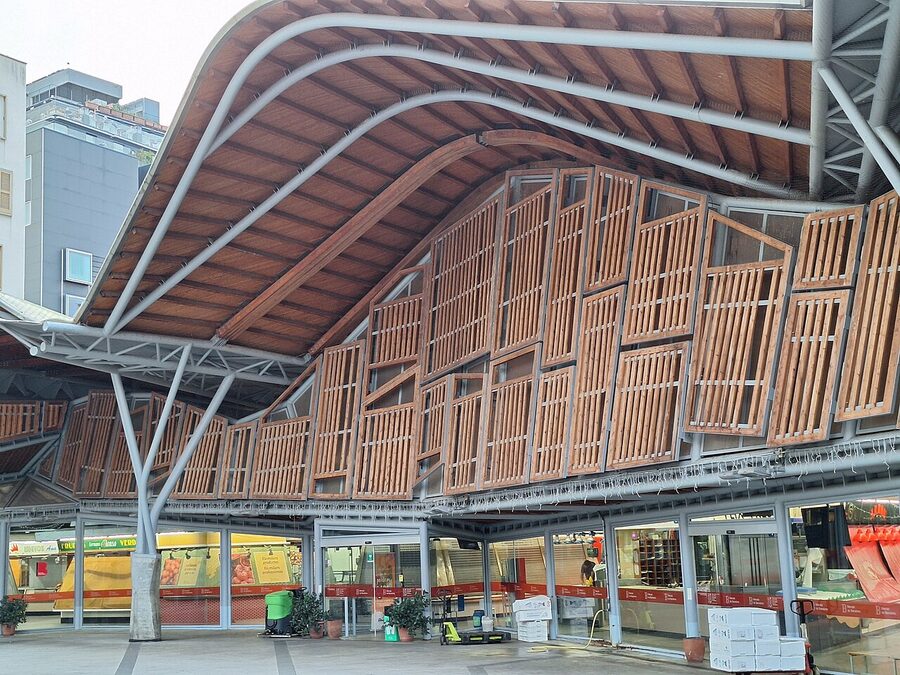
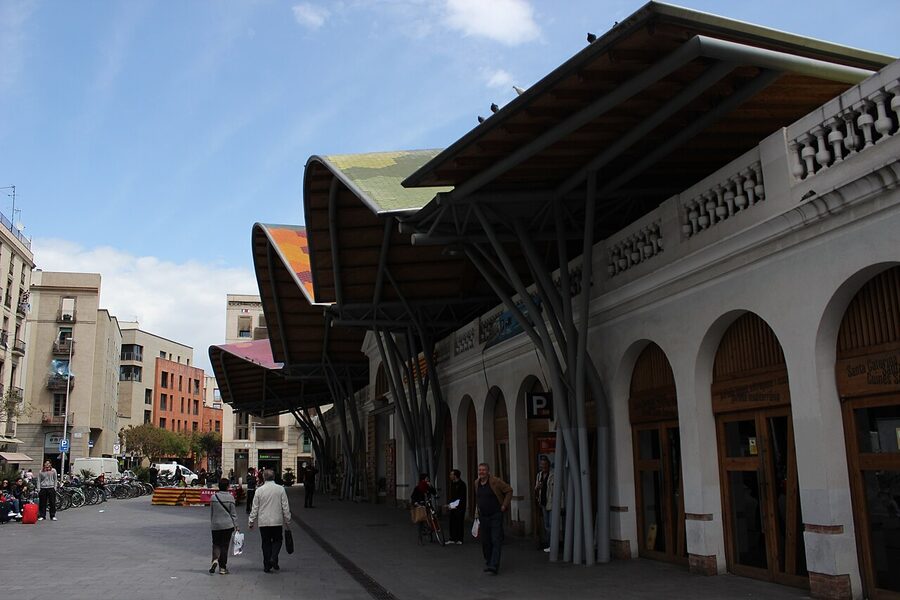
Mercat de Santa Caterina, ten minutes’ walk away in El Born, is the local-favourite alternative. Same range of seafood, jamón, cheese, and produce, half the crowds, and a couple of small tapas counters inside the market itself where the traders eat. Mercat de Sant Antoni and Mercat de la Llibertat in Gràcia are the other two worth knowing about. Most of the better small-group tours stop at one of these instead of the Boqueria; the El Born tour above usually starts at Santa Caterina.
Drinks: What to Order and What to Ignore
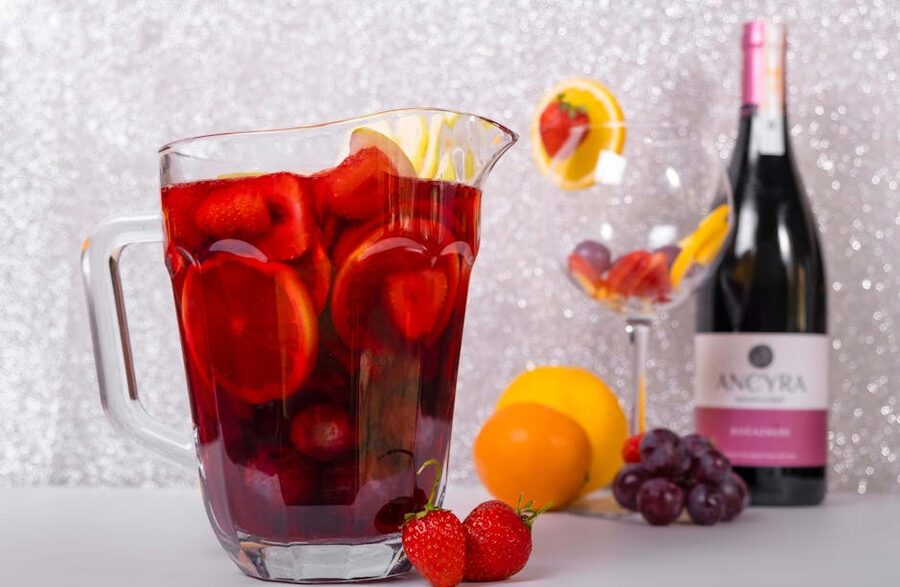
Sangria is the question every visitor asks. The local answer is: locals don’t really drink it, it’s mostly a tourist thing, and the version made for the tourist crowd is sweet, fruit-heavy, and over-priced. That said, a good sangria at a bar that takes it seriously is genuinely fine. Don’t order it on La Rambla. Order it at a bar that has a chalkboard listing the wine in the sangria, and you’ll get a different drink.
What locals actually drink at a tapas bar: vermut at the start of the evening, Catalan wine (Penedès, Priorat, Empordà) with the heavier dishes, a beer or a small caña if it’s a hot afternoon, and cava to finish. Not sangria, not mojitos, not gin and tonic. The vermut hour (l’hora del vermut) is sacred in Barcelona; it’s the late-morning, pre-lunch ritual on a Saturday or Sunday. If you’re in town for a weekend, build a Saturday around it.
What Each Tour Actually Feeds You
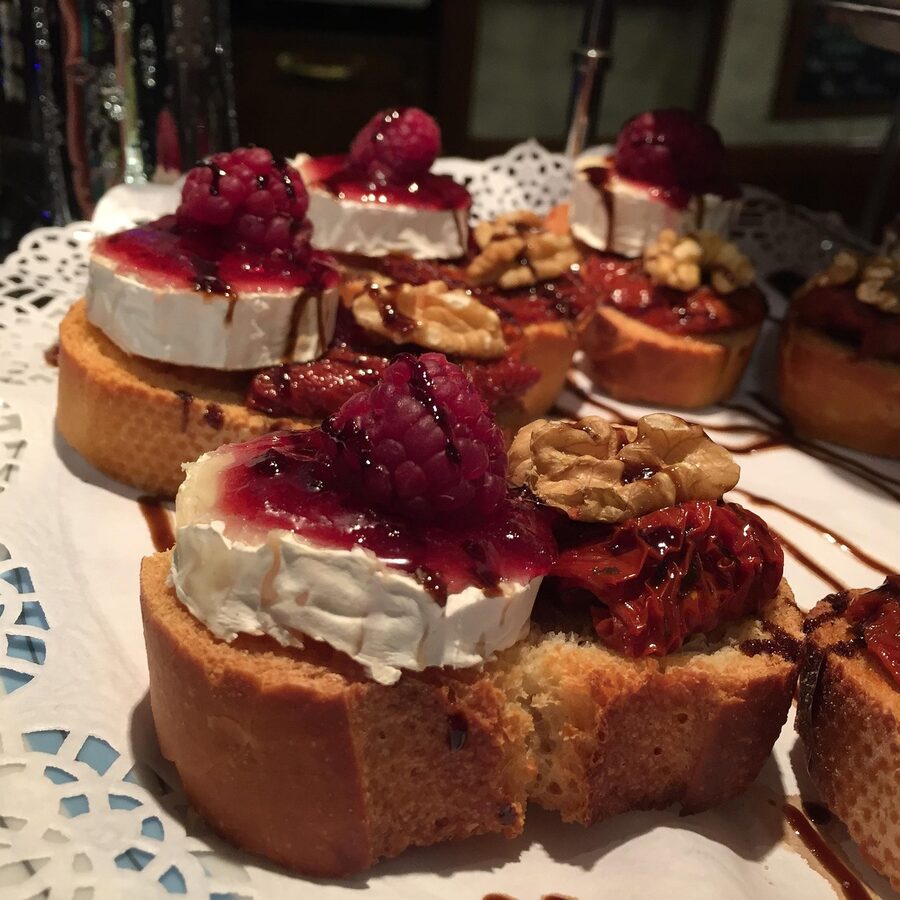
The three tours above all run in the same vermut-to-crema-catalana sequence, but the specific dishes differ enough that it matters. Here’s roughly what each one feeds you across the evening, based on the most consistent recent reports.
Tapas and Wine Experience ($83): three bars, ten or so tapas across the evening, five wine pairings. Heavy on the cured meats and the wine education. Tends to include jamón ibérico, croquetas, pa amb tomàquet, a hot dish, and a dessert with cava.
Tapas Walking Tour with Food, Wine, and History ($78): four bars, eight to ten tastings, four drinks. Lighter on the wine, heavier on the volume of food. Vermut, cured meats, patatas bravas, croquetas, and a finishing course with cava are the standard rotation. The 45-minute walking-history portion is the differentiator.
El Born and Gothic Quarter Wine and Tapas Bar Tour ($81): four small-group restaurant stops, nine tastings, four wines. The smaller group lets the bar treat the group like regulars; you’ll often get an off-menu plate that the bigger tours don’t see.
How to Time Your Tour Day
Tapas tours run mostly in the evening, between 5pm and 10pm. The 5pm and 6pm slots are the popular ones. That leaves your day open for the morning sights, but it also means you should plan a light lunch. Eating a paella at 2pm and then arriving for a five-course tapas tour at 5pm is a mistake I’ve personally made.
The right shape of a tapas-tour day looks something like this. Morning at Sagrada Familia or Park Güell. Light lunch: a sandwich, a salad, a single tapa at a vermut bar to keep yourself sharp. Afternoon at Montjuïc cable car for the view, or a wander through El Raval. Tapas tour at 6pm. Bed by midnight, late dinner not required because you’ll be full.
Group size, dietary, weather
Tapas tours run rain or shine, and most of the bars are indoor or covered. Bring an umbrella and stop worrying. Group size matters more than the weather: the big-group tours (twelve to sixteen) are sociable but rushed, and the small-group tours (six to eight) are quieter but more expensive. Solo travellers tend to enjoy the bigger groups.
Vegetarians do better than vegans on a tapas tour. Pa amb tomàquet, tortilla española, croquetas with potato or spinach, pimientos de Padrón, escalivada (a roasted-vegetable dish), and most cheese plates work for vegetarians. Vegan tapas tours exist as a niche category and are worth searching out if you’ve planned ahead. Severe gluten allergies are hard; bread is in most of the standard tapas, and a kitchen running fast at dinner rush will sometimes miss the cross-contamination flag. Tell the operator at booking, and check again on arrival.
Six Tapas Words That Will Save You Money
Six words are the difference between a tourist-priced and a local-priced bill. None of them require Catalan; basic Spanish is fine.
De la casa: “of the house.” When you ask “tinto de la casa?” you’re ordering the house red, which is the cheapest and often the best wine in the place. Two euros versus six.
Una caña: a small draught beer, about a third of a pint. The local order is cañas through an evening, not pints. Pints are tourist-sized.
Un vermut: pronounced “ver-MOOT.” The aperitif you start with. In a serious bar, ask for “vermut de la casa” and the bartender will pour their house brand from a tap or a barrel.
La cuenta, por favor: “the bill, please.” You will sit at a table indefinitely if you don’t ask for it. Spanish service style is to leave you alone, not to push you out, which is generous and slow.
Para compartir: “to share.” When two of you are ordering tapas, this signals you want one plate, not two. Saves on volume.
Recomendación: “recommendation.” Asking the bartender “¿qué me recomienda?” gets you off-menu specials, especially the daily fish or the seasonal vegetable.
The Mistakes Worth Avoiding
The four mistakes I see tourists make in Barcelona tapas bars, in roughly the order they make them:
Eating on La Rambla. The strip itself is a tourist trap from end to end. Walk one block east into the Gothic Quarter or one block west into El Raval and the prices drop by 30% and the food gets better. Specifically, the row of café-restaurants between Plaça de Catalunya and the harbour with photographs of paella out front is the part to avoid.
Ordering paella for dinner. Paella is a lunch dish in Spain. A restaurant serving paella on the dinner menu is signalling that they cater to tourists. The exception is a serious paella restaurant (Can Solé in Barceloneta is one) that pre-books for evening service.
Filling up too early. The first bar should be one or two small dishes, not five. You’ve got two more bars to go. The whole point of a tapas evening is pacing.
Skipping the cured plate to save money. A €15 jamón ibérico plate is almost always the best-value dish on a Barcelona menu. A €4 patatas bravas at a tourist-trap bar is almost always the worst.
What to Do With the Rest of the Evening
A tapas tour ends around 9 or 10pm and most travellers are done for the night. Catalans are not. The local rhythm has the tour as the start of the evening, not the whole thing. After the tour, most locals will move to a bar for a digestif, a copa de cava, or a final glass of wine. Some will go to a flamenco show, and a flamenco performance in Barcelona works perfectly as the second act of a tapas evening, especially the smaller venues in El Born and the Gothic Quarter that start their final shows at 9 or 10pm.
The other version of the evening is to stay in the same neighbourhood and keep eating, slowly, at a fourth or fifth bar. The local term is fer un mos, which means roughly “to have a bite,” and it’s what you do when the formal dinner is done but the night isn’t over. A glass of vermut, a small plate of olives, two more pieces of pa amb tomàquet. You’re not ordering a meal, you’re stretching one.
Cost Breakdown
Rough numbers for a Barcelona tapas evening, per person, in the €60-110 range:
- Self-guided four-bar crawl in the Gothic Quarter: €40-55. Vermut, four cured plates and four hot dishes split between two of you, two glasses of wine each, dessert.
- Cheap walking tour (Tapas Walking Tour with Food, Wine, and History): €70-78. Tour fee includes everything.
- Mid-range small-group tour (El Born and Gothic Quarter Wine and Tapas Bar Tour): €75-85.
- Flagship Viator tour (Tapas and Wine Experience): €80-90.
- Premium / private tours (Devour, Food Tours Barcelona): €110-145 per person.
- Farm-to-table or fully private experiences: €200-700 per person, depending on group size.
The €75-85 small-group tier is the right price point for most first-time visitors. You’re paying about €30-40 over the cost of doing it yourself, and you’re getting the sequencing, the venue access, and the guide.
Beyond Tapas, Where to Go Next
Barcelona food tourism doesn’t end with tapas. The most common second move for travellers who liked the tour is a paella cooking class. Paella is the Valencian dish that gets adopted into Catalan food, and a class teaches you the rice technique that makes or breaks a paella. The third move is a wine day-trip out to the Montserrat region, where the Penedès wine country sits between Barcelona and the mountain. Both are typically same-day bookings on GetYourGuide or Viator, both add a layer the tapas tour doesn’t cover. The Amsterdam version of the same drink-and-walk-the-neighbourhood instinct shows up at the Heineken Experience and on the Red Light District walking tour: same evening rhythm, different city, no tapas.
What Else to Eat in This Country
If the tapas tour leaves you wanting more food-focused travel, the rest of Spain runs on the same logic but with regional variations. San Sebastián’s pintxos scene is the Basque cousin of Catalan tapas, denser, more competitive between bars, and arguably more refined. Andalusia leans heavier on jamón and sherry, with smaller plates and the tradition of a free tapa with every drink in Granada and Almería. Madrid does the heavy meat-and-stew tradition more than Barcelona, with cocido madrileño as the iconic dish.
If you’re piecing a longer trip together, the Italian food cities are the natural counterpart. Naples is where pizza was invented and where pizza is still cheaper and better than anywhere else; eating pizza in Naples is the same kind of evening you’ve just had with tapas, ordered the way locals order it, in neighbourhoods locals actually go to. Florence runs on cucina povera, peasant food made famous, with bistecca, ribollita, and lampredotto as the iconic plates. The food and wine tours in Florence work the same arc as the tapas tours here. The order of operations is similar everywhere: you start with a drink, you build through small plates, you finish with a sweet, and the whole thing is the meal. France’s bouchon evening on a Lyon city tour follows the same script with quenelles and Beaujolais, while a Bordeaux wine tour is the longer-format wine-country sibling.
For Barcelona itself, the next bookings worth making after the tapas tour are Casa Batlló the morning after (Gaudí goes well with a hangover, the tile work is forgiving), and a Montjuïc cable car ride for the sunset view of the city you’ve just eaten your way through.