
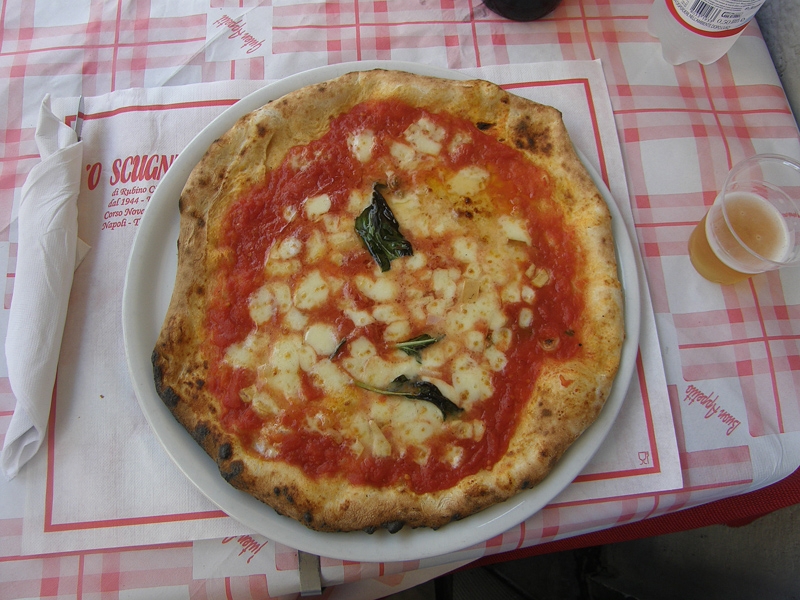
You sit on a bench seat at L’Antica Pizzeria da Michele on Via Cesare Sersale, the queue still wrapped around the corner outside, and the margherita lands in front of you about ninety seconds after you ordered it. The crust is leopard-spotted from the wood oven, the mozzarella is still puddling into the tomato, and the basil leaves have that just-torn smell of warm soil. You pick up a wedge with your fingers, fold it lengthwise the way the locals do, and bite. Something rearranges itself in your head about what pizza is supposed to be.
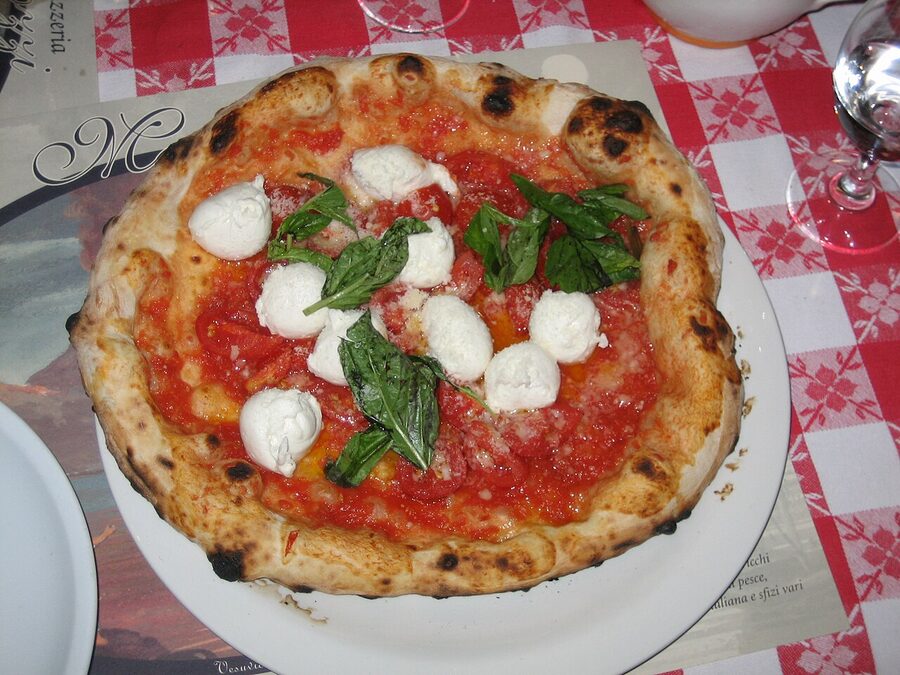
That’s the pitch. Naples invented this thing, and the version you eat here is so much better than the version you’ve eaten anywhere else that it ruins pizza for you a little. I’m sorry in advance. This guide is how to plan a few days of eating in Naples without wasting bites on the wrong places, what to order at the famous spots, and how to do a pizza-making class or a street food tour if you want to go deeper than a queue.
In a hurry? Top picks
- Want to learn to make it yourself: Pizza-Making Workshop with Drink and Appetizer ($39, 2 hours, hands-on with a real pizzaiolo).
- Want a guide to walk you through the city’s street food: Naples Street Food Walking Tour ($50, 2.5 hours, multiple stops including pizza fritta).
- Same tour, slightly cheaper alternative: Street Food Walking Tour with Local Guide ($47.83).
Why Naples pizza is different
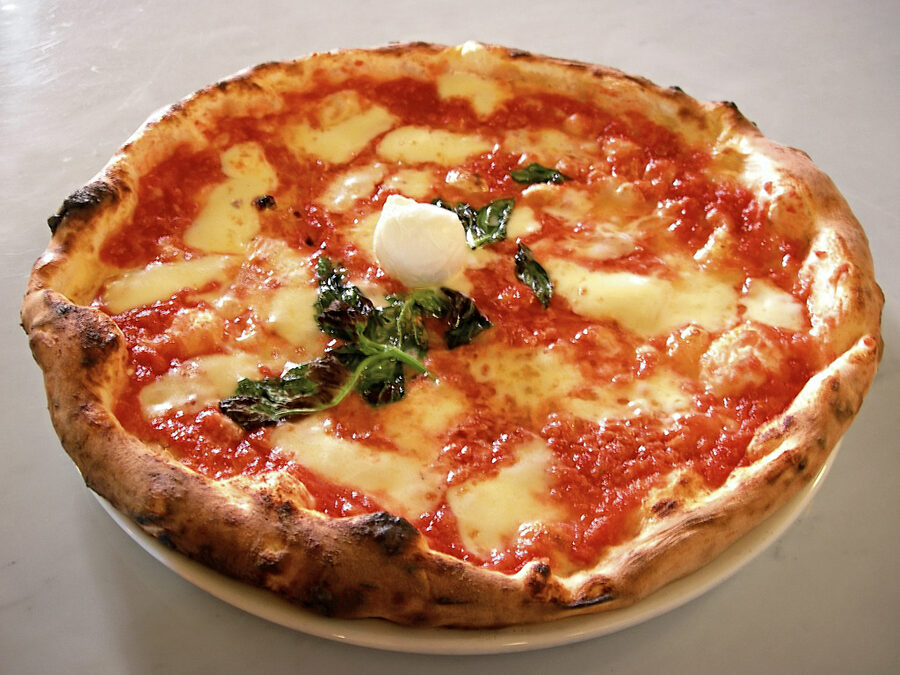
The pizza you grew up on is a great-great-grandchild of what was invented here in the 18th century as cheap food for working-class Naples. UNESCO put the art of the Neapolitan pizzaiolo on its intangible cultural heritage list in 2017. There’s a whole certifying body, the Associazione Verace Pizza Napoletana, that defines what counts as the real thing.
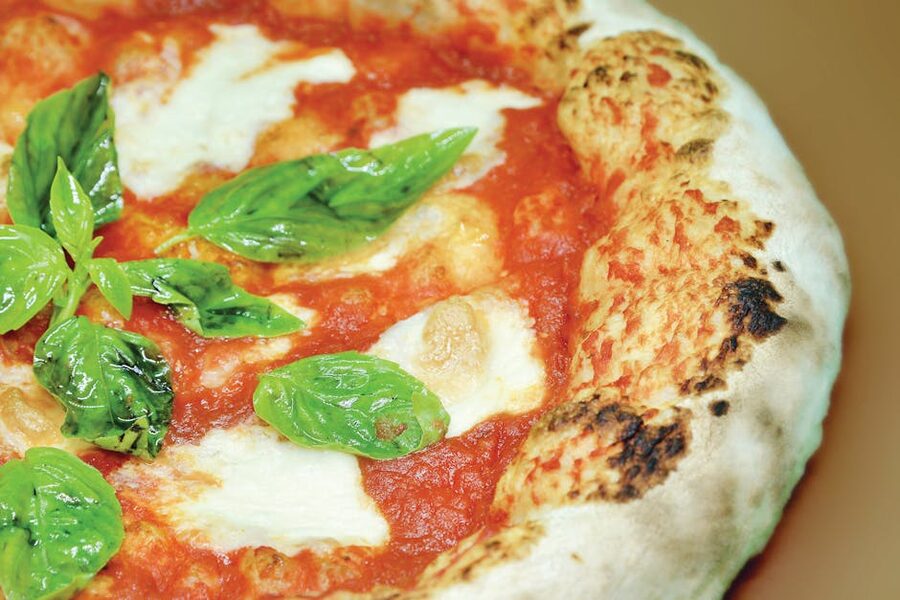
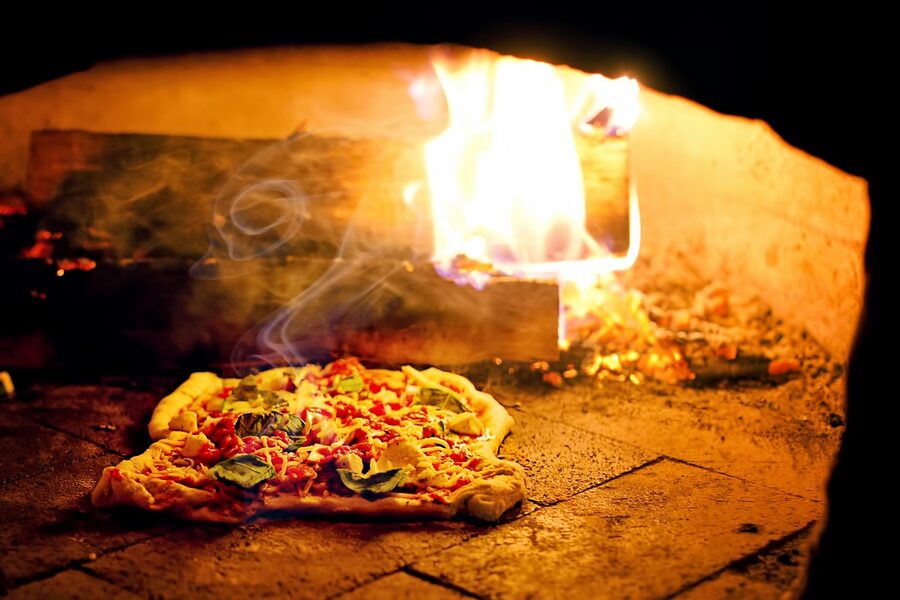
The rules are short and strict. Type 0 or 00 flour, water, fresh yeast, salt. Hand-kneaded or a low-speed mixer. Hand-formed, never a rolling pin. Wood oven at around 450C. Cook time 60 to 90 seconds. Two cheeses allowed: fior di latte or mozzarella di bufala. San Marzano tomatoes, raw and pureed, not cooked into a sauce. That’s it.
What you actually taste is a thin centre that’s so soft you basically can’t pick it up, surrounded by a puffy charred rim called the cornicione. The base bends. The cheese pools rather than stretches. The tomatoes taste of tomato, not of sugar and oregano. It’s a different food from the New York or Chicago versions, and once you’ve eaten it in Naples, the things you used to call pizza will feel like an impostor for a while. The same single-place dependence shows up at a Barcelona tapas crawl, where the small plates rely on local jamón and Catalan wine, and at a Bordeaux wine tour, where the bottle in your glass is the gravel beneath the chateau three rooms over. That’s not me being precious. Genuinely, I’m sorry.
The closest cousin in the rest of Italy is probably the Roman pizza you’ll meet on a Rome food tour: thinner, crispier, often rectangular and sold by weight. It’s a different school. The Tuscan version, which you’ll see if you do a Florence food and wine tour, is closer to a flatbread schiacciata than to a Neapolitan pizza. Naples is its own thing.
The bite-sized history
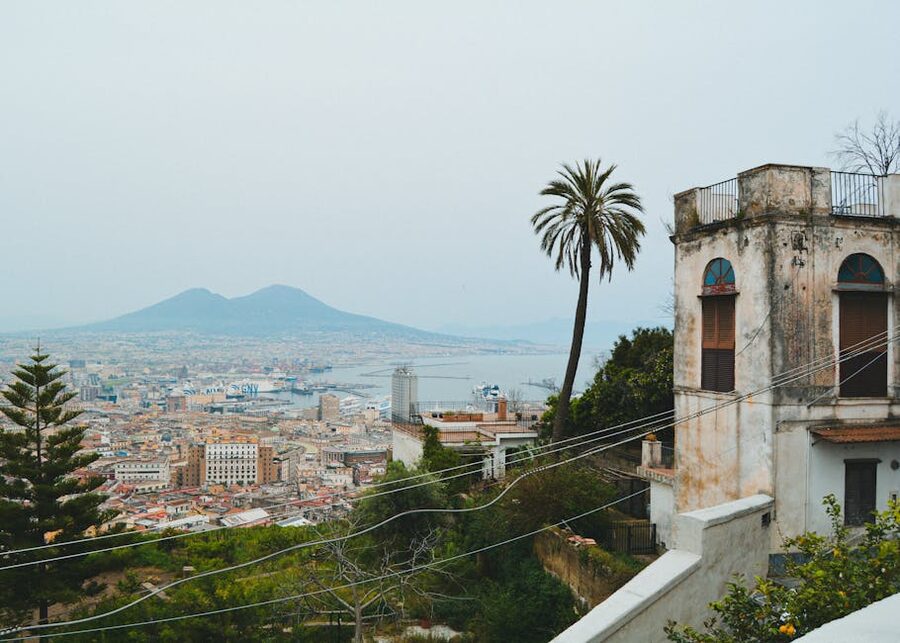
Pizza in Naples started as flatbread sold from carts to dock workers and the urban poor. Tomatoes, brought back from the Americas, were thought to be poisonous in Europe for a couple of centuries until somebody in southern Italy got brave. The varieties that thrived were the San Marzano types grown on the volcanic soil south-east of the city, in the same plain where you’ll catch yourself looking up at Vesuvius from the train down to Pompeii. Buffalo mozzarella came from herds the Normans had imported for labour, then later for milk. Wheat, salt, water, the local yeast: cheap, fast, sold by the slice or folded for one hand.
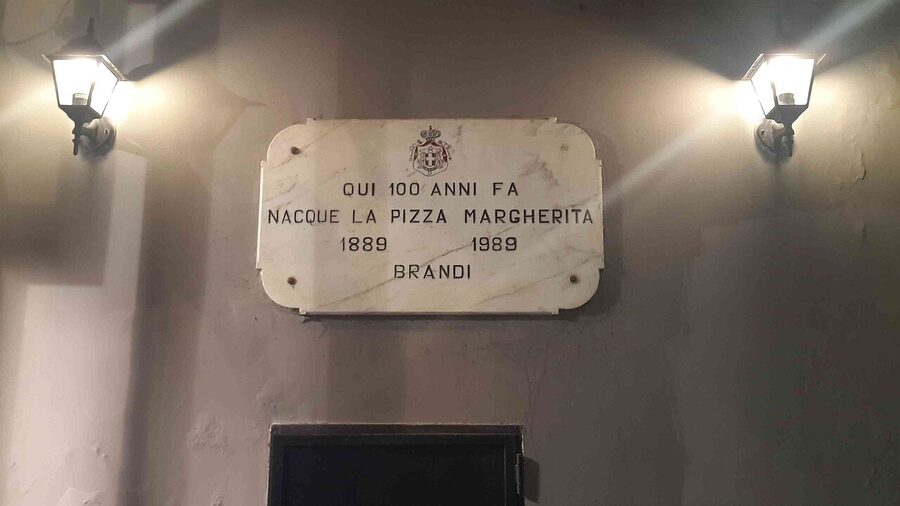
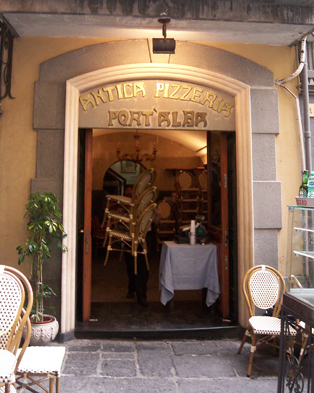
The Margherita legend dates the modern three-colour pizza to 1889, but flatbread with toppings was being sold here at least a century earlier. Pizzeria Port’Alba in the historic centre claims a 1738 founding date, which would make it the first pizzeria on earth.
The historic centre is also where you find Da Michele (1870), Sorbillo (1935 in its current form), Di Matteo (1936), and Brandi itself, all within a 15-minute walk of each other. Most of these places stayed local until the 21st century. Da Michele blew up internationally because Julia Roberts ate there in Eat, Pray, Love (2010). The queues never really shrank after that. If you want a useful tour of this exact neighbourhood with stops at multiple pizza and street-food spots, the Street Food Walking Tour covers it well, and the same logic applies to the morning after a Naples Underground session: you walk straight back up to street level and you’re surrounded by pizzerias.
How a Neapolitan pizza is actually made
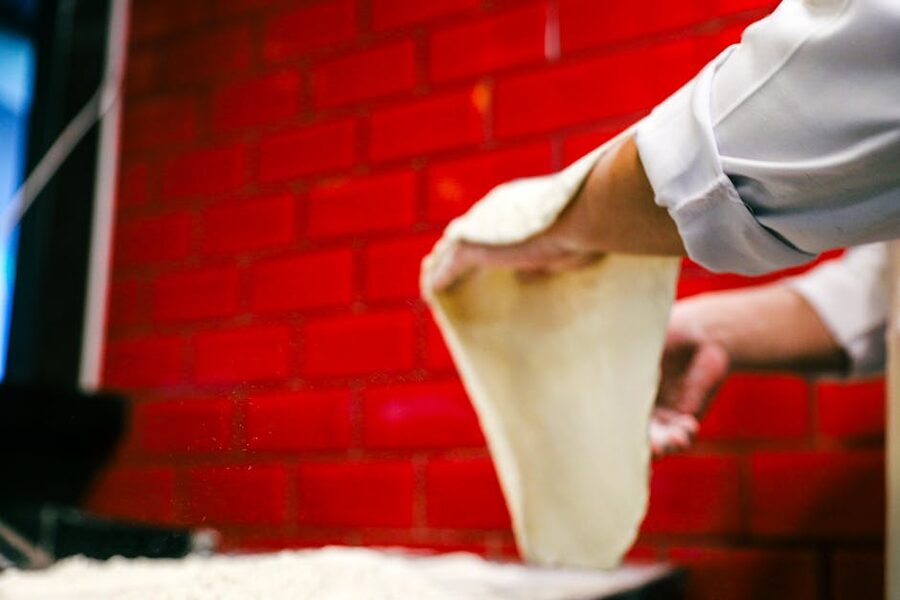
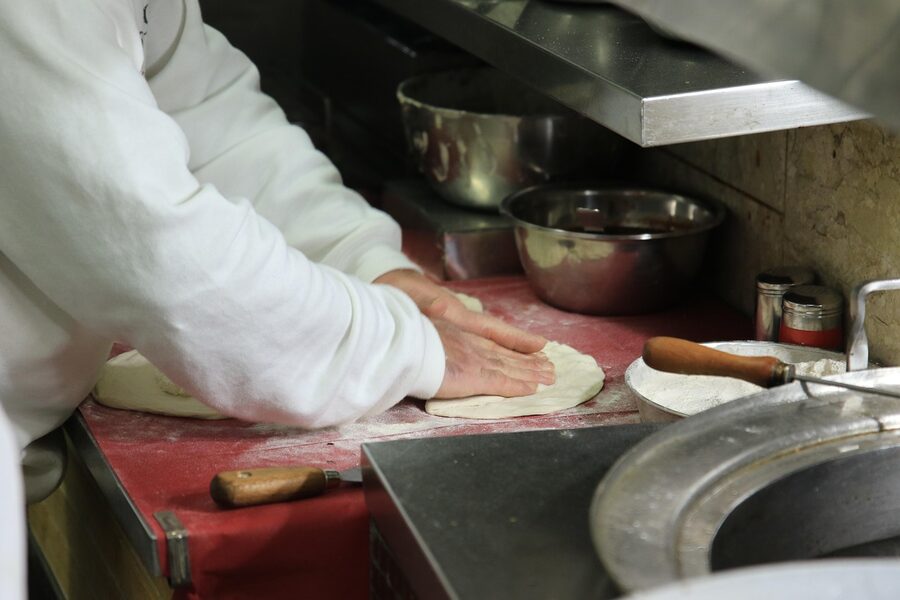
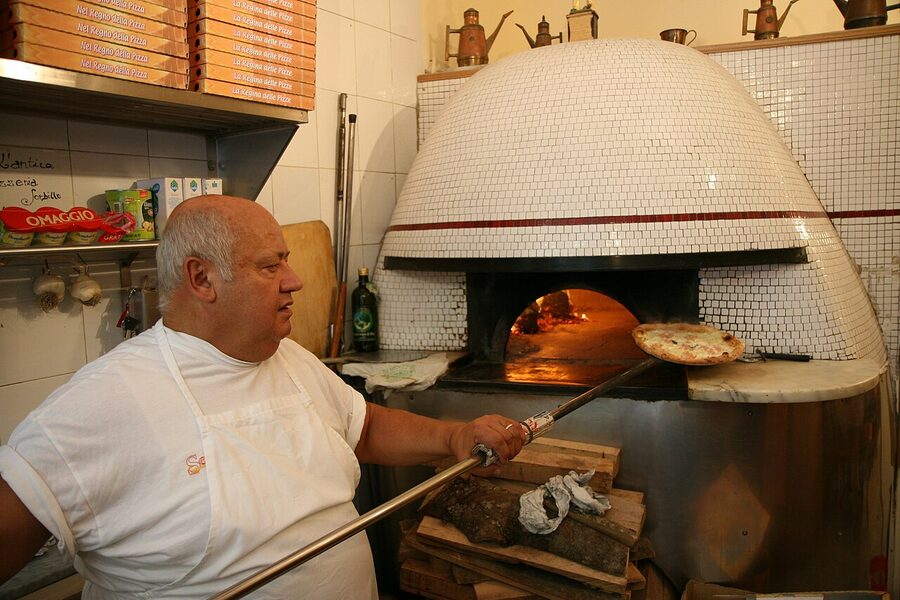
This is the part most travellers blow past, and it’s the part that makes the eating better. Watch a Vera Pizza Napoletana spot for ten minutes and you’ll see the same choreography over and over. A ball of dough goes onto a floured marble counter. The pizzaiolo presses the middle flat with his fingertips and leaves the outer rim untouched, which is what creates the puffy cornicione. The disc gets rotated on the backs of his hands. A ladle of pureed tomato. A small handful of torn mozzarella, never grated. Two basil leaves. A circle of olive oil. Onto the peel, into the oven, 60 to 90 seconds, out.
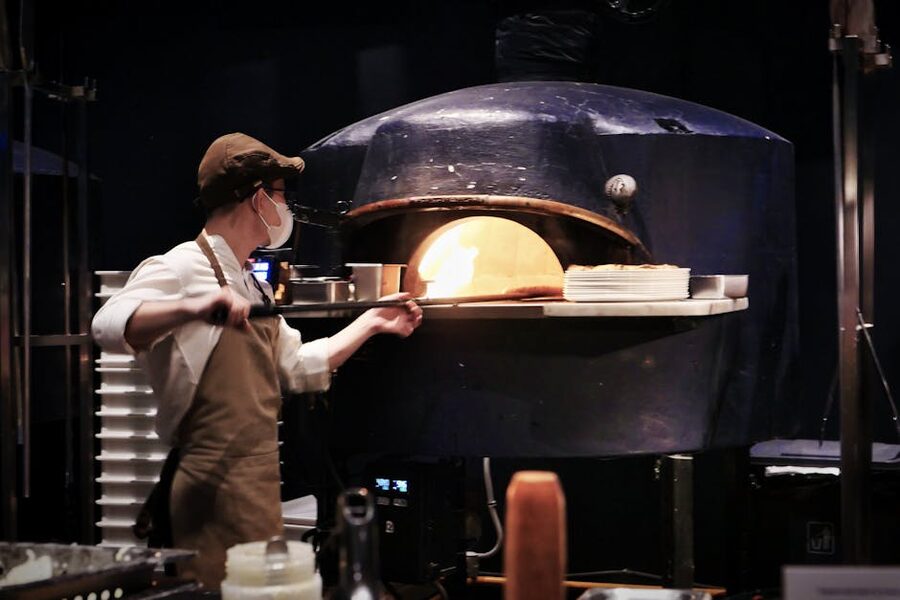
The oven temperature is the unwritable part. Around 450C at the floor, hotter at the dome, with the actual pizza rotated once during the cook so the side facing the fire gets the leopard spots and the rest doesn’t burn. That speed is why every queue in Naples moves faster than you expect. A four-person table can be turned in twenty minutes. Most pizzerias make it clear, politely, that you’re here for a pizza and not for a long lunch.
If watching it isn’t enough, you can stand on the other side of the counter yourself. The Pizza-Making Workshop covered in the tour cards below is a 2-hour hands-on class with a real pizzaiolo, drink and appetiser included. You leave with the muscle memory and a pizza you made yourself. It’s the same impulse you’d have on a pasta and cooking class in Florence, a Champagne cellar visit out of Paris, or even a Heineken Experience pour-your-own session in Amsterdam: paying to borrow somebody else’s grandmother’s hands for an afternoon.
Where to eat: the big four, plus three more
You can eat well at probably 200 places in Naples. You can eat astonishingly well at maybe 30. Below is a personal shortlist, ordered roughly by how easy it is to get a table and how worth the queue is when there’s one.
L’Antica Pizzeria da Michele
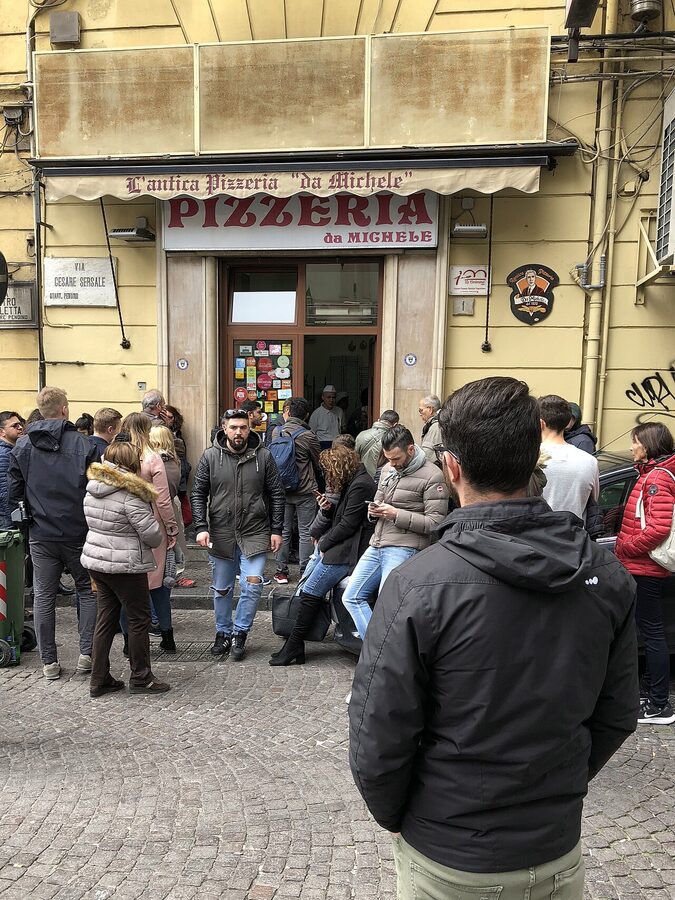
Founded 1870. Two pizzas only: margherita (€5.50ish) and marinara (the cheese-free, garlic-and-oregano older sister, €4.50ish). The reason this place became globally famous is the Eat, Pray, Love scene, but the reason it’s still worth queuing is that the dough is genuinely some of the best in the city. Soft, chewy, airy, and somehow still structurally holding under a slick of San Marzano. The room itself is austere. Bench seating, fluorescent lighting, no decor pretensions. You’re here to eat one thing, eat it fast, and leave.
Address: Via Cesare Sersale 1. Open 11am-11pm, seven days. Don’t share a pizza, that’s bad form. The waiters will notice and make a face.
Gino e Toto Sorbillo
The pizzeria most consistently rated number one in Naples by people who eat a lot of pizza. Sorbillo’s base is somehow even thinner than Da Michele’s and somehow holds together. The toppings list is wider (a few seasonal specials beyond the canon), but the margherita is the test. No reservations. Show up, put your name on the door list, and wait at the spritz bar across the street for the crackly speaker to call you. Lunch wait is shorter than dinner. Weekday 7pm wait, expect about an hour.
Address: Via dei Tribunali 32. Closed 4pm Sundays. Sorbillo also runs a calmer waterfront branch on the Lungomare if the historic centre queue is impossible.
Pizzeria Brandi
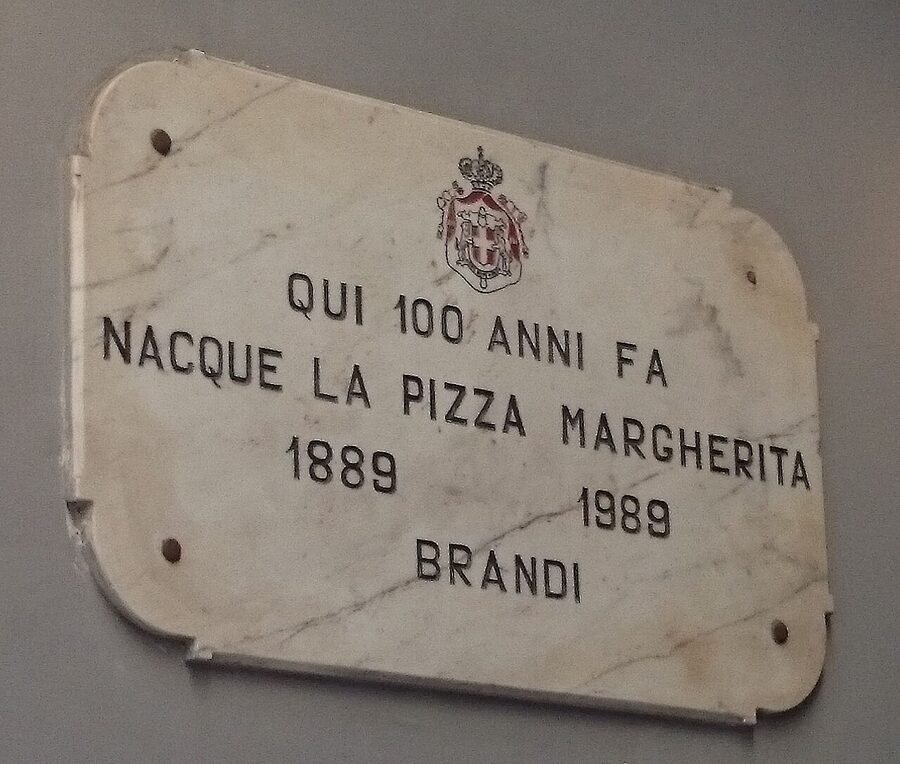
If you only have two pizza meals in Naples and one of them needs to be the historical pilgrimage, Brandi is it. This is the spot the Margherita-naming story is attached to, near the Royal Palace and Piazza Plebiscito. The food is good rather than transcendent, and the room is more of a sit-down trattoria than the bench-style flagships. But the plaque on the wall, the menu in five languages, and the location make it a different kind of meal. Pair it with a morning at the Royal Palace and you’ve earned the touristier setting.
Address: Salita Sant’Anna di Palazzo 1-2. Open daily.
Pizzeria Starita
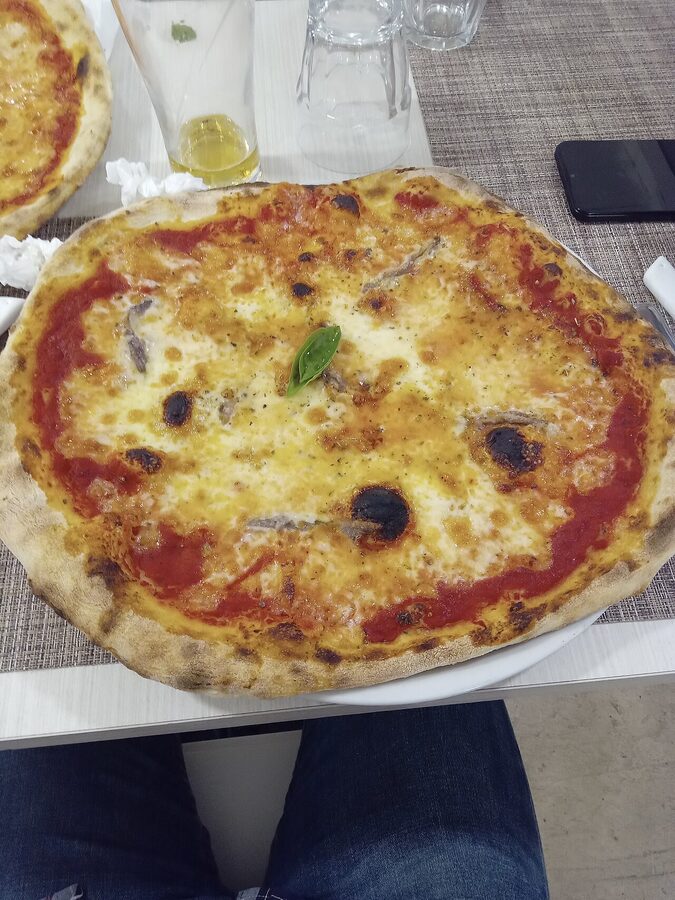
Family-run since 1901, in the Materdei neighbourhood up the hill from the historic centre. Less queue than Da Michele or Sorbillo and arguably the most interesting menu of the famous spots. The Montanara Starita is a fried-then-baked pizza invented by the family in the 1980s, crispy outside, soft inside, with smoked provola instead of mozzarella. Sophia Loren sells fried pizza outside this place in Vittorio De Sica’s 1954 film L’oro di Napoli. Pope John Paul II had Starita pizzas brought to the Vatican.
Address: Via Materdei 27/28. Closed Mondays. A 15-minute walk from the Catacombs of San Gennaro, so a natural pairing with a morning visit to the Catacombs of San Gennaro or the Capodimonte museum.
Concettina ai Tre Santi
The modernist pick. Located in the Rione Sanità, one of the more interesting Naples neighbourhoods to walk around in (and on top of where the Catacombs of San Gennaro tour exits). Father-and-son team Antonio and Ciro Oliva run the kitchen. They keep a classic margherita and marinara on the menu, but the reason to come is the experimental side: pizzas with raw fish and citrus, with dehydrated tomato powder, with seasonal mountain vegetables. The takeaway window facing the street is a separate operation and the cheapest serious pizza in the city.
Address: Via Arena alla Sanità 7. The waits have got long since their TV appearances, so reserve if you want the dining room.
Pizzeria Da Attilio
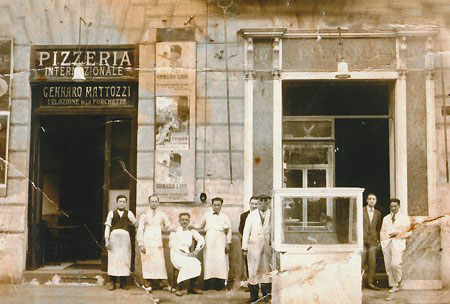
Family-run, in the Spanish Quarter just off Via Pignasecca. The pizzas are very good and the signature is the Carnevale, a star-shaped pizza with ricotta in the points of the star. It’s the kind of pizzeria where locals outnumber tourists and the queue forms only at peak lunchtime. Pair with a morning wandering the Spanish Quarters and the Pignasecca market.
Address: Via Pignasecca 17. Closed Sundays. Dinner only on Mondays.
Antica Pizzeria di Matteo
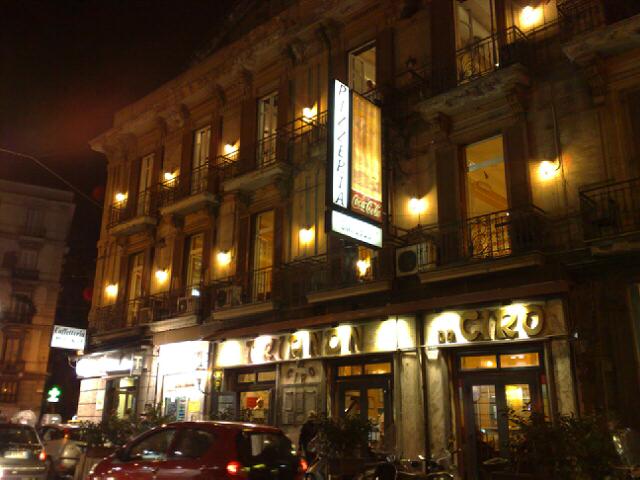
On Via dei Tribunali since 1936. Tourist-heavy because Bill Clinton popped in during the 1994 G7, but the pizza still earns its reputation. The street-window takeaway counter does pizza fritta (a fried, folded pocket of dough stuffed with ricotta, smoked provola, and pork) for €4-5, which you eat standing up while wandering the historic centre. The upstairs room runs a 5% service charge and a brisk turnover. Useful as a back-up when Sorbillo’s wait is unworkable.
Address: Via dei Tribunali 94.
What to actually order
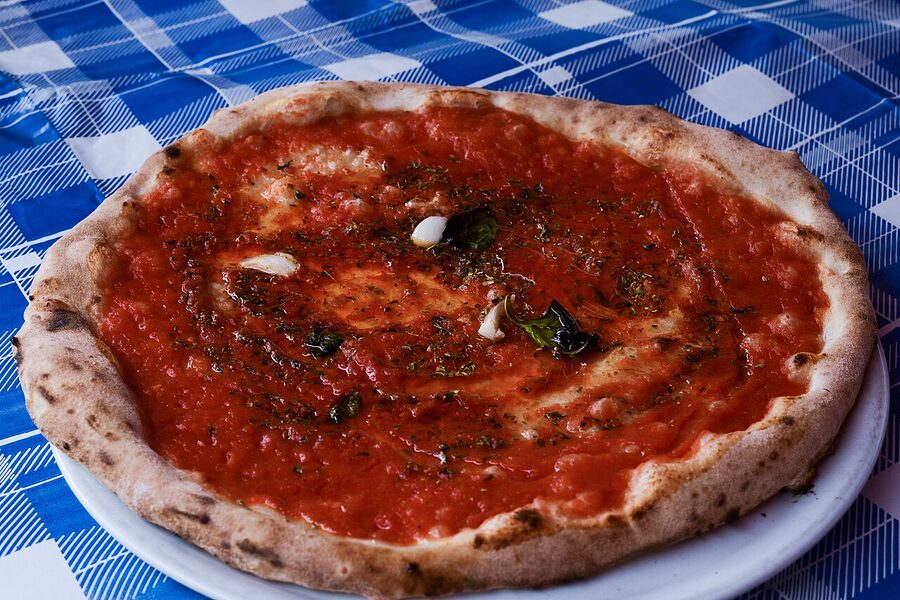
The default first pizza is a margherita. The second pizza, if you go twice in a day or back the next night, should probably be a marinara. No cheese, just tomato, garlic, oregano, olive oil. It’s older than the margherita and considered the better test of a kitchen by the pizzaioli themselves. Without mozzarella to hide behind, the dough and the tomato have to carry the whole thing.
From there:
- Margherita con bufala. Same as a margherita but with mozzarella di bufala instead of fior di latte. About €1-2 more. Tangier, milkier, slightly looser texture. Worth it once.
- Pizza fritta. Fried pizza. Pocket of dough stuffed with ricotta, smoked provola, and bits of pork (cigoli or salame), then deep-fried. Naples street food, sold at counters by Di Matteo and others for €4-5. Eat it walking.
- Montanara. The Starita specialty. Dough fried first, then sauced and cheesed, then back into the wood oven. Crispy bottom, soft top, smokier flavour from the provola.
- Pizza a portafoglio. Wallet pizza. A regular margherita folded in quarters and wrapped in paper, eaten standing up on the street. €2-3. The original Naples fast food, sold from window counters all over the historic centre.
- Calzone. The pocket pizza. Folded over and baked, stuffed with ricotta, mozzarella, salami, sometimes egg. Heavier than a flat pizza, more of a winter food.
Drinks
Beer or coke. That’s the local order. A small Peroni or a 33cl Coca-Cola is what most Neapolitans drink with their pizza. Sparkling water is fine. Wine with pizza is technically a foreign-tourist habit, though no waiter will refuse you. (Compare with sherry country: at the Jerez horse show the standard pour with food is a chilled fino, and ordering anything else gets the same gentle headshake from the next table.) Aperol Spritz with pizza will get you a small headshake from the table next to you. I won’t tell you what to do, but consider that the locals know something.
Eating etiquette
A few rules that aren’t written anywhere but everyone follows:
- One pizza per person. Always. The pizzas cost €5-8 and the tables are needed for turnover. Sharing reads as cheap.
- Knife and fork is fine. Hands-and-fold is also fine. Most locals do a hybrid: cut into wedges, then fold each wedge and eat with your hands.
- Eat the cornicione. The puffy charred rim is the best bit. Locals leaving the rim is a thing some travellers have read about, but in practice it’s mostly tourists doing it because they’re full.
- Don’t ask for substitutions. The menu is the menu. Asking to swap mozzarella for vegan cheese on a Vera Pizza Napoletana spot is not going to land well.
- Tip is included. The coperto (cover charge) is €1-2 per person and is on the bill. You don’t add anything on top unless service was outstanding, and even then a euro or two rounded up is plenty.
The neighbourhoods, in order of pizza density
Centro Storico
The historic centre, between Via dei Tribunali and Via San Biagio dei Librai (Spaccanapoli), is where the bulk of the famous pizzerias are. Sorbillo, Di Matteo, Trianon, Da Michele, Port’Alba, all within a 15-minute walk. It’s also where the Naples Underground tour comes out, so a morning underground tour into a margherita lunch is the easiest pairing in the city.
Quartieri Spagnoli
The Spanish Quarters, a grid of tight streets sloping up from Via Toledo. Da Attilio is here, plus Pizza & Babà, plus dozens of working-class pizzerias that don’t appear in any guidebook. The Maradona murals, the laundry strung across the alleys, the scooters. If you want to eat where actual Naples eats, this is it.
Sanità
North of the historic centre, on the way up to the Capodimonte. Concettina ai Tre Santi is the headline pizzeria here. The neighbourhood was rough until about a decade ago and the rebound has been driven partly by the food scene. Pair with the Catacombs of San Gennaro tour for the obvious morning-into-lunch combo.
Materdei and the Vomero
Up on the hills above the centre. Starita is in Materdei. The Vomero (one funicular ride up from Via Toledo) has its own pizzerias. Acunzo on Via Domenico Cimarosa is a Vomero classic. Worth the climb if you’ve already done the centre and want a quieter pizza meal.
Lungomare and Mergellina
The waterfront. 50 Kalò, Ciro Salvo’s celebrated pizzeria on Piazza Sannazaro, is here. The vibe is restaurant-restaurant rather than counter-pizzeria, the bill is higher, and the dough is hyper-hydrated and pillowy. Worth the trip if you’ve already done two or three centre-city pizzas and want to taste a different school. Pair with a coastal walk and a view of Vesuvius.
The classes and tours worth booking
The three options below are what we’d actually book ourselves. They split into two camps: the hands-on pizza-making class (you make and eat one pizza), and the street food walking tour (someone takes you through five or six stops, including pizza and the other Naples staples like sfogliatelle and taralli and limoncello).
1. Naples Pizza-Making Workshop with Drink and Appetizer: $39
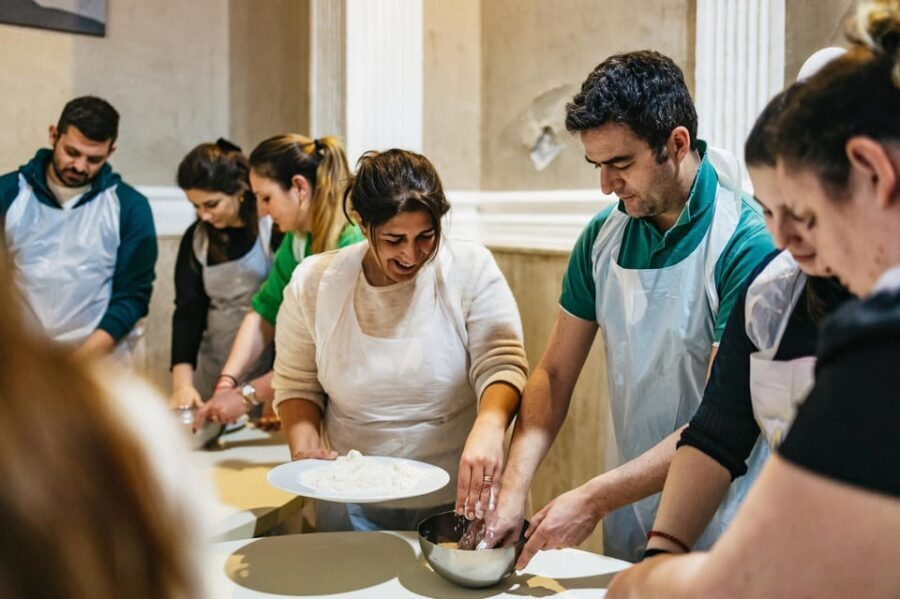
This is the right pick if you want the muscle memory, not just the meal. Two hours, a real pizzaiolo, a wood oven, and a pizza you made yourself; our full review covers what the appetiser and drink actually are. Best value of the three options if you only do one pizza-related activity.
2. Naples Street Food Walking Tour with Local Guide: $50
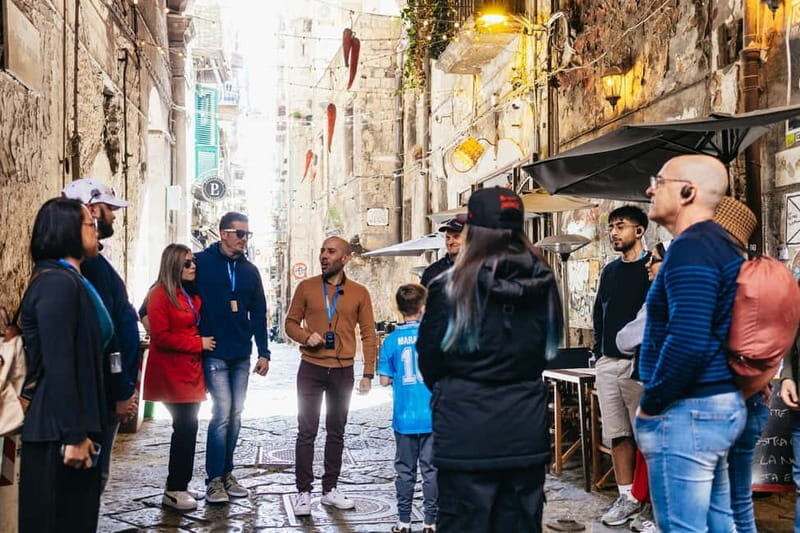
The right pick if you want context and breadth rather than a single sit-down meal; our full review walks through the typical stops. Better for first-time visitors who want to taste five things instead of focusing on one.
3. Naples Street Food Walking Tour With Local Guide (alternative): $47.83
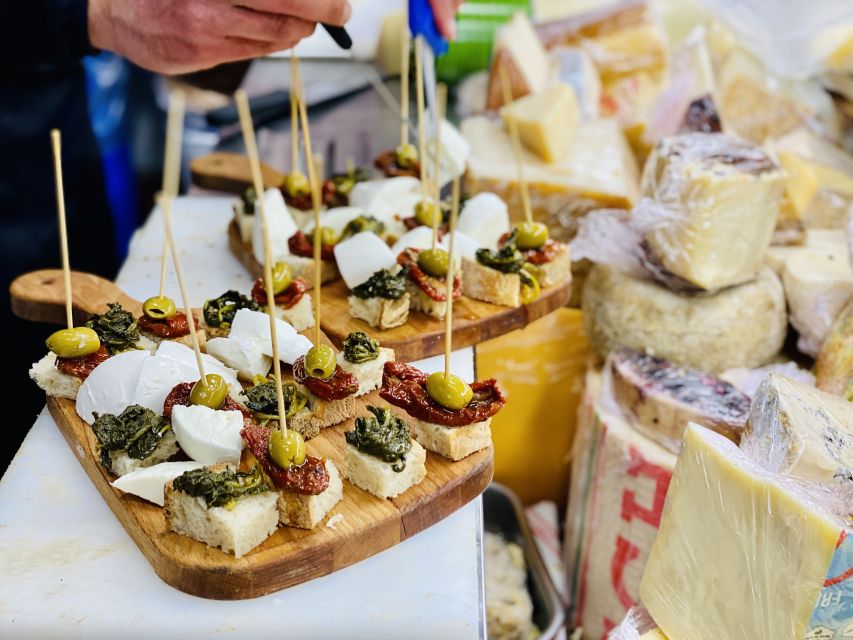
The almost-identical tour at a slightly lower price, useful as a backup; our full review covers how it compares to the flagship. Same neighbourhoods, same food categories, marginally less polished operation.
Practical, in one place
- Price. Margherita €5-7 at the famous spots, €4-5 at neighbourhood places. Marinara €1 less. Pizza fritta €4-5 at street counters. Beer or coke €2-3. Coperto €1-2 per head. A meal for two with two pizzas, two drinks, and coperto comes to around €18-22.
- Cash or card. Most places take card now, but a few of the cheaper takeaway windows are still cash-only. Carry €20 in coins and small notes.
- Queues. The big four (Da Michele, Sorbillo, Brandi, Starita) all have peak-hour queues of 30 minutes to over an hour. Beat them by going at 11.30am or after 3pm for lunch, or 6pm/after 10pm for dinner.
- No reservations at Da Michele or Sorbillo. Tre Santi takes them. Most of the others run a mix of walk-ins and reservations.
- How many pizzas in three days. Realistic ceiling is one for lunch and one for dinner, every day. Most travellers do two a day for two days and then need a non-pizza meal. The pasta and seafood scene in Naples is also very good; you don’t have to live on dough.
- If you’ve got coeliac disease, a few of the higher-end spots (Sorbillo’s flagship has a gluten-free option) will make a gluten-free pizza, but the vast majority of pizzerias don’t. Check ahead.
How to plan your pizza days
If you have two days in Naples: lunch at Da Michele on day one (the historic pilgrimage), dinner at Sorbillo on day two (the consensus number one). Slot the Pizza-Making Workshop in between. That’s three pizza experiences and you’ll feel like you’ve done the city.
If you have three days: add Starita for the Montanara, plus a Pizza-Making Workshop and a Street Food Walking Tour. You’re now eating five different things from five different ovens, which is the realistic limit before pizza fatigue sets in.
If you have one day and you’re combining pizza with the rest of Naples: morning at the Naples Underground, lunch at Sorbillo or Di Matteo (both on Via dei Tribunali, where the underground tour exits), afternoon at the National Archaeological Museum, dinner at Tre Santi or back at a different historic-centre pizzeria. That’s a serious one-day Naples and you’ve still done two distinct pizzas.
If you’re using Naples as a base for the day-trip circuit (Pompeii, Amalfi Coast, Capri, Vesuvius), the pattern most people land on is pizza on the days they’re in town and seafood on the day-trip days. You’ll be glad of the variety by day four.
Why this is worth doing
You can be sceptical about food pilgrimages. A lot of the time the famous version of a regional dish is famous because the marketing was good, not because it’s actually that different from the one you can get at home. Naples pizza isn’t that. The combination of the wood oven heat, the local San Marzano tomatoes, the buffalo mozzarella, the unhurried hand-stretching of dough that’s been resting since this morning, and the pizzaiolo who started training when he was 14, all add up to something you cannot buy in any city outside this region. It’s a food that depends on its place.
The other reason is the price. The best pizza in the world costs €5.50. There’s no version of this meal that’s a luxury experience. Working-class Naples invented this food, working-class Naples still eats it, and you sit on bench seating next to local families and pay what they pay. That’s rare in 2026.
One more meal in Naples
If pizza is your reason for coming, you’ve already won. But the city pairs the famous food with a string of half-day experiences that turn a 48-hour pizza trip into something richer. Take a morning down into the tunnels and cisterns under the city before lunch on Via dei Tribunali; do Pompeii as a day trip and come back to Naples for dinner; spend a slow afternoon walking the Spanish Quarters and let the smell of dough lead you to a corner pizzeria you’d never have found in a guidebook. And if Italy on a plate is what you’re chasing, the same hand-made-from-flour-and-water principle drives the pasta menus you’ll meet in Florence’s cooking schools, the food walks of Tuscany, and the trattorie you’ll wander into between sights on a Rome food tour. You’ll come home thinking about wheat and tomatoes more than you expected to.