
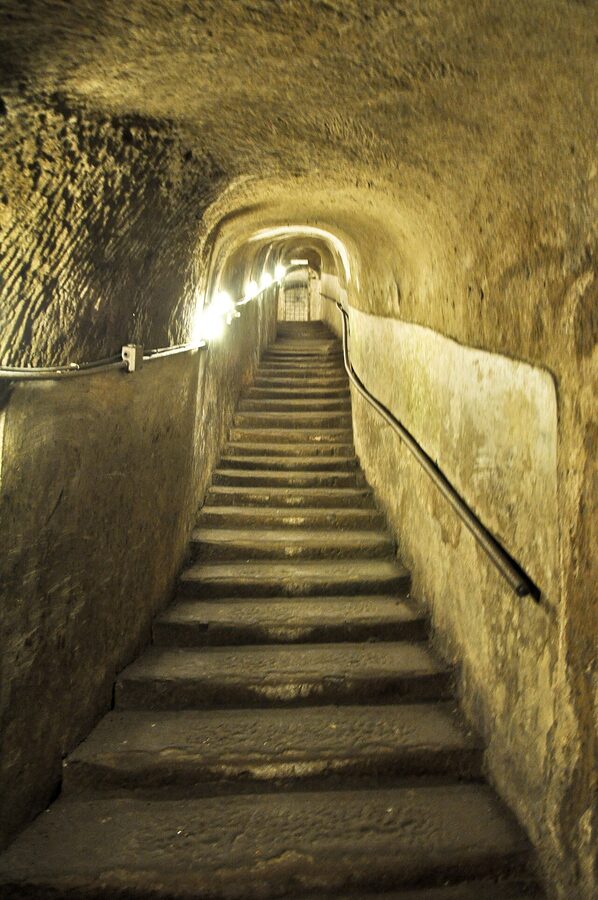
You feel it on the back of your neck before you see anything. About forty steps down from the basilica entrance the staircase opens into a wider corridor and the air shifts. It’s ten degrees colder than the street and it smells faintly of wet limestone, the way an old wine cellar smells, except there’s a draft moving through it from somewhere you can’t see.
That draft has been moving through Naples for two and a half thousand years. It runs through the Greek aqueducts the original colonists cut into the soft yellow tuff stone in the 4th century BCE, then the Roman cisterns the next civilisation widened and connected on top of those, then the bomb shelters Neapolitans dug deeper still during the Allied air raids of 1943. Same stone, three civilisations, stacked like floors of a building. The city you walk on is the most recent layer.
This is the layer almost no visitor sees, and the city has more of it than any other in Italy. There are at least nine catacomb systems mapped under Naples, of which only three are open. There are two competing tours both called Napoli Sotterranea, run by rival cooperatives, both real, both worth doing on different days. There’s a 19th-century royal escape tunnel under Pizzofalcone that doubled as a WWII bomb shelter and now hides Fiat 500s the police impounded in the 1960s. The full network would take you a week. A first-time visitor needs about two hours and a clear sense of which entrance to choose.
If you only have time to read one paragraph
The flagship tour is Napoli Sotterranea at Piazza San Gaetano ($21). It covers the Greek-Roman aqueduct, the WWII shelter, and the underground Teatro di Nerone in 90 minutes, and it’s the one to do if you only do one. If you want quieter and shorter, the Spanish Quarters Underground tour ($17, 60 minutes) goes deeper into the 4th-century BCE Greek cistern system from a different entrance. For something that isn’t ancient at all, the Bourbon Tunnel under Pizzofalcone ($12) is a 19th-century escape route packed with vintage cars and wartime ephemera.
Why Naples is layered the way it is
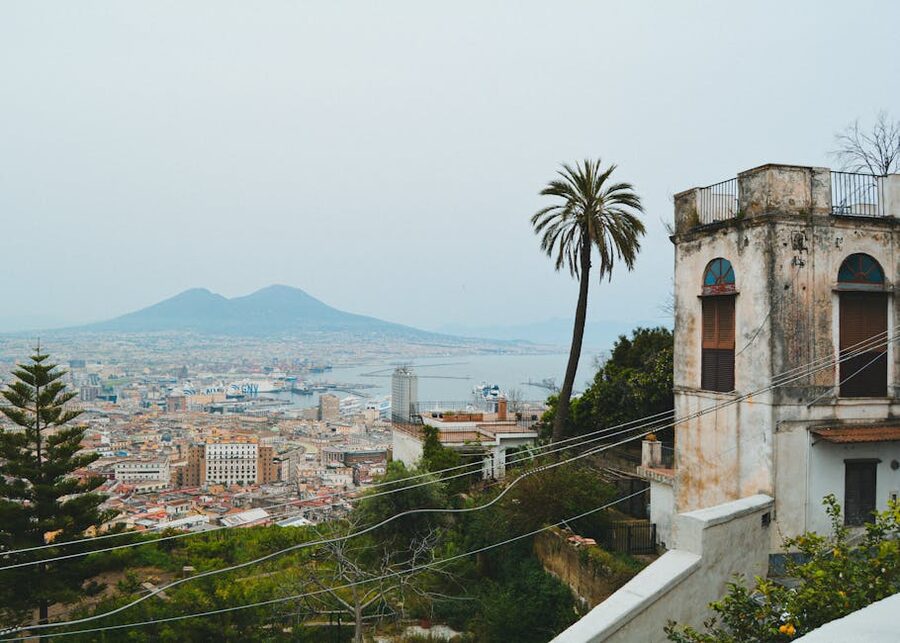
The geology did most of the work. The hills under Naples are made of tuff, a soft volcanic rock that compacts when you cut into it and stays put afterwards. Greek colonists figured this out in the 4th century BCE. They quarried tuff from underground to build their walls and houses on the surface, and the empty quarries became the city’s first cisterns and aqueducts. Every neighbourhood had a private well that dropped through someone’s apartment block straight into the network.
The Romans took it over and expanded it. They added a 70-kilometre aqueduct from the Serino springs that fed the cisterns under what is now the historical centre, and the system kept working straight through the empire’s collapse, the Norman conquest, the Bourbon dynasty, and into the 19th century. Naples drank that water until a cholera outbreak in 1884 forced the city to seal the wells and lay surface pipes. The tunnels stayed empty for sixty years.

Then in 1940 the air raids started. Neapolitans dug staircases into the abandoned cisterns and lived underground for the worst stretches of the war, sleeping on iron cots in chambers their great-grandparents had drawn drinking water from. You’ll see the cots, the field telephones, the WWII graffiti on the walls. That overlap is the actual story of Naples Underground: the layers don’t sit politely on top of one another, they reuse each other. A Roman cistern in 1943 became a bomb shelter. A bomb shelter in 1973 became a junk dump. A junk dump in 2005 became a guided tour. The same trick of repurposing structural memory shows up at the Setas de Sevilla, where a Roman archaeological floor sits a level below a 21st-century parasol, and at the Anne Frank walking tour in Amsterdam, where the canal-house upper floors carry a 1940s memory the street outside has otherwise erased.
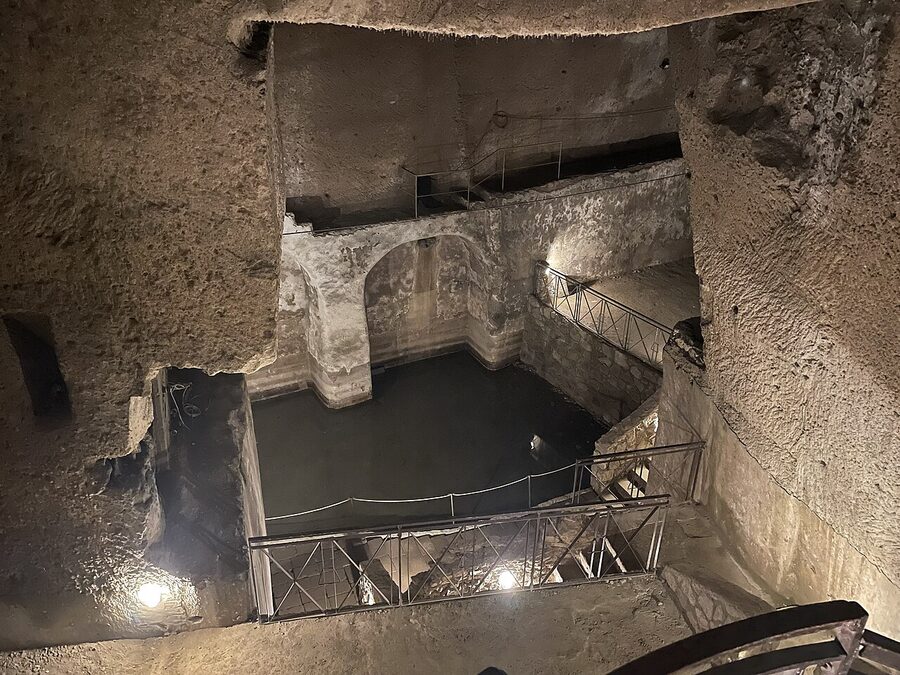
If you’ve already done the Rome catacombs, the Conciergerie cells in Paris, or the Caves of Hams in Mallorca, set your expectations differently before you go. Naples Underground is engineering, not religious burial or natural geology. You won’t see relics or martyrs or polished marble plaques. You will see chisel marks on tuff, water dripping into a 2,000-year-old basin that’s still half-full, and the place a family slept on a rotting army blanket in November 1943.
Choosing between the two Napoli Sotterranea tours
Both tours are called Napoli Sotterranea. Both are run by separate cooperatives. The names are nearly identical and the cooperatives don’t love each other. This catches almost every first-time visitor.
Piazza San Gaetano (the bigger one)
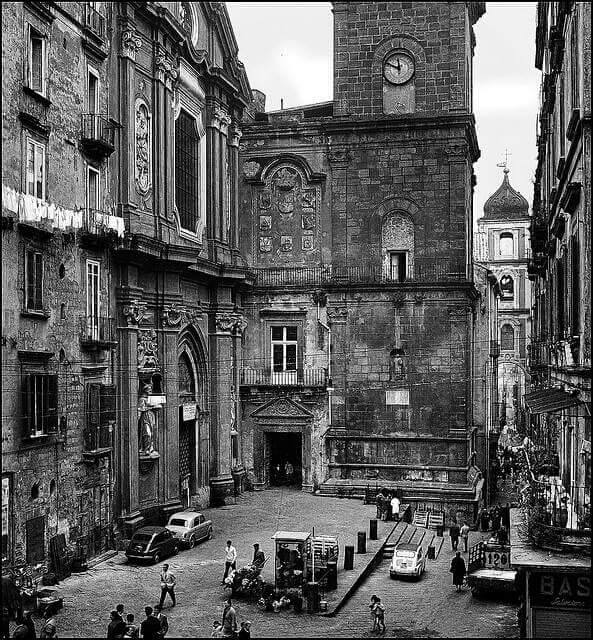
This is the one most travellers mean when they say “Napoli Sotterranea”. You meet at Piazza San Gaetano next to the baroque basilica of San Paolo Maggiore in the heart of Spaccanapoli. The tour drops you 40 metres into the Greek-Roman aqueduct system, walks you past the WWII shelter dressed up almost exactly the way locals left it in 1944, and ends with the small but genuinely surprising Teatro di Nerone, a Roman theatre that survives intact directly under a tenement block. Tours last about 90 minutes and run hourly.
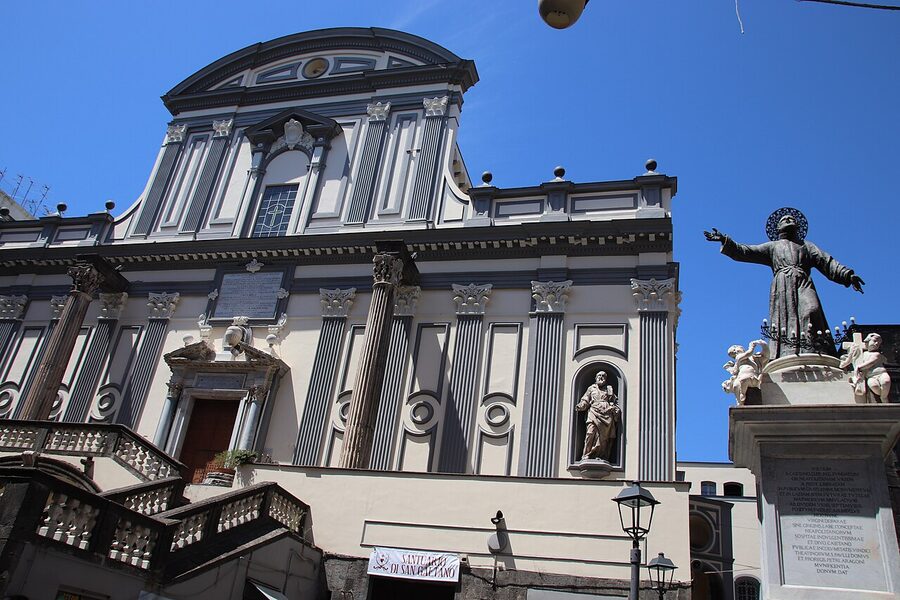
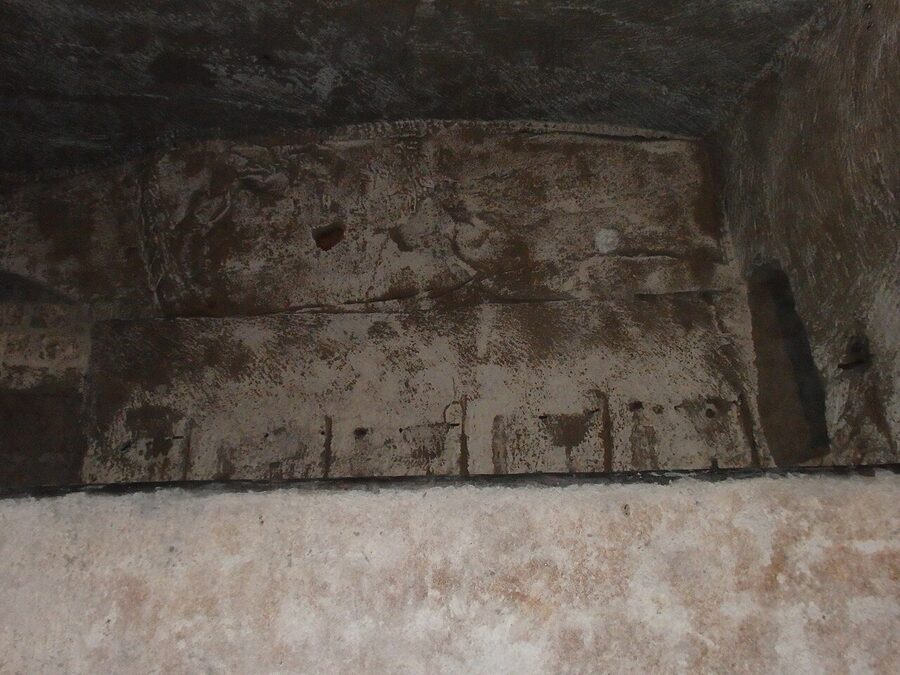
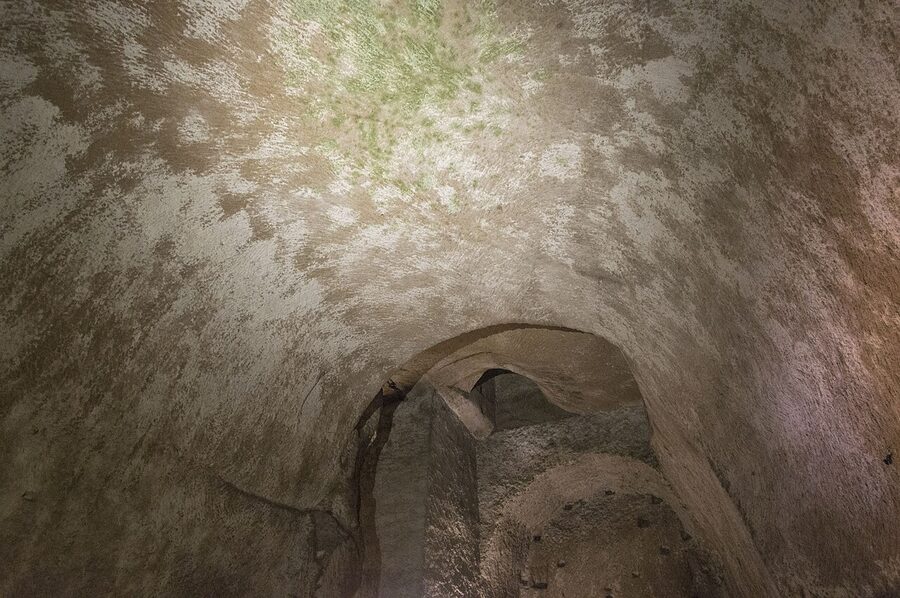
The reason this is the standard pick: it covers all three layers in one ticket. You walk through the Greek tuff cuts, pass through Roman widening of the same cuts, see the 1940s shelter installed inside the cuts, and finish at the surface again with the Roman theatre. If your only Italian underground experience is the Christian catacombs in Rome, this is the one that demonstrates how different the Neapolitan version is. Stairs and stamina: 121 steps down, the same back up. There’s no lift. The corridors include three sections under shoulder-width and one short crawl-through. Skip this route if you’re claustrophobic, take the standard alternative below.
Quartieri Spagnoli (the smaller, quieter one)
Less crowded, less polished, in some ways more atmospheric. You meet near the famous Gambrinus coffee shop just off Piazza Trieste e Trento, then descend into the Greek aqueduct system that originally fed the Spanish Quarters above. The chambers are smaller and the path is shorter, about 60 minutes total, and the highlight is the WWII graffiti the locals left on the walls. There’s one inscription dated 4 August 1943 that I keep thinking about. The handwriting belongs to a woman.
If you’re already eating your way through the pizzerias of the historic centre, the Spanish Quarters tour pairs more naturally with that route. It’s also the better choice if you want to do something underground without committing the full afternoon you’d lose on the bigger tour. The downside is fewer wow moments. There’s no Roman theatre at the end, just a return to the same staircase. Worth doing on a second day in Naples or as a low-key first-day acclimatiser before the bigger Piazza San Gaetano route.
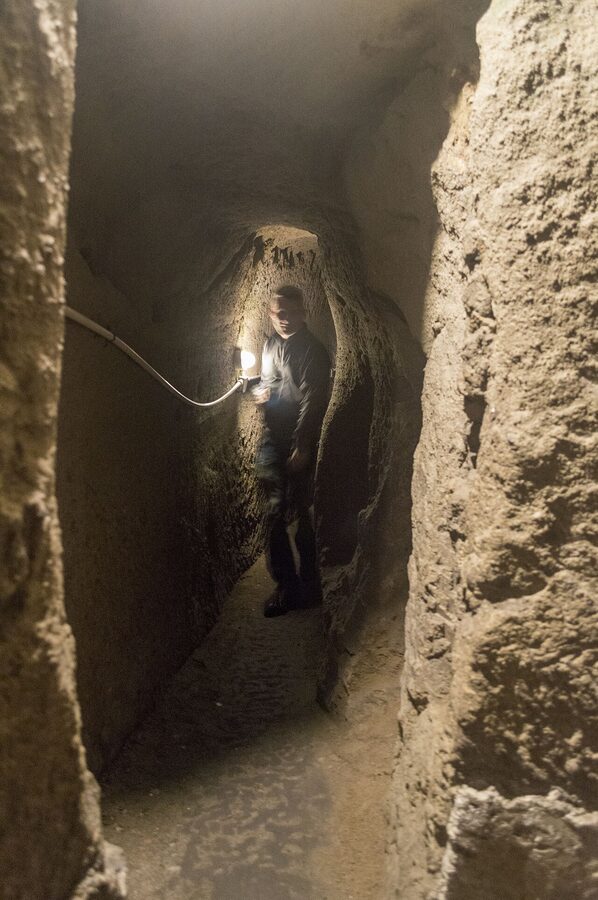
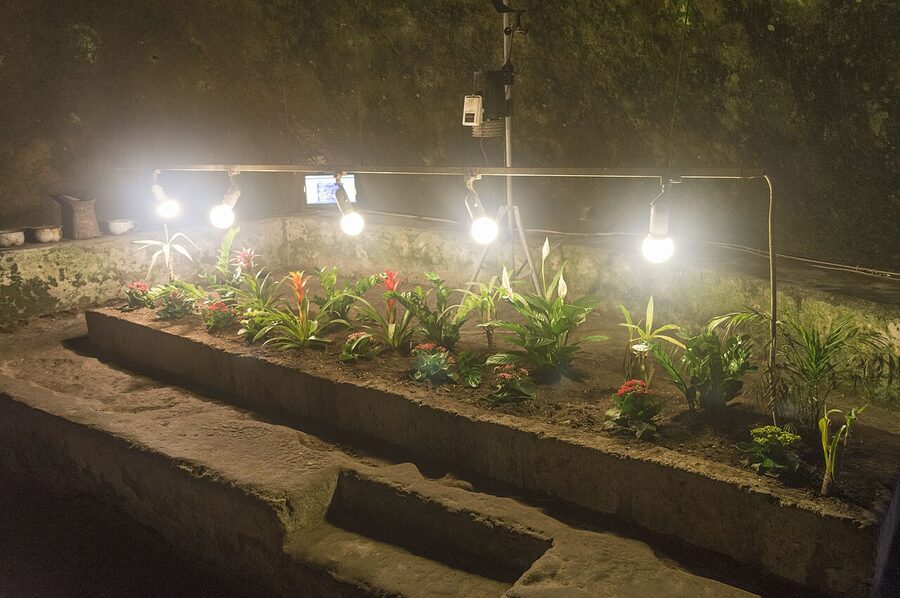
The Bourbon Tunnel is doing something different
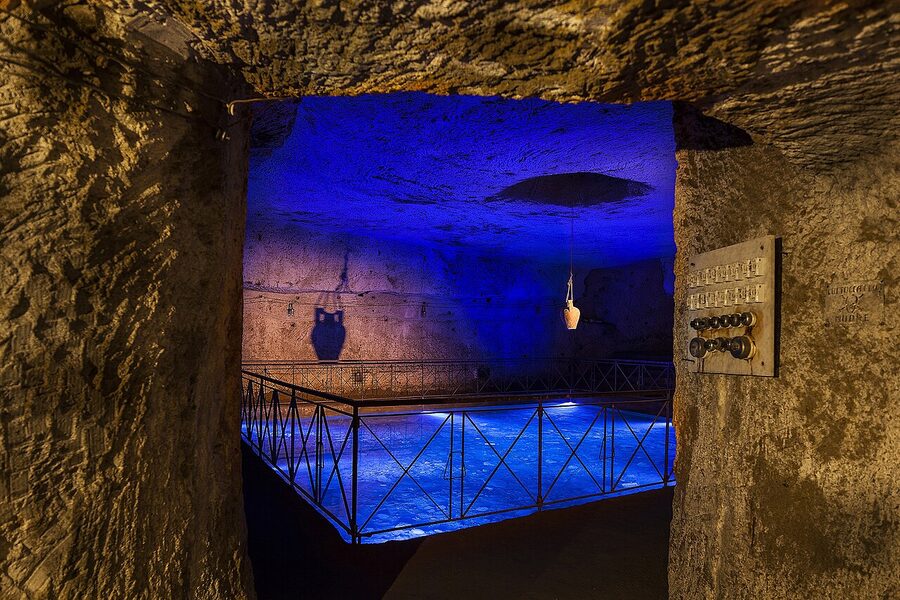
If the two Napoli Sotterranea tours are about ancient layers, the Bourbon Tunnel is about modern ones. King Ferdinand II commissioned this tunnel in 1853 as a personal escape route from the Royal Palace to the barracks at Pizzofalcone, in case Naples revolted while he was at lunch. (Same panic-architecture instinct that built the crypt fortress at Les Invalides in Paris, where Napoleon’s tomb sits below a roof his successors hardened against artillery.) The architect, Errico Alvino, ran into so many older cisterns and aqueducts during the dig that the project never finished. Ferdinand II died in 1859 and the tunnel sat half-built.
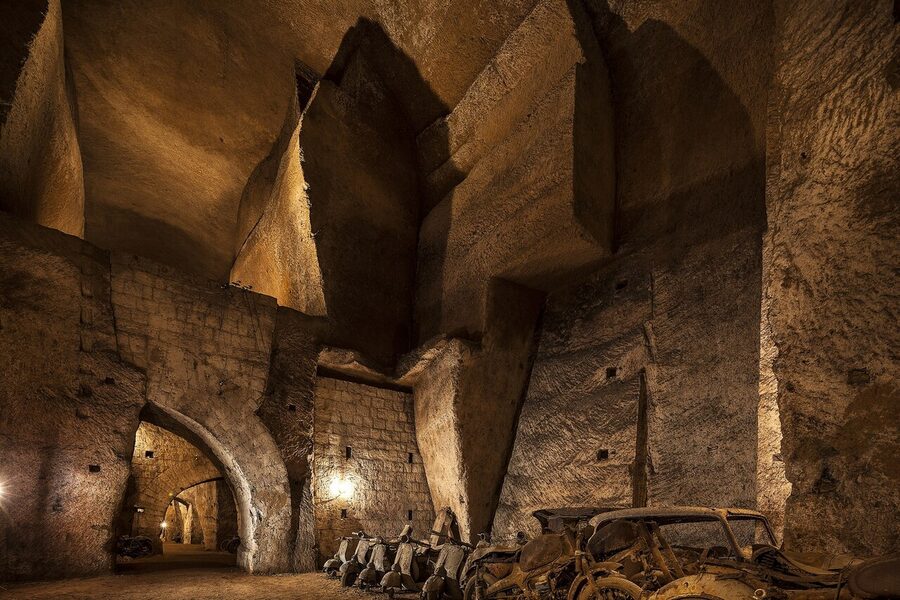
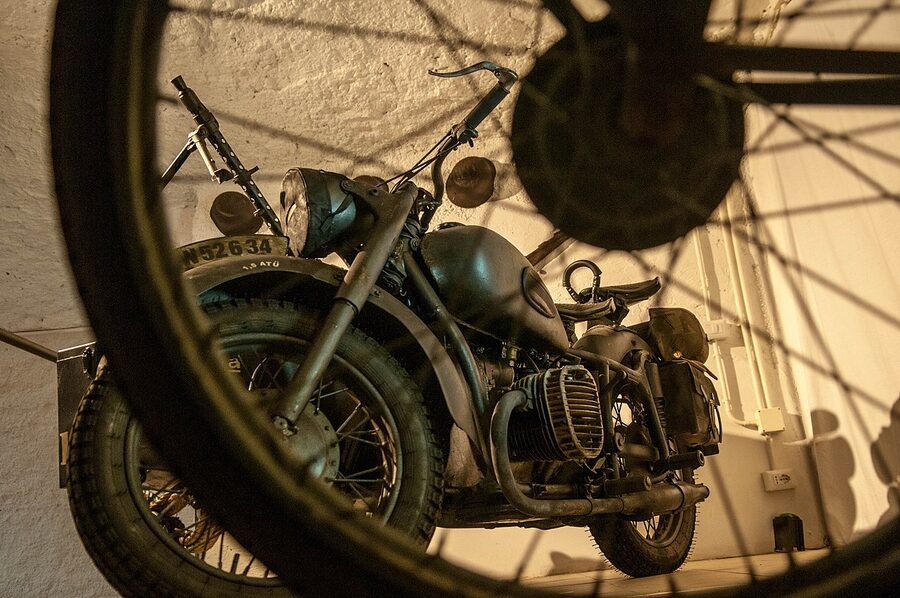
What you walk through today is the layer cake of what came after. There’s the original 1853 royal tunnel section. There’s a 19th-century cistern Alvino’s diggers broke through accidentally and decided to leave standing. There’s the WWII bomb shelter the city installed in 1939 inside the same volume. And there’s the police impound section, where vintage Fiat 500s, Vespas, and 1940s motorcycles confiscated in the 1960s and 1970s sat forgotten until the cooperative cleaned them up and made them part of the visit. It’s the one tour where the most interesting layer is actually the 20th-century one.
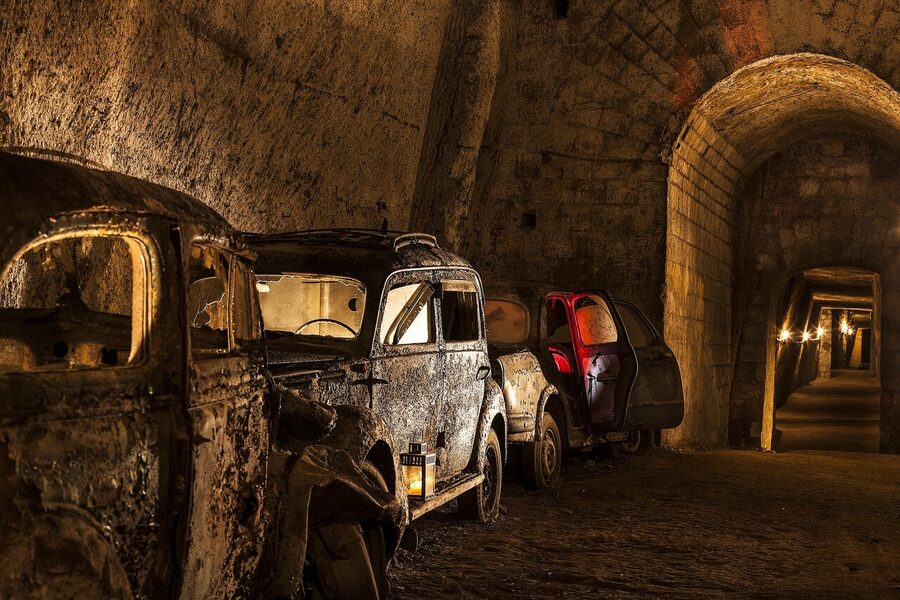
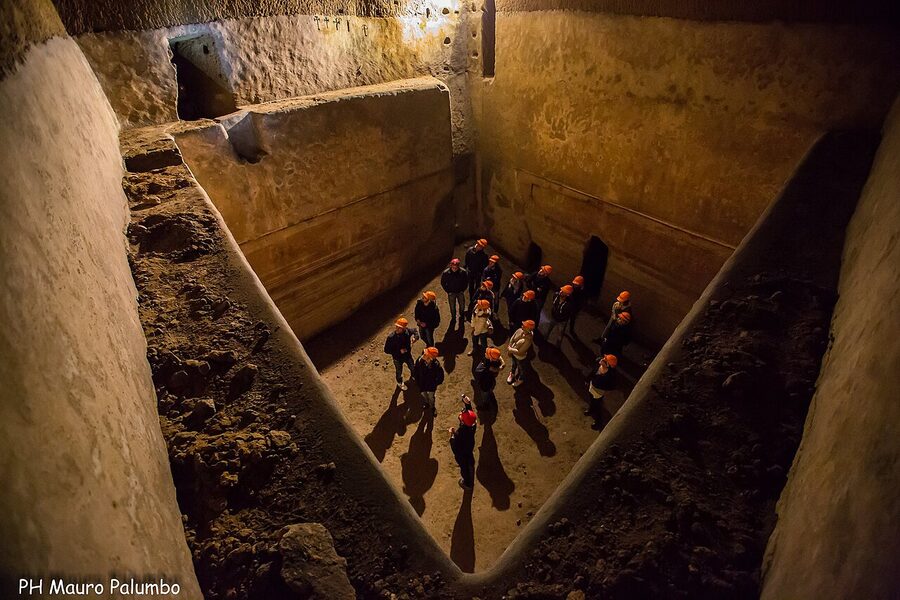
The Bourbon Tunnel runs four routes of varying intensity. The standard is the most accessible underground tour in Naples, and the only one I’d recommend for travellers with reduced mobility. The Via delle Memorie route adds a beautifully restored cistern segment. The Adventure and Speleo Light routes wade through ankle-deep water for short stretches and explore parts of the original Greek aqueduct that fed everything above. Always check the meeting point when you book, the four routes start in three different places.
The Concert in the Dark
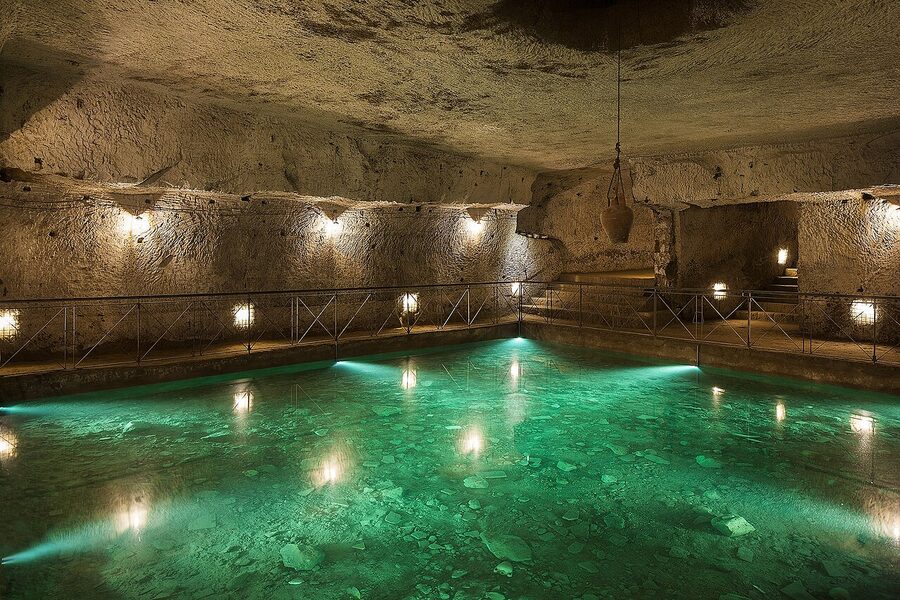
If you happen to be in Naples on a Saturday evening when one is scheduled, the Bourbon Tunnel hosts classical concerts in pitch-black darkness inside one of the larger cisterns. They sit you on benches, kill every light in the cavern, and a string quartet plays without you being able to see them or each other. I went once and lost track of which way I was facing within five minutes. Tickets sell out two months ahead. It’s not what you book a normal Naples weekend around, but if the timing works it’s the most memorable hour you’ll have in this city.
Getting underground without the friction
Book ahead. All three tours sell out for the popular afternoon slots, especially May to October. The Piazza San Gaetano tour usually has spots morning of, the Bourbon Tunnel less reliably. Spanish Quarters runs smaller groups so it’s the one most likely to be sold out same-day. If you’re booking inside 48 hours, default to the morning slots, they refill less aggressively.
Wear closed shoes and a layer. The temperature underground is a flat 15 to 16 degrees year-round. In August that feels great after the street, in February it feels like an English autumn. Tuff steps get slippery where water seeps. Sandals are a bad idea, sneakers are the minimum, hiking boots are overkill.
Don’t try to do all three in one day. Two is the most you can manage without burning out, and the natural pairing is Piazza San Gaetano in the morning, Bourbon Tunnel in the afternoon, with a long lunch break in between. The two Napoli Sotterranea tours overlap in content enough that doing both back to back feels repetitive. Save the Spanish Quarters for a separate day, ideally tied to a pizzeria walk through the historic centre.
Skip on rainy days if you’re claustrophobic. Sounds counterintuitive but the corridors smell stronger and feel closer when the air outside is humid. The dry weeks of late spring and early autumn are the most comfortable time underground.
The catacombs are a separate thing
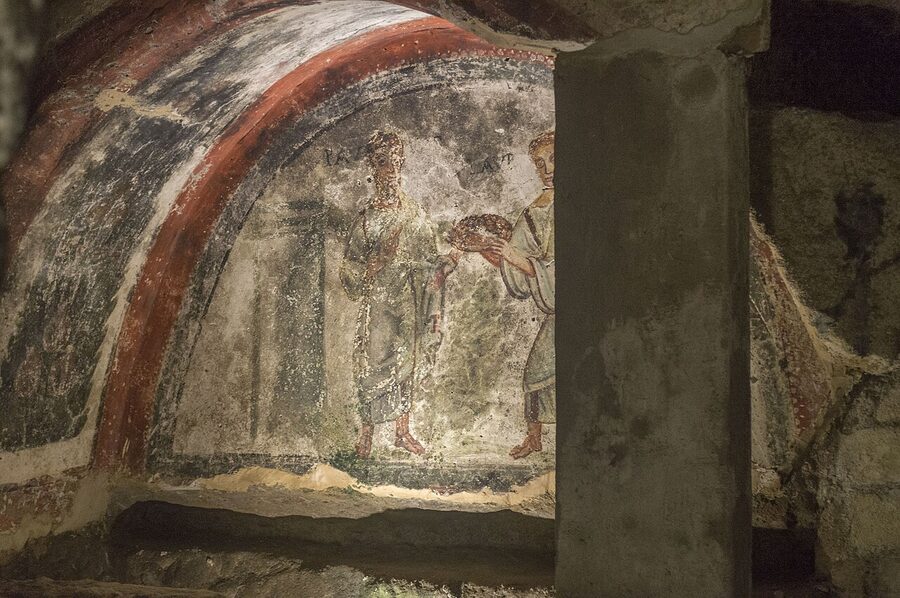
Don’t confuse the underground tours covered above with the catacombs. The aqueduct system and the catacomb system are physically separate, run by different organisations, and tell different stories. The aqueducts are about water and survival. The catacombs are about Christian burial and saints.
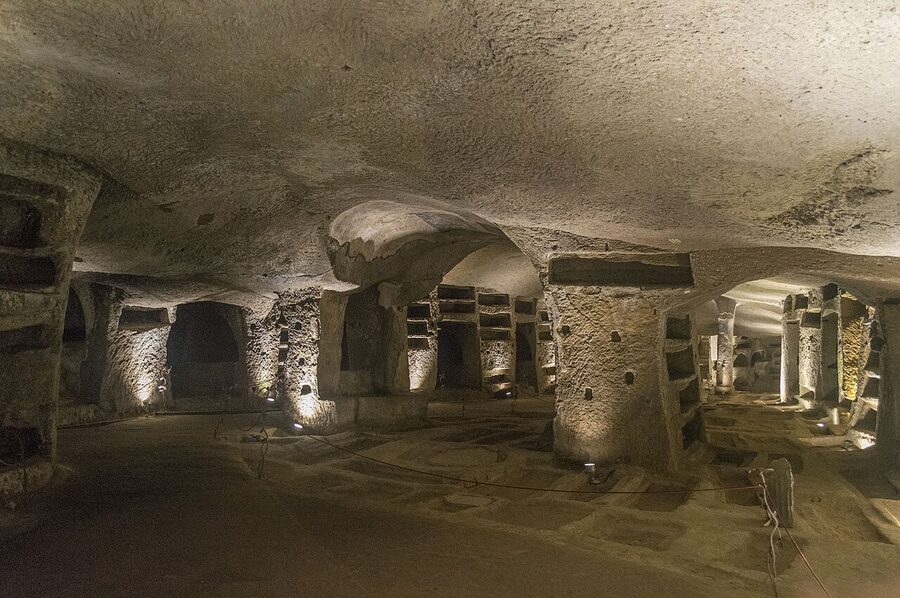
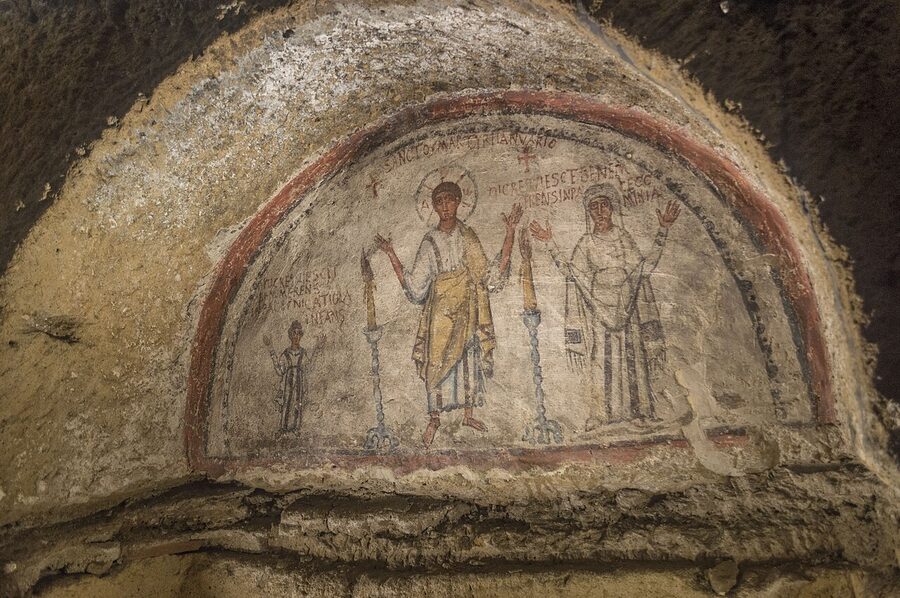
The two main catacombs open to the public, San Gennaro and San Gaudioso, sit just outside the historic centre in the Sanità neighbourhood. We cover them properly in our guide to the Catacombs of San Gennaro, but the short version: if you’ve done the Roman catacombs of Domitilla or San Callisto, the Naples versions feel similar in form, with frescoes you don’t see in Rome, and a much smaller crowd. If you haven’t done either, do one of the underground aqueduct tours first. The catacombs make more sense as a follow-up than as your first dip into Neapolitan stone.
Where San Gaudioso fits
The San Gaudioso catacombs sit under the church of Santa Maria della Sanità in the Sanità district. They’re smaller and creepier than San Gennaro, and the guide will tell you about scolatoi, the niches where bodies were drained before final burial. Not for queasy travellers. They pair well with a stroll through the Sanità, which has some of the best fried pizza in Naples at Isabella De Cham, three blocks from the catacomb entrance.
The Spanish Quarters Underground (separate from the Spanish Quarters tour above)
Confusingly, there’s also a deeper Spanish Quarters Underground experience that goes well below the standard tour route. We’re covering it in detail in our Naples Spanish Quarters Underground guide, but if you’ve already done the Piazza San Gaetano route and want something rawer, that’s the next step. It involves narrow tunnels you wouldn’t see on a standard tour and the cooperative’s hours are erratic.
What to eat between underground stops

You’ll come out of any of these tours hungry in a specific way that demands carbs. Piazza San Gaetano sits two minutes from Gino e Toto Sorbillo on Via dei Tribunali, which is one of the three pizzerias every visiting writer mentions for a reason. Get there at noon for the lunch sitting or 6:30pm for the dinner one, otherwise the queue is real. The Bourbon Tunnel exit on Vico del Grottone puts you ten minutes from Da Michele if you walk south, and Da Michele’s queue is also real but the line moves and the marinara is worth it. If you’ve timed the Spanish Quarters tour for late morning, walk into the Quartieri proper for lunch at any of the small tavola calda joints on Via Speranzella, none of which have signs in English.

If pizza isn’t the move, you’re after one of the underground sites’ specialty: cuoppo napoletano, a paper cone of fried street food sold from holes in the wall around the tour entrances. La Masardona near Piazza Garibaldi does the canonical version, but the small place at the corner of Via dei Tribunali and Via Atri does the same thing two minutes from Piazza San Gaetano. Three euros, eat standing up, leave nothing.
The three tours, ranked for first-timers
I’ve sorted these by what most first-time visitors should book if they’re booking only one. Each card has links to our full review and the affiliate booking page. Pricing was current the week before publication and varies seasonally.
1. Napoli Sotterranea Piazza San Gaetano: $21
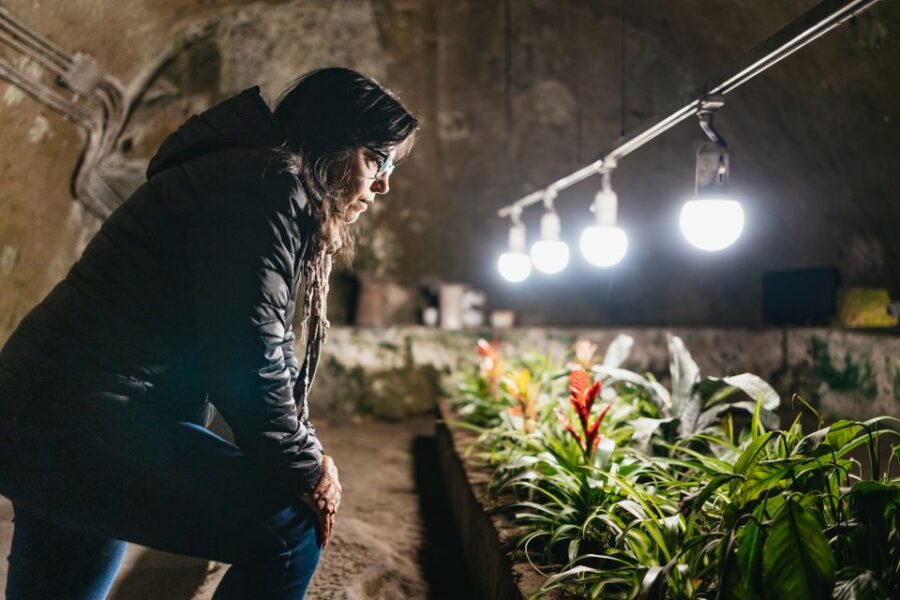
This is the one to book if you only book one. The 90 minutes include all three historical layers and finish above ground at the small Roman theatre, and our full review covers the guide quality and what to expect on the steeper sections. Skip if you can’t manage 121 stairs.
2. Bourbon Tunnel Guided Tour: $12
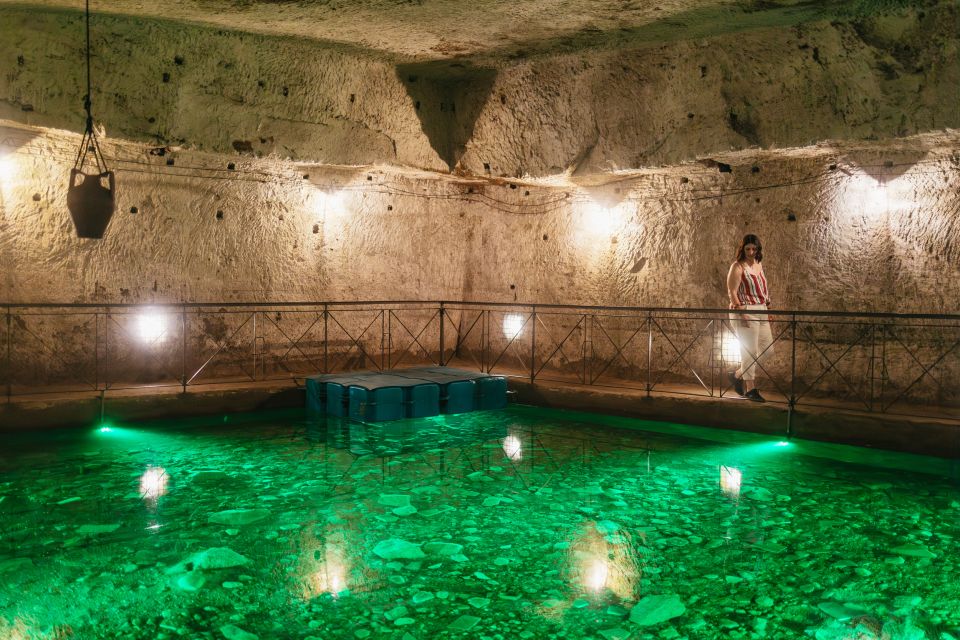
A different kind of underground entirely, less ancient, more 20th century, the only one with vintage cars and a pitch-black-cavern concert season. The standard route works for travellers who can’t do stairs, and our full review breaks down which of the four routes suits which kind of visitor. Book the Adventure or Speleo Light routes only if you don’t mind getting your shoes wet.
3. Spanish Quarters Underground: $17
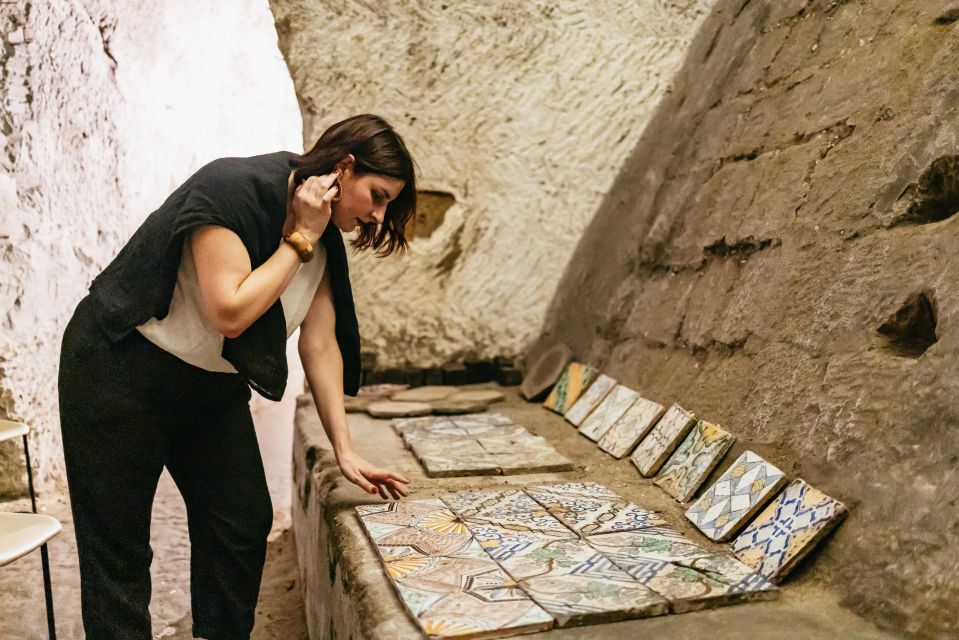
The shorter, quieter alternative starting near Caffè Gambrinus, best for travellers already eating their way through the Quartieri Spagnoli. Our full review covers the guide turnover (it varies more than the other two tours) and what to expect from the WWII inscription chamber. Pair this with lunch in the Spanish Quarters proper, not with the Piazza San Gaetano tour.
If you came to Naples for one underground tour, what else should you fit in?
Naples is the rare Italian city that rewards rough planning over careful itineraries. After the Underground there are obvious follow-ups. Spend the morning underground and the afternoon eating, our take on the city’s pizzerias is in the first pizza you eat in Naples guide. If you’re using the city as a base, the pairing most travellers go for is one underground morning and one ruins day at Pompeii, which sits 25 minutes by Circumvesuviana from Napoli Centrale. The geography rhymes: Pompeii is the city that got buried in 79 CE, Naples is the city that kept building over its own buried versions, the volcano is the same one. And if you have a third day, the bus down to the Amalfi Coast is the standard escape.