
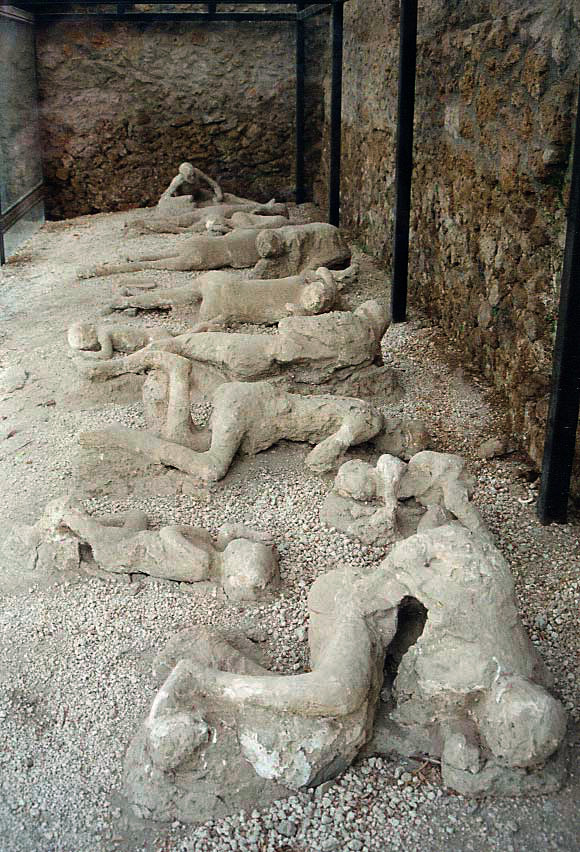
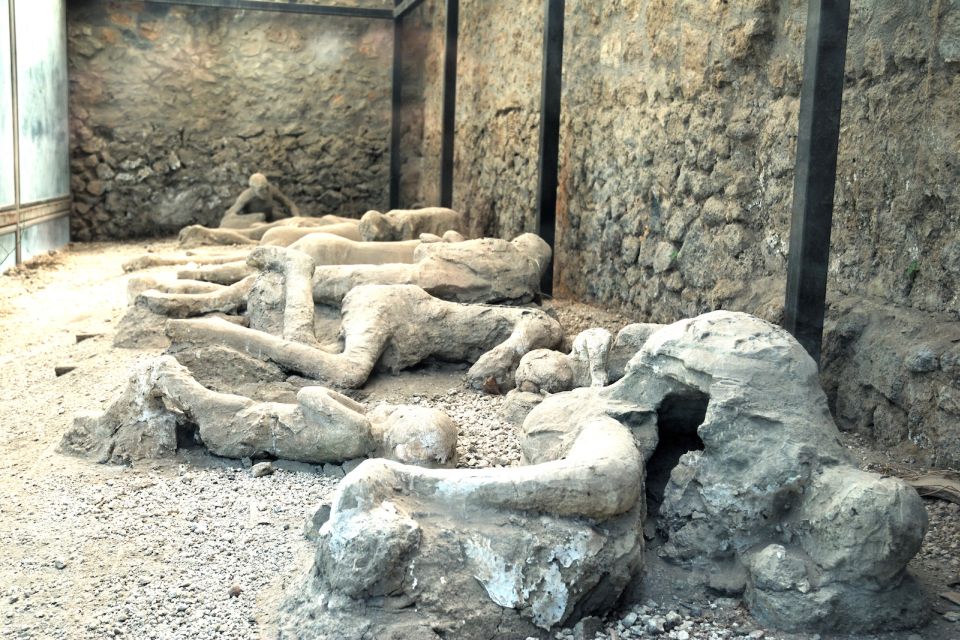
The plaster casts in the Garden of the Fugitives are arranged in a row inside a low glass case, thirteen people who tried to outrun the second pyroclastic surge on the morning of October 25, 79 AD and almost made it. A child curls into an adult. Two figures lie face down with arms thrown over their heads. They are not skeletons; they are voids in the ash that archaeologists filled with plaster in the 1860s, then peeled away the rock to find the exact shape of a person at the moment they died. You can stand half a metre from them. Pompeii is full of moments like this, but this one is what people mean when they say the city is not a ruin. It is a record. Unlike the Colosseum or the half-buried fortifications of Carcassonne, where you reconstruct an event in your head from a stone shell, here you stand inside the event itself.
You have a half day. The site is the size of a small medieval town, you will not see all of it, and that is fine. What follows is how to get a real ticket, what to actually walk to in three to four hours on the ground, and which guided option is worth the upgrade.
If you only have ten minutes to book
Best small-group with a real archaeologist: Pompeii Small-Group Tour With an Archaeologist ($40). The upgrade that pays off.
Best larger guided tour: Pompeii Entry Ticket and Guided Tour With an Archaeologist ($35). The most-booked option on the site.
Best self-guided: Pompeii Entry Ticket With Optional Audio Guide ($26). Set your own pace.
What a Pompeii ticket actually buys you
The official ticket office is pompeiisites.org, and from March 2026 the only authorised online vendor is vivaticket.com. Anyone else selling Pompeii tickets is reselling at a markup. There are three ticket tiers and most visitors only need the cheapest one.
- Pompeii Express €20: the standard ticket, ancient city only, no suburban villas. This is what most people want for a half-day visit.
- Pompeii+ €25: adds the Villa of the Mysteries and Villa of Diomedes (suburban villas reached by shuttle bus). Worth it if you specifically want the famous Dionysiac fresco room.
- Pompeii Plus €30: three-day combined entry to Pompeii plus Oplontis, Stabiae and Boscoreale. Only useful if you have multiple days in the area.
- Reduced €2: for EU citizens aged 18 to 25.
Tickets are personal and dated; the daily cap is 20,000 visitors, with 15,000 of those allocated to the morning slot (9 am to 1 pm) and 5,000 to the afternoon (1 pm to 5:30 pm). If you turn up without a ticket on a hot July Tuesday at 11 am, you may not get in. Book online the night before at minimum. The same booking-system logic applies to the Vatican Museums and the Colosseum, but Pompeii’s cap is harder than Rome’s because the site is open-air and the time slots are enforced.
Why the official price keeps creeping up
The Pompeii Express ticket was €16 a few years ago and is now €20. The Archaeological Park has been steadily upgrading the site (new excavations in Regio V opened in 2024, more access to closed houses, the Artebus shuttle running between the suburban villas) and the price reflects that. By the standards of European headline monuments it is still cheap. The Colosseum is €18 for less than half the ground area; the Uffizi is €25 for two hours of paintings; Córdoba’s Mezquita charges €13 for a building you can walk in twenty minutes; the Alhambra Nasrid Palaces are €19 with a hard time-slot of half an hour. Pompeii is genuinely one of the best ticket-value experiences in Italy.
Half a day is enough if you have a route
People who do this badly walk in at 11 am, drift through the Forum, get lost in a residential block, and leave dehydrated three hours later having seen maybe a tenth of what they came for. People who do it well arrive at 9:00 sharp through the Porta Marina entrance with a ticket on their phone, walk a planned circuit, and stop for water in the shade twice. Three to four hours is enough for the highlights if you do not get lost.
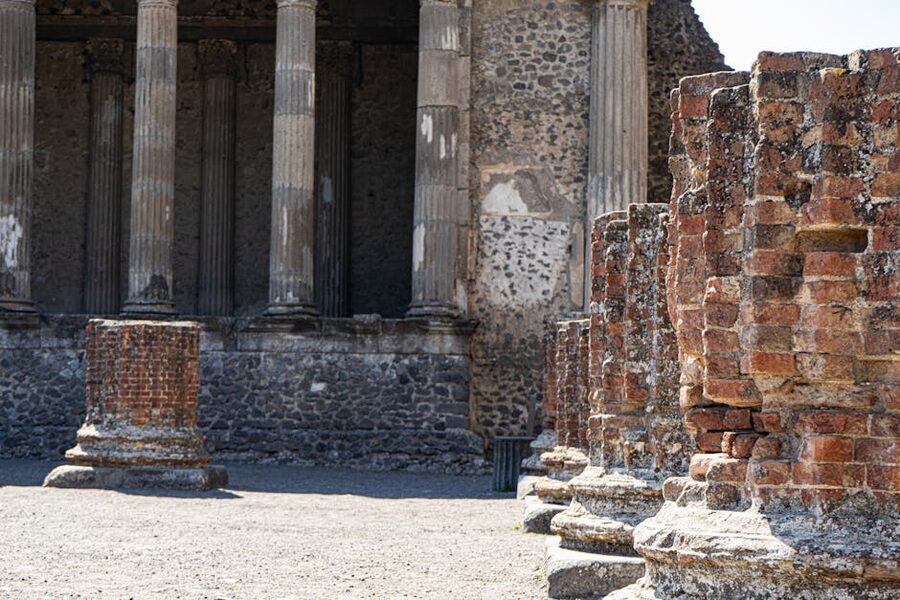
The route that works for a half day, in order:
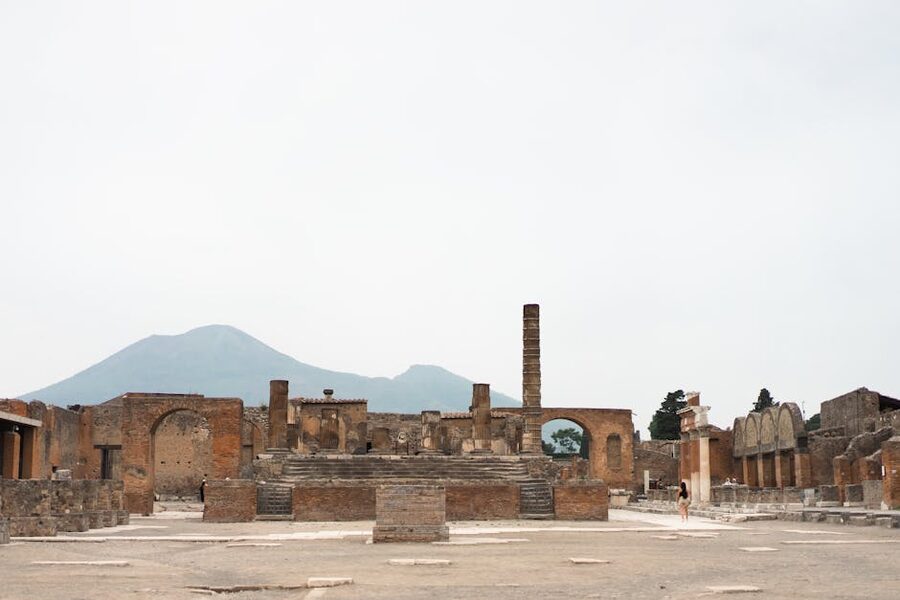
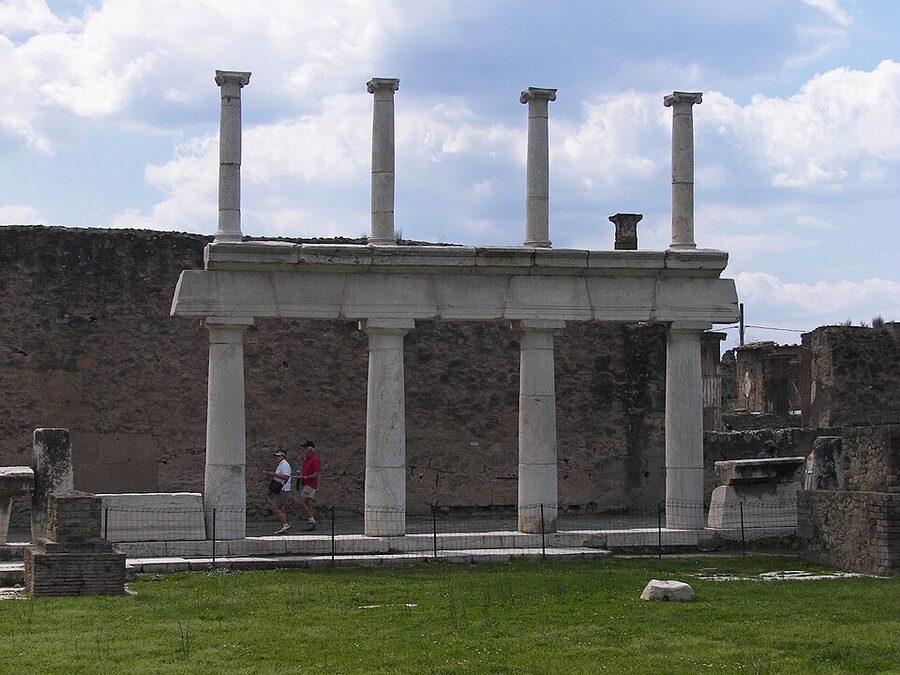
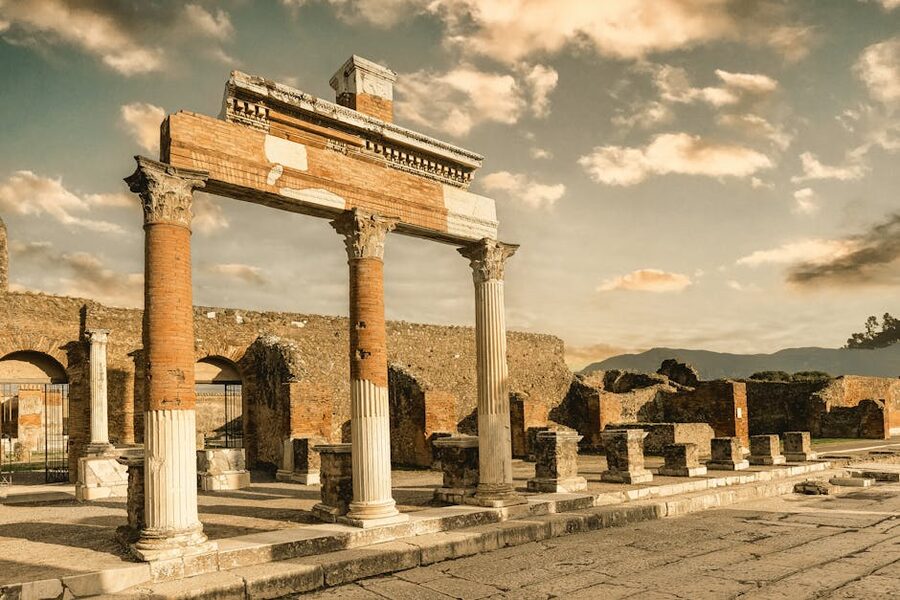
- Forum and Temple of Apollo: start here. Civic centre, the volcano view, the columns.
- Stabian Baths: the best-preserved Roman bath complex anywhere. Hot, warm, cold pools all visible, the underfloor heating system intact.
- Vicolo del Lupanare: the brothel with the painted price-list frescoes above each cell. Tiny, often a queue, worth waiting.
- House of the Faun and House of the Vettii: the two grand residences. The Vettii reopened in 2023 after twenty years closed for restoration.
- Bakery in Regio VII: lava-stone millstones still in place, the brick oven still intact. Easy to walk past if you do not know what you are looking at.
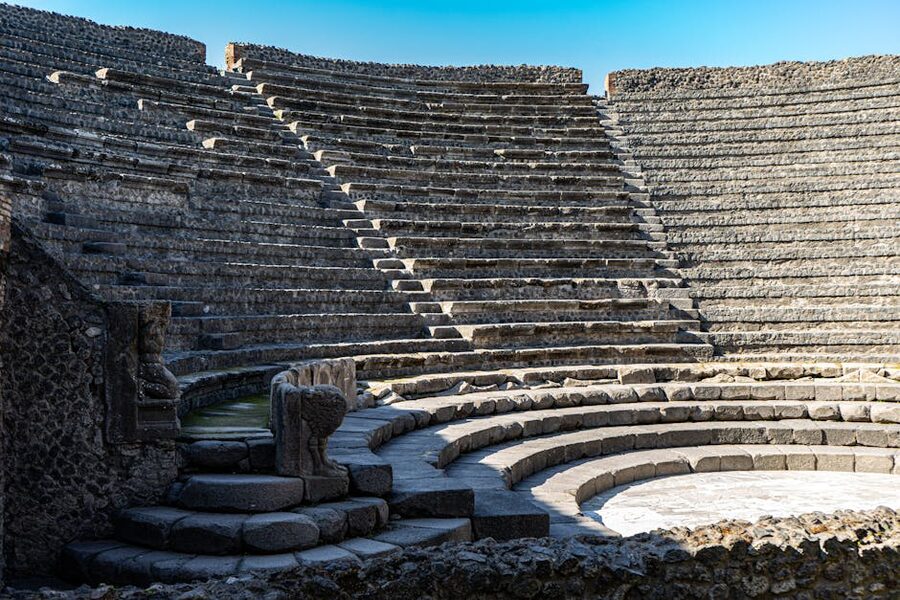
- Amphitheatre and Garden of the Fugitives: at the far end of the site. Save these for last so you finish with the casts.
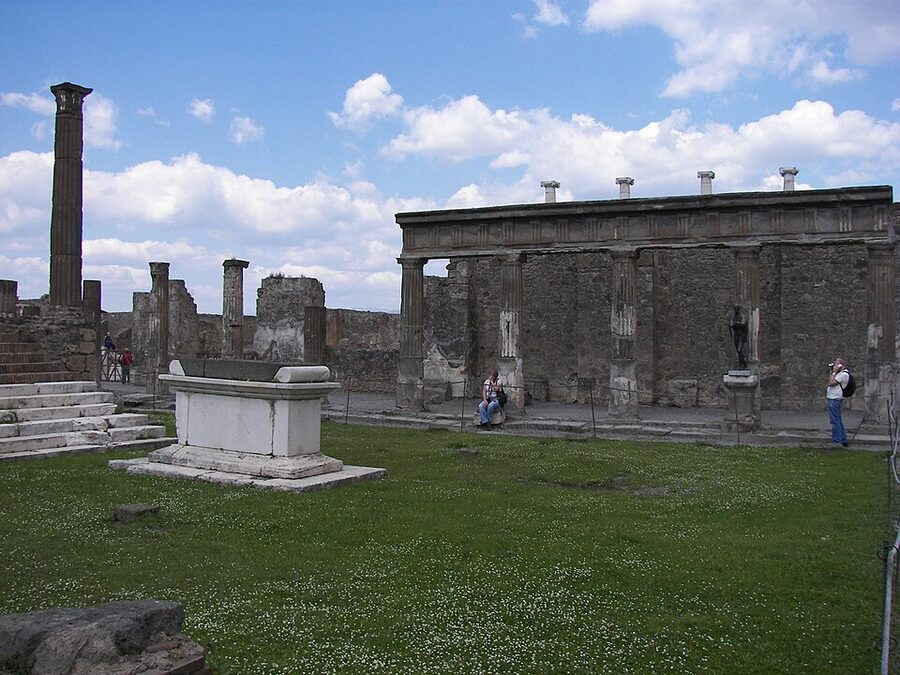
If you have the Pompeii+ ticket, add the Villa of the Mysteries at the end via the Artebus shuttle (free with the ticket, runs from Porta Marina). The villa is a fifteen-minute walk outside the main site, which is why most half-day visitors skip it. Do not skip it if you came for the Dionysiac frescoes specifically. The painting in that one room is on a level with the best fresco rooms in the Uffizi or the Last Supper refectory in Milan, with the difference that you can almost reach out and touch it.
The brothel and the bakery, ten minutes apart
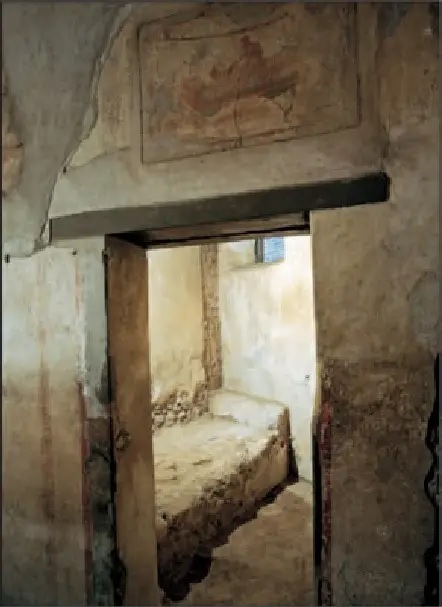
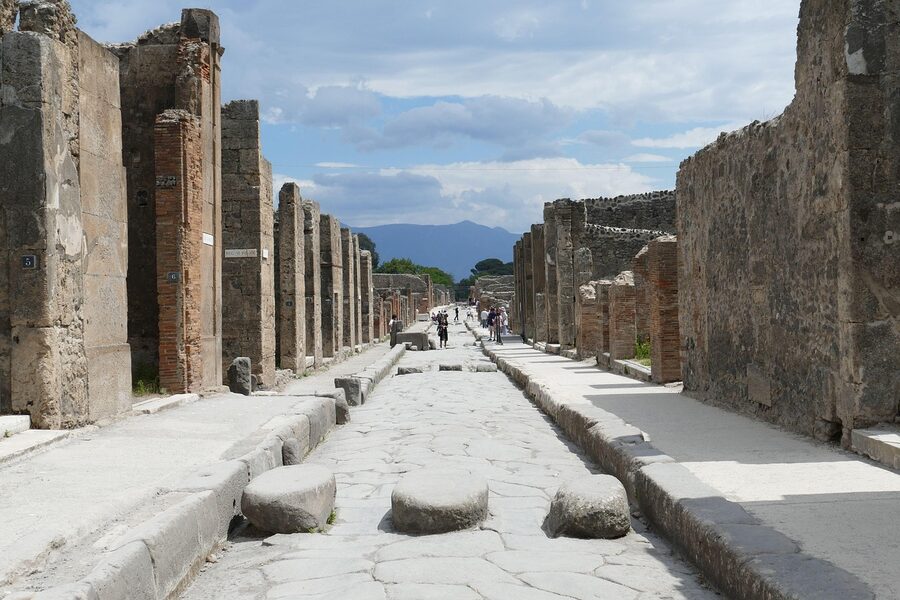
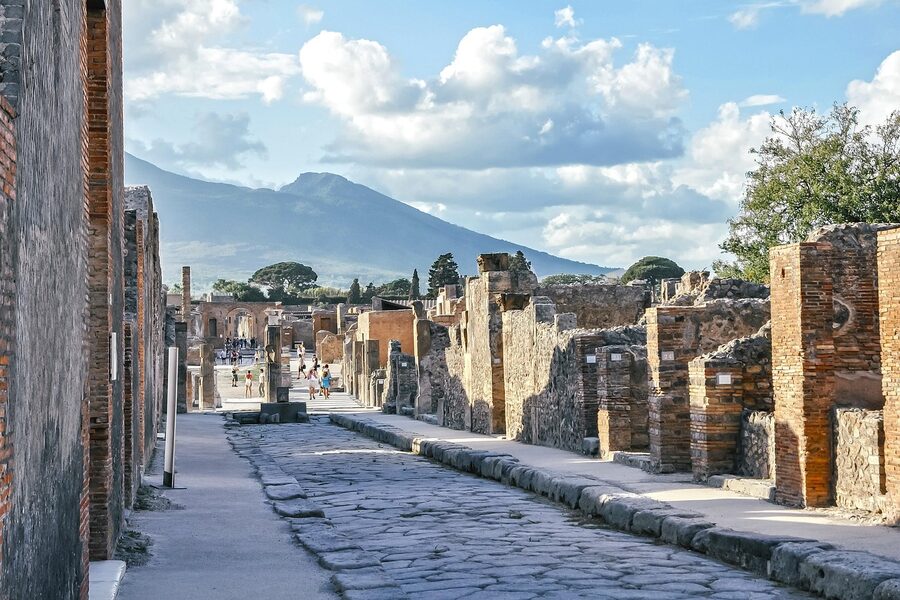
The Lupanar in Vicolo del Lupanare is the most-visited single building in Pompeii, partly because the painted price-list frescoes are intact and partly because it has been on the must-see list since the Grand Tour. There is usually a short queue and a flow-control attendant. The bakery in Regio VII a few streets north is the opposite: nobody queues, most people walk past, and the original lava-stone millstones (the donkey-driven mola asinaria) are still standing where the baker left them. The bread oven would have been firing the morning of the eruption.
This is the Pompeii rhythm, by the way. Famous house with a queue, then a working-class detail in the next block that most people miss. The site rewards patience over completionism.
Guided versus self-guided: when each one is worth it
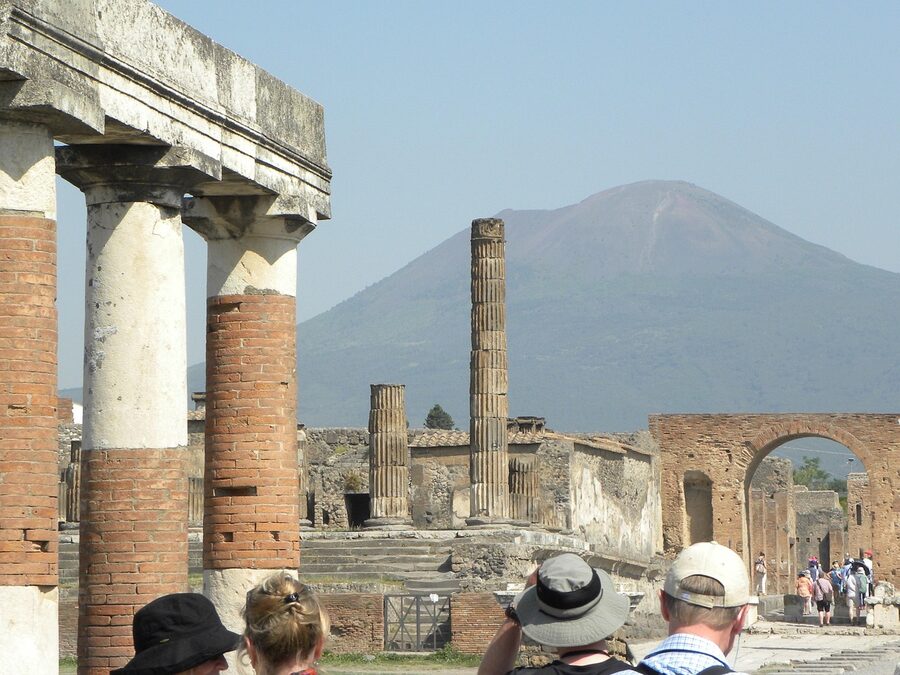
If you have read Mary Beard’s Pompeii: The Life of a Roman Town and you know your Pliny from your Pliny the Younger, a self-guided audio ticket is fine. The site has decent signage and the GetYourGuide audio guide is enough to fill in the gaps. You will save the €15 to €25 difference and you set your own pace.
If you have not done the homework, take the guided tour. Pompeii without context is genuinely a pile of rocks; with a good guide it is the best history experience in Italy. The same logic applies to a place like the Normandy D-Day beaches or the Anne Frank walking tour in Amsterdam: the bare landscape says little, the guide reconstructs the day. The small-group archaeologist tour is the upgrade that consistently delivers, more so than a guided ticket at the Borghese or a guided Palazzo Vecchio tour, because the site is less self-explanatory. A painting tells you it is a painting. A bakery floor tells you nothing unless someone explains what a mola asinaria is.
The guides who hawk services at the entrance are a different matter. Skip them. They are usually unlicensed, often cash-only, and the quality is wildly inconsistent. Book online before you go.
Top tours to book
1. Pompeii Small-Group Tour With an Archaeologist: $40
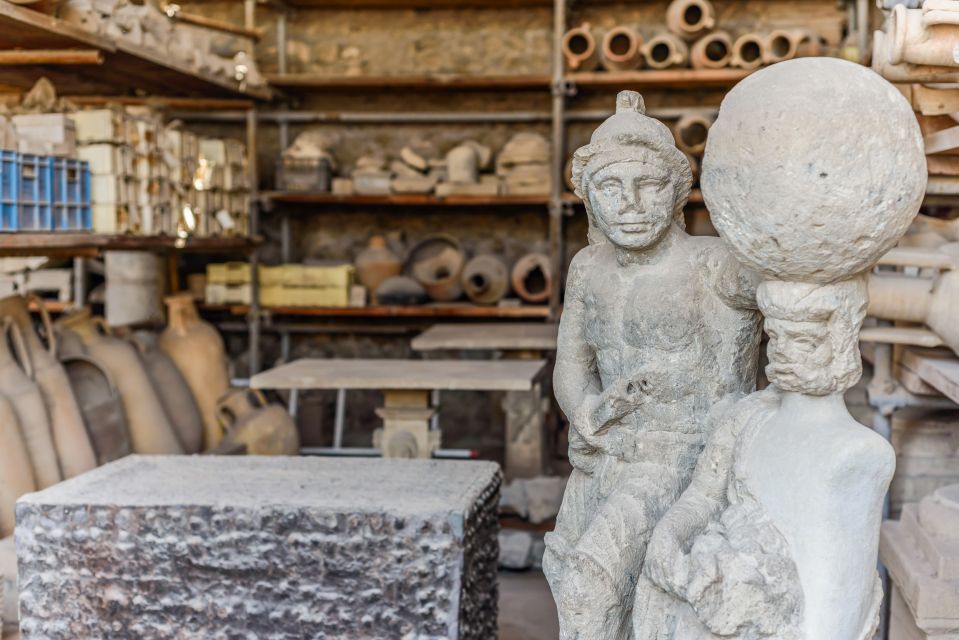
This is the upgrade that earns its money. The group is small enough that you can hear the guide without a headset and ask actual questions, and the archaeologist credentials mean you get the genuine “this fresco was painted in the Fourth Style around 60 AD” detail rather than tourist-grade trivia. Our full review covers what the small-group format actually feels like on the ground.
2. Pompeii Entry Ticket and Guided Tour With an Archaeologist: $35
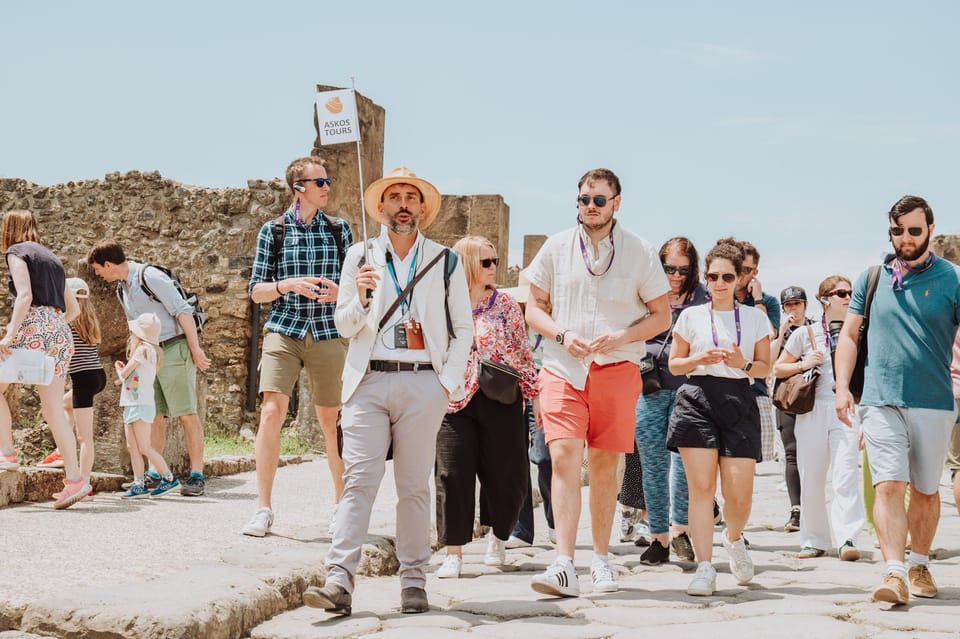
The most-booked Pompeii tour anywhere, and a sensible default if the small-group is sold out or your dates are tight. The archaeologist guides are the same quality; you just stand a little further back. Our review breaks down what the larger group format trades off versus the small-group upgrade.
3. Pompeii Entry Ticket With Optional Audio Guide: $26
The right pick if you have done the reading and want to walk at your own speed. The audio guide is decent rather than excellent; pair it with Mary Beard’s book on the train down and you will not need a human guide. Our review notes where the audio coverage thins out (the suburban villas mostly).
Getting there from Naples or Sorrento
Pompei Scavi-Villa dei Misteri is the only station you want. Two routes get you there:
- Circumvesuviana train: from Naples Garibaldi or Sorrento, about €3.20 each way, 35 minutes from Naples. Frequent but old, often crowded, frequently delayed. Not pickpocket-free.
- Campania Express: same line but tourist service, about €15 round trip, faster and cleaner. Only a few departures per day so book ahead.
If you are based in Naples and pairing Pompeii with another archaeological stop, do Naples Underground the day before or after; the buried-city contrast is genuinely useful. Naples kept building on top of the Greco-Roman city without burying it; Pompeii had the city sealed in ash in a single afternoon. Two opposite ways the same volcanic geology shaped the same coast.
For a fuller day, most people pair Pompeii with Mount Vesuvius: bus from outside the Pompei Scavi station, walk to the crater rim. The half-day Pompeii itinerary above leaves you back in Naples by 2 pm; you can do the volcano in the afternoon if you are keen. If you want a slower day, base in Sorrento or the Amalfi Coast and use the Campania Express for the morning, then lunch back at the coast.
Eating without getting fleeced
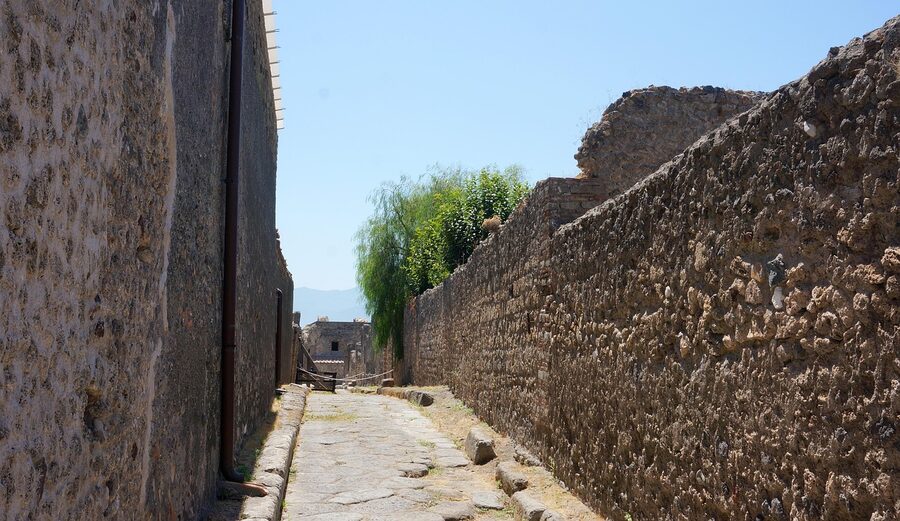
The restaurants directly outside the Porta Marina entrance are tourist traps. The food is fine, the prices are not, and the service tells you exactly what they think of you. Two better moves:
- Picnic inside: you are allowed to bring food into the site. Stop at any salumeria in the modern Pompei town for a panino with prosciutto crudo or salame for about €4. Pick a bench inside the Forum or near the amphitheatre.
- Eat in Naples afterwards: the train is half an hour and Naples is the best pizza city in Italy by a wide margin. The first pizza you eat in Naples is a different food category from anything served outside it. Where to actually go and what to order covers the famous places and the better-than-famous places.
If you must eat near the site, Caupona serves food based on Pompeian recipes (the garum-based pasta is the genuinely interesting dish) and is half a block off the main tourist run. About €15 a head for two courses.
What to actually look at
The Villa of the Mysteries fresco room
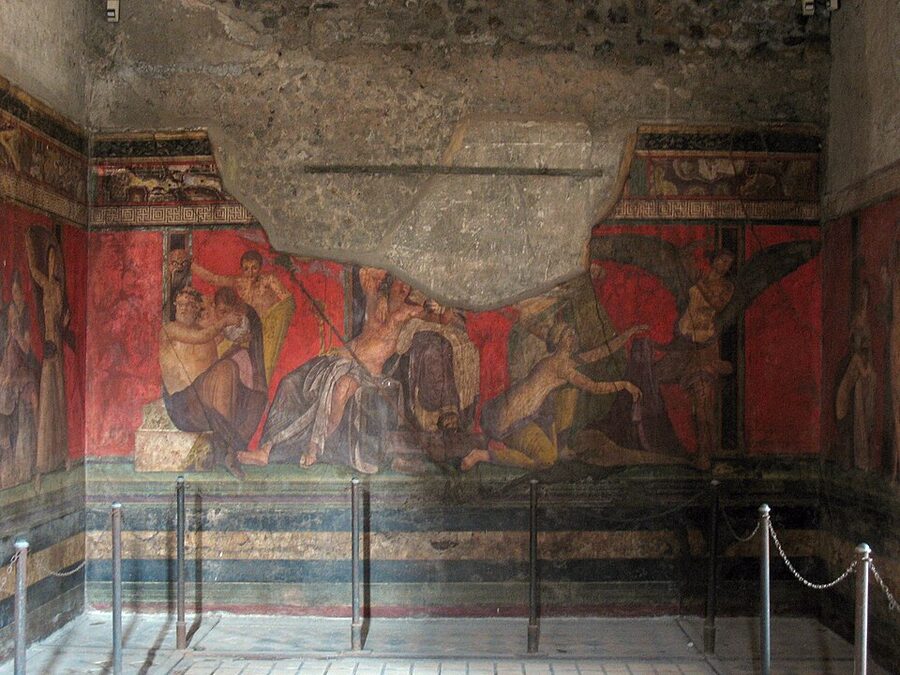
If you upgrade to the Pompeii+ ticket, this is the reason. A continuous frieze of life-sized figures runs around three walls of a single room: a woman being initiated into the Dionysian mystery cult, a satyr, a winged figure flogging a kneeling girl, the god himself. It is the best-preserved large-scale Roman painting that survives anywhere. You walk in expecting a flat reproduction and find yourself in a room that has not changed since 50 BC.
The plaster casts
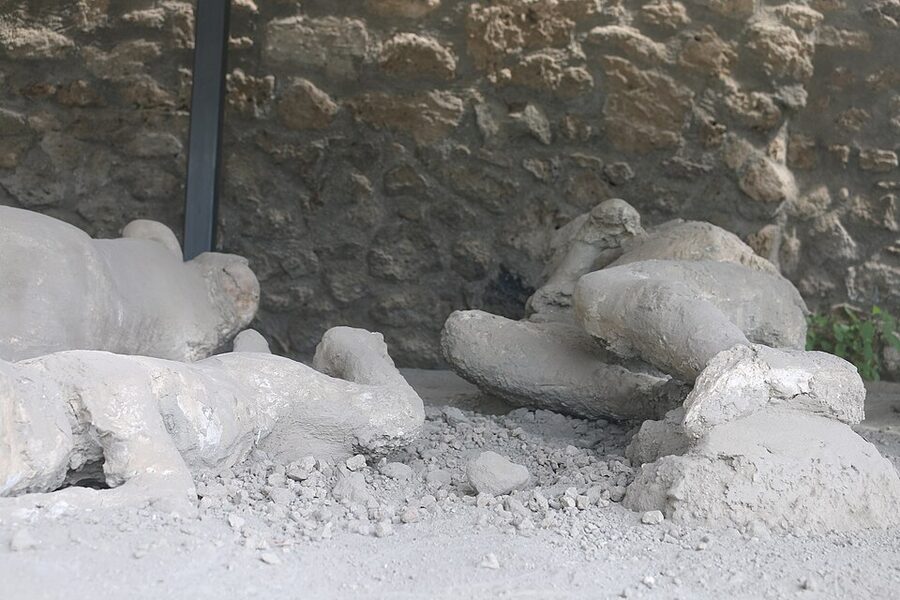
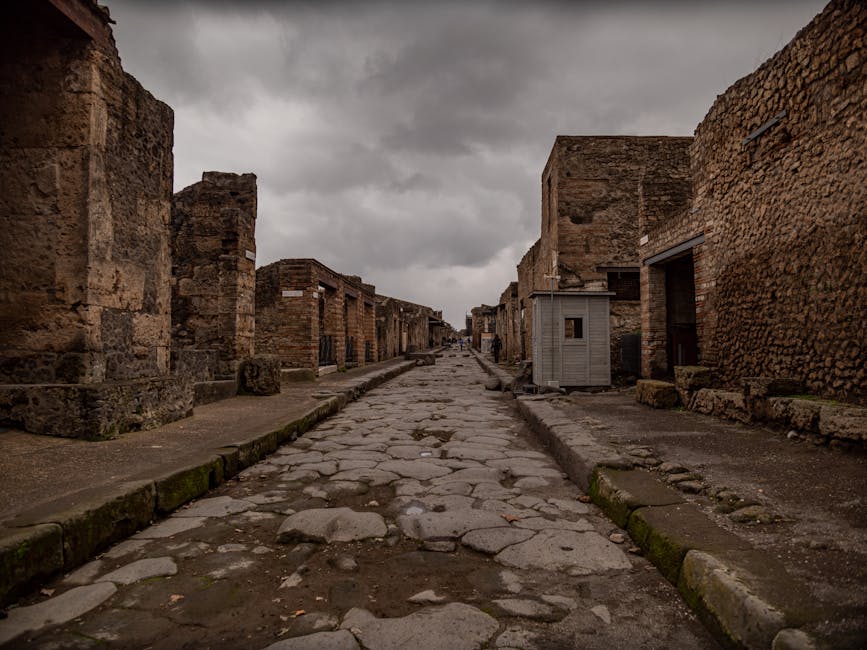
You will see plaster casts in three places: the Garden of the Fugitives, the Stabian Baths display, and a small group near the Forum granary. The Garden of the Fugitives group is the most affecting. They were caught by the second pyroclastic surge, the one that killed everyone still in the city; the temperature at ground level for those few seconds was around 300 degrees Celsius. Most of the casts you see are children and women. The men had mostly fled the day before in the first eruption phase.
Frescoes that survived a volcano
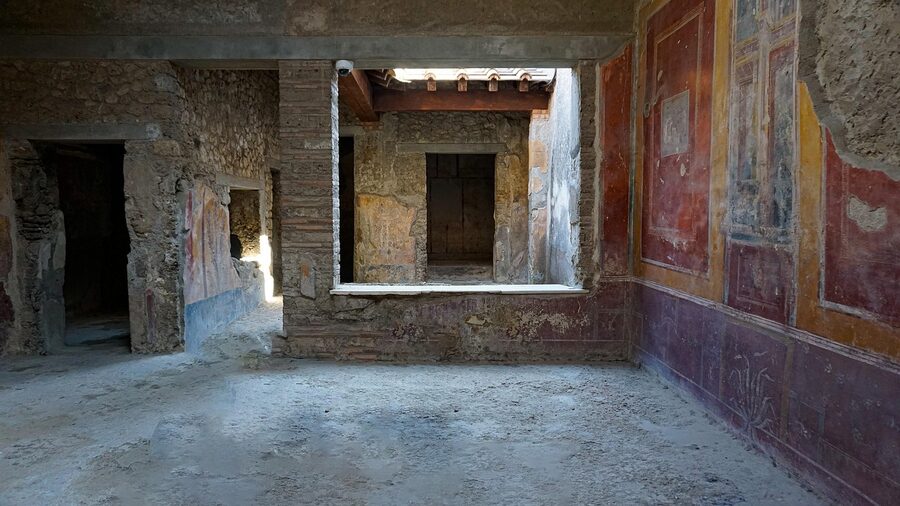
The walls in the House of the Vettii, the House of the Tragic Poet and the Villa of the Mysteries still carry the original wall paintings. The Vettii in particular is overwhelming. Two former slaves built a residence covered in mythological scenes, a famous fresco of Priapus weighing his phallus against a bag of gold, and a peristyle garden replanted from charred root remains. It reopened in 2023 after twenty years closed for restoration; do not assume it is closed because the guidebook says so.
Practical things nobody tells you
- The site is hot. No shade in the open spaces, full sun on the stone. May, June and September are bearable; July and August are punishing. Start at 9 am, leave by 1 pm in summer.
- Drinking fountains work. There are functioning Roman-era fountains across the site, plus modern taps near the Forum and amphitheatre. Bring an empty bottle.
- Toilets are at the entrances and one mid-site. Use them when you see them.
- Strollers are difficult. The polygonal paving stones make wheel access miserable. A baby carrier works better than a stroller.
- Many houses are closed on rotation. The Vettii is open, the Faun is open, but a third of the named houses are typically locked on any given day. Check the official site map the night before.
- The site has wifi but it is unreliable. Download maps and audio guides before you go in.
If Pompeii is your gateway to the rest of Campania
You have got the buried Roman city. The natural pairings are the volcano that did the burying, the layered city of Naples for the underground contrast, and a slow day on the Amalfi Coast if you want to recover from a hard morning of stone and sun. And if you came down from Rome and you have not yet eaten in Naples, fix that on the way back. The first margherita you eat there is the one you will remember.