
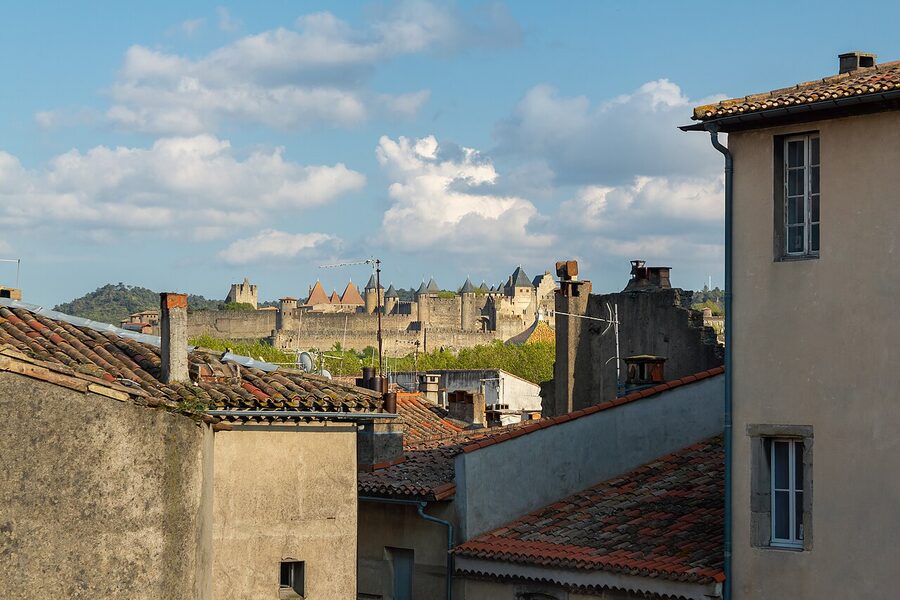
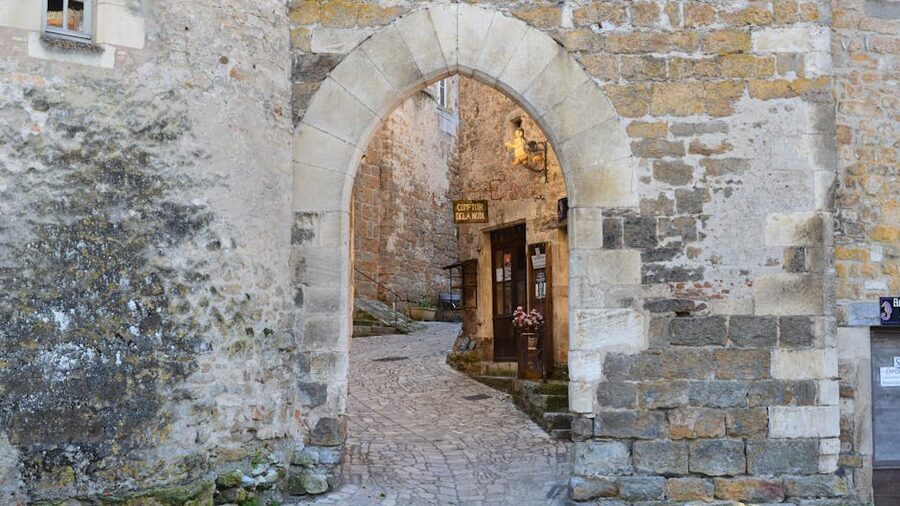
Walk through the Porte Narbonnaise at sunset, when the coach groups have left and the flagstones are still warm from the day, and Carcassonne does the trick it has done since the 12th century. The towers throw long shadows down the cobbled lane. The basilica’s stained glass catches the last light. You can stand in the lower courtyard, ringed by 52 stone towers and 3 kilometres of double walls, and forget for a moment that almost everything overhead with a pointed grey roof is a 19th-century invention.
That last part is the article. Carcassonne is the largest fortified medieval city still inhabited in Europe, with Roman foundations from the 1st century BC, Visigothic walls from the 5th, Carolingian work from the 9th, and a French royal expansion under Louis IX in the 13th. It’s also a Eugène Viollet-le-Duc restoration project from 1853 to 1879, the same architect who restored Notre-Dame de Paris and the Sainte-Chapelle in Île de la Cité. The conical roof tiles you photograph from every angle? His addition. Whether they belong on a southern French city is a debate that’s been running for 150 years and is the most interesting thing about visiting.
In a hurry? Three picks for the Cité
- Castle and Ramparts Entry: $15 standard adult. The flagship ticket. Self-guided, includes the Château Comtal museum and the 4km wall walk. Check availability on GetYourGuide.
- Toulouse day trip with audioguide: $35. The cheapest way to do Carcassonne if you’re based in Toulouse and don’t want to drive. Check availability on GetYourGuide.
- Private guided fortress tour: $235 per group. The splurge. A local guide for two or three hours instead of an audio file. Check availability on GetYourGuide.
What you’re actually looking at
The numbers first, because they’re genuinely good. Three kilometres of double walls. Fifty-two towers. Two concentric rings of fortification with a lice (the gap between them) where defenders could be funnelled and trapped. An inner castle, the Château Comtal, with its own moat and drawbridge. A Romanesque-Gothic basilica with stained glass that ranks among the finest 13th-14th century glass in southern France. A population of around 50 inside the walls today, with about 2,500 day-staff feeding the tourism machine.
What you’re walking through is a layered timeline more than a single building. The Romans put down the foundations and the lower courses of stone in the 1st century BC, when Carcaso was a hilltop oppidum on the trade route between the Mediterranean and the Atlantic. The Visigoths added masonry in the 5th and 6th centuries after Rome fell. The Franks and Carolingians thickened the walls in the 9th. The big architectural moment came under Louis IX (Saint Louis) and his son Philip III in the 13th century, after the Albigensian Crusade against the Cathars. They built the outer ring of walls, doubled the defensive depth, and turned Carcassonne into a royal frontier fortress against the Kingdom of Aragon to the south.
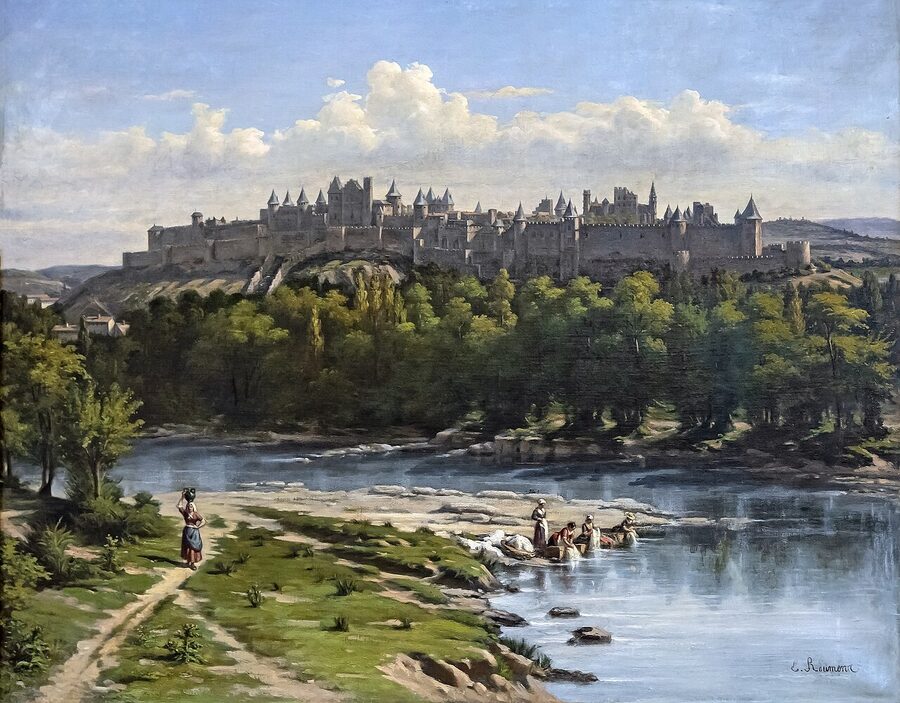
Then the line went quiet. After the 1659 Treaty of the Pyrenees pushed the French border south to Roussillon, Carcassonne stopped being a frontier fortress overnight. The military left. The walls began to crumble. By 1849 the French government had it scheduled for demolition. The stone was going to be sold off, the way half of Rome’s monuments had been quarried for newer buildings.
The man who saved it. And changed it.
The story of why Carcassonne still exists is the story of two people. Jean-Pierre Cros-Mayrevieille was a local antiquarian and historian who spent the 1840s campaigning, lobbying, and writing pamphlets to stop the demolition. He won the argument. Carcassonne was reclassified as a historic monument in 1853. Then the question became what to do with a half-ruined fortress that was salvaged but not safe.
Eugène Viollet-le-Duc was the answer. By the 1850s he was already restoring Notre-Dame de Paris (a 25-year job, mostly faithful, the source of those famous gargoyles he sculpted in afresh) and would later take on Pierrefonds, Vézelay, and Notre-Dame d’Amiens. His Carcassonne project ran from 1853 until his death in 1879. His pupil Paul Boeswillwald continued the work into the 1910s.
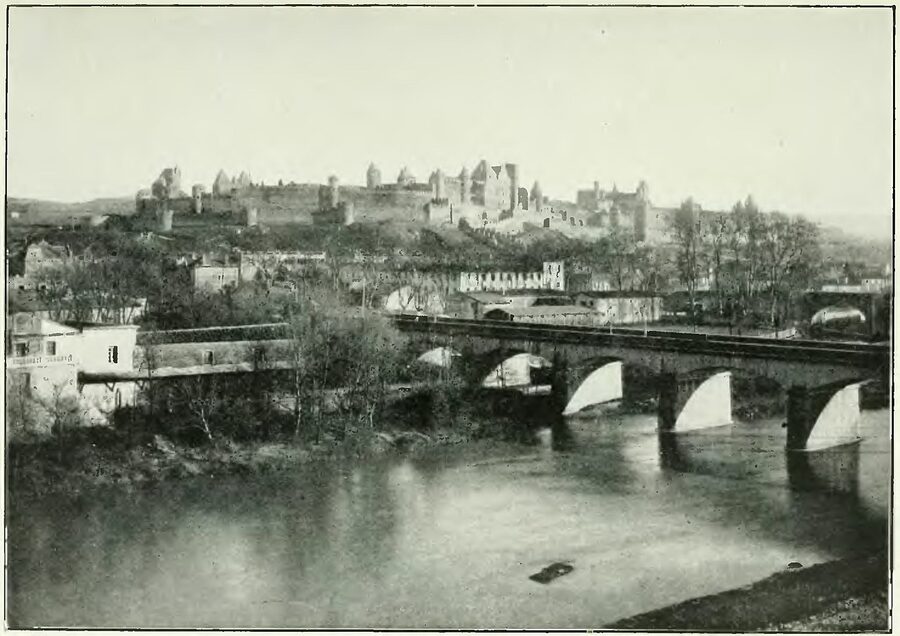
Here’s where it gets interesting. Viollet-le-Duc had a theory of restoration he laid out explicitly: a building should be restored not just to its original state, but to its complete state, including elements that may have been planned but never built. In his own words, restoration meant “to re-establish in a completed state which may never have existed in any given moment.” That’s a philosophy. It’s also a license to invent.
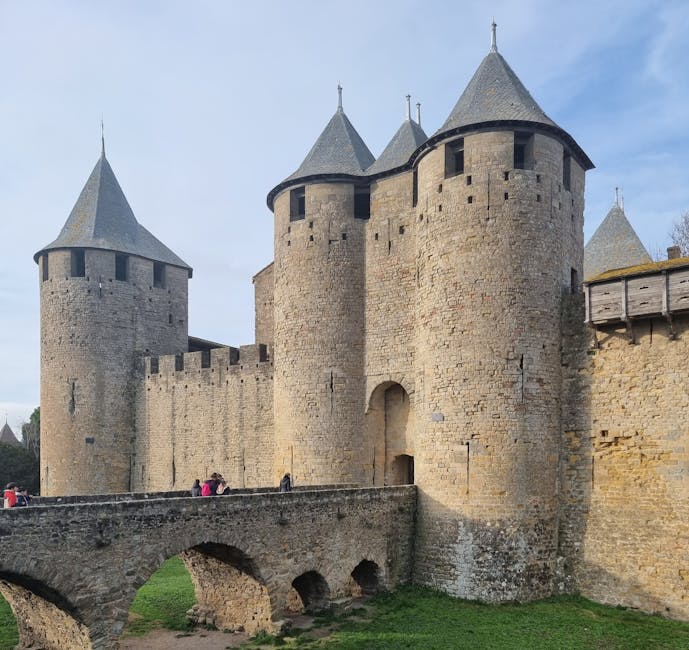
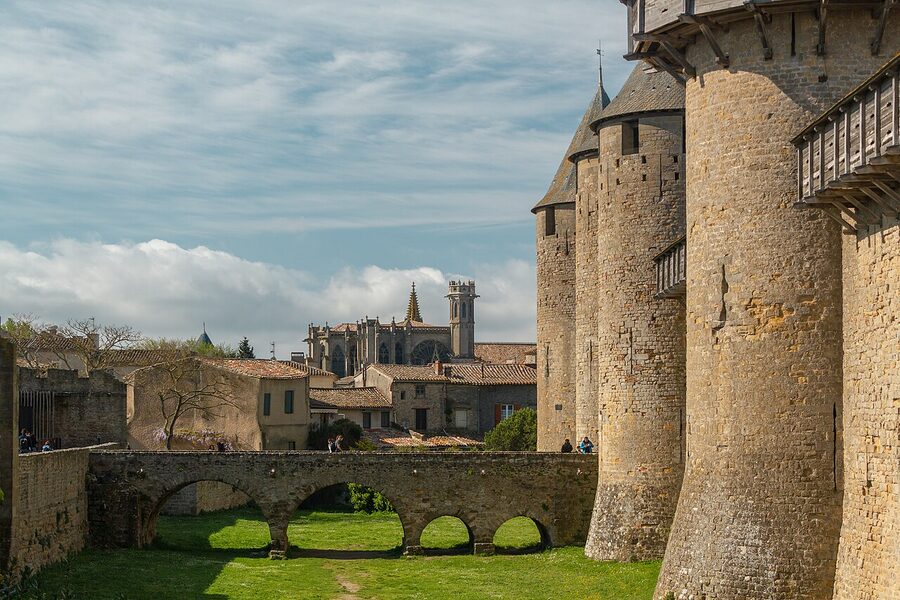
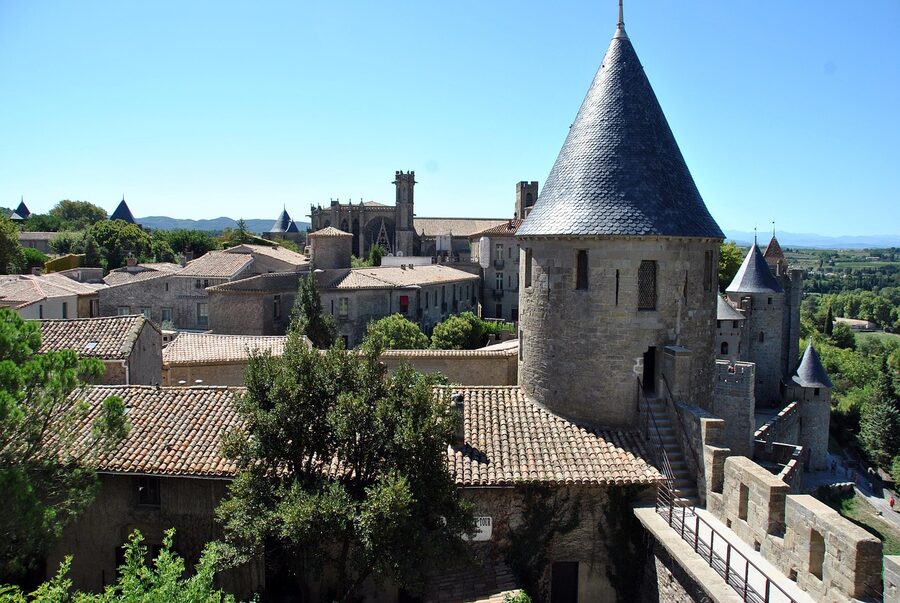
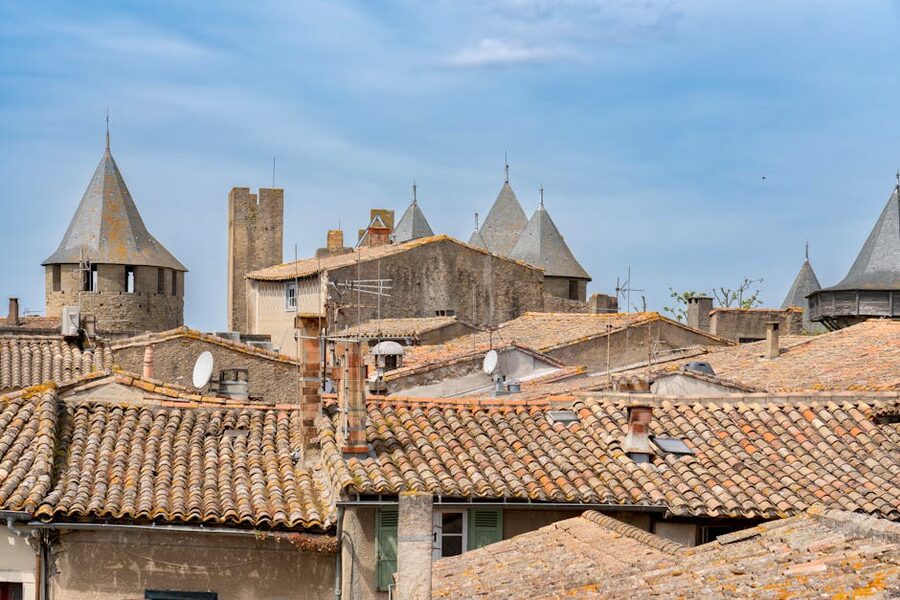
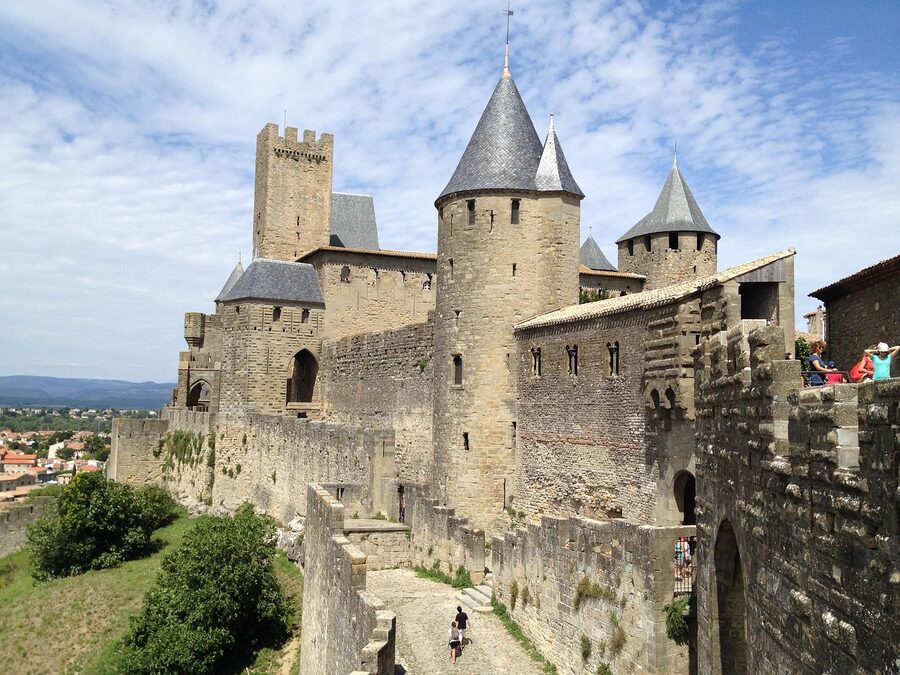
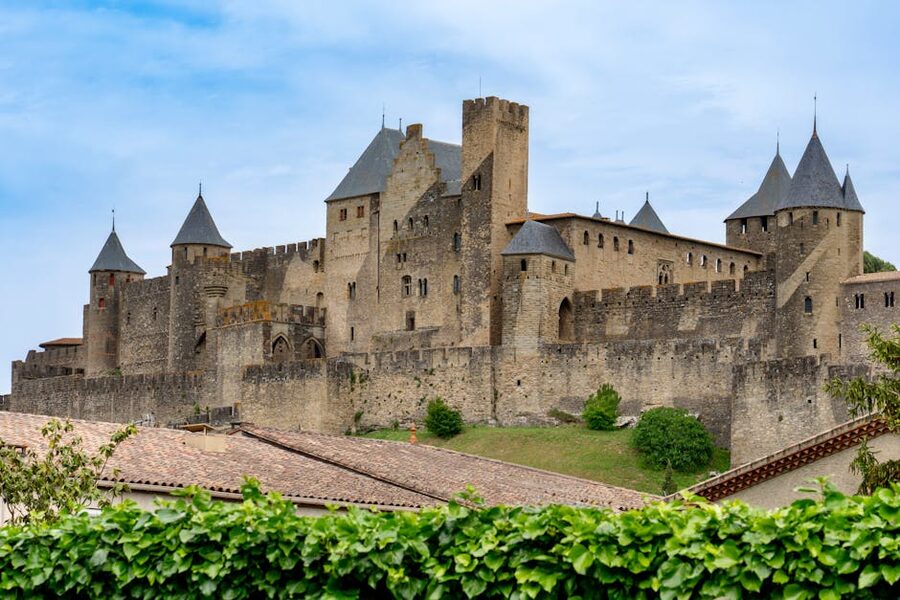
The most famous example at Carcassonne is the conical slate roofs on the towers. Viollet-le-Duc thought the towers should have pointed roofs, partly because that’s what Northern French castles looked like, partly because medieval manuscripts showed pointed-roof towers, partly because he liked the silhouette. So he built them. Most architectural historians today think the original towers had flat or low-pitched terracotta-tile roofs, the way you see on surviving fortifications further south in Spain and Italy. The slate was a Northern import. The pointed silhouette was Northern. The whole iconic image of Carcassonne, the one on the postcards, is essentially a Loire-Valley fantasy grafted onto a Languedoc fortress.
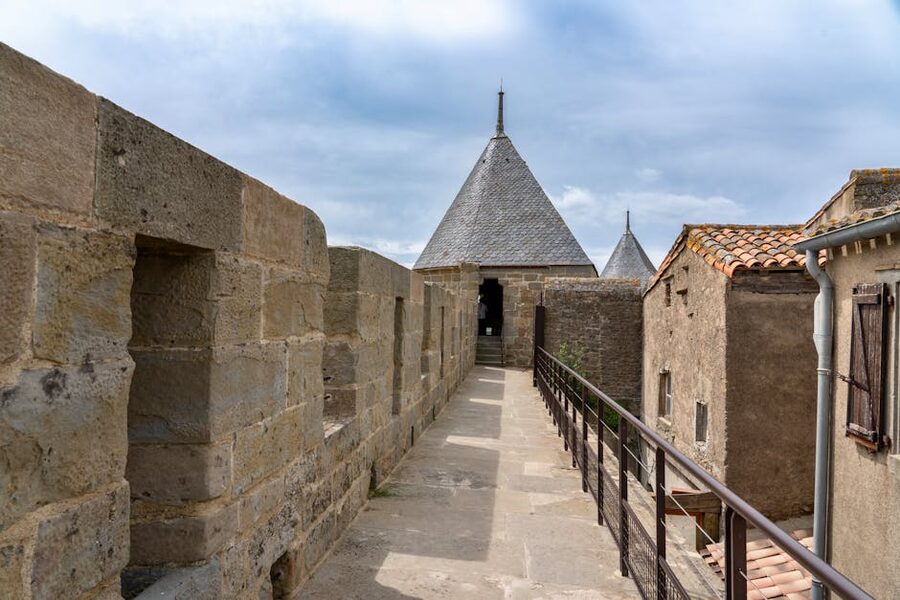
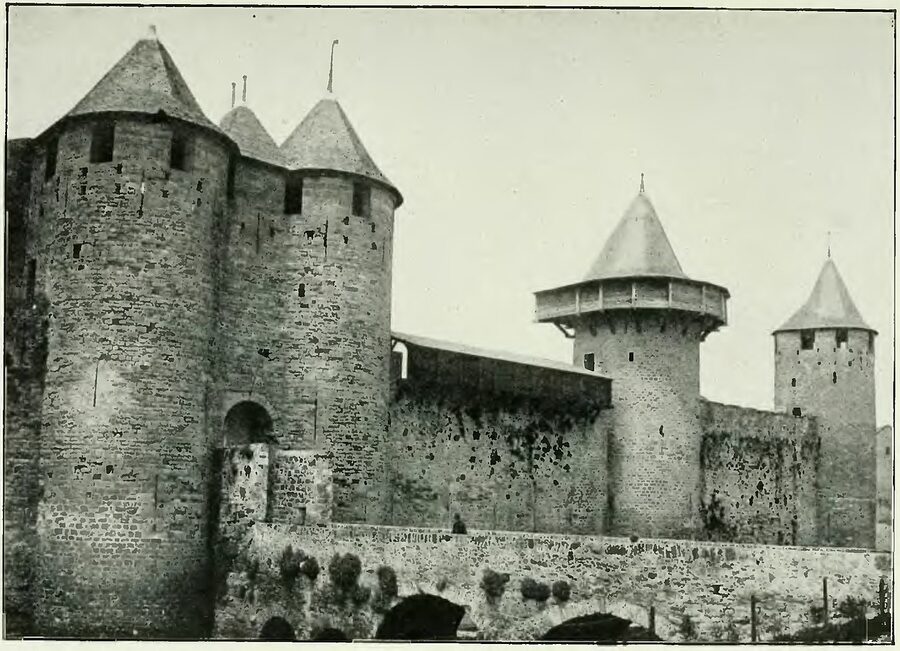
The debate isn’t over. UNESCO’s 1997 World Heritage citation specifically notes that Carcassonne’s restoration is “a strikingly successful example” of work that, despite some controversy, captures the medieval ideal. Other heritage scholars have called Viollet-le-Duc’s Carcassonne “more medieval than the medieval,” meaning that he gave us what 19th-century romantics thought a medieval city should look like, not necessarily what one actually did. Both can be true. The walls and towers themselves are mostly real Roman and medieval stone. The roofs and a fair amount of the parapet detailing are 19th-century romance.
I find it makes the visit better, not worse, once you know. You’re seeing two heritage layers stacked on each other: a genuinely ancient fortified city, and a genuinely interesting 19th-century restoration philosophy made physical. It’s the same conversation that runs through Córdoba’s Mezquita-Cathedral, where a Christian cathedral was inserted into an Islamic prayer hall and the layering is the point. Or Matera’s Sassi, where the depopulated cave dwellings were reframed and rehabilitated decades after they’d been condemned. Or further south at the Alhambra in Granada, the other great fortress-city of Mediterranean Europe, where centuries of Nasrid, Christian, and 19th-century romantic intervention overlap on the same hilltop. The Dutch parallel for a heritage-as-deliberate-reconstruction site is Zaanse Schans north of Amsterdam, where the 17th-century windmills and houses were physically relocated and rebuilt on this site between the 1960s and 1980s to preserve a working version of the Dutch industrial Golden Age. Heritage is rarely a single moment. Carcassonne is a layered argument, in stone.
Buying the ticket. What’s actually included.
The standard Castle and Ramparts Entry is $15 for an adult. That’s the price you’ll see at the official Centre des Monuments Nationaux website (which runs the site) and the price on every reseller including GetYourGuide. There’s no skip-the-line magic here, because the Cité walls themselves are free to walk through (it’s still a public city, with residents and shops). The $15 ticket is specifically for the Château Comtal museum and the wall-walk circuit.
That’s the thing most people don’t understand on their first visit. You can walk the cobbled streets of the inner Cité, climb to the lower courtyard outside the Château Comtal, photograph everything, eat lunch, and visit the basilica without buying a single ticket. The ticket is for the bit most travellers actually want: the inner castle and the high circuit walk along the ramparts. The same free-to-walk-in/paid-to-go-deeper structure runs the old quarter behind the Anne Frank walking tour in Amsterdam, where the Jordaan streets and canal-house exteriors are public but the museum interior on Prinsengracht has a separate ticket queue.
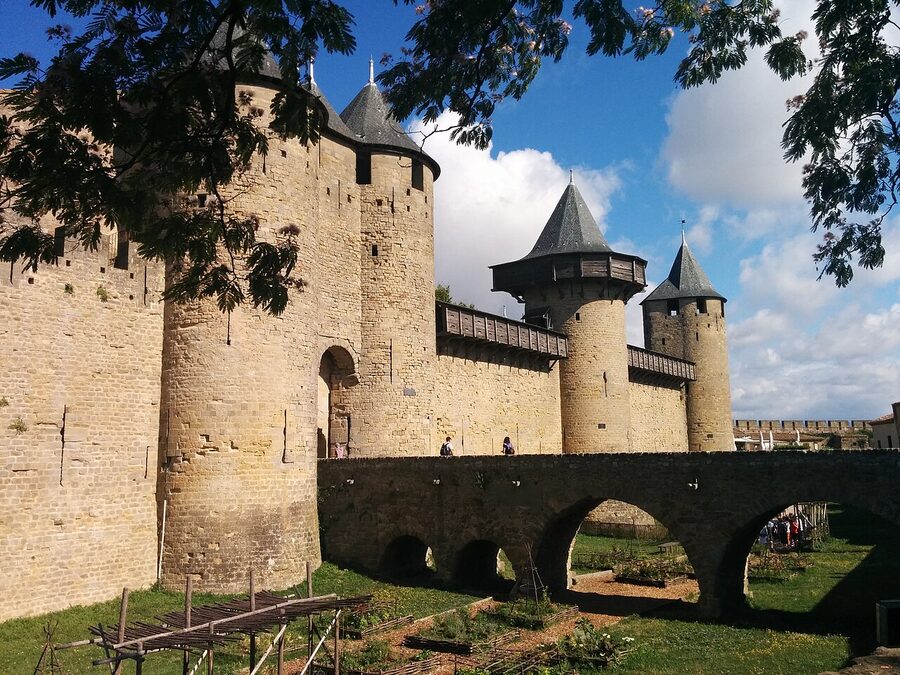
What you get for $15:
- Entry to the Château Comtal, the inner residential castle of the viscounts of Carcassonne
- The lapidary museum (medieval stonework, sculpture fragments, capitals) inside the keep
- The full ramparts wall-walk, about 4km, takes around two hours at a steady pace
- Multilingual leaflets at the entry. No audio guide is included; rent one separately if you want one
- Photo permission throughout (no professional gear restrictions)
What you don’t get for $15:
- A guide. The leaflet is fine but light. If you want context, get the audio rental for an extra $5 or so, or book a private guide
- The Basilique Saint-Nazaire (free admission, separate building, you walk in)
- The lower town museums (Bastide Saint-Louis has its own ticketing if you visit those)
- Skip-the-line on busy summer days. The queue at the Château Comtal entrance can run 30-45 minutes in July and August. Book ahead online to skip the ticket-purchase queue, but you may still wait briefly to get into the castle interior
The pricing has stayed flat at $15 for two years now and is genuinely cheap for what it covers. By comparison, the Eiffel Tower’s top-floor lift is around €30, the Versailles palace ticket is €19.50, and Florence’s Brunelleschi dome climb runs €30. The Château Comtal plus 4km of wall-walk for $15 is one of the better historic-monument deals in France.
The ramparts walk: what 4km actually looks like
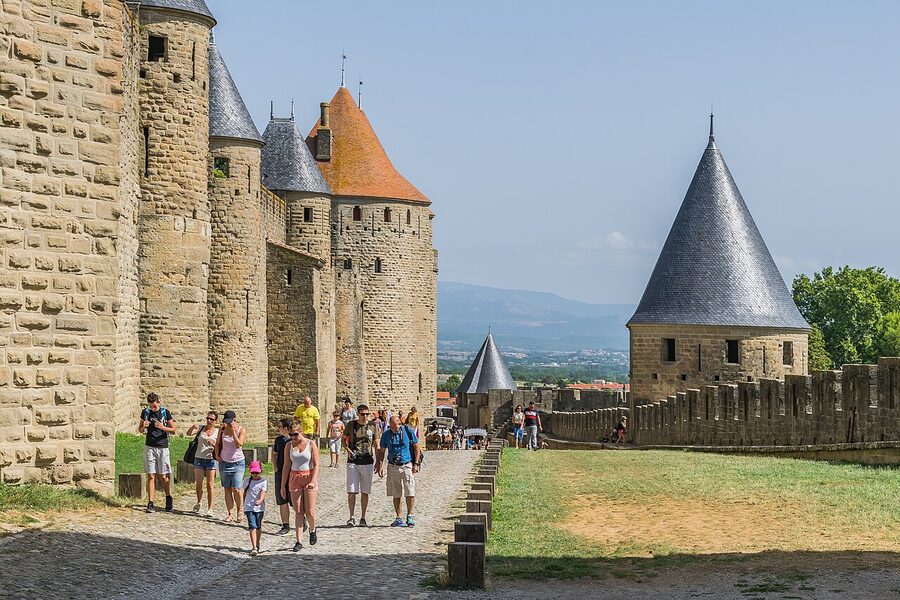
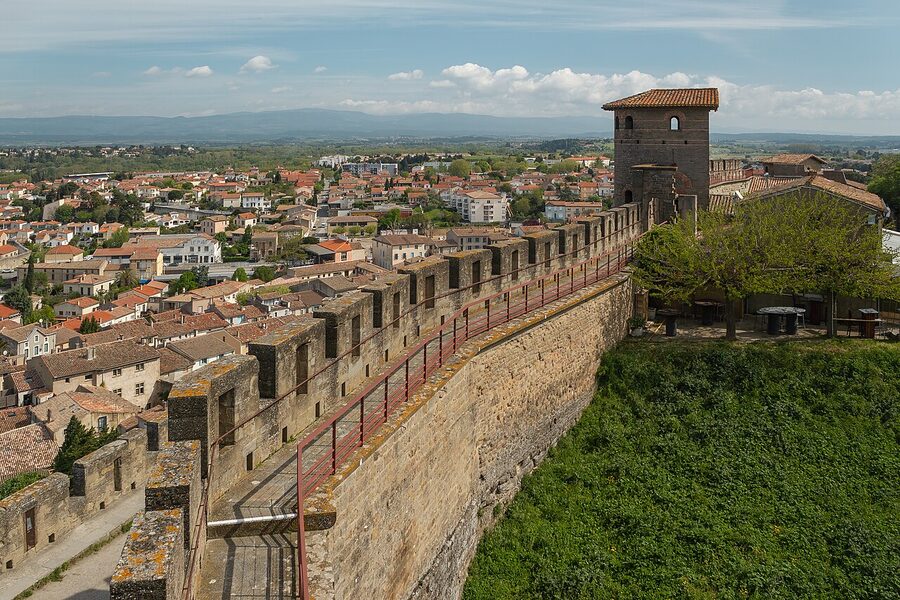
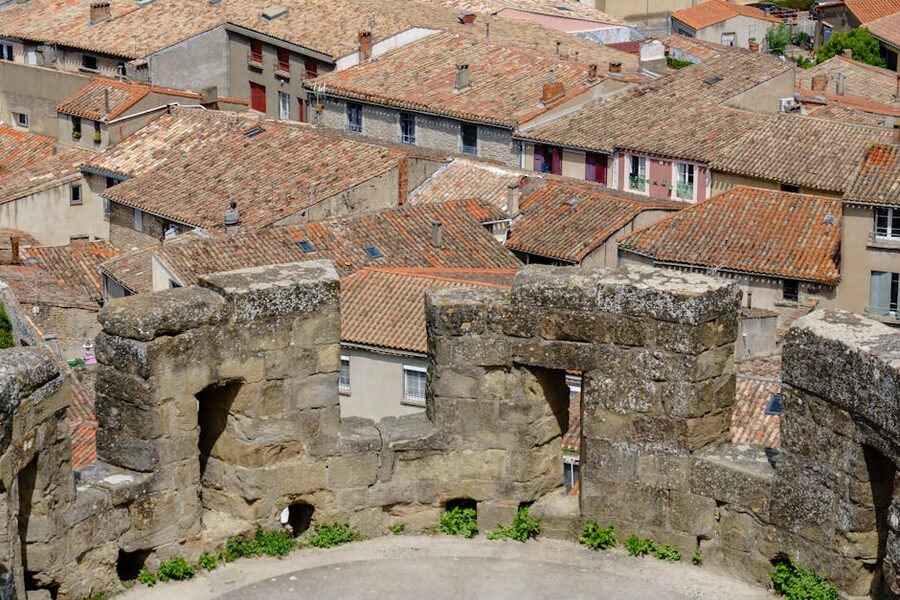
The wall-walk circuit is the highlight if your knees are willing. You enter at the Château Comtal, climb the keep’s stairwell to the upper level, and follow a marked path along the inner ramparts. There are stretches in full sun (no shade in midsummer; it really matters), stretches in the shade of the towers, and several towers you can duck inside to escape the heat or the wind.
Practical things the leaflet doesn’t tell you:
- The walk is one direction only on the upper section, with a defined entry point and a defined exit. You can’t double back if you miss something. Pace yourself
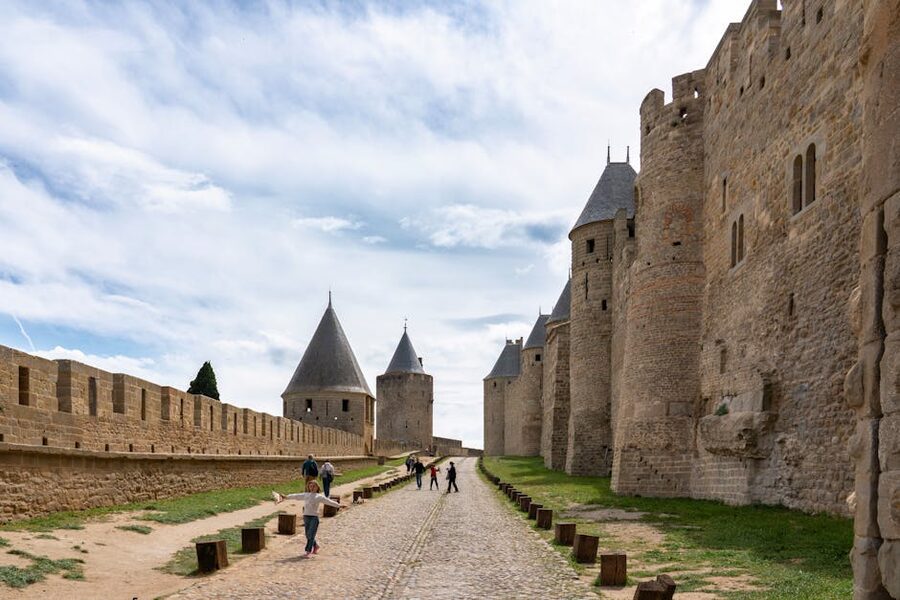
- About a third of the way around, you reach the lice (the gap between the inner and outer walls). On the south side this is where Louis IX’s outer ring was built. You can see how the original Roman and Visigothic stonework was raised and thickened over a thousand years
- There are no toilets along the walk. Use the ones near the Château Comtal entrance before you start
- Strollers and most wheelchairs cannot do the upper walk. There are stairs. The Château Comtal courtyard and museum are accessible, but the rampart circuit isn’t
- Bring water in summer. The on-site café options are inside the inner streets, not on the wall-walk itself
Inside the Château Comtal
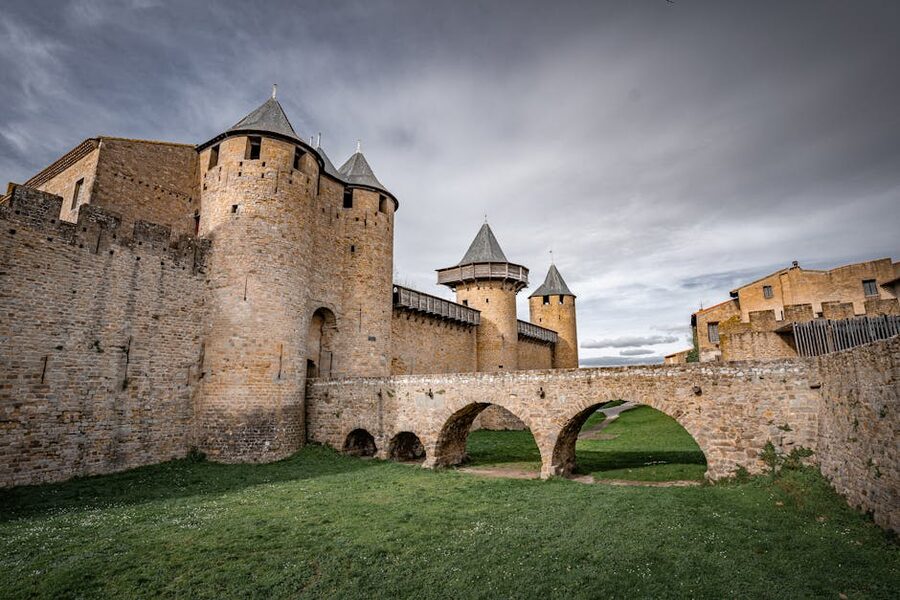
The inner castle is the museum part of your ticket. It’s fine, not extraordinary. The lapidary museum on the ground floor has Romanesque and Gothic stonework rescued from buildings that didn’t survive: capitals, voussoirs, a dismantled funerary monument or two. There’s a model of the medieval town that’s worth ten minutes of your time, because the model shows the Cité before Viollet-le-Duc and after, and the silhouette is remarkably different.
Climb the keep stairwell to reach the upper rooms. The medieval residential apartments are mostly bare; the furniture is gone, the wall-paintings faded. What survives is the architecture: the cross-vaulted ceilings, the deep window embrasures with stone seats built into them, the spiral staircase in the corner tower. It feels lived in, in a way the Loire chateaux often don’t, because the rooms haven’t been over-restored or re-furnished. The stone is mostly the stone you would have touched in the 1240s.
The model alone is worth the visit. Looking at pre-restoration photographs of the towers (before Viollet-le-Duc gave them the slate hats) and post-restoration models of the same towers makes the architectural debate concrete. You see exactly what was added and exactly what was already there. It’s the most interesting 15 minutes in the museum, and most people walk past it.
The Basilique Saint-Nazaire: free, and underrated
The basilica gets shorter shrift in most guidebooks because the Château Comtal sits in front of it on every itinerary. Don’t make that mistake. The Basilique Saint-Nazaire is a Romanesque-Gothic hybrid built between the 11th and the 13th centuries, with the older Romanesque nave (massive, dark, columned) at the entry end and the later Gothic apse (light, soaring, stained glass) at the altar. You walk down the nave from heavy Romanesque shadow into the Gothic light. It’s one of the cleanest architectural transitions in southern France.
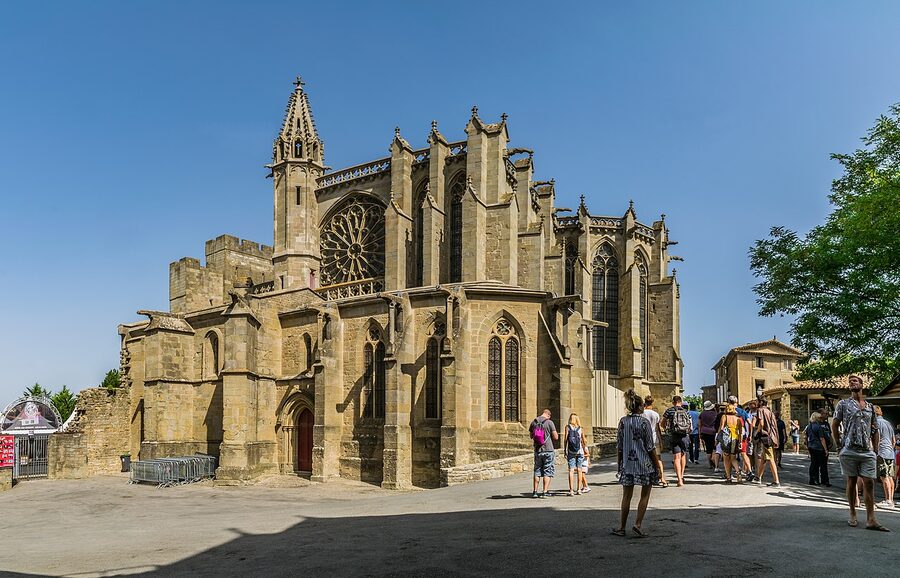
The stained glass deserves its own paragraph. The rose window on the south transept, dating from around 1280-1320, is the oldest preserved glass in southern France. The colour palette tilts blue and crimson, with a saturation that genuinely doesn’t exist in newer work. There’s another tradition we don’t think of often: the Sainte-Chapelle in Paris is the more famous medieval-glass site in France, but Carcassonne’s glass is older and arguably more original (Sainte-Chapelle had heavier 19th-century restoration, partly by, yes, Viollet-le-Duc).
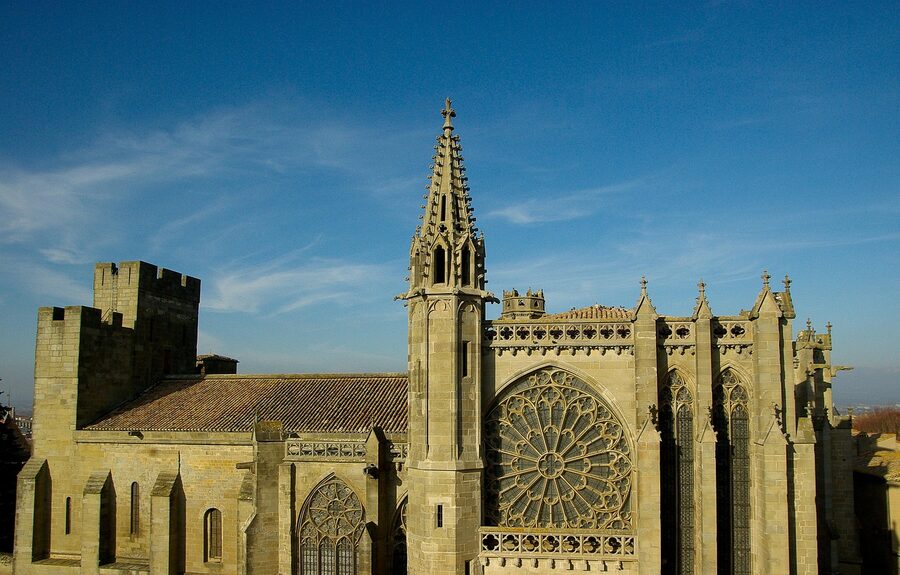
The basilica is free to enter. Open most days from 9am to 6pm, with shorter hours on Sunday morning during mass. There’s no flash photography (the leaflet at the door explains why; the glass dyes degrade under repeated camera flash). And there’s a small donation box at the side chapel if you want to leave a euro for the upkeep.
Getting to Carcassonne
The Cité sits on a hill above the lower town (the Bastide Saint-Louis), which in turn sits beside the modern city. The three sections are about a 15-minute walk apart end to end.
From Toulouse: the easiest connection. Direct trains from Toulouse Matabiau station take about 50 minutes to Carcassonne SNCF. There’s typically one train per hour during the day. Tickets run €15-25 if you book a few days ahead, more on the day. From Carcassonne SNCF station to the Cité is a 30-minute walk through the lower town, or a 10-minute taxi/bus ride. The bus called Navette de la Cité runs from the lower town up to the gates in summer; out of season it’s irregular, and walking is faster. If you’re starting from Toulouse and don’t want to drive, the $35 audio-guided coach trip is a no-fuss alternative.
From Bordeaux: longer. The TGV-then-TER combination via Toulouse runs around 4 hours. Driving is closer to 3 hours via the A62 and A61. If you’re doing the southwest by car, it’s a good Languedoc-to-Aquitaine bridge. Pair it with a Bordeaux wine day trip on the way through if your trip allows.
From Carcassonne airport: the airport is 10 minutes from the Cité by taxi. Ryanair flies in cheaply from London Stansted, Dublin, and a handful of European cities. The shuttle bus from arrivals into town runs for a few euros, takes about 15 minutes, and stops in the Bastide Saint-Louis (lower town). From there you walk up.
By car: there are paid car parks at the foot of the Cité (around €4 for the day in low season, more in summer). Don’t try to drive into the inner walls; it’s pedestrianised and you’ll regret it. Park at the eastern gate (Porte Narbonnaise) lots and walk up.
When to go (and when not to)
The Cité is open year-round, and free to walk through year-round. The Château Comtal closes briefly on January 1, May 1, and December 25. Otherwise the question is the weather and the crowds.
April to June is the sweet spot. Average highs around 18-26°C, the wildflowers are out in the Aude valley below, and the coach groups haven’t peaked yet. May is genuinely lovely; the basilica’s interior is golden in the late-afternoon light, and the rampart walk is comfortable in shorts.
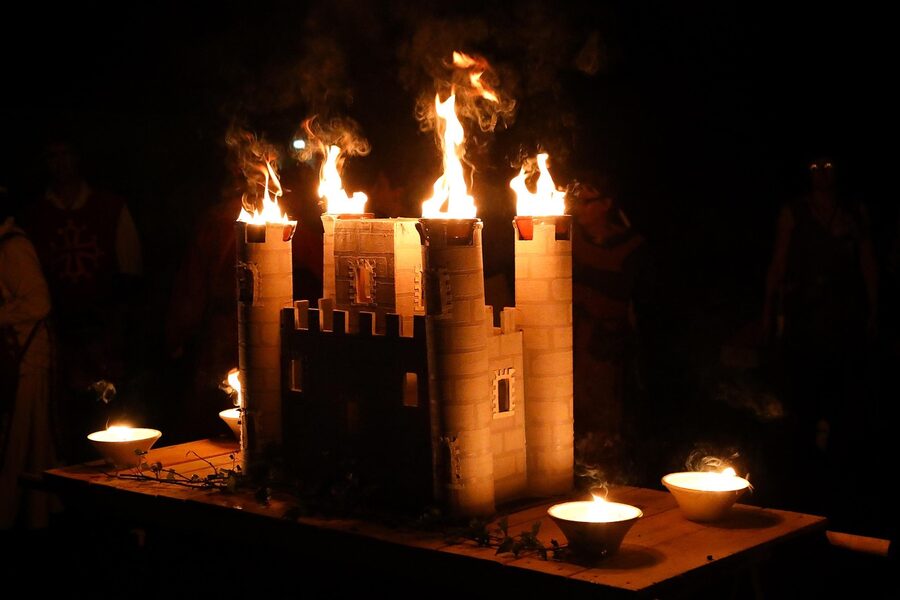
July and August are when the place gets hammered. Daytime highs run 32-38°C inside the walls (the stone holds heat and re-radiates it), and the queue at the Château Comtal can hit 45 minutes at midday. If you’re going in summer, go at 9am sharp when the gates open, do the rampart walk before 11am, and disappear into the basilica or a shaded café for the noon-3pm window. The medieval festivals in July are fun if you like medieval festivals; otherwise the crowds make them feel like a theme park.
September and October are the second-best window. Temperatures drop, the colour comes back to the Aude valley vines, and the day-trippers thin out after the schools restart. October mornings can have the same gold light as May, with empty streets after the morning coach groups leave.
November to March is the quiet half. Some days the inner streets feel almost private. The trade-off is that some of the Cité shops and restaurants close in winter, the wall-walk can be slippery in rain, and the basilica is dim by late afternoon. If you don’t mind layers and short days, it’s the most atmospheric time. Christmas markets in the Bastide Saint-Louis (the lower town) are small but good.
Eating and drinking inside the walls
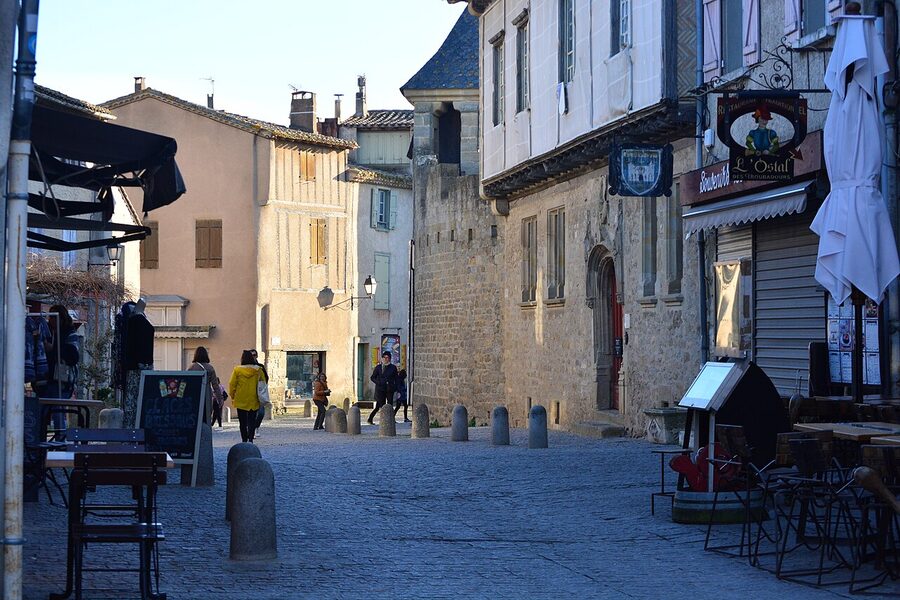
You should know the trade-off going in. Restaurants inside the Cité are tourist-priced, the menus look interchangeable (cassoulet, duck confit, foie gras, salade languedocienne, repeat), and the service quality varies wildly. The Cité has about 20 restaurants and the rotation is brutal: places that were good five years ago can be tired now, and vice versa.
The right advice: have a coffee and a pastry inside the walls in the morning for the experience, but eat a proper lunch in the Bastide Saint-Louis (the lower town). The lower town has a real local restaurant scene, half the price, and infinitely better cassoulet. Carcassonne is one of the three official birthplaces of cassoulet (Toulouse and Castelnaudary are the other two), and the version here uses the regional white tarbais beans, duck confit, and a slow-cooked pork shoulder. A proper plate at a Bastide restaurant runs €15-22. The Cité version of the same plate is €28+ and often microwaved.
Wine: the Cité is in the Languedoc, France’s biggest wine region by acreage. Local appellations include Corbières, Minervois, Cabardès, and Limoux (which produces Blanquette de Limoux, France’s oldest sparkling wine, predating Champagne by a century). Restaurants will pour you a Corbières red by the glass for €4-6. Don’t pay €40 for a Bordeaux; you’re in Languedoc, drink the local stuff. If wine touring is your priority, our Bordeaux wine guide covers the more famous neighbour to the west, and the Languedoc producers are an easy add-on if you have a car.
The three tours we’d actually recommend
You can absolutely visit Carcassonne without booking anything in advance. Walk in, buy the ticket at the gate, walk the ramparts. But if you want a guide, transport, or both, here are the three options that are worth the money.
1. Castle and Ramparts Entry: $15
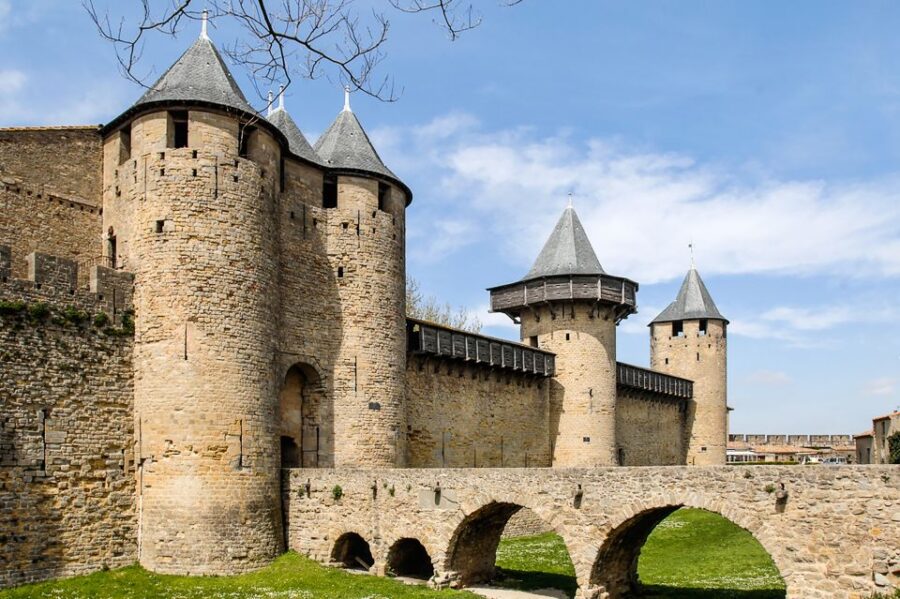
The default booking, and the right one for most people. This is the GetYourGuide reseller version of the official Centre des Monuments Nationaux ticket, same price, with the advantage that you don’t queue at the in-person ticket window. Our full review walks through what’s included, what isn’t, and what to add on for an extra few euros.
2. Toulouse Day Trip with Audioguide: $35
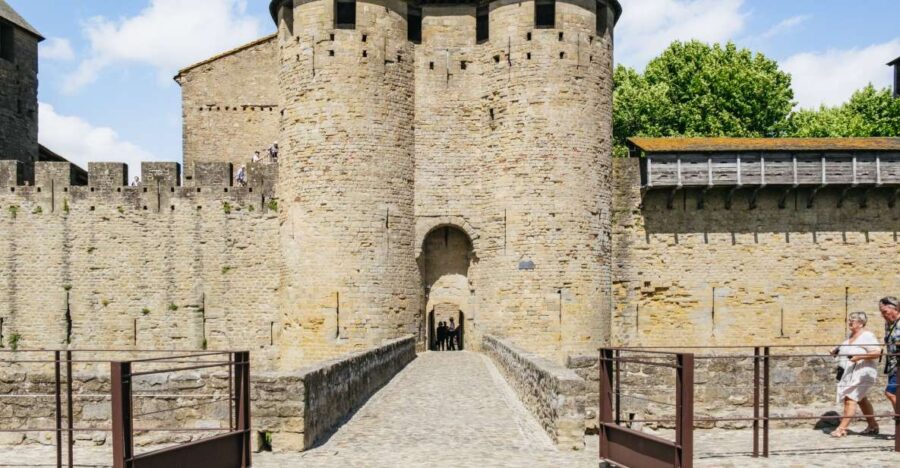
The right pick if you’re based in Toulouse and don’t want to mess with trains or rental cars. The audioguide is decent, the free time is enough, and at $35 it’s competitive with the train fare alone. Our full review covers the schedule, the lunch break, and the “if you have mobility issues, skip the rampart walk” warning that the operator does flag.
3. Private Guided Tour of the Medieval Fortress: $235 per group
This is the right pick if the architectural-history angle is what brought you here. The guide takes you through the layered timeline (Roman, Visigothic, French royal, Viollet-le-Duc) at the actual stones, which is what makes it worth the money over a $5 audio rental. Our full review notes that the price is per group rather than per person, so divided four ways it’s around $58 each, which is fair for two hours of expert local context.
The lower town: the half almost nobody visits
If you can spare half a day, the Bastide Saint-Louis (the lower town across the Aude river) is worth seeing on its own merits. It was founded in 1260 by Saint Louis after the Albigensian Crusade, when the original inhabitants of the Cité were displaced as punishment for siding with the Cathars. The Bastide is a planned grid town, with a central square (Place Carnot), a covered market, and the Cathédrale Saint-Michel. None of it has been Viollet-le-Duc-ified. It looks like a working medieval-into-modern French market town, because that’s what it is.
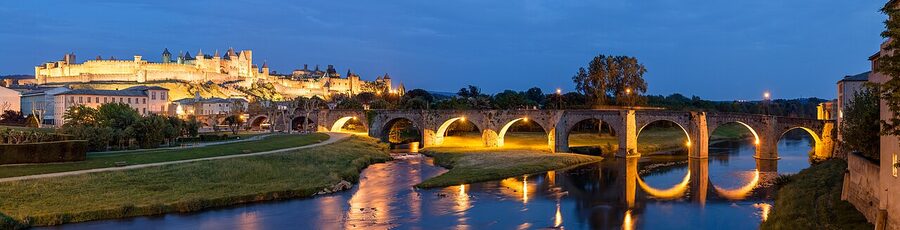
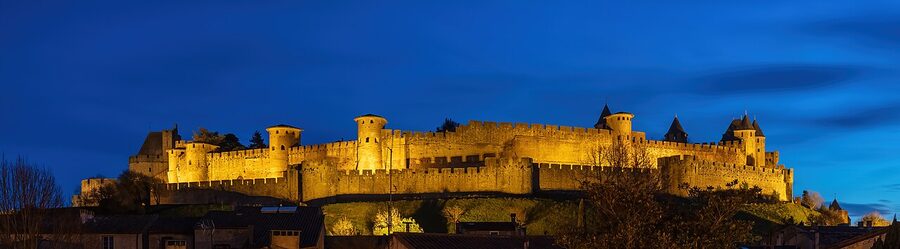
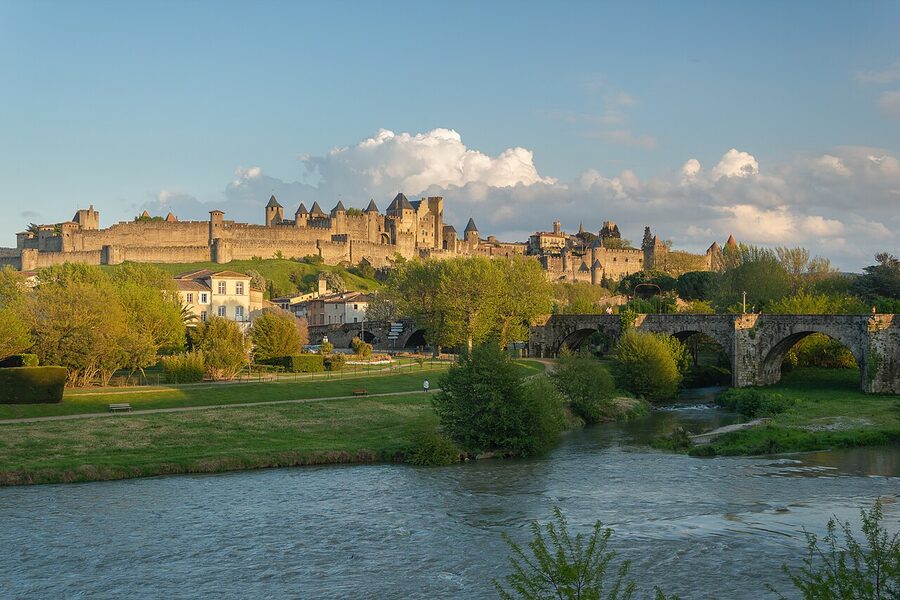
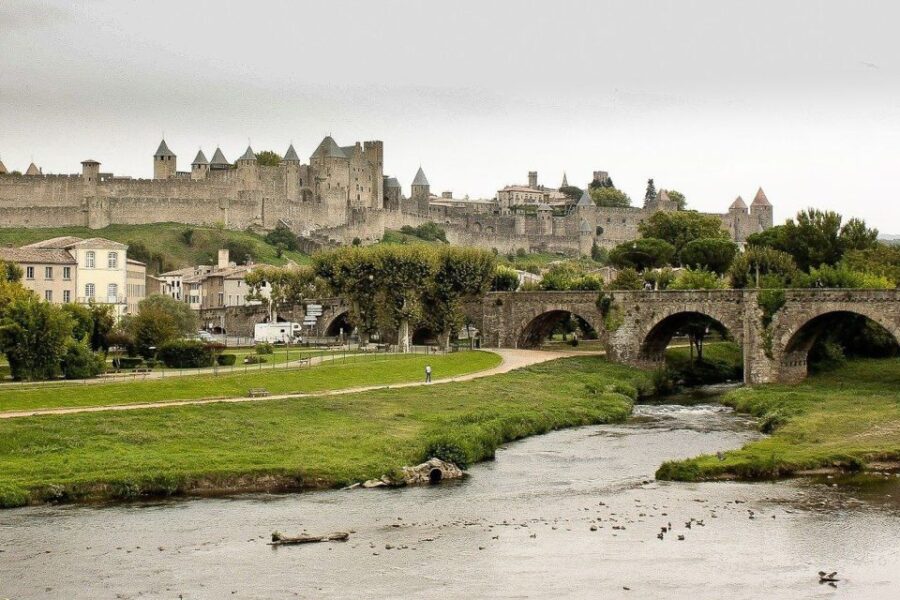
The Pont-Vieux (the medieval stone bridge across the Aude) connects the two halves of the city. Walk halfway across at golden hour for the famous postcard view of the Cité on its hill, with the conical towers in silhouette and the river flowing below. This is the angle that sells most of the postcards in the gift shops. The trick is that almost nobody on a coach tour walks down to the bridge; they do the Cité, then the coach picks them up at the parking lots.
The covered market in the Bastide (Halles de Carcassonne) is genuinely good. Open Tuesday to Sunday mornings until about 1pm. The duck confit at the meat counters is the real thing. The stallholders will sell you 100g of saucisson in waxed paper for less than a coffee inside the Cité. If you’ve got a self-catering apartment, this is where you shop.
Day trips around Carcassonne
The Aude département around Carcassonne has more medieval architecture per square kilometre than almost anywhere in France. If you’re staying two nights, here’s what’s worth the drive.
Cathar castles to the south: Quéribus, Peyrepertuse, Lastours, and a handful of others. These are the genuinely abandoned mountaintop fortresses built by the Cathar heretics in the 12th-13th centuries before the Albigensian Crusade flattened them. Unlike Carcassonne, none has been restored; they’re real ruins on real cliff edges. Peyrepertuse is the dramatic one (you climb a 30-minute path up a cliff to the gate). The Lastours four-castle complex is closer (45 minutes from Carcassonne) and you can see all four from a single viewpoint.
Mirepoix: a perfectly preserved medieval bastide town with a 13th-century covered central square. The wooden gallery beams along the square are original; the stone houses behind are 14th and 15th century. Fewer tour buses than Carcassonne. Worth a half-day. Combined with the Lastours castles it makes a great driving loop. (If you’re touring Spain on the same trip and want a pair of similarly pristine walled-medieval towns, the Segovia and Ávila day trip from Madrid covers two more, and Toledo rounds out the comparison.)
Canal du Midi: the 17th-century canal that runs from the Atlantic to the Mediterranean, passing through Carcassonne. UNESCO World Heritage. You can rent a small bateau for a day, or just walk a section of the towpath. The stretch through Trèbes east of Carcassonne is shaded by plane trees and good for an evening cycle.
If you’re touring further afield: the Loire Valley castles (a long way north, but the cousin set of French chateaux), Chambord (the most spectacular of the Loire chateaux), and Chenonceau (the river-spanning one) are all on the same architectural circuit if French heritage is what brought you to Europe. The Loire reads as a Renaissance-residential equivalent to Carcassonne’s medieval-defensive architecture; both are restoration-heavy, both are heavily Viollet-le-Duc adjacent. Or for a totally different mood: the Camargue wetlands from Arles are 90 minutes east and a complete change of register, all flamingoes and salt marshes.
How long to spend
The realistic minimum: a half-day inside the Cité if you’re rushing. Three hours covers the Château Comtal, the basilica, and a quick lap of the inner streets, with maybe a coffee. You’ll miss the rampart walk; that needs another two hours.
The proper visit: a full day. Arrive at 9am at the Porte Narbonnaise. Do the Château Comtal and the rampart walk before noon (combined: about 3.5 hours). Lunch in the lower town (cross the Pont-Vieux). Afternoon back inside the walls for the basilica and the inner-street walk. End the day at the Pont-Vieux at sunset for the silhouette photo. Eight hours, and you’ve actually seen it.
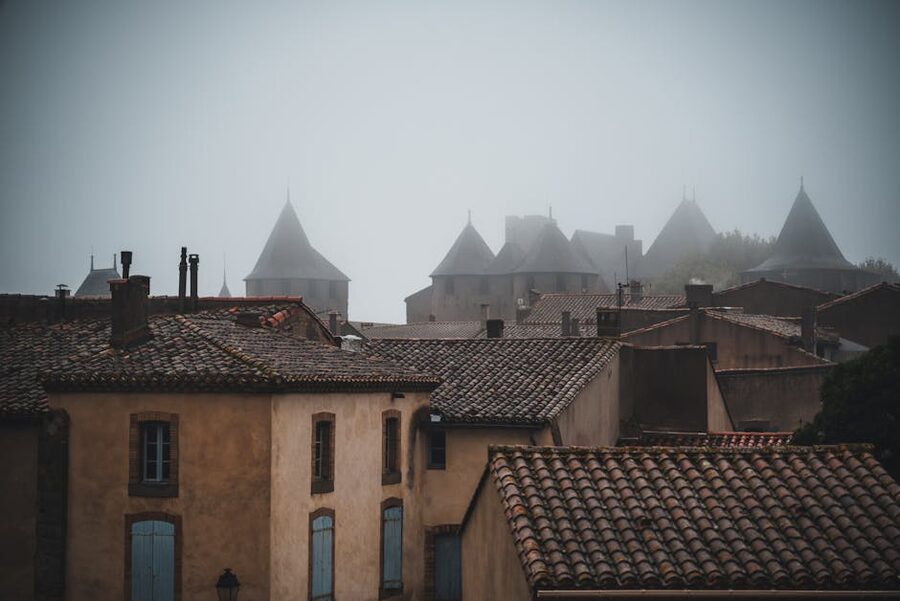
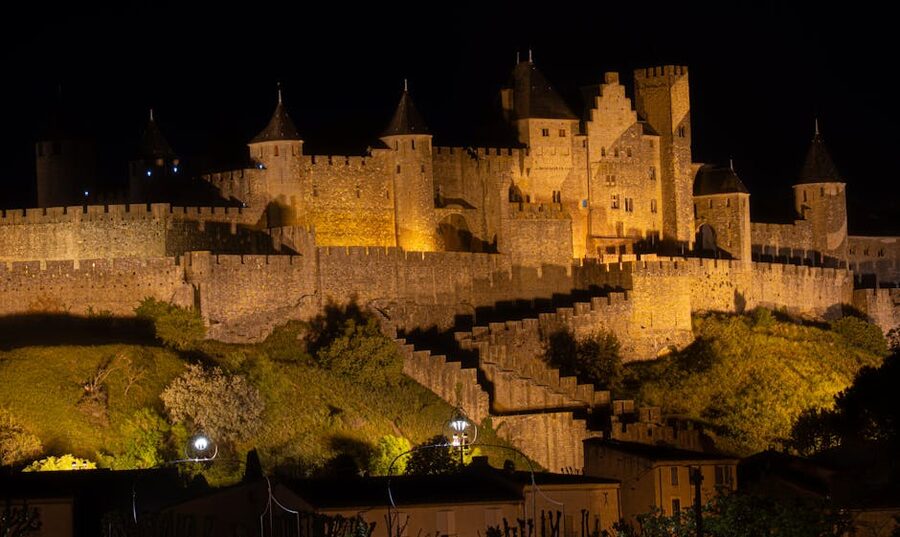
The deluxe visit: two nights in the lower town. Day one as above. Day two for a Cathar castle drive (Lastours or Peyrepertuse) or a Canal du Midi cycle, with a return into the Cité in the evening to see it lit up after dark. Sunset to 10pm is when the day-tour coaches have left and the floodlights come on. The Cité in floodlight, with you and a hundred other people in the lanes instead of three thousand, is genuinely the visit most people miss.
Where to stay
You have three location options, and the trade-offs are real.
Inside the walls: there are a handful of hotels in the Cité itself, the headline being the Hôtel de la Cité (a luxury 5-star against the walls themselves). Sleeping inside the medieval city is genuinely atmospheric, especially at night when the day-trippers are gone. The trade-off is the price (€300+ in summer for the de la Cité, less but still significant for the smaller boutique places) and the parking (you don’t park inside the walls, you park outside and walk in with your bags).
Bastide Saint-Louis: the lower town has the best mid-range and budget options, plus a working local scene with restaurants, the morning market, bars, and bakeries. You’re 15 minutes’ walk or a 5-minute taxi from the Cité. This is where most independent travellers stay and where I’d stay personally. Hotel Montmorency, Hotel des Trois Couronnes, and a dozen smaller B&Bs are good value.
Outside town: several restored mas (Languedoc farmhouses) in the surrounding countryside, perfect if you have a car and want a pool and quiet. They’re often 15-30 minutes’ drive from the Cité. Best for second-time visitors or families.
Other nearby French day trips that pair well
If Carcassonne is a single stop on a longer France itinerary, here’s how it plugs into a regional drive.
From the south: the Marseille hop-on bus covers the next big city east on the Mediterranean coast (about three hours by car), and from Marseille you can pick up a Camargue day trip from Arles for the wetlands. From Nice further east, our French Riviera tour from Nice covers the Côte d’Azur. None of those are Carcassonne-day-trippable, but they pair well as a southern France 7-10 day driving loop.
From the north: Lyon is 4 hours’ drive on the autoroute, the natural pivot point if you’re connecting Carcassonne to a Burgundy or Alps trip.
From Paris: there’s no good reason to do Carcassonne as a Paris day trip (too far). But if you’re planning a France trip that takes in the Paris monuments first, our guides to the Eiffel Tower, the Sainte-Chapelle (the other great Viollet-le-Duc-adjacent stained glass site), and Versailles map the obvious cultural starting points before the southwest.
The architectural debate, in one paragraph
Was Viollet-le-Duc right? You’ll have an opinion by the end of your visit. The argument for: he saved a building that was scheduled for demolition, his work is broadly faithful to the structural reality of medieval defensive architecture, and the silhouette he created has become a global symbol of medieval Europe. The argument against: he projected a Northern French romantic ideal onto a Southern French fortress, his slate roofs are climatically and historically wrong for the Languedoc, and his “complete” restoration philosophy invented details that may never have existed. Both are true. Both are visible at Carcassonne. Walking the ramparts and asking yourself which side you’re on, while standing on stone that’s been there since Augustus, is the most rewarding way to spend an afternoon at a UNESCO site I can think of.
Practical FAQ
Do I need to book ahead? In summer, yes. The online ticket is the same price as the on-site ticket, and skipping the in-person queue at the Château Comtal in July saves you 30-45 minutes. In April-May or September-October, walk-up is fine. In winter, walk-up is always fine.
How long does the rampart walk take? Two hours at a steady pace, including a few stops at the towers. Three hours if you stop and read every information panel and take a lot of photos. The walk is one direction only on the upper level, so plan accordingly.
Is it accessible? The inner streets and the Château Comtal courtyard are accessible. The rampart walk is not (stairs, narrow passages, no lift). The basilica is accessible at ground level.
Can children do it? Yes. The inner streets are pedestrian-only and safe. Kids tend to love the towers and the keep. The rampart walk has steep sections that need supervision. Carcassonne is the source of the popular medieval-themed board game (Klaus-Jürgen Wrede, 2000), which is a fun pre-trip warm-up if your kids are 8+.
Cash or card? Cards everywhere inside the walls and at the Château Comtal. Cash useful at small bakeries and the lower-town market.
Is it crowded? Yes, in summer. About 2 million visitors a year, concentrated in July-August. Off-season it can feel almost empty. The contrast between an August afternoon and a February morning is dramatic.
Last thoughts before you book
Carcassonne is one of the few sites in Europe that openly acknowledges being a 19th-century reconstruction without diminishing what it is. UNESCO put it on the World Heritage list in 1997 not despite Viollet-le-Duc but partly because of him: the citation specifically calls out the restoration as part of the heritage value. The lesson is that great architecture is rarely a single moment frozen in stone. It’s a layered argument across centuries. Carcassonne is the most legible version of that argument I’ve walked through.
If your trip is a day, do the Cité, the rampart walk, and the basilica, and skip the lower town. If your trip is two days, add the Bastide Saint-Louis and a Cathar castle drive. If it’s three or more, you’re entering full Languedoc-medieval territory and you’ll want a car. Wherever you fall, go in spring or autumn, get to the gates at 9am, and stay for the floodlight evening if you possibly can. The rest is detail.
The architectural debate isn’t going to be settled in your lifetime or mine. But you can stand on the parapet at sunset, look out across the Aude valley to where the Pyrenees would be on a clear day, and decide for yourself. That’s a better way to spend an afternoon than reading a book about it.