
In 1526 the Holy Roman Emperor Charles V walked into the centre of the Mezquita de Córdoba, looked up at the Renaissance cathedral his bishops had spent three years building inside the prayer hall of the second-largest mosque in the world, and reportedly said: “You have built what you or others might have built anywhere; but you have destroyed something that was unique in the world.” He had personally signed off on the demolition three years earlier. Then he saw it and changed his mind.
That is the building you are about to walk into. Not a cathedral. Not a mosque. A 1,200-year architectural argument frozen in stone, with 850 columns, 365 horseshoe arches, and a Gothic-Renaissance cathedral nave growing out of the middle like a tree planted in a stone forest.
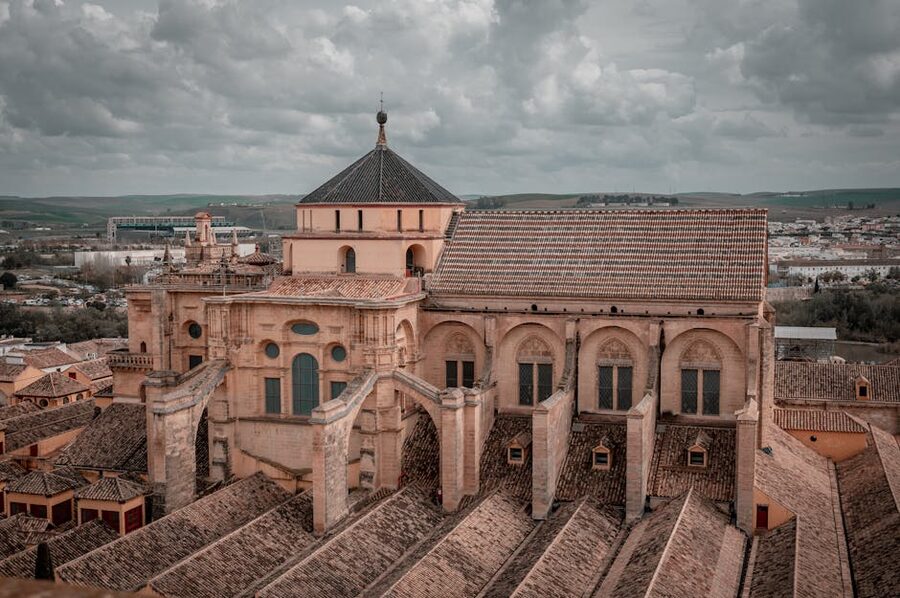
I went in expecting a mosque with a small chapel tucked into a corner. That is not what this is. The cathedral is full size. It has its own choir, its own altar, its own ribbed vaulting tall enough to clear the mosque roof. Charles V’s regret is the right opening line because it tells you exactly what to feel as a visitor: ambivalent, impressed, slightly uneasy. That feeling never resolves, and that is the visit.
Quick picks if you’re booking right now
Three ways in:
- Skip-the-line guided tour ($31): 75 minutes with a guide who explains the four mosque expansions and the cathedral insertion. The cheapest way to get the architecture-as-argument frame. Book on GetYourGuide
- Art-historian-led skip-the-line ($35): 90 minutes, smaller groups, more detail on the Caliphate-to-Reconquista shift. Book on GetYourGuide
- Half-day combo with Jewish Quarter and Alcázar ($48): Four hours, the Mezquita plus the medieval Jewish Quarter and the Alcázar gardens. The right pick if Córdoba is a single-day stop. Book on GetYourGuide
The fact you need to anchor everything else: there is a cathedral inside the mosque
This is not a metaphor. It is not “a cathedral that was once a mosque” the way Seville Cathedral was built on a demolished Almohad mosque foundation, with the minaret converted to a bell tower and the rest torn down. Córdoba is the opposite story. The mosque was kept. The cathedral was inserted into the middle of the still-standing prayer hall.
The mosque was started by Abd al-Rahman I, the exiled Umayyad prince who had escaped the Abbasid massacre of his family in Damascus and made his way west across North Africa to Spain. He bought a Visigothic church on the site, demolished it, and built a mosque on the foundations. Three of his successors expanded it over the next 200 years. By the end of the project, only Mecca’s mosque was bigger.
- 785 AD: Abd al-Rahman I starts the mosque. Capacity around 5,000.
- 836 AD: Abd al-Rahman II extends it south.
- 962 AD: Al-Hakam II builds the mihrab and brings in Byzantine mosaicists.
- 987 AD: Al-Mansur extends it east. Final footprint about 23,400 square metres.
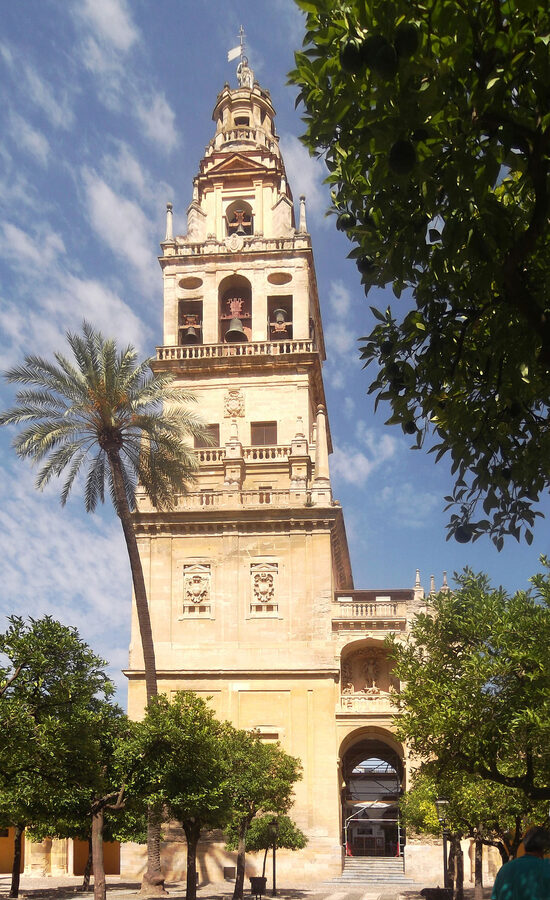
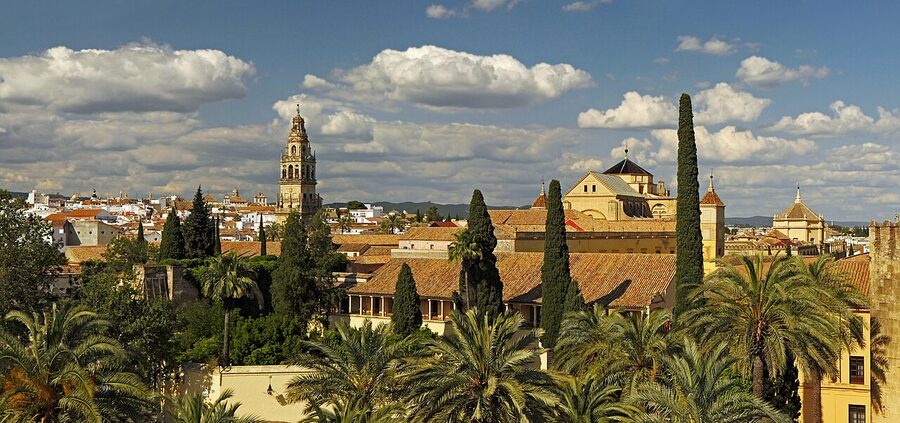
Then in 1236 Ferdinand III of Castile took Córdoba in the Reconquista. The mosque was consecrated as a cathedral the same week. For nearly three centuries after that, almost nothing was changed. The Christian community simply held mass in a small chapel in the middle of the mosque and left the horseshoe arches alone. The minaret got a Renaissance bell tower wrapped around it but the prayer hall stayed.
The cathedral as you see it now arrived in 1523. The local bishop, Alonso Manrique, asked Charles V for permission to demolish the mosque’s central section and insert a proper Renaissance crucero. The Córdoba town council fought back hard, threatening the death penalty for any builder who took up the contract. Charles V signed the permission anyway. He had not been to Córdoba, and the same pattern of distant-emperor-as-patron repeats with Napoleon’s tomb commission at the Invalides in Paris.
Then he visited in 1526 and saw what had been done. The “you have destroyed something unique” quote is from that visit. It is probably embellished. But the fact that he never returned is on the record.
What you actually see inside, in the order you’ll see it
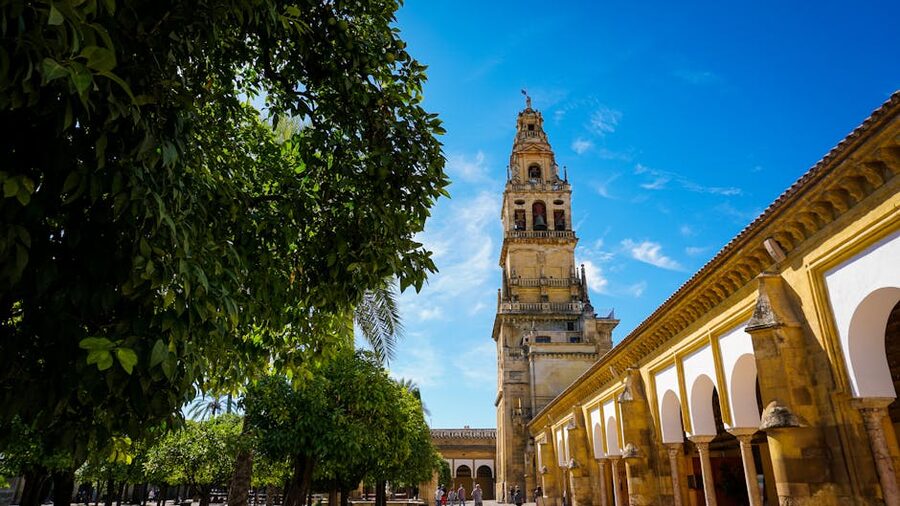
You enter through the Patio de los Naranjos, the orange-tree courtyard where ablutions used to happen before prayer. The trees were planted in the 10th century in a grid that lined up with the columns inside; the symmetry is gone now because the cathedral insertion broke the axis, but you can still feel what it was built for. Allow ten minutes here before you go in.
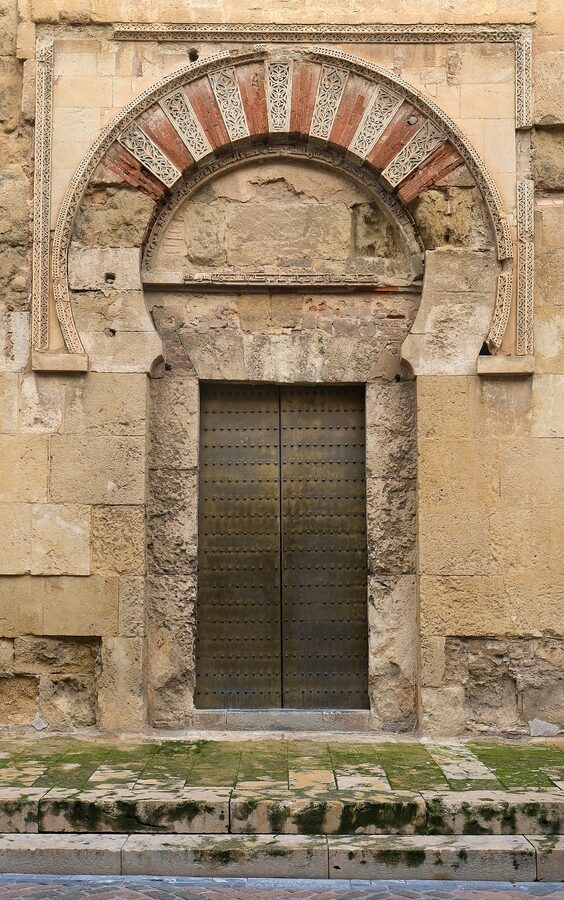
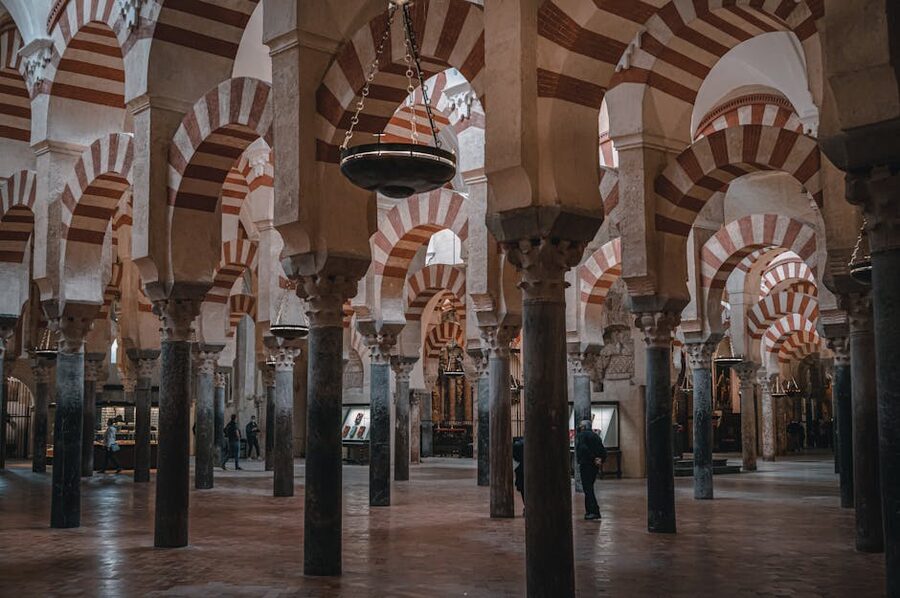
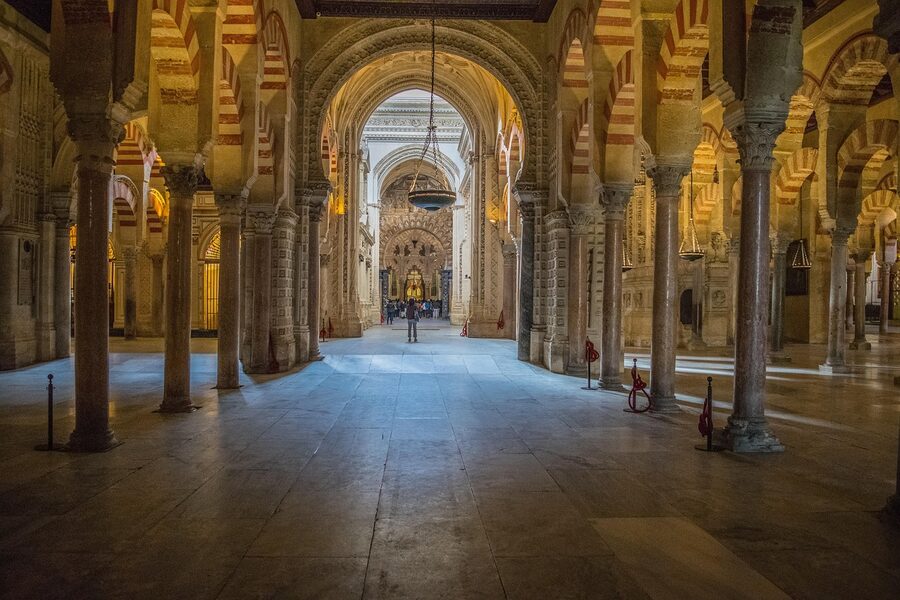
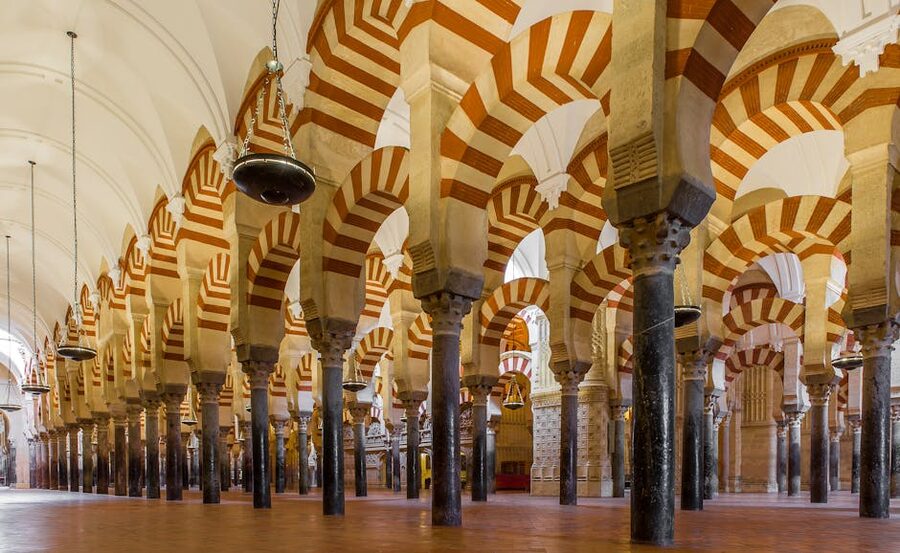
Then you cross the threshold into the Hypostyle Hall and the temperature drops about five degrees. There are 856 columns standing today, down from a recorded peak of 1,293. The double-tier arches above them are the famous shot: lower horseshoe arch in red-and-white voussoirs, upper semicircular arch above it. The columns themselves are not original to the mosque. Most are recycled Roman, Visigothic, and Byzantine pieces, taken from the old church, from a Roman temple to Janus, and from sites across the empire. Look down at the bases. You can sometimes still see Roman tool marks.
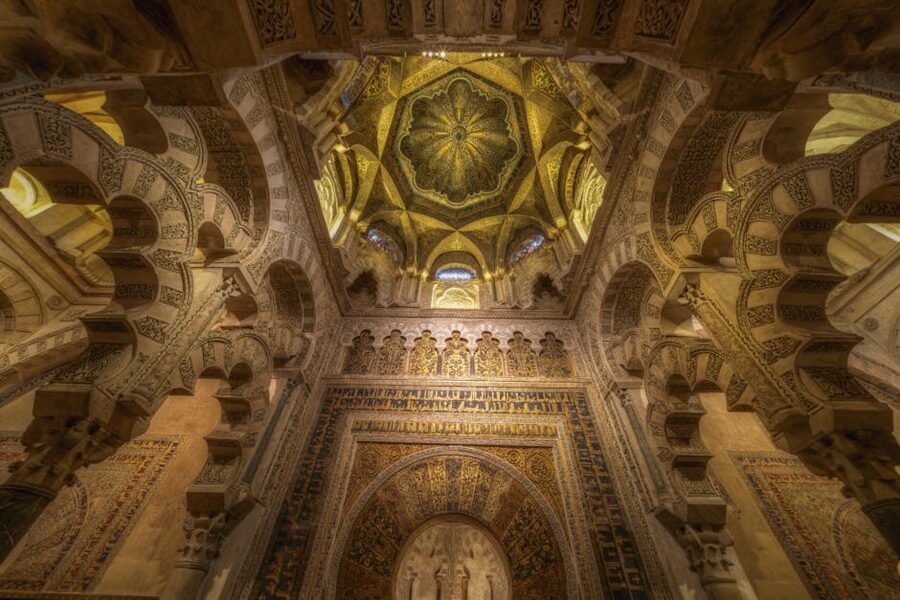
Keep walking south. The mosque was always oriented towards Mecca, except Córdoba’s mosque is famously oriented slightly off, more towards the south than southeast. The standard explanation is that Abd al-Rahman I built it on the foundation of the existing church and didn’t move the orientation. The other explanation is that he was honouring the qibla of the Damascus mosque he had grown up with. Both are probably partly true.
The mihrab: the single most important thing in here
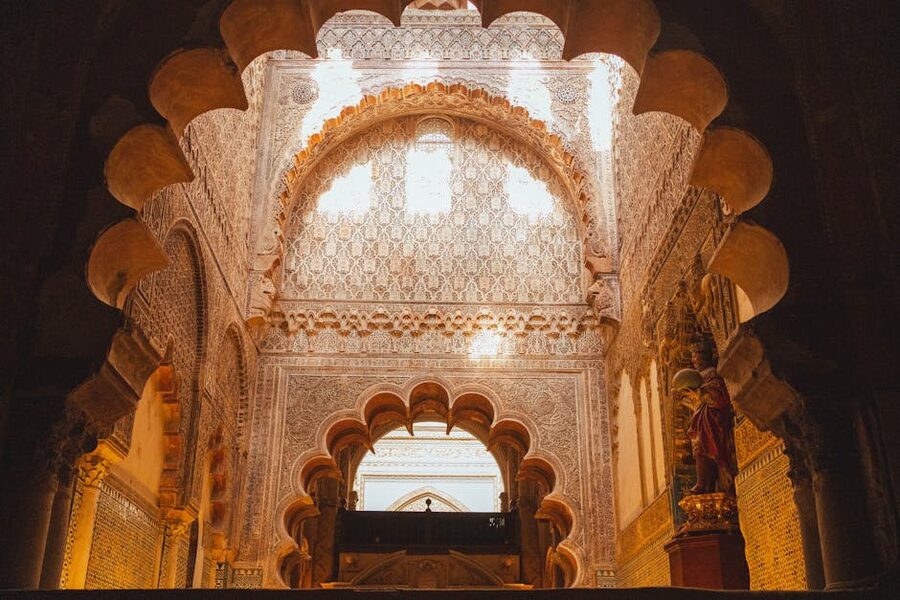
Keep going south until you hit a wall covered floor to ceiling in gold mosaic. That’s the qibla wall, and the niche set into it is the mihrab. This is the symbolic direction of prayer. It is also probably the single most beautiful object in Spain.
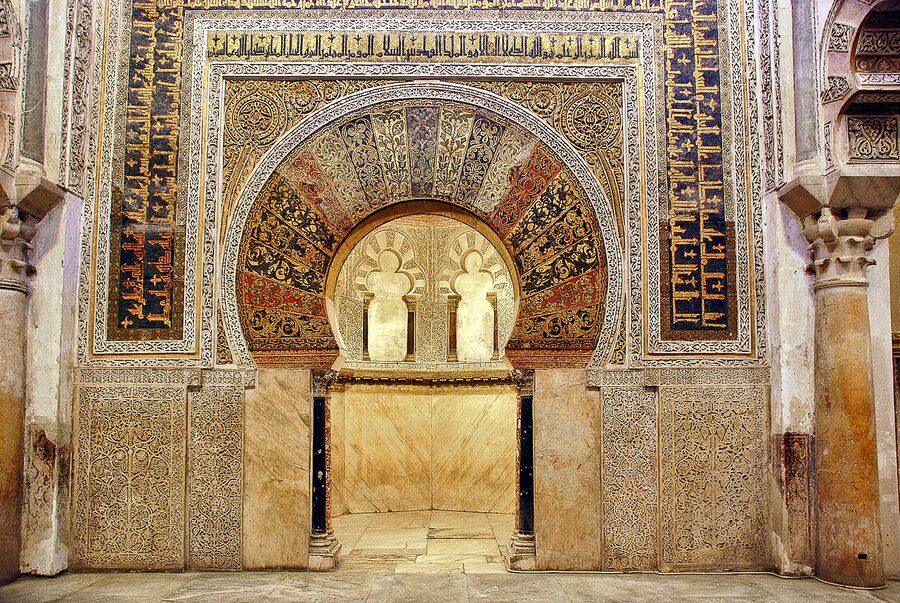
The mihrab is about three metres deep, octagonal in plan, with a scallop-shell-shaped half-dome above it. The Kufic Arabic inscriptions running around the arch are verses from the Quran. The reason this room exists in this form is partly diplomatic showing-off (the gold came from the rival Christian empire), partly a statement that the Umayyads of Córdoba were the legitimate caliphal heirs of Damascus, not the Abbasids in Baghdad. Politics in mosaic, the same medium and the same kind of imperial-religious display you get in the Louis IX–era stained glass at Sainte-Chapelle in Paris.
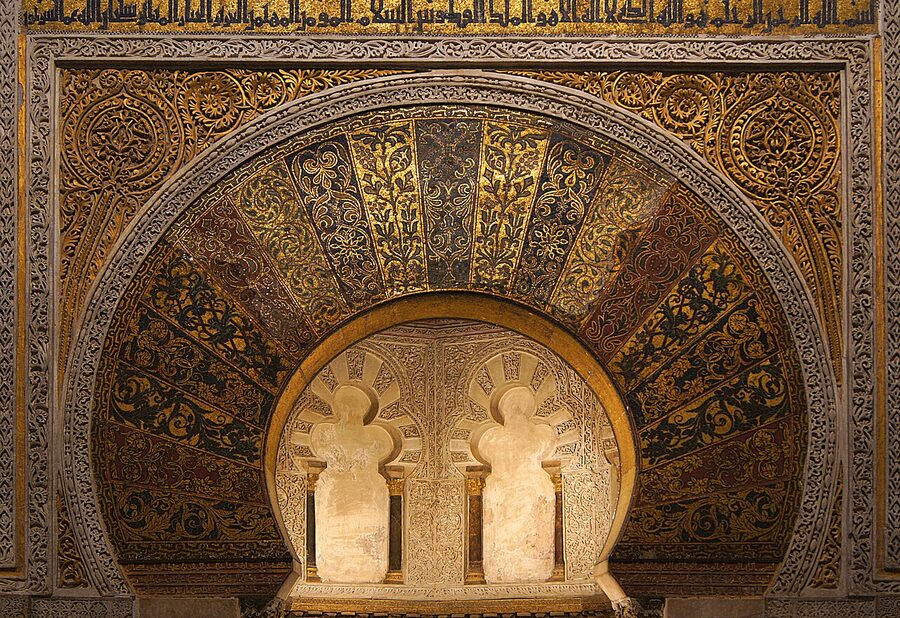
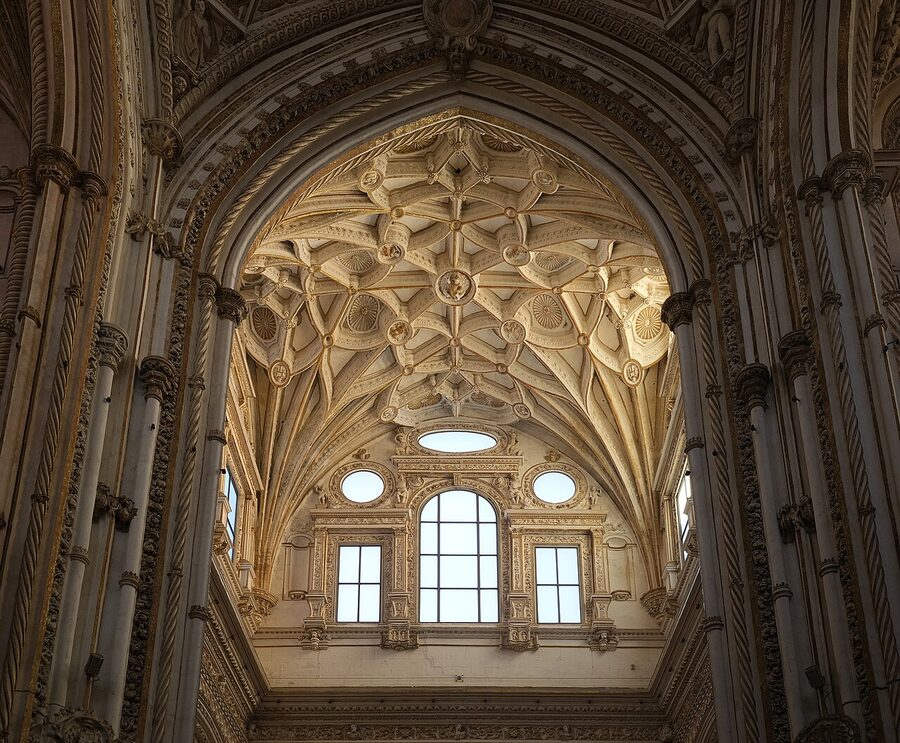
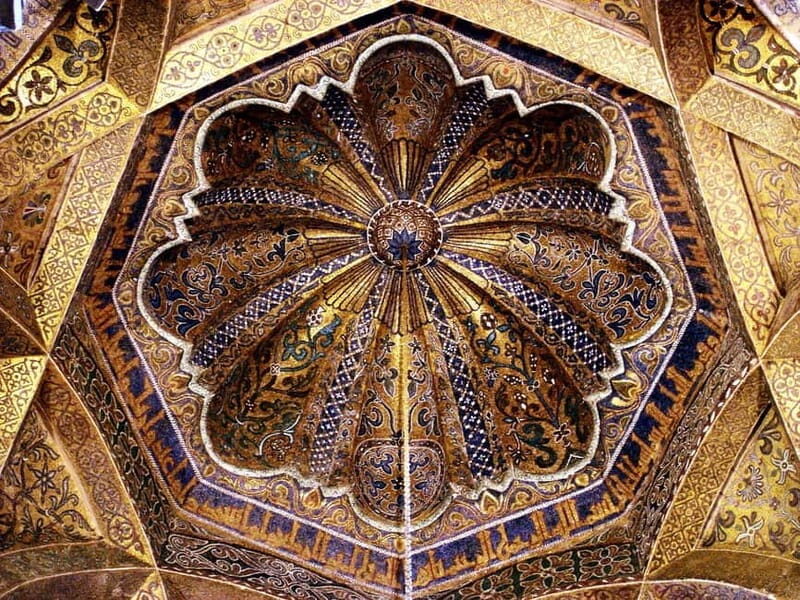
The maqsura, the screened royal enclosure in front of the mihrab, has the most spectacular ceiling in the building. Three intersecting ribbed domes that anticipate Gothic architecture by 200 years. Look up and don’t move for a while. People walk into each other doing this. That’s fine.
Then the cathedral hits you
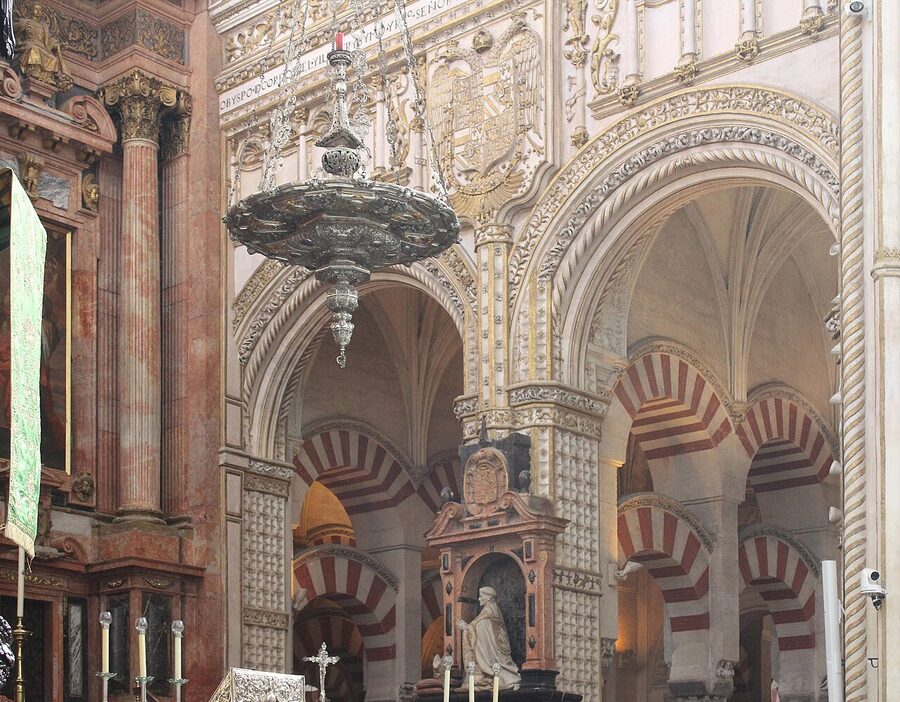
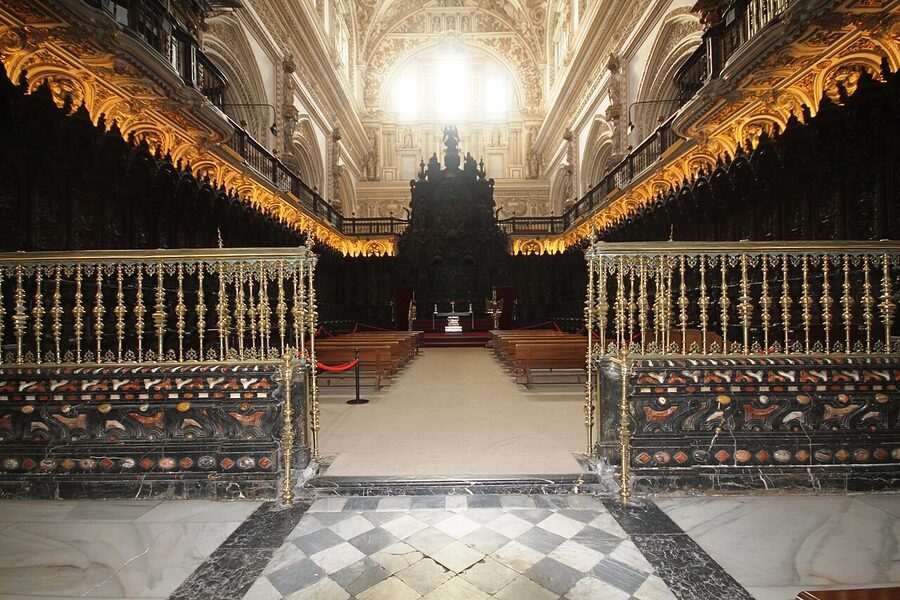
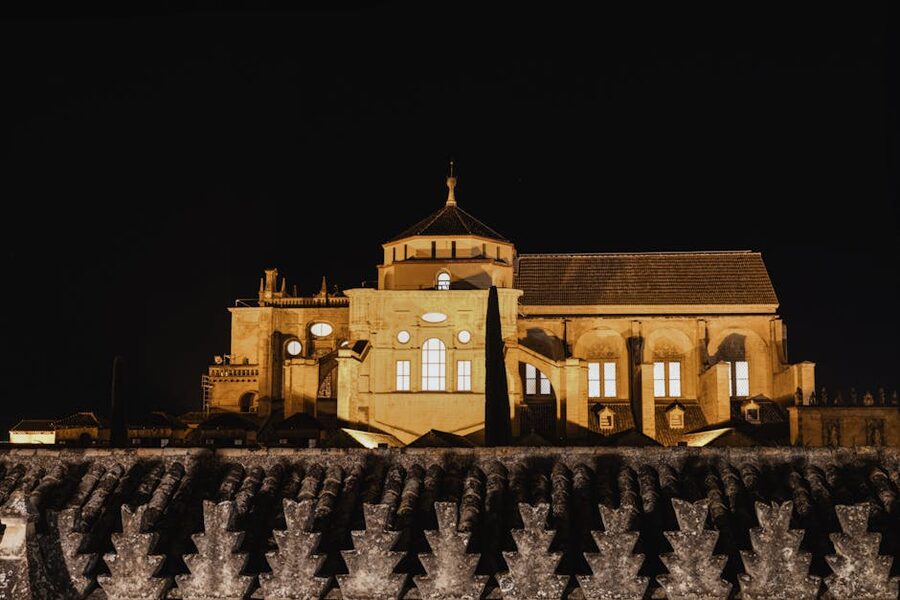
You’ll know when you’re under it. The horseshoe arches stop. The ceiling soars. There is a Gothic-Renaissance cathedral nave in front of you with a high altar, a Baroque altarpiece, intricately carved choir stalls, and a separate organ.
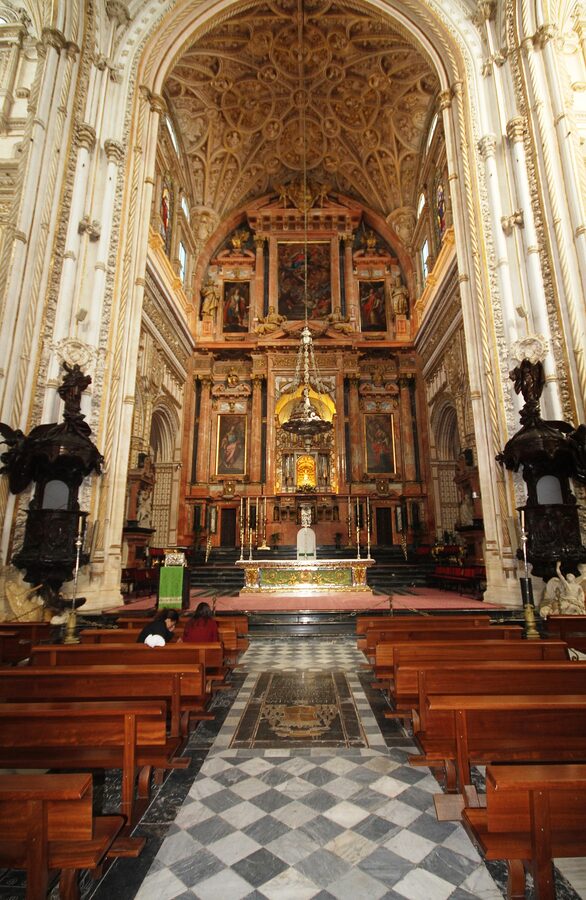
I’ll say what I actually felt, because the rest of this article is more useful if I tell you straight. The cathedral is gorgeous on its own terms. The Renaissance ceiling is one of the more impressive things you’ll see in Spain, alongside the Gothic vaulting of Seville Cathedral. The choir stalls are mahogany, carved between 1748 and 1758, with biblical scenes that are genuinely intricate. As an object the cathedral is wonderful.
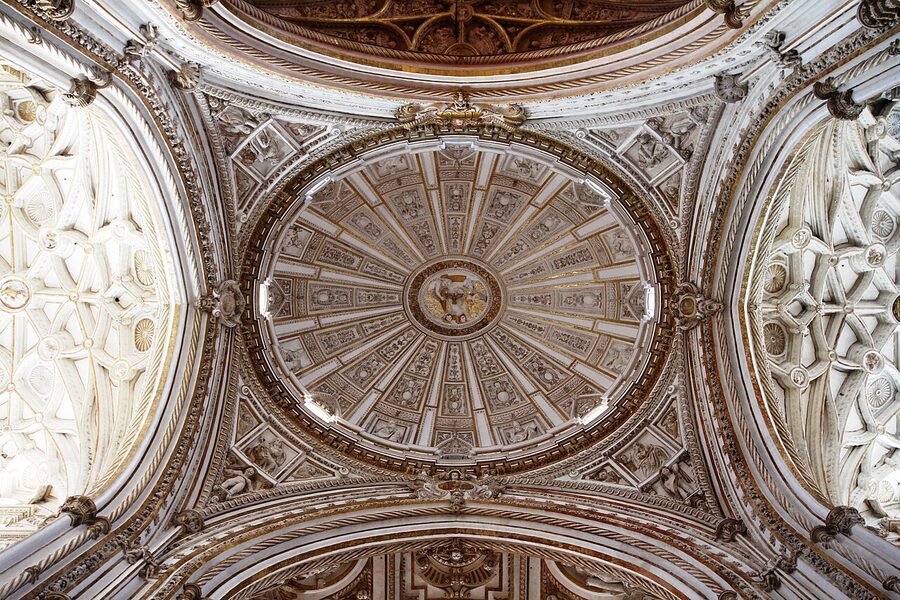
And then you turn around, walk thirty metres, and you’re back in the mosque hall.
How to actually book tickets (and the bot situation in 2026)
The Mezquita is unusual among headline Spanish monuments because it does not yet have the bot-scalper problem you’ll hit at the Alhambra Nasrid Palaces in Granada, where Nasrid timed-entry tickets sell out two months ahead. Mezquita capacity is high enough and demand is low enough that you can usually book a few days in advance. In high season (April through June, October), aim for a week ahead.
Three booking paths to know:
- Direct from the cathedral: Tickets are €13 from the official website (mezquita-catedraldecordoba.es) or the box office. Slightly cheaper than third-party. No skip-the-line.
- Skip-the-line guided tour: €30 to €40 with a licensed guide. The line situation matters more than you think (more on that below). Worth the upgrade for most visitors.
- Bell tower add-on: €3 extra, climbed separately. The original 10th-century minaret base is enclosed inside the bell tower, which is one of the building’s stranger archaeological details. Climb if you have the time and the knees.
The official “early morning free entry” slot exists. From Monday to Saturday between 8.30am and 9.30am, you can walk in for free. No tickets needed. You cannot enter the cathedral section during this hour, only the mosque hall, and photography is restricted. But if you are on a budget and you want the mosque-hall experience without the cathedral interruption, this is the actual move. Get there at 8.20am. The local pensioners come down for it; it has a quiet rhythm.
About the line, because the line is real
The official ticket queue is at the Patio de los Naranjos. In peak season it can run an hour. There is no central air conditioning anywhere in the courtyard. In July, with Andalusian temperatures hitting 42°C, an hour outside in the sun is not a small thing.
The skip-the-line tours come in through a separate group entrance and shave the queue completely. The 75-minute version moves quickly; the 90-minute version is paced enough that you can actually look at the mihrab without being herded. If you are doing this in summer, get the skip-the-line.
The four mosque expansions, briefly, because they explain what you are looking at
The mosque you walk into is not one building. It is four buildings stitched together over 200 years, each phase visible if you know what to look for. Standing at the southern end (the mihrab end) and walking north is walking back through history.
- Phase 1 (785 AD, Abd al-Rahman I): The original mosque. Smaller, more austere. The columns nearest the cathedral nave are from this phase.
- Phase 2 (836 AD, Abd al-Rahman II): Extended south. New rows of arches. The columns get more decorative.
- Phase 3 (962 AD, al-Hakam II): The mihrab phase. Pushed the qibla wall further south, added the maqsura, brought in the Byzantine mosaic team. This is the most ornate phase.
- Phase 4 (987 AD, al-Mansur): Extended east, not south, because the river prevented further southern expansion. This eastern section is plainer than the rest. You can sometimes feel the dropoff in quality.
You won’t fully decode the phases on a first walk-through. But knowing they exist explains why the prayer hall feels uneven; some bays are richer, some are simpler, and the cathedral cuts diagonally across the seam between phases 2 and 3. The guided tours mostly cover this; the audio guide does too.
Three guided tours worth booking
The Mezquita rewards a guide more than most monuments. The cathedral-inside-mosque story is dense, and the audio guide does not connect the politics, the architecture, and the Charles V regret in the way a person can. Most readers should book a guided option even if you usually prefer to wander museums on your own. These three are the ones I would actually pick from.
1. Skip-the-Line Mosque-Cathedral Guided Tour: $31
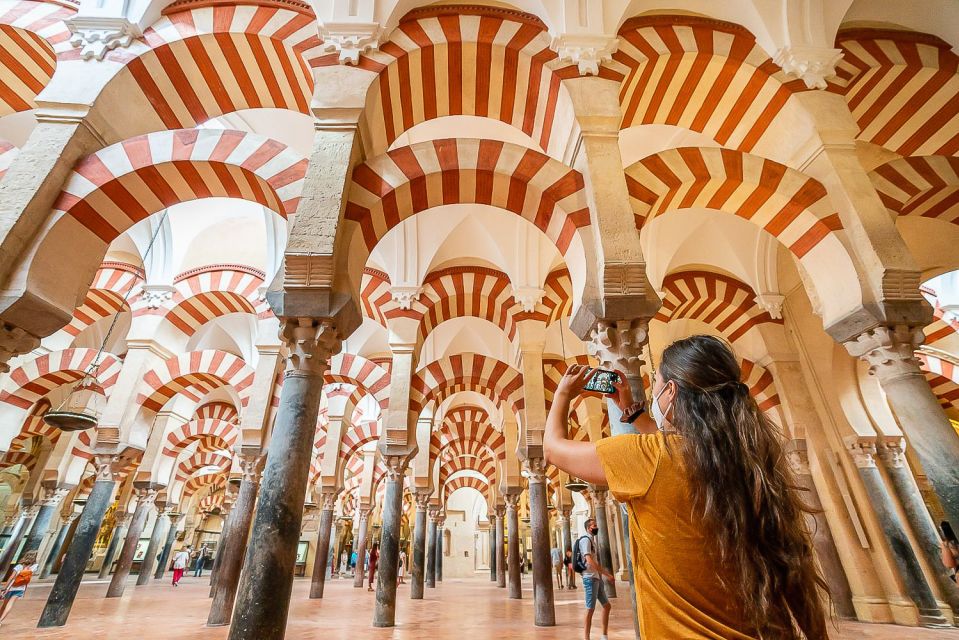
This is the volume option, which is a feature when peak-season queues run an hour. 75 minutes is enough to do the prayer hall and the mihrab properly, and our full review covers which guide spots are worth angling for within the larger group format.
2. Art-Historian-Led Mosque-Cathedral Tour: $35
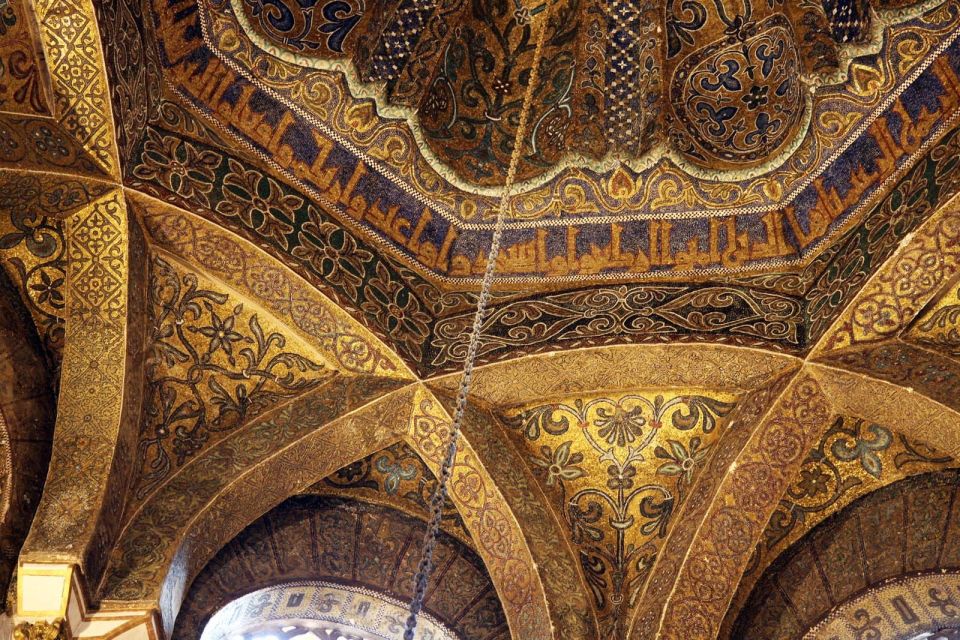
This is the right pick if you want the Caliphate-to-Reconquista politics explained, not just pointed at. 90 minutes, smaller groups, more time at the mihrab, and worth the extra four dollars over the volume option. Our review breaks down the typical itinerary and which moments the guides spend longest on.
3. Jewish Quarter, Mosque, and Alcázar Combo: $48
This is the right pick if you have a single day in Córdoba and want the integrated story, because you cannot understand the Mezquita without the Jewish Quarter that sat next to it for 700 years. Our full review explains how the four hours actually break down and which of the three sites the guide spends most time on.
Practical timing: when to go, when to skip
Open daily, but the Sunday morning slot is reserved for mass and tourists are not admitted. Plan around that.
- Monday to Saturday: 10am to 7pm
- Sunday morning: 8.30am to 11.30am (mass only, no tourists)
- Sunday afternoon: 3pm to 7pm
- Free entry hour (Mon-Sat): 8.30am to 9.30am, mosque hall only
Best slots in my experience:
- The 8.30am free hour (Mon-Sat): Quietest. Locals only. Mosque hall feels like a mosque again.
- 3pm Tuesday or Wednesday: The morning groups have left, the late-afternoon groups haven’t arrived, and the light through the western arches is the best of the day.
- Last entry, around 6pm: Cooler, emptier, the mosque hall is mostly in shadow which makes the gold mihrab pop.
Avoid: 11am to 1pm any day in spring or summer (every cruise day-trip from Málaga lands here in this window), and Saturdays in May during the Patios festival.
What’s around the Mezquita: the half-day plan
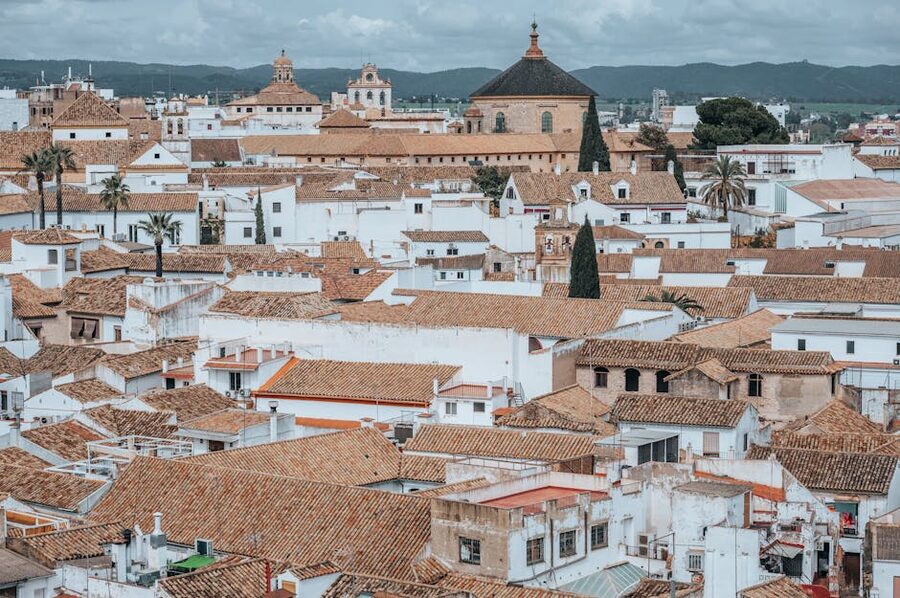
You don’t need a full day for Córdoba but you do need more than two hours. The Mezquita is at the heart of the old town, and the surrounding streets have most of what makes Córdoba a UNESCO World Heritage site in their own right. Plan three to five hours total.
The compact walking loop:
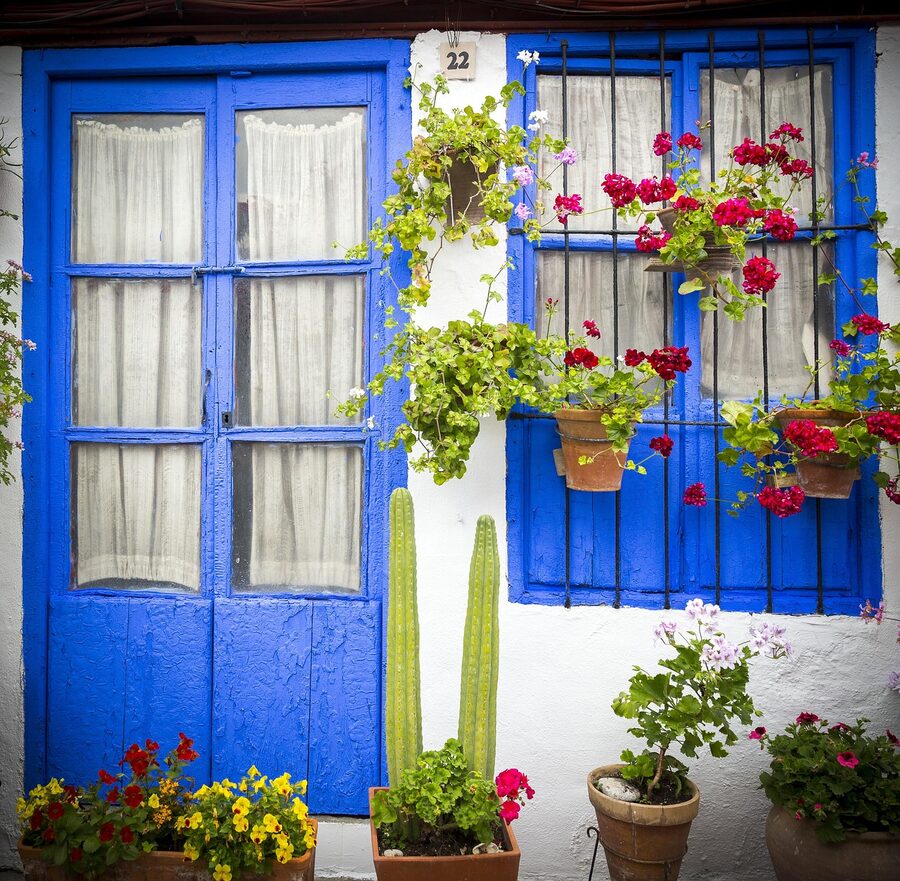
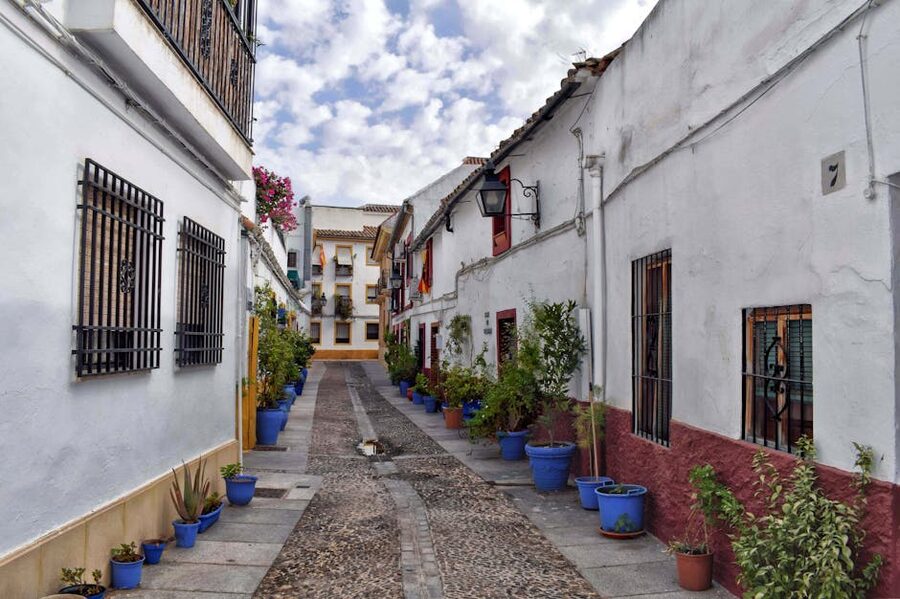
- Calleja de las Flores: Two minutes from the Mezquita’s north wall. The famous flower-pot alley with the Mezquita bell tower framed at the end. Tourist-saturated, still photogenic, ten minutes is enough.
- Synagogue of Córdoba (1315): One of only three medieval synagogues left in Spain. Tiny, free, ten minutes inside.
- Casa de Sefarad: Sephardic Jewish heritage museum. Small but well put together. Allow 30 minutes.
- Alcázar de los Reyes Cristianos: The 14th-century royal palace where Ferdinand and Isabella met Columbus in 1486 to discuss the voyage west. Modest building, beautiful gardens. Allow 90 minutes.
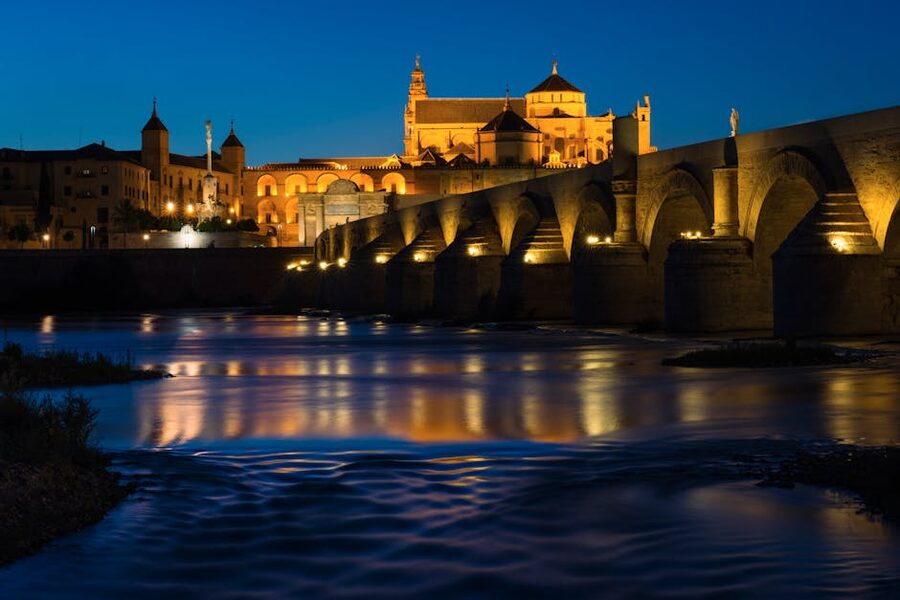
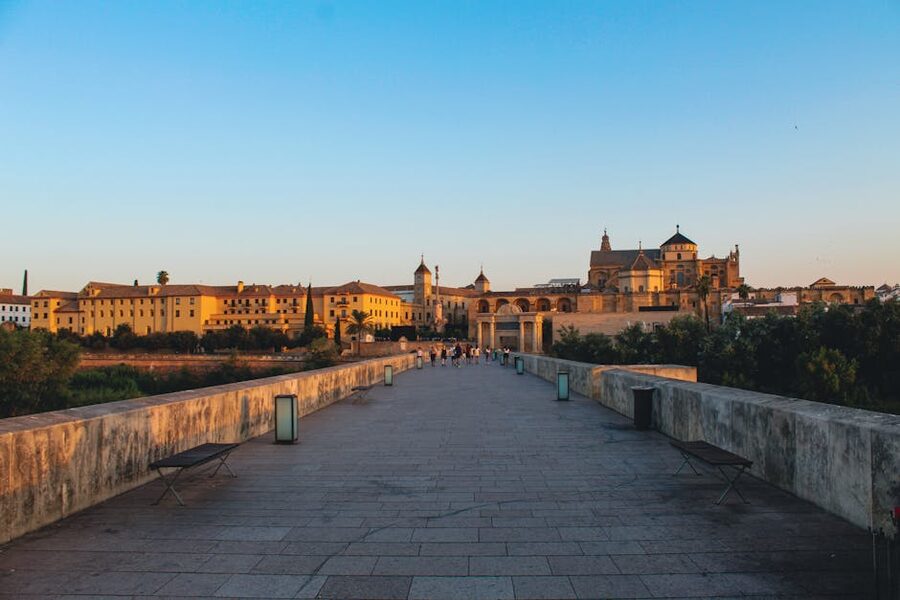
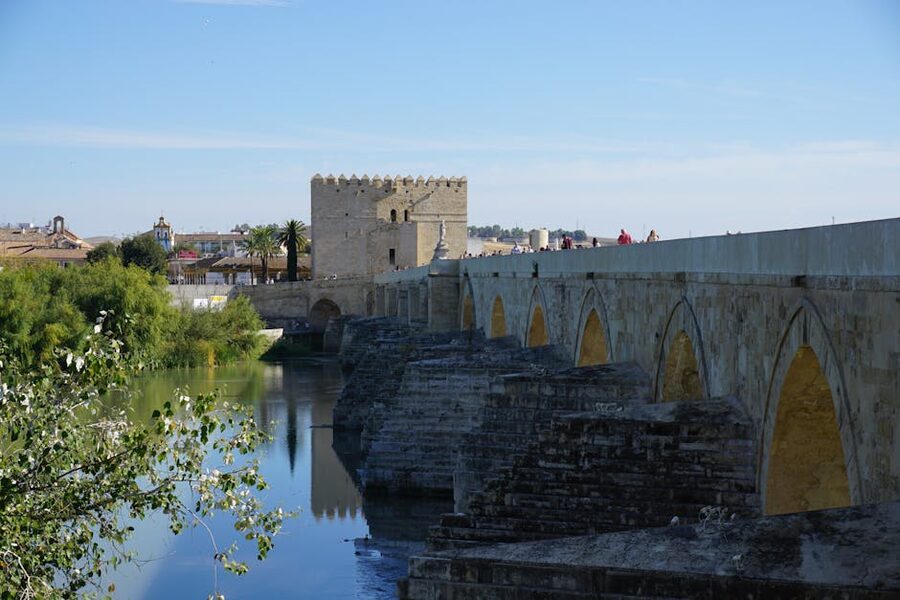
- Roman Bridge (Puente Romano): The original 1st century BC structure with later medieval rebuilds. Walk across to the Calahorra Tower for the postcard angle.
Córdoba as a day trip: the routes that work
Córdoba is a viable day trip from Seville, Granada, Madrid, or Málaga. The high-speed rail (AVE/AVANT) is the unfair advantage here. Spain’s rail network treats Córdoba as a Madrid-Seville corridor stop, which means trains run every hour or two from any of those cities.
- From Seville: 45 minutes by AVE. The standard day trip. Round-trip ticket €40 to €60 if booked a week ahead. Easiest of the four.
- From Madrid: 1h 50m by AVE. €40 to €90 round trip. Long day but doable. Leave Madrid 7am, back by 10pm.
- From Granada: 90 minutes by AVANT, or roughly 2h 30m by bus. Slightly less integrated than the Seville option because Granada-Córdoba trains are less frequent.
- From Málaga: 50 minutes by AVE. The cruise-port crowd comes from here, which is why the Mezquita gets crowded in the late morning if a ship is in.
The combo I most often recommend: Seville-Córdoba day trip, where Córdoba is your “fourth Andalusian capital” alongside Seville’s Cathedral and Giralda, the Royal Alcázar, and Granada’s Alhambra. The four together are the Andalusian-Islamic-architecture circuit, and you cannot fully understand any one of them without the other three. Córdoba is the oldest. The Alcázar is the Mudéjar conversation. The Alhambra is the late-Nasrid culmination. Seville Cathedral is the post-Reconquista answer to all of them.
The Charles V quote, and what it really means for your visit
I want to come back to the opening, because the Charles V regret is the lens that makes the whole place make sense.
Walk into the cathedral nave today and the first reaction is usually some version of “wow, this is beautiful.” Walk back out into the mosque hall and the second reaction is “wait, what would this place be without the cathedral?” That is the architectural argument the building has been having with itself for 500 years. The argument has no resolution. There is no version of the Mezquita that is “correct.”
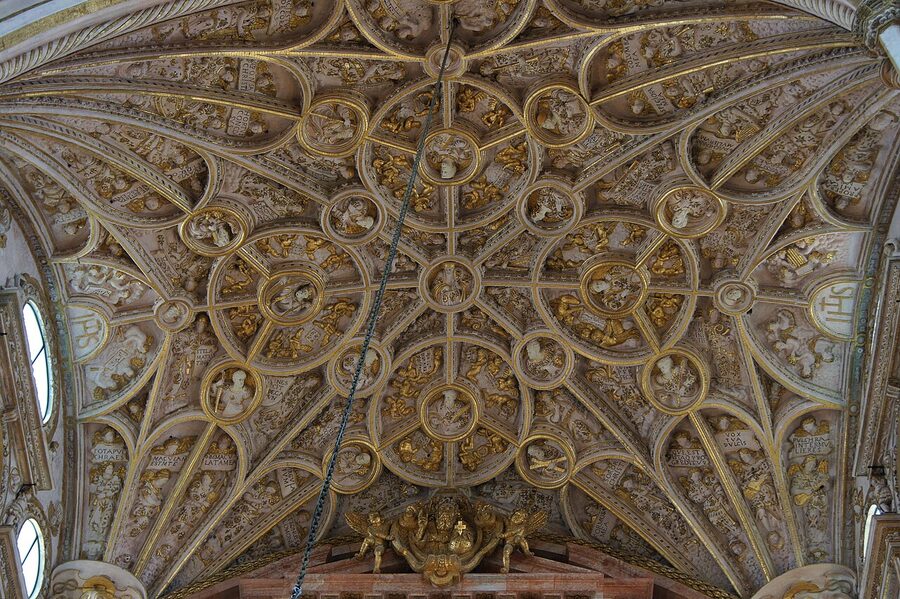
Some visitors leave angry that the cathedral exists. Some leave more impressed by the cathedral than the mosque. Some, like me, leave just thinking about Charles V standing in 1526 looking at what he had signed off on. Whichever you are, the building works on you. The Mezquita is not a single building you visit; it is a building that has visitors arguing with each other about it 800 years later, which is more than most buildings can claim.
What goes well with a Mezquita visit
If Córdoba is part of a wider Andalusian week, the most natural pairings are the other Islamic-influence sites. The full Andalusian-Islamic-architecture circuit is the Mezquita, the Royal Alcázar of Seville, and the Nasrid Palaces of the Alhambra in Granada, with Seville Cathedral and the Giralda as the post-Reconquista bookend (the Giralda is the converted minaret of the Almohad mosque that Seville Cathedral replaced; Córdoba kept the mosque, Seville demolished it). If your trip pulls you north to Toledo from Madrid, that’s the same multi-faith historical capital story: Christian, Muslim, and Jewish communities living in close proximity for centuries before 1492, with a similar architectural archaeology underneath the modern surface. Outside Iberia, the closest emotional cousin is the Anne Frank walking tour in Amsterdam, where a contested faith-and-power story is read off the buildings of a single neighbourhood. And if you have an evening in Córdoba, Sevillian flamenco at a tablao is the closest equivalent in this region; Córdoba has one good tablao but the genre’s homeland is Seville. For something more modern, the Setas de Sevilla is the contemporary Spain conversation; the contrast with the Mezquita’s 1,200-year accretion is genuinely striking.