
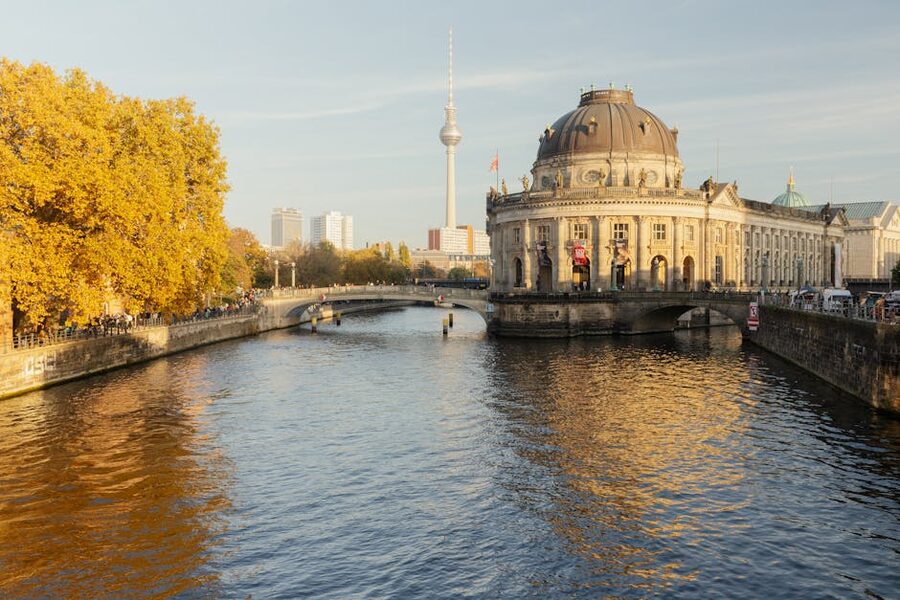
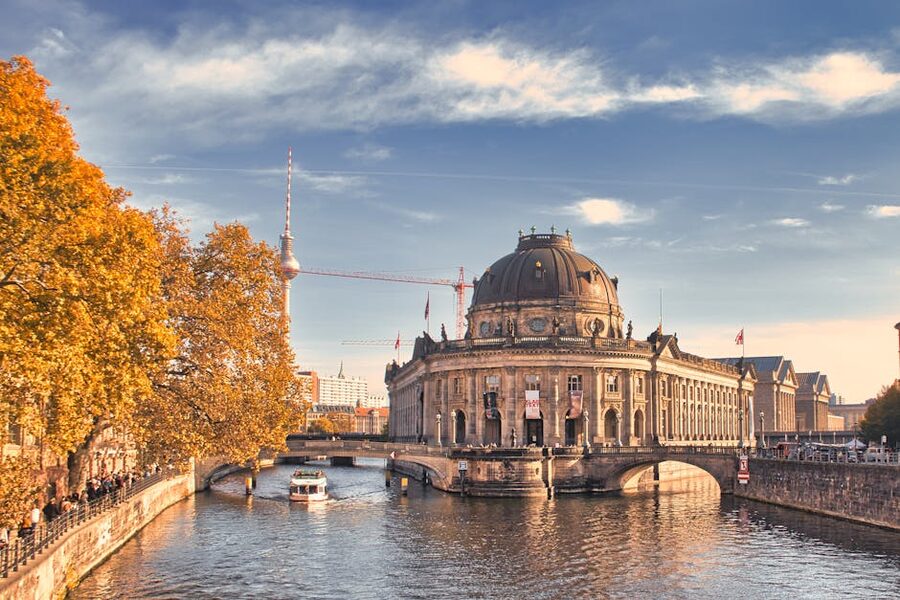
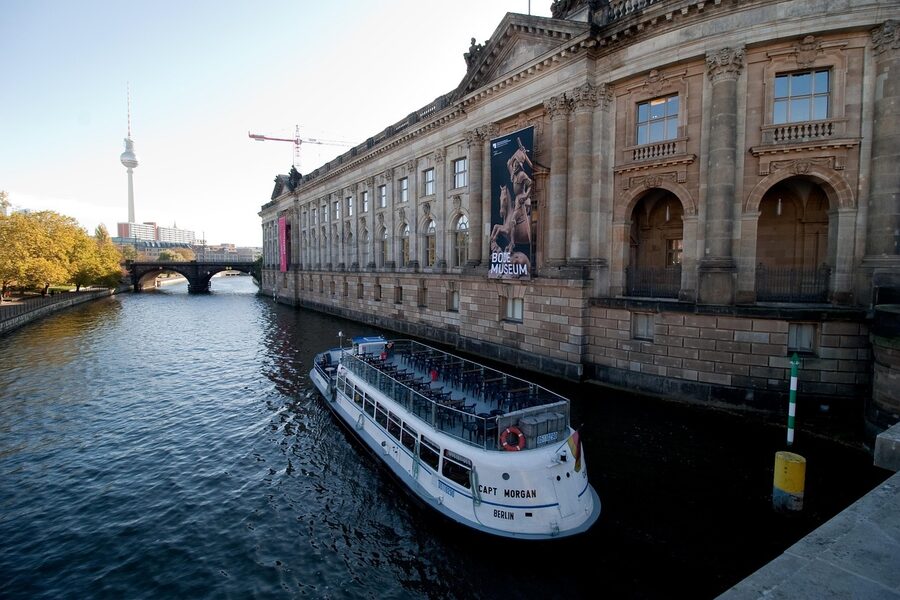
The boat clears the bend just past Friedrichstrasse and the Bode-Museum’s stone dome lifts out of the water on your right. From the deck it looks like the building is wading. The sandstone wall comes down to within a metre of the river, and at this angle, sitting low on a Spree tour boat, you read the 1904 Italian Baroque facade the way the architect actually planned it: from the water.
That single moment is why I keep recommending the cheap one-hour Spree cruise to first-time visitors. There are bigger boat tours in Berlin and longer ones, but this is the one that reframes the whole city for you in 60 minutes for about $22. You finish it knowing where the government district is, where Museum Island sits, where the eastern industrial port begins. You can walk the rest of your trip with a map in your head.
In a Hurry: Three Spree Boats Worth Booking
- 1-Hour City Tour from Friedrichstrasse: $22. The default. Loops through Museum Island, Charité, Government District. Check Availability
- 2.25-Hour Spree River Tour: $34. Same core route extended west to Charlottenburg side, twelve audio languages, more time per landmark. Check Availability
- 3.25-Hour Spree and Landwehrkanal: $38. Adds the Kreuzberg canal cut, over 40 bridges, food and drink on board. Check Availability
Why This Specific Tour, From This Specific Pier
Berlin’s Spree is not a tourist canal. It’s a 403-kilometre working river that runs through Tegel airport’s western end, picks up the city centre at Charlottenburg, threads behind the parliament, cuts through Mitte under the Museum Island bridges, and exits east past the industrial port and the East Side Gallery before joining the Havel at Spandau. The bit you see on the one-hour cruise is the central 6 km. That’s where the city’s editorial spine lives.
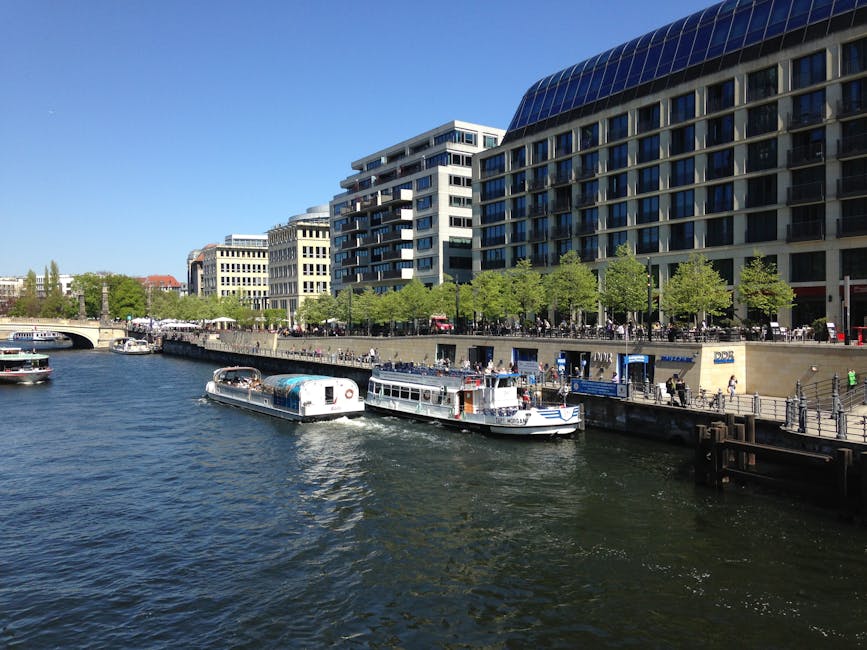
The Friedrichstrasse pier (Reichstagufer) is the operational starting point for almost every tour you’ll find online. It’s a four-minute walk from Friedrichstrasse station, two minutes from the Bahnhof Friedrichstrasse Charite tram stop. Hackescher Markt, Nikolaiviertel and Jannowitzbrücke piers all run similar loops, but Friedrichstrasse is the one with the most departures, the shortest queues, and the cleanest connection back to the centre when you’re done. If you’ve just come down off the Reichstag dome tour three blocks west, you can walk straight to the pier and chain the two together in a morning.
Pre-Book Online or Stand in Line
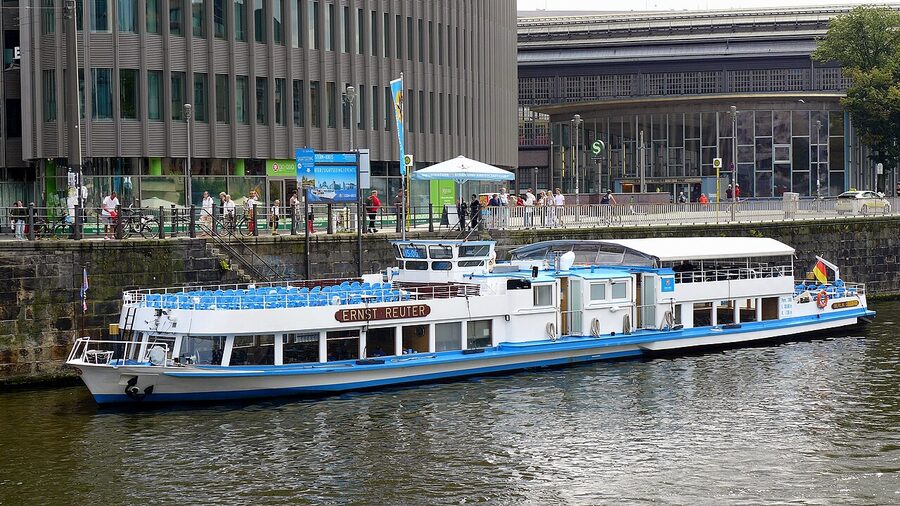
Here’s the thing nobody tells you in the SERP results: the cheap walk-up tickets and the online booking are the same price. The difference is the queue. Walk up to the Friedrichstrasse pier on a July afternoon at 2pm and you’ll wait 30 to 45 minutes to board. Pre-book online and you skip past the queue with a phone screenshot, board first, and pick the seat you want. The boat fills bottom-deck-first by walk-ups, which means the people who paid the same and pre-booked end up with the open-air upper deck. That’s where you want to be.
Bilingual live-guide tours run a few euros more, usually around $30. They’re worth it if you’re a history-first traveller and you’d rather hear a person tell you what you’re passing than press play on a handset. The audio guide on the standard tour is fine, but it pauses between stops, and the live guide will riff on whatever the boat happens to be passing right now. On a clear afternoon with a guide who knows their material, this turns into the best 60-minute history lesson you’ll get in Berlin.
What You Actually See, In Order, From Friedrichstrasse
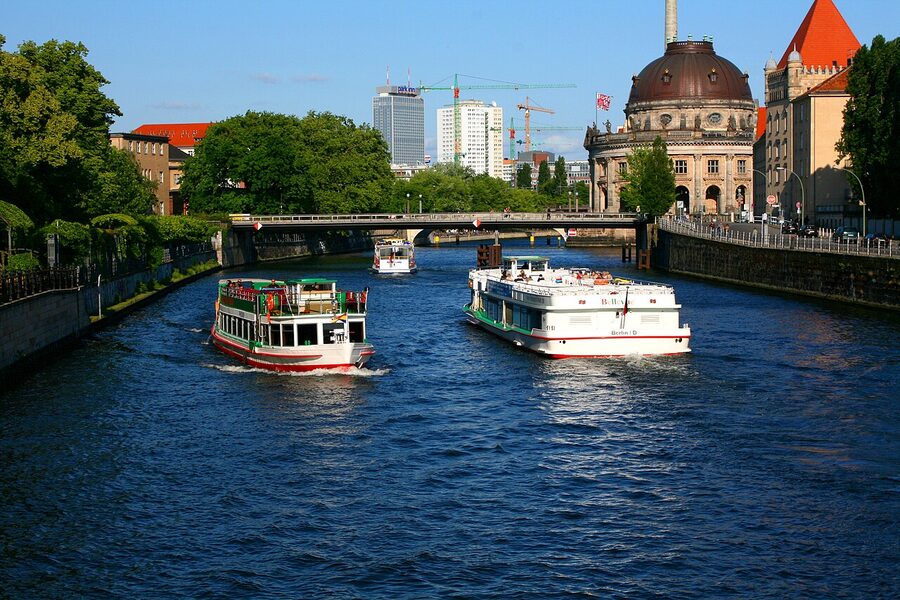
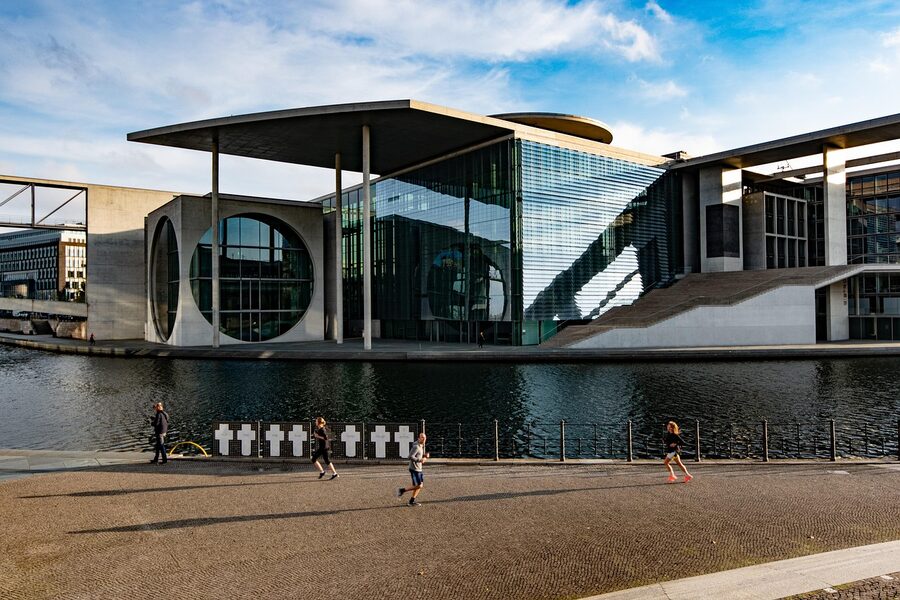
The boat pulls out east. You’re moving away from the pier with the Reichstag at your stern, and the first 90 seconds give you the parliament’s back: the Paul-Löbe-Haus on your left, the Marie-Elisabeth-Lüders-Haus on your right, the Reichstag dome itself just visible behind. Then you’re under the railway bridge by Friedrichstrasse station and the city closes in around you.
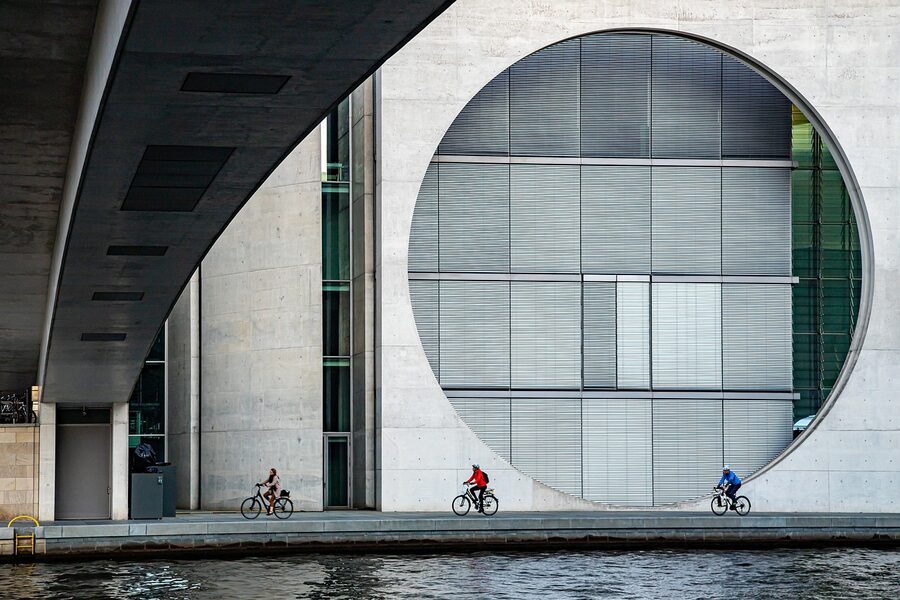
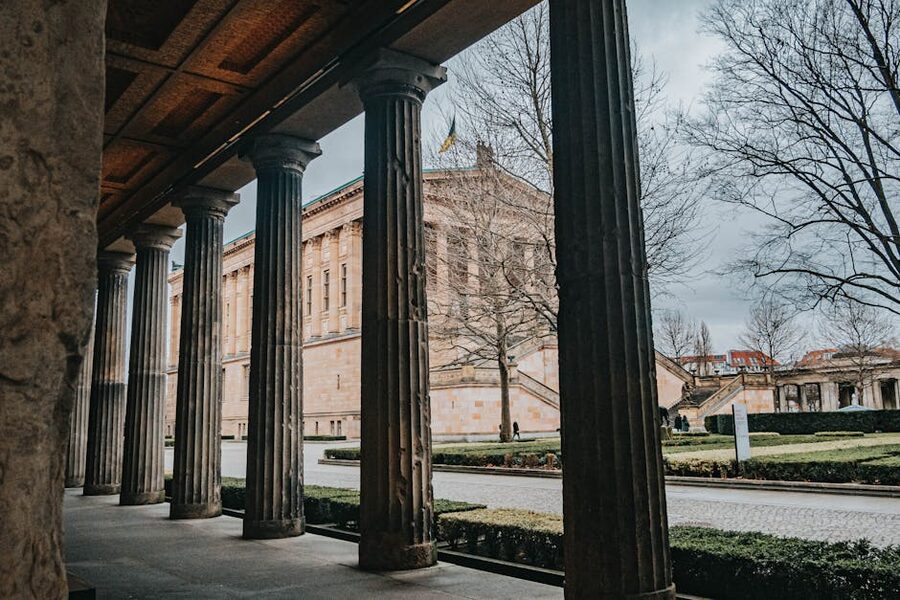
Three minutes in, you reach Museum Island. The Bode-Museum (1904) on your right, then the back of the Pergamon, the Neues Museum, the Alte Nationalgalerie, and at the far end the Altes Museum (Schinkel, 1830) facing the Lustgarten. The boat threads the narrow eastern channel here. From the water you see the Museum Island as the architects of 1820-1930 intended, as a single architectural composition rising from the river, not as five separate buildings you queue for from the street side.
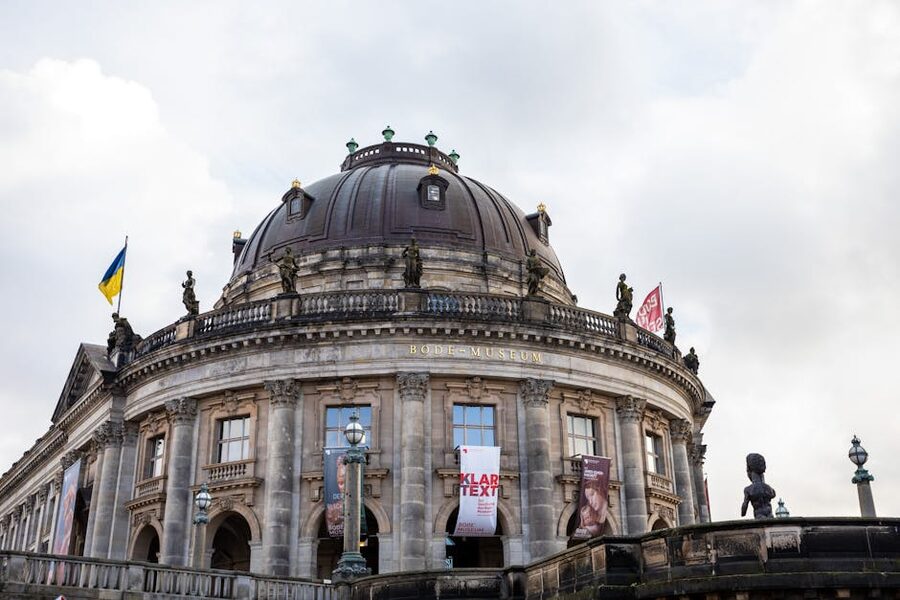
If you’ve already done the inside of these buildings, the boat is the second pass that connects them in your head. If you haven’t yet, the boat tells you in 8 minutes which one you actually want to enter. Most travellers pick the Pergamon (currently part-closed for renovation through 2027, check before you go), but the Neues Museum’s Egyptian collection (Nefertiti, Chipperfield’s reconstruction work) is the real surprise pick. We’ll keep talking about Museum Island in the Jewish Museum Berlin guide because the Liebeskind building tackles a parallel question: how do you build a museum about something that can’t be aestheticised?
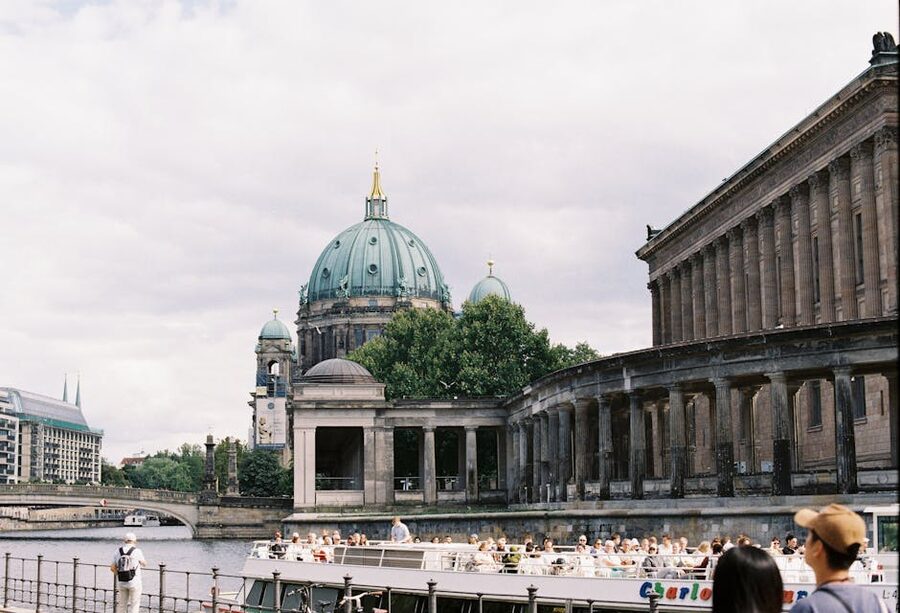
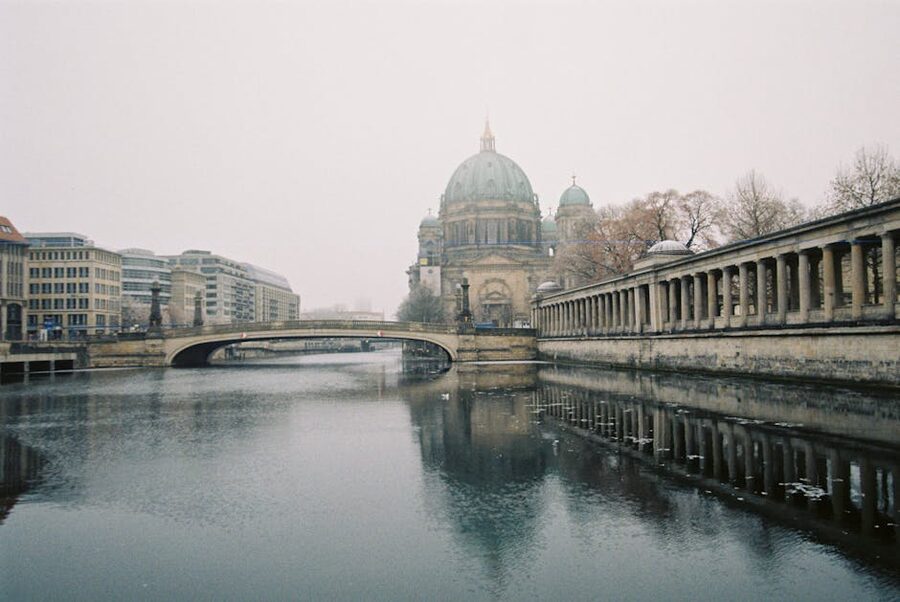
You leave Museum Island and the Berliner Dom rises on your left. This is where most cameras come out. The cathedral is over-restored 1905 Wilhelmine baroque, big and gold and intentionally pompous, but from the water at golden hour it earns the photograph. Ask the audio guide what happened to it in 1944 and you’ll get the standard “heavily damaged” line. Ask a live guide and you’ll get the reconstruction politics.
Past the Dom, the Nikolaiviertel appears on the right, the only piece of medieval Berlin that survives, mostly because it was rebuilt in the 1980s by East Germany as a 750th-birthday gift to itself. The buildings look authentic-old. They’re not. They’re 1980s GDR replicas with electrical conduits behind the half-timbering. Worth knowing if you visit on foot afterwards.
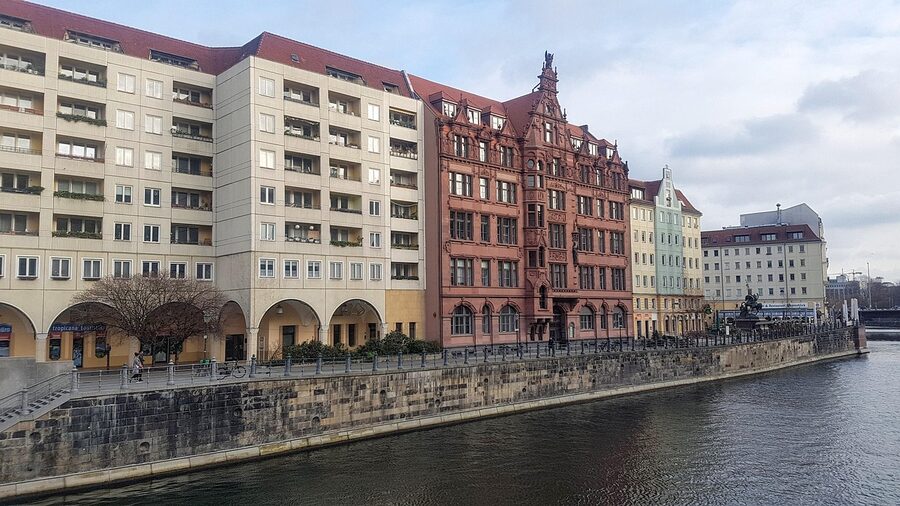
Then the Rotes Rathaus (Red Town Hall) on your right, the seat of Berlin’s mayor since 1869, brick and Neo-Renaissance. The boat starts its loop here, swings under the Mühlendamm bridge, and begins the return run. You haven’t gone east of Alexanderplatz on the standard one-hour route. To see the East Side Gallery from the water you need the longer 2.25-hour tour or the 3.25-hour Spree-and-Landwehrkanal version, which we’ll get to.
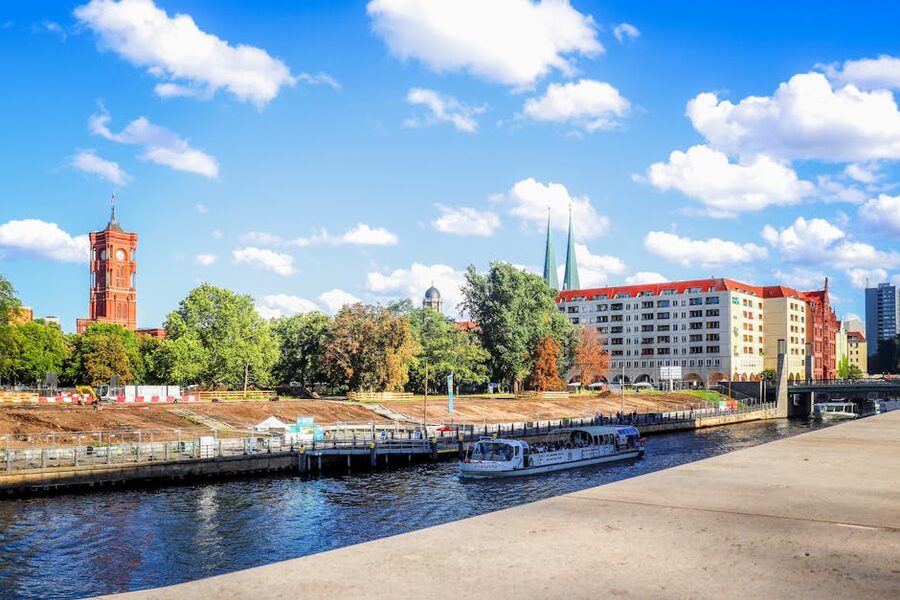
The Government District, From the Back
Returning west, the boat passes the parliament again, this time slower and from a slightly different line. The Government District has been built since the late 1990s with the Spree as its actual fourth wall. The Reichstag dates to 1894, but the rest, the Paul-Löbe-Haus, the Marie-Elisabeth-Lüders-Haus, the Bundeskanzleramt, are all 1998-2001, and they are all designed to be seen from the water as much as from the land.
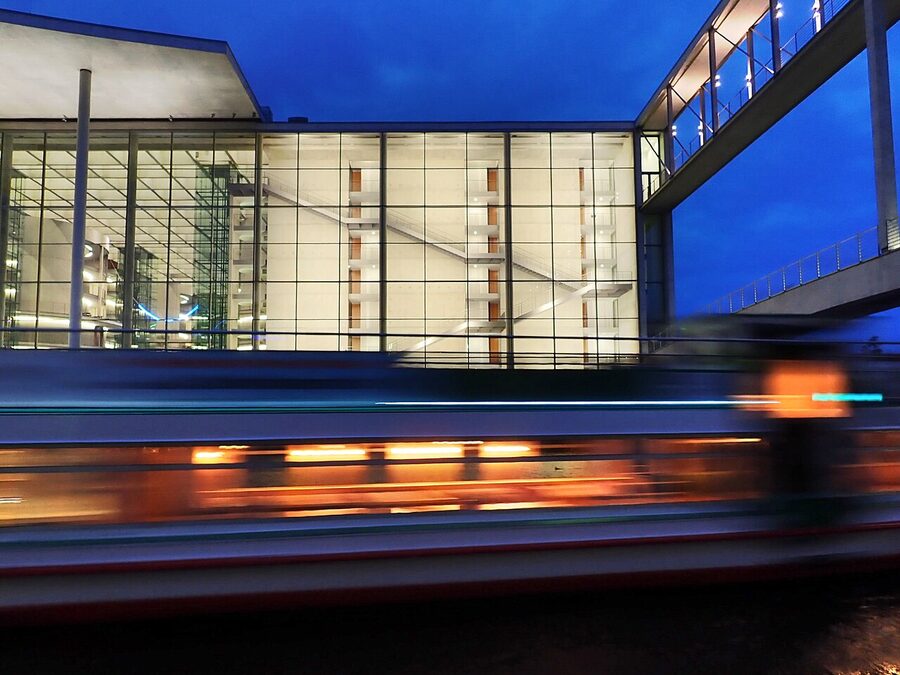
The Bundeskanzleramt is where the Chancellor works, what Berliners call the “Waschmaschine” (washing machine) for the cube-and-circle facade. Its terraces come right down to the water. On a Wednesday morning when the Bundestag is in session, you can sometimes catch a press boat with cameras pointed at the parliament’s back windows. There’s a small pedestrian band-aid bridge across the Spree that physically links the east and west halves of the parliament campus. The boat passes under it. Everyone looks up.
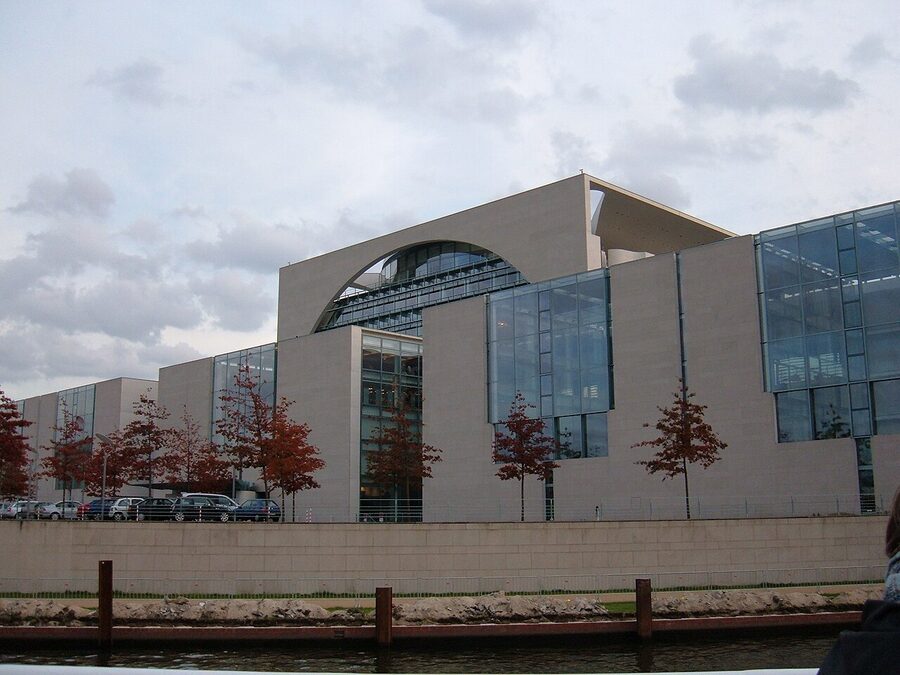
This back-of-parliament view is the thing the bus tours can’t give you. The Berlin hop-on hop-off stops at Brandenburger Tor and the Reichstag’s front entrance, but the actual political-architecture spine of post-1990 Germany lives on the river side. You only see it from the boat, or by walking the riverbank from Hauptbahnhof at night when the Bundeskanzleramt is lit up. The boat is the easier option.
The Three Boats, Compared
Three products, same family of operators, three different lengths. Pick by how much time you have and by whether you’ve already done a city walking tour.
1. 1-Hour City Tour by Boat from Friedrichstrasse: $22
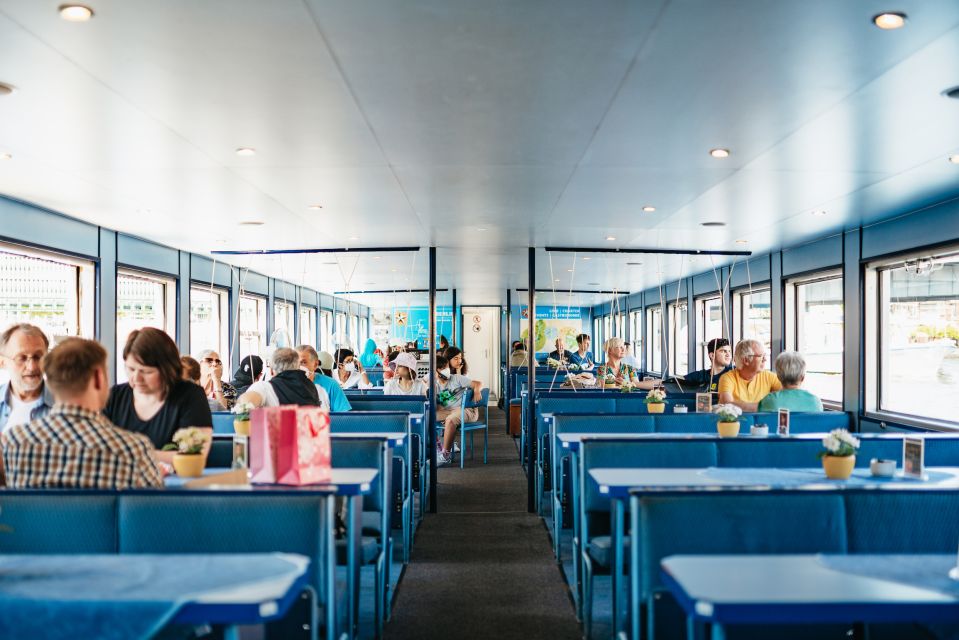
This is the default pick. Sixty minutes covers the Government District, all five Museum Island buildings, the Berliner Dom, the Nikolaiviertel and the Rotes Rathaus, with multilingual audio at every seat. Our full review of the 1-hour Spree cruise goes deeper on the seating layout (the upper deck is the only seat worth taking in summer) and which side of the boat to pick.
2. Spree River Tour, 2.25 Hours: $34
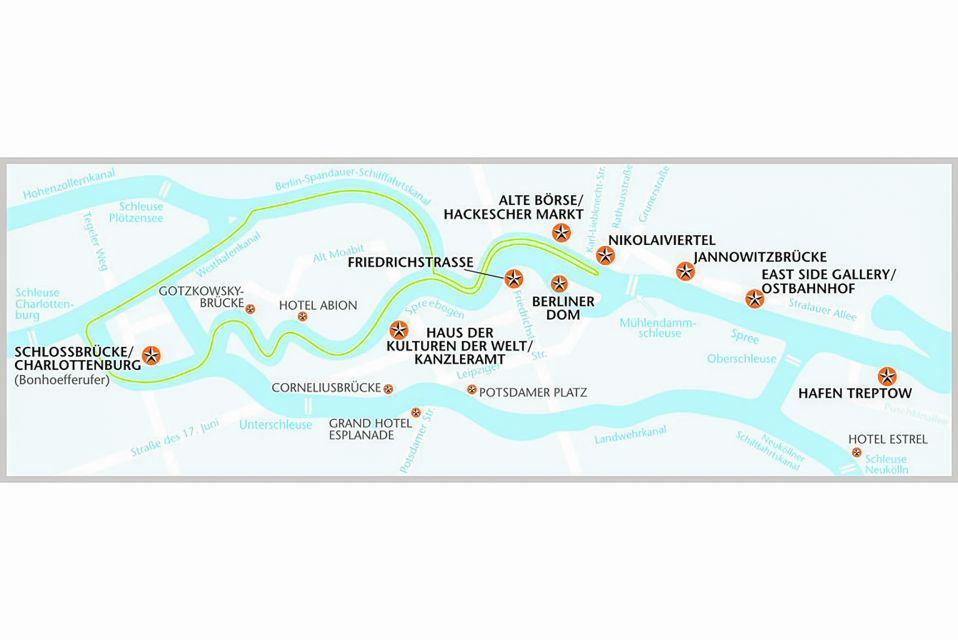
Pick this one if you want the full Spree central spine without the Landwehrkanal cut south. Same multilingual audio in twelve languages, more breathing room, and the western leg adds the Schloss Bellevue and Hauptbahnhof reach that the standard tour skips. Our 2.25-hour Spree review covers the seat-guarantee policy, which matters in July.
3. 3.25-Hour Spree and Landwehrkanal Tour: $38
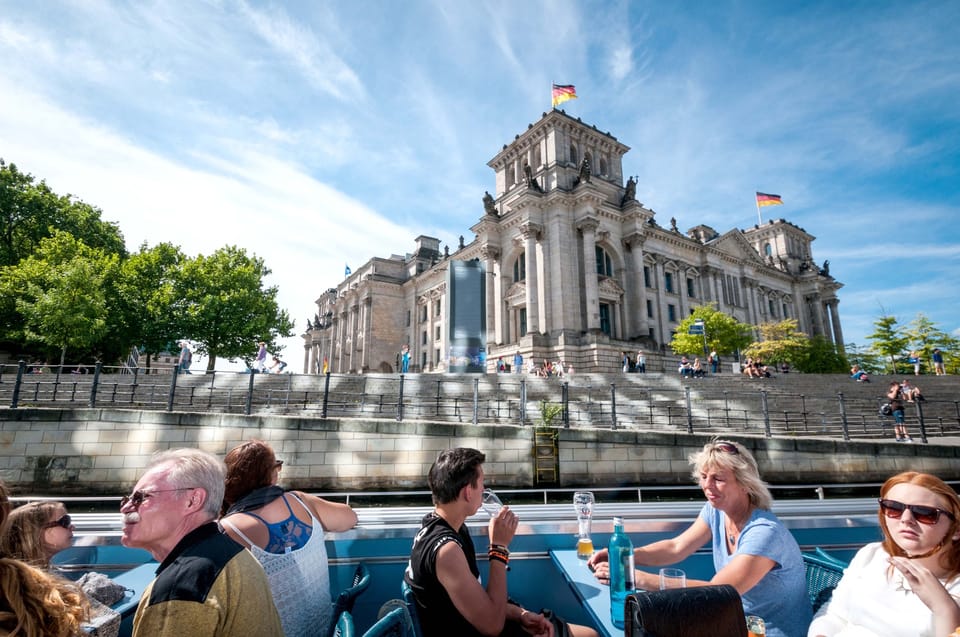
The serious option for travellers who already know they like boats. The Landwehrkanal cut south through Kreuzberg is greener, slower and shows you a working residential side of Berlin you’d otherwise miss. Our 3.25-hour Spree and Landwehrkanal review has the bridge count and the Kreuzberg landmarks worth knowing.
The Landwehrkanal, If You Take the Long One
The 3.25-hour tour does what the cheaper boats can’t. After the central Spree loop you cut south through the Mühlendamm lock into the Landwehrkanal, an 1840s artificial waterway that wraps around the south of central Berlin through Kreuzberg, Schöneberg and Tiergarten before rejoining the Spree near Charlottenburg. The water is calmer. The trees are denser. The pace is half-speed.
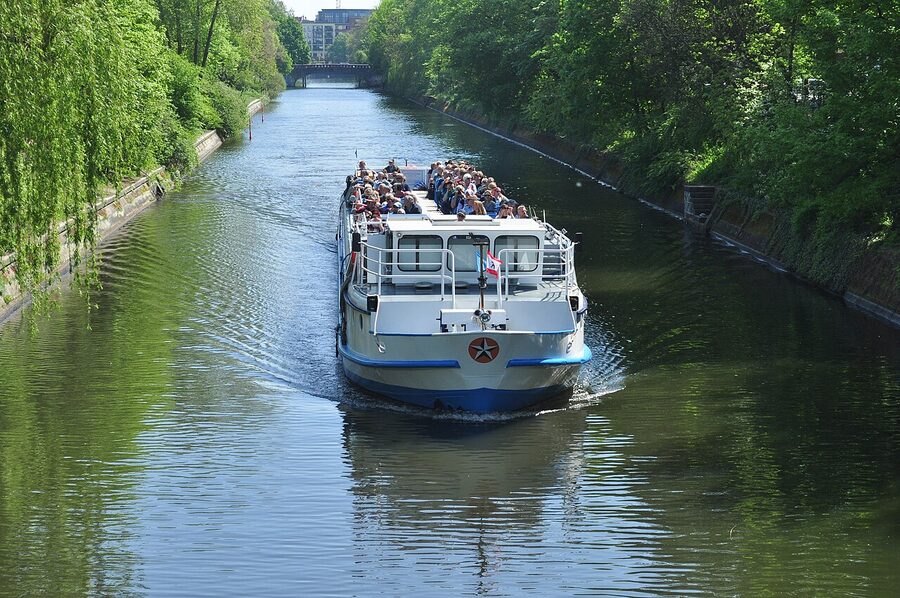
You pass the Urban-Hafen, the Maybachufer, the back of the Görlitzer Park area where the city’s grafitti tradition really started. None of this is on the standard route. If you’ve already done the central Spree once and want a slower, more local second take, the Landwehrkanal hour is what you’d extend. The audio commentary thins out here on purpose; this stretch is meant to be looked at, not narrated. The on-board food and drink is fine, not memorable, but a beer on the upper deck for an extra hour is reasonable.
Compare this to the Amsterdam canal cruises and you’ll see how different the two cities’ canal systems are. Amsterdam’s canals are 17th-century commercial infrastructure, narrow and tight. Berlin’s are 19th-century residential infrastructure, wider, leafier, more like a park. The boats on each are also different: Amsterdam’s covered glass-roofed cruisers, Berlin’s open-deck broad-beams. The water-tour-of-a-capital genre has at least four legitimate variants and Berlin’s is the most relaxed.
The East Side Gallery (You Need a Different Tour)
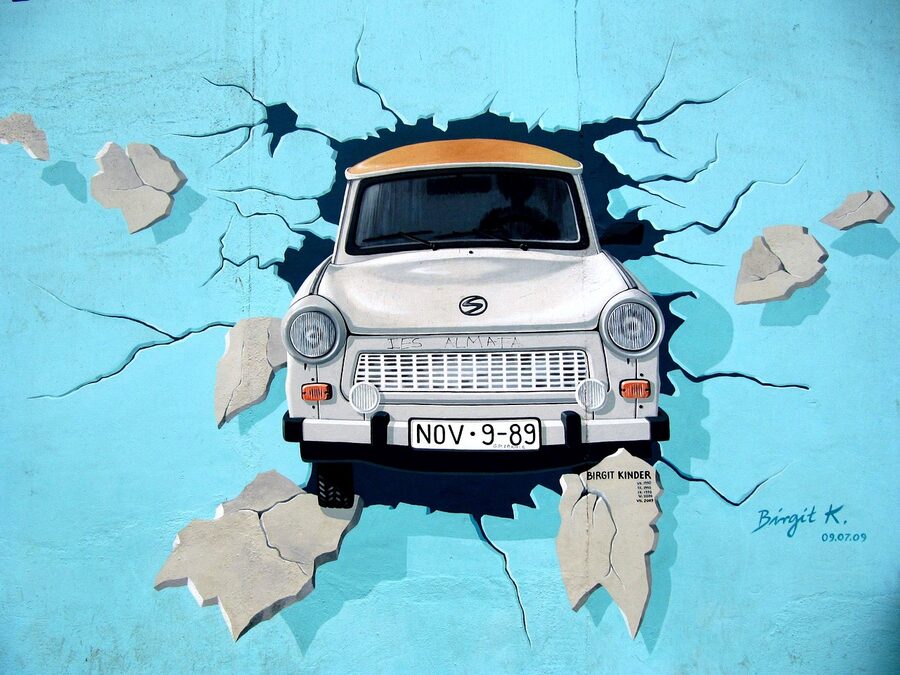
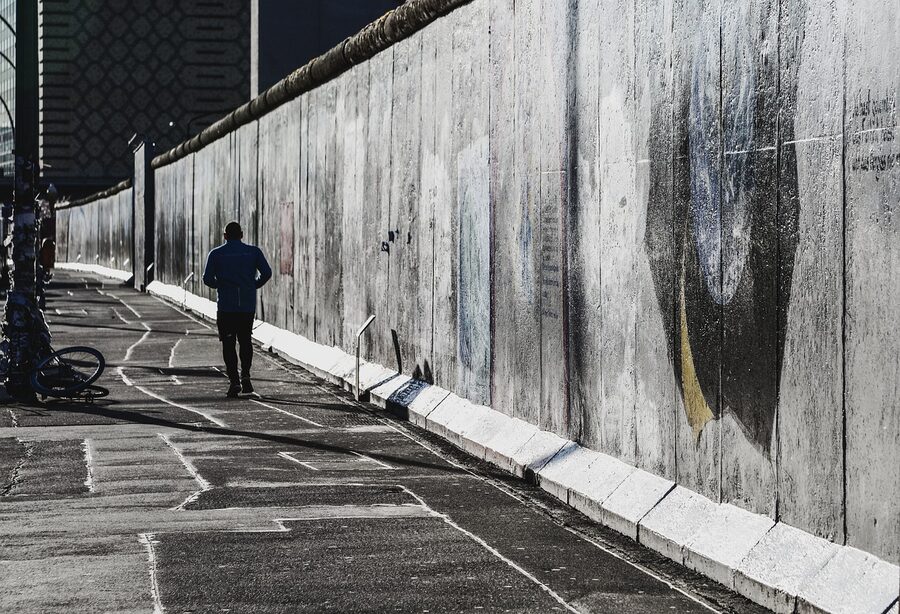
One thing the standard one-hour cruise doesn’t reach: the East Side Gallery. The 1.3-kilometre stretch of the Berlin Wall preserved on the eastern bank of the Spree, painted by 118 international artists in 1990 immediately after the Wall fell, is east of the loop’s eastern turn. You either need the 2.25-hour tour (which does extend that far on most operators’ routes) or you visit on foot from Warschauer Strasse station.
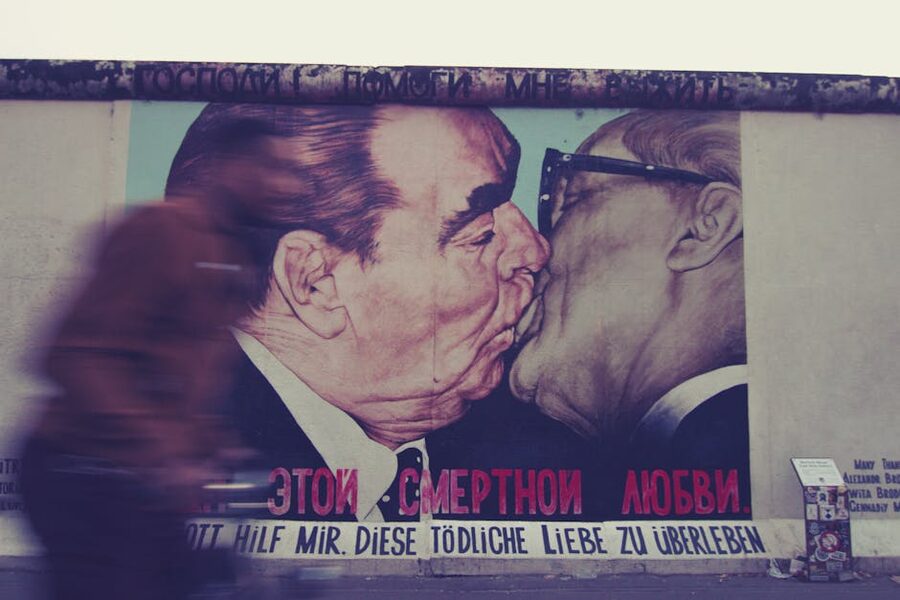
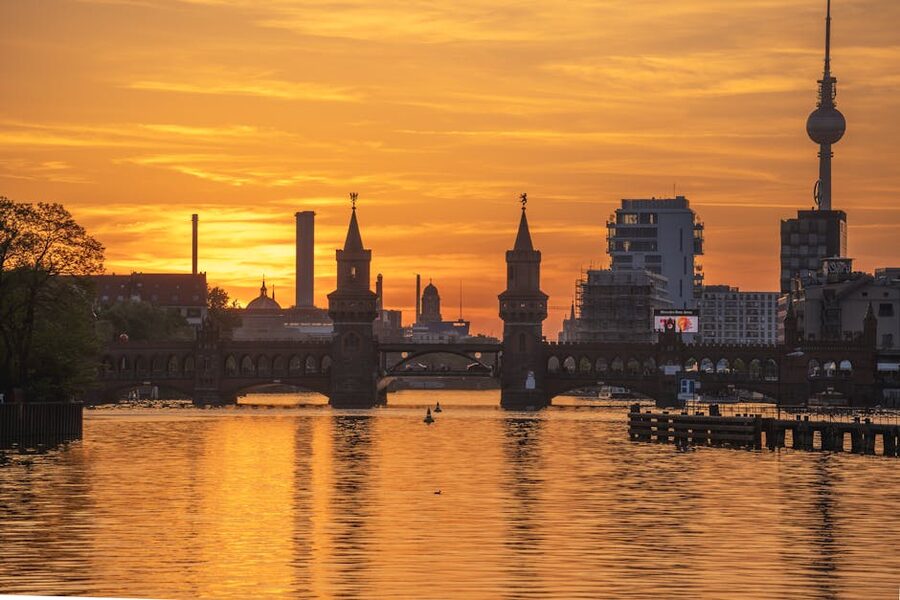
If you do see the East Side Gallery from the water, the Oberbaumbrücke approach is the visual headline. The 1896 double-decker brick bridge, closed at the Wall and reopened in 1994, frames the East Side Gallery wall stretch on its eastern flank with the TV Tower behind it. From a tour boat at golden hour the composition is the postcard shot of post-1989 Berlin. From the bank you get the murals; from the water you get the bridge-and-skyline frame.
Pair the boat tour with a walk along the East Side Gallery itself. The murals are best read in order, west to east, starting near the Oberbaumbrücke. There’s a Third Reich and Cold War walking tour that integrates the East Side Gallery section with the Wall Memorial at Bernauer Strasse and the Topography of Terror. That’s the version of Berlin’s 20th-century history we recommend for first-time visitors who want one structured walk through the whole arc.
How Museum Island Reads From the Water
Museum Island is five buildings on a narrow island in the middle of the Spree. From the street side, walking up Bodestrasse, you see them as one architectural complex with a confused frontage. From the river, on a tour boat that takes 4 minutes to traverse the island’s length, you see them as a deliberate composition: the Bode-Museum’s Italian Baroque pavilion at the prow (1904), the Pergamon’s industrial-monumental rectangle (1930), the Neues Museum’s Chipperfield-restored shell (originally 1859, restored 2009), the Alte Nationalgalerie’s neoclassical temple (1876), and the Altes Museum (1830, Schinkel) at the southern end.
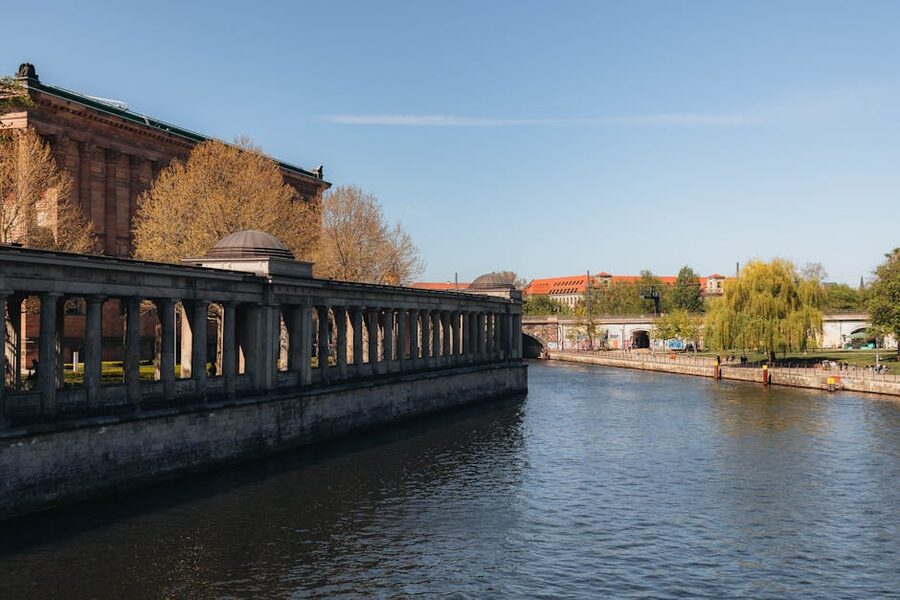
The buildings span exactly 100 years of German museum-building, from Schinkel’s neoclassicism through Kaiser Wilhelm’s Italian Baroque through Weimar industrial-monumentalism. UNESCO listed the whole ensemble in 1999. The boat tour shows you the chronology in physical order. If you stand on the bow facing forward, you literally read the architectural history left to right as the buildings pass.
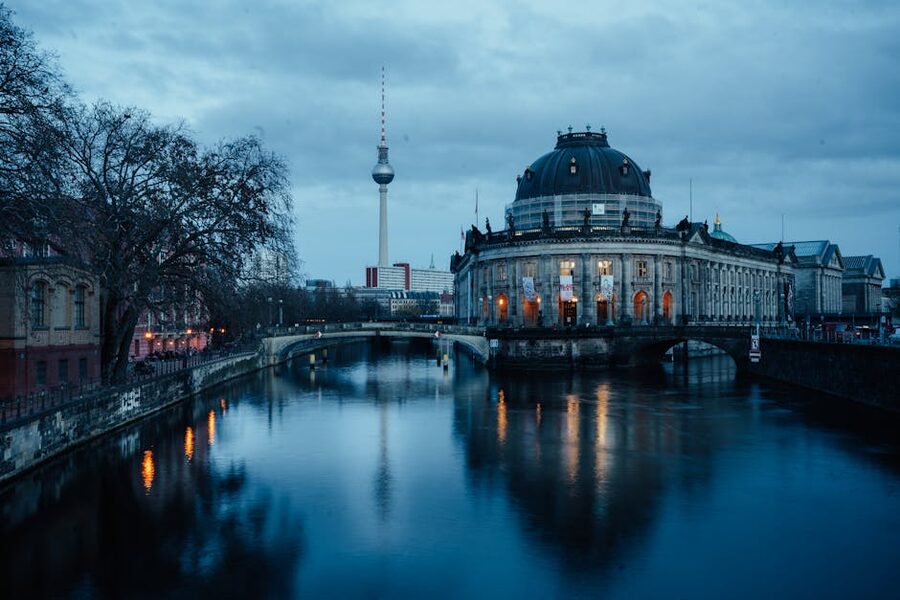
If you want to actually go inside one of these buildings the same day as the boat tour, the geography works. The Pergamon’s Vorderasiatisches Museum (Ancient Near East) is partially open during the renovation. The Neues Museum has Nefertiti in the bust gallery and the Egyptian Bürgerbau on the upper floor. The Altes Museum at the southern tip has the antiquities collection. Pair the boat with one museum, not three. The Jewish Museum Berlin is the alternative, and a more emotionally serious choice if you only have one museum afternoon.
Schinkel’s Spree, 200 Years Ago
Karl Friedrich Schinkel, the 19th-century architect responsible for the Altes Museum, the Schauspielhaus on Gendarmenmarkt and a third of the prestige buildings in pre-1914 Berlin, painted the Spree at Stralau (the eastern reach the boat passes on the longer tour) around 1817. His painting shows what the river looked like before industrialisation: rural, pastoral, rowboats, washing on the bank. The Stralau peninsula is now a luxury riverside development. The Spree’s transformation from rural pastoral to industrial spine to post-1989 glass-and-steel governmental backbone is the actual story you’re floating through.
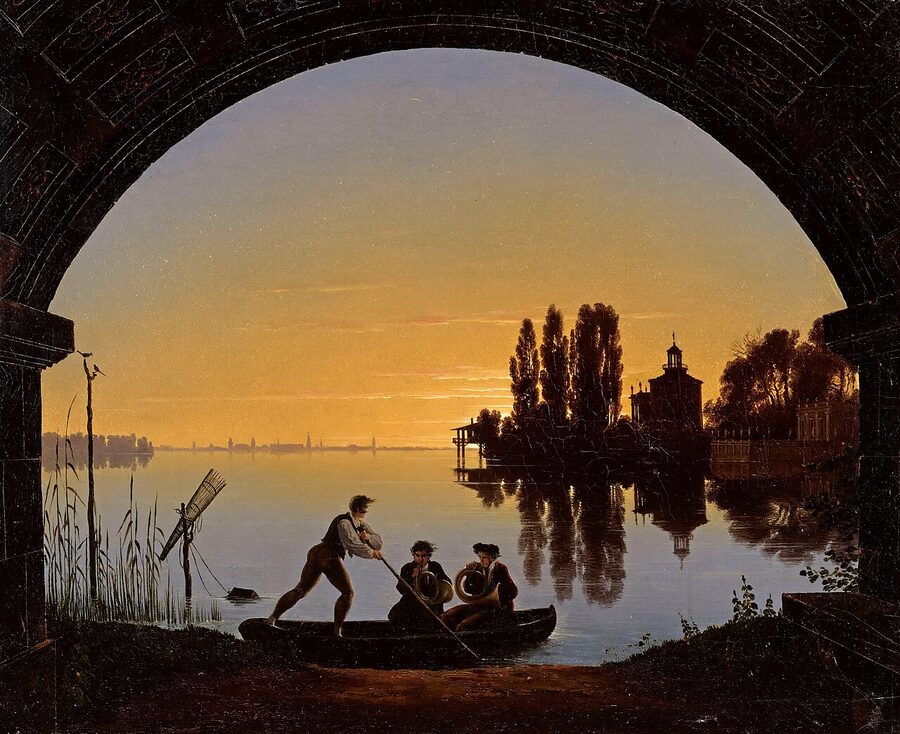
This is the layer most boat tours skip. The audio commentary tells you about the Reichstag and the Bode-Museum. The Schinkel-painted Spree, the working river, the eastern industrial port, the vanished bathing beaches at Treptower Park, all these earlier Berlins are visible if you know what to look for. A live-guide tour will sometimes point them out. The handset audio almost never does. If you’ve got two hours and you’re a history-first traveller, take the live guide upgrade.
What to Wear, Where to Sit, When to Go
Open deck or covered glass cabin? Open deck, every time, unless it’s actively raining. The whole point of the boat is the unobstructed view. The covered cabin loses you the upper sky, the bridge undersides, and most of the Museum Island roof line. Tour boats keep the covered area for bad weather and group bookings; in summer it’s empty by choice.
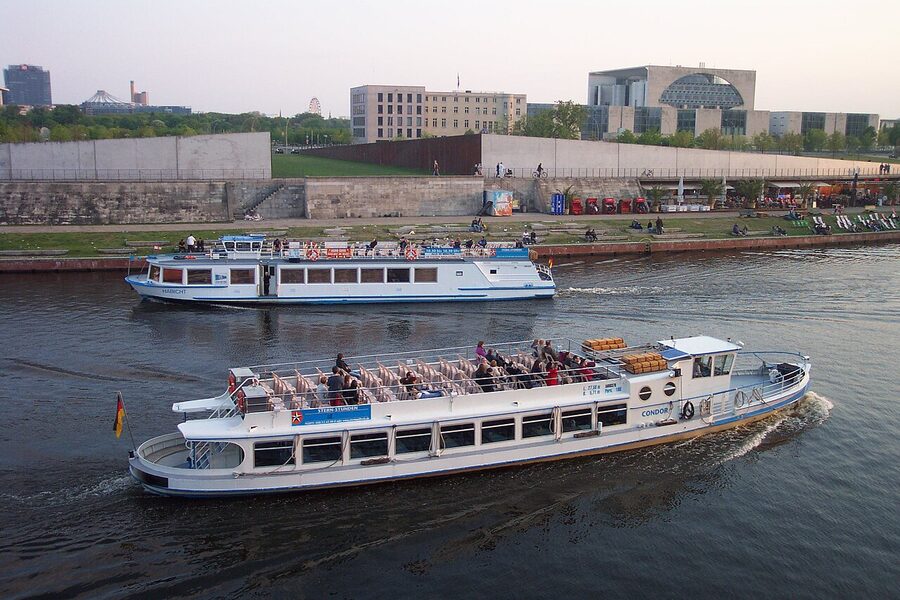
Right side of the boat facing forward is the better choice on the standard outbound run. You get the Bode-Museum, the Pergamon and the Berliner Dom on your near side. On the return run those views shift to the left, but you’ve already seen them. Bring a jumper. The Spree air is several degrees colder than the riverbank air even in July, and the open deck has no wind protection. Sun at 4pm is golden but it’s also low; sit facing east on the upper deck if you don’t want to squint.
Best months: April through October. The open deck is closed from November to March on most operators (the boat still runs but you’re stuck inside). Weekday afternoons in May, June and September are the sweet spot: warm enough for the upper deck, cool enough that the boats aren’t sold out. July and August are peak season and the queues are real, even with pre-booking. Late afternoon (4-5pm) gives you golden hour on Museum Island and the Government District lit from the south.
Combining the Boat With the Rest of Berlin
The boat tour is a 60-minute orientation. It’s not a stand-alone day. The natural pairings:
Boat plus Reichstag dome. The classic morning combination. Book the dome for 9am (free, advance registration required, see the Reichstag dome tour guide), do the dome, walk down to Friedrichstrasse pier, catch the 11am boat. Lunch at Hackescher Markt afterwards. This sequences the Government District: you see it from above, then from behind on the water.
Boat plus TV Tower at sunset. Catch the 4pm boat. Get off, walk five minutes to Alexanderplatz. Up the Fernsehturm for golden hour at 6pm. Sphere restaurant if you’ve pre-booked, observation deck if you haven’t. You see the Spree from above after seeing it from the water, and the visual scale of central Berlin clicks into place.
Boat plus East Side Gallery walk. Take the longer 2.25-hour tour for the eastern stretch. Get off at the Hauptbahnhof or Friedrichstrasse pier, U-Bahn to Warschauer Strasse, walk the East Side Gallery west to east. End at the Oberbaumbrücke for sunset. The 1.3km wall walk is best done as the sun goes down, when the murals catch the warm light.
Boat plus a day-out memorial. The boat is light. Pair it with something structurally heavier. The Sachsenhausen concentration camp memorial day trip is the obvious counter-weight: half-day at the camp in the morning, evening boat back in central Berlin to decompress. We recommend this sequencing for first-time visitors who want Berlin’s full historical weight without burning out.
Cost, Tickets, Booking Mechanics
The 1-hour boat is $22 standard adult, $11 child (under 14). The 2.25-hour is $34, the 3.25-hour Spree-and-Landwehrkanal is $38. Live-guide upgrades add $5-8 depending on operator. Family tickets save 10-15%. Wheelchair access is available on most boats; pre-book and call ahead because the Friedrichstrasse pier ramp configuration changes.
Operators worth knowing: Stern und Kreis (the biggest, most departures, included in the Berlin WelcomeCard in some packages), Reederei Riedel, BWSG. The audio handset is the same on most of them; the difference is departure frequency and which pier you start from. Friedrichstrasse, Hackescher Markt and Nikolaiviertel are interchangeable for the 1-hour loop. Jannowitzbrücke is more east, better for the longer tour and the East Side Gallery direction.
The WelcomeCard option is worth checking if you’re planning multiple Berlin attractions. It bundles transit and discounts on a long list of attractions including some boat operators. Math the discount on the boat against the WelcomeCard’s daily rate (around €25 for 48h with transit). For most travellers it pays off if you also do the TV Tower, the Madame Tussauds equivalent and at least one museum, but check our Berlin WelcomeCard guide for the actual maths.
Berlin’s Boat Versus Other European River Cruises
Every European capital has a tourist boat. They’re not all the same. The Seine river cruises in Paris are denser, the boats bigger, the stops less interesting per minute (though the Eiffel-and-Notre-Dame frame at sunset is hard to beat). The Seine dinner cruise upgrade is also a more developed product than Berlin’s equivalent: French river-cuisine catering, white tablecloths, two-hour set menus. Berlin’s evening boats run, but they’re closer to “boat with snacks” than “dinner experience”.
The Amsterdam canal cruises use covered glass boats out of necessity (Amsterdam’s canals are too narrow for open-top, and the Dutch weather argues against it). The pace is slower and the architectural density is higher. Berlin’s boat is more open, faster, and the architecture is bigger and more spaced out.
The Rotterdam harbor cruise is genuinely industrial: container terminals, working port, post-WWII rebuild context. Berlin’s Spree is about half industrial in feel and half political. The Guadalquivir cruise in Seville is more pastoral, more historical, less monumental. The Venice gondola is its own genre, a single-passenger luxury, where Berlin is mass-transit-tourism. The closest comparison is probably the Venice islands by boat day trip, where you’re using water as transit infrastructure rather than as a romantic prop.
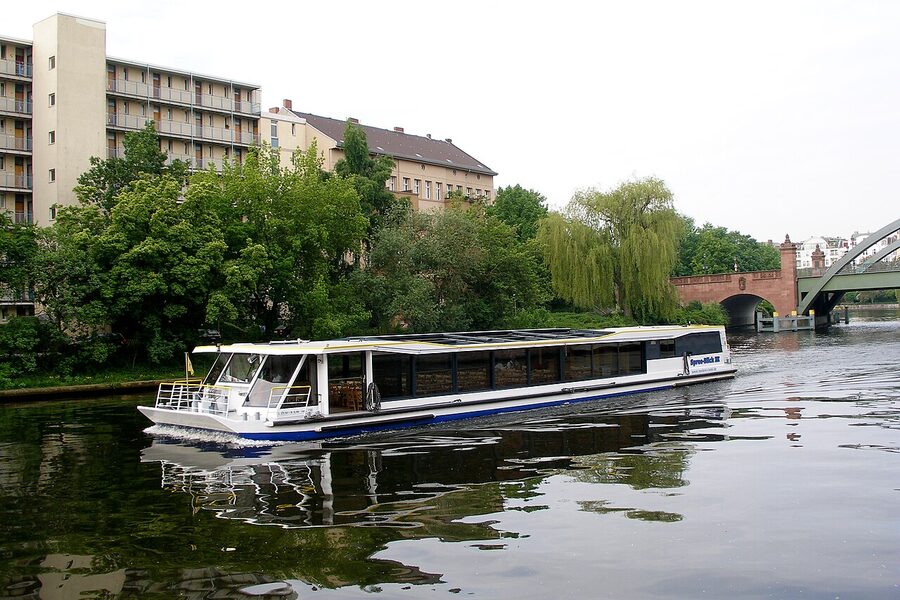
Berlin’s regional cousin, the Leipzig canal tour, runs on the Karl-Heine-Kanal through the post-industrial Plagwitz district. It’s smaller, more local, less monumental, more about creative-quarter regeneration. If you’re doing a German rivers run, Berlin gives you the political-architecture story, Leipzig gives you the post-industrial-art-quarter story, the Cologne Rhine cruise gives you the cathedral-and-medieval-bridges story, and the Hamburg harbor cruise gives you the working-shipping-port story. Each is the right boat for its city.
Mistakes Most First-Timers Make
Three mistakes I see again and again on the Friedrichstrasse pier.
Mistake 1: Walking up. The walk-up tickets are the same price as the online ones. The queue for walk-up is 30-45 minutes in summer. Pre-book online, save the queue, get a better seat. There is literally no reason not to.
Mistake 2: Sitting in the covered cabin. The covered cabin loses you 60% of the view. It’s there for rain. If it’s not raining, go upstairs.
Mistake 3: Doing the boat last. Travellers often save the boat for day three or four when they’re tired and want a sit-down. Wrong order. Do the boat on day one. It maps the city for you. Then the rest of your trip is anchored to a mental geography you actually have. Doing the boat last means you’ve already wandered around lost for three days.
For Repeat Visitors
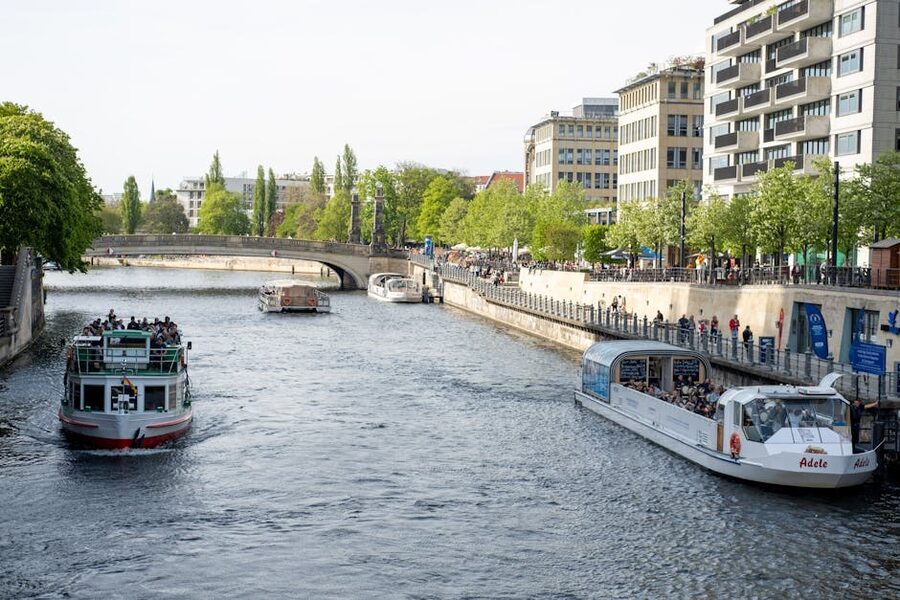
If you’ve done the standard one-hour cruise on a previous trip, the upgrade pick is the 3.25-hour Spree and Landwehrkanal tour. The Landwehrkanal section is the genuinely different content; the central Spree section duplicates what you’ve already seen. The 2.25-hour version is mainly for people who want more breathing room on the same route. It’s not worth booking twice.
The hidden backyards walking tour is a good complement to a second-time boat trip. Where the boat shows you the postcard side of central Berlin, the backyards walk takes you through the Hackesche Höfe and the connecting Schöneberg courtyards that make up another layer of the city you don’t see from the water. Boat plus backyards plus one museum is a complete second-day-in-Berlin sequence.
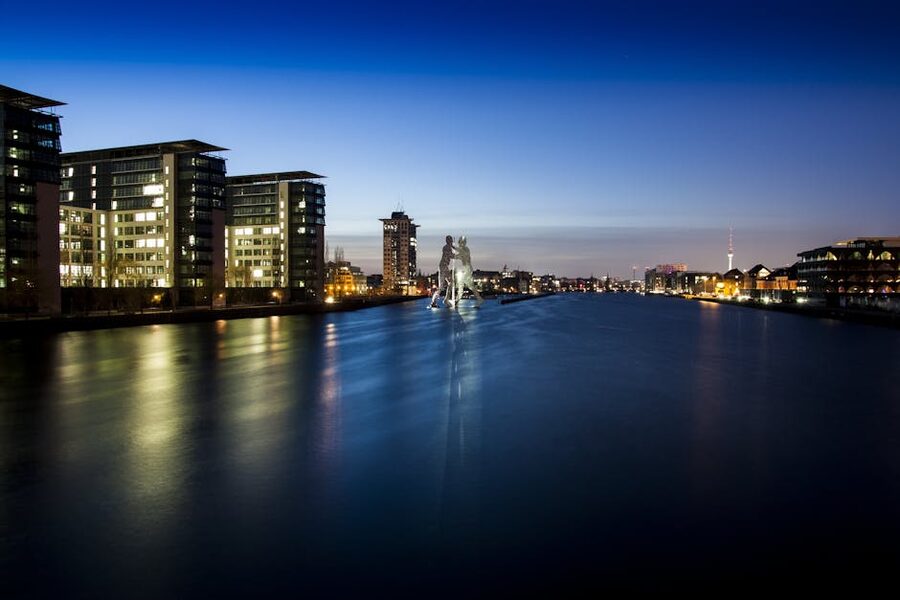
For travellers doing the broader 20th-century Berlin pilgrimage, the boat is not the centrepiece, but it’s a useful narrative break. The heaviest sites – Sachsenhausen, the Berlin Story Bunker – need decompression time afterwards. A boat ride down the Spree the same evening is exactly the right kind of decompression: outdoors, low effort, looking at a different layer of the city. The two pair better than I expected the first time I tried it.
What the Boat Is Actually For
I keep coming back to this when people ask what to do on day one in Berlin. The boat is a 60-minute orientation product. It’s not a great photograph product (the angles are crowded), it’s not a great social-media product (other people’s heads are in your shot), it’s not a great history product (the audio is competent, not deep). What it does, better than anything else in Berlin, is give you the city’s central spine on a single coherent line.
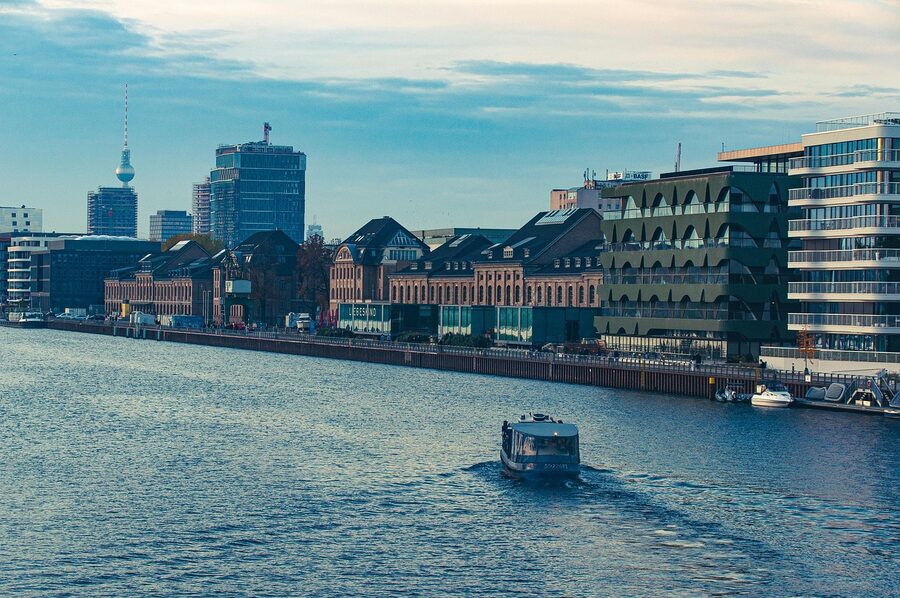
You finish the cruise knowing where the Reichstag is in relation to the Bode-Museum, where the East Side Gallery sits relative to the Government District, where Charlottenburg is to the west and the Treptower port to the east. The map fills in. From day two onward, every walk is anchored. That’s the value, and it’s worth $22.
Take the upper deck, take the right side facing forward, take the late afternoon slot if you can, and pre-book. If you can only do one organised activity in Berlin, this isn’t quite it (the Reichstag dome is). But if you can do two, this is the second.
Where to Go Next on the Water
After Berlin, the obvious German river-tour pairings are downriver. The Cologne Rhine cruise picks up the medieval-cathedral story, the Hamburg harbor cruise moves you to a working port and a maritime city, and the Frankfurt Main river boat sits between the two as a financial-district variant. The Leipzig canal tour on the Karl-Heine-Kanal is the closest thing Germany has to a creative-quarter water tour, and the Dresden river run on the Elbe is the prettiest of the lot. Berlin is the one with the political content. Each is the right boat for its city, and a German two-week trip can reasonably string three of these together with a museum each.