
Paris doesn’t have a Seine dinner cruise. Paris has at least five of them, all advertised in roughly the same photographs, all under the same vague label, and most travellers book whichever one Google surfaces first. The cheapest is $64. The one I’d send my parents on is $135. Those are not the same product with a price discount; they are different boats, different food, different experiences entirely.
This is the article I wish I’d had the first time I booked.
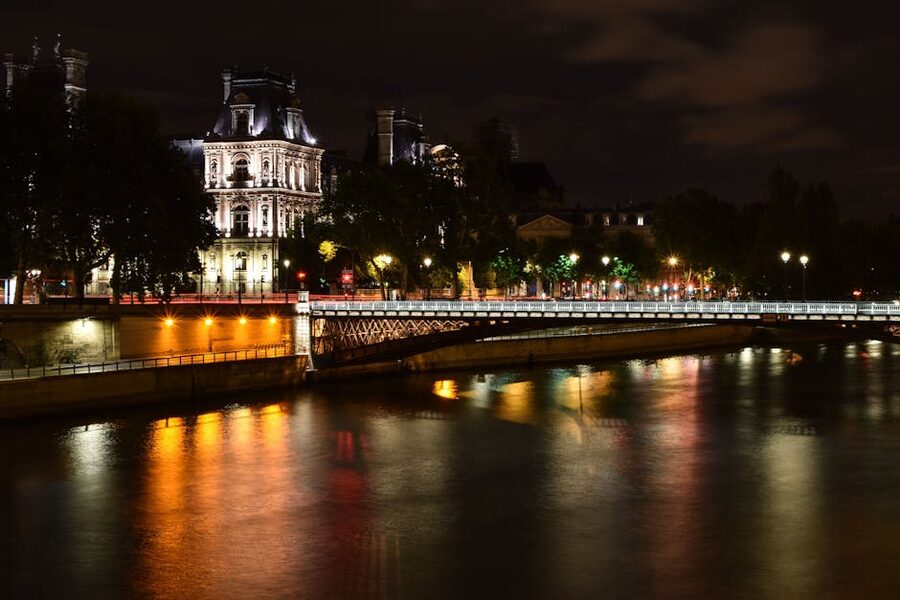
In a Hurry: Pick One of These
- Best for the splurge night, two of you, anniversary energy: 3-Course Dinner Cruise on the Seine With Live Music ($135). Smaller boat, real chef, jazz trio, the actual romantic version.
- Best for the cheapest “Paris from the water at night” option, eyes-open about the food: Seine River Panoramic Views Dinner Cruise ($64). The giant 1,200-seat panoramic vessel, food is fine.
- Best for daytime, families, or budget-with-good-food: 2-Hour Seine Lunch Cruise With 3-Course Menu ($93). Same gourmet vessel, half the price, midday light is better for photos.
The Five Products Hiding Behind “Seine Dinner Cruise”
You search “Seine dinner cruise.” Google returns ten listings. They all show the same shot of the Eiffel Tower from the water. The prices range from about $54 to $300. Your instinct is the spread is service tier, not product, and the cheap one is just a smaller portion of the same meal.
It isn’t. Here’s what’s actually for sale:
- Bateaux Parisiens panoramic dinner ($64 to $93). The biggest operator, 1,200-capacity glass-roofed vessels, fixed menu, departures from Port de la Bourdonnais right by the Eiffel Tower. The “tour bus on water” version. Food is reheated airline-tray standard at the cheap end, fine at the upper end.
- Bateaux Mouches dinner ($69 to $100). The oldest Seine operator, running since 1949, departures from Pont de l’Alma. 800-capacity boats, a slightly more polished room than Bateaux Parisiens, similar food register.
- 3-course gourmet with live music on a smaller vessel ($135). 200 to 300 capacity, a working chef on board, live jazz or violin, real wine pairings, the version that earns the romantic-Paris-cliché.
- Bistronomic dinner ($69). The casual option, smaller plates, sharing-style, less formal room. The right move for a couple who want a relaxed evening rather than a tasting menu.
- Lunch cruise ($93). Same boat as the gourmet dinner cruise on most operators, two hours instead of two-and-a-half, midday light, half the price, fewer people. The product everyone forgets exists.
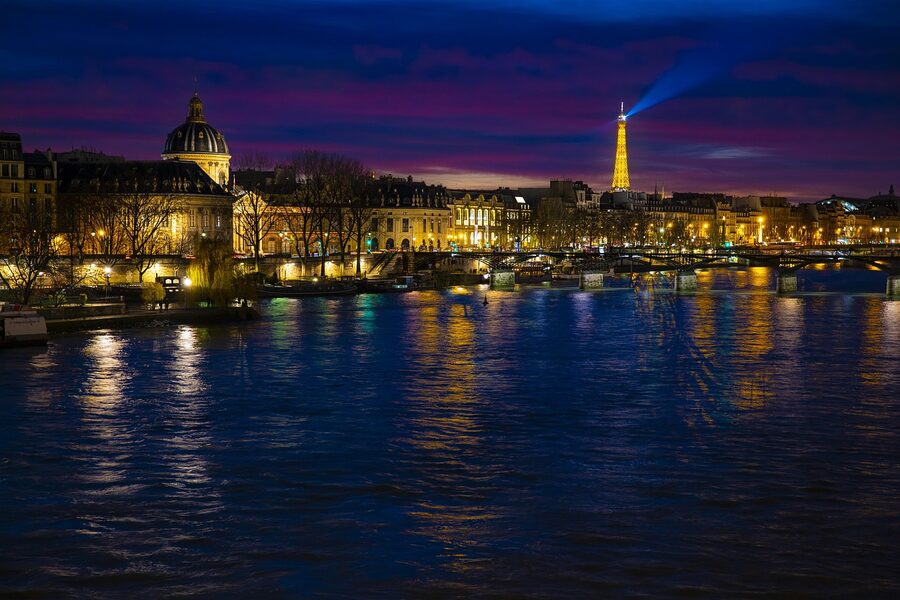
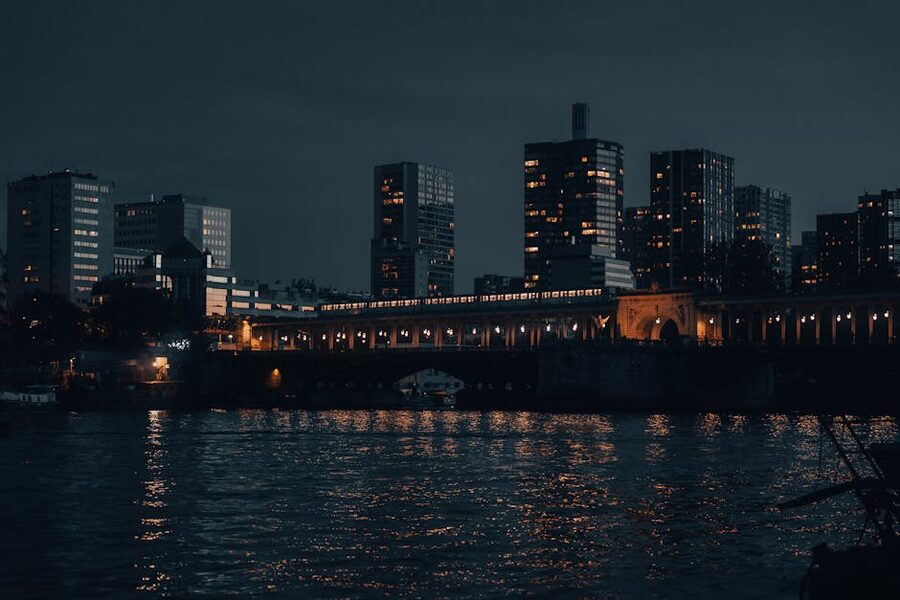
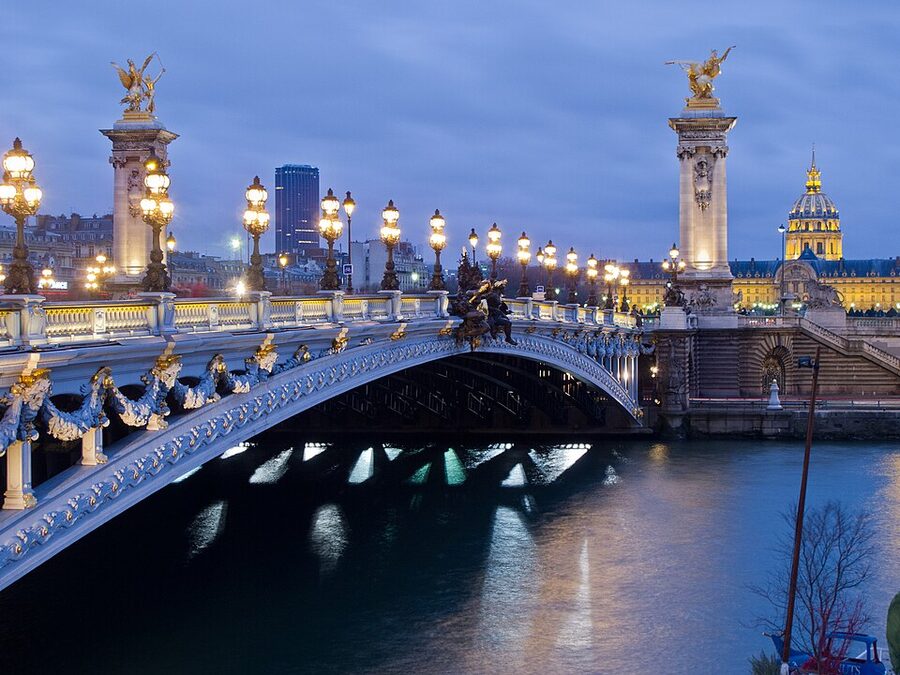
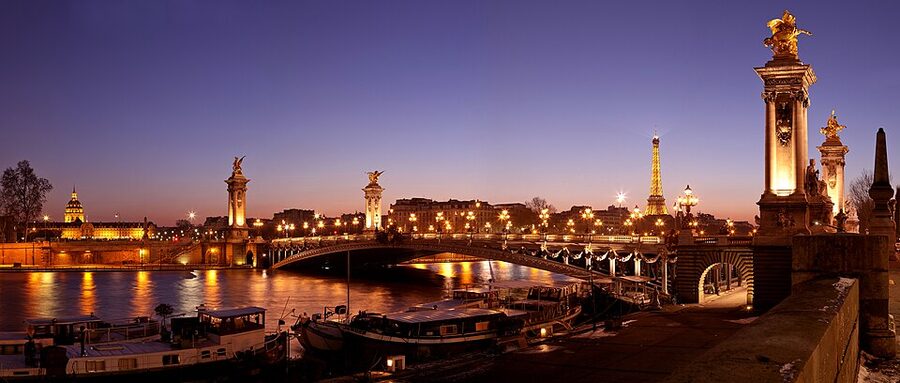
Same river. Same monuments. Same two-and-a-half-hour loop. The product difference sits entirely in the boat and the kitchen. Pick wrong and you end up paying for the river view while eating something slightly worse than what you’d get on a domestic flight. Pick right and you eat a real meal under the gold-lit ironwork of Pont Alexandre III while a violinist plays Edith Piaf two tables away.
The 22:00 Eiffel Sparkle Is Why You’re Doing This
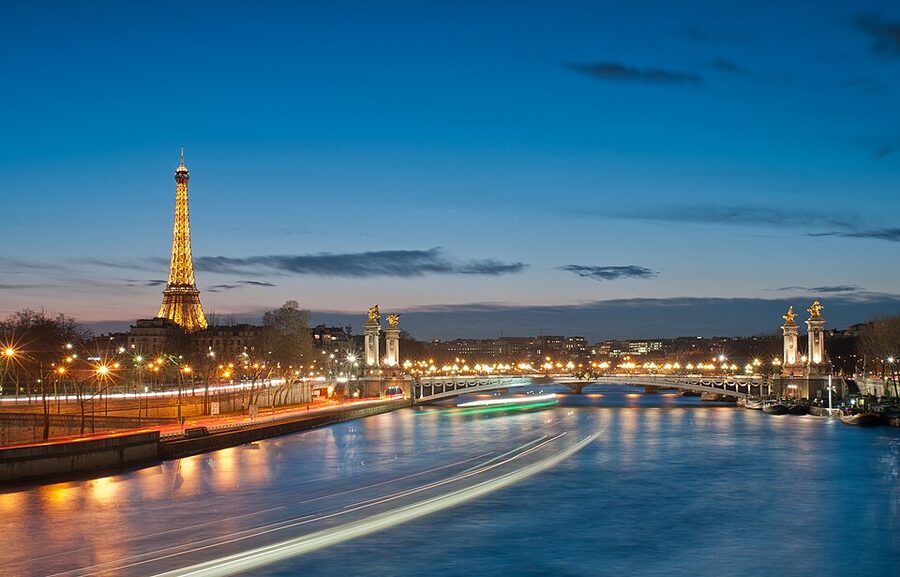
The Eiffel Tower goes into a five-minute strobe of 20,000 lights every hour on the hour, sundown to 1am. Every dinner cruise on the Seine times its loop so you’re outside on deck, or seated by a window with the curtains pulled, when the 22:00 sparkle starts. That’s the moment you came for.
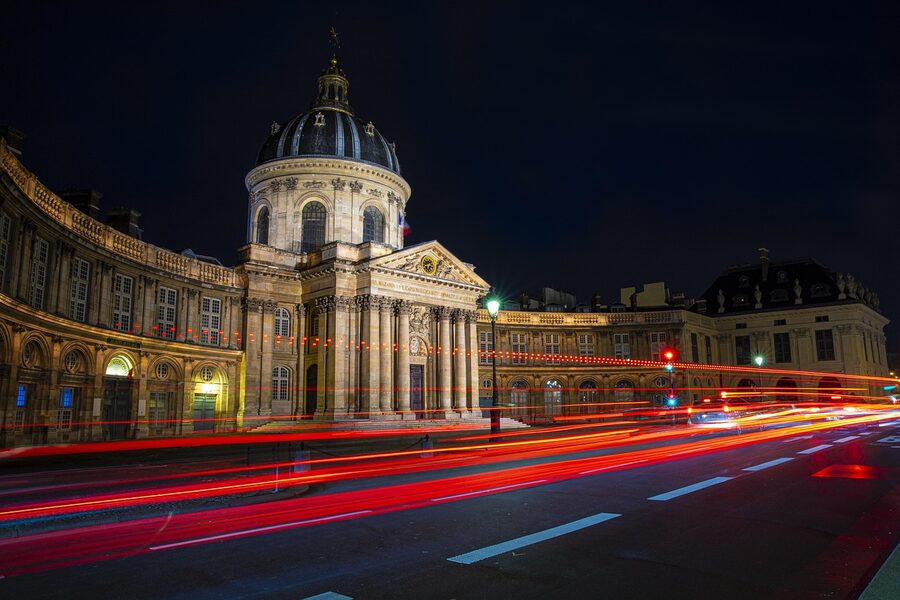
Most dinner cruises start boarding at 20:00 or 20:30. The 8.30pm boats are doing this on purpose; the route is engineered to put you under the Eiffel at 22:00 with dessert and Champagne in front of you. If you book a 19:00 cruise (they exist, sometimes labelled “early dinner” or “sunset”), you’ll cruise during the late blue hour, but you’ll likely miss the 22:00 sparkle from the water. The earlier sparkle at 21:00 is the same five-minute show, less famous because the sky still has light in it, and frankly nice. But 22:00 is the postcard version.
If you only care about the sparkle and not the food, by the way, you don’t need a dinner cruise at all. A standard one-hour Seine cruise at 21:30 puts you in front of the Eiffel for the 22:00 show for about a quarter of the price; we walk through that whole option in our Seine river cruises guide. The dinner cruise is for when you also want dinner.
What the $64 Cheapest Cruise Actually Is
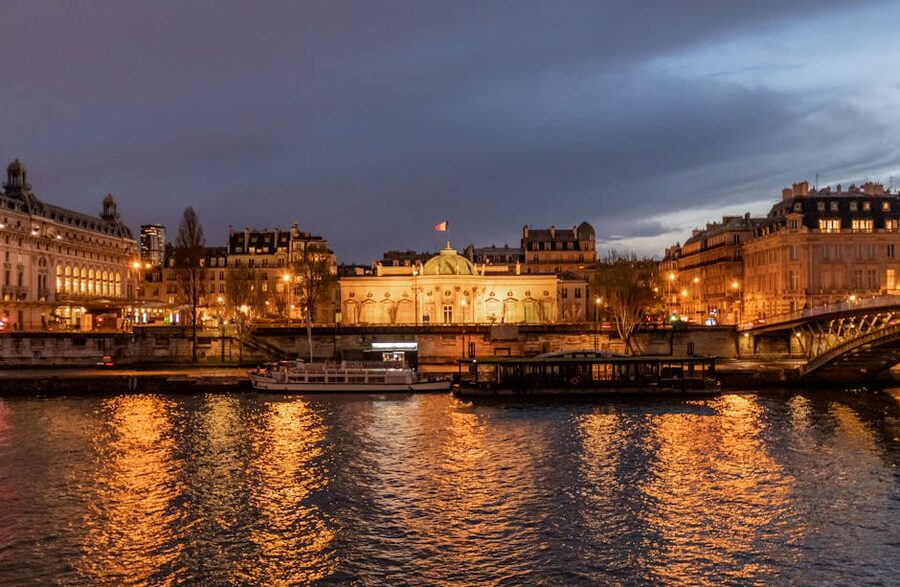
The Bateaux Parisiens panoramic dinner cruise is the article’s most-booked product. The boats are vast, glass-walled, and seat 600 to 1,200 people across two decks. The room feels like an airport lounge that’s also a dining hall. You’ll be at a table for four or six with strangers unless you’ve paid the upgrade for a “table for two” guarantee. The menu is fixed; you choose between two starters, two mains, and a dessert when you book, and that’s it.
The food is the part that drops. It’s pre-plated, kept warm in industrial holding cabinets, and timed to the cruise’s departure rather than to your appetite. A starter of foie gras or seafood terrine, a main of beef cheek or fish with risotto, and a dessert of macarons or mousse au chocolat. None of it is bad, exactly. None of it is also what you’d order if a Parisian friend was picking the restaurant. Don’t book this for the meal.
Book it if: you’ve already done the cheap one-hour panorama cruise and want the same view with food and a longer loop. You’re on a couples’ trip and the romance budget is small. You’re with kids who’d rather eat on the boat than sit through a sit-down restaurant. Or you genuinely don’t care about food and care a lot about the river-at-night photographs. All four of those are valid reasons to book the $64 product. None of them are “we want a great Parisian dinner.”
The $135 One Is the One I’d Book
The 3-course gourmet cruise with live music on Bateaux Parisiens’ “Capitaine Fracasse” runs on a different boat from the cheap product. Capacity is 200 to 300 across one or two intimate decks, the dining room has actual ambient lighting instead of fluorescent overhead panels, and there’s a chef on board running a real kitchen rather than a re-heat station. A jazz trio or violinist plays through dinner; on Bateaux Parisiens this varies night to night, on competitor versions it’s typically a piano-and-vocals set.
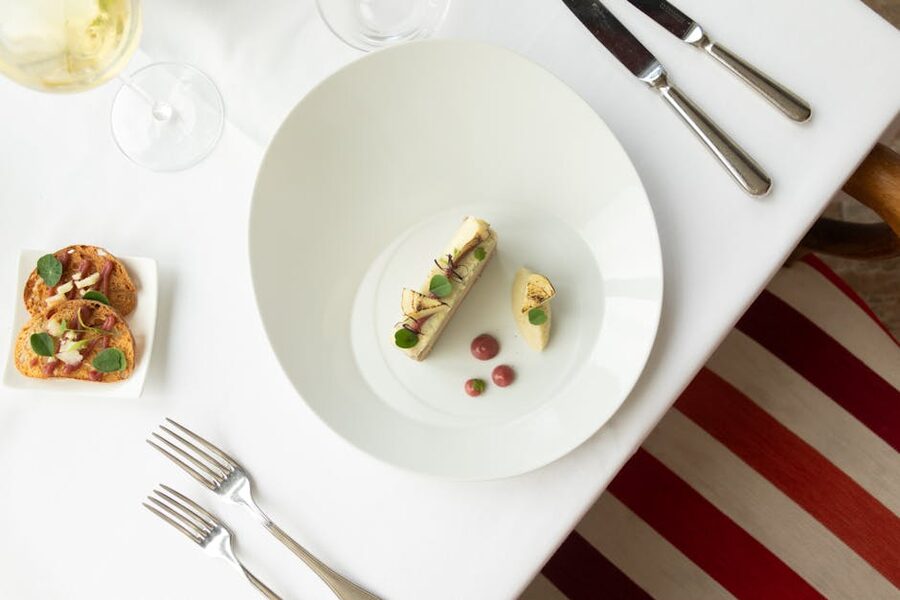
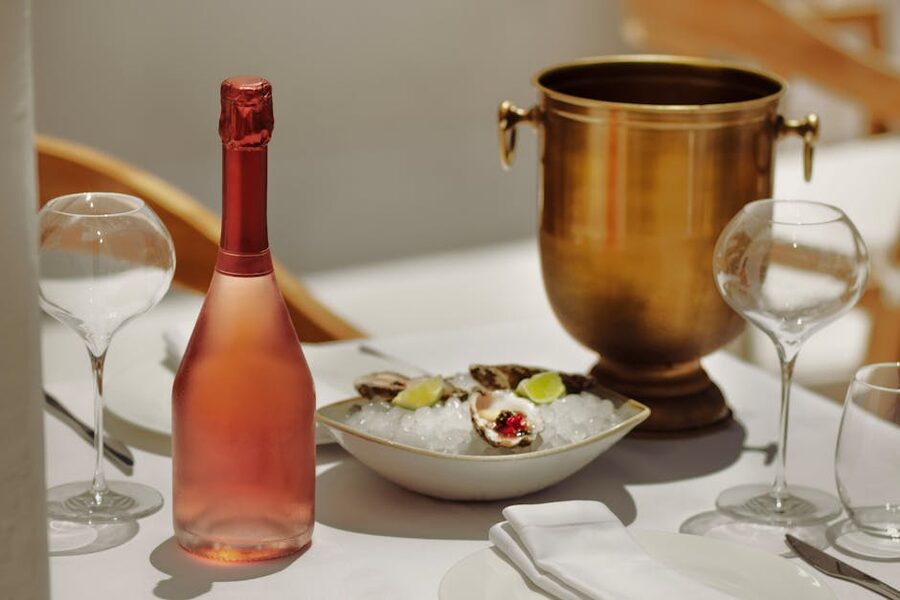
The menu is still fixed in tiers, but the choices are more interesting and the cooking is contemporary rather than retired-canteen. A typical menu: foie gras two ways, half-lobster with citrus beurre blanc or duck breast with a fruit reduction, a chocolate moelleux or a fromage selection. Two glasses of decent wine come with the package. You can upgrade to a window table or a champagne service tier from there. The room itself is quiet enough that a couple at the next table can have an actual conversation without yelling.
If you’ve ever sat in a Parisian neighbourhood restaurant and thought “this is what I came for”, the gourmet cruise is the closest you’ll get to that on a boat. Book the window table. The premium isn’t huge and the experience genuinely changes when you’re against the glass instead of two metres from it.
The Underrated Lunch Cruise
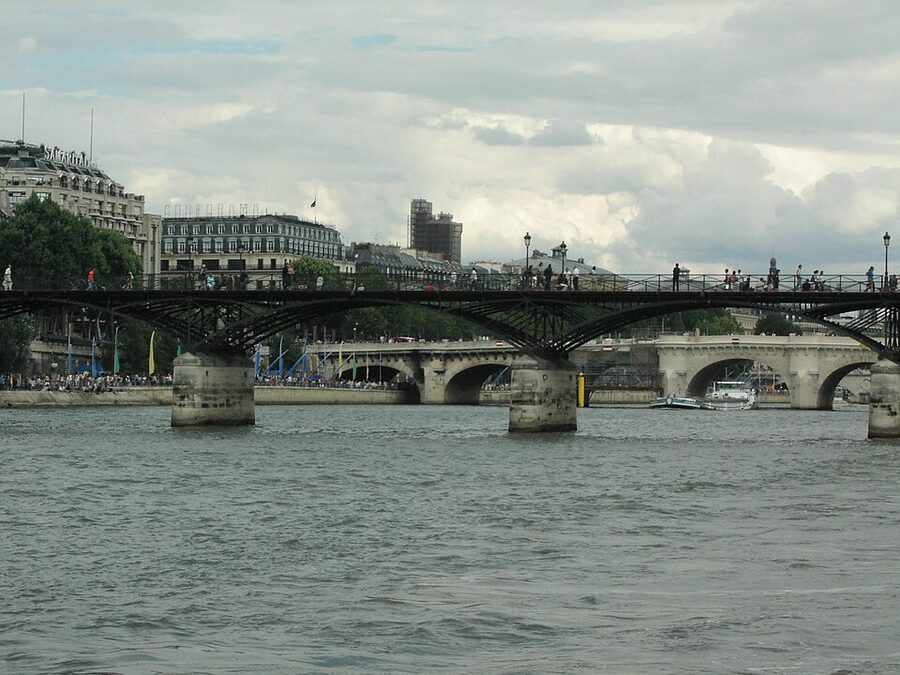
The lunch cruise gets dismissed because it’s not the postcard scene. There’s no Eiffel sparkle at 13:00 and the Seine at midday looks exactly the way the Seine looks in every Paris photo you’ve ever seen. You can recreate that view in 90 seconds standing on the Pont des Arts.
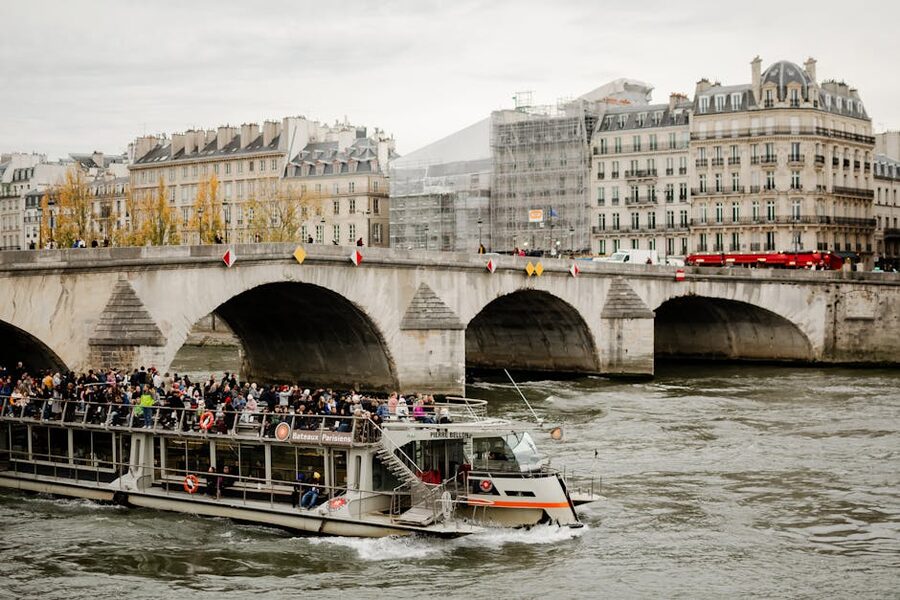
And yet. The lunch cruise is, by every other metric, a better deal than the dinner version. It’s $93 versus $135 for what’s effectively the same gourmet vessel and three-course menu. It runs two hours instead of two and a half. The boat is half-empty compared to the dinner sailings, because daytime cruises pull a fraction of the bookings, which means the staff is more attentive and the room less rowdy. The light is better for photographs of the route, especially in winter when 16:00 is already golden hour.
And there’s the energy argument. Most travellers arrive in Paris jet-lagged, walk 20,000 steps before sundown, and then drag themselves to a 20:30 dinner cruise where they fall asleep over the cheese course. Lunch starts at 12:30 or 13:00, you’re rested, you eat a real meal, and you still have a full Paris evening ahead of you. The math works.
The only real argument against the lunch cruise is that it’s not the night-time one. If you specifically want the Eiffel sparkle and the gold-lit bridges, do the dinner. If you want a great lunch on a boat at half the price and you’ll happily catch the sparkle from the Eiffel Tower observation deck or from the Trocadéro instead, the lunch cruise is the smarter book.
Where the Boats Actually Go
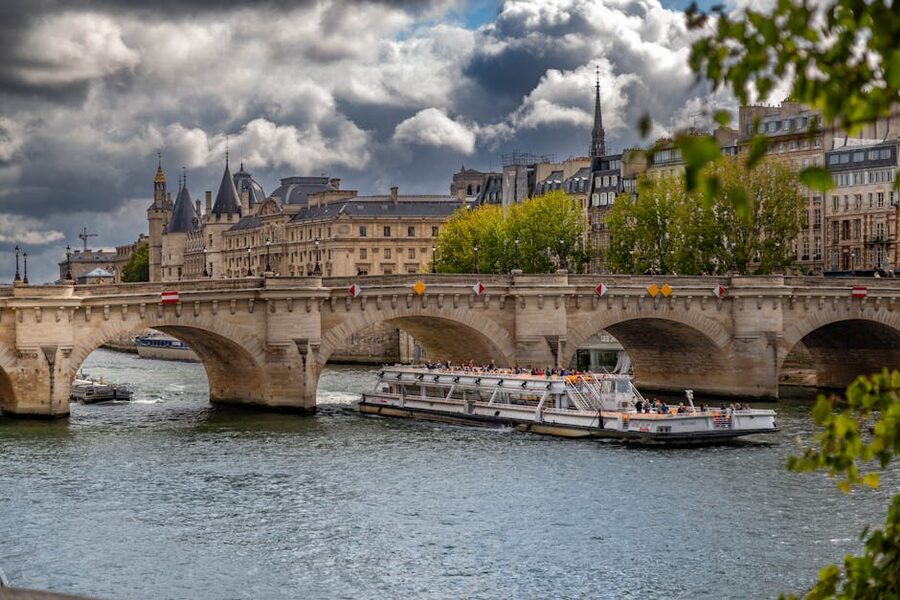
Most dinner cruises run the same loop. Out from the Eiffel area downstream past the Louvre, the Musée d’Orsay, the Conciergerie and Sainte-Chapelle on Île de la Cité, around the back of Notre-Dame, past Île Saint-Louis, then a turn-back to come home along the same route. Total distance roughly seven kilometres, give or take a bit depending on how far past Île Saint-Louis the captain feels like going.
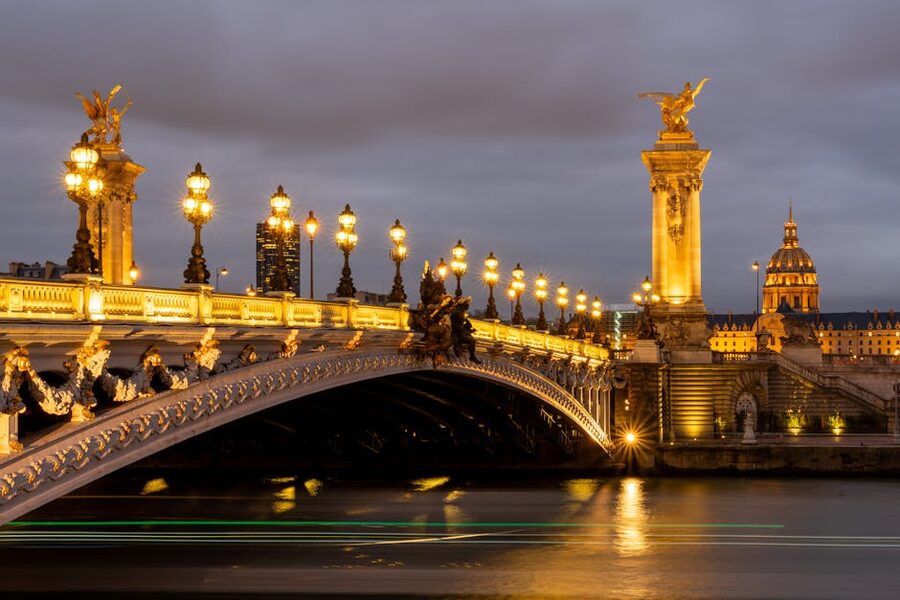
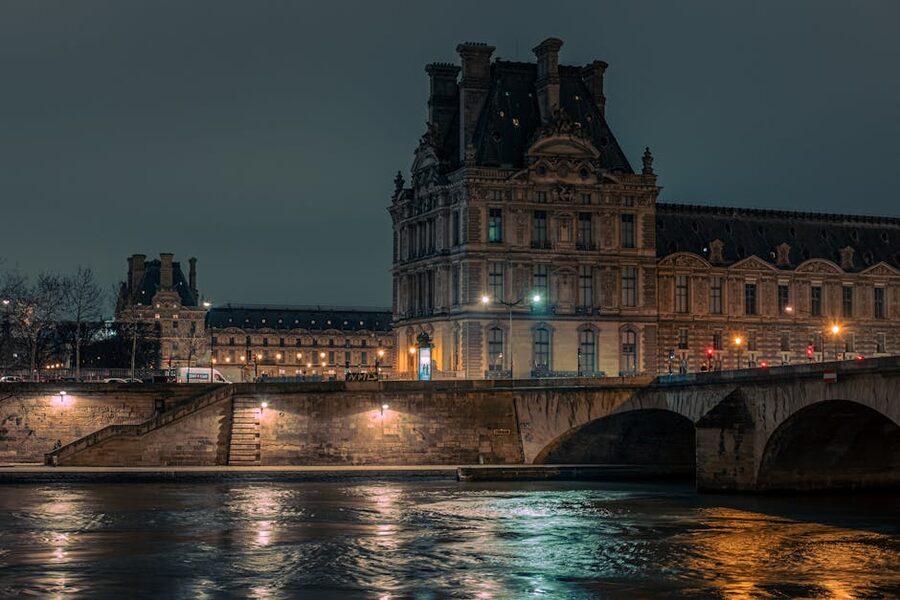
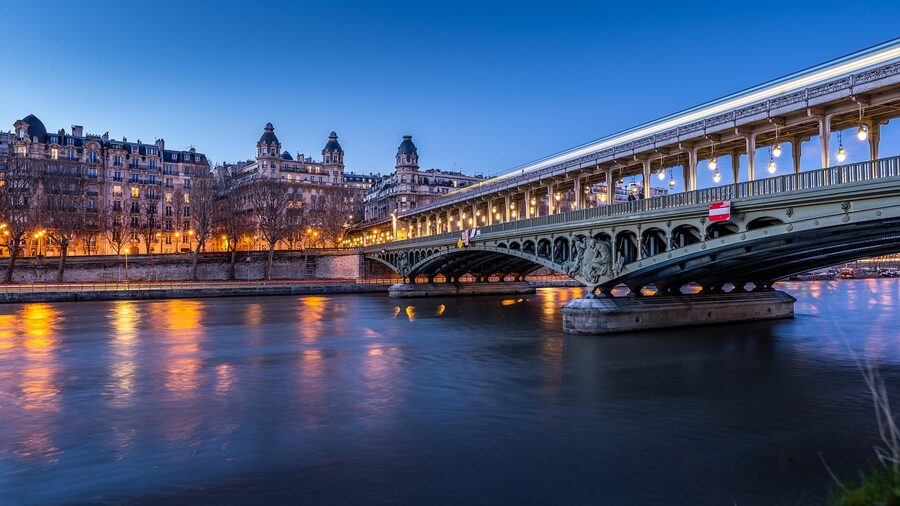
The visual high points are predictable, in this order on the way out: Pont Alexandre III with its gold sodium lighting, the Louvre’s east façade lit in warm white, Pont Neuf cutting across Île de la Cité, and the back of Notre-Dame from the river. On the way back, the same monuments come up again from the other angle, the second pass at Pont Alexandre III usually times to the 22:00 sparkle window, and the boat docks more or less under the Eiffel itself.
If you’re trying to plan dinner around the Île de la Cité churches, that’s a separate evening; the cruise rounds them in the dark and you barely see the buttresses. For Sainte-Chapelle’s stained-glass interior or the Conciergerie’s medieval kitchens you want a daytime visit, and the Sainte-Chapelle and Conciergerie combo ticket is the way to do it.
The Operators Are Not Equal
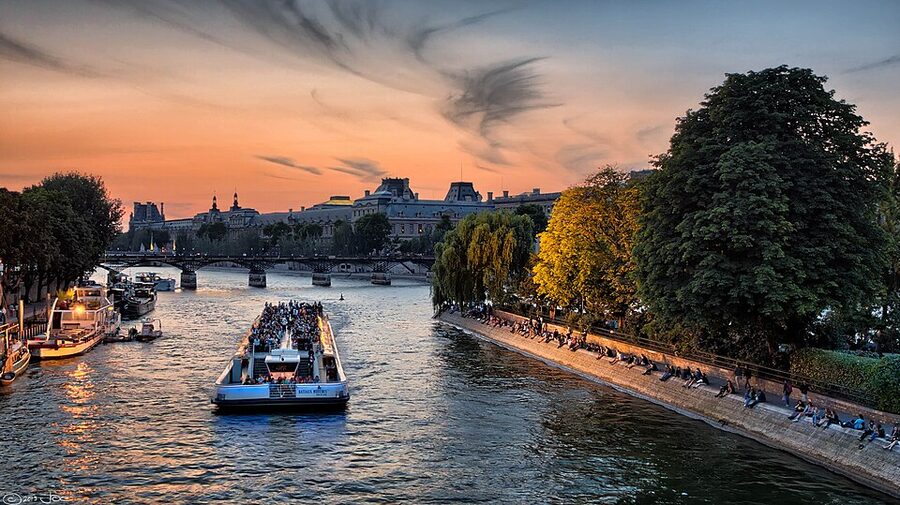
Three big names dominate Seine cruising in Paris. They’re not interchangeable.
Bateaux Parisiens is the largest operator. They run from Port de la Bourdonnais on the Left Bank, two minutes’ walk from the Eiffel Tower. The fleet is mixed: enormous panoramic vessels for the cheap product, smaller restaurant boats like the Capitaine Fracasse for the gourmet tier. They’re the most-booked dinner cruise on the river by a wide margin and they run dinner sailings nightly, year-round.
Bateaux Mouches is the oldest, founded 1949, and the name has become generic in French for “river boat” the way “Hoover” became generic for vacuum. They run from Pont de l’Alma on the Right Bank, walking distance from the Eiffel but a different starting point. Their dinner cruise is in the same register as Bateaux Parisiens’ panoramic: fine, big boats, fixed menu, slightly more old-fashioned in the room. Slightly more expensive than the cheapest Bateaux Parisiens equivalent.
Vedettes du Pont Neuf is the smaller third option, departing from the actual Pont Neuf in the centre of Île de la Cité. They’re known for their cheaper one-hour panoramic cruises rather than the dinner product, but they do run dinner sailings, including a quirky “Italian trattoria menu” cruise for travellers who specifically don’t want a French dinner. Pick this one if you’ve already done the central Paris monuments and want a different starting point that’s a Métro ride from a hotel in Le Marais.
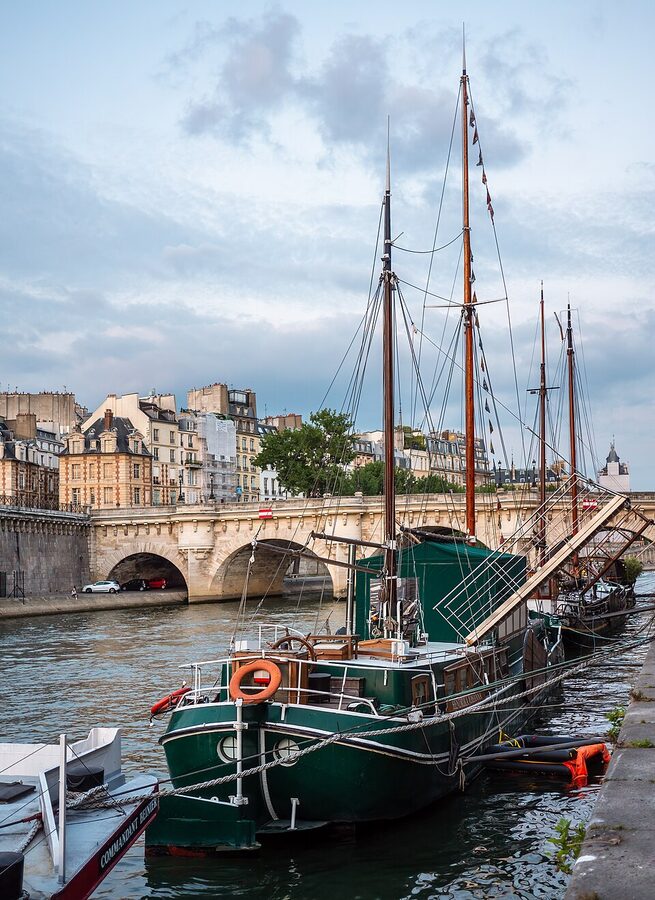
The marketing photos look interchangeable across all three operators. The product isn’t. If you book the cheap Bateaux Parisiens dinner expecting Bateaux Mouches energy, or vice versa, you’ll be mildly disappointed. Match the product tier to your evening, not the brand.
Booking, Boarding, the Practical Bits
Boarding starts 30 to 40 minutes before departure. Most dinner cruises sail at 20:00, 20:30, or 21:00 depending on operator and season. Get there 35 minutes early. The dock area at Port de la Bourdonnais has a queueing system that visibly fills as the boat fills, and showing up 10 minutes early means the window seats are gone and you’re in the middle of the dining room with a partial view.
Dress code is smart-casual minimum across all operators. No shorts, no athletic wear, no flip-flops. The gourmet cruise on the smaller vessels suggests a jacket for men; the cheap panoramic dinner is more relaxed about it but still won’t seat you in a Liverpool football shirt. Closed-toe shoes are sensible regardless because the deck rails are at a height that catches sandals on the way out.
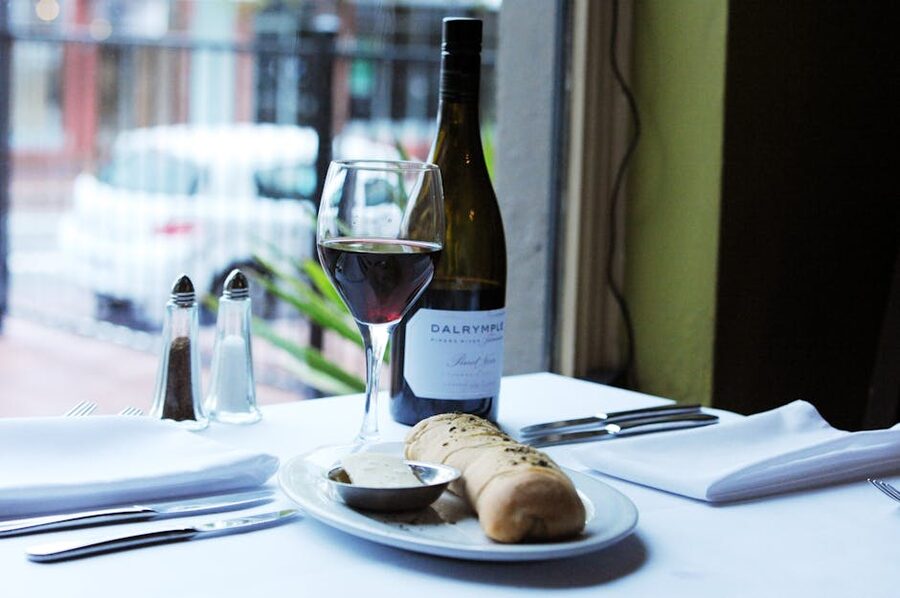
Window tables are an upgrade on most operators. Roughly $20 to $40 above the base ticket. Worth it. Without a window seat, you spend the cruise leaning sideways trying to catch the Eiffel between two strangers’ heads. With a window seat, you don’t.
Cancellation is usually free up to 24 hours before. After that, full charge. Paris weather affects the deck experience but the boats sail in light rain regardless because they’re indoor restaurants that happen to float. Storms cancel sailings; you’ll get a refund or a reschedule. Book through GetYourGuide or Viator if you want the easier cancellation/refund process; the operator websites can be slightly cheaper but the consumer protection is weaker.
Photographer trap: most cruises have a photographer who comes around at the start to take a couple’s photo “for the souvenir album.” It’s not free. The prints are €25-40 each at the end of the cruise. If you don’t want to pay, decline politely when they approach the table; some are more pushy than others.
What’s Actually on the Plate
The food is the most variable part of the dinner cruise experience. Quick survey of what each tier actually serves.
Cheap panoramic ($64-93): a fixed menu chosen at booking. Two starters (typically foie gras toast or a salad), two mains (a fish or a beef option, both with risotto or potato gratin sides), a single dessert per service. Service is platform-style; trays come up from the galley, your plate comes from a tray, plates clear quickly. Wine is one bottle for the table, replenished if you ask, mid-shelf French. Bread is unlimited and warm. The cheese course is a single small selection, not the optional cheese-before-dessert tradition.
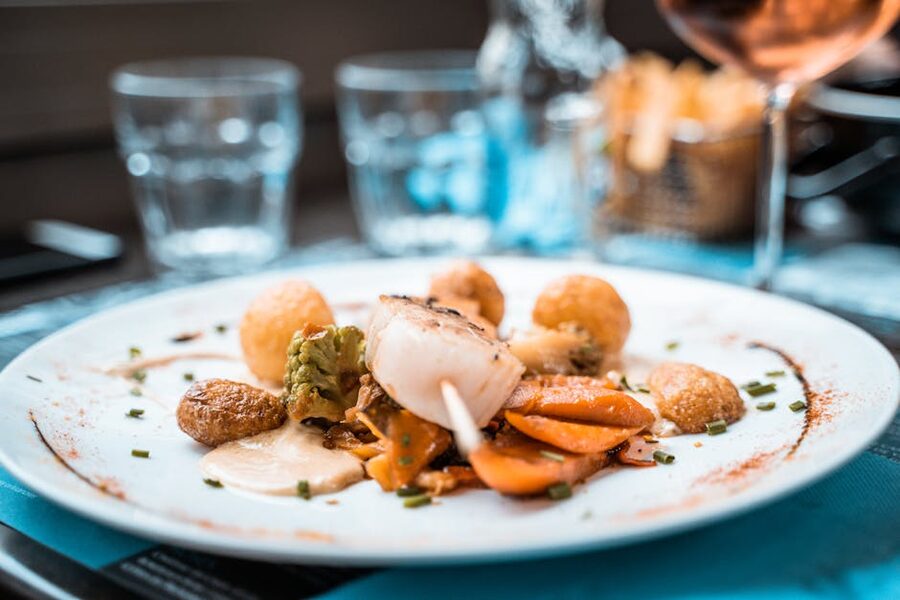
Bistronomic ($69): smaller plates, sharing-style. Half a dozen dishes that come out together rather than as separated courses. Less polish than the gourmet, more variety than the cheap panoramic. The portions per dish are smaller; you’re meant to eat across all of them.
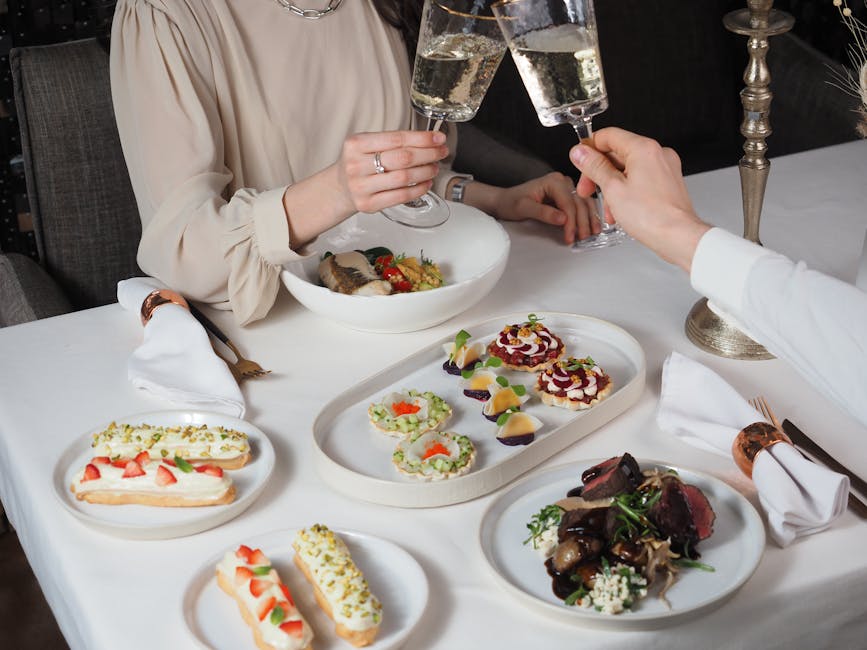
Gourmet with live music ($135): a real three-course menu with two or three options per course. Mains include things like duck breast with cherry reduction, sea bass with vegetable timbale, half-lobster with herb butter. Wine is paired by glass; two glasses are typically included with the upgrade tiers. Champagne welcome is standard. The cheese course is a proper plate with three or four French cheeses and a fig jam.
Lunch cruise ($93): same kitchen as the gourmet dinner, same three-course structure, lighter midday menu. A starter of carpaccio or a tartare, a fish or chicken main, a dessert. Wine is one or two glasses. The room is quieter so the meal feels more like lunch at a French neighbourhood place than the slightly hectic dinner version.
None of the menus are vegetarian-friendly by default. French restaurant cooking still defaults to meat or fish. All operators will accommodate vegetarian, vegan, gluten-free, or kosher meals if you flag it 48 to 72 hours in advance via the operator’s contact form. Don’t show up and ask at boarding; the kitchen has plated to your sailing’s manifest by then.
The Comparison Most Travellers Don’t Run
Here’s the structural question: of all the things you could do with a Paris evening, where does a Seine dinner cruise actually rank?
Against a sit-down restaurant in Le Marais or Saint-Germain, the dinner cruise loses on food and wins on view. A €60 pre-fixe at a real Parisian bistro will be a better dinner. The cruise’s selling point is the river, not the kitchen.
Against a one-hour Seine cruise plus dinner separately, the bundled dinner cruise loses on food and ties on view. The standalone one-hour panoramic Seine cruise at 21:30 is roughly $20, sits you outside on the deck, and shows you the same monuments and the same sparkle. Eat dinner before or after at any nearby brasserie. Total spend is similar to the cheap dinner cruise; food quality is dramatically better.
Against the Moulin Rouge dinner show, the dinner cruise wins on the actual experience of Paris. The Moulin Rouge is a different product: cabaret with a 90-minute spectacle of dancers and feathered costumes. The dinner there is even less the point than on the Seine cruise. If you want one classic-Paris-night-out, do the Moulin Rouge for the show, do the cruise for the river. Don’t try to make either of them be your great-Paris-meal.
Against a cabaret night without the meal, the Moulin’s $115 show-with-Champagne is a legit cheaper alternative; we cover the dinner-vs-show split in detail in our Moulin Rouge guide.
Against an evening at the Opéra Garnier, an evening listening to chamber music in Sainte-Chapelle, or simply walking from the Pont des Arts down to Île Saint-Louis with an ice cream, the cruise wins on the photograph and loses on the human-scale experience. It’s a tourist-spectacle product. That’s not a criticism; sometimes the tourist spectacle is what you came for.
The Three Boats I’d Actually Book
Out of the products available right now on the booking platforms, three stand out for clarity of role.
1. Seine River Panoramic Views Dinner Cruise: $64
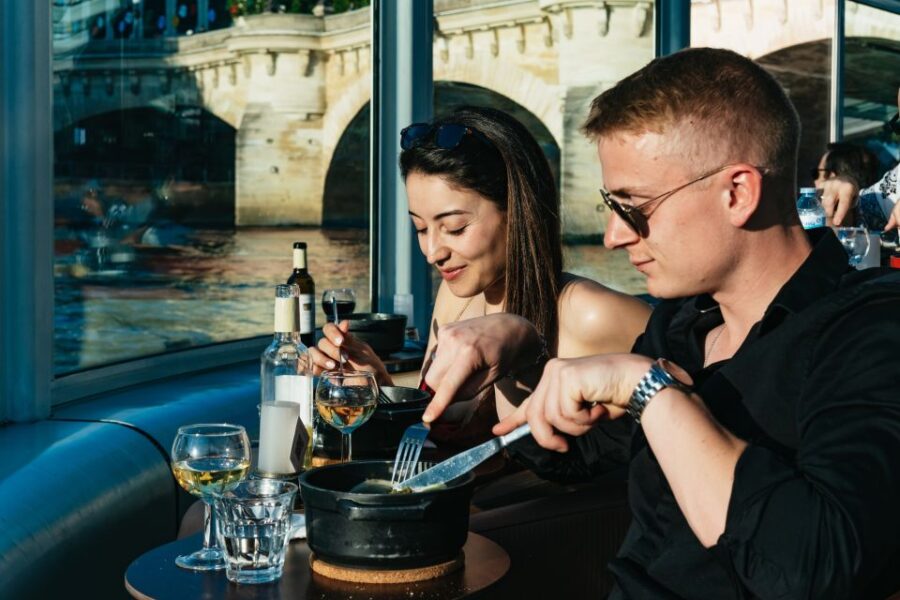
This is the right pick if your budget is the priority and you’ll happily accept airline-tray-grade food in exchange for the river-and-the-Eiffel view at a fraction of the gourmet cruise price; our full review walks through the seating tiers and which window-seat upgrade actually changes the experience. The boat is enormous and the room is loud; come for the view, not the meal.
2. 3-Course Dinner Cruise on the Seine With Live Music: $135
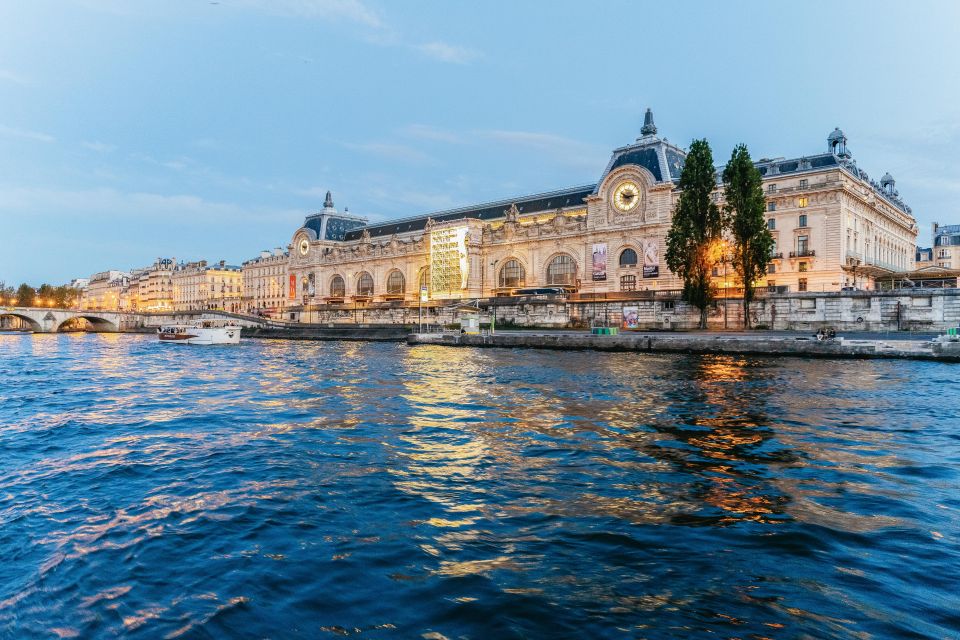
This is the editorial pick of the three: smaller boat, real cooking, live music, and a quiet enough room that you and the person across the table can hold a conversation; our full review covers the wine-tier upgrades and which window-table guarantee is worth the spend. Worth the price gap over the cheap one if the meal matters to you.
3. 2-Hour River Seine Lunch Cruise With 3-Course Menu: $93
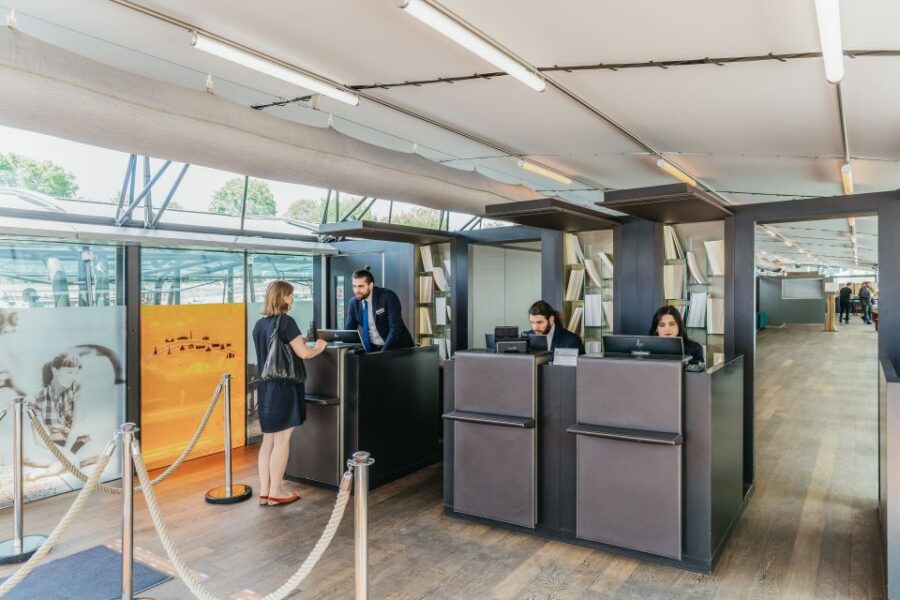
This is the smart-money pick for travellers who care more about the food and the calm room than about the night-time photograph; our full review goes into why this is the cruise for jet-lagged travellers and families. You miss the Eiffel sparkle, but you can catch that for free from the Trocadéro after dinner anywhere in Paris.
Seasonal and Weather Notes
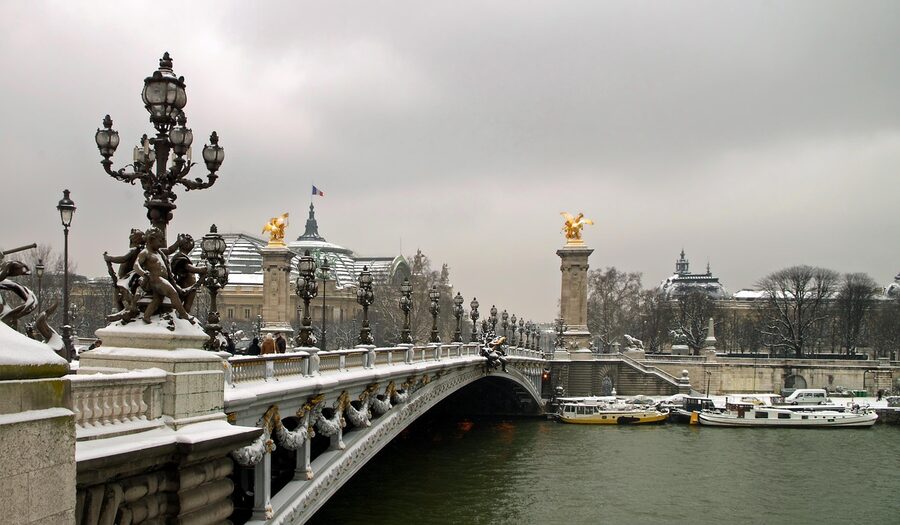
Best months for the cruise are April through October. Outdoor decks are open, the weather is reliable, and sunset times line up with dinner-hour boarding. May and September are the sweet spot. Long evenings, warm enough to sit outside, fewer cruise crowds than peak July-August.
November through March, the boats still sail. The cabins are heated indoor restaurants, and the gold-lit bridges actually look better against bare winter trees than against summer foliage. The trade-off is the deck experience: most operators cover their open-air upper decks for winter, so the “outside on the boat” part of the experience compresses to a small open section near the bow.
Rain doesn’t cancel sailings. The boats are indoor restaurants. Wind cancels them. Anything above about 50 km/h or a Seine flood warning and the operators pull sailings and refund. If you’ve booked for a stormy night, check the operator’s social media or your booking platform’s status updates the morning of, not at boarding time.
The Right Stack of Paris-By-Night
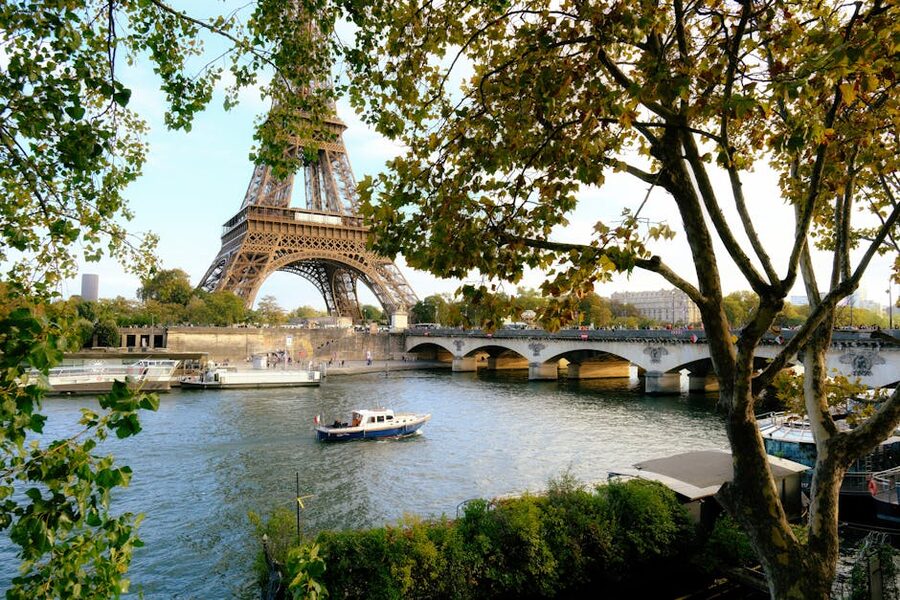
If you’ve got three Paris evenings to allocate, a sensible stack: one for a sit-down dinner in a real Paris neighbourhood (Le Marais, Saint-Germain, Montmartre), one for the dinner cruise or the standalone river cruise, and one for the Eiffel Tower at night with timed-entry tickets to the top. Don’t try to do the Eiffel on the same night as the dinner cruise. The cruise dock is two minutes from the tower, but you’ve already done the river view of it; doubling up the same monument in one evening kills both moments.
Day-trip wise, if you’re stretching the trip to a fifth or sixth day, the Versailles day trip and the Disneyland Paris are the two big out-of-city pulls; both are full days, neither leaves much energy for an evening cruise after.
If you’ve allocated a single evening and you’re trying to maximise what Paris feels like, my call would still be the gourmet dinner cruise on the smaller boat. You eat under the Eiffel, you see the gold-lit bridges, you catch the sparkle from a window seat, and the food is good enough that you don’t feel cheated by the price. That’s the version of this product that works as a stand-alone Paris evening rather than as a side activity to a Paris evening.
How This Compares to Other River Cruises We’ve Run
The Seine dinner cruise is one of a handful of European river-meal experiences worth running, and the comparison sometimes helps clarify what you’re actually buying.
The closest cousin in Italy is the Venice gondola ride, which is a different category (30-40 minutes, no meal, four people max) but operates in the same emotional register. Romantic-night-on-water. Tourist spectacle. Most travellers do one or the other. Venice’s water taxis and dinner boats exist (the La Fenice opera isn’t a boat experience but it sits in the same evening-spectacle register), but they’re a smaller market than Paris’s Seine fleet.
In Spain, the closest equivalent is the Guadalquivir river cruise in Seville. Different river, different city, similar river-by-night photograph game. Or for catamaran-and-meal experiences, the Barcelona sunset catamaran and the Mallorca day catamaran cruises are out at open sea rather than down a river, but the food-on-water structural product is recognisable.
The Dutch counterpart is the evening variant of the Amsterdam canal cruise, which sells the same dinner-and-pizza-and-prosecco package on glass-roofed boats threading the gabled-house canals after dark. Same product structure as the Seine: same five-tier price spread from cheap-buffet to single-table-dinner-with-chef, same problem of marketing photos that flatten the spread. The Amsterdam version is denser per kilometre but with smaller monuments; the Seine has fewer turns but bigger landmarks at each one.
Where the Seine wins over all of those is the density of monuments per kilometre of river. The Guadalquivir cruise shows you the Torre del Oro and a couple of bridges over an hour. A barcelona catamaran shows you the coastline. Rotterdam’s harbour cruise shows you cranes, container ships, and the Erasmusbrug at night, more skyline than landmark. The Seine, on a 7km loop, hits the Eiffel, the Louvre, the Conciergerie, Notre-Dame, the Hôtel de Ville, Île Saint-Louis, and a half-dozen of the most photographed bridges in Europe. There’s no other European river meal product that delivers that hit rate.
What to Skip and What to Layer
If you’re stacking a Paris itinerary, here’s what plays well with a dinner cruise and what fights it.
Same day plays well: A morning at the Louvre, a long lunch in Saint-Germain, an afternoon at the Musée d’Orsay, then a quick hotel rest before the 20:30 dinner cruise. The cruise is a sit-down activity; you can have run yourself ragged on a museum day and still enjoy it because you’re not doing any more walking.
Same day fights: A Versailles day trip plus a dinner cruise the same night. You’ll be exhausted, jetlagged from the early train, and the long-evening seating will drag. Same for a Disneyland day plus the cruise. The park closes at 22:00 and you’re not making the boarding window.
Same day pointless: An Eiffel Tower summit ticket on the same evening as a Seine dinner cruise. You’ve seen the tower from above; now you’re under it for two and a half hours. The view doubles up. Split them across two evenings.
If your itinerary is light on rooftop-and-tower views, save the cruise for one night and put the Montparnasse Tower rooftop on a different night. Montparnasse is the only rooftop in central Paris that includes the Eiffel in your photograph. It’s the literal best view of Paris because the Eiffel itself isn’t blocking it. The cruise is the view from down low; Montparnasse is the view from up high. You want both, on different nights.
Photography Tips From the Boat
The cruise is a photography product whether you want it to be or not. Some practical notes from running this with a phone camera and a small Sony.
Phones handle the night light better than any compact camera released before about 2022. Modern Pixel and iPhone night modes will pull a usable shot of the Eiffel sparkle from a moving boat through a window. Hold the phone steady against the glass, lock focus on the Eiffel, fire two or three shots in burst. The motion of the boat is the limiting factor, not the light.
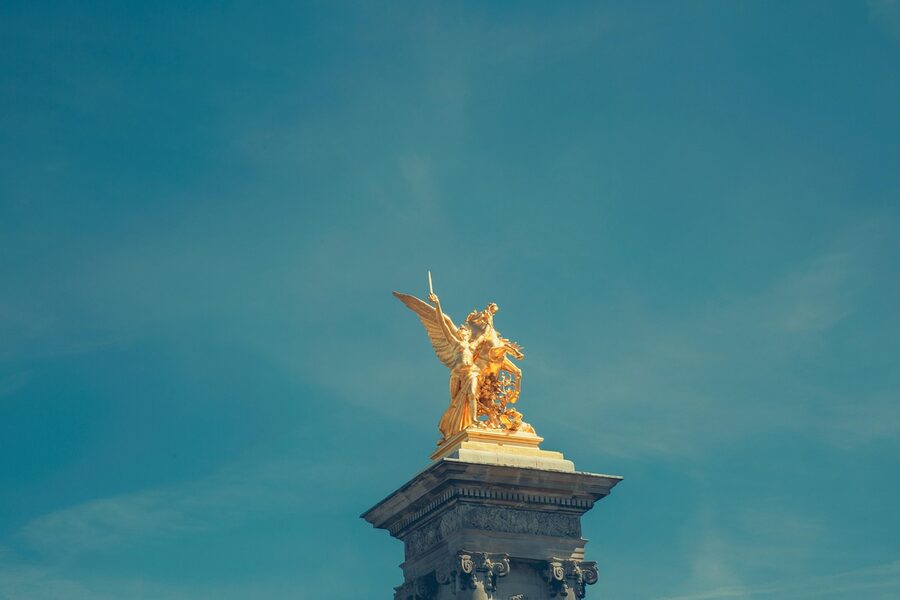
From the open deck, the gold-lit Pont Alexandre III is the highest-impact photograph of the night. Wait for the boat to be 50 to 100 metres before the bridge, frame the bridge against the dome of Les Invalides behind, fire. The silhouette of the bronze statues against the gold light is the signature shot.
Through the window, the limitation is reflections from the cabin lights. Most operators dim the dining room lights for the Eiffel sparkle window (that’s the moment the captain announces over the PA) and that’s when the through-window photographs work. Cup your hands around the lens against the glass to kill reflections.
Don’t stand up during sparkle. The captain typically asks you not to walk around the cabin during the five-minute sparkle window for stability, and you’ll block other tables’ views if you do. Stay seated, lean toward the window, fire the shot.
If You’re Pairing It With Other Paris Bookings
The cruise pairs naturally with a few other Paris experiences worth pre-booking.
A daytime one-hour panoramic Seine cruise the day before lets you see the same monuments in daylight, which makes the night cruise more recognisable from the water. The pairing works backwards too. Night cruise first, then a one-hour daytime to see the bridges in detail.
The Paris Museum Pass doesn’t cover the cruise but does cover Sainte-Chapelle, Conciergerie, the Louvre, the d’Orsay, and the Arc de Triomphe, all of which you can knock out on the day of your dinner cruise without rush.
The Paris hop-on bus is the practical way to reach Port de la Bourdonnais if you’re staying in Le Marais or beyond. The Bir-Hakeim and Trocadéro Métro stops are also walking distance from the dock. Don’t take a taxi during evening rush hour; the Quai Branly area is gridlocked between 18:00 and 19:30, and you’ll miss boarding.
If you’re combining the cruise with a chapel-and-prison evening on Île de la Cité, the Sainte-Chapelle and Conciergerie combo closes at 17:00 in winter and 19:00 in summer. The cruise’s loop passes both buildings around 21:30 to 22:00, so you can do them in daylight then see them lit at night from the water in the same evening.
Common Mistakes That Ruin the Cruise
A short list of the things travellers regret after this cruise. None of them are deal-breakers but all of them are avoidable.
Booking the cheapest version expecting the gourmet experience. The food is the part that varies most across the price range. Don’t expect a Michelin-starred meal at the $64 tier, and don’t book the $135 expecting the cheap tier’s “I just want a view” energy. They’re different products.
Skipping the window-seat upgrade. The boats are designed so that interior tables have aisle traffic on both sides. Without a window seat you spend the cruise leaning to peek. Pay the extra $20-40.
Booking a 19:00 cruise to “save money.” Some operators run early-evening cruises at lower prices. They depart before the lights come on. You’ll pay 90% of the full price for a daylight river cruise with a fixed dinner. Just do the lunch cruise instead at $93.
Wearing flip-flops. Most operators won’t refuse boarding for footwear, but you’ll be embarrassed in the dining room and you might be moved away from the window. Smart-casual minimum, especially on the gourmet boats.
Showing up at boarding time instead of 30-40 minutes early. Window-table assignment on the cheap cruises is partly first-come within your tier. Late arrival means a worse seat than you paid for.
Forgetting to flag dietary requirements 48-72 hours ahead. The kitchen plates to the manifest. Vegetarian or gluten-free guests who don’t flag will be served the standard menu and asked to pick around the meat. Email the operator from your booking confirmation and you’ll get a proper alternative course.
The Bottom Line
Most travellers will book this once in their Paris trip and then be unsure if it was worth it. The truth is: the worth depends entirely on which version you booked and what you expected. The cheap dinner cruise is worth $64 if you understand what it is and don’t expect a great meal. The gourmet cruise is worth $135 if you wanted a real Paris dinner with a view. The lunch cruise is worth $93 if you’re trading the night photograph for a calmer room and a better deal.
The version that’s not worth it is booking blind, ending up on the cheap boat, expecting the gourmet experience, and deciding the whole genre is a tourist trap. It isn’t. You just bought the wrong ticket.
So: read the product description carefully, match the price tier to what you actually want from the evening, book the window seat upgrade, arrive 35 minutes before boarding, flag any dietary requirements 48 hours ahead, and target the 20:30 sailing for the 22:00 sparkle. Do those five things and the cruise delivers the postcard Paris evening it sells.
Other Evenings Worth Pencilling In
If the cruise isn’t your move, or it’s one of three nights you have to fill, the rest of the Paris-by-night options are worth knowing. The Eiffel Tower for the summit at night, the Montparnasse Tower for the rooftop view that includes the Eiffel in the frame, the Moulin Rouge for the cabaret tradition that’s been running continuously since 1889, and an evening walk from Pont Neuf along the Île de la Cité are the four other big-impact night moves I’d queue up. Each one is its own evening; don’t try to combine the cruise with any of them on the same night except the Pont Neuf walk, which can be a 30-minute warm-up before boarding if your hotel is near Châtelet.
Versailles works the day before or the day after. The Louvre works any day you’re not on the cruise that night. Save the heavy day-trips like Disneyland for a separate slot. The cruise needs you fresh enough to enjoy a long sit-down meal, and an entire theme-park day will burn that fresh.