
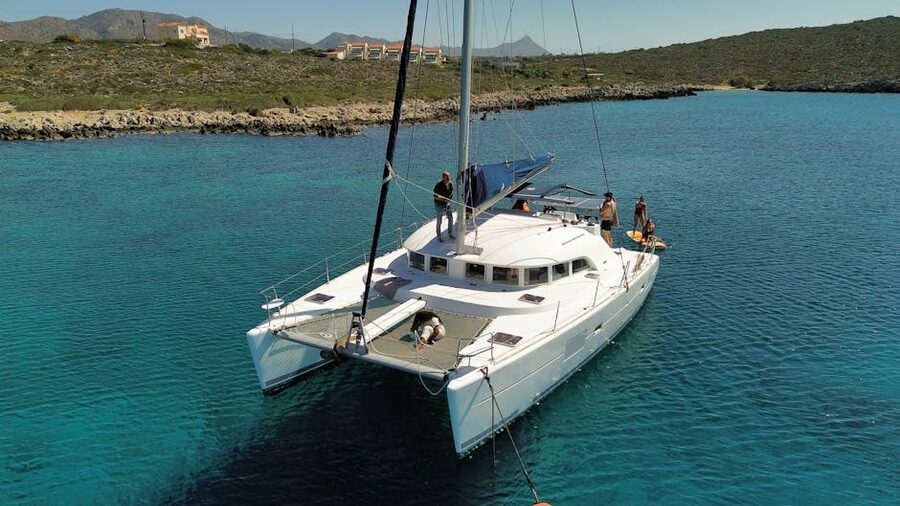
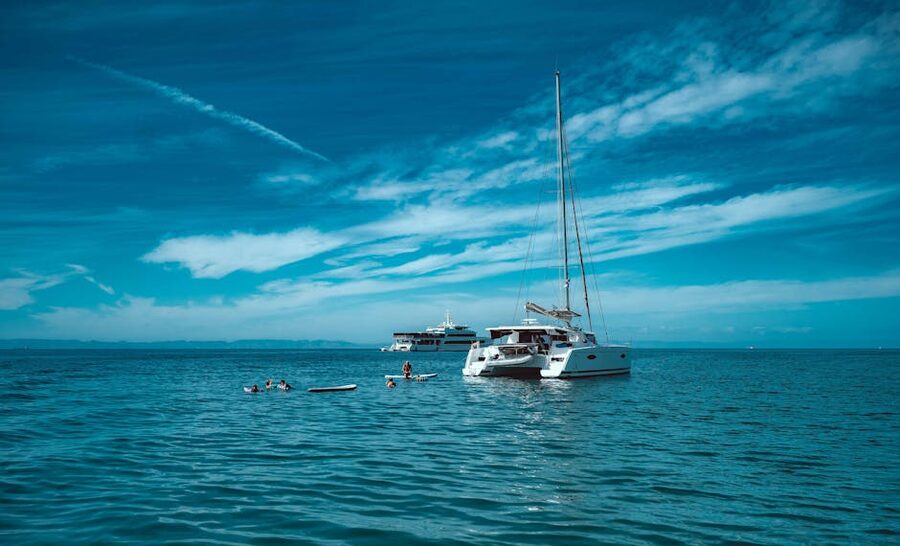
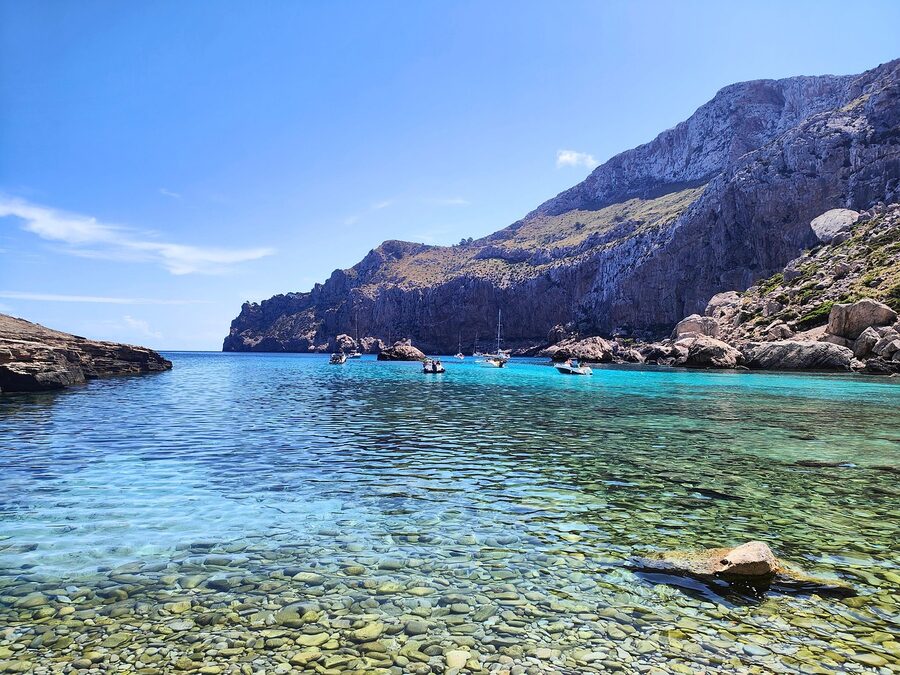
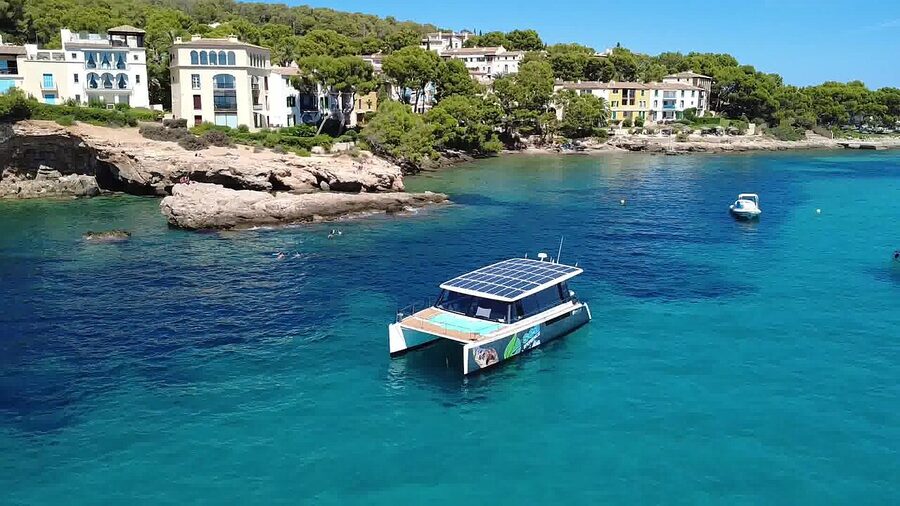
The catamaran has been at anchor for about ten minutes when somebody finally drops the swim ladder. We are sitting in Cala Mago, a notch in the south-west coast of Mallorca that locals call El Mago. The water under the hulls is five metres deep and so clear you can count the rocks on the bottom from the deck. A handful of bare bodies are already in (Cala Mago is a famous nudist cove and pretends to be nothing else); the rest of us are inching toward the ladder, working out whether the snorkel mask we were handed back at the marina is going to fog or not.
That ten-minute pause, drifting at anchor with the engine off, is the part of a Mallorca catamaran day you remember. It is also the part the brochures struggle to sell, because nothing is happening in the photo. The boat is just sitting there. The bay is just sitting there. You are the thing that has to happen.
I have done this trip three times in the last five years, twice as the cheap half-day out of Palma and once as the much longer combined island tour with the train and the tram. They are not the same product. They are barely the same activity. Most travellers book the cheap one, have a perfectly nice time, and never realise what the other version is doing. This guide is mostly about that gap.
For frame: the Mallorca catamaran is the calmer cousin of Barcelona’s bay loops out of Port Vell and the louder version’s relative is the Ibiza beach cruise. If you’ve already done one of those, this one will feel familiar. If you haven’t done any of them, this is the easy entry point to the whole Spanish catamaran scene.
In a Hurry? My Top Picks
- Best half-day for the price ($69): the 5-hour Palma catamaran with paella lunch and two swim stops. Check availability
- Best buffet upgrade ($100): the half-day catamaran with hot buffet and open bar, smaller boat, more food. Check availability
- Best evening option ($59): the 3-hour sunset boat with a DJ and dance floor for the post-dinner crowd. Check availability
The two shapes of Mallorca catamaran day
If you sort the catamaran options into actual buckets instead of price tiers, you get two products that share a name and not much else.
Shape one is the Palma half-day. Five to six hours, departure from the Estació Marítima or one of the nearby commercial moles, two anchor stops in the Bay of Palma, lunch on board, an open bar of sorts, back at the same berth in the late afternoon. Price runs $69 to $100 depending on the boat size and the food (paella from a tray or a hot buffet). This is what 80% of visitors book and it is what most of the SERP is selling.
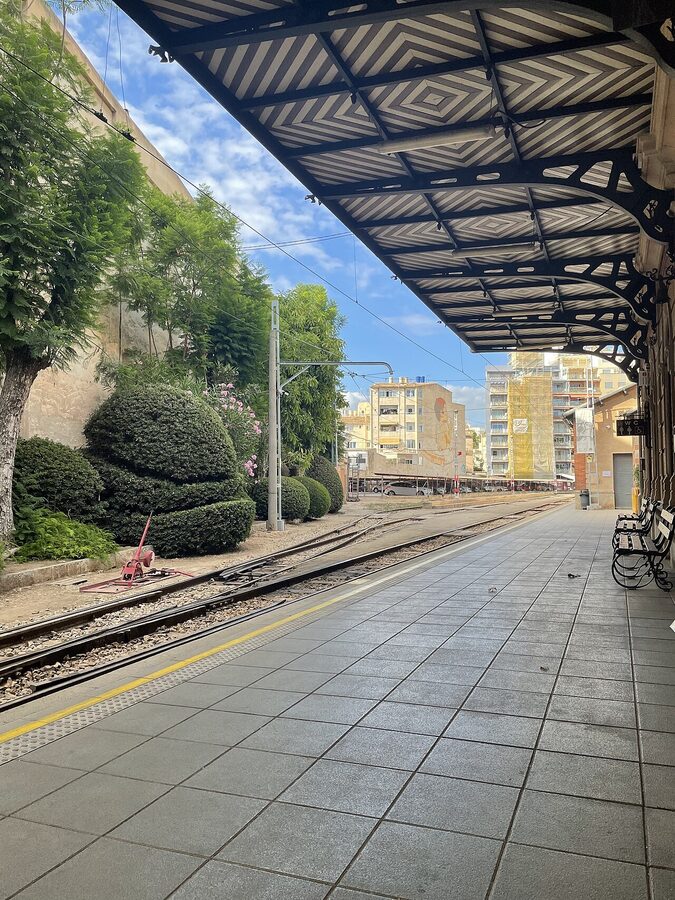
Shape two is the island combo. You leave Palma by train at 8:30am on the historic narrow-gauge railway to Sóller, switch in Sóller to the wooden tram down to Port de Sóller, and pick up the catamaran in Port de Sóller for the leg back along the north-west coast. Around eight hours door to door. Price tends to land near $117. You see roughly half the island instead of the same five-mile stretch of bay over and over.
If you only have a half day, book shape one and stop reading. If you have a full day and you want to remember it next year, book shape two. The rest of this guide is the small print on both.
What the Palma half-day actually looks like
You meet at the marina at 10:30am or 11am for a midday departure. The check-in line is long and disorganised and starts twenty minutes earlier than the email said it would. Bring the booking on your phone, they want a QR code, not a name on a list.
The boat usually carries 100 to 150 people, sometimes more on the bigger 25-metre cats. You’ll get sun loungers up front, a covered seating area on the main deck, and a cramped bar setup somewhere mid-boat. The crew speaks four languages and shouts the safety briefing in two of them. Within fifteen minutes of leaving the dock you are out in the Bay of Palma.
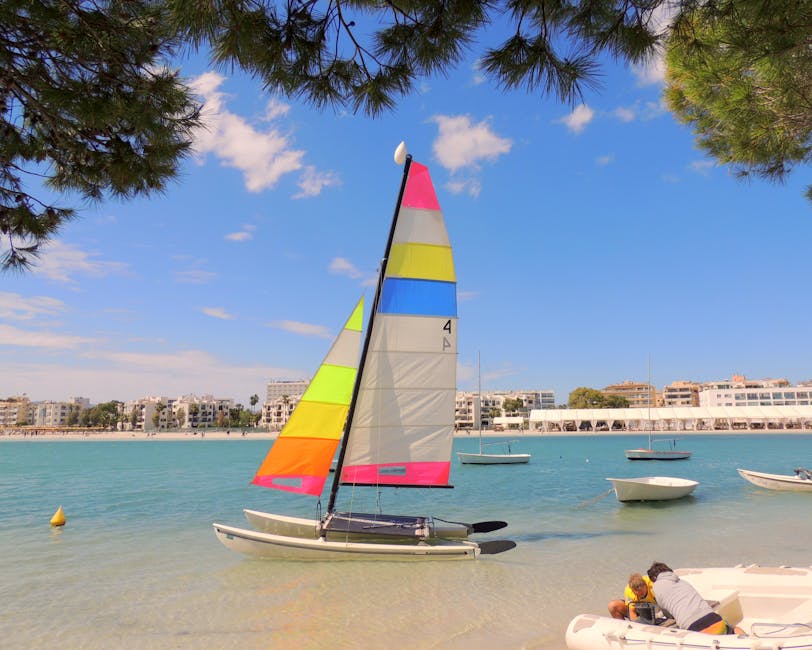
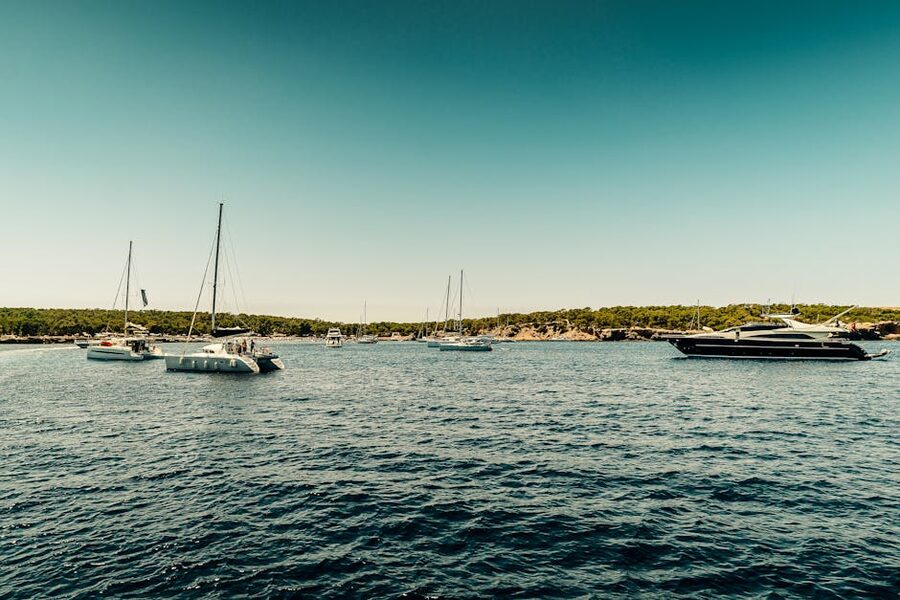
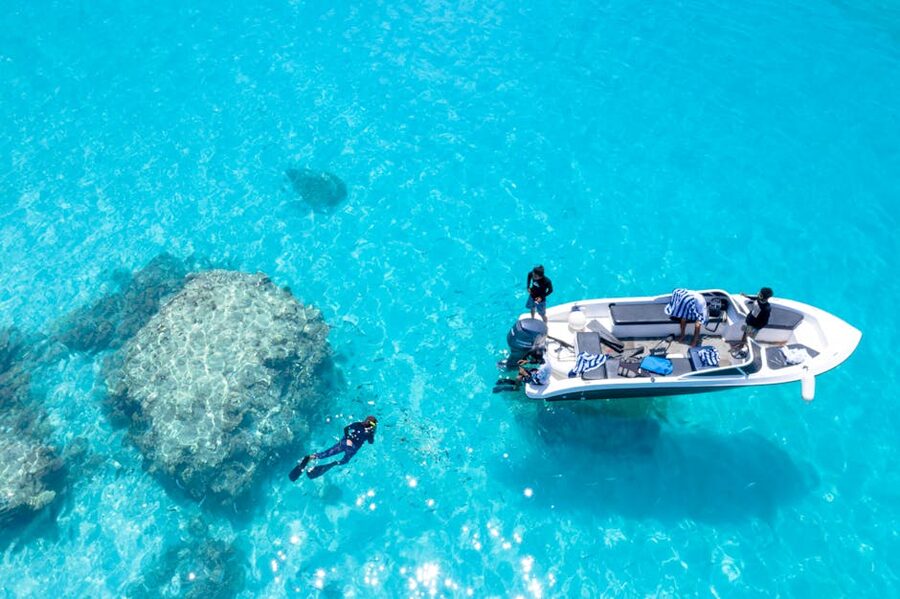
The first anchor stop is usually somewhere along the south-west shoulder of the bay. Cala Mago in the high season, Cala Vella when Cala Mago is too crowded, Portals Vells if the wind is wrong for either. Anchor depth runs three to seven metres. The water is clear enough that the boat throws a shadow on the seabed you can see from the deck. Forty-five minutes for swimming, snorkelling, jumping off whatever railing the crew lets you jump off.
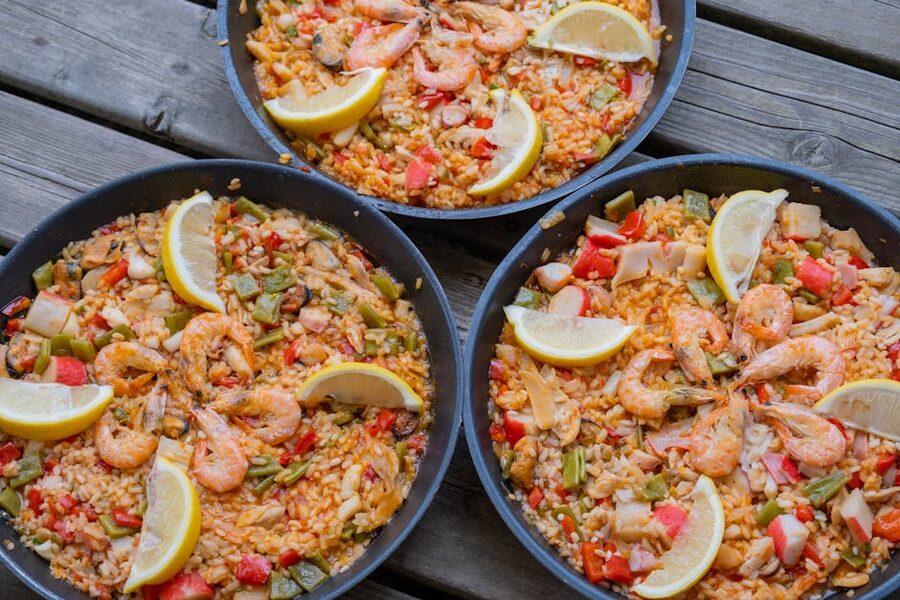
Then back on board for lunch. The cheaper $69 boats serve paella in big trays from a hatch (one ladle of rice, one piece of chicken, three mussels, a chunk of bread, a salad on the side). The $100 boats run a hot buffet from a longer hatch and rebuild it twice. The food is not why you are here on either tier. It is fuel.
Second anchor stop is shorter, often the same patch of water on the way back if the wind has shifted, or a calmer cove further east. Twenty to thirty minutes. Some people skip the second swim and stay on board with another sangria. If the boat has a slide off the back you’ll see the same six teenagers go down it eight times in a row.
Back at the dock by 4:30pm, off the boat by 5pm. You smell of sunscreen and seawater and you are pleasantly toasted. It is a fine afternoon and exactly what it says it is. If somebody asked you to describe one specific moment from it next month, you’d struggle.
What the train-tram-boat combo actually looks like
This is the trip I’d argue about over dinner. It costs more, it eats your whole day, and it is the proper Mallorca experience.
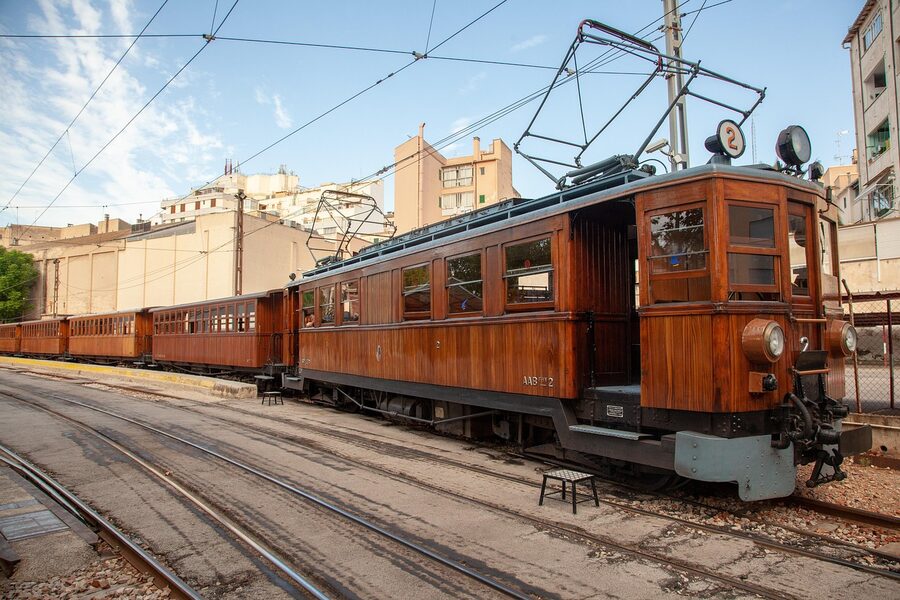
You start at the Plaça d’Espanya station in central Palma at 8:30am. The Ferrocarril de Sóller has been running on the same 914mm narrow gauge since 1912. The carriages are original, the seats are wooden, the brass fittings are real. It is the only inland railway on Mallorca that is privately owned and has never been nationalised. The 27.3km run to Sóller takes 56 minutes and goes through thirteen tunnels.
The first half is flat farmland through Bunyola and the suburban valleys. The second half is the part you came for. The train climbs into the Serra de Tramuntana, threading along the ridge, and the long Túnel Mayor (the longest tunnel) drops you out on the Sóller side with the whole valley laid out in front of the carriage windows. If you’ve taken cave tours elsewhere on the island the underground stretch will feel familiar; the difference here is the reveal at the end, when daylight returns and the orange groves of the Sóller valley appear through the trees.
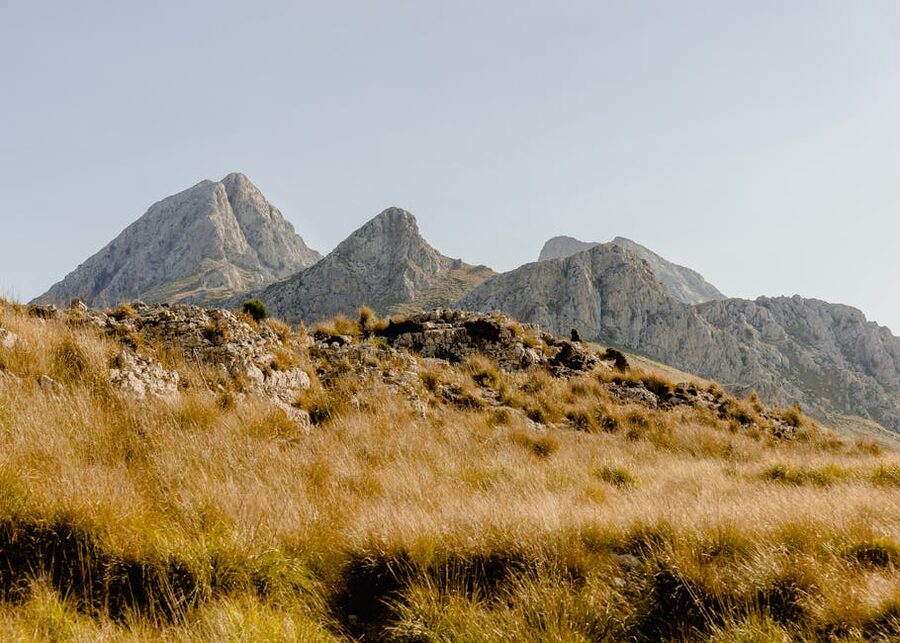
You arrive in Sóller town and have about thirty minutes to wander before the tram. Use them. The Plaça de la Constitució has a Modernista church facade by Joan Rubió, who was Gaudí’s collaborator, and a working coffee bar on the square that opens at 9am sharp. There’s a small farmers’ market on Saturdays.
The tram is the next leg. The Tranvia de Sóller has been running between the town and Port de Sóller since 1913, also original wooden stock, electric not diesel. It is six kilometres of orange groves and stone walls, and it terminates on the seafront in Port de Sóller, where the catamaran is already there waiting.
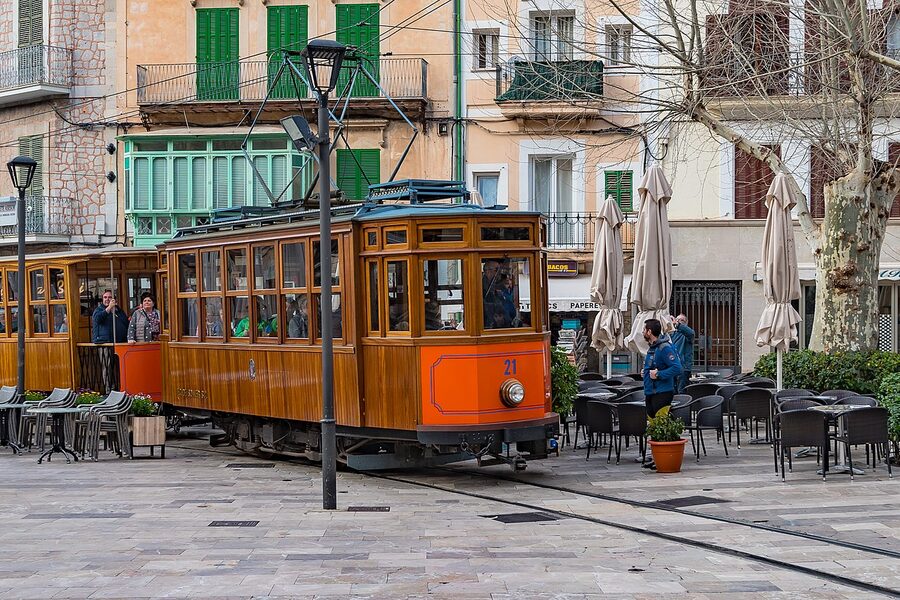
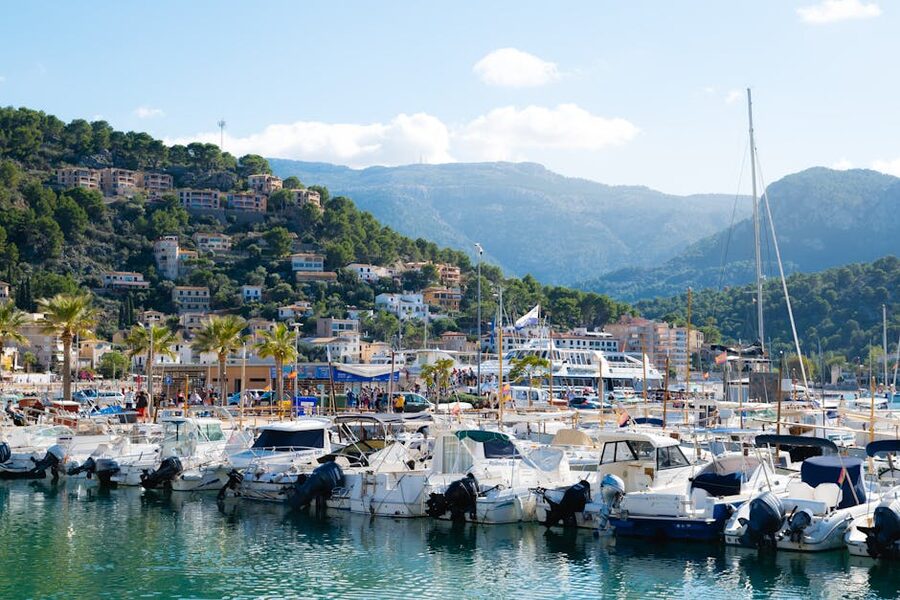
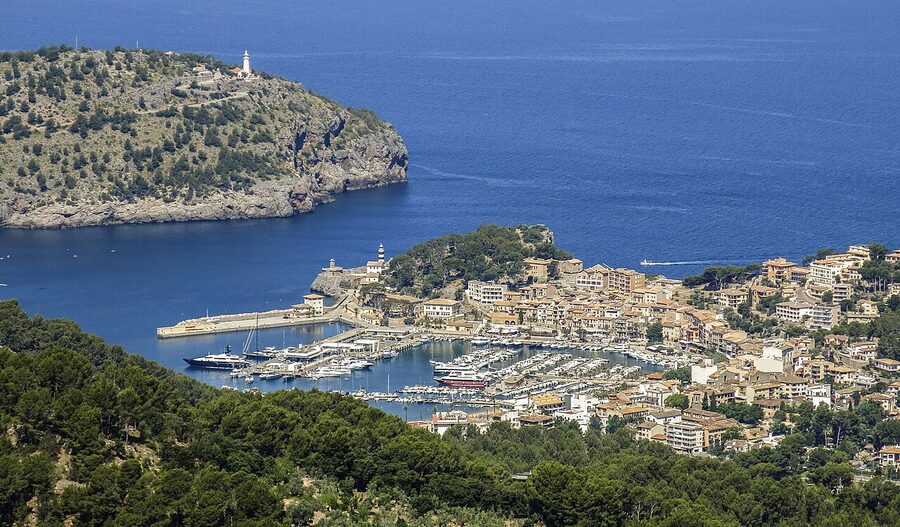
Port de Sóller itself is a horseshoe-shaped harbour that opens to the sea on the north-west side of the island. The water is darker than the south coast, deeper, the cliffs come straight down to the waterline. The catamaran is moored at the central pier and you board around 11am.
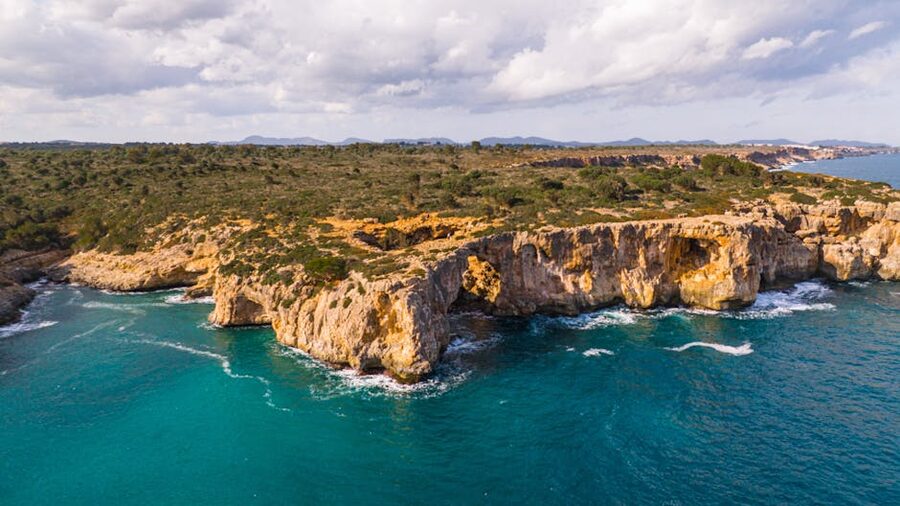
From the port the catamaran runs west along the Tramuntana coast, anchors for swimming somewhere near Sa Calobra or Cala Tuent, and continues all the way back round to Palma. Roughly four hours on the boat, all of it along the most photographed stretch of coastline in the western Mediterranean. You finish back in Palma harbour around sunset.
That is a real day. You crossed an island by three different vintage forms of transport, swam off a remote cove, and ended up back where you started having genuinely seen the place. The half-day boat does not give you that.
How Mallorca compares to the rest of the Spanish boat circuit
If you’re working through the Spanish coast with a few cruises planned across the trip, here’s how Mallorca slots in. The Mallorca half-day is the easiest catamaran day in Spain, full stop. The bay is sheltered, the routes are short, the operators all have decades on the same boats. The only thing it isn’t is dramatic, and that’s because the Bay of Palma is a wide flat bay, not a coast like the Tramuntana side.
The Barcelona catamaran out of the Port Vell is the urban equivalent: 90-minute or 2-hour bay loops, you stay in sight of the city, you see Sagrada Familia from the water and that’s the appeal. It’s a different product. Closer to a sightseeing boat than a swim trip, and on that score the closest northern-European cousin is an Amsterdam canal cruise: glass roof, an hour out of the boat ramp, the city seen from the water it’s built around.
The Ibiza beach cruise is the louder cousin: smaller boats, more party, fewer anchor stops with proper swimming. If you’re doing the Balearics in one trip and want a contrast to Mallorca’s quieter version, Ibiza is the trip you do for the night and Mallorca is the trip you do for the day. At the industrial-water end of the European spectrum, a Rotterdam harbour cruise shows you the largest port in Europe in seventy-five minutes of glass-roof comfort, the urban opposite of an anchor stop in a Cala Mago notch.
Out west on the Atlantic, the Gran Canaria dolphin cruise is wildlife-led rather than swim-led. You go for the bottlenose pod off Anfi del Mar, snorkelling is a side dish. Mallorca has no resident wild dolphin pod close enough to make the same trip viable.
Italian cousins: how a Mallorca cat day compares to the boat trips off Italy
Italy runs the same catamaran-day-trip product in three or four places, and they’re useful comparisons if you’re booking blind. None of them are the same shape.
The Capri boat tour out of Naples is a passage trip with a sightseeing payoff at the end. You spend an hour and a quarter crossing the Bay of Naples on a faster boat, then circle Capri’s coastline including the Faraglioni stacks and the Blue Grotto if it’s open. Less swimming, more landmark photography. The Mallorca half-day is the inverse: less to photograph, more time in the water.
The La Maddalena archipelago boat from Sardinia is the closest direct equivalent. Same shape (anchor, swim, lunch, anchor, swim, return), same time window, similar price band. The water in La Maddalena is statistically the cleanest in the Mediterranean (Italian environment ministry data), so on photography alone La Maddalena edges Mallorca. On accessibility from a major city Mallorca wins, you can’t get to La Maddalena without first getting to Sardinia and then to its northern tip.
The Polignano a Mare cruise on the Adriatic is the cave-cruise variation: shorter, two hours instead of five, no anchor swim, the boats are small enough to enter the limestone caves at the base of the cliffs. Different product. Same principle of “the boat as the medium, the coast as the show.”
The Venice islands run is the lagoon equivalent: not a cat tour at all, but a daylong vaporetto-and-private-boat itinerary out to Murano, Burano, and Torcello. If your only frame for “boat trip in the Med” is gondolas in Venice, the Mallorca catamaran will surprise you with how much actual sailing happens.
The Amalfi day-trip boats from Sorrento or Positano are the closest in feel: anchor stops at the Galli islands, lunch on board, return at golden hour. Italian crew, smaller boats (typically 25 to 40 passengers), and a shoreline that is a hundred metres of vertical cliff next to the swim ladder. Mallorca’s version is calmer, flatter, less photogenic, and 40% cheaper for what is the same five-hour day. The French Mediterranean parallel for the protected-island anchor day is the short Sainte-Marguerite ferry from Cannes, and for cetacean-rich open water on a similar day-shape, an Ajaccio boat tour out into the Sanguinaires gulf in Corsica covers the same instinct off a different volcanic coast.
Slotting the catamaran into a Mallorca week
The catamaran is one half of a Mallorca week. The rest of it is the city itself plus two or three days in the Tramuntana hill towns. If you’re planning the rest of the trip around the boat day, here’s how the other pieces slot in.
Save the morning of your boat day for the boat. Don’t try to add a museum or a cathedral visit before, you’ll be rushed and grumpy by the time you board. The day before is the natural slot for La Seu, Palma’s light cathedral, which is two streets from the marina and the proper Gaudí-and-rose-window prep for the trip. Visit it in the late afternoon when the light hits the south rose window and the interior glows orange.
The day after the catamaran is best spent off the water entirely. The Caves of Hams on the east coast give you the underground version of what you saw above water (limestone caves, an underground lake, a 90-minute classical concert in the largest chamber). The drive across the island is its own scenic journey.
If you’ve got a week, rent a car for one day and drive the Tramuntana road from Andratx to Pollença, stopping at Valldemossa for Chopin’s monastery, Deià for lunch (Es Racó d’es Teix is the splurge), and Cap de Formentor for the lighthouse at the end of the world. The catamaran shows you that coast from the water; the drive shows you what is on top of the cliffs. The Palma hop-on-hop-off bus is the lazier version of orientation if you don’t want to drive.
Cala Mago, Portals Vells, and the half-day anchor stops
The Palma half-day boats rotate between four or five anchor coves on the south-west shoulder of the bay. Which one you get depends on the wind and the time of day, not on what’s on the booking page. None of them are private to the boat, all of them have a couple of other boats parked nearby. None of this matters once you are in the water.
Cala Mago / El Mago is the famous one. A small notch on the south-west coast, west of Magaluf, named after a 1950s Italian movie that was shot there (Il Mago). It has been an unofficial nudist beach for forty years. The water is the clear shade of green that postcards over-saturate by accident, three to five metres deep at the boat, white sand bottom, fish you can identify without a guide. The catamarans drop their ladders here when they can.
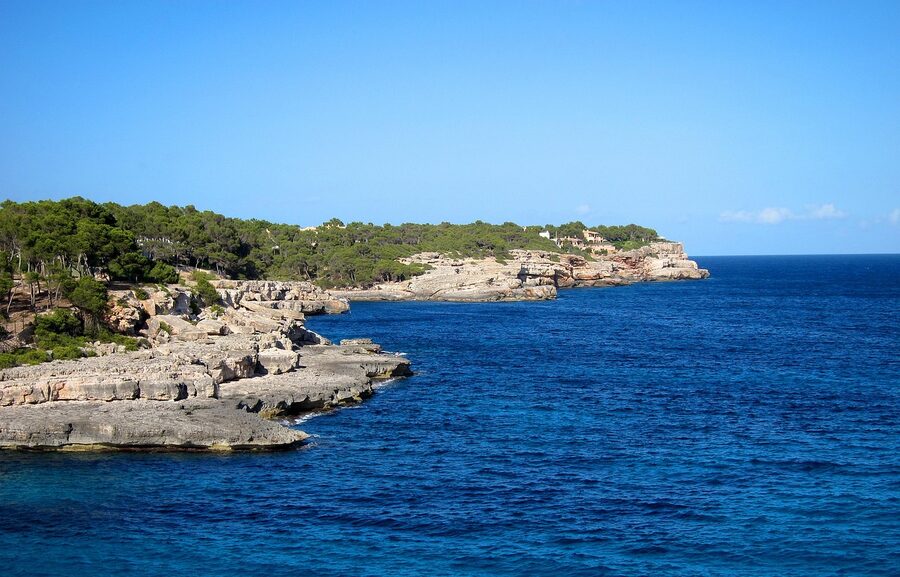
Cala Vella is the alternative, a slightly bigger cove half a mile further west. Same clarity, slightly more hikers on the cliffs above (there’s a coast path that runs through). Boats use this one when the swell is too much at Cala Mago, which happens a couple of days a week in shoulder season.
Portals Vells is the calmer alternative further east, an old smugglers’ cove with a sea cave at the back. The boats can’t enter the cave but you can swim into it from the boat in fifteen minutes. The light inside is blue-green and uneven and there’s a small Virgin Mary niche carved into the rock that the smugglers built in the 16th century to hedge their bets. Worth the swim.
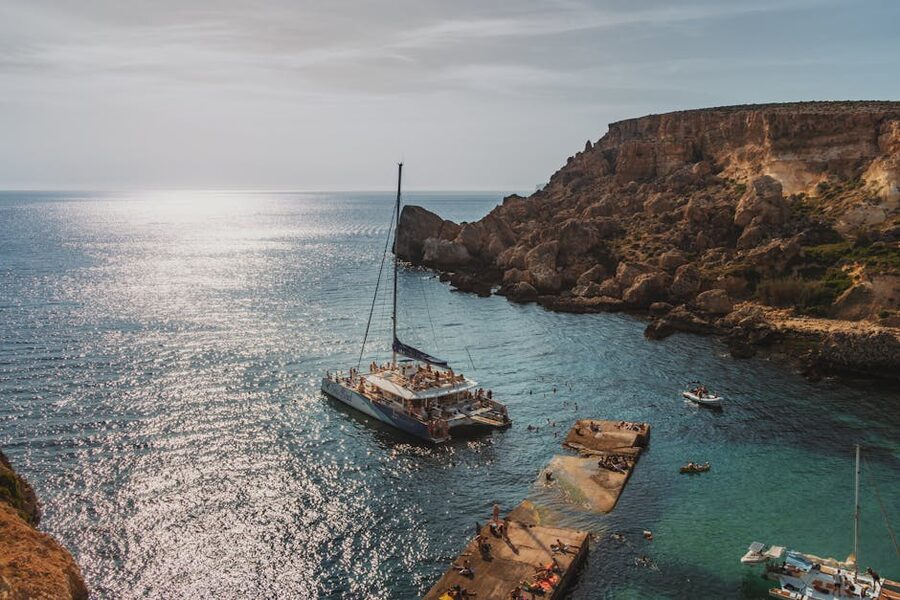
The crew on the cheaper boats will tell you the cove’s name once and never again. Listen carefully on the way in or you’ll be telling the story afterwards as “we anchored somewhere west of Palma.” The pricier boats hand out laminated route maps. They are useful.
Sunset cruise versus daytime trip
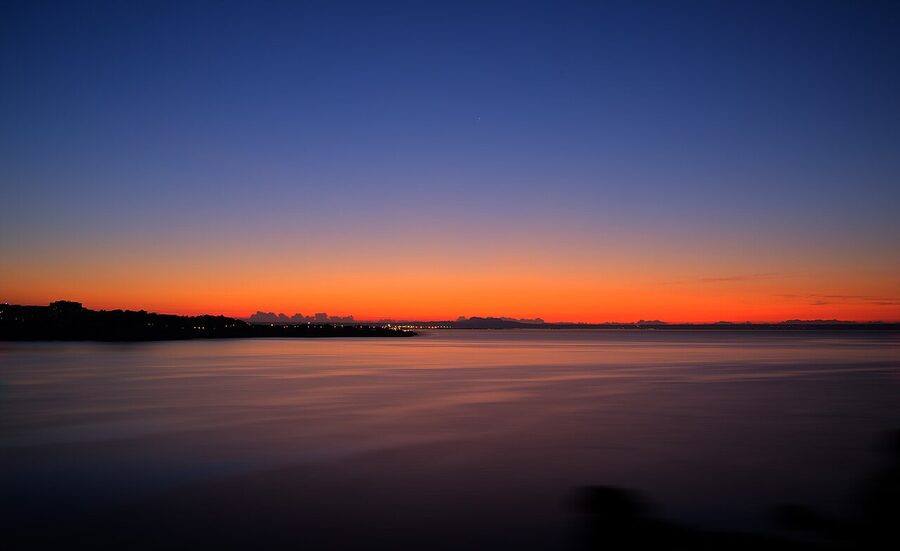
The third option I haven’t covered is the sunset boat. Three hours, $59, departure around 6pm, snacks instead of lunch, music louder than the engine, no swim stop unless the captain feels generous. This is a different night out, not a different version of the day.
If you’ve already done a daytime swim trip earlier in your stay and you want a second boat experience that isn’t redundant, the sunset is a fair shout. The light on the Tramuntana ridge from the western side of the bay, around 7:30pm in summer, is genuinely nice. The DJ is on the larger boats and runs club music; on the smaller ones it’s chill instrumental. Decide which you want before you book.
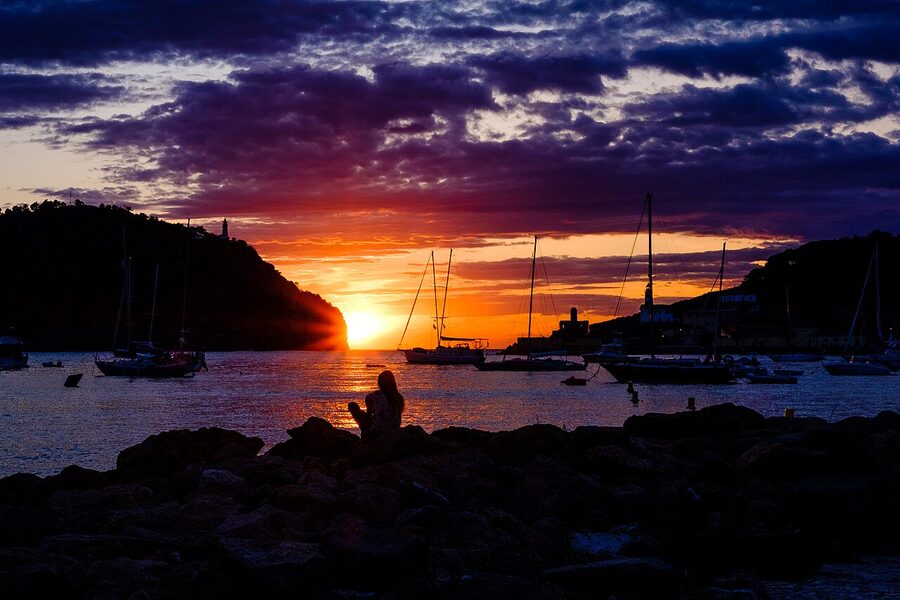
Skip the sunset boat if you don’t drink. The bar is half the boat’s economic model and the music gets louder once people get a couple of cocktails in. It’s not a sober activity. Do it as your last evening on the island if you’ve enjoyed the rest of your trip and want a celebratory night that ends on the water rather than in a bar on the Passeig Marítim.
Booking, prices, and how the platforms compare
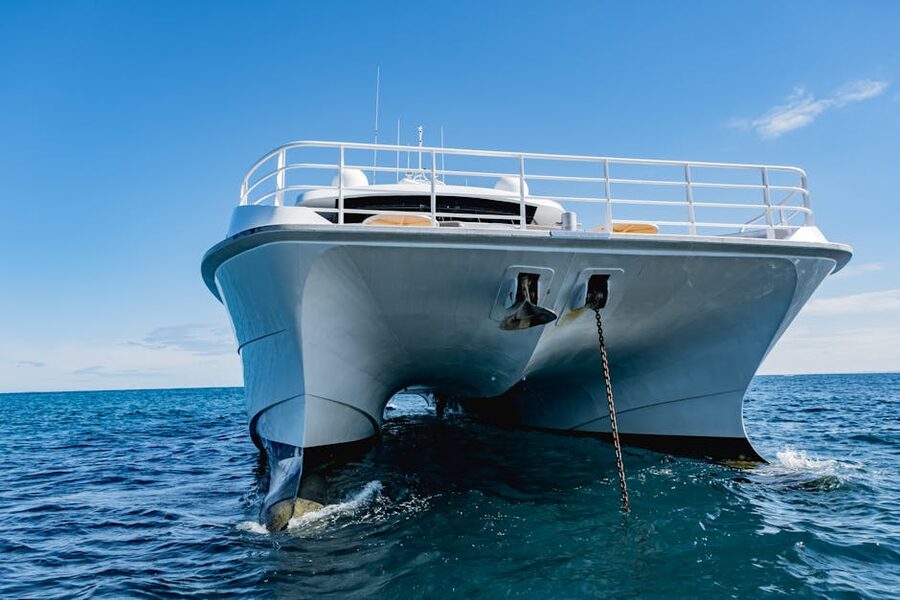
The three big sources for catamaran bookings on Mallorca are GetYourGuide, Viator, and the operator’s own websites. I’ve used all three and the answer is uninteresting: book on whichever has the live calendar showing the date you actually want.
The pricing isn’t materially different. GetYourGuide and Viator pull from the same handful of underlying operators (Mallorca Catamarans, Magic Catamarans, Attraction Catamarans, a couple of others). The operator’s own website will often save you a few euros by skipping the platform commission, but loses you the standardised cancellation policy.
What does matter:
- Cancellation window. GetYourGuide is 24-hour cancellation on most catamaran tours. Viator is 24 to 48-hour. Direct operator bookings are often non-refundable past 48 hours. If your trip dates have any chance of moving, the platform fee is worth paying.
- Mobile ticket. All three platforms now use QR codes. The crew at the dock scans your phone, no paper printout needed. Don’t waste hostel printer credits on this.
- Live availability. A spot showing as “free” on Viator at 8am has often been claimed by GYG by 10am. Don’t sit on a tab for two days, the inventory is shared.
- Reviews. The platforms list a star rating and a count next to each tour. The catamaran market has a long tail of small operators and a couple of giants; the giants get the bulk of the stars and the small operators get the personal touch. There’s a trade-off in either direction.
The trip price quoted on the booking pages does not include hotel pickup. Some Magaluf and Palmanova hotels offer a paid bus transfer for €10 each way. If you’re staying in central Palma you don’t need it, the marina is a 25-minute walk or a €10 cab from anywhere in the old town. If you’ve got a Palma hop-on-hop-off bus pass, the closest stop is the Auditorium and it’s a six-minute walk from there to the catamaran piers.
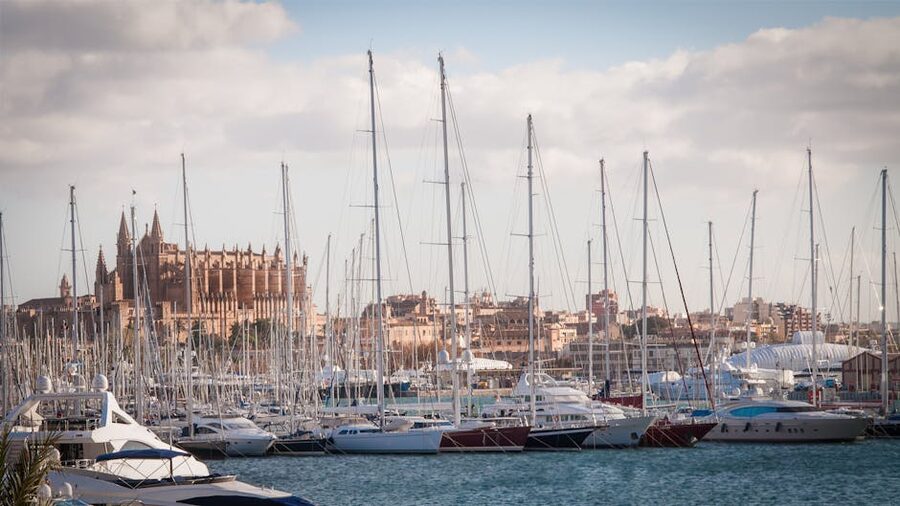
Three Mallorca catamaran tours worth booking
I’ve narrowed the options to three that actually do different things. They’re not the only choices, but they cover the three cases most readers fall into: the budget half-day, the upgraded buffet half-day, and the post-dinner sunset boat.
1. 5-Hour Catamaran Cruise with Lunch and Swim Stops: $69
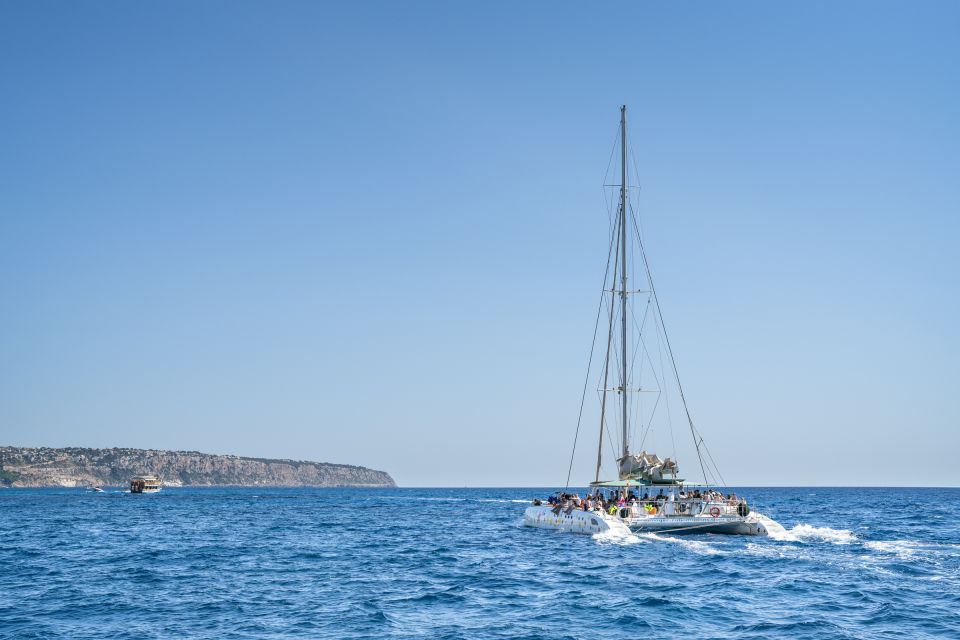
This is the trip nine out of ten readers should book if they only have one afternoon. Five hours is enough for two real swim stops without making the day feel rushed, the paella is fine for the price, and the boat is big enough that you can find a quiet corner if the trampoline is taken. Our full review walks through what the boat is actually like, the loo situation, and what the open bar actually pours.
2. Half-Day Catamaran with Buffet Meal: $100
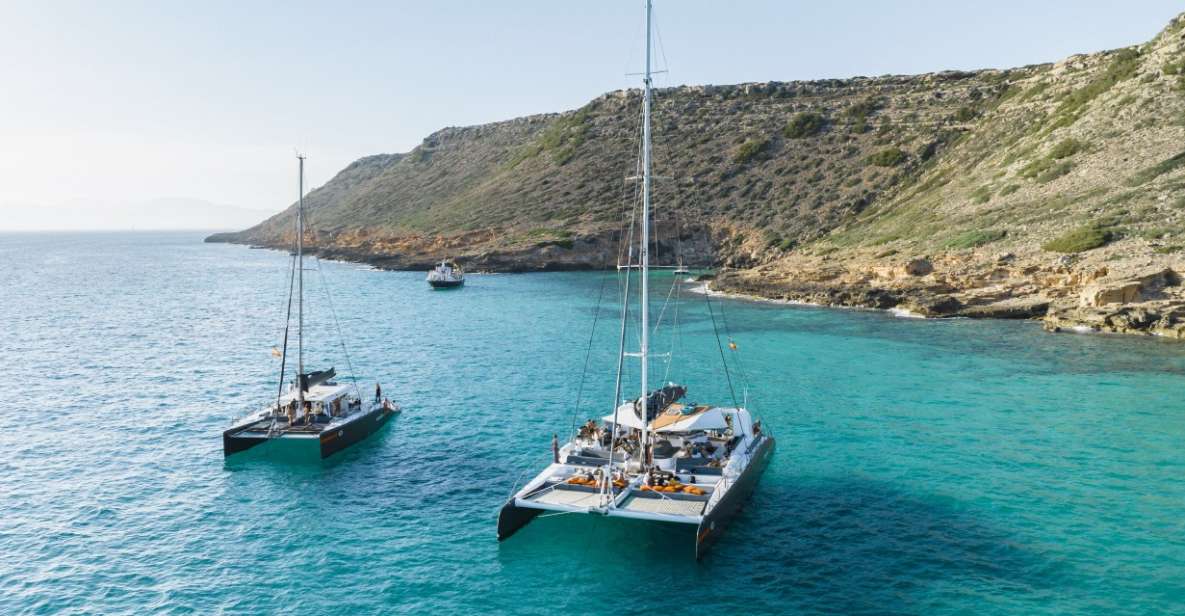
If the food matters and the crowd matters, the $100 boat is the upgrade that earns its surcharge. The boats run smaller (60 to 80 passengers), the buffet is hot and refilled twice, and the bar is open the whole way through rather than rationed. Our review gets into the actual menu and what’s worth queuing for.
3. Sunset Boat Tour with DJ and Dance Floor: $59
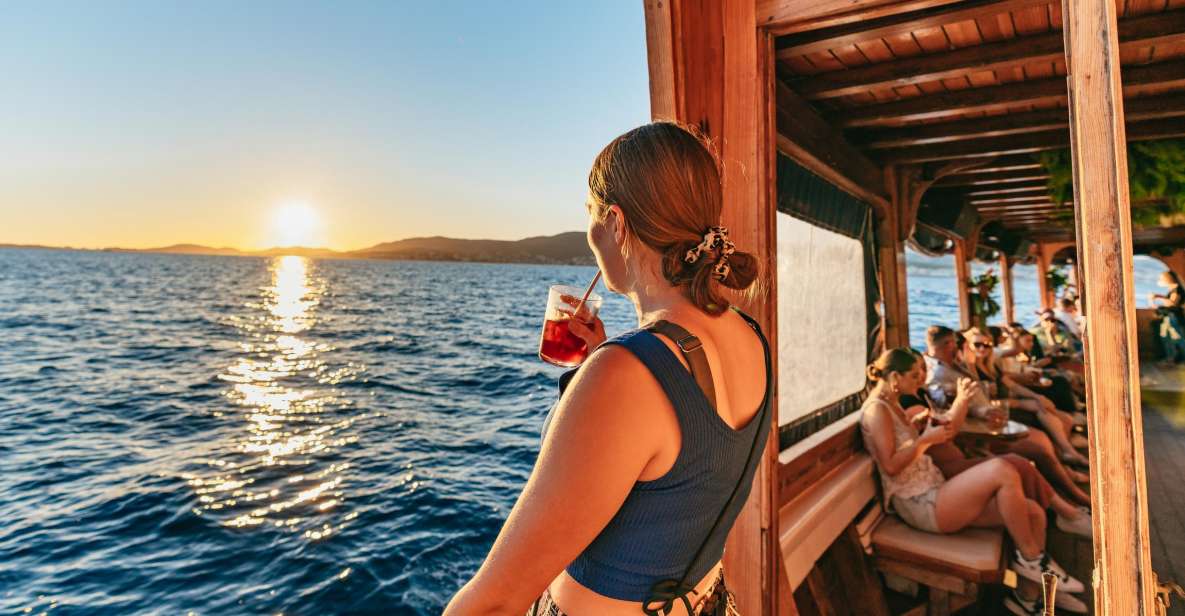
The post-dinner crowd’s pick, three hours that turn into the start of a night out rather than the end of a day. The light on the Tramuntana ridge from the bay around 7:30pm is the actual reason to do this; the dance floor is the reason it stays open past sunset. Our review covers the music tier, the bar prices once you board, and which boats actually have a usable dance floor.
What to bring, what to leave at the hotel
The boats provide towels (sort of), drinks, food, snorkel masks, and shade. They don’t provide reef shoes, decent goggles, dry bags, or sunscreen. The crew sells overpriced sunscreen for €15 a tube. Here’s the short list of what’s worth bringing.
- Reef shoes or old trainers. The bigger boats sometimes anchor near rocky entries and the swim ladder lands on patches of sea urchins. Reef shoes solve this; flip-flops do not.
- Your own snorkel mask if you have one. The boat’s rentals fog within five minutes and the strap on every third one is broken. A mask from a beach shop costs €8 and you’ll use it again on the trip.
- Reef-safe sunscreen. The Balearic government banned the worst chemical sunscreens for environmental reasons in 2023. The boat’s overpriced tube is at least compliant.
- A waterproof phone pouch. €5 from any pharmacy in Palma. You will want a photo from in the water.
- Cash. The bar is technically card-accepting but the terminal goes down once a day and gratuities for the crew are cash. €20 in 5s and 10s is plenty.
- A long-sleeved layer for the return. The boats run faster on the way back to dock and the wind picks up. The afternoon sun is cooked off by 4pm and you’ll be cold in just a swimsuit.
Leave at the hotel: any non-waterproof valuables (phones in pockets get wet, keys go missing on the trampoline net), heavy bags (the boat has nowhere good to leave them), and any expectation that the wifi will work past the harbour.
When to go, weather, and the seasonality
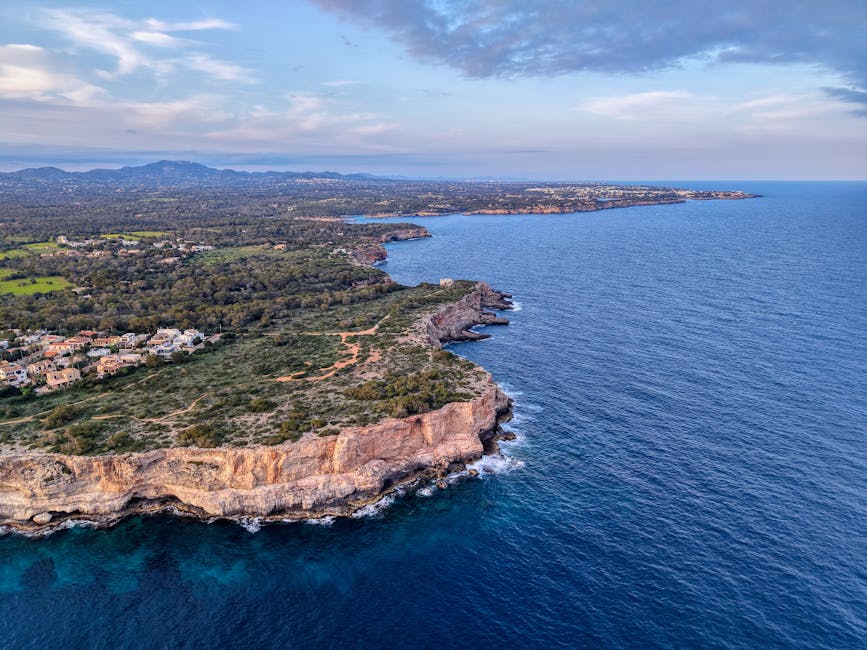
The catamaran season runs from mid-April through October, with the peak window from June to mid-September. Outside those dates the water is too cold for most northern Europeans and the wind comes hard off the Tramuntana, which makes anchoring uncomfortable.
April and early May: the boats are running but the sea sits at 17 to 18 degrees, which is fine for a quick swim and a long sit on a sunny deck. The crowds are 30% of high season, prices the same, the boats are emptier and the crew has time to talk to you. This is the sleeper season.
June and July: water hits 22 to 24 degrees, the boats fill up, prices stay flat. Book seven days ahead. The afternoons are 31 to 33 degrees on deck, the shaded seating becomes the contested space.
August: high season proper. The half-day boats are at 90% capacity most days, the queues at the dock get scrappy, the paella runs out of mussels by the second-to-last person served. Book two weeks ahead. Pay the upgrade if you can stand it.
September: the bay is still warm, the schools are back, the boats drop to 60% capacity, the prices are the same. This is the better month than August by every measure that matters.
October: last call. The water is still 22 degrees the first half of the month, then drops fast. The Tramuntana sends down strong northerlies in the second half. Half the boats reduce schedules to weekends only.
The wind that wrecks anchor stops on the south coast is a westerly. On the windier days the catamarans skip Cala Mago entirely and run to Portals Vells instead, which is more sheltered. If you’ve booked specifically because of the Cala Mago photo you saw, that’s not a guarantee the boat will go there. Cancellations for weather are rare; rerouting to a calmer cove is common.
Practical bits, mostly the small print
A few things the booking pages bury in fine print:
- Children’s pricing. Most boats charge full fare for ages 12 and up, half fare for 4 to 11, and free for under-4. The under-4 freebie isn’t always advertised; if you’re travelling with a toddler, ask at booking and they’ll add the seat without charge.
- Pregnancy. Most operators won’t board passengers in their third trimester. If you’re 6+ months and you’ve booked, call ahead, they’ll usually refund without fuss because they don’t want the liability.
- Wheelchair access. The bigger boats have ramps onto the main deck and a wheelchair-accessible head. The smaller boats don’t. If accessibility is a factor, book a 100+ passenger boat specifically.
- Sea-sickness. The Bay of Palma is a calm bay and most people are fine. The 5% who aren’t have a hard four hours. If you know you’re prone, take Stugeron or Bonine an hour before boarding (sold over the counter at any Spanish farmacia).
- Allergies. The crew will accommodate vegetarian and gluten-free requests if you flag them at booking. Vegan is harder on the cheaper boats, the buffet boats handle it routinely.
- Pets. No, even in a carrier, even if “small.”
Why I keep going back
The Mallorca half-day is not the most spectacular catamaran trip in Europe. The water isn’t the clearest (La Maddalena’s is), the coast isn’t the most dramatic (Amalfi’s is), the boats aren’t the smallest or the friendliest (the small Croatian operators in the Adriatic are). What it is, is the easiest. You can be in the water in a quiet cove three hours after waking up in a Palma hotel, and back to a real shower and dinner in the old town by sunset.
The longer combined day with the train and the tram is the trip that actually plants a memory. I can describe the long Túnel Mayor on the Sóller train better than I can describe the half-day boat I did the year after. The half-day is the lunch you ate; the combined day is the meal you remember. If your itinerary has the slot for it, do that one instead.
Where to next
If the catamaran is an anchor in your Mallorca itinerary, build out from it. The day before the boat, do La Seu cathedral in the late afternoon for the Gaudí interior and the rose-window light. The day after, do the Caves of Hams for the underground version of the limestone terrain you saw from the deck. If you’ve got a third day, the Palma hop-on-hop-off bus is a fair ninety-minute orientation if you want to stop pretending you’ve seen the city when you’ve only walked the same six streets in the old town. And if you’re island-hopping, the Ibiza beach cruise and Barcelona’s catamaran out of Port Vell are the natural next-stops in the Spanish boat circuit. Different feel, same logic: the boat is the medium, the coast is the point.