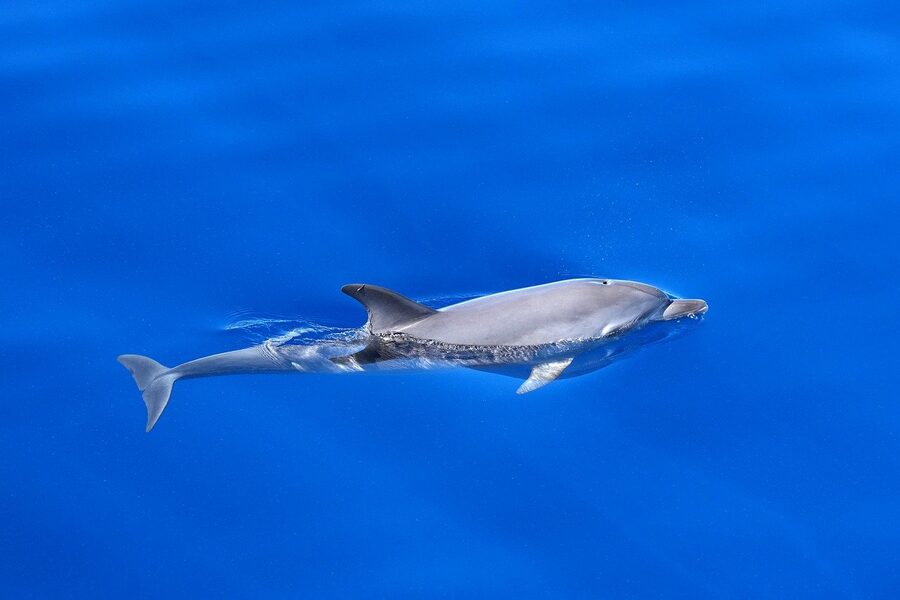
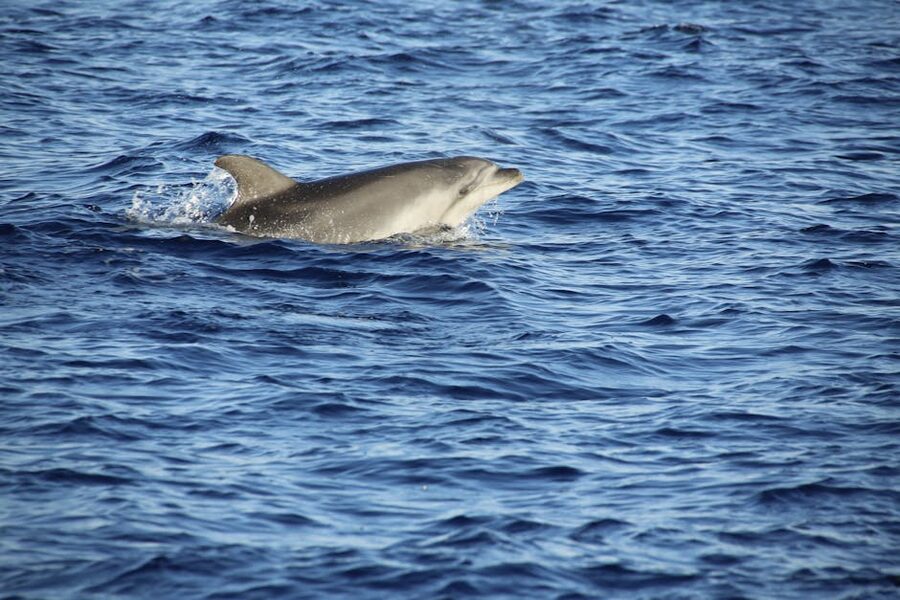
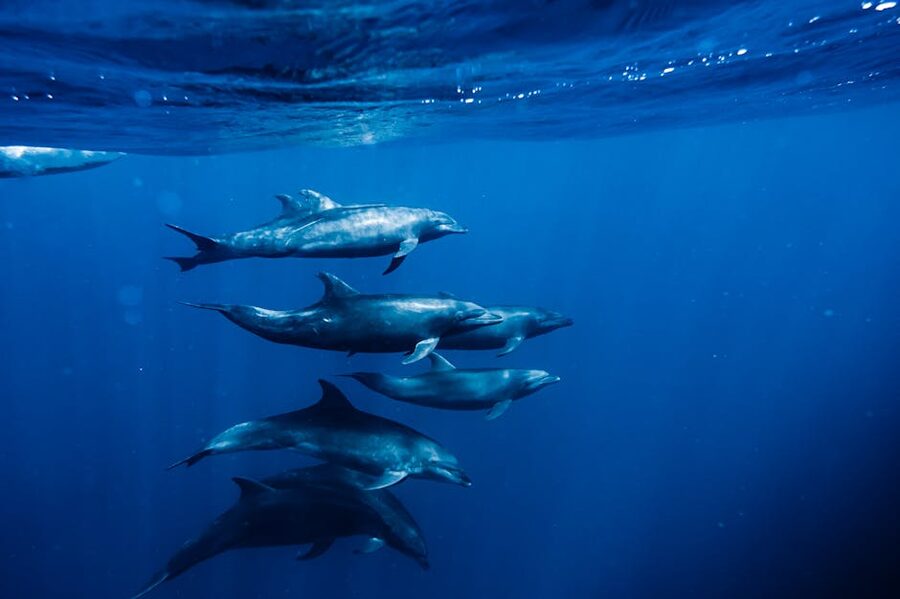
The catamaran’s engine had been off for ninety seconds when the first dorsal fin came up about twelve metres off the port bow. Then a second one, almost touching, then four more in a loose line behind them. Bottlenoses, the captain said quietly into the speaker, switching from English to Spanish without breaking the sentence. Six adults and what looked like a calf riding tucked against its mother’s flank. They didn’t break away. They turned and tracked us for the next eleven minutes, surfacing in pairs to breathe, the calf always inside the adult ring. Nobody on board said anything louder than a whisper. That’s the moment you pay $44 for, and on a good morning out of Puerto Rico de Gran Canaria, you get it inside the first hour.
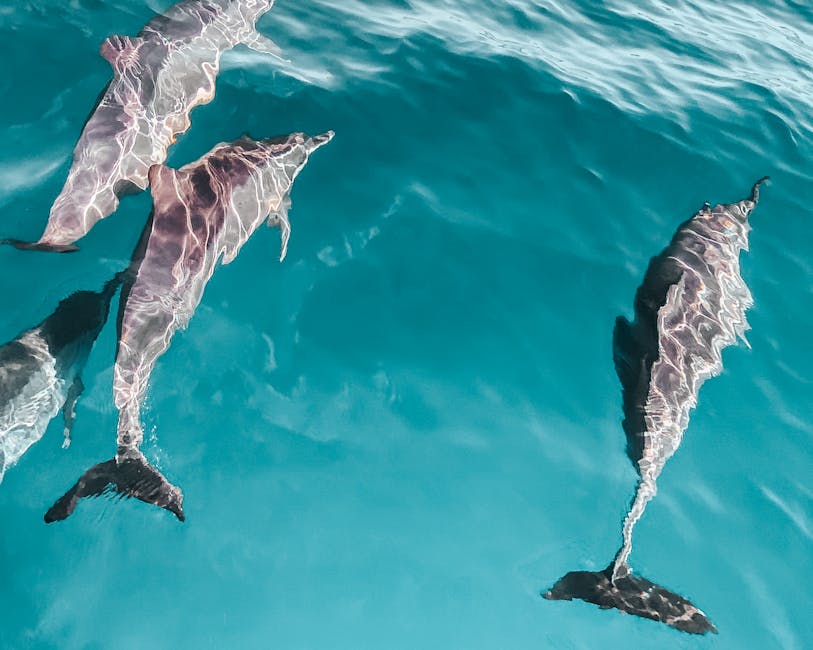
Most travellers heading to the Canaries for marine wildlife default straight to whale watching out of Tenerife, which is the famous one. Gran Canaria’s south coast is the quieter sister to that scene, and for one specific species, it’s the more reliable trip. There’s a resident pod of about 150 bottlenose dolphins (Tursiops truncatus) that lives year-round in the channel between Puerto Rico and Anfi del Mar. Tenerife is better for short-finned pilot whales. Gran Canaria is better for bottlenose. If a friend asks me which island for which animal, that’s the split.
In a Hurry? Three Picks for Dolphin Day
- Catamaran Dolphin Watch with Snorkel ($44): the flagship 3.5-hour out of Puerto Base. Sails, snorkel stop, the most-booked one for a reason. Book it
- Puerto Rico Dolphin Watching Cruise ($47): 2.5 hours, glass-panel viewing, no snorkel. Better if you’re prone to seasickness. Book it
- Dolphin and Whale Watching Cruise ($40): the cheapest option, money back if no sighting, and the one that talks up its pilot-whale chances. Book it
What you actually see out there
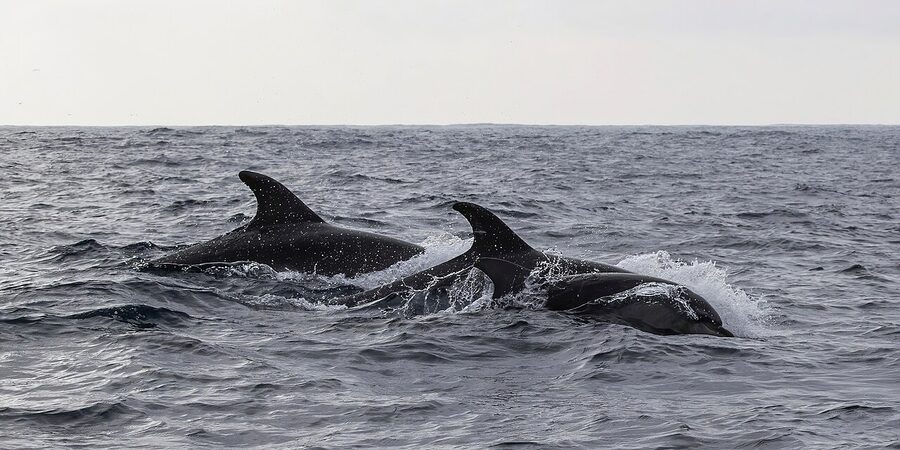
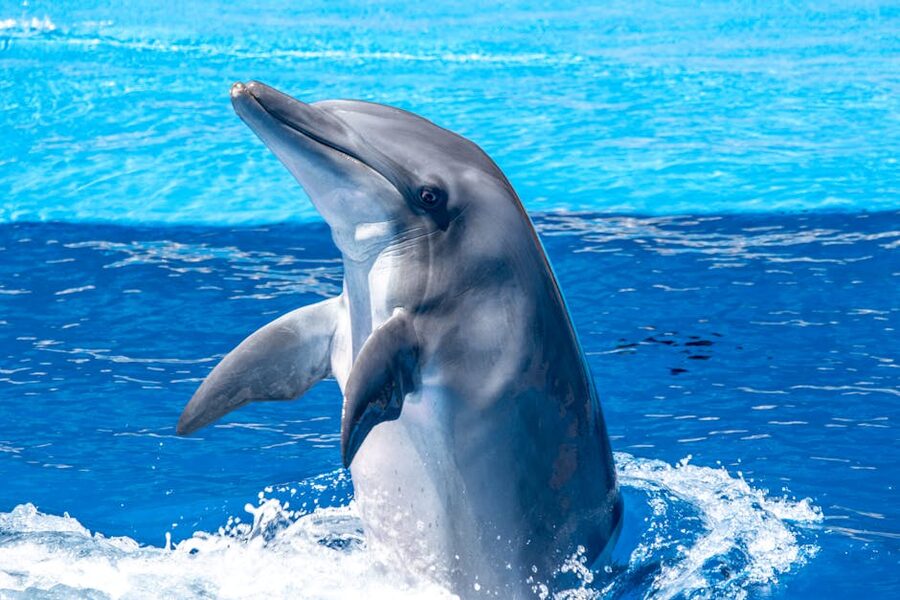
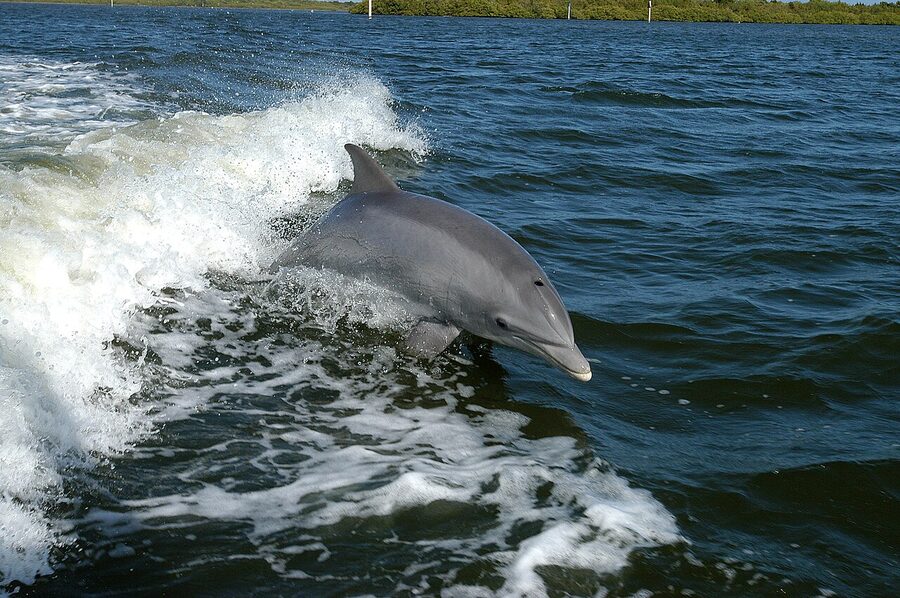
The headliner is the common bottlenose. It’s the one most people picture when they think dolphin: silver-grey, two and a half to four metres long, sociable enough to bow-ride a moving catamaran for a quarter of an hour. The Gran Canaria pod is what biologists call a “resident” group, meaning they don’t migrate seasonally. Same dolphins, same channel, year-round. That’s why the sighting rate is high enough that operators like the flagship offer a money-back-if-no-sighting guarantee on most departures.
What you might also see, in roughly descending order of frequency:
- Atlantic spotted dolphins: smaller, faster, often in larger pods of twenty to forty. Common in summer.
- Striped dolphins: the ones with the blue-grey lateral racing stripe. Mixed pods, slightly more offshore.
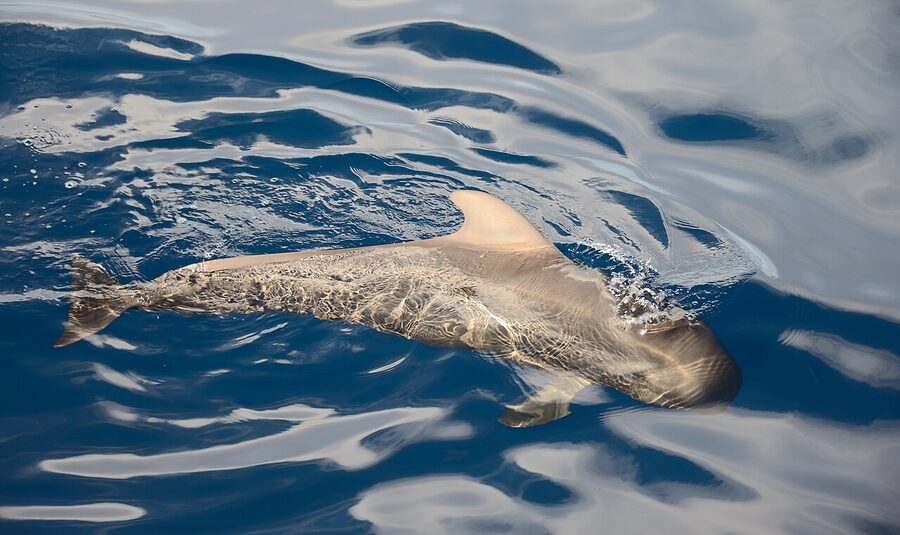
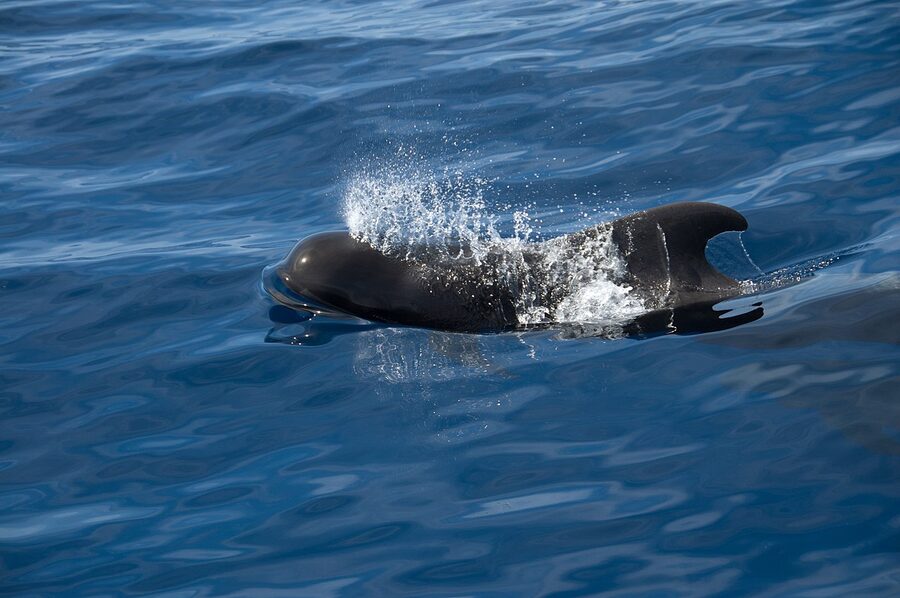
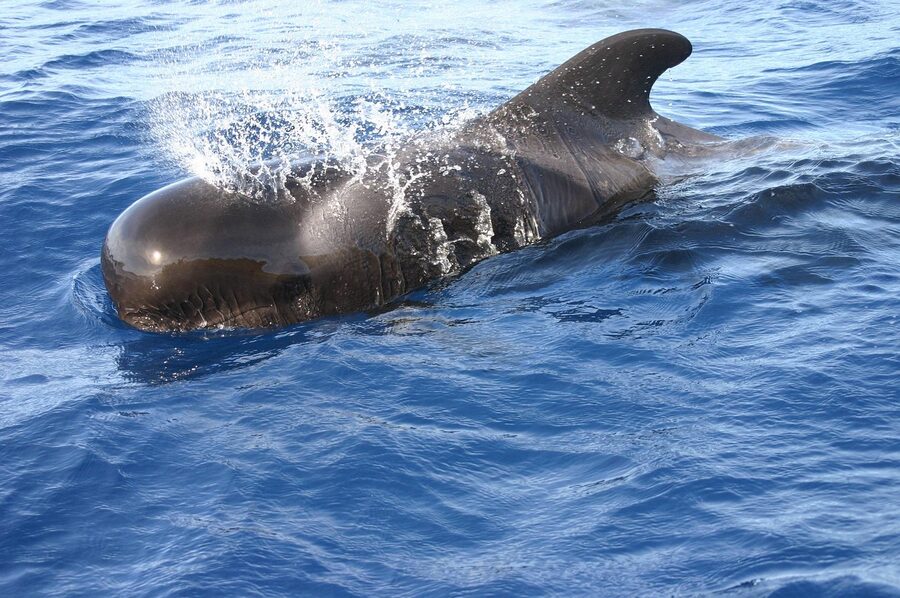
- Short-finned pilot whales (Globicephala macrorhynchus): black, blunt-headed, look more like whales than dolphins despite being one. Spring (Feb to May) is their season this far south, but the strong residence is between Tenerife and La Gomera. From Gran Canaria they’re a bonus, not a guarantee.
- Sperm whales: deep-divers in the channel between islands. You’re more likely to see one off the bow as a flat patch on the water (a “footprint”) than to see a whole animal. Rare but real.
- Pseudorca (false killer whales): a handful of sightings a year. The kind of thing the captain remembers for months.
Total cetacean count for Canary waters is around 21 species recorded year-round, mostly in the channels between the islands. That’s an unusually high number for a small archipelago, and it’s the reason the Macaronesian region was UNESCO-flagged for marine biodiversity in the first place. Most of those 21 species you will not see on a 3.5-hour cruise. Three of them you might. One of them, on the right morning, you definitely will.
Gran Canaria vs Tenerife: the species split
Here’s how I’d split the islands if you only have time for one marine trip:
Pick Tenerife if your bucket-list animal is the pilot whale. The resident pod off the south-west coast of Tenerife (Los Gigantes / Los Cristianos / Costa Adeje) is one of the most studied groups of pilot whales in the world. Sighting rate is famously close to 100% on a calm day. Same family unit lives in the channel between Tenerife and La Gomera, year-round. That’s the famous trip.
Pick Gran Canaria if your bucket-list animal is the bottlenose. The resident pod between Puerto Rico and Anfi is the most dependable bottlenose encounter in the Canaries. Sighting rate quoted by the flagship operators is in the 95% range across the year, and the money-back guarantee on most boats backs it up. You can also see them from Tenerife, but it’s a longer hunt and the pod isn’t as resident.
The other thing to know: Gran Canaria’s dolphin trips are calmer than Tenerife’s whale trips, by reputation. Tenerife’s western coast (where the pilot whales live) faces the open Atlantic and the swell can be punishing. The Puerto Rico departures sit on the south-east-facing leeward side of Gran Canaria, sheltered by the island itself. If you’ve decided that paddling with green turtles off Tenerife sounds tempting but the open-Atlantic motion is a deal-breaker, the Gran Canaria boat is the calmer alternative for a similar marine-encounter feel. The same calm-water logic explains why the snorkel stop on the dolphin cruise works: it happens in a sheltered bay, not an open swell.
Which boat? The three options that matter
The Puerto Rico harbour has perhaps a dozen operators running dolphin trips. Three of them dominate the bookings, and they each suit a slightly different traveller. Here’s how I’d pick.
1. Catamaran Dolphin Watch with Snorkel: $44
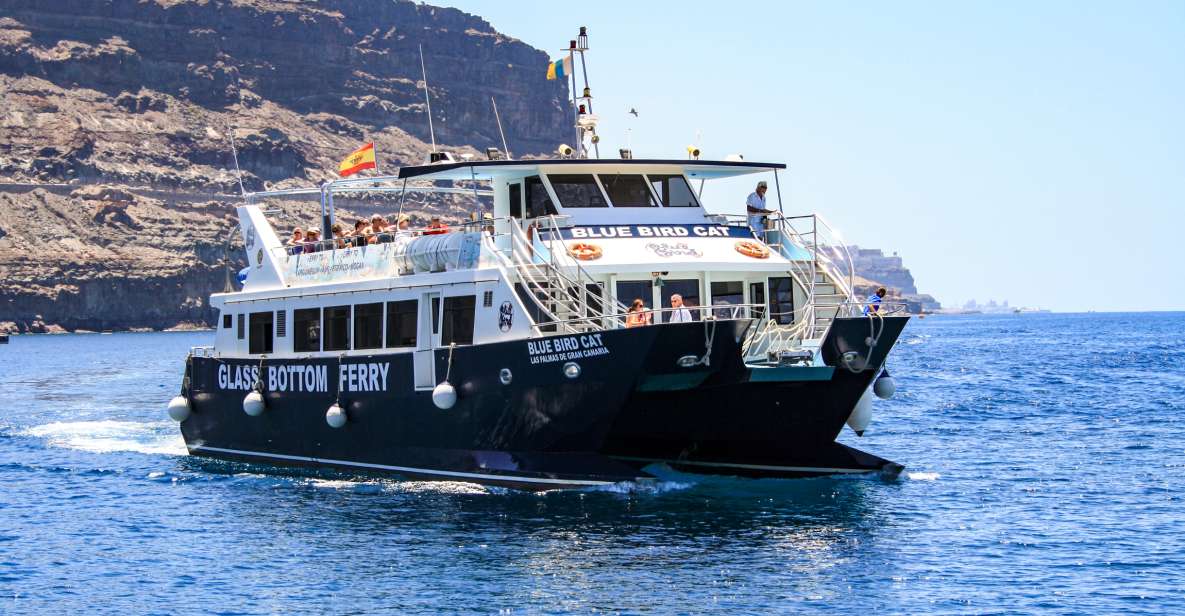
This is the one I’d book if you’ve never done a Canaries dolphin trip before. It runs 3.5 hours, splits the time roughly half observation and half a snorkel stop in a sheltered cove (usually Cala de Tauro or the Anfi area), and the crew is the most experienced in the harbour at finding the bottlenose pod without chasing them. Our full review notes the soft drinks are free, the snorkel gear runs smaller adult and kid sizes, and the boat respects the 60m approach distance under Canarian marine ordinance instead of cutting closer for photos.
2. Puerto Rico Dolphin Watching Cruise: $47
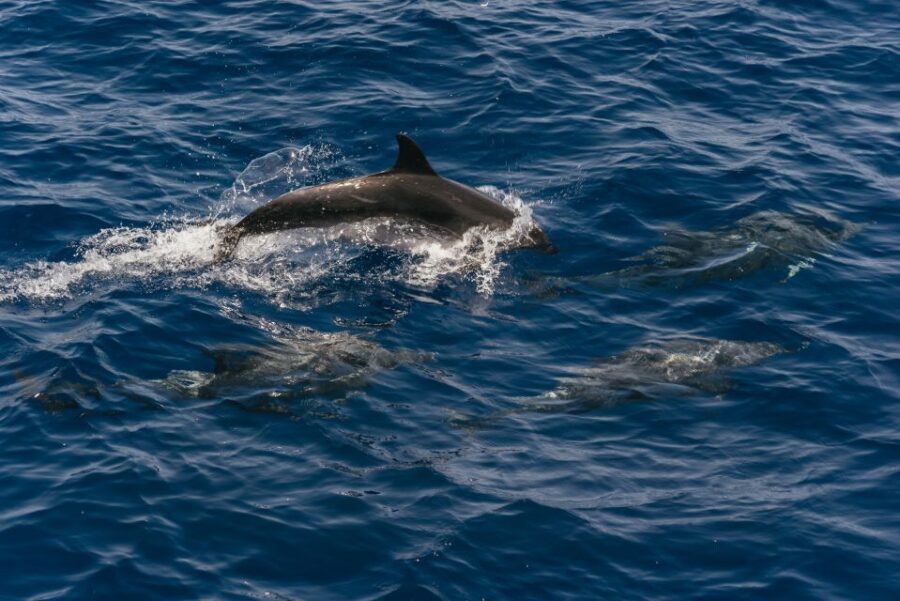
The shorter, drier trip: 2.5 hours instead of 3.5, no in-water component, but the boat has glass underwater viewing panels in the hull that are surprisingly good when the pod swims close. Pick this one if you’re travelling with anyone who gets queasy on small boats, or if you simply want to be back on land for lunch. The review covers the hotel pickup option and the sighting-guarantee terms.
3. Gran Canaria Dolphin and Whale Watching Cruise: $40
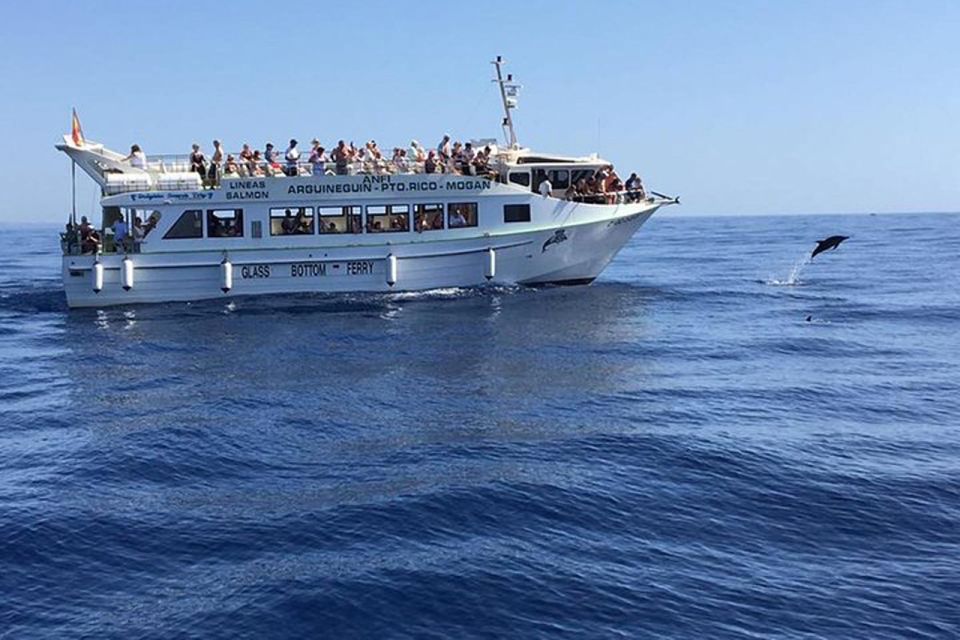
The budget pick at $40, and the one that explicitly talks up the pilot-whale chance alongside the bottlenose, most realistic between February and May. The trade-off is no snorkel and no glass panels: it’s a straight observation cruise with refreshments for purchase. Our take notes one specific virtue, the operator does honour the rebooking-or-refund policy on no-sighting days, which is more than some of the cheaper boats out of the harbour will do.
How a 3.5-hour dolphin cruise actually plays out
I’ll walk through the flagship 3.5-hour trip because that’s the one most people book. The other two compress the same arc into shorter or differently-shaped versions.
Check-in (15-30 minutes before sail). The Puerto Base check-in desk is a small wooden hut on the eastern side of the harbour, opposite the marina chandlery. You hand over your booking reference, they tick you off, you hang around the dock until the crew waves you on. There’s no security theatre. There’s also no toilet on the dock so use the cafe across the road first.
Boarding and safety briefing (10-15 minutes). Catamaran capacity is usually 80 or so, plus crew. The crew runs a multilingual safety briefing in Spanish, English, German, and sometimes Dutch. Pay attention to the bit about handholds when the boat heels under sail. The catamarans have less roll than a monohull but they’re still moving boats.
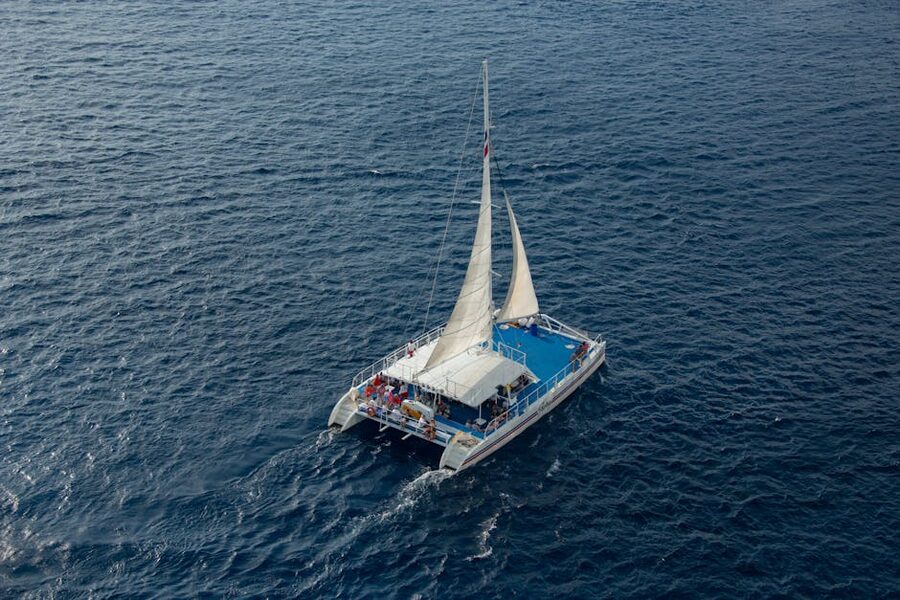
Out of the harbour (15 minutes). Engine-only at 3 knots until you clear the breakwater, then sails up if there’s wind. The catamarans motor-sail rather than pure sail because the schedule is tight, but on a 12-knot day you’ll get a genuine sailing leg of half an hour or so before the captain starts hunting for the pod.
The hunt (15-45 minutes). This is the bit nobody markets. Sometimes the dolphins are right where the pod was last week and the spotters call them in within a quarter of an hour. Sometimes you cruise the channel between Puerto Rico and Anfi for forty-five minutes seeing nothing but flying fish and the occasional sea turtle on the surface. The crew don’t pretend otherwise. The captains share VHF traffic between the half-dozen boats out at any given time, so if anyone has a sighting, the others get the position. That coordination is part of why the strike rate is so high.
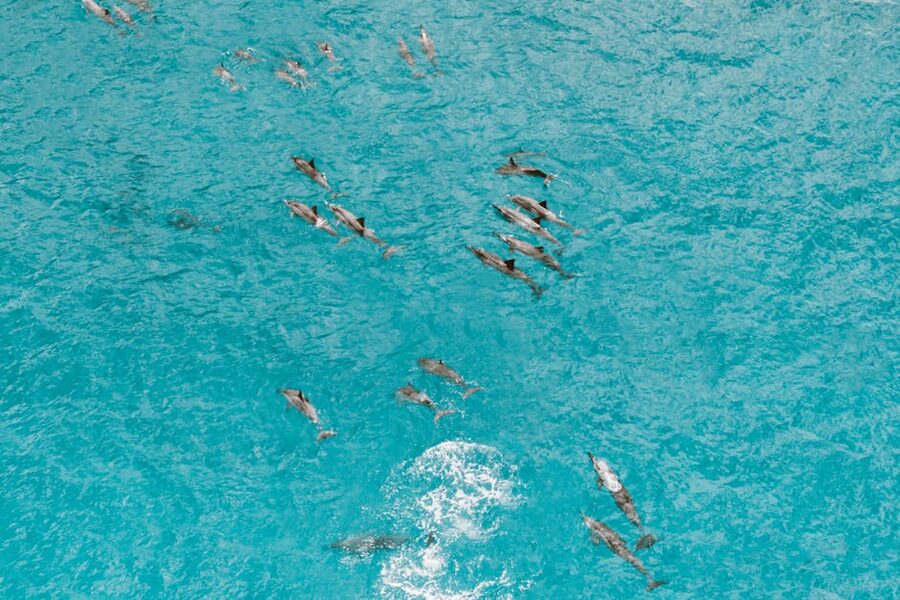
The sighting (10-30 minutes). Captain cuts the engines at 60 metres and lets the boat drift. The dolphins decide whether to come over. If they do, they’ll usually swim alongside or under the bow. Bow-riding bottlenoses will surf the pressure wave for ten or fifteen minutes. The boats don’t chase. That’s the most important sentence of this article. They cut engines and wait. Operators who chase get reported to the harbour authority and lose their licence. The dolphins also learn quickly which boats behave and which don’t.
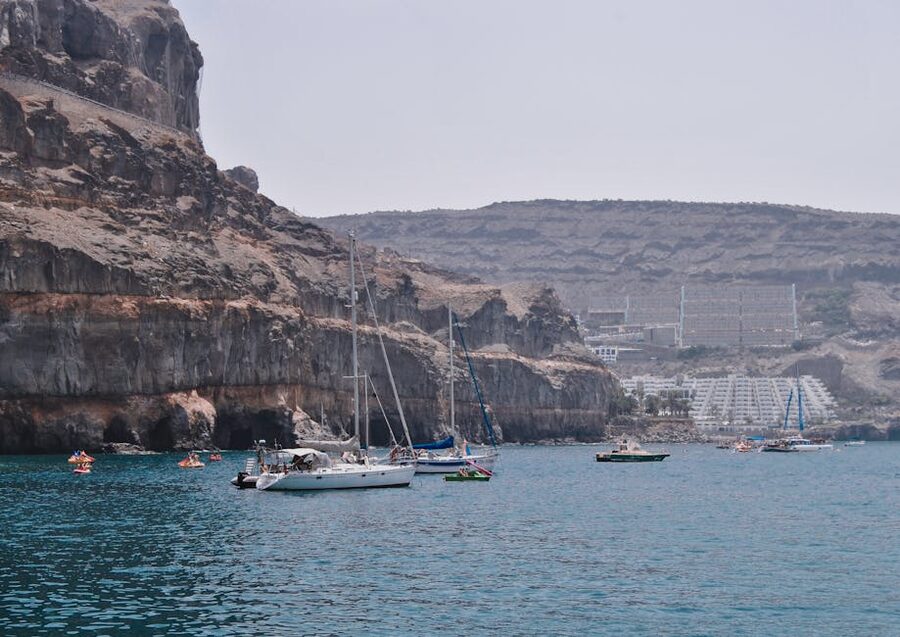
Snorkel stop (45 minutes). When the pod moves on, the catamaran heads to the day’s anchorage. On the flagship trip that’s usually Cala de Tauro (the small fjord-like cleft at the south end of the dolphin channel) or the Anfi del Mar reef. Snorkel gear comes out, ladder goes down, water is around 19-21°C in winter and 22-24°C in summer. Wetsuits aren’t included on the flagship. The cheap ones rent for €5. Visibility in the snorkel cove runs about 10 metres on a good day. Don’t expect coral. The Canaries are volcanic, so the seabed is mostly black basalt and patches of yellow-green seagrass.
The run home (30-45 minutes). Sails up if wind permits, drinks served, music sometimes goes on. You’re back at Puerto Base by lunchtime if you took the morning sail, late afternoon if you took the second slot. Crew tips are appreciated and not mandatory; €2-€5 per person is normal.
Booking: when, how, and what to watch for
When to go
Year-round. That’s the short answer for bottlenose. The pod doesn’t migrate, so February sightings and August sightings work the same way. The variables are the weather and how many other tourists are on the dock with you.
- Best months for calm sea: May, June, September, October. Trade winds settle, swell drops, the catamarans run a quieter sail.
- Most reliable months for pilot-whale add: February to May. The seasonal pod that drifts up from Tenerife shows up in Gran Canaria water during these months.
- Hottest, busiest months: July and August. Boats run at capacity, prices firm up, you’ll want to book a week ahead.
- Quietest months: November and January, between the autumn shoulder and the school-holiday Christmas spike. Boats sometimes run at half capacity. The light is also lower-angle and more photogenic.
Wind is more of a factor than season. The Canaries sit in the trade-wind belt and on a Beaufort 6 day the boats either don’t sail or sail at a much steeper heel than is comfortable. Most operators cancel and rebook free of charge on cancellation-grade weather. If your departure morning is grey and breezy, message the operator before driving to the dock. The same wind-and-weather logic applies to short urban harbour boats elsewhere in Europe; even a sheltered run like a Rotterdam harbour cruise sees occasional cancellations when the gusts come over the Maasvlakte breakwaters, so this is not a Canaries-specific quirk.
How to book
Online, ahead, and through GetYourGuide or Viator. The harbour walk-up kiosks exist but they’re more expensive than the booking platforms by 15-25%, partly because the kiosks pay an island concession fee that the online resellers don’t. Book a day or two ahead in shoulder season, four or five days ahead in July-August. Last-minute tickets sometimes show up online when a tour bus group cancels, so it’s worth refreshing if your dates are firm.
What to watch for in the small print
The four points worth checking before you click book:
- Sighting guarantee. The flagship and most of the bigger operators offer a free rebook or partial refund on no-sighting days. The cheaper kiosk-only boats often don’t. Read the booking page or ask the chat agent.
- Hotel pickup. Some packages bundle a hotel transfer from the south-coast resorts (Maspalomas, Playa del Inglés, San Agustín). It’s usually €5-€10 extra and worth it if you don’t have a car.
- Wetsuit included or rented. Wetsuits are included on a few of the smaller boats and rented for €5 on the larger ones. Water gets to 19°C in February. A 3mm shorty makes the snorkel stop genuinely enjoyable rather than enduring.
- Onboard food. Most boats serve free soft drinks. The longer trips include a snack or a buffet lunch. The cheaper trips sell beer and sandwiches at marina prices.
What about kids
Family-friendly. Most operators take babies (in arms) and toddlers as long as a parent is on board. The catamaran’s stable platform makes seasickness less of an issue than on a monohull. There’s usually no minimum age, but kids under three or four don’t snorkel. They wait on board with the parent who isn’t in the water. The crew has spare snorkel sets in junior sizes on the flagship; not all boats do, so check ahead if your kid is between four and ten.
What you won’t see (and the chasing question)
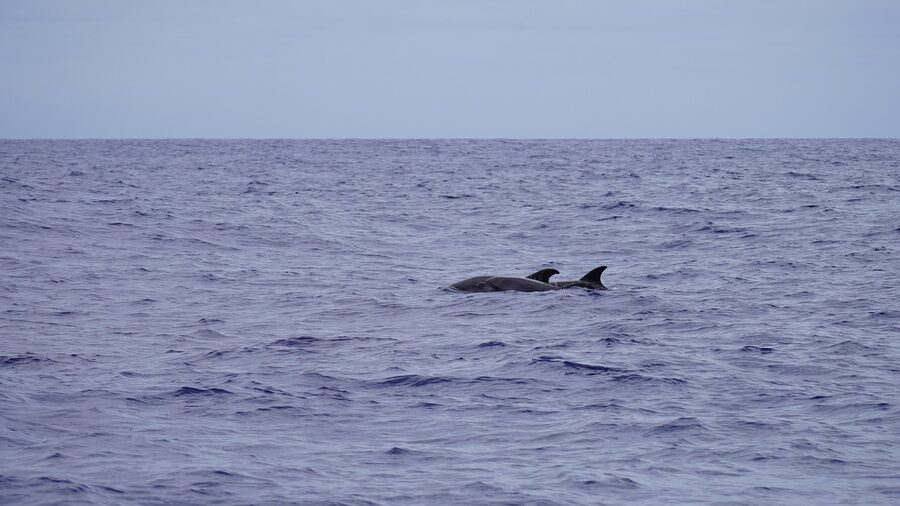
You’re unlikely to see the dolphins jump in formation like the pictures in the brochure. Bottlenoses do leap, especially when the pod is socialising rather than feeding, but the postcard “synchronised twin-leap” shot is rare. What you’ll mostly see is a steady cycle of dorsal fins surfacing in pairs, the smooth arc of a back, the puff of a blow if the pod is close. Your hour with them will feel less like a circus and more like watching a wild animal go about its day, which is the better thing.
You will not be put in the water with them. Swimming-with-dolphins isn’t legal in the Canaries on wild trips. The marine ordinance keeps the boats at a minimum 60 metre approach distance and bans in-water encounters with wild cetaceans. That’s the right call ethically, and it’s also why the resident pod still tolerates the boats. If you want a “swim with dolphins” experience, the only legal option in the Canaries is the captive pool at Loro Parque on Tenerife, which is a different conversation about ethics, money, and what you’re actually paying to do. For me, watching a wild pod for fifteen minutes from a stationary boat beats a tank session every time. But I understand the pull.
One more thing about chasing. The Canarian regional government has an active enforcement programme. Coastguard boats spot-check the dolphin operators on random days, and operators who chase, get too close, or run their engines inside the 60-metre band lose their licence. The flagship operators in Puerto Rico are the ones with the cleanest records. The cheap chartered fishing boats that occasionally run “dolphin trips” off social-media ads are not. If a boat looks more like a fishing trawler than a tourist catamaran and the price is suspiciously low, it’s probably one of those. Skip it.
Practical extras: where to base yourself
Three options. They each suit a slightly different person.
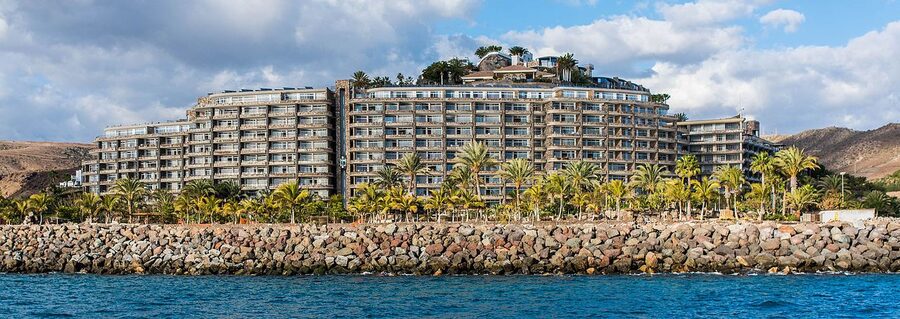
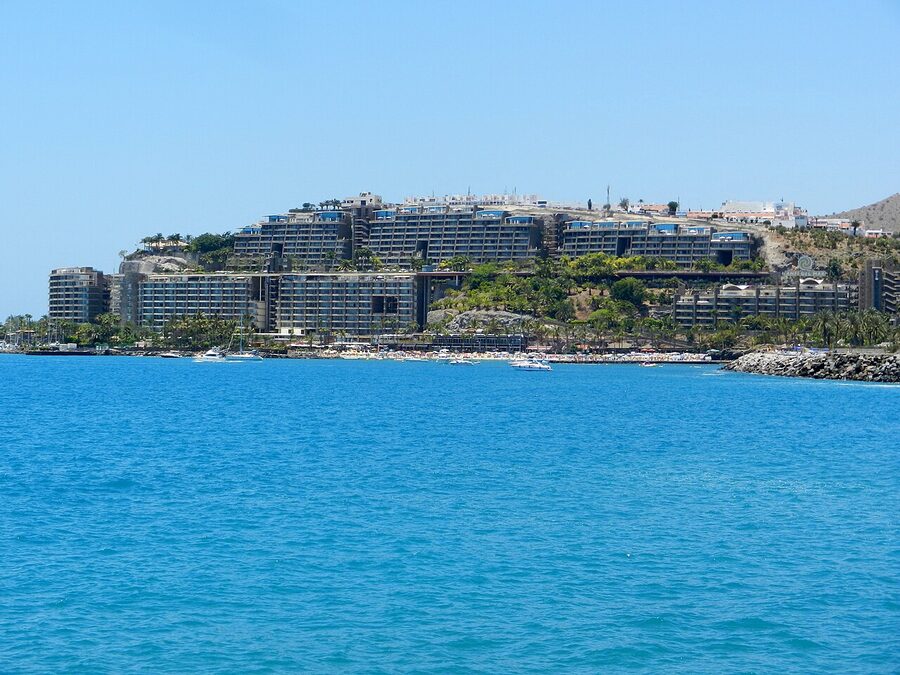
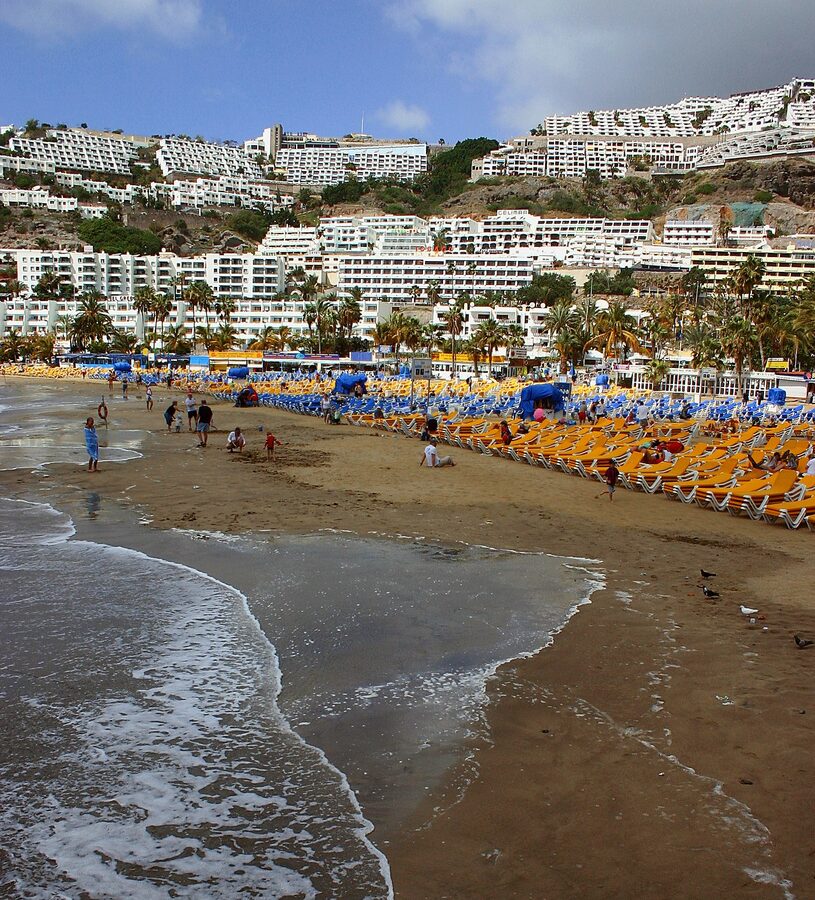
Puerto Rico de Gran Canaria. The most convenient base. A 5 to 10 minute walk from anywhere in town to Puerto Base. The town itself looks dated, lots of 1970s and 80s tower-block hotels stacked up the volcanic hillside. The beach is small but family-friendly and the harbour is the centre of life. If your only goal for the day is the catamaran trip, stay here.
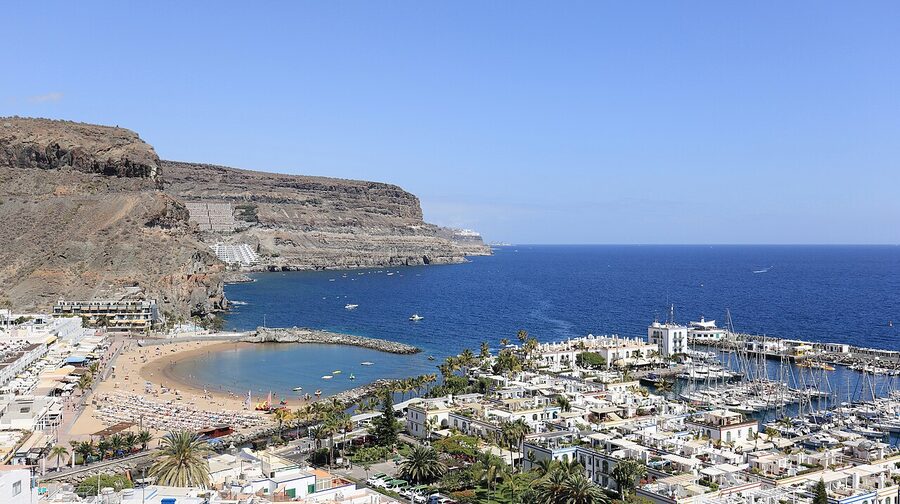
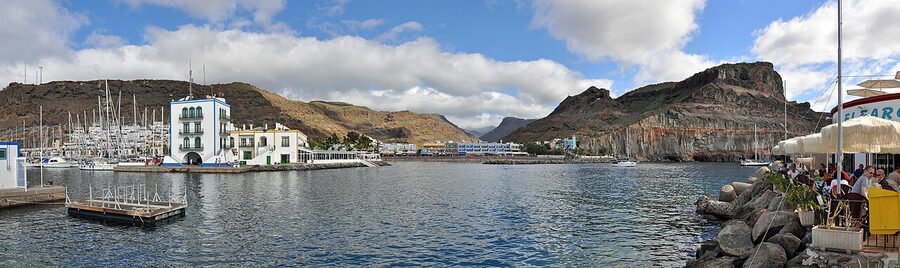
Puerto de Mogán. Ten minutes west, prettier, marketed as Gran Canaria’s “little Venice” because of the canals between the old town and the marina. A handful of dolphin operators sail from Mogán too, same pod, slightly different angle on the channel. Stay here if the catamaran is one part of a longer Gran Canaria trip and you also want decent restaurants and an evening stroll.
Maspalomas / Playa del Inglés. The big resort strip with the famous sand dunes. You’ll need a 25 to 30 minute taxi or bus to Puerto Base, about €15 to €20 each way, or €3 on the regular bus that runs along the GC-1 coast road. Most operators offer hotel pickup from this strip for €5-€10. Stay here if you want the larger resort experience plus the dunes, and treat the dolphin trip as a half-day excursion.
Photographing wild dolphins from a moving boat
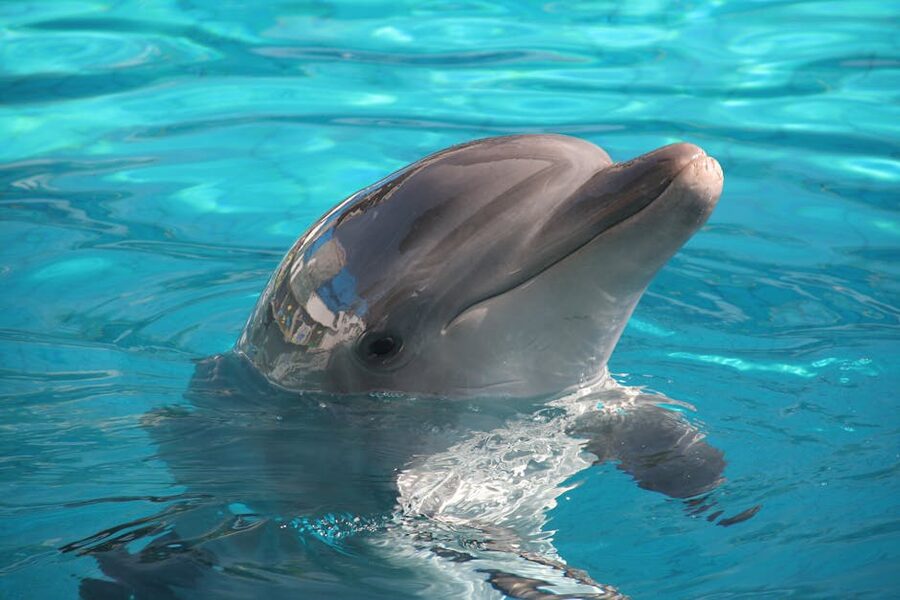
Even with a decent camera, most of the dolphin shots you take from a boat will be either a flat patch of water or a blurry grey arc. They surface for about a second and a half before going back under, and you can’t predict where the next breath is coming up. The trick is burst mode, the widest aperture you can manage, and a shutter speed of 1/1000 or faster. ISO 400-800 even on a bright day to keep the shutter fast. A polarising filter cuts the glare off the water and helps the underwater shadow of the swimming dolphin show up.
Don’t shoot through the glass viewing panel if your boat has one. The water under the boat is in the boat’s shadow and the dolphins look black, not silver. Shoot from the bow trampolines or the foredeck instead, looking down into the bow wake. Bottlenoses bow-ride for fun and the bow is where they spend the most time near the surface.
Phone cameras struggle. The 30x zoom in modern phones is digital zoom from a 70mm-equivalent sensor, and you’ll get pixel mush at any distance. Resign yourself to wide shots of “dolphin pod somewhere out there” rather than tight portraits, and watch with your eyes instead of through the screen. The video clip on your phone will be the best record of a sighting, not the still photo. Most travellers I’ve seen on these boats end up watching the dolphins through their phone screen the whole time and missing what’s actually in front of them.
If the trip gets cancelled (or feels wrong)
Cancellations happen. Wind cancellations are usually morning-of, around 7am, when the harbour-master closes the breakwater for small boats. The operators rebook for the next available slot or refund. Storm cancellations are rarer and usually the agent contacts you the day before. Either way, the booking platform handles it; you don’t have to chase. Travel insurance is sensible if your trip is short and a rebook isn’t an option, since some operators only refund 50% on weather cancellations rather than 100%.
The other thing worth saying. If you’re already on the boat and the captain starts doing things that feel wrong (chasing the pod, running engines inside the 60m band, getting between a calf and a mother), you can ask the crew to back off. Most won’t, because the captain who chased got reported and lost his licence the year before. But if it does happen, you can flag it on the booking platform afterwards. The platforms take ethics complaints seriously now and operators with patterns of bad behaviour get delisted.
Other Canary marine encounters worth lining up
The Canaries are unusually rich for marine wildlife and the dolphin cruise is one piece of a bigger picture. If you have a week and you like being in or on the water, here’s the rest of the menu:
Pair this Gran Canaria trip with a day in Tenerife on the whale-watching boat out of Los Cristianos for the pilot-whale half of the equation, and you’ll have seen the two best wild cetacean encounters in the archipelago. The ferry between Las Palmas and Santa Cruz takes a couple of hours and isn’t expensive. If turtle-spotting is your other thing, the south coast of Tenerife is also where you’ll find the kayak operators who run the green-turtle trips off Playa Paraíso. The kayak-and-snorkel-with-turtles excursion is the wild-encounter sister to this one, just with a different species.
For the captive-marine question, Loro Parque on Tenerife is the famous one, and it’s worth being clear that it’s a captive show, not a wild encounter. The other big Tenerife family draw is Siam Park, which is a Thai-themed water park rather than a marine attraction. If your group is split between people who want wild dolphins and people who want water slides, that’s the south-Tenerife answer. The argument for captivity is education and conservation breeding; the argument against is more straightforward. Whichever side you land on, don’t conflate the two. A wild dolphin trip out of Gran Canaria is a different thing from a captive show, and pretending otherwise lets the bad parts of the captive industry off the hook.
If you’d prefer a marine experience that’s more about the seaside structure than the wild animals (the picked multi-tank approach with a dolphin-adjacent vibe), the Barcelona aquarium on the mainland and Valencia’s Oceanographic park are the two big Spanish-mainland options. Both are well-funded and Valencia particularly is a serious marine institution. The Dutch urban-water counterpart, with no cetaceans but the same on-the-water-not-on-land idea, is something like an Amsterdam canal cruise: glass roof, an hour out of the boat ramp, the city seen from the water it’s built around. They are not substitutes for the Gran Canaria trip; they’re the indoor and the urban counterparts.
Beyond dolphins: a half-day for the rest of the south coast
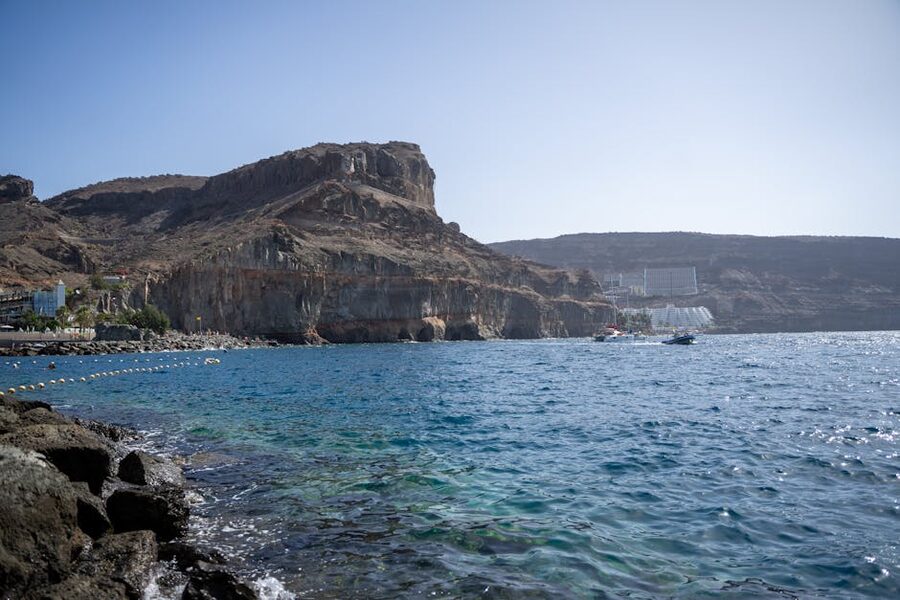
The dolphin cruise sails out of one of the most touristed corners of the island, and if you stuck a pin in Puerto Rico you might think Gran Canaria was wall-to-wall resort. It isn’t. With a half-day to spare around the cruise, here’s what’s actually nearby and worth your time:
Puerto de Mogán’s old town. Ten-minute taxi or fifteen on the bus from Puerto Rico. Whitewashed houses, bougainvillea over the doorways, salt-water canals between the marina and the village. Friday is the market day and the village fills up with cruise-ship day-trippers, so if you can avoid Friday, do.
The Roque Nublo loop. If you have a hire car, the half-day drive up into the volcanic interior to Roque Nublo (the iconic basalt monolith at 1,800m) is one of the best views on the island. Pico de las Nieves above it is even higher, and on a clear day you can see Tenerife’s Mount Teide poking above the cloud bank to the west. Roque Nublo is the Gran Canaria answer to the Teide trip; both are volcanic high points, both deliver the cloud-bank-from-above view, and you can do one from each island as a paired set.
Maspalomas Dunes. Twenty minutes east of Puerto Rico. Six square kilometres of mobile sand dunes pushed up against the Atlantic, with a small lagoon at the western end. Walk in from the Faro de Maspalomas lighthouse, head north-west into the dunes for half an hour, and you’re somewhere that looks more like the Sahara than southern Europe. Wear closed shoes. The sand temperature in summer will burn the soles of your feet within minutes.

Las Palmas old town. The capital is an hour up the GC-1 motorway and is a different proposition from the south-coast resorts. Vegueta (the original colonial old town) and Triana (the 19th-century neighbourhood) have proper Spanish-mainland atmosphere: small plazas, the cathedral, the Casa de Colón where Columbus is supposed to have stopped on his way west. Make time if your trip is more than three days.
The boat-trip rhythm in a different key
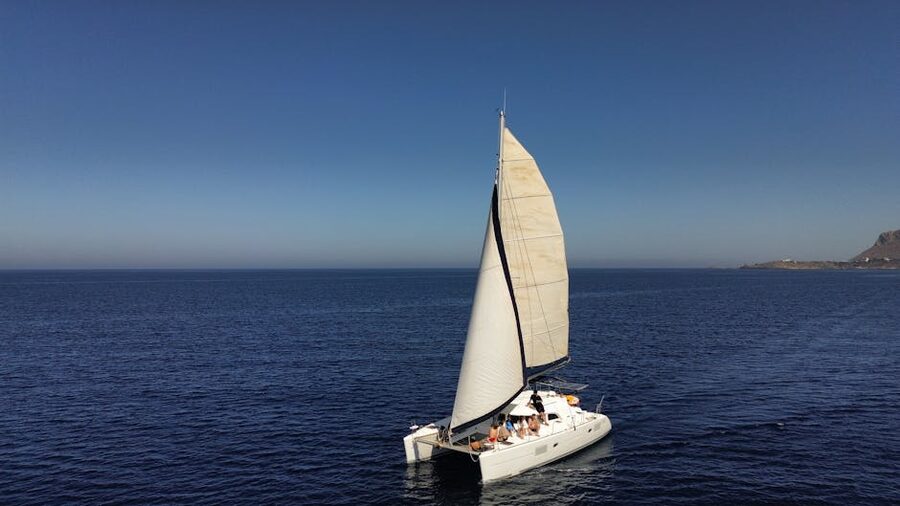
If the boat-day shape works for you (the slow morning departure, the silence at the sighting, the snorkel stop, the quiet sail home), there’s a whole thread of similar trips elsewhere along the Mediterranean and Atlantic coasts. Worth lining up while the experience is fresh.
The closest analogue is the catamaran day-trip out of Palma de Mallorca, which is a Balearic version of the same anchor-snorkel-lunch shape but with a different geography (limestone calas, sheltered bays, a famous nudist cove called Cala Mago). Same boats, same crew rhythm, no resident dolphin pod but generally calmer water. The Barcelona harbour catamaran is the city-edge variant: shorter, more skyline-focused, less about the snorkel and more about the view back at the city. The Ibiza beach cruise swings the same idea toward the party-day end of the spectrum.
Italy has the strongest set of boat parallels. The Capri boat tour out of Naples is the closest in spirit: wild coastline, blue grottos, anchor-and-swim stops, plus the Faraglioni rocks. The Polignano a Mare cruise on the Puglian coast swaps the catamaran for a smaller open boat threading sea caves under the cliffs. The French Mediterranean has its own pair: an Ajaccio boat tour out into the Sanguinaires gulf in Corsica covers cetacean-rich open water on a similar day-shape, and the short Sainte-Marguerite ferry from Cannes works the protected-island-day-trip end of the same idea. None of those have a resident dolphin pod, but the structure of the day (slow harbour exit, on-water observation, in-water swim, slow harbour return) is the same shape, and once you’ve done one you’ll recognise the rhythm everywhere.
The thing nobody photographs
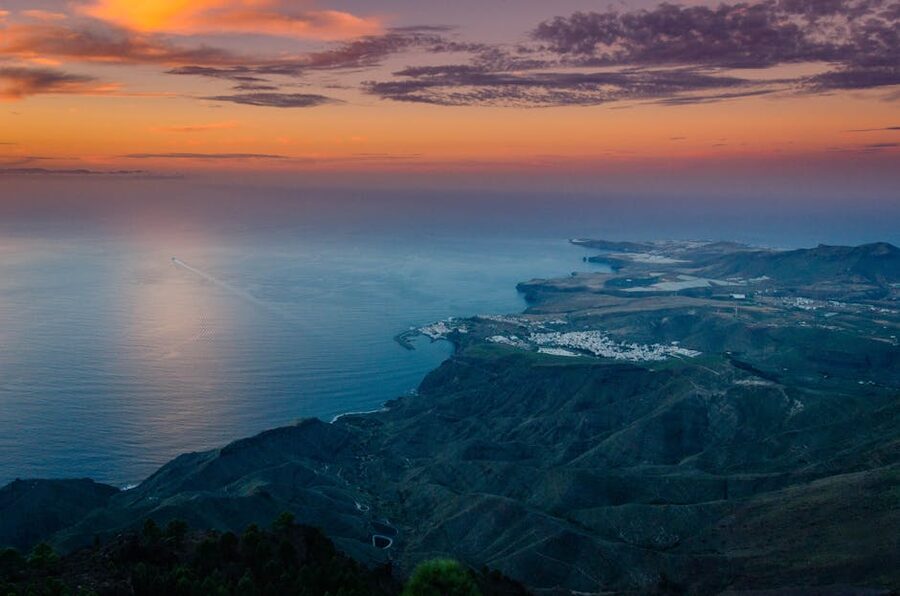
The bit nobody markets is the run home, after the sighting and the snorkel stop, when everyone’s a bit sun-tired and the catamaran is reaching back to harbour at four or five knots with the sails up. The Atlantic light goes warm-gold around 5pm in winter and 7pm in summer. The boat’s deck is wet and someone’s drying their hair with a towel. The crew passes around a tray of soft drinks. Nobody’s checking their phone because the dolphin sighting was the goal and that part is done.
That’s the part of the trip I’d remember if I had to pick one. The dolphins themselves are the headline, but the rhythm of the day around them is what stays. You get on a boat at 9am, the engine cuts at 10:15, a wild animal looks at you for a quarter of an hour, you swim in 22°C water for half an hour, and you’re back on land before lunch with your day-of-the-week sense of time entirely rearranged.
For $44 that’s a hard ratio to beat anywhere in southern Europe.