
Marta runs private walking tours in Barcelona and writes a blog about the city she has lived in for decades. In her guide to L’Aquàrium, she has a line that sticks: “An aquarium is not a museum where all the paintings are perfect. Life is not perfect.” She means it as a warning. The fish are alive. They sleep, they hide, they get old, they mate at unpredictable times. Some days the shark tunnel is the showstopper everyone hopes for. Some days the seahorses are doing a courtship dance that nobody around you notices because they are reading their phones in front of the wrong tank.
The trick to Barcelona Aquarium is figuring out which tank to slow down at and which to walk past. There are about 35 of them stretched across two basement floors, plus an upper level with the penguins and the kids’ zone, and a moving walkway through the shark tunnel that decides your pace whether you want it to or not. If you treat it as a checklist, you’ll see everything and feel nothing. If you pick three or four tanks to actually stop in front of, you’ll come out of Port Vell having had the kind of slow, watchful afternoon that costs you about an hour of attention and pays out for the rest of your trip.
This guide walks you through which tanks the regulars and guides talk about, the realistic ticket choices, when the queue dies, and what to do for the rest of the afternoon when you come back up onto the Rambla de Mar. If you’ve already worked through the city’s headline modernist stops, this is the easy hour you book for an afternoon when your feet are tired and your kids have run out of patience for stained glass.
In a Hurry: The Three Picks
- Standard Entry Ticket ($34): the cheapest GetYourGuide option, scheduled time slot. Book the entry ticket on GetYourGuide
- Skip-the-Line Admission ($31): priority queue for the box-office line on busy days. Book skip-the-line on GetYourGuide
- Hop-On Bus + Aquarium ($73): 24h or 48h tourist bus pass that includes Aquarium entry. Book the combo on GetYourGuide
The Quick Facts You Actually Need
Barcelona’s aquarium opened in 1995 in Port Vell, the old harbour. When it opened it was the largest in Europe. Several newer or renovated rivals have overtaken it since (Italy’s Genoa Aquarium is the obvious headline rival on the Mediterranean), but it still ranks in the European top ten and runs second in Spain only to Valencia’s Oceanogràfic. What it does have, that the bigger ones don’t, is the best collection of Mediterranean marine life on display anywhere. That focus is the whole point. If you want jaw-dropping size and engineering, you go to Valencia. If you want to actually see what lives in the sea you can swim in along the Costa Brava, you come here.
The numbers, since people ask: about 11,000 animals, 450 species, four million litres of water, and an 80-metre tunnel that runs through the Oceanarium shark tank. Open 365 days a year, 10am to 7pm in low season and as late as 9pm in summer. Babies under two go free. Everyone else needs a ticket. The aquarium is one of the few attractions in the city open every single day, which makes it the natural rainy-afternoon partner to harder-to-book stops like Casa Batlló and Sagrada Familia.
Tickets: What’s Actually Worth Paying For
There’s a real choice between paying €29 at the box office and paying €31 to €34 online. The €29 figure is the on-site adult price. The online tickets you’ll see on GetYourGuide and Viator are reseller versions, sometimes a couple of euros more, sometimes about the same once you factor in fees. The actual math is this: if you turn up on a Saturday afternoon, on a rainy day, or during a school holiday, the box-office line is 20 to 40 minutes long and the online ticket pays for itself the first time you walk past it. On a weekday morning in October, the line is empty and you’re paying a small premium for nothing.
Standard Timed Entry
This is the regular online ticket. You pick a date and a half-hour slot when you book. You arrive within that slot, scan, walk in. The standard option works for 90% of visitors. If you’re not sure which day you’ll go, this isn’t it.
Flexiticket
The flexiticket lets you turn up any time on any date within 90 days, including the early-admission slot at 9.30am in summer (before normal opening). It costs about €2 more than the timed ticket. It is genuinely worth it if you’re staying in Barcelona for more than three days and don’t want to commit to a slot, or if you have a specific reason to want the early entry. The first 30 minutes of opening is the only way the shark tunnel is going to feel quiet.
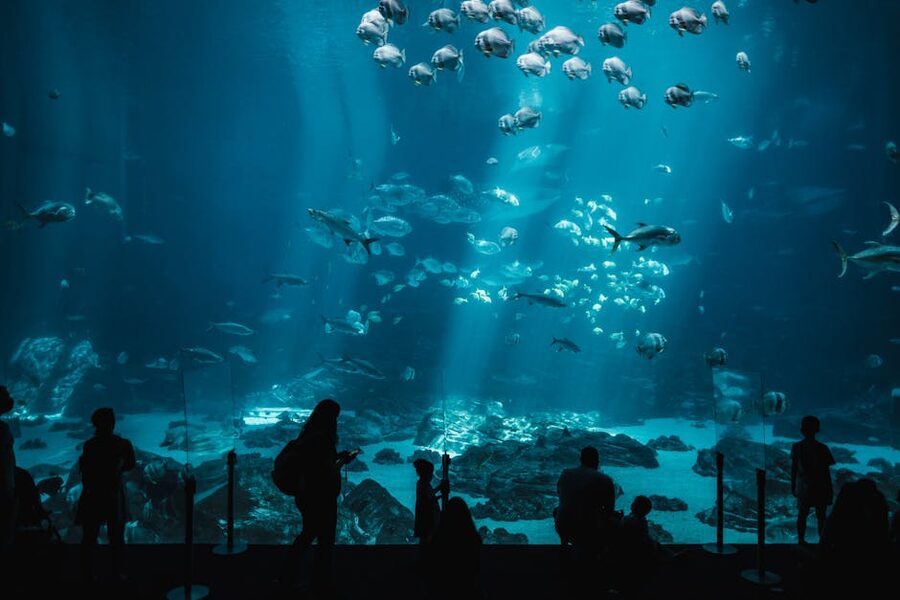
Family and Friends Tickets
The aquarium has a family ticket (one or two adults plus two kids under 10) and a friends ticket (four people from 11 up). Both knock about 20% off the per-person price compared to buying individually. They are only sold at the box office or directly via the aquarium’s own website. Third-party resellers don’t carry them. Which is the inversion of the usual rule. The family discount means a 40-minute box-office wait pays for itself if you’re a group of four. If you’re a couple or a solo visitor, ignore it and buy online.
The Special Experiences
There are three “with sharks” experiences that you can only book by emailing the aquarium directly: a cage immersion (you wear scuba gear, get into a metal cage, and watch the sharks from inside the tank), a shark dive (only for licensed scuba divers; you swim in the tank with the sharks), and a “sleep with the sharks” sleepover for kids 8 to 12. All three are several months booked out and not relevant to the 95% of visitors who are doing a normal afternoon. The cage immersion is the one I’d consider if I were back for a week. You get the experience of being inside the Oceanarium without needing a diving certificate. If you specifically want to swim with marine life rather than watch from glass, the Tenerife kayak-and-snorkel-with-turtles tour is the better-value version of the same itch.
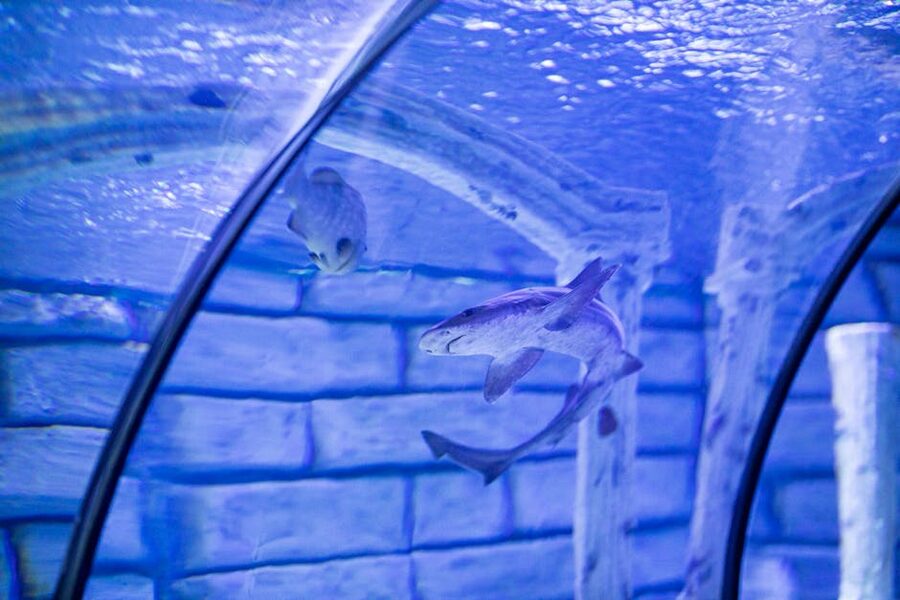
Walking Through the Aquarium: What to Slow Down For
You enter at street level, drop down to the basement on an escalator, and the visit goes Mediterranean → tropical seas → Oceanarium tunnel → upper level with the penguins and Planeta Aqua. It’s a one-way route, no shortcut back. Plan for 90 minutes if you actually look. About 60 if you walk briskly. About two hours if you have a curious child.
Mediterranean Tanks: The Part Most Visitors Speed Through
The first 14 or so tanks are dedicated to the Mediterranean Sea. This is the section where 80% of visitors hit a polite-but-rushed pace, because none of it has the wow factor of the sharks. That’s a mistake. These tanks are the actual point of the place. The Catalan biologists running this institution have spent decades documenting the ecosystems of the Costa Brava, the Ebro Delta, and the Illes Medes marine reserve, and the tanks here are the closest most travellers will ever get to seeing what’s underneath the water they swim in on holiday. The Genoa Aquarium in Italy has a comparable Mediterranean section, but Barcelona’s depth on Catalan ecosystems specifically is unmatched.
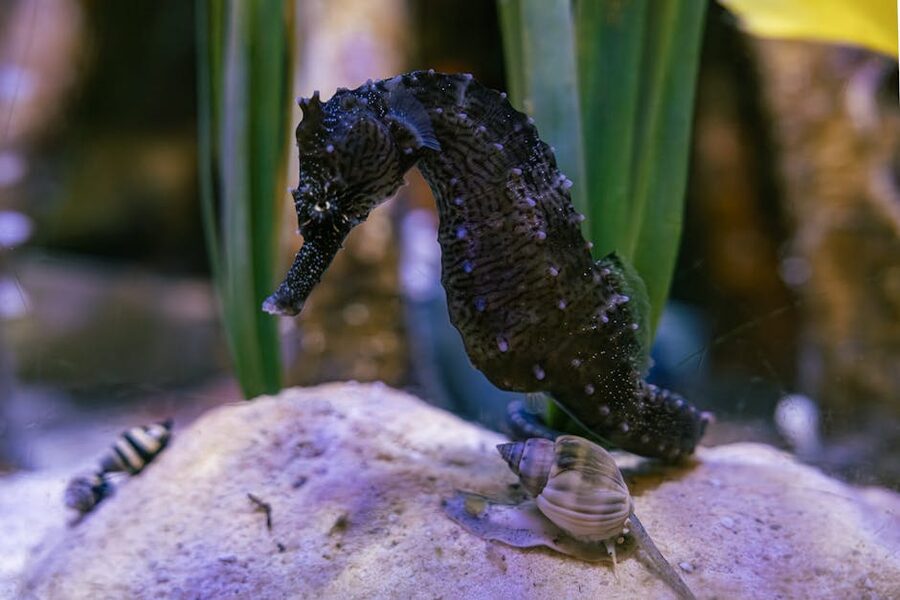
The rocky-shore tank is the first one to actually stop at. Look for the moray eels in the cracks. They are usually completely hidden, with just a head poking out, mouth slowly opening and closing. The next-door anemone tank has the red starfish that are surprisingly mobile if you watch for thirty seconds. The seagrass tank, the one with what looks like underwater wheat, is home to the Mediterranean seahorses. They are tiny and brown and hold onto the grass with their tails. Most people walk straight past them. If you spot one, stand and don’t move. There’s usually two or three more on the same tank, and they’re all clinging to grass blades against the same camouflage.
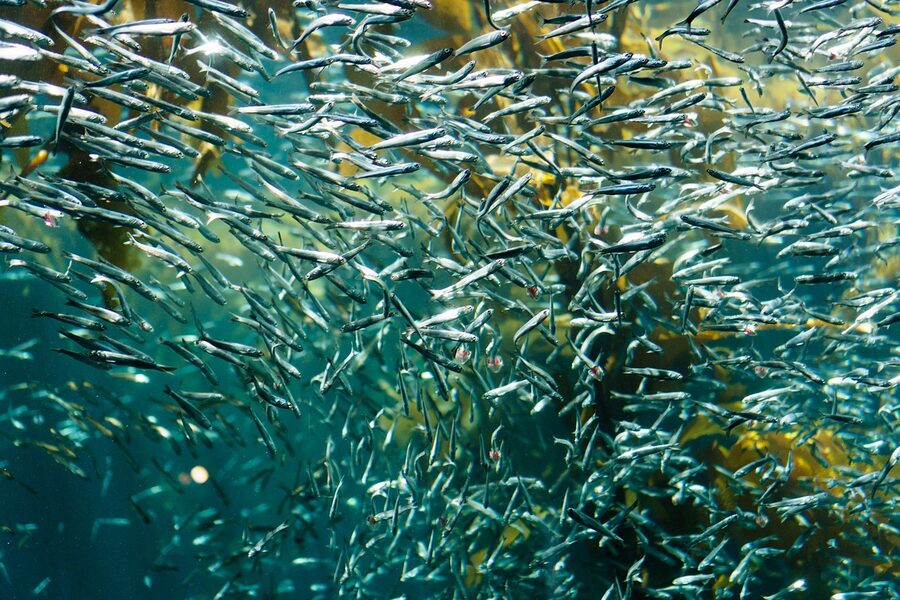
Further along, there’s an Ebro Delta tank where the river meets the sea: eels, freshwater-tolerant species, the kind of brackish-water community most people have never seen. There’s also a quietly fascinating cylindrical tank labelled “a bite of sea,” which shows the cross-section from sandy seabed to open-water sardine school. If the sardines are doing their bait-ball thing when you arrive, that’s the single most photogenic sight in the Mediterranean section.
The window cases on the right wall as you continue have shark eggs in development. They look like leathery purses with a fish embryo curled inside, the yolk sac still attached. If you’ve got a kid with you, this is where they’ll stop and refuse to move.
Tropical Seas: The Showy Section
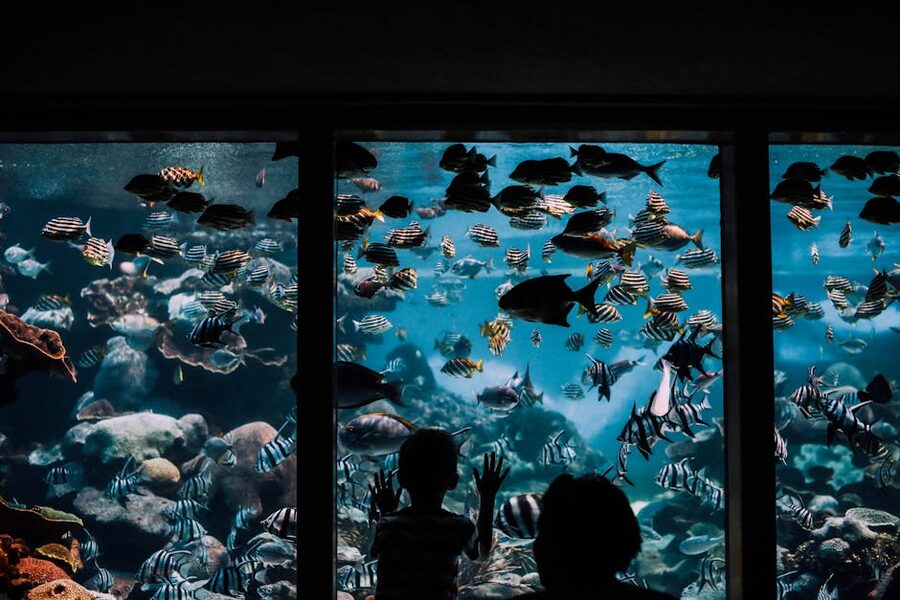
The second basement section flips the colour register. Mediterranean fish are mostly camouflaged for survival: greys, browns, beiges. Tropical fish evolved in clearer water with more visual predators, so they went the opposite direction: yellow, electric blue, banded black-and-white. The change as you walk in is genuinely striking even if you’ve seen it on television.
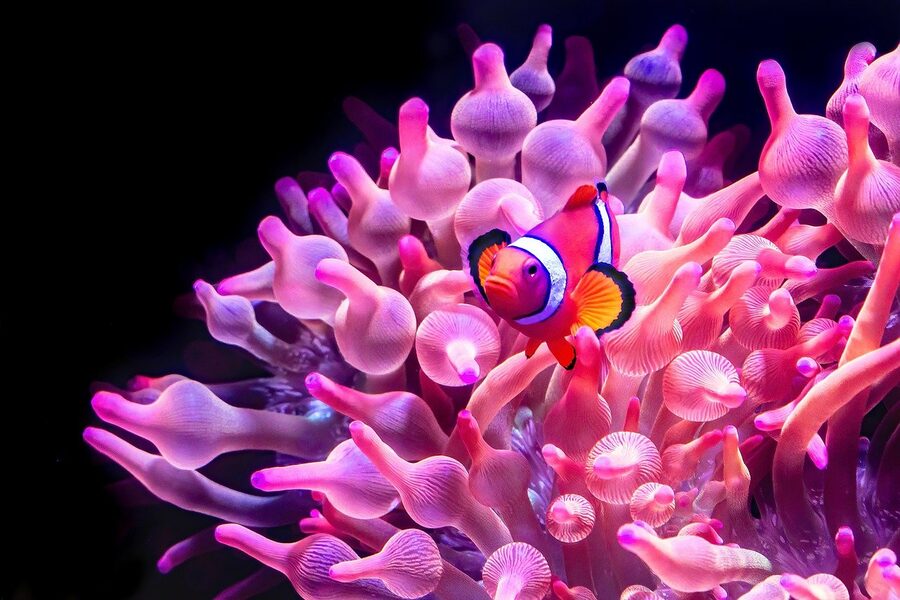
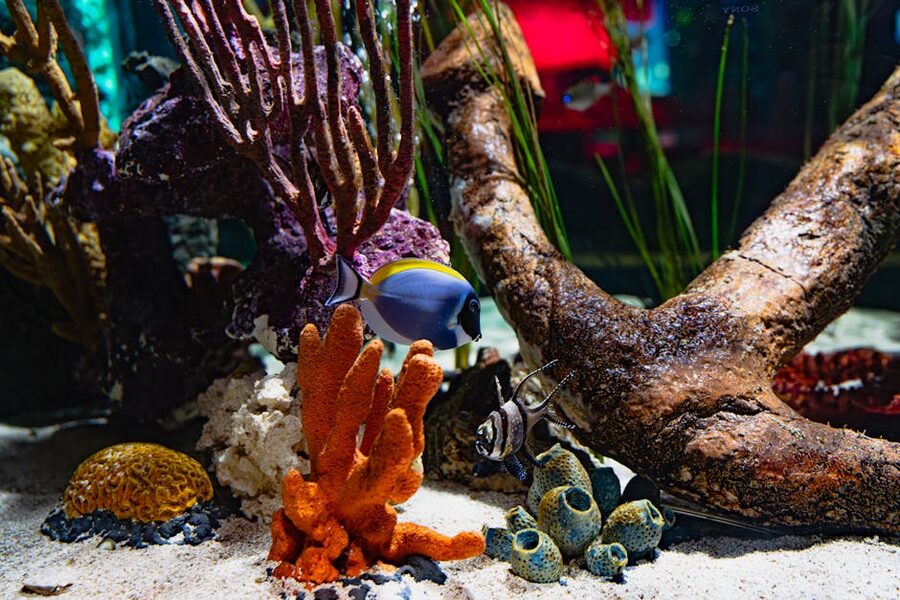
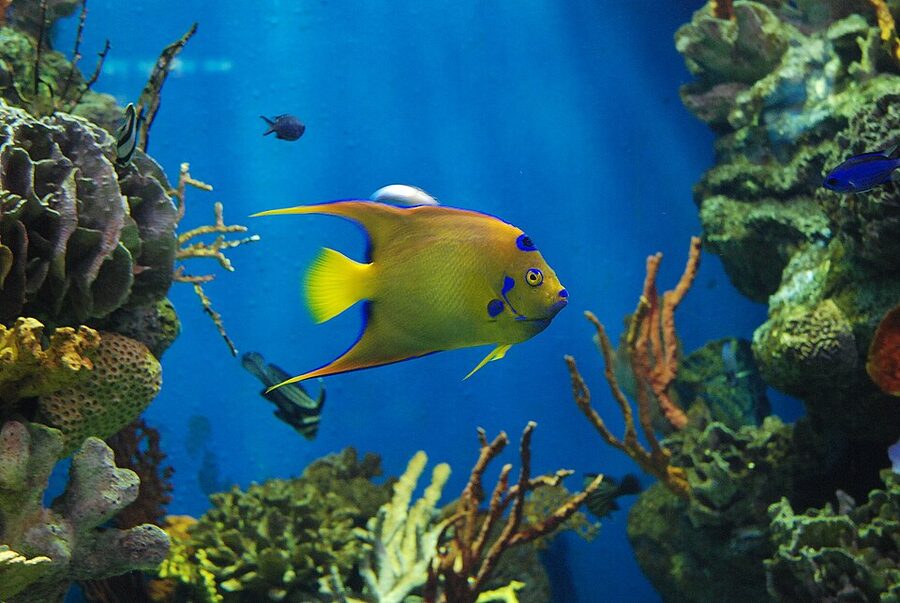
The Caribbean tank, the Australian Great Barrier Reef tank, and the Red Sea tank each get their own ecosystem with the right corals and the right fish. Look for the harlequin tuskfish in the Australian tank. Bright orange and electric blue stripes, hard to mistake for anything else. The angelfish are usually somewhere in the Caribbean tank. The clownfish-and-anemone display gets the most queue because every kid wants to find Nemo.
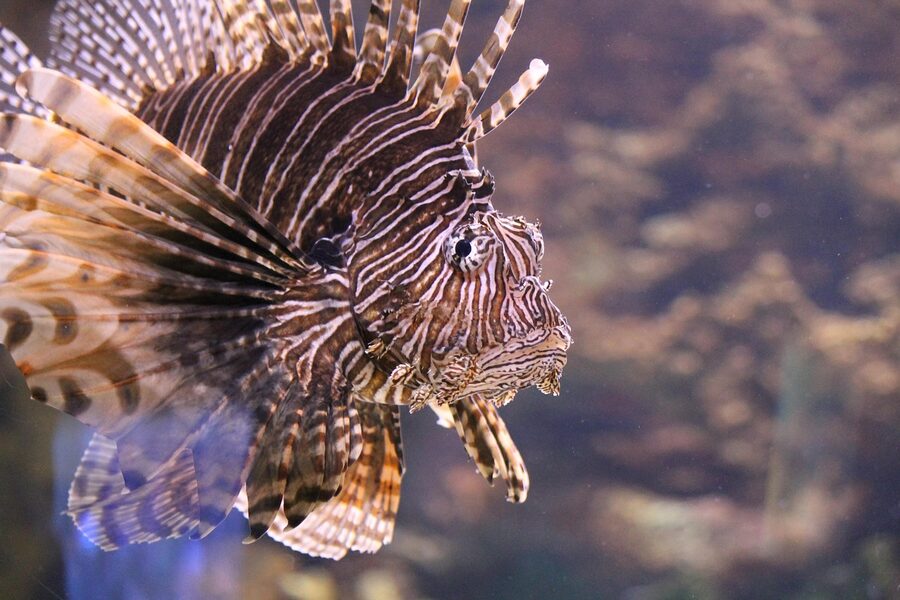
Right before you enter the shark tunnel, look at the tank dedicated to dangerous and venomous fish. The reef stonefish in there is one of the most poisonous animals on the planet, and you almost certainly won’t see it because it’s evolved to look exactly like a rock. There’s an info panel with an arrow pointing at where it usually sits. The lionfish, with the elaborate fin display, is the easier-to-find inhabitant of the same tank.
The Oceanarium and the 80-Metre Tunnel
This is what you came for. The shark tunnel is the marquee experience of the place, the one that ends up on every postcard and brochure. It is also the section where the marketing has to work hardest because the actual reality is more contemplative than dramatic.
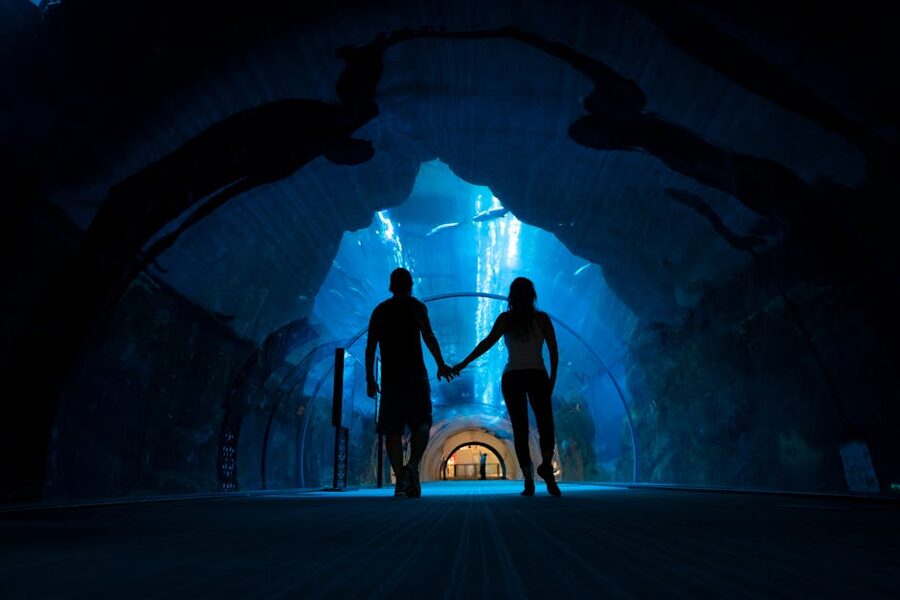
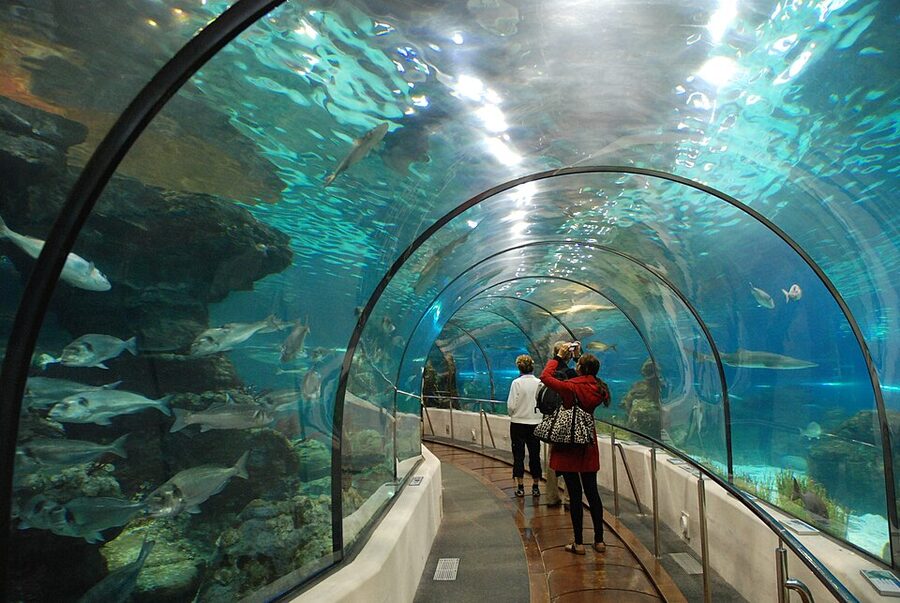
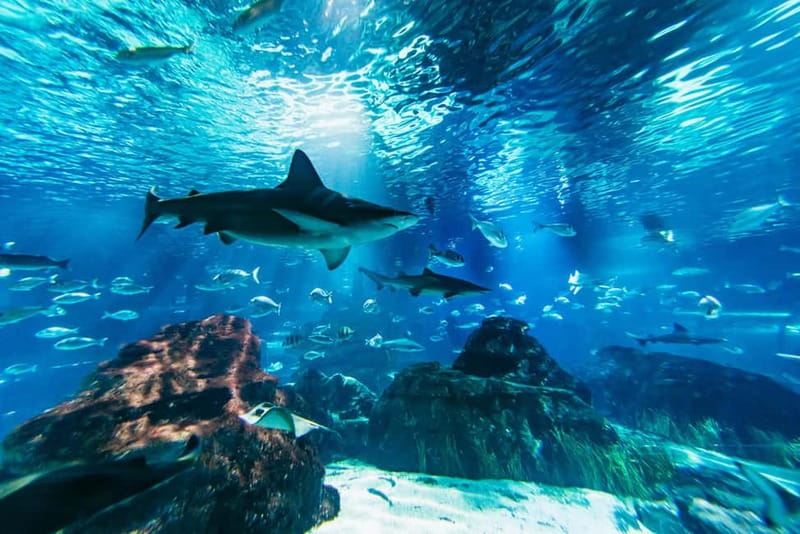
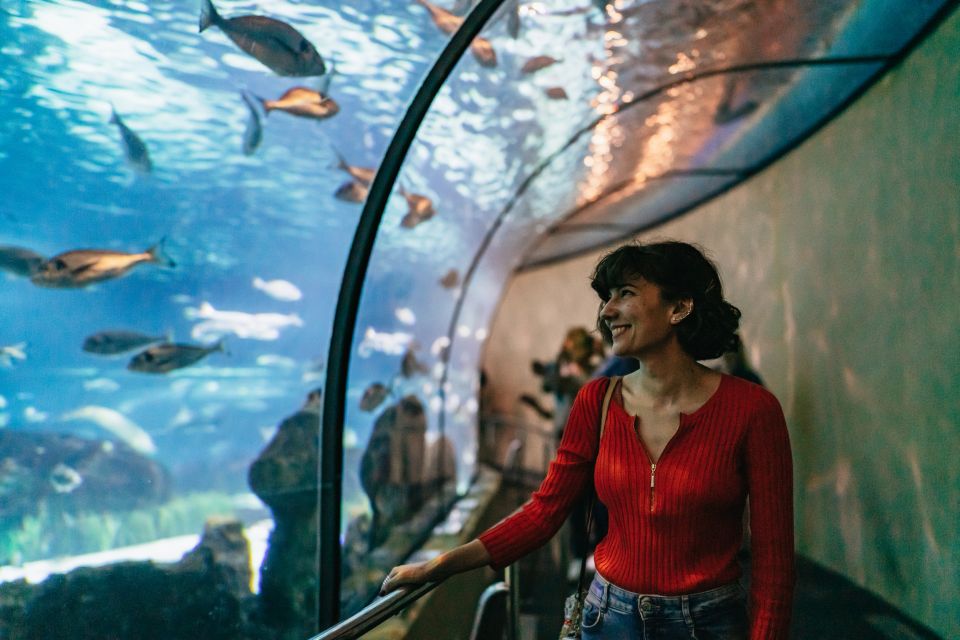
The tunnel curves around half the perimeter of the Oceanarium tank, then continues straight across the middle, with a moving walkway running the length of the right wall. You can stand on the walkway and let it carry you at a measured pace, or you can step off onto the firm strip on the left and stop wherever you want. Most visitors stay on the walkway and ride the whole length without thinking about it, which is the wrong move.
The walkway is the only reason the tunnel works as a viewing experience. Without it, every visitor would stop in the middle of the most photogenic section and the whole tunnel would jam. With it, the slow-moving riders move at the right speed for casual viewing, and you get the choice to step off when you spot something. The thing to spot: stand-off room. The tunnel opens into a small bay halfway through with seats and standing space and a bigger view. That bay is where you actually want to spend your tunnel time. Five minutes there beats fifteen minutes of standing-on-a-conveyor-belt photography.
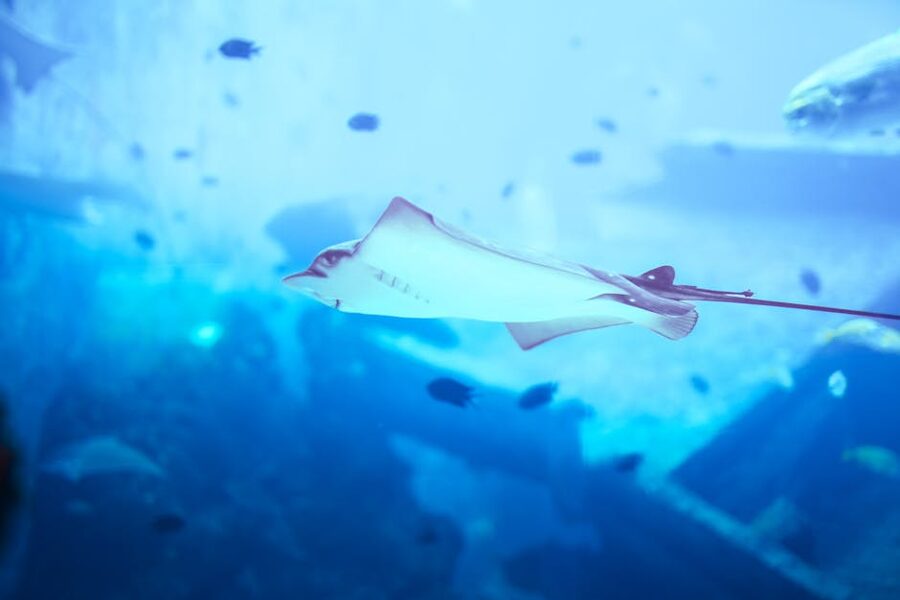
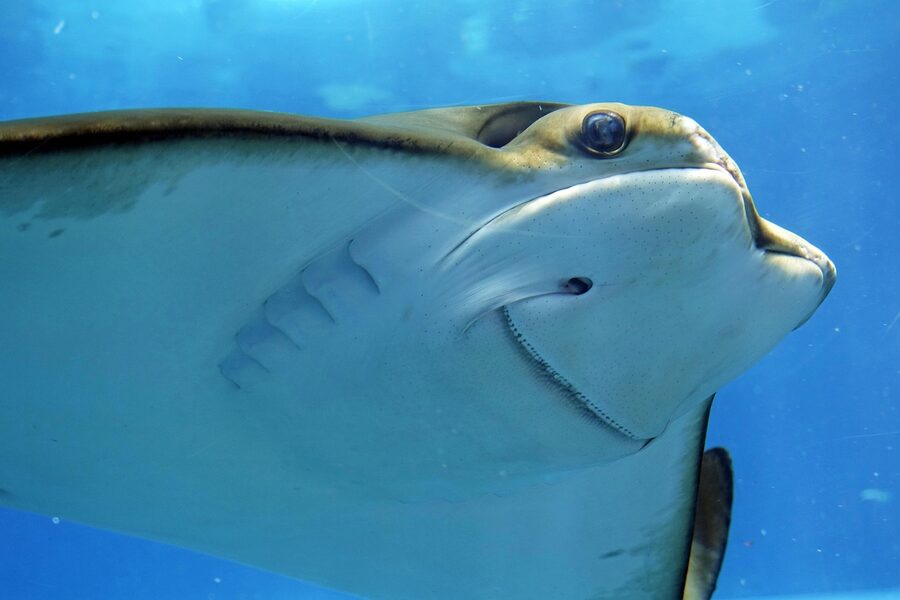
The three large shark species (sand tiger, sandbar, angular roughshark) share the tank with stingrays, eagle rays, guitarfish, and an ocean sunfish. About 80 species total. The sand tiger sharks are the showy ones, with the toothy mouth that everyone associates with sharks. They don’t actually eat the rays they’re sharing the tank with, which is one of the more remarkable engineering achievements of the aquarium’s design. There are feeding events for the sharks at noon on Mondays, Wednesdays, and Fridays. That’s when the tank goes from contemplative to actively dramatic, and it’s the time most worth scheduling around if you have flexibility. If you’re a marine-life completionist on a wider Spain trip, the Tenerife wildlife circuit (whale watching and Loro Parque) is the bigger payoff for seeing animals doing actual animal things in larger spaces.
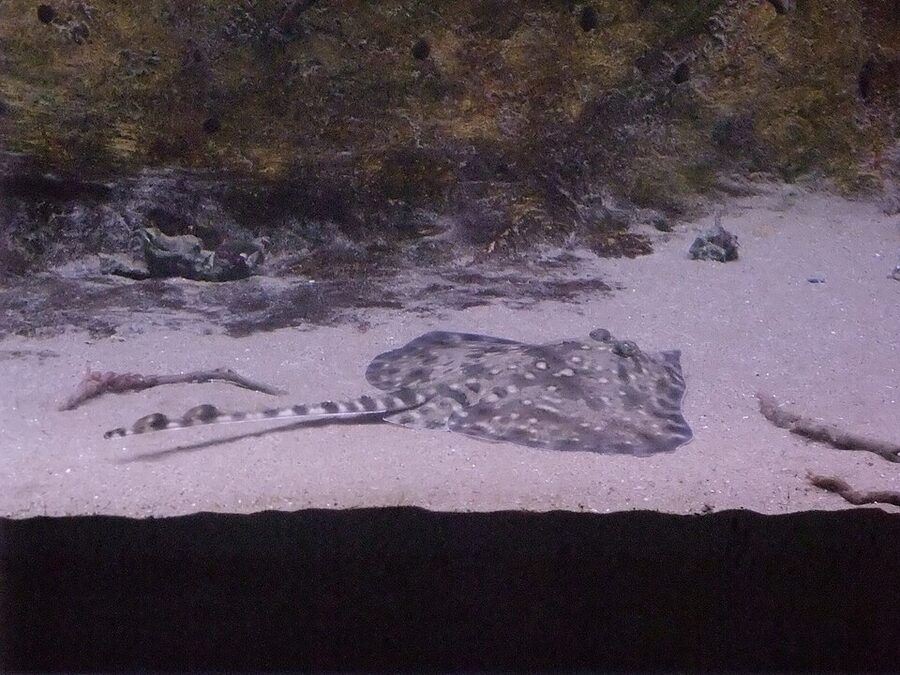
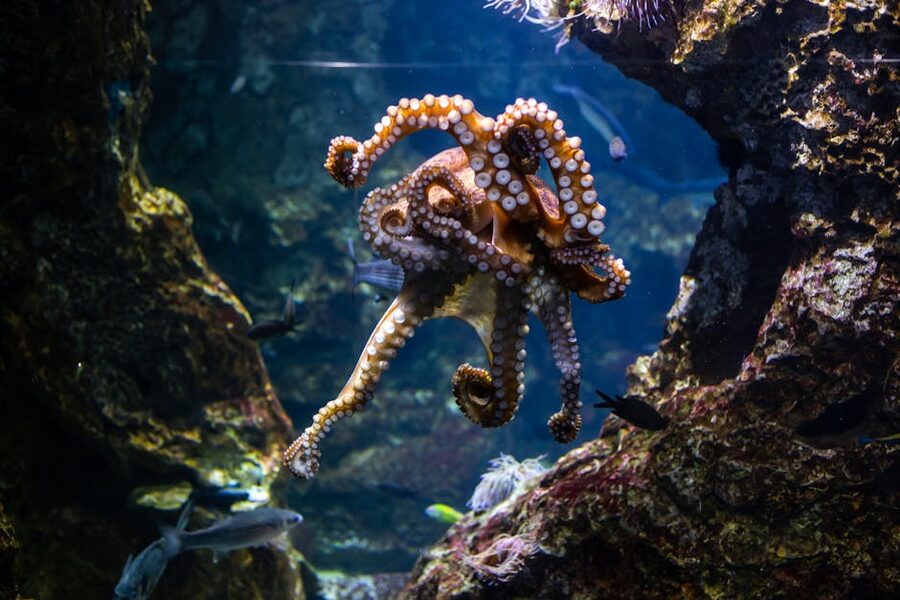
After you exit the tunnel proper, there are two more tanks on the way to the upper level: a Maldives atoll display with the gorgeous orbicular batfish and threadfin butterflyfish, and a “Life in the Benthos” tank dedicated to deep-sea floor life: sea urchins, brittle stars, octopuses tucked into crevices. The benthos tank is dim and easy to miss. If you have any lingering curiosity at this point, give it three minutes. There’s almost always an octopus visible if you’re patient.
Upper Level: Penguins, Jellyfish, and the Kids’ Zone
You come up the escalator into a wider open space with a café, an outdoor balcony, and two interactive zones: Explora! for younger kids and Planeta Aqua for everyone. Most adults treat the upper level as the wind-down. That’s about right, with two exceptions worth flagging.
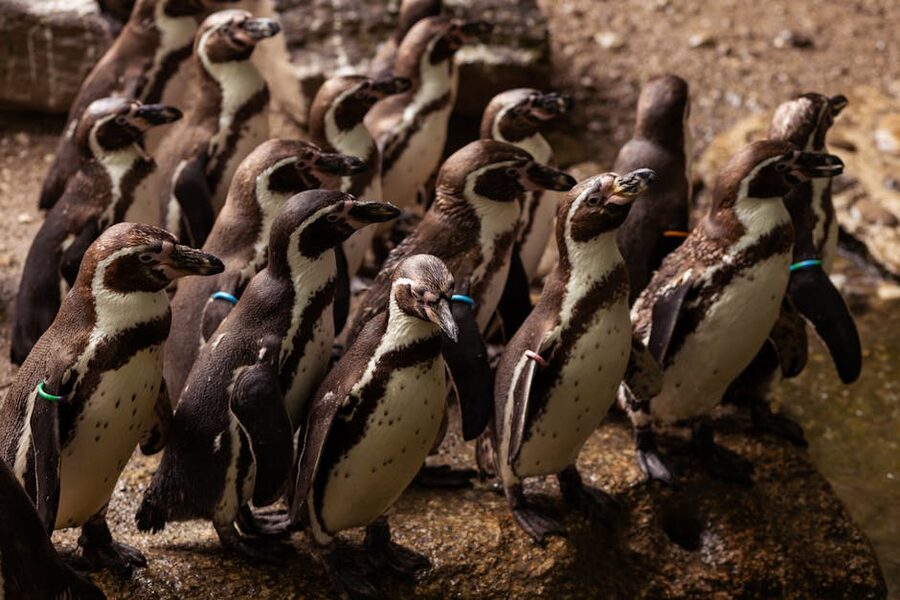
Exception one is the Humboldt penguin enclosure. These birds are all captive-bred (part of a conservation breeding programme rather than wild captures) and they are bafflingly entertaining to watch. The penguins are most active around 11.30am and 4.30pm, when feeding happens. Schedule one of those windows if you possibly can. Outside the feeds, they tend to stand on the rocks not doing very much.
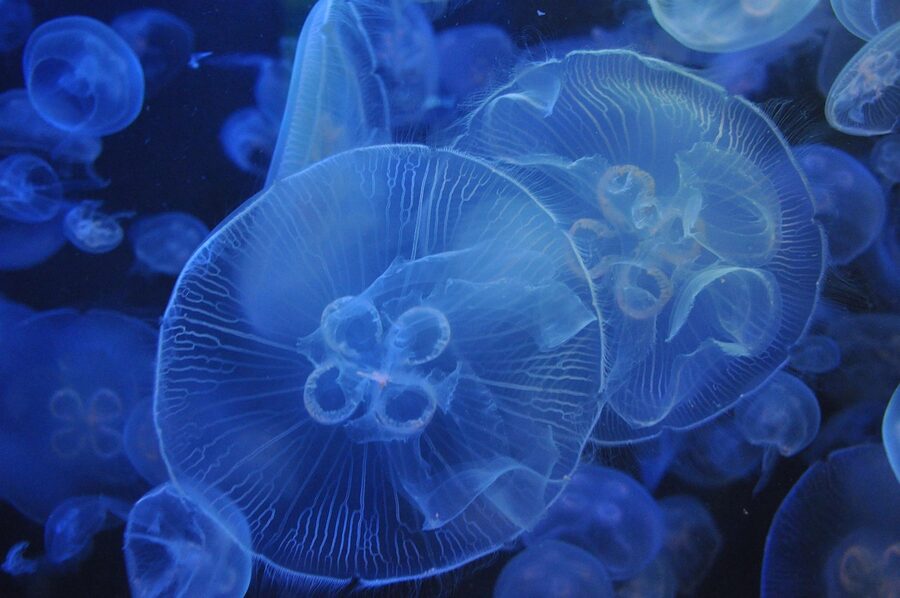
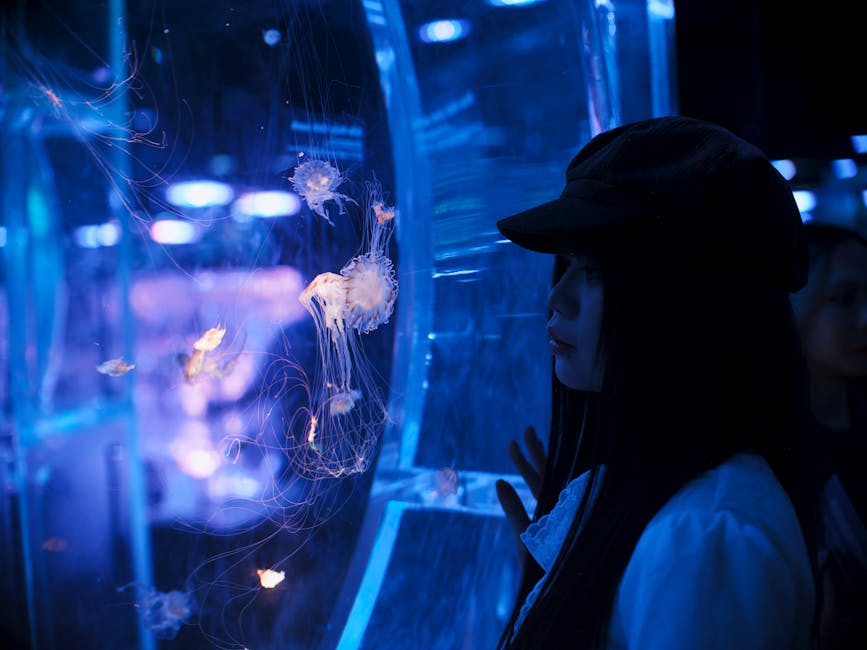
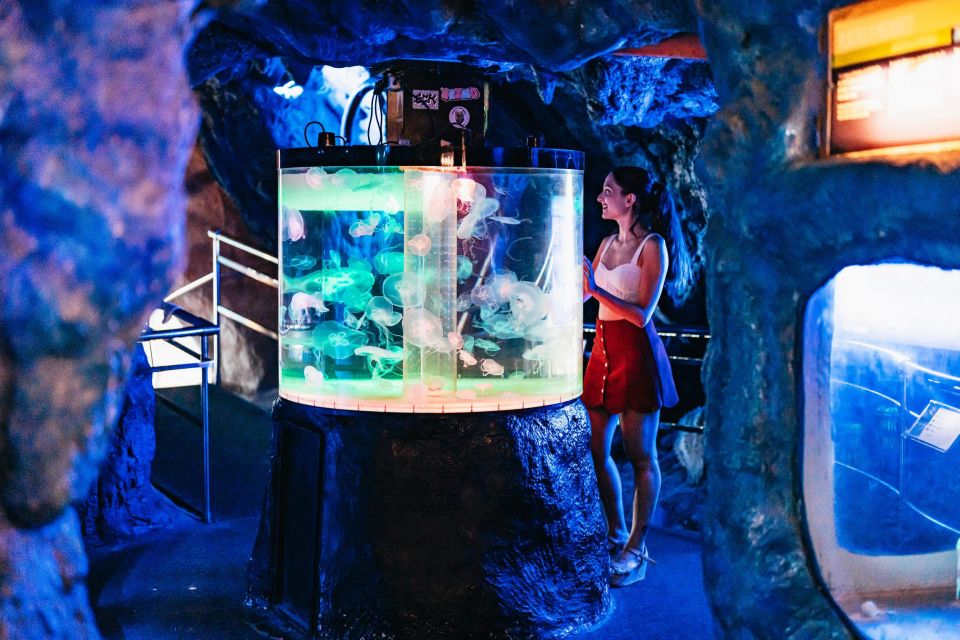
Exception two is the jellyfish room. Dark hallway, tanks lit with blue and ultraviolet light, jellyfish drifting through them in slow loops. It is the most consistently mesmerising section of the entire aquarium and it’s tucked away in the upper level where most rushed visitors miss it. There’s no rush, no walkway, no kid jostling for the front. Stand in front of a jellyfish tank for thirty seconds and you’ll lose track of time. They’re also the only animals here whose metamorphosis is on display. You can see the polyp stage in the smaller tanks, which is the part of the jellyfish life cycle that almost nobody has actually seen.
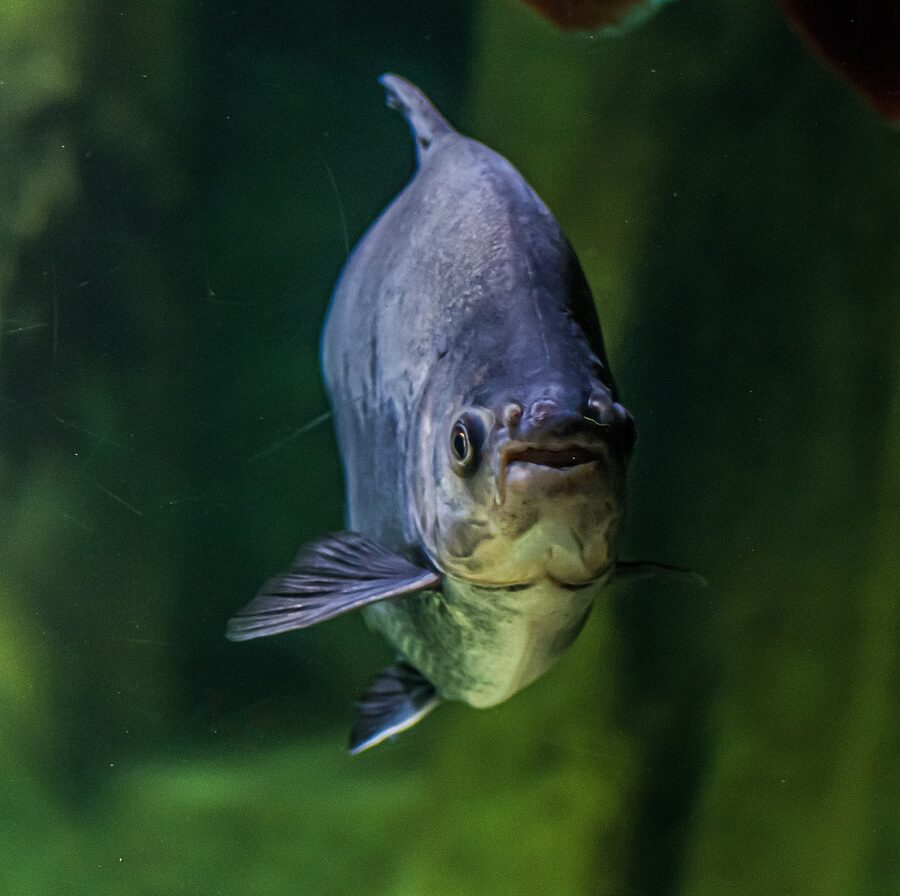
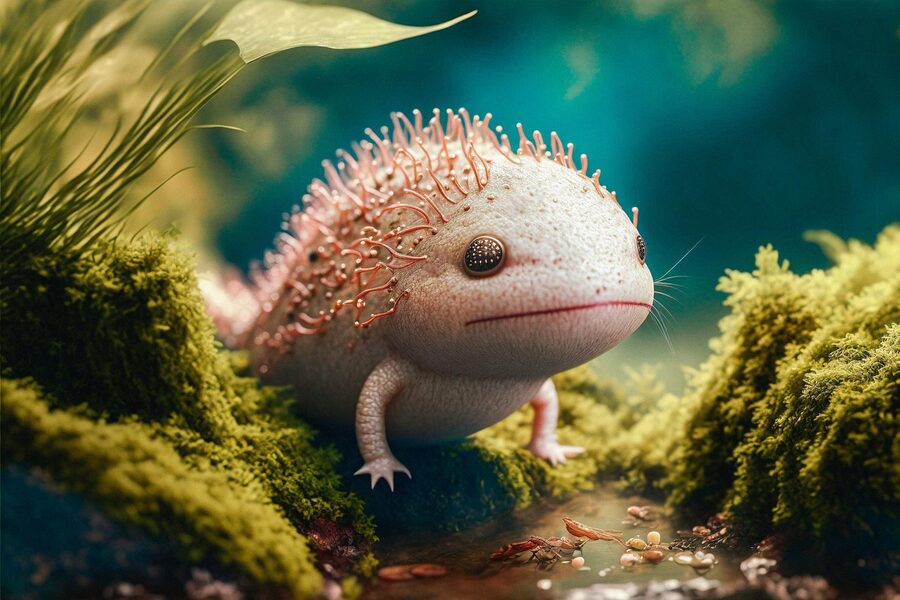
Planeta Aqua also has a recreation of a tropical river running from upper course down to the delta: piranhas, river turtles, chameleons. There’s a stingray touch tank, where you’re supposed to look but not touch (the staff are firm about this; don’t try). And there’s an axolotl tank, the rare Mexican salamander that never grows up out of its larval stage. If you’ve never seen one in person, the upper level is the only place you’ll find one in Barcelona.
The Three Tours Worth Booking
You don’t need a guided tour to visit. The route is self-guided, the signage is multilingual, and a tour guide doesn’t get you any closer to the fish. What the tickets do is solve different logistical problems: line-skipping, bundling with other Barcelona attractions, or scheduling certainty. Here are the three that make sense.
1. Barcelona Aquarium Entry Ticket: $34
This is the workhorse pick: pre-book a half-hour slot, scan the QR at the gate, walk past the box office. Our review of the entry ticket covers the cancellation window and the on-app voucher. Book this if your dates are settled and you don’t need flexibility.
2. Skip-the-Line Admission Ticket: $31
The cheapest of the three picks but with priority queue access. The small detail buried in our skip-the-line review is that on a wet Saturday it can save you a 30-minute wait. Pick this when you’re on a tight half-day schedule.
3. Hop-On Hop-Off Bus & Aquarium Tour: $73
Right pick if you’re combining the aquarium with a half-day of city sightseeing. See our combo tour review for the bus route specifics. Maths only works if you’d otherwise pay for the bus separately, which our Barcelona HOHO guide walks through.
When to Go: The Quiet Hours
Barcelona Aquarium is busiest on Saturdays and Sundays from about 11am to 4pm, plus rainy weekday afternoons in October through April when families with kids retreat indoors. If you can pick your slot, the openings to aim for are first-thing weekday mornings (10 to 11am) or the last hour before closing (after 5pm in low season, after 7pm in summer).
The summer evening slot is the sleeper hit. From late June through August the aquarium stays open until 9pm, and the 7pm to 9pm window is genuinely peaceful. The school groups have gone, the cruise-ship excursions are back on their boats, and you have the Mediterranean section essentially to yourself. The light dims gradually inside the tanks too, which is when the nocturnal species start to move.
Feeding Times Are the Schedule You Plan Around
The schedules below are advisory (they shift based on the animals’ needs) but they’re a useful framework:
- Sharks: noon on Monday, Wednesday, Friday
- Penguins: 11.30am and 4.30pm, every day
- Stingrays: 2pm, Monday to Saturday
- Eagle rays: 12.45pm, Monday to Friday
If you’ve only got one feeding to schedule around, make it the penguins. Sharks are usually static between meals; the penguins are reliably entertaining at the feed and reliably napping the rest of the day.
Seasonal Notes That Are Specific Enough to Use
In early May the squid in the Mediterranean section go through their mating ritual. They change colour patterns in front of you, bands of red and white pulsing across their bodies. It’s a brief window, maybe two weeks, and there’s no marketing of it. The seahorses also mate in spring, with the male holding his tail to the female’s in a delicate dance. If you’re in Barcelona in May, ask a staff member at the entrance whether anything’s happening. They will know which tank to point you at.
In summer the air conditioning is one of the practical reasons families come. The basement is several degrees cooler than the streets above, and after a morning at Park Güell in 32-degree heat, the aquarium is a legitimate move for keeping a small child functional. On a winter afternoon when the tramuntana wind is whipping up the harbour, the same principle applies in reverse.
How to Get There
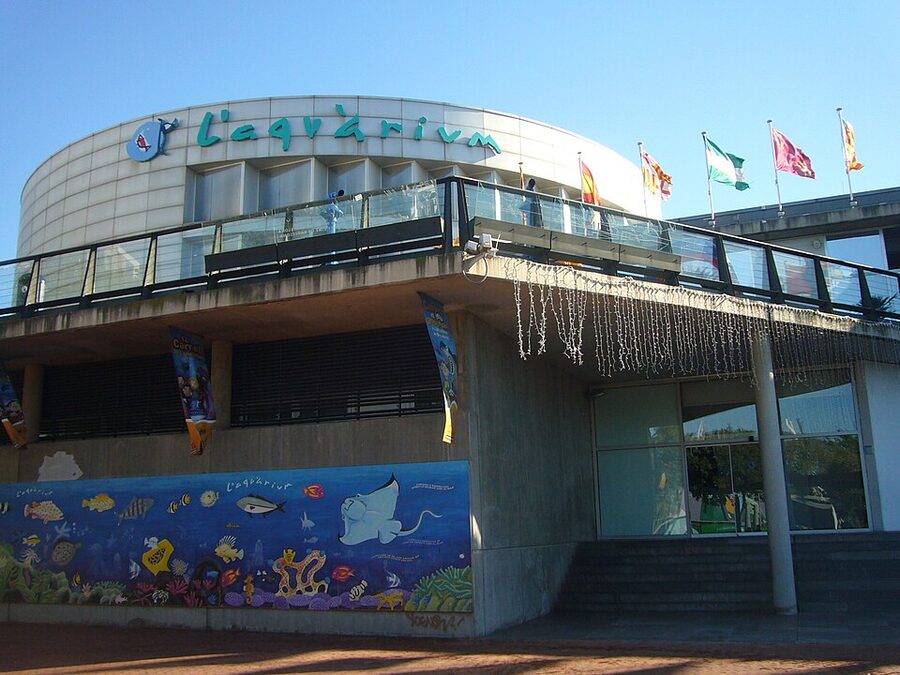
The aquarium sits in Port Vell next to the Maremagnum shopping mall. The standard route is to walk down Las Ramblas to the Christopher Columbus monument at the bottom, cross the wooden Rambla de Mar pedestrian bridge over the marina to the mall, walk through the mall (or around it), and exit on the harbour side toward the aquarium. It’s about 8 minutes on foot from the bottom of Las Ramblas. The bridge moves slightly underfoot, because it’s designed to swing open for taller boats, and that small detail is the only memorable bit of the walk.
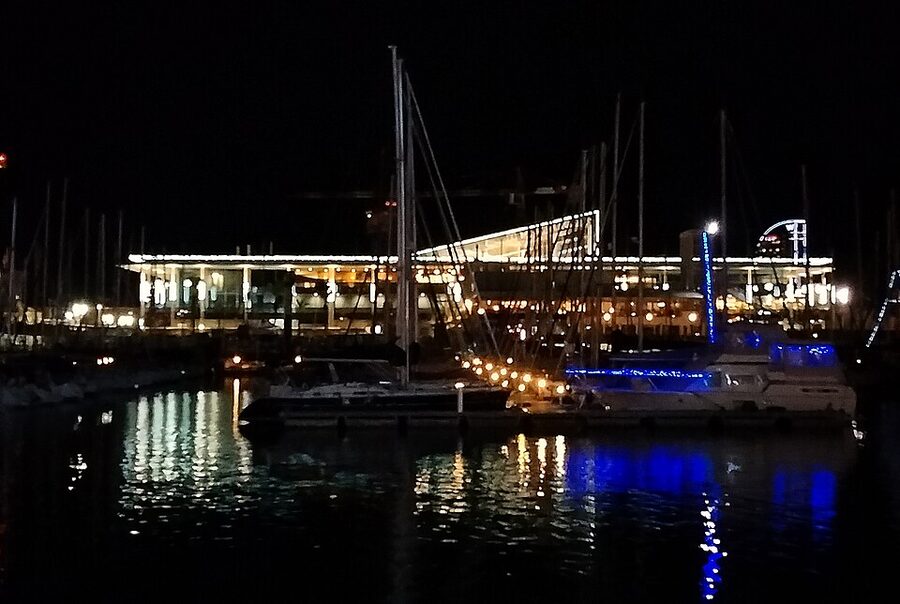
The alternative approach is from Barceloneta on the eastern side, walking along the harbour past the Palau de Mar. This route is shorter from anywhere in the Born or Barceloneta district. You miss the Rambla de Mar bridge, but you pick up Roy Lichtenstein’s “Face of Barcelona” sculpture and a quieter waterfront walk.
By Metro
Drassanes (L3, green line) is the closest stop if you’re coming via the Rambla de Mar bridge. Barceloneta (L4, yellow line) is the closest if you’re approaching from the road side. Either is a 5- to 7-minute walk to the aquarium entrance. Both are fine; pick whichever your hotel is closer to on the map.
By Bus and Tourist Bus
The local V17 bus is the only regular line that gets right to the aquarium. The red line of the Barcelona Bus Turistic stops at the Columbus statue (bridge access) and the Palau de Mar (road access). The orange route of the City Tour Barcelona hop-on-hop-off has a Columbus stop too. If you’ve already got a tourist bus pass for Sagrada Familia and Park Güell, ride it down here for free; otherwise the metro is faster.
By Car
Don’t drive. Barcelona’s old centre is a parking nightmare and the only reasonable option is the paying car park under the Maremagnum mall, which is expensive and full on weekends. If you’ve got a rental car for day trips, leave it at your hotel and take the metro down.
Practical Tips That Actually Save You Time
A few things the standard guides don’t tell you:
Toilets: there’s only one toilet per floor. The Mediterranean section has a single set near the entrance escalator; the upper level has another near the café. Use the entrance one before going down, because the next one is about 90 minutes of walking later. With small children this is the operationally most important sentence in this guide.
Booklets: there are €5 guidebooks at the entrance. They’re simple, illustrated, and they make a small kid feel like they’re on a treasure hunt. If you’re visiting with a curious 6- to 10-year-old, pick one up. They double as a souvenir.
Photography: no flash, anywhere. The fish are stressed by it and the aquarium signs are firm. Most modern phones handle the dim conditions fine. The shark tunnel and the jellyfish room are the two places where photos consistently come out well.
Don’t tap on the glass. This shouldn’t need saying but it does. The noise is amplified underwater and stresses the animals. If you see a kid doing it, gently redirect them. The staff will, and they’re polite about it.
Don’t try to touch the stingrays. The Explora! kids’ zone has a stingray tank with a viewing platform that looks tantalisingly hands-on. It is not. The stingrays are not for petting, despite what other aquariums have led visitors to expect, and the staff will stop you.
The café: the upper-level café exists. It is fast food, nothing special, and you will pay aquarium-attached prices for it. Skip it. The Time Out Market on the upper floor of Maremagnum, immediately next door, has 15 stalls with proper Catalan food at reasonable prices and you walk to it the moment you exit the aquarium. If you want something nicer, the Barceloneta district is 10 minutes away and has the city’s best paella.
How It Compares to Italy’s Aquariums
I mentioned Genoa in passing earlier; it’s worth a longer comparison if you’re picking between the two. Genoa is Italy’s flagship aquarium and Europe’s second-largest after Valencia’s. It has the dolphins, the larger oceanarium, and the building is a Renzo Piano structure on the harbour. Barcelona’s strengths are different: the focus on Mediterranean species (which Genoa shares but with less depth), the more intimate scale, and the location in Port Vell that means you can combine it with the rest of a Las Ramblas afternoon. Genoa is a destination unto itself; Barcelona is one stop on a layered city day.
If you’re only doing one Mediterranean aquarium on a longer European trip, Genoa wins for the headline experience. If you’re already in Barcelona, this one is genuinely worth the 90 minutes, and the bigger Spanish answer, Valencia, is a separate detour for a separate trip. The wider family-attraction circuit on the same trip rhymes with Disneyland Paris for the dedicated kid-day, with Amsterdam’s Madame Tussauds on Dam Square for the indoor-rainy-day option, and with the science-and-water hybrid at the NEMO Science Museum, which is also a Renzo Piano building like Genoa’s aquarium.
Is It Worth It?
Yes, with a caveat. The aquarium is excellent value if you fit one of three profiles: travelling with kids between 4 and 12, on a rainy or extremely hot day with no other indoor plans, or a marine biologist (or marine biology curious) who wants to see the Mediterranean section properly. For a couple on a dry March afternoon with a tight schedule and no children, you can skip it. The Mediterranean section is brilliant but it’s also the kind of brilliant that needs the right mood, and if your day is already packed with Gaudí (Sagrada Familia, Casa Batlló, La Pedrera, and the lesser-known but beautiful Casa Vicens), adding the aquarium is the moment your itinerary tips into exhaustion.
The realistic version of the recommendation: book the aquarium for the day you’re going to need an indoor break. That’s almost certainly the third or fourth day of a Barcelona stay, when your feet hurt and the kids are over modernist architecture. Spend 90 minutes inside, eat at the Time Out Market across the way, walk a slow loop of Port Vell afterward. That’s the version of the visit that pays out.
What to Do Afterward
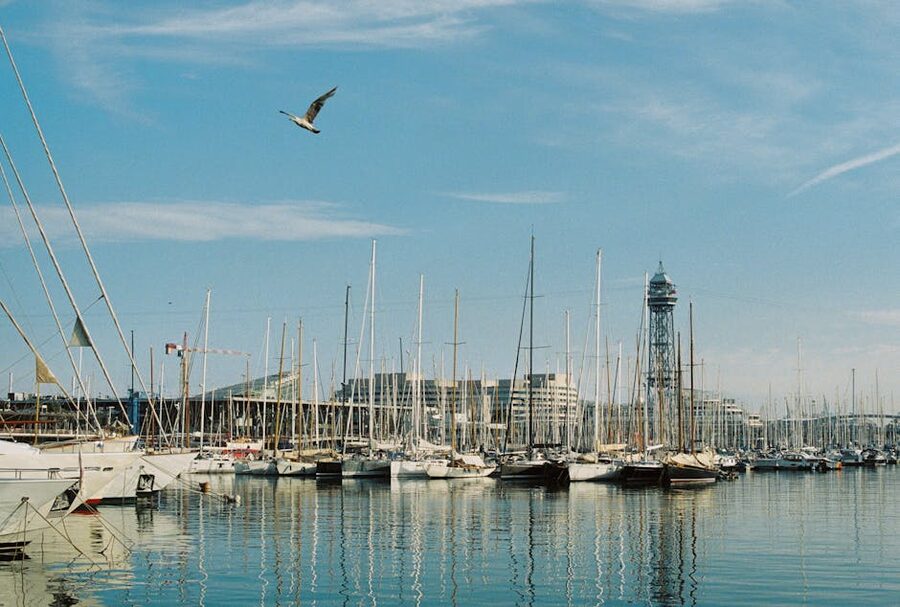
You exit onto the harbour side of the Maremagnum complex with the sea immediately to your right. There are three good moves from here. First, head up the escalator inside Maremagnum to the Time Out Market: 15 food stalls, a glass roof, the views of the harbour you didn’t get inside the aquarium. Second, walk along the Moll de la Fusta wooden boardwalk back toward the Christopher Columbus monument. The Roy Lichtenstein “Face of Barcelona” sculpture is a five-minute detour that is worth it for the photo. Third, if it’s late afternoon, walk east along the harbour to Barceloneta beach for sunset. The boardwalk is flat, lined with seafood restaurants, and ends at the W Hotel and the open beach.
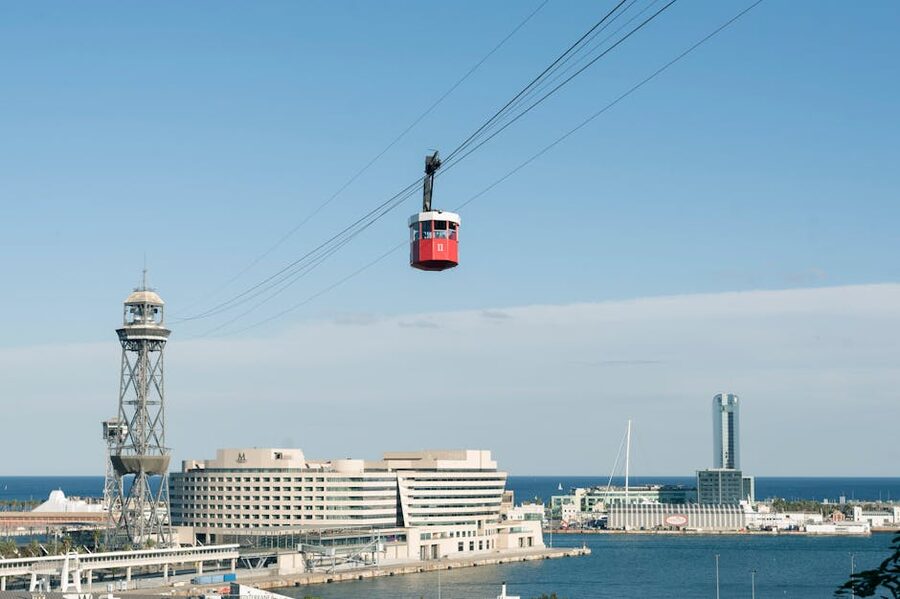
If you’ve still got energy and the day is bright, the Montjuïc cable car base station is a 15-minute walk from the aquarium toward Barceloneta. That’s your other “what’s next” if you want a payoff view of the city after a contemplative afternoon underwater. Or hop on the tourist bus at the Columbus stop and ride it back up to the modernist neighbourhoods you may have already done. The Paris equivalent of this aquarium-then-harbourside-walk rhythm is a hop straight onto a Seine river cruise after a museum-heavy morning, and Amsterdam’s harbour version is the canal-and-modern-roof combination at NEMO.
For everything else within walking distance (the Gothic Quarter, the Born, the Picasso Museum) you’re already in the best part of the city to wander. The aquarium delivers you back into Port Vell at the right altitude, with the right kind of post-museum mood, to actually enjoy it.