
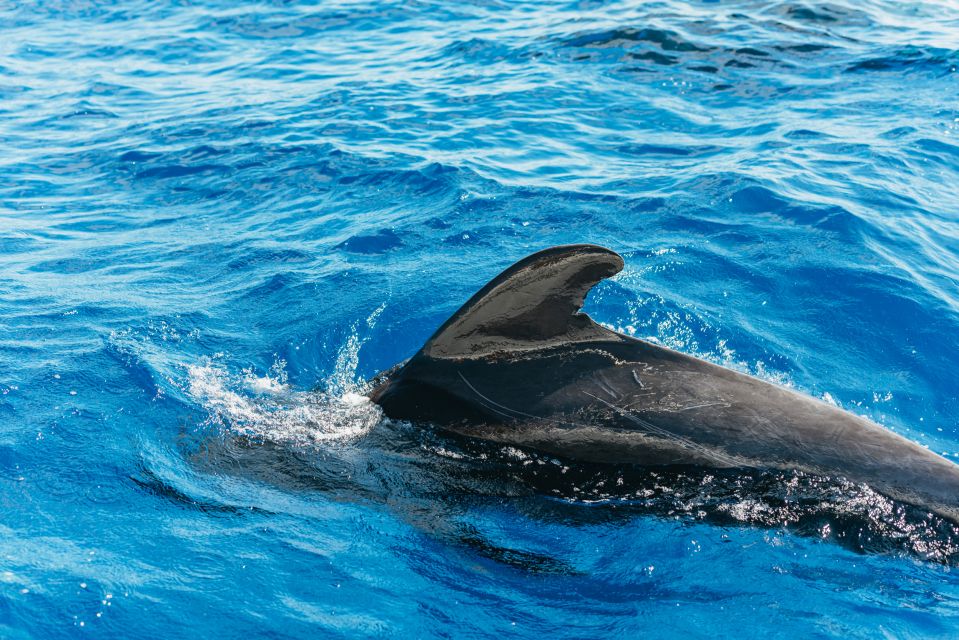
The dorsal fin breaks the surface about thirty metres off the bow. Black, slow, the size of a small car bonnet. The skipper kills the engine. The boat keeps drifting on momentum and the only sound is water slapping the hull, twelve people holding cameras, and someone behind me whispering the word there to nobody in particular. Then a second fin. A third. A pilot whale calf rolling sideways at the surface like a tired puppy. We’ve been out of Los Cristianos for forty minutes.
This isn’t a humpback breaching off Iceland. Pilot whales don’t leap. They surface gently, blow, glide for a few seconds, and slide back under. The whole thing is quiet enough that you hear it more than you see it. That’s the experience the south-west coast of Tenerife sells, and the reason it works is geology more than luck.
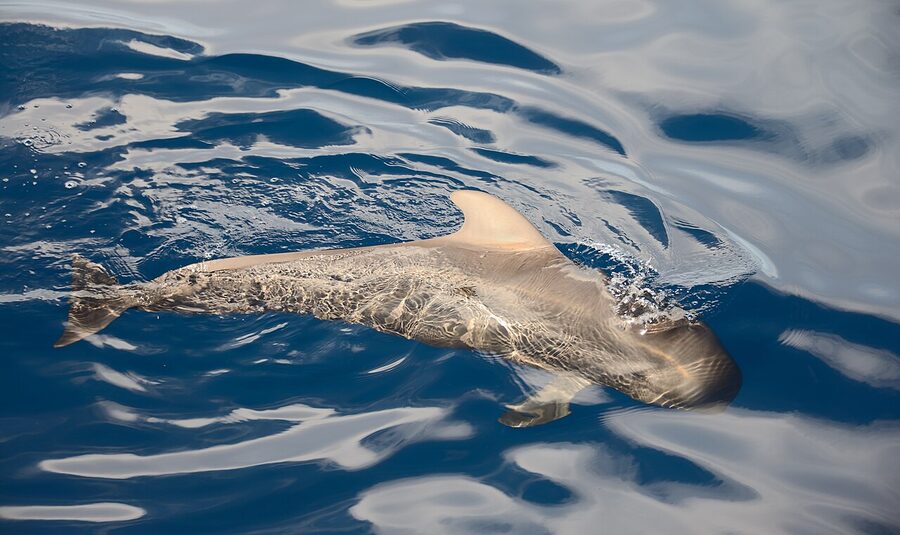
Between Tenerife and the small island of La Gomera, the seabed drops to over 2,000 metres in the strait. Nutrient-rich water rises along the cliff wall. Squid breed in numbers. And about 250 short-finned pilot whales (Globicephala macrorhynchus) live here year-round, the largest resident pelagic population in the European Union. Roughly 150 bottlenose dolphins (Tursiops truncatus) live here too, plus 21 other cetacean species that pass through. You don’t need a season. You don’t need luck. You need a boat that knows where the residents hang out, and a skipper who cuts the engines instead of chasing.
In a hurry? Here’s what most people book
- Best all-round (motor yacht with food and drinks): $77. Three hours, smaller boat than the cattle catamarans, snacks and drinks included. Check availability
- For the photograph (sailboat, engines off): $88. Smaller group, sailboat from Los Gigantes, drifts in silence. The pictures are better. Check availability
- Cheapest decent option: $17. Pirate-ship style schooner, big group, but it’s a real wooden vessel and the price is hard to argue with. Check availability
Why pilot whales live here, year-round
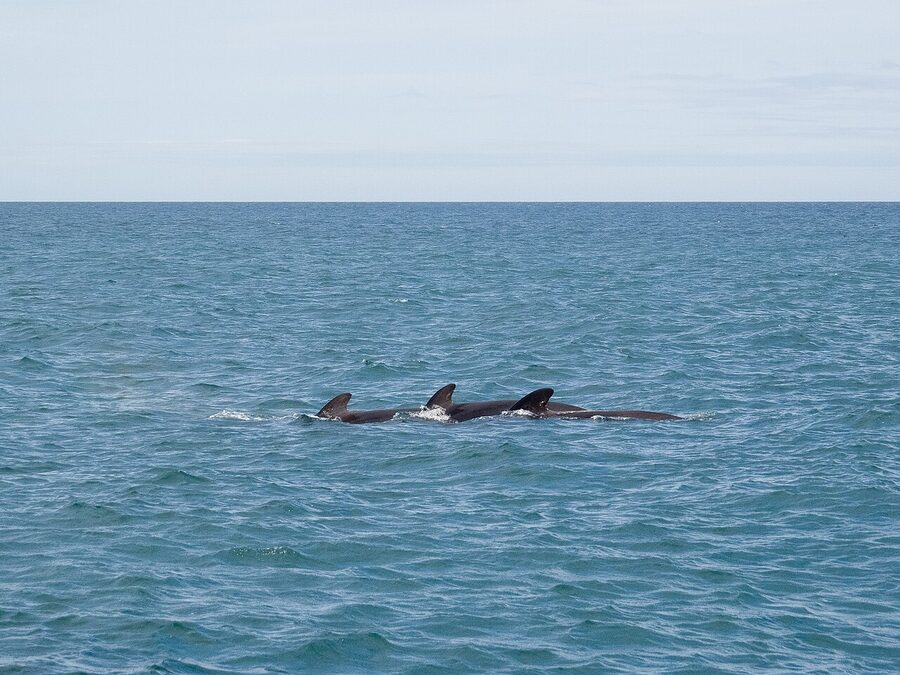
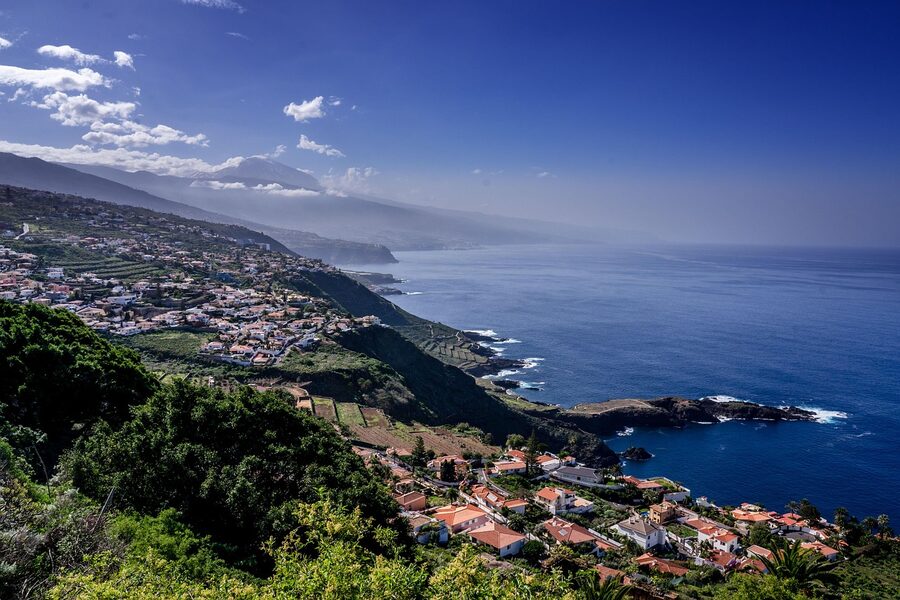
The geography is the entire story. Tenerife and La Gomera are two volcanic peaks that rise from a deep ocean trough. The strait between them, about 30 kilometres wide, drops to 2,000 metres almost the moment you leave the cliff line. Cold deep water rises to meet the warm surface. Phytoplankton bloom. Squid follow the squid food chain up. Pilot whales follow the squid.
That’s not a marketing line. It’s why a residential population sticks here through every month of the year, while populations in colder northern waters migrate. You can spot pilot whales off Tenerife in March, in August, on Christmas Day. The animals don’t leave because the food doesn’t leave.
The 250-strong pilot whale group is the largest resident pelagic cetacean population in EU waters. Add the 150 bottlenose dolphins (resident), the rough-toothed dolphins, the Atlantic spotted dolphins, the occasional Bryde’s whale, the very occasional sperm whale, and the strait between Los Cristianos and the Gomera ferry route is one of the densest cetacean corridors in Europe. Twenty-one species have been logged in these waters.
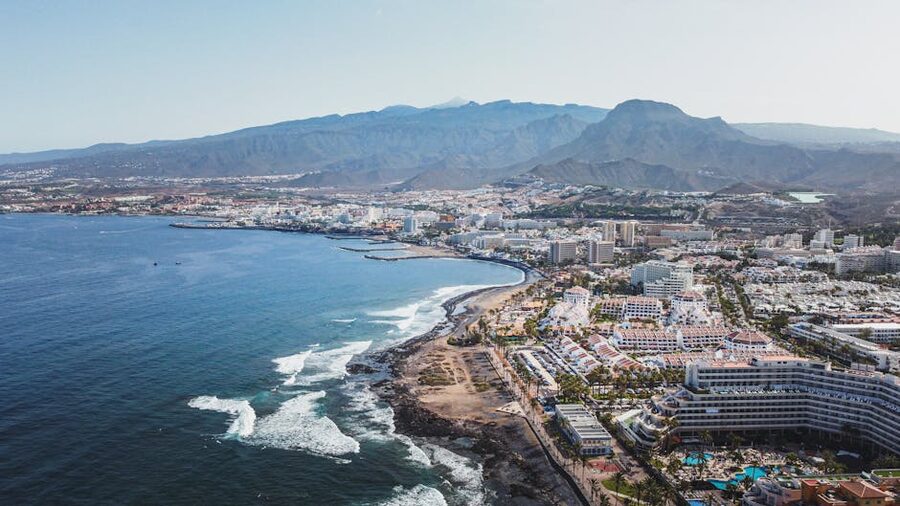
Where the boats leave from
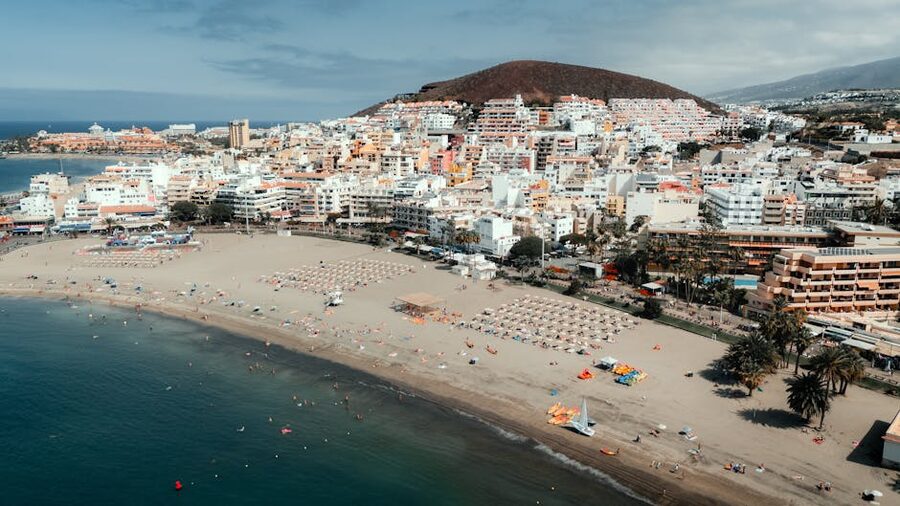
Three harbours run almost all the whale-watching boats on Tenerife. Pick by where you’re staying, because the drive matters more than you think.
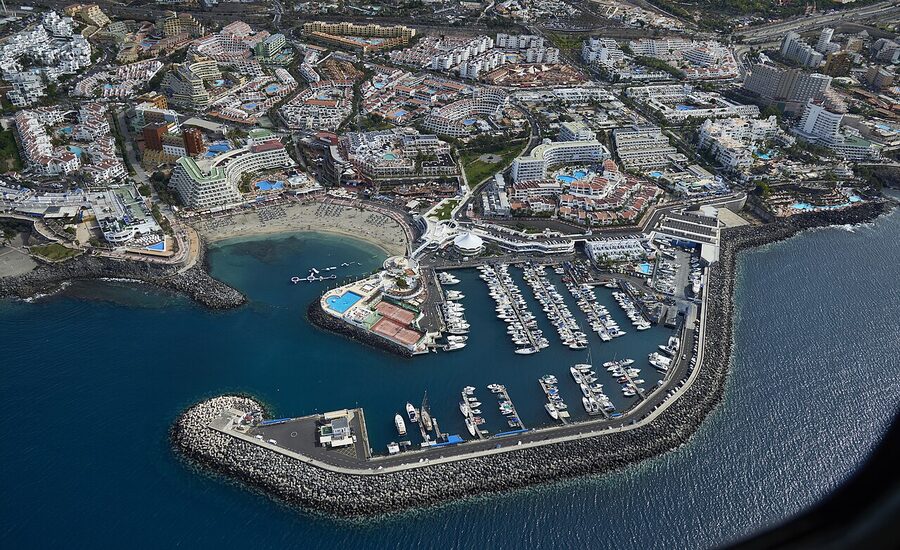
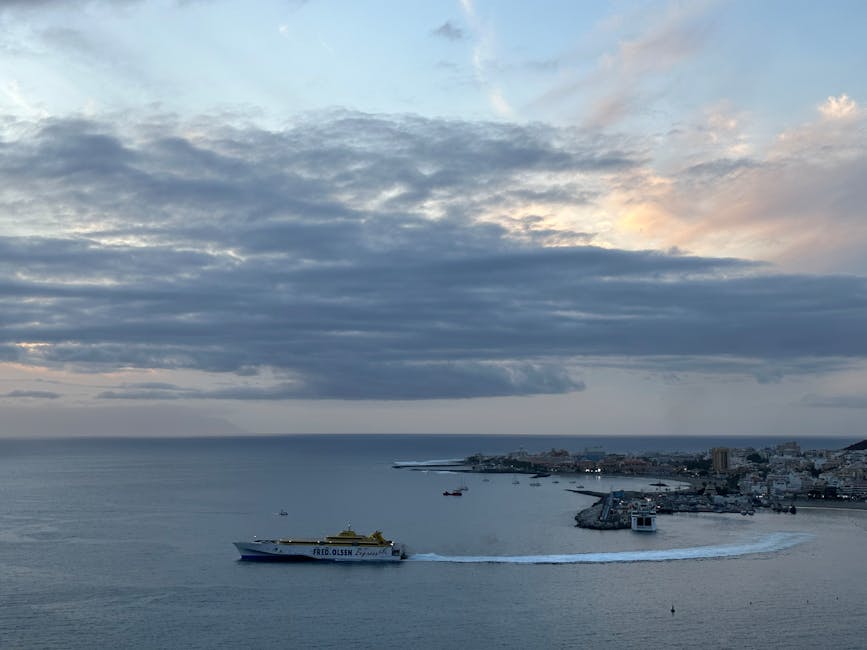
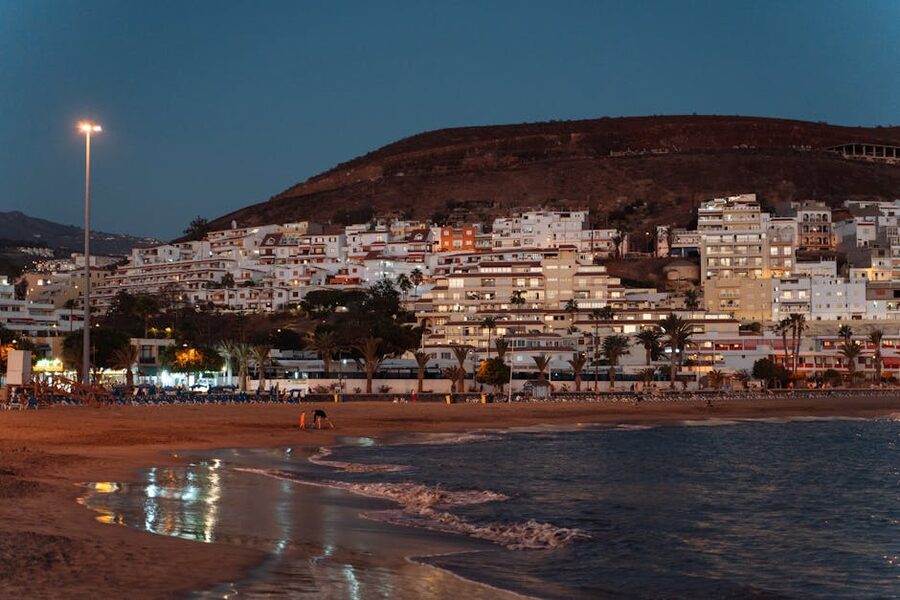
Los Cristianos. The biggest harbour for tours, hands-down. It’s also where the La Gomera ferries leave from, so the dock is a little chaotic in the morning. Most of the bigger motor yachts and budget pirate ships go from here. Driving time from Tenerife South Airport (TFS): about fifteen minutes. From Costa Adeje hotels: ten.
Puerto Colón, Costa Adeje. A smaller marina, ten minutes north of Los Cristianos. A lot of the mid-sized catamarans and the eco-boats run from here. If you’re staying in Costa Adeje and don’t want the Cristianos crowds at 9am, this is the better starting dock. It’s also calmer for kids.
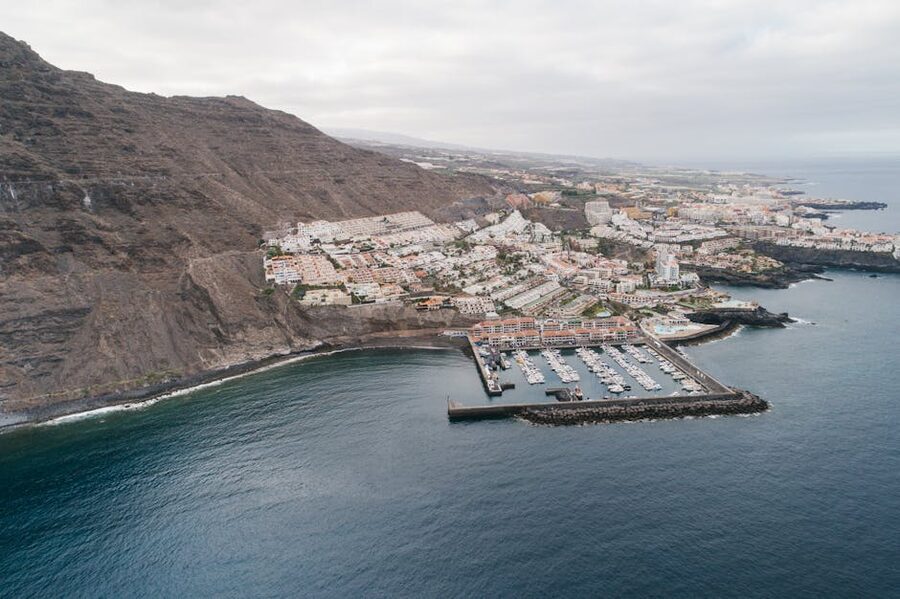
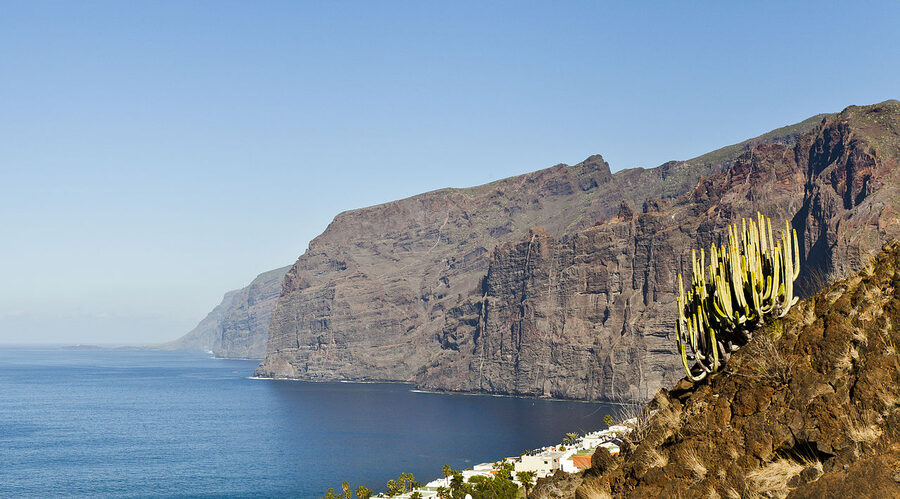
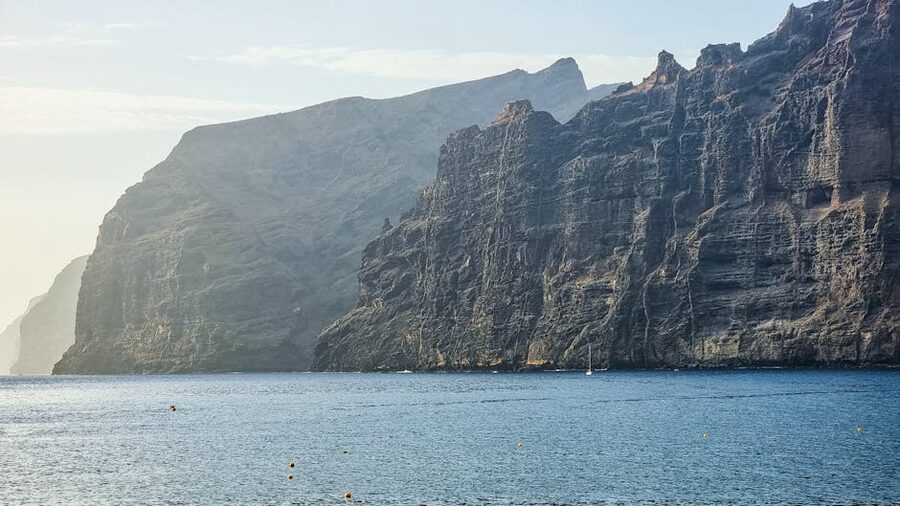
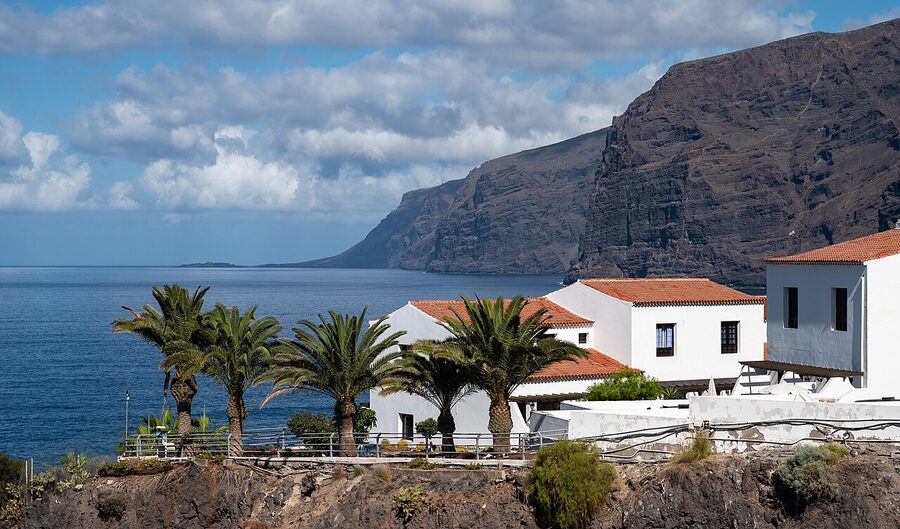
Los Gigantes. Forty-five minutes north of the airport, sat directly under the cliffs that give the village its name. The water here is the deepest closest to shore, the cliff backdrop is the photograph, and the sailboat operators tend to leave from here rather than from Cristianos. If you want the smaller boat, the engines-off drift, and the better photos, you want Los Gigantes.
The three boats worth booking
Tenerife has dozens of operators. The real sort breaks down to three buyer types, and the three boats below cover them. I’ve ranked them in the order I’d book if I were going tomorrow, but the right pick depends on what you most want from the trip: the photograph, the comfort, or the price.
1. Tenerife Whale and Dolphin Watching With Drinks and Snacks: $77
This is the most-booked whale-watching trip on Tenerife and the right pick if you want the all-round experience without optimising for any one thing. Three hours, motor yacht (so you cover ground if the pilot whales are spread out), drinks and snacks included so you don’t end up dehydrated under the sun. Our full review of the trip covers the boat layout, the meeting point in Los Cristianos harbour, and what the operator actually means by “small group.”
2. Los Gigantes Whale Watching by Sail Boat: $88
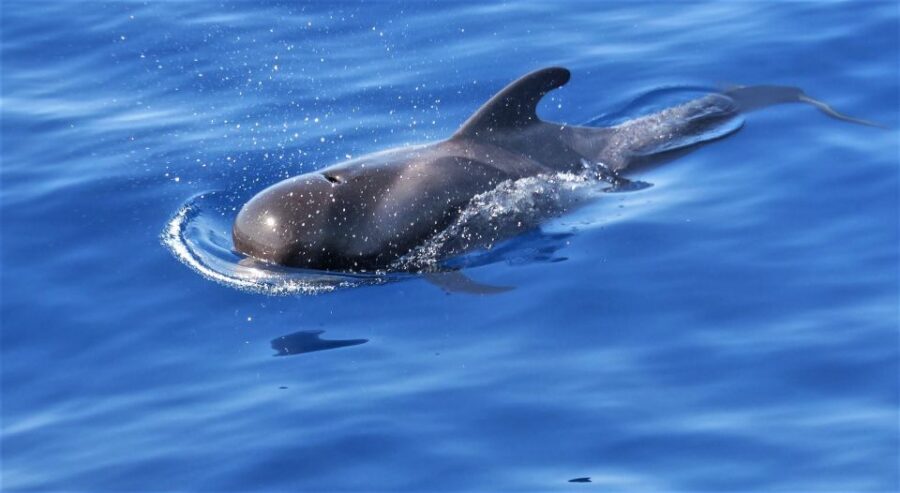
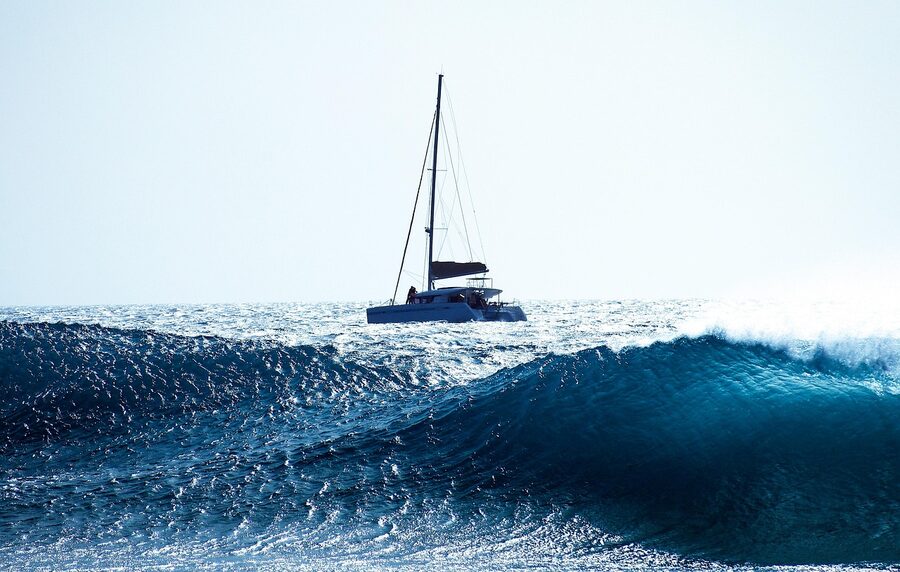
Pick this one if photography matters or you want the calmest experience on the water. It’s a sailboat (so genuinely engines-off when the whales appear, not just idling) leaving from Los Gigantes rather than the busier Cristianos harbour, and the cliff backdrop on the way out is the postcard view of Tenerife. Our review goes into the snorkel stop and why the slightly higher price is fair.
3. Respectful Whale Watching, Pirate Ship: $17
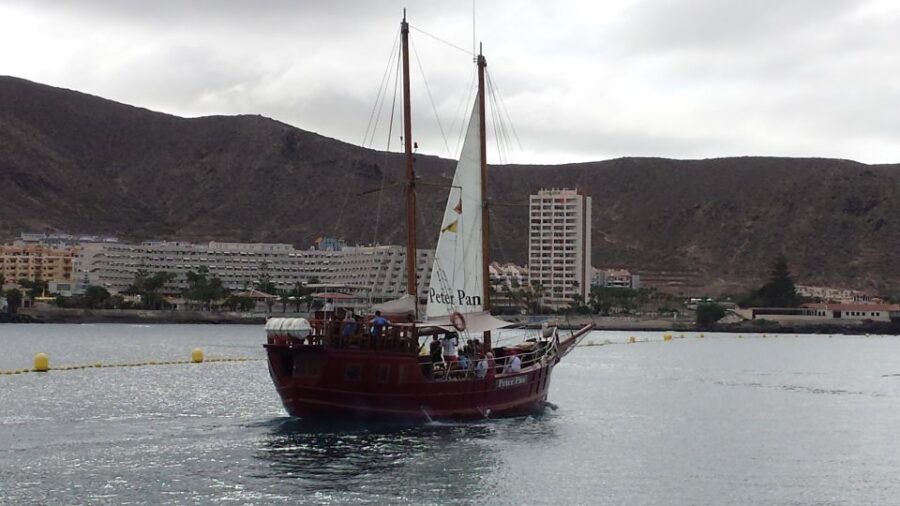
This is the budget pick that doesn’t feel like one. It’s a real Portuguese Goleta schooner (not a fibreglass party boat with a flag stuck on it), the operator follows the no-chase rules properly, and the swim stop on the way back is genuinely good. The trade-off is the bigger group and the pirate dressing-up, which kids love and the rest of us tolerate. Read our review for what to bring and how the swim works.
What “no-chase” actually means (and why it matters)
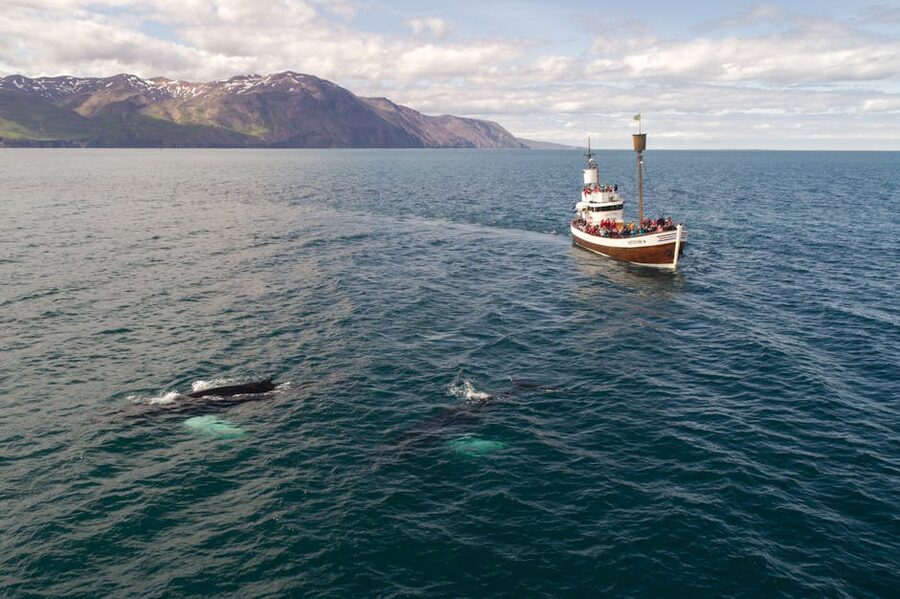
The Canary Islands government introduced a marine wildlife regulation in the late 1990s and tightened it in the 2000s. The basics: no boat may approach a cetacean closer than 60 metres, no chasing, no boxing the animal between vessels, no dropping into the water on top of them. The rules apply to every commercial operator. Most follow them. Some don’t.
The thing to look for is the Boat Tagged Whale Watch certification, sometimes branded as the blue-flag equivalent for cetacean tourism. Operators that hold it have signed onto a stricter code: maximum time at a sighting, no chasing if the pod moves away, observer training. The three boats above all carry it. A fair number of cheaper Cristianos operators don’t, and you’ll see the difference in how aggressively the skipper drives at a fin.
The real framing is this. Whale watching done badly is harmful. Whale watching done well, with engine cuts and 60-metre buffers, has minimal impact on the resident pod and provides the funding that keeps the marine reserve patrolled. Don’t book the cheapest tour you can find on a comparison site without checking which operator it actually is. The €1 you save might be a boat that’s been written up by the regulator twice.
How sightings actually work, minute by minute
You leave the harbour, the boat heads west or south-west for about twenty to thirty minutes, and at some point the skipper slows down. They’re scanning. The crew on a good boat are watching the surface for the splash pattern of a surfacing pod, or for the gathering of seabirds, which often track the same fish the whales are eating.
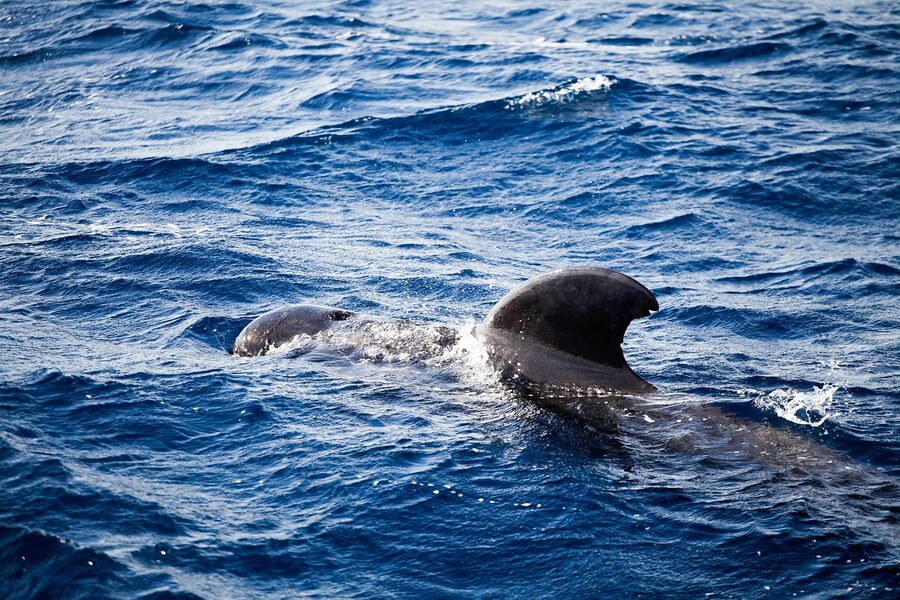
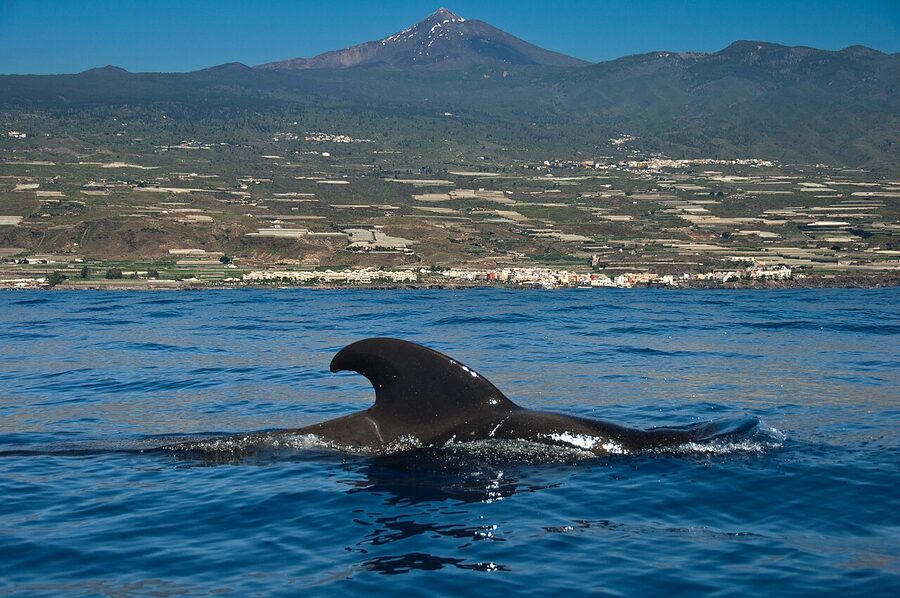
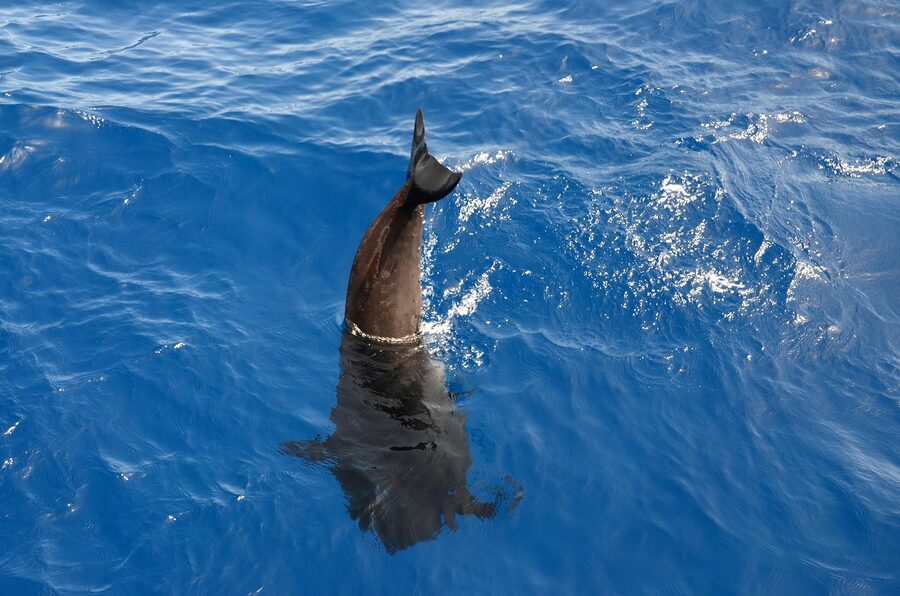
The first sighting is almost always a dorsal fin. Pilot whales don’t breach. They don’t slap the surface with their tails. They roll their backs out of the water for a slow breath, you see a triangular fin maybe sixty centimetres tall, and a black gleaming back the size of a small dolphin. Then they’re gone for two or three minutes. Then they come back up.
The skipper kills the engine. This is the move that separates the good operators from the bad. With the engine off, the boat drifts. The whales decide whether they want to come closer. Sometimes they do. A calf rolling at the surface, an adult coming up beam-on with one eye visible, a few clicks audible if the hull is right. Sometimes they don’t, and you watch dorsal fins thirty metres out for ten minutes and then they’re gone.
Either way, the next move on a reputable boat is to leave. Not to follow. Not to circle. The pod gets a thirty-minute break from boats per the local code, then someone else might come and watch for ten minutes. The whales don’t get crowded by twelve boats in a tight ring. That’s the whole game.
Pilot whale, dolphin, and what else you might see
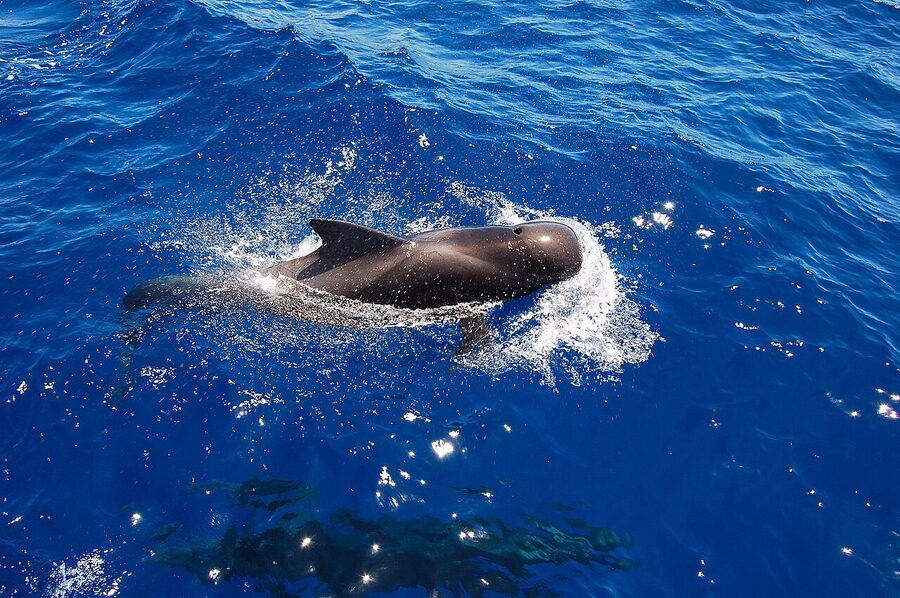
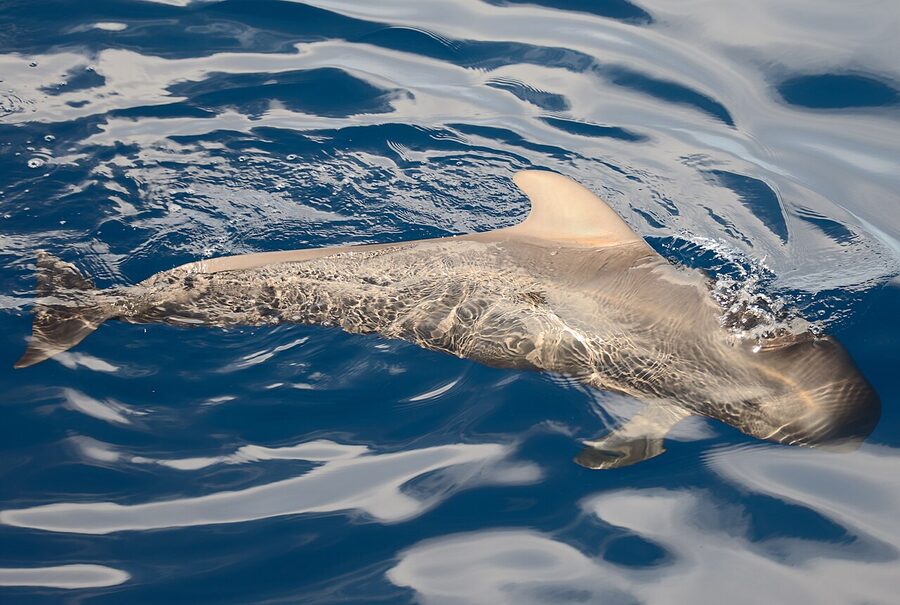
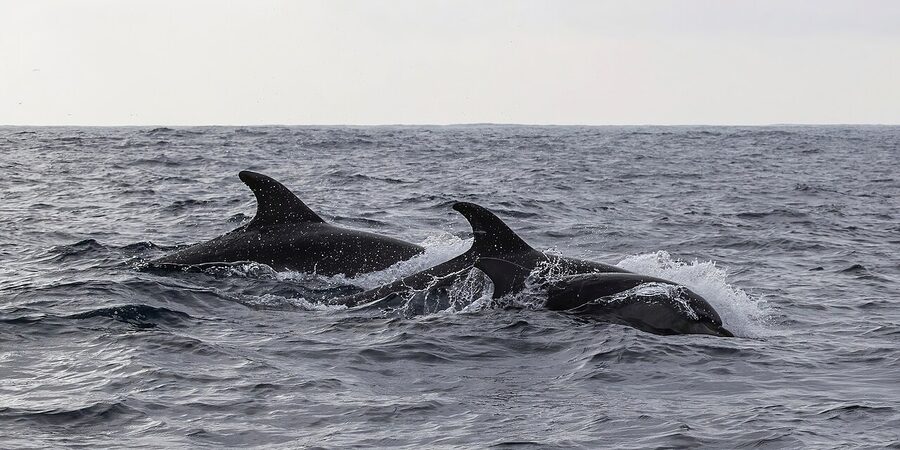
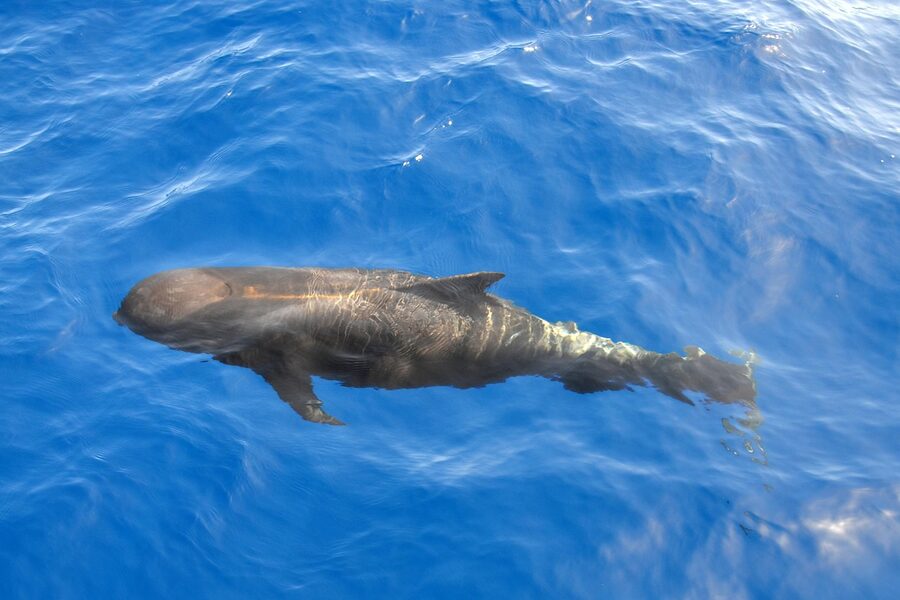
Short-finned pilot whale (Globicephala macrorhynchus). Up to 5.5 metres long, jet black with a slightly bulbous head, a low triangular fin set well forward on the back. Lives in matrilineal pods of five to thirty. They communicate constantly with whistles and clicks; if your skipper drops a hydrophone, you’ll hear it. They eat squid almost exclusively, hunting at depths of 600 to 1,000 metres, mostly at night. The “whale” in the name is misleading. Pilot whales are technically the second-largest dolphin species after the orca.
Common bottlenose dolphin (Tursiops truncatus). The dolphin you’ve seen on television. Three to four metres, grey, smiling-shaped face, regularly bow-rides boats. There’s a resident pod of about 150 around south-west Tenerife. They surface in groups of five to twenty, often racing the bow wake. If the pilot whales don’t show, the dolphins almost always do.
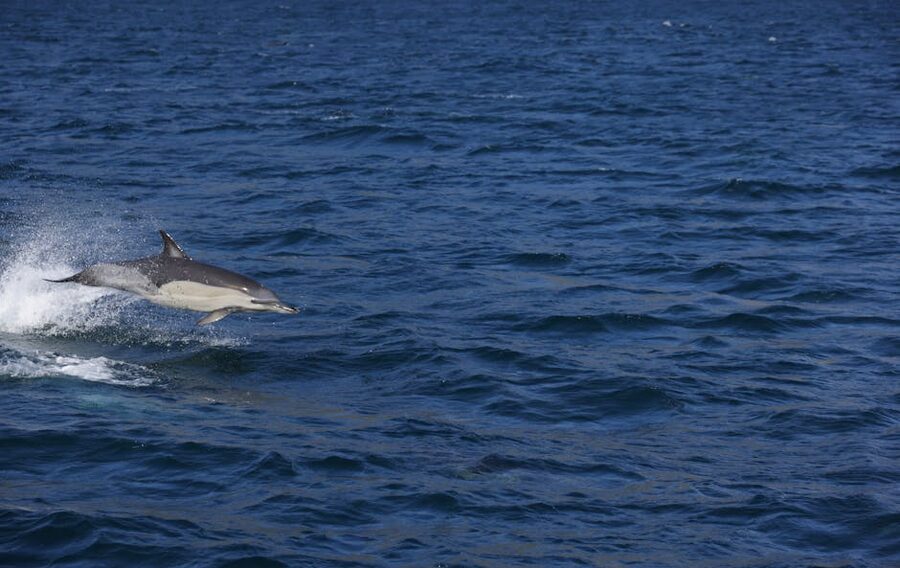
Atlantic spotted dolphin (Stenella frontalis). Smaller than the bottlenose, more spots as they age, fast and acrobatic. Less common but you can hit them.
Rough-toothed dolphin (Steno bredanensis). A weirder-looking species, longer beak, almost reptilian profile. A few resident here.
Bryde’s whale and sperm whale. Both pass through. Bryde’s stay deep, you see them as a long back rolling. Sperm whales are rarer and a once-in-a-trip thing if you’re lucky. Both are baleen-whale-or-toothed-whale events worth talking about for the rest of the holiday.
The other 15 species on the cetacean list are mostly transients (false killer whales, short-beaked commons, Risso’s dolphins, occasional fin whales). You’re not going to see them on a standard three-hour trip. But the resident pilot whale and bottlenose populations are functionally guaranteed, and most reputable operators offer a money-back guarantee if no sighting happens, because the resident populations effectively never disappear.
The captive-vs-wild question, briefly
You can fly to Tenerife and see cetaceans on the same holiday in two completely different settings. Off Los Cristianos you spot pilot whales free in 2,000 metres of ocean. Forty minutes north, at Loro Parque, a similar number of people watch orcas perform in a 22-million-litre tank. The contrast is uncomfortable to walk past without commenting on.
This isn’t a lecture. Loro Parque is also a serious conservation centre that runs successful breeding programmes for endangered parrots and that funds reef research. It’s not a single-villain story. But the orca tank exists, the orca shows still happen, and the difference between watching an orca breach a barrier wall on cue and watching a pilot whale glide past your hull at its own speed is real and worth thinking about for an hour.
If you do both in the same week (a lot of families do), the wild-side trip first is the right order. You go in with a sense of what these animals look like at rest in their own water, and you walk past the tanks afterwards already knowing what you’re looking at. The reverse order tends to make the harbour boat feel anticlimactic, which is the wrong shape for the experience.
Tenerife south-west versus Gran Canaria
The other Canary island that runs serious cetacean tours is Gran Canaria. Quick comparison: Tenerife is the better whale-watching island, Gran Canaria is the better dolphin-watching island. The 250-strong resident pilot whale group is on the Tenerife side. The bottlenose populations are roughly comparable. If you want a wider range of dolphin behaviour and slightly cheaper boats, the Gran Canaria dolphin cruise is the better trip. If you want the resident whales, you book on Tenerife.
You can’t easily do both in a single day. The flight or ferry between the two islands is most of the morning. Pick one, do it properly. Most travellers do Tenerife because the resident whales are the headline.
Best time of year (and why “season” is the wrong question)
People keep asking what the whale-watching season is on Tenerife. The straight answer is “all of it, year-round.” The pilot whales are residents. The bottlenose dolphins are residents. Sightings are not seasonal in the way they are off Iceland or off the New England coast.
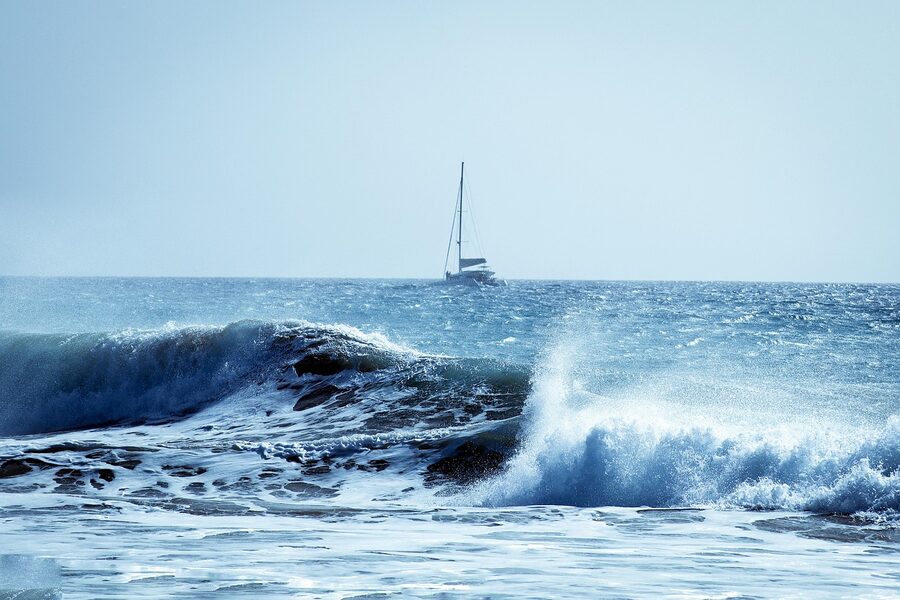
What is seasonal is the sea state. The trade winds (los alisios) blow from the north-east most of the year, and the south-west coast of Tenerife is sheltered from them by the bulk of the island and by Mount Teide. But on heavy-wind days, even the Cristianos and Los Gigantes coasts get choppy. November to April tends to be calmer overall (though winter Atlantic storms do happen). May to October is windier on average but with longer settled stretches.
If you’re prone to seasickness, the boat matters more than the month. The same is true on enclosed-water boats elsewhere, even on something as flat as an Amsterdam canal cruise, where the boat is steady but the wake from passing tour boats still bothers a few people. A bigger motor yacht handles chop better than a small sailboat. A three-hour trip out of Cristianos in a calm February swell is a different ride than the same trip in a windy August chop. Check the Marine Forecast for the south-west of Tenerife the morning of, ask the operator if conditions are normal, and don’t be afraid to reschedule.
December and January add a small bonus: pilot whale calves. Pilot whales calve year-round but with a peak in winter, so winter trips often spot mothers with very young calves rolling at the surface. The calf is the same colour as the adults but maybe a metre long. If the skipper points one out, that’s the photo of the trip.
What to bring (and what not to)
Three hours at sea on the south-west coast of Tenerife is more demanding than people expect.
Sun cream you actually applied an hour before boarding, not the one in your bag. The reflection off the Atlantic at noon makes Tenerife sun about 30% stronger than the same sun on the beach. People come back from boat trips redder than from beach days. Bring a hat that won’t blow off. Sunglasses with a strap.
A windbreaker or thin jumper. Even in August. The sea breeze on a boat moving at 15 knots feels colder than the harbour temperature suggested.
Closed shoes or boat-grip sandals. Decks get wet. Flip-flops are a bad idea.
Anti-seasickness tablet ninety minutes before sailing if you’re at all prone. The boats don’t sell them. The Cristianos pharmacy on the main street does. Cinnarizine works for most people, dimenhydrinate for the rest. Take it with food.
A real camera if you have one, but the phone is fine. Pilot whales are slow surface animals, you don’t need a 600mm lens. A phone with a decent zoom and the burst mode set will get the dorsal-fin shot.
Water you brought yourself. Even on the boats with drinks included, three hours of sun is more dehydrating than people plan for. A litre per person on board, minimum.
Don’t bring: drone (banned in the marine reserve), single-use plastic snacks, the expectation of breaching humpbacks. The animals here don’t perform.
The real disappointments to expect
The animals don’t perform. If your reference for whale watching is YouTube footage of humpbacks slapping the water in Alaska, you’ll find Tenerife pilot whales underwhelming for the first ten minutes. Then you adjust to the slow-roll surfacing rhythm and it becomes the point. Manage your expectations going in.
Crowded harbours. Cristianos at 9am has six boats loading at the same dock. It’s a process. Build in twenty minutes for confusion finding your specific operator’s sign.
Choppy days. Even on the calmer south-west coast, a windy day can mean a rolly three hours where half the boat is feeling green by minute thirty. There’s no “perfect” sea-state guarantee. The operators can sail in conditions that aren’t fun, and they often do because the cancellation cost is high.
The bigger boats are bigger. A 60-person catamaran with a bar on the lower deck is not a quiet, intimate wildlife experience. It’s a boat trip with whale sightings as a perk. If you want the wildlife to be the point, book the smaller sailboat or motor yacht (the $77 or $88 options above), not the cheapest catamaran party boat with the open bar.
The “swim with dolphins” promise. Some boats include a swim stop. You will not swim with the wild pilot whales (the rules forbid it) and the bottlenose pod usually doesn’t come close enough on a swim stop. The swim is in a calm cove with snorkel gear and the chance of fish. Treat it as a separate good thing, not as part of the whale-watching.
Pairing the trip with the rest of your Tenerife day
Three hours on a boat from Cristianos puts you back on dry land around midday. You have the rest of the day. Two combinations work well, and one is a mistake.
Whale watching morning, Mount Teide tour evening. This is the strongest pairing. You do the resident pod in the morning when the sea is usually calmer, drive up to Teide National Park in the afternoon, catch the cable car for sunset at 3,555 metres, and stay for the stargazing once it’s dark. Sea-level whales to summit-level stars in one twelve-hour day. Best Tenerife day you can buy.
Whale watching morning, Siam Park afternoon. The water park is right above Cristianos, fifteen minutes away. Kids who watched whales for three hours in the morning genuinely get more out of the slides than they would have on day one of the holiday. The mental geography lines up: deep water in the morning, manmade water in the afternoon. Different vibe, same coast.
Whale watching morning, Loro Parque afternoon. This is the mistake. Loro Parque is a forty-five-minute drive across the island, the orca show runs at fixed times that may not line up with your boat return, and the wild-then-captive sequence is jarring in the wrong direction. If you’re doing both, do them on different days.
If you’ve come to Tenerife for the marine wildlife specifically, the other natural-water trip worth the time is the kayak-and-snorkel-with-turtles half-day off Las Galletas. Loggerhead turtles in shallow water, kayak-level. Different scale, same coastline.
Booking practicalities
Book ahead in school holidays. Easter, summer, Christmas weeks fill the popular boats four to seven days in advance. Off-season you can book the morning of.
Pick the morning slot if you can. The wind tends to come up after lunch, the sea state is usually calmer at 9am than at 2pm, and the light for photographs is softer. The afternoon slots are not bad, just rougher on average.
Confirm the meeting point. Cristianos has multiple docks. Puerto Colón has multiple piers. The booking confirmation should give you a specific pier letter or boat name, ask if it doesn’t.
Check what’s included. “Drinks and snacks” can mean a bottle of water and a packet of crisps, or it can mean an actual bar and sandwiches. The price-to-quality jump from the $17 pirate boat to the $77 motor yacht is mostly food, drink, and group size.
The money-back guarantee is real but conditional. Most operators promise a refund or a free re-trip if you don’t sight a cetacean. They define “sighting” loosely (a far-off dorsal fin counts) and the refund process is slower than the marketing suggests. Treat it as insurance, not a likely outcome. Sightings happen on more than 95% of trips on this coast.
Cancellation in chop. Operators rarely cancel for sea state, even when they should. If you booked through a platform and the morning of is genuinely choppy, ring them and ask about rebooking. Most will move you a day for free if the weather is borderline.
Where this fits in the bigger Spain marine-tour story
The Tenerife resident pilot whale population is one of three serious cetacean experiences on the Spanish coastline. The Strait of Gibraltar (off Tarifa) is the second, with orcas that follow the bluefin tuna migration from June to August. The Galician rías are the third, with deeper-water trips out of A Coruña. None of them have the Tenerife combination of year-round residents plus 20 metres of cliff line over a 2,000-metre trench. That’s why the south-west of Tenerife is the EU’s best operational whale-watching coast, not Iceland or the Azores (which both have spectacular but seasonal experiences). At the urban end of the European boat-tour spectrum, a Rotterdam harbour cruise shows you the largest port in Europe with industrial scale instead of wildlife, but it’s the same instinct: you go out on the water to see something you can’t see from land.
If marine animals are a holiday theme rather than a single afternoon’s choice, the rest of Spain’s water-and-fish circuit fills in nicely around this trip. The Barcelona Aquarium has the Mediterranean shark tunnel, the Valencia Oceanographic is the largest aquarium in Europe, and the boat-into-marine-environment angle has its strongest non-Canary version on the Italian side, with the Genoa Aquarium for cold-water tanks and the Capri boat tour from Naples or the Polignano a Mare cruise for the Mediterranean equivalent of “your boat goes to the wildlife.” The La Maddalena archipelago boat in Sardinia and a catamaran from Barcelona are both more about coastline than wildlife but they round out the marine itinerary nicely. On the French Mediterranean side, an Ajaccio boat tour out into the Sanguinaires gulf is the closest direct equivalent in cetacean-rich open water, and the short Sainte-Marguerite ferry from Cannes covers the same Mediterranean island-and-boat instinct on a much shorter trip. None of them are pilot whales free in 2,000 metres of water. That’s the thing Tenerife has that the others don’t.
One last note on the sound
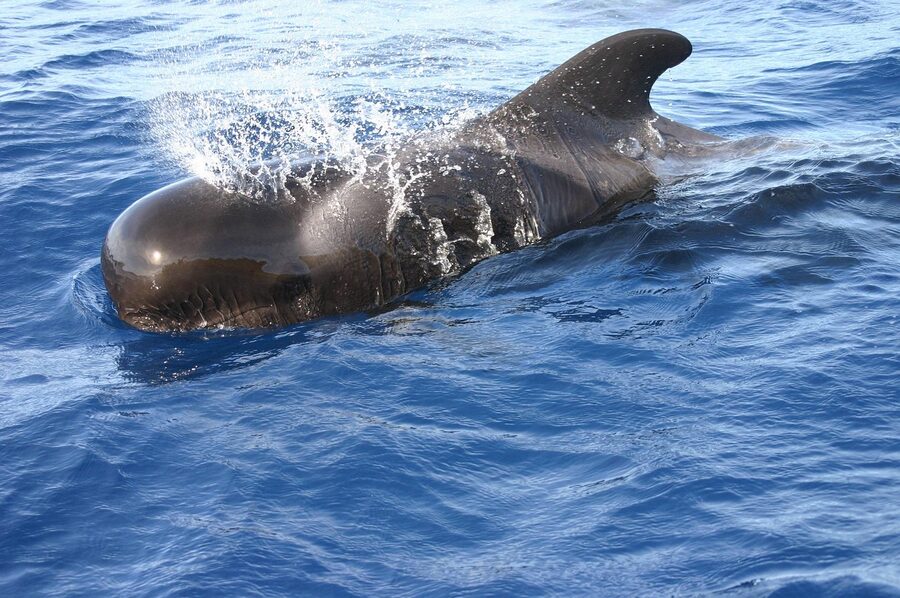
The thing nobody warns you about is the sound. With the engine off and twelve people on a boat collectively holding their breath, what you actually hear when a pilot whale surfaces thirty metres away is the blow. A wet, slow exhale, almost cow-like. Then a pause. Then the next animal, behind you, blows. Then a third. You’re surrounded for maybe forty seconds and then they’re under again and you hear nothing but water.
That’s the bit that travels home with you. Not the dorsal-fin photo on your phone. The forty seconds of breathing in stereo, with twelve strangers and a skipper all silent, drifting over 2,000 metres of empty Atlantic, while a family of resident animals decides whether your boat is interesting or not.
Book the boat that lets you hear it. The $77 motor yacht and the $88 sailboat both will. The cheapest cattle catamaran will not. Spend the difference.