
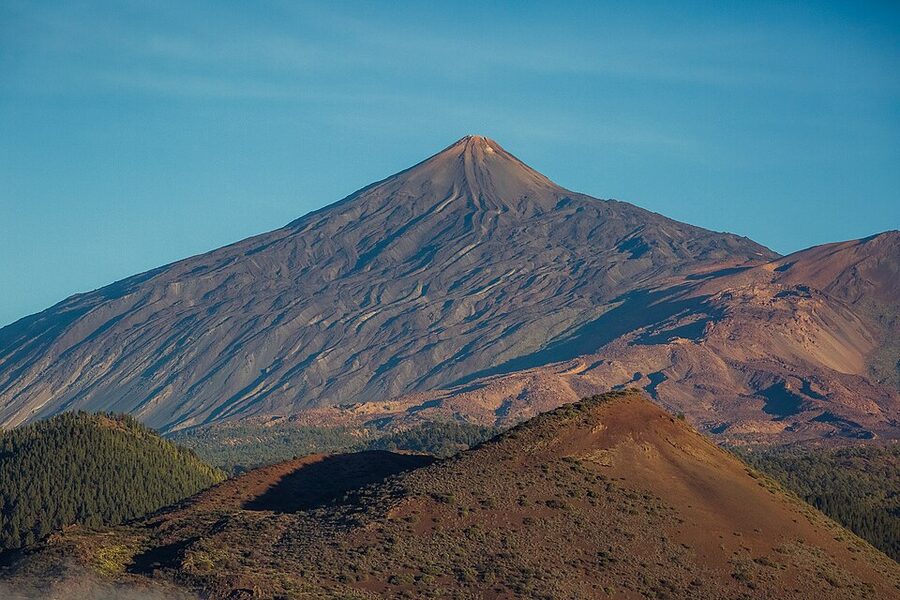
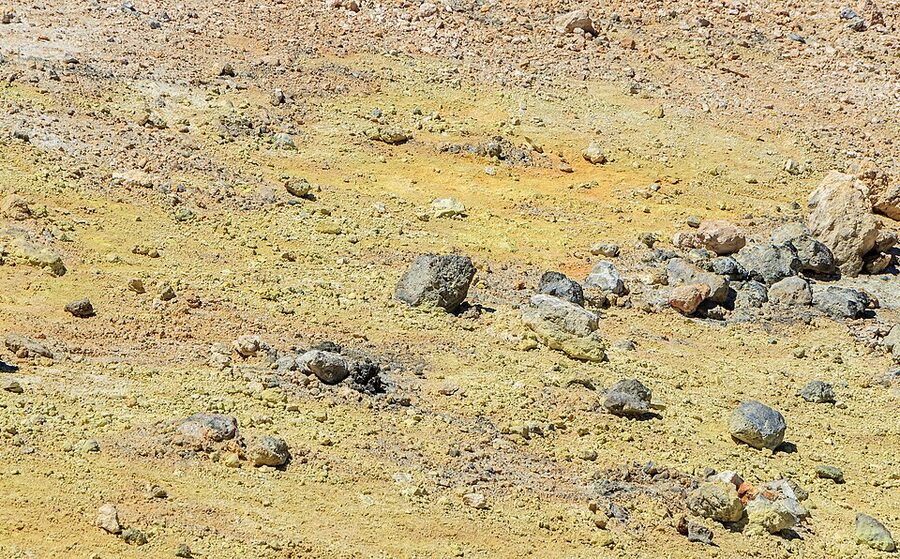
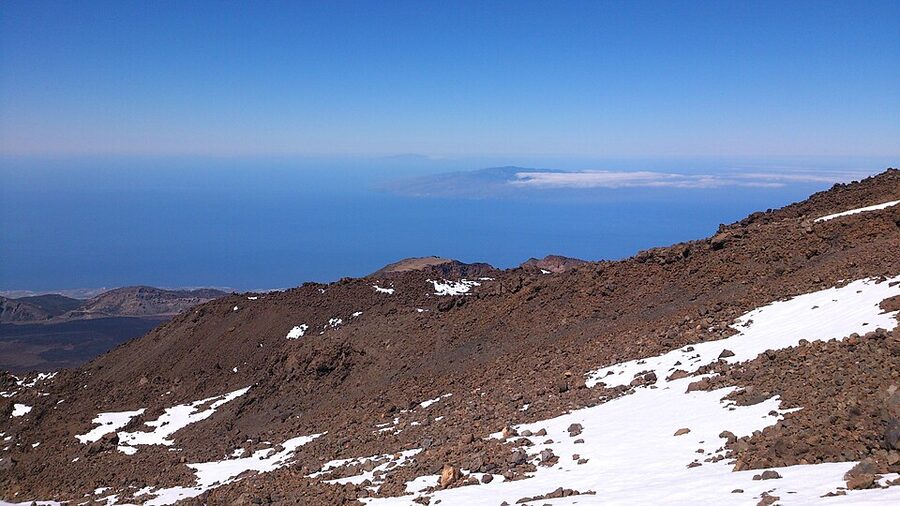
The cable car doors slide open at 3,555 metres and the temperature drops about fifteen degrees in two seconds. Wind. Sulphur, faintly. To the west, the Atlantic is a sheet of beaten copper. To the east, a slow-moving sea of cloud sits about a kilometre below your boots, and the shadow of Teide is laid across it like a long dark triangle pointing at La Palma. The sun is twenty minutes from the horizon. In another forty, the first stars will start coming through behind you over the Pico Viejo crater, and you’ll remember that this is, depending on how you count, the third-best stargazing site on the planet.
Most people on Tenerife only get the half of this. They take the cable car at midday, take the photo, and ride down. The actual experience, the one that’s worth flying to a Canary Island for, is the evening one. So that’s where this guide leads.
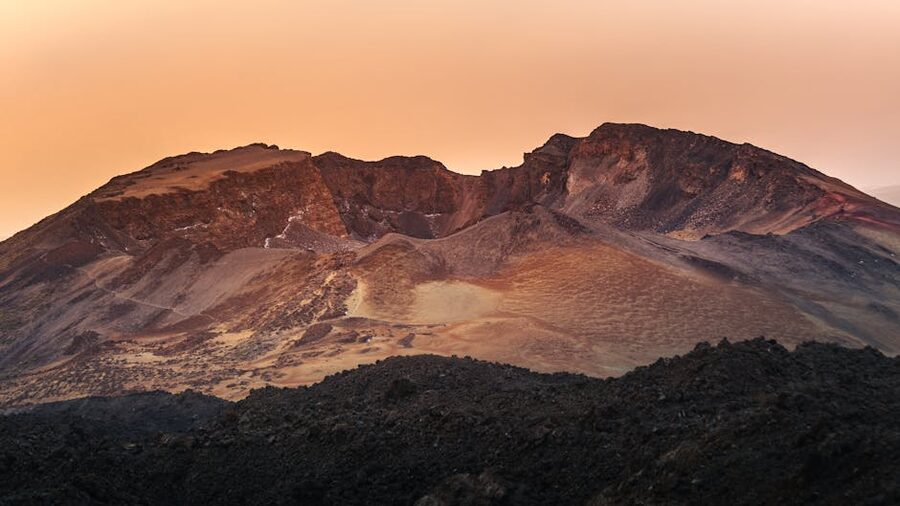
In a hurry? The three Teide tours worth booking
- Sunset and Stargazing at Teide National Park ($47): the alternate evening tour, smaller groups, the best-rated of the three. Book this one if you can. Check availability.
- Teide National Park Sunset & Stargazing Tour ($47): the flagship evening tour, the one most travellers end up on, with telescope time and a meal stop on the way back. Check availability.
- Mount Teide Tour With Cable Car & Transfer ($102): the daytime version with hotel transport plus the cable car ticket pre-booked, useful if you can’t get the evening dates or you want the view at noon. Check availability.
Why the evening tour is the one to book
Teide National Park has been a UNESCO World Heritage Site since 2007, and a UNESCO Starlight Reserve since 2014. That second one matters more than people realise. The Starlight designation isn’t a marketing line. It’s a formal certification covering light pollution, atmospheric stability, the share of clear nights per year, and a few other things astronomers care about. There are essentially three places on Earth where professional observatories cluster for that combination of reasons: Mauna Kea in Hawaii, the high Atacama in Chile, and here. The Teide Observatory has been operating on the eastern flank of the volcano since 1959.
What that means for you, with no telescope and no astronomy training, is that on a clear night above the cloud layer you can see things with your unaided eye that look fake the first time. The Milky Way isn’t a smudge. It’s a band, with structure, with the dark dust lanes visible. M31, Andromeda, looks like a smear of pale light the size of a fingernail held at arm’s length. On a moonless night the Beehive Cluster is a small soft cloud just above the horns of Cancer. You don’t need any of this explained to be staggered by it. The good guides will explain it anyway.
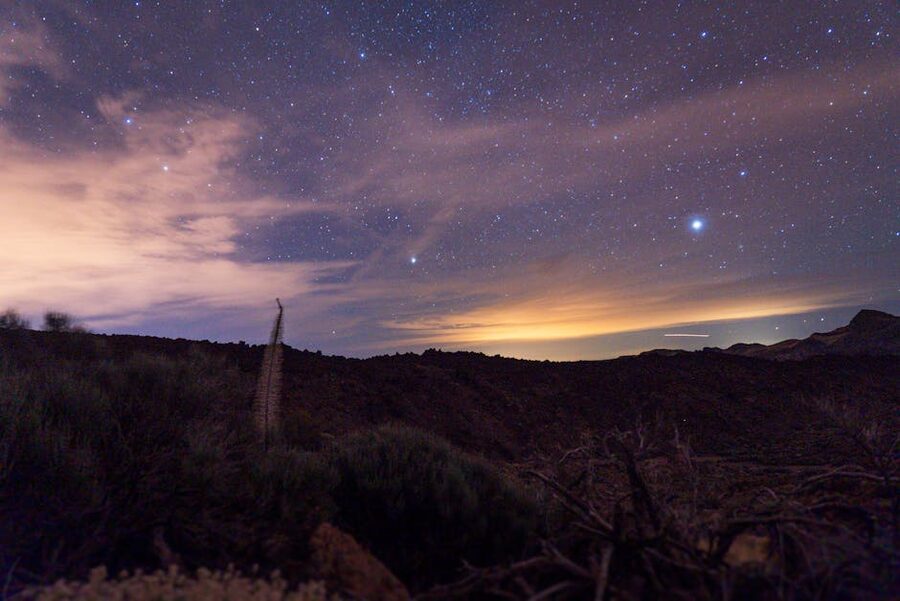
The daytime experience is good. The evening one is in a different category, which is why the most-booked Teide products on the market are the sunset-and-stargazing combos rather than the cable-car-only options. If you have a choice between the daytime tour and the evening tour, take the evening one. The cable car part of the daytime trip can be replicated by a rental car for €23.50 round trip; the stargazing part can’t be replicated by anything cheaper than booking a separate astronomy experience back on the coast, which won’t be at altitude and won’t have the sky.
What you actually do, hour by hour
The standard Sunset & Stargazing tour from the south coast (Costa Adeje, Playa de las Américas, Los Cristianos) is a five to six hour evening. Pickup is normally between 2pm and 4pm depending on the season and the sunset time. From the resort strip, the bus climbs the TF-1 motorway to Vilaflor, the highest village in Spain at 1,400m, and then up the TF-21 through pine forest into the caldera.
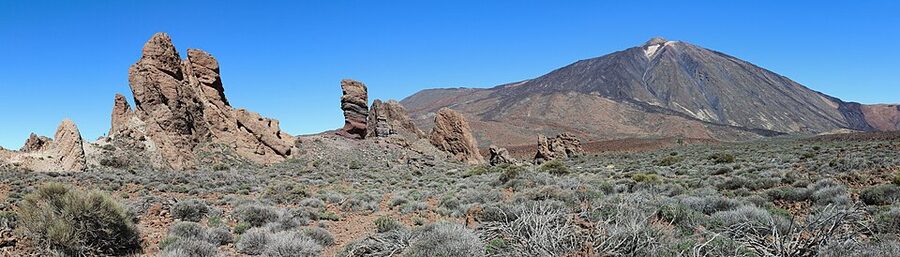
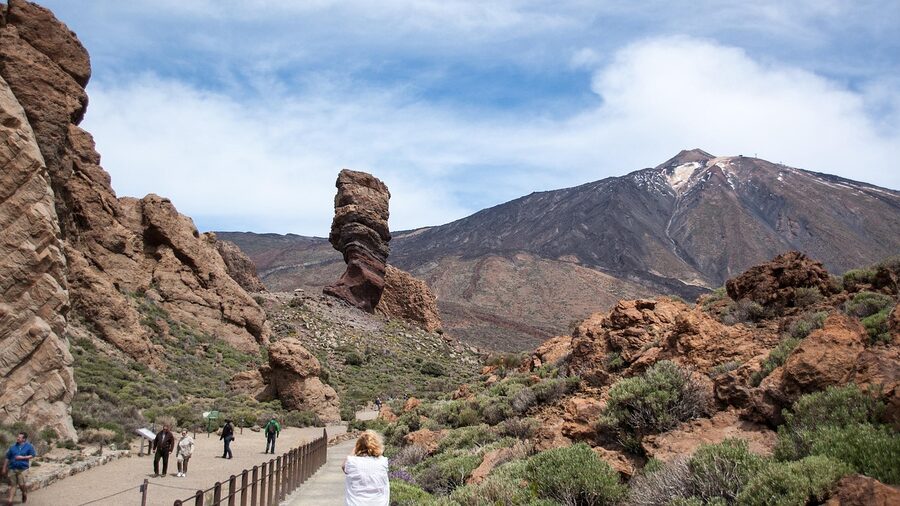
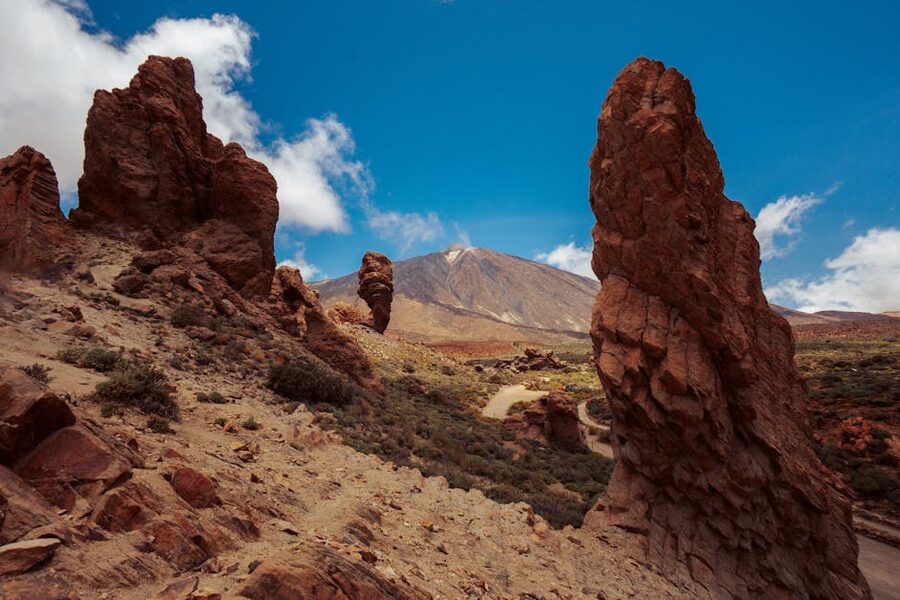
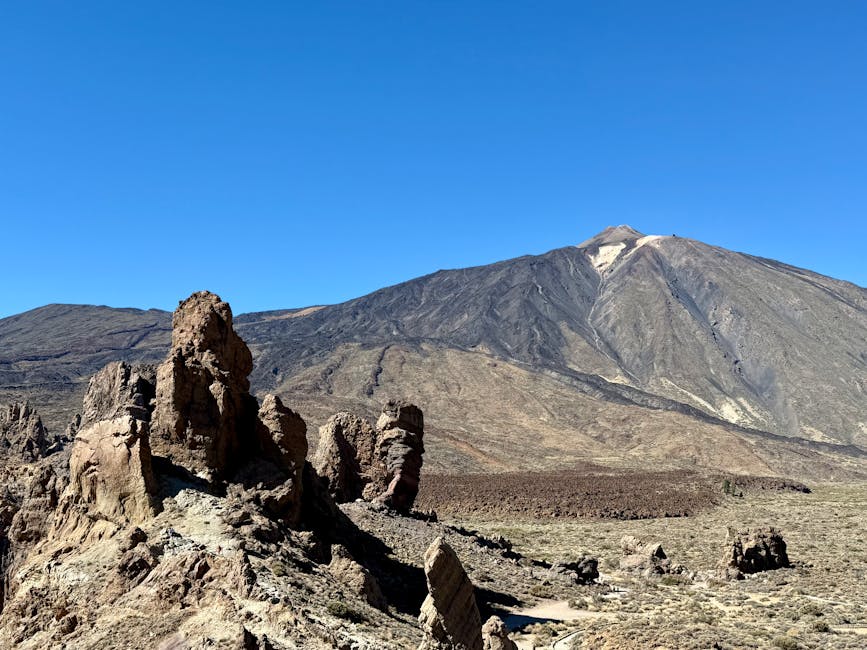
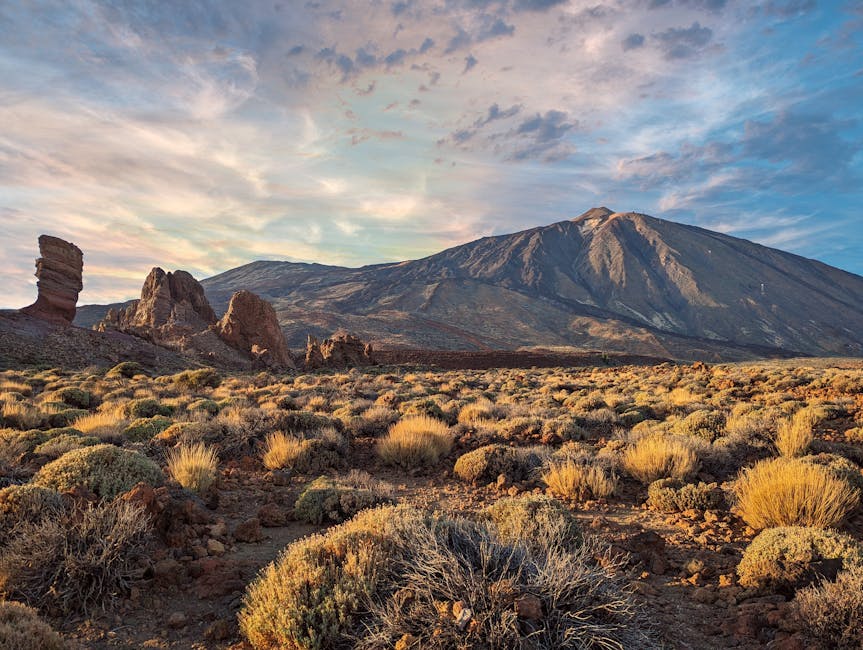
The first proper stop is usually Roques de García, the rock formations on the floor of the caldera. This is where the famous Roque Cinchado sits, the slim balanced rock that used to be on the back of the old 1,000-peseta note. Most tours give you 30 to 45 minutes here for the short loop walk. It’s worth doing even if you’ve seen it on Google Image search, because the scale of the caldera floor only registers when you’re standing in it. Las Cañadas is 17 kilometres wide, and you can see most of that from the path.
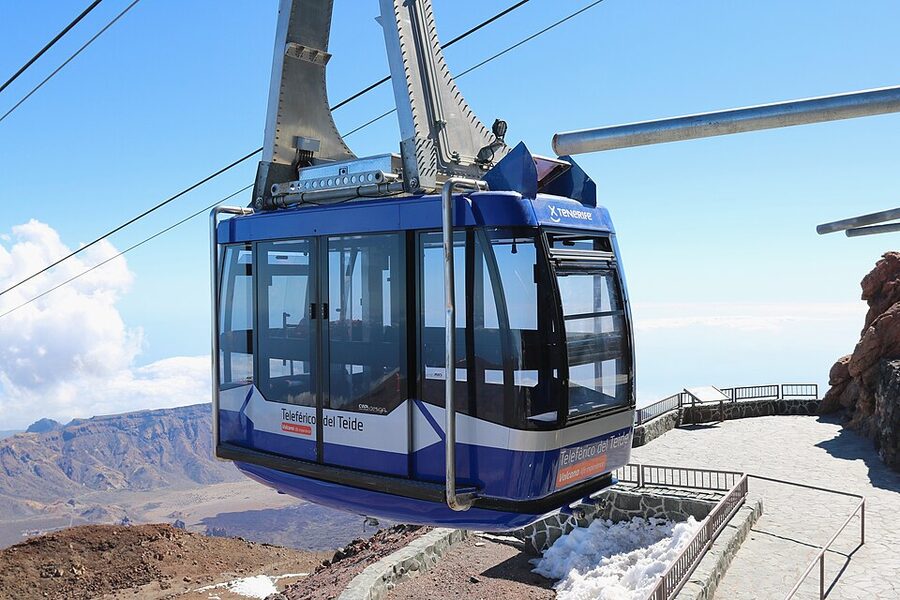
From there it’s a short drive to the cable car base station at 2,356m. Here’s where the tour structure starts to vary. Some operators include the cable car in the price, some make it an optional add-on of around €25, some skip it entirely and run the sunset stop from a viewpoint at the base. If the cable car is offered, take it. The view from the top, at 3,555m, is genuinely different from the view at 2,356m, and the eight-minute ride up the cable is part of the experience. You’re crossing some of the steepest unforested terrain in Spain.
The cable car was built in 1971 and refurbished a few years ago. The carriages each hold around 35 people. They run roughly every ten minutes during operating hours, which are 9am to 5pm with the last ride down at 5:50pm. Sunset tours typically time the upper-station visit so that you’re at the top during the golden hour and on the cable car coming down at last light. That timing is half the reason the evening tour is structured the way it is.
About the summit, and the permit nobody mentions
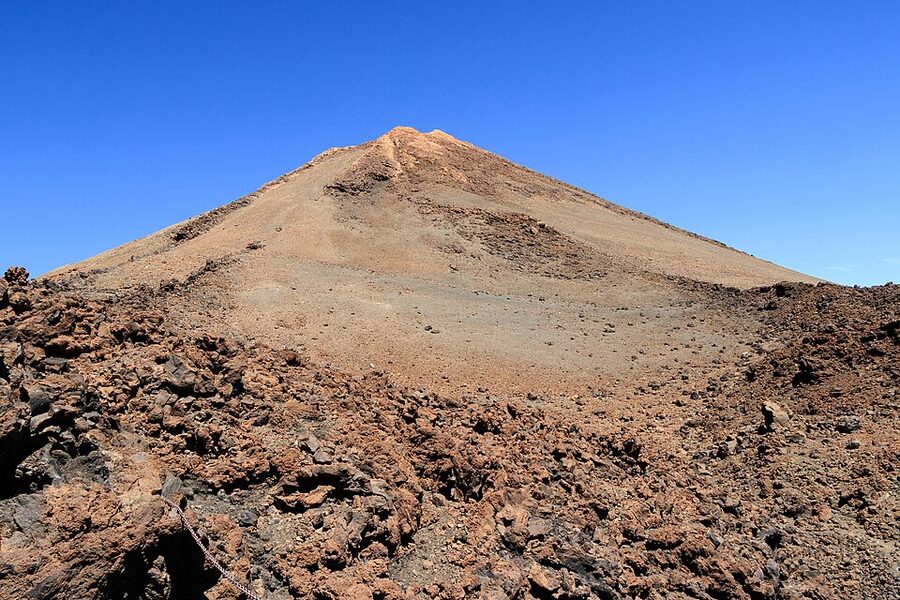
Here’s the thing tour pages tend to bury. The cable car upper station at 3,555m is not the actual summit. The summit, the geographical 3,718m peak of Teide itself, is another 200 vertical metres up a marked footpath called Telesforo Bravo. Walking that final stretch requires a free permit you book online through the parques nacionales website, two to three months ahead. They issue around 200 a day in two-hour slots, and they sell out.
If you don’t have the permit, you can still walk the two short trails from the upper station that don’t go to the peak: the Mirador de La Fortaleza trail north (about 30 minutes round trip, north-facing view over the rest of the island), and the Mirador de Pico Viejo trail west (about 40 minutes round trip, view of the Pico Viejo crater, which is the ear-shaped 800m-wide hole next to Teide). Both of these are short, paved, and at altitude. Take them slowly.
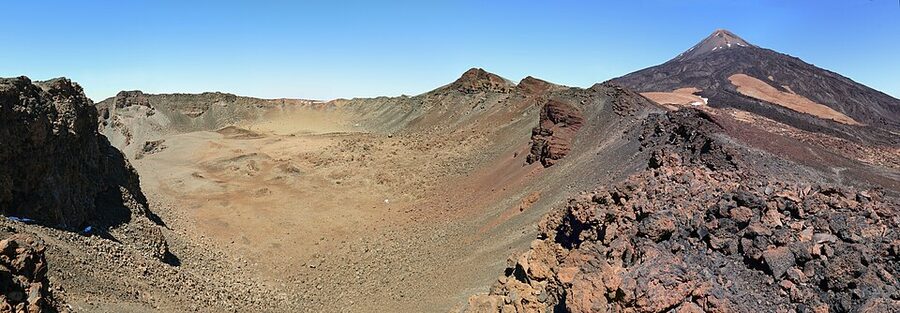
About the altitude. Most of the people coming up have been at sea level for a week. 3,555m is roughly the height of the highest village in the Indian Himalayas where altitude sickness is a real risk for tourists. Reactions vary wildly. Some people feel nothing. Some get a headache and a slightly drunk feeling. A few feel actually unwell and should ride the cable car back down. Drink water on the way up. Don’t run. If you smoke, this is not the day.
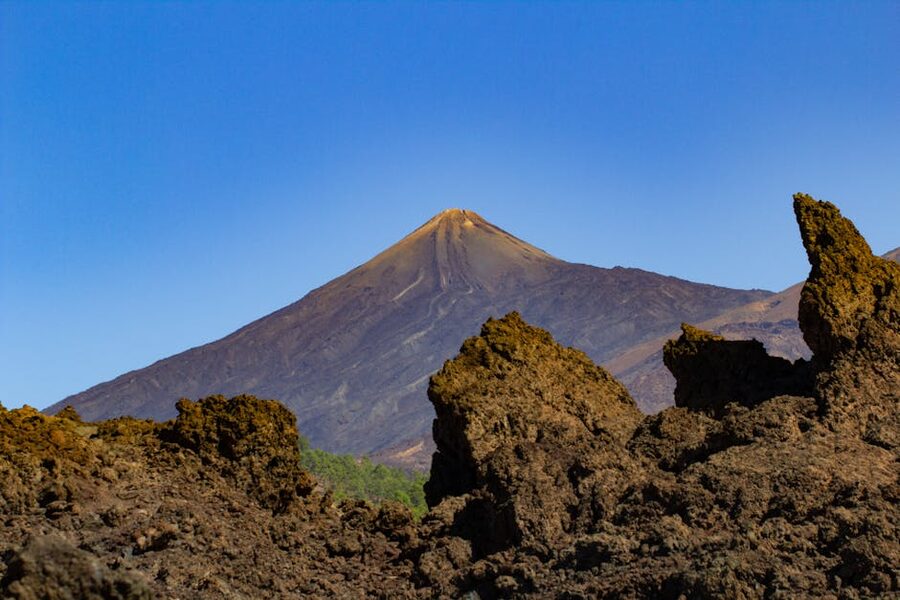
The other thing nobody mentions: the summit is the third-highest volcano on Earth measured from its base. The base, in this case, is the Atlantic Ocean floor, about 3,800m below sea level. From the seabed to the summit, Teide rises 7,500m, which puts it behind only Mauna Kea and Mauna Loa on Hawaii. From a tectonic perspective the whole island of Tenerife is just the top of one very large stratovolcano.
What to pack, what to wear
The temperature drop from coast to summit on Tenerife is real and consistent. As a working number, 10 to 15°C colder at 3,555m than at the resort strip in Los Cristianos, regardless of season. In summer that’s 17°C at the top while it’s 28°C on the beach. In winter that’s freezing temperatures and snow at the top while you’re in shorts at the hotel. Photos of Teide with a snow-capped peak above palm trees on the coast are not staged. That’s January.
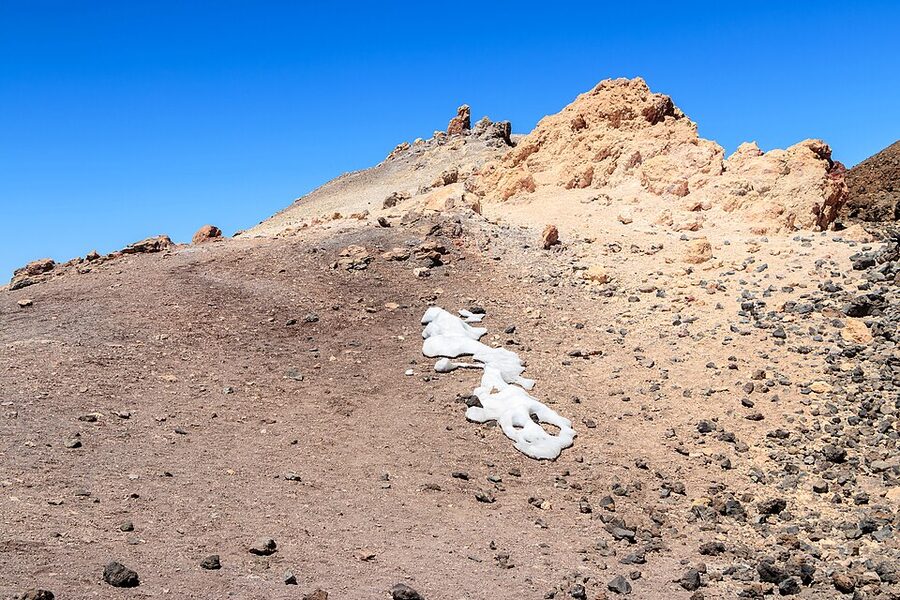
So: layers. A T-shirt is not enough at the top, ever. The basic kit for the evening tour is a fleece or warm sweater, a windproof jacket, long trousers, closed shoes (not sandals), and a hat. If you’re going in winter, add gloves and a thermal layer. The good tour operators provide a warm jacket as part of the package, but I’d still bring my own. If you’re cold for the stargazing portion, the experience suffers.
The other thing worth bringing: a head torch with a red-light setting, if you have one. Red light doesn’t ruin your night vision the way white phone-screen light does. Most tours provide one, but a personal torch is useful for finding things in your bag.
The sunset, in technical detail
You’re standing roughly two kilometres above the trade-wind cloud layer that sits over the lower slopes of Tenerife year-round. That layer, called the mar de nubes or sea of clouds, forms because the cool, moist trade winds from the north-east hit the island and rise, condensing at around 1,000 to 1,500m. From below it’s a low grey overcast. From above, it looks exactly like an ocean. White, lumpy, going to the horizon, with the peaks of La Gomera, La Palma and El Hierro poking through it like other islands.
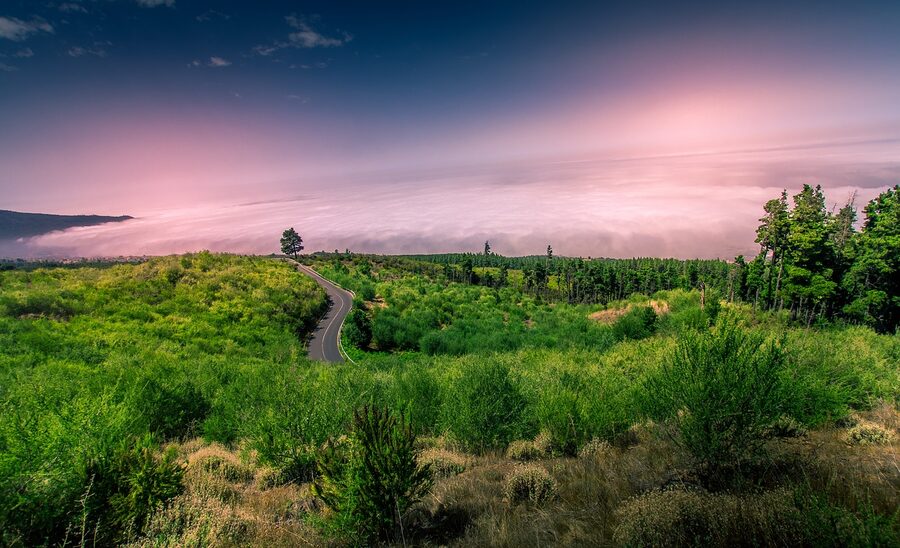
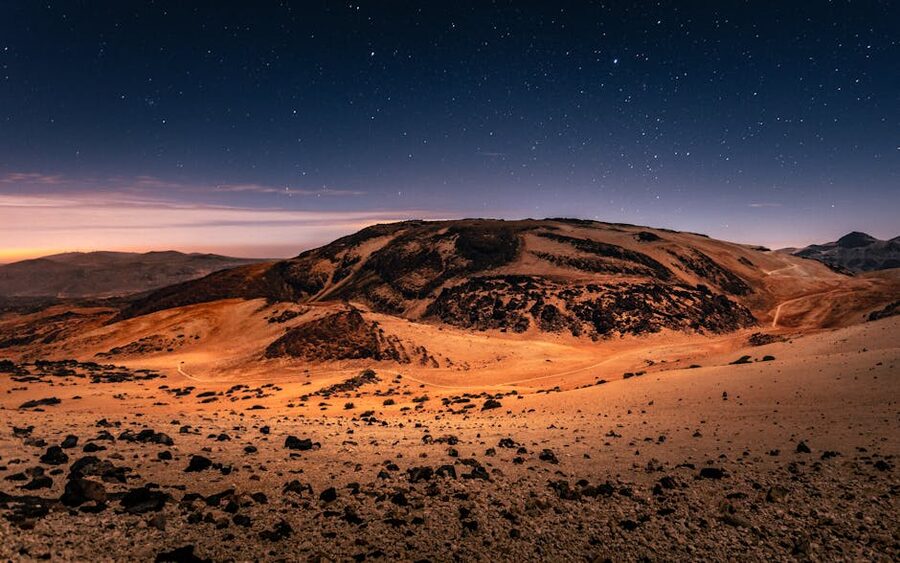
For about 15 minutes either side of sunset, the shadow of Teide projects east onto the cloud layer as a perfect dark triangle. This is one of the most photographed natural phenomena in Spain. It’s at its sharpest in summer when the air is dry and stable. In winter, with more humidity and changing cloud height, the shadow is softer but the colours behind the cone are usually richer. Either way, the moment lasts about ten minutes and then the sky goes purple and the temperature drops another five degrees.
If your camera handles low light, this is the time to use it. Phone cameras struggle with the dynamic range, the bright sky against the dark cloud sea, and you’ll come away with overexposed sky or underexposed ground. Most modern phones do better in their dedicated night mode after the sun is down. The blue hour, about 20 minutes after actual sunset, is when the cone takes on a deep blue and the western Atlantic still has a band of warm light on the horizon. That’s the best phone-photo window.
The stargazing portion
After the cable car comes back down at last light (around 7pm in winter, 9pm in midsummer), the bus drives out of the cable car parking and onto a stretch of the TF-21 with much less light. The exact stargazing stop varies by operator. The two most common are El Portillo at the eastern entrance to the caldera, and a pull-off near the Mirador de Chipeque on the way down towards the coast. Both have unobstructed dark sky and are far from any settlement.
The guide sets up two or three telescopes, usually a Dobsonian reflector and a smaller refractor or two. You’ll typically see between five and eight objects depending on the season: planets if any are up, the Moon if it’s the early-month thin crescent, a few of the showpiece deep-sky objects like the Andromeda Galaxy, the Orion Nebula in winter, the Hercules Globular Cluster in summer, the Ring Nebula on a good night.
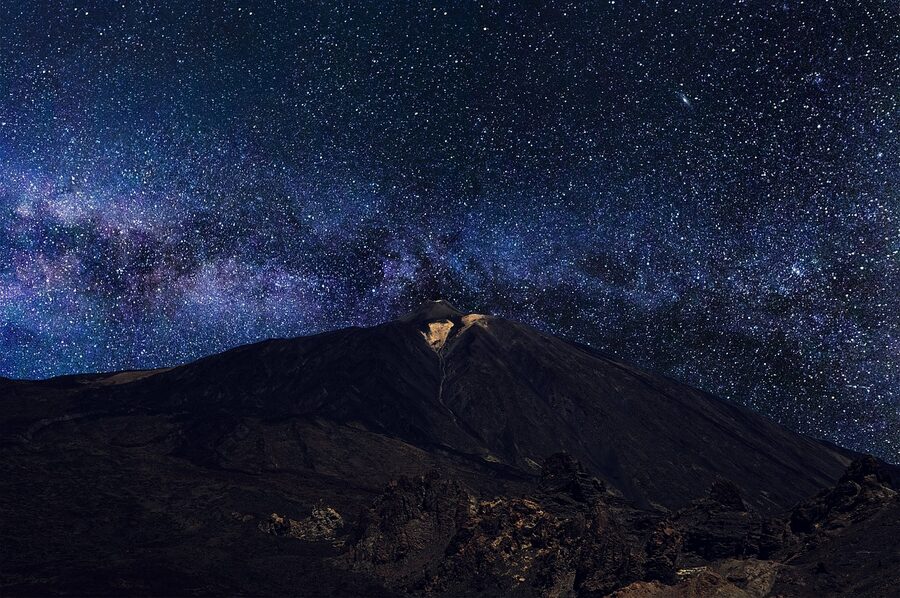
The thing the guides do well, in my experience, is laser-pointing constellations. A green laser pointer at altitude with no haze can show you the actual line of stars that makes up Cassiopeia or Cygnus or the Summer Triangle, in real time, while explaining why. After two minutes you can identify five constellations on your own. After an hour you can find them again next time you look up at any sky. That skill stays with you. The closest indoor sky-and-light analogue in northern Europe is probably the Fabrique des Lumières in Amsterdam, where projected immersive light fills a former warehouse and gives you a small synthetic taste of what the real Teide sky does on a moonless night.
Two caveats worth flagging. First, the experience is weather-dependent. Most reputable operators will reschedule you for free if the night is overcast, but a few only refund half. Read the cancellation terms. Second, around the full moon, deep-sky objects wash out completely. The Milky Way is barely visible. Stars are dimmer. If your dates allow, book a date within seven days of new moon, not full moon. The difference is substantial.
The three Teide tours we’d actually book
1. Sunset and Stargazing at Teide National Park: $47
This is the one I’d book first: smaller groups, photographer-led, with the rating sitting well above the flagship. Our full review covers the photography element and what’s included on the meal stop. The starting point in Adeje works well from any south-coast resort.
2. Teide National Park Sunset & Stargazing Tour: $47
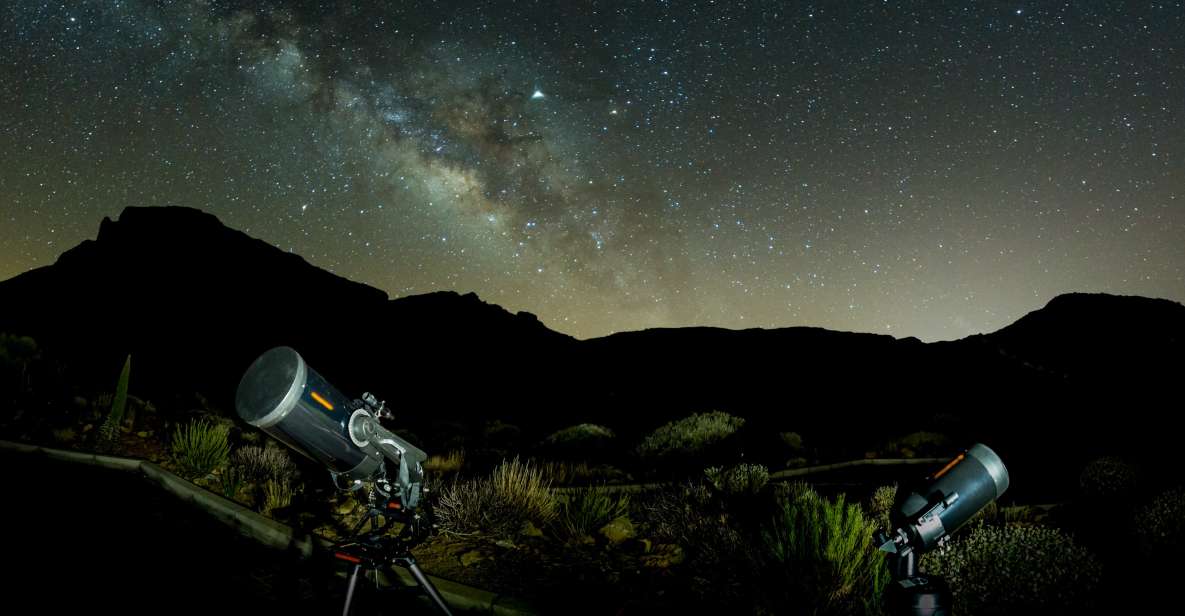
The flagship sunset-and-stargazing product, and the most-booked Teide evening tour on the market. Our full review details the meal-stop arrangements and the language groups. Pick this one if the photography-tour dates don’t line up.
3. Mount Teide Tour With Cable Car & Transfer: $102
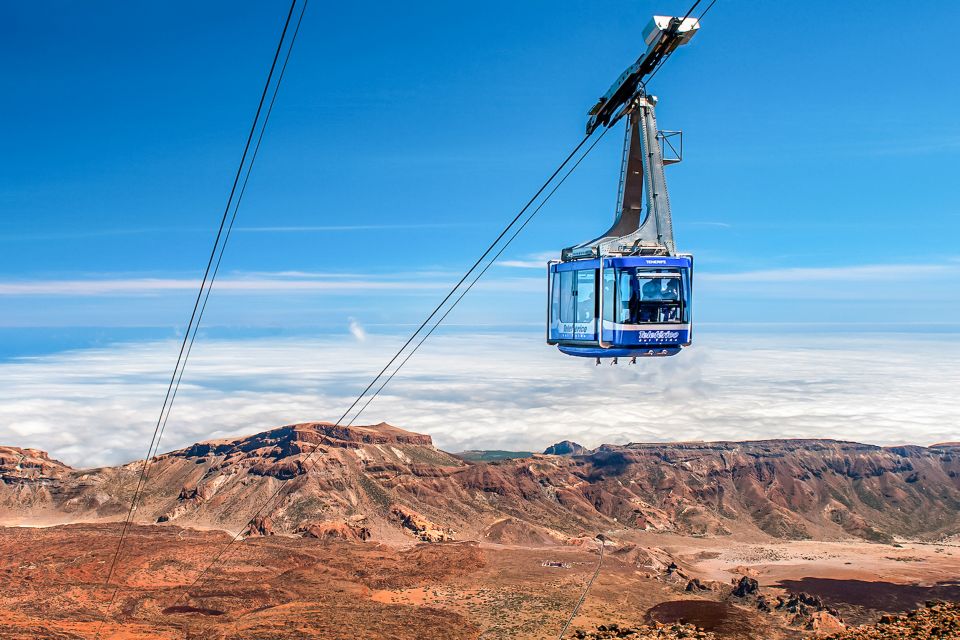
The daytime version, with the cable car ticket pre-included and hotel transport from the south coast. Our full review walks through the stops in order and the lunch arrangement. Twice the price of the evening trip and worth less, so book it only if the evening tour can’t work for your dates.
Doing it independently with a rental car
You can drive yourself, and for some travellers it’s the better choice. Tenerife rental cars are cheap, around €25 to €40 a day for a small economy car off-season. The drive from the south coast resort strip to the cable car parking is about 90 minutes via the TF-1 motorway and the TF-21 mountain road. From the north (Puerto de la Cruz, Santa Cruz) it’s similar, via the TF-5 and TF-24.
The cable car ticket alone, without any tour, is €23.50 each way for non-residents (€47 round trip), bookable online through volcanoteide.com. Book the cable car ticket online before you go, the on-the-day queue can be over an hour in peak season and they limit the number of carriages. Slot times are issued by the website.
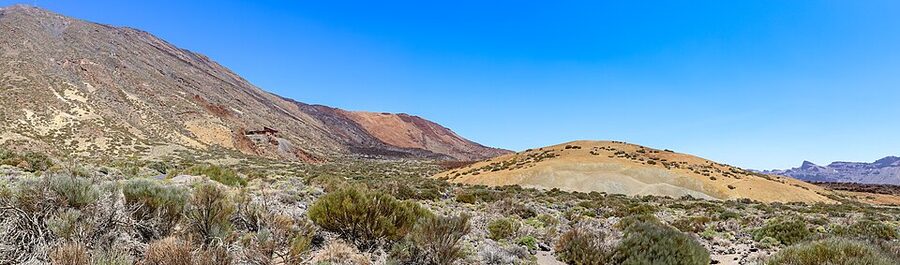
Driving has two practical advantages over the tour. You can leave when you want, which matters if you’re chasing a particular cloud condition for the photos, and you can stop at the smaller mirador pull-offs that organised tours skip. The four worth looking up are the Mirador de la Tarta on the way up (named for the layered red and white volcanic strata, like a sponge cake), the Mirador de las Narices del Teide on the western side (the most-photographed view of Pico Viejo), the Roques de García if your tour misses it, and the Mirador de Chipeque on the way down for sunset over the cloud sea.
The disadvantages of driving: you don’t get the astronomy guide and telescope time, you can’t drink anything before the descent, and the descent road in the dark is genuinely tricky if you’re not used to mountain switchbacks. Most travellers I know who started off planning to drive ended up booking the evening tour instead, especially after the first time they did the descent at midnight on a foggy night and decided it was not worth saving €47.
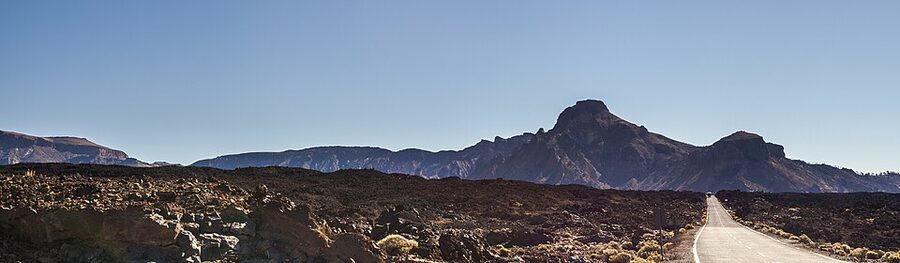
The volcanic story, briefly
Tenerife is a young island, geologically speaking. About 12 million years old, which is roughly a third the age of Madagascar. The current cone of Teide started growing about 200,000 years ago inside the floor of a much older, much larger volcano that had collapsed in a series of catastrophic events. The 17-kilometre-wide caldera you drive across, Las Cañadas, is the floor of that older volcano. The Roques de García are pieces of the older caldera wall that didn’t slide off into the Atlantic when most of the rest did.
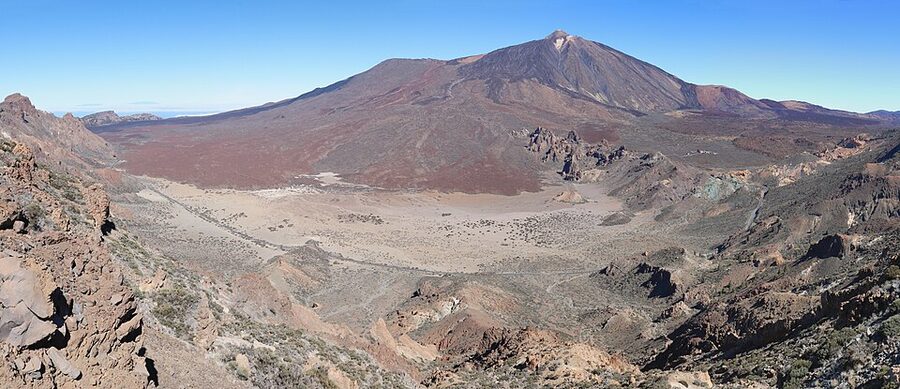
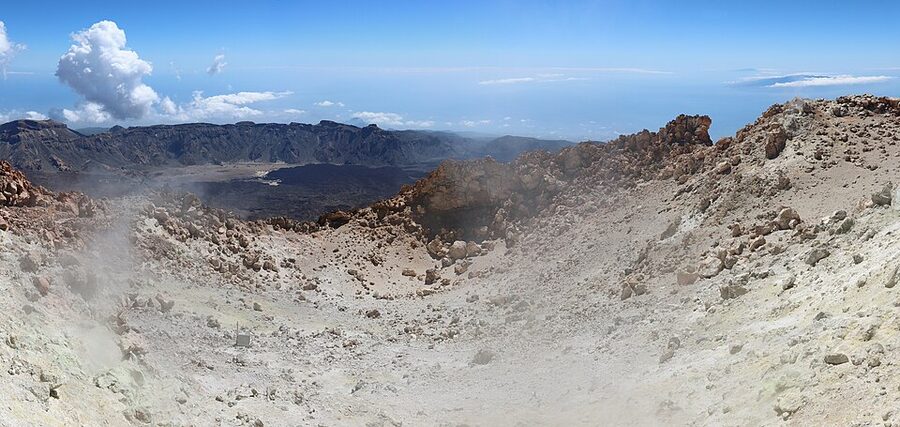
Teide is dormant, not extinct. The last eruption was in 1909 from the Chinyero side cone on the western flank, lasting about ten days, with no fatalities. The eruption before that was Pico Viejo in 1798, the long one. Going further back, there’s evidence of a major eruption around 1492 that Christopher Columbus’s crew may have witnessed from the harbour at La Gomera as they refilled the water casks before crossing to the New World. Columbus’s logbook describes “a great fire” on Tenerife. Most volcanologists think this was probably Boca Cangrejo, a side vent, in eruption.
The volcano is monitored, in real time, by the Instituto Volcanológico de Canarias (INVOLCAN). Seismic sensors, gas detection, ground deformation. The risk on a given day is essentially zero, but the long-term position is that Teide will erupt again at some point in the next few thousand years. This is a normal state for a stratovolcano of its size.
The active comparison is interesting. Sister Spanish islands have shown what an active version of this looks like. La Palma’s Cumbre Vieja erupted for 85 days in late 2021, displacing thousands of people and burying entire neighbourhoods of Todoque under lava. The Italian volcanoes are even more lively. Mount Etna in Sicily erupts in some form most years, sometimes monthly, with paroxysmal events that throw lava bombs and shut Catania airport for hours. Vesuvius outside Naples hasn’t erupted since 1944, but the geological consensus is that it’s overdue. Teide sits between those tempos. Calm enough that you can stand on it without thinking about the geology, but not extinct.
The Teide Observatory
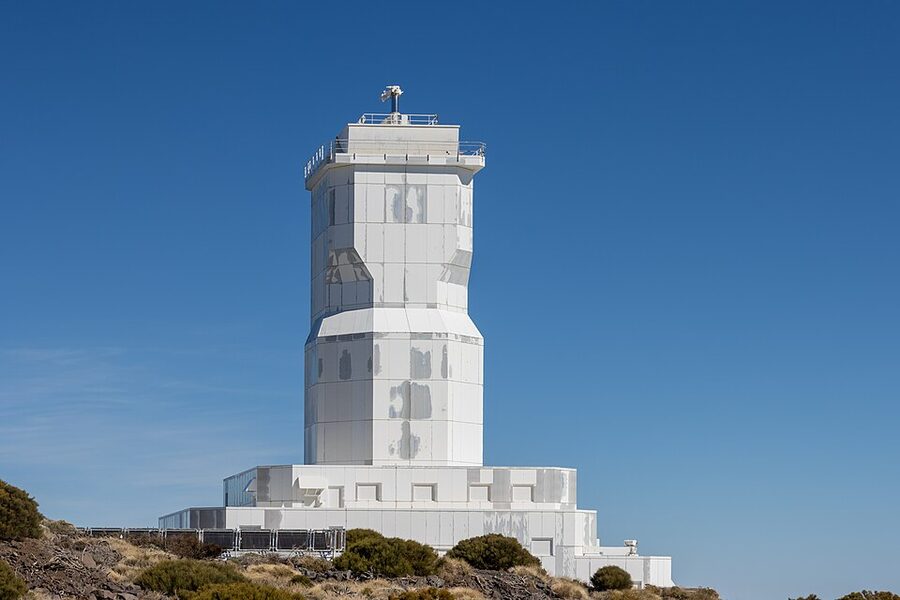
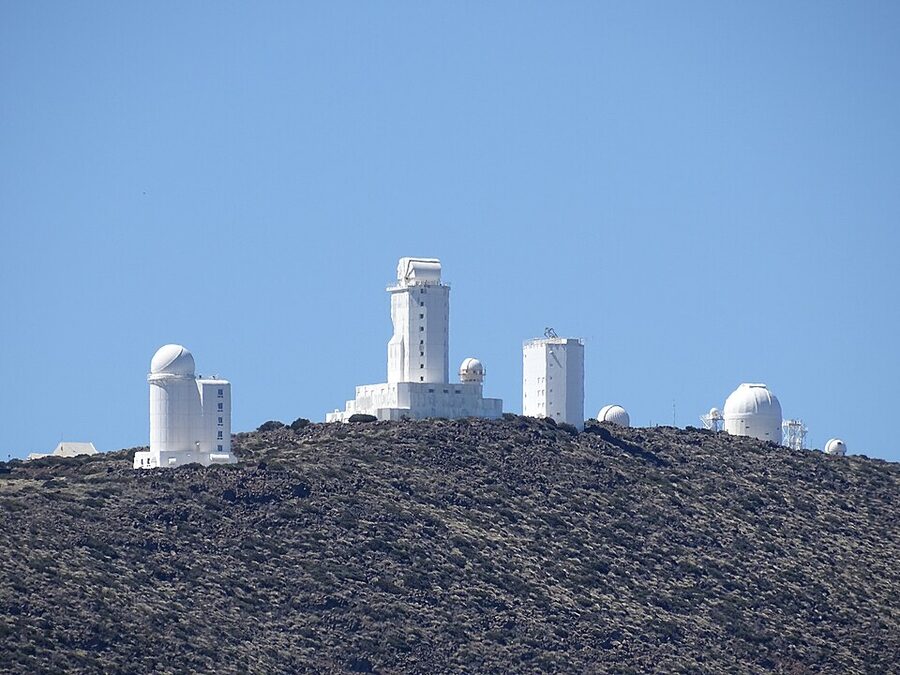
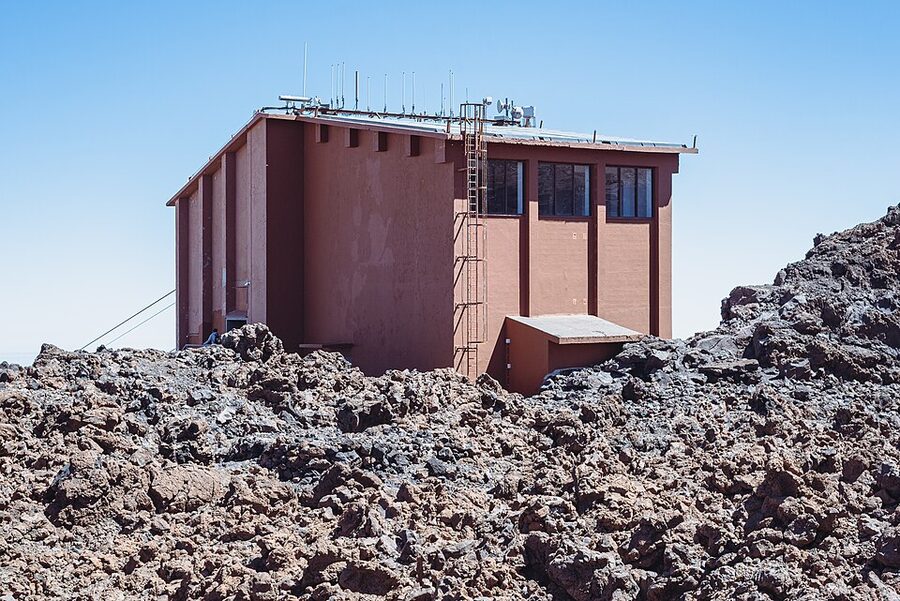
The Observatorio del Teide is on the eastern shoulder of the volcano at 2,390m, in operation since 1959. It runs around 20 telescopes, several of them solar (Teide is one of the world’s leading sites for solar observation, the air column above is unusually stable), and is one of the two big sites in Spain alongside the Roque de los Muchachos Observatory on La Palma.
You can visit the observatory on a separate guided daytime tour, not part of the standard sunset-and-stargazing trip. Slots are limited and book up about a month ahead. The tour walks you through the solar telescopes and the radio array, and it’s the only way to actually go inside any of the domes. If you’re an amateur astronomer or have kids who like science, it’s worth the half day. If you’re casual about it, the standard evening tour gives you the dark sky without the hard-hat domes side. For families travelling onward in Europe with kids who got hooked on the science, the NEMO Science Museum in Amsterdam picks up the same thread with a fully hands-on physics-and-astronomy floor designed for younger visitors.
What can stop you getting up
The cable car closes for high winds. The official threshold is sustained winds of 70 km/h on the upper cable, which happens about 25 to 30 days a year, mostly in winter. It also closes for thunderstorms and for ice on the cables. Always check the cable car’s status the day of your tour on the volcanoteide.com website or social. The tour operators check too, but the chain of communication isn’t always fast.
If the cable car is closed on your evening, the tour usually still runs, but it caps at the 2,356m base station and you do the sunset and stargazing from there instead of the upper station. The view is still good. It’s just not the upper-station view. Some operators offer partial refunds in this case, others don’t, and most don’t make this clear in the pre-booking page. Worth asking on the booking confirmation email.
The other thing that can take you out of the trip is the altitude. The cable car ride is fast: you go from 2,356m to 3,555m in eight minutes. That’s a faster ascent than most aircraft cabins manage. People with cardiovascular conditions are advised not to go up. Pregnant women in the third trimester are advised not to go up. People with severe respiratory issues are advised not to go up. Most of the rest of us are fine. The base station has clear signage about this.
Building a Tenerife day around it
The classic full day on Tenerife pairs the volcano with something else, because the evening tour starts mid-afternoon and you have the whole morning. The smartest pairing is with whale watching from Los Cristianos in the morning. The pilot whale and bottlenose dolphin populations off the south-west coast are resident year-round, sightings are functionally guaranteed, and the boat trips are 2 to 3 hours. Out at 9am, back at noon, lunch, then on the Teide pickup at 3pm. That’s the day I’d build for someone with one shot at Tenerife.
If you’re travelling with kids, the morning slot is better filled by Siam Park in Costa Adeje for a few hours rather than a whole day, or Loro Parque in Puerto de la Cruz if you’re staying on the north coast and the Teide tour is leaving from there. Loro Parque is genuinely a full day, though, so if you’re booking a Teide evening tour the same day, set it as half a day at Loro Parque only.
For the marine-minded morning, the alternates are kayak and snorkel with sea turtles off the south coast (a three-hour activity that pairs neatly with an afternoon tour), or, if you’ve already done Tenerife and you’re hopping islands, the dolphin cruise on Gran Canaria covers similar territory.
How Teide compares to the Spanish-mainland mountain experiences
If you’ve done Spanish mountains before, the comparison is useful. Teide is higher than anything on the mainland, but the experience is different from the Pyrenees or the Sierra Nevada. The closest comparable day trip on the mainland is probably Caminito del Rey in Andalusia, which puts you on a 100m-high boardwalk through the El Chorro gorge for the cliff exposure, but with a temperate climate and no altitude. Teide trades the cliff drop for the altitude and the volcanic geology.
For the cable car part specifically, the closest Spanish equivalent is Montjuïc Cable Car in Barcelona, which lifts you 84m over the harbour, while the most spectacular gorge-and-altitude day in southern France is the Verdon Gorge trip from Nice. Different scale, obviously. The Teide cable car climbs 1,200 vertical metres in eight minutes, which puts it in the league of the high Alpine cable cars rather than urban-tourism ones.
For the day-trip-from-city pattern, the closest match is probably Montserrat from Barcelona, which is also a mountain day with a cable-car-or-funicular section. Montserrat is more about the monastery and the cultural visit. Teide is closer to a wilderness day with a cosmology garnish.
From the Italian side of the site’s content, the strongest sister comparison is the active volcanoes. Etna from Catania is more dramatic in the active sense, you can see lava on a typical evening tour, but the altitude is lower (Etna’s summit area is around 3,300m and tour-accessible parts are around 2,900m), and the visit is shorter. Vesuvius from Pompeii is the historical heavyweight, but the visit is essentially a 1.5-hour walk to the crater rim, no cable car, no stargazing. Teide is the more rounded day. For altitude with a different texture, the Bernina Express from Milan reaches similar elevations on a four-hour Alpine train, also above the cloud line in good conditions, also strangely cosmic. The closest French equivalent for sheer altitude is Chamonix and the Aiguille du Midi cable car, which lifts you to 3,842m for an even higher above-the-clouds panorama, though without the volcanic geology underneath.
Practical: when to go, and timing the moon
The two-month sweet spot for Teide stargazing is May to October. That’s the dry season, the trade-wind cloud layer is most consistent (low and below you, rather than high and obscuring), and the temperature differential is manageable. November to March still works on clear nights, but the closure rate of the cable car for high winds and snow is much higher, and the cold at the top is serious.
For the stars specifically, the lunar cycle matters more than the date. Try for a date within five days of new moon if you can. Around full moon, the bright sky washes out everything except the planets, the Moon itself, and the brightest few constellations. The standard tour will still run, the guides are good, but the wow factor of the sky is diminished. Most operators publish their dates in advance and you can pick.
The least-good time, surprisingly, isn’t winter, it’s the August calima. Calima is a hot, dust-laden wind that blows in from the Sahara and can drop visibility to a few hundred metres for two or three days at a time. It usually arrives in late July or August, lasts a few days, and reduces the stargazing dramatically while it’s around. There’s no reliable forecast for it more than a week out. If your dates are in late summer and you arrive to a hazy yellow horizon and gritty terraces, that’s calima. The tours still run; the experience is reduced.
Endemic flowers and the broom
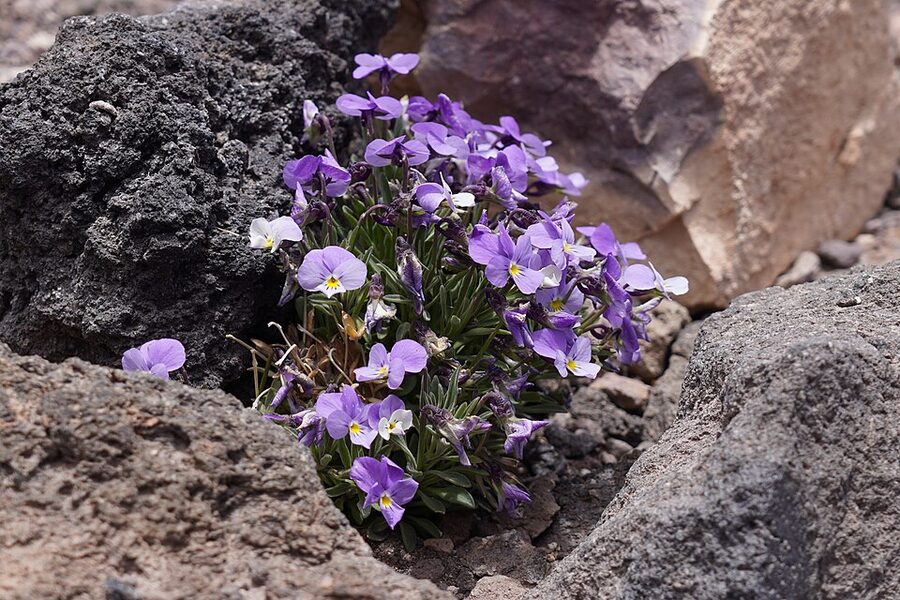
One thing the daytime visit gives you that the evening one doesn’t is the chance to see the Teide endemic plants in flower. The two emblematic species are the tajinaste rojo, a tall red flower spike that can reach three metres, and the retama del Teide, the white-flowering Teide broom that covers the caldera floor in late spring. Both are protected and only grow at this altitude in this part of the world.
The tajinaste flowering window is shorter, late May to early June. If you’re a flowers person and your dates land in that window, the daytime tour stops at one of the colonies on the way up. The evening tour skips this because by the time you arrive the light is going. So: if you’re visiting in May or early June, consider booking both, daytime one day and evening another. The total is around $150 and you’ve seen the place properly. Outside of that window, just the evening tour is enough.
Getting back, and what to expect after
The descent on the evening tour is usually a quick stop at a Canarian restaurant for tapas and a glass of wine, then back to the resort by around 11pm in summer or 9pm in winter. The bus picks up multiple groups so the return route is slow if you’re at the last drop-off, expect a 30 to 45 minute final leg through Costa Adeje and Los Cristianos.
The thing to know about the day after: most people sleep deeply that night. The combination of altitude, cold, the long bus ride, and the genuine awe of the sky tends to add up to a tired body. Plan an easy morning the next day. The pool, the breakfast buffet, a slow walk on the promenade. Don’t book the early flight or the dawn excursion. Give yourself the morning to come down properly.
The other things people get wrong
Three common mistakes travellers make about Teide:
Booking the cable car ticket and assuming that’s the whole experience. The cable car alone, with no transport, no guide, no stargazing, is the cheap version. €47 round trip, plus your rental car. It gets you the view at midday. It doesn’t get you the night sky, the photographer’s window for the shadow on the cloud sea, or the astronomical context. The full evening tour at $47 is the same headline number, with all of those things included.
Thinking the daytime view from the cable car upper station is the same as the summit view. It isn’t. The upper station is at 3,555m, the summit is at 3,718m, and the final 200m vertical is a different kind of view, you’re looking down on the cone itself. If you’re a serious mountain-view person, get the permit. The two-month wait is real, and slots go.
Underestimating the cold. The bus driver will tell you. The tour notes will tell you. Your body will tell you in the parking lot at 3,300m when the doors open. People show up in shorts and a T-shirt because the resort was 26°C, and they shiver through the sunset wishing they’d packed the fleece. Pack the fleece.
Quick answers to the practical questions
Is Teide worth doing if I only have three days on Tenerife? Yes. It’s the single best day on the island, by a clear margin. The stargazing experience alone is worth a flight from northern Europe.
Is it worth it for kids? Mostly yes, with caveats. Children under 3 are not allowed on the cable car (altitude). Children 3 to 10 generally cope fine, but the cold and the late hours can be hard. The astronomy guide adapts to the audience well, in my experience kids 8 and up enjoy it more than they expect to.
What if it rains? Rain at the resort doesn’t necessarily mean rain at the top, the trade-wind cloud layer often sits below the caldera. Some of the best evenings are when the resort is overcast and the volcano is in clear sky 1,000m above the clouds. If the cable car is closed, the operator should call you that morning. If they don’t, you can call them.
Is the food on the tour any good? The included tapas stop on the flagship sunset-and-stargazing tour is decent Canarian food at a real local restaurant in Vilaflor or one of the smaller villages on the way back. Not gourmet, not bad. Papas arrugadas with mojo, a bit of cheese, sometimes chorizo, a glass of local wine. The smaller photography-tour version doesn’t always include food, check before booking.
Can I take an evening tour and stay on for the full night? No. The tours all run as a single transport package and you ride back on the bus. There are no hotels in the park itself, only the Parador Las Cañadas del Teide hotel on the caldera floor, and that’s a different reservation.
What about the Parador hotel? The Parador is a stone-built government hotel inside the park at around 2,150m, the only accommodation in the caldera. It books up months ahead. If you can get a room and the budget works (around €180 to €280 a night), staying overnight gives you the post-midnight sky from the terrace and the dawn over Las Cañadas. The Parador does an astronomy session for guests too. It’s a different kind of trip from the day-tour version.
Beyond Teide
If Teide is your headline Spanish nature day and you want to plan the rest of the country around the same instinct, the strongest pairings are with the Andalusian mountain trips. Caminito del Rey covers the cliff-and-altitude itch with a different geological story (limestone gorge instead of volcanic cone). Montserrat from Barcelona works for the day-trip-by-cable-car pattern with a Catalan cultural overlay. For the cable car experience specifically as urban tourism, Montjuïc Cable Car in Barcelona is the city version of the same ride.
Across the broader continent, the closest sister to Teide as a single day is probably Etna from Catania, the active counterpart, where the volcanic experience is louder and the geology has lava on it. If you’ve done Etna, Teide will feel calmer and more photogenic. If you haven’t, Teide is the gentler introduction.
For the rest of your Tenerife days, the easy ones to slot around the Teide trip are whale watching from Los Cristianos in the morning before your evening pickup, Loro Parque in Puerto de la Cruz for a marine and parrot day if you’re north-coast based, Siam Park for the family water-park day, and the kayak and snorkel with turtles for a calmer sea morning. Hopping over to Gran Canaria, the dolphin cruise out of Puerto Rico covers the marine half of the day.
What ties all of this together is the rhythm of an island holiday: water in the morning, altitude in the evening. Teide is the altitude. Pick your water and you’ve got your day.
One last thing. Most travellers come back from Tenerife with photos of the resort beach, photos of dinner, and a single photo of Teide from the highway. The ones who book the evening tour come back with one photo that nobody else has, the cone above the cloud sea at the blue hour with a thin band of orange behind it, and a head full of constellations they didn’t know last week. That second category is what this trip is for.